All posts by webadmin

Home Made Artillery Gun Booms in World’s Biggest Artillery Programme – Major Milestones Achieved

At 4.30 p.m. on Tuesday, in a historic moment for India’s artillery programme, an indigenous, fully integrated, 155-millimetre artillery gun fired its first rounds of live ammunition at the Proof and Experimental Establishment (PXE) in Balasore, Odisha.

The 155-mm, 52-calibre gun, dubbed the Advanced Towed Artillery Gun System (ATAGS), has been developed by the Defence R&D Organisation (DRDO), in partnership with two private sector firms — the Kalyani Group and Tata Power (Strategic Engineering Division) — and the Ordnance Factory Board (OFB), which is owned by the Ministry of Defence (MoD).

Business Standard learns that Tuesday’s firing trials, and a second round of testing on Wednesday, met the specified parameters. Although extensive testing remains to be carried out in the months ahead, a project manager describes the actual firing as a “major milestone”.

The shortage of 155-mm, 52-calibre artillery is widely considered the Indian Army’s most worrying shortfall. Over the preceding 18 years, several international tenders for buying 1,580 towed guns from the international arms market have stalled. Consequently, no new 155-mm guns have entered the army since the purchase of 410 Bofors howitzers 30 years ago.

With the spectre of Bofors dogging international procurement, the DRDO charged its Pune-based Armament Research & Development Establishment (ARDE) with the ambitious ATAGS project to develop an indigenous towed gun.

“In the ATAGS programme, we are developing two parallel sources to cut the risk of delays. The private sector is extensively involved under the prime minister’s “Make in India” initiative. This would allow us to open two manufacturing lines, to meet the large numbers gun requirements of the services”, said Dr S Christopher, the DRDO chairman.

In addition, the artillery-starved army has several other gun procurements in hand. The OFB used manufacturing blueprints supplied by Swedish company, Bofors, with the controversial 1986 purchase of 410 FH-77 howitzers, to develop an indigenous 155-mm, 45-calibre gun.

A higher calibre denotes a longer barrel and, consequently, a longer range. Upgrading the 39-calibre Bofors into the 45-calibre Dhanush has increased the gun’s range from 27 kilometres to 35 kilometres (with enhanced range ammunition).

On August 5, the defence minister told parliament that an indent for 114 Dhanush guns had been placed with the OFB. Analysts believe that if these guns satisfy the army, the order could increase to as many as 400 guns.

Separately, New Delhi has signed a contract with Washington for 145 ultralight guns of 155-mm, 39-calibre, built by BAE Systems in the US, the defence minister told parliament on December 2.

In November 2014, the MoD sanctioned 814 mounted gun systems (MGS) for an estimated Rs 15,750 crore. Tenders are also out for 100 tracked (self-propelled) guns; and 180 wheeled (self-propelled) guns. All these are 155-mm, 52-calibre guns.

Towed guns are employed in plains and foothills; tracked (self-propelled) guns are mounted in armoured vehicles to support high-mobility tank formations; wheeled (self-propelled) guns are for fast-moving, non-armoured formations; The MGS is a regular 155-millimetre gun fitted onto a high mobility vehicle, allowing it to move faster and start firing quicker than a conventional towed gun.

– – – – – – – – – – – – – – –
Army’s artillery black hole: 155-millimetre guns in the pipeline”
– 1,580 towed artillery guns for Rs 25,000 crore
– 114 Dhanush guns from Ordnance Factory Board
– 145 Ultralight howitzers from BAE Systems for Rs 5,000 crore
– 814 Mounted Gun Systems (MGS) for Rs 15,750 crore
– 100 Tracked Self Propelled (SP) guns 180 Wheeled Self Propelled (SP) guns

One gun project is being pursued by Tata Power (SED), while the other is working in parallel under the Kalyani Group. The OFB and Bharat Forge are making the barrels.

Going by specifications, the ATAGS is a world-beater. Its “extended range, base-bleed” ammunition has a range of 45 kilometres — more than any 155-mm, 52 calibre gun in service. ATAGS also has an “all-electric drive”, which is more reliable than conventional hydraulic drives, and improves reaction time and accuracy.

With each ATAGS likely to be priced at Rs 15-18 crore, the contract for building 1,580 towed guns would add up to more than Rs 25,000 crore.

In war, most soldiers are killed or wounded by artillery fire, which is usually fired from 20-30 kilometres away. When an enemy position is to be attacked, artillery is used to pulverize it so that one’s own tanks and infantry soldiers easily overrun it, with minimal hand-to-hand fighting.

India has about 264 artillery regiments, each having 21 guns (including reserves). Many regiments currently deploy lighter, 105-mm “field guns”, but the army plans to make 155-mm its basic gun, since its heavier shell causes more enemy casualties.

If even 150 of India’s artillery regiments are converted to 155-mm guns, that would require 3,150 guns — twice what was earlier tendered, adding up to about Rs 50,000 crore.

On November 25, the defence minister told parliament that the ATAGS was one of the DRDO’s “mission mode” projects. He said the ATAGS was to have been completed by September 2015, but the date had been extended to March 2017.


Why are Soldiers Agitating? Are they Greedy or There Are Serious Problems Violating Their Constitutional Status ?

FAQs: Why are Soldiers Agitating? Are they Greedy or There Are Serious Problems Violating Their Constitutional Status ?

Last updated on 28 Oct 2016 and is in progress

This blog is an attempt to answer ‘Frequently Asked Questions’ on issues of military. The questions answers given are not a complete set and shall be kept updated time to time.

Question No 1Military veterans seems to be always agitated on issues like pay, pension and allowances. Why is it? Are they depressed or greedy? 
Answer.
Military veterans vocal on electronic, print and social media or agitating on Jantar Mantar airing their concerns on many issues concerning military, are neither depressed nor greedy. Soldiers of Indian army give more preference to service to nation and democracy than money. There are certain pressure points which govts after govts have not only ignored since 1973, but are creating more reasons for agitations.
As for as public is concerned, in independent India it is happening for the first time, that in last 5-6 years military veterans have taken the course of agitation on key issues in public domain creating ripples in minds of common man creating such false impressions. The issues are pending with govt since 1973 and now the patience of soldiers is at breaking point.
Question No 2. But why shall Govt show such apathetic attitude towards soldiers? Soldiers defend nation and render great service and politicians, babus and govt are surely aware of it? 
Answer
It puzzles solders too. Why such apathetic attitude towards soldiers? Serving soldiers do not have unions or lobbies like civilians. They always had blind trust in govt but in 1973 they were delivered a serious blow when their status, pay, pensions and allowances were reduced drastically by 3rd pay commission and that of civilians raised.  It created serious imbalance and that too once soldiers had delivered an unprecedented and historic military victory in 1971 war.  Instead of award, soldiers were punished. It never happens like that. It is a sure way of killing the high moral of a victorious army setting a wrong precedence.
Soldiers have a system of reporting their problems to their commanding officers, who then report the matter to services HQ at Delhi. Military Chiefs then take up matter with the govt. Soldiers followed the same system and had trust in the ability of their chiefs and Govt. Naturally such serious imbalance created by 3rd pay commission were reported to Govt through proper channels. Then PM Indra Gandhi assured Military Chiefs of resolution of their problems but it never happened.
Since 1973. chiefs after chiefs have kept reporting the matter to Govt. Govts after Govts have kept assuring soldiers about resolution of their problems but without any solution in sight. Rather various political parties have used frustration of soldiers for petty vote bank politics. It has now created a situation wherein soldiers have lost trust in ability of military chiefs to get solution and started doubting the intentions and seriousness of Govts to deliver justice forcing them to came on street and social media bringing matters into the notice of public. After in all in democracy people are supreme. It is surely not a healthy sign for the democracy. It has also created problem within military where abilities of top leaderships to effectively communicate with govt are now being questioned?
Question 3Still why is Govt not serious? Soldiers on street in democracy is a frightening scene? 
 
Answer. 
It is surprising for soldiers too. Why is govt not serious? Why are political parties only interested in using frustration of soldiers for votes? Ignoring the problem without giving any justification is like adding the fuel to fire. Unfortunately, such apathy is creating impressions that corrupt politician- babu nexus has no time for serious issues of the nation and soldiers demand for justice is no exception. Look around, justice system has collapsed, govt administration is totally rusted, corruption rules everywhere, parliament has become defunct, proxy govts rule, no political party has internal democracy, funding channels are kept secret, banking is overburdened with NPAs, gap between poor and rich are widening, farmers are committing suicide. A situation of hopelessness exists. It looks politics has become a profession of employment for failed people who are only interested in loot and plunder. Babus, banks, judiciary, some crony businessmen and temple priests, have joined hands with corrupt politicians to create a mafia. Naturally such mafia has no time and sensitivity for soldiers and justice or what else could be the reason?
Indian soldiers are sensitive, committed to constitution and responsible people. Soldiers know that in the given situation of hopelessness, if they also come on street, as it happens in other countries, it will deliver a death blow to the nation. Naturally so, military veterans have taken the responsibility to communicate with “we the people” who are supreme in democracy, keeping the threshold of agitation well below acceptable limits so that the situation doesn’t explode.
Questions 4. What are the major demands of soldiers? 
 
Answer 
 
The major demands of soldiers are:
1. Status of soldiers as given in the constitution be respected.
2. Accordingly, serious imbalances and disparities between compensation model of soldiers and other govt civil employees be removed based on best HR practices taking into account the average career earnings including pension  benefits.
Question 5.  What are the constitutional provisions for the executive authority of the military? 
Answer
Constitutional military executive authority of the soldiers comes out of the following articles:
1. Article 18;- respects the “Title of Ranks” of Soldiers even after his death. Soldiers never retire. Title of Ranks never die.
2. Article 34:- Gives military a political executive authority to intervene by declaring martial law only to restore democracy.  In India parliamentary democracy is supreme. This article makes Indian military as soldiers totally committed to democracy and “we the people”. There may be situation where state fails to govern as per constitution or parliament is unable to function due to any reasons or rise of a civilian dictator endangers democracy or external/ internal aggression endangers it . In such situations constitution makes obligatory on military authorities to intervene to protect and restore democracy. Baba Saheb Ambedkar was a very wise man. He could sense that in independent India, probability of rise of civilian dictators are more than rise of a military dictator. He therefore under this article, entrusted military a role of silent and invisible custodian of Indian democracy.  History of independent India is testimony to the fact that Baba Saheb was right. Military has been loyal to constitution and we the people whereas Indra tried to become dictator declaring unconstitutional emergency. Military did play its role to protect democracy, when then Army Chief cautioned Indra to remain within limits of constitution. In fact emergency was lifted as all three chiefs wrote a top secret letter to Indra Gandhi advising her to lift emergency and call for elections. Probably this is right time the content of this letter shall be disclosed to public.
3. Article 52 read clubbed with Article 74:- The sovereign authority of govt is vested in the President who wears two distinct hats. One of being head of civil political govt and other of supreme commander of defense forces. These two roles of the president are independent. Under this article the hard and soft national powers are identified and constitutionally divided. While the democracy under the pre-dominance of soft power functions under the leadership of Prime Minister and his cabinet, the total command authority over the hard power of military is denied to him/her. Baba Saheb was a visionary and had deep knowledge of Indian history. He wisely so separated national hard power from the national soft power. Baba Saheb knew if PM or defense minister are given total command authority over military it will give rise to many civilian dictators.  Therefore under this article if read clubbed with article 74, the political direction to military comes from cabinet headed by PM, administrative support comes from ministry of defense and military retains the authority and freedom to take military executive decisions and that is the reason precisely military is an attached organisation to the political govt. Constitutionally, military can not be subordinate to PM and his cabinet as President who is senior to PM is its head and also PM is not given command of military. In Indian democracy where PM exercises executive political authority and President is constitutional head of military, services HQ can only be integrated with civil govt and can not be merged as is the case in USA.
4. Co-relation of Article 34 on Article 52 and 74. Articles 52 and 74 do not take away the authority as vested in supreme commander of defense forces and military commanders as Silent and Invisible Custodians of Indian Democracy. There could be situation where advice of PM (aspiring to become a dictator) and his cabinet to President could be detrimental to democracy. Under article 52 and article 74, president is left with no choice except to accept their advice after one review however under article 34 supreme commander of defense forces or military commanders can exercise military authority as vested in them only to defend constitution and democracy.

Question 6. Constitutionally, what are the roles of the defense forces? 

Answer

If seen in the backdrop of above constitutional provisions, the roles of Indian Defense Forces are:

1. Primary Role. To defend Indian Constitution and democracy against any of the following threats:

a. Any external aggression or threat in any form on the geo-political and economic interests of India, territories under the political control of Indian Govt and Indian constitution. The external threat may not be always in form of military invasions. It may appear in form of externally abetted political assassinations,  cyber or economic wars, threatening geo-poltical alliances or posturing etc.

b. Any internal threat endangering functioning of the constitution and democracy which may be in forms of armed rebellion or political takeover by a civilian dictator.

2. Secondary Role. To assist civil administration in maintenance of law and order and in case of natural calamities, disasters and disturbances only when requisitioned.

Please note that defenses forces can act in their secondary roles only when requisitioned. However for preforming their primary roles, no such orders or requisition are required. However as long as an elected political govt under parliamentary democracy is functioning, defense forces will always seek their political directions before any action. In case such govt seize to exist or nuke attacks have obliterated such govt or a civilian dictator has taken over violating constitution or any state govt has rebelled or any armed rebellion has seized any part of territory/ govt administration, defense forces will act under the military authority as vested in them to protect constitution and shall not wait for any political directions.

Question 7. What are the constitutional provisions for the status and service conditions of the Defense forces?

Answer
Chapter 14 of the constitution deals with “Services of the Union and States”. Though defense forces are created under articles 34 and 52, but their service conditions are constitutionally governed under this chapter. Relevant article are as under:
1. Article 309 empowers parliament to make legislation for the service conditions of various public services including defense forces.
 2. Article 310 Makes provisions for the tenure of all commissioned officers of the defense forces personals and civilian gazetted officers to be at pleasure of president. This article mentions various govt services in order of their seniority in terms of constitutional status. Officers of the defense forces are first in the seniority even ahead of civil services of the union (discontinued after independence) and All India Services (IAS, IPS, IRS, IFS etc).
Articles 311- 323 under the chapter deal with various safeguards provided to civil services and forming of Public Service Commissions.
Legal provisions for withdrawal of Pleasure of President in respect to officers of the  defense forces differ from the civil officers which  for defenses forces are further given in respective services acts, rules and also regulations.
Under article 309, various civil services acts for giving various service conditions in details like IAS acts and rules or IPS acts and rules have been framed. However in relation to defense services Govt and Parliament has chosen to remain silent and adhocism has been created. Absence of act and rules for service conditions of defense forces in detail as mandated under article 309, is the root cause of soldiers grievances. Present Defense Acts and Rules deal more with the discipline aspect of forces. The defense regulations are customs of Monarchy. India is a democracy and defense forces shall not be administered under adhoc regulations.
Question 8.  How are officers in defense forces appointed and how does their oath differ from a civil servant?
Answer
Officers of the defense forces in addition to being gazetted, are also commissioned officers. The word “commission” is mentioned in the parchment given to them at the time of their commissioning wherein they take oath of allegiance not only to the constitution as taken by civil officers but also to obey lawful command of their superior officer up in the chain of command after due observations to it being a lawful in accordance with laws of regular army.
Under this observed obedience of lawful command, duty to defend the constitution is inherent. Civilians including PM and Govt Ministers take oath of allegiance to the constitution and not to defend constitution? Few key aspect which shall be noted in appointments of defense officers are :
1. The parchment of commission is given under the printed signatures of the President authenticated by a Military General and not by any civil officer.
2. In parchment of commission, the President uses the word “ME” and not “MY GOVT” as he uses in Parliament, because the authority of military command is absolute in nature and is vested in him as supreme commander of the defense forces. Such power legally can not be delegated to any other authority. Provisions of article 74, therefore do not apply on military authority and chain of command. Army laws make nature of command legally very clear.  In case of confusion of political directions for military between President and PM, defense forces are obliged to follow orders of supreme commanders of defense forces and not PM.
3. Officers of defense forces take oath to serve anywhere in world and space, where ever they could be send by land, air and sea beyond the territories of India and where even the Indian laws do not apply? They enforce the sovereign authority of the state not only within national territories but beyond.
4. Officers are suppose to follow such orders of command which are lawful in nature. Legal validity of orders are decided by officer himself interpreting these under the law. Commissioned officers are therefore expected to use their judgment to decide legality of the orders and all illegal orders he is expected to disobey. In case commissioned officers obey illegal orders, they carry liability of criminal prosecution.
5. Officers of the defense forces by virtue of being commissioned officers, are vested with following powers
a. Military executive authority not only to impose its will using military force on any entity but also to the extend of forming govts. Military Govt in India were formed in Hyderabad, Goa and Junagarh once these were liberated and also in Bangaldesh and Jaffna Sri Lanka.
b. Judicial powers to not only give punishments to the extend of death sentence, but in certain situations confirm and execute it without any reference to any court, govt and president.
c. Powers of Magistrates are exercised by defense forces in aid to civil authority. Officers of the rank of NCOs and above  exercise such powers. Whereas in case of civil these are not below gazetted officers.
d Military Authority to command troops. Military functions based on unique concept of command.
e. Administrative powers like any civilian officers.
It could be seen from above that all functions of state for which a civil govt has different organs, in case of military are vested in commissioned officers.
Question 9It seems somewhat confusing? General Impressions are that constitutionally IAS officers are Masters of Indian Destiny and they are even superior than other sister services like IPS, IRS and IFS? 

Answer

If seen in backdrop of article 310, that is not correct. Over a period of time IAS officers have taken advantage of their certain appointments and closeness to politicians. Corrupt, greedy and insecure politicians have obliged them, as in elections IAS officers are appointed returning officers responsible to check validity of their nomination papers, their election canvassing activities and spending of funds. In fact it is this appointment which makes them a kind of masters of Indian Elections. It is the IAS officer as DM, who announces results of vote counting. When in multi corner elections where victory margins are thin, such officers naturally can oblige politicians. It is this relationship between politicians and IAS officers which has given unjustified advantage to IAS. In most of the democracy. No civil servant is given the responsibility of being a returning officer. In US, civil servants only oversee checks over political spending, in Pakistan, these are judicial officers who are nominated as returning officers. The present practice is harmful to Indian Democracy and parliament must take note of it? 

Nevertheless constitutionally, following shall answer the question about the correct position on the standing of officers of defense forces with officers of IAS and other All India Services :

Comparison of Constitutional Status of Defense Officers and IAS including Officers  of All India Services

1. Sovereign Executive Military Authority is an exclusive domain of military officers exercised through powers and chain of command. Under such authority nations are destroyed or made. Political directions for military actions at macro levels are given by elected govt in a functional democracy. Under article 34 defense forces have been made silent and invisible custodian of Indian democracy with a responsibility to keep it intact. No such powers in civil domain to any civil officer.

2. Authority to form political Govt is an exclusive domain of political civil Govt in a functional democracy on mandate of ‘we the people’. However in certain situations with approval of elected civil political authorities and if it doesn’t exist then own its own, officers of the defense officers form a political govt in any external captured territory and anywhere within the country. Examples are when military formed Govts in Haydrabad, Goa and Junagarh within the country and in Bangladesh and Jaffna; Sri Lanka abroad. Such govt can be led by any military officer or any other person so authorized by responsible military commander.  Adjutant General of the Army HQ is responsible for the subject. Only officers of the rank of Brigadier and above are authorized to declare formation of such govt. That is the reason rank of Brigadier was and should be equated with the appointment of secretary of Govt of India. Same is the practice world over in most democracies. No such authority is vested in any of the officers of all India services. All civil officers serve under the command of military commanders under the military govts.

3. Judicial Powers  Any commissioned officer can be nominated to the military court as a Judge. Military officers of the rank of Captain and above exercise judicial powers of a session judge and can give death sentences.  In case of SGCM, an officer of the rank of Captain and above can nominate himself as judge and can give death sentence in a summary trial. He in this case can also confirm the sentence given by himself on behalf of president and give orders for its execution without reference to any court and civil authority. No right of appeal is given to the accused. Military Laws can be made applicable to civilians either by notification by central govt or under martial laws. Legal validity of the courts formed under martial laws has the sanction of Supreme Court. No such powers or authority is held by any officer of the all India services.

4. Powers of Magistrate.   Powers of magistrate is more of a civilian concept when a civilian officer is given part of executive authority of the state by virtue of he/her holding an appointment or given for a period. Military works on the concept of command where executive powers of state are inherent in powers of command of Military officers by virtue of holding commission or authority to exercise such powers. In case of military, powers of command are given down to NCO levels. In aid to civil authority military Non Commissioned Officers, has the powers to order fire.  Such orders in case of civil can only be given by a Civil magistrate. These powers are not inherent as is the case of military officers. IAS officers exercise powers of magistrate as returning officers for an election. It is this appointment which gives advantage to them to illegally oblige politicians and makes them powerful over others.

5. Administrative Powers   Exercised as authorized by defense officers as well as officers of all India services.

Please note,  IAS officers or other officers of all India services exercise executive powers of state only when they have powers of magistrate or holding a specified appointment where as executive authority of the state are inherent to all commissioned officers by virtue of they holding  commission on behalf of President. Nature of job of officers of all India services is more as administrative whereas in case of defense officers it is pre-dominantly executive. That is the reason article 310, puts officers of defense forces in senior most order than officers of all India services and other civil services. Yes it is also true constitutionally that IAS officer have no legal standing to claim seniority or preference over IPS, IRS or IFS. They present superior status is illegal and has been created with help of politicians as they are the only one who can become returning officers to conduct elections.

Question 10. The word defending the constitution are neither mentioned in Oath and Nor in commission parchment, then how are officers of the defense forces responsible for the defending the constitution?

Answer 
 
Oath of President of India has two key words. One “upholding the constitutions” and other defending it?  President takes the oath to defend constitution as supreme commander of the defense forces and the only means to defend constitution, he has are the defense forces. He therefore passes his authority to officers of the defense forces in form of commission. It is through this commission the officers of defense forces become responsible for defending the constitution by military force following lawful command. Article 34 also makes it obligatory on part of the defense forces to defend constitution.
Question 10. Civil Political Govt has authority and freedom to decide what shall be status of the defense officers and how shall they be paid? Why shall defense officers and soldiers crib?
 
Answer
 
Govt of the day is formed and functions under the broad constitutional framework. No govt or babu is above constitution and they are expected to work within the space as provided. Since 1973 govt are taking certain unconstitutional decisions and downgrading status and compensations of the the defense forces. The same is highly objectionable. Defense forces have been so far maintaining the decorum and trying to argue reason with the govt. Unfortunately the same is not yielding the result and no answers are coming from the govt?  That is main reason military veterans have taken to social media and streets.
Questions 11Why shall Govt give answers to the military? It is communicating its decisions? Where is the problem in it? 
 
Answer
 
India is a democracy and not autocracy. Govts are answerable to the people and parliament. In case of military they need to explain reasons as by law military is not expected to obey unlawful orders. Soldiers have certain of their fundamental rights restricted it doesn’t mean they lose all other rights of a being Indian citizens? Govt carry a responsibility to reason out their grievances? It is demand of democracy.
Question 12. Why is military not going to court? After all it is an attached organisation to the govt and maintains its own identity? 
 
Answer
Defense forces surly have such options open but not exercising showing respect to democracy and hoping  that some day wisdom will prevail. After all military going against an elected govt in court might cause serious problems to the democracy. Yes some serving officers and military veterans are taking some lead but the same is also not a healthy sign.
Question 13. What are the main grievances? Can same be elaborated? 
Answer
 
Same were explained above in answer to question 4. The same is again elaborated here:
1. Considering various articles 18, 34, 52, 309 and 310 of the constitution and their authority, powers of command, roles and functions, officers of defense forces have a constitutional status and the same is superior to the senior most civil services that is IAS. Article 310 makes it very clear. Equating commissioned officers inferior to police and higher than homewards is surely humiliating. Since 1973 defense forces are actually under systematic attack from political establishment for marginalizing them. The same is likely to create a serious imbalance in power structure of the country in total violation of constitution which is fraught with serious consequences.
2. On the eve of Independence, first Govt under PM Nehru in fact had realized the problem and on recommendations of a committee, respecting constitutional status of the defense officers, certain principle of parity were laid down. The same were:
a. The status of officers of defense forces will be superior to civil services; IAS.
b. Seniority protocol between commissioned officers and IAS shall be decided based on length of service and not on the basis of rank of defense officers.
c. Compensation packages in terms of total average career take home including pension of defense forces shall be higher than civil. In case of defense officers more than IAS.
3. The above thumb rule as made under Nehru govt, respected the constitution. It was in 1973, in lust to be a dictator, Indra Gandhi tweaked above policy and cut their status and compensation drastically. The process which she started is still continuing? Now the situation is that in terms of status, defense forces are being equated to Grade B civil officers and their average career take homes are less than police and above home guard?
4. The real unrest is not OROP or some allowances here or there. Real issue is question of disparity and serious imbalances in total disregard to constitutional status of the soldiers. If a MP is respected as MP, if president is respected as president, if judges are respected as judges all as per status given in constitution than why are soldiers not being respected their constitutional status? Degrading soldiers in total disregards to constitution is nothing but direct attack on Constitution.
Question 14. PM Modi seems to be serious in resolving the issues, then why are soldiers still agitating?
 
Answer
 
Soldiers had lots of hope in Sh N Modi as he looked sincere but actions of his govt doesn’t speak the same story. Following may please be noted:
1. BJP promised a white paper on the problems and also formation of a military commission. In last 2 years nothing has happened on it?
2. After BJP formed govt, their defense minister clearly said “OROP” can not be given. Soldiers are asking salary for life. That triggered agitation. Then their Home Minister tried to break the agitation using force. A RSS leader in their first ever political darbar in Delhi, in fact as reported passed instructions to present Defense Minister in a very derogatory manner “Give them something and make them quite’?   It further aggravated problem.
3. Govt has accepted recommendations of the VII pay commission which has given a very humiliating treatment to soldiers, cutting them further in status and compensations. There are issue pending since IV, V and VI pay commissions. Nothing was addressed, rather more cuts have been implemented. It has happened for the second time, while the civilians have been given their dues, soldiers are still struggling. It is the first time in the history of India, where three services chiefs have polity declined implementation of VII pay commission till major anomalies are resolved.
4. On issue of disability govt has created yet another controversy.
5. Now fresh controversy over status parity has erupted in MOD, where civil officers of the Grade B are being treated much superior than commissioned officers.
6. On all these issues, one can notice deliberate leaks and motivated article  to defame soldiers? In VII pay commission report, an attempt has been made to put down soldiers and show them as greedy.
7. A new fund has been created for public to donate money giving and impression that as govt has no money for soldiers as nation is poor, public must pitch in donations.
Question 15. India is poor country surly she cant not pay soldiers lavishly? 
 
Answer
 
Who is asking that? India is a poor country then why to pay civilian govt employees so lavishly? Soldiers are asking to remove imbalances and restore their status maintaining the principle of parity in line  of constitutional status. Nehru Govt did make the rules.
Question 16. If govt doesn’t address the problem as seen by soldiers and tries to resolve its own way then what are the consequences? 
 
Answer
 
At first place govt shall not do that. The constitution is supreme. If govt still wishes to go ahead then better amend constitution. Make defense minister as supreme commander of defense forces, abolish article 34 and article 52 II. Amend article 310 to make defense forces junior to police forces. Make NSA as Chief of Defense Staff and stop giving commission to defense officers. Where is the problem? We live in a democracy where constitution and will of people are supreme.
But if not done, then respect the present constitution. In any case, since independence a situation has been created now where trust of soldiers in govt as the its lowest. It is a dangerous situation. A soldier who is low in his self esteem and doesn’t trust govt will have no trust in cause of his mission and moreover he will be more worried about future, safety and security of his family? Such soldiers can only deliver defeat.  Choice is of the govt and we the people.
Question 17. What is the way out? 
 
Answer
 
Well the way out is known to the govt. BJP did promise a white paper and standing military commission. In fact Supreme Court has been suggesting same to govt. Twice it has happened that SC has ordered Govt to form a standing commission and then withdrawn its orders on promise of the govt. Let this commission first publish a white paper and then take a comprehensive approach to restructure the whole model keeping constitution in mind. The real issues are only two. 1. Treating soldiers as per their constitutional status and 2. accordingly structuring a compensation model.

Five developments that impacted India’s security situation in 2016

A worsening of the security situation in Jammu and Kashmir (J-K), the signing of a $8.9-billion (Rs 60,520 crore) deal for French Rafale fighter jets, and new deals for artillery were among the top five determinants of India’s uncertain security situation in 2016. India made many high-profile defence purchases in 2016 and carried out a much-publicised “surgical strike” against Pakistan-based terrorists, but an IndiaSpend examination of defence data revealed gaping security holes.

India became the world’s fourth-largest defence spender in 2016 with a military budget of $50.7 billion (Rs 3.4 lakh crore)-nine times the health budget for the same year-an increase of 8% over 2015 ($46.6 billion or Rs 3.2 lakh crore), according to the 2016 Jane’s Defence Budgets Report, released by the UK-based research firm IHS Markit.

India’s 2016 military budget was around a quarter of China’s $191 billion or Rs 13 lakh crore.

Here are the five top reasons that made India feel more (and less) secure in 2016:

1. J&K security situation deteriorates after ‘surgical strikes’

The Indian Army conducted “surgical strikes”-as the government called them-against terrorists within Pakistan-occupied Kashmir (PoK) on September 30, 2016. Since then, at least 33 Indian security-personnel have been killed in J&K, according to data collated by IndiaSpend from various news sources.

As many as 71 Indian security forces personnel were killed this year by terrorists in J&K, as of November 27, 2016, up 82% since 2015, when 39 soldiers were killed, according to data tabled by the home ministry in the Lok Sabha (lower house of Parliament).

Injuries among security personnel doubled since last year to 208. Incidents of terrorist violence in J&K increased 47% to 305 in 2016, from 208 in 2015.

The data indicate that terrorist activities increased over 2016 in J&K compared to 2015, IndiaSpend reported on November 25, 2016.

2. 36 new Rafale, 120 Tejas jets cleared; Air Force currently short of 200 aircraft

India signed a $8.9 billion (Rs 60,520 crore) deal with France to purchase 36 Rafale fighter planes, forming two squadrons of the Indian Air Force (IAF).

The IAF is down to 32 fighter squadrons, the lowest in a decade, NDTV reported on February 26, 2016. It should have 42 squadrons or around 670 to 750 aircraft.

The IAF also inducted two indigenously developed Tejas Light Combat Aircraft (LCA) and hopes to add on six squadrons (120 aircraft) of the Tejas by 2022.

The government is reportedly looking to buy up to an additional 200 single-engined fighter aircraft (10 to 11 squadrons) of foreign origin to be produced in India. The 200 foreign fighter aircraft to be built in India are unlikely to be ready by then, since new factories will have to be built after a deal-not an immediate prospect-is signed.

3. India buys 250+ artillery guns, needs at least 3,000

The defence ministry approved the production of 114 dhanush (bow) howitzers in June 2016, the first artillery system purchased by India since the Swedish Bofors gun in the 1980s. India also signed a deal to purchase 145 ultra-light M777 howitzers from the US for $737 million (Rs 5,000 crore).

The Indian Army requires 3,000-3,200 howitzers of various calibres, as envisaged first under a 17-year-old plan.

4. Missiles: A major hit and a major miss

India successfully tested the 5,000-km range Agni V (Fire) on December 26, 2016, bringing it one step closer towards being formally deployed by the strategic forces command.

The nuclear-capable Agni V is an intercontinental ballistic missile, capable of reaching all parts of Pakistan and China, IndiaSpend reported in May, 2015.

However, on December 21, 2016, a test of the 1,000-km ranged subsonic nuclear-capable Nirbhay (fearless) land-attack cruise missile failed. Out of four Nirbhay tests, three failed.

India’s entry into the Missile Technology Control Regime-an international agreement which will allow New Delhi to trade in high technology-in June helped pave way for India and Russia to extend the range of the jointly developed supersonic Brahmos missile beyond 300 km.

5. Submarine modernisation inches forward, Navy requires 20 more

The much delayed INS Kalvari, the first of the six French Scorpene-class submarines being manufactured in India, is undergoing sea trials and might be commissioned early in 2017. But India now has 14 operational submarines, according to Indian Navy data, and requires 20 more, as IndiaSpend reported in July 20, 2015.

The Scorpene project suffered a setback after nearly 22,000 classified pages explaining the submarines’ combat and performance capabilities were leaked by an Australian newspaper in August. The Navy said the leak was not critical.

India reportedly attained a nuclear triad-the capability to launch nuclear weapons from land, air and sea-by quietly commissioning the nuclear-powered ballistic missile submarine INS Arihant in October.

The Indian Navy commissioned INS Chennai, the third and last of the Kolkata class destroyers. India also signed a deal with Russia to purchase four guided-missile stealth frigates.

(Sethi is a Mumbai-based freelance writer and defence analyst.)

This story first appeared on Indiaspend. Indiaspend.org is a data-driven, public-interest journalism non-profit


Pak media notes Modi-Aziz handshake in Amritsar

Pak media notes Modi-Aziz handshake in Amritsar
Aziz reached Amritsar last evening to attend the Heart of Asia conference. File photo

Islamabad, December 4

Pakistan’s media on Sunday took note of the handshake and exchange of niceties between Prime Minister Narendra Modi and Pakistan prime minister’s advisor on foreign affairs Sartaj Aziz at Amritsar amid deadly border skirmishes and rhetoric.Aziz reached Amritsar last evening to attend the Heart of Asia conference, instead of this morning apparently to dodge early morning fog.The change of schedule provided a subtle opportunity for a handshake and exchange of pleasantries with Modi who hosted a banquet for the delegates.The Express Tribune’s front-page headline said, “Aziz-Modi handshake sets off media frenzy”, and wrote under it: “After months of war rhetoric and deadly border skirmishes, Indian and Pakistani officials exchanged niceties and set the media abuzz on Saturday”.”With a broad smile on his face, Indian Prime Minister Narendra Modi shook hands with Pakistan’s Foreign Affairs Adviser Sartaj Aziz at a banquet he had hosted for the participants of the Heart of Asia conference in Amritsar,” the article said.The paper reported that Modi also asked about the health of his Pakistani counterpart Nawaz Sharif who had recently undergone open-heart surgery in a London hospital.Aziz conveyed “good wishes” to the Indian leader on behalf of Sharif.The Dawn reported that Aziz was received by Pakistan High Commissioner to India Abdul Basit and the joint secretary of Indian Ministry of External Affairs.”Sartaj Aziz also sent a bouquet to Indian External Affairs Minister Sushma Swaraj at her residence, extending his sincere good wishes for her full and speedy recovery,” it said.The News International reported that Modi shook hands with Aziz and inquired after the well being of Prime Minister Nawaz Sharif from him.”Aziz said Nawaz Sharif is well and he has also expressed good wishes for him,” it further reported.It also reported that Aziz sent a bouquet to Swaraj at her residence extending good wishes for her speedy recovery. Pakistan was unanimous that no meeting between Pakistani and Indian officials on the sidelines was expected due to the ongoing bilateral tension.”Contrary to Indian media reports, no actual talks took place during the banquet. Nonetheless, the customary handshake after months of belligerence and hostilities set off media frenzy in both countries,” according to the Express Tribune.Relations between India and Pakistan have been strained following the Uri terror attack in September that killed 19 Indian soldiers. — PTI


Agni-V’s 4th test a success, India in elite missile club

Agni-V’s 4th test a success, India in elite missile club

Ajay Banerjee

Tribune News Service

New Delhi, December 26

In a major leap for India’s defence scientists, the country has moved closer to an exclusive club of countries having abilities to deliver a nuclear warhead at a distance of more than 5,550 km.The fourth consecutive test of the long-range ballistic missile Agni-V was successful this morning. The version fired today is road-mobile-on-truck, and is the one that is ‘final delivery version’ for deployment by the Army. The 50-tonne missile is in its final stage of tests before it can be inducted. No dates have been given for induction and this being a nuclear-tipped missile, there seems little possibility of a formal announcement. The missile can be moved on specialised trucks, allowing greater scope of rapid deployment. Today, the Agni-V’s re-entry system worked perfectly. The nose-cone that encases the warhead is made of composites, which can withstand a searing temperature of 3,000 degrees Celsius when the missile re-enters the earth’s atmosphere.The Agni series are nuclear-warhead capable with Agni-I being the lowest end of the spectrum having a range of 700 km. The Ministry of Defence said, “Agni-V, the long range surface-to-surface ballistic missile, was successfully flight-tested by DRDO from Abdul Kalam Island (new name for Wheeler Island), Odisha.”President Pranab Mukherjee, Prime Minister Narendra Modi and Defence Minister Manohar Parrikar congratulated the DRDO for the successful test-firing. The previous successful missions were executed on April 19, 2012, September 15, 2013, and January 31, 2015. 

clip

clip


THE FORGOTTEN 54

On 16th of December 2016 India will celebrate the 45th anniversary of a landmark event in its modern history. It will celebrate the day on which during the 1971 India Pakistan war, the Pakistani forces in the east agreed to a complete and unconditional surrender. It is the day on which the 1971 war ended.
Well, it ended for most of the nation. But there are 54 families for whom the war and the waiting never ended. The agonizing wait goes on to this day. These are the families of the 54 Indian prisoners of war PoW who were never released by Pakistan after the war. Their names are as follows:-
Indian Army
1. Major SPS Waraich IC-12712 15 Punjab
2. Major Kanwaljit Singh Sandhu IC-14590 15 Punjab
3. 2/Lt Sudhir Mohan Sabharwal SS-23957 87 Lt Regiment
4. Capt Ravinder Kaura SS-20095 39 Med Regiment
5. Capt Giri Raj Singh IC-23283 5 Assam
6. Capt Om Prakash Dalal SS-22536 Grenadiers
7. Maj AK Ghosh IC-18790 15 Rajput
8. Maj AK Suri SS-19807 5 Assam
9. Capt Kalyan Singh Rathod IC-28148 5 Assam
10. Major Jaskiran Singh Malik IC-14457 8 Raj. Rifles
11. Major SC Guleri IC-20230 9 Jat
12. Lt Vijay Kumar Azad IC-58589 1/9 G R
13. Capt Kamal Bakshi IC-19294 5 Sikh
14. 2/ Lt Paras Ram Sharma SS-22490 5/8 G R
15. Capt Vashisht Nath
16. L/Hv. Krishna Lal Sharma 13719585 1 JAK RIF
17. Subedar Assa Singh JC-41339 5 Sikh
18. Subedar Kalidas JC-59 8 JAKLI
19. L/Nk Jagdish Raj 9208735 Mahar Regiment
20. L/Nk Hazoora Singh 682211303
21. Gunner Sujan Singh 1146819 14 Fd Regiment
22. Sepoy Daler Singh 2461830 15 Punjab
23. Gnr Pal Singh 1239603 181 Lt Regiment
24. Sepoy Jagir Singh 2459087 16 Punjab
25. Gnr Madan Mohan 1157419 94 Mountain Regiment
26. Gnr Gyan Chand Gnr Shyam Singh
27. L/Nk Balbir Singh S B S Chauhan
28. Capt DS Jamwal 81 Field Regiment
29. Capt Washisht Nath Attock
Indian Air Force
30. Sq Ldr Mohinder Kumar Jain 5327-F(P) 27 Sqn
31. Flt Lt Sudhir Kumar Goswami 8956-F(P) 5 Sqn
32. Flying Officer Sudhir Tyagi 10871-F(P) 27 Sqn
33. Flt Lt Vijay Vasant Tambay 7662 –F(P) 32 Sqn
34. Flt Lt Nagaswami Shanker 9773-F(P) 32 Sqn
35. Flt Lt Ram Metharam Advani 7812-F(P) JBCU
36. Flt Lt Manohar Purohit 10249(N) 5 Sqn
37. Flt Lt Tanmaya Singh Dandoss 8160-F(P) 26 Sqn
38. Wg Cdr Hersern Singh Gill 4657-F(P) 47 Sqn
39. Flt Lt Babul Guha 5105-F(P)
40. Flt Lt Suresh Chander Sandal 8659-F(P) 35 Sqn
41. Sqn. Ldr. Jal Manikshaw Mistry 5006-F(P)
42. Flt Lt Harvinder Singh 9441-F(P) 222 Sqn
43. Sqn Ldr Jatinder Das Kumar 4896-F(P) 3 Sqn
44. Flt Lt LM Sassoon 7419-F(P) JBCU
45. Flt Lt Kushalpal Singh Nanda 7819-F(N) 35 Sqn
46. Flg Offr. Krishan L Malkani 10576-F(P) 27 Sqn
47. Flt Lt Ashok Balwant Dhavale 9030-F(P) 1 Sqn
48. Flt Lt Shrikant C Mahajan 10239-F(P) 5 Sqn
49. Flt Lt Gurdev Singh Rai 9015-F(P) 27 Sqn
50. Flt Lt Ramesh G Kadam 8404-F(P) TACDE
51. Flg Offr. KP Murlidharan 10575-F(P) 20 Sqn
52. Sqn Ldr Devaprasad Chatterjee
53. Plt Offr Tejinder Singh Sethi
Indian Navy
54. Lt. Cdr Ashok Roy
Every single name that you read here is a soldier who fought for India. They were captured in action and spent the rest of their lives rotting in Pakistani jails. Can you imagine the type of mental agony that they must have undergone there? They must have lived in hope that one day they will be released and slowly the hope faded away. It has been 45 years. How many of them will be alive and in what condition? What kind of miserable existence they must have endured over there? What kind of physical and mental torture they must have endured there? 
Imagine a loved one from your family in that position. What do you feel? Multiply that feeling a thousand times over. That is what these 54 families have felt every day for the last 45 years.   
The evidence
There is ample evidence for the existence of these 54 prisoners in the Pakistani jails. Consider some of the evidence:-
• Then on December 26, 1974, R.S. Suri received a hand-written note dated December 7, 1974 from his son. The letter contained a slip in which his son had written, “I am okay here.” The covering note read, “Sahib, valaikumsalam, I cannot meet you in person. Your son is alive and he is in Pakistan. I could only bring his slip, which I am sending you. Now going back to Pak.” Signed M. Abdul Hamid. In August, 1975, he received another missive postmark dated ‘June 14/15/16, 1975, Karachi.’ The letter said, “Dear Daddy, Ashok touches thy feet to get your benediction. I am quite ok here. Please try to contact the Indian Army or Government of India about us. We are 20 officers here. Don’t worry about me. Pay my regards to everybody at home, specially to mummy, grandfather – Indian government can contact Pakistan government for our freedom.” The then Defence Secretary had the handwriting confirmed as Ashok’s and changed the official statement from “killed in action” to “missing in action”!
• Maj AK Ghosh’s photograph was published in Time Magazine dated 27-12-1971 The photograph is proof that Maj AK Ghosh was in Pakistani custody when the war ended on 17 December 1971. He did not return with the POWs in 1972 at the time of the Simla agreement. He may have died in the interim period in a Pakistani jail. Surely there must be some record of that. The Indian and Pakistan governments can work together to find out what happened to such men. Why were some names not included in the POW list is again a moot point.
• Mohanlal Bhaskar repatriated on 09.12.1974 writes “Main Bharat ka jasoos tha” or “ I spied for India” Mohanlal Bhaskar, who was in a jail between 1968 and 1974 and repatriated on 09.12.1974 wrote a book in Hindi ( I was a spy for India) and gave a signed affidavit stating that he met a Col Asif Shafi of Second Punjab regt of Pakistan and a Maj Ayaaz Ahmed Sipra in Fort of Attock imprisoned for conspiring against Bhutto in the infamous “Attock conspiracy” . The Pakistani Major Ayaaz Ahmed Sipra spoke of his befriending a Gill of the Indian Air Force and a Captain Singh of the Indian Army as well as mentioning that there were around 40 Pows of the 1965 and 1971 wars in that jail who had no chances of release
• In the Attock Conspiracy, several officers of Pakistan’s army and air force were arrested on March 30, 1973, on charges of conspiring to overthrow the government of Zulfiqar Ali Bhutto. The detainees included Major Farooq Adam, Major Nadir Pervez (who later became a federal minister in the Nawaz Sharif government), Brigadier Wajid Ali Shah, Colonel Hamdani, and Major Ayaz Sipra, and a total of 59 officers were declared conspirators. The case is well known as the Attock conspiracy. Fifteen army and four air-force officers were found guilty of conspiracy and were handed jail terms ranging from three months to life. In this conspiracy, 15 officers were sentenced to terms in prison – among them Maj Ayaaz Ahmed Sipra and Col Asif Shafi. Others such as Farooq Adam (a Gallian, i.e. from Lawrence school, Ghoraghali) were also sentenced in the Attock conspiracy. Ayaaz Ahmed and Shafi later apparently moved to the US where Shafi was again traced by Manish Jain (son in law of Sqn Ldr Jain, another Indian officer missing and believed to be in Pakistani jails since the 1971 war) and Shafi confirmed to Jain unofficially that he had met Wg Cdr Gill in Attock in 2000 in a telephonic conversation.
• A Pakistani General, General Riaz, Governor NWFP who subsequently died in an accident informed Mr Ashwini Kumar, then IG of the Border Security Force as a personal favour to him at the Munich Olympics in 1972 that Major Waraich was being held in Dargai jail, NWFP.
• In her biography of Benazir Bhutto, British historian Victoria Schoffield reported that a Pakistani lawyer had been told that Kot Lakhpat prison in Lahore was housing Indian prisoners of war from the 1971 war. They could be heard screaming from behind a wall, according to an eyewitness within the prison.
• Pakistani media outlets have also alluded to the men’s existence. The shooting down of Wing Commander Heresen Gill’s Mig 21 on 3 December 1971 was followed that day by a radio broadcast in which military spokesperson claimed that an ‘ace Indian pilot’ had been captured.
• An American general Chuck Yeager also claimed in his autobiography that during the 1971 war, he personally interviewed Indian pilots captured by Pakistan. The airmen were of particular inertest to Americans because at the height of the cold war the men had attended training in Russia and were flying Russian designed and manufactured aircraft.
• The families also claimed that on the two occasions when they were allowed to visit the Pakistani jails, the jail guards privately attested to the men being alive – before being ushered away by the prison authorities.   
Why?
The question is – Why were these men not released by Pakistan? Was it because Pakistan wanted to extract some sort of revenge for the loss in the 1971 war? Was it because these men had come to know of some secrets that Pakistan did not want the world to know? Did Pakistan want to use them as a bargaining chip of some sort for the future? 
Maybe it is all of the above reasons. But the biggest reason is that India forgot them. These men are the forgotten 54 of India. The ruling elite and the bureaucracy of the nation did not find it fit or suitable to keep these men and their release on their agenda. It was because this was not an issue strong enough to dictate the political, professional or financial fate of any politician or bureaucrat. Nobody in the decision making echelons had time for them. 
Who is responsible?
What sort a nation are we that forgets it’s soldiers after the war is over? Was it not the collective responsibility of the nation to pressurize the governments to take this issue more seriously? After all, these PoW are somebody’s sons, brothers, husbands and fathers. Every nation and society is morally obliged to ensure that those fighting for it’s independence are looked after well in their hour of need. There can be no need more urgent than being released from the inhuman captivity of an enemy like Pakistan. 
After the war the ruling class and he elite got busy trying to ‘improve relations’, they very conveniently swept this issue under the carpet. Over the years the self appointed elite that has dictated the agenda of the nation has all but deleted this issue from the collective consciousness of the nation. We are too busy trying to prove that ‘art has no borders’ ‘sports has no borders’ and such nonsense that will never find any reciprocity from across the border. To uphold such thrash, issues like the prisoners of war had to be forgotten and they were forgotten. 
The military top brass too should have followed up more aggressively on this issue with the government. They were and are in a position to exert pressure on the government for this. Agreed, there were other pressing issues but this issue too is equally pressing and urgent.    
All in all, the entire nation is responsible for this and this is an unforgivable fault. Nothing can be done for these 54 now except making Pakistan acknowledge that such a thing has happened. But we can and must ensure that such a thing never happens again.
Please do this
Share this as much as you can till the entire nation knows about it. Share it till the 54 are no longer forgotten.
f76b8769-af83-45b4-9575-67bc3c000c45

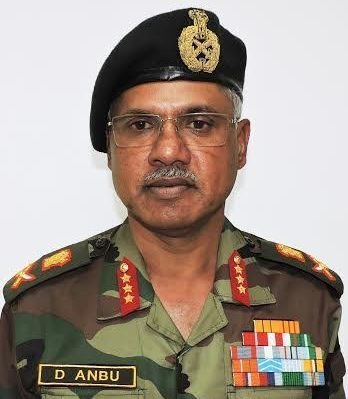
Lieutenant General Devraj Anbu new chief of Northern Command

He has participated in Indian Peace Keeping Operations (IPKF) in Sri Lanka, United Nations Peace Keeping in Namibia, Counter Insurgency and Counter Terrorist operations in Manipur and Jammu and Kashmir.

348

Lieutenant General Devraj Anbu, AVSM, YSM, SM

GOC-in-C, Northern Command

 on Wednesday was appointed as the new chief of strategically important Northern Command in place of Lt Gen D S Hooda, who retires at the end of this month. The Appointments Committee of Cabinet headed by Prime Minister Narendra Modi cleared the name of Anbu for the post of General Officer-in-Commanding-in-Chief (GOC-in-C) with effect from December 1. Udhampur-based Northern Command is a strategically important army formation that overlooks the functioning of Srinagar-based 15 Corps, Jammu-based 16-corps and Leh-based 14-Corps. Anbu was posted as the Corps Commander of Tezpur-based 4 Corps. His last posting in Jammu and Kashmir was as a Brigadier in 2008-09.

He takes over at a time when exchange of fire along the Line of Control has been happening quite frequently especially after the Indian army carried out surgical strikes on September 29 this year, killing at least 19 Lashker-e-Taiba militants inside the territory in Pakistan-occupied-Kashmir. Lt Gen Anbu Commissioned in the Sikh Light Infantry Regiment in June 1980 has had a distinguished military career in which he has executed important Command and Staff appointments in India and abroad. He has participated in Indian Peace Keeping Operations (IPKF) in Sri Lanka, United Nations Peace Keeping in Namibia, Counter Insurgency and Counter Terrorist operations in Manipur and Jammu and Kashmir.

He was awarded the Sena Medal Gallantry for operation in Siachen Glacier. The General has also been awarded Ati Vishisht Seva Medal and Yudh Seva Medal for his distinguished service.


Northern Command (India)

North Western Army” redirects here. For the Chinese revolutionary army, see Guominjun.
Northern Command
IA Northern Command.jpg

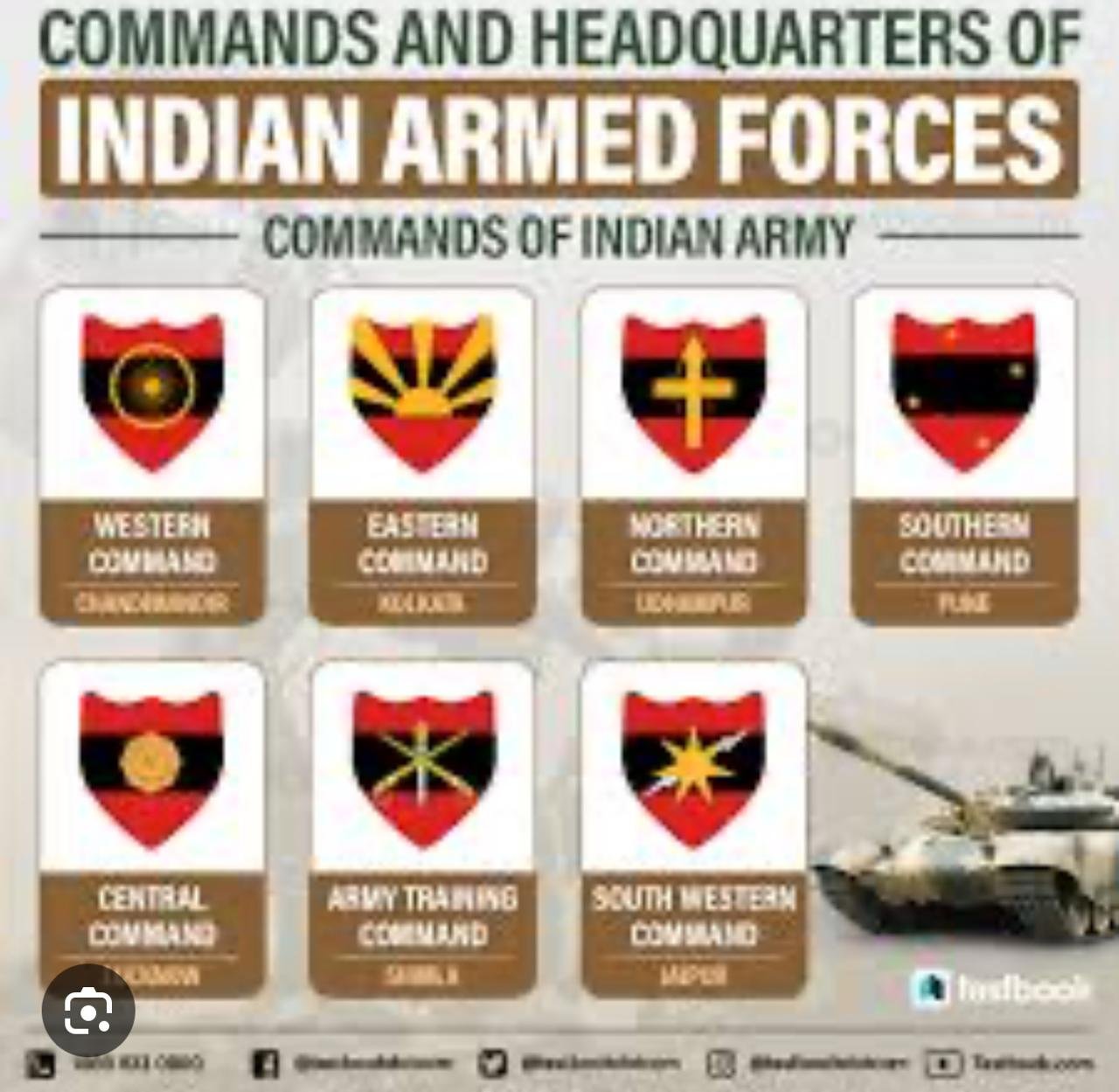
Northern Command’s insignia today
Active 1908-1947
1972 – Present
Country  India
Branch India Indian Army
Type Command
Garrison/HQ Udhampur
Commanders
Current
commander
Lt Gen Devraj Anbu

The Northern Command is a Command of the Indian Army. It was originally formed as a formation of the British Indian Army in 1895, scrapped upon India‘s independence in 1947 and later reformed in 1972. Its present commander is Lt Gen Devraj Anbu.[1]

History

The Presidency armies were abolished with effect from 1 April 1895 when the three Presidency armies became the Indian Army.[2] The Indian Army was divided into four Commands (Bengal Command, Bombay Command, Madras Command and Punjab Command) each under a lieutenant general.[2]

In 1908, the four commands were merged into two Armies (Northern Army and Southern Army): this system persisted until 1920 when the arrangement reverted to four commands again (Eastern Command, Northern Command, Southern Command and Western Command).[2] Northern Command was re-formed again as North Western Army in April 1942 to guard the North West Frontier. It controlled the Kohat, Peshawar, Rawalpindi, Baluchistan and Waziristan Districts.[3] The former Western Command, was absorbed by the new North Western Army at that time.[4] The formation reverted to the title Northern Command in November 1945.[5]

In 1947 Headquarters Northern Command became the new headquarters of the Pakistan Army. General Sir Frank Messervy continued to serve as Chief of Staff of the Pakistan Army from 1947 to 1948.[6]

Composition 1942-45

The composition was:

Commanders prior to Independence

Commanders included:[7]
General Officer Commanding-in-Chief Punjab Command

General Officer Commanding-in-Chief Northern Army

General Officer Commanding-in-Chief Northern Command

General Officer Commanding-in-Chief North Western Army

General Officer Commanding-in-Chief Northern Command

Re-raising

The government of India decided to raise a separate command to oversee operations in the northern borders with Pakistan and China. Lt Gen Premindra Singh Bhagat, VC was appointed as the first Army Commander in June 1972. Bhagat’s main activities as Army Commander were the improvement of defences and the living and working condition of his troops.

[8]Headquarters for the command was established at Udhampur, J&K.[9]

The XIV Corps (Leh), XV Corps (Srinagar) and XVI Corps (Nagrota) control the operational units in Northern Command.

71 Independent Sub Area is part of the Command. III Corps and its 57th Mountain Division were shifted into the command as a reserve for Operation Parakram in 2001-2002.[9]


IAF to relax medical norms

IAF to relax medical norms

New Delhi, November 7

A number of abnormalities or ailments which earlier rendered people unfit to gain entry into the Air Force or fly aircraft are soon set to go.With no scientific evidence to back notions such as spinal deformities affect flying, the Air Force will soon modify its medical norms for pilots and new applicants declared unfit due to this reason.Also, with new medical technologies and better drugs available for treatment, several ailments such as asthma, diabetes, coronary heart diseases and hypertension may also go off the list. The Medical Board of the Air Force has also removed 19 drugs like anti-diabetics off the list, which were earlier considered as a “taboo” for flying.“After going through several national and international literature and various research we have done in our Institute of Aerospace Medicine, we are trying to get some of the pilots, who are declared unfit for flying…We are looking into those issues and taking out a new order for commissioning, selection and flying purposes and they will be declared fit (for flying),” Air Marshal Pawan Kapoor, Director General Medical Services (Air), said referring to spinal deformities. “There are 10-12 ailments which have already been taken off. Rest are in the pipeline and decision is likely in 7-10 days,” he said. He said while medical approval has been taken, an administrative approval is awaited and the process will be done without compromising with flight safety.Kapoor was speaking on the sidelines of 64th International Congress of Aviation and Space Medicine here, attended by experts across the world from the field of aerospace medicine from both civil and military aviation.The IAF had formed a panel comprising spinal surgeons, neurosurgeons, physicians, radiologists and it was concluded that there is no evidence to show spinal deformities can affect flight safety and physical capability and conditioning of the pilots. — PTI


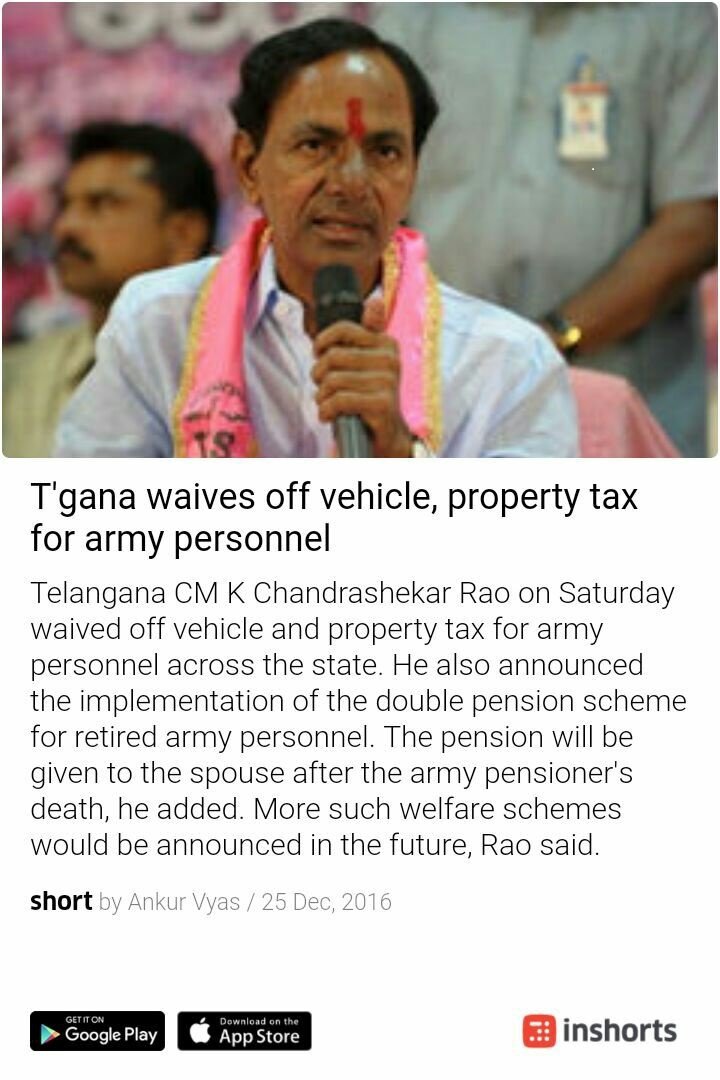
Telangana govt. waives off vehicle, property tax for army

Hyderabad (Telangana) [India]: Telangana Chief Minister K Chandrashekhar Rao on Saturday reiterated that his government is committed to the welfare of the retired army personnel and added that his government has taken several measures for the welfare of the military personnel and some more are in the offing.

The Chief Minister held a high-level review meeting on the welfare of the retired military personnel at Pragathi Bhavan here.

During the meeting the Chief Minister decided to implement double pension scheme for the retired military personnel.

The double pension benefit will also be given to the spouse incase of death of the army pensioner. This pension will also be paid along with pensions of other employees every month.

He has also decided to extend benefits given to the army personnel martyred while serving to those lost their lives due to ill health and accidents too.

He has instructed the officials not to show any discrimination in this regard and said that retired army personnel working as Special Police Officers will be paid salaries along with other employees every month.

Rao said there is a need to strengthen the Army Welfare Boards. There are only 10 Sainik Welfare Boards in the districts, which will be extended to all the newly formed districts in the State.

He said steps will be taken to set up two Army Welfare Offices in Medak and Adilabad districts.

The compensation money given for those getting the gallantry awards would be more in the Telangana State compared to other states.

He also said that reservation should be given to the children of serving and retired army personnel in the Government residential Schools.

“The State government should accord recognition to the schools run by the army. Students joining NCC, Scouts and Guides should be encouraged and those pursing courses in National Defence Academy from the State should be given fellowships,” Rao said.

Since the Centre has agreed to set up an Army School in Warangal, Rao said, a Memorandum of Understadning in this regard will be signed as early as possible.

He also waived off vehicle tax for the the army personnel and will be exempted from paying tax in the state.

Meanwhile, the retired army personnel representatives have thanked the Chief Minister for enhancing the pension of war widows, giving two per cent reservation while allotting the two bed room houses, thereby exempting the military personnel from paying tax on their property.

Ministers Naini Narasimha Reddy, State Government’s Principal Advisor Rajeev Sharma, MPs Capt. Laxmikanth Rao, Vinod Kumar, Principal Secretaries Rajiv Trivedi and S Narsing Rao, Home Secretary Ms Anitha Rajendra, Southern India Army Commandant General Maj Gen S Pachauri, Secunderabad Station Brigadier Ajay Singh Negi, Colonel Tarun Kumar, Colonel Atul Rajput, Lieutenant General Jaswinder Singh, Captain Navneeth Singh, Army Welfare Committee Members Sri Suresh Reddy, Jagan Reddy, Pochaiah, Prabhakar Reddy, Manohar Reddy and others participated in the meeting.

IMG-20161225-WA0063