All posts by webadmin

Soldiers want a shot at change

VETERANS AT WAR Vow to avenge humiliation at hands of Modi govt with their votes

From page 01 CHANDIGARH: The Modi government’s failure to implement one rank-one pension (OROP) principle in its totality could have significant ramifications on the elections in Punjab, which has 1.5 lakh voters in the armed forces and is undertaking the firstof-its-kind exercise of e-voting for soldiers.

HT FILEThe Modi government’s failure to implement ‘one rank, one pension’ in its totality could have significant ramifications on elections in Punjab, which has 1.5 lakh voters in the armed forces.

Brig Harwant Singh (retd), national president of All India Defence Brotherhood (AIDB), says they are marshaling soldiers and ex-servicemen to come out in large numbers to defeat the Akali-BJP combine in Punjab. “I am already canvassing in Sangrur, and we are rallying troops across the state,” says Brig Harwant. “Kautilya said that an enemy’s enemy is a potential friend. True to that principle, we will encourage voters to cast their lot with  the Congress , but not with the BJP or its ally,” he adds, claiming that it was “soldier power” that led to state Congress president Capt Amarinder Singh’s win from Amritsar in the 2014 Lok Sabha polls.

The veterans are sore with the successive state governments for not fulfilling the promises made in their manifestos too. Capt Reet MP Singh (retd), secretary, War Decorated, says he’s stopped reading manifestos. “It’s just a paper, it doesn’t mean a thing,” he growls. Brig Baljit Singh Gill (retd) of War Decorated India fumes that the SAD failed to fulfil its 2012 promise of removing VAT from CSD products.

Congress manifesto’s promise to make ex-servicemen the “guardians of governance” if the party comes to power, however, is igniting some interest. “Capt Amarinder has a soft spot for soldiers. It’s easier to meet him than any other politician,” says Col BS Sohi (retd), adviser to C&C, adding that Amarinder has the mettle to fulfil his promise. “The guardians of governance,” says Amarinder, “will be a group of ex-servicemen from panchayats and blocks to districts, right up to the chief minister. This disciplined force will be used to keeps tabs on the implementation of schemes.”

Amarinder was present at a press conference in New Delhi last month in which Maj Gen Satbir Singh (retd) of Indian Ex-Servicemen Movement (IESM), which has been spearheading the fight for OROP, pledged support to the Congress in all the states going to polls. Later, however, it was clarified that he’d made this statement in his individual capacity.

Citing the low victory margins polled during the 2012 polls, Brig Gill says soldiers could prove to be a swing factor this time. “In 2012, at least 15 seats saw a victory margin of 50 to a few hundred votes. This is where the votes of soldiers, serving or retired, can play an important role.”

Yet, Amarinder is the lone ex-serviceman fielded by Congress. The SAD and AAP fare a little better with two candidates each. While the SAD has fielded former army chief Gen J J Singh (retd) from Patiala against Amarinder, and Tejinder Pal Singh Sidhu, an army captain before joining the civil services, from SAS Nagar, the AAP has nominated Capt Bikramjit Singh Pahuwindia, a Shaurya Chakra awardee, from Khemkaran, and Brig Raj Kumar (retd) from Balachaur.

Gen JJ Singh (retd), however, claims the ex-servicemen are being misled. “I still think Akalis are the best bet for soldiers in Punjab.”

Regardless of the arguments, it will all boil down to the number of soldiers who actually vote. As Brig Kiran Krishan (retd) of the IESM puts it: “The deeper issue is whether the serving soldiers, who are quite well-informed these days, will actually get to cast their votes.”

Punjab chief electoral officer V K Singh is hopeful that they will. With the Election Commission registering voters in cantonments as per the People’s Representation Act, 1951, which specifies that soldiers and their families can cast their votes at the place of posting, this poll is likely to see brisk voting in the cantonments as well, says VK Singh. He adds that the EC has carried out the process of registering votes in the cantonments of Amritsar, Bathinda, Jalandhar, Ferozepur, and Gurdaspur, though he did not have the exact number as these soldiers have been registered as general voters.

He is optimistic that the voting percentage of soldiers, which is usually 3%, may jump to 70% in the February 4 polls, given the election office’s efforts to proactively encourage postal ballots and introduce e-voting for five constituencies, which include all the four seats of Ludhiana and one of Jalandhar central. Plus, the election office is hoping for a good response to postal ballots as well amid the growing awareness among soldiers about the need to vote.

Angry General rains fire on Capt

The Patiala royal is upset as I have questioned his track record in the army, where he never spent a single night on any border and remained an ADC with senior officers. GEN JJ SINGH, ex-army chief and SAD candidate from Patiala Urban

PATIALA: Lashing out at Punjab Congress President Captain Amarinder Singh, Shiromani Akali Dal candidate from Patiala and former Army chief General JJ Singh (retd) said that Amarinder has questioned the wisdom of former PM Manmohan Singh by labeling him a “lackluster and average general”.

“Amarinder has raised illogical points over my promotion as Chief of Army Staff, and he has questioned the wisdom of former PM Dr Manmohan Singh and other senior Congressmen, who as part of Cabinet Committee of Appointments, had cleared my appointment as Chief of Army Staff. If Amarinder labels me an ‘average cadet’, he is questioning the wisdom and decision of Dr Manmohan Singh,” said General while rubbishing the charges of Capt Amarinder.

Clearly enraged at being labeled as a “lackluster and average general”, JJ Singh said an average general doesn’t get the highest civilian award from the Government of France or become a Governor. “The Patiala royal is upset as I have questioned his track record in Army, where he never spent a single night on any border, and remained an ADC with senior officers,” he fumed.

“Let me further make an addition, just as he is committing a fraud by claiming to have fought war, he is committing a big fraud by claiming to be an Army historian. The book titled ‘The Monsoon War’ was actually written by Lt Gen Tejinder Shergill (retd), and Amarinder had grabbed it and put his name as the first writer. Everyone knows that he was never on border. As an ADC, he remained in a helicopter or in the convoy of Gen Harbaksh Singh. Everyone knows an ADC’s duty is to keep the General’s bag, stand behind him or serve him a peg (liquor)”, said Gen JJ Singh.

He said that before questioning his credentials, Amarinder must explain his friendship with a Pakistan-based journalist. “What relationship does he have with his Pak-based friend. Voters want to know it,” he thundered. “It’s a serious matter as his friend is a defense correspondent in Pakistan, and this issue pertains to national security,” he added.

He rued that Amarinder had sent his wife Preneet Kaur to Patiala for canvassing. “People this time will punish Amarinder for being absent from the constituency,” he warned.

Sidhu like my son, has joined Cong unconditionally: Capt

TEAM SPIRIT Cricketer­turned­politician Navjot Sidhu shows bonhomie with Punjab Cong chief at first joint press conference after the former joined the party

Everybody is aware that it was Capt Amarinder Singh who saved Akali minister Bikram Singh Majithia from the CBI probe into the drug case. BHAGWANT MANN, AAP’s Sangrur MP Amarinder had labelled the ‘Awaaz­e­Punjab’ as the ‘Tonga Party’. Now, he is thanking leaders of the same outfit for joining the Congress. HARSIMRAT KAUR BADAL, Union minister, SAD leader

AMRITSAR: Coming together for the first time after cricketerturned-politician Navjot Singh Sidhu joined the Congress, party’s Punjab president Capt Amarinder Singh on Thursday said Sidhu had joined the party without any pre-conditions.

GURPREET SINGH/HTAt the Amritsar press conference on Thursday, Navjot Singh Sidhu said about his equation with Capt Amarinder Singh: ‘Son is a son and father is a father.’ The Punjab Congress chief said about the former cricketer: ‘I am his wicket­keeper.’

Sidhu, who maintained a low key throughout the press conference, showed respect to Captain with a bow and when asked to say something about Amarinder, he said: “Son is a son and father is a father.”

Capt Amarinder Singh made it clear that party promised nothing to Sidhu, saying, “Sidhu is like my son and I am very happy to have him in the party. Sidhu was not offered anything and he has come unconditionally. I will be in Lambi and see the Badals, he will look after Amritsar.” Amarinder said he had known Sidhu’s family from the days when he (Sidhu) was a child and his joining the party was great.

On a question whether he was the ‘Captain of Sidhu’, Amarinder said, “I am his wicketkeeper.” When Capt Amarinder was asked what if Sidhu was made the chief Minister by the party high command, Sidhu intervened to answer, saying, “If my aunty were a man, she would be uncle.”

Amarinder said Sidhu will be the star campaigner of the party. “In Lambi I will give a bigger thrashing to the opponents,” Sidhu said.

Amarinder later tweeted a photo of the two together: “Addressing our first press conference together. @sherryontopp (Sidhu) is like my son, and I’m glad we’re together in our #BattleForPunjab.”

WILL REINVESTIGATE DRUGS CASE: CAPT

Captain Amarinder said if elected to form the government, he would get reinvestigated the drugs case in which revenue minister and senior Akali leader Bikram Singh Majithia’s name had cropped up and throw behind bars all those found guilty.

On AAP allegation of being soft towards chief minister Parkash Singh Badal, Amarinder said he was fighting from Lambi to defeat Badal Senior. “Does the media want me to physically thrash Badal?” he said.

With the party’s nine candidates from the region by his side, Captain Amarinder also exuded confidence that his party will win all the seats in Majha.

Claiming that the state was in ruins under the Badal rule, Captain Amarinder said he needed a clear two-third majority to make a difference to bring Punjab back on the path to progress.

To another question, Amarinder said murmurs of dissent in the Congress triggered by the ticket allocation will be doused soon.

Captain wins Lambi battle, virtually!

A MEME MADE BY THE SOCIAL MEDIA TEAM OF CONG STRATEGY FIRM HAS GONE VIRAL ON TWITTER AND WHATSAPP

CHANDIGARH: Bollywood actor Shah Rukh Khan’s release Raees is already making waves in pollbound Punjab.

The movie, set to be released on January 25, has inspired the makeover of state Congress chief Captain Amarinder Singh as Punjab’s very own gladiator.

A meme made by the social media team of party poll strategist Prashant Kishor’s Indian Political Action Committee (IPAC) shows Amarinder’s face superimposed on action hero Akshay Kumar of Khiladi 786, single-handedly taking on chief minister Parkash Singh Badal, his son and deputy CM Sukhbir Singh Badal and Aam Aadmi Party chief Arvind Kejriwal.

he 27-second video has the background score of Raees and ends with Shah Rukh’s dialogue, “Aa raha hoon (I am coming).” The destination is Lambi and date January 18, the day Amarinder filed his nomination papers against Badal.

The video has gone viral on social media and become a WhatsApp and YouTube hit. IPAC’s Rishiraj Singh says the video was made by a social media volunteer to highlight the Lambi battle and show that one Amarinder can take on three rivals.

The Captain seems to have won the Lambi battle, at least virtually!

Gandhis, Manmohan, Azhar on Cong ‘star’ list

CHANDIGARH: With two stars competing for the limelight, the Congress may not need more. Though Punjab Congress chief Captain Amarinder Singh is named at number eight on the list of 40 star campaigners and Navjot Singh Sidhu is on the 38th spot, the Congress will rely on their star appeal with party’s top leaders, former prime minister Manmahon Singh, party president Sonia Gandhi and vice-president Rahul Gandhi playing a supporting role.

The dates for rallies of Manmohan, Sonia and Rahul will be finalised by the national unit. A party statement said Sidhu will campaign in Lambi, the seat where Amarinder is taking on CM Parkash Singh Badal, while Amarinder will campaign across the state.

Former cricketer Mohammed Azharuddin is also a part of the list along with actor Sonu Sood, who hails from Moga.

The list includes several Congress chief ministers and former chief ministers from various states, as well as a host of senior national-level party leaders, a party release said in Chandigarh on Thursday. These include Himachal Pradesh chief minister Virbhadra Singh, former Rajasthan chief minister Ashok Gehlot as well as former Punjab chief minister Rajinder Kaur Bhattal.

But former Haryana CM Bhupinder Singh Hooda is not in the list. Hooda had stated he would not campaign in Punjab over the Sutlej-Yamuna Link (SYL) canal row, and Amarinder had said that Punjab Congress will not extend an invite to those “against the state’s interests”.

Among the top All India Congress Committee (AICC) leaders chosen to give a boost to the Punjab campaign are general secretary Ambika Soni, former Lok Sabha speaker Meira Kumar and former Union ministers Sushilkumar Shinde and Pawan Kumar Bansal. AICC in-charge of Punjab affairs Asha Kumari is already camping in Punjab for the past several days to steer the party campaign in the state, while AICC general secretaries Digvijaya Singh and Mukul Wasnik will also add their weight to the campaign in the coming days.

Rajasthan PCC president Sachin Pilot and UPCC president Raj Babbar have also been listed by the Congress to strengthen the Congress campaign in the state. The list includes several Congress MPs and former MPs, besides All India Mahila Congress president Shobha Oza.

Several Punjab leaders who are contesting too are on the list as the party high command has told them to lend support to the candidates in other areas.

Captain, Navjot Sidhu to hold rallies

FATEH GARH SAHIB: Despite Congress having faced protests in Amloh constituency by its rebel Jagmeet Sahota, Punjab Pradesh Congress Committee (PPCC) chief Captain Amarinder Singh has chosen the segment for his first campaign rally after filing the nomination from Lambi on Wednesday.

HT PHOTOKaka Randeep Singh addressing party workers in Mandi Gobindgarh on Thursday.

District Congress president Harinder Bhambri, who was a ticket contender from the same seat, informed on Thursday that Captain will hold a rally in the industrial town of Mandi Gobindgarh on Saturday, in support of the sitting MLA and candidate Kaka Randeep Singh. Star campaigner Navjot Singh Sidhu will follow next, added Bhambri.

Bhambri held a meeting with party workers here on Thursday and assigned duties for the rally. Meanwhile, Randeep’s wife Behishta Singh was busy in doorto-door campaign along with Neelam Rani, secretary, Punjab Mahila Congress .

Earlier, the erstwhile PPP contestant from the constituency, Jagmeet Sahota, had protested against the candidate when Congress chose Randeep Singh over Sahota in December last year. He rebelled and decided to contest as an independent candidate.

“If Capt comes here, people will ask him why he kept on befooling people, choosing outsiders every time,” said Sahota.

Returning officer impounds 13 SAD publicity vans in Moga

MOGA: The sub-divisional magistrate (SDM)-cum-returning officer (RO) Moga Charandeep Singh, impounded 13 publicity vans belonged to the ruling Shiromani Akali Dal (SAD)-Bhartiya Janata Party (BJP) alliance, for violating the model code of conduct on Thursday.

HT PHOTOThe vehicles bearing flexes of SAD­BJP alliance in Moga on Thursday.

As per the information, a convoy of at least 13 vans installed with flexes and hoardings carrying pictures of Prime Minister Narendra Modi, chief minister Parkash Singh Badal and deputy CM Sukhbir Singh Badal were spotted by RO near sub-jail in Moga.

“Taraki di bani rahe raftaar, Ik var Akali-Bhajpa Sarkar (To continue the pace of developments, vote for SAD-BJP once more),” read the hoardings on the vans.

Sources said that these vans were on the way to the Jalalabad, which is Sukhbir’s constituency, to carry out promotional activities there.

“When I stopped the vans and asked for the permission documents to carry out election publicity material, the drivers were failed to show any documents after which I called for the flying squad team and district transport officer Moga,” said Charandeep.

The RO said that as the vans were not canvassing for any particular candidate or promoting the party, he has directed the DTO Gurwinder Singh Johal to take action for violating the code of conduct. According to rules, no vehicle can carry out any kind of publicity of any party or candidate during the model code of conduct without the permission of chief electoral officer (CEO).

Johal said that he has impounded the vehicles after the drivers failed to show any documents, including the registration certificates and driving licenses and has given them time to get the documents.



China’s defence budget set to be 3 times that of India

China’s annual defence budget is set to officially cross $150 billion for the first time in 2017, the finance ministry said on Sunday, three times India’s planned defence spending for the fiscal year.

The ministry’s statement came hours after the exact figure for the sector was surprisingly not included in the government work report released earlier in the day.

Speaking to the Associated Press, an unnamed official from China’s finance ministry pegged the defence budget at 1.044 trillion Yuan or $151 billion, a 7% increase from last year’s outlay. The 7% hike was announced by National People’s Congress spokesperson Fu Ying. In comparison, in the fiscal year starting April, India plans to spend 3.6 lakh crore rupees or $51 billion.

No reason was offered as to why the budget wasn’t part of the work report – as is the case every year – which was released by Premier Li Keqiang at the Great Hall of the People to mark the beginning of the annual session of China’s rubber stamp Parliamen. “A ministry information officer told AP the exact figure had already been released to the almost 3,000 delegates to the NPC. But he didn’t say why it had been withheld from the government budget report, where it usually appears,” the news report said.

Beijing would continue to deepen military reforms while upholding the party’s absolute leadership of over the armed forces, the government work report said.

China’s defence budget is considerably less than that of the US though the Communist country has the largest armed forces in the world – China defence spending last year accounted for less than a quarter of that of the US.

But the Chinese government has been criticised about not being transparent enough with information about its expenditure in defence sector, which is undergoing a modernisation programme.

ECONOMY FORECAST LOWEST IN 25 YEARS

China on Sunday reduced its growth forecast to around 6.5% for 2017, down from the target range of 6.5-7% it had put itself up for a year before, a government report released at the inaugural session of the country’s Parliament said.

The closely-watched growth target for the world’s second largest economy was a 25-year low since the previous low of 6% in 1992.

Pushed down by falling demand for its goods globally and overcapacity in its manufacturing and steel sectors, China’s growth rate has fallen sharply in recent years, raising fears of a crippling slowdown.

“[China will] pursue better results in actual economic work,” Premier Li Keqiang said. “Stability is of overriding importance,” Li said.

The report said the projected target was in line with both economic principles and realities, adding it will help stabilise market expectations and facilitate the country’s structural adjustments.


Basic Constitutional Questions about Defence Services

THE GREATEST ENEMY OF KNOWLEDGE IS NOT IGNORANCE.
IT IS THE ILLUSION OF KNOWLEDGE!

Do you know the answers to these basic questions about the Defence Services? 
If not, go to the link given right in the end.

1.    What does it mean to be a Commissioned Officer?  Why are Defence Officers “Commissioned Officers” while IAS, IPS, etc. are not?
2.    Why is it that the Supreme Commander of the Defence Forces is the President of India and not the Prime Minister, whereas all other Central Govt Services are under the control of the Prime Minister?
3.    Have you read the Primary and Secondary Roles assigned to the Defence Forces by the Constitution of India? (As a Defence Person, you should remember them!)
4.    In what Article of the Constitution of India are defence personnel permitted to prefix “Title of Ranks”, while civil counterparts cannot prefix any Title?
5.    How are officers in the Defence Forces appointed and how and why does their oath differ from that of a civil servant?
6.    Why is the parchment of commission authenticated by a (military) General and not by any civil officer?
7.    Under what constitutional provision is the military obligated to intervene and declare martial law in the country?
8.    Constitutionally, is the military subordinate to the PM and his cabinet?
9.    Why are Defence Officers never on election duty?
10.    When and why did the Army Chief caution Indira Gandhi in writing to remain within the limits of the Constitution? 
11.    Why is it that baboo(n)s continue to reduce the status of defence service personnel?
12.    What are the constitutional provisions for the status and service conditions of the Defence Forces?
13.    What are the powers of a Commissioned Officer which are not vested with civilian officers?
14.    What does the Constitution say about inter se seniority of defence services and other civilian services such as IAS, IPS, etc.?
15.    Does the Govt have a legal right to downgrade status and compensations of the Defence Forces since they are in power?
16.    Why does the military not go to court to resolve its issues of status and pay parity?
17.    What happened to the promised white paper on the problems and also formation of a military commission? 

Do You Know Your Defense Forces? FAQs: On the Constitutional Status of Defense Forces?

 
Thanks readers for overwhelming response. Two more blogs will come. Second one in continuation of present one dealing with aspects like what does apolitical means in terms of law and Coup Proofing Vs Coup Phobia and third one on “What Rots Indian Military within”?

Question No 1. Military veterans seems to be always agitated on issues like pay, pension and allowances. Why is it? Are they depressed or greedy? 
Answer.
Military veterans vocal on electronic, print and social media or agitating on Jantar Mantar airing their concerns on many issues concerning military, are neither depressed nor greedy. Soldiers of Indian army give more preference to service to nation and democracy than money. There are certain pressure points which govts after govts have not only ignored since 1973, but are creating more reasons for agitations.  
As for as public is concerned, in independent India it is happening for the first time, that in last 5-6 years military veterans have taken the course of agitation on key issues in public domain creating ripples in minds of common man creating such false impressions. The issues are pending with govt since 1973 and now the patience of soldiers is at breaking point. 
Question No 2. But why shall Govt show such apathetic attitude towards soldiers? Soldiers defend nation and render great service and politicians, babus and govt are surely aware of it? 
Answer
It puzzles solders too. Why such apathetic attitude towards soldiers? Serving soldiers do not have unions or lobbies like civilians. They always had blind trust in govt but in 1973 they were delivered a serious blow when their status, pay, pensions and allowances were reduced drastically by 3rd pay commission and that of civilians raised.  It created serious imbalance and that too once soldiers had delivered an unprecedented and historic military victory in 1971 war.  Instead of award, soldiers were punished. It never happens like that. It is a sure way of killing the high moral of a victorious army setting a wrong precedence.   
Soldiers have a system of reporting their problems to their commanding officers, who then report the matter to services HQ at Delhi. Military Chiefs then take up matter with the govt. Soldiers followed the same system and had trust in the ability of their chiefs and Govt. Naturally such serious imbalance created by 3rd pay commission were reported to Govt through proper channels. Then PM Indra Gandhi assured Military Chiefs of resolution of their problems but it never happened. 
Since 1973. chiefs after chiefs have kept reporting the matter to Govt. Govts after Govts have kept assuring soldiers about resolution of their problems but without any solution in sight. Rather various political parties have used frustration of soldiers for petty vote bank politics. It has now created a situation wherein soldiers have lost trust in ability of military chiefs to get solution and started doubting the intentions and seriousness of Govts to deliver justice forcing them to came on street and social media bringing matters into the notice of public. After in all in democracy people are supreme. It is surely not a healthy sign for the democracy. It has also created problem within military where abilities of top leaderships to effectively communicate with govt are now being questioned?  
Question 3. Still why is Govt not serious? Soldiers on street in democracy is a frightening scene? 
 
Answer. 
It is surprising for soldiers too. Why is govt not serious? Why are political parties only interested in using frustration of soldiers for votes? Ignoring the problem without giving any justification is like adding the fuel to fire. Unfortunately, such apathy is creating impressions that corrupt politician- babu nexus has no time for serious issues of the nation and soldiers demand for justice is no exception. Look around, justice system has collapsed, govt administration is totally rusted, corruption rules everywhere, parliament has become defunct, proxy govts rule, no political party has internal democracy, funding channels are kept secret, banking is overburdened with NPAs, gap between poor and rich are widening, farmers are committing suicide. A situation of hopelessness exists. It looks politics has become a profession of employment for failed people who are only interested in loot and plunder. Babus, banks, judiciary, some crony businessmen and temple priests, have joined hands with corrupt politicians to create a mafia. Naturally such mafia has no time and sensitivity for soldiers and justice or what else could be the reason? 

Indian soldiers are sensitive, committed to constitution and responsible people. Soldiers know that in the given situation of hopelessness, if they also come on street, as it happens in other countries, it will deliver a death blow to the nation. Naturally so, military veterans have taken the responsibility to communicate with “we the people” who are supreme in democracy, keeping the threshold of agitation well below acceptable limits so that the situation doesn’t explode. 
Questions 4. What are the major demands of soldiers? 
 
Answer 
 
The major demands of soldiers are:
1. Status of soldiers as given in the constitution be respected. 
2. Accordingly, serious imbalances and disparities between compensation model of soldiers and other govt civil employees be removed based on best HR practices taking into account the average career earnings including pension  benefits.

Question 5.  What are the constitutional provisions for the executive authority of the military? 
Answer
Constitutional military executive authority of the soldiers comes out of the following articles:
1. Article 18;- respects the “Title of Ranks” of Soldiers even after his death. Soldiers never retire. Title of Ranks never die. 
2. Article 34:- Gives military a political executive authority to intervene by declaring martial law only to restore democracy.  In India parliamentary democracy is supreme. This article makes Indian military as soldiers totally committed to democracy and “we the people”. There may be situation where state fails to govern as per constitution or parliament is unable to function due to any reasons or rise of a civilian dictator endangers democracy or external/ internal aggression endangers it . In such situations constitution makes obligatory on military authorities to intervene to protect and restore democracy. Baba Saheb Ambedkar was a very wise man. He could sense that in independent India, probability of rise of civilian dictators are more than rise of a military dictator. He therefore under this article, entrusted military a role of silent and invisible custodian of Indian democracy.  History of independent India is testimony to the fact that Baba Saheb was right. Military has been loyal to constitution and we the people whereas Indra tried to become dictator declaring unconstitutional emergency. Military did play its role to protect democracy, when then Army Chief cautioned Indra to remain within limits of constitution. In fact emergency was lifted as all three chiefs wrote a top secret letter to Indra Gandhi advising her to lift emergency and call for elections. Probably this is right time the content of this letter shall be disclosed to public. 
3. Article 52 read clubbed with Article 74:- The sovereign authority of govt is vested in the President who wears two distinct hats. One of being head of civil political govt and other of supreme commander of defense forces. These two roles of the president are independent. Under this article the hard and soft national powers are identified and constitutionally divided. While the democracy under the pre-dominance of soft power functions under the leadership of Prime Minister and his cabinet, the total command authority over the hard power of military is denied to him/her. Baba Saheb was a visionary and had deep knowledge of Indian history. He wisely so separated national hard power from the national soft power. Baba Saheb knew if PM or defense minister are given total command authority over military it will give rise to many civilian dictators.  Therefore under this article if read clubbed with article 74, the political direction to military comes from cabinet headed by PM, administrative support comes from ministry of defense and military retains the authority and freedom to take military executive decisions and that is the reason precisely military is an attached organisation to the political govt. Constitutionally, military can not be subordinate to PM and his cabinet as President who is senior to PM is its head and also PM is not given command of military. In Indian democracy where PM exercises executive political authority and President is constitutional head of military, services HQ can only be integrated with civil govt and can not be merged as is the case in USA.  
4. Co-relation of Article 34 on Article 52 and 74. Articles 52 and 74 do not take away the authority as vested in supreme commander of defense forces and military commanders as Silent and Invisible Custodians of Indian Democracy. There could be situation where advice of PM (aspiring to become a dictator) and his cabinet to President could be detrimental to democracy. Under article 52 and article 74, president is left with no choice except to accept their advice after one review however under article 34 supreme commander of defense forces or military commanders can exercise military authority as vested in them only to defend constitution and democracy.

Question 6. Constitutionally, what are the roles of the defense forces? 

Answer


If seen in the backdrop of above constitutional provisions, the roles of Indian Defense Forces are:

1. Primary Role. To defend Indian Constitution and democracy against any of the following threats:

a. Any external aggression or threat in any form on the geo-political and economic interests of India, territories under the political control of Indian Govt and Indian constitution. The external threat may not be always in form of military invasions. It may appear in form of externally abetted political assassinations,  cyber or economic wars, threatening geo-poltical alliances or posturing etc.

b. Any internal threat endangering functioning of the constitution and democracy which may be in forms of armed rebellion or political takeover by a civilian dictator.

2. Secondary Role. To assist civil administration in maintenance of law and order and in case of natural calamities, disasters and disturbances only when requisitioned.

Please note that defenses forces can act in their secondary roles only when requisitioned. However for preforming their primary roles, no such orders or requisition are required. However as long as an elected political govt under parliamentary democracy is functioning, defense forces will always seek their political directions before any action. In case such govt seize to exist or nuke attacks have obliterated such govt or a civilian dictator has taken over violating constitution or any state govt has rebelled or any armed rebellion has seized any part of territory/ govt administration, defense forces will act under the military authority as vested in them to protect constitution and shall not wait for any political directions.

Question 7. What are the constitutional provisions for the status and service conditions of the Defense forces?

Answer
Chapter 14 of the constitution deals with “Services of the Union and States”. Though defense forces are created under articles 34 and 52, but their service conditions are constitutionally governed under this chapter. Relevant article are as under:
1. Article 309 empowers parliament to make legislation for the service conditions of various public services including defense forces.
 2. Article 310 Makes provisions for the tenure of all commissioned officers of the defense forces personals and civilian gazetted officers to be at pleasure of president. This article mentions various govt services in order of their seniority in terms of constitutional status. Officers of the defense forces are first in the seniority even ahead of civil services of the union (discontinued after independence) and All India Services (IAS, IPS, IRS, IFS etc).
Articles 311- 323 under the chapter deal with various safeguards provided to civil services and forming of Public Service Commissions.
Legal provisions for withdrawal of Pleasure of President in respect to officers of the  defense forces differ from the civil officers which  for defenses forces are further given in respective services acts, rules and also regulations.
Under article 309, various civil services acts for giving various service conditions in details like IAS acts and rules or IPS acts and rules have been framed. However in relation to defense services Govt and Parliament has chosen to remain silent and adhocism has been created. Absence of act and rules for service conditions of defense forces in detail as mandated under article 309, is the root cause of soldiers grievances. Present Defense Acts and Rules deal more with the discipline aspect of forces. The defense regulations are customs of Monarchy. India is a democracy and defense forces shall not be administered under adhoc regulations.
Question 8.  How are officers in defense forces appointed and how does their oath differ from a civil servant?
Answer
Officers of the defense forces in addition to being gazetted, are also commissioned officers. The word “commission” is mentioned in the parchment given to them at the time of their commissioning wherein they take oath of allegiance not only to the constitution as taken by civil officers but also to obey lawful command of their superior officer up in the chain of command after due observations to it being a lawful in accordance with laws of regular army.

Under this observed obedience of lawful command, duty to defend the constitution is inherent. Civilians including PM and Govt Ministers take oath of allegiance to the constitution and not to defend constitution? Few key aspect which shall be noted in appointments of defense officers are :

1. The parchment of commission is given under the printed signatures of the President authenticated by a Military General and not by any civil officer. 
2. In parchment of commission, the President uses the word “ME” and not “MY GOVT” as he uses in Parliament, because the authority of military command is absolute in nature and is vested in him as supreme commander of the defense forces. Such power legally can not be delegated to any other authority. Provisions of article 74, therefore do not apply on military authority and chain of command. Army laws make nature of command legally very clear.  In case of confusion of political directions for military between President and PM, defense forces are obliged to follow orders of supreme commanders of defense forces and not PM. 
3. Officers of defense forces take oath to serve anywhere in world and space, where ever they could be send by land, air and sea beyond the territories of India and where even the Indian laws do not apply? They enforce the sovereign authority of the state not only within national territories but beyond. 
4. Officers are suppose to follow such orders of command which are lawful in nature. Legal validity of orders are decided by officer himself interpreting these under the law. Commissioned officers are therefore expected to use their judgment to decide legality of the orders and all illegal orders he is expected to disobey. In case commissioned officers obey illegal orders, they carry liability of criminal prosecution.  
5. Officers of the defense forces by virtue of being commissioned officers, are vested with following powers
a. Military executive authority not only to impose its will using military force on any entity but also to the extend of forming govts. Military Govt in India were formed in Hyderabad, Goa and Junagarh once these were liberated and also in Bangaldesh and Jaffna Sri Lanka.  
b. Judicial powers to not only give punishments to the extend of death sentence, but in certain situations confirm and execute it without any reference to any court, govt and president. 
c. Powers of Magistrates are exercised by defense forces in aid to civil authority. Officers of the rank of NCOs and above  exercise such powers. Whereas in case of civil these are not below gazetted officers. 
d Military Authority to command troops. Military functions based on unique concept of command. 
e. Administrative powers like any civilian officers. 
It could be seen from above that all functions of state for which a civil govt has different organs, in case of military are vested in commissioned officers.  
Question 9. It seems somewhat confusing? General Impressions are that constitutionally IAS officers are Masters of Indian Destiny and they are even superior than other sister services like IPS, IRS and IFS? 

Answer

If seen in backdrop of article 310, that is not correct. Over a period of time IAS officers have taken advantage of their certain appointments and closeness to politicians. Corrupt, greedy and insecure politicians have obliged them, as in elections IAS officers are appointed returning officers responsible to check validity of their nomination papers, their election canvassing activities and spending of funds. In fact it is this appointment which makes them a kind of masters of Indian Elections. It is the IAS officer as DM, who announces results of vote counting. When in multi corner elections where victory margins are thin, such officers naturally can oblige politicians. It is this relationship between politicians and IAS officers which has given unjustified advantage to IAS. In most of the democracy. No civil servant is given the responsibility of being a returning officer.  In US, civil servants only oversee checks over political spending, in Pakistan, these are judicial officers who are nominated as returning officers. The present practice is harmful to Indian Democracy and parliament must take note of it? 

Nevertheless constitutionally, following shall answer the question about the correct position on the standing of officers of defense forces with officers of IAS and other All India Services :

Comparison of Constitutional Status of Defense Officers and IAS including Officers  of All India Services

1. Sovereign Executive Military Authority is an exclusive domain of military officers exercised through powers and chain of command. Under such authority nations are destroyed or made. Political directions for military actions at macro levels are given by elected govt in a functional democracy. Under article 34 defense forces have been made silent and invisible custodian of Indian democracy with a responsibility to keep it intact. No such powers in civil domain to any civil officer.

2. Authority to form political Govt is an exclusive domain of political civil Govt in a functional democracy on mandate of ‘we the people’. However in certain situations with approval of elected civil political authorities and if it doesn’t exist then own its own, officers of the defense officers form a political govt in any external captured territory and anywhere within the country. Examples are when military formed Govts in Haydrabad, Goa and Junagarh within the country and in Bangladesh and Jaffna; Sri Lanka abroad. Such govt can be led by any military officer or any other person so authorized by responsible military commander.  Adjutant General of the Army HQ is responsible for the subject. Only officers of the rank of Brigadier and above are authorized to declare formation of such govt. That is the reason rank of Brigadier was and should be equated with the appointment of secretary of Govt of India. Same is the practice world over in most democracies. No such authority is vested in any of the officers of all India services. All civil officers serve under the command of military commanders under the military govts.

3. Judicial Powers Any commissioned officer can be nominated to the military court as a Judge. Military officers of the rank of Captain and above exercise judicial powers of a session judge and can give death sentences.  In case of SGCM, an officer of the rank of Captain and above can nominate himself as judge and can give death sentence in a summary trial. He in this case can also confirm the sentence given by himself on behalf of president and give orders for its execution without reference to any court and civil authority. No right of appeal is given to the accused. Military Laws can be made applicable to civilians either by notification by central govt or under martial laws. Legal validity of the courts formed under martial laws has the sanction of Supreme Court. No such powers or authority is held by any officer of the all India services.

4. Powers of Magistrate.   Powers of magistrate is more of a civilian concept when a civilian officer is given part of executive authority of the state by virtue of he/her holding an appointment or given for a period. Military works on the concept of command where executive powers of state are inherent in powers of command of Military officers by virtue of holding commission or authority to exercise such powers. In case of military, powers of command are given down to NCO levels. In aid to civil authority military Non Commissioned Officers, has the powers to order fire.  Such orders in case of civil can only be given by a Civil magistrate. These powers are not inherent as is the case of military officers. IAS officers exercise powers of magistrate as returning officers for an election. It is this appointment which gives advantage to them to illegally oblige politicians and makes them powerful over others.

5. Administrative Powers   Exercised as authorized by defense officers as well as officers of all India services.

Please note,  IAS officers or other officers of all India services exercise executive powers of state only when they have powers of magistrate or holding a specified appointment where as executive authority of the state are inherent to all commissioned officers by virtue of they holding  commission on behalf of President. Nature of job of officers of all India services is more as administrative whereas in case of defense officers it is pre-dominantly executive. That is the reason article 310, puts officers of defense forces in senior most order than officers of all India services and other civil services. Yes it is also true constitutionally that IAS officer have no legal standing to claim seniority or preference over IPS, IRS or IFS. Their present superior status is illegal and has been created with help of politicians as they are the only one who can become returning officers to conduct elections.

Question 10. The word defending the constitution are neither mentioned in Oath and Nor in commission parchment, then how are officers of the defense forces responsible for the defending the constitution?

Answer 
 
Oath of President of India has two key words. One “upholding the constitutions” and other defending it?  President takes the oath to defend constitution as supreme commander of the defense forces and the only means to defend constitution, he has are the defense forces. He therefore passes his authority to officers of the defense forces in form of commission. It is through this commission the officers of defense forces become responsible for defending the constitution by military force following lawful command. Article 34 also makes it obligatory on part of the defense forces to defend constitution. 
Question 10A. Civil Political Govt has authority and freedom to decide what shall be status of the defense officers and how shall they be paid? Why shall defense officers and soldiers crib?
 
Answer
 
Govt of the day is formed and functions under the broad constitutional framework. No govt or babu is above constitution and they are expected to work within the space as provided. Since 1973 govt are taking certain unconstitutional decisions and downgrading status and compensations of the the defense forces. The same is highly objectionable. Defense forces have been so far maintaining the decorum and trying to argue reason with the govt. Unfortunately the same is not yielding the result and no answers are coming from the govt?  That is main reason military veterans have taken to social media and streets. 
Questions 11. Why shall Govt give answers to the military? It is communicating its decisions? Where is the problem in it? 
 
Answer
 
India is a democracy and not autocracy. Govts are answerable to the people and parliament. In case of military they need to explain reasons as by law military is not expected to obey unlawful orders. Soldiers have certain of their fundamental rights restricted it doesn’t mean they lose all other rights of a being Indian citizens? Govt carry a responsibility to reason out their grievances? It is demand of democracy. 
Question 12. Why is military not going to court? After all it is an attached organisation to the govt and maintains its own identity? 
 
Answer
Defense forces surly have such options open but not exercising showing respect to democracy and hoping  that some day wisdom will prevail. After all military going against an elected govt in court might cause serious problems to the democracy. Yes some serving officers and military veterans are taking some lead but the same is also not a healthy sign. 
Question 13. What are the main grievances? Can same be elaborated? 
Answer
 
Same were explained above in answer to question 4. The same is again elaborated here:
1. Considering various articles 18, 34, 52, 309 and 310 of the constitution and their authority, powers of command, roles and functions, officers of defense forces have a constitutional status and the same is superior to the senior most civil services that is IAS. Article 310 makes it very clear. Equating commissioned officers inferior to police and higher than homewards is surely humiliating. Since 1973 defense forces are actually under systematic motivated attacks from political establishment for marginalizing them. The same is likely to create a serious imbalance in power structure of the country in total violation of constitution which is fraught with serious consequences like creating space for rise of civilian dictators. 
2. On the eve of Independence, first Govt under PM Nehru in fact had realized the problem and on recommendations of a committee, respecting constitutional status of the defense officers, certain principle of parity were laid down. The same were:
a. The status of officers of defense forces will be superior to civil services; IAS. 
b. Seniority protocol between commissioned officers and IAS shall be decided based on length of service and not on the basis of rank of defense officers. 
c. Compensation packages in terms of total average career take home including pension of defense forces shall be higher than civil. In case of defense officers more than IAS. 
3. The above thumb rule as made under Nehru govt, respected the constitution. It was in 1973, in lust to be a dictator, Indra Gandhi tweaked above policy and cut their status and compensation drastically. The process which she started is still continuing? Now the situation is that in terms of status, defense forces are being equated to Grade B civil officers and their average career take homes are less than police and above home guard? 
4. The real unrest is not OROP or some allowances here or there. Real issue is question of disparity and serious imbalances in total disregard to constitutional status of the soldiers. If a MP is respected as MP, if president is respected as president, if judges are respected as judges all as per status given in constitution than why are soldiers not being respected their constitutional status? Degrading soldiers in total disregards to constitution is nothing but direct attack on Constitution.  
Question 14. PM Modi seems to be serious in resolving the issues, then why are soldiers still agitating?
 
Answer
 
Soldiers had lots of hope in Sh N Modi as he looked sincere but actions of his govt doesn’t speak the same story. Following may please be noted:
1. BJP promised a white paper on the problems and also formation of a military commission. In last 2 years nothing has happened on it? 
2. After BJP formed govt, their defense minister clearly said “OROP” can not be given. Soldiers are asking salary for life. That triggered agitation. Then their Home Minister tried to break the agitation using force. A RSS leader in their first ever political darbar in Delhi, in fact as reported passed instructions to present Defense Minister in a very derogatory manner “Give them something and make them quite’?   It further aggravated problem. 
3. Govt has accepted recommendations of the VII pay commission which has given a very humiliating treatment to soldiers, cutting them further in status and compensations. There are issue pending since IV, V and VI pay commissions. Nothing was addressed, rather more cuts have been implemented. It has happened for the second time, while the civilians have been given their dues, soldiers are still struggling. It is the first time in the history of India, where three services chiefs have polity declined implementation of VII pay commission till major anomalies are resolved.  
4. On issue of disability govt has created yet another controversy. 
5. Now fresh controversy over status parity has erupted in MOD, where civil officers of the Grade B are being treated much superior than commissioned officers.   
6. On all these issues, one can notice deliberate leaks and motivated article  to defame soldiers? In VII pay commission report, an attempt has been made to put down soldiers and show them as greedy.
7. A new fund has been created for public to donate money giving and impression that as govt has no money for soldiers as nation is poor, public must pitch in donations. 
Question 15. India is poor country surly she cant not pay soldiers lavishly? 
 
Answer
 
Who is asking that? India is a poor country then why to pay civilian govt employees so lavishly? Soldiers are asking to remove imbalances and restore their status maintaining the principle of parity in line  of constitutional status. Nehru Govt did make the rules. 
Question 16. If govt doesn’t address the problem as seen by soldiers and tries to resolve its own way then what are the consequences? 
 
Answer
 
At first place govt shall not do that. The constitution is supreme. If govt still wishes to go ahead then better amend constitution. Make defense minister as supreme commander of defense forces, abolish article 34 and article 52 II. Amend article 310 to make defense forces junior to police forces. Make NSA as Chief of Defense Staff and stop giving commission to defense officers. Where is the problem? We live in a democracy where constitution and will of people are supreme. 
But if not done, then respect the present constitution. In any case, since independence a situation has been created now where trust of soldiers in govt as the its lowest. It is a dangerous situation. A soldier who is low in his self esteem and doesn’t trust govt will have no trust in cause of his mission and moreover he will be more worried about future, safety and security of his family? Such soldiers can only deliver defeat.  Choice is of the govt and we the people. 
Question 17. What is the way out? 
 
Answer
 
Well the way out is known to the govt. BJP did promise a white paper and standing military commission. In fact Supreme Court has been suggesting same to govt. Twice it has happened that SC has ordered Govt to form a standing commission and then withdrawn its orders on promise of the govt. Let this commission first publish a white paper and then take a comprehensive approach to restructure the whole model keeping constitution in mind. The real issues are only two. 1. Treating soldiers as per their constitutional status and 2. accordingly structuring a compensation model. 

HEAD LINES 05 MARCH 2017 SUNDAY

breakl line

WHY BJP LEADERS NOT HOLDING MORCHA AGAINST LPG RATES NOW: VEDIO 

COL GETS 3-YR JAIL IN GRAFT CASE

SAHAYAK NOT SLAVE, BUT A BUDDY AND COMPANION TO HIS OFFICER

JAWAN IN VIRAL ‘SAHAYAK’ CLIP DEAD, ARMY QUESTIONS ROLE OF WEBSITE

MOTHER HITS BACK AS GURMEHAR TROLLED AGAIN


BJP LEADER POSTS VIDEO EXPLAINING BACKGROUND OF ABVP TO GURMEHAR

AMARINDER’S GRANDSON TIES KNOT: WEDDING ROYALE

PROTEST AGAINST ARMY IN CM’S HOME TOWN

TWO ASSOCIATES OF SUSPECTED MIDDLEMAN GET BAIL

SUMMARY COURT MARTIAL EXCEPTION, NOT RULE: SC

INDIA RAISES VISA CONCERNS WITH CANADA

breakl line


New Army chief Preparing for short, intense wars

It was heartening to see Gen. Bipin Rawat focusing on the Indian Army’s primary duty – fighting wars – at his maiden press conference as the newly-appointed Indian Army Chief. As is the norm, Gen Rawat had to wade through topical question before coming to the core issues – counter insurgency and the future wars. The general sahib, given to garrulity, could not put his best foot forward. His solution to stop jawans from airing their grievances on the social media was prosaic and well worn. The Army chief defended the existing grievance redressal mechanism and, in an apparent play for the galleries, suggested they use the suggestion boxes in army installations. Gen Rawat seems to miss the point. If a jawan risks punishment and worse by taking it to the social media, it is obvious the regular channels are not working.   But the Army chief was in his elements on Pakistan and fighting future wars. Gen Rawat was confident that the surgical strikes have dimmed the Pakistani state’s appetite for stirring up trouble in Jammu & Kashmir. Although over 50 soldiers have been killed since the surgical strikes took place, he repeated that if Pakistan did not accept India’s commitment to peace and tranquility, “this [Surgical strike] method of operational execution will continue.”  In J & K, as the ground situation indicates, the security forces appear to have regained control.But Gen Rawat’s emphasis, however, on Cold Start indicates that India has abandoned its conventional approach for good in favour of keeping the adversary on tenterhooks with the policy of offence is the best defence. India has a long way to go in terms of acquiring the appropriate hardware for the task where the army will have to move fast and communications between commanders has to be spot on.  Moreover, the army will have to factor in Pakistan’s threat to deploy nuclear weapons in a conventional skirmish. As Gen Rawat tellingly added,“ weaknesses have to be overcome and this can only happen if you accept the strategy.” The nation – as also our adversaries – are yet to hear a definitive baptism to Cold Start – and, all that follows from it.


India raises visa concerns with Canada

New Delhi, March 4

India has raised concerns over the changes made by Canada in its Temporary Foreign Workers Programme, making it difficult for domestic companies to send employees to their Canadian units on short-term visas, impacting services trade.Commerce and Industry Minister Nirmala Sitharaman has raised the issue with the visiting Canadian officials who have assured of certain steps to ease the movement of professionals.The issue was discussed at a meeting between the Canadian Minister of International Trade François-Philippe Champagne and Sitharaman. He “assured” of taking steps to facilitate the ease of movement for professionals. — PTI


HC notice to state on relief for martyrs’ kin

Chandigarh, January 11

The Punjab and Haryana High Court today put Punjab and other respondents on notice on a petition filed in public interest by an advocate against the government’s move to provide Rs 50 lakh, instead of 10 acres of cultivable land, to widows, parents and children of soldiers martyred in 1962,1965, and 1971 wars.In his petition, advocate Harbinder Singh Baidwan challenged the state government notification dated October 19, 2016. Baidwan said the government had notified the Punjab Package Deal Properties Rules, 1976, for the allotment of 10 acres of cultivable land to the kin.Baidwan said this was a cruel joke with the families of the martyrs.The Bench of Justice SS Saron and Justice Darshan Singh fixed March 9 as the next date of hearing. — TNS


MP Rajeev Chandrasekhar’s open letter to Gurmehar Kaur

images (14)
NEW DELHI: Member of Parliament Rajeev Chandrasekhar penned an open letter to Delhi University (DU) student Gurmehar Kaur, who was in the eye of a raging controversy after her online campaign against the Akhil Bharatiya Vidyarthi Parishad (ABVP) went viral.

In his letter, the Rajya Sabha member assures Gurmehar of his support for youth activism, and panned the alleged threats of rape and violence she elicited after raising her voice against violence on university campus.

“I consider it unacceptable that anyone in this great nation of ours would think of anything other than only protecting and supporting you and your family, let alone put you through the harassment and threats of the kind you have been put through in recent days by some on social media. Let me assure you of my complete commitment to your total safety and to your right to speak your mind. That commitment is unambiguous and total,” Chandrasekhar wrote in the letter.

In response to Gurmehar’s controversial video in which she’s seen bearing a placard which reads, “Pakistan did not kill my dad, war killed him”, Chandrasekhar said the bid for peace with Pakistan wasn’t so easily achievable.

“While I also share your desire for peace, peace doesn’t come from simply desiring it, especially with Pakistan. We (both Indians and Pakistanis) must cause the Pakistan state to change its state policy of supporting terror, and do so by using all possible options, and not simply begging or pleading for peace,” he said.Chandrasekhar also had a few words of wisdom for Gurmehar, in case she ever desired to venture into politics.Following the clashes between RSS-backed ABVP and students at DU’s Ramjas College last month, Gurmehar launched the #StudentsAgainstABVP campaign after she posted an image of herself on Facebook with a placard reading “I’m not afraid of ABVP”. The campaign rapidly went viral with students across the country posting similar photos of themselves on social media.

 “Entering a political debate means opening yourself to criticism and arguments; this should be expected. It’s sometimes unpleasant and noisy, but that’s the nature of the beast as it is today. So brace and prepare yourself as you plunge in,” he advised.
However, Gurmehar was forced to withdraw her campaign after she complained of receiving death and rape threats online.

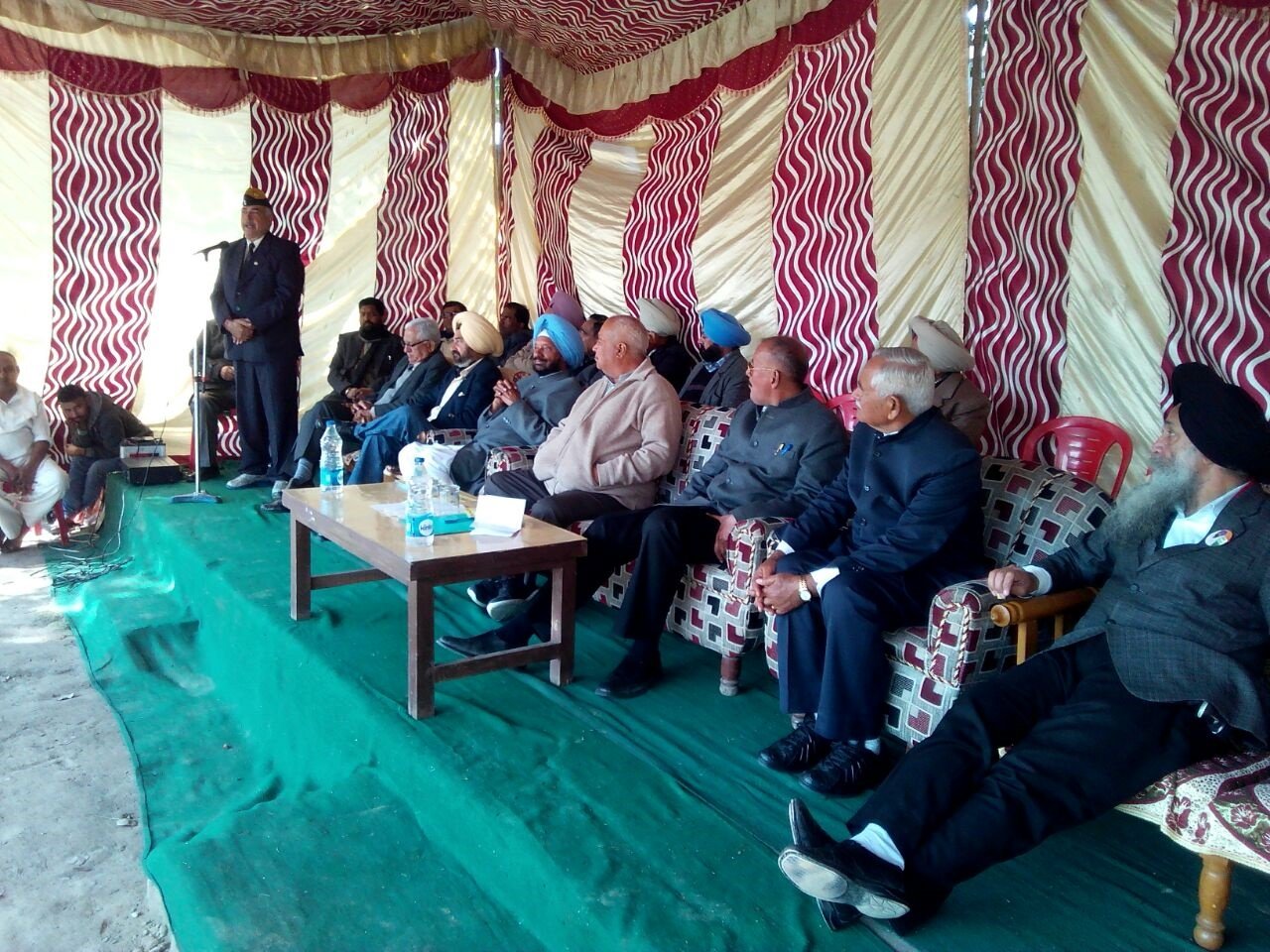
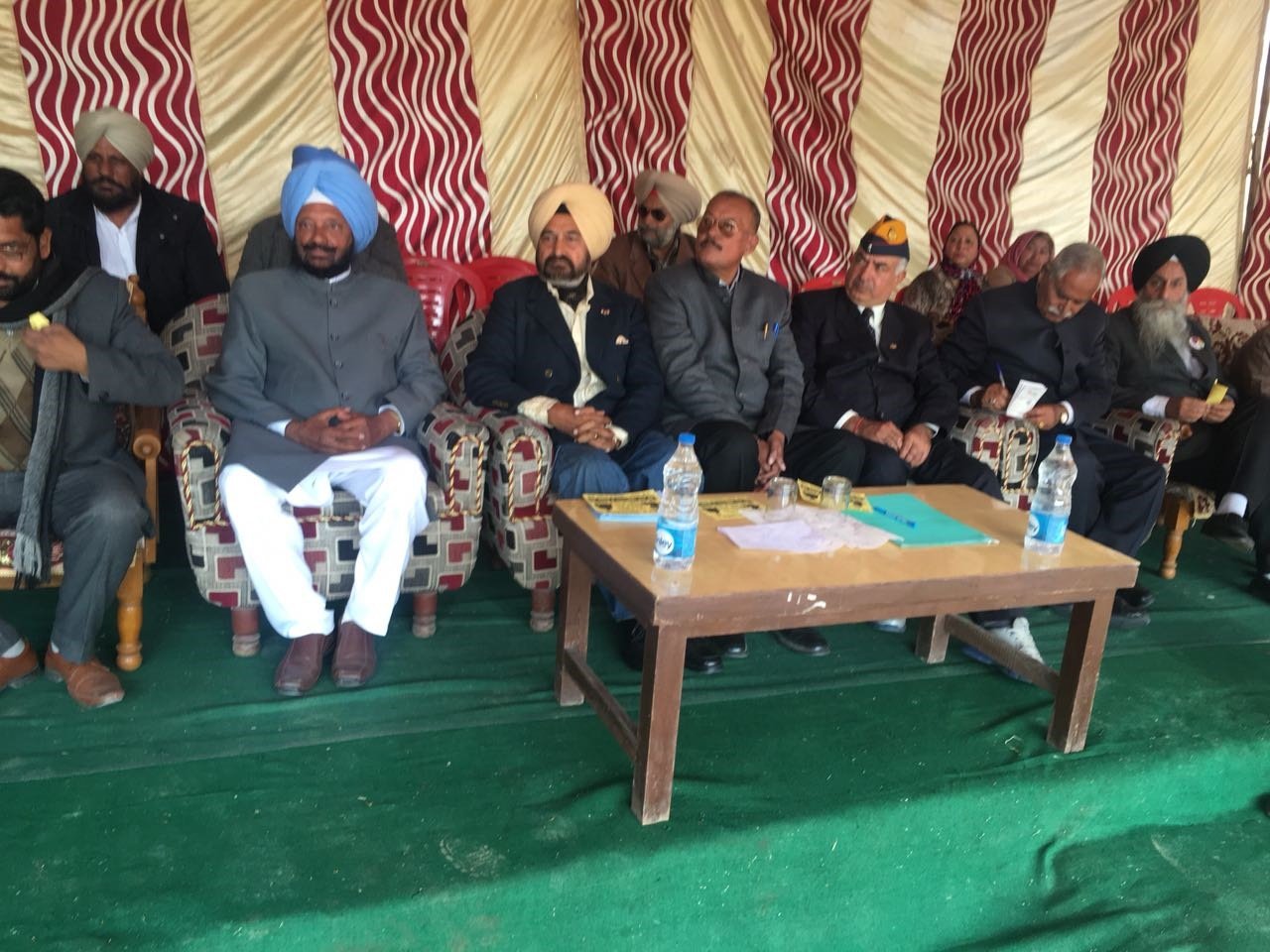
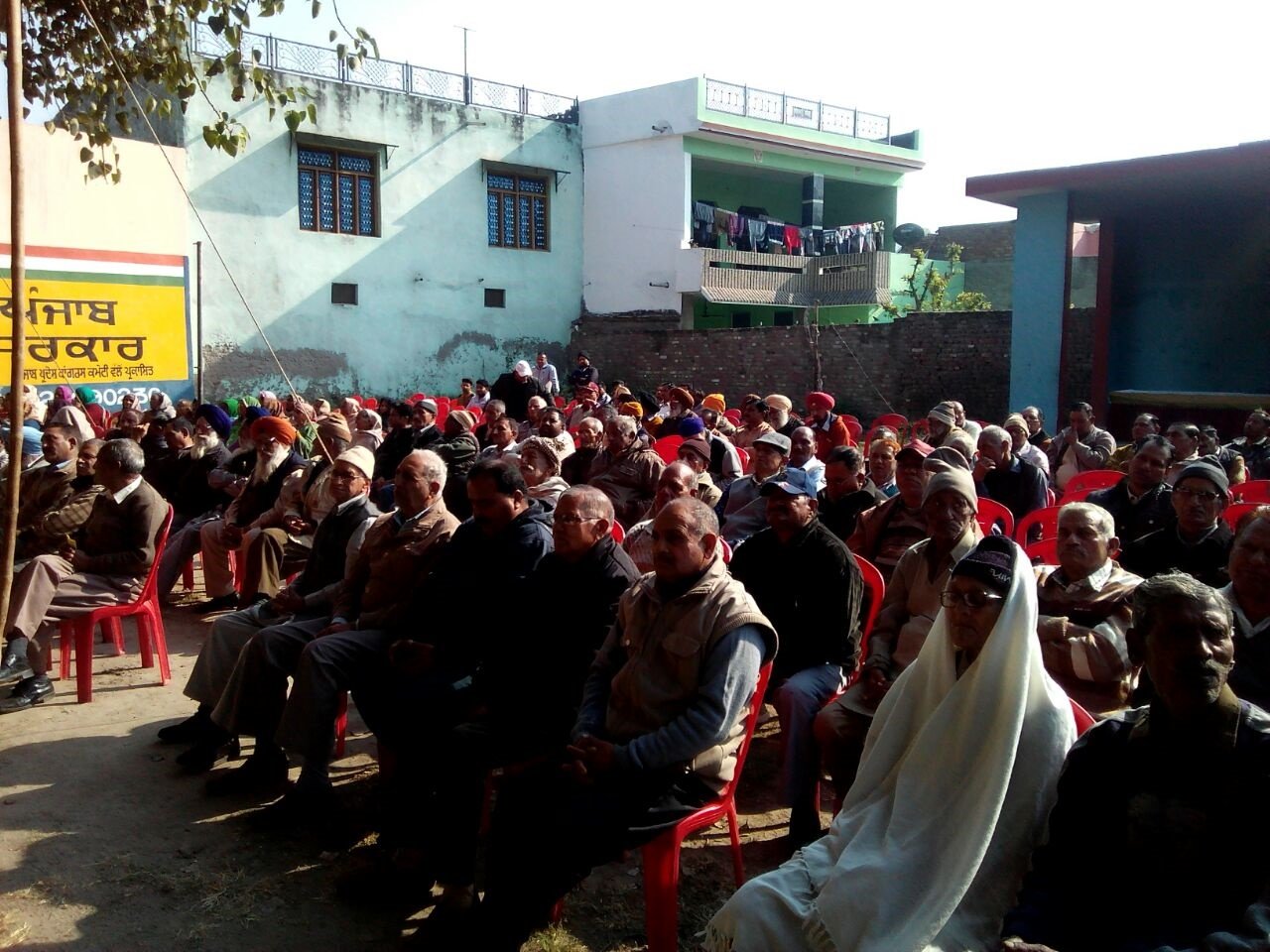
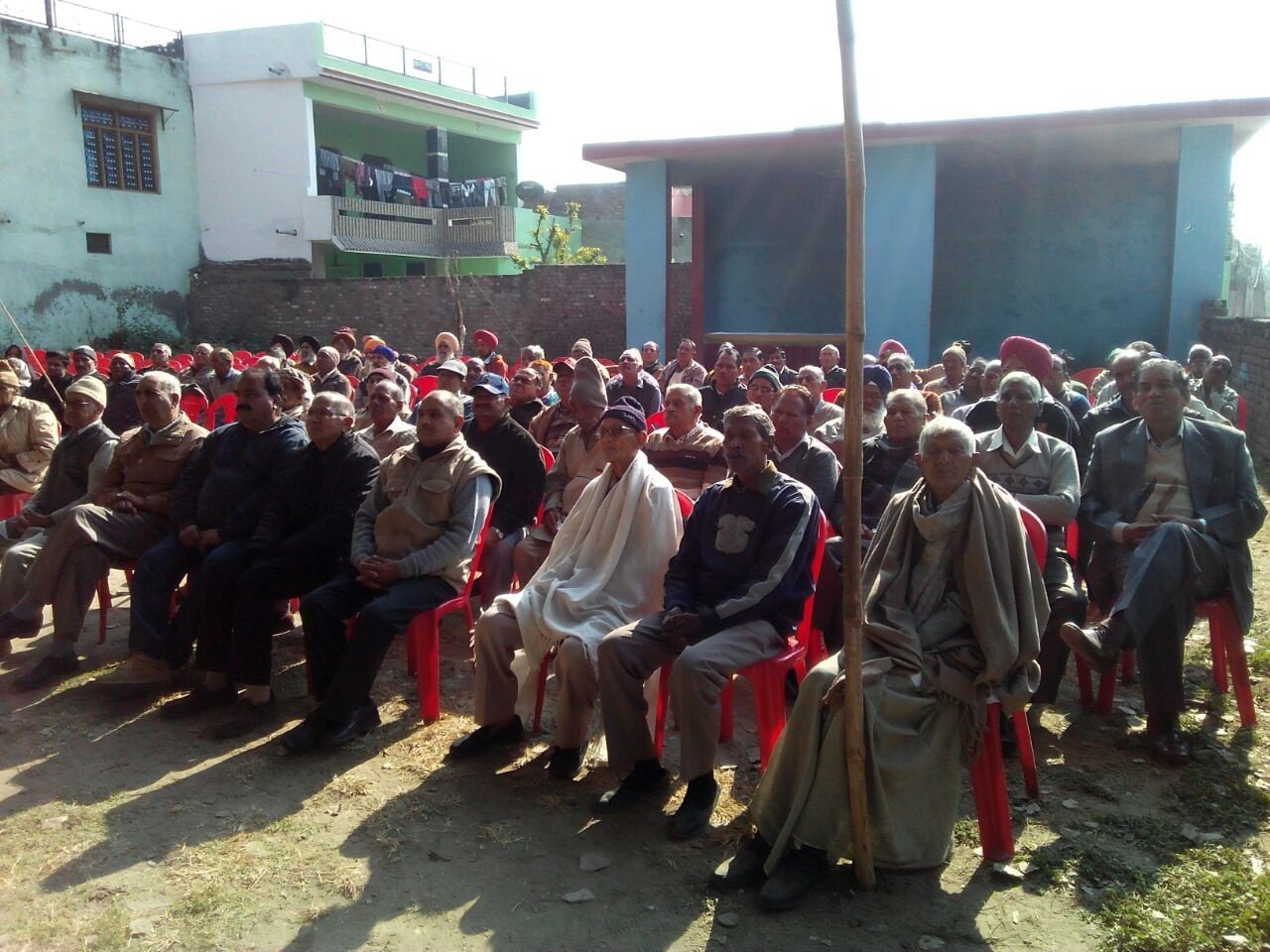
EX-SERVICEMEN CONDUCTING RALLIES IN SUPPORT OF CAPT AMRINDER SINGH AT MUKERIAN , IN PUNJAB

IMG-20170111-WA0034
Brig Prahalad at Mike
IMG-20170111-WA0043
L TO R—-LT COL RS RANDHAWA,COL BALBIR SINGH, Sh RAJNISH PABBY,BRIG PRAHALAD , H/CAPT SOHAN SINGH,LT COL PATHAIANIA, CAPT AMARJIT SINGH

IMG-20170111-WA0036 IMG-20170111-WA0037


Navy’s fighter jet makes emergency landing at Mangaluru

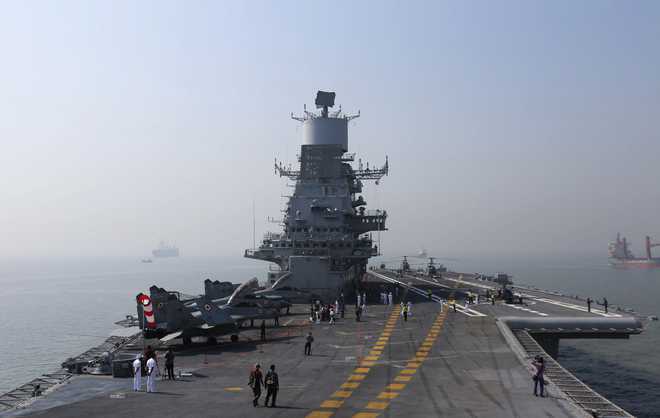
Navy's fighter jet makes emergency landing at Mangaluru
The MiG-29K had taken off from aircraft carrier INS Vikramaditya. — File photo

Mangaluru/New Delhi, February 28A MiG-29K fighter jet of Indian Navy made an emergency landing at Mangaluru airport due to a hydraulic failure and was stuck on the runway for several hours as it suffered a tyre burst.As many as eight flights were affected as the runway operation was shut completely for about three hours.”During a routine training sortie, a MIG 29 K fighter aircraft diverted to Mangalore airfield following a hydraulic emergency.”During the landing the aircraft experienced a tyre burst and couldn’t clear off the runway. A second MIG 29K had escorted the aircraft,” Navy Spokesperson Captain D K Sharma said.A recovery team was sent to Mangaluru airport which cleared off the runway around 8 pm.Several flights were diverted from Mangaluru to Benguluru.Three arrivals and five departures were affected due to the runway closure between 5 pm and 8 pm, a Manguluru airport official said.The MiG-29K had taken off from aircraft carrier INS Vikramaditya and when the pilot suspected hydraulic failure, he decided to divert the aircraft to Manguluru airport and sought its emergency landing. — PTI