All posts by webadmin

Fidayeen attack outside Srinagar, gunfight on

Fidayeen attack outside Srinagar, gunfight on
Smoke billows out of the Entrepreneurship Development Institute during the gunfight on Monday. PTI

Azhar Qadri

Tribune News Service

Sempora, October 10

Kashmir’s nursery of entrepreneurs became the site of a major battle today as some fidayeen terrorists barricaded themselves inside the seven-storey building of the Entrepreneurship Development Institute (EDI), sparking a lengthy firefight on the peripheries of Srinagar city.Security forces fired a barrage of rockets and carried out multiple blasts to neutralise the terrorists, who are suspected to have sneaked in pre-dawn and turned it into an impregnable bunker. The attack took place at Sempora, 1 km outside Srinagar district.DGP K Rajendra Kumar said “two to three terrorists” were suspected to be inside the building. “Going by our assessment and the intercepts, it could be Lashkar-e-Toiba,” he said.The security forces had suffered no casualty and the damage to terrorists could only be confirmed after the operation ends, he added.The terrorists are suspected to have taken position on the sixth and seventh floors of the building, which previously housed the institute’s hostel and was now serving as its office headquarters. The building was engulfed in a cloud of smoke as security forces attempted to blast it in the afternoon. The building, however, remained intact and only a part of it caught fire.The institute, established  by the state government in 1997, has trained and financed hundreds of entrepreneurs over the past decade.It is for the second time this year that the EDI complex has become the site of a gunbattle. In February, terrorists ambushed a convoy of the CRPF on the highway outside the EDI complex and positioned themselves inside one of its buildings for three days.Two CRPF personnel, three Army commandos, including two Captains, a civilian and three terrorists, were killed in the three-day gunfight then.Monday’s was  a rare fidayeen attack in which the terrorists first sneaked into the building from its rear on the Jhelum bank, laid rudimentary fortifications using chairs and tables, and then drew attention by setting the attic ablaze, said the police.As fire tenders were rushed in, these were fired at, forcing them to withdraw and setting the scene for a lengthy battle, which continued through the day. A police official said Army commandos were involved in the operation to neutralise the terrorists, who were firing after long pauses to avoid “giving away their location”.


Ready for NSG talks with India, but opposed to UN ban on Azhar: China

Ready for NSG talks with India, but opposed to UN ban on Azhar: China
JeM chief Masood Azhar. —File photo

Beijing, October 10

Ahead of President Xi Jinping’s visit to India, China on Monday said it is “ready” for talks with India on its entry into the Nuclear Suppliers Group (NSG), but defended extending a hold on India’s bid for a UN ban on JeM chief Masood Azhar, saying Beijing is opposed to anyone making “political gains in the name of counter-terrorism”.

(Follow The Tribune on Facebook; and Twitter @thetribunechd)

Briefing media here on Xi’s visit to India this week to take part in the BRICS Summit in Goa, China’s Vice Foreign Minister Li Baodong again harped on the need to build consensus over the admission of new members in the 48-member NSG.

Asked if any progress on the issue of India’s admission into NSG can be expected in the meeting between Xi and Prime Minister Narendra Modi on the sidelines of the BRICS Summit, Li said NSG rules stipulate consensus among the members to admit new ones.

“These rules are not to be decided by China alone. On the issue, China and India have maintained good communication and we are ready to continue consultations with India to build consensus and we also hope India can go to other members of the NSG as well,” Li said replying to a question on China’s reservations on India’s admission to the elite nuclear trading club.

“In this aspect, we are also ready for discussions with India to explore possibilities but things need to be in keeping up with procedures, norms and regulations of the NSG. On this issue, China position is consistent. That is why China has often said international law must be observed,” he said.

Xi will travel to Goa to attend the BRICS Summit scheduled to be held on October 15-16. The BRICS grouping consists of Brazil, Russia, India, China and South Africa.

While India has blamed one country, without naming China, for stalling its membership in the NSG, both the countries held talks recently to iron out differences.

After talks with India, China also has held similar talks with Pakistan, which also applied for membership in the influential grouping.

Replying to a question on criticism about China’s move to stall India’s bid for a UN ban on Azhar – head of Pakistan-based terrorist group Jaish-e-Muhammad, Li sought to justify Beijing’s recent technical hold in the matter, saying: “China is opposed to all forms of terrorism.”

“There should be no double standards on counter- terrorism. Nor should one pursue own political gains in the name of counter-terrorism,” he said in a veiled reference to India, which is pressing for the UN ban against Azhar over his role in the Pathankot terror attack.

China had announced the extension of its “technical hold” on India’s bid to get Azhar designated as a terrorist by the UN on October 1, days before it was to expire. The hold can continue for upto three months more.

During today’s briefing, Li said counter-terrorism cooperation will figure in the BRICS Summit.

“On counter-terrorism, it is an important area for cooperation among BRICS members for political security.

Cooperation on this front will enhance BRICS communication and coordination and will contribute to world peace and security. That is quite obvious,” he said.

He said BRICS Foreign Ministers reached agreement on counter-terrorism during their meeting on the margins of the UN General Assembly last month.

“We hope and believe that this Goa summit will build on the past consensus and continue to strengthen cooperation in counter-terrorism and other issues of political security and contribute to world peace and security,” he said. —PTI

Leave Azhar ban, can talk on NSG: Beijing

Leave Azhar ban, can talk on NSG: Beijing

Simran Sodhi

Tribune News Service

New Delhi, October 10

Even as the India-Pakistan narrative gets worse with each passing day, New Delhi’s equation with Beijing also seems poised for a downward slide.      India has already expressed annoyance with China for once again ensuring that Jaish chief Masood Azhar is not designated a terrorist by the United Nations. To make matters worse, Beijing today accused India of seeking “political gains in the name of counter-terrorism” with reference to the Azhar issue.The India-China equation has remained strained ever since China opposed India’s bid for entry into the elite Nuclear Suppliers Group (NSG). At a briefing today, China indicated that it was open to consultations with India on the NSG bid and emphasised the need for India to build consensus within the NSG for the entry.“On this aspect, we are also ready for discussions with India to explore possibilities, but things need to be in keeping with procedures, norms and regulations of the NSG,” China’s vice-foreign minister Li Baodong said.Chinese President Xi Jinping is scheduled to arrive in Goa this weekend to attend the BRICS Summit. Sources indicated that during their meeting, Prime Minister Narendra Modi is likely to raise the issue of China blocking efforts to get Azhar designated as an international terrorist.On the Azhar issue, Li said, “There should be no double standards on counter-terrorism, nor should one pursue own political gains in the name of counter-terrorism.”China was quick to dismiss notions of BRICS or any other regional grouping coming together to isolate Pakistan.China for mechanism to share Brahmaputra watersBeijing: Refuting reports of China joining water wars between India and Pakistan by blocking a tributary of the Brahmaputra, the Chinese official media said on Monday that Beijing was ready for a joint multilateral cooperation mechanism with India and Bangladesh to share the waters. Relations between China and India should not be affected by “imaginary water war”, an article in the state-run Global Times said, adding that Beijing was unlikely to use the Brahmaputra water as a potential weapon. China has no water treaty with India. PTI 


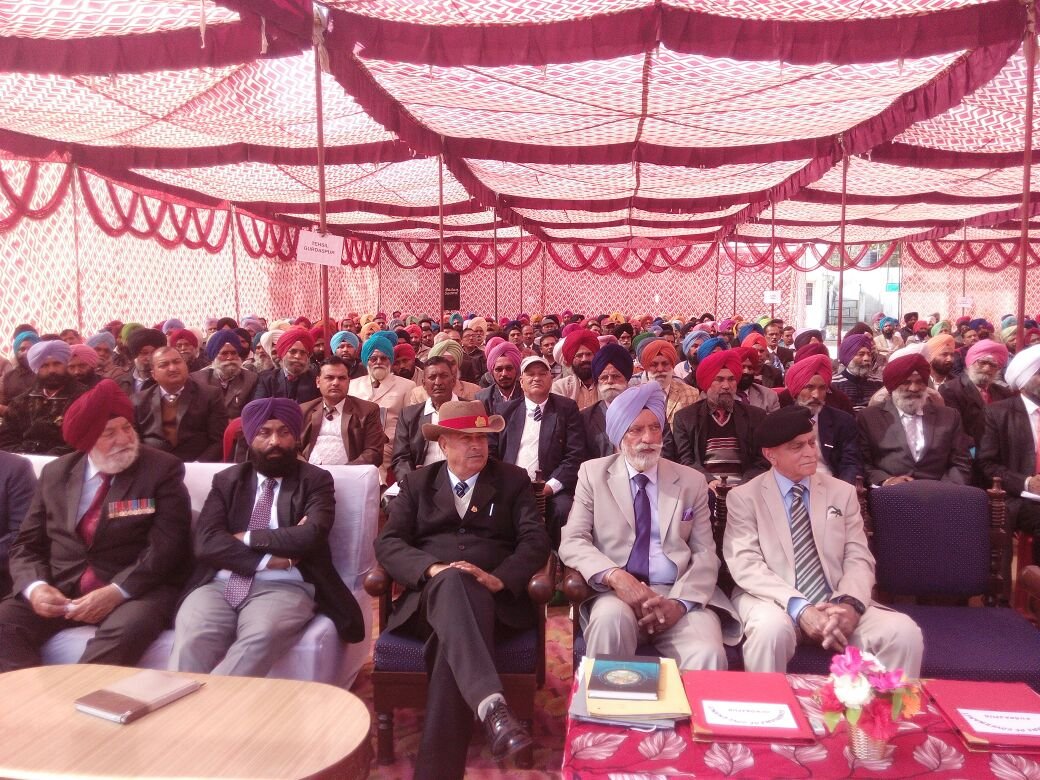
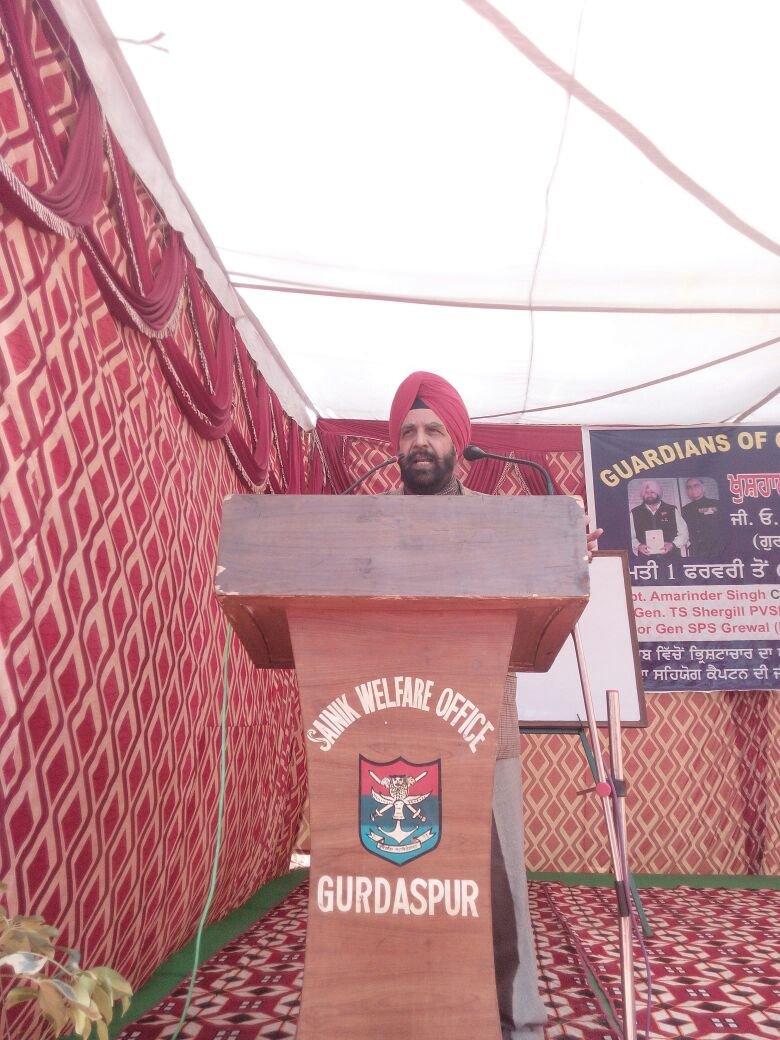
Captain Amarinder Singh paying floral tributes to martyrs of the Uri terror attack during an interaction programme with ex-servicemen in Jalandhar on Saturday.

JALANDHAR: Pradesh Congress Committee (PCC) chief Captain Amarinder Singh on Saturday alleged that the Food Corporation of India (FCI) was discriminating against Punjab with regard to allowing moisture content in paddy.

PARDEEP PANDIT/HTPPCC chief Captain Amarinder Singh paying floral tributes to martyrs of the Uri terror attack during an interaction programme with ex-servicemen in Jalandhar on Saturday.

Amarinder said that FCI was allowing 21 percent moisture content in the paddy from Haryana but in Punjab it was allowing 17 percent only.

Questioning chief minister Parkash Singh Badal’s silence on the matter, Amarinder said, “Just because there is a BJP government in Haryana and at the Centre, the state is getting a special concession while Punjab was being discriminated against.

Badal is not objecting to it because he does not want to antagonise the Prime Minister in anticipation of some postretirement favours, Amarinder claimed.

The PCC chief was addressing mediapersons on the sidelines of an interaction programme with the ex-servicemen. “INDISCIPLINE WILL NOT TO BE TOLERATED”

Amarinder expressed anguish over the recent episode of infighting in Nakodar between supporters of two exMLAs Amarjit Singh Samra and Gurwinder Atwal.

“It is unfortunate that senior leaders are fighting themselves on streets like this. Let me tell you this type of indiscipline won’t be tolerated. We are bound to take strong action against such acts,” said Amarinder.

The PCC chief also disclosed that the party has also issued a notice to PCC spokesperson Nimisha Mehta for creating “indiscipline” in Garshankar segment of Hoshiarpur district from where she is seeking ticket against former MLA Love Kumar Goldy.


Uri-type attack foiled; 3 killed Infiltrators pushed back in Nowgam, 4 shot dead by Army

Uri-type attack foiled; 3 killed
Armymen display arms and ammunition recovered from three slain ultras in Langate. Mohd Amin War

Srinagar, October 6

Seven terrorists were killed in two operations even as the Army today foiled a Uri-type attack on one of its counter-insurgency battalion headquarters in Kupwara, killing three heavily armed terrorists.In their early 20s and equipped with GPS devices and maps, the terrorists tried to sneak into the well-fortified headquarters of 30 Rashtriya Rifles at Langate along the Baramulla- Handwara highway in the wee hours. The attack was repulsed.  “Alert sentries spotted three terrorists within the camp periphery. When challenged, they opened  fire. Our quick reaction team ensured that they did not escape,” the Commanding Officer, Col Rajiv Saharan, said. Claiming the three terrorists were Pakistanis, he said three AK-47 rifles and ammunition were found at the encounter site. “We recovered GPS, maps, radio sets, medicines and food items. The medicines had Pakistani markings on them,” he said. The terrorists tried to scale the rear fence and breach security by opening fire at multiple points. “They had crossed one security barrier before they were noticed. The gunfight lasted two hours,” a police officer said. The Army also repulsed three infiltration bids, two in Nowgam in Kupwara district and another in Rampur in Baramulla sector, killing four infiltrators in Nowgam. — TNS


IAF wing commander held in international drug racket

IAF wing commander held in international drug racket
The NCB had on Monday seized 231 kg of the banned narcotic drug amphetamine. Photo for representational purpose

New Delhi, October 5

A Wing Commander of the Indian Air Force has been arrested by the NCB from Maharashtra in connection with its probe in an international drug racket involving a scientist and his wife.

Officials said Wing Commander G. Rajasekhar Reddy was arrested by the Narcotics Control Bureau (NCB) in coordination with Nanded Police on Monday and brought to Hyderabad today, based on investigations after a drug racket was unearthed in Hyderabad two days back.

They said Reddy, posted at Air Headquarters in Delhi, was the alleged “kingpin” of the racket and his purported involvement was revealed after the questioning of the duo in Hyderabad.

(Follow The Tribune on Facebook; and Twitter @thetribunechd)

Some mobiles and Rs 7.5 lakh in cash were recovered from him.

Officials said Reddy was produced in a court in Hyderabad today which sent him in NCB’s custody.

The NCB had on Monday seized 231 kg of the banned narcotic drug amphetamine, worth about Rs 45 crore, from Hyderabad and Bengaluru and arrested three persons, including a research scientist and his wife.

The NCB first seized 221 kg of amphetamine from two persons at Miyapur area here on September 30.

Venkat Rama Rao, a research scientist in a reputed private chemical firm of Bengaluru, had come to Hyderabad to collect the contraband from Ravi Shankar Rao, the NCB said.

After Venkat and Ravi Shankar were arrested, 30 grams of amphetamine and Rs 1.23 crore in cash were seized from a house rented by Venkat near Electronic City in Bengaluru, and his wife was also arrested.

Further, 10 kg of amphetamine was seized from a manufacturing lab in Bollaurm area here on October 1. The seized amphetamine was worth about Rs 45 crore. — PTI


Re-read the Kashmir story Hasan Suroor

India must acknowledge the centrality of the issue in its troubled ties with Pak

Re-read the Kashmir story
Writing on the wall: The Kashmiris want nothing short of azadi.

AWELL-INFORMED Indian strategic analyst in London sounded slightly puzzled over the post-Uri uproar. Because, according to him, India had in fact been “expecting” some excitement ahead of the SAARC Summit. He contrasted the sound and fury over the  attack to the muted reaction to the Pathankot incident when India even agreed to let in an ISI officer to join its investigation. But his sense was that the Uri row would blow over for now, India having registered its protest with the so-called “surgical strikes” and the SAARC boycott. Pakistan’s insistent denial that such strikes ever took place suggested that it didn’t want to pursue the matter further, and draw a line under the episode. To my question, where do we go from here, and, where are India-Pakistan relations headed, his response was a cold sigh. Well, let’s get this right. They’re not headed anywhere unless the elephant in the room is tackled. Which means India acknowledging the centrality of the Kashmir issue in its troubled relationship with Pakistan, and agreeing to take a fresh look at the dysfunctional post-Partition regime. Sahir Ludhianvi wrote, ‘Woh afsana jise anjaam tak laana ho mushkil, use ek khubsoorat mor dekar chhorna achha’. You can’t force someone to love you.For 70 years, India has been trying, in turn cajoling, coaxing, and frequently forcing Kashmiris to fall in love with it. But nothing has worked; the harder it tries, the more cold-hearted is the response. Blame it on their bloody-mindedness, blame it on Pakistan, the India-Kashmir story has no future. Illusions, like faith, can be very comforting but sometimes it helps to do a reality check. Kashmiris want a divorce and seem determined, with a little help from across the border. It is significant that the latest burst of insurgency by a new generation of Kashmiris is not backed by economic demands. They’ve a one-point agenda — azadi. Full stop. And under the currently fashionable international doctrine, the will of the people takes precedence over national sovereignty. It doesn’t recognise the old notions of absolute sanctity of state sovereignty and non-negotiable territorial integrity. Redrawing of borders in accordance with the wishes of the people, and  devolution of powers to restless regions have become a routine feature of advanced democratic societies. Even well-established centuries-old arrangements  are  not safe. Britain was forced to agree to a referendum over the future of its 300-year-old union with Scotland and despite the risk it involved — a breakup of the United Kingdom — London put the wishes of the people of Scotland above the idea of  Britain’s “territorial integrity”.The argument that discussing Kashmir means “surrendering” to Pakistan is a red herring; and it plays into the hands of Pakistan’s hawkish security establishment which has invested heavily in keeping the issue alive. The last thing Pakistan wants is a solution of the Kashmir dispute; once it is settled it will lose any justification for its anti-Indian activities. And if it persists, India will be in a stronger position to challenge it and mobilise international support. At the moment, India is diplomatically isolated. Contrary to breathless media claims, the international reaction to the Uri attack has been extremely cautious and limited to routine condemnation of terrorism in general terms. Even as the Indian media was hyperventilating about Washington being keen to show solidarity with India, the fact was that John Kerry was reported  “commending” Pakistani security forces for their “efforts to counter extremist violence”. Accompanied by a gentle reminder of  “the need for Pakistan to prevent all terrorists from using Pakistani territory as safe havens”. So much for American support. Much has been made of the fact that two Republican Congressmen have moved a bill calling for Pakistan to be designated as a “state  sponsor of terrorism”. Yes, they have. Except that one of them, Ted Poe from Texas, is a known Indian lobbyist. That apart, their move predates the Uri attack and is not a consequence of New Delhi’s international “diplomatic offensive”.In reality, beyond polite expressions of sympathy India has little support over Kashmir. That Pakistan is a bad boy with a penchant for exporting terror is recognised even by its allies. But that doesn’t equal support for India. For one thing, as Ayesha Siddiqa, well-known Pakistani analyst, wrote in The Hindu,  “the international community is reluctant to take measures against Pakistan” because different countries have their “own calculations of their interests”. Islamabad serves their potential strategic interests better than India does. However, India’s biggest Achilles’ heel, according to Western observers, is the human rights situation in Kashmir; and  allegations of military and police excesses. Photographs of  little children blinded by pellets in police firing have added to old concerns about use of disproportionate force against unarmed civilians. There’s also a great deal of frustration over New Delhi’s refusal to countenance independent international verification of allegations of rights violations. British and European MPs have been repeatedly refused permission to visit Kashmir;  and reports by international Red Cross, World Watch and Amnesty International are dismissed as biased and politically motivated. The question frequently asked is: why is India so sensitive if it has nothing to hide?  Successive governments, aware of India’s own vulnerability on the issue, wisely refrained from making too much of a public fuss over Pakistan’s appalling rights situation. So, the Modi government’s decision to internationalise rights abuses in PoK and Balochistan is a high-risk strategy; and has inevitably raised eyebrows. It is likely to encourage Pakistan (already has) to talk up its accusation of India’s role in stirring up trouble in Balochistan. There’s a view that the Modi government has decided to pursue a “ruthlessly pragmatic” policy on Pakistan irrespective of the risks, and its Balochistan gambit is part of that policy. Narendra Modi started with pragmatism inviting Nawaz Sharif to his swearing-in; when that didn’t work, he switched to ruthlessness; and when that failed too; he’s now talking about “ruthless pragmatism”. The truth is, he is playing it blind. The famous American screenwriter  William Goldman wrote about Hollywood that “nobody knows anything”. “Not one person… knows for a certainty what’s going to work. Every time out, it’s a guess, and if you’re lucky, an educated one.”One can be forgiven for saying pretty much the same thing about India’s Pakistan policy. Nobody knows anything. Meanwhile, the elephant in the room is happily busy causing havoc. Anyone in Delhi noticed “him”? The writer is a London-based commentator


Peace call amidst LoC firing NSAs talk to defuse tension

Simran Sodhi

Tribune News Service

New Delhi, October 3

India and Pakistan today took the first concrete step towards defusing the volatile situation along the LoC with the National Security Advisers (NSAs) of the two countries discussing steps to improve the situation. The news was confirmed by Sartaj Aziz, adviser on foreign affairs to Pakistan PM Nawaz Sharif. India, however, remained silent on the development. Aziz said there was a telephonic conversation between Pakistan NSA Nasser Janjua and his Indian counterpart Ajit Doval and they discussed steps to reduce tension along the Line of Control.Blaming India for raising tension, Aziz said Kashmir remained the core issue for Pakistan. “Prime Minister Nawaz Sharif has indicated quite clearly that till the issue is not resolved, tension across the border will remain.”Ties between India and Pakistan touched the bottom with India upping the ante on the Indus Waters Treaty and finally conducting surgical strikes in Pakistan-occupied Kashmir. The conversation between the two NSAs is being seen as an indication that both countries want to de-escalate the situation.


MoD notifies revised pension rates

Chandigarh: The Ministry of Defence (MoD) has issued a notification for the grant of revised pension, based on the recommendations of the Seventh Central Pay Commission, to retired armed forces personnel.

According to the orders issued on Friday, the government has granted a fitment of 2.57 on the pension drawn by pensioners as on December 31, 2015, which includes configuration of one rank, one pension (OROP) drawn on the said date. Two options have been given to calculate the new pension. However, the rates of disability pension have been drastically reduced as the “slab system” which was prevalent prior to the Sixth Pay Commission has been adopted again. Consequently, defence disability pensioners are now at a disadvantage as compared to civil disability pensioners. TNS


US lawmakers support India’s counter-terror operations in PoK

US lawmakers support India’s counter-terror operations in PoK
Support for India. AFP

Washington, October 1

Top US lawmakers have come out in support of India’s surgical strikes in Pakistan-occupied Kashmir in the aftermath of the Uri terror attack which claimed the lives of 19 jawans.“The Uri attack against India was horrific. Prayers are with victims’ families. I will continue to follow India’s subsequent counter-terrorism op closely,” Congressman Steny Hoyer, Democratic Whip in the US House of Representatives, wrote on Twitter on Friday.

(Follow The Tribune on Facebook; and Twitter @thetribunechd)

“Our sympathy and support go out to India as they work to counter the terrorism they faced in the Uri Attack,” Congressman Pete Olson said in a tweet. Olson, from Texas, is Vice Chair of House Energy and Power Committee.“Condolences to the victims of last week’s terrorist attack on the Indian Army base in Kashmir. We stand with India fighting terrorism,” said Senator Jeff Flake from Arizona.Meanwhile a White House petition seeking to designate Pakistan as a “terror state” has gained more than 3.9 lakh signatures.Organisers of the petition said they had set a target of getting the support of more than a million people which, they said, would reflect growing sentiment against Pakistan in the United States and globally. PTI