All posts by webadmin

Infiltration, best countered by Lt Gen (Retd) Syed Ata Hasnain

8

Pakistani militants are fervently trying to gain access through Uri. This is a warning bell to step up counter-terror ops, intelligence — and outreach to Kashmiris

At the best of times, it is difficult to make sense of events in Kashmir as these go from street turbulence and stone-throwing to LoC duels and attempts at infiltration. The last two weeks have witnessed infiltration bids all along the LoC in the Valley zone — in fact, more than I can remember anytime in recent years. The Jammu region is quiet in comparison, with a few exchanges of fire across the LoC in Naushera and Krishna Ghati.

The focus of the infiltration seems to be in the Uri area, followed by the Naugam (Lipa) sector and Machil. This is a pattern witnessed years ago — in 2010, when the street agitation was at its height, efforts were made by Pakistan to infiltrate terrorists to give impetus to the movement, through high-profile acts in the hinterland. There was also an attempt to induct maximum leaders as terrorists without leadership are easy fodder for security forces.

The sudden recourse to infiltration attempts has many reasons. To understand these, a brief explanation of the Pakistani concept is necessary. Those who keep recalling the goodwill of the ceasefire, the four point formula, the peace process with Pakistan, need to shelve all that — the Pakistan we see today is driven by a perception that it has never been strategically stronger — and the situation in Kashmir was never so much in its favour.

However, while the streets may erupt at its bidding, through social media instigation and separatist rabble-rousing, boots on the ground are deficient. The terrorist strength in the hinterland bestows the capability to execute acts which tie the army and other security forces down — and make news. Of the less than 300 terrorists estimated in the Kashmir hinterland, more than half are locals. Pakistan’s handlers have little faith in the capability of local terrorists, Burhan Wani notwithstanding: Emotional fervour when a local terrorist is neutralised is fine — but banking on the passion of locals is something the Pakistani controllers have never relied upon.

In 1991, they infiltrated mercenaries from the Afghan conflict of the 1980s, followed by more Pakistani terrorists after 1996. The generational change, with the rise of new militancy in 2013-16, passed the mantel to local Kashmiri youth, Pakistan’s control slipping marginally.

In 2014-16, Pakistan focused on Jammu, high-profile terror acts, trans-LoC firing and infiltration. Terror acts from within the Valley were of a lower order and the attrition was high. The separatist movement has also virtually come to be localised to just the Valley. The Jammu region and areas north of the Chenab have been peaceful for most of this time.

India’s initial assessment, that a new military leadership in Pakistan may see a change of tone towards the positive, has been belied. In Pakistan under General Qamar Bajwa, the emphasis appears to have returned to the Valley, the centre of gravity, where Pakistan intends to support ongoing street turbulence with hit-and-run operations, small-scale ambushes and terrorist acts. That explains the multiple attempts at infiltration through non-traditional areas. It is also deemed essential to fill up the Valley before the Amarnath Yatra, which offers maximum scope to execute high-profile acts.

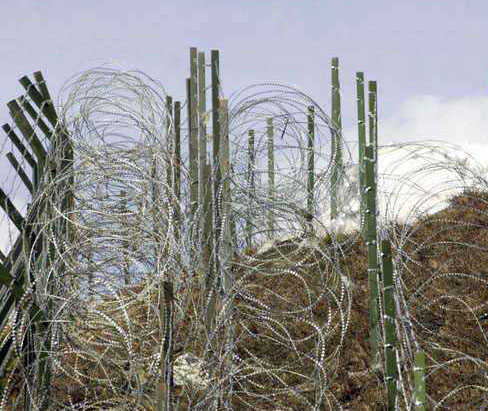
Counter-infiltration is one of the most difficult operations — it demands 24×7 vigil and far more troops. It is not just a question of securing the LoC fence, but also of securing our posts against possible rogue actions from border action teams (BATs), responsible for ambushes on some of our patrols. In 2002, the Army inducted thermal imagers for night surveillance. Renewal of this equipment is essential as this is in its last cycle. The more of this equipment, in good shape, the better our counter-infiltration will be.

Intelligence networks deliver quantum results. Even the most mundane information must never be held back: It must reach where it is needed by the fastest means with senior commanders seriously monitoring the response of ground troops.

The Uri sector is witnessing a surge of infiltration efforts through areas which have been quiet for years. The recent discovery of suicide vests on five terrorists killed in the South Jhelum area is a repeat of what was seen with two or more terrorists in the Naushera sector of the Jammu division. This is an interesting development because the proxy conflict has seen many other shades of typical Islamic terrorism the world over — except suicide bombing.

This method will need rabidly radicalised individuals: Pakistan cannot rely on Kashmiris for that, whatever the state of radicalisation in the Valley. However, it can find enough volunteers from its jihad factories. Thus, the importance of effective counter infiltration to prevent a new threat.

Uri offers multiple choices for targeting. The distance, of 46 km to Baramulla, has several army camps, labour sites, the National Hydro Power Corporation campus and frequent army convoys — all these offer lucrative targets. In December 2014, a terror attack on an artillery gun position at Mohora, on the Jhelum road, led to large-scale casualties. Infiltrated groups can travel further inwards, along routes which are difficult to monitor, and reach Rafiabad, where they become part of the Sopore and Baramulla terror grids.

Much depends on the successful ability of the counter-infiltration grid to prevent a surge. There will be leakages, however strong the grid, because there are human and terrain factors which cannot all be countered. Thus, along with these efforts, the outreach and engagement with the people and counter-propaganda efforts must be professional and continuous to make a difference in the campaign to mainstream Kashmir with the rest of India.


In Pak’s civilian-army standoff, it’s roar versus silence

The only thing scarier than the boys at war with the civilians is the boys at war with themselves. Do both sides know how to navigate this new world of the non-takeover and set new rules?

In Pak’s civilian-army standoff, it’s roar versus silence
Bridging the gap: Pakistan PM Nawaz Sharif with the army chief Qamar Bajwa. The only thing that divides Pak’s civil and military is India and Afghanistan. Reuters

IT will eventually settle down. Nobody’s taking over, no one’s going home, the original sin wasn’t big enough to justify the ultimate.But the kerfuffle that exploded into crisis has landed us in a new place. And it’s a tricky place all right. Forget the silliness of a chief cornered into lashing out, to prove to his own that he is one of theirs and not beholden to a civilian. To anyone keeping score, the new chief had already begun to walk the path of the decider, not the follower.Civ-mil can be spun many ways, but it really comes down to two things: India and Afghanistan. There’s other stuff that matters, sure, but either the differences aren’t vast or civ and mil have figured out how to share. Like with the US and China. Sure, there’s some chafing and a lot of grumbling and always some elbowing and gouging, but civ and mil aren’t poles apart.They both want Chinese and American largesse, attention and acceptance. Just as importantly, the US and China have figured out how to divide their attention between the civ and mil sides enough to prevent the whole thing from blowing apart. The only thing that really divides civ and mil is India and Afghanistan. And have a look at Bajwa’s record already.On India: Kulbhushan, regular trips to Kashmir, angry speeches and a door kept firmly shut. On Afghanistan: an early, month-long border closure; a new fierceness towards Kabul; and a matter-of-fact acceptance that the Afghan Taliban need to be accommodated. From a policy perspective, Bajwa was already on his way to joining the pantheon of the boys’ heroes.There has been one mistake though, which ended up creating a myth and obscuring a deeper problem. In style at least, Bajwa has cast himself as the anti-Raheel. The predecessor had concentrated power — giving rise to the legend of the Gang of Three, or possibly Five — and embraced a cult of personality.To move away from that the new chief did two things: he lowered his public profile and has allowed more freewheeling — or what passes as freewheeling among the boys — debate and conversation.That inadvertently created the myth outside the military of a chief who may somehow be compromised. It was a silly idea, but it also obscured a more dangerous problem. Beyond a point you don’t want to open up debate, inside the military or about the military. As long as the debate is about putting corrupt politicians in their place and the like, it’s fine. Par for the course in this place, really, and nothing too harmful.But debate has a funny way of wandering off in dangerous, unpredictable directions. What starts off as a harmless demand for corrupt politicians to be kept on a tight leash can end up questioning the theoretical legitimacy of democracy.Or the ideological foundations of the state. Or the physical boundaries and zones of influence of the country. There’s enough kooky ideas out there to suggest that you don’t want folk outside the democratic arena thinking they’re free to suggest and debate the fringe stuff. In a way, thankfully, the chief’s tweet by proxy has reversed much of that.The only thing scarier than the boys at war with the civilians is the boys at war with themselves. The chief’s tweet by proxy has clarified: he’s theirs, he’s the boss and he means business. But the tweet has exposed a new problem. Call it the non-takeover problem. The more upright the chief, the more of a straight shooter, the more his-only-business-is-the-boys kind of chief, the more he’s liberated from the suspicion of harbouring greater ambitions. And being liberated from the suspicion of harbouring greater ambitions means he can say exactly what’s on his mind. Like he did in the Tweet by proxy.Crisis triggered. But then there’s the other side of the non-takeover problem: the civilian knows that too. If one side is liberated to speak its mind because it knows that takeover is not an option, is the other side free to ignore the liberated speaker because it knows takeover isn’t an option? And so the spectacle of the past week — what had been rejected had not been reissued. Just stony silence.And that’s where it gets tricky. Do both sides know how to navigate this new world of the non-takeover and set new rules? In some ways, a draw has already been achieved. One side roared, the other side didn’t blink. Both have something to carry off to their constituencies and mollify the ego. The boys have their new king, the civilians have their survivor — maybe a bit messy, but messy is what we do best.If the draw is accepted, it could be a new rule of sorts — but a highly unstable one. Roar versus silence can work the first time round. But a draw the first time round will affect the next round — there’ll be pressure for the roar to be louder and a draw not to be settled for.On the other side, there could be a temptation to provoke a louder roar or to retaliate when roared at. Silence is the hardest move of all. The other option is to accept that a highly public draw was a bad idea — that one side should not have roared and that the other side should not have poked. But if they knew how to cooperate, we wouldn’t have civ-mil to begin with. The thought of a four-term Prime Minister and a year-and-a-half-old chief with this mutual baggage is an unsettling one.By arrangement with the Dawn.


Muslims flay Pak for killing Indian soldiers

Muslims flay Pak for killing Indian soldiers
Muslims, led by the Nayab Shahi Imam of Punjab, Maulana Usman Rehmani, burn an effigy of Pakistan Prime Minister Nawaz Sharif in Ludhiana to condemn the beheading of Indian soldiers by the Pakistani army in Jammu and Kashmir. Tribune Photo: Himanshu Mahajan

Our Correspondent

Ludhiana, May 5

Condemning the brutal and dastardly act of Pakistani army against Indian soldiers, a large number of Muslims, led by the Nayab Shahi Imam of Punjab, Maulana Usman Rehmani, raised slogans against the neighbouring nation and burnt an effigy of Pakistan Prime Minister Nawaz Sharif.Speaking on the occasion, Rehmani said the mutilation of dead bodies of Indian Army jawans by the Pakistani army, had exposed the real face of Pakistan and its evil designs to create instability in India, especially Jammu and Kashmir. “Pakistan cannot get away with this kind of inhuman acts. Indian army will give a befitting reply to this provocative action,” he said.The Nayab Shahi Imam urged the Government of India to stop all kinds of dialogue with the neighbouring country and go for army action. “Talk to Pakistan in the language that it understands,” Rehmani stressed.He said members of the Muslim community would stand by their Hindu, Sikh and Christian brethren at this critical juncture. “We might have some political differences with the government, or for that matter members of other communities but, when it comes to solidarity and unity of India, we are all one,” he added.Rehmani asked Prime Minister Narendra Modi to teach Pakistan a lesson for mutilating dead bodies of the India soldiers, which was more important. The issue of ‘triple divorce’ (teen talaq) could be sorted out later, he said.

Cable operators can be taken to task for airing Pak channels

New Delhi, May 5

The Centre today said the local administration in Kashmir had the right to confiscate the equipment of cable operators allegedly airing unauthorised Pakistani channels and take action against them.Stating that the government had sent an advisory, Union Minister Rajyavardhan Rathore said such advisories were regularly sent by the Centre on unauthorised channels.“Whenever such news comes up, it is our duty to ask for a report. Action is being taken in the matter,” he said.Rathore said it was the responsibility of the local administration to monitor unauthorised channels in their area and they had the right to take action against such channels.“In Kashmir, the district collector or the authorised government official can confiscate the equipment and take action against cable operators,” he said while speaking to reporters on the sidelines of an event here.The minister was responding to reports that over 50 Saudi and Pakistani channels besides Zakir Naik’s banned ‘Peace TV’ and others indulging in ‘anti-India’ propaganda were allegedly running without necessary clearances via private cable networks in Kashmir. — PTI


Ultras strike in Op Clean-up Civilian killed, 2 soldiers hurt in Shopian; locals resort to stone-throwing

Ultras strike in Op Clean-up
Army personnel take position during a search operation in Shopian and Pulwama on Thursday. Tribune Photo: Mohd Amin War

Majid Jahangir

Tribune News Service

Srinagar, May 4

Militants attacked an Army patrol at Kellora village in Shopian today, leaving a civilian dead and three personnel injured, hours after the security forces had concluded a massive search operation in the district to flush out militants believed to be holed up inside homes.Hizbul militants opened fire on a patrol of 62 Rashtriya Rifles. “A civilian (driver) and two Army personnel were injured. The driver, Nazir Ahmed, died later in hospital,” a police official said. The militants struck when the troops were carrying out a “reverse sweep” of Chowdari Gund and Kellora villages this evening. “Reverse sweep” is a term used by the Army to describe a surprise check of a location combed earlier.(Follow The Tribune on Facebook; and Twitter @thetribunechd)Engaging 3,000 police, Army and CRPF personnel, the forces carried out searches in 20 villages of Shopian district, including Turkwangam and Sugan, where militants have recently been seen moving around freely.“Operation Clean-up”, launched after a spate of militant attacks in the area, and perhaps the biggest in more than a decade in the troubled Kashmir valley, was launched at 3 am, with forces on the ground backed by helicopters and drones. It ended at 2 pm. Door-to-door searches, a practice stopped in the late 1990s, were conducted. Villagers were asked to assemble at a common place and their houses thoroughly searched. There were reports of locals attacking policemen with stones in Turkawangam village. Jawans retreating after the searches too were stoned at various places.“Searches were carried out in areas where militants have been sighted shooting videos to lure local youths to militancy. Recently, a video showing 30 militants armed with rifles was shot in the area,” said a security officer. Post Hizb commander Burhan Wani’s death in an encounter last year, Shopian has witnessed several  violent incidents. In February this year, militants ambushed an Army patrol, killing three soldiers and wounding five. 


Beheading warrants unequivocal response, India tells Pakistan

Pak rejects India’s claim on beaheading, says will respond to any misadventure

Beheading warrants unequivocal response, India tells Pakistan
Naib Subedar Paramjit Singh From Tarn Taran in Punjab and (R) BSF Head Constable Prem Sagar From Deoria in Uttar Pradesh

Ajay Banerjee

Tribune News Service

New Delhi, May 2

Army Director General of Military Operations (DGMO) Lt Gen AK Bhatt on Tuesday told his Pakistan counterpart Maj Gen Sahir Shamshad Mirza that mutilation of bodies of Indians warranted unequivocal response.Using the word ‘unequivocal’, which means unambiguous, was like a warning to Pakistan that India would respond. On Monday, two Indian soldiers, one from the Army and one from the BSF, had died and their bodies mutilated in a military action by Pakistan in the Krishna Ghati sector along the Line of Control (LoC) in Jammu and Kashmir.

(Follow The Tribune on Facebook; and Twitter @thetribunechd)

Lt Gen Bhat termed the mutilation (beheading) as a dastardly and inhuman act. “It is beyond the norms of civility and merits unequivocal condemnation and response.”Lt Gen Bhat told the Pakistan DGMO that “full fire” support was provided by Pakistan Army located in the vicinity.He rejected claims made by Pakistan Army on Monday which had said that its troops were not involved in mutilation of Indian soldiers.“Pakistan troops targeted Indian Army patrol on the Indian side of the LC (military usage for LoC) and mutilated bodies of the Indian soldiers,” Lt Gen Bhat told his counterpart in Pakistan. The Indian Army tweeted the full text of the statement.He also spoke about presence of border action team training in the vicinity of the LoC.On Monday night, local commanders’ level hotline contact was established at Rawalkot-Poonch sector on the LoC.

Pak rejects India’s claim on beheading, says will respond to any misadventure

Meanwhile Pakistan’s Inter-Services Public Relations (ISPR) issued a statement from Rawalpindi saying, “The DGMO, Pakistan Army, Maj Gen Sahir Shamshad Mirza rejected baseless and unfounded Indian allegations of mutilation of Indian Army soldiers’ bodies by Pakistan Army.”The DGMO asked for actionable evidence and cautioned his Indian counterpart saying any misadventure from India would be appropriately responded at a place and time of its own choosing.The issue was discussed during a hotline contact between the Director Generals of Military Operations (DGMOs) of Pakistan and India this morning to defuse the tension.Pakistan DGMO Maj Gen Sahir Shamshad Mirza told his Indian counterpart Lt Gen A K Bhatt that neither ceasefire violations occurred in the Sector (pointed out by India in the mutilation allegation), nor crossing of the LoC by Pakistanis troops have taken place.The Pakistani statement said the DGMO, Pakistan Army, highlighted that Pakistan Army is a professional military outfit and upholds the highest standards of conduct.“Allegations of mutilation are India’s attempt to divert the attention of world from situation in the Valley,” it said.


Have broken back of drug syndicates in Punjab: Capt

Have broken back of drug syndicates in Punjab: Capt
Capt Amarinder Singh, Punjab Chief Minister

Aditi Tandon

Tribune News Service

New Delhi, April 30

Punjab Chief Minister Capt Amarinder Singh today claimed his government’s anti-drug task force was “close to major results and has broken the back of drug cartels in the state”. He was answering queries as to why he had not been able to root out the drug menace within a month of assuming power, as promised by the Congress.“Since we came to power, 1,400 peddlers have been arrested. We need to reach the sharks. Our team says we are close to major results. I cannot say today if there is a political nexus in Punjab’s drug trade. The law will take its course. I have ordered there should be no vendetta. Heroin prices are already up 60 per cent, which means markets have been compressed. We have broken the back of Punjab’s drug cartels,” he said.

Meanwhile, dismissing predictions of Congress’ doom, the CM said the party must declare CM candidates in all poll-bound states — Himachal Pradesh, Rajasthan and Karnataka — and must groom regional leaders. Speaking with The Tribune, he said he favoured a consensus on the name of Congress president as “consensus binds the party together”.Asserting that Rahul Gandhi was ready to take over the party reins, he said: “I have dealt with him for two years. I think he is up to it… One must not write him off. He is perceptive and wants to know about everything.”


IAS officers to aid of martyr kin To help in getting them pension, school admission

IAS officers to aid of martyr kin
Sukma CRPF martyr Ranjeet Kumar’s mother at his funeral in Sheikhpura, Bihar. File photo

New Delhi, April 28

In a unique initiative, IAS officers will adopt families of security personnel who lost their lives in Maoist combat, anti-terror operations or while maintaining law and order.The bureaucrats will approach such families within their area of posting and offer themselves as facilitators to help them (families) get their dues like pension, gratuity or allotment of services like petrol pump, jobs, etc, an association representing them said today. The officers, however, would not be providing any direct financial help to such families, it said.“Their job would be to help the families get their dues from respective governments. They may also help the children in such families to get admission in a school,” Sanjay Bhoosreddy, honorary secretary of the Indian Civil and Administrative Service (Central) Association, said.The association represents all members of the Indian Administrative Service (IAS).Initially, about 700 young officers of the past four batches — 2012 to 2015 —will be asked to adopt at least one family in the area of their posting. “Senior officers, or those from state civil services, can also adopt such families voluntarily,” Bhoosreddy, a Joint-Secretary-level IAS officer, said. The officers will oversee whether the support (both in cash and kind) pledged by the state or local governments has been provided to the family concerned. — PTI

IAS officers to adopt martyrs’ families


Rs 5 lakh for martyr’s kin

Amritsar, April 26

Ranjit Singh Brahmpura, Member of Parliament from Kahdoor Sahib, has announced Rs 5 lakh for the family of Raghbir Singh, Inspector, CRPF, who was killed in a Naxal attack in Chhattisgarh’s Sukna district on Monday. Brahmpura visited Sathiala and paid tributes to the martyr. — TNS


Dalai: China will avoid military confrontation

Dalai: China will avoid military confrontation
The Dalai Lama at the Professor ML Sondhi Prize for International Politics-2016 in New Delhi. MR Bhui

Ravi S Singh

Tribune News Service

New Delhi, April 27Tibet’s spiritual leader the Dalai Lama today said China would desist from military confrontation with India considering the latter’s military and geographical might.While receiving “Professor ML Sondhi Prize for International Politics-2016”, the Dalia Lama ruled out China’s mis-adventurism against India and said the neighbouring country was a “totalitarian which has not much future. Its leaders are fighting how to retain power”. On China’s belligerence over his recent visit to Arunachal Pradesh, he said: “India is not a small country; militarily it is gaining.”“When they (China) think of indulging in conflict with India, they will have also to think of the simmering unrest in Tibet,” the spiritual leader said. He described the Chinese reaction as “sad” and “unusual”. He said India had a right on the environmental issues and ecology of Tibet. Hence, it should raise the issue of the Brahmaputra, which originates in Tibet, with Chinese authorities.Several reports say the Chinese regime has been tampering with the flow of the river by diverting its course.Prof Sondhi, a native of Punjab, was Bharatiya Jana Sangh MP from Delhi (1967-71). Earlier, he was in the India Foreign Service from which he resigned and joined Jawaharlal Nehru University to become Professor at International Affairs. The award was instituted by the Professor ML Sondhi Memorial Trust and the ML Sondshi Institute for Asia-Pacific Affairs in 2003. Former Union Minister Arun Shourie presented the award and addressed the gathering, besides former Foreign Secretary Lalit Mansingh and Madhur Santanam Sondhi.


Kashmir voter turnout, then and now by Lt Gen Subrata Saha (retd)

We pride ourselves on having a political syetem that is far superior to any in the immediate, even extended, neighbourhoodFrom an impressive 65 per cent in the winter of 2014, the voter turnout plunged to 7 per cent and 2 per cent in the recently conducted Srinagar by-polls. The question that should be worrying us as a nation is: Why and how did the voter turnout crash?

IN November-December 2014, the entire nation lauded, indeed celebrated the unprecedented voter turnout in the Jammu and Kashmir Assembly elections. The overall voter turnout of 65 per cent was in freezing temperatures, even as people were struggling to recover from the devastation caused by the terrible floods of September 2014. A little over two years later, the voter turnout in the recently concluded by-polls in Srinagar and Budgam constituencies dipped to 7 and 2 per cent, respectively. We pride ourselves on having a political system that is by far superior to any other in the immediate and extended neighbourhood.Instead of that unprecedented voter turnout, we are now witnessing unprecedented stone-pelting and violence with the rage shamefully engulfing school and college children. The victor and vanquished of the electoral process, and ironically the disruptors of democracy all seem to be together on the same page, as they level accusations and counter-accusations on the violence rather than answering the how and why of the violence.Talking about the Parliamentary elections in April-May 2014, one of the most erudite and experienced personalities of Kashmir had told me, “In Kashmir Farooq Abdullah losing is unthinkable”. He added, the Kashmiri voter had learnt to make choices and more importantly faith in the “Indian” electoral system had been revived.The more critical elections obviously were the Assembly elections, due after some months. He went on to add, “If you succeed in providing that sense of security without being obtrusive or intimidating, people will come out in large numbers.”Soon after our conversation came the unfortunate devastating floods in September 2014. Loss of property was huge, mercifully human loss, though sad was limited, particularly so given the scale of the disaster. Most political quarters made pleas to postpone the elections to the next year, but the people, administration and the security forces were ready to go ahead. The people were desperate to get their flood relief quickly through an effective administration. The Election Commission decided to go ahead in November-December, just before harsh winter sets in. For security forces this is the toughest period when temperatures have dipped but it has not snowed yet.It’s to the credit of all the security agencies the way they came together in true mission mode. They were instructed and convinced of the need to be visible everywhere but not obtrusive. The intensified deployment had to be sustained for nearly three months. An early start was essential for the people to see and gain confidence and equally for the candidates to be able to campaign freely. Joint meetings of all agencies of the core group at the Corps HQ was followed through for the first time with the apex leadership from Srinagar jointly chairing meetings at the district and sub-district level.Unprecedented resource mobilisation from within and outside the Valley was undertaken. For instance, the entire reserve of protected vehicles was inducted from the base depots. Some really innovative technology infusion was done to smarten procedures, particularly in surveillance and interagency communication. Any candidate travelling out would be known to anyone and everyone in the grid who needed to know. Any gathering of people was picked up aerially and monitored closely. The security grid was adapted to meet the changing requirements. There was proper networking and synergy achieved through repeated rehearsals, communication and joint monitoring by leadership of all agencies. Grenades were recovered sometimes just in time and just a whisker away from rally sites.As the election pitch picked up so did the separatists calls for boycott, but the people were in no mood to listen. They wanted a government of their choice that would deliver with urgency — getting the relief before winters was playing uppermost in most minds. The adversary too got panicky by seeing the mood of the people — undergirded by strong security. They made desperate attempts to disrupt by pushing in weapons, land mines and terrorists from across the line of control, all of them were foiled. Highly trained and equipped terrorist groups were eliminated not without loss of blood of the security forces.As the election dates arrived, more security forces came in and polling staff mustered from all over. Absorption and orientation of this added strength was done smoothly of course, with anecdotes of good humour in those stressful circumstances. The polling staff was delivered across remote cross-country terrain in mine-protected vehicles aptly called “Rakshak”.  On reaching the destination they would refuse to let go off the hand of the Company Commander. Of course, they understood when reminded that in a democracy the Army cannot be inside a polling booth. The polling staff rose to the occasion. It is to the credit of all the security agencies and the administration that the elections were conducted most professionally. All parties went on record hailing the fairness of the election unambiguously. Not one civilian life was lost in the entire electoral process of the Assembly elections 2014.This was the true victory of democracy, won over all attempts to boycott, disrupt and delay. In many ways, the success removed the very cause for which the militancy began in 1989, that is the alleged rigging of elections. Around the same time as the legislators got voted to power, it was time for the Durbar to move down to Jammu. A royal tradition followed most faithfully even till date where the government moves from Srinagar to Jammu for the entire winter. Incidentally, this winter was just after the floods. Imagine you are voted to power with the hope that you will provide succour and just when you are needed the most you are politicking in fairer weather. This was the beginning of the loss in hopes in leadership and democracy. Ironically, some separatist leaders who claim to be champions of the people’s cause too preferred escape to other areas in the country to avoid the winter cold.The awaam (people), of course, remained in Kashmir and so did the security forces. Avalanches came down,  roads got washed away, snow and land slides blocked access, but all these challenges were overcome as the two — awaam and jawan — weathered the harshness of the winter together,  waiting for the spring to come, bringing back the political leadership, the Durbar with ominous warnings of a hot summer. This is the story every year!Through the winter of 2014-2015, hectic political parleys led to an “agenda of alliance” — a bridge was supposedly laid between Jammu and Kashmir by Mufti Mohammad Sayeed. Whether it was the fragile health of the well-meaning architect, or was it the fragility of the bridge design or the piers?  It was too much for it to withstand the vengeful and vicious designs of the adversaries within and without. For the adversary across and their cahoots, the failed bridge provided ready fodder for vicious propaganda and killing whatever hopes, if any, for democracy.See how effective the vicious propaganda is. So much friction and heat amongst the two; awaam and jawan who weathered the cold winter together.While the victor and the vanquished seem to be obfuscating accountability for the key question, the disruptor of democracy is brazenly manipulating people. This will cost everyone dearly. We should not end up in a situation where democracy is abolished and people’s representation is demolished.The writer was the Corps Commander, Kashmir, in 2014-15.