All posts by webadmin

Aspects of military training showcased

Aspects of military training showcased
Lt Gen SK Upadhya, Commandant, IMA, lays a wreath at the martyrs’ memorial in Dehradun on Friday.

Tribune News Service

Dehradun, June 9

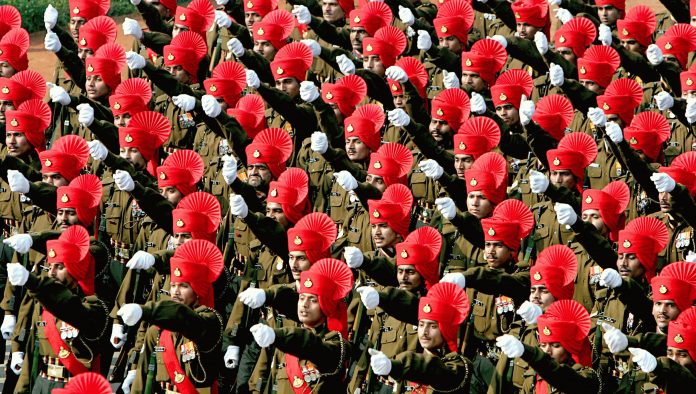
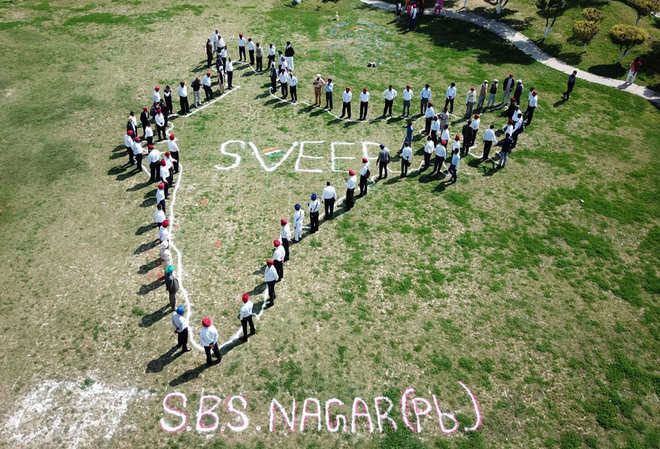
It was a day full of activities today at the Indian Military Academy (IMA), Dehradun, as the Gentlemen Cadets anxiously waited for tomorrow’s (June 10) passing-out parade that will have Chief of Army Staff Gen Bipin Rawat as the reviewing officer.It started with a wreath-laying ceremony held at the War Memorial, IMA, in the morning. The solemn ceremony, held a day ahead of the passing-out parade, is observed to pay homage to the brave alumni of the academy. IMA Commandant Lt Gen SK Upadhya, along with officers, laid wreaths and offered floral tributes to the martyrs.As a prelude to the passing-out parade, a multi-activity display showcasing various facets of military training imparted to the Gentleman Cadets coupled with awe-inspiring acts by the Motorcycle Rider Display team of Corps of Signals, popularly known as “The Dare Devils”, was also staged at the IMA. The display was witnessed by a large number of spectators, which included the passing-out course, their parents and relatives and other dignitaries.Later in the evening, a sound and light show for the parents of the passing-out course was organised which was held at the historic Chetwode Drill Square. The sound and light show included a multimedia, audio-visual presentation on the theme “Indian Military Academy Through the Ages”.


Major Gogoi and Farooq Dar – Grey is the colour of decision making in hybrid conflicts such as Kashmir by Lt Gen Ata Husnain

Major Nitin Gogoi faded from the limelight after the army and the Attorney General justified his action of taking Farooq Dar as a supposed ‘human shield’ to save lives of election officials and some policemen on 9 April. He has returned all guns blazing, with the army’s decision to allow the media to directly interact with him and also award him an army chief’s commendation.

Even as the incident allowed extreme ideologues of the right and the liberal camp to take aim at each other, the reality of sub-conventional hybrid conflict isn’t easily understood. The situation in Jammu and Kashmir has many grey areas, even if it seems black or white to most people. Let me explain.

In 2008, when the Amarnath Shrine Board land case triggered street turbulence no one had much idea how to handle it. In the initial days of the agitation the army imposed restrictions on movement of all its vehicles except as part of large convoys. But someone erred somewhere.

A small three vehicle convoy was stopped by a mob near Khunmoh. Just like Gogoi’s case, this was not a copy book situation. The mob looked menacing and was armed with missiles including petrol bombs. The havaldar had the choice to open fire, kill a couple of local citizens and bash his way through to the nearest army or police camp. Instead he left one vehicle to the mob, withdrew into the remaining two vehicles, turning them around and making haste to an army camp a kilometre away.

The vehicle, a large truck, was gleefully burned by the mob. My superiors were livid at the ignominy of an army vehicle being burnt and soldiers withdrawing in the face of threats. I refused, however, to order an inquiry or chide the havaldar.

For people who have lived these situations all their lives it is second nature to look for out of the box solutions, right or wrong. There is little room for procrastination. By his action the havaldar achieved minimum possible loss to the state and did not embarrass his superiors into defending possible killings. The issue was played down in the media but a stern message to the people of Khunmoh was passed through local police that a repetition would invite tough reprisals.

Armchair warriors are good people. But they know nothing about how such situations pan out into the most awkward threats at different levels. There are no neat, black and white solutions. If Major Gogoi is telling the truth – and i see no reason why a professional soldier will choose to lie – then all his actions fall in the zone of grey.

Like my havaldar he chose to prevent loss of life but by an ingenious method, which many senior veterans and highly educated people say amounts to gross violation of dignity and human rights of an Indian citizen. As an educated military leader with full awareness of the necessity of following the rules of engagement i will always work towards maximising human rights, but never at levels even close to absolute because that is practically never possible in a conflict zone.

This is because i know that i am mostly dealing with people who are not adversaries but acting on behalf of them. If they have chosen to take public order in their hands then they have abrogated certain rights too. Gogoi respected almost all those rights except the right to dignity of Farooq Dar, whose innocence or otherwise from stone throwing has yet to be established. In such situations there are no ideal solutions.

Was putting Gogoi in front of the media incorrect? What the army did not take into account was the unnecessary raking up of an issue that had receded. To announce an award when an individual is under investigation is not something which even i, an ardent army loyalist, find easy to defend.

Grey is the colour of decision making in hybrid conflicts. The security forces should know it, as should the political leadership and media. It will save everyone much embarrassment. For now, putting this affair behind it is the best option for the army.


Sikkim standoff: Army ready for long haul in Doka La Soldiers pitch tents, stock up supplies

Sikkim standoff: Army ready for long haul in Doka La
A Chinese soldier (L) next to an Indian soldier at the Nathu La border crossing between the two countries in Sikkim. — AFP file

New Delhi, July 9

The Indian Army is ready for a long haul in holding onto its position in Dokalam area near the Bhutan tri-junction, notwithstanding China ratcheting up rhetoric against India demanding pulling back of its troops.

The Indian soldiers deployed in the disputed area have pitched tents, in an indication that they are unlikely to retreat unless there was reciprocity from China’s PLA personnel in ending the face-off at an altitude of around 10,000 feet in the Sikkim section.

A steady line of supplies is being maintained for the soldiers at the site, official sources said, signalling that the Indian Army is not going to wilt under any pressure from China.

At the same time they sounded confident of finding a diplomatic solution to the dispute, citing resolution of border skirmishes in the past through diplomacy.

Read: India pushes troops in Doka La

Chinese envoy terms situation ‘grave’, rules out compromiseChina issues safety advisory for its citizens in India

Though China has been aggressively asserting that it was not ready for any “compromise” and that the “ball is in India’s court”, the view in the security establishment here is that there cannot be any unilateral approach in defusing the tension.


Both the countries had agreed to a mechanism in 2012 to resolve border flare ups through consultations at various levels.

The mechanism has not worked so far in the current case as the standoff near the Bhutan tri-junction, triggered by China’s attempt to build a road in the strategically important area, has dragged on for over three weeks.

New Delhi has already conveyed to China that such an action would represent a significant change of status quo with “serious” security implications for India. The road link could give China a major military advantage over India.

Doka La is the Indian name for the region which Bhutan recognises as Dokalam, while China claims it as part of its Donglang region.

China and Bhutan are engaged in talks over the resolution of the dispute in the area. India argues that since it is a tri-junction involving the three countries, it also has a say in the issue, especially in the backdrop of 2012 agreement between special representatives of the two countries, that have till now held 19 rounds of talks.

Bhutan has no diplomatic ties with China. As a close friend and neighbour, Bhutan enjoys diplomatic and military support from India.

Of the 3,488-km-long India-China border from Jammu and Kashmir to Arunachal Pradesh, a 220-km section falls in Sikkim. PTI


Rawat meets his generals in Srinagar as LoC burns

WESTERN DISTURBANCE Jaitley says India dominates line, Pak summons Indian envoy

NEW DELHI: Army chief General Bipin Rawat and his top commanders landed in Srinagar on Thursday for a security review, even as cross-border shelling and gunfire escalated and Pakistan summoned India’s deputy high commissioner in Islamabad over casualties.

HT FILEA soldier takes position near the Line of Control in Nowshera sector, about 145 km from Jammu.

It is rare for the army’s seniormost generals to congregate in Jammu and Kashmir to review the security situation and operational preparedness of soldiers posted in the state and along the Line of Control (LoC), the de-facto border between Indian and Pakistan. The air force was also represented at the review.

In New Delhi, defence minister Arun Jaitley said Indian soldiers are in a commanding position along the LoC.

“In the past few weeks, our armed forces, the Indian Army and BSF, are dominating the Line of Control,” he said.

At least five Pakistani soldiers were killed and six more were wounded in retaliatory firing by the Indian military in the Bhimber and Battal sector of Jammu and Kashmir.



The army was responding to unprovoked ceasefire violations by Pakistani forces, which fired machine guns and 82mm and 120mm mortar shells at Indian outposts and villages across the border. A General Engineering Reserve Force labourer was killed, while two more men, including a BSF trooper, were wounded on Thursday in Pakistani firing in Rajouri and Poonch districts.

But Pakistan accused India of targeting civilians in border towns, killing a villager.

The Pakistani foreign office summoned the deputy high commissioner JP Singh and condemned the ceasefire violation.

The border burned on a day Rawat was in Srinagar for a twoday security review after the killing of Hizbul Mujahideen commander Sabzar Bhat on May 27. The army gunned down a number of militants in the past weeks, but has been unable to tamp down on local anger. Thousands showed up at the funeral of Bhat on Sunday.

Jaitley dismissed reports of mounting unrest and public anger in the Valley, saying the situation was mostly normal. “The situation in Kashmir is better than the impression.”

Indian security forces have piled pressure on militants and the results are visible, he said.

 Army Chief in Valley for security review

Tribune News Service

Srinagar, June 1

Amid the heightened tension along the Line of Control, Army Chief General Bipin Rawat along with the top Army brass arrived in Srinagar on Thursday and reviewed security.While there was no official word from the Army on the Chief’s visit, sources said a high-level meeting chaired by General Rawat discussed the issues of logistics, security in the hinterland and along the Line of Control.The sources said the top brass meeting in Srinagar would give a boost to the morale of the soldiers on the ground, who had faced a lot of flak after the “human shield” case.

2 Hizb ultras behind Sopore attack on cops killed

Security forces zeroed in on militants after grenade thrower identified from CCTV footage

2 Hizb ultras behind Sopore attack on cops killed
The arms and ammunition recovered from the Sopore encounter site on Thursday. PTI

Majid Jahangir

Tribune News Service

Srinagar, June 1

Two local militants of the Hizbul Mujahideen were killed in an encounter with security forces in north Kashmir’s Sopore sub-district on Thursday morning.The two slain militants, the police said, were instrumental in the grenade attack on a police party yesterday in Sopore town that left four policemen injured.The militants were killed in a joint operation which was launched in the wee hours by the J&K Police, Army’s 22 Rashtriya Rifles and the CRPF’s 92, 177 and 179 battalions at Sopore, some 55 km from here.As the forces were zeroing in on a suspected house after a specific input, the militants hiding there opened fire, resulting in injuries to two Army men, who were evacuated to a hospital.“The militants were asked to surrender, but they opened fire. In the encounter that followed, two militants were killed,” said Inspector General of Police, Kashmir, Muneer Ahmad Khan said.Two AK-47 rifles and other ammunition were recovered from the site.The two slain militants were identified as Basharat Ahmed Sheikh of Bomai, Sopore, and Aijaz Ahmad Mir of Brath Kalan.The police said the two militants had planned the grenade attack.“The two militants had assigned two persons to hurl the grenade. We were able to identify one grenade thrower who was caught on a CCTV camera. The grenade thrower was arrested during a raid and we got a clue from him about the militants,” a police officer in north Kashmir said.The local sources said the militants had appeared at the funeral of a slain militant and given a gun salute. They said that Aijaz had been studying law through the distance mode before he went underground last year.

Lady doctor treats2 injured jawans

  • A young Army lady doctor was part of the anti-militancy operation in Sopore and provided medical support to the two injured jawans. The Army said Capt Eram Riyaz tirelessly administrated medical support at the encounter site, helping the two injured jawans with grenade splinters. “She then evacuated the injured jawans to the nearest medical facility at Pattan for further treatment,” an Army officer said.

clip


Northern Command chief reviews security

Tribune News Service

Srinagar, July 7

With Kashmir on alert ahead of Hizbul Mujahideen militant Burhan Wani’s death anniversary, Northern Command chief Lt Gen D Anbu reviewed security situation in the Valley today.The Northern Command chief along with Chinar Corps Commander Lt Gen JS Sandhu also called on Chief Minister Mehbooba Mufti and discussed the prevailing security situation in the Valley with her, an Army spokesman said.Lt General D Anbu also visited the areas in north and south Kashmir and reviewed the overall security.“During his visit, he reviewed the security situation and measures put in place for ensuring peace and calm in the region,” the spokesman said.The Army commander interacted with the troops on ground and complimented them for their dedication and displaying highest standards of professionalism, the spokesman said.Security forces have been put on alert ahead of Burhan’s death anniversary. Security forces have taken all necessary preventive measures to ensure peace.The Army, the police and the CRPF are working in close coordination to meet any security challenge. While the police and the CRPF are deployed in strength to handle law and order situation, the Army is maintaining area domination in rural areas. There are inputs about possible militant attacks in the coming days and security around the sensitive installation has been enhanced.


After 32 yrs, INS Ganga to rest at harbour

Mumbai: Guided Missile Frigate INS Ganga entered the Mumbai harbour under own steam for the last time on Saturday and was placed in the non-operational category on Sunday. After 32 years of service, the ship is likely to be decommissioned before the year-end. The ship, commissioned on December 30, 1985, at Mumbai, and presently in her 24th Commission, is commanded by Captain NP Pradeep. Despite long service, she still retains her capabilities in all dimensions of naval warfare. It is a testimony to the resilience of the ship that she sailed into Mumbai flying the flag of Rear Admiral RB Pandit, Flag Officer Commanding Western Fleet straight from a 45-day patrol in the Northern Arabian Sea, it said. ‘INS Ganga’ is also affiliated to the J&K Light Infantry of the Army. pti


Army jawan in J-K deserts unit, alert sounded

Army jawan in J-K deserts unit, alert sounded
Zahoor Ahmed Tokar

Majid Jahangir

Tribune News Service

Srinagar, July 6

A Kashmiri Army man deserted his unit in north Kashmir and fled  with arms and ammunition on the intervening night of Tuesday and Wednesday.While there is no confirmation whether the jawan, hailing from Sirnoo village in volatile Pulwama district of south Kashmir, has joined militancy, an alert has been sounded. There have been instances in J&K where policemen have joined the militant ranks, but this is the first incident when a Kashmiri soldier has deserted the Army ranks.(Follow The Tribune on Facebook; and Twitter @thetribunechd)Sepoy Zahoor Ahmed Tokar was posted in 173 Territorial Army (Engineering) at Gantmulla Baramulla. He went missing, along with an AK rifle and three magazines. He had been posted at the Gantmulla base since he joined the Army two years ago. Major General AK Singh of the Army’s counter-insurgency unit Kilo Force said the desertion by the jawan was a “one-off incident.”Tokar had visited his home for Eid and joined back after two days. A police officer said, “There is no active militant from Tokar’s village though a few militants are active in the neighbouring villages.” Zahoor Ahmed Tokar Majid Jahangir Tribune News Service Srinagar, July 6 A Kashmiri Army man deserted his unit in north Kashmir and fled  with arms and ammunition on the intervening night of Tuesday and Wednesday. While there is no confirmation whether the jawan, hailing from Sirnoo village in volatile Pulwama district of south Kashmir, has joined militancy, an alert has been sounded. There have been instances in J&K where policemen have joined the militant ranks, but this is the first incident when a Kashmiri soldier has deserted the Army ranks. (Follow The Tribune on Facebook; and Twitter @thetribunechd) Sepoy Zahoor Ahmed Tokar was posted in 173 Territorial Army (Engineering) at Gantmulla Baramulla. He went missing, along with an AK rifle and three magazines. He had been posted at the Gantmulla base since he joined the Army two years ago.  Major General AK Singh of the Army’s counter-insurgency unit Kilo Force said the desertion by the jawan was a “one-off incident.” Tokar had visited his home for Eid and joined back after two days. A police officer said, “There is no active militant from Tokar’s village though a few militants are active in the neighbouring villages.”


Had to tie man to jeep to save lives: Major Gogoi

Had to tie man to jeep to save lives: Major Gogoi
Major Nitin Leetul Gogoi addressing the media in Srinagar on Tuesday. — ANI photo

Srinagar, May 23

Major Nitin Leetul Gogoi, the Indian Army officer who used a Kashmiri man as human shield on his jeep to thwart a stone-pelting mob, on Tuesday said he did that to “save more lives”.“On April 9, we went to a polling booth to check the security situation, and then some people started hurling stones at us,” he said. Also read: Is dragging a person for 28 km bravery, ask Farooq Ahmed Dar (Follow The Tribune on Facebook; and Twitter @thetribunechd)

“I did this (tie Farooq Dar on the bonnet of my jeep) to save more lives of the local people,” the 53 Rashtriya Rifles officer told reporters, a day after he was given the Army Chief’s Commendation Card for “sustained efforts” in counter-insurgency operations.

“If I had ordered firing then more casualties would have been there,” Gogoi said, recalling the events of April 9 during the by-election in Srinagar.A video of Dar tied to an army jeep as human shield had gone viral on social media, and was widely condemned.Explaining the events of the polling day, Gogoi said, “I received a call from an ITBP (Indo-Tibetan Border Police) personnel that a crowd of 400-500 people had gathered outside the polling booth in Bandipora and were pelting stones and hurting the polling staff.””When we reached there in 30 minutes, me and my boys brought the situation under control, but then around 10.30 am I again received a distress call that around 1,200 people were pelting stones and also hurling petrol bombs in Utligam,” he said.”Without wasting time, we moved to Utligam which was 1.5 km from there,” the Rashtriya Rifles officer said, adding that after reaching there they were unable to move out of their vehicles.Gogoi said he made repeated requests to the crowd, including women and children, to stop stone pelting but they didn’t stop.”Then I noticed this man (Farooq Dar) just 30 metre away from my vehicle. He was instigating stone-pelters and might have been their ringleader. I asked my QRT (Quick Reaction Team) boys to get hold of him. After noticing my boys coming towards him he started running towards the crowd and took the bike to flee the spot,” he said.Gogoi said Dar was a resident of Kashmir’s Budgam district.He said army personnel managed to capture Dar and took him inside the polling station.”But soon there was an announcement made from a mosque after which more people gathered outside the polling station and they even hurled petrol bombs at us,” he said.”When we were unable to move out, I announced from my mega-mic to tie the captured man on the bonnet, after which the stone pelting stopped for sometime and we got time to come out and get into our vehicles,” he said.The Jammu and Kashmir police, which has lodged an FIR against Gogoi, said that investigations will continue. Major Leetul Gogoi, who was accused of tying a Kashmiri man to jeep to ward off stone-pelters, on Tuesday said he had to take the step to save local people.The incident occurred on April 9 during the polling for Srinagar Lok Sabha byelection. — Agencies

clip


Take the golden mean KC Singh

Take the golden mean
Pins & needles: China is, time and again, trying to build pressure points on India.

 THE Sino-Indian standoff in the Doklam area, near the tri-junction of the borders of Sikkim, Bhutan and China is assuming a serious dimension. The facts known so far are that on June 16 a PLA construction party entered Bhutanese territory in the Doklam area to construct a road. Bhutan lodged a protest with China that this intrusion was in violation of their agreements of 1988 and 1998. India, in coordination with the Bhutanese government, let its personnel — who were “present at general area Doka La” — help with the interception. The forces are facing-off, not eyeball to eyeball but in close proximity. These facts were revealed by India in a press note of June 30, 2017. On June 26, the Chinese ministry of foreign affairs, answering a question, asserted that because the Sikkim-China border has been delimited by historical agreements i.e. Convention between Great Britain and China Relating to Sikkim and Tibet (1890), the Indian side has “unilaterally stirred trouble”. The Chinese ministry of defence on June 29, more acerbically, called earlier statements of the Indian Army Chief as “extremely irresponsible” while alleging that “Indian border guards” had transgressed Chinese territory. The Indian side underplayed the fracas calculating that India and Bhutan unity and the terrain and deployment in the area favouring India, it was best to allow China to let off steam. The fact that PM Narendra Modi set forth on a leisurely three-day sojourn through Israel prior to the G- 20 meeting in Germany, South Block seems convinced that Chinese rhetoric will blow over. But Chinese ambassador in New Delhi re-stirred the pot calling the situation “grave”. India had to resolve the issue as, he argued, it neither had the right to interfere with China-Bhutan boundary talks nor make territorial claims on behalf of Bhutan. This may be diplomatic bluster and South Block’s unwillingness to speculate on Chinese motives justified, but the events did occur against the background of the Modi-Trump summit on June 26. It is possible that the PLA was routinely attempting to improve its position in the Doklam area as occupation of the plateau and linking it by road would provide deployment advantage. It is equally likely that the Chinese, by intruding into Bhutanese territory, were testing the weaker party of the India-Bhutan alliance to see if it could be browbeaten. Had India not aided the outnumbered Bhutanese, stopping the Chinese ingress, Bhutan would have been entitled to question Indian reliability. Furthermore, it is also possible that the Chinese simply miscalculated the salience of the Trump-Modi summit. The India-US joint statement leaves little scope for doubt that China is the unnamed threat to a rule-based international order, freedom of the seas and Asian security. Trump’s withdrawal from the Trans-Pacific Partnership and transactional deal with China at Mar-a-Lago may have erroneously lulled Chinese President Xi Jinping into assuming that the US was no longer willing to wager its military resources to contain China, directly like President Barack Obama or indirectly by joining ranks with “democratic stalwarts” of Asia. Having consolidated its hold on the South China Sea, China may have been looking to build pressure points on India to obtain assurances on curbing the Dalai Lama’s role or Indian objections to the OROB. Unnoticed by China something seems to have turned off Trump’s dalliance with it. It could be Chinese unwillingness or inability to curb the Democratic Republic of Korea (DPRK) in its pursuit of deadlier missile and nuclear weapon capability. A successful test now of an intercontinental ballistic missile by DPRK, with the possibility of reaching the US mainland, would further embarrass Trump. His disappointment earlier emanated from the death of US student Otto Warmbier after repatriation by DPRK in a coma, the cause of which remained mysterious. While before assuming presidency Trump blamed China for DPRK behaviour, he changed that after a 10-minute chat with Chinese President Xi Jinping in April. Some Chinese reports let it be known that Xi was irritated by periodic phone calls from Trump about DPRK as Xi was hardly the desk officer for that country. Trump’s tweet on June 21, after Warmbier’s death, noted that while he appreciated “the efforts of President Xi and China to help with North Korea, it has not worked out”.It is possible that the timing of Modi’s visit worked to India’s advantage as Trump may already have been having a rethink on his China policy. The aggressive patrolling of the South China Sea by US ships partially confirms a modified US approach to China. This may again be a tactical shift to be replaced with equal alacrity by Trump-Xi hand-holding at the G-20. The moral of this story is that with a whimsical US President, India and China would be grievously erring to base border policy on his anticipated conduct. Modi and Xi are attending the G-20 summit in Germany. Xi is preceding it with a swing through Russia and a bilateral Germany visit. Modi arrives there after his three-day Israeli sojourn. If they do not meet, there would be speculation that the Chinese are upset over India stymieing them at Doklam. If they do meet, they would be compelled to address the standoff and seek a solution that allows both to keep face. Xi now finds himself between a reassertive US, just having conducted a joint missile exercise with the Republic of Korea, and a resolute India unwilling to relent on its redlines in the crucial Doklam tri-junction area that abuts India’s vital arterial link to its Eastern states. The two nationalistic leaders need an honourable way out of the crisis. Xi needs moral ascendancy approaching the crucial five-yearly party congress which will decide the leaders to rule China over the next five years and beyond. Modi cannot back-off to maintain his image as defender and protector of ‘Bharat Mata’. It is not the 1962 moment of national shame or the 1987 Operation Falcon opportunity to restore honour lost. It is certainly time for both leaders to reassess the way forward for a safer, securer Asia. But both must remember it took one bullet to trigger World War I. The writer is a former Secretary, Ministry of External Affairs


Be Ready For Operations At Very Short Notice: Air Force Chief BS Dhanoa To Officers

In the letter, written three months after BS Dhanoa took charge as IAF chief, he stressed on the need to mould Indian Air Force’s training programme considering the evolving security scenario.

Be Ready For Operations At Very Short Notice: Air Force Chief BS Dhanoa To Officers

NEW DELHI:
HIGHLIGHTS
IAF chief asserts force should be ready for ops at ‘very short notice’
He asks officers to be mindful of their professional conduct
Letter was written 3 months after he took charge as IAF chief
Air Force Chief BS Dhanoa has written a personal letter to officers of the force, asking them to be prepared for operations at a “very short notice” to effectively deal with security challenges, including sub- conventional threat, to the country.

In the letter dated March 30, the Air Force chief also touched upon a range of issues relating to service matters and asked the officers to be morally upright and mindful of their professional conduct so that image of the force is not tarnished.

Talking about various security challenges confronting the country, Air Force Chief Dhanoa, in an apparent reference to Pakistan backing terror groups targeting India, spoke about persistent “sub- conventional threat”, asserting the force should be prepared for operations at a “very short notice”.

“It was a personal letter the IAF chief wrote to the officers covering a wide range of issues that he felt were important,” a senior Air Force official said.
In the letter, written three months after he took charge as IAF chief, BS Dhanoa also stressed on the need to mould the Air Force’s training programme considering the evolving security scenario.

Air Force Chief Dhanoa also talked about the need for the IAF to remain ready for operations with its “present holdings”, seen as an reference to the force’s depleted strength of 33 squadrons of fighter aircraft instead of sanctioned strength of 42 squadrons.

In the letter, he also talked about the need for the Air Force to remain conscious about the new technological advancements in war fighting machinery as well as strength of India’s adversaries.

He also touched upon cases of alleged “favouritism” and “sexual harassment” in the Air Force, stressing on the need to maintain high standards of morality and fairness. He said the image of Air Force must not be allowed to get affected at any cost.