open you tube


Tribune News Service
Chandigarh, December 6.
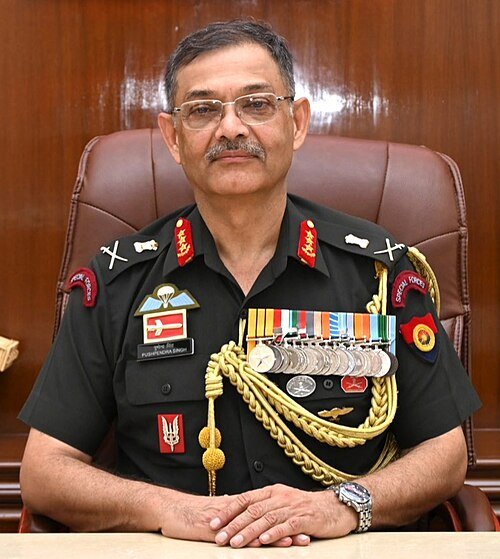
The Punjab Government has chosen Lt Gen NPS Hira as chairman of the Punjab Public Service Commission (PPSC). Tejinder Kaur Dhaliwal, chairman of the Punjab School Education Board, has been chosen as a member of the board.The duo have been chosen as members by a high-powered committee of the Punjab Government, headed by Chief Minister Parkash Singh Badal.Lt Gen Hira was appointed Deputy Chief of Army Staff in March this year. He was earlier posted as Chief of Staff of Northern Command at Udhampur. He will take over the reins of the PPSC from Lt Gen (retd) TS Gill, who demitted office in September.Official sources say that though the names have been cleared, the final approval of the Governor has to be sought, before the notification regarding their appointment can be issued.
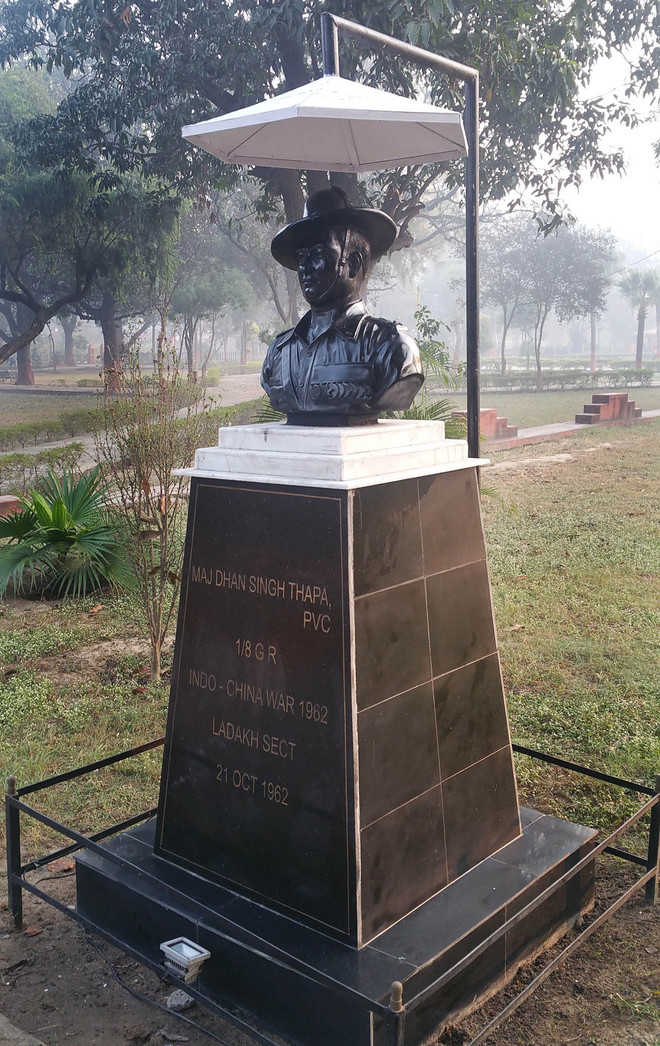
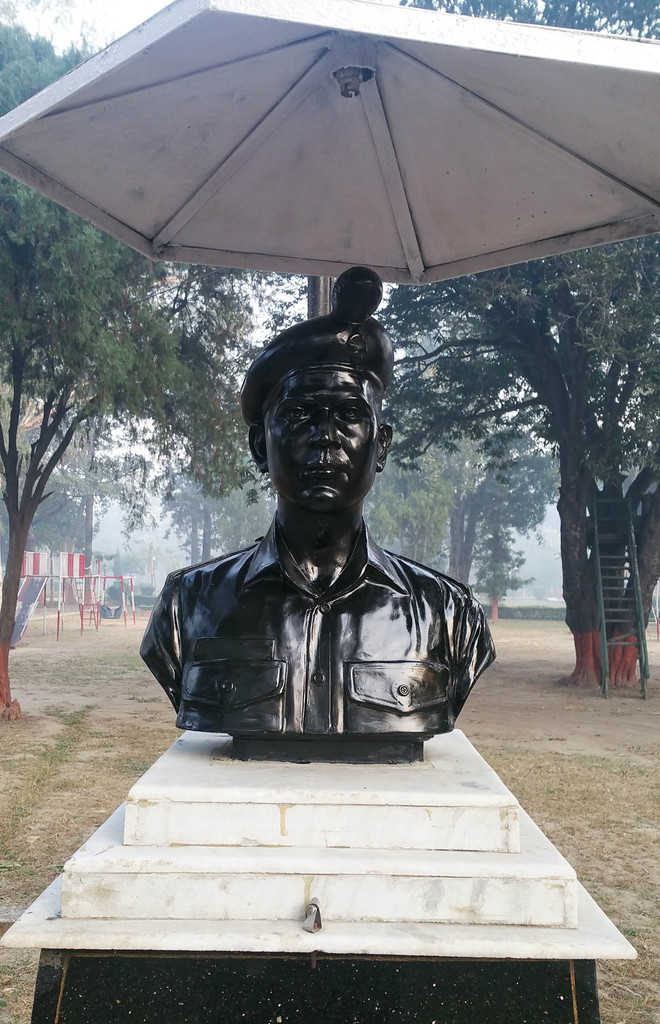
Freshly painted and repaired statues of war heroes in Jalandhar Cantonment on Thursday. Tribune Photos
Rachna Khaira
Tribune News Service
Jalandhar, November 17
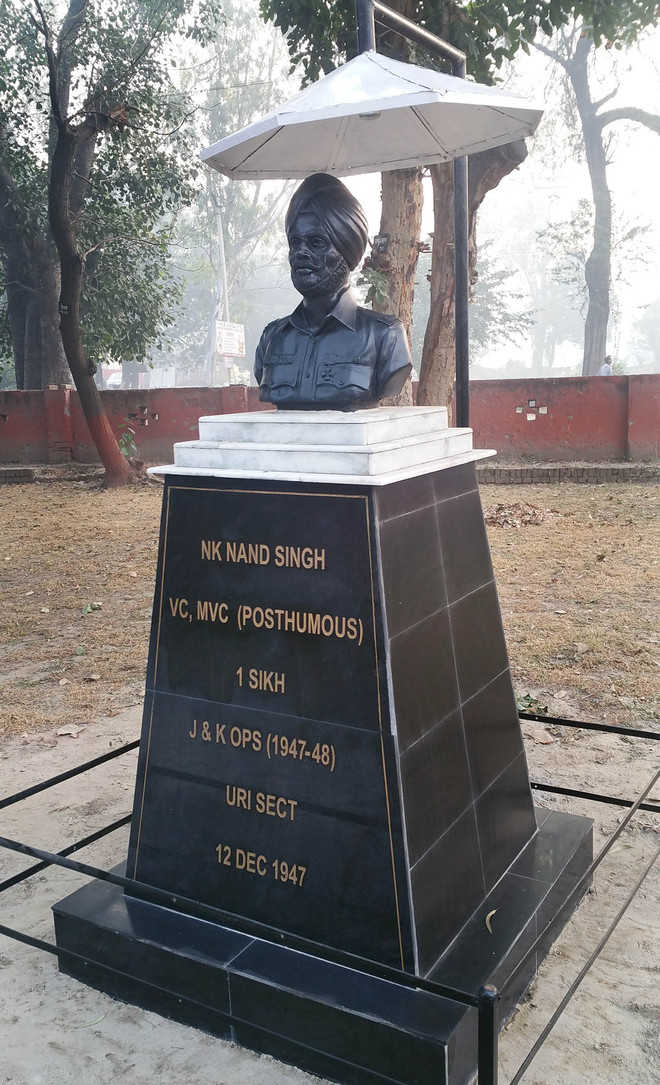
Taking cognisance of a Jalandhar Tribune report published on November 15 highlighting the dilapidated condition of 13 statues of Paramvir and Mahavir Chakra winners in Jawahar Park in the Cantonment area here, the Army authorities today swung into action by getting the statues painted.The statues attracted everyone’s attention this morning who visited the park for morning stroll. The shinning black heroes seemed to have come alive after they were washed given a fresh coat of colour. Also, the focus lights installed over the statues were repaired. Their umbrellas, too, were cleaned and painted afresh.Speaking to The Tribune, a daily visitor to the place Anand said though he had asked the sanitation staff working there many times to wash these, none had paid heed to this. “It is really a commendable job by the Army who immediately did a good job,” said the software engineer.Vivek Sharma, a yoga teacher, too, applauded the Army’s move to have come to the rescue of the war heroes’ statues. “Unfortunately, the sanitation staff here have created dumping sites around many statues. It was just not possible to stand near the statues and read about their glory. With the cleaning of these statues, the dumping grounds too vanished and more cleanliness was observed for the past two days,” said Sharma.The Tribune, in it report, had highlighted the plight of the statues which were found to be either broken or covered with dust and birds faeces.
CITIZENS’ mistrust of the State has crimped India’s economic progress. The economy has grown growing fairly well since the shock of the other ‘pro-market’ reforms in 1991. Consumers have benefited. And many Indians have become very wealthy. Concerned with the declining growth of the economy in the UPA-II regime, the anti-corruption movement sweeping through the country, and the ‘policy paralysis’, the Planning Commission carried out a systems’ analysis in 2012 of the forces shaping the economy. The analysis revealed that the root cause of slow progress was the mistrust of citizens in the institutions of the State to serve the needs of ‘aam aadmi’, and also in institutions of big business. The growing mistrust of politicians and crony capitalism fuelled the rise of the eponymous Aam Admi Party which swept the Delhi elections. Citizens of all countries expect the State, whether autocratic or democratic, to provide some basic services: security, law and order, and public services such as sanitation, education, water, public health, and public transportation. This is a basic condition a State must fulfil to earn the confidence of its citizens. The Indian state has done very poorly in providing basic services that citizens in many other countries take for granted. Harvard development economist Lant Pritchett describes the Indian state as a ‘flailing state’, in which many government institutions are functional in their heads, but have little control of their limbs and of the results delivered on the ground to citizens.Delivery of State services is in short supply in India. Moreover, they are provided preferentially to those who pay bribes, and those who have more power to claim them. In Lutyens’ Delhi, where the State establishment lives, water and electricity are provided 24/7, even when citizens in the rest of the city swelter in power blackouts and scramble to get water, and pay a lot for it too. Security personnel make way for the powerful and the rich through crowds of citizens who are left scrambling for service and safety in the chaos. Every day, ‘aam aadmi’ in India sees the reality of a weak State serving the powerful. She (or he) can trust the State if she believes that the State has her interest at heart. Her experience tells her it does not. So, as a rational and self-interested human (as economic theory says she must be) why should she trust the government and the State? ‘Trust us’, political leaders may plead. But when their inability, and even unwillingness, to serve her needs is so obvious, how can she? Worldwide surveys of citizens’ trust in institutions, such as the Pew Research Center’s survey and the Edelman Trust Barometer, have been reporting the low level of trust that citizens in most countries have in their governments. Often, these surveys report higher trust in institutions of big business — though not by much. Business leaders, as well as economists with an anti-government ideology, have interpreted these surveys as citizens’ desire to have less government and more private businesses in their countries. However, all the surveys had said was that citizens seemed to trust businesses somewhat more than the government, which often was a low bar to exceed. A worldwide movement gathered strength since the 1990s, coinciding with the collapse of the Soviet Union and the rise of the Washington Consensus to hand over public sector functions to the private sector. Health, education, public utilities, prisons and even public security services were privatised. India followed the herd too. In UPA-II, PPPs had become the solution to all failures of the State to provide public services — infrastructure, public utilities, health and education. The Indian telecoms story was the poster for the benefits of getting the government out of the way. The private sector had provided millions of Indians with mobile phones on demand, whereas when the government ran telecom services, citizens had to wait for many years to get a phone connection. Ironically, it was the telecom sector in which collusion between private interests and State functionaries was revealed along with huge corruption. Citizens were also becoming dismayed by the disregard of the needs of the poor by private hospitals and educational institutions even when it was explicit in their licenses to operate. Citizens had little trust in the government. But they had little trust in the private sector too. Citizens, especially those left behind in the growth of economies, fear even more when the State appears to be run by big business and is corrupted by private interests. Indeed, this fear fuelled the surprising rise of both Bernie Sanders from the left and Donald Trump from the right in the recent US elections. They said they were standing against the collusion of big business and the government in setting the rules of the game in favour of the rich and the powerful and against the interests of common citizens. Hillary Clinton was not considered trustworthy. Whatever be the truth, it is the perception. And trust is based principally on perceptions. ‘I will trust you, if I perceive you are acting in my interest’. The demonetisation strike by Mr Modi is a bold gambit to show that he and his government are acting against those who have colluded to deny common citizens the benefits of the State. It is a move to also indicate that from now on the government will improve delivery of services to common citizens and not pander to the conveniences of the rich. ‘Trust me’, Mr Modi has asked the people. They are giving him a chance. Words will not be enough. The State will have to deliver. The head will have to coordinate its flailing limbs. Services will have to reach into the last mile of India’s dark interiors, to millions of citizens who have been ignored while India shone elsewhere. Mr Modi also has the difficult task of making citizens believe that he is not being swayed by those who have helped to bring him to power and who now may demand that he give them preference — whether they are wealthy contributors to his party, or Hindu nationalists who have marshalled political support for him. For citizens, a trustworthy State must extend beyond the government of the day and the person in power. The question is not whether the majority of Indian citizens trust Mr Modi, but whether all Indians can trust the Indian State.The writer is a former member of the erstwhile Planning Commission
Vijay Mohan
Tribune News Service
Chandigarh, October 9
The Indian Air Force has drawn up plans to acquire 12 high-powered radars to counter the threat posed by the induction of new combat aircraft in the region, some of which are claimed to have stealth capabilities, as well as ballistic missiles.Such radars have the capability to detect airborne targets at a range of several hundred kilometres. These will combat the growing obsolescence and plug gaps in the country’s existing air defence network.The IAF has specified that the radars should be able to detect targets at an altitude of 30 kms with the ability to detect and track targets having a radar cross section of 0.1 square metre or less following a parabolic trajectory. The systems, which can also be deployed in high altitude areas, should also have measures to counter electronic warfare and anti-radiation missiles.The move to procure high-powered radars comes in the backdrop of India being in the process of acquiring several other systems, including long-range surface-to-air missiles, to strengthen defences against aerial threats.The IAF has an array of low, medium and long range radars to meet different operational requirements. At present, its requirement of high-power radars, which are large and static systems with an elaborate infrastructure, is met by a mix of Russian and French systems. The French Thales radar, which that has a range of about 600 kms, has been in service for several decades. Besides imported systems, a number of indigenously developed radars such as Rohini, Arudhra and Indra series met low and medium range requirements. The private sector in India is also reported to be working on high-powered radar systems.The Russian S-400 missile that has a range of 380 km, Israeli Spyder low-level quick reaction missiles, the indigenous Akash and the under development medium range surface-to-air missile along with the missile shield for important cities are among the systems being put in place to enhance air defence capabilities.
My participation in the event, despite the escalation of violence along the line of control and the working boundary with India, bears testimony to Pakistan’s commitment for lasting peace… SARTAJ AZIZ, Pakistan Prime Minister’s foreign affairs adviser
From page 01 ISLAMABAD/ AMRITSAR: Senior Pakistan official Sartaj Aziz on Sunday denied news reports that he was mistreated during the Heart of Asia conference in Amritsar, and said his country’s participation “was welcomed by every quarter”.
GURPREET SINGH/HTPrime Minister Narendra Modi flanked by Afghan President Ashraf Ghani and finance minister Arun Jaitley during the Heart of Asia conference in Amritsar on Sunday.
However, Aziz – the Pakistan prime minister’s foreign affairs advisor – said his India visit was never expected to bring about a breakthrough. “It’s not possible to speak on a bilateral issue at a multilateral conference,” he said.
The official claimed all his interactions in India were pleasant but “not substantive”. “They were generally pleasant, friendly, but not structured,” he said.
Downplaying reports of a souring relationship between Kabul and Islamabad, he said Afghanistan and Pakistan were like “congenital twins” that cannot be divided by India.
Aziz, however, termed the arrangements made for his stay in India as “strange”. He said the Pakistani delegation was housed in a separate hotel, and they were denied visits by guests.
Earlier that day, Aziz had told participants of the sixth Heart of Asia conference that it was wrong to accuse Pakistan of promoting terrorism when it was committed to regional cooperation. “My participation in the event, despite the escalation of violence along the line of control and the working boundary with India, bears testimony to Pakistan’s unflinching commitment for lasting peace in Afghanistan and the region,” he said.
Aziz called the postponed SAARC meet a setback that undermined the spirit of regional cooperation. “One must remember that this forum helps improve relations as well,” he said.
The SAARC summit, meant to be hosted by Pakistan in November, was postponed after several member-nations claimed that the Uri attack – where 19 Indian soldiers were killed – had created an inhospitable atmosphere for talks. Military skirmishes along the line of control in Jammu and Kashmir have increased since the Uri ambush.
Before Aziz spoke on Sunday, Prime Minister Narendra Modi and Afghan president Ashraf Ghani had accused Pakistan of supporting and financing terrorist forces at the regional initiative to promote peace efforts in Afghanistan. However, the Pakistan official denied the allegations. “The security situation in Afghanistan is very complex. It is simplistic to blame only one country for the recent upsurge in violence. We need to have an objective and a holistic view,” said Aziz.
Prime Minister Narendra Modi got the timing for the Japan trip wrong. Modi could have achieved more from his trip in terms of strategic clarity had he waited for the dust to settle down in the US. Take a look at the timeline of Indo-Japan relations. It is uncanny how Tokyo has always followed Washington’s footsteps in mending ties with India. Therefore, it is inconceivable for Japan to take new initiatives with India till it gets an idea which way the wind is blowing across the Potomac River in Washington. As a result, Modi came away with nothing new. The Indo-Japan nuclear deal is the mother lodestar of his Japan yatra. And Modi has conceded strategic ground by allowing Japan to sneak in a nullification clause. The previous UPA government could not consummate the deal because it had resisted precisely such a move. In all its civil nuclear agreements, it had scrupulously guarded against any such conditionality entering those agreements. The resistance to the nullification clause was based on past experience. The US and all its close allies had suspended sensitive trade in military after India tested nuclear weapons in 1998. This left India in the lurch as all defence collaboration with the West had come to a grinding halt.For the first time since the end of World War II, Japan is on the horns of a dilemma. US President-elect Donald Trump has questioned the underwriting of Japan’s security without commensurate returns. The aggressively anti-China government of Shinzo Abe has already reached out to Russia. In case, Trump decides to dilute the US military umbrella over Japan, Shinzo Abe would have to throw more sweeteners to the Kremlin. If Modi had delayed his visit, the Japanese would have been more generous in enlisting India as a hedge against China. The Japanese chose to overlook Defence Minister Manohar Parrikar’s rather intemperate observations on the use of nuclear weapons. India could not consummate a defence deal for amphibious planes and collaboration in rare earths. Without the nuclear deal, the trip would have been a wasted opportunity for Modi.
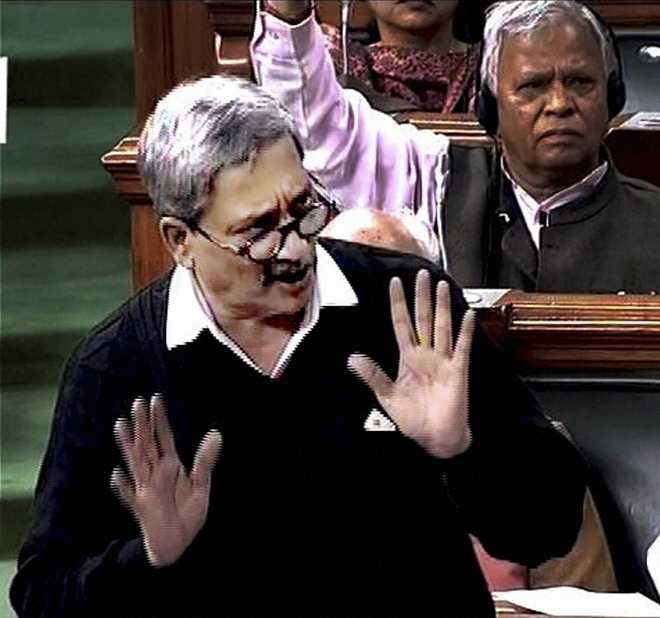
In Lok Sabha, Defence Minister Manohar Parrikar termed it a “routine exercise not unique to West Bengal”. PTI photo
New Delhi, December 2The row over Army taking over road toll plazas in West Bengal on Friday echoed in Parliament with TMC seeing “sinister” designs behind the move and the government vehemently denying the charge, saying it was a routine exercise conducted in full knowledge of the local authorities.The issue was raised in both Houses of Parliament with main opposition Congress also seeking clarification on the army deployment at 19 toll plazas in West Bengal.In Lok Sabha, Defence Minister Manohar Parrikar termed it a “routine exercise not unique to West Bengal” saying that similar operations to collect information on heavy vehicle movement that could be used during national emergencies had last month being conducted in Uttar Pradesh, Bihar and Jharkhand.(Also read: Army rebuts Mamata’s charges, says exercise done with police coordination)Along with West Bengal, a similar exercise was carried out in Arunachal Pradesh, Manipur, Nagaland, Tripura, Meghlaya and Mizoram, he said, while responding to TMC and Congress MPs.
(Follow The Tribune on Facebook; and Twitter @thetribunechd)
He said that originally the exercise was planned for November 28-30 but was shifted to December 1 and 2 at the request of Kolkata Police as those dates clashed with the protests against demonetisation.“It is shocking that a chief minister is saying this. The Army’s deployment was part of routine exercise which has been going on for several years. Even last year it was held on November 19 to 21,” Parrikar said.The Minister said Army’s Eastern Command had been carrying out the exercise in West Bengal, Assam and other North-Eastern states and a similar exercise had already been carried out in Uttar Pradesh, Bihar and Jharkhand.“Officials concerned were informed in West Bengal. The original date was fixed for November 28 to 30 but due to Bharat Bandh the local police had advised the army to shift it to December 1 and 2,” he said.“Due to traffic congestion, the exercise is being done with the help of local police.”TMC leaders in both Houses alleged that neither the state government nor local administration, including police, were taken into confidence on the exercise nor their permission sought.Congress and BSP, too, wanted to know from the government how such an unprecedented move to carry out an army exercise without taking the state government into confidence was done.“It was very unfortunate that army has been dragged into an unnecessary controversy,” Parrikar said. “It was political frustration rather than projection of correct situation.”
Senior BJP Minister said important Bills were listed for passage next week and asked opposition parties to allow Parliament to function smoothly.
‘Released letters’
The Indian Army responded to the charges saying they written to the state government informing it about the exercise.
“It is happening in nine states now across 80 locations,” he said.
“We have our specific targets for data collection. After doing the work for 36 hours our work was done and we had left the toll plaza near Nabanna,” he said.
Maj Gen Yadav said the army had conducted a similar exercise in Eastern Command November 2015.
The Maj Gen said that a recce was conducted with two inspectors of the Kolkata Police at toll plaza on November 27 last.
“The issues raised by the police were addressed and wee telephonically informed to the police,” he said.
The exercise will continue as planned earlier and will end tonight, he said.
A defence spokesperson said on Thursday that the army usually conducted a biennial exercise throughout the country with the aim of getting statistical data about the load carriers that could be made available to the army in case of a contingency.
“There is nothing alarming about this and it is carried out as per government orders”, Wing Commander SS Birdi had said.
The exercise gives an estimate about the number of vehicles passing through a certain area that could be tapped during operations, he had said. PTI/ TNS
Finance Minister demands inquiry into reason for Grewal’s decision to end life
Tribune News Service
Hisar, November 5
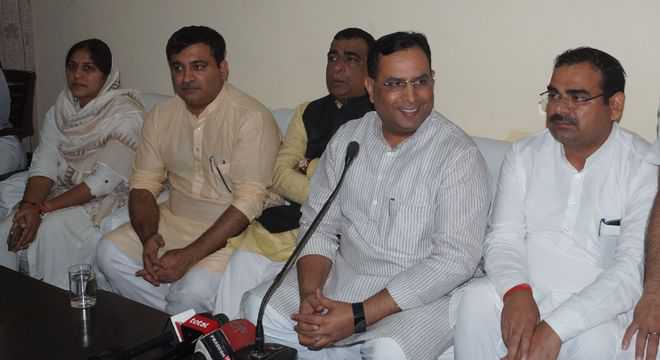
Finance Minister Capt Abhimanyu today blamed the Congress for Subedar Ram Singh Grewal’s suicide, alleging the previous UPA government had failed to implement the One Rank-One Pension (OROP) scheme during its 10-year tenure.“If the financial condition is one of the reasons behind his decision to commit suicide, the UPA government is to blamed because it denying Grewal OROP benefit for 10 years,” he told the media here.The Indira Gandhi government had, in 1972, discontinued the OROP scheme for defence personnel, leading to pension-related discrepancies, Capt Abhimanyu said.“Ex-servicemen struggled for 43 years, including 10 years of the UPA government. Prime Minister Narendra Modi kept the promise on the OROP,” he claimed.On the demand for a martyr status to Grewal, the minister said: “Suicide cannot be glorified. Being an ex-serviceman, I can say that a soldier is taught to fight and struggle; not to surrender to the circumstances. The narrow thinking of the Kejriwal government failed to differentiate between martyrdom and suicide. Martyrdom is always inspirational, whereas suicide cannot be.”The reason for his decision needed to be investigated, he said.He hit out at Congress vice-president Rahul Gandhi. “I appreciate Rahul’s gesture to express solidarity with the bereaved family. But the martyrdom of a soldier from Kuruksherta a few days ago failed to draw his attention.”Capt Abhimanyu defended the government’s decision to provide Rs10 lakh and a government job to the deceased’s family. “A sensitive Chief Minister always helps the needy,” he added.
PM didn’t honour his promise, says Kiran
Chandigarh, November 5
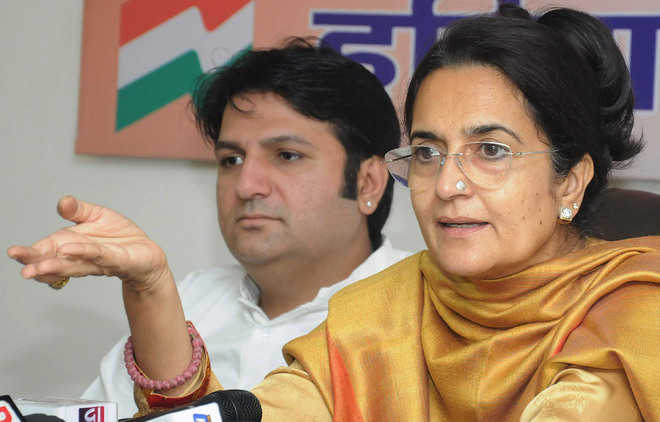
Congress Legislature Party (CLP) leader Kiran Choudhry today alleged Prime Minister Narendra Modi had gone back on his word on implementing the OROP scheme, as promised at a pre-election rally in Rewari.“The BJP government at the Centre has only, at best, enhanced the pension, while denying ex-servicemen their due,” she told the media here.“There are several anomalies in the scheme; it only amounts to a marginal increase in pension. At a rally of ex-servicemen in Rewari, the Prime Minister had announced that implementation of the OROP scheme would be the first thing he would do on assuming office. It has been two years since and the ex-servicemen have been forced to take to the streets. We are ashamed at the treatment being meted out to them at the hands of the BJP government,” Choudhry said.She claimed the suicide by Bhiwani ex-serviceman Ram Krishan Grewal had failed to move the government. “It was shocking to hear Modi’s minister General VK Singh say Grewal was mentally unstable. He should have stepped down in protest, to express solidarity with the defence personnel.” — TNS
Veteran’s son my party worker, says Athawale
Bhiwani, November 5
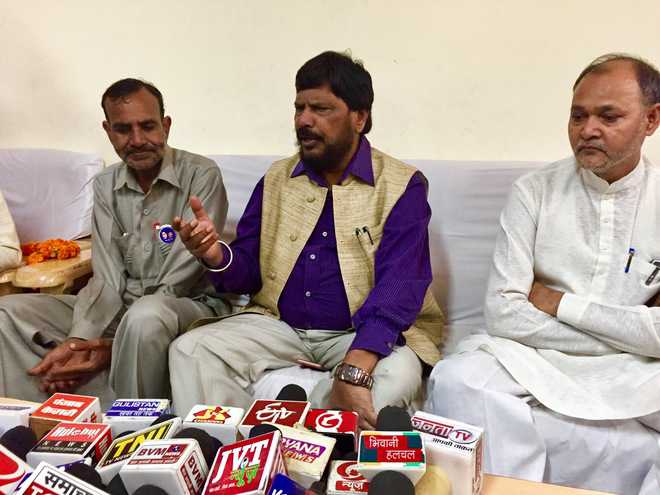
Contrary to Union Minister VK Singh’s remark that OROP protester Ram Kishan Grewal, who committed suicide in Delhi, was a Congressman, another minister Ram Dass Athawale said that Grewal’s son was his party worker.“Grewal’s son Jaswant Singh is the block president of my party and he is not a Congressman,” said Athawale when asked to respond to the statement of former Army Chief VK Singh about the political background of the deceased.Athawale, who is chief of the Republic Party of India, reached here today and demanded martyr status for Grewal. He said that he would speak to Chief Minister Manohar Lal Khattar on the issue. One of the deceased sons would be absorbed in the department under him, he stated. — TNS
Pension for war widows, veterans raised to Rs 3,000
Chandigarh, November 5
The Haryana Government has enhanced monthly pension to Rs3,000 given to ex-servicemen of and above the age of 60, widows and orphans of ex-servicemen, disabled ex-servicemen, war widows of the defence personnel killed in action during war, and paraplegic, tetraplegic and hemiplegic ex-servicemen.The revised pension will be disbursed from from November. Earlier, pension ranged between Rs1,500 and Rs2,000.A government spokesman said financial assistance would be enhanced by Rs400 a year from November 1, 2017. TNS
Reports about Pakistan Prime Minister Nawaz Sharif berating the army, which he later denied, had warmed the cockles of even the most realist heart in India. Ram Madhav, a member of Prime Minister Narendra Modi’s inner group, hailed Nawaz’s counsel to the Pakistan military on terror as an “extraordinary development.” Ram Madhav’s reaction is more like clutching at a straw than a rational scrutiny of the circumstances that would have rendered inoperative had the Pakistan PM actually made the observation. Nawaz Sharif, like all Pakistan PMs in the past, is engaged in perpetual shadow warfare with the army to gain control over the levers of the state. The Sharif brothers have repeatedly tried to clearly demarcate responsibilities for investigation of terror crimes in the domestic sphere.Nawaz had taken this line after the Pathankot attacks by entrusting the probe to the Intelligence Bureau chief who reports directly to him. Asif Zardari had also tried to ensure impartial trials of the Mumbai attack masterminds. Mysterious forces stymied both investigations including the unexplained assassinations of two public prosecutors in the Mumbai attack case. Nawaz has found an ally in the Pakistan People’s Party on Pakistan’s diplomatic isolation in the entire neighbourhood. Even the Pakistan army should find it galling that Sri Lanka boycotted the SAARC summit even though both countries have a long-standing defence relationship. Only Maldives, in the throes of acute political crises, acted neutral.Should India take on face value Nawaz and PPP’s deviation from remaining in denial mode? The firing on the LoC and attempts to storm Indian Army camps indicate that Pakistan’s Kashmir policy marches to a different drum beat. Nawaz may be playing the good cop in a routine that has been performed earlier. In fact, the stand of Pakistan’s political parties and its army on Kashmir is the same. They believe India unfairly snatched away the Valley and the final word has not yet been said. Thus even if Nawaz believes what he is saying, he neither has the capability to implement his views nor can it temper the ardour of forces trying to destablise J&K.