Geetanjali Angmo, wife of climate activist Sonam Wangchuk, met her husband in Rajasthan’s Jodhpur jail on Tuesday, their first meeting since his detention under the National Security Act (NSA).
“Met @Wangchuk66 today with @RitamKhare and got the detention order which we will challenge,” Angmo wrote on X. She added that Wangchuk’s “spirit is undaunted. His commitment resolute! His resilience intact! He conveys heartfelt thanks to all for their support and solidarity.”
Angmo’s meeting came a day after the Supreme Court (SC) issued notices to the Centre and the Ladakh administration on her petition seeking Wangchuk’s immediate release from detention under the NSA, 1980. Angmo’s petition is scheduled for October 14 the SC.
SIA conducts multiple raids across Kashmir to bust sleeper cell module
The Jammu and Kashmir Police’s State Investigation Agency (SIA) on Wednesday carried out searches at multiple locations across the Valley as part of its efforts to crack down on a sleeper cell module of terrorist organisations, officials said.
During the raids, some suspects were detained for questioning, the officials said.
The SIA carried out extensive searches at eight locations across seven districts in the Kashmir valley, they said. The searches were conducted as part of an ongoing investigation of case registered at Police Station CI/SIA Kashmir, they added.
“The case is related to the sleeper cell module operating in the Valley at the behest of terrorist commanders of proscribed terrorist organisations of Lashkar-e-Taiba and Jaish-e-Mohammad. The module is used for spreading secessionist propaganda thereby radicalizing and recruiting the youth into the terror fold,” they said.
The search operation was conducted simultaneously across seven districts in the Valley from all three police ranges — North, Central and South Kashmir.
“During the raids, substantial incriminating materials have been seized and the suspects have been rounded up for further questioning,” the officials said.
Preliminary investigation has clearly brought out the active engagement of these entities in a terrorist conspiracy aimed at propagating and furthering anti-India narratives aimed not only at challenging the sovereignty and territorial integrity of India but also at inciting disaffection, public disorder and communal hatred, they said.
The searches highlight the continued and unrelenting efforts of the SIA to ensure that the entire module is dismantled and to strike at the roots of the terror ecosystem, the officials added.
Bengaluru Police register FIR against lawyer who tried to hurl shoe at CJI
The FIR is registered against Rakesh Kishore following a complaint by Bhaktavachala, president of the All India Advocates Association
The Bengaluru Police on Wednesday registered a zero FIR against the lawyer who allegedly tried to hurl a shoe towards Chief Justice of India B R Gavai in his courtroom in the Supreme Court, officials said.
A zero FIR can be registered anywhere irrespective of where the alleged offence occurred.
The FIR was registered against Rakesh Kishore under Sections 132 (assault or criminal force to deter public servant from discharge of his duty) and 133 (assault or criminal force with intent to dishonour a person of the BNS, following a complaint by Bhaktavachala, president of the All India Advocates Association here, they said.
The act of Rakesh Kishore is not pardonable and acceptable by any section of society. In fact, his act is punishable…this is a grave incident to be taken seriously,” the advocates association said in the complaint submitted to the SHO of Vidhan Soudha police station here.
Kishore (71) allegedly tried to hurl a shoe towards CJI Gavai in his courtroom in the Supreme Court on Monday, but was stopped by alert security personnel.
According to police sources, the errant lawyer was unhappy over the CJI’s remarks during a hearing last month concerning the restoration of a Vishnu idol in Khajuraho.
US to give Pakistan advanced missiles for F-16 jets
The US will give Pakistan the latest missiles that can be launched from F-16 fighter jets, a move that could pose challenge to the Indian Air Force in any future skirmish with the neighbouring country.
The missiles have the ability to hit targets in air up to 200 km; the range is greater than that of Pakistan’s PL-15E, which is an export version of the Chinese-made air-launched missile. The Pakistan Air Force (PAF) already flies the F-16.
Can hit targets up to 200 km
The C8 and the D3 versions of AIM-120, an ‘advanced medium-range air-to-air missile’ known as AMRAAM in military paralance, have the ability to hit targets in air up to 200 km
These radar-guided missiles engage enemy aircraft at beyond-visual ranges, and can be used in the air defence system. Pakistan’s air defence failed badly during Operation Sindoor
The US Department of War has issued a contract to missile-maker Raytheon for “advanced medium range air-to-air missile variants — the C8 and D3”.
Expected to be ready by May 30, 2030, the latest versions will be supplied to Pakistan, the United Kingdom, Germany, Finland, Australia, Switzerland, Portugal, Singapore, the Netherlands, Czech Republic, Japan, Denmark, Canada, Belgium, Saudi Arabia, Italy, Norway, Spain and Israel, among others.
The C8 and the D3 versions are Raytheon’s under-development iterations of the AIM-120, which is an ‘advanced medium-range air-to-air missile’ and shortened in military parlance as AMRAAM. These radar-guided missiles engage enemy aircraft at beyond-visual ranges. The missile-maker has a $3.5 billion contract for the next lot of missiles.
The AMRAAM is integrated on 14 types of platforms across 43 countries and can also be used in the air defence system. Pakistan’s air defence failed badly during Operation Sindoor as the Brahmos missile struck 13 PAF bases. A new software gives AMRAAM the capability against a wider variety of threats and increase the probability of hitting the targets.
India’s military calculus on Pakistan is undergoing a reset amid the renewed US-Pakistan military ties. A concern in South Block was about Washington DC’s potential to re-arm Islamabad with the latest missiles, jets and radar. In the past decade or more, fresh US military supplies to Pakistan had tapered off. However, after operation Sindoor, the US-Pak military and strategic ties are getting renewed.
In July, PAF chief Air Chief Marshal Zaheer Ahmed Baber Sidhu was in the US to discuss technology and military hardware at the Pentagon. Post-operation, Pak army chief Field Marshal Asim Munir has made three visits to the US. In June, a Pakistan delegation to the US, led by its minister for energy Musadik Malik urged the US to supply air defence systems and additional fighter jets.
‘India United Only Under Aurangzeb’: Pak’s Khawaja Asif’s Provocative Remark
Pakistan’s Defence Minister Khawaja Asif has stirred a major controversy with his recent comments on India’s history and political unity. Speaking to Pakistan’s Samaa TV, Asif claimed that India was “never truly united” except under Mughal emperor Aurangzeb, a remark widely dismissed as historically inaccurate and politically provocative.
His statement comes just days after India issued a sharp warning to Islamabad, accusing it of continuing to sponsor cross-border terrorism and cautioning that such actions could threaten Pakistan’s own territorial existence.
Asif’s assertion that India’s unity existed only during Aurangzeb’s reign ignores centuries of evidence to the contrary. Long before the Mughals, the Maurya Empire under Emperor Ashoka in the 3rd century BCE unified most of the Indian subcontinent, establishing one of the largest and most efficiently administered empires in world history.

Later, successive rulers such as Samudragupta of the Gupta dynasty and Emperor Harshavardhana also achieved extensive political consolidation. Even under the Mughals, historians generally regard Akbar’s era—not Aurangzeb’s—as the period of greatest stability and cultural integration. Aurangzeb’s rule, by contrast, was characterized by internal strife, rebellions, and religious intolerance that ultimately weakened the empire.
India’s Modern Stability Vs Pakistan’s Political Fragility
Since gaining independence in 1947, India has sustained a democratic system marked by stability and constitutional continuity. Over the same period, Pakistan has experienced repeated military coups, political turbulence, and internal divisions between provinces and ethnic groups. Analysts note that Asif’s remarks appear to be an attempt to distract from Pakistan’s deepening domestic crises—ranging from economic collapse to ongoing internal instability and international isolation due to its tolerance of extremist networks.
Escalation Fears And War Rhetoric
In the Samaa TV interview, Asif also declared that “chances of war with India are real,” though he claimed not to desire escalation. His remarks came amid heightened tensions between the two nuclear-armed neighbors. The Indian Army Chief, General Upendra Dwivedi, recently delivered a strong warning to Pakistan, asserting that India would not show the same restraint as during “Operation Sindoor 1.0,” a past counterterror strike. General Dwivedi stated that India was now “fully prepared” and that continued support for terrorism by Pakistan could lead to its “geographical disappearance.” The statement underscored India’s sharpened posture in the face of persistent cross-border threats.
Khawaja Asif’s Record of Controversial Statements
This is not the first time Khawaja Asif has attracted criticism for his comments. In September, he sparked ridicule by suggesting that Pakistanis in flood-stricken regions should “store floodwater in containers” rather than let it drain, calling it a “blessing” in disguise. During previous India-Pakistan tensions under “Operation Sindoor,” Asif also embarrassed Islamabad by promoting false claims about Pakistan downing Indian aircraft. When asked for evidence by CNN anchor Becky Anderson, Asif cited “social media” as his source, prompting a pointed rebuttal on air.
Political And Strategic Implications
Observers view Asif’s latest remarks as a continuation of Pakistan’s long-standing political narrative aimed at invoking anti-India sentiment to unify domestic opinion amid crises. However, Indian policymakers have responded with confidence, emphasizing that historical revisionism and war rhetoric will not alter the country’s defensive readiness or its enduring democratic cohesion.
Asif’s claims not only distort well-documented historical facts but also illustrate the enduring pattern of provocation that Islamabad’s leadership employs in the face of mounting internal and international pressure.
Based On NDTV Report
India, Australia deepen maritime security ties for ‘free and open’ Indo-Pacific
Defence Minister Rajnath Singh holds bilateral talks with his Australian counterpart Richard Marles in Canberra
India and Australia on Thursday discussed a new mutual maritime security framework aimed at deepening cooperation for a ‘free, open, and resilient Indo-Pacific’.
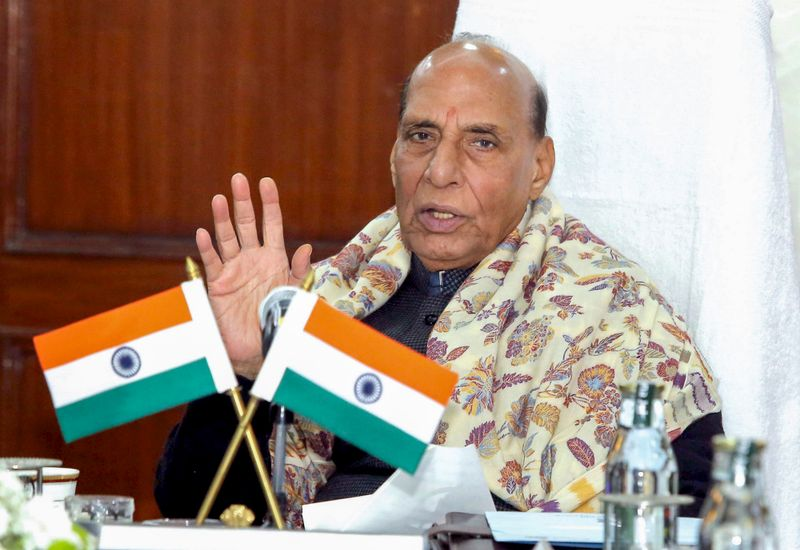
Defence Minister Rajnath Singh, on a two-day visit to Australia (October 9–10), held bilateral talks with Deputy Prime Minister and Defence Minister of Australia Richard Marles in Canberra.
In a post on X after the meeting, Rajnath Singh said, “Together, we will deepen cooperation for a free, open, and resilient Indo-Pacific.”
The phrase “free and open Indo-Pacific” is a euphemism aimed at countering Chinese hegemony, which seeks to unilaterally change the maritime status quo in the South China Sea.
India and Australia are part of the four-nation Quad, along with the US and Japan. The group is scheduled to conduct a joint military exercise next month at Guam, a US base in the Western Pacific.
Meanwhile, during the meeting, the two ministers reviewed the full spectrum of India-Australia defence cooperation, including the defence industry, cyber defence, maritime security, and regional challenges.
Rajnath Singh also highlighted the rapid growth of India’s defence industry and its rising stature as a credible global source of high-quality defence technology. The two sides discussed the potential for deeper defence industry partnerships between India and Australia.
Defence and security cooperation has become one of the strongest pillars of the bilateral partnership. Australia and India are considered top-tier security partners. Over the past decade, the frequency of annual defence exercises, meetings, and activities has tripled, with 33 such events conducted in 2024 alone.
India and Australia are considering the renewal of the 2009 Joint Declaration on Defence and Security Cooperation, which will address the expansion of military ties between the two countries over the past decade. This was a key topic during the bilateral talks.
Additionally, a Joint Maritime Security Collaboration roadmap is being prepared, with both sides aiming to finalise it soon. This will enhance maritime domain awareness and guide military cooperation between the two nations, with detailed discussions on its finer points expected.
Earlier this week, Australian High Commissioner to India Philip Green stated, “India is an indispensable security partner for Australia. Our defence cooperation delivers tangible effects to uphold Indo-Pacific stability. This visit is a unique opportunity to deepen our defence partnership, including though enhancing strategic dialogue and information-sharing, and increasing the complexity of our exercises.”
Australia’s first defence trade mission to India is currently underway, with visits to Chennai and New Delhi. The mission focuses on connecting Australian firms with Indian counterparts, particularly in the sector of C5ISR — which stands for Command, Control, Communications, Computers, Cyber-defence, Intelligence, Surveillance, and Reconnaissance.
Earlier, Rajnath Singh was welcomed at the Australian Parliament House, where he will witness parliamentary proceedings during his visit to Canberra.
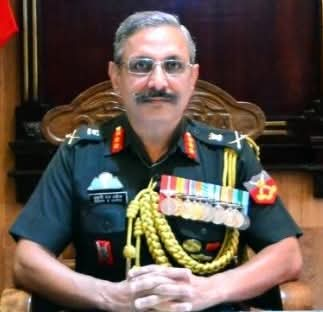
Lieutenant General Vikas Rohella has been appointed as the Engineer-in-Chief of the Indian Army, officially taking command of the Corps of Engineers in a ceremony filled with tradition and gravity
Lieutenant General Vikas Rohella has been appointed as the Engineer-in-Chief of the Indian Army, officially taking command of the Corps of Engineers in a ceremony filled with tradition and gravity.
During the event, Lt Gen Rohella paid tribute at the National War Memorial by laying a wreath to honor the Bravehearts who have made the ultimate sacrifice for the nation.
In his address to the Corps of Engineers, the newly appointed Engineer-in-Chief emphasized the importance of maintaining a legacy of selfless service. He also encouraged the adoption of innovation and the integration of technology to boost the Army’s operational readiness amid changing battlefield dynamics.
The Corps of Engineers, a crucial component of the Indian Army, is instrumental in combat engineering, providing mobility support, developing infrastructure, and engaging in nation-building efforts. With Lt Gen Rohella at the helm, the Corps is anticipated to continue its pursuit of technological advancement and operational efficiency.
President Droupadi Murmu on Tuesday said the country’s armed forces demonstrated the strength of jointness and strategic foresight during Operation Sindoor, which also resulted in dismantling of terror infrastructure across the Line of Control (LoC).
Addressing the faculty and course members of the 65th National Defence College course, who had called on the President at the Rashtrapati Bhavan here, Murmu emphasised that national interests and objectives form the foundation of India’s security framework, while universal values remain at its core.
“Indian tradition has always viewed humanity as one family. Universal brotherhood and peace have been our articles of faith,” she said, adding that the nation simultaneously prioritises readiness to counter threats to humanity and the nation.
She highlighted structural reforms undertaken to promote jointness, including the creation of the Department of Military Affairs with the Chief of Defence Staff as its secretary, and ongoing efforts to establish integrated theatre commands and integrated battle groups.
“In a changing geopolitical environment, India is transforming its armed forces into a technologically advanced, combat-ready force capable of multi-domain integrated operations,” the President said, underlining the importance of dynamic responses to emerging security challenges.
The President also praised the National Defence College for its international programme, calling it a benchmark learning intervention that fosters better understanding, mutual cooperation, and linkages in national, regional and international security affairs.
State Stalwarts
DEFENCE MINISTER
Minister Rajnath Singh
ALL HUMANS ARE ONE CREATED BY GOD
HINDUS,MUSLIMS,SIKHS.ISAI SAB HAI BHAI BHAI
CHIEF PATRON ALL INDIA SANJHA MORCHA
LT GEN JASBIR SINGH DHALIWAL, DOGRA
SENIOR PATRON ALL INDIA SANJHA MORCHA
MAJOR GEN HARVIJAY SINGH, SENA MEDAL ,corps of signals
.
.
PATRON ALL INDIA SANJHA MORCHA
MAJ GEN RAMINDER GURAYA ,MADRAS REGIMENT
sanjhamorcha303@gmail.com
PRESIDENT SOUTH ALL INDIA SANJHA MORCHA
COL SS RAJAN BOMBAY SAPPERS,
PRESIDENT UTTARAKHAND ALL INDIA SANJHA MORCHA
COL B M THAPA ,BENGAL SAPPERSS
PRESIDENT HARAYANA STATE CUM COORDINATOR ESM
BRIG DALJIT THUKRAL ,BENGAL SAPPERS
PRESIDENT TRICITY
COL B S BRAR (BHUPI BRAR)
PRESIDENT CHANDIGARH ZONE
COL SHANJIT SINGH BHULLAR
.
.
PRESIDENT PANCHKULA ZONE AND ZIRAKPUR
COL SWARAN SINGH
INDIAN DEFENCE FORCES
DEFENCE FORCES INTEGRATED LOGO
INDIAN AIR FORCE
Air Officer C-in-C WESTERN AIR COMMAND
AIR MSHL S PRABHAKARAN AVSM VM
AOC-IN-C, EASTERN AIR COMMAND
Air Marshal Inderpal Singh Walia
AOC-in-C SOUTH WESTERN AIR COMMAND
Air Marshal Vikram Singh
AOC-IN-C, SOUTHERN AIR COMMAND
Air Marshal J.Chalapati
AOC-IN-C TRAINING COMMAND
AIR MARSHAL SK GHOTIA VSM
AOC-IN-C MAINTENANCE COMMAND
Air Marshal Jagdish Chandra
Flag Officer Commanding in Chief, Western Naval Command
ice Admiral R Hari Kumar, PVSM, AVSM, VSM
Flag Officer Commanding in Chief, Eastern Naval Command
Vice Admiral Sanjay Bhalla, AVSM, NM
Flag Officer Commanding in Chief, Southern Naval Command