



Sanjha Morcha

MARTYRDOM OF CHHOTE SAHIBZADE &MATA GUJRI -26-27 DECEMBER

Who is not familiar with the traditional story of Mata Gujri and Chotte Sahibzade held captive by the Mughals, their tower imprisonment, and being bricked to death for the refusal to accept Islam as their religion? However, this is the sanitized and whitewashed version of their story. There is much more to it. Here we share with you the untold history of the Chotte Sahibzade and Mata Gujri Ji based on research by Dr. Mohan Singh Dhariwal.

The Anandpur Sahib was under siege by the Hindu Hill Chiefs and Mughal troops who were hostile toward Sikhs, in1705. Several battles were fought during that time. A peace treaty was offered by the Mughals and the Hindu Chiefs to the Sikhs. In this treaty, they swore on their individual Gods and promised that if Guru Sahib accompanied by his army would leave the fort of Anandpur they would not attack him and his people. Guru Gobind Singh was aware of the fake promises made by the Mughals and the Hill Chiefs, yet on the insistence of his army decide to leave the fort.  During the winter of 1705, the Sikhs evacuated Anandpur Sahib as ordered in the treaty (6-7 Poh, Sambat, 1762). However soon thereafter, Aurangzeb’s generals along with the Hindu Hill Chiefs broke the treaty and attacked the Sikhs near present-day Majri, Punjab. During this battle, Mata Gujri Ji along with Guru Sahib’s younger sons Baba Zorawar Singh Ji and Baba Fateh Singh Ji were separated from the caravan of Guru Ji at the edge of the River Sarsa. A Gurudwara Sahib is also built up there in their honor “Gurudwara Pariwar Vichhora Sahib”. 

Mata Gujri and the Chhote  Sahibzadeh went on foot to the town of Chak Dhera. They spent the night there at Kumma Mashki’s hut and ate their last meal offered by Brahmani Lakshmi. Kumma Mashki, a ferry operator and water carrier, was a Muslim by birth, but he supported and allied with the Sikhs. 

As per history, it is quite unclear how Mata Ji and Sahbzade met Gangu. A former servant, Gangu, a Kashmiri pandit, saw them and suggested that they come with him to his village. They were grateful for his help and went with him. However, the servant breached their trust and in greed for money, then turned her and the Sahibzadeh over to Jani Khan and Mani Khan, local Mughal authorities in the town of Morinda. They were housed here in kotwali (jail). The Sahibzadeh were subjected to torture while in Mughal custody to persuade them to convert to Islam. When they refused to accept Islam, they were transferred to Sirhind, where the local Mughal emperor Nawab Wazir Khan received them.

As per Bhai Duna Singh Hindoria (Guru Gobind Singh Ji’s contemporary and documentarian), to transport the Sahibzadeh, 35 km from Morinda to Sirhind, the Mughals tied the Sahibzadeh’s hands and feet, stuffed them in sacks, and tied them to the sides of a horse. The hands and feet of Mata Gujri were also tied, and a large, inverted pot containing hot chili peppers was placed over her head and face. All this was done to torture them and convince them to convert their religion to Islam. 

In Sirhind,  Mata Gujri and the Sahibzadeh were locked in a Thanda Burj (cold tower) designed for the nawab’s (regional ruler’s) summer. In the winter, the North winds blowing down from the Himalayan mountains would have made it very cold for Mata Gujri and the Sahibzadeh because they were imprisoned, perhaps without any winter clothing.

The next morning, the Sahibzadeh were presented to Nawab Wazir Khan for the first time. In the courtroom, when they arrived, they were instructed to enter through a small door. One of the guards bowed his head as he entered the door. Instead of lowering their heads to enter, which would have signaled submission, the Sahibzadeh walked in feet-first and greeted Wazir Khan with “Waheguru Ji Ka Khalsa, Waheguru Ji Ki Fateh.” To gain favor with Emperor Aurangzeb, Wazir Khan tried to convert the Sahibzadeh to Islam by promising massive rewards and riches. The authorities tortured the Sahibzadeh for two days as the Sahibzadehs repeatedly refused to accept Islam as their religion. As a punishment, the Sahibzadeh were whipped with thin mulberry branches. Their hands were doused with kerosene and lit on fire as they were not accepting Islam. There was a night when they were tied to a tree and stoned with slingshots, during which Zorawar Singh lost an eye. Despite all, the Sahibzadeh remained resolute in their Sikhi and the teachings of the Guru.

A devotee of Guru Gobind Singh Ji, Moti Ram Mehra, decided that he would risk his life but would provide milk to the Chhote Sahibzadeh and Mata Ji. On one of the nights, he climbed a tree adjacent to the Thanda Burj, lowered himself into the tower, and provided them with warm milk. Sadly, he was caught by the Mughals, who put him, his wife, his children, and his mother to death by pressing them through a Kohlu (stone grinder).

The court disagreed on the morality of the execution while Mata Gujri and the Chhote Sahibzadeh were in Mughal custody. Among these Sucha Nand, supported their execution, while the Nawab of Malerkotla, Sher Mohammad Khan, argued against their execution and wrote to Aurangzeb citing that Sharia (Islamic Law) opposed taking the lives of children. The court dismissed his argument.

The Sahibzadeh were bricked alive in the final effort to convert them to Islam. But despite numerous attempts, the wall kept collapsing. After that, the Mughal executioners Shashan and Bashan Baeg threw the Sahibzadeh on the floor, knelt on the Sahibzadeh’s chests, and slit their throats in a manner similar to the Zabiha or Dhabihah (the ritual of slaughter in Islam). The death of Zorawar Singh was quick, but the death of Fateh Singh took Adhee Ghari (about 13 minutes), as his feet quivered during that time.

Following this, the Mughals most likely tossed Mata Gujri, who was 81 years old, off the tower to her death. Given her fervent devotion to the Sikh cause and her steadfast faith, it is impossible to accept that Mata Ji committed suicide, as some writers have suggested. This place where this heinous and cold-blooded crime was committed is known as “Jyoti Swaroop Gurudwara Sahib” at Fatehgarh Sahib, Punjab, India.

Todar Mal a wealthy jeweler and an ardent follower of Guru Gobind Singh Ji sought to claim the Sahibzadeh and Mata Gujri’s bodies for cremation. The authorities would only permit him to do so if he had the money to pay for the land required for the cremation. The price was the amount of vertically stacked gold coins needed to cover the necessary area.

Todar Mal was nevertheless able to carry out Mata Gujri and the Sahibzadeh’s final Sikh rites, even though it left his family Penniless.

The entire narrative is gripping and compelling.

The Sahibzadeh’s bravery and commitment are all the more remarkable considering that they not only refused to convert to Islam also underwent such horrifying torture. This untold version makes us feel more connected to our history and more empathetic to Mata Gujri and the Sahibzadeh’s plight.

The Sikhs cheerfully sing, “To martyrdom, we are wedded. We turn not our backs upon it.”

To sacrifice one’s life to uphold dharma has been an integral part of the Sikh faith. “Sikhi Sidak Na Jave” is a strong message that we should all learn from their sacrifice.
The martyrdom of the Sahibzades is honored every day during Ardas, and the Sikhs observe “Shahidi-hafta” (martyrdom week) from December 21 to 26. The Sikhs go to Fatehgarh Sahib to honor the martyrs and to ask God to instill the spirit of sacrifice in their lives.


Mata Gujri (Gurmukhi: ਮਾਤਾ ਗੁਜਰੀ; mātā gujarī; 1624–1705)

Mata Gujri (Gurmukhi: ਮਾਤਾ ਗੁਜਰੀ; mātā gujarī; 1624–1705), also spelt as Mata Gujari, was the wife of Guru Tegh Bahadur, the ninth Guru of Sikhism, and the mother of Guru Gobind Singh, the tenth Guru of Sikhism.[2] She played a central role in the history of Sikhism and is one of the four consorts bestowed with the title of Guru-Mahal.[3]

Biography

Early life

Mata Gujri was born to Lal Chand, a Subhikkhī Khatri[4] and Mata Bishan Devi, who lived at Kartarpur.[5]

She was betrothed to Guru Tegh Bahadur in 1629 when he visited Kartarpur for the marriage celebrations of his brother, Suraj Mal. She married Guru Tegh Bahadur at Kartarpur on 4 February 1633 and joined her husband’s family in Amritsar. In 1635 the family moved to Kiratpur and, on the death in 1644 of Guru Tegh Bahadur’s father, Guru Hargobind, Mata Gujri moved with her husband and mother-in-law, Mata Nanaki, to Bakala, near Amritsar.[6]

Soon after he was installed as Guru in 1664, Guru Tegh Bahadur founded a new village, which he called Chakk Nanaki, after his mother. The place, now a city, is now known as Anandpur Sahib. Not long after this, the Guru set out on a long journey, leaving his wife and mother-in-law at Patna.[5]

Painting by Trilok Singh in 1933 depicting Gobind Das with his mother Mata Gujri. This work is based upon a poem written on margins.

On 22 December 1666 Mata Gujri gave birth to Gobind Rai, who later became Guru Gobind Singh.[6] Guru Tegh Bahadur returned to Patna in 1670 and instructed the family to leave for Lakhnaur. Mata Gujri reached Lakhnaur on 13 September 1670 and was accompanied by the aged Mata Nanaki and her son, Guru Gobind Singh. At Lakhnaur, she stayed with her brother, Mehar Chand. After Lakhnaur, the family proceeded to Chakk Nanaki (now known as Anandpur Sahib) where Guru Tegh Bahadur rejoined them in March 1671. After the martyrdom of Guru Tegh Bahadur, the responsibility for managing the affairs of Chakk Nanaki fell to her at first as Guru Gobind Rai was still young. Her younger brother, Kirpal Chand, assisted her in this affair.

Later life

Painting of Mata Gujri, Sahibzada Zorawar Singh, and Sahibzada Fateh Singh, after the Anandpur battle, reach Sirhind, where the princes, Zorawar Singh and Fateh Singh, were executed by immurement, circa 19th century

During the evacuation of Anandpur during the Mughal siege of Anandpur in December 1704 or 1705, she was accompanied by Zorawar Singh and Fateh Singh (younger two sons of Guru Gobind Singh) when they became separated from the main group of evacuees whilst crossing the Sarsa rivulet, as a battle took place between the Sikh evacuees and pursuing Mughal troops. A Brahmin servant, named Gangu, led Mata Gujri and her two younger grandchildren to his village named Saheri, located in present-day Ropar district.[7] He is said to have then deceitfully betrayed them to two Muslim officers of Morinda and the three were arrested on 8 December.[7] After this, they were confined to the Thanda Burj (cold tower) located at the fort of Sirhind. On the same day as the execution of the younger Sahibzades, Mata Gujri died in the cold tower.[7] Seth Todar Mal, whom was a benevolent and wealthy local of Sirhind, cremated the three the next day.[5][7]

It is said that Todar Mal of Sirhind paid heavy price of gold coins standing on their edge to recover the bodies of Mata Gujri and the Sahibzades.[8]

Legacy

Her father’s ancestral village was Lakhnaur Sahib, 13 kilometres (8.1 mi) south of Ambala in Haryana, where the road from Ambala to popular pilgrimage site of Gurudawara Lakhnaur Sahib was named after her by the Government of Haryana in 2017.[9][5]


बलिदान सप्ताह : क्रिसमस की खुशी या गुरु गोविंद सिहं के बलिदान पर शोक?

बलिदान सप्ताह : क्रिसमस की खुशी या गुरु गोविंद सिहं के बलिदान पर शोक?

ये जो सप्ताह अभी चल रहा है (21 दिसम्बर से लेकर 27 दिसम्बर तक) इन्ही 7 दिनों में गुरु गोबिंद सिंह जी का पूरा परिवार शहीद हो गया था। 21 दिसम्बर को गुरू गोविंद सिंह द्वारा परिवार सहित आनंदपुर साहिब किला छोङने से लेकर 27 दिसम्बर तक के इतिहास को हम भूला बैठे हैं?

एक ज़माना था जब यहाँ पंजाब में इस हफ्ते सब लोग ज़मीन पर सोते थे क्योंकि माता गूजर कौर ने वो रात दोनों छोटे साहिबजादों (जोरावर सिंह व फतेह सिंह) के साथ, नवाब वजीर खां की गिरफ्त में – सरहिन्द के किले में – ठंडी बुर्ज में गुजारी थी। यह सप्ताह सिख इतिहास में शोक का सप्ताह होता है।

पर आज देखते हैं कि पंजाब समेत पूरा हिन्दुस्तान क्रिसमस के जश्न में डूबा हुआ है एक दूसरे को बधाई दी जा रही हैं

गुरु गोबिंद सिंह जी की कुर्बानियों को इस अहसान फरामोश मुल्क ने सिर्फ 300 साल में भुला दिया??

जो कौमें अपना इतिहास – अपनी कुर्बानियाँ – भूल जाती हैं वो खुद इतिहास बन जाती है।

आज हर भारतीय को विशेषतः युवाओं व बच्चों को इस जानकारी से अवगत कराना जरुरी है। हर भारतीय को क्रिसमस नही, हिन्दुस्थान के हिन्दू शहजादों को याद करना चाहिये।

यह निर्णय आप ही को करना है कि 25 दिसंबर (क्रिसमस) को महात्त्वता मिलनी चाहिए या फिर क़ुरबानी की इस अनोखी.. शायद दुनिया की इकलौती मिसाल को

21 दिसंबर:
श्री गुरु गोबिंद सिंह जी ने परिवार सहित श्री आनंद पुर साहिब का किला छोड़ा।

22 दिसंबर:
गुरु साहिब अपने दोनों बड़े पुत्रों सहित चमकौर के मैदान में पहुंचे और गुरु साहिब की माता और छोटे दोनों साहिबजादों को गंगू नामक ब्राह्मण जो कभी गुरु घर का रसोइया था उन्हें अपने साथ अपने घर ले आया।
चमकौर की जंग शुरू और दुश्मनों से जूझते हुए गुरु साहिब के बड़े साहिबजादे श्री अजीत सिंह उम्र महज 17 वर्ष और छोटे साहिबजादे श्री जुझार सिंह उम्र महज 14 वर्ष अपने 11 अन्य साथियों सहित मजहब और मुल्क की रक्षा के लिए वीरगति को प्राप्त हुए।

23 दिसंबर :
गुरु साहिब की माता श्री गुजर कौर जी और दोनों छोटे साहिबजादे गंगू ब्राह्मण के द्वारा गहने एवं अन्य सामान चोरी करने के उपरांत तीनों की मुखबरी मोरिंडा के चौधरी गनी खान से की और तीनो को गनी खान के हाथों ग्रिफ्तार करवा दिया और गुरु साहिब को अन्य साथियों की बात मानते हुए चमकौर छोड़ना पड़ा।

24 दिसंबर :
तीनों को सरहिंद पहुंचाया गया और वहां ठंडे बुर्ज में नजरबंद किया गया।

25 और 26 दिसंबर:
छोटे साहिबजादों को नवाब वजीर खान की अदालत में पेश किया गया और उन्हें धर्म परिवर्तन करने के लिए लालच दिया गया।

27 दिसंबर:
साहिबजादा जोरावर सिंह उम्र महज 8 वर्ष और साहिबजादा फतेह सिंह उम्र महज 6 वर्ष को तमाम जुल्म ओ जब्र उपरांत जिंदा दीवार में चीनने उपरांत जिबह (गला रेत) कर शहीद किया गया और खबर सुनते ही माता गुजर कौर ने अपने साँस त्याग दिए।

धन्य हैं गुरु गोविन्द सिंह जी जिन्होंने धर्म रक्षार्थ अपने पुत्रो को शहीद किया था।

धन्य हैं वह माता जिसने अजित सिंह, जुझार सिंह, जोरावर सिंह और फतेह सिंह को जन्म दिया।

धन्य है वे लाल जिन्होने अपनी भारत भूमि, अपने धर्म और अपने संस्कार की रक्षा हेतु माँ के दूध का कर्ज चुकाया और यौवन आने के पहले मृत्यु का वरण किया।

चमकौर की गढ़ी का युद्ध: एक तरफ थे मधु मक्खी के छत्ते की तरह बिलबिलाते यवन आक्रांता और दूसरी तरफ थे मुट्ठी भर रण बाकुँरे सिक्ख – सिर पर केशरिया पगड़ी बाधें, हाथ मे लपलपाती भवानी तलवार लिये, सामने विशाल म्लेच्छ सेना और फिर भी बेखौफ!
दुष्टों को उनहोंने गाजर मूली की तरह काटा। वीर सपूत गुरुजी के दोनो साहबजादे – 17 साल के अजितसिंह और 14 साल के जुझार सिंह – हजारों हजार म्लेच्छो को मार कर शहीद हुये।

विश्व इतिहास में यह एक ऐसी अनोखी घटना है जिसमे पिता ने अपने तरूण सपूतो को धर्म वेदी पर शहीद कर दिया और विश्व इतिहास मे अपना नाम स्वणृक्षरो मे अंकित करवा दिया। क्या दुनिया के किसी और देश मे ऐसी मिसाल मिलती है?

यवन शासक ने उन रण बांकुरों से उनके धर्म और संस्कृति के परिवर्तन की माँग की थी जिसको उन्होंने सिरे से खारिज कर दिया। गुरू महाराज के उन दो छोटे सिंह शावको ने अपना सर नही झुकाया। इस पर दुष्ट यवन बादशाह ने 7 साल के जोरावरसिंह और 5 साल के फतेह सिंह को जिंदा दीवाल मे चिनवा दिया।

कितना बड़ा कलेजा रहा होगा वीर सपूतों का, कितनी गर्माहट और कितना जोश होगा उस वीर प्रसूता माँ के दूध मे – जो पाँच और सात साल के बच्चों की रगों मे रक्त बन कर बह रहा था – कि उनमे इतना जज्बा – इतना जोश – था कि अपने धर्म संस्कृति की रक्षा के लिये इतनी यातनादायक मृत्यु का वरण किया।

और कितने दुष्ट, कितने नृशंस, कितने कातिल और कितने कायर थे वे म्लेच्छ जिनका मन फूल जैसे बच्चो को जिन्दा चिनवाते नही पसीजा था! और किस लिये? सिर्फ इसलिये कि मुसलमान बन जाओ! आखिर क्या अच्छाई हो सकती है ऐसे धर्म मे जो निरीह अबोध बच्चो को भी जिन्दा दीवार मे चिनवा दे?

यही कारण है कि यह भूमि वीर प्रसूता और हम आज गुरू गोविंद सिंह और उनके साहबजादो को श्रृद्धा और विनम्रता से याद कर रहे हैं।

हम मे से अधिसंख्य को इन वीरो के बलिदान की जानकारी भी नही होगी क्योकि हमने तो अकबर महान और शाहजहाँ का काल स्वण काल पढ़ा है; हमने तो इन वीर पुरुषो के विषय मे किसी किताब के कोने मे केवल दो लाइने भर पढ़ी होंगी।

हमारा यह कर्तव्य है कि हम अपने बच्चो को इतिहास की यह जानकारी दें, यह जरुरी है कि हम अपने इतिहास और पुरखो के बारे मे जानें।


Top Maoist leader Ganesh Uike, who carried Rs 1.1 crore bounty, 5 others killed in gunfights in Odisha

Union Home Minister Amit Shah called it a ‘major breakthrough’, while Chief Minister Mohan Charan Majhi described it as a ‘remarkable success’ to build a Naxal-free India

op Maoist leader Ganesh Uike, who carried a bounty of Rs 1.1 crore on his head, was among six red rebels killed in gun battles with security forces in Odisha’s Kandhamal district, police said on Thursday.

CPI(Maoist) central committee member Uike was the chief of the banned outfit in Odisha, Sanjeeb Panda, an ADG rank officer heading anti-Naxal operations in the state, said.

Two Maoists from Chhattisgarh were killed in an exchange of fire with security forces in Gumma forest in the Belghar police station area on Wednesday night. Fresh gun battles took place in a forest in the Chakapad police station area on Thursday morning, in which four other Maoists, including Uike, were killed, he said.

“Four Maoists were killed in the gunfight. One of them was identified as 69-year-old Ganesh Uike, who is also known by his aliases Pakka Hanumantu, Rajesh Tiwari, Chamru and Rupa. He was a native of Pullemala village under Chendur mandal in Telangana’s Nalgonda district,” Panda said.

The identity of the other three Naxals, including two women, was yet to be ascertained, the officer said.

Taking to X, Shah said, “In a major operation in Kandhamal, Odisha, 6 Naxalites, including Central Committee Member Ganesh Uike, have been neutralised so far. With this major breakthrough, Odisha stands at the threshold of becoming completely free from Naxalism. We are resolved to eliminate Naxalism before the 31st of March 2026.”

Majhi, who is also the home minister of the state, congratulated the police personnel for their indomitable courage, professionalism and excellent coordination.

“Today, Odisha has achieved a remarkable success in the campaign to build a Naxal-free India. During the ongoing joint operation in Kandhamal district, 6 Naxalites, including Ganesh Uike, a member of the Naxal Central Committee, have been neutralised,” Majhi said in a social media post.

With this significant breakthrough, Odisha stands on the threshold of being completely free from Naxalism, he said.

“We are determined to completely eradicate Naxalism. The development of the state and the safety of the people are our highest priorities. Peace and progress will determine the future direction of Odisha,” the Chief Minister said.

Addressing a press conference, DGP YB Khurania said, “While two Maoists were gunned down on Wednesday, four others, including Ganesh Uike, were neutralised this morning. The killing of a central committee member is a big success for the Odisha Police. It has broken the backbone of the Maoists in the state.”

The DGP said operations were underway at different places along the Kandhamal-Ganjam inter-district boundary.

“We hope to get more success. This is one of the biggest operations against Maoists in Odisha in recent times. We thank the security personnel involved in the operation. We are determined to meet the Union Home Minister’s target of eliminating Naxalism by March, 2026,” he added.


Replying to a question, the DGP said that there was no report of any casualty on police side so far.

“This is for the first time in recent times that a Maoist commander of central committee member rank has been gunned down by security forces in Odisha,” he said.

The DGP said that based on intelligence inputs, a joint operation involving 23 teams – 20 of Special Operations Group of Odisha Police, two of CRPF and one of BSF – was launched in the Chakapad police station area in Kandhamal district and bordering Rambha forest range in Ganjam district on Thursday morning.

“Multiple gunfights were reported on Thursday in different areas. Later, four bodies of Maoists — two men and women each — were recovered. Two INSAS rifles and a .303 rifle were also seized,” he added.

The Naxals killed on Wednesday night were identified as CPI(Maoist)’s area committee member Bari alias Rakesh, and dalam member Amrit, both from Chhattisgarh, a senior police officer said, adding they carried a cumulative bounty of Rs 23.65 lakh on their heads.

The gunfights took place after 22 Maoists surrendered before Khurania in neighbouring Malkangiri district on Tuesday.

The DGP on Thursday again issued an appeal to the Maoists to return to the mainstream.

“Odisha’s surrender and rehabilitation policy is the best in the country under which surrendered Maoists get many benefits, including cash and social security like houses, ration cards, cash to do business and above all, skill training,” he added.


JCO killed in firing inside military camp in Samba

Army unit is located in the Bari Brahmana area

A Junior Commissioned Officer (JCO) of the Army was killed in a firing incident inside a military camp in Samba district on Wednesday.

The JCO was identified as Surjeet Singh, a resident of Reasi.

Army spokesperson Lt Colonel Suneel Bartwal said, “A JCO of an Army unit in Samba sustained gunshot wound while on duty and unfortunately succumbed to his injuries in the line of duty.”

Sources said the incident occurred in the Army unit located in the Bari Brahmana area. While the Army ruled out the terror angle, it said the incident was under investigation.

The sources said the incident was likely a case of fratricide. An FIR has been registered and the police have started a probe into the incident.

In a statement on X, Army’s Rising Star Corps said it paid solemn tribute to braveheart Subedar Surjeet Singh, “who made the supreme sacrifice while on operational duty in Jammu”.

There were reports that a soldier, who was a suspect in the case, fled from the spot after the incident and was missing.


Why is 3-day Shaheedi Sabha one of the most significant annual Sikh commemorations at Fatehgarh Sahib

The annual martyrdom congregation is held from December 25 to 27 at Fatehgarh Sahib

A three-day Shaheedi Sabha, commemorating the supreme sacrifice of Guru Gobind Singh’s two younger sons—Sahibzada Baba Zorawar Singh and Sahibzada Baba Fateh Singh—and their grandmother Mata Gujri, began here on Thursday in accordance with Sikh traditions.

DGP Gaurav Yadav pays obeisance and checked security arrangements during Shaheedi Sabha at Gurdwara Fatehgarh Sahib on Thursday. Tribune photo: Rajesh Sachar

The annual martyrdom congregation is held from December 25 to 27 at Fatehgarh Sahib.

The Shaheedi Sabha formally commenced with the beginning of Sri Akhand Path Sahib at the historic Gurdwara Sri Jyoti Saroop Sahib, the sacred site associated with the cremation of the younger Sahibzadas and Mata Gujri, with the recitation of holy Gurbani.

On the first day, a large number of devotees from Punjab, other parts of the country, and abroad arrived at Gurdwara Sri Fatehgarh Sahib and Gurdwara Sri Jyoti Saroop Sahib to pay obeisance and offer homage to the martyrs.

After paying obeisance at Gurdwara Sri Jyoti Saroop Sahib, Deputy Commissioner of Fatehgarh Sahib, Dr Sona Thind, appealed to devotees to observe the sacred occasion with devotion, peace, and discipline, while maintaining cleanliness and extending full cooperation to the district administration.

She said comprehensive arrangements have been made to ensure all necessary facilities for the devotees and that robust security measures are in place for the peaceful, orderly, and dignified conduct of the Shaheedi Sabha.

The bhog of Sri Akhand Path Sahib will be performed at the same site on December 27. On the same day, a Nagar Kirtan (religious procession) will begin in the morning from Gurdwara Sri Fatehgarh Sahib and conclude in the afternoon at Gurdwara Sri Jyoti Saroop Sahib.

What it commemorates

Shaheedi Sabha honours the supreme sacrifice (shaheedi) of:

Sahibzada Baba Zorawar Singh (9)

Sahibzada Baba Fateh Singh (7 )–the younger sons of Guru Gobind Singh, and

their grandmother Mata Gujri

They were martyred in 1705 by Mughal authorities for refusing to give up their Sikh faith. Their sacrifice holds a central place in Sikh history and values such as courage, faith, and standing up for truth.

Where it is held

The main events take place at:

Gurdwara Sri Fatehgarh Sahib – where the Sahibzadas were bricked alive

Gurdwara Sri Jyoti Saroop Sahib – the site where Mata Gujri and the Sahibzadas were cremated

What happens during Shaheedi Sabha

Sri Akhand Path Sahib (continuous recitation of Guru Granth Sahib)

Kirtan (devotional singing)

Ardas (prayers)

Nagar Kirtan (religious procession) on December 27

Large numbers of devotees gather to pay homage and reflect on Sikh history

Why it is important

Shaheedi Sabha: Reminds Sikhs of the sacrifice of children for religious freedom

Reinforces Sikh principles of faith, justice and resilience

with inputs from PTI


CBI files chargesheet against 4 Punjab cops in Col Pushpinder Bath assault case

The prosecution has pressed grievous hurt and wrongful restraint charges among others against the police officials

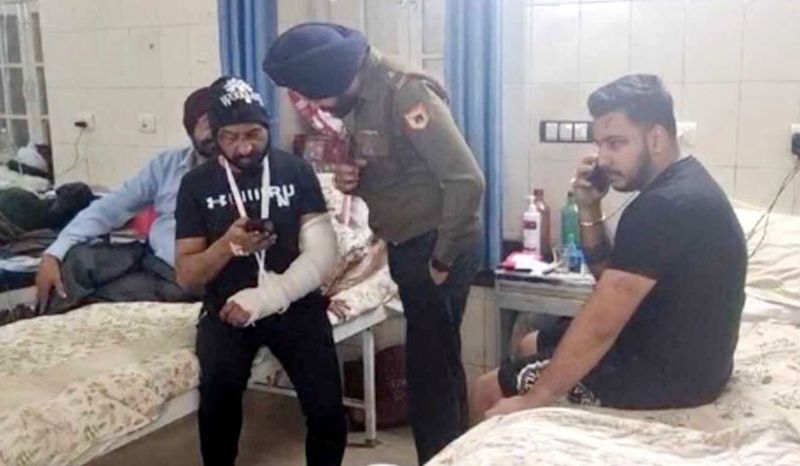
The CBI has filed a chargesheet in a Mohali court against four Punjab cops in the Colonel Pushpinder Bath assault case.

The prosecution has pressed grievous hurt and wrongful restraint charges among others against the four Punjab Police officials.

According to the chargesheet, inspector Ronnie Singh is the main accused in the case. The attempt to murder charge does not find mention in the chargesheet.

The Patiala Police had earlier registered an FIR against police inspectors Harry Boparai, Ronnie Singh and Harjinder Dhillon under Sections 109 (attempt to murder), 310, 155(2), 117(2) (related to voluntarily causing hurt), 126(2) (wrongful restraint), and 351(2) (criminal intimidation) of the Bharatiya Nyaya Sanhita. Later, another inspector was named under Sections 299 and 191 of the BNS.

The alleged incident occurred on the intervening night of March 13 and 14, when Colonel Bath and his son were at a roadside eatery near Rajindra Hospital in Patiala.

The family claimed that while they were standing next to their car and eating, some police officers in civilian clothes approached them and asked the colonel to move his vehicle so that they could park theirs.

Later, over a dozen police personnel allegedly attacked the colonel and his son using rods and sticks, leaving them injured.


HEAD LINES 24DEC 2025

BIBI HARSHARAN KAUR ATTAINED MYTRYDOM FIGHTING MUGULS AFTER SHE LIT THE FUNERAL OF ALL MARYTRED SIKHS IN CHAMKOR SAHIB BATTLE INCLUDING TWO SAHIBZADAS :24 DEC /10 POH

HUMBLE SALUTE TO MARTYDOM OF BIBI HARSHARAN KAUR :VEDIOS

Facing constant threat of avalanches, Army scouts for advanced detection and rescue system

Dhurandhar’ got real Army edge as military consultant ensured authenticity, accuracy

Himachal leads nation in substandard drugs, 49 samples fail quality test

Patiala Police file forgery case after Punjab ex-IPS officer’s ‘Rs  8  crore scam’ suicide not

Libya’s military chief, 7 others killed in plane crash in Turkey