






Non-coercive paradigm : India’s discipline lies in ending wars on principle, not applause. ANI
The wise commander ends the war within victory, not beyond it. Arthashastra tradition
WARS seldom end where they stop; they pause where proportion begins. From Versailles to Gaza, Baghdad to Kyiv, every unfinished war repeats the same lesson: victory without restraint plants the seeds of its own undoing. When triumph turns to humiliation, peace collapses. India has long known this truth. From Dhaka to Kargil to Op Sindoor, the Republic’s victories have carried an unmistakable civility, the ability to stop not from fatigue but from foresight. Restraint is not withdrawal; it is judgment, courage with conscience, power with proportion. To end well is the hardest act of command.
The Trap of Unmeasured Victory
As the world bleeds across continents and creeds, restraint stands almost orphaned. Wars now outlast reason, and peace has no constituency. In this moral vacuum, India’s inheritance of proportion becomes more than a virtue, it becomes a counter-narrative to the age of excess. Unmeasured victory is the oldest trap of power. Versailles birthed Hitler; Iraq’s dismemberment birthed ISIS. Retaliation without reflection changes only the uniform, not the animus. The pursuit of total victory often ensures total loss in the next generation. India’s discipline lies in ending wars on principle, not applause.
A Challenge to the Architects of Fracture
The architects of the current world order, those who equate alliance with obedience, have created the very fracture they now lament. For those who criticise autonomy as isolation or neutrality, the response is simple: bloc loyalty has failed. India’s discipline is not just a domestic virtue; it challenges the failing model of power, offering a non-coercive paradigm where autonomy and restraint become the highest forms of strategic choice.
The Grammar of Modern Power
Restraint cannot remain an heirloom. Power today is exercised not only through arms but through algorithms, finance and influence. The grammar of statecraft has changed. Supply chains are siege lines, data the new territory, and narrative the most contested frontier. The next battles are curated, not declared, fought through perception, precision and patience. The state that ends well is the state that endures. For India, the challenge is dual: to preserve its civilisational temperament while adapting to the speed of the century. Principle must pair with preparedness, ethics with agility, patience with precision. The art of restraint must now be woven into technology, diplomacy and communication.
Strategic Autonomy:
The Balm That Heals
When the UN stands emasculated, the P5 crippled by the veto, a bleeding world simply bleeds on. Trade becomes a weapon and peace prizes seek sponsors before causes; who then steers the ship? No one. It is in such drift that India’s civilisational ethic steps in, not to command, but to exemplify. To show that power need not dominate to define; that restraint, walked open-chested, can still steady the storm. This is strategic autonomy in a fractured world, the principled third way that eschews bloc politics, a balm that heals without applause.
Restraint Reimagined
Restraint, having mastered consequence, must now master context. It begins where power ends, and responsibility begins. It is foresight expressed through proportion and conviction through composure. Beyond power and purpose lies the governance of impulse, the discipline to act with precision even when provoked, to uphold order without imitation, to preserve identity without isolation. The Armed Forces have long practised this discipline, from the ceasefire at Dhaka to the Sindoor principle: silent preparation, precision without publicity, and power without excess. Diplomacy has mirrored it, preferring calibration to confrontation. The next frontier is artificial intelligence, where technology must serve transparency, not tyranny. The Republic that can humanise its algorithms will not only command power but trust. India’s instinct to balance velocity with veracity in the digital realm may be its greatest strategic gift.
The Test of Calm
Such balance demands vigilance. The world stands fractured, the region is in upheaval; old alignments shift, and China’s quiet entry is masked by a manufactured thaw. In this engineered calm, subterfuge travels beneath diplomacy. This is where restraint must think, not just wait, where composure pairs with clarity. We reclaim our region not by outshouting others, nor by joining rigid blocs, but by outlasting them, through the steadfast choice of partnership and the quiet authority of example. The age of outrage demands subtler courage: the ability to think slowly in a fast world, to stand still when the algorithm insists on motion. When the volume rises, restraint must speak in frequency, not fury.
Commanding Trust: The New Frontier of Statecraft
The true measure of modern statecraft is not the speed of its reaction but the mastery of its own impulse. The Republic that trades wisdom for velocity will stumble; strength lies in calm purpose, in the discipline that governs outrage. The psychological frontier has become the real domain of power. India’s resilience flows from a vast and vocal society where dissent refines conviction and the rumble of democracy steadies the Republic’s course: unity in diversity. Sindoor demonstrated: restraint with readiness, civility with resolve. That is the strategic message, and the moral one.
The Next Chapter
It will not be a treaty or a truce; it will be a tempering of power itself. It will belong to those who can innovate without intimidation, defend without domination, and lead without spectacle. In that balance lies the design of tomorrow’s peace. It will be India’s contribution to the grammar of deterrence.
Closing Reflection: The Unflinching Flame
When the world is quiet, restraint is mistaken for hesitation and autonomy for aloofness. But when the world burns, as it does now, and a civilisational requiem is revealed in moments like Sindoor, the true nature of power stands bare. In the scramble for peace prizes, when the vanquished rush to underwrite what is not theirs, India stands apart. Its civilisational restraint and strategic autonomy are not mere legacy; they are the two defining strengths of its enduring character, the only hands steady enough to hold the flame without feeding the inferno.
India — the fulcrum of a fractured world.
Lt Gen SS Mehta (retd) is ex-Western Army Commander and Founder Trustee, Pune International Centre.
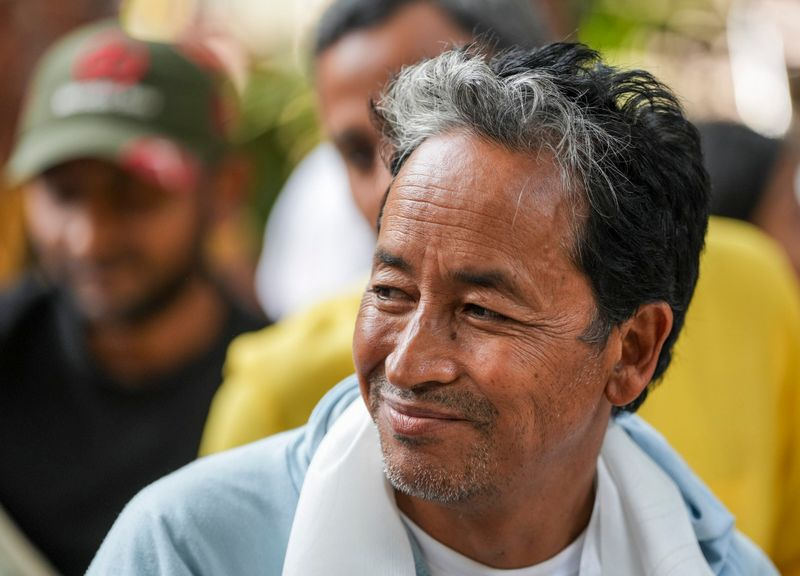
Detained climate activist Sonam Wangchuk has told the three-member advisory board, constituted to review his detention following the Leh firing incident in which four persons were killed, that his remarks had been taken “out of context”.
Wangchuk’s wife Gitanjali Angmo, in a statement posted on X on Sunday, said she had accompanied Wangchuk to his meeting with the advisory board on Friday.
“He presented how he was illegally detained under the National Security Act (NSA) based on words, statements and ideas taken out of context from his videos; how the translator had deliberately paraphrased his statements wrongly; and how random, independent skirmishes between the Central Reserve Police Force (CRPF), Ladakh Police and individuals were ascribed to him,” she said.
Gitanjali termed it a “travesty of justice” and “mockery of Indian democracy”. “However, he (Wangchuk) remains unfazed and tells everyone that ‘Insaaf ke ghar der hai, par andher nahi’ (justice may be delayed, but it is never denied), reiterating that truth will prevail. He also expressed heartfelt gratitude to everyone supporting and standing in solidarity with us across the world,” Gitanjali said.
Wangchuk completed one month in detention at the Jodhpur Central Jail on Sunday. He was detained under the NSA on September 26, two days after four protesters were shot by security forces in Leh. The Leh administration had constituted the three-member board to review Wangchuk’s detention. The board comprises Chairman Justice MK Hanjura (retd), Principal District and Sessions Judge, Leh, Manoj Parihar and Principal District and Sessions Judge, Kargil, Spalzes Angmo.
Meanwhile, local leaders have criticised Wangchuk’s detention as he completed a month in jail. Sajjad Kargili, member of the Kargil Democratic Alliance (KDA), said in a statement that a month had passed since Leh Apex Body member Wangchuk was jailed under the “draconian” NSA on “baseless” charges.
“Such actions only deepen mistrust and hurt the democratic spirit of Ladakh. We reiterate our demand for his immediate release and restoration of democratic rights,” Kargili said.
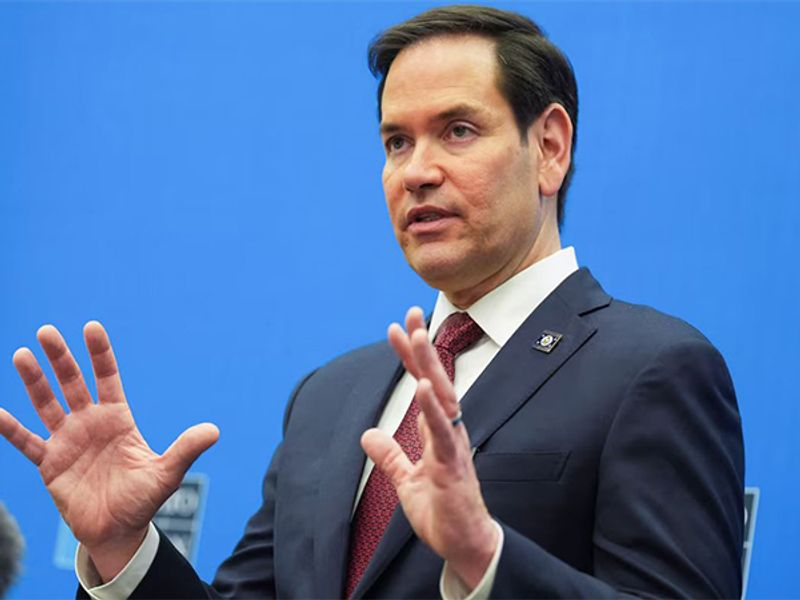
US Secretary of State Marco Rubio has said that Washington’s efforts to rebuild its strategic partnership with Pakistan will “not come at the expense of India”.
Rubio’s comments come ahead of his meeting with External Affairs Minister S Jaishankar in Kuala Lumpur on Monday, on the sidelines of the 47th ASEAN Summit. The two last met on the sidelines of the UNGA Summit in September.
“We’re fully aware of the challenges with regards to India and everything else, but our job is to create opportunities for partnerships wherever possible,” Rubio said, adding that the US and Pakistan had had “a long history of partnering on counter-terrorism”.
He said Washington was now looking to “expand it beyond that”, while acknowledging that “there’ll be some difficulties and challenges”.
Rubio emphasised that closer US-Pakistan ties should not be viewed as undermining relations with India. “I don’t think it comes at the expense of, or instead of, a good relationship with India — or anybody else, for that matter,” he said.
The remarks come as New Delhi remains watchful of recent signals suggesting a quiet thaw between Washington and Islamabad, particularly on security cooperation. Officials here said India would convey its expectations regarding “cross-border terror and stability in the region” during the Jaishankar-Rubio meeting.
Meanwhile, US President Donald Trump again stirred diplomatic ripples, reiterating his claim that India will “completely stop” buying oil from Russia —a statement New Delhi has consistently rejected.
Speaking aboard Air Force One, Trump said: “China is cutting back very substantially on the purchase of Russian oil, and India is cutting back completely, and we’ve done sanctions.” The US President’s comments came after Washington imposed fresh sanctions on Russian oil giants Rosneft and Lukoil.
Indian officials have repeatedly maintained that energy imports are guided by national interest and market realities, not external pressure. “India’s decisions on energy security are sovereign,” a senior official said.
Observers say the Jaishankar-Rubio meeting in Malaysia will be closely watched for signs of how the Trump administration seeks to balance its renewed outreach to Pakistan with its deepening strategic partnership with India.
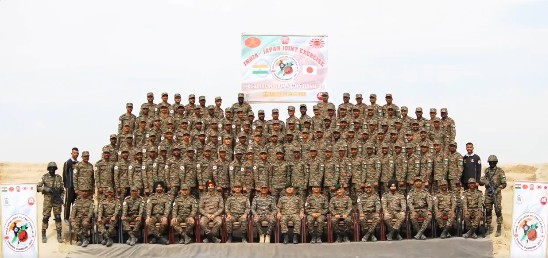
The sixth edition of Joint Military Exercise Dharma Guardian, between India and Japan, is scheduled at Mount Fuji, Japan from February 25 to March 9, the Indian Army said on Sunday.
The exercise aims to enhance interoperability between the two forces while undertaking joint urban warfare and counter-terrorism operations under UN mandate, said the Additional Directorate General of Public Information, IHQ of MoD (Army) in a social media post.
“Building on the momentum of the Chief of the Army Staff’s (COAS) successful visit to Japan from October 14 to 17, 2024, Exercise Dharma Guardian 2025 will further strengthen the bilateral defence cooperation between India and Japan,” it said.
Earlier on February 11, special forces of India and Egypt commenced the ‘Cyclone III’ exercise at Mahajan Field Firing Ranges in Rajasthan. An official said that the exercise would conclude on February 23.
“Exercise ‘Cyclone’ is an annual event conducted alternatively in India and Egypt. The last edition of the same exercise was conducted in Egypt in January 2024,” said the official.
The Indian contingent comprising 25 personnel is represented by troops from two Special Forces Battalions. Egypt contingent also comprising 25 personnel will be represented by the Special Forces Group and Task Force of Egyptian Special Forces.
The official said that the exercise aims to promote the military-to-military relationship between the two countries through the enhancement of interoperability, jointness and mutual exchange of special operations tactics.
“The exercise will focus on a high degree of physical fitness, joint planning and joint tactical drills. Drills to be rehearsed during the exercise include advanced special forces skills and various other tactics, techniques and procedures as per the current operational paradigm,” he said.
The official said the exercise will culminate with a 48-hour-long validation to rehearse the tactical drills for counterterrorism operations in desert and semi-desert terrain.
“The exercise will also include a display of indigenous military equipment and an overview of the defence manufacturing industry for the Egyptian side,” the official added.
He said that the exercise will enable the two sides to share their best practices in tactics, techniques and procedures of conducting tactical operations.
–IANS
Temporary disability has to be considered as permanent because an invalided-out person cannot rejoin service even if the level of disability reduces later, the Armed Forces Tribunal rules
Fifty years after being invalidated out of the Army on medical grounds for psychiatric disorders, a soldier has been granted disability benefits after the Armed Forces Tribunal held that a disability — even if initially assessed as temporary — must be considered permanent because the individual would never be able to re-join service even if their level of disability reduces later.
The soldier, Sali Ram Arya, was enrolled in the Corps of Signals in July 1965 and in 1975, he was found to be suffering from ‘manic depressive psychosis’. Thereafter, he was brought before an invaliding medical board in October 1975, which assessed the disability to be 40 per cent for two years, but held it to be neither attributable to nor aggravated by military service.
Accordingly, he was invalided from service after having rendered 10 years and three months of service. While he was granted service element of pension only, his claim for the disability element was rejected by the authorities in July 1977.
In his petition before the AFT, he submitted that a perusal of the Invaliding Medical Board showed that he was enrolled in a fit medical condition and his disablement took place after 10 years of service. He contended that holding his disability as not attributable to military service conflicted with the law laid down by the Supreme Court and he was entitled to disability pension for life.
“It cannot be disputed that the soldier has been invalided from service on account of his medical condition. He will never be brought back into service. Even if the extent of disability reduces, the applicant would not be re-enrolled. Thus, the disability is effectively permanent in nature,” the Tribunal’s Chandigarh Bench comprising Justice Sudhir Mittal and Lt Gen Ranbir Singh observed in their order of October 23.
It has been conclusively held by the Supreme Court that any disability arising during the course of service must be held to be attributable to or aggravated by military service. In the instant case, the Invaliding Medical Board shows that the applicant was fit for enrolment in service and the disability occurred sometime in August 1975. Therefore, the finding by the Invaliding Medical Board that the disability was neither attributable to nor aggravated by military service was illegal,” the Bench ruled.
The Bench directed the authorities to issue a fresh pension payment order within three months granting the soldier disability element of pension at the rate of 40 per cent, rounded off to 50 per cent, for life with effect from November 1975. The arrears of pension, however, would be restricted to three before the date of moving the AFT in accordance with directives issued on the subject by the Supreme Court.
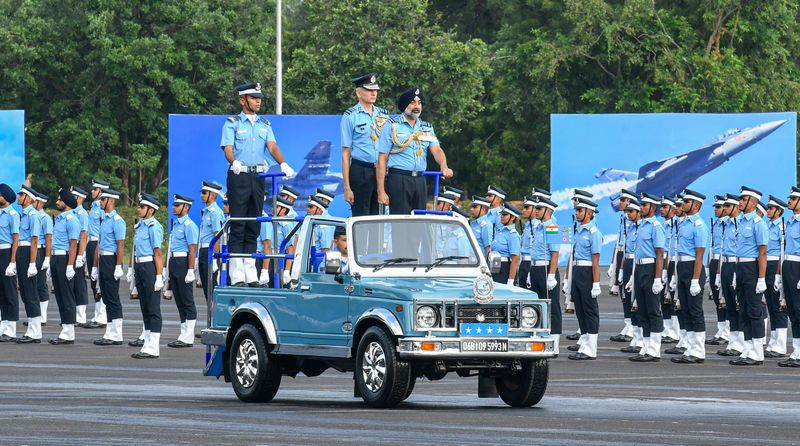
For the first time, Ekta Diwas, observed on October 31 to mark the birth anniversary of Sardar Vallabhbhai Patel, will witness a moving parade instead of a static one, featuring contingents from paramilitary and police forces at Kevadia in Gujarat. The event will be attended by Prime Minister Narendra Modi, Director General of the Border Security Force (BSF) Daljit Singh Chawdhary said on Friday.
He added that the guard of honour would be presented by women police personnel.
This year’s parade will include five Shaurya Chakra awardees from the Central Reserve Police Force (CRPF) and 16 gallantry medal recipients from the BSF.
“The CRPF personnel participated in anti-Naxal operations in Jharkhand and counter-terror operations in Jammu & Kashmir, while the BSF personnel who will join the parade took part in Operation Sindoor on the western border,” Chawdhary said.
A cultural programme organised by the Union Ministry of Culture will also be held, featuring 900 artistes performing classical dances to showcase India’s cultural diversity.
In a historic first, the BSF will present an exclusive marching contingent of indigenous Indian dog breeds during the parade, the BSF DG added.
“This year’s parade will also feature a marching contingent comprising exclusively Indian breed dogs of the BSF. These breeds have made contributions as force multipliers during BSF operations, with around 150 dogs currently deployed for patrolling along the Pakistan and Bangladesh borders.
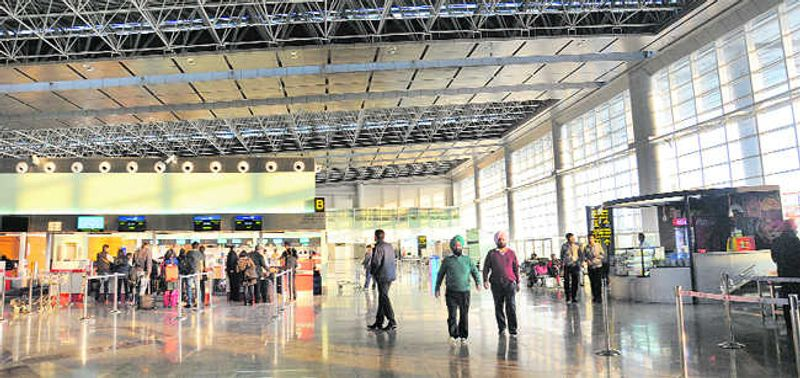
The winter schedule of Shaheed Bhagat Singh International Airport here will become operational from October 26 and remain in force till March 28 with no major new destinations added to it. However, three additional flights, one each to Kullu, Leh and North Goa, have been added to the winter schedule.
The schedule lists 55 flights. The international flights to Dubai and Abu Dhabi will be available from October 7 onwards only.
The Indian Air Force (IAF) on Friday announced a seven-hour window for running flight service from October 26 to November 6 to facilitate the movement of passengers during the festival season. Civilian aircrafts will now be able to operate from 5 am to 12 noon daily during that period.
The IAF had earlier announced the complete closure of the single-strip runway for civilian flight operations for two-week period to carry out polymer modified emulsion work.
Heavy rains between late August and mid-September had flooded around 100 km of border areas along Pakistan and Pakistan-occupied Kashmir (PoK) in Punjab and Jammu & Kashmir
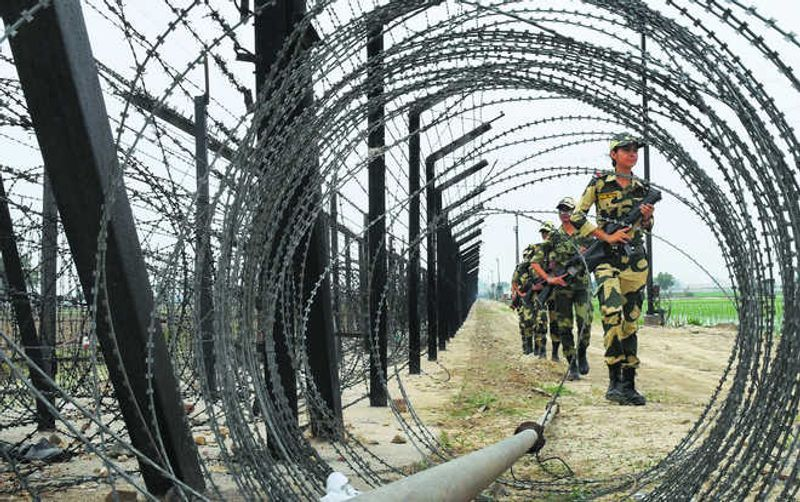
Over 90 days after torrential rains ravaged northern India and washed away stretches of border fencing in the Jammu and Punjab sectors, the Border Security Force (BSF) has almost completed restoration work along the frontier.
Top BSF officials told The Tribune that fencing work in Jammu has been fully restored, while in Punjab it is about 95 per cent complete.
“As of now, fencing along the Pakistan border has been put back in place. Permanent civil repair work on border outposts will be completed gradually,” a senior BSF official said, adding that the restored fencing is “up to the mark” to prevent infiltration.
Heavy rains between late August and mid-September had flooded around 100 km of border areas along Pakistan and Pakistan-occupied Kashmir (PoK) in Punjab and Jammu & Kashmir — 30 km in Jammu and 70 km in Gurdaspur and Ferozepur sectors of Punjab — where fences were either washed away or bent.
While restoration in higher reaches of Jammu and around RS Pura was completed a month ago, progress in Punjab was delayed as floodwaters persisted until the end of September, despite the rains stopping earlier in the month.
Interestingly, officials said the floods had an unintended benefit — several underground tunnels used for infiltration were flooded, leading to a sharp decline in cross-border intrusion attempts.
However, smuggling incidents continued despite the flooding.
On September 11, the BSF arrested two arms smugglers near Fazilka and seized 27 pistols, 54 magazines and 470 live rounds. On September 12, a joint BSF-Fazilka CIA operation led to the recovery of 16 pistols, 38 magazines, 1,847 rounds and a motorcycle.
On September 21, the BSF and Punjab Police nabbed four smugglers near Gurdaspur with 10 kg of heroin. All these incidents occurred even as large parts of the India-Pakistan border remained submerged under floodwaters.