



Sanjha Morcha

What Afghan women want

THE GREAT GAME Indian women journalists may have asked Taliban minister Muttaqi this question to which he has no answer

“Do you keep the karwa chauth fast?” Make no mistake, that’s a googly, not a question, that has been asked of North Indian women over the years. Not just because you’re damned if you do (by feminists looking askance), or damned if you don’t (by the growing Sanskritisation of Middle India, which believes there’s only one answer to any riddle wrapped in an enigma), but because the question itself is a pigeonhole. Better not to answer it. Better to read the book that Ruhi Tewari has just written, called, What Women Want.

Ms Tewari’s book is about “understanding the female voter” in India, but the question is a larger one. If you have the imagination, you can broaden the canvas and ask it elsewhere too, including in neighbouring Afghanistan, where the Taliban regime carries out the most repressive actions against its own women.

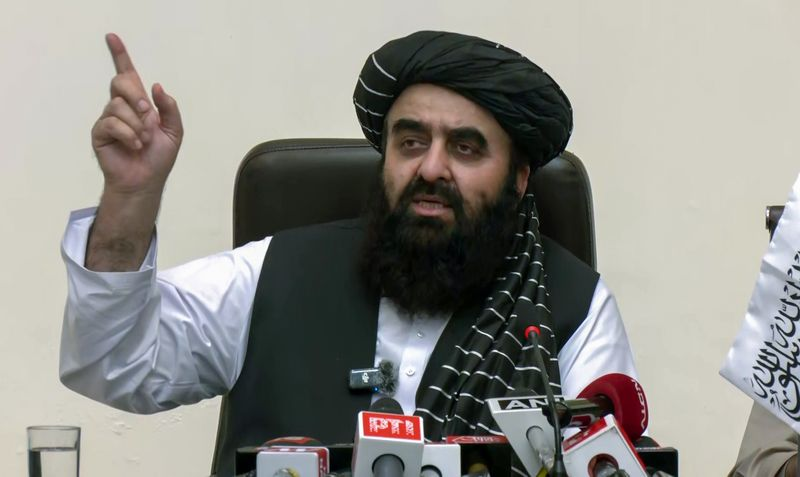
In fact, the news from Delhi is that the Taliban Foreign Minister, Amir Khan Muttaqi, who is on a six-day visit to India, during which time he will visit the Taj Mahal, the monument to love, as well as the Deoband seminary, refused to invite any Indian women journalists to his press conference in the capital on Friday.

Perhaps Muttaqi was worried what people would say back home if he was seen mingling with Indian women. And even though the press conference was held in the Afghan embassy, technically Afghan soil, the Taliban leader lost a huge opportunity to signal to half his population back home, why the Islamic Emirate of Afghanistan should be given another half chance to emerge from the Dark Ages.

The Indian women journalists may have asked Muttaqi the question to which he doesn’t have an answer : What is it that Afghan women want? And if all they want is only half the sky, why don’t the mullahs in Kandahar give it to them?

Except, the answers are all there, if you really want to see them. This reporter was in Kabul on the first anniversary of the Taliban takeover of Kabul, in August 2022, and went into the ICU of the Indira Gandhi Children’s Hospital to see how women nurses and doctors dealt with the toughest cases. The ICU was clean and sanitised. The women doctors and nurses wore a uniform but no face covering. They were there to save lives, especially that of struggling neonates, not because they were women but because they had a skill, an expertise and a commitment to do so.

In Delhi, certainly, both India and the Afghan regime will want to downplay this avoidable kerfuffle over the exclusion of women journalists and urge everyone to look at the big picture — which is, that India has gone back on its own reservations about the Taliban and will now upgrade its mission in Kabul to a full-fledged embassy. This is truly a big step not just in India’s neighbourhood policy, but also signals a welcome return to pragmatism.

The sad part is that it took the Indian government about a decade to realise its own mistakes in the Afghan theatre. New Delhi was so heavily influenced by the Americans, especially by the Afghan-origin former US ambassador in Kabul Zalmay Khalilzad, that it forgot it was a heavyweight in the region. The US should have depended on India’s historical perspective and current analysis, not the other way round.

India should have played a role in the distribution of power in the Kabul landscape — at first help sort out the power struggle between Hamid Karzai and Abdullah Abdullah; then when the Americans were parachuting Ashraf Ghani into Kabul, told them it was a terrible idea; once he was inserted, Delhi could have helped build a coalition against the emerging Taliban, even as it talked to the moderate Taliban to broker a deal between all sides.

Today, the story in Delhi is — look how smartly India has brought around the Taliban! But the tragedy is that the Taliban were ready to be brought around a really long time ago — talk to any Taliban or non-Taliban Afghan in Kabul and elsewhere in Afghanistan, male or female, Pashtun, Tajik or Hazara, and you will realise the incredible affection and regard Afghans have for Indians. Bollywood heroes and heroines, permanently on karva chauth and beyond, remain such a rage even today.

Never forget that the Taliban are also Afghan — Hamid Karzai reminds you about this fundamental truth each time you speak to him. The significant of this is that they will never really be in hock to the Arab. The question as to why Osama bin Laden left the mountains of Tora Bora to finally live within spitting distance of a Pakistan military establishment in Abbottabad, has its own answers.

The truth is that the Ministry of External Affairs (MEA) has gone through convoluted hoops to arrive at this moment today — which is that Delhi and Kabul have a very special relationship that goes back centuries. Everyone else has always known that.

Here’s a second truth : India has seceded from its own neighbourhood and allowed other players to take precedence. China, Russia, the US and Pakistan, each of them are significant players in the Indian subcontinent — across all the nations that stretch from the Karakoram mountain ranges to Cox’s Bazaar on the Indian Ocean — and while they are welcome to play, India must return to its pre-eminent spot in this space.

The first step has been taken by hosting Amir Khan Muttaqi. The second must be to reopen India’s consulates in Herat, Jalalabad, Kandahar and Mazar-i-Sharif — shut down under one pretext or another, mostly under US pressure and latterly, the fear of the Taliban takeover in 2021.

Perhaps the MEA should send a few of its amazing women diplomats to these consulates, just like it did in 2001 when Vijay Thakur Singh, the redoubtable diplomat on the Afghanistan-Pakistan desk, was sent to Kabul after the US bombed the Taliban into submission after the 9/11 attacks — along with Gautam Mukhopadhaya, Rudrendra Tandon and Vivek Katju, as India’s ambassador; Katju, now a columnist with The Tribune, was part of the team in December 1999 which negotiated with the Taliban on the Kandahar tarmac for a full week to send the passengers of IC-814 safely back home. Who says India doesn’t know the Taliban?

An Indian ambassador in Kabul is hardly a hardship posting. It’s like going home. That’s what Muttaqi should have told all the Indian male and female journalists he should have invited to his Delhi press conference on Friday — and patiently answered all their “what do women want” and all other questions.

Breakfast in Delhi, lunch in Amritsar-if-you-can’t-go-to-Lahore and dinner in Kabul? As Dr Manmohan Singh’s famous phrase resounds across the ether, you can imagine him having the last laugh somewhere.
Israel pulls back, Gazans return to gutted homes

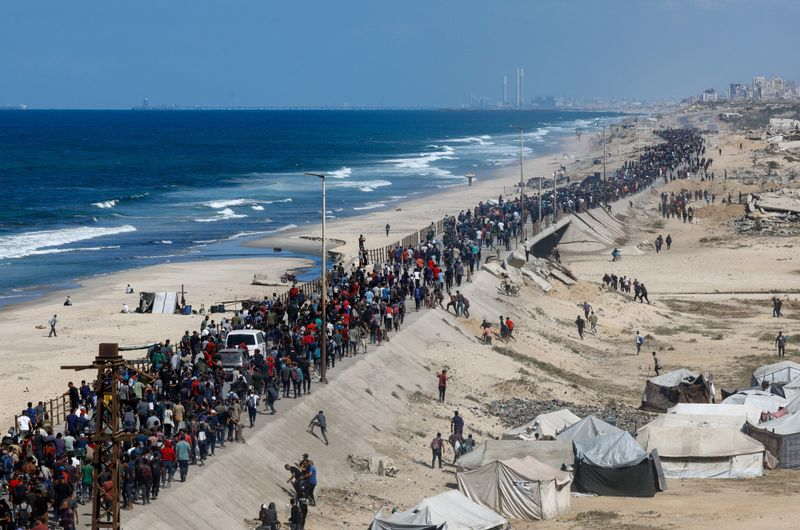
Palestinians, who were displaced to the southern part of Gaza at Israel’s order during the war, walk along a road as they attempt to return to the north after a ceasefire between Israel and Hamas in Gaza comes into effect, in the central Gaza Strip. Reuters

Ceasefire between Israel and Hamas comes into effect | Israeli troops pull back from parts of Gaza

Thousands of displaced Palestinians streamed back towards their abandoned homes on Friday after a ceasefire between Israel and Hamas went into effect and Israeli troops began pulling back from parts of Gaza.

A huge column of displaced Gazans filed north through the dust and rubble towards Gaza City, the enclave’s biggest urban area, which had been under attack just days ago in one of Israel’s biggest offensives of the war.

The Israeli military said the ceasefire agreement had been activated. The Israel government ratified the ceasefire with Hamas in the early hours of Friday, clearing the way to partially pull back troops and fully suspend hostilities in Gaza within 24 hours.

Hamas is expected to release the 20 living Israeli hostages within 72 hours, after which Israel will release 250 Palestinians serving long terms in Israeli prisons and 1,700 others detained in Gaza during the war.

US Special Envoy to West Asia Steve Witkoff said the Israeli military had completed the first phase of a withdrawal in Gaza and the hostage release period had started.

Once the agreement is operating, trucks carrying food and medical aid will surge into Gaza to help civilians, hundreds of thousands of whom have been sheltering in tents after Israeli forces destroyed their homes and razed entire cities.

The first phase of US President Donald Trump’s initiative to end the two-year war in Gaza calls for Israeli forces to withdraw from some of Gaza’s major urban areas, though they will still control roughly half of the enclave’s territory.

In a televised address, PM Benjamin Netanyahu said Israeli forces would stay in Gaza to ensure the territory was demilitarised and Hamas disarmed in future stages of Trump’s plan: “If this is achieved the easy way then that will be good and if not then it will be achieved the hard way.”

In Khan Younis, in the southern Gaza Strip, some Israeli troops pulled back from the eastern area near the border, but tank shelling was heard, said residents.

In Nusseirat camp in the centre of the enclave, some Israeli soldiers dismantled their position and headed east towards the Israeli border, though other troops remained in the area after gunfire was heard in the early hours of Friday.

Israeli forces pulled out from the road along the Mediterranean coast into Gaza City.

“As soon as we heard the news of the truce and ceasefire, we were very happy and got ready to go back to Gaza City, to our homes. Of course there are no homes, they’ve been destroyed,” said Mahdi Saqla, 40.

“But we are happy just to return to where our homes were, even over the rubble. That too is a great joy. For two years we’ve been suffering, displaced from place to place,” he said.

The accord, if fully implemented, would bring the two sides closer than any previous effort to halt the war.

Much could still go wrong. The sides have yet to publish the list of Palestinian prisoners to be released in exchange for Israeli hostages. Hamas is seeking freedom for some of the most prominent Palestinian convicts held in Israeli jails.


After IWT suspension, Centre clears strategic J&K Sawalkot project

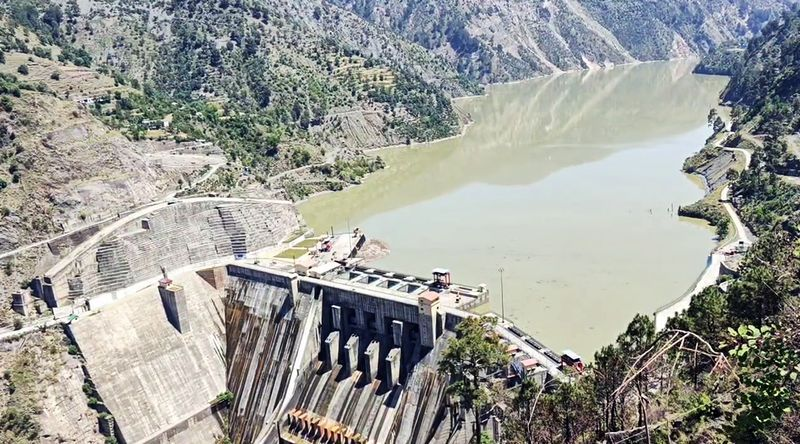
Months after the suspension of the Indus Water Treaty (IWT) with Pakistan, the Centre has given environmental clearance for the strategically important 1,856-MW Sawalkot hydroelectric project on the Chenab in Ramban district of Jammu and Kashmir.

Stalled for nearly four decades due to forest clearance and rehabilitation issues, the project is one of India’s largest hydropower schemes in the Chenab basin and a key part of the government’s push to fully utilise its share of western river waters under the 1960 treaty. The Centre had suspended the IWT following the April 22 Pahalgam terror attack.

The run-of-the-river project will be built by the National Hydroelectric Power Corporation (NHPC) in two stages at an estimated cost of Rs 31,380 crore. It will be using the Chenab waters in Ramban, Reasi and Udhampur districts. It envisages the construction of a 192.5-metre-high roller-compacted gravity dam, an upstream short water conductor system to transport water from a high-elevation source and an underground powerhouse where main components such as machine hall, turbines and generators will be built. It will be designed to generate about 7,534 million units of electricity annually.

Once commissioned, the project will be the largest hydropower project in the UT. Besides adding to the region’s power supply, it will enhance India’s ability to manage and store the Chenab’s waters, a right allowed under the IWT but rarely exercised fully due to engineering challenges and diplomatic sensitivities with Pakistan.

The project proposal was earlier considered by the Union Environment Ministry in 2016 and 2017, but it could not materialise due to various reasons. A memorandum of understanding for the project was signed on January 3, 2021, between the Jammu and Kashmir Power Development Corporation and the NHPC.

The project requires 1,401.350 hectares of land, of which 847.17 hectares is forest areas and 554.18 hectares non-forest. “A total of 13 villages and about 1,500 families from Ramban and Gool Sangaldan tehsils of Ramban district will be affected due to land acquisition,” as per the minutes of the meeting of the Environment Ministry’s expert appraisal committee.

The NHPC has proposed a detailed rehabilitation and resettlement plan, offering housing, livelihood support and skill development to the affected families.

No national park or wildlife sanctuary is located within 10-km radius of the project and the nearest protected area, Kishtwar High-Altitude National Park, is 62.8 km away.

Under the IWT, the three eastern rivers–Ravi, Beas and Sutlej–were allocated to India for its exclusive use. The three western rivers–Indus, Jhelum and Chenab–were reserved for Pakistan, though India retains limited rights to use their waters for non-consumptive purposes, such as run-of-the-river hydropower generation, navigation and fisheries.


Kabul mission upgraded to embassy as Afghanistan addresses India’s security concerns

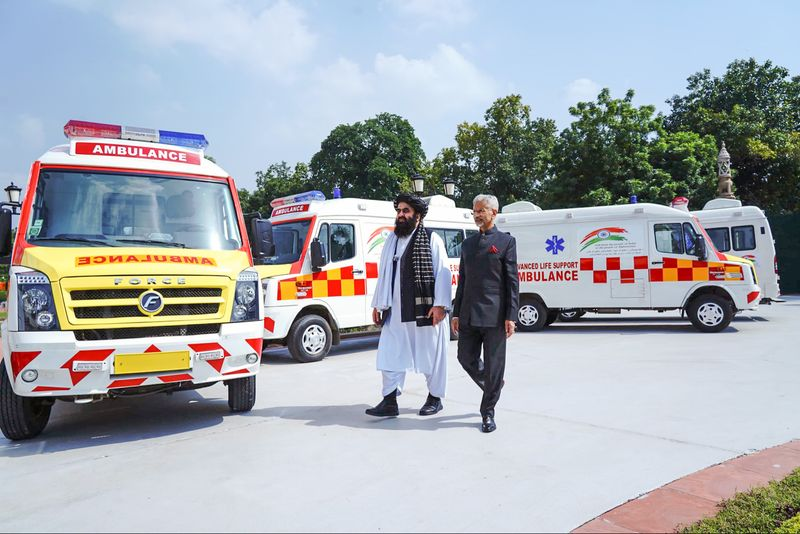
External Affairs Minister S Jaishankar and Afghanistan Foreign Minister Amir Khan Muttaqi during a ceremony to hand over five ambulances to Kabul as India’s goodwill gesture in New Delhi on Friday. ANI

Delhi gifts 20 ambulances, will build health facilities, restart work on infrastructure

ndia on Friday announced the upgrade of its technical mission in Kabul to a full-fledged embassy and decided to restart infrastructure and development projects in Afghanistan even as New Delhi appreciated the Taliban regime for showing sensitivity towards its security concerns.

External Affairs Minister S Jaishankar made the announcements during his wide-ranging talks with Afghanistan Foreign Minister Amir Khan Muttaqi, who is on a six-day visit to India.

Muttaqi said Afghanistan would not allow any elements to use its territory against New Delhi’s interests and identified the Daesh terror group (ISIS) as the main challenge for the region. As the two sides discussed counter-terrorism, Muttaqi said Kabul had been at the frontline of this struggle, his statement coming hours after Pakistan allegedly carried out two strikes inside Afghanistan.

At a media briefing, Muttaqi confirmed Pakistan’s role in the strikes, but clarified that these occurred near the border. In a post on X, former US envoy to Afghanistan Zalmay Khalilzad expressed concern over the alleged Pakistan strikes in Kabul, terming these as a “huge escalation that posed dangerous risks”.

Jaishankar took up the issue of both countries being endangered by the “shared threat of cross-border terrorism”. He sought to coordinate efforts to combat terrorism in all its forms and manifestations. “We appreciate your sensitivity towards India’s security concerns. Your solidarity with us in the aftermath of the Pahalgam terrorist attack was noteworthy,” Jaishankar told Muttaqi.

The minister craftily referred to Afghanistan as “contiguous neighbour”, indicating the border of original Jammu Kashmir shared with Afghanistan.

Muttaqi’s visit is the first by any Taliban minister to India since the August 2021 change of regime in Kabul. Even since, New Delhi has been insisting that Afghanistan’s soil must not be used for any terrorist activities against any country.

A joint statement after the talks stated that “India would further deepen its engagement in development projects, particularly healthcare, infrastructure and capacity-building”.

“Pleased to announce the upgrade of India’s technical mission in Kabul to the status of embassy,” Jaishankar told Muttaqi during the talks. New Delhi had closed its embassy immediately after the Taliban returned to power. The operations resumed with a “technical team” being stationed in Kabul in 2022. In April this year, a new visa module was implemented and a greater number of visas were being issued in medical, business and student categories.

Before the return of the Taliban, India had invested almost $3 billion in projects across Afghanistan. The joint statement listed new projects, including the establishment of a thalassemia centre, a modern diagnostic centre and replacement of a heating system at the Indira Gandhi Institute of Child Health in Kabul. Additionally, India will construct a 30-bed hospital in Kabul’s Bagrami district, an oncology centre and a trauma centre in Kabul, and five maternity health clinics in the provinces of Paktika, Khost and Paktia. New Delhi will also continue to extend medical assistance and provide high-quality healthcare treatment to Afghan nationals.

Jaishankar also announced a gift of 20 ambulances, five of which were handed over personally to the Afghan delegation. India will also provide MRI and CT scan machines to Afghan hospitals and deliver vaccines for immunisation and cancer medicines. India also offered to reconstruct houses in areas affected by the recent earthquake at Kunar and Nangarhar. A foodgrain consignment would be delivered in Kabul today, the minister assured.

India Afghanistan would also be looking to cooperating on water management and irrigation. This is vital as several rivers originating in Afghanistan are the tributaries of the Indus, which is Pakistan’s main river.


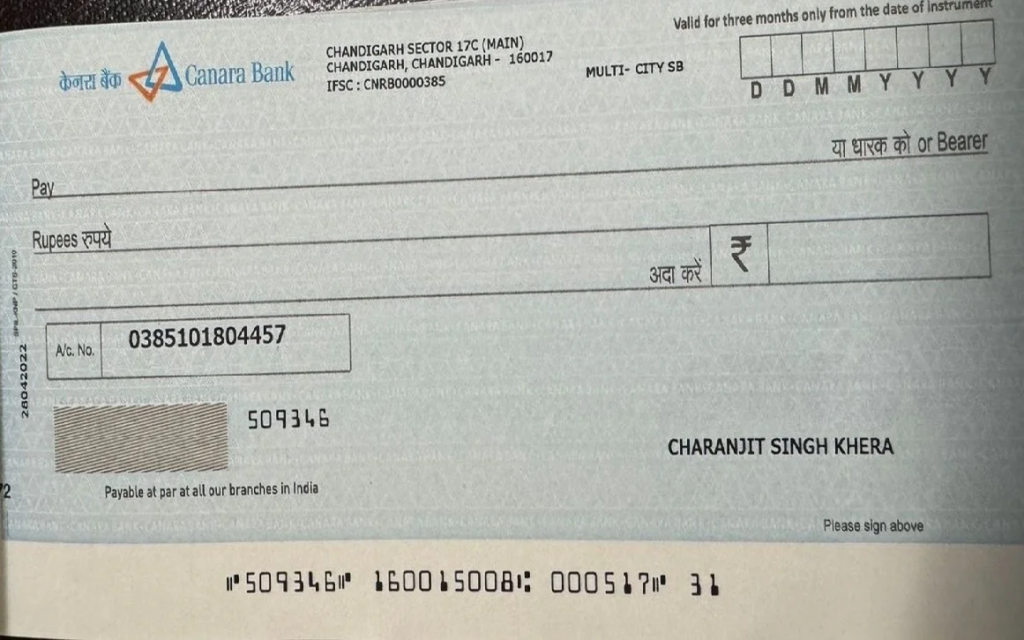
PAY TO BANK ACCOUNT AS BELOW OR THROGH PAYTM ON MOBILE -9988266450

CANARA BANK : SECTOR 40-C CHANDIGARH

IFSC CODE – CNR80000385

ACCOUNT NO -0385101804457

NAME -CHARANJIT SINGH KHERA


Court martial sentences Lt Col to 2 years of rigorous imprisonment, dishonourable discharge from service

Lt Col Avinash Gupta of the Army Service Corps was found guilty of having illicit relations with a woman and financial fraud.

A General Courts Martial (GCM) in Fatehgarh of Uttar Pradesh Saturday found a Lieutenant Colonel guilty of illicit relations with a woman and financial fraud. It sentenced him to two years of rigorous imprisonment and cashiering (dishonourable discharge) from service.

Lt Col Avinash Gupta of the Army Service Corps (ASC), attached to the Rajput Regimental Centre (RRC), Fatehgarh, was ordered to be tried on several charges under the Army Act by General Officer Commanding (GOC) Lucknow Sub Area. Col Abhishek Gupta was the presiding officer of the GCM.

Lt Col Gupta has been found guilty of four charges. The first three charges were under Section2(f) of the Army Act pertaining to fraudulent transactions, and the fourth charge pertained to ‘unbecoming conduct’ under Section 45, for sharing ‘illicit’ relations with a woman.

Lt Col Gupta had served in the 5001 ASC Battalion at Hisar in 2013 and 2014. On September 14, 2020, while serving with the 57 NCC Battalion, UP, he booked railway tickets for his journey from Lucknow to New Delhi and back, using two 40 per cent concession vouchers issued in his name in 2013, while he was serving at Hisar.

Furthermore, according to the counterfoils of the two vouchers, the journey details specified were from Hisar to Lucknow and back. The officer projected a theory of conspiracy in his court martial to falsely implicate him, by his commanding officer of the 57 NCC Battalion.

However, because the counterfoils of concession vouchers bore the signatures of the officer, over the stamp of 5001 ASC Battalion as the issuing authority, and other circumstances of the case, the GCM found him guilty of both charges.

Falsely claiming house rent allowance

The third charge pertained to fraudulently claiming house rent allowance (HRA) for Delhi, a Class ‘X’ city. His family, comprising his wife and daughter, was staying in Lucknow, a Class ‘Y’ City. His son was at Rashtriya Military School Bengaluru/National Defence Academy (NDA) during the check period.

The officer’s defence was that his mother, who was dependent on him, was staying in Delhi, and his family also resided there. However, considering that ‘mother’ is not included as dependent for selected plea of residence (SPR) and the evidence of his wife, a former Air Force officer, who deposed against him and testified that that she and the daughter stayed in Lucknow, and their visits to Delhi were only as a visitor for three-four days, the court found him guilty of the charge.

The HRA amount of a Class ‘X’ city (Delhi) is higher than that of a Class ‘Y’ city (Lucknow), which the officer had fraudulently claimed.

The fourth charge was under Section 45 of the Army Act, for ‘unbecoming conduct’ for sharing an illicit relationship with a woman, who, as per the evidence of the neighbours, maid and another worker, was staying in his single officer accommodation.

The proceedings had started based on a complaint made by his wife, who had found the woman living in his accommodation. The officer had also transferred the gas connection of the woman to his official

Some medical treatment records from Air Force Hospital, Kanpur, were also produced, which reflected the name of the officer’s wife, who gave evidence at the court martial, stating that she had never visited the hospital.

Additionally, a dependent card was issued by his previous unit, which reflected the accused’s rank as Colonel, although he was a Lieutenant Colonel, and bore the name of his wife. However, the photograph pasted was of the other woman.

The officer’s defence was that the woman was his friend and that she used to visit him regularly. However, considering the evidence that revealed the officer and the woman were behaving in a manner consistent with that of a couple, along with other circumstances of the case, the court martial found him guilty.

The findings and sentence have been announced, subject to confirmation by the convening authority of the court martial.


भारत के अटैक का पाकिस्तान में हाई अलर्ट..सेना में भगदड़!| India Pakistan Tention News | Breaking

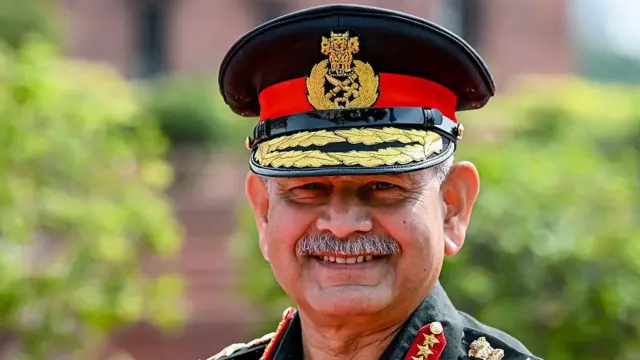
सेना प्रमुख जनरल उपेंद्र द्विवेदी के भूगोल वाले बयान पर बोली पाकिस्तान की सेना

भारत के सेना प्रमुख उपेंद्र द्विवेदी के ऑपरेशन सिंदूर पर दिए गए ताज़ा बयान सुर्खियों में है.
इमेज कैप्शन,भारत के सेना प्रमुख जनरल उपेंद्र द्विवेदी के ‘ऑपरेशन सिंदूर’ पर दिया गया ताज़ा बयान सुर्ख़ियों में है

भारत के सेना प्रमुख जनरल उपेंद्र द्विवेदी की ओर से ‘ऑपरेशन सिंदूर’ के बारे में दिए गए ताज़ा बयान के बाद पाकिस्तान ने कहा है कि ‘पड़ोसी देश का सुरक्षा प्रतिष्ठान आक्रामकता के लिए बहाने ढूंढ रहा है.’

बीबीसी उर्दू के मुताबिक़ पाकिस्तानी सेना के इंटर सर्विस पब्लिक रिलेशन्स (आईएसपीआर) ने अपने बयान में भारत के रक्षा मंत्री, सेना प्रमुख और वायुसेना प्रमुख के बयानों का हवाला देते हुए कहा है कि जहां तक पाकिस्तान को “नक़्शे से मिटाने की मंशा” है तो भारत ये साफ़ तौर पर जान ले कि “अगर ऐसे हालात आए तो दोनों तरफ़ नुक़सान होगा.”

भारत के सेना प्रमुख जनरल उपेंद्र द्विवेदी ने शुक्रवार को राजस्थान में कहा था कि अगर पाकिस्तान को इतिहास और भूगोल में रहना है तो उसे ‘राज्य प्रायोजित आतंकवाद’ को रोकना होगा.

इससे पहले रक्षा मंत्री राजनाथ सिंह ने सर क्रीक मामले में और वायुसेना प्रमुख अमर प्रीत सिंह ने भारत-पाकिस्तान सैन्य संघर्ष के बारे में बयान दिया था.


Indian Army approves ‘Saksham’ counter-UAS grid to enhance drone detection, neutralisation capabilities

The indigenous system developed by BEL, uses AI-driven technologies suited for future combat systems, enabling scalability and upgradability as threats evolve

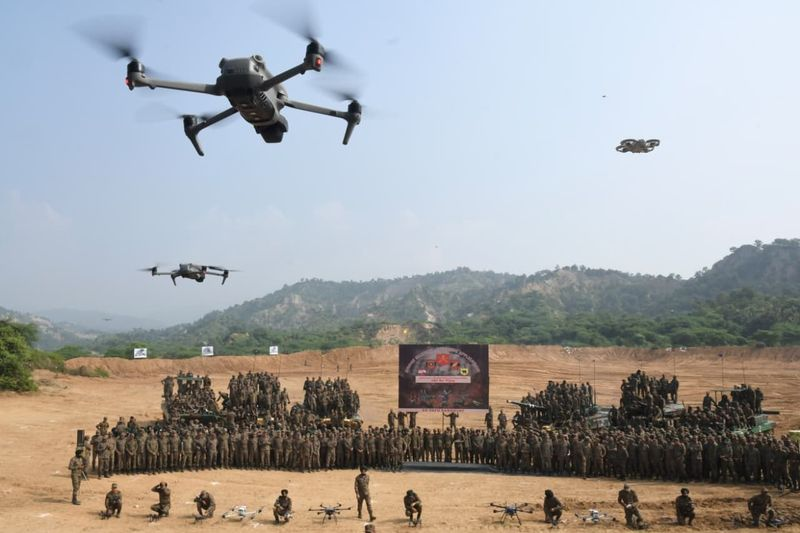
he Army has green-lit the procurement of a specialised, dedicated grid of radars and sensors that will detect and track enemy drones, while automatically providing the ground commander the best options to neutralise the threat.

Options for shooting down a drone can be via a lethal shot or by sending a powerful radio-wave to disable it.In military parlance, it’s called the ‘counter-unmanned aerial system (C-UAS) grid system’ and it ensures complete airspace security against aerial threats.

To ensure speedy induction, the project has been approved under the fast-track procurement (FTP) route, with rollout to all field formations targeted within the next one year, sources said.

The Army will procure an indigenous system named ‘Saksham’, produced by the public sector company Bharat Electronics Limited (BEL). This system is intended to secure airspace up to 10,000 feet above the ground. The need for a comprehensive counter-UAS grid became especially clear during Operation Sindoor, when hostile drone activity demanded swift detection and a coordinated response.

The ‘Saksham’ system is conceived as a high-end command and control system and will operate over Army’s own secure data network.

It will provide an integrated picture to all formations in real time within a defined battle area. It will integrate own and enemy UAVs data to offer automated decision-support and real-time visualisation for field commanders.

It uses AI-driven technologies suited for future combat systems, enabling scalability and upgradability as threats evolve. Once operational, ‘Saksham’ will serve as the backbone of the Indian Army’s counter-UAS grid, giving commanders a unified view of both ground and aerial threats. It will enhance decision-making speed, ensure rapid engagement and secure control over airspace to protect troops, infrastructure and assets on the ground from aerial incursions.

With future wars to be fought, not just on land but also in the air directly above it, the new approach ensures that the airspace immediately above the land-forces remains under watch and control, allowing unrestricted movement for own assets while detecting, tracking, and neutralising hostile drones or aircraft.

With future wars to be fought not just on land but also in the air, the new approach ensures that airspace above the land-forces remains under watch and control, allowing unrestricted movement for own assets while detecting, tracking and neutralising hostile drones or aircraft.

The induction is aligned with the Indian Army’s Decade of Transformation (2023-2032).

Key capabilities

Real-time generation of a picture of enemy drones.

Integration of weapons and sensors for synchronised response.

AI-enabled threat analysis for predictive identification and faster decision-making.

Seamless interoperability with other airspace management systems of the Indian Army.

Advertisement


Don’t infect sports with politics

Shadow of Op Sindoor should not be allowed to loom large over the playing field

article_Author
Julio Ribeiro

EXACTLY five months ago, India and Pakistan agreed on a ceasefire, bringing to a surprisingly quick end their nearly four-day-long war. India announced the ‘suspension’ of Operation Sindoor, indicating that it could be resumed if Pakistan failed to mend its ways. Subsequently, several political and military leaders have reiterated this tough stand.

The operation was conceived and executed with precision by our defence forces, especially the Indian Air Force (IAF), in retaliation to the Pahalgam terror attack. Citizens of the country have all along been supportive of our Prime Minister’s leadership and his quick reaction. Adventurism of the cowardly kind that underlines terror strikes require such measured responses.

Op Sindoor achieved its main objective of hitting terror sites in Pakistan. The perpetrators and sponsors of terrorism got a strong message that there was a price to pay for their actions. Prudence and good sense dictate that India should avoid sabre-rattling and also resist the temptation of becoming complacent. However, recent statements by our defence top brass and the PM’s remark equating Op Sindoor with India’s win over Pakistan in the Asia Cup cricket final are signs of attempts to politicise our defence services as well as sports. This is a regrettable trend.

Senior officers of the armed forces are not known to brag repeatedly on news channels. They prefer their achievements to speak for themselves. These feats are widely reported in the print and electronic media. The people of India are visibly proud of their troops. When military leaders are called upon to drive home a point repeatedly during TV talk shows and press conferences, the law of diminishing returns threatens to play spoilsport.

Politicisation of sports is, to a great extent, even worse. The Olympic movement was started in ancient Greece to bring together warring states — Athens, Sparta and their neighbours such as Macedon and Crete — in opposition to the expanding Persian Empire. Instead of Greeks shedding each other’s blood in wars to prove one state’s superiority over the other, sports competitions were organised to promote unity.

I admit that this analogy may not be apt for our perennial conflict with Pakistan. But what is certain is that even in the worst of times, Indian and Pakistani cricketers have maintained their personal friendships. Their battle on the cricket field never extended beyond the boundary. Indian cricketer-turned-politician Navjot Singh Sidhu was present when former captain Imran Khan was sworn in as the Prime Minister of Pakistan in 2018. It was Imran who had invited Sidhu to attend the oath-taking ceremony.

A story narrated by a friend merits a recall. A Pakistani fast bowler had decided to keep his distance from then Indian captain Sourav Ganguly as he felt that the latter was a snob. One day, both happened to be in a hotel lounge after a match. Ganguly got up and poured himself a cup of tea. He poured a second cup, walked up to the bowler and offered it to him. The Pakistani player was left bewildered. He had misjudged the Indian and he told this to the great batsman himself. Friendship took centre stage.

Indian and Pakistani cricketers have shared such friendships off the field for decades. The cordial interaction between Ravi Shastri and Wasim Akram in the commentary box sums up this phenomenon.

Cricket is as much a passion in Pakistan as it is in India. Victory in an India-Pakistan match may not match a triumph on the battlefield, but the sporting rivalry has never spilled over to the dressing room or elsewhere. That is set to change now. Sporting culture will be compromised. Beyond that, basic human values will go for a toss with the refusal to shake hands.
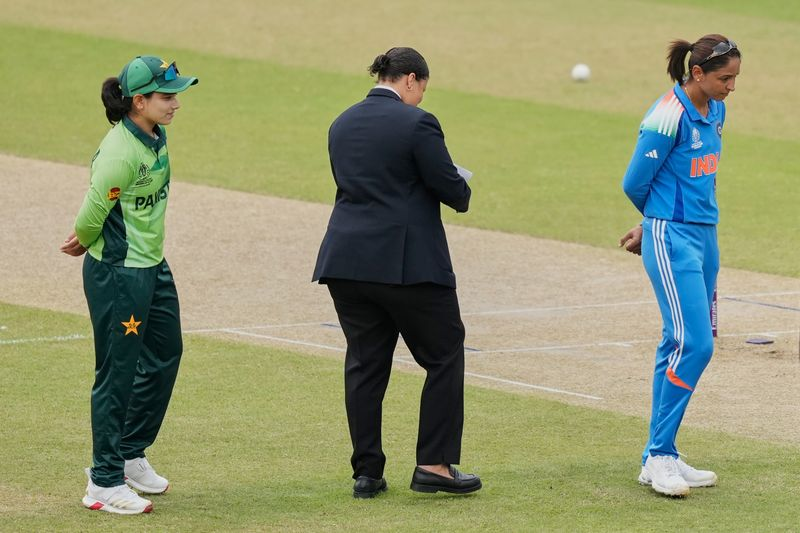
The instructions to our cricketers to avoid a handshake with their Pakistani rivals before or after a match have set a wrong precedent. This decision must have been taken by our political leadership and communicated through the BCCI to the captains of our men’s and women’s teams — Suryakumar Yadav and Harmanpreet Kaur.

This gesture conveyed a message to the public in India and Pakistan that we are enemies in all aspects. That is unfortunate. The crime of unleashing terrorism and killing civilians is condemnable and unpardonable. The Army and the political rulers of Pakistan have resorted to this cowardly option because they are weaker, both militarily and economically. Pakistan’s leadership has condemned its country to the status of a pariah in the comity of nations. It is essential for the Pakistani people to open their eyes to this truth. Cricketers not shaking hands is bound to have an effect to the contrary.

It is necessary for our political leadership to assess the impact of politicising sports and exposing our top defence officers to the media glare. I doubt if world leaders will let such moves pass without scrutiny. It does not concern them, so they may not comment. But they will think poorly of us. Our refusal to shake hands must not have gone down well particularly with cricket-playing countries such as England, Australia, New Zealand, South Africa, West Indies, Sri Lanka and Bangladesh.

Our leadership should review its instructions to sports bodies because sports needs to be isolated from politics.


India, Australia to deepen cooperation for ‘free and open’ Indo-Pacific

Two countries also sign arrangement on mutual submarine rescue support and cooperation

India and Australia today discussed a new roadmap for mutual maritime security collaboration aimed at deepening cooperation to ensure a “free, open and resilient Indo-Pacific”.

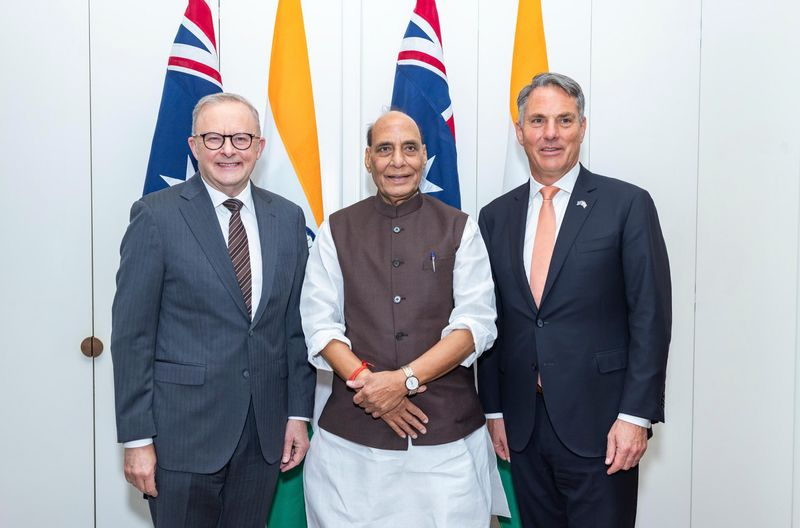
Defence Minister Rajnath Singh, who is on a two-day visit to Australia (October 9-10), held a bilateral meeting with Australia’s Deputy Prime Minister and Defence Minister Richard Marles in Canberra.

A joint statement issued after the meeting said, “The ministers affirmed the importance of maintaining a free, open, peaceful, stable and prosperous Indo-Pacific.”

The statement added that both sides reaffirmed strong support for freedom of navigation and overflight, unimpeded trade and other lawful uses of the sea in accordance with international law, particularly the 1982 United Nations Convention on the Law of the Sea (UNCLOS).

The phrase “free and open Indo-Pacific” is often used as a euphemism for countering Chinese assertiveness in the region, particularly in the South China Sea. India and Australia are part of the four-nation Quad grouping along with the US and Japan. The four nations are scheduled to conduct a joint military exercise next month at Guam, a US base in the Western Pacific.

The two sides also discussed a joint maritime security collaboration roadmap to advance maritime cooperation and looked forward to renewing the 2009 Joint Declaration on Defence and Security Cooperation.

The expansion of the bilateral defence architecture will include the institution of an annual Defence Ministers’ Dialogue. Both sides also agreed to pursue defence collaboration in emerging technologies through the Joint Working Group on Defence Industry, Research and Materiel, the statement said.


India and Australia also signed an arrangement on mutual submarine rescue support and cooperation. The two countries already collaborate on maritime domain awareness and anti-submarine warfare operations, including coordinated patrols by their P-8I maritime patrol aircraft in the Indian Ocean.

They also agreed to continue aircraft deployments from each other’s territories to build operational familiarity.

The ministers welcomed Australia’s first defence trade mission to India from October 7 to 10, focused on connecting Australian firms with Indian counterparts, particularly in the C5ISR domain — command, control, communications, computers, cyber-defence, intelligence, surveillance and reconnaissance.

Defence and security cooperation has emerged as one of the strongest pillars of the bilateral partnership. Over the past decade, the number of annual defence exercises, meetings and activities has tripled, with 33 such engagements held in 2024 alone.

Earlier in the day, Singh was welcomed at the Australian Parliament House, where he also witnessed parliamentary proceedings in Canberra.

He also met Prime Minister Anthony Albanese and Foreign Minister Penny Wong, broadly focusing on imparting more dynamism to the relations.