












Sanjha Morcha

Residents of border villages start moving to safer places; don’t panic, says admn

No order by authorities on evacuation; officials counsel villagers in Ferozepur

article_Author
Anirudh Gupta Our Correspondent

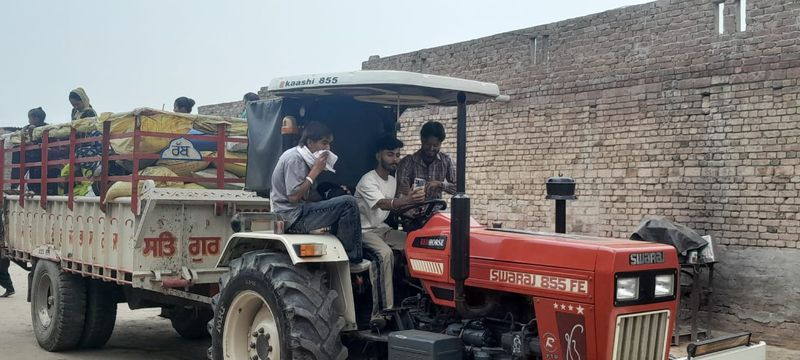
Several residents of villages located along the International Border with Pakistan here started moving to safer places after India struck the terror infrastructure in the neighbouring country in early hours on Wednesday.

Deputy Commissioner Deepshikha Sharma urged villagers not to panic, saying “no order had been issued to evacuate villages”.

She said the administration was fully alert and prepared to deal with all contingencies. Sharma said senior officials were also sent to counsel villagers.

Meanwhile, several residents were seen shifting to safer places at villages, including Tendi Wala, Kalu Wala, Gatti Rajo Ke, Jhugge Hazara, Navi Gatti Rajo Ke, Gatti Rahime Ke, Chandiwala, Basti Bhanewali and Jallo Ke.

They were seen packing valuables besides food and clothes. Some of the villagers were spotted loading essential items on to tractor-trailers, bullock carts and even motorcycles.

A villager said he was persuaded by his relatives to shift to a “safer place”, apprehending a “war-like situation” between the two countries in upcoming days.

Kakku Singh (63), a resident of Bhambha Haji village in Mamdot, said he had come to meet her two married daughters at Kaluwala village. Kaluwala village is surrounded by the Sutlej on three sides and Pakistan on the fourth.“When I heard the news about the India’s attack (on the terror infrastructure in Pakistan), I got worried about my daughters and their families. I am taking them to my home till the situation normalises,” he said.

Pachho Bai (58) of Tendi Wala village and her daughter-in-law were seen packing clothes.

Pachho Bai said she was worried as her house was situated just 2 km away from the border. “There are six members in our family. My husband and son have gone to work but we are planning to move to a relative’s place,” she said.

Ranjit Singh, a resident of Gatti Rajo Ke village, said he would drop his three children at a relative’s house at Ali Ke village.

“My wife told me to shift them to a safer place. Though there is no official order asking for evacuation, most villagers are either leaving their homes or sending their loved ones to safer places,” he said.

However, many still have decided to stay back, confident of the armed forces’ capability to defend the country in case of a war. Surjeet Singh of Tendi Wala village said, “We are ready to support our soldiers as the first line of defence.”

Residents recall past wars

Fazilka: A similar situation was witnessed at some of the Fazilka villages. At Pakka Chisti village, situated just 1 km from the International Border, octogenarian Ojha Singh recalled the 1965 and 1971 Wars. He said in 1971, they had to rush for life, leaving behind their livestock and belongings.

He claimed that about 20 persons were made captive by Pakistan in the 1965 War.

At Mohar Jamsher village, former Sarpanch Hansa Singh said several residents had shifted their valuables to their relatives while deciding to stay back until the authorities advised them to leave.
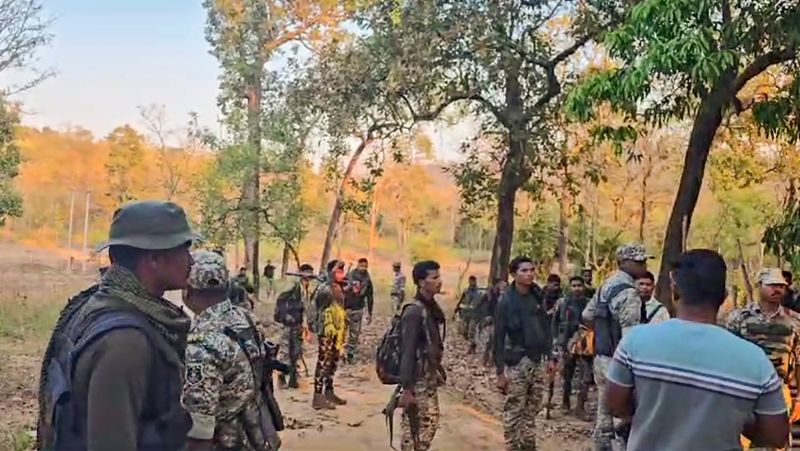
‘Operation Sankalp’: 22 Naxalites killed in encounter with security forces in Chhattisgarh

Gunfight breaks out in the morning in the Karregutta hills forest along the interstate border

Twenty-two Naxalites were killed in an encounter with security forces on Wednesday in the forests of Chhattisgarh’s Bijapur district bordering Telangana during ‘Operation Sankalp’, a massive counter-insurgency initiative, a senior police official said.

The gunfight broke out in the morning in the Karregutta hills forest along the interstate border, he said.

“So far, bodies of 22 Naxalites have been recovered and a search operation was underway in the area”, he said, adding that the identity of the slain cadres was yet to be established.

With the latest encounter, the toll of Naxalites gunned down under Operation Sankalp since April 21 has climbed to 26.

Operation Sankalp, one of the biggest counter-insurgency actions launched in the Bastar region, involves around 24,000 security personnel from different units including District Reserve Guard (DRG), Bastar Fighters, Special Task Force (STF), all units of state police, Central reserve Police Force (CRPF) and its elite unit CoBRA.

The operation was launched based on inputs about the presence of senior cadres of battalion no. 1, the strongest military formation of Maoists, Dandakaranya Special Zonal Committee (DKSZC) and Telangana state committee of Maoists.

On April 24, three Naxalite women, belonging to the PLGA battalion no.1 of Maoists carrying a reward of Rs 8 lakh each, were gunned down on the Karregutta hills, leading to the recovery of a huge cache of weapons, explosives, and other material.

On May 5, a woman Naxalite was killed in a gunfight with security forces in the area.

The area surrounded by dense forests and lined by hills is believed to be the base of the Maoist battalion no. 1, the police official said.

“The inputs suggest several senior-level Maoist cadres have either been killed or seriously injured during this operation, but their colleagues managed to drag them inside the forest,” he said.

The official said hundreds of Naxal hideouts and bunkers have been destroyed so far during the operation, and a huge cache of explosive material, detonators, medicines, and other items was seized.

At least six security personnel, including an official of CoBRA unit, were injured in different incidents of pressure IED blasts. All the injured jawans are out of danger and are being treated in various hospitals.

With the latest action, 168 Naxalites have been gunned down in separate encounters in Chhattisgarh so far this year. Of them, 151 were eliminated in the Bastar division, comprising seven districts, including Bijapur.


Operation Sindoor and women-led briefing: India sends a firm, symbolic message to Pak & world

PM chose the name of the Operation to express national solidarity with the women who lost their husbands to the Pahalgam massacre

article_Author
Aditi Tandon
Tribune News Service

New Delhi, Updated At : 05:52 AM May 08, 2025 IST

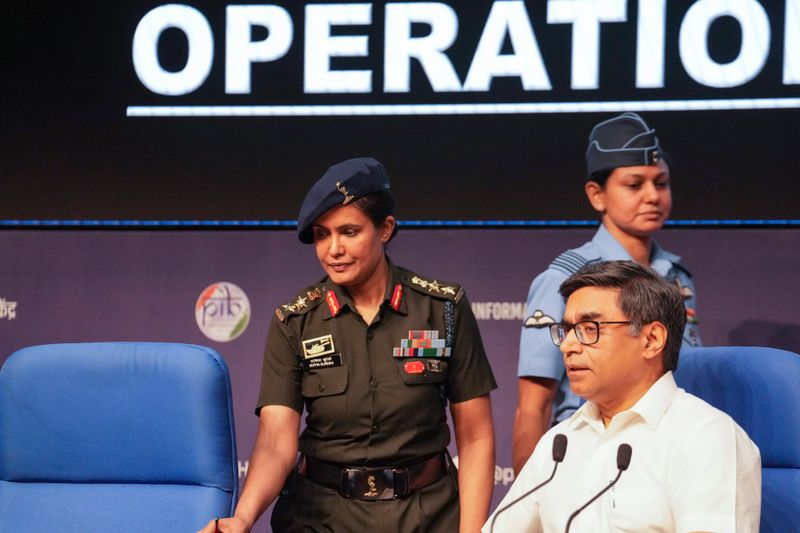
Foreign Secretary Vikram Misri with Col Sofiya Qureshi and Wing Commander Vyomika Singh during a press conference in New Delhi. PTIIndia’s choice of codename “Operation Sindoor” for May 7 strikes on terror infrastructure in Pakistan and PoK was meant to deliver a strong, symbolic message to the neighbour and the world of national solidarity with the widows of April 22 Pahalgam attack.

Prime Minister Narendra Modi personally gave the name to the military strike meant to “teach Pakistan trained terrorists a lesson”, as he had promised in Bihar on April 24.

Sindoor, the red vermillion powder is a symbol of matrimonial longevity and health in the Hindu faith.

“On April 22, Pakistan trained terrorists singled out and murdered Hindu men in front of their wives, mothers and children. Those who were spared in the attack were told to give PM Narendra Modi the message. Operation Sindoor is PM’s answer to the perpetrators of Pahalgam attack. It is a revenge India has taken on the behalf of its mothers and sisters who were wronged in Pahalgam,” said a top government source.


Even Foreign Secretary Vikram Misri in his remarks on the Indian response today made a mention of the “savagery and barbarism” of the Pahalgam attack that overwhelmed every Indian.

Operation Sindoor evokes that emotional response.

This is in fact the first time Indian Armed Forces have framed a military operation against Pakistan as a tribute to terror attack victims. In the past, phrases and metaphors representing valour and warfare have been deployed in operations against Pakistan. These include Operation Riddle, military’s response to Pakistan’s 1965 offensive; Operation Trident, Indian Navy’s successful offensive during the 1971 Indo-Pak War targeting Karachi port; Operation Vijay to reclaim the Kargil heights in 1999; Operation Parakram after the 2001 Parliament attack and most recently Operation Bandar post the Pulwama terror attack.

Operation Sindoor lends voice to the collective national anguish over the Pahalgam attack. As Ashanya Dwivedi, the widow of Kanpur’s Shubham Dwivedi, the first among 26 to be hit in Pahalgam, said today, “This codename is a real tribute to the victims. Only PM Modi could have given this name. He identified with our pain and sentiments. I thank him for avenging the killing of my husband and 25 others.”

Besides the choice of codename Operation Sindoor, India, by fielding two women officers to lead the national briefing after the military strikes today, delivered a sharp retort to Pakistan Army Chief Asim Munir’s recent “Hindu-Muslim binary” rant.Col Sofiya Qureshi and Wg Cdr Vyomika Singh both cautioned Pakistan against escalation.

Their presence at the briefing today alongside Foreign Secretary Vikram Misri mirrored Indian unity days after Munir backed the “two-nation theory” and said Hindus and Muslims were different in every aspect of their lives. Munir’s statements have widely been linked to the Pahalgam attack where Hindus were targetted.

Of war symbolisms & codenames

The US operation to kill Osama bin Laden, launched on May 2, 2011, was called Operation Neptune Spear because Neptune’s spear, the trident, is a symbol of the US navy’s special warfare insignia, specifically the SEALs. The operation was conducted by SEAL Team Six.

Operation Overlord during World War II

On June 6, 1944 (D-Day), the Allied invasion of Nazi-occupied France via the beaches of Normandy marked the beginning of the end for Nazi Germany.

Operation Desert Storm during the Gulf War

Used to describe the January 1991 US-led coalition’s air and ground assault to liberate Kuwait from Iraqi occupation under Saddam Hussein.


Rising India-Pak tensions cast shadow over weddings in Punjab’s border districts

A Muktsar resident says that blackout drills had already begun in the area, further increasing the unease

article_Author
Archit Watts Tribune News Service

As tensions escalate between India and Pakistan, anxiety is growing among civilians—particularly those with weddings planned in the coming days.

Gurinder Singh, a resident of Muktsar town, voiced his concern over his nephew’s wedding, scheduled for May 12 in Punjab’s Fazilka district.

“We are all perplexed. Everything is ready, and the functions are scheduled to begin on May 10, but the current situation is making us nervous,” he said.

He added that blackout drills had already begun in the area, further increasing the unease. “The situation escalated further on Wednesday with the execution of Operation Sindoor. Adding to our worries, schools in the border districts have been ordered shut as a precautionary measure,” Gurinder said.

The owner of a popular wedding hall in the region echoed similar sentiments. “Just a few weddings are usually held in May. However, those who have planned them are definitely anxious,” he noted.

Despite the rising concern, officials have urged the public to remain calm, assuring that there is no need to panic.


Terror dens hit with precision, no civilian harmed: Rajnath

Cabinet salutes forces | PM briefs Murmu | All-party meet today

article_Author
Aditi Tandon Tribune News Service

Hours after the Indian military struck terror infrastructure in Pakistan and PoK, Defence Minister Rajnath Singh sent out a firm message to the world that the country exercised its right to respond in the wake of the April 22 Pahalgam terror attack that killed 26 innocent citizens on its soil.

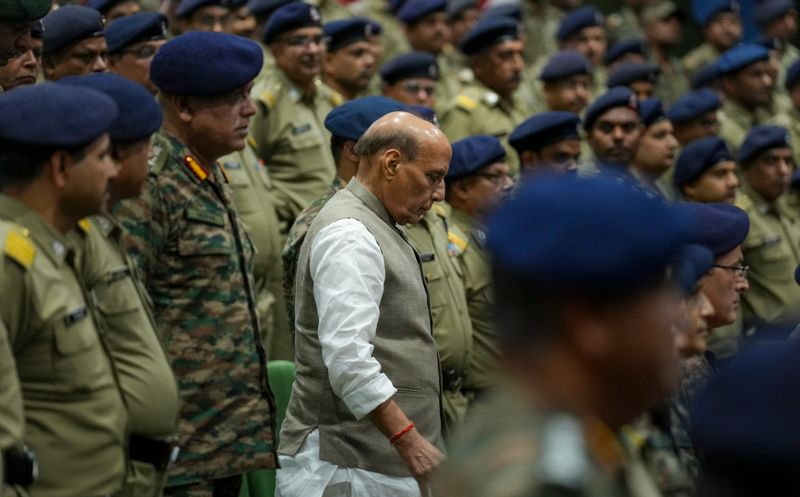
Singh, the first minister to speak publicly after Operation Sindoor in the early hours on Wednesday, said the Indian armed forces had scripted history by acting with precision, precaution and compassion to destroy camps used to train terrorists in Pakistan and PoK.

Earlier in the day, Singh briefed Prime Minister Narendra Modi on the operation and the PM later lauded the armed forces in a Cabinet meeting he chaired at his residence. The PM is learnt to have told the Cabinet that the national response to the Pahalgam attack was “necessary and had to be undertaken”. He saluted the forces for a precision strike the nation had been waiting for.

The entire Cabinet hailed the “non-escalatory, pre-emptive, and responsive” nature of the strikes by the Indian military and congratulated PM Modi for his leadership.

Before the Cabinet meeting today, the Cabinet Committee on Security also met, its third since the Pahalgam attack. The PM later met and briefed President Droupadi Murmu, the supreme commander of the armed forces, on the operation, even as the government scheduled an all-party meeting to discuss the situation on Thursday. The meeting is expected to pass a resolution backing Operation Sindoor.

Though the PM did not make a public comment on Operation Sindoor, Rajnath Singh spoke on the government’s behalf, stating that India used its right to respond after the attack that was perpetrated on its soil.

“We have undertaken this operation extremely consciously and wisely. This operation was launched with the sole target of destroying the morale of terrorists by targeting their camps and infrastructure. I salute the valour of our armed forces,” said Singh, addressing the 66th Raising Day event of the Border Roads Organisation at Manekshaw Centre here today.

“During Operation Sindoor, we followed the path shown by Lord Hanuman, who, while destroying the Ashok Vatika in Lanka, only targeted those who had targeted innocent people. We also targeted those who targeted us,” said Singh, even as the world urged de-escalation.

The minister reiterated India’s position that no civilians were hit. “The armed forces acted with precision, precaution and compassion to destroy camps used to train terrorists in Pakistan and PoK. As per plan, the targets were destroyed and no civilian population was harmed,” Singh said, rejecting Pakistan’s claims about civilian casualties.

The Defence Minister said the forces displayed sensitivity to ensure civilian populations were not affected. “I congratulate the soldiers and officers. I also congratulate PM Modi for boosting the morale of the forces,” said Rajnath Singh.


Pahalgam avenged, India strikes Pakistan

Jaish’s Bahawalpur & LeT’s Muridke headquarters targeted in 25-minute ‘measured’ missile attack

ndia on Wednesday carried out precision attacks on the core of Pakistan’s terror infrastructure, targeting nine sites, including terrorist training camps, launch pads and headquarters of the Jaish-e-Mohammed and Lashkar-e-Toiba, in a 25-minute strike codenamed Operation Sindoor.

The armed forces used a mix of air-launched missiles, self-destructing Kamikaze drones and artillery fire from the ground. The retaliatory action follows the “savage killing” of 25 male tourists, gunned down in front of their wives and families, and one local guide in the higher reaches of Kashmir’s Pahalgam town on April 22.

Sources said at least 70 terrorists were killed at the sites — four in Pakistan and five in Pakistan-occupied J&K. India chose the targets based on “credible intelligence” about terror camps operating at these sites, camouflaged as health centres to evade detection and circumvent sanctions from international organisations, including the Financial Action Task Force, officials said.

India said it was ready to respond to any escalation initiated by its nuclear-armed neighbour. “A little while ago, the Indian armed forces launched Operation Sindoor, hitting terrorist infrastructure in Pakistan and Pakistan-occupied Jammu and Kashmir from where terrorist attacks against India have been planned and directed,” the Defence Ministry said in a statement released at 1.44 am.

The airspace over north-western India—Punjab, J&K, Rajasthan and Haryana—continues to be restricted for civilian flights as fighter jets of both countries are engaged in combat patrolling and air defence mechanisms to protect vital installations.

The Indian Air Force jets carried out strikes at Muridke and Bahawalpur terror hubs while the Army hit camps at Shawai Nalla and Syedna Belal in Muzaffarabad. Gulpur and Abbas terror camps in Kotli, Barnala camp in Bhimber, Sarjal and Mehmoona Joya camps in Sialkot were also targeted.

At a briefing, Foreign Secretary Vikram Misri said India exercised its right to respond to and pre-empt cross-border threats. “The actions were measured, non-escalatory, proportionate and responsible. They focused on dismantling the terrorist infrastructure and disabling terrorists likely to be sent across to India,” said Misri.

Col Sofiya Qureshi and Wing Commander Vyomika Singh, who accompanied Misri, said no civilian targets or military installations were hit. “The operation was carried out between 1.05 am and 1.30 am on Wednesday,” said Colonel Qureshi, showing videos of the strikes recorded by Indian surveillance systems.

Wing Commander Singh said the Indian armed forces were “fully prepared to respond to Pakistani misadventures, which could escalate the situation”.

“It was deemed essential that the perpetrators and planners of the Pahalgam attack be brought to justice. Despite a fortnight having passed since the massacre, there was no demonstrable step from Pakistan to act against the terror infrastructure on its territory or on the territory under its control. Instead, all it has indulged in are denials and allegations,” said Misri.

The Foreign Secretary said Pakistan-trained terrorists belonging to the Lashkar-e-Toiba carried out the Pahalgam attack. “The attack was clearly driven by the objective of undermining normalcy returning to J&K. In particular, it was designed to impact the mainstay of the economy (tourism), with a record 23 million tourists visiting the Valley last year,” he said.

Lashkar offshoot The Resistance Front (TRF) had claimed responsibility for the attack. Misri said India had given inputs about the TRF in its half-yearly report to the monitoring team of the UN’s 1267 Sanctions Committee in May and November 2024, bringing out its role as a cover for Pakistan-based terrorist groups.

The LeT’s nerve centre in Muridke, about 30 km from Lahore, was hit four times in quick succession during the operation, said the officials. Muridke, the base of the terror group since 1990, is where Ajmal Kasab and nine other terrorists were trained ahead of the 26/11 terror siege of Mumbai. Besides, 26/11 accused David Headley and Tahawwur Rana also visited the LeT hub.

The Markaz (centre) Taiba at Muridke, dubbed a “terror factory”, is the most important training centre for the LeT. Recruits, officials said, are brainwashed, given physical training and a two-week-long indoctrination course. Around 1,000 students in different courses get enrolled in this camp, they said. The other big ticket target was Bahawalpur, which became the hub of the JeM after the release of Masood Azhar in exchange for the hijacked passengers of IC-814 in 1999.

The group has since been involved in a series of terror attacks in India, including the Parliament attack in 2001, the strike on the Jammu and Kashmir assembly in 2000, the attack on the IAF base in Pathankot in 2016 and the Pulwama suicide bombing in 2019.


Pakistan continues shelling along LoC in J&K after India’s Operation Sindoor

On Wednesday, the Poonch sector in Jammu was the worst-hit, recording 13 deaths during intense shelling by Pakistani troops

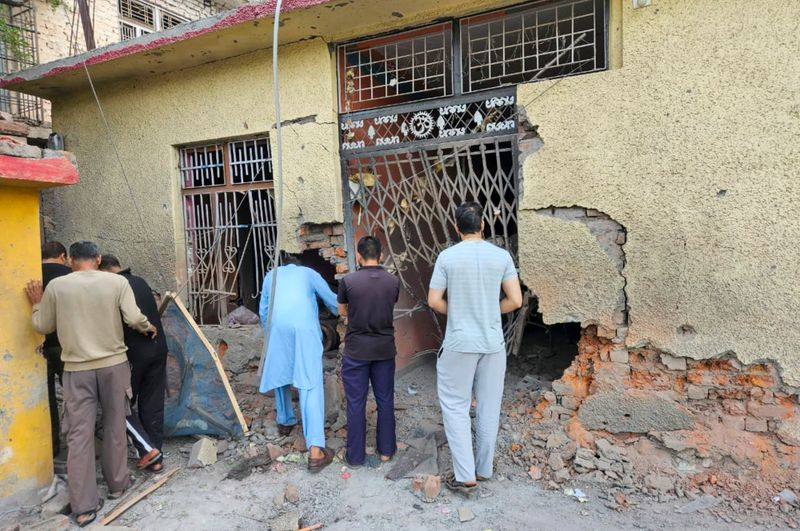
People gather near a damaged property after alleged heavy firing and shelling by Pakistan military overnight across the Line of Control and International Border, at Irwan Khanetar village in Rajouri, Jammu and Kashmir, Wednesday, May 7, 2025. PTI

Pakistani troops resorted to cross-border shelling along the Line of Control (LoC) in Kupwara district of Jammu and Kashmir on Wednesday night, a day after the Indian armed forces targeted terror infrastructure in the neighbouring country as part of ‘Operation Sindoor’.

Army officials stated that during the night of May 7–8, Pakistani Army posts resorted to “unprovoked fire using small arms and artillery guns” across the LoC in areas opposite Kupwara, Baramulla, Uri, and Akhnoor sectors in Jammu and Kashmir.

“The Indian Army responded proportionately,” they said.

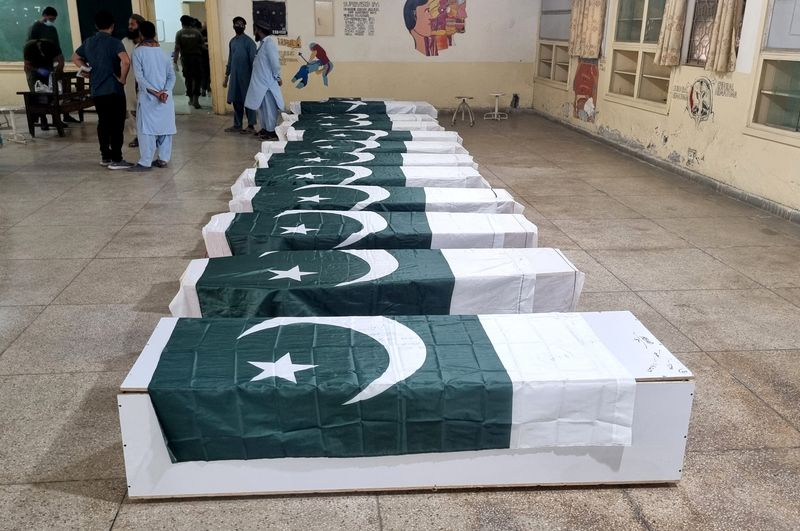
The shelling, which continued through Tuesday and Wednesday night, resulted in at least 13 fatalities and left dozens injured, following heavy artillery attacks by Pakistan that shook towns along the LoC in north Kashmir and Jammu’s Poonch region.

Local residents reported that they had not witnessed such intense shelling in recent years.

Early Wednesday morning, India officially announced that it had struck terrorist infrastructure in Pakistan and Pakistan-occupied Kashmir (PoK).

In response, the Indian Army reported that Pakistan initiated unprovoked firing, including artillery shelling, from posts across the Line of Control (LoC) and the International Border opposite Jammu and Kashmir. “We are responding to the shelling in equal measure,” the Army stated.


HEADLINES : PART II-07 MAY 2025

Definition of War

Prime Special (514) || ਭਾਰਤ-ਪਾਕਿਸਤਾਨ ਜੰਗ ‘ਤੇ Former Brigadier Kuldeep Singh Kahlon ਵੱਲੋਂ ਵੱਡੇ ਖੁਲਾਸੇ

We killed only those who killed our innocent: Rajnath on Operation Sindoor   

ADVISORY BY LT GEN A K SHARMA to CITIZENS

Meet Col. Sophia Qureshi & Wg. Cdr. Vyomika Singh, The Women Officers Who Briefed On Op Sindoor

25-minute operation targeted 9 terror camps in Pakistan, ready to tackle escalation: Govt

25-minute operation targeted 9 terror camps in Pakistan, ready to tackle escalation: Govt

JeM chief Masood Azhar says 10 members of his family killed in missile attack on his HQ

Violence Will Increase in J&K After Operation Sindoor

PAKISTAN ATTACKED POONCH GURDWARA

Chandigarh, Amritsar Airports Completely Closed Until Further Notice; IAF Takes Full Control

Over 200 flights cancelled, 18 airports shut after India strikes Pak terror camps

Ready to ‘wrap’ tensions if India de-escalates: Pakistan Defence Minister Asif

Pakistan’s security huddle authorises armed forces to take action to avenge Indian strikes

Unidentified aircraft crashes in Bathinda; 1 dead, 9 injured


Prime Special (514) || ਭਾਰਤ-ਪਾਕਿਸਤਾਨ ਜੰਗ ‘ਤੇ Former Brigadier Kuldeep Singh Kahlon ਵੱਲੋਂ ਵੱਡੇ ਖੁਲਾਸੇ