




Sanjha Morcha

The US was never Europe’s safe harbour

The time has come for Europe to design its own security architecture; interests of nation states have always prevailed over alliances.
article_Author
Manish Tewari

The Europeans were left dumbfounded, if not shell-shocked, by the verbal whiplashing administered to them by US Vice-President James David Vance at the sixty-first iteration of the Munich Security Conference earlier this month. Vance questioned the fundamental commitment of Europeans to democratic values, that, he argued, underpinned the US-European construct. By the end of the speech, there was a lot of European strategic blood spilled on the conference floor of Hotel Bayerischer Hof.

The diatribe led to extended recriminations, with many European leaders pushing back strongly against Vance’s caricatured characterisation of the current state of play in Europe.

However, this begs the question as to why Europeans are surprised. For, they have to only look back to the past hundred years or so of US ties with Europe to see that America has always only acted in its own interest — what it has conveniently characterised as American exceptionalism.The First World War began on July 28, 1914. It was triggered by the assassination of Archduke Franz Ferdinand, heir to the Austro-Hungarian empire, and his wife Sophie, by a Bosnian Serb a month earlier. Though it was a European war, the Triple Entente — Britain, France and Russia — which was fighting the Triple Alliance of Austria-Hungary, Germany and Italy, pleaded with America to weigh in on its side.

The US, led by President Woodrow Wilson, stymied by Senators with Jacksonian impulses, refused to enter what it deemed, and perhaps correctly so, a European imperial joust.

It was only two and a half years later, on April 7, 1917, that the US declared war on Germany. And that was only because the Germans had unleashed extensive submarine warfare in the North Atlantic Ocean, causing a huge loss of American men and material.

An added trigger was a communication by the then German Foreign Minister, Arthur Zimmermann, which later came to be known as the notorious “Zimmermann Telegram”. It promised the Mexican government that Germany would help Mexico retrieve the territory it had lost to the US in the wake of the Mexican-American war of 1846-1848. In return for this assistance, Germany asked for Mexico’s support in the war.he Monroe doctrine conceptualised by President James Monroe and his Secretary of State John Quincy Adams. Articulated during Monroe’s address to the US Congress on December 2, 1823, the Doctrine held that the Western Hemisphere, especially the Americas, was the US’ exclusive sphere of influence and the Europeans had no business to interfere in this eminent domain. Thus, only when its own interests were threatened did the US enter the European war.

After the spectacular collapse of the League of Nations — midwifed by President Wilson, vide the Treaty of Versailles on June 28, 1919, with the Japanese walkout in February 1933 and the German withdrawal eight months later — the US once again retreated into splendid isolation even as Adolf Hitler and his Nazis gobbled up territories and countries in Europe, beginning with the Austrian Anschluss in March 1938.

Even when the Great Britain stood alone in its darkest hour — from May to November 1940 — President Roosevelt expressed his inability to help it because of the Neutrality Act of 1939 and the Johnson Act of 1934.

Though certain innovative means were found later, the US only formally entered World War II after the devastating Japanese attack on Pearl Harbor on December 7, 1941.

Then also, to begin with, on December 8, 1941, it only declared war on Japan. It was only when Germany and Italy declared war on the US on December 11, 1941, did it reciprocate that announcement. The bottom line is that even as Europe was being subjugated by the hoodlums of the Gestapo and Shcutzstaffel, the US may have continued to remain neutral had it not been for the Japanese attack.

Fast forward to the US withdrawal from Vietnam on April 30, 1975 — after a decade of involvement that effectively led to the extinguishment of South Vietnam, with over 58,000 dead and expenditure of over $1 trillion. This is another example of how the changing domestic environment in the US trumped its international commitments. Many South Vietnamese who had allied with the US in this battle were left to the tender mercies of their North Vietnamese ‘comrades’.

Similarly, the US pullout from Iraq on December 18, 2011 after a nine-year-long war was fought on the false premise that there were weapons of mass destruction in that country — which coincided with the rise of the Islamic State or ISIS in Iraq and Syria. The war in Iraq, in which a million Americans served, cost the US exchequer $2.9 trillion and left 4,61,000 people dead. It is still not clear what the casus belli of that intervention was.

Similarly, the US withdrawal from Afghanistan in August 2021, which handed back the country to the very same Taliban it had chased out in 2001 — thereby rolling back two decades of investment in creating a nascent democracy, respect for human rights, women’s empowerment and free speech. The Afghan War cost the US $2.313 trillion and left 2,43,000 dead. The conflict in Afghanistan continues.

Why should the Europeans then shake in sanctimonious indignation now that Donald Trump has done a complete volte-face on the Russian aggression of Ukraine? As old imperialists and serial warmongers over centuries, they should understand that you cannot anchor your defence in someone else’s port.

The time has come for Europe to design its own security architecture. It should recall the wise caution of Cardinal Richelieu: raison d’état, that each nation acts in its best national interest. So should the doctrine of the balance of power, intellectualised by Hugo Grotius, be recalled.

In the theory and practice of international relations, interests of nation states have always prevailed over alliances. That’s because interests are permanent but allies transitory, if not evanescent.

Why India must think twice about Trump’s F-35 offer

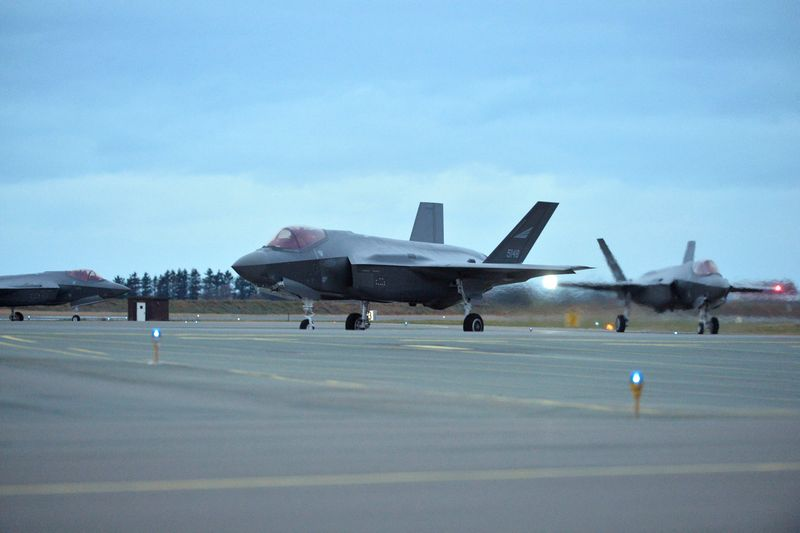
The F-35 is already a highly questionable and controversial commodity in the USA itself. There have been too many glitches.

article_Author
Abhijit Bhattacharyya

AFORMER foreign secretary has advised “India to adjust to a whole new world” with “only transactions and deals” and believes that there are “no friends and enemies in this scenario.” Obviously, the diplomat’s assessment originates from the ‘real-time’ unpredictability of the sole ‘super power’, President Donald Trump, who appears difficult to be dealt with by today’s “whole new world.”

Simply put, the ‘scenario’ today has dramatically turned to ‘T’ for ‘transactional Trump’, and ‘D’ for ‘dollar deals Donald’, with the USA launching its global blitzkrieg for ‘deal’ and ‘transaction’. The US unilateralism is compelling friends and foes alike to either scurry for cover or make a personal appearance before Trump to keep him in good humour, notwithstanding the bleak prospect of any meaningful result. Trump loves the driver seat for deals, dictating all in his durbar to put their signatures in the DC-prepared draft of transaction documents.

Trump now wants India to buy the Lockheed F-35 fighter to reduce America’s $35 billion bilateral trade deficit with Delhi.

However, India knows well (as does the USA, presumably) that any international deal, transaction, contract, or even the hatching of criminal conspiracy, is a bilateral process and essentially a matter of ‘offer plus acceptance’ for the sealing of the deal. From India’s perspective, too, shouldn’t then the F-35 be looked into?

Barring the US Douglas DC-3 Dakota and Fairchild Packet C119G transport and air-dropping, the Indian Air Force has never had a US fighter in its combat squadron inventory since 1947. Hence, the sudden transformative, unilateral and command-like-offer to India to buy the Lockheed F-35 multirole fighter by the transactional President of the US (POTUS) deserves a scrutiny, especially in light of the contemporary geopolitical weather and history of erratic, overbearing US policy towards Delhi-DC bilateral contours over the decades.

First, let us be clear that no air force of a country of India’s shape and size is made in a day and an air force building is no garden party or a matter of joke. It is a serious business of high-tech, high-risk, high-investment and exceptionally high-quality trained personnel or men behind the machines.

Jane’s All the World’s Aircraft shows that the period from the “request for proposal” to the “first delivery” of the F-35 fifth generation multirole stealth fighter Lockheed, spanned over 15 years (December 1995-May 2011). Also, India was never under the US radar either as an industrial partner or a potential buyer or readymade user of the high-tech Lockheed fighter. The F-35 essentially was for the advanced west and its defence and security partners from the non-west.

Thus, in late 1996, “Australia, Canada, France, Germany, Greece, Israel, Singapore, Spain and Sweden were briefed on the programme.” It was clear from the beginning that it would be an enormously expensive flying machine.

First-level collaboration with 10 per cent cost-sharing was sought from the UK; Italy and the Netherlands were level-two partners, with 5 per cent cost sharing; level three involved the payment of 1-2 per cent with Denmark and Norway and, finally, came Australia, Canada and Turkey, who were to bear the cost on their own.

Consequently, the cost of each fighter was exorbitant. As seen from the annual publication of Jane’s All the World’s Aircraft, from 2012-2013, each unit cost of the US Air Force F-35A was quoted as $37.3 million. It escalated to $94.3 million in 2017 and is now well over $100 million per fighter. On top of this, if one takes into account the depreciation of the Indian rupee vis-a-vis the US dollar, the expenditure by the Indian exchequer can be truly mindboggling. It can make any F-35 “deal” or “transaction” highly explosive and an impossible hot political potato, with the questionable possibility of the US fighter role, responsibility and utility in the Indian defence system.

There are also multiple technical factors which surely would be beyond the comprehension of the millions of uninitiated, who get impressed by the air display and further charged by the emotional public debate of/for optics.

The F-35 is already a highly questionable and controversial commodity in the USA itself. There have been too many glitches and cost and time overruns that have made both the POTUS and his principal Man Friday, Elon Musk, making comments on the US aviation industrial capacity and capability. The POTUS is after Boeing for its inability to deliver two ‘Air Force One’ transport craft for the White House. Musk is all over F-35, making comments like: “F-35 fighter jets are obsolete” and “meanwhile, some idiots are still building manned fighter jets like F-35.”

Expectedly, the outgoing US air chief has given Musk a mouthful of expletives.

Tech and economics aside, India is expected to follow zero-tolerance to flight safety failure if it afflicts an extraordinarily “sophisticated stealth” like F-35. Regrettably, things went wrong early in October 2010 itself, with a brief grounding of the fleet at the Edwards Air Force Base (AFB), owing to a “software problem affecting the pump that could have caused un-commanded inflight shutdown of engine.”

Almost 15 years have gone by, but unexplained and unexpected inflight glitches continue to plague the F-35s. A few citations would suffice. In two successive accidents in June and July of 2014, a mixed group of F-35s “suffered catastrophic engine failure at Eglin AFB which was followed by a fleet-wide grounding order.” This is similar to what the Indian Air Force faces today — a whole fleet of the indigenous Advanced Light Helicopter Dhruv being grounded after the January 5, 2025 crash.

For the F-35, however, the most serious finding of the accident inquiry report was “rubbing between third-stage fan blades in low-pressure section of the P&W F-135 engine and the inner wall of compressor casing.”

Unfortunately, the F-35 offered by the POTUS still suffers from nagging niggles which do not inspire confidence of any potential user. That’s the irony, but also the reality. One, therefore, would hate to see a possible increase in the number of widows and orphans in our Air Force stations during peace time.


Village Defence Guards put on high alert after inputs of infiltration

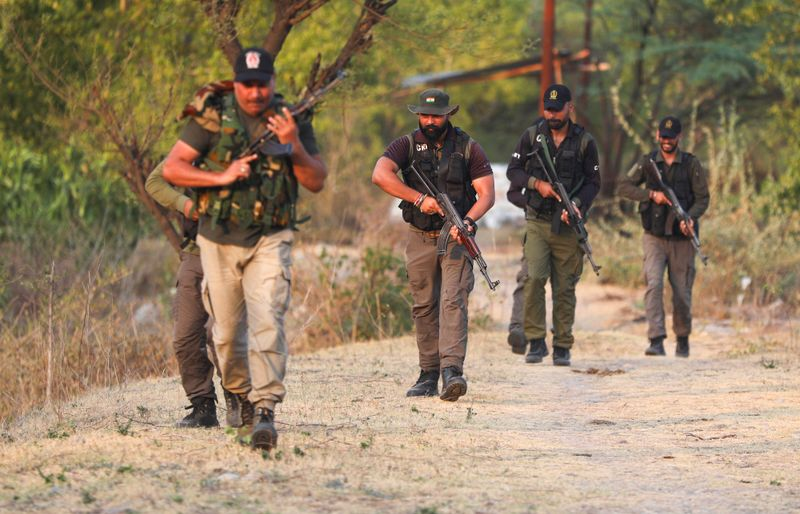
The Jammu and Kashmir Police have issued an alert to the Village Defence Guards (VDG) and Border Police Posts (BPP) in response to intelligence inputs suggesting that terrorists might attempt to infiltrate from the border areas in the Jammu division….

The Jammu and Kashmir Police have issued an alert to the Village Defence Guards (VDG) and Border Police Posts (BPP) in response to intelligence inputs suggesting that terrorists might attempt to infiltrate from the border areas in the Jammu division.

Inspector General (IG) Bhim Sen Tuti, accompanied by senior police officials, visited the Akhnoor sector, where he met with BPP personnel and VDG members, urging them to remain vigilant. The senior police official also interacted with Border Security Force (BSF) and Army personnel stationed in the area to assess the security situation, following recent incidents along the border.

During his visit, Tuti engaged with local police officials, stressing the importance of maintaining high morale and operational readiness. He conducted a thorough review of the Crime and Criminal Tracking Network & Systems (CCTNS) and assessed the preparedness for the implementation of new criminal laws. A major focus of the visit was the evaluation of the Border Management Grid along the International Border (IB) and Line of Control (LoC), where Tuti personally inspected security arrangements and emphasised the need for seamless coordination between security agencies.

Superintendent of Police (SP) Rural Jammu, Sub-Divisional Police Officer (SDPO) Akhnoor, and Station House Officer (SHO) Akhnoor provided detailed briefings on crime and security conditions within their areas.

Addressing police personnel, IG Tuti directed them to remain extra vigilant and activate all police infrastructure within their Areas of Responsibility (AORs). He highlighted the importance of alerting VDGs, Quick Reaction Teams (QRTs), and Border Police Posts, and urged enhanced coordination with the BSF and the Indian Army.

Tuti also held a detailed meeting with the General Officer Commanding (GOC) 10 Division, Indian Army, Akhnoor, to discuss collaborative strategies for ensuring peace and security in the region.


India-China relations entering phase of recovery: Envoy Xu

Xu was speaking at an event at the Chinese embassy to mark the 75th anniversary of the establishment of diplomatic ties

article_Author
Ajay Banerjee Tribune News Service

Chinese ambassador to India Xu Feihong today said the two countries should see each other’s development as an opportunity and not a threat. He stressed the need for a “reboot of the China-India ties”.

He said the India-China relations were entering the “phase of recovery” and the relationship between the two nations was “one of the most important” bilateral engagements globally.

Citing agreements reached between Prime Minister Narendra Modi and President Xi Jinping at a meeting in Kazan, Russia, last year, Xu said, “We should make efforts to translate the important consensuses reached by our leaders into common understandings…China and India should see each other…as a cooperation partner rather than a competitor”.

Xu was speaking at an event at the Chinese embassy to mark the 75th anniversary of the establishment of diplomatic ties.

“A sound and stable China-India relationship meets the expectations of the two peoples and the international community,” Xu said.

Xu mentioned the special representatives’ meeting on the China-India boundary issue saying they had reached a series of common understandings.

“This creates an important opportunity for a reboot of the China-India relations and provides a broader platform for exchanges and cooperation,” the ambassador said.

The two countries needed to mutually respect each other’s core interests, view each other’s development as an opportunity, encourage exchanges and visits in various fields and at different levels, enhance mutual understanding and mutual trust, and work together to achieve common development and rejuvenation, he said.

India and China have initiated high-level meetings to normalise their strained ties and build trust, with External Affairs Minister S Jaishankar, National Security Adviser Ajit Doval and Foreign Secretary Vikram Misri engaging with their Chinese counterparts.


Top security officers discuss plan to crack down on terror ecosystem in Chenab Valley

Top security officers met in Ramban district on Tuesday and discussed an integrated plan to crackdown on the terror ecosystem in Chenab Valley which was rocked by several terror incidents last year, officials said. The government’s plan to arm ex-servicemen,..

Top security officers met in Ramban district on Tuesday and discussed an integrated plan to crackdown on the terror ecosystem in Chenab Valley which was rocked by several terror incidents last year, officials said.

The government’s plan to arm ex-servicemen, supplementing the existing Village Defence Guards, was also discussed during the joint security review meeting, which took place at Dharmund military garrison, they said.

The officials said this initiative seeks to harness the expertise of the ex-servicemen, enabling them to actively combat terrorism and safeguard the communities.

The meeting was presided over by General Officer Commanding, Counter Insurgency Force (Delta), Major General APS Bal, and was among others attended by Inspector General of Police, Jammu zone, Bhim Sen Tuti, and Inspector General of CRPF R Gopala Krishna Rao.

Deputy Inspector General of Police, Doda-Kishtwar-Ramban region, Sector Commanders, Commanding Officers, Senior Superintendents of Police (SSPs) of Doda, Ramban and Kishtwar and representatives of central and local intelligence agencies also attended the meeting, the officials said.

They said the deliberation on various important issues, including the security situation and terrorists support system, was carried out.

In addition, upcoming activities in the region were discussed to ensure complete synergy between all security and intelligence agencies for a coordinated effort towards achieving common goals, the officials said.

They said the meeting was centred on the escalating threat posed by terrorist organisations in the region.

Detailed information of overground workers was also exchanged and an integrated plan was discussed to crackdown the terrorist ecosystem in Doda, Kishtwar and Ramban region, leveraging the collective strength of Army, police and intelligence agencies, the officials said.

They said the meeting also had a detailed review of protocols for intelligence sharing with an eye towards refining procedures for timely exchange of critical information vital to regional and local security.

This milestone meeting represented a significant leap forward in fostering a robust alliance between the army, police, intelligence agencies and law enforcement agencies, the officials said.


Expected Sajjan Kumar to get death penalty, say riot victims

After a special court awarded life imprisonment to former Congress MP Sajjan Kumar in connection with the murder of a father-son duo in the 1984 anti-Sikh riots, victims settled here said justice was delivered extremely late. The SGPC welcomed the…

article_Author
Neeraj Bagga Tribune News Service

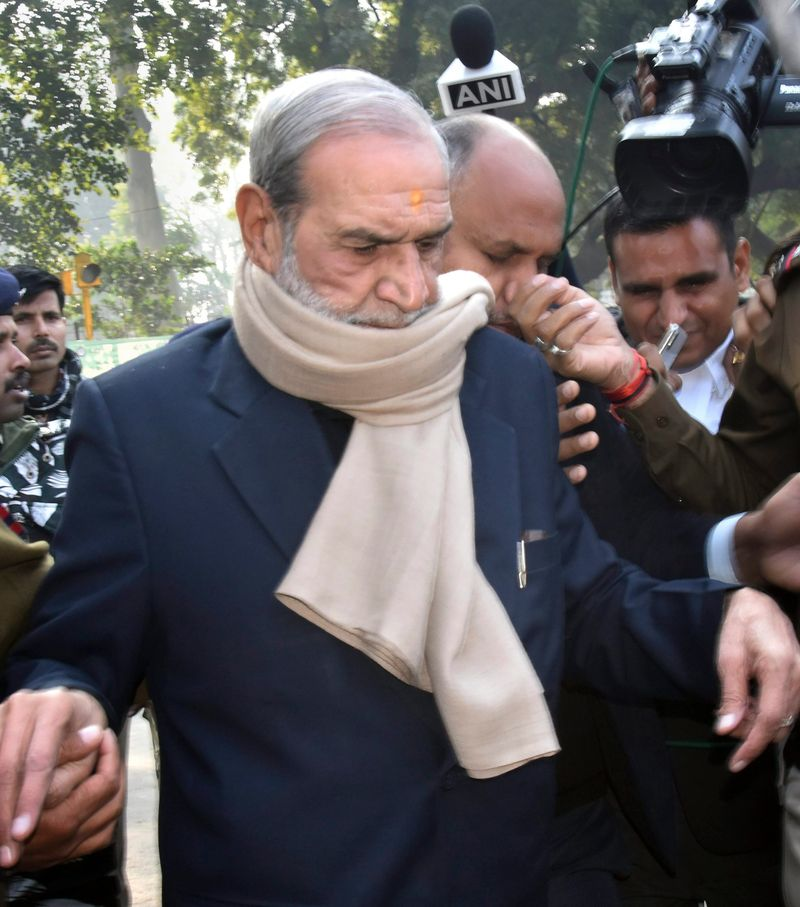
After a special court awarded life imprisonment to former Congress MP Sajjan Kumar in connection with the murder of a father-son duo in the 1984 anti-Sikh riots, victims settled here said justice was delivered extremely late.

The SGPC welcomed the punishment awarded to Delhi Sikh massacre accused Sajjan Kumar. With this decision, the families of the victims, which had been waiting for justice for four decades, would get some relief, said Kulwant Singh Manan, chief secretary of the SGPC. It was expected that the convict would be hanged, but life imprisonment was awarded to him, which was very less compared to his crime. He said the SGPC would continue its legal battle for strict punishment to the accused.

He said thousands of Sikhs were murdered in 1984. The carnage was led by people like Sajjan Kumar and Jagdish Tytler, whom the Congress always protected.

Questioning the role of Congress leadership, Manan said there should be a high-level investigation into the role of those who tried to protect the massacre perpetrators.

Riot survivor Balbir Kaur (80) said the punishment was too little and too late. A resident of the housing board colony at Ranjit Avenue, she recalled that her family comprising her husband Surjit Singh and two children (Kuldeep Singh and Sharanjit Kaur) resided in the Jagatpuri area in 1984. Their house was attacked by a mob as they had given shelter to some Sikh families. “Our house was torched. My husband was brutally assaulted and he had to live the rest of his life as a handicapped person,” she said. Balbir Kaur now resides with her son in Ranjit Avenue, while her daughter Sharanjit is settled with her husband and three children at Varpal village.

Another riot survivor Surjit Singh (65) said Sajjan Kumar used to lead mobs during that period. They were expecting capital punishment for him, he added.

At the time of riots, he and his family resided in Etawah (UP). As a 24-year-old youth, he saw his shop being looted. A month later, he visited Delhi and Kanpur and observed the horrendous outcome of the pogrom. He welcomed the Modi government’s move to start punishing the accused after the constitution of 14 commissions to probe riots.


Pakistan Promises Peace Along LoC During Flag Meeting

Recently, India and Pakistan held a Brigade Commander-level flag meeting along the Line of Control (LoC) in Jammu and Kashmir’s Poonch district. The meeting was convened to address rising tensions following incidents of cross-border firing and an IED attack. During the meeting, both sides emphasized the importance of maintaining peace and agreed to uphold the ceasefire agreement signed in 2003, which was renewed in 2021.

Both India and Pakistan agreed to honour the ceasefire agreement in the larger interest of peace along the borders.

The Indian Army lodged a strong protest over recent instances of unprovoked cross-border firing and infiltration attempts by terrorists.

Pakistani officials assured the Indian side that they would take steps to ensure peace and prevent such incidents in the future.

The meeting took place in a congenial atmosphere and lasted about 75 minutes.

This meeting is significant as it follows a period of relative peace along the LoC since the renewal of the ceasefire agreement in February 2021. However, recent incidents have raised concerns, prompting both sides to reaffirm their commitment to maintaining peace in the region.


Army, IAF hold ‘deep strike’ exercise to enhance operational readiness

With an aim to enhance joint operational readiness, the Army and Indian Air Force (IAF) conducted a ‘deep strike’ capabilities exercise in Jammu region. During the exercise, IAF helicopters airlifted troops from a location in Jammu and deployed them in..

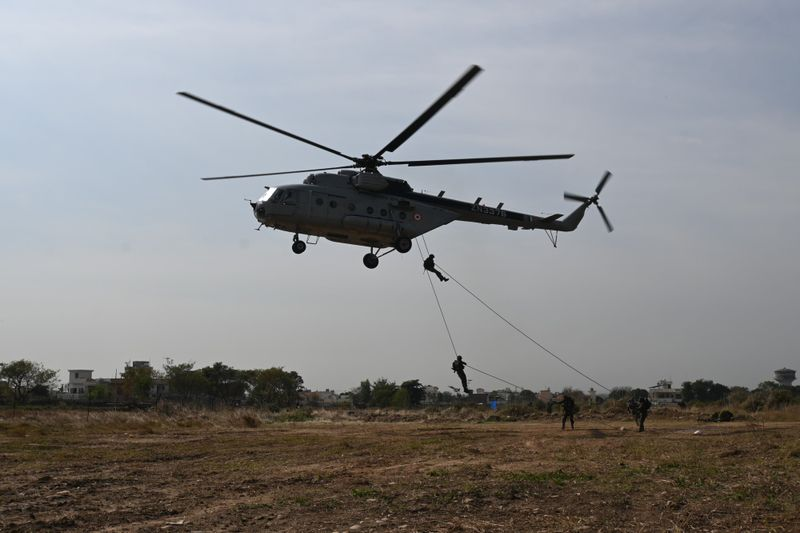
With an aim to enhance joint operational readiness, the Army and Indian Air Force (IAF) conducted a ‘deep strike’ capabilities exercise in Jammu region.

During the exercise, IAF helicopters airlifted troops from a location in Jammu and deployed them in areas with dense vegetation and thick undergrowth—terrain where several past encounters between soldiers and terrorists have taken place.

An Army official stated, “In a significant step towards enhancing joint operational readiness, the Army and the Indian Air Force conducted an integrated training exercise under the aegis of Tiger Division, Jammu. The training aimed to foster seamless coordination between ground troops and aerial assets, a critical factor in modern warfare. The exercise provided a platform to refine swift troop deployment behind enemy lines, aerial manoeuvers, and precision target engagement, ensuring preparedness for real-time operational challenges.”

The specialised training involved IAF helicopters executing the airlift of troops from a mounting base, successfully inserting them into a designated area. “Following their insertion, the troops carried out a well-coordinated assault in a simulated combat scenario. This high-tempo exercise showcased the synergy between the two forces and underscored the strategic importance of air mobility in modern combat operations,” the official added.

He further stated that such integrated training reinforces joint operational capabilities and fosters a deeper understanding of each service’s operational dynamics. “The exercise not only strengthened coordination between the Army and Air Force but also enhanced the tactical proficiency of troops in executing complex missions.”

Another official highlighted, “The Tiger Division and the Indian Air Force demonstrated seamless coordination in a heliborne exercise aimed at enhancing deep-strike capabilities.” The exercise, which also involved surveillance operations and firepower tactics, continued over several days.

In recent weeks, Jammu division has witnessed multiple incidents along the LoC, including an IED explosion triggered by Pakistan-trained terrorists, which claimed the lives of two soldiers.


BSF mobilises more troops along Pakistan border in Punjab, Jammu BSF; sets up 9 ‘tactical’ HQs

The BSF has ordered additional manpower as part of its measures to strengthen the anti-infiltration grid and check the intrusion of drones carrying ammunition or drugs

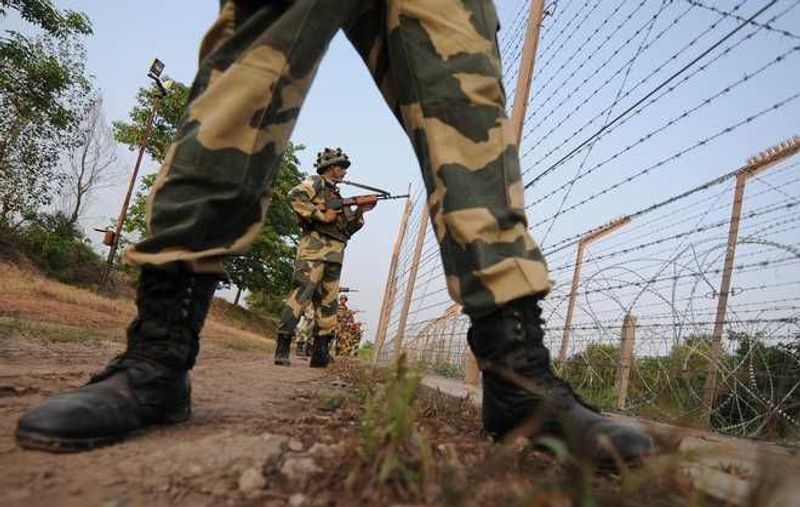
The BSF has ordered mobilisation of additional manpower at posts along the India-Pakistan border in Punjab and Jammu as part of its measures to strengthen the anti-infiltration grid and check the intrusion of drones carrying ammunition or drugs, official sources said Monday.

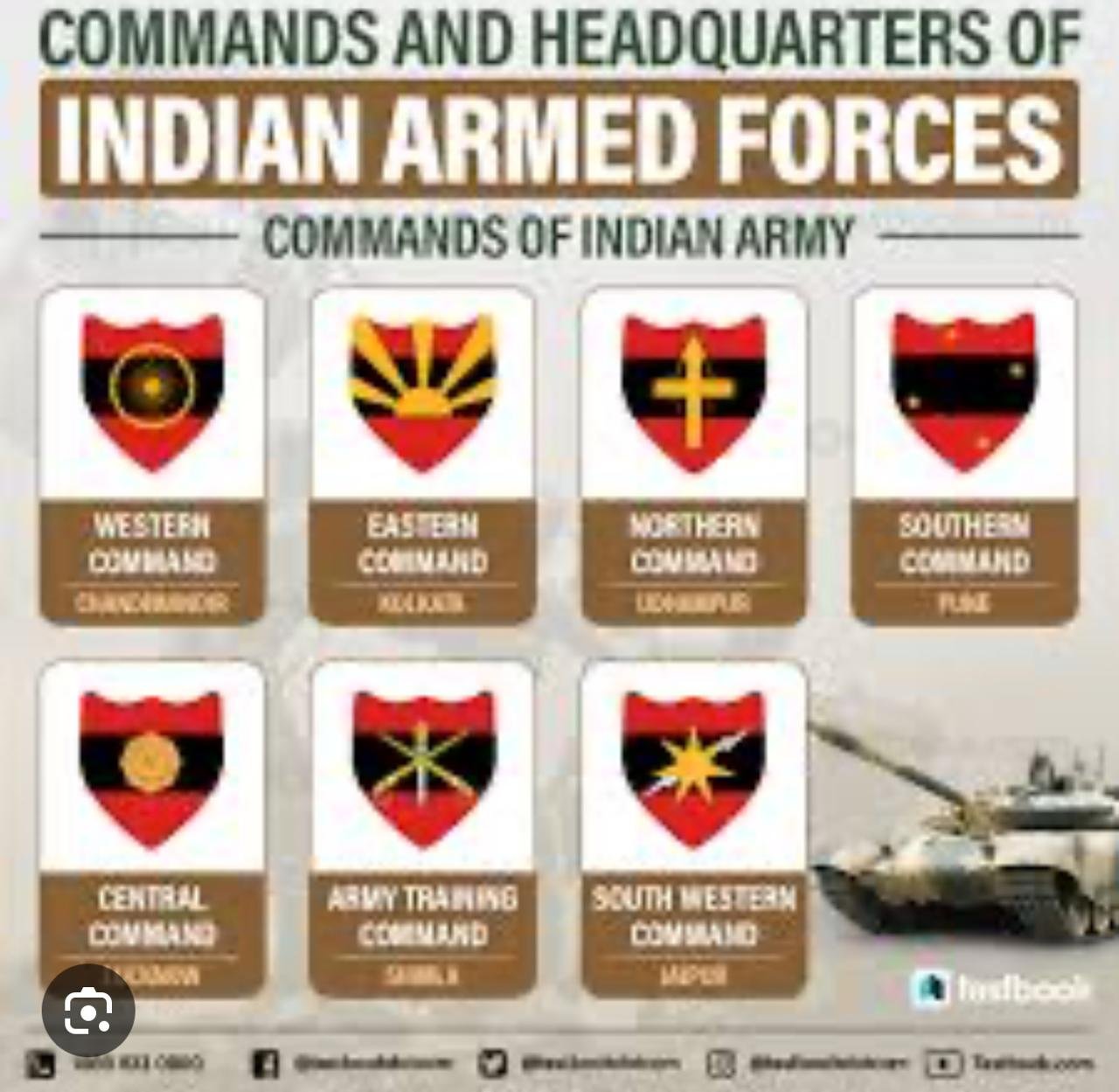
The sources said that the Western Command of the Border Security Force headquartered in Chandigarh has also directed for setting up of nine “tactical” headquarters along the front in these two regions with the maximum intelligence and operations paraphernalia being “shifted” here under the monitoring of a newly created control room.

A tactical or ‘tac headquarter’ is a forward base which is closer to the border, just near the border post, and ahead of the battalion base in the rear.

The ‘tac headquarter’, as per the sources, will also have the presence of one senior commander from all verticals including the commanding officer (CO) of the battalion whose unit is deployed at these vulnerable border posts, the sources said.

Directions have also been issued to mobilise “maximum” manpower of the force to border guarding units all across these two regions after shifting them from the battalion headquarters, they said.

Sources in the security establishment said the measure had been taken late last week keeping in mind the “vulnerability and the constant threat” to these border areas from the point of view of cross-border infiltration and drone flights emanating from Pakistan.

“The directions mandate these steps to be taken immediately,” a senior officer based in Punjab said.

However, officials said that asking the commanding officers to be present at their respective tac headquarters “all the time” will lead to command and administration issues.

The CO of a battalion is responsible for multiple companies and units that are deployed wide across and such an officer has to be moving across their different units rather than stationed at one place 24X7, BSF field officials said.

The BSF is tasked to guard the 2,289 km-long India-Pakistan International Border that runs across Jammu and Kashmir in the north to Punjab, Rajasthan and Gujarat along the western flank of the country. The Punjab frontier of the force guards 553 km of this boundary while the Jammu frontier is responsible for guarding 191.66 km of the IB part from 40.07 km of the Line of Control (LoC).

In Punjab, the BSF recovered a total of 294 drones and seized about 283 kg of heroin last year. Most of these unmanned flying devices were made in China. In 2023, the drone seizure at this front was 107.

The force also killed four Pakistani intruders, and nabbed 161 Indian smugglers along with 30 Pakistani nationals from the Punjab border last year.


Defence Sector Advancing Self-Reliance Via Innovation, Sustainability

The Indian defence sector is advancing self-reliance through a combination of innovation and sustainability initiatives.

India’s aerospace sector is experiencing significant growth, driven by its focus on indigenous development and manufacturing of military aircraft and helicopters. This includes advancements in fighter jets, transport aircraft, and rotorcraft, which support both defence and civil operations.

India has made notable progress in producing indigenous fighter aircraft. The HF-24 Marut was the first indigenous supersonic jet fighter, developed in collaboration with German engineers. More recently, the TEJAS (Light Combat Aircraft) program has been successful, with over 300 units ordered by the Indian Air Force (IAF).

The Advanced Medium Combat Aircraft (AMCA) is a fifth-generation stealth fighter currently under development. It aims to provide the IAF with advanced stealth capabilities and is part of India’s pursuit of self-reliance in defence manufacturing.
Hindustan Aeronautics Limited (HAL) has been involved in the production of various helicopters, contributing significantly to India’s rotorcraft capabilities.

India has also gained experience through the licensed production of foreign aircraft like the MiG-21, Su-30MKI, and Jaguar, enhancing its manufacturing capabilities.

Innovation For Self-Reliance

Indigenous Manufacturing: India aims to increase domestic production of defence equipment, with a focus on manufacturing major platforms like aircraft, submarines, and tanks. For instance, the Tata Aircraft Complex in Gujarat will produce C-295 transport aircraft for the Indian Air Force, with plans to manufacture 40 out of 56 aircraft domestically by 2031.

India has been focusing on domestic manufacturing through initiatives like Make in India and Atmanirbhar Bharat. This includes developing indigenous defence technologies such as missiles (Agni, BrahMos), aircraft (Tejas, AMCA), and tanks (Arjun).


Policy Reforms: The government has introduced policies like the Atmanirbhar Bharat initiative and Make in India, which encourage domestic manufacturing and reduce reliance on imports. The Defence Acquisition Procedure 2020 and increased FDI limits are also designed to enhance private sector participation.

Strategic Partnerships: India is fostering partnerships with countries like the U.S., Russia, France, and Israel to facilitate technology transfer and co-development of defence systems.

Increased Budget Allocation: The defence budget for 2025-26 has been increased by 9.5% to ₹6,81,210 Crores, with a significant focus on capital expenditure for indigenous production.

Innovations for Defence Excellence (iDEX): Launched in 2018, iDEX fosters innovation by engaging industries, start-ups, and academia. It provides grants to develop technologies that can be adopted by the Indian defence sector.

Defence Research And Development Organisation (DRDO): DRDO plays a crucial role in developing indigenous defence technologies, including key projects like missiles and aircraft.

Public-Private Partnerships: The Strategic Partnership Model allows private companies to collaborate with foreign firms to build major defence platforms, enhancing domestic production capabilities.

Strategic Focus

Space-Based Reconnaissance: India is expanding its space-based reconnaissance capabilities to enhance strategic surveillance and intelligence gathering.

Satellite Communication: The development of advanced satellite communication systems supports both military and civil operations, ensuring reliable and secure communication networks.

Anti-Satellite Capabilities: India has demonstrated its anti-satellite missile capabilities, marking a significant milestone in its space defence program. This capability is crucial for maintaining strategic superiority in modern warfare.

Sustainability In Defence

Green Defence Budget: There is an increasing emphasis on integrating sustainability into defence production. This involves using renewable energy sources, reducing waste, and adopting environmentally friendly materials to minimize the carbon footprint of defence manufacturing.

Energy Efficiency And Renewable Energy: Defence facilities are encouraged to use solar and wind power to reduce dependence on fossil fuels, thereby lowering emissions.

Circular Economy Practices: Implementing recycling, repair, and reuse of equipment can help reduce waste and enhance resource utilization in the defence sector.

Sustainable Supply Chains: Encouraging suppliers to adopt green practices and integrating sustainability criteria into procurement processes can further enhance environmental stewardship in defence operations.

Future Directions

Boosting investments in research and development will be crucial for advancing next-generation technologies like AI, Quantum computing, and Hypersonic weapons.

The Ministry of Defence has designated 2025 as the ‘Year of Reforms’, indicating significant policy changes to support self-reliance and innovation.

Strengthening defence diplomacy through exports and strategic alliances will help position India as a key player in the global defence market.