Sanjha Morcha

Armed Forces Flag Day: Saluting our bravehearts

December 7

article_Author
Sanjay Khurana

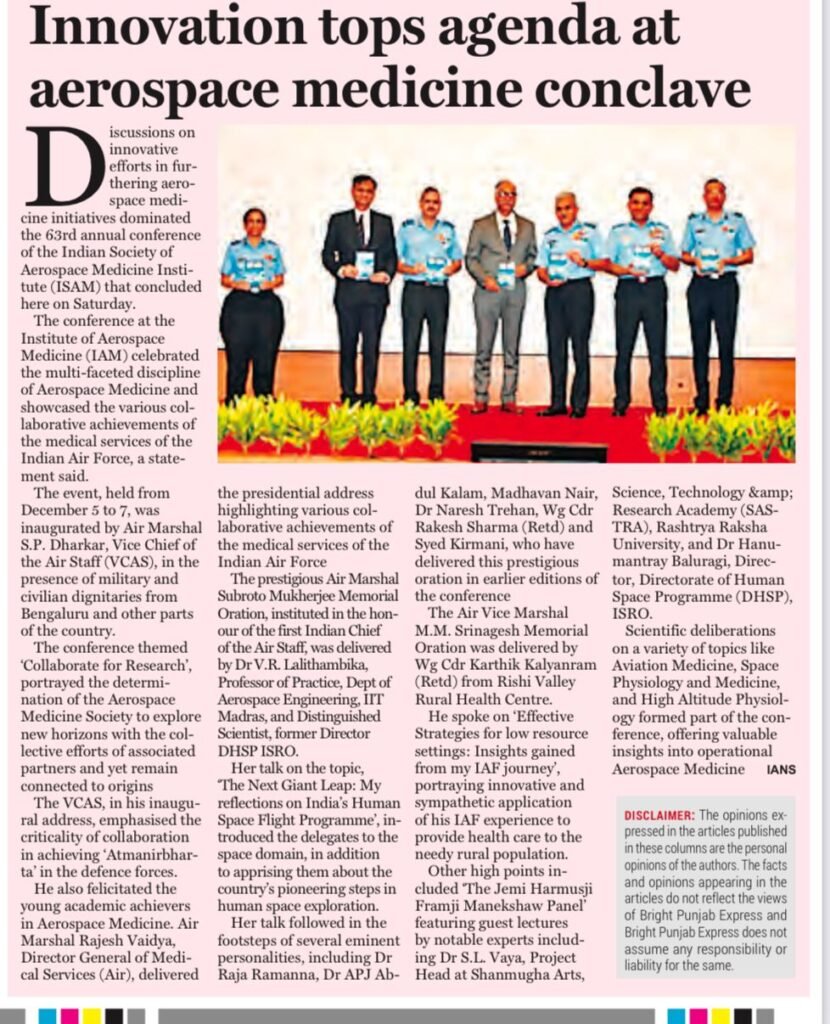
The Armed Forces Flag Day, observed annually on December 7, is a significant occasion in India to honour the valiant soldiers, airmen and sailors of the Indian armed forces. Since its inception in 1949, this day has served as a solemn reminder of the sacrifices made by these brave men who defend the nation’s sovereignty and integrity. The day also underscores the collective responsibility of citizens to support the welfare of armed forces personnel, ex-servicemen and their families.

The idea of the Flag Day was first proposed by the government to generate funds for the welfare of the armed forces. December 7 was designated as the day for this purpose, symbolising the unity and solidarity of the nation with its defenders. On this day, small flags and car stickers are distributed in exchange for voluntary donations. The funds are utilised to support various initiatives, such as providing rehabilitation to disabled soldiers, welfare for war widows and education for children of martyrs.

The armed forces have a long-standing tradition of valour and dedication. From protecting the borders against external aggression to assisting in disaster relief operations, their contributions extend beyond conventional military roles. The Flag Day is a heartfelt tribute to these warriors who often operate under extreme conditions, far from their families, to ensure the security of millions of Indians.

The day also serves as an opportunity for citizens to express gratitude and contribute to the welfare of those who have served the nation. It fosters a sense of patriotism and reminds people of the values of courage, discipline and selflessness exemplified by the forces.

Various activities mark the day across the country. Schools, colleges and government institutions organise events to highlight the significance of the day and educate people about the armed forces’ role. Fundraising campaigns are conducted and citizens are encouraged to make generous contributions. The distribution of flags by volunteers, including members of the armed forces, is a prominent feature of the observance.

In recent years, the scope of Flag Day has expanded with the advent of digital platforms. Online donation campaigns and social media drives have made it easier for people to contribute and spread awareness. The Kendriya Sainik Board, the apex body responsible for the welfare of ex-servicemen, plays a pivotal role in coordinating these efforts.

The Flag Day provides an excellent opportunity for individuals to extend their support to the armed forces community. Donations can be made through official channels and participation in events organised on this day can help raise awareness. Beyond financial contributions, citizens can also engage in volunteering and advocacy to ensure the welfare of armed forces personnel and their families.

The day is more than a ceremonial observance; it is a call to action for every Indian to recognise and honour the sacrifices made by the nation’s armed forces. As citizens, it is our duty to stand in solidarity with those who dedicate their lives to protecting ours. By contributing to their welfare, we not only pay homage to their service but also strengthen the bond of trust and respect between the forces and the nation.


Empower military with strategic heft

A significant development that has gone unnoticed and uncommented upon is the involvement of military commanders in trying to ostensibly resolve the 54-month-old standoff at the Line of Actual Control (LAC) that forms the de facto border between India and…

article_Author
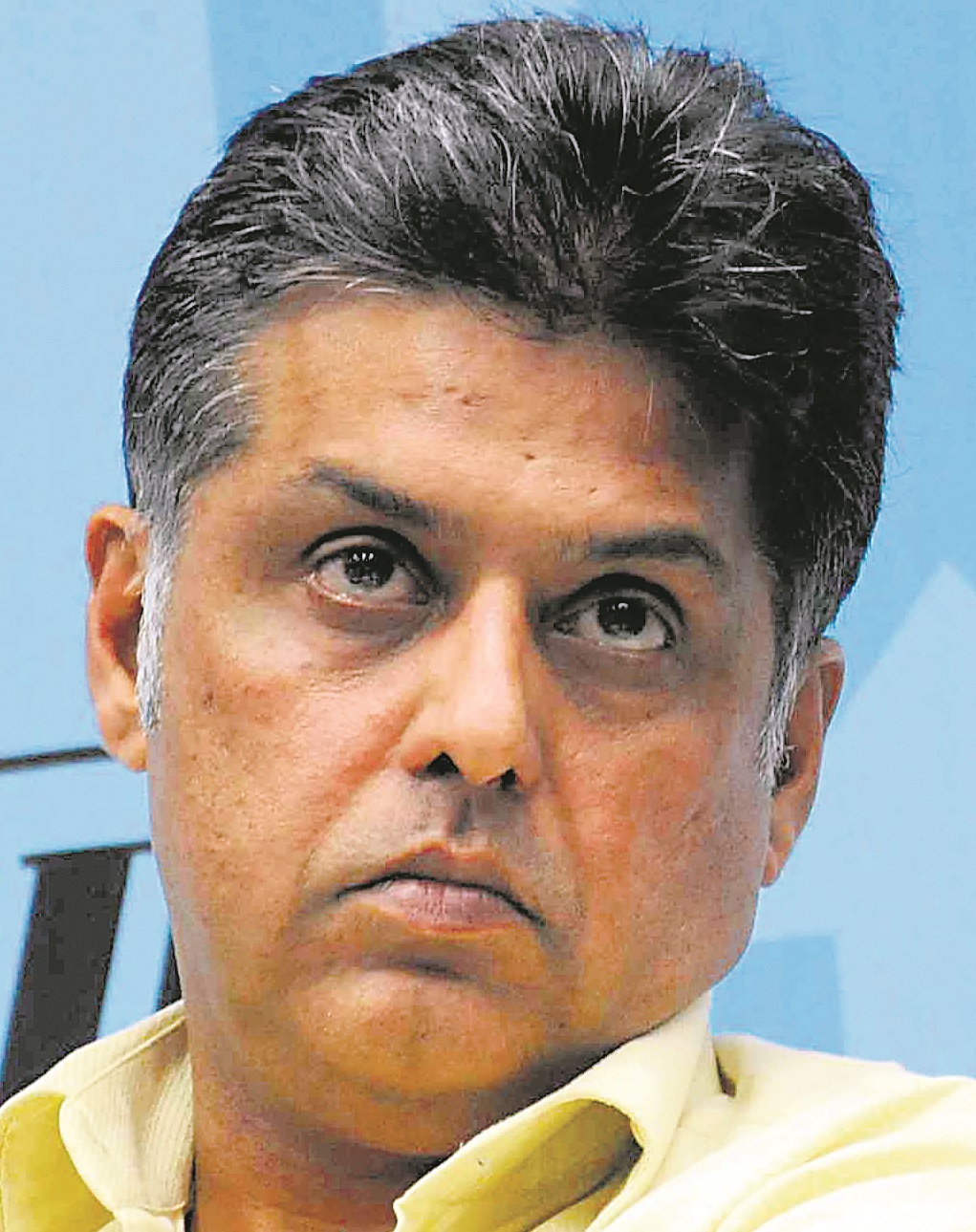
Manish Tewari

A significant development that has gone unnoticed and uncommented upon is the involvement of military commanders in trying to ostensibly resolve the 54-month-old standoff at the Line of Actual Control (LAC) that forms the de facto border between India and China.

Beginning June 6, 2020, Indian and Chinese military commanders held talks in the Chushul-Moldo region following the violent confrontation on May 5, 2020, between Indian and Chinese troops in Pangong Tso.

The second round of talks between Lt Gen Harinder Singh and Maj Gen Liu Lin, Commander of the South Xinjiang Military District, were held on June 22, 2020, in the wake of the unfortunate Galwan conflagration. Since then, 19 more rounds of talks have been held till February 19, 2024. The 22nd round has still not been scheduled.

This was perhaps after a long time that the military was so overtly involved as a concurrent track in efforts to resolve the question of Chinese transgressions into Indian territory or our perception of the LAC. Of course, there have been flag meetings on India’s borders with the frontier forces or militaries of the neighbouring countries. Over the past 54 months, the Ministry of External Affairs has been issuing readouts on a regular basis after each round of talks.

Is this a good or a bad thing? If one looks towards the past for guidance or even at the practice that is followed in other countries, one would find that the military has been intrinsically embedded in politico-military strategic diplomacy.

The military representatives of India and Pakistan met in Karachi from July 18 to 27, 1949, under the auspices of the truce sub-committee of the United Nations Commission for the establishment of the ceasefire line in Jammu and Kashmir.

The Indian delegation consisted of Lt Gen SM Shrinagesh, Maj Gen KS Thimayya and Brig SHFJ Manekshaw, while the Pakistani side was represented by Maj Gen WJ Cawthorn, Maj Gen Nazir Ahmad and Brig M Sher Khan. Bureaucrats and Foreign Office functionaries were only observers. HM Patel and V Sahay C from the Indian side and M Ayub and AA Khan from Pakistan made up the quorum of the civilian component.

On December 11, 1972, senior military commanders of India and Pakistan met at Suchetgarh to sign and exchange maps delineating the 800-km Line of Control in J&K, extending from the Chhamb sector to the Partapur sector, in accordance with Paragraph 4 (II) of the Simla Agreement dated July 2, 1972. This agreement was a sequel to the understanding reached between the Army Chiefs of India and Pakistan at their second meeting in Lahore on December 7, 1972, where Pakistan conceded to India’s claim that Thako Chak formed a part of the International Border and that it should withdraw its troops from there. The maps were exchanged between Lt Gen PS Bhagat on behalf of India and Lt Gen Abdul Hamid Khan representing Pakistan.

It is noteworthy that there was a summit-level meeting between Prime Ministers Indira Gandhi and Zulfikar Ali Bhutto, followed by a meeting between then Chief of the Army Staff Gen Manekshaw and his Pakistani counterpart Gen Tikka Khan before the operational-level exchange of maps between Lt Generals Bhagat and Hamid Khan.

After that, the role of the military in the politico-strategic-diplomatic arena was either recessed or took a back seat till the time it briefly seemed to have emerged in May 2006 to ostensibly oppose the demilitarisation of Siachen.

India’s former Foreign Secretary Shyam Saran records in his book, How India Sees the World: Kautilya to the 21st Century: “When the CCS meeting was held on the eve of the defence secretary–level talks, [Mr] Narayanan launched into a bitter offensive against the proposal, saying that Pakistan could not be trusted, that there would be political and public opposition to any such initiative and that India’s military position in the northern sector vis-à-vis both Pakistan and China would be compromised. [Gen] JJ Singh, who had happily gone along with the proposal in its earlier iterations, now decided to join Narayanan in rubbishing it.”

The reference is to then Army Chief Gen JJ Singh, who ostensibly along with former National Security Adviser MK Narayanan had opposed the proposal to turn the Siachen glacier into a mountain of peace in the most productive years of the India-Pakistan relationship after the ceasefire agreed upon by then Prime Minister Vajpayee on November 26, 2003, in the aftermath of Operation Parakram that ended on October 16, 2002.

Unlike in India, the military is embedded in the politico-military hierarchy of democracies around the world. Though under very strict civilian control, the six US theatre commanders report directly to the American President through the Secretary of Defence. Though the Chairman of the Joint Chief of Staff in the US is the Principal Military Adviser to the President, he has no executive authority to command combatant units. This enmeshes various streams of the military into the political decision-making process on critical questions of national security.

In China, the theatre commanders report directly to the Central Military Commission that is headed by the Chinese President and the General Secretary of the Chinese Communist Party, thus institutionalising their role in the strategic decision-making process. Similarly, in the Russian system, the Chief of the General Staff does not exercise direct operational control over Russian forces; the superintendence is vested in the President in terms of Articles 4 and 13 of the Federal Law on Defence.

It is, therefore, imperative that beyond the CCS (Cabinet Committee on Security) paradigm, the role of the military in the national security decision-making framework is also formalised, given that India has a Chief of Defence Staff and is moving towards theatre commands, though the only functional and integrated theatre command as yet is the Andaman and Nicobar Command.


Rajnath Singh To Commission Navy’s New Frigate ‘INS Tushil’ In Russia Today

Rajnath Singh will commission the warship, an upgraded Krivak III Class frigate under Project 1135.6., at the Yantra Shipyard in Kaliningrad.

Moscow: 

Defence Minister Rajnath Singh will commission the Navy’s latest, multi-role, stealth-guided missile frigate, ‘INS Tushil’ at Russia’s Kaliningrad on Monday.

Rajnath Singh, along with Indian Navy Chief Admiral Dinesh K. Tripathi, and other top Defence and civilian officials from India and Russia, will commission the warship, an upgraded Krivak III Class frigate under Project 1135.6., at the Yantra Shipyard in Kaliningrad.

As per a Defence Ministry statement, the Defence Minister is paying an official visit to Russia from December 8-10, during which he and his Russian counterpart Andrey Belousov will co-chair the 21st meeting of India-Russia Inter-Governmental Commission on Military and Military Technical Cooperation (IRIGC-M&MTC) in Moscow on December 10.

The two leaders will review the entire range of multi-faceted relations between the two countries in the field of Defence, including military-to-military and industrial cooperation. They will also exchange views on contemporary regional and global issues of mutual interest.

In addition, the Indian Minister will pay tributes at ‘The Tomb of the Unknown Soldier’ in Moscow to honour the Soviet soldiers killed during the Second World War. He will also interact with the members of the Indian community.

Six warships in the Krivak class are already in service, comprising 3 Talwar Class ships built at Baltiysky shipyard in St. Petersburg, and three of Teg Class constructed at the Yantar shipyard in Kaliningrad.

‘INS Tushil’ will be the seventh in the series and the first of the two upgraded additional follow-on ships for which the Indian government and the Navy had signed a contract with JSC Rosoboronexport, in October 2016.

The vessel’s construction was closely monitored by experts of India’s Warship Overseeing Team stationed in Kaliningrad.

The 125-metre long ship weighing 3,900 tonnes, packs a lethal punch, making it an impressive blend of Russian and Indian cutting-edge technologies besides the best practices in warship construction, officials said.

Also Read

From January 2024, post-construction and readiness, the ship underwent a series of extensive trials including factory sea trials, state committee trials, and finally, delivery acceptance trials by an Indian specialised team.

During trials, the ship clocked an impressive speed of more than 30 knots (55 kmph), and now it will reach India in a near-combat-ready condition, ready to deliver its effects instantly whenever needed.

As per a Navy official, the name ‘Tushil’ means a ‘protector shield’ and its crest represents the ‘Abhedya Kavacham’ (Impenetrable Shield).

Along with its motto, ‘Nirbhay, Abhedya aur Balsheel’ (Fearless, Indomitable, Resolute), the ship stands as a symbol of the Indian Navy’s undying commitment to safeguarding the nation’s maritime frontiers.

With the collaboration of Indian naval specialists and Severnoye Design Bureau, the indigenous content of the ship has been enhanced to an impressive 26 per cent and the number of ‘Made-in-India’ systems has more than doubled to 33.

The major Indian original equipment manufacturers involved were BrahMos Aerospace Pvt Ltd, Bharat Electronics Ltd, Keltron, Nova Integrated Systems from Tata, Elcome Marine, Johnson Controls India and many others.

Upon commissioning, INS Tushil will join the ‘Sword Arm’ of the Indian Navy, the Western Fleet, under the Western Naval Command.

Post a comment(Except for the headline, this story has not been edited by NDTV staff and is published from a syndicated feed.)


Army does not stop civilian movement on Srinagar NH: Defence Ministry in LS

The Army does not harass or stop any civilian movement on the Srinagar- Jammu National Highway and the ambulances “are always accorded priority” for movement and they are not stopped anywhere by security forces, the Defence Ministry said on Friday….

The Army does not harass or stop any civilian movement on the Srinagar- Jammu National Highway and the ambulances “are always accorded priority” for movement and they are not stopped anywhere by security forces, the Defence Ministry said on Friday.

It was responding to the questions asked by Srinagar Lok Sabha MP Aga Syed Ruhullah Mehdi about stopping of normal traffic during the movement of Army or paramilitary on the highway.

Mehdi had asked whether it was a fact “that the traffic on the highway is stopped multiple times at multiple places at every few kilometres for the Army or paramilitary movement on the Srinagar-Jammu national highway.”

He has also sought answers if not only normal traffic but also the ambulances are also stopped by the security forces and “steps taken/proposed to be taken by the government to stop this humiliating practice which also violates human rights.”

The Ministry, in its written response in Lok Sabha on Friday said “as part of drill,” regular movement of convoys takes place between Jammu and Srinagar for various operational as well as administrative reasons.

“The Indian Army follows detailed procedures for the movement of convoys with due emphasis on friendly move of the populace,” the Ministry said.

It also said owing to security reasons and to thwart incidents “like attack/ambush of a convoy in the past, road opening parties are sent out prior to the movement of any security forces convoy.”

“Traffic is regulated, temporarily, particularly at points where laterals meet the NH-44 and at U-Turns, during the movement of the Army/CAPF convoys,” the Ministry said.

Stating that “Indian Army does not harass or stop any civil movement on the national highway,” the ministry response further said, the “charter of civilian traffic regulation is of the state authorities/Jammu and Kashmir Police.”

After the Pulwama suicide bombing in 2019, locals in south Kashmir have been claiming that security forces stop the vehicles moving on the national highway whenever a convoy passes through the highway.

After the response by the Ministry in the Parliament, Srinagar MP said the response was “full of blatant lies.”

“I asked GoI to stop the harassment of people and blockading of traffic including ambulances on Srinagar-Jammu national highway during security forces convoy movement. This is their response. Full of blatant lies,” he wrote on X late Friday night.


Gen Bipin Rawat, a leader who redefined India’s defence strategy

March 16, 1958 – December 8, 2021

article_Author
Sanjay Khurana

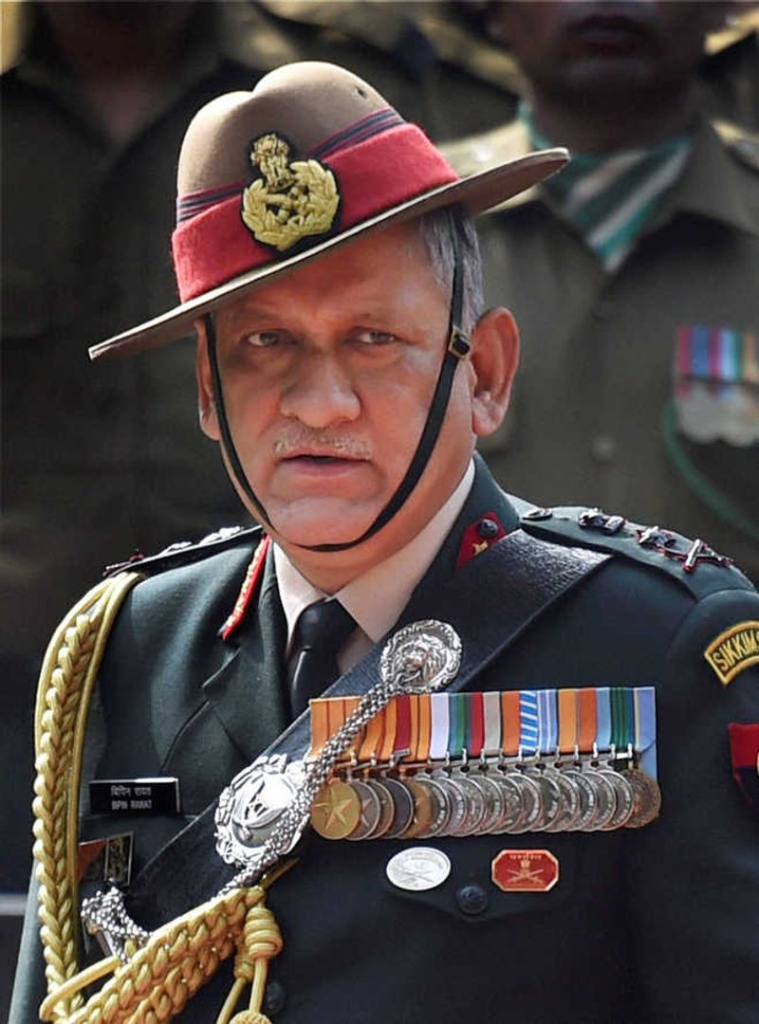
General Bipin Rawat, the first Chief of Defence Staff (CDS) of India, was an exemplary military leader who played a pivotal role in modernising the armed forces. Born on March 16, 1958, in Pauri, Uttarakhand, General Rawat hailed from a family with a long-standing tradition of military service. His father, Lt Gen Laxman Singh Rawat, served in the Army, inspiring him to pursue a career in the armed forces.

General Rawat was an alumnus of the prestigious National Defence Academy (NDA) and the Indian Military Academy (IMA), Dehradun, where he was awarded the ‘Sword of Honour.’ He was commissioned into the 5th Battalion of the 11 Gorkha Rifles in December 1978, the same regiment his father had served. His early years in the Army were marked by dedication and an unwavering commitment to duty.

Over his illustrious career spanning over four decades, General Rawat held a variety of key command, staff and instructional appointments. He was known for his extensive experience in high-altitude warfare and counter-insurgency operations, having served in critical areas such as the Line of Control (LoC), China border regions, and the insurgency-hit Northeast.

In December 2016, General Rawat was appointed the 27th Chief of the Army Staff. During his tenure, he focused on restructuring the Army to meet modern security challenges and advocated for indigenisation in defence manufacturing. Under his leadership, the Army successfully conducted operations like ‘Operation All Out’ in Jammu and Kashmir, aimed at neutralising terrorist threats.

One of his most significant contributions came in January 2020, when he assumed the newly created role of Chief of Defence Staff. As the first CDS, General Rawat was tasked with integrating the operations of the Army, Navy and Air Force to ensure better coordination and efficiency. He spearheaded initiatives to establish joint commands and streamline defence procurement processes, emphasising a self-reliant defence ecosystem under the ‘Aatmanirbhar Bharat’ mission.

General Rawat was a strong advocate for military modernisation and reform. He played a key role in promoting the idea of theatre commands, aiming to enhance operational readiness and synergy among the armed forces. His strategic insights and bold leadership were widely respected both within India and globally.

Tragically, General Rawat’s illustrious career was cut short on December 8, 2021, when he, his wife Madhulika Rawat and 12 other personnel lost their lives in a helicopter crash in Tamil Nadu. His untimely demise was a profound loss to the nation, leaving behind a legacy of visionary leadership and transformative contributions to India’s defence sector.

General Bipin Rawat’s life was a testament to his unwavering dedication to the nation. His contributions to India’s military strategy and defence reforms have left an indelible mark, inspiring future generations of military leaders. He is remembered as a soldier’s soldier, a statesman and a patriot who always prioritised the nation’s security and sovereignty above all else.


Fauji stories, of all hues

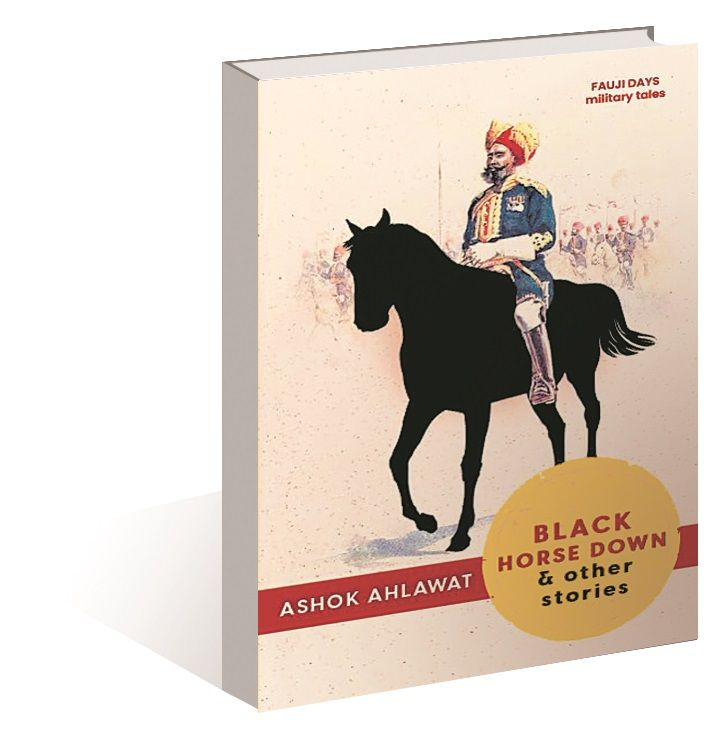
Ashok Ahlawat is a loquacious ex-NDA veteran of self-confessedly middling military achievement, who deliberately, if not brazenly, flaunts his knowledge of classics in English literature, starting with Latin quotes and moving on to poet laureates, etc. Early on, he explains…

The setting of the tales is diverse. The NDA is a favourite, so is the Cavalry, the Sappers, the Gunners… Though mainly honourable, some references aren’t complementary. But, were they avoidable? Readers will judge for themselves.

There is a reference to an Army commander, a hero in Ashok’s estimate, an officer earlier highlighted in social media for physical prowess. He writes of how the officer goes around declaring he is undergoing a heart attack, but no one listens, including cardiac specialists. And when they do, the attack is confirmed. One wonders if cardiac caregivers would accept this sorry attempt at assuming macho status even in distress.

Such tilting at windmills is balanced by stunning tales of bravery and amazing skills focused on tank and Infantry combat at Chhamb, with barely concealed names of the complex arabesque of bravery when we lost Chhamb to Pakistan. The tales indicate a myriad of emotions whose net gains and losses define bravery, guts, gunnery skill, awards, also their absence because all of them “retreated”…

Bravado is afoot in Burma by a Jat. Hony Capt Umrao Singh was awarded the Victoria Cross for bravery against the Japanese in World War-II. Ashok becomes a Gunner Captain to tell his tale, changing his identity like a chameleon again, and yet again. In the books, Ashok treats women variously. He displays economy of praise for officer wives. Women in general are, however, seen with awe, admired for couture, beauty and appeal. His handling of widows, mothers and daughters is where he is on a song.

Readers stand informed of the highs and lows, and the spoofs and pirouettes of these books.

— The writer is based in Mohali


Celebrations in Syria as Assads’ 50-yr rule ends

Newly freed prisoners take to streets as rebels take charge, curfew imposed in capital | PM calls for free elections

Agencies

Syrian rebels declared they had ousted President Bashar al-Assad after seizing control of Damascus on Sunday, forcing him to flee and ending his family’s around 50 years of autocratic rule after more than 13 years of civil war.

The head of Syria’s biggest rebel faction, in his first appearance since Assad’s fall, called it “a victory to the Islamic nation”.

In a seismic moment for West Asia, the Islamist rebels also dealt a major blow to the influence of Russia and Iran in Syria in the heart of the region — allies who had propped up Assad during critical periods in the war but were distracted by other crises recently.

The rebels said they had entered the capital with no sign of army deployments. Thousands of people in cars and on foot congregated at a main square in Damascus waving and chanting “Freedom” from a half century of Assad family rule, witnesses said.

People were seen walking inside the Al-Rawda Presidential Palace, with some leaving carrying furniture from inside.

“We celebrate with the Syrian people the news of freeing our prisoners and releasing their chains,” a rebel leader said.

Leading rebel commander Abu Mohammed al-Golani said there was no room for turning back.

“The future is ours,” he said in a statement read on Syria’s state TV after his forces took over Damascus.

The pace of events stunned Arab capitals and raised concerns about a new wave of instability in a region already in turmoil following the Gaza war.

Newly freed prisoners ran through the Damascus streets holding up the fingers of both hands to show how many years they had been in prison, asking passers-by what had happened, not immediately understanding that Assad had fallen.

Prime Minister Mohammad Ghazi al-Jalali called for free elections in a country where Assad’s opponents faced barrel bombs. The rebels announced a curfew in Damascus from 4 pm to 5 am.

The end of Assad’s rule deals a major blow to Iran and its allies, already weakened by over a year of conflict with Israel.


Lieutenant Colonel Shamsher Singh, whose outstanding leadership and exploits in the 1947-48 war in Jammu and Kashmir

The year was 1954, 17 Sikh was located at Agra and commanded by Lieutenant Colonel Shamsher Singh, whose outstanding leadership and exploits in the 1947-48 war in Jammu and Kashmir were part of regimental lore. The unit was out on a training camp in a forest near Shivpuri, which was to culminate in a test exercise.

One day, Sepoy Fauja Singh, who was part of the officer’s mess staff, went to collect firewood for the mess kitchen. Suddenly, a tigress jumped out from a thicket and pounced on him. Instinctively, he tried to fight her off with his bare hands. After a brief struggle, the tigress caught Fauja Singh’s turban in her mouth and thinking that she had got the kill, disappeared back into the thicket. Fauja Singh was badly mauled and he was evacuated to the military hospital immediately, but more to the point, he was extremely upset about the loss of his turban.

More reports poured in about the tigress with four cubs, who had turned into a man-eater, it seemed. She had killed two persons from a village nearby. True to the Indian Army tradition, this didn’t stop the training, which continued as per plan, and the test exercise was cleared with honours.

At the end of the exercise Lt Col Shamsher Singh proposed to his Brigade Commander, Brigadier Danny Misra, that since the tigress had turned into a man-eater and the area was used by the brigade for training, it would be prudent to kill the tigress. Back in those days, shikar was allowed in the country and a hobby for some. In that spirit, Brig Danny Misra agreed to the proposal, but with a rider. “Shamsher,” he said. “Killing a tiger with rifles is too easy. Can the Sikhs do it with bayonets?” Never one to shy away from a challenge, Singh said, “So shall it be, Sir!”

The die was cast. Shamsher returned and briefed his unit. He pepped his soldiers up by telling them stories of how Hari Singh Nalwa, commander-in-chief of the Sikh Khalsa army, had once killed a tiger with his bare hands by catching hold of its tongue and choking it.

It was decided that the unit would assault the general area where the tigress was suspected to have hidden in traditional infantry manner. Once the tigress attacked an individual, he must use the bayonet to counter attack it while the personnel on his flanks would turn inwards to attack the tigress with bayonets and finish the task. This drill was rehearsed to perfection. Next morning, two companies of 17 Sikh formed an assault line 200 yards long, with the Commanding Officer’s party in the centre. Bayonets were fixed on the Enfield .303 rifles and the assault commenced.

It was a surreal scene: bayonets glinted in the morning sun with soldiers of 17 Sikh shouting “Jo bole so nihal!”, out to kill a man-eating tigress with only bayonets! On the far side of the suspected area, the Divisional Commander, General Dargalkar, and the Brig Danny Misra, sat on a machan with sporting rifles. Misra didn’t believe the tigress could be killed with bayonets. His plan was that the assault by 17 Sikh would drive the tigress towards the machan, where Gen Dargalkar and he would kill her.

The movement of the assault line was laborious due to the broken terrain but after 20 minutes, the den of the tigress was located. She had fled, but her three cubs were found, captured alive and later presented to the Agra zoo. Fauja Singh’s turban was also found in the den.

The assault line formed again and moved forward with regimental war cry. After 10 minutes, the roar of the tigress was heard. Singh shouted to his boys, “Tagde ho jao!” (“Gird up and get ready for action!”). And then, suddenly, the tigress leapt out of the thicket and attacked the assault line. Sepoy Sucha Singh was directly in front and he adopted the traditional bayonet fighting stance, meeting the tigress’ assault head on with his weapon. As she came at him, he plunged his bayonet into her chest. It got buried to the hilt, inside the tigress’ chest, but the momentum of her charge knocked Sucha Singh down. With the momentum, the tigress fell 10 yards forward. As per the rehearsed drill, the soldiers on the flanks turned inwards and pounced on the tigress, pinning her down with their bayonets. It wasn’t necessary. Sucha Singh’s bayonet had already pierced her heart.

It was then that the sound of a rifle shot was heard. Shamsher was livid with anger, thinking one of his men had disobeyed orders. He rushed to the scene and asked who had fired the shot. The soldiers assured him no shot had been fired and the report had come from the direction of the machan. Shamsher ordered the success signal be fired with the Very Light Pistol and 500 hundred voices joined him in the long jaikaraof “Jo bole so nihal!‘.

Then Shamsher rushed to Sucha Singh, who was badly mauled, but on inquiry about his wounds said, “Saab ji main tan theek haan, par woh sali sherni meri rifle lai gayee.” (“Sir, I am ok but the damn tigress has taken off with my rifle”). The loss of a weapon is a very serious lapse in the army! Sucha Singh was assured that the rifle has been recovered and that he was now nearly at par with the great Hari Singh Nalwa for having single-handedly killed a tigress. He was evacuated to the military hospital.

A telegram was despatched to Fauja Singh: “Revenge taken! Tigress killed! Turban recovered!” Sepoy Sucha Singh was immediately promoted to Lance Naik and on that day, 17 Sikh was rechristened the Tiger Battalion.

The bayonet of Sucha Singh had developed a 10-degree curve due to the force of the impact with the tigress. A most unusual occurrence, as bayonets are usually made of brittle metal designed to pierce and break when it hits a hard surface. Shamsher directed that Sucha Singh’s bayonet must be kept as a trophy. The Quarter Master in his enthusiasm to get Sucha Singh his replacement mistakenly sent the bayonet back to the ordnance depot for replacement. Fortunately, it was located and brought right back to the unit. The bayonet, along with the skin of the tigress and news paper coverage of the event, still adorn the officers’ mess of 17 Sikh — The Tiger Battalion.

While Sucha Singh was being taken to the military military hospital, Shamsher went to the machan to report the success of the mission to Misra and Dargalkar, who were still on the machan. To his amusement and the embarrassment of the VIPs, Shamsher learnt that in the excitement of the whole action, one of the rifles from the VIP machan had accidentally got fired. That was the rifle shot Shamsher had heard!

Later, Misra along with Shamsher went to meet Sucha Singh in the hospital. The brigadier asked Sucha Singh, “Kya aapne hi sherni ko mara tha?” (“Are you the one who killed the tigress?”) A peeved Sucha Singh replied, “Asli bayonet toh mainne hi mara tha, sir, par mari hui sherni par bad mein aur bhi maarte gaye. Aur mainne suna ki dar ke mare VIP machan se, kisi rifle nichhe gir kar fire ho gayee.” (“I’m the one who got her with the bayonet first, but others attacked the dead tigress too. And I heard that up in the VIPmachan, someone got so scared that he dropped his rifle by mistake and fired it.”)

Nine years later, Colonel Shamsher as the Centre Commandant of the Sikh Regimental Centre at Meerut Cantonment, was interviewing soldiers going on pension when he heard the familiar voice of Havaldar Sucha Singh. He reported that he was going on pension. Shamsher took a quick decision and directed the pension orders to be cancelled. Instead, Sucha Singh was promoted to the rank of Jemadar. There were objections from higher headquarters, but Shamsher had a simple reply: “Sucha Singh is probably the only man in history to have killed a tigress with a bayonet. He deserves to be a JCO!”

I was six years old, living in Agra Cantonment, when all this happened. I remember when the Commanding Officer’s jeep came back from the exercise, spread across the bonnet, was the tigress, and it seemed like all of Agra was lined up on Mall Road, to welcome the unit.

But the story with all its details and glory was told to me by someone who was there and had seen the whole thing: Colonel Shamsher Singh, my father.
(By Lt Gen HS Panag)



Military Literature the most potent weapon to attract youth towards defence services: Punjab Guv Kataria

Chandigarh, Nov 30, 2024 (Yes Punjab News)

Terming the medium of literature as the most potent weapon to inspire youngsters towards defence services, the Punjab Governor and UT Admisnstrator Gulab Chand Kataria on Saturday said that valour exhibited by sons and daughters of Punjab in different wars was a perennial source of motivation for the entire nation.

The Governor was speaking here after inaugurating the 8th edition of the Military Literature Festival (MLF) being organised at the Lake Sports Complex. The two-day event beginning today is being held here to offer youngsters a peep into the army life and to nurture future defence leaders.

“The festival not only celebrates India’s glorious military heritage but also underscores the role of military literature in enhancing knowledge and fostering patriotism among citizens, the Governor said.

Highlighting the increasing participation of women in the armed forces, the Governor said it marked a progressive step towards gender equality and inclusivity in our forces. The Governor commended the efforts of the Festival organisers to encourage and prepare young boys and girls to join the military, contributing significantly to national security and defense.

India’s strides toward self-reliance in defense under the vision of Aatma Nirbhar Bharat were another focal point of the Governor’s address. He proudly noted that India is not only manufacturing state-of-the-art weapons and military equipment but is also emerging as a key exporter of defense technology to other nations. This, he said, reflects India’s growing stature as a global power in military innovation.

The Governor recalled India’s historic achievement under the leadership of Dr. A.P.J. Abdul Kalam during the Pokhran nuclear tests. “Pokhran was a turning point that showcased to the world India’s capability and resolve. It was a moment of national pride that established our nation as a formidable nuclear power,” he remarked, urging the youth to draw inspiration from such milestones in India’s military history.

The festival’s theme, “Wars Under the Nuclear Umbrella,” aligns with discussions on contemporary global challenges and India’s preparedness for future conflicts. Various panel discussions are scheduled on topics like the war in Ukraine, regional instability, and advancements in defense technology.

In his address, the Governor reiterated the importance of military literature as a tool to inspire future generations. He urged the festival’s organizers to expand its reach to villages across the state, ensuring that stories of bravery, sacrifice, and patriotism resonate with every corner of Punjab. The Governor also proposed publishing an annual magazine to preserve and disseminate the event’s rich content to schools and colleges.

The Governor emphasized the need for retired military officers to engage with students, sharing their experiences to inspire them to join the armed forces. “Your life stories, struggles, and achievements can ignite a sense of duty and patriotism in the youth, shaping them as future defenders of our nation,” he said.

The event also features a grand military equipment exhibition organized by the Western Command, showcasing India’s defense capabilities. The Governor lauded the efforts of Lt. Gen. T.S. Shergill and Lt. Gen. Manoj Kumar Katiyar for organizing this world-class festival and urged all citizens to reflect on India’s journey toward self-reliance in defense and military excellence.

The 8th Military Literature Festival Chandigarh continues to be a platform for celebrating the nation’s rich martial legacy while fostering discussions on the challenges and opportunities in modern warfare and global security.

On this occasion, MP from Chandigarh Mr. Manish Tewari and Mayor Chandigarh Mr. Kuldeep Kumar were also present.


BSF Has Held 643 Meetings With Border Guard Bangladesh Since Unrest Began In Neighbouring Country

The Border Security Force (BSF) has conducted 643 meetings with the Border Guard Bangladesh (BGB) since the onset of political unrest in Bangladesh during the first week of November 2024.

This engagement aims to address security concerns and maintain stability along the Indo-Bangladesh border amid escalating tensions in the neighbouring country.

The Eastern Command of the BSF comprises six frontiers (South Bengal Frontier, North Bengal Frontier, Meghalaya Frontier, Tripura Frontier, Mizoram and Cachar Frontier, and the Assam Frontier) over five States (West Bengal, Assam, Tripura, Mizoram, and Meghalaya). West Bengal shares the longest 2,216-km border with Bangladesh.

The BSF has also deployed 104 companies on law and order duty in Manipur. “Nine Seema Prahris (border guards) sustained injuries, and two Seema Prahris attained martyrdom in the line of duty in Manipur. The BSF has recovered 83 weapons and 768 Rds (rounds) of ammunition of various calibres from the miscreants during operations in Manipur,” the press statement by the BSF’s Eastern Command said.

In response to the unrest, which has included significant protests and political changes, the BSF has heightened its vigilance and operational readiness. The force has also implemented a high alert status along the border, enhancing surveillance and intelligence operations to counter any potential threats arising from the situation in Bangladesh.