



Sanjha Morcha

Envisioning Post-Pandemic Ex-Servicemen Contributory Health Scheme (ECHS)

The Covid19 Pandemic has been ravaging the world with over three million dead globally. April 2021 has brought a calamitous second wave of the pandemic that is still raging (in May 2021), is now expanding to rural areas, Tier 2 and 3 towns and taking an immense toll. The efforts to combat the same are on a war footing.  At these times of gloom, one is reminded of Bishop Desmond Tutu saying “…the Hope is being able to see that there is light despite all of the darkness.”

In many ways, the Covid19 Pandemic is an eye-opener, as the medical community is learning the hard way on the intricacies of the fast mutating virus, and constantly evolving contours of treatment.  The Service Hospitals, the Armed Forces Medical Services (AFMS) and ECHS, despite being stretched to the maximum, have made all-out endeavours to provide succour and treatment to the Servicemen, Ex-servicemen (ESM) and the families. Inevitably the sudden, unexpected and massive onslaught of the pandemic left ECHS non-plussed and which led to critical deficiencies in ESM health care. It is necessary to learn from the past and present and extend an opinion for the ECHS, for the future.

The Past

Back in 2002, ESM availed medical facilities only for specific high-cost surgery/treatment for a limited number of diseases covered under the Army Group Insurance (Medical Branch Scheme). These medicare schemes provided some limited relief to the ESM. A comprehensive scheme named ECHS commenced from 01 Apr 2003. The rationale for ECHS was two-fold, to broad base and provide quality medicare to the ESM and to relieve the service hospitals which were unable to take the load of servicemen, ESM and dependents. Under this, ESM and their dependants who were only entitled for treatment in service hospital are now authorised treatment, not only in service hospitals, but also in those civil/private hospitals which are specifically empanelled. Conceptually, ECHS was to be managed through the existing infrastructure of the Armed Forces in order to minimise the administrative expenditure. The existing infrastructure includes command and control structure, spare capacity of Service Medical facilities (Hospitals and MI Rooms), procurement organisations for medical and non medical equipment, defence land and buildings etc. Simply stated, ECHS was to be dependent for primary treatment upon polyclinics (PCs) with laboratories and dispensaries, and for secondary and tertiary treatment upon Empanelled and Service Hospitals.  The management was based upon a duality of command with functionality under the COSC through AG/ DGDC&W in Army HQ and for policy directions and financial sanctions under the Department of ESM Welfare (DESW), MOD.

Skip forward to a decade, ECHS commenced facing severe financial crunch. The dependencies increased greatly, billings of empanelled hospitals went through the roof! It soon became apparent that in the absence of Third Party Administrator (TPA) system followed by health insurance companies, there was over-hospitalisation (in-patient treatment) even for out-patient (OPD) cases, excessive and repeated laboratory testing.    Invariably at the end of financial year (FY), there had to be allocations from the Army’s Revenue Budget to ECHS to have two ends meet, or there were carry-forwards payments that effected the next financial year’s allocations. It fell into a long drawn cycle of proverbial hand-to-mouth existence.  There were many other as serious hiccups like the ECHS Card, strictures of CAG audit report, inadequacy of medicines in the dispensaries and rejections of treatment by the empanelled hospitals on delay in clearance of dues.

The Present

By 2016, the ECHS clientele had grown to over 50Lakhs, the number of PCs to 410, the empanelled hospitals to 2200 approximately and annual budget to Rs3500crores.  The ECHS was increasing with 3 Lakh ESM and dependents annually. The Govt was debating medical insurance scheme or veteran hospitals. The Public sector Banks and Medical insurance companies approached to examine were not able to formulate effective schemes. Creation of veteran hospitals at select stations was also being debated in 2016, but shelved.

It is imperative to examine the mammoth exercise of providing medicare to ESM.  This clientele could be split into various zones in India as follows:

ZoneESMTotal Including Dependents
North Zone10Lakhs +31Lakhs+
South Zone3.2Lakhs +9.5Lakhs
East Zone1.1Lakhs+4Lakhs+
West Zone2.5Lakhs8.8Lakhs+
Central Zone40000130000
North East Zone2000084000
Total18lakhs+56lakhs

It is appreciated that by the turn of 2020, the Primary members of ECHS were nearly 18Lakhs, and the dependents over 38Lakhs, making a gross total of nearly 56Lakhs. This figure may stabilise at 75Lakhs in another ten years. Meanwhile for the ESM, the PCs have increased to 428 and the empanelled hospitals across the nation to over 2700.  The DESW ECHS revenue budget is as below:

Major Head 2076 Minor Head 107 (Revenue) (Rs in Crores)
DetailsRE 2019-20ACTUALS 2019-20RE 2020-21ACTUALS 2020-21BE 2021-22
Projection6781.266781.266054.436054.435643.61
Allotment4872.295199.215351.985351.980.00
Expenditure4277.365193.603757.423757.42 Upto Feb 20210.00

 First fallout of the pandemic was that empanelled hospitals generally refused to admit ESM – apparently for pecuniary interests. The PCs were stretched to the maximum, though in treatment protocol for Covid19, they had little role less providing referral to empanelled hospitals/testing laboratories. The latter provided minimal response to ESM treatment. ECHS bases all payments on Governmental rates as laid down, while the treatment in empanelled hospitals – largely up-market institutions, touched the roof (eg, Rs 1lakh per night in an oxygenated bed, and much more for an ICU). Many hospitals asked the ESM patients to cater for their own oxygen and drugs. The ESM had also to shuttle proverbial pillar-to-post for vaccination too. To be fair, the load on the public health system, which includes private hospitals, became unimaginably high, especially in the second wave in 2021, and all became chock-a-block full. As elsewhere in health care management in the nation, and in fact across the world, ECHS structural heads too remained reactive, at times to grave detriment to ESM health.

Denied medicare from the public/ private hospitals, the ESM load fell back on the Service Hospitals. It is also essential to recount the Service Hospital medical facilities.  There are about 135 Service Hospital of all types – Army, Base, Command, Nodal, General, Military, INHS and AF Hospitals, with approximately 35000 in-patient bed strength. It must be stated that Service Hospitals even in normal times, face a severe shortfall of doctors (including specialists), nursing staff and para-medics. The Service Hospitals hence got a near-total load of Servicemen and their dependents and ESM and their dependents – which, without the benefit of actual data, can be safely presumed as well over 1crore! Responding to the calamitous situation, the Service Hospitals rose to the occasion, despite the constraints. 9000 Covid beds and 3000 oxygen Covid beds created, are grossly insufficient, even with the understanding that Servicemen were been nearly fully vaccinated.  Undoubtedly ESM is most comfortable with Service Hospitals.

Without labouring on the issue, it is apparent that in ongoing scenario, with PCs unable to function optimally, empanelled hospitals raising their hands and the Service Hospitals pushed to the maximum, the ESM (without benefit of health insurance) had to face the wrath of Covid19, as also routine treatment.

And the Future

To say that this pandemic was a Black Swan event, once in a lifetime, will be playing with fire! The likelihood of the third wave has been spoken of, and there is future management to be looked at. In the experience of the last 15 years, an immense amount of data has been generated and available with ECHS Central Organisation (CO). This data can easily be disaggregated, to tabulate typology of diseases that cost maximum, those the veterans are maximally inflicted with, the stations or places that are most hard-pressed with maximum catchment of ESM. To achieve optimal competence in the ECHS organisation, there is need for an oversight mechanism, a governing body of experts that checks and balances and propels the CO towards strong pro-action. Also a competence validation for this specialist field, for those selected at the Apex is mandatory.

Let, hence, medicare be segregated into three parts, one, primary treatment, laboratory services and issue of medicines; two, secondary or tertiary treatment that does not mandate hospitalisation or feasible as OPD, and third hospitalisation for secondary or tertiary treatment or IPD.  It is imperative to envision how must this is executable. It is essential to offset the excessive reliance on empanelled hospitals in two-fold manner as, briefly, recommended in succeeding paragraphs.

Revitalising PCs

There is a need to fully automate procedure at the PCs and simplifies processes for ESM. This can be done by creating electronic medical records for ESM, accessible from the database maintained in central servers.  There must be a system developed that improves the efficiency of Medical officers and quality of treatment. For ESM patients the system has to be tailored to make medicare at the primary level an easy experience. This systemic change should be automated and trigger referral process with should be real-time approval using digital signatures. A schematic diagram can be:

Veterans Super speciality OPD/ Day-care Centres (VSOC)

In 2016, under the DG AFMS, veterans exclusive Cardiology and Dental Centres were created at CTVS and AHDC respectively, in Army Hospital (Research and Referral) in Delhi. This was to facilitate secondary and tertiary treatment in the fields of cardio and dental.  Taking the initiative forward, it is felt that VSOC is created at ESM high-pressure stations.

These VSOC should be tailored as per the data available.  As a generic guideline, the following specialities can be planned for veterans:

25 beds in critical care ward10 bed dialysis ward20 beds Daycare 
  • Endocrinology
  • Rheumatology
  • Nephrology with Dialysis
  • Ophthalmology
  • Onco-Medicine (Chemotherapy)
  • Cardiology

The all-important question is, where will the specialists and health workers come from? Indeed, Service Hospitals and staff will be unable to provide the medical cover. However, large number of AFMS super-specialists and health workers superannuate annually, and should be available. It will be necessary to fix suitable remuneration, comparable with market standards. It can easily be anticipated that excluding initial capital costs for establishing the VSOC and the medical equipment, the recurring costs will be considerably less than that being billed by the empanelled hospitals.  With the statistics available, it is apparent that NCR (two centres – Noida and Delhi), Tri-city (Chandimandir and Mohali), Pune, Lucknow, Jaipur, Kolkata, Bengaluru, Jullunder and Jammu will certainly be eligible. This can be fine-tuned with data available with ECHS CO. Best will be to affiliate the VSOC with the regional/ nodal military hospitals, eg, at Base Hospitals Delhi Cantt and Lucknow, Command Hospitals at Pune, Chandimandir, Kolkata and Pune, and the like.

Tele-medicine is the in-methodology, and even ECHS has established a system for those home-quarantined in the pandemic.  This will have to be firmed in permanence.

Veterans Hospitals

In the next phase, it is imperative to have Veterans Hospitals in the largest centres.  It is appreciated that a 400-bed hospital would have the capital cost of establishing to be about Rs500cr. Depending on locations, these hospitals can engulf the VSOC, making it a seamless systemic. The locations and bed strength (including approximate hospitalisations at any one time in a station) can be worked out in sifting through ECHS data, and in consultation with AFMS. As initial establishment costs and yearly recurring costs are computed, and compared with the empanelled hospitals, VHs will be of immense advantage in the long run. Even if ten VHs are taken forwards in a phased programme, with VSOCs and VHs, nearly 80 per cent of ESM medicare can be undertaken. It is understandable that with the spread of ESM nationwide, total delinking from empanelled hospitals will be improbable, which will be a management issue.

In sum, the immense problems created by empanelled hospitals normally and most especially in the pandemic will be obviated. The ESM will be treated in comfortable environs largely by superannuated AFMS specialists. While the load on the Service Hospitals will be relieved, the VSOCs and VHs can also bank on Service super specialists for opinions if required. Most importantly, the armed forces will retain the responsibility of providing medicare to the ESM.

With hindsight, the transformation of ECHS is mandatory, sooner the better!

Stall Central Vista, ex-servicemen write to President

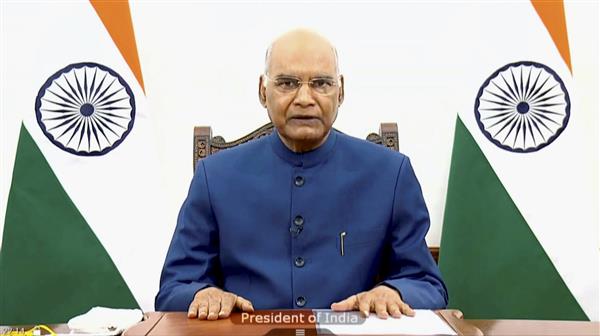
Stall Central Vista, ex-servicemen write to President

New Delhi, May 16

A group of military veterans have written to President Ram Nath Kovind, requesting that reconstruction of the Central Vista project in New Delhi be stopped.

Calling it a “wasteful” expenditure, they said the project shouldn’t have started at a time when the country lacked resources to provide basic medical assistance to its suffering citizens. “The construction should be stalled for now. It will be in the interest of the nation,” they wrote in the letter. —TNS


The one and only Sam Bahadur

His presence, his charisma left a deep impression, He was just made that way. People around him felt good and he made sure his public image inspired confidence

The one and only Sam Bahadur

Marshal Sam Manekshaw

Brig Prabir Goswami (Retd)

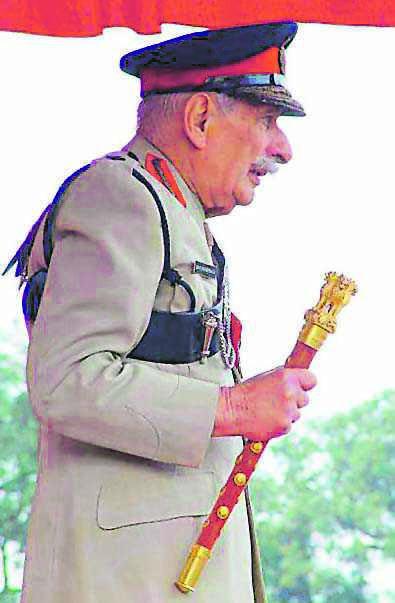
Many of us who were in uniform when he was the Army Chief, and even after his retirement, had the occasion to be touched and influenced by the irrepressible Field Marshal Sam Manekshaw, one of India’s most loved and admired soldiers.

Having just taken over as the Army Chief, General Manekshaw came as the Reviewing Officer for our Passing Out Parade at the Indian Military Academy, Dehradun, on June 15, 1969. It was a huge honour that the Chief himself would take the salute as we got commissioned as Second Lieutenants.

Just two months later, he visited our armoured regiment at Ahmednagar. It was a new unit being raised with soldiers brought in from Artillery, Engineers and the Infantry, and from different castes like Marathas, Ahirs and Gujjars. This mixed bag was a first-time experiment for the Armoured Corps. Sam had just introduced name tabs for officers and we were all wearing these as we lined up for introductions.

As he came to me at the end of the line, my Commandant told him that I had just joined the unit from IMA. He turned a stern face and asked, “Who commissioned you?” I told him, “Sir, the Chief.” Sam took a step forward and with a grin dealt a solid blow to my chest and said, “Even I make mistakes, don’t I?” I staggered four steps back and could only grin back. The name tab had snapped into two!

Sam then walked around the garages where the men were busy maintaining the Vijayanta tanks — grease, oil, cleaning material, etc. Troops wearing soiled dungarees, dirty hands, some under the tanks. Not all spit and polish as would be the norm when a Chief visits. Sam walked up to one jawan and smiled, “Kahan se aya hai?” The jawan replied, “Infantry se, Saab.” “Main bhi Infantry ka hoon, haat milao.” He warmly shook hands. This got repeated a dozen or more times during his walk through the garages.

His own hands were now soiled with grease and sweat but he did not look at them. When he was past the tanks, he accepted the cloth which the Risaldar Major had been carrying for him to wipe his hands on and told the Commandant, “Boy, you got a fine unit here!” He left behind a regiment whose troops’ morale had soared sky high.

In later years, I had the opportunity to be addressed by Sam on several occasions and each time would admire his presence and charisma. He did not build it — he was just made that way. People around him felt good and he made sure that his public image inspired confidence.

Just before the 1971 war, Sam visited all forward operational areas and spoke to the men and the officers in large and small groups, depending on the availability and deployment of troops. When he addressed the group I was in, near Muktsar, he spoke of many things. One of these I remember: “I will be sending you into Pakistan. When you do go, keep both your hands in your pockets. I have been around the world and assure you that Indian women are the best. So, keep those hands in your pockets and think of Sam, till you get back.”

I doubt that we will have a Chief of his stature again. He truly was a colossus. God rest his soul in peace.


Online Doctor*Covid Three stages: –

*Online Doctor*

**

*1. Covid only in Nose -* *Recovery time is half a day. (Steam inhaling), Vitamin C. Usually no Fever.* *Asymptomatic.*

*2. Covid in Throat – Sore Throat, recovery time 1 day (hot water gargle, warm water to drink, if having temperature, then Paracetamol. Vitamin C, B Complex. If severe then Antibiotics.*

*3. Covid in Lungs – coughing and breathlessness 4 to 5 days. (Vitamin C, B Complex, hot water gargle, Oximeter, Paracetamol, Cylinder if severe, lot of liquid required, deep breathing exercise.*

*Stage when to approach hospital: -*

*Monitor the Oxygen Level. If it goes near 93 (Normal 98-100) then you need Oxygen Cylinder. If available at home, then no Hospital else admit.*

*Stay healthy, Stay Safe!*

*Tata Group has started good initiative, they are providing free Doctor’s Consultation online through chats. This facility is started for you so that you need not to go out for Doctors and you will be safe at home.*

*Below is the link, I request everyone to take benefit of this facility.*

https://www.tatahealth.com/online-Doctor-consultation/general-physician

+91 74069 28123

*Advice from inside isolation hospitals, we can do at home*

*Medicines that are taken in isolation hospitals*

*1. Vitamin C-1000*

*2. Vitamin E*

*3. sitting in the Sunshine for 15-20 minutes.*

*4. Healthy meal*

*5. take a Rest / Sleep a Minimum of 7-8 Hours*

*6. Drink 1.5 Liters of Warm Water daily*

*7. All Meals should be Warm (not Cold).*

*And that’s all we do in the Hospital to strengthen the Immune System.*

*Note that the pH of Corona Virus varies from 5.5 to 8.5*

*Therefore, all we have to do to eliminate the Virus is to consume more Alkaline foods above the acidity level of the Virus.*

*Such as: -*

*Bananas*
*Green Lemon – 9.9 pH*
*Yellow Lemon – 8.2 pH*
*Avocado – 15.6 pH*
*Garlic – 13.2 pH*
*Mango – 8.7 pH*
*Tangerine – 8.5 pH*
*Pineapple – 12.7 pH*
*Watercress – 22.7 pH*
*Oranges – 9.2 pH*

*How to know that you are infected with Corona Virus?*

*1. Itchy Throat*
*2. Dry Throat*
*3. Dry Cough*
*4. High Temperature*
*5. Shortness of Breath*
*6. Loss of Smell ..*

*And Lemon with Warm Water eliminates the Virus in the beginning itself, before reaching the Lungs ..*

*Do not keep this information to yourself.*

*Forward it to all.*


THE ROAD FROM LADAKH IS PAVED WITH DISRUPTIONS

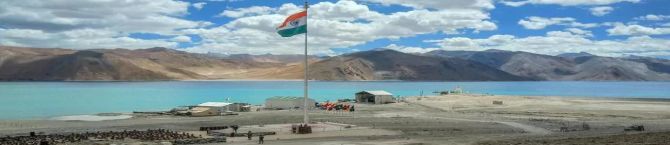
It has been a year since the news of tensions between Indian and Chinese troops on the Line of Actual Control (LAC) in Ladakh first broke. Dismissed as a “routine” event in the first few weeks by officials, the truth about the extent of Chinese ingress could no longer be hidden when India lost 20 soldiers in a violent clash with soldiers of the People’s Liberation Army (PLA) in mid-June.
As has been evident from commercial satellite imagery, sparse official statements and a few interviews, the crisis eventually involved seven places: Depsang plains, Galwan, Gogra, Hot Springs, North bank of Pangong Tso, Kailash range and Demchok.
Border Crisis
The situation at Galwan was resolved a few weeks after the deadly clash, and the two sides disengaged from the face-off site. The Indian Army had occupied certain heights on the Kailash range in end-August, where it was in an eyeball-to-eyeball confrontation with the Chinese. In February this year, the two sides agreed to disengage from this location and from the north bank of Pangong Tso. This was announced by India’s Defence Minister in Parliament, where he also said that the two armies will convene the next meeting of the senior commanders within 48 hours after the complete disengagement in the Pangong lake area “to address and resolve all other remaining issues”. The last such meeting of commanders was held on April 9, but the Chinese have refused to even discuss the remaining issues.
Such an outcome was not entirely unexpected. It was written in this newspaper (Looking after the Ladakh walk back, February 17, 2021) that India had lost its only leverage on the Kailash range for the sake of disengagement on the north bank. This happened after India reversed its position of simultaneously resolving all the flashpoints in Ladakh rather than deal with them piecemeal. India’s military rationale was evident: with soldiers and tanks of the two armies barely a few metres apart, the situation was explosive and could escalate into a major crisis with a minor incident or accident. It was also clear that by restricting itself to its own side of the LAC on the Kailash range, India had not taken control of the more dominating peaks like the Black Top and had a weak hand to play with. Politically, the Narendra Modi government seemed keen to announce a closure of the border crisis by creating the impression of an honourable solution against a major power.
Three months later, no such closure is in sight. With the PLA troops denying India access to territories it controlled by patrolling, the government’s avowed aim of restoring the status quo ante as of April 2020 remains unfulfilled. Even on the north bank of Pangong, a new status quo has been created where the patrolling rights are yet to be restored. Similarly, the Kailash range has seen neither de-escalation nor de-induction so far.
In each statement, both India and China reiterate the need “to ensure peace and tranquillity” in border areas. Even if there have been no further deaths after June and no firing after early September, the peace on the border is both unstable and unsustainable. Ongoing tensions, with massive deployments on each side, belie any hope of tranquillity. That the security establishment in New Delhi is cognisant of the volatility and risk can be gauged from the fact that the Indian Army has undertaken a major reorientation of its units and formations towards the China border.
COVID-19 And Geopolitics
Even as the situation on the border poses a tricky challenge for India, its geopolitical concerns have been exacerbated by the devastation caused by the mismanagement of COVID-19. Through its ‘Vaccine Maitri’ programme, New Delhi was presenting itself as a better alternative to Beijing’s vaccine diplomacy, particularly in South Asia. Shaken by scenes of massive suffering and public criticism, the Modi government has backtracked on existing contractual commitments to supply vaccines to its friendly neighbours. Countries such as Bangladesh and Sri Lanka have started procuring vaccines from China, further casting doubts on India’s reliability as a partner and raising questions about its ability to act as a counter to China. Sensing the opportunity, Beijing also moved in quickly, organising a meeting with all South Asian countries except India, ostensibly to deal with the pandemic.
New Delhi was also the lynchpin of the Quad’s pledge to deliver a billion doses of COVID-19 vaccine throughout the Indo-Pacific by the end of 2022, an effort focused on countering Chinese influence in the region. With India now trying to import vaccines for its own population and reneging on its commitments to other poor countries under GAVI’s COVAX scheme, the proposal now seems to be on a weak footing. The abysmal failure of the Modi government to anticipate and deal with a public health crisis has diminished India’s aura as an emergent power. A Prime Minister tom-tomming the mantra of ‘Atmanirbharata’ or self-reliance has been forced to reverse a 16-year-old policy to accept global aid has laid bare India’s vulnerabilities, further reducing its standing as the Quad’s anchor.
A weaker India is not only less attractive as a partner globally, it makes New Delhi more dependent on the United States to deal with China. That India has been acting at the behest of the U.S. has been one of China’s presumptions and this would only confirm Beijing’s worst fears. It would further strain India-China ties, directly linking them to the vagaries of the China-U.S. relationship. The hypothesis that India can safeguard its land borders by strengthening its oceanic prowess could then be put to test, a scenario New Delhi wants to avoid at all costs.
Meanwhile, the threat of a two-front collusive threat after the Ladakh crisis forced the Modi government to seek peace with Pakistan. The back channel talks, facilitated by the United Arab Emirates, led to the announcement of the ceasefire on the Line of Control which has held so far. But there have been contradictory voices emerging from Islamabad and the process seems to be floundering, as Pakistan awaits the steps on Kashmir promised by the Modi government. No political environment has been created in India for any such step so far.
New Delhi’s preoccupation with the pandemic may brook a delay of few weeks but fears of failure, a routine happening in India-Pakistan engagements, loom large. It is hard to predict the Pakistani course of action hence, but if the past is an experience to go by, it has usually been spiteful, reckless and dangerous, especially when India is seen as weak. Coupled with the imminent American military withdrawal from Afghanistan and a win for the Taliban, the signs are ominous. An assertive China and a vengeful Pakistan acting in concert on the land borders is India’s military nightmare, which New Delhi will have to avoid at all costs.
Chinese Supplies
Meanwhile, Beijing has made certain significant moves towards New Delhi in the recent days. China’s President Xi Jinping sent a message to Mr. Modi to convey sympathy and express condolences over the pandemic, which was the first communication between the two since the border crisis began last year. The Chinese Foreign Minister spoke to his Indian counterpart twice and offered help to deal with the pandemic, which led to an early clearance and approval of cargo flights from China. The Chinese Ambassador to India has been highlighting the supplies and the material being sent to India.
Beijing’s efforts have been largely confined to private companies and donations from the Red Cross and Red Crescent societies, unlike other countries which have pledged government help to India. Curiously, much of the Chinese media ambiguously frames it as Chinese aid, while India explicitly avoids that framing and lays stress on the point that these are largely commercial contracts between private companies. Even if the Chinese intent is to project itself on a par with other global powers providing relief and aid to India, the fact remains that India is heavily dependent on China for crucial medical supplies. State-owned Sichuan Airlines had suspended cargo flights to India for 15 days beginning last month, but the supply chains have since been kept open by Beijing. This is in tune with the Indian demand from Beijing that the supply chain should remain open but the other demand to ensure stable product prices has not been met.
More Point Scoring
If the recent weeks during the pandemic provided an opportunity for the two Asian giants to work together, that hope has been lost as both governments have focused on point scoring. That reflects the broader state of bilateral ties, but is also a fundamental difference emanating from the ongoing border crisis. As the talks between India and China have floundered, New Delhi has taken a position that the border issue is central to the bilateral relationship. This runs contrary to Beijing’s argument that the boundary question cannot be seen as the whole of the bilateral relationship. In an ideal world, New Delhi can hope for a settlement that delineates and demarcates the LAC in some form but Beijing has ruled out any such proposal. With soldiers of both armies facing each other in Ladakh and a lack of trust between the two countries as the two governments talk past each other in a period of geopolitical churn, it is clear that the China-India bilateral relationship is moving into a zone of increasing disruptions, and attendant risks of conflagration on the disputed border.


CHINA NOT HAPPY WITH ARMS SUPPLY TO INDIA, BUT RUSSIA-INDIA FRIENDSHIP UNSHAKEABLE: CARNEGIE MOSCOW HEAD

Dmitri Trenin says Russia can’t be dictated to by another country, adds that real test for India from Moscow’s perspective is how it tackles S-400 deal issue with US
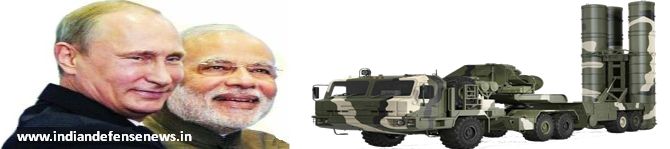
New Delhi: Just as the US has reservations over India procuring S-400 missiles from Russia, China too has objections to Moscow supplying arms to New Delhi. But Russia’s relationship with India is “unshakeable”, said Dmitri Trenin, Director of the Carnegie Moscow Centre.
In an interview Trenin, who also chairs the research council and the Foreign and Security Policy Program at Carnegie, said while Russia is close to India and China, it is not a country that can be “dictated to” by another country.
“Our Chinese neighbours are not much happy (sic) with Russia supplying arms to India… The Chinese are less overt in their pressure and they are less public about that and they also know that trying to pressure Russia will be counterproductive. You try it, and (it) may be the last time you do it,” Trenin said.
“Russia will not allow itself to be dictated to by another country on issues that are of major interest, and that includes the Indo-Russia arms relationship. I don’t think it will be simply given up by Moscow as a gift to Beijing,” he stressed.
‘S-400 The Real Test’
Trenin said the real test for India from Russia’s perspective will be to see how New Delhi eventually goes about and procures the S-400 Triumf air defence missile system under pressure from the US, which continues to remain undecided over waiving sanctions for India under the Countering America’s Adversaries Through Sanctions Act (CAATSA).
The $5.2 billion S-400 deal between India and Russia has become a major cause of consternation between New Delhi and Washington. India has already apprised the US of the fact that the deal was finalised before CAATSA came into being in 2017 under the former Donald Trump administration. But the Joe Biden administration has also raised the issue of India buying S-400 missiles from Russia, and hinted at possible sanctions during the visit of US Defence Secretary Lloyd Austin to India in March.
“It will be a test for India — this is how it will be seen in Moscow at least — what decision will eventually be taken on the S-400 issue. Clearly, the US does not want Russia to sell arms to anybody. The US and Russia are locked in a serious long-term confrontation and there’s no let up to this confrontation in the foreseeable future. The US will pressure Russia very, very hard, and those who deal with Russia will feel part of the pressure,” Trenin, who served in the Soviet and Russian armed forces from 1972 to 1993, said.
“Experience shows that if a country submits to pressure, there will be more pressure, so that the submission is more secured. If a country manages to stand up to pressure of the US and if the US believes it has other important interests with India, it would allow a waiver to India. Pressure and prestige come together. If you withstand the pressure, you enhance your prestige,” he said.
‘India, Russia Have To Rethink Their Relationship’
According to Trenin, while friendship is “at the core” of the relationship between India and Russia, both New Delhi and Moscow have to “rethink” their ties in a changing geopolitical environment.
“It is a more challenging environment in which India and Russia operate. They have to rethink the relationship… at both ends. There are interests, and those interests need to be managed,” he said.
India and Russia have recently announced that they are going to establish a ‘2+2’ dialogue between their respective foreign and defence ministries for the first time ever.
“India and Russia should pursue their bilateral relationship, which is of high value for both Delhi and Moscow, in this more complex and international environment. That’s the issue, that’s the problem, and that’s why having a more structured relationship, having a relationship that brings foreign ministers and defence ministers of the two countries together on a regular basis is something of true significance… Truly important in today’s world,” Trenin continued.
He contextualised it by saying the 2+2 dialogue between India and Russia comes at a time when Moscow’s ties with Beijing are growing, as are New Delhi’s ties with Washington, while the US-Russia and US-China relationships are strained, as is India’s with China.
“We live in a world in which Russia’s relations with India should not be defined or guided by Russia’s relations with China and America. By the same token, India’s relationship with Russia should not be shaped according to India’s relations with China and America. Those two powers (the US and China) which have very different policies towards India and Russia are very important factors, but they should not be the principal defining factors,” Trenin averred.
Russia Making It Easy For India, China To Engage In Dialogue
Despite the major stand-off at the Line of Actual Control in Ladakh between the Indian and Chinese armies that began in April-May 2020, Moscow was able to bring together New Delhi and Beijing for the trilateral Russia-India-China (RIC) dialogue and the Shanghai Cooperation Organisation (SCO) meet. This was seen by many as Russia’s way of mediating between India and China, a thought that Moscow rejected.
Trenin said it’s also important from the Russian perspective to engage with China in a friendly way, “so that China does not dominate the great continent of Eurasia”.
“There is a future in Russia-India-China and that should be pursued… I think it should be pursued by Russia and should be pursued by India, particularly if India fears China’s dominance, if India fears Russia may become China’s follower, which I would dismiss,” he said, adding the RIC was the way to deal with it.
“Russia will only accept the role of a mediator if asked so by Delhi and Beijing. What Russia is doing, has been doing and will continue to do is facilitating that dialogue, using various means… Russia is urging and making it easier for India and China to engage in the RIC dialogue,” Trenin added.
On the Quad, Indo-Pacific
On the issue of India being part of the ‘Quad’ grouping that also consists of the US, Japan and Australia, and playing a key role under the Indo-Pacific strategic construct, Trenin said: “The Quad is seen by many in Moscow as an instrument that the United States is using primarily to contain China, and to a certain degree, Indian and American interests are close in some respects regarding China. The rapprochement between India and the US insecurity issues is natural.”
He added that the challenge is for India to manage its two friends — US and Russia — who are not friends with each other, just like Russia has to manage India and China, who are not friends with each other.


Despite Covid, 100+ IAF personnel are in Russia on S-400 missile training as delivery nears

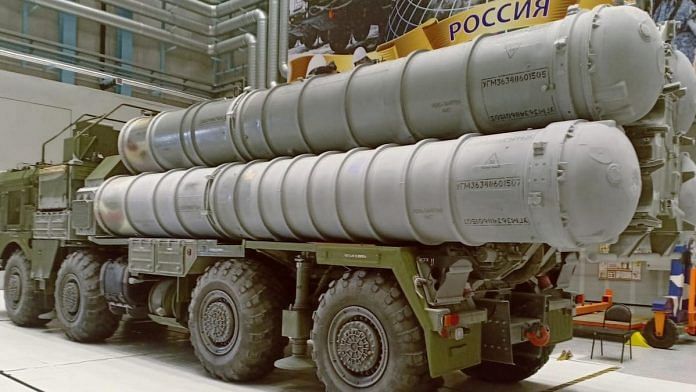
Russia's S-400 air defence system
File image of Russia’s S-400 Triumf multi-layered air defence system | Photo: Snehesh Alex Philip | ThePrint

Text Size: A- A+

New Delhi: Over 100 personnel of the Indian Air Force (IAF) are being trained on the S-400 Triumf Air Defence System in Russia, as both countries eye delivery of the system by the end of this year, ThePrint has learnt.

The S-400 system meant for India is already under production in Russia and is undergoing various trials, sources in the defence and security establishment said. 

The trials include high dust and extreme weather withstanding capabilities to suit the Indian demands of operating in the plains, deserts and mountainous terrain.

Sources said the team of over 100 personnel had reached Russia earlier this year and are being trained by a joint team from the Russian military and Almaz Antey, the manufacturers of the system that will become the mainstay of India’s air defence.

Despite US threats of sanction, India had in 2018 ordered five of the S-400 systems.

In March this year, visiting US Defence Secretary Lloyd Austin had raised the issue of India’s planned procurement of the S-400 and stressed that allies and partners should avoid “any kind of acquisitions that will trigger sanctions”. 

The Modi government had, however, firmly explained that the country’s armed forces have a diversified portfolio.


Also read: Delhi’s Base Hospital chief transferred, move surprises many, Army calls it routine


The S-400 capabilities

The S-400 is capable of destroying incoming hostile aircraft, missiles and even drones from a minimum range of 2 km to upto 400 km. It also has a tracking capability of nearly 600 km. 

While the delivery of the system was to start in 2020, the payment could only be done in 2019 as US sanctions against Russia made it difficult.

ThePrint had in August last year reported that the delivery will begin only by 2021-end as the contract said, it would be done 24 months from the date of the first payment.   

Sources had then said that the production process of each system involves a lot of computing and coding, which is very specific to the requirements of a particular customer. 

Each S-400 system, known as a battery, consists of long-range radar, a command post vehicle, target acquisition radar and two battalions of launchers (each battalion has eight). Each launcher has four tubes.

Each component of the system — command post, the radars, and the launchers — is mounted on multi-axle, multi-wheel Ural carriers that have the capability to move on uneven terrains. 

This capability makes the batteries difficult to detect because they can keep changing locations, besides expanding the missile engagement zone (MEZ).

Among best defence systems

The S-400 can be armed with four different types of missiles with ranges of 400 km, 250 km, 120 km and 40 km. 

The specialised radar can track more than 100 flying objects simultaneously while being able to engage a dozen targets in one go.

Considered to be one of the best air defence systems in the world, the S-400 can cover a height of up to 30 km and the minimum height of detection is 5 km.

The only other country in the region to have the S-400 is China, which, however, has the S-300, the earlier version.

The S-400 has a firing rate that is 2.5 times faster than that of the earlier generation. Incidentally, the Russians have also developed the S-500, the latest version but they’ve kept it for themselves. 

(Edited by Arun Prashanth)


Also read: Armed forces procure oxygen, medical supplies as Covid cases go up in rural areas


What’s DGAFMS, Indian military’s medical wing leading the fight against Covid

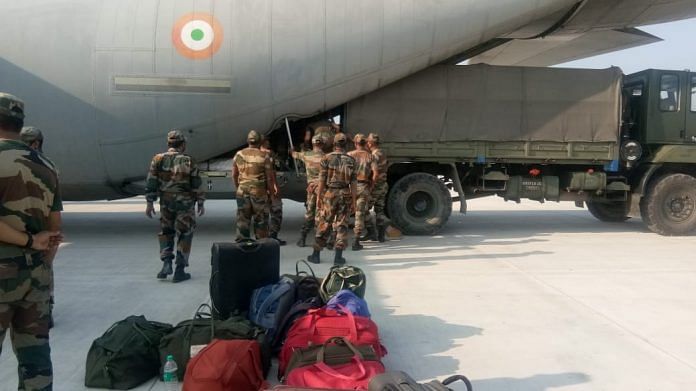
Armed forces doctors arrive in Lucknow Monday | Twitter/@suryacommand
Armed forces doctors arrive in Lucknow | Representational image | Twitter/@suryacommand

New Delhi: As the country fights a devastating second wave of the Covid-19 pandemic, the armed forces have come to the aid of the civil authorities, not just in terms of logistics support such as transport and setting up field hospitals, but by also providing doctors, nurses and paramedics.

While the Directorate General of Armed Forces Medical Service (DGAFMS) has been quietly leading the military’s war against Covid, the recent controversy surrounding the transfer of the Commandant of the Army Base Hospital in Delhi has put it in the spotlight.

The decision to transfer the Base Hospital chief surprised many. However, sources in the government as well as the defence establishment told ThePrint that the transfer was “purely administrative” in nature keeping in mind the needs of a crisis situation that was evolving every day.

Amid the decision to transfer the Base Hospital’s Commandant in the middle of the Covid crisis, here’s a look at the history and organisational structure of the DGAFMS.

The history of DGAFMS

It was in March 1947 that the “Armed Forces Medical Services and Research Integration Committee”, headed by Dr B.C. Roy, was set up by the Indian government to consider the integration of the three medical services and medical research in the three services.

The Committee recommended that there should be three medical branches of the services — Army, Navy and Air Force. It also recommended that there should be a Supreme Controller of all the three medical services — Director General of the Armed Forces Medical Services (DGAFMS) — who would be the advisor to the Supreme Commander (President) or the Defence Minister with regard to the medical needs of the military.

The DGAFMS was meant to be the administrative head of the Armed Forces Medical Services and remains so.

Based on the recommendation of the Committee, the government in 1948 integrated the medical services of the Royal Indian Navy, the Indian Army and the Royal Indian Air Force into the Armed Forces Medical Service (AFMS). It also placed the AFMS under the Director General Armed Forces Medical Services with a three star rank appointment.

It also laid down the role and character of responsibilities of DGAFMS.

The DGAFMS was made directly responsible to the Defence Ministry for overall medical policy matters so far as they relate to the Armed Forces.

It was also said that the heads of medical services of the Army, Navy and Air Force will be responsible for functioning of these services under the respective Service Chiefs in accordance with any general policy directions that may be given by the DGAFMS.

The charter has since been updated from time to time.


Also read: States seek Army help to fight Covid but ‘overstretched’ forces have limited doctors to spare


Organisational structure and recruitment

Contrary to popular perception, the DGAFMS does not report to the Chief of Defence Staff or the Department of Military Affairs (DMA) but the Department of Defence headed by the Defence Secretary.

When the work division was carried out in 2020 between the Department of Defence and the newly created DMA, the Medical Directorate remained with the former.

The DGAFMS is held by an officer in the rank of Lt Gen or equivalent and is the head of the Armed Forces Medical Services (AFMS).

The Director Generals of Medical Services of the Army, Navy and Air Force are the medical advisors to their respective Chief of Staff and come under the DGAFMS.

The AFMS consists of the Army Medical Corps (AMC) including AMC (NT), Army Dental Corps (AD Corps) and Military Nursing Service (MNS).

110 medical cadets, including 21 female cadets, of the 55th (C3) batch of the Armed Forces Medical College (AFMC) were commissioned as medical officers into the AFMS Saturday.

The cadets were commissioned by Commandant, AFMC Lt Gen Nardeep Naithani during a brief ceremony.

Ninety-four cadets were commissioned into the Army, 10 in the Indian Air Force and six in the Indian Navy, a statement by the Defence Ministry said.


Also read: These soldiers are serving 24×7 to cremate veterans, dependents succumbing to Covid


Hiding corpses in Uttar Pradesh

No dignity for the dead, endangering the living

Hiding corpses in Uttar Pradesh

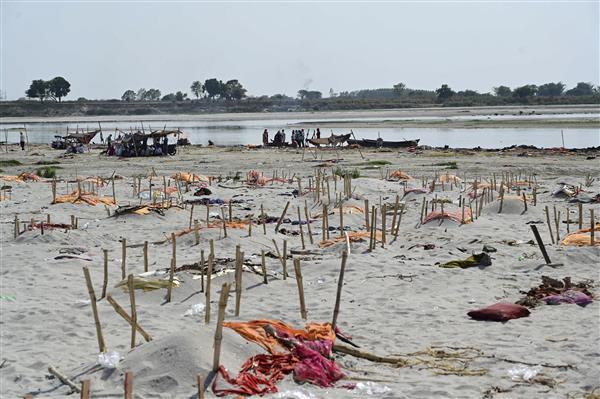
Bodies buried in the sand near the banks of Ganga river.

The Uttar Pradesh government is headed by a politician who wears saffron robes, signifying Hindu monastic traditions. But if news reports from UP are to be believed, the state’s administrative machinery is indulging in the un-Hindu act of putting mud on the dead to hide the corpses that have started floating on the holy Ganga. According to a Hindi newspaper, the Ganga has been carrying over 2,000 bodies in its journey through 27 districts of UP. Local journalists claim to have sighted 900 bodies in Unnao, 350 in Kannauj, 400 in Kanpur and 280 in Ghazipur; and these are mere guesstimates. That these corpses were either thrown into the river or abandoned on the banks of the Ganga, points to the possibility of the perpetrators being pious Hindus. But, instead of a mass cremation or a decent disposal, the district administration and the police are reported to have merely thrown soil atop the bodies.

This is not just un-Hindu, but it is unhygienic, unhealthy and unscientific. When the water level in the river rises, these bodies are bound to float again if they are not buried deep far away from the river. The likelihood of diseases these corpses could spread through the state’s most important water body ought to have shaken up the authorities. But no amount of suffering seems to make any difference to certain politicians, who have failed to offer life breath to the living, let alone the dignity of a cremation to the dead.

If the poor of UP have let their dead float on Ganga Ma praying for their deliverance at least in the other world, the middle classes have been begging for slots to cremate their loved ones in the national capital. A former senior journalist of a reputed TV station has recently written about the mind-numbing experience of having to see her father getting cremated along with two others for want of space. Visuals from Himachal Pradesh’s Kangra district of a son carrying the body of his mother on his shoulder and walking alone to the crematorium sum up the Indian tragedy of inadequacies.


Bebal Kalan firing: IG Naunihal Singh to head 3-member SIT

Mohali SSP, SP other two members

Bebal Kalan firing: IG Naunihal Singh to head 3-member SIT

Naunihal Singh. File photo

Tribune News Service

Chandigarh, May 16

Punjab police have reconstituted the Special Investigating Team (SIT) probing the Behbal Kalan firing case.

IG Naunihal Singh will head the three-member probe team. Mohali SSP Satinder Singh and SP Swarandeep Singh will be the members.

The SIT has been reconstituted after IG Kunwar Vijay Pratap, who headed it earlier, resigned.

The High Court quashed the SIT investigation on April 9 and asked Punjab to form a new probe team sans Kunwar Vijay Pratap following which the IG resigned on April 14.