



Sanjha Morcha

Remove hurdles to help farmers reap dividends

Remove hurdles to help farmers reap dividends

SS Chahal

AGRICULTURE is the engine of economic growth in our country. However, the annual growth rate of agriculture and allied sectors has shown big fluctuations with declining trends during the post-Green Revolution period. The growth rate in real terms was 2.88 per cent from 2014-15 to 2018-19, according to the Economic Survey Report 2020. Studies have revealed that stagnant investment is one of the major factors for the decline, besides the slowdown of irrigation expansion, downscaling of production due to farm fragmentation and soil degradation due to improper use of chemical fertilisers. An analysis of data reveals continuing deceleration in public investment both at the national and state levels after the 1980s ‘in’ agriculture (land development, irrigation, markets etc.) as well as ‘for’ agriculture (roads, power, transport etc.), because of which there is no desirable improvement in the structural support system. Public investment, which has declined over the years, is mostly consumed for subsidies, fertilisers, irrigation, electricity, credit etc., whereas private investment made by farmers is adversely impacted by heavy indebtedness.

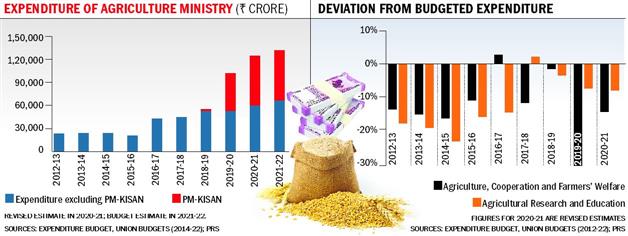
The share of public investment in the Gross Capital Formation (GCF) has dipped to an extremely low level. As per figures given by the Union government, the GCF in agriculture and allied sectors at the current prices for 2016-17 was estimated at Rs 64,410 crore and Rs 2,79,066 crore from public and private investments, respectively. Any increase in public investment is beyond expectations with the 7.71 per cent cut for agri-schemes in the Union Budget 2021-22. To put agri-growth in the rapid mode, there is an acute need to improve infrastructure, including transportation and storage facilities, cold storage capacity in proximity to farms, warehouses and adequate processing, marketing and export facilities, the lack of which is causing huge wastage and losses to the public exchequer as well as the farmers. A study in 2016 estimated that about 67 million tonnes of food worth Rs 92,651 crore was lost annually in farm produce wastage.

To build infrastructure for curbing such losses and achieving the target of 10.4 per cent income growth rate in farming over a period from 2016-17 to 2022-23 (with 2015-16 as the base year), the Ministry of Agriculture and Farmers’ Welfare aims at an annual investment growth rate of 12.5 per cent ‘in’ agriculture and 16.8 per cent ‘for’ agriculture. While expecting a substantial increase in private investment by farmers, attracting corporate investment, which is currently around 2 per cent of the overall investment, is a huge challenge. A growing need has been felt for corporate investment in food processing, building warehouses, scientific storage and cold storage in addition to the farm mechanisation sector, the seed sector and the horticulture and food processing sector. Further, it is prudent to develop models defining capability-based activities for qualitative improvement and sustainable flow of corporate investment.

Direct contact

It is with such considerations that contract farming (CF) is promoted to involve corporate agri-business entities, bringing them directly in contact with the primary producers as well as linking farmers with the market. The CF system basically involves a pre-determined price, quality, quantity and defined acreage at a time for production and commitment for the supply of agricultural produce to the known buyer under the contract which may be total, partial or for procurement only. The system got established in the country with the advent of new seeds and production of their certified versions since the 1960s. Further, it has been pushed by growth in the international trade demanding high quality, supermarket chains, demand for organic food, drying up of state funding, the agrarian crisis and support from the industry and the banking sector. Public as well as private sector banks leveraged their interest and promoted financing for CF by formulating special policies, setting up of agricultural credit, offering quick loans, reducing interest rates, increasing direct agriculture lending portfolios and tying up for end-to-end financing through tripartite agreements between farmers, banks and the industry.

Seen as an alternative to private and corporate farming, CF lowers transactional costs for both the contracting parties because many transactions become internalised. Farmers get access to new technologies and inputs and contracting agencies get assured supply of raw material. A few of the several examples of successful models include the poultry sector, the production of certified seeds of field crops and cultivation of potato, barley and sugarcane. Evidence is available for increased productivity/production, better incomes and employment through contracting, but it requires sustainability.

FPOs the best bet

The system suffers from bottlenecks because of which it has not attained popularity so far. Evaluating quality and grading of produce is a critical matter and often exploited for rejection or reducing the price by the contracting companies. An inbuilt provision of settlement by a state coordinator or arbitrator should help resolve such cases to the satisfaction of the parties. Small farmers are in an unfavourable position because of their limited ability to deal with big companies. In this context, the Thailand model to facilitate groups of small farmers for collectively entering into contracts has proved useful. However, the best course is that small farmers should enter into CF by forming New Generation Cooperatives commonly known as Farmer Producer Organisations (FPOs). That will enhance access to a variety of resources, effectively maintaining quality standards, better application of scientific farming techniques and increase in bargaining power and capacity to pursue litigation collectively. The Centre has set a target of supporting 10,000 more FPOs in the next financial year. Some problems faced by the growers include delayed deliveries at the factory, unforeseen pest attacks raising the cost of cultivation, no legal protection for often verbal and informal contracts, monopsony and lack of strict enforceability of contractual provisions. Delayed payments are of frequent occurrence.

Making payments within the stipulated time frame has been addressed in Clause 6(3) of the new law, the Farmers (Empowerment and Protection) Agreement on Prices Assurance and Farm Services Act, 2020. However, restricting dispute settlement rights up to the district-level bureaucratic set-up and barring normal judicial course in the same Act (Clause 19) have not gone down well with the farmers and need reconsideration. There is visible fear among the peasantry that CF may lead to greater direct entry by corporate entities in agriculture and that would result in dispossession of their land. It is important to dispel this fear for spurring this potentially transformational system of farming.

The author is former VC, Maharana Pratap University of Agriculture and Technology, Udaipur

Send your feedback to letters@tribunemail.com

1971 war: Marine Maha Virs in western theatre

1971 war: Marine Maha Virs in western theatre

Lt Col Dilbag Singh Dabas (Retd)

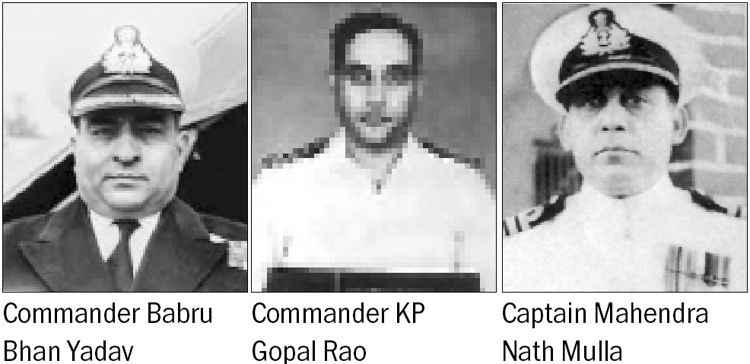
Commander Babru Bhan Yadav was the first recipient of Maha Vir Chakra in the Indian Navy. Affectionately known to all in his village simply as Babru, he was born in a military family of Bharawas village in Gurgaon district of then undivided Punjab. Bharawas now forms part of Rewari district of Haryana. Demographically, the villages in Rewari and Mahendergarh, and some in Gurugram district, are mostly inhabited by Ahirs, and the region is commonly referred to as Ahirwal. Its inhabitants are known not just for their simplicity and hard work, but also for the gallantry of its men in the armed forces from World War I to date.

The water-starved Ahirwal belt, for subsistence, was mostly dependent on remittances from their wards fighting someone else’s war overseas or overland, or India’s wars back home. It could not compete with the rain gods for more water, but the young Ahirs in armed forces ably compensated, many a time at the highest cost.

Babru grew up listening to stories of valour from his father Maj Bhagwan Singh, the Order of British Empire (OBE) awardee during World War I. After graduation from St Stephen’s College, Delhi, he was selected as Direct Entry Graduate in the Royal Navy. After four years of training at the Royal Navy College, Dartmouth, and one year as Midshipman onboard HMS Devonshire, Babru was commissioned into the Indian Navy on January 1, 1951.

Quick at uptake and ever exuberant, Babru was soon learning the nuances of sea warfare. His brilliant aptitude for all matters marine did not go unnoticed by his superiors. With just four years into service, he was nominated to attend the Anti-Submarine Warfare course in the United Kingdom in 1955; a specialised course done mostly on frontline ships. As Commander (equivalent to Lieutenant Colonel in the Army), Babru Bhan had a one-year challenging tenure on missile boats in USSR.

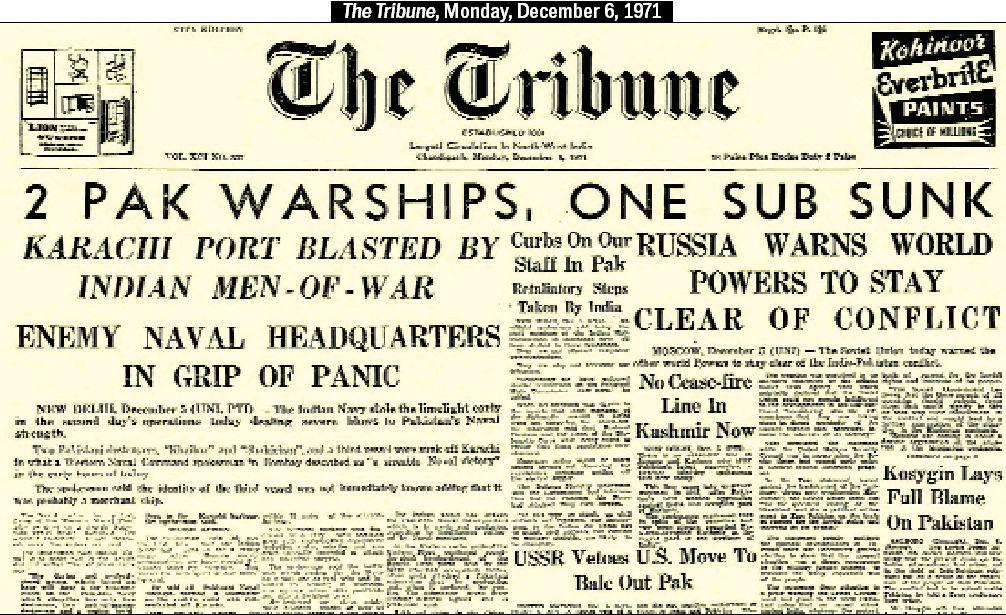
During the 1965 India-Pakistan war, the navies of both the countries, apparently, were restrained from playing a major role. Perhaps both the countries wanted to restrict the scope of the war. But a lot changed in the next five years. By the middle of 1971, the war clouds had started gathering intermittently. To counter any reckless misadventure by Pakistan, offensive plans had been prepared and war-gamed. The Indian Navy’s plan was to strike Karachi with a composite force on the very day that Pakistan carried out its first act of war. And the reckless misadventure by Pakistan happened in Indian skies when its Air Force attacked the Indian forward airfields at about 5.30 pm on December 3. Since it was not possible for the Indian naval forces to arrive at a point 150 miles from Karachi to commence the run-in the same evening, it was decided to launch operations the following day, on the night of December 4/5.

Commander Babru Bhan Yadav was considered most suitable to command a frigate for the assault on Karachi harbour and on December 2 had been given the command of K-25 Squadron, composed of three missile boats’ task force — INS Veer, INS Nipat and INS Nirghat. Just two days later, Pakistan’s Karachi harbour would be witness to the onslaught and fury of this Killer Squadron.

For his conspicuous act of bravery against all possible odds, Commander Babru Bhan Yadav was awarded Maha Vir Chakra. The write-up on the gallantry reads:

“On the night of December 4, 1971, Commander Babru Bhan Yadav, as Squadron Commander of three missile boats’ task force, was ordered to carry out an offensive sweep on the enemy coast of Karachi. Karachi harbour, being strategically important, was heavily guarded by the enemy. With a narrow mouth covered by formidable coastal defence, the harbour seemed impregnable. Notwithstanding the threat of the enemy surface and submarine attack, Commander Babru Bhan, onboard INS Nirghat, led his squadron deep into enemy waters and encountered two groups of large enemy warships. Despite heavy fire from the enemy destroyers and at great risk to his personal safety and of his personnel, Commander Babru Bhan fearlessly led his squadron towards the enemy in a swift and determined attack.

In that daring Indian marine assault, two enemy destroyers namely PNS Khyber and Shah Jahan and one minesweeper PNS Mahafiz were sunk. After completion of the mission assigned to his task force, and before sailing back to Bombay, Commander Babru Bhan bombarded Karachi harbour and set its oil installation ablaze and fearlessly sailed back, leaving the harbour in flames. The attack by the intrepid task force into the lion’s den, fearlessly led by Commander Babru Bhan, was acknowledged as a resounding success even by the Pakistan Navy.

The K-25 Squadron, commonly referred to as Killer Squadron, annihilated the Karachi harbour with a fleet of just three missile boats’ task force. While the three missile boats of K-25 speedily sailed back, a Pakistan Navy’s Jaguar fast patrol boat which tried to follow the withdrawing Indian force was picked up by a Pakistani aircraft and sunk, in the belief that it was an Indian boat. An announcement was made on the spot by Radio Pakistan awarding the highest gallantry award to the pilot. Not to be left behind, even AIR announced the loss of one boat (apparently INS Nirghat with Babru on board) and posthumous award of Maha Vir Chakra to Commander Babru Bhan Yadav. However, there was tremendous rejoicing when Babru, with his characteristic humility, turned up at the advance base without even a minor scratch on his 6-foot-plus frame.

Commander Babru Bhan Yadav, MVC, retired as Commodore (equivalent to Brigadier). Babru never married. Even after retirement, he remained wedded to his first and only love — the Indian Navy.

The first successful assault on Karachi harbour produced not one but two Maha Virs, the other being Commander Gopal Rao. For displaying conspicuous gallantry and outstanding leadership in the best traditions of the Navy, Commander Kasargod Patnashetti Gopal Rao, commanding two Arnala-class anti-submarine corvettes namely INS Kiltan and INS Katchal, was awarded the Maha Vir Chakra.

The daring assault on Karachi harbour resulted in sinking of Pakistan’s two destroyers and one minesweeper. How many Pakistani sailors met their watery grave is not known but the Indian Navy lost 178 sailors and 18 officers, along with their Captain on the fateful evening four days later.

The biggest setback to the Indian Navy patrolling the Arabian Sea happened when INS Khukri, an anti-submarine warfare frigate, was torpedoed by PNS Hangor, a Pakistani submarine it had been hunting for. The Khukri sank within minutes when nearly 200 officers and men were still trapped below decks. The time was 8.45 pm on December 9.

Captain Mahendra Nath Mulla, the Captain of Khukri, remained on the bridge and kept shouting at the wavering crew: “Pani mein jao, jahaz par nahi bachoge. Life-raft mil jayega! Jao! Jao!’(Get into the water. You won’t survive on the ship. You’ll get the life raft. Go!).” Captain Mulla could have saved himself, but the deeply empathetic sailor with deep-rooted naval ethos had already made up his mind. The Khukri disappeared beneath the Arabian Sea within three to four minutes of having been hit, with its Captain still on the bridge. Captain Mulla was last seen going down with the ship saving his shipmates.

For his outstanding courage and determination and supreme sacrifice in the best traditions of the Navy, Captain Mahendra Nath Mulla was posthumously awarded the Maha Vir Chakra.


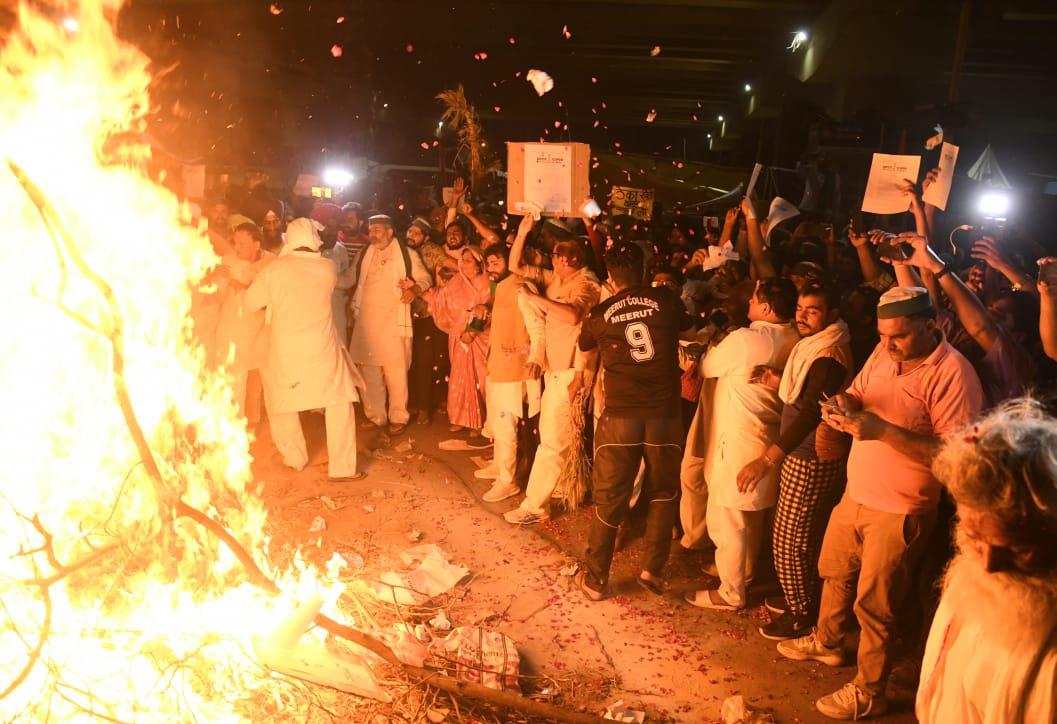
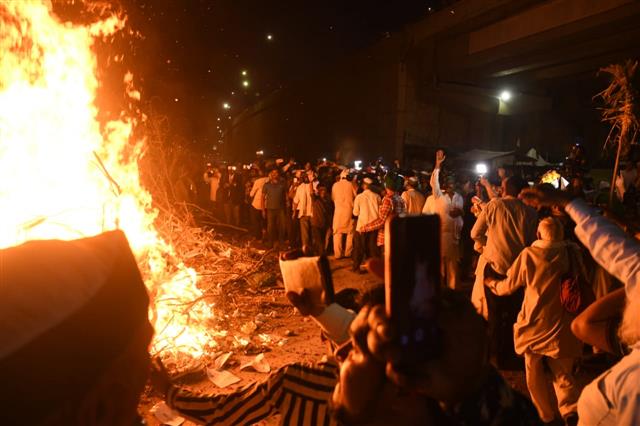
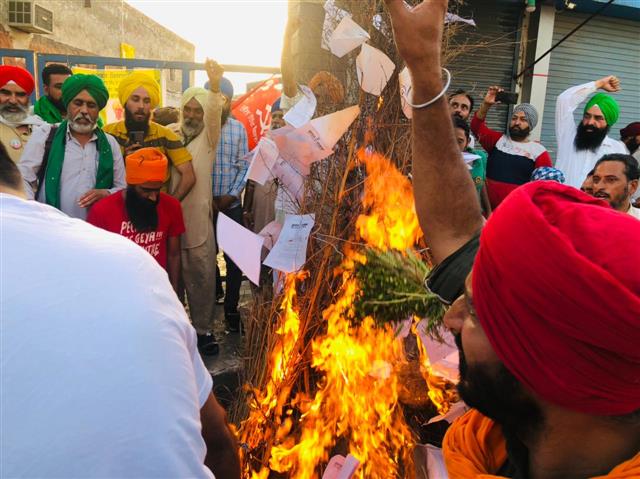
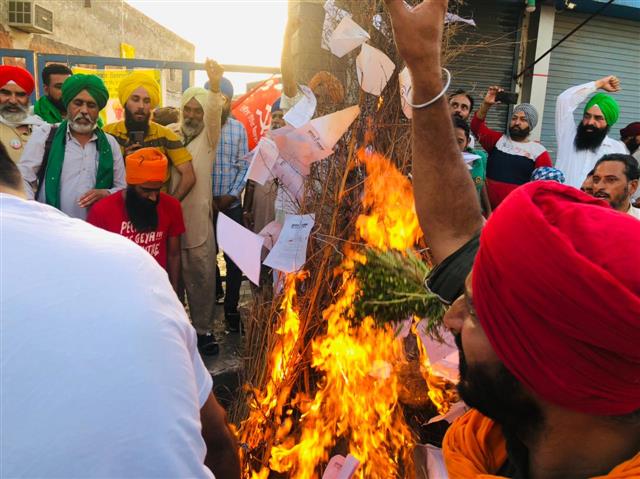
Farmers celebrate ‘Holika Dahan’ by burning copies of Centre’s farm laws

The protesting farmers celebrated Holi at the borders

New Delhi, March 28

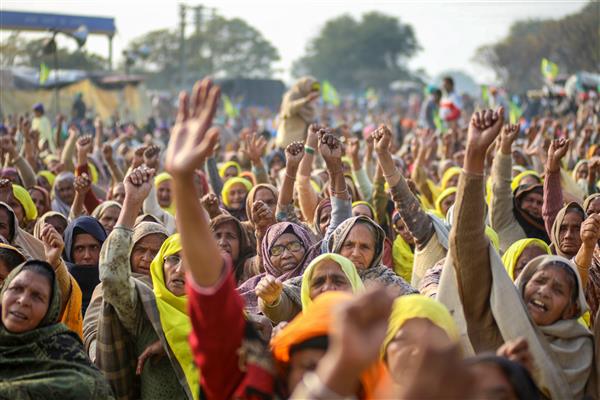
Farmers camping at Delhi borders on Sunday burnt copies of the Centre’s new farm laws they have been protesting against during ‘Holika Dahan’, the Samyukta Kisan Morcha said.

Farmers burn farm bill copies to protest against the farm laws at the Ghazipur protest on Sunday. Tribune Photo: Manas Ranjan Bhui

The protesting farmers celebrated Holi at the borders and maintained that their agitation will continue till the farm laws are repealed and a separate law on minimum support price is enacted, it said in a statement.

Farmers burn farm bill copies to protest against the farm laws at the Ghazipur protest on Sunday. Tribune Photo: Manas Ranjan Bhui

The Samyukta Kisan Morcha (SKM), a joint front of farmer unions, also said that it will observe “FCI Bachao Diwas” on April 5, adding that offices of the Food Corporation of India (FCI) will be gheraoed from 11 am to 5 pm across the country. “The government has made several attempts to end the minimum support price (MSP) and public distribution system (PDS) indirectly. The FCI’s budget has also been reduced over the last few years. Recently, the FCI also changed the rules for procurement of crops,” the statement said.

Farmers spotted burning agricultural bills copies. —Tribune Photo

 The SKM also condemned the passage of the Haryana Recovery of Damages to Property during Disturbance to Public Order Bill, 2021 by the Haryana Assembly, saying it aims to suppress agitations.

Farmers burn copies of agri bills at Singhu Border. — Tribune Photo

“It contains dangerous provisions that would surely prove fatal to democracy,” the body added. — PTI


🇮🇳Documents required to claim Demise Grant🇮🇳*

    Kindly contact to concerned *Zila Sainik Board* to claim demise grant of an Ex-servicemen alongwith photocopies of following documents :-

1.  Ex-Servicemen Identity card.
2.  Discharge book.
3.  PPO.
4.  Death certificate of Father.
5.  Death certificate of mother if applicable.

*Documents required for claimant/applicant* :-

1.  Aadhar card.
2.  PAN card.
3.  Ist page of Bank passbook / Cancelled cheque.
4.  Family Register (परिवार रजिस्टर).

*Note :-*

1.  *Rs 10,000/-* will get from concerned  Zila Sainik Board.

2.  *Rs 10,000/-* will get from CSD Canteen through Concerned Station HQ.

3.  *Rs 7,000/-* will get from Concerned Record Office.

    *Kindly circulate this message to maximum Ex-Servicemen’s Group to get the benefits


Manali-Leh highway opens to traffic

The Centre had asked BRO to restore the highway early this year

Manali-Leh highway opens to traffic

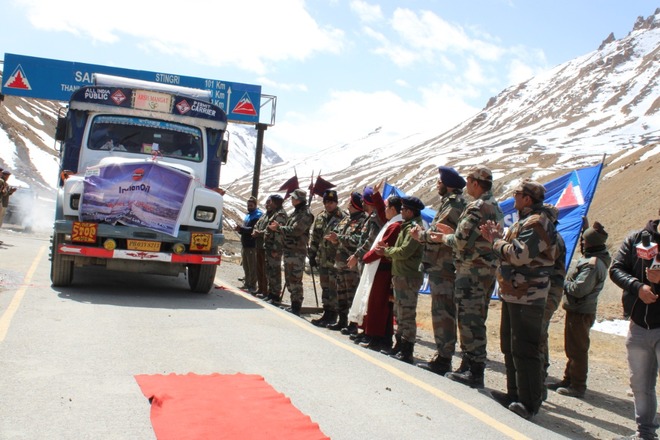
The first convoy of the IOC being flagged off at Sarchu for Leh. Tribune photo

Tribune News Service

Mandi, March 28

The BRO has restored 425-km Manali-Leh highway for vehicular traffic, which will provide access to military and common civilians from the Manali side in Himachal Pradesh to Leh in the union territory of Ladakh.

The first convoy of IOC bowsers was flagged off from the Himachal side by Stanzin Chosphel, Executive Councillor, Ladakh Autonomous Hill Development Council (LAHDC), today in the presence of BRO officials to announce the opening of this highway.

The strategically important Manali–Leh highway remains closed for about six months every winter and Ladakh remains cut off from rest of the country which makes the region dependent on supplies through the aerial route.

Due to the ongoing border issue with China in Ladakh, the Union government had this year asked the BRO to restore this highway earlier as soon as possible.

As a result, the BRO had started snow clearance operation on the road stretch between Manali and Leh in mid-February with a strategy to simultaneously commence snow clearance on four important passes along the route — Baralach La (16,047 ft), Nakeela (16,170 ft), Lachung La (16,616 ft) and Tanglang La (17,582 ft).

These passes receive 20 to 30 feet high heavy snowfall every year, which keeps the highway blocked for traffic movement for months.

BRO sources said the latest hi-tech machinery was swiftly inducted for clearing snow. BRO teams worked relentlessly day and night to provide early connectivity to Leh. The dynamics were different this year with the inauguration of Atal Tunnel as there was no necessity of opening the Rohtang Pass. This enabled complete focus on opening of Baralacha La with additional resources to restore connectivity at the earliest.

The opening of Baralacha La involved a two-pronged. The work started simultaneously from two sides — from Patsio to Baralach La and from Sarchu to Baralacha La.

After the restoration of the Manali-Leh highway, the people of Lahaul and Ladakh have conveyed their gratitude to Lt Gen Rajeev Chaudhary, VSM, DGBR, and applauded the tremendous efforts put in by BRO to restore this highway in time.


Gen Rawat’s driving test for defence industry on Times Now, Zee News on ‘Pawar-Shah meet’

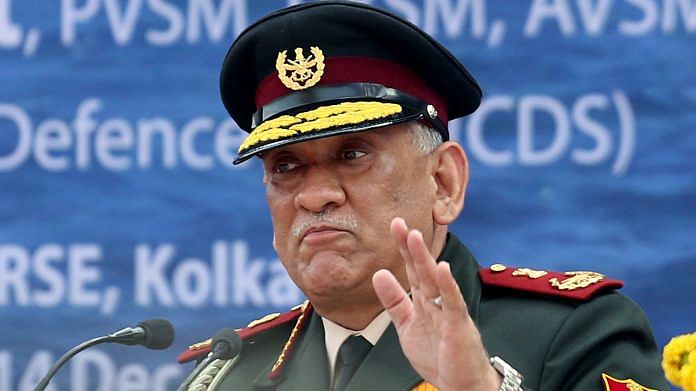
Chief of Defence Staff General Bipin Rawat addresses during the launch of 'Himgiri', the 2nd of Project 17A class of stealth frigates in Kolkata on 14 December 2020 | ANI Photo

File image of Chief of Defence Staff General Bipin Rawat |

New Delhi: Prime time news Monday may not have been as colourful as the Holi celebrations held across Hindu news channels during the day but there were some interesting debates and interviews.

NDTV 24×7’s Vishnu Som spoke to Myanmar’s erstwhile envoy to the United Nations about the humanitarian crisis in the country and Rahul Shivshankar interviewed Chief of Defence Staff Bipin Rawat on Times Now.

Shivshankar asked: “We’re talking about strategic dimension to Atmanirbhar Bharat. How close are we to becoming a force which is self-reliant and perhaps indigenised to a point that our dependency on expensive imports will be over?”

General Rawat delivered a history lesson: “If you look back at our nation, when we got Independence, we did have a good defence industry. However, over the years, we relied exclusively on the capabilities of our DPSUs, ordnance factories and the sole inventor of research and development was the DRDO.”

He added: “Now times are changing — we have seen the manner in which the automobile industry revolutionised the way we are moving around in swanky cars. Look at the way in which the IT industry revolutionized — who brought in this revolutionization?”

Rawat then answered his own question: “It all happened with the private sector.”

At NDTV 24×7, anchor Vishnu Som spoke to Kyaw Moe Tun, Myanmar’s Permanent Representative to the UN, who was disowned by the ruling military junta after he denounced it as illegal at the United Nations. However, Kyaw Moe Tun continues to be at the UN.

“The world is looking very, very closely at Myanmar and the genocide in that country. More than 100 people were killed over the weekend by the military. The humanitarian situation is becoming far more critical,” said Som.

He then asked Kyaw Moe Tun: “There are reports coming in that various state governments, like the government in Manipur have issued orders to district administration officials saying that food and shelter camps shouldn’t be provided to refugees from your country. Is this something that worries you given what we’re seeing in your country?”

Tun replied: “Of course, we are really concerned about this horrible situation… We would really like to seek protection, from the international community.”

On Aaj Tak, anchor Sayeed Ansari discussed the West Bengal election in light of the death of a BJP worker’s mother, which led to a political slugfest between ruling Trinamool Congress (TMC) and the Bharatiya Janata Party (BJP). The BJP has alleged the woman had been attacked by workers of TMC, an allegation the latter denies.

BJP spokesperson Saurabh Sikdar said it was shameful that the elections were underway in many states, but such incidents of political violence only happen in West Bengal. “Let people use their voting rights and let them decide who they want to see in power,’’ he declared, dramatically.

Manojit Mandal of the TMC was “disappointed” that the death of an 85-year-old woman had been turned into an “electoral issue”. “TMC is not connected to this in any way. Home Minister Amit Shah himself tweets about it, BJP terms it a political murder — are there no real issues left to fight the election on?”

“Is the Maha Vikas Aghadi in problem?” Kalra asked. Shiv Sena’s Sanjay Raut had also written against Maharashtra Home Minister Anil Deshmukh of the NCP in his weekly column in party mouthpiece Saamana, and indirectly asked Sharad Pawar to sack him.

BJP’s Shweta Shalini pointed out that it was evident that the NCP-Congress-Shiv Sena government was not going to stay. “BJP doesn’t need to make the government fall, a chair with three legs cannot stay stable.”

Shiv Sena’s Kishore Tiwari said no such meeting has taken place between Shah and Pawar and denied the possibility of BJP and NCP getting together. “It is the BJP which is creating trouble for NCP’s home minister in the Sachin Waze case. In such a situation, BJP should not talk about the chair with three legs…” he added.

NCP’s Vidya Chavan agreed: there is no possibility of the Maharashtra government falling, she said. “There are no differences between NCP and Shiv Sena and what Raut writes in his editorial is his personal opinion — it will not influence the government.”


Samyukt Kisan Morcha to give new schedule tomorrow

Samyukt Kisan Morcha to give new schedule tomorrow

Photo for representation only. – File photo

Anandpur Sahib, March 28

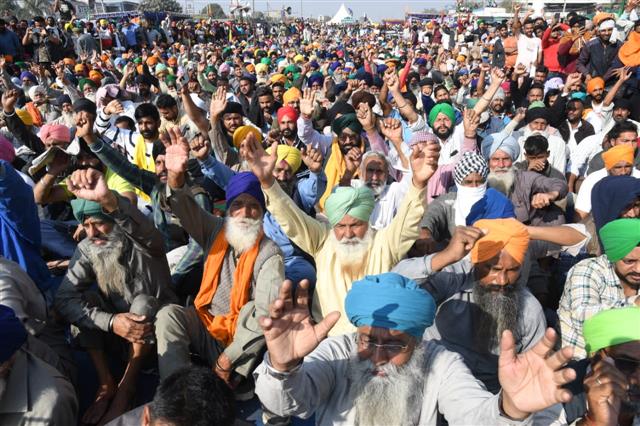
Samyukt Kisan Morcha leaders will give a new programme to farmers of the country on March 30 to take on the Centre so that the three laws are repealed and MSP of a majority of crops fixed by the government. This was stated by BKU general secretary Harinder Singh Lakhowal here today.

Lakhowal, who was here along with farmer leaders Balbir Singh Rajewal, Gurnam Singh Chadhuni, Ruldu Singh, Manjit Rai, Kuldeep Singh Bajidpur and Yograj, addressed a gathering at a Kisan Conference and said the NDA government was testing the patience of farmers. The conference was organised on the second day of Hola Mohalla by Bhartiya Kisan Mazdoor Union. — TNS


Officers, jawans can be terminated even after 20 years of service, says Army chief Naravane

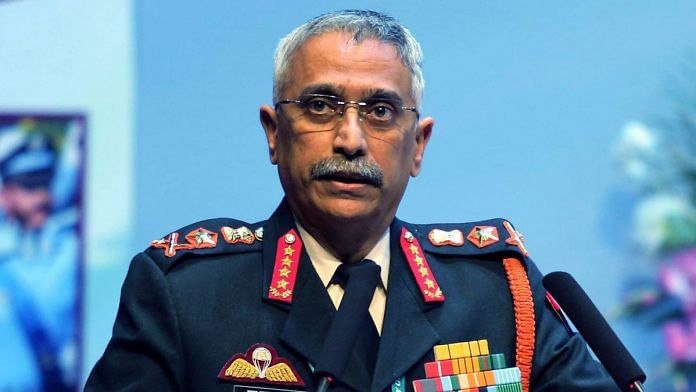
Army chief Gen. M.M. Naravane | Photo: ANI

Army chief Gen. M M Naravane | ANI File photoText Size: A- A+

New Delhi: Taking a tough stand against corruption, Army chief Gen Manoj Mukund Naravane on Tuesday said that the force has zero-tolerance towards those who use wrong practices to join the Army and the services of those found to have done so can be terminated, even after 20 years of service. “There have been few instances, both in the recruitment of soldiers where question papers had leaked out and in the selection process for officer cadets where there was connivance between staff at Services Selection Board (SSB). Both cases came to light because of our own internal probe,” the Army Chief told ANI.

“No matter when such misdeeds come to light anybody who enrolled or got selected through improper means his services can be terminated anytime whether it is during training, service or 20 years later,” he said.

Asserting that he will not tolerate such incidents, General Naravane said: “We will not tolerate any such incidents and we will come down heavily on whoever tries to malign Army through very incorrect activities. There is no question of shielding anybody who is indulging in such kind of malpractices.”

On handing over the paper leak case to the Central Bureau of Investigation (CBI), the Army Chief said: “When these cases came to light we realised that there are other parties involved, civilians involved, transactions made to a bank, call records that need to be looked into. We do not have the authority to do this kind of investigation. So we decided to give it to CBI.”

The Army Relations Recruitment exam scheduled for February 28 was cancelled after the alleged paper leak. Earlier in a joint operation with Military Intelligence of the Indian Army, Pune City Police’s crime branch had arrested several accused of running a recruitment scam in various parts of the country.

Till now a total of 10 accused have been arrested in the case by Pune city police with two separate FIRs registered against two Major rank officers of the Indian Army, two serving defence personnel, a defence civilian and several retired soldiers along with some owners of pre-military training institutes. (ANI)


Also read:Threat to India only abated, not gone entirely, says Naravane on Pangong Lake disengagement


BKU: Women to lead stirs during harvest season

BKU: Women to lead stirs during harvest season

Photo for representation only. – File photo

Mansa, March 28

Scores of farmers under the banner of the BKU (Dakaunda) faction participated in a protest rally organised against the three agricultural laws at Burj Rathi village in Mansa district on Sunday. The protesters vowed to “fight the battle till its logical conclusion” and continue to support and contribute to the agitation in whatever way they can.

Makhan Singh, a union leader, said, “Apart from boycotting the BJP in villages of the Malwa region, we will not support any other political party. We have decided that since wheat harvest will start soon, many farmers will be returning from protest venues from Delhi to their native villages. During this time, women will hold the fort there. — TNS