The CAPF consists of seven forces — Assam Rifles (AR), Border Security Force (BSF), Central Industrial Security Force (CISF) Central Reserve Police Force (CRPF), Indo-Tibetan Border Police (ITBP), National Security Guard (NSG), Sashastra Seema Bal (SSB)— that come under the authority of the MHA.
The CAPF cadre officers have sought an amendment to the rules of recruitment and appealed that the vacancies of Senior Administrative Grade (SAG) should be filled by promotion and not by deputation of IPS officers. (PTI file photo)
The Delhi high court on Monday directed the ministry of home affairs (MHA) to review the recruitment rules of the Central Armed Police Forces (CAPF).
The CAPF consists of seven forces — Assam Rifles (AR), Border Security Force (BSF), Central Industrial Security Force (CISF) Central Reserve Police Force (CRPF), Indo-Tibetan Border Police (ITBP), National Security Guard (NSG), Sashastra Seema Bal (SSB)— that come under the authority of the MHA.
The CAPF cadre officers have sought an amendment to the rules of recruitment and appealed that the vacancies of Senior Administrative Grade (SAG) should be filled by promotion and not by deputation of IPS officers. In several writ petitions filed since 2009, the officers have contested that that the salaries and perks of CAPFs’ cadre officers, who are directly recruited, should be at par with IPS officers.
A bench of Justice Rajiv Sahai Endlaw and Justice Asha Menon directed the Ministry of Home Affairs (MHA) to immediately review the existing recruitment rules of each CAPF and place its decision in this regard before the Department of Personnel and Training (DoPT).
“We find merit in the contention of the senior counsel/counsel for the petitioners, that during the Cadre Review, the Cadre Officers of CAPFs are also required to be compulsorily given an opportunity of hearing and be heard. Even if IPS Officers are occupying any posts in CAPFs, grant of opportunity of hearing to them is not the same as grant of opportunity to the Cadre Officers of CAPFs. It is only the Cadre Officers of CAPFs who have grievances qua stagnation, residency etc. and the IPS Officers, even if manning some posts in CAPFs, are not aggrieved therefrom,” the court said.
The jets — the first of the 36 Rafale jets purchased from French firm Dassault in a government-to-governent deal worth Rs 59,000 crore in September 2016 — have been specially tailored for IAF.
The first batch of Rafale aircrafts prepares to take off from Dassault Aviation Facility, Merignac, in France.(PTI)
Five Rafale fighter jets of the 36 ordered by the Indian Air Force (IAF) took off from Mérignac in France and will reach their home base in Ambala on July 29 after a stopover at the Al Dhafra airbase near Abu Dhabi — a move that will boost rapid deployment of the jets to upgrade India’s ageing air power amid tensions with neighbouring China and Pakistan.
The two-leg flight will involve the Rafales covering a distance of nearly 7,000km. The five fighters landed safely at Al Dhafra after a seven-hour flight from France on Monday evening.
“Real beauty and beast!” Indian ambassador to France Jawed Ashraf said while the planes were being flagged off in Bordeaux. “First five Rafale to India – swift, nimble, versatile, advanced and lethal,” he added.
“This also marks a new milestone in the strong and growing India-France defence cooperation,” the Indian Embassy said in a statement.
The new fighters — the first imported jets to be inducted into the IAF in 23 years after the Russian Sukhoi-30 jets entered service in June 1997 — will significantly enhance the offensive capabilities of IAF, which has for long planned to update its fighter jet force.
The jets — the first of the 36 Rafale jets purchased from French firm Dassault in a government-to-governent deal worth Rs 59,000 crore in September 2016 — have been specially tailored for IAF. India-specific enhancements on the Rafales include a helmet-mounted sight, radar warning receivers, flight data recorders with storage for 10 hours of data, infrared search and track systems, jammers, cold engine start capability to operate from high-altitude bases, and towed decoys to ward off incoming missiles. The twin-engine jet is capable of carrying out a variety of missions – ground and sea attack, air defence and air superiority, reconnaissance and nuclear strike deterrence. It can carry almost 10 tonnes of weapons on as many as 14 hard points.
The delivery of the remaining 31 fourth-generation-plus fighters will be completed by the end of next year.
The French air force refuelled the fighters — three single-seater and two twin-seater aircraft — using its Airbus A330 multi-role tanker transport (MRTT) aircraft on their way to Al Dhafra. Aerial refuelling support will be provided by the IAF’s Russian Ilyushin-78 refuellers for the second leg of the journey from Al Dhafra to Ambala.
The jets are being flown by Indian pilots who have undergone comprehensive training on the aircraft, the IAF said. The Rafales will be a part of the IAF’s No. 17 Squadron, which is also known as the “Golden Arrows”. The aircrew bringing the Rafales to India is headed by Group Captain Harkirat Singh, a decorated fighter pilot, who is the commanding officer of the No. 17 Squadron.
The first Rafale’s RB-001 tail number denotes the initials of the IAF chief: Rakesh Bhadauria. He led the complex negotiations for the Rafale deal. The Indian fighters will be equipped with Meteor missiles built by European defence major MBDA Missile Systems. The Meteor’s no-escape zone is touted to be three times greater than that of current medium range air-to-air missiles.
It’s a magnificent achievement to get a fighter of this class decades after the IAF inducted the Mirage-2000s from France in the mid-1980s, said Air Chief Marshal Fali H Major (retd), a former IAF chief.
“The Rafales bring tremendous capabilities to the table. We should now wait and watch how the fighter evolves in the Indian environment. I am sure it will meet each and every qualitative requirement of the IAF,” Major added.
France handed over to India its first Rafale fighter during a ceremony attended by defence minister Rajnath Singh and his French counterpart, Florence Parly, in Merignac on October 8 last year. Air and ground crews of the IAF have been in France for almost three years for the management of the Rafale programme.
The deal for the warplanes became controversial over allegations of corruption levelled by the Congress in the run up to the 2019 general elections, though the ruling National Democratic Alliance (NDA) government rejected the charge. The NDA government’s decision to buy 36 Rafales was announced in April 2015, with the deal signed a little more than a year later. This replaced the previous United Progressive Alliance’s decision to buy 126 Rafale aircraft, 108 of which were to be made in India by state-owned Hindustan Aeronautics Limited using parts imported from France. A Comptroller and Auditor General (CAG) audit tabled in February last year concluded that the new deal was 2.86% cheaper than the price negotiated by the UPA government. It did not disclose pricing details.
“I am strongly impressed by the amazing efficiency and determination of the IAF and Indian Ministry of Defense, despite this unprecedented world health crisis, to master rapidly all aspects of the Rafale for Indian sovereignty and contributing to the protection and security of Indian people,” said Dassault Aviation chairman Eric Trappier.
The IAF could deploy its new Rafale fighters in the Ladakh sector as part of India’s overarching plan to strengthen its military posture in the region, where Indian and Chinese forces are locked in a tense border confrontation and disengagement has turned out to be a challenging process, according to people aware of the developments.
A brutal clash at the Line of Actual Control in the Galwan Valley in Ladakh last month left 20 Indian and an unspecified number of Chinese soldiers dead. Tensions are also high with neighbouring Pakistan since India revoked the special status to Jammu & Kashmir in August last year.
IAF’s air and ground crews have undergone comprehensive training on the aircraft, including its highly advanced weapons systems and are fully operational. Efforts will now focus on swift operationalisation of the aircraft, a person familiar with the matter said.
Acting on a special request by IAF, France has accelerated the deliveries of Rafale fighters to India — five jets are coming instead of four that were originally planned to be delivered in the first batch. According to the original delivery schedule, the first 18 jets (including the four in the first batch) were to be delivered to the IAF by February 2021, with the rest expected by April-May 2022. However, all deliveries will be completed by the end of 2021.
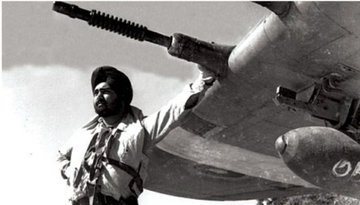
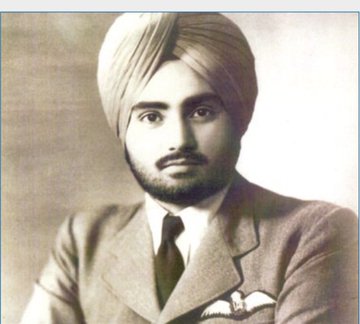
Oldest living IAF fighter pilot Dalip Singh Majithia turns 100, Air chief extends greetings
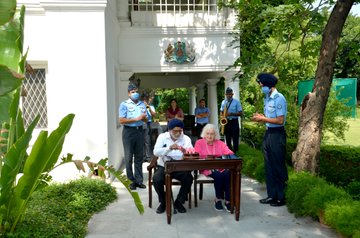
Air Chief Marshal Bhadauria conveyed warm greetings and heartiest congratulations to Retired Squadron Leader Dalip Singh Majithia on behalf of all air warriors, the IAF said.
IAF extended best wishes to Squadron Leader Dalip Singh Majithia (retd) on his 100th birthday on Monday. (@IAF_MCC/Twitter Photo )
Retired Squadron Leader Dalip Singh Majithia, who holds the distinction of being the oldest living IAF fighter pilot, turned 100 on Monday.Air Chief Marshal RKS Bhadauria extended his greetings to the centenarian who had retired in August 1947 when India achieved Independence.
“IAF extends its best wishes to Sqn Ldr Dalip Singh Majithia (retd) on his 100th birthday today. He retired in Aug 1947 & holds the distinction of being the ‘oldest’ IAF fighter pilot now,” the IAF tweeted.Air Chief Marshal Bhadauria conveyed warm greetings and heartiest congratulations to Majithia on behalf of all air warriors, the IAF said.
It also shared a short video clip on him on Twitter.
Gurdwara Shahidi Asthan is a historical shrine built at the spot where Bhai Taru Singh was injured fatally in 1745
Through a tweet, Punjab CM Amarinder Singh urged External affairs minister S Jaishankar to convey Punjab’s concerns in strongest terms to Pakistan to safeguard all Sikh places of reverence. (Sanjeev Sharma/HT file photo)
Punjab chief minister Amarinder Singh on Tuesday condemned attempts to convert a historic gurdwara into a mosque in Pakistan’s Lahore and called upon the Centre to communicate the state’s concerns to the neighbouring country.
Gurdwara Shahidi Asthan is a historical shrine built at the spot where Bhai Taru Singh was injured fatally in 1745.
“Strongly condemn attempts being made to convert holy Gurdwara Sri Shahidi Asthan in Lahore, site of martyrdom of Bhai Taru Singh Ji, into mosque. Urge @DrSJaishankar to convey Punjab’s concerns in strongest terms to Pakistan to safeguard all Sikh places of reverence,” Singh tweeted.
India has already lodged a strong protest with Pakistan over the issue.
“A strong protest was lodged with the Pakistan high commission today on the reported incident whereby Gurdwara Shahidi Asthan, site of martyrdom of Bhai Taru Singhji at Naulakha Bazaar in Lahore, Pakistan, has been claimed as the place of Masjid Shahid Ganj and attempts are being made to convert it to a mosque,” Anurag Srivastava, said the external affairs ministry’s spokesperson, said on Monday.
“The gurdwara is a place of reverence and considered sacred by the Sikh community. This incident has been viewed with grave concern in India. There have been calls for justice for the minority Sikh community in Pakistan,” Srivastava said.
He added that India had expressed its concerns in the strongest terms on this incident and called upon Pakistan to investigate the matter and take immediate remedial measures.
Pakistan was also asked to look after the safety, security and well-being of its minorities, including the protection of their religious rights and cultural heritage.
This was the latest in a string of protests made by India over the treatment of Pakistan’s minorities, especially Hindus and Sikhs.
China is following Mao’s dictum by keeping two-front war option against India open
ile image of Indian soldiers in Ladakh | By special arrangement
Mao Zedong, the founder of Communist China and legendary war planner, wrote during the Chinese resistance to Japanese occupation in the 1930s that “deliberately creating misconceptions for the enemy and then springing surprise attacks upon him are two ways — indeed two important means — of achieving superiority and seizing the initiative. Without preparedness superiority is not real superiority and there can be no initiative either.”
Amid the standoff on the Line of Actual Control (LAC) in June, China responded to India’s charges of what is euphemistically called ‘changing the status quo’ with denials and counter-accusations. But satellite images taken a week after the 15 June brutal clash in the Galwan Valley in Ladakh, that aggravated the weeks-old tension between the two countries among various friction points along the de facto border, clearly demonstrated barefaced Chinese aggression. This was the prelude to the untenable claim that the whole area belongs to China.
The menacing dimensions of China’s rise as a global power were on full display during the border stand-off. While China continues pays lip-service to “jointly work for de-escalation” to bring “peace and tranquility” along the border, the actual de-escalation on the ground has, it is widely believed, resulted in India losing territory in the Galwan Valley as well as elsewhere in Pangong Lake and Depsang Plains, close to India’s strategically-important Daulat Beg Oldie post near Karakoram Pass, in the region, giving the Chinese People’s Liberation Army a position of huge military and tactical advantage.
Indeed, the Chinese, after deliberately creating misconceptions and then springing surprise attacks on its perceived enemy, India, then took the corollary step of landgrab at multiple locations. This is how China changes the facts on the ground, as India has alleged. The world has been witnessing such deception after the Xi Jinping era began in 2012, as China set about pressing land and maritime boundary claims using a skewed sense of history and sovereignty.
India realised the magnitude of danger the Chinese territorial aggrandisement posed during the 2017 Doklam standoff between the two nations and began executing military infrastructure upgrades along the border to mirror China’s own buildup and aggression, much to Beijing’s resentment and animosity. The latest tension along the LAC occurred as China repeated its skullduggery of the past two years — pushing territorial claims and refusing to vacate the occupied land.
The latest escalation and the de-escalation process are a dire portent for India. But by cementing its occupation along LAC as it has done, China is signaling India not only to refrain from buttressing its military capabilities along the border but also that its incursions will continue. It is a signal meant to warn that China will assert its claims by intimidating and bullying India as it does other neighbours, even as it attempts to build a network of client states in South Asia selling its Belt and Road Initiative, of which the China-Pakistan Economic Corridor that will pass through areas claimed by India is a key project.
We are deeply grateful to our readers & viewers for their time, trust and subscriptions.
Quality journalism is expensive and needs readers to pay for it. Your support will define our work and ThePrint’s future.
The summitry between Prime Minister Narendra Modi and President Xi appears to have done little to moderate China’s belligerent behaviour. The chaos and confusion has shaken the Modi government because it did not expect personal diplomacy with great powers, in which it has invested heavily, to fail spectacularly in the case of China. The government knows that military confrontation with China would be unlike the one with Pakistan, where cross-border terrorism makes a retaliation enjoy greater domestic popularity and international legitimacy. The poorly demarcated and often undefined nature of the LAC might bring India to pull punches or risk an undesirable escalation with China, given the economic, military and diplomatic asymmetry between the two.
It is unlikely that the Chinese will ease their pressure along the disputed border, as it gives Beijing a military, diplomatic and political lever over India when New Delhi crosses a line in economic and foreign policy decision-making. Standing up to Chinese threat calls for deft diplomacy and recalibration of ties with Beijing on India’s part while remaining on its guard. However, if China is intent on annexing more territory in the Ladakh manner in future using brute force and trickery, it could spark more clashes, risking a limited or even full-blown war.
If a limited or even full-blown war comes to pass, India might have to reckon with a grim reality where it has been thrust into fighting a two-front war: on its northern (China) and western (Pakistan) borders. It is a clear and present danger it confronts.
Though Pakistan did not threaten India during the months-long Doklam standoff in 2017, the Indian Army had acknowledged since then that a two-front war is a likely scenario. In 2018, the then Army chief Gen Bipin Rawat, now the Chief of Defence Staff, has observed that a two-front war is a real scenario and India’s military is very much prepared for such an eventuality. In January this year, Army chief Gen Manoj Mukund Naravane reiterated that position, saying “we have to balance out our requirements and deployment to cater to threats from both the West and the North. Earlier the focus was only on western front. We feel now that both western and northern front is equally important and that is why we are re-balancing.”
Indeed, it is foolish to expect the impetuous army generals in Pakistan who indirectly control the country to remain indolent when India, which they consider their arch enemy, is in peril. China may even instigate Pakistan, the so-called all-weather friend but for all intents and purposes, its puppet. Both have found a common cause on India’s scrapping of special constitutional status to Jammu & Kashmir and bifurcation of the state. Pakistani generals pride themselves as shrewd and clever, having successfully executed, for decades, their double-dealing in Afghanistan while also keeping the unrest alive in Kashmir using jihadi terrorist groups. Yet, they also know the historical fact that a war with India is unwinnable. Profiting from a Sino-India conflict would be the easy way for them to torment and humiliate India with a double smackdown and to obtain maximum territorial advantage in Kashmir. As one expert has observed, even the parlous economic situation the country continually faced would not deter it. Therefore, Pakistan might be tempted to turn its covert war of thousand cuts to overt, or at least a Kargil-style one.
However, in spite of the official posture about India’s ability to fight a two-front war, it is likely India would find odds stacked heavily against it, more so as both adversaries are nuclear-armed. Questions are being raised about the viability and efficacy of the effort, as in the case of the crucial 17 Mountain Strike Corps. We have to bear in mind that a war with each country — with China in 1962 and with Pakistan in the Kargil confrontation in 1999 — had shattered many comforting myths our military top brass and political leadership believed in as viable strategy and plan until then. Complete intelligence failure, poor operational preparedness, lack of coordination, faulty or outdated weaponry, weak military infrastructure, political indecision, the list is long.
Following Mao’s dictum, keeping the two-front war option open could be the next Chinese gambit to deliberately create misconceptions about its intentions and then spring surprise attacks to make territorial gains over India. Therefore, it is crucial that India devotes substantial strategic thinking to prepare a verifiable blueprint to successfully wage and survive a two-front war.
Rajiv Jayaram is a New Delhi based researcher and journalist. Views are personal.
The article was first published on the Observer Research Foundation website.
Months before the India-China war in 1962, an Army platoon held on to a post in Galwan despite being surrounded. The Chinese later moved back by about 200 m.
epresentational image of the Indian Army in Ladakh | ANI File Photo
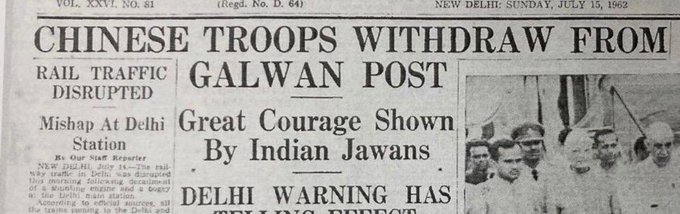
New Delhi: As India and China initiated disengagement steps in Eastern Ladakh, especially in the Galwan Valley, after 61 days of face-off along the Line of Actual Control (LAC), an old newspaper clipping made its way to social media. The headline of the report from 15 July 1962, three months before the India-China war, read, “Chinese Troops Withdraw from Galwan Post”.
The clipping is still being widely shared online, including in WhatsApp groups, by serving officers.
The old report gained relevance because government sources were gung-ho about the disengagement this time around while the Army was extremely cautious, following a policy of “trust but verify”.
The disengagement process that started in the Galwan Valley earlier this month was the second attempt by India and China to step back from their confrontation that has triggered fears of a larger conflict. The first attempt last month ended in a bloody clash near the Y Junction in Galwan on 15 June, leading to the death of 20 Indian soldiers and undisclosed casualties on the Chinese side.
The social media posts sharing the 1962 news report sought to draw a parallel with the latest border standoff. However, the events 58 years ago were vastly different.
China’s annexation of Tibet, building of a road network in Aksai Chin and the Jawaharlal Nehru government’s ‘Forward Policy’ — under which the Army was tasked with the objective of moving closer to the border and setting up posts to prevent the Chinese from coming in and laying claim to India’s territory — led to a war in October 1962.
But months before that, the Galwan operation by an Army platoon remains a story of great courage and determination despite the harsh terrain and weather.
In accordance with the Forward Policy, the platoon managed to reach the Galwan Valley in the early summer of 1962 and set up a post on 5 July. The soldiers were from the 1/8 Gorkha Regiment who were brought into the Ladakh sector.
Four battalions were posted in Ladakh but the numbers were inadequate to defend the front, covering nearly 480 km from Daulat Beg Oldi (DBO) in the north to Demchok in the south.
So, nearly 36 posts were created with a strength of just 10-20 soldiers each in forward locations. These posts were set up to show presence and to deter Chinese from coming further in.
However, the Galwan Post played two roles. While it established Indian presence in the Valley, it also cut the line of communication to a Chinese post further down.
Unlike how soldiers are flown in via helicopters now or driven down to the confluence of the Shyok and Galwan rivers, the soldiers in 1962 had to walk long distances in harsh terrain and poor clothing to establish the post.
Speaking to ThePrint, former Northern Army Commander Lieutenant General H.S. Panag (Retd) said there are two routes from the area of Hot Springs and Gogra Post. One goes to the east to Kongka La, which is almost the eastern edge of Aksai Chin. There is another route that goes from Hot Spring northwards to the source of the Galwan river.
“What people don’t realise is that in 1962 when we established the Galwan Post, it was 80 km upstream. And the route that we took was from Hot Springs,” he said.
“So from Hot Springs we approached the source of the Galwan river. We actually went and established the post in 1962 behind the Chinese. The direct access to Aksai Chin is from DBO and Galwan and hence the Chinese are very sensitive,” he added.
On 6 July 1962, the Chinese spotted the Gorkhas and reported this to their headquarters.
Four days later, about 350 Chinese troops advanced to the Indian post manned by about 30 soldiers. They closed in at approximately 45 m from the post and encircled it. Records show that on the night of 12 July, the Chinese came within 15 m of the post.
Despite being outnumbered, the Gorkhas stood their ground under Naik Subedar Jung Bahadur Gurung. They didn’t open fire as the instructions were clear — open fire only when fired upon.
The Chinese later moved back from the Indian post by about 200 m in what was seen as their attempt to allow the Indian soldiers to go back.
This resulted in the headline, ‘Chinese Troops Withdraw from Galwan Post’.
Since the Indian post in Galwan had limited supplies, an attempt was made in the subsequent days to supply food and material to the 30 soldiers by helicopters.
Shiv Kunal Verma, a military historian, wrote in his book, 1962: The War that Wasn’t, that starting 4 October, 5 Jat’s Alpha company under Major S.S. Hasabnis was flown in to the post via Indian Air Force (IAF) helicopters.
“The Gorkhas, having lived cheek by jowl with the Chinese for more than two months, were ferried out by returning Mi-4 helicopters over the next few days,” wrote Verma.
Hasabnis spoke to NDTV in 2012 about the incident, saying “When we were flown into that post we knew we were walking into a death trap.”
He added, “But the 60 had no meaning because more than 2,000 Chinese were around us in circled conditions and not only that, they had a very big ring around us of trenchers, morchas, communication weapons and they used to show their weapons and the jawans used to say, ‘saab yeh to haath baandh ke bhi ayenge to hum inko kahi nahi le jaa sakte (Even if they come with their hands tied, we can’t take them anywhere)’. Even our jawans were making a joke out of it.”
Hasabnis’ post was overrun in an hour on 20 October, the first day of the 1962 war. He was taken prisoner and had been in a prisoner of war (PoW) camp for seven months.
His son, Lt Gen S.S. Hasabnis, is now the Deputy Chief of the Army Staff, Planning and Systems.
Why was the Forward Policy devised?
Writing about Nehru government’s Forward Policy, acclaimed lawyer and political commentator A.G. Noorani said in 1970: “Few episodes in Sino-Indian relationship have aroused greater controversy than the ‘forward policy’ adopted by India towards the close of 1961. It has been cited variously in explanation, mitigation or justification of China’s military attack in October 1962.”
In his review of three books written on the 1962 war — Himalayan Blunder by Brigadier J.P. Dalvi, The Untold Story by Lt Gen B.M. Kaul, The Guilty Men of 1962 by D.R. Mankekar — Noorani wrote that the policy has been criticised within India itself as a typical case of allowing domestic political considerations to override those of national security.
With regard to patrolling, Noorani noted, Nehru approved the Army’s proposal to dispatch regular patrols “up to the frontier claimed by the Chinese according to their 1952 map”. The instructions were issued in December 1960 but weren’t implemented for some time due to lack of resources.
However, the Chinese remained active and spread even beyond the 1956 claim line in Ladakh and set up new posts and constructed roads linking them to rear bases.
“This advance and India’s apparent helplessness added to the mounting domestic criticism of Nehru’s entire policy towards China. The Forward Policy was devised in response to both the advance and criticism,” Noorani wrote.
Kaul, in his book that Noorani described as “laboured attempt at self-exculpation”, said Nehru stressed in the autumn of 1961 that whoever succeeded in establishing even a symbolic post would establish a claim to that territory.
“The whole basis of Forward Policy was the assumption that ‘China was unlikely to wage war with India’. When Mr Nehru thought of war, he always thought of total war and not limited war,” Kaul wrote.
In his book, Mankekar said the Army HQ directed its Western and Eastern Command to patrol as close as possible to the international border to establish additional posts to prevent the Chinese from advancing further and to also dominate any Chinese posts already established in Indian territory.
Records show the message also said, “This Forward Policy shall be carried out without getting involved in a clash with the Chinese unless it becomes necessary in self-defence.”
Former 14 Corps Commander Lt. Gen. P.J.S. Pannu tells ThePrint China’s LAC action came after joint exercise with India, like Pakistan attacked Kargil despite confidence-building measures.
Lt Gen. P.J.S. Pannu (retd) | ThePrint
New Delhi: The Chinese action at the Line of Actual Control (LAC) in Eastern Ladakh in June — which came months after a joint military exercise between the Indian and Chinese armies — bears a resemblance to the Kargil attack of 1999, former 14 Corps Commander Lt Gen. P.J.S. Pannu said.
The Leh-headquartered 14 Corps is the only corps in the Indian Army that faces both Pakistan and China. The world’s highest battlefield Siachen falls under its purview.
In an exclusive interview to ThePrint, Pannu said back then in 1999, the Pakistani Army was planning an attack on India despite multiple confidence-building measures taken in the months before it.
He added that the standoff with China was a surprise because both armies had held a joint “hand-in-hand” military exercise just months ago in December.
“When the two armies are doing an exercise as part of the confidence-building measures and one is planning to launch an attack on the other, it is a similar story as Kargil when the Pakistani Army soldiers, in the guise of freedom fighters, were planning to occupy areas in Kargil, despite the past confidence-building
Months before the Kargil conflict broke out, then Prime Minister Atal Bihari Vajpayee and his Pakistani counterpart Nawaz Sharif had also hugged each other at the Wagah border, during the former’s visit to Lahore.
The former 14 Corps Commander also brought out the difference between the Line of Control (LoC) with Pakistan and the LAC with China. At the LAC, he said, the two armies do not defend borders but dominate them.
“You dominate through patrolling and therefore you talk about patrol points,” he said. “If you were defending, it would become the LoC, where the troops will be eyeball to eyeball 24×7 and all 365 days.”
Asked if Ladakh should have an additional permanent division, he said the answer was “yes and no”.
“To go in for a force accretion is easy, but the consequences would amount to asking your adversaries to build up,” he said. “So when the build-up happens on both sides, you are militarising the area as mirror movements will happen.”
He, however, said with two nuclear armed nations, “it is not desirable” to militarise the borders to a point that could result in a military accident and disaster more easily.
The former corps commander also said these borders are better policed as opposed to hardcore military deployment, but added that policing can only happen when there is better understanding and maturity between the two.
“It can only happen to settle the boundary question amicably so that there is no ambiguity in the understanding of the two militaries on the border alignment,” Pannu said.
‘For Chinese, coming in during winter is more convenient’
Pannu, who has served in the area in 2016-17, said the terrain on the Chinese side of the LAC gave their troops an advantage as the ground is not only more open but also has thin snow levels. He added that the Chinese have built better infrastructure and have been doing so over a period of time.
“As a result, armed and other vehicles that are centrally heated can come in more quickly. During the winters, it hardly snows in that area,” he said. “So, their side of the passes are always open and to that extent, their chances of coming into those areas during winters is more convenient and more possible.”
On the Indian side, however, he added, snow levels are more and the areas are hilly, resulting in Indian troops having to navigate tougher terrain and weather. Therefore, Pannu said, the Indian Army is better equipped to sustain in such high-altitude areas having an advantage over the PLA.
“Mountains favour the defender… our troops are located on high ranges,” he added.
To fight a conventional battle in the mountains, the former corps commander said, both sides will have to build huge infrastructure because of the complications of fighting in high altitude.
‘Interpretation difficulties prolong corps commanders’ meets’
In the backdrop of the recent Indian and Chinese corps commanders’ meetings, one of which lasted nearly 15 hours, Pannu said if both spoke the same language, the duration would be reduced to half or even to one third of the time.
“The Chinese speak in metaphors. When you convert metaphoric language into direct language, you can miss something said or unsaid,” he said.
The discussions do not usually always take place on one map, he said.
“The Chinese have their own maps and we do not agree with how they are made and the lines drawn. To start talking the same thing at the same level of understanding takes very long, therefore making the reference to the same points on ground takes a long time,” he said.
According to Pannu, the Chinese often talk about historical records and keep pulling out maps after maps, even misquoting Indian Army senior officers’ past statements to keep substantiating their point of view.
They often keep justifying action of troops, covering up their miscalculations made by their own subordinate commanders on ground, he said.
“In the absence of an overwatch, which itself is not a good idea, the two Asian nations should sort out the disagreements between themselves amicably and in a mature way,” he said.
“If all of a sudden you increase the frequency of patrols, they would get rattled and come to the hotline and ask why we are sending a patrol everyday or every second day,” he said.
Pannu also said retrograde operations are always more complicated.
“There is a trust deficit between the two sides on ground and a military commander on ground would not want to leave the ground to be occupied by the opponent,” he said.
So there is always going to be a delay because the commanders would want to make sure that there is a clean break between the two opposing forces.
“It is a transition which can take a long time,” Pannu said. “Judgements cannot be made frequently on who is winning or losing. These movements are deliberate, slow and have to be carried with a lot of caution.”
We often want to think positively, but we are behaving negatively. Mind and body are in opposition. You want to be happy, but the body is on a different programme because the bondaged sub-conscious has been programmed to do so. This means that you have to change your memorised negative behaviour that is part of your identity. You have to recondition the body to a new mind.
Need to reinvent: Education today has become synonymous with degrees and securing maximum marks which creates avoidable problems for the youth and a different kind of resourcefulness is needed to face the challenges of life.
Maj Gen Ravi N Tikku (retd)
Educationist
For him who has conquered the mind, the mind is the best of friends; but for one who has failed to do so, his mind will remain the greatest enemy. — Bhagavad Gita
Are our schools and colleges preparing children for life in today’s bizarre times? We must deepen our connection with life and people. The essence of life is in unity and harmony, your oneness with all, and so is the purpose of true education. Daily, we read of actions and behaviour of youngsters that show an absence of self-regulation, ethics and a sense of social responsibility. Environmental degradation adds to the ‘madness’. In such a scenario, how do we nurture the youth into a balanced person, abiding by harmony?
Education today is synonymous with degrees, securing maximum marks and attractive placements causing avoidable anxiety, even suicides. You need a different kind of resourcefulness to deal with the daunting challenges of life — how you will handle yourself and others. This0 is the new yardstick to assess people. Creativity and innovation seem to flow from ideas with multiple perspectives, albeit coupled with an ‘open mind’ that embraces the new and the unfamiliar. It is then that we keep reinventing ourselves. This promotes personal growth, robust health and higher academic achievement as well. The mind, the most powerful organ of the human body, comes into play. You take charge of the mind, you end up taking charge of your life, and a mindful journey begins from within.
How do we organise and empower the mind? You, your mind, closed the door; only you, your mind, can open that door to understand the nature of mind and what is happening inside it. We are living in patterns and habits, and following recurrent pathways daily. The first step is to clear the mind of all negative thoughts and develop new paradigms that are in harmony with the reality we want. We must not stop there, otherwise, it will not metamorphose into a journey.
Think of your mind as having two parts. The conscious or logical mind that controls five per cent of your life, is creative and open to choices in life. It is a thin veneer of awareness covering a more powerful subconscious or habit mind, the part responsible for habits, beliefs, and behaviours that works on autopilot. It stores all the past life experiences or impressions and the appropriate one is recalled in response to a given situation. Ninety five per cent of your life is an expression of the programmes in the sub-conscious.
The point of concern is that most of the past impressions take root when you are still a child, with your mental capacity and judgement seriously limited. This biological blueprint carries socially unacceptable painful emotions and traumatic memories that disempower you, cause anxiety and block you from doing what you are now capable of.
We often want to think positively, but we are behaving negatively. Mind and body are in opposition. You want to be happy, but the body is on a different programme because the bondaged sub-conscious has been programmed to do so. This means that you have to change your memorised negative behaviour that is part of your identity. You have to recondition the body to a new mind, where tools like meditation, self-enquiry and contemplation do not allow the thoughts to overwhelm you. These practices entail a change of your being, a creation of a new personal reality that thinks, feels and acts afresh. Let us change in a state of joy and inspiration rather than allow a calamity to happen. You just have to awaken to who you truly are to empower yourself.
True education can only begin out of a foundation of self-awareness, the indispensable key to self-discovery. It gives a new perspective outside the constant I, Me and Mine syndrome of the ego. Once there, there is an opportunity for real change. You then develop a holistic approach to learning, one that seeks to open the mind, nurture the spirit and awaken the heart. There is an alignment between what you think, what you say and what you do. You evolve and develop an outlook, a nazariya, of viewing the world inside out. There is balance and harmony in your behaviour and relationships at work, at home and at play.
An uplifted mind acts with a purpose and rejuvenates your power to create. The senses are withdrawn and the ego is subdued. You can now indulge in self-talk and transform negative emotions in the sub-conscious mind.
There is another powerful instrument of mindfulness, an awareness of living in the moment. We must practice to arouse the seed of mindfulness present in all of us in the sub-conscious to sprout and help us to change the negative impressions with one-pointed concentration and breath control, and at the same time, water the neighbouring seeds of positive emotions of compassion, care and love.
In life, we are feeding ourselves with impressions all the time. We exercise selectivity and choice in all our transactions, be it grocery items, clothes, cuisine, seeing films or visiting restaurants. Why not do the same with our impressions? There are various ways to entertain positive thoughts, such as proximity to nature, music, poetry and inspirational reading — tonic for the mind and the soul. Excellent de-stressors, they help us to live in the moment with conscious attention, imbibe a feeling of unity in diversity and oneness of creation. This develops a sense of wonder, sensibility and sensitivity towards the beauty of things around us. There is enthusiasm and positivity in whatever we do.
A healthy mind in a healthy body is the key to happiness, our true nature.
he historic peace deal with Taliban is actually a US troop extrication agreement sans admission of military failure, the price for which is being paid by the Afghans who curse Taliban for sparing foreign troops, but killing fellow Afghans. For the US, presidential elections, not the situation in Afghanistan, will dictate the pace of withdrawal.
Reconciled: With Abdullah as head of reconciliation process, President Ghani has said Afghanistan no longer has a two-headed government.
Maj Gen Ashok K Mehta (retd)
Military commentator
President Trump is so deeply distracted by the Covid pandemic, sparring globally with China and his re-election campaign, that the Afghanistan peace process consummated on February 29 has gone off the radar. Still last month, both President Ashraf Ghani and chief of the High Peace Council for Reconciliation, Abdullah Abdullah, spoke virtually to the international community about reconciliation and the intra-Afghan dialogue. A deal struck between Ghani and Abdullah in May led to Ghani being accepted by Abdullah as President and Abdullah named head of the reconciliation process with some of Abdullah’s people made government ministers.
Speaking on June 11, Ghani mentioned Afghanistan no longer has a ‘two-headed government’, paid rich tributes to American tax-payers and soldiers, adding Afghanistan would shift focus from security to development. On the peace process, he said while 3,000 of the 5,000 Taliban were released, very few of the 1,000 Afghan soldiers had been freed. He said General Bajwa visited Kabul on June 9 and there was the closest alignment with Pakistan, adding that both agreed on India’s importance in the peace process. The Afghan talks team was inclusive and Abdullah had been elected by the Loya Jirgah to lead it. General David Petraeus who was among the audience, said the US force level below the 8,600 combatants — 4,800 soldiers were taken out as part of the US deal with Taliban — was unacceptable.
On June 24, Abdullah, attired in a Bond Street suit, observed that Taliban violence was mounting, with 422 attacks in last two weeks, resulting in 291 Afghan soldiers killed and 515 wounded. He said 75 per cent of the Taliban prisoners were released and intra-Afghan talks, scheduled for March 10, were likely to start in end-June, but the agenda had not been drawn. He emphasised that the US troop withdrawal was ‘condition-based’ and that even if the foreign forces withdraw prematurely, the Taliban could not take out the government though only US commando forces, air and logistics support were available. While a mutually hurting stalemate was missing, the Taliban was divided over the talks. When asked who was the final decision-maker, he admitted it was President Ghani.
The Taliban have received an image makeover; recognised by the US as Islamic Emirate — not Republic as Kabul would like; Trump speaking to co-founder of Taliban, Mullah Baradar; its deputy military leader Sirajuddin Haqqani carrying a US bounty of 10 million dollars being published in an Op-ed of New York Times (February 20); and the Taliban promulgating a second three-day Ramzan ceasefire.
In 2010, Taliban control extended to 90% of Afghanistan; today, out of 421 districts, they control only 74 and hold just 22 of them. They have been unable to take and hold any provincial capital, even Konduz, which they have sought thrice. Serious differences exist between Baradar and the deputy head of Taliban’s Qatar office, Sher Stenakzai. Hardliners among the Taliban who worry they will lose their pay and perks are ambivalent about integration with Afghan security forces. Questions remain on the Taliban commitment to the peace agreement with US as the UN Report of 2019 on terrorism confirms that the Taliban have not severed contact with the Al Qaeda and other militant groups (as required by agreement), adding that 615 Pakistani nationals are fighting in Afghanistan. Doubts about the Taliban acceptance of Afghan Constitution, power sharing and cessation of hostilities abound. In a rare message during Ramzan, supreme leader Haibatullah Akhundzada, said: “US should not waste this opportunity to end its longest war”. Emboldened by the deal, Taliban had launched since the agreement till May, 3,800 attacks with Kabul suffering an average attrition of 68 soldiers daily.
While Mullah Yakub, son of the founder of Taliban, Mullah Omar, has been appointed military commander, which may create friction with Haqqani, four unnamed Taliban stalwarts have been included in the talks team.
According to all but the blind, Pakistan continues to remain in significant control of Taliban through sanctuaries, training, armaments and logistics it provides. Rawalpindi’s obsession with strategic depth, friendly government in Kabul or a government more amenable to its strategic concerns than it is to India’s, is the bottomline. Pakistan’s Afghanistan policy is circumscribed by five Noes: no two-front situation; no Taliban in full control of Kabul; no hasty US withdrawal; no Islamic Emirate and no support for Pakistani Taliban. These concerns stem from deep insecurities from India. Changing Rawalpindi behaviour in Afghanistan will require combined pressure from the US, the international community and FATF. But it has two friends in the P5 in the UNSC it can count on — China and Russia.
India has taken a backseat in Afghanistan despite its 3 billion dollar investment in its development, which has won it affection and popularity, but no political influence. Despite myriad advice on opening lines with Taliban whose role in a future government in Kabul is inevitable, New Delhi has consistently stuck to no contact with Taliban, a terrorist organisation, till it is earnestly engaged in an intra-Afghan dialogue. Both the US and Kabul have been telling India it will have an important role in the peace process. India has ceaselessly repeated the mantra of Afghan-owned, Afghan-driven and Afghan-controlled peace process when it knows the Americans and Europeans are piloting it. On July 5, India signed five agreements with Kabul under its new development partnership. In his Afghan policy enumerated in 2017, Trump had called India the key development partner in Afghanistan. Nearly 135 days after the accords with Taliban and Afghanistan, as agreed, the US has vacated five bases, retaining Bagram and Kandahar. 420 dangerous Taliban prisoners not being released is being attributed to deadly attacks this month reflecting its bargaining leverage.
The historic peace deal is actually a US troop extrication agreement sans admission of military failure, the price for which is being paid by the Afghans who curse the Taliban for sparing foreign troops but killing fellow Afghans. US Central Command’s General Frank Mckenzie’s avowal that full withdrawal will take place as per agreement (May 14, 2021) and will depend on the Taliban has to be taken with a pinch of salt. US elections, not the Taliban or situation in Afghanistan, will dictate the pace of US withdrawal.
What’s up with China In an attempt to redraw boundaries, it is engaging in conflicts with neighbours
Jolt: ASEAN members have demanded that differences in the South China Sea should be settled in accordance with the provisions of the UN law of the seas.
G Parthasarathy
Chancellor, Jammu Central University & former High Commissioner to Pakistan
Negotiations for complete withdrawal of Chinese troops in Ladakh are continuing in what is likely to be a long-drawn out process. The ground situation in Ladakh will change, around mid-November, when the winter commences. While several reasons have been given for the intrusions in Ladakh, there is one inescapable reality. China does not respect the inviolability of what India regards as its existing borders. At the same time, China refuses to present a detailed map on where in its view, the borders/LAC, emanating from the 1962 conflict, lie.
Any negotiations on resolving the border issue are meaningless, until China presents India with its maps, depicting its version of the LAC. It periodically extends its borders, triggering conflict and tensions. It has no interest in serious negotiations on the border issue, even though the guiding principles for resolving differences were agreed to in 2002, between PMs Vajpayee and Wen Jia Bao. India has, therefore, to be prepared for border tensions, as long as this situation continues. While another flare-up cannot be ruled out, we should decide how we are going to deal with China politically, diplomatically and militarily. Chinese media reports depict a sense of Chinese disdain for India’s policies and capabilities.
Complementing China’s hostility are its long-term policies to ‘contain’ India through supply of nuclear weapon designs and development of plutonium facilities to Pakistan. This is complemented by China’s continuing supply to Pakistan, of fighter aircraft, tanks, missiles, radars, UAVs, howitzers, frigates, submarines, etc. China has also extended unprecedented support to Pakistan in international forums, including the UNSC on the issue of J&K. China also deals directly with governments in PoK. It undertakes construction of roads and hydel projects across PoK. Moreover, it continues to support leaders and parties in South Asia that are none too friendly towards India, as it is doing in Nepal and has attempted earlier, in Sri Lanka, the Maldives and Bangladesh.
China received an unexpected jolt to its policy of coercively violating the maritime boundaries of all its neighbours, including Japan, Taiwan, the Philippines, Vietnam, Indonesia, Malaysia and Brunei. Leaders of the 10 ASEAN member states demanded on June 27 that territorial and other differences in the South China Sea should be settled in accordance with the provisions of the UN Convention of the Law of the Seas (UNCLOS). They asserted: ‘UNCLOS sets out the legal framework within which all activities in the oceans and seas must be carried out.’ China has crudely used maritime military power to enforce its illegal claims. The primary motive for such behaviour is that the maritime space China is seeking contains 11 billion barrels of untapped oil and 190 trillion cubic feet of natural gas. China now faces ASEAN countries that have objected to its bullying and territorial ambitions in the South China Sea. India, on the other hand, has settled its maritime boundaries with all its eastern neighbours.
The strongest statement against China for its bullying was by US Secretary of State Michael Pompeo, who averred on July 13: ‘Beijing uses intimidation to undermine the sovereign rights of Southeast Asian coastal states in the South China Sea, bully them out of offshore resources, assert unilateral dominion, and replace international law with might makes right.’ Beijing’s approach has, however, been clear for years. In 2010, then-PRC foreign minister Yang Jiechi told his ASEAN counterparts that ‘China is a big country and other countries are small countries and that is just a fact.’ This Chinese predatory worldview has no place in the 21st century. The US has simultaneously resorted to a display of military power. It has deployed two aircraft carriers in the South China Sea, directly challenging China’s coercive policies. Adding to China’s woes are the pressures from the US and others, for its actions in curbing democratic freedoms in Hong Kong, which are clearly in violation of China’s 1997 agreement with the UK. The US and Japan are also considering moves to dilute their existing economic relationships with China, even as China seeks to build a new relationship with Iran, involving an investment of $400 billion in the petroleum sector.
India needs to activate the recently established Quad for formulating a strategic framework to deal with China’s challenges and territorial ambitions in the South China Sea and the Indian Ocean. The Quad should associate Indonesia and Vietnam on issues of maritime security, across the Straits of Malacca. We should, similarly, work with the US 5th Fleet, based in Bahrain, and France, which has a naval base in Djibouti, to cooperate in guaranteeing the security of energy supplies. India’s credibility will be vastly enhanced by supplying Vietnam Brahmos missiles that it has for long asked us, for its maritime security, in the face of continuing Chinese attacks. There is also need for a more focused effort on the well-documented accounts of China’s atrocities on its over one million Muslims, who are detained in concentration camps, prisons, and forced labour, while being subjected to electrocution, water-boarding and beatings. In the ultimate analysis, India will have to make it clear to China that seeking territorial gain by refusing to spell out the contours of the LAC would not work to its advantage.
Peace has returned to the Galwan valley, for the present. Our Parliament and people would justifiably want more details of the implications of what has transpired during the Chinese incursion into Ladakh. One looks forward to these issues being discussed frankly in our Parliament. A national consensus is imperative, if we are to successfully deal with the challenges a growingly assertive China presents to India and the world.
State Stalwarts
DEFENCES FORCES RANKS
ARMY, NAVY, AIRFORCE RANKS
FORMATION SIGNS
FORMATION SIGNS
ALL HUMANS ARE ONE CREATED BY GOD
HINDUS,MUSLIMS,SIKHS.ISAI SAB HAI BHAI BHAI
CHIEF PATRON ALL INDIA SANJHA MORCHA
LT GEN JASBIR SINGH DHALIWAL, DOGRA
SENIOR PATRON ALL INDIA SANJHA MORCHA
MAJOR GEN HARVIJAY SINGH, SENA MEDAL ,corps of signals
.
.
PATRON ALL INDIA SANJHA MORCHA
MAJ GEN RAMINDER GORAYA , CORPS OF
sanjhamorcha303@gmail.com
PRESIDENT HARAYANA STATE CUM COORDINATOR ESM
BRIG DALJIT THUKRAL ,BENGAL SAPPERS
PRESIDENT TRICITY
COL B S BRAR (BHUPI BRAR)
PRESIDENT CHANDIGARH ZONE
COL SHANJIT SINGH BHULLAR
.
.
PRESIDENT PANCHKULA ZONE AND ZIRAKPUR
COL SWARAN SINGH
PRESIDENT SAS NAGAR (MOHALI)
COL BALBIR SINGH , ARTY
INDIAN DEFENCE FORCES
DEFENCE FORCES INTEGRATED LOGO
FORCES FLAGS
15 Th PRESIDENT OF INDIA SUPREME COMMANDER ARMED FORCES
Droupadi Murmu
DEFENCE MINISTER
Minister Rajnath Singh
CHIEF OF DEFENCE STAFF (2nd)
General Anil Chauhan PVSM UYSM AVSM SM VSM
INDIAN FORCES CHIEFS
CHIEF OF ARMY STAFF(29th)
General Upendra Dwivedi, PVSM, AVSM (30 Jun 2024 to Till Date)