Sanjha Morcha

Situation along LAC tense with full army deployment

A satellite image of Galwan Valley in Ladakh, India.

A satellite image of Galwan Valley in Ladakh, India. (via REUTERS

Though the situation has not escalated since the Galwan incident, the Chinese People’s Liberation Army (PLA) is continuing troop accretion with support elements on standby, Indian officials familiar with the matter said  

The situation continues to remain tense along the 3,488km-long Line of Actual Control, with both the Indian and Chinese armies fully deployed, air bases activated, and the navy on standby, following the June 15 face-off in the Galwan sector.

Though the situation has not escalated since the Galwan incident, the Chinese People’s Liberation Army (PLA) is continuing troop accretion with support elements on standby, Indian officials familiar with the matter said. The Indian Army positions are also being beefed up in response to the PLA build-up in the Xinjiang and Tibet regions, and the air forces of the two sides are keeping surveillance watch on each other, the officials added.

One of them said on condition of anonymity that Indian military commanders have issued instructions to use force if PLA troops cross the Galwan nullah to attack the Indian Patrol Post 14. The PLA has amassed troops across the nullah, and both sides are holding ground, he said.

The situation on ground is no different from June 16, with the two armies not thinking in terms of disengagement at the moment along the lines of the June 6 framework laid down in a Lt General-level meeting. Senior Indian military commanders are watching the PLA movement in the Aksai Chin region, while the ministry of external affairs is trying to search for a diplomatic solution. “The situation has cooled to a little extent, but de-escalation appears to be a long haul due to the position China has taken on the Galwan Valley,” said a senior Indian diplomat.

Military watchers said they were shocked by the level of aggression on social media — on both sides of the border — with several people asking their respective armies for retribution. “All those asking for revenge are war mongers who do not have any idea of destruction a war between two nuclear nations can cause. If the Indian or Chinese soldiers had not obeyed the 1996/2005 military protocol for the LAC on June 15, there would have been carnage leading to a vertical escalation all across the border with immediate violence on nearby patrolling point 15 and 17,” said a former Indian Army chief.


Armed forces get powers to buy critical weapons, ammunition up to Rs 500 crore per acquisition

Armed forces get powers to buy critical weapons, ammunition up to Rs 500 crore per acquisition

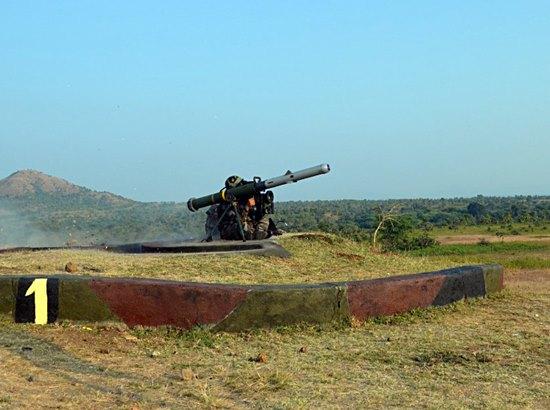
A Spike anti-tank missile test-fired in Mhow on November 28, 2019.

New Delhi, June 21, 2020: Amid the ongoing border dispute with China, the three defence forces have been given financial powers upto Rs 500 crore per project for the acquisition of critical ammunition and weapons which would be required in case an all-out or limited conflict breaks out.

“The Vice Chiefs of the three services have been given the financial powers up to Rs 500 crore per project to acquire the required weapon systems under fast track procedures needed to fill whatever shortcomings or requirement is felt,” a senior government official told ANI.

The requirement of granting this power again to the forces was felt by the government after the Chinese aggression in Eastern Ladakh and the way they have deployed their troops in large numbers there along the Line of Actual Control (LAC).

Similar financial powers were given to the armed forces after the Uri attack and the Balakot aerial strikes against Pakistan.

The Air Force had emerged as the biggest beneficiary of the powers granted by the government after the Balakot airstrikes as they procured large number of equipment including the Spice-2000 air to the ground stand off missiles, Strum Ataka air to ground missiles along with multiple spares and air to air missiles for its aerial fleet.

The Army has acquired the Israeli Spike anti-tank guided missiles along with the precision-guided Munitions from America.

The main focus in granting these powers to forces by the government has been to prepare themselves at a short notice for any contingency. (ANI)


Indian Army soldier killed in cross-border shelling by Pakistan in J-K’s Rajouri; fourth to die on LoC this monthIndian Army soldier killed in cross-border shelling by Pakistan in J-K’s Rajouri; fourth to die on LoC this month

An Indian Army jawan patrolling at the Line of Control (LOC) in Poonch district of Jammu and Kashmir.

An Indian Army jawan patrolling at the Line of Control (LOC) in Poonch district of Jammu and Kashmir. (PTI File Photo )

An Indian Army soldier was killed as Pakistan violated the ceasefire in several sectors along the Line of Control (LoC) in Poonch and Rajouri districts of Jammu and Kashmir on Monday, initiating a “befitting reply” from the Indian Army, officials said.

A defence spokesperson said Pakistan army violated the ceasefire in Poonch’s Krishna Ghati at around 3:30am on Monday.

“Pakistan initiated unprovoked ceasefire violation by firing with small arms and shelling with mortars along LoC in Krishna Ghati Sector… Indian Army retaliated befittingly,” the spokesperson said.

The ceasefire agreement was violated again by Pakistan in Nowshera sector of Rajouri at about 5:30am, the spokesperson added.

Pakistan’s army has violated the ceasefire more than 1,400 times this year. Last year, there were 3,168 ceasefire violations and 1,629 in 2018.


Army Changes Weapon Rules Along Line Of Actual Control After Ladakh Clash- NDTV Report

Army Changes Weapon Rules Along Line Of Actual Control After Ladakh Clash- NDTV Report

Army Changes Weapon Rules Along Line Of Actual Control After Ladakh Clash

New Delhi, June 21, 2020: 

The Army has changed rules of engagement along the LAC (Line of Actual Control) with China, empowering field commanders to sanction use of firearms under ”extraordinary” circumstances. Prime Minister Narendra Modi had earlier also said the Army has been given full freedom to deal with the on-ground situation.

Read more at NDTV link :

https://www.ndtv.com/india-news/india-china-face-off-ladakh-rules-of-engagement-along-lac-changed-days-after-20-indian-soldiers-killed-2249913

New Delhi, June 21, 2020: After an incident of the violent face-off with China in Eastern Ladakh, the Indian Army has changed its rules of engagement on the Line of Actual Control (LAC) which would allow field commanders to order troops to use firearms under “extraordinary” circumstances.

The Rules of Engagement have been changed and the field commanders have been empowered to order troops to use firearms under extraordinary circumstances, army sources said here. Prime Minister Narendra Modi had also stated that the Army has been given full freedom to deal with the situation on the ground.

The Indian side is expected to discuss the issue with the Chinese Army during the proposed talks at Corps Commander level to defuse the tensions in Eastern Ladakh.

Both sides don’t fire at each other as per the border agreements between them signed in 1996 and 2005.

They had also agreed not to use any blasting or firearms within two kilometres of the LAC.

The Galwan river clash near Patrolling Point 14 claimed 20 Indian Army personnel lives who removed a Chinese observation post from there.


Internet blackout in Myanmar’s Rakhine state enters second year

The government shut down mobile data in several townships across Rakhine state and neighbouring Chin state on June 21 last year.

The government shut down mobile data in several townships across Rakhine state and neighbouring Chin state on June 21 last year.(REUTERS)

The internet shutdown in Myanmar’s conflict-ridden northwest, described by rights groups as the world’s longest, has entered second year, Al Jazeera reported.

The Myanmar military has been embroiled in a civil war since January 2019 ainst the Arakan Army, a rebel group fighting for more autonomy for ethnic Rakhine Buddhists.

The government shut down mobile data in several townships across Rakhine state and neighbouring Chin state on June 21 last year, causing panic among residents desperate for information about the unrest.

On Friday, Human Rights Watch (HRW) called for an immediate end to “the world’s longest government-enforced internet shutdown”.

“It’s critical for civilians to get the information needed to stay safe” during a global pandemic, said HRW’s Linda Lakhdhir.

The country has so far recorded 287 coronavirus cases, including six deaths, but experts fear the low numbers are due to a lack of testing.

Earlier this month, a government official said the internet shutdown would continue until at least August 1 in eight townships.

Telecom companies said the government ordered the blackout to prevent “illegal activities”.

The conflict has seen hundreds injured and tens killed as well as tens of thousands of civilians displaced, with both the military and the Arakan Army trading allegations of abuses.

Few in Myanmar have personal computers, the majority relying on mobile phones to access the internet for communications and information – making those under the blackout especially vulnerable to Covid-19.

Rights groups have also condemned the blocking of several local media websites and are urging telecom firms to push back against the government’s orders.

Rakhine state is also home to the Rohingya, a mostly Muslim minority group who faced a brutal crackdown by the military in 2017.

Some 750,000 fled to neighbouring Bangladesh from violence that has led to charges of genocide against Myanmar at the UN’s top court.


Armed forces given full freedom to give ‘befitting’ reply to any Chinese aggression at LAC

New Delhi: The armed forces deployed along the 3,500-km de-facto border with China have been given “full freedom” in giving “befitting” reply to any Chinese aggressive behaviour, government sources said after Defence Minister Rajnath Singh held a high-level meeting with top military brass on the situation in eastern Ladakh.

The meeting was attended by Chief of Defence Staff Gen Bipin Rawat, Army Chief Gen MM Naravane, Navy Chief Admiral Karambir Singh and Air Chief Marshal RKS Bhadauria.

The sources said Singh told the top military brass to maintain strict vigil on Chinese activities around land border, airspace and in strategic sea lanes, and asked them to adopt a “tough” approach in dealing with any misadventure by Chinese forces.

Indian and Chinese armies have been on a six-week standoff in several areas of eastern Ladakh. The ties between the two countries came under severe strain after Chinese military killed 20 Indian Army personnel and injured around 76 in a violent clash in Galwan Valley on June 15.

China’s People’s Liberation Army (PLA) has not yet talked about the number of casualties it suffered.

The sources said the armed forces have been given full freedom to deal with any act of aggression by China along the Line of Actual Control (LAC), the de-facto border between the two countries.

They said the Army as well as the IAF have already been ramping up their operational capabilities along the LAC to effectively deal with any Chinese misadventure.


Also read: Xi has thrown the gauntlet at Modi. He can pick it up like Nehru, or try something new


Capt Amarinder calls for change in GoI policy to allow soldiers to open fire in self defence

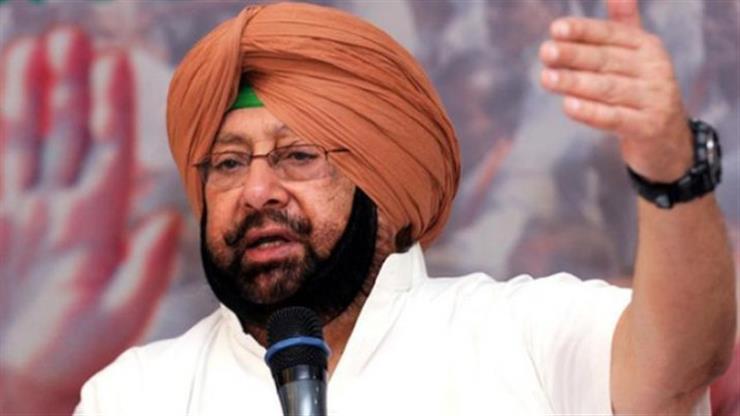
CHANDIGARH: A day after the all party meeting at which all national political parties extended support to the Government of India on the Galwan Valley clash issue, Punjab Chief Minister Captain Amarinder on Saturday urged the Centre to changes its policy to allow soldiers at the borders to open fire in their own defence and for protecting the nation’s territorial integrity.

Making it clear that he did not support sending soldiers to the LAC without weapons, the Chief Minister said in his Facebook Live 7th edition of #AskCaptain that the Government of India policy should be that “if they kill one of ours, we should kill 5 of theirs.” It was absolutely wrong to send soldiers unarmed or not to allow them to defend themselves, he said, adding that when he and his Army colleagues used to go patrolling, during his posting along the LAC for two years, they carried all kinds of weapons.

“We are in the nuclear era and we are carrying and being beaten by dandas!” quipped the Chief Minister, expressing shock at the fact that 20 Indian soldiers, including four from Punjab, had lost their lives in an attack by lathi wielding and stone throwing Chinese, who he asserted simply could not be trusted.

Lamenting the demise of four Punjabi soldiers in the Galwan Valley barbarism, the Chief Minister said it was extremely unfortunate, even though “as army men we are always prepared to take the bullet.” Besides increasing the compensation for their next of kin from Rs 12 lakh to Rs 50 lakh, his government has decided to name schools after the martyrs, said Captain Amarinder, adding that he had spoken to two of the families so far.

On the issue of Sikhs for Justice (SFJ) lawyer Gurpatwant Singh Pannu extending support to China, the Chief Minister said he was not only propagating but actively involved in promoting separatism and terrorism in India. Asserting that he would not allow Pannu to succeed in his divisive agenda and disturb the state’s peace at any cost, Captain Amarinder dared the pro-Khalistani propagandist to come to Punjab instead of hiding out in other countries to spread his vicious campaign.

Declaring his commitment to sustaining Punjab’s peace at all costs, the Chief Minister said in the absence of peace, no industry will come to the state, and there will no jobs for our children. The state’s economy will be in shambles if forces inimical to peace are allowed to spread their fangs, he added.


ingoism is not the answer Return to status quo ante requires a reset of the calculus of ties

Jingoism is not the answer

Beware: A dangerous situation is at hand, which must be tackled with maturity.

MK Bhadrakumar

Former Ambassador

Details of the military standoff in eastern Ladakh remain hazy. Based on satellite imagery, the Australian Strategic Policy Institute has made the following assessment: ‘In all hotspots along the Ladakh sector of India’s border with China, both sides have engaged in significant efforts to build up their forces in forward positions and alter the status quo along the LAC.

‘This week’s deadly skirmish shows that the situation is extremely volatile and introduces the possibility of escalation along the border regions. It could act as a shock to policymakers in the region and spur them to push for more genuine and meaningful disengagement to prevent further loss of life. But it could also spark a larger confrontation between the two nuclear-armed powers that could escalate into a major conflict.’

The Indian leadership, encountering such strong headwinds, has held a steady hand, as signified by the External Affairs Minister S Jaishankar’s call to his Chinese counterpart Wang Yi on June 17 and readiness to participate in the Russia-India-China meeting of foreign ministers on June 23. In essence, decision at the highest level is to maintain strategic communication with China. This is the silver lining on a dark horizon — and the only realistic approach possible. A dangerous situation is at hand, which must be tackled with utmost maturity and patience.

There is also a counter-narrative in circulation scripted by some retired Army officers and sections of media — that Indian military is in ‘strong position’ to strike back at China, which has to be ‘taught a lesson’, etc. In this supercharged atmosphere, it is no surprise that PM Modi’s initiative to call a meeting on Friday with the leaders of political parties has not had the desired outcome of generating a consensus.

In some ways, the paradigm holds eerie similarity with the late 1950s and early 1960s. Nationalist rhetoric has touched a crescendo. The opposition has inherited it with glee and is set to tap its potential. American commentators are cleverly stoking up anti-China sentiments from behind the scene, which gullible Indians read as affirmation of US support. The game plan is to force Modi’s hands. But his strong leadership can be trusted to ensure that the government neither stumbles in a stupor nor is hustled into the same trajectory that Nehru tragically took, culminating in the 1962 War. India cannot afford war. The pandemic is surging as a monumental national crisis. India already has the fourth-most confirmed cases in the world.

Equally, economic recovery is a top priority. India’s growth has plunged to abysmally low level and hundreds of millions of people live at subsistence level. In an unfavourable international economic environment, characterised by protectionism and recession, economic recovery is going to be a long haul. The UNCTAD’s World Investment Report 2020 forecasts that global FDI flows will decrease by up to 40% this year, while investment flows to developing countries in Asia could fall by 45%. If border tensions escalate, investment will withdraw.

Jingoism should have no place in our scheme of things. A military confrontation with China will spin out of control and a conflict cannot have an outcome different from that in 1962. We need to seriously probe the Chinese side’s repeated affirmations that they do not want a derailment of the already-shaky bilateral relationship with India. On Friday, Chinese foreign ministry spokesman Zhao Lijian reiterated: ‘China hopes that India will work with us, follow faithfully the important consensus reached between the two leaders, abide by the agreements reached between the two governments, and strengthen communication and coordination on properly managing the current situation through diplomatic and military channels, and jointly uphold peace and stability in the border areas.’

Meanwhile, the all-important economic dimension to India-China relations and the geopolitical vector of current tensions also merit attention. The Chinese side has voiced interest that economic cooperation is still possible. Trade with India accounts for less than 2% of China’s external trade and import diversification is much easier for China than it is for India.

A wide section of Indian manufacturing industry is dependent on supplies from China. Chinese medical supplies significantly strengthen our ability to combat the pandemic; China is a major source for fertilisers, basic chemicals, agro-intermediates, auto components, electronic components and so on. Indeed, China is central to most global and regional supply chains. Suffice to say, economic nationalism is a seductive idea but India lives in Asia where globalisation takes the form of regionalisation. RCEP already poses a Hobson’s choice.

As regards the current tensions, Beijing perceives Delhi’s pivot to the US and the doubling down on the Quad as marking gravitation toward an anti-China bloc. The US fuels this perception to grow, since its traditional European allies refuse to associate with its anti-China strategy and ASEAN countries studiously keep aloof. It will be a strategic blunder of historic proportions if India were to align its interests in the emerging world order with the US regional and global policies, which have China and Russia in its crosshairs as ‘revisionist’ powers.

The Chinese behaviour cannot be viewed either as the outburst of a weakened power in internal disarray or as belligerence aiming at territorial expansion in Ladakh. It is entirely conceivable that China harbours security concerns over Aksai Chin. There could be a political message embedded somewhere here — that a return to status quo ante requires strategic communication and a reset of the calculus of Sino-Indian relationship.


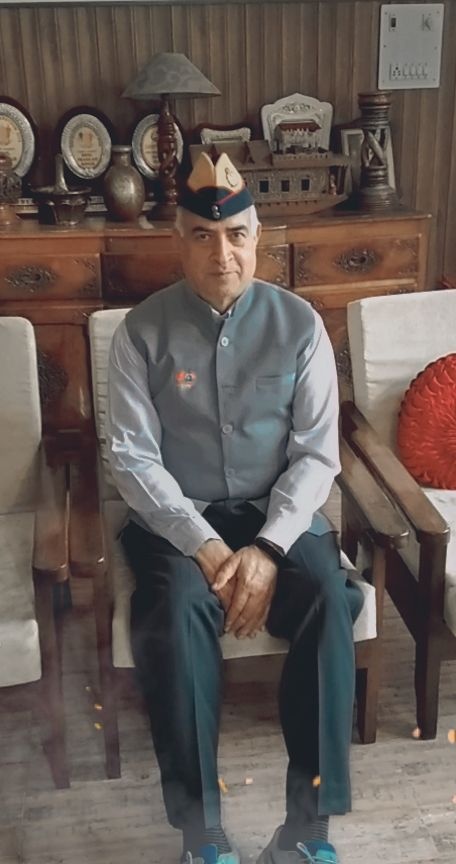
India-China face-off: Soldiers should be allowed to open fire in self-defence, says Capt Amarinder Singh Punjab Chief Minister asserts India’s policy should be to kill five of theirs if they kill one of ours

http://

Tribune News Service

Chandigarh, June 20

A day after the all-party meeting in which all national political parties extended support to the Government of India on the issue of Galwan Valley face-off, Punjab Chief Minister Captain Amarinder Singh on Saturday urged the Centre to change its policy and allow soldiers at the borders to open fire in their defence and for protecting the nation’s territorial integrity.

Making it clear that he did not support sending soldiers to the LAC without weapons, the Chief Minister in his Facebook Live edition of #AskCaptain said the Government of India policy should be that “if they kill one of ours, we should kill 5 of theirs”.

It was absolutely wrong to send soldiers unarmed or not to allow them to defend themselves, he said, adding that when he and his Army colleagues used to go patrolling, during his posting along the LAC for two years, they carried all kinds of weapons.

“We are in the nuclear era and we are carrying and being beaten by dandas!” quipped the Chief Minister, expressing shock at the fact that 20 Indian soldiers, including four from Punjab, had lost their lives in an attack by lathi wielding and stone throwing Chinese, who he asserted simply could not be trusted.

Lamenting the demise of four Punjabi soldiers in the Galwan Valley barbarism, the Chief Minister said it was extremely unfortunate, even though “as army men we are always prepared to take the bullet”.

Besides increasing the compensation for their next of kin from Rs 12 lakh to Rs 50 lakh, Punjab Government has decided to name schools after the martyrs, said Captain Amarinder, adding that he had spoken to two of the families so far.

‘Pannu promoting terrorism’

On the issue of Sikhs for Justice (SFJ) lawyer Gurpatwant Singh Pannu extending support to China, the Chief Minister said he was not only propagating but actively involved in promoting separatism and terrorism in India.

Asserting that he would not allow Pannu to succeed in his divisive agenda and disturb the state’s peace at any cost, Captain Amarinder dared the pro-Khalistani propagandist to come to Punjab instead of hiding out in other countries to spread his vicious campaign.

Declaring his commitment to sustaining Punjab’s peace at all costs, the Chief Minister said in the absence of peace, no industry would come to the state, and there would no jobs for our children.

The state’s economy will be in a shambles if forces inimical to peace are allowed to spread their fangs, he added.


Gathering support India must build a consensus to counter Chinese aggression

Gathering support

The world has taken note of the increasing Chinese adventurism in India. The questioning of Chinese incursions by a US official after the recent talks between US Secretary of State Mike Pompeo and Chinese Communist Party Politburo member Yang Jiechi indicates support for India as well as widespread concern about the aggressive stance adopted by China recently. By drawing attention to the Chinese misadventure of 2015, as well as recent unreasonable postures adopted by Beijing in Hong Kong and the South China Sea, the US has ratcheted up the pressure on China.

Diplomacy is a gentle art, one that involves careful considerations and calibrated incremental advancements. It does not go well with jingoistic nationalism, as Beijing has found out recently by antagonising many of the nations it seeks close business ties with. India needs to seize the diplomatic initiative. A logical step is to build a joint position with other countries which have been affected by Beijing’s ‘wolf diplomacy’. Indeed, this is time to fortify the Quadrilateral Security Dialogue between the United States, Japan, Australia, and India. There are common concerns, and the need for a coordinated effort to blunt the Chinese edge is undeniable. Even as New Delhi maintains peaceful coexistence with Beijing, there is growing awareness about the neighbour’s sticky fingers in what is, in myriad ways, an Indian bulwark.

The Indian diplomats have their work cut out before them. They must build a consensus among allies, including Russia, to counter Chinese expansionism. And they have a formidable arsenal at their disposal — truth — and access to a wide variety of fora, including the UN Security Council, where India has just been elected a member. India has shown excessive restraint in matters traditionally confined to the Chinese sphere of influence. When borders are violated and soldiers killed, a rethink is in order. We need a more proactive approach and strong alliances.