Sanjha Morcha

Pak Army shells areas along LoC in Rajouri

Pak Army shells areas along LoC in Rajouri

Jammu, May 19

The Pakistan Army on Tuesday shelled forward areas along the Line of Control (LoC) in Jammu and Kashmir’s Rajouri district, drawing retaliation from the Indian Army, a defence spokesperson said.

This is second ceasefire violation by the Pakistan Army in the last 12 hours along the LoC in Rajouri and Poonch districts.

“At about 0730 hours today, Pakistan Army initiated unprovoked ceasefire violation by small arm firing and mortar shelling along LoC in Sunderbani sector”, the spokesperson said, adding the Indian Army retaliated befittingly.

The cross-border shelling between the two sides was going on when last reports were received, the spokesperson said.

There was no immediate report of any casualty during the Pakistani shelling.

Pakistan had on Monday night opened fire and shelled mortars along the LoC in Gulpur sector of Poonch. —PTI


Efforts on to cut pension bill, expenditure: Defence Secretary

Efforts on to cut pension bill, expenditure: Defence Secretary

ribune News Service

New Delhi, May 21

Defence Secretary Dr Ajay Kumar on Thursday said ways were being found to reduce the wage and pension bill at the Ministry of Defence. Addressing a wider strategic issue, he said the Indian Ocean Region was becoming “a threat” like the South China Sea (SCS).

The latter was the obvious unstated reference to China’s recent activities in the Indian Ocean, including building artificial islands near Maldives and the ongoing tussle in the contested hydrocarbon rich waters of the SCS.

He delivered a talk on “Covid-19, Resource Crunch and Defence modernization” and later answered questions at a web-seminar conducted by the Manohar Parrikar Institute for Defence Studies and Analyses (MP-IDSA) here.

On the Indian Ocean, he answered questions on “blue economy” euphuism for marine, fishing, minerals and energy, when he said security needs in Indian Ocean will have to be addressed, adding that the means of doing it are best left to experts.

On pensions, he said expenses rose from Rs 32,000 crore few years back to Rs 1,33,000 crore. “We have to look at ways to reduce pension and wage bill to free money for capital and modernisation,” he said. Possible extension of service (for jawans) which will reduce pension bill and long-term pension liabilities,” Dr Kumar said.


China hindering normal patrol: MEA Rejects Beijing charge of Indian troops crossing LAC

China hindering normal patrol: MEA

New Delhi, May 21

In a firm response, New Delhi has rejected Beijing’s suggestions that its troops had crossed the border and instead maintained Chinese troops had recently undertaken activity hindering India’s normal patrolling patterns.

‘WE ARE COMMITTED TO PEACE’

Indian side remains firmly committed to working for the common objective of maintenance of peace and tranquillity in border areas.

Anurag Srivastava, MEA Spokesperson

The Ministry of External Affairs (MEA) asserted India’s “deep commitment” to safeguarding country’s sovereignty and security but said it would address all such issues on a direct basis with China.

“Any suggestion that Indian troops had undertaken activity across the LAC in the western sector or the Sikkim sector is not accurate. Indian troops are fully familiar with the alignment of the LAC in the India-China border areas and abide by it scrupulously,” said MEA spokesperson Anurag Srivastava.

Maintaining that improvement of India-China ties hinged on peace and tranquillity in border areas, he pointed to several bilateral mechanisms to resolve such situations. — TN


Manali-Leh highway opens

Manali-Leh highway opens

Tribune News Service

Mandi, May 18

The Border Roads Organisation (BRO) today reopened the Manali-Leh highway to vehicular movement afte six months.

Snow-clearance work on the highway was being carried out since February.

Despite an acute shortage of labourers due to the Covid-19 pandemic, the BRO, in comparison to the previous years, has cleared the road much earlier this year. Last year, the highway was restored to traffic on June 10.

The BRO used remote-controlled snow cutters and dozers for the first time in the region to speed up the snow-clearance work despite many challenges.

Brig MS Baghi, Chief Engineer, Dipak Project, also visited the Baralacha pass today to congratulate the BRO team for the early restoration of the highway.

DC, Lahaul-Spiti, KK Saroch said nine tankers of Indian Oil moved towards Leh from Lahaul side.


Pak violates ceasefire on LoC for 5th consecutive day

Pak violates ceasefire on LoC for 5th consecutive day

Jammu, May 22

Pakistan continued violating ceasefire on the Line of Control (LoC) for the fifth consecutive day on Friday by using small arms and mortars in Jammu and Kashmir’s Poonch and Rajouri districts.

For the fifth consecutive day, Pakistan army used small arms and was shelling with mortars to target the Indian positions on the LoC in the two districts.

Defence ministry spokesman, Colonel Devender Anand told IANS, “On May 22, 2020, at about 3.30 a.m., Pakistan initiated the unprovoked ceasefire violation by firing with small arms and shelling with mortars along Line of Control in Krishna Ghati Sector, District Poonch (J&K).

“Indian army is retaliating befittingly,” he said.

The force said that again at about 7.20 a.m., Pakistan initiated the unprovoked ceasefire violation in the Nowshera Sector in Rajouri District in Jammu. The Indian Army was giving the befitting reply to this also, said the army.

Pakistan has been frequently violating the bilateral ceasefire agreement signed between the two countries in October 2003.

Senior army officers believe these ceasefire violations are a deliberate attempt by the Pakistan army to give fire cover to terrorists so that they can sneak into the Indian side of the LoC.

The Pakistani Army has been continuously targeting the Keran Valley, Poonch, Uri Sector, Krishna Ghati and Akhnoor sectors in the Union Territory.

In 2019, a total 3,200 incidents of ceasefire violations by Pakistan across the LoC were reported as compared to 1,629 incidents in 2018, the Ministry of Defence had stated.

IANS


New LAC flashpoint won’t be another Doklam: Chinese daily

New LAC flashpoint won’t be another Doklam: Chinese daily

Tribune News Service

New Delhi, May 18.

An influential Chinese newspaper on Monday indicated the opening of another flashpoint on the Sino-India border but played down the possibility of serious tensions as had happened at Doklam in 2017

Global Times, that advocates a hardheaded foreign policy approach, quoted unnamed military sources as saying that Chinese border defence troops have made necessary moves in response to “India’s recent, illegal construction of defence facilities across the border into Chinese territory in the Galwan Valley region.”

The media outlet put its own spin for discounting the build-up of tensions in a sector that was last in the news during the 1962 conflict. “India is merely seeking to divert its domestic attention due to unsuccessful handling of Covid pandemic, and China has a military advantage there. So, the Indian military won’t escalate the incident,” it said quoting Chinese analysts.

The paper accused India of crossing the boundary line in Galwan Valley region of Ladakh and entering Chinese territory. “The Indian side built defence fortifications and obstacles to disrupt Chinese border defence troops’ normal patrol activities, purposefully instigated conflicts and attempted to unilaterally change the current border control situation.”

Indian media too has been reporting tensions in this sector for the past one week.

The Ministry of External Affairs (MEA) has not commented on this flare-up but it reacted to troop face-offs last week in two sectors by expressing confidence in the ability of the existing mechanisms to resolve the issue.

The MEA also suggested that the face-offs were not part of a grand strategy by explaining that they occasionally occur due to difference in perception of the alignment of the Line of Actual Control (LAC). “Situations have arisen on the ground that could have been avoided if we had a common perception of the LAC,” MEA spokesperson Anurag Shrivastav had then said.

The spokesperson also noted that the India-China border has largely been peaceful because PM Modi and Chinese President Xi Jinping have “directed their militaries to earnestly implement various confidence building measures agreed upon between the two sides”.


Chinese daily hints at new LAC flashpoint

Chinese daily hints at new LAC flashpoint

Tribune News Service
New Delhi, May 18

Chinese newspaper Global Times today hinted at opening of another flashpoint on the Sino-India border, but played down the possibility of a serious situation, as witnessed in Doklam in 2017.

Nepal to issue new map

New Delhi: Responding to India blacktopping a road that passes through an area it claims sovereignty on, Nepal on Monday decided to issue a new political map that includes this land at Lipulekh. The map will depict Kalapani and Limphudhara that are also claimed by Nepal. TNS

Quoting unnamed military sources, it said Chinese border defence troops have made necessary moves in response to “India’s recent, illegal construction of defence facilities across the border into Chinese territory in the Galwan Valley region”.

“India is merely seeking to divert domestic attention due to its unsuccessful handling of Covid pandemic, and China has a military advantage there. So, the Indian military won’t escalate the incident,” it said, quoting Chinese analysts.

The paper accused India of crossing the boundary in Galwan Valley of Ladakh. “The Indian side built defence fortifications and obstacles to disrupt Chinese border defence troops’ normal patrol, purposefully instigated conflict and attempted to unilaterally change the current border-control situation.”

Indian media has also been reporting tension in the sector for the past one week.

The Ministry of External Affairs (MEA) has not commented on the flare-up, but it reacted to troop face-offs last week in two sectors by expressing confidence in the ability of the existing mechanism to resolve the issue.

The MEA also suggested that the face-offs were not part of a grand strategy by explaining that these occasionally occur due to difference in perception of the LAC alignment.


How to sanitise essential items at home, PGI doctor explains

Virus cannot survive or remain stable on newspapers, cash or books for long. one should keep them outside for 2-3 hours before using them.How to sanitise essential items at home, PGI doctor explains
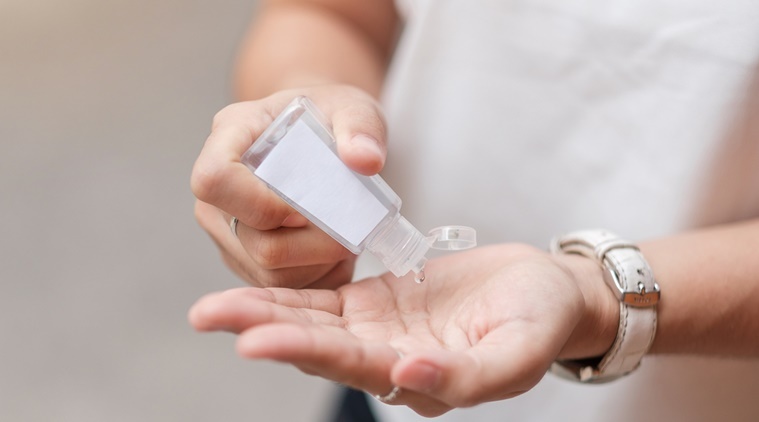
Plastic or metal items like pen or pencil box can be sanitised as there is evidence that sanitisers work on them. (Source: File Photo)

During the pandemic, as people bring essentials or other items home, the fear of contracting coronavirus from the same also looms large. PGIMER’s Department of Community Medicine and School of Public Health Professor Dr Sonu Goel explains why sanitisers are not recommended for use on fruits and vegetables and handling of cooked food can be a cause of concern. While busting myths, Professor Goel also sheds light on the protocol to be followed while bringing essentials to one’s home.

How can we ensure safety as we get vegetables and fruits from the vendors?

This virus is likely to remain on fruits and vegetables for 6-8 hours and if they are exposed to heat, the virus stays on it for less than four hours. In any case, when one get vegetables from vendors, the general protocol should be that they should keep it outside for four hours within the packet itself.

After the said time, dispose of the packet and put the eatables in warm water or wash them with warm water and baking soda to ensure complete safety.

There are many who use sanitisers on vegetables and fruits. Is it a suitable method?

Sanitisers are completely not recommended for vegetables and fruits, rather they can be harmful because of the presence of chemicals. Moreover, there is no evidence that the sanitisers can kill virus on vegetables and fruits.

Sanitisers are useful only for our hands, body and metal or steel surfaces. Spraying chemicals on vegetables and fruits, becomes all the more harmful as it is chemicals being sprayed on things which one will consume.

Warm water is sufficient or put just a drop of KMnO4 or potassium permanganate in the warm water and dip the eatables in it. It is the safest to use and also pocket-friendly.

If one does not have potassium permanganate, baking soda can be used in warm water. Wear a mask while doing it.

What should be done in case of items such as bananas or onions which cannot be dipped in warm water or washed?

It is like a catch 22 situation especially now when the temperature outside is soaring and there are perishable items also. Such items should be put in a closed space where heat does not reach it directly.

The aim is to not expose yourself to these things and keep them outside for 3-4 hours before consuming them. Do not immediately cook these vegetables or consume the fruits.

In case of medicines strips too, there is no evidence that sanitisers work on them. Keep them in a closed box at room temperature. One should not get exposed to them immediately after buying them as they too have changed hands several times.

Ensure that you does not put these medicines under direct sunlight as it could affect its efficacy.

Many companies have launched vegetable sanitisers. Do you recommend them?

I am not aware of the composition of these sanitisers. If these vegetable sanitisers have KMnO4 or potassium permanganate, then it is fit for use or else not.

What should one do in case of grocery items such as cheese and milk which cannot be kept outside for four hours?

If cheese and milk are packed, one should wash them with soap water and immediately dispose of the outer packet (all while wearing ones mask). However, these packets should not be disposed of in an open dustbin.

They should be discarded in a way that they are not directly exposed to any human being. In case of items in plastic, metal or cold drink cans, the virus may remain for 24-48 hours.

Thus, such items should not be refrigerated, but kept at room temperature where there is no human exposure.

Is cooked food that is ordered from outside safe? What about cooked food that comes packed in boxes?

There is no problem with cooked food because it is already heated at boiling temperature which the virus will not survive. Cooked food is not the issue but its handling is a cause of concern as someone must have packed it and then delivered.

It changes hands several times in the process. Ideally, one should avoid cooked food from outside. If there are unavoidable circumstances, ensure that the packet it is coming in, such as the pizza box or cake box, are discarded immediately.

There is no evidence that sanitisers are effective on cardboard surfaces, thus, using it may prove futile.
What to do in case of cash, newspapers or stationery items? Many governments are sanitising books and recommending the same.

Virus cannot survive or remain stable on newspapers, cash or books for long. one should keep them outside for 2-3 hours before using them.

Sanitisers may be of no use on these. Plastic or metal items like pen or pencil box can be sanitised as there is evidence that sanitisers work on them.

How should the purchased garments or shoes be sanitised? Should the received letters and courier be sanitised?

One should make sure that the shoes worn outside are not used inside the house, as there is a possibility that one could have stepped on an infected person’s spit or similar contaminated surface, while outside.

In case of purchase of new garments and shoes, they should be kept in the verandah or balcony for 48 hours. It is recommended that one should wash the new garments before wearing it.

Courier or post received should also be kept in the sunlight before being accessed- if paper-based, it should be kept under sunlight for 3-4 hours, while if it is plastic or metal based, it should be disinfected.

One must also ensure that they use their own pen while signing on receipt letters brought by the postman.

5 Safe Methods of Disinfecting Your Home

cleaning glass

Vinegar is ideal for cleaning glass because it doesn’t leave a film or streaks behind. JUSTIN PAGET/GETTY IMAGES

It’s the weekend and time to clean the house. You’re elbow deep in rubber gloves, wielding a can of disinfectant in one hand and a bottle of bleach in the other. Sure, you want to disinfect your home, but who wants all of those chemicals floating around in the air that you breathe?

The good news is you don’t need to use harsh chemicals to keep your house clean and germ-free. And the best part about using natural products is that they tend to be cheaper than a bottle of store-bought household cleaner. Here are five safe methods you can use to disinfect your home that won’t break the bank.

1. Vinegar

Anyone who has used vinegar as a cleaning solution is bound to give it rave reviews. This is because despite its stinky nature, vinegar is an all-natural disinfectant. It contains acetic acid, which gives it antimicrobial properties and makes it great at killing mold. Vinegar has endless uses in the household; it’s ideal for cleaning glass and stainless steel without leaving streaks. It can also get that nasty mold out of your toilets and sinks, and it’s safe for washing all of your fresh produce. Some tough jobs around the house call for straight vinegar, but for those everyday jobs, just mix one tablespoon of vinegar with 1 cup (29 milliliters) of water and keep it in a spray bottle.

2. Hydrogen Peroxide

You’ve surely used hydrogen peroxide to clean out a cut before applying a bandage, but did you know it’s also great for household cleaning? It does wonders on stains in both carpets and clothes, and when used in conjunction with vinegar, it’s an excellent scum buster on tubs and tile. And unlike vinegar, hydrogen peroxide doesn’t have a noticeable smell nor does it need to be diluted with water. It’s also handy for washing your produce and whitening your teeth.

3. Lemon Juice

If your house is plagued with alkaline stains like soap scum, crank out the lemon juice. The citric acid in lemons helps break down that annoying scum better than just about anything else. And you can also use lemons to shine up your copper pots and pans so they’ll look like new. But more than that, these tart fruits also are able to sanitize and disinfect non-porous surfaces, and reduce bacteria on hard surfaces — and they smell way better than vinegar.

lemons
When life gives you lemons, make household cleaner!
GLASSHOUSE IMAGES/GETTY IMAGES

4. Tea Tree Oil

Tea tree oil is an all-natural essential oil that’s extracted from the leaves of the Australian Melaleuca tree. Because tea tree oil is naturally antibacterial, anti-fungal and antiseptic, it’s commonly used in cosmetics and skincare, but it’s also a great household cleaner when mixed with water. It’s so concentrated that all you need is a few drops to create an effective cleaner. Use it in everyday applications like cleaning countertops and tile. It’s also good for disinfecting areas where pets have had accidents or kids have gotten sick.

5. Soap and Water

If you’re not dealing with a heavy-duty germ situation and just generally want to get your house clean, then soap and water is the original eco-friendly cleaner. Soap provides a lather that’s able to mix oil and water together in a way that attracts and suspends dirt so that it can be rinsed away. So a bucket full of hot, soapy water is always your best bet for cleaning floors, countertops and other household surfaces.



Court martial finds Colonel not guilty of molesting woman, GOC-in-C does not confirm verdict

As per Army Rules and Regulations, the findings of the court-martial are to be confirmed by the convening authority of the trial, which in this case, was the GOC-in-C Western Command, Lt Gen RP Singh.

GOC-in-C Western Command, Meerut court-martial, Western Command Colonel court-martial, India news, Indian Express

With the GOC-in-C not confirming the verdict, the Army may now take administrative action against the Colonel, who retires next month.

A Colonel who has twice been found not guilty by a General Courts Martial (GCM) on the charges of outraging the modesty of a woman employee of the National Cadet Corps (NCC) now faces possible administrative action after the General Officer Commanding in Chief (GOC-in-C) of the Western Command did not confirm the verdict of the trial.

The court-martial in Meerut had found the Colonel not guilty of the charges levelled against him. However, the verdict was not accepted by the higher authorities and was sent back to the court for reconsideration. On the second instance too, the accused was found not guilty by the court-martial.

As per Army Rules and Regulations, the findings of the court-martial are to be confirmed by the convening authority of the trial, which in this case, was the GOC-in-C Western Command, Lt Gen RP Singh.

With the GOC-in-C not confirming the verdict, the Army may now take administrative action against the Colonel, who retires next month.

The case dates back to 2015 when a woman employee of NCC working in Delhi alleged that the Colonel held her hand when she was serving tea to him. He was tried under Section 69 of the Army Act read with Section 354 of the IPC. The officer had made counter-allegations in his defence saying that he had been made a scapegoat as the original target was a Colonel of the Judge Advocate General’s (JAG) branch who had been raising issues of impropriety in the Directorate General of NCC.

The officer had also levelled allegations in writing against a Brigadier of JAG branch stating that he had demanded Rs 5 Lakh bribe for getting him off the hook and on his refusal to pay the amount, had allegedly ensured that he faced court-martial.

Alleging that there was a tug-of-war between civilian officers of the NCC headquarters and Army officers, the Colonel had stated in his petition before Armed Forces Tribunal that one of the civilian officers, who was involved in the unsavoury turf battles and played a role in setting up the trap, has been made the head of the inquiry in his case. Misuse of government transport by the civilian officers, including the inquiry panel head, for commutation from residence to the office, and drawing privileges of a higher grade than what was authorised by her has also been alleged in the petition.

The Colonel had also levelled serious allegations in his petition about corrupt activities being covered up in Delhi’s NCC Headquarters on the behest of senior officers.

It is also learnt that the officer has now presented before the Western Command authorities that no reason has been provided to him of non-confirmation of the verdict. He has stated that the charge against him has tarnished his military character and reputation of his family permanently. He has asked for reasons to be provided to him for non-confirmation of the verdict so that he can challenge it in a court of law.


CDS Bipin Rawat to work on items for import ban, artillery guns could be included

FM Nirmala Sitharaman announced a slew of measures to boost ‘Make in India’ in defence sector, including raising the FDI limit in manufacturing to 74%

An M777 155mm lightweight field howitzer

An M777 155mm lightweight field howitzer | Gabriela Maj/Bloomberg
New Delhi: Chief of Defence Staff Gen. Bipin Rawat will soon initiate identification of weapons and platforms for an import ban as the Narendra Modi government Saturday announced a slew of measures to boost the ‘Make in India’ programme in the defence sector.

While raising the foreign direct investment (FDI) limit in defence manufacturing to 74 per cent from the current 49 per cent as part of the fourth tranche of the economic stimulus package, Finance Minister Nirmala Sitharaman said the government will notify a list of weapons and platforms for ban on import with year-wise timelines.

This is a first for the sector in India.

The FM also stressed that there would be indigenisation of imported spares and separate provisioning for domestic capital procurement.

The indigenisation of spare parts has been in the works for long. It was kickstarted by former defence minister Manohar Parrikar.

Calling these “structural reforms”, Sitharaman said these steps will reduce the huge defence import bill.

Last year, India ranked as the second biggest importer of defence equipment in the world. India was the top importer for over a decade but last year’s ranking did not take into account the slew of multi-billion-dollar deals — S-400 Triumf air defence system, lease of a nuclear submarine, manufacturing of frigates and AK 203 — signed between India and Russia in the last three years, deliveries of which are yet to start.

Sitharaman also said the Ordnance Factory Board (OFB) would be corporatised, but underlined that this was not privatisation. The OBF runs 41 factories across the country and its corporatisation has been under public discussion for some time.

The hike in FDI limit in defence manufacturing will come as a huge relief for foreign companies who have been consistently asking the Ministry of Defence (MoD) to give them the controlling stake in a joint venture.

The FM also announced a time-bound defence procurement process besides setting up of a Project Management Unit (PMU) to support contract management. She stressed setting up realistic demands for weapons and platforms that are intended to be purchased.

She also said the government has decided to overhaul trial and testing procedures.