Sanjha Morcha

US ‘concerned’ over J&K, says Pak must stop terror

US ‘concerned’ over J&K, says Pak must stop terror

HT Correspondents

letters@hindustantimes.com

Washington/New Delhi : The US believes a dialogue between India and Pakistan is the most effective way to reduce bilateral tensions, but the success of such talks depends on Islamabad taking “sustained and irreversible steps” against terrorists on its soil, America’s top diplomat for South Asia said on Tuesday.

US acting assistant secretary for South and Central Asian affairs Alice Wells said the US supports the Indian government’s stated objectives for scrapping Jammu & Kashmir’s (J&K) special status, such as increased economic development, but the state department “remains concerned about the situation in the Kashmir Valley, where daily life for the nearly eight million residents has been severely impacted since August 5 [when India scrapped the region’s special status and put in place a security and communications lockdown that has now been partially lifted].”

Testifying in a hearing on the human rights situation in South Asia, including in Kashmir and Assam, convened by the US House committee on foreign affairs, Wells said that Pakistan’s continued backing for groups engaged in cross-border terror was the “chief obstacle” to creating trust between the two sides.

“While conditions in Jammu and Ladakh have improved, the Valley has not returned to normal. The department has raised concerns with the Indian government regarding the detentions of local residents and political leaders, including three former Chief Ministers of Jammu and Kashmir. We have urged Indian authorities to respect human rights and restore full access to services, including internet and mobile networks,” she said.

Wells and assistant secretary Robert Destro of the US bureau of democracy and human rights faced pointed questions from members of Congress such as Ilhan Omar and Pramila Jayapal on the detention of people without charge, the lockdown in J&K, and the exclusion of 1.9 million people from the National Register of Citizens (NRC) in Assam.

In her statement at the hearing, Wells said the US believes a direct bilateral dialogue under the Simla Agreement “holds the most potential for reducing tensions”. She said: “We believe the foundation of any successful dialogue between India and Pakistan is based on Pakistan taking sustained and irreversible steps against militants and terrorists in its territory.”

Wells added: “Restarting a productive bilateral dialogue requires building trust, and the chief obstacle remains Pakistan’s continued support for extremist groups that engage in cross-border terrorism.”

She said there were historical precedents of India and Pakistan being able to make progress in talks, such as backchannel negotiations during 2006-07, when the two sides “reportedly made significant progress on a number of issues, including Kashmir”.

Describing the ties between the US and India, Wells said: “It’s not a relationship of dictation, it’s a relationship of partnership.”


Halt terror funds in 4 months: FATF to Pak

Anti-terror body warns of strong action if Pakistan fails to comply

anirban bhaumik
NEW DELHI, DHNS

China may have saved Pakistan from being placed on the “blacklist” of the Financial Action Task Force (FATF) for now, but the inter-governmental organisation has warned Imran Khan’s government of strong action if it fails to stop the flow of funds to terrorist organisations within four months.

The FATF, an inter-governmental organisation coordinating global efforts to stop terrorist organisations from receiving funds, on Friday set February 2020 as the deadline for Pakistan to tighten legal framework to curb money laundering and squeeze flow of funds to terrorist outfits.

If Pakistan fails, the FATF said it would take severe action, including calling on financial institutions of other nations to be cautious while dealing with counterparts in Pakistan.

Concluding its plenary in Paris on Friday, the FATF “strongly” urged Pakistan to “swiftly complete” its full action plan to plug the loopholes by February 2020.

“Otherwise,” it warned, “should significant and sustainable progress not be made across the full range of its action plan by the next plenary, the FATF will take action, which could include the FATF calling on its members and urging all jurisdictions to advise their Fis (financial institutions) to give special attention to business relations and transactions with Pakistan”.

“Pakistan needs to do more and it needs to do it faster,” FATF President Xiangmin Liu said.

The FATF expressed “serious concerns” with the “overall lack of progress by Pakistan to address its TF (terror financing) risks, including remaining deficiencies in demonstrating a sufficient understanding of Pakistan’s transnational TF risks and, more broadly, Pakistan’s failure to complete its action plan in line with the agreed time-lines and in light of the TF risks emanating from the jurisdiction”.

The FATF also noted that Pakistan had only largely addressed five of the 27 items on the action plan, with varying levels of progress made on the rest.

India, the US, France argued in favour of putting Pakistan on the “blacklist”.


Indian Army TGC 131 and TES 43 Notification: Online Application started for Technical Entry Scheme Course, Apply Online @joinindianarmy.nic.in

Indian Army TGC TEC Short Notification Released

Indian Army TGC 131 and TES 43 Notification & Apply Online: Indian Army has started the online application for TES 43. A total of 90 vacancies are available under 10+2 Technical Entry Scheme Course (TES – 43). The last date for submitting Indian Army TES course application is 13 November 2019.

Indian Army has invited online application for TGC and TES course on its official website i.e. http://joinindianarmy.nic.in.Indian Army TES online application has been already started, today, 15 October 2019. Indian Army TGT Online application will start from 16 October and will end on 14 November 2019.

Job Summary

Notification Indian Army TGC 131 and TES 43 Notification Released, Apply Online for Technical Graduate Course & Technical Entry Scheme Course
Notification Date Oct 12, 2019
Last Date of Submission Nov 14, 2019
Official URL www.joinindianarmy.nic.in
City new delhi
State Delhi
Country India
Education Qual Graduate, Secondary
Functional Engineering

Indian Army released the recruitment notification for Technical Graduate Course (TGC-131) commencing in July 2020 and 10+2 Technical Entry Scheme Course (TES – 43) commencing in July 2020 for Officer posts.

Candidates can check more details on Indian Army TGC TES such as eligibility, selection process on the basis previous notifications:  

Indian Army TGC 131 and TES 43 Important Dates

  • Application Dates for Technical Graduate Course (TGC-131): 16 October to 14 November 2019
  • Applications for 10 + 2 Technical Entry Scheme Course (TES-43): 15 October to 13 November 2018

Indian Army TGC 131 and TES 43 Courses Details

  • Technical Graduate Course (TGC-131)
  • 10 + 2 Technical Entry Scheme Course (TES-43) – 90 Posts

Indian Army TGC TES Eligibility Criteria

Educational Qualification:

  • Technical Graduate Course – BE/B.Tech from a recognized University.
  • 10 + 2 Technical Entry Scheme Course – 12th passed from a recognized board or equivalent qualification.

Age Limit:

TES –  16½ years to 19½ years

How to apply for Indian Army TGC 131 and TES 43 2019?

Eligible candidates can apply online on Indian army official website. Candidates are advised to keep the printout of the online application submitted for future reference.

Indian Army TGC TES Short Notification PDF

Indian Army TES 43 Notification

Online Application (Application from 15/16 October 2019)

Official Website


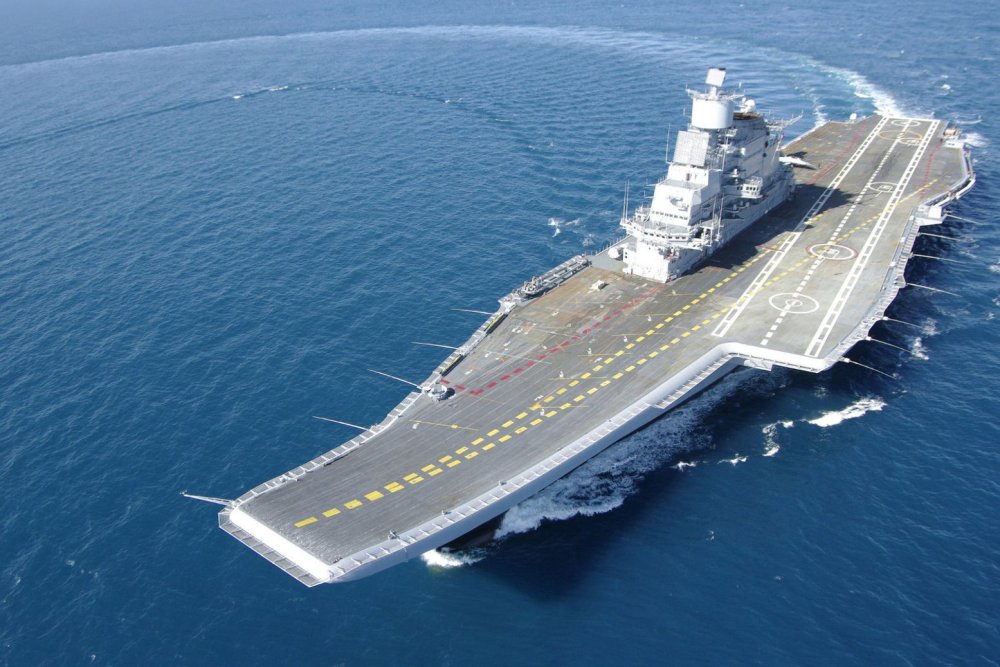
India Really Regrets Buying This Aircraft Carrier from Russia

by Kyle Mizokami
Key point: The Admiral Gorshkov is a terrible ship, but beggars can’t be choosers.

SPONSORED CONTENT
Recommended by
If You Have Gutters You Have To Try This To Avoid Cleaning Gutters For Life!
leaffilterguards.com
Ontario Seniors May Be Eligible For Invisible Hearing Aids
www.besthearingaids.ca
[Photos] Russia Designed One Of The Most Useless Planes Of All Time
[Photos] Russia Designed One Of The Most Useless Planes Of All Time
Money Pop
[Gallery] What Sam Elliott Really Did in The Army is Incredible
[Gallery] What Sam Elliott Really Did in The Army is Incredible
Direct Expose
Like a lot of countries, India wants the best weapons it can afford. But ideological and financial concerns mean there are a lot of things it won’t buy from the United States or Europe. That pretty much leaves, well, Russia.

India has been a big buyer of Russian weapons for 50 years. Those haven’t been easy years for New Delhi. India’s defense contracts with Russia have consistently suffered delays and cost overruns. And the resulting hardware doesn’t always work.

Of all India’s Russian procurement woes, none speak more to the dysfunctional relationship between the two countries than the saga of INS Vikramaditya. In the early 2000s, India went shopping for a new aircraft carrier. What followed was a military-industrial nightmare.

Wanted—one new(ish) carrier
In 1988, the Soviet Union commissioned the aircraft carrier Baku. She and her four sisters of the Kiev class represented a unique Soviet design. The front third resembled a heavy cruiser, with 12 giant SS-N-12 anti-ship missiles, up to 192 surface-to-air missiles and two 100-millimeter deck guns. The remaining two-thirds of the ship was basically an aircraft carrier, with an angled flight deck and a hangar.
Do You Know What Happened Today In History?
Baku briefly served in the Soviet navy until the USSR dissolved in 1991. Russia inherited the vessel, renamed her Admiral Gorshkov and kept her on the rolls of the new Russian navy until 1996. After a boiler room explosion, likely due to a lack of maintenance, Admiral Gorshkov went into mothballs.

In the early 2000s, India faced a dilemma. The Indian navy’s only carrier INS Viraat was set to retire in 2007. Carriers help India assert influence over the Indian Ocean—not to mention, they’re status symbols. New Delhi needed to replace Viraat, and fast.

India’s options were limited. The only countries building carriers at the time—the United States, France and Italy—were building ships too big for India’s checkbook. In 2004, India and Russia struck a deal in which India would receive Admiral Gorshkov. The ship herself would be free, but India would pay $974 million dollars to Russia to upgrade her.

It was an ambitious project. At 44,500 tons, Admiral Gorshkov was a huge ship. Already more than a decade old, she had spent eight years languishing in mothballs. Indifference and Russia’s harsh winters are unkind to idle ships.
Russia would transform the vessel from a helicopter carrier with a partial flight deck to an aircraft carrier with a launch ramp and a flight deck just over 900 feet long. She would be capable of supporting 24 MiG-29K fighters and up to 10 Kamov helicopters.

She would have new radars, new boilers for propulsion, new arrester wires for catching landing aircraft and new deck elevators. All 2,700 rooms and compartments—spread out over 22 decks—would be refurbished and new wiring would be laid throughout the ship. The “new” carrier would be named Vikramaditya, after an ancient Indian king.
A real aircraft carrier for less than a billion dollars sounds almost too good to be true. And Report Advertisement
In 2007, just a year before delivery, it became clear that Russia’s Sevmash shipyard couldn’t meet the ambitious deadline. Even worse, the yard demanded more than twice as much money—$2.9 billion in total—to complete the job.

The cost of sea trials alone, originally $27 million, ballooned to a fantastic $550 million.

 
A year later, with the project still in disarray, Sevmash estimated the carrier to be only 49-percent complete. Even more galling, one Sevmash executive suggested that India should pay an additional $2 billion, citing a “market price” of a brand-new carrier at “between $3 billion and $4 billion.”

Sevmash specialized in submarine construction and had never worked on an aircraft carrier before. The ship had been originally built at the Nikolayev Shipyards, which after the breakup of the Soviet Union became part of the Ukraine. The tooling and specialized equipment used to build Admiral Gorshkov was thousands of miles away and now in a foreign country.

Like many contractors, defense or otherwise, Sevmash had its unhappy employer over a barrel. With the job halfway done, and having already dropped $974 million, India could not afford to walk away from the deal. Russia knew it, and was blunt about India’s options. “If India does not pay up, we will keep the aircraft carrier,” one defense ministry official told RIA-Novosti.

‘There will be grave consequences’

By 2009, the project was deadlocked and word was starting to get around the defense industry. Russian arms exports for 2009 totaled $8 billion, and Sevmash’s delays and extortionary tactics weren’t good for the Russian defense industry as a whole.

In July 2009, Russia’s then-president Dmitri Medvedev made a high-profile visit to the Sevmash shipyard. Indian news reported that the carrier was still half-done, meaning that the yard had done virtually no work on the ship for two years as it held out for more money.

Medvedev publicly scolded Sevmash officials. “You need to complete [Vikramaditya] and hand it over our partners,” the visibly irritated president told Sevmash general director Nikolai Kalistratov.
In 2010, the Indian government agreed to more than double the budget for the carrier to $2.2 billion. This was less than the $2.9 billion Sevmash demanded, and much less than Sevmash’s suggested “market price” of $4 billion.

Suddenly, Sevmash magically started working harder—actually, twice as hard—and finished the other half of the upgrades in only three years. Vikramaditya finally entered sea trials in August 2012 and commissioned into the Indian navy in November 2013.

At the commissioning ceremony, Indian Defense Minister AK Anthony expressed relief that the ordeal was over, telling the press that there was a time “when we thought we would never get her.”

Now that Vikramaditya is finally in service, India’s problems are over, right? Not by a long shot. Incredibly, India has chosen Sevmash to do out-of-warranty work on the ship for the next 20 years.

Keeping Vikramaditya supplied with spare parts will be a major task in itself. Ten Indian contractors helped to build the carrier, but so did more than 200 other contractors in Russia, Croatia, Denmark, Germany, Italy, Japan, Finland, France, Norway, Poland, Sweden and the U.K. Some countries, particularly Japan, were likely unaware they were exporting parts for a foreign weapons system.

The ship’s boilers, which provide Vikramaditya with power and propulsion, are a long-term concern. All eight boilers are new. But yard workers discovered defects in them. During her trip from Russia to India, the flattop suffered a boiler breakdown, which Sevmash chalked up to poor-quality Chinese firebricks.

China denied ever exporting the firebricks.

Finally, Vikramaditya lacks active air defenses. The ship has chaff and flare systems to lure away anti-ship missiles, but she doesn’t have any close-in weapons systems like the American Phalanx.

India could install local versions of the Russian AK-630 gun system, but missiles will have to wait until the ship is in drydock again—and that could be up to three years from now. In the meantime, Vikramaditya will have to rely on the new Indian air-defense destroyer INS Kolkata for protection from aircraft and missiles.

As for Sevmash? After the Vikramaditya fiasco, the yard is strangely upbeat about building more carriers … and has identified Brazil as a possible buyer. “Sevmash wants to build aircraft carriers,” said Sergey Novoselov, the yard’s deputy general director.

This article by Kyle Mizokami originally appeared back in 2014.

Image: Wikimedia.


Ahead of Xi’s visit, China says Kashmir issue should be resolved bilaterally

Ahead of Xi's visit, China says Kashmir issue should be resolved bilaterally

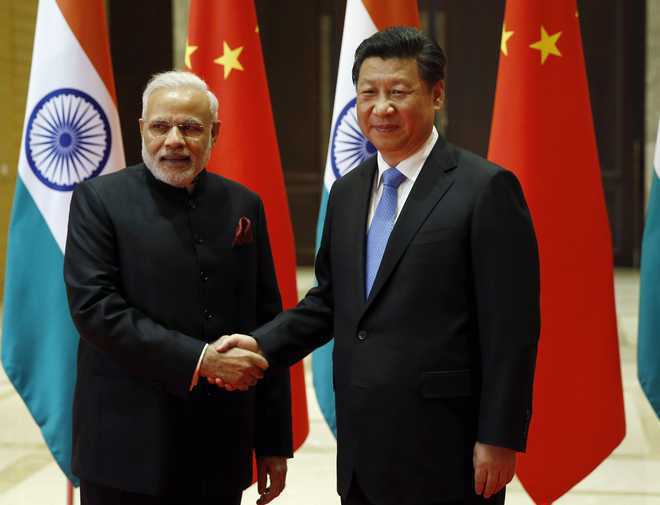
Prime Minister Narendra Modi (left) and Chinese President Xi Jinping. PTI file photo
Beijing, October 8 
As Pakistan Prime Minister Imran Khan arrived here on Tuesday for talks with Xi Jinping ahead of the Chinese President’s important visit to India, China said the Kashmir issue should be resolved between New Delhi and Islamabad, significantly omitting its recent references to the UN and UN Security Council resolutions.
Foreign Ministry spokesman Geng Shuang during his media briefing here on Tuesday did not make any official announcement about Xi’s visit to India.
However, Chinese officials informally said an announcement would be made simultaneously in Beijing and New Delhi on Wednesday.
The Foreign Ministry has also called for a special media briefing on Wednesday on “Chinese leader’s outbound visit”.
“India and China have a tradition of high-level exchanges. Both sides have communication exchange over high-level Visit. Any new information will be released soon,” Geng said in response to questions on Xi’s visit to India.
Both India and China are major developing countries of the world and major emerging markets, he said.
“Since the Wuhan informal summit (last year), our bilateral relations have gathered good momentum,” he said.
“We have been advancing our cooperation and properly managing our differences. We have a tradition of high level exchange and our two sides are maintaining communication on high level exchange in the next phase. We should make good atmosphere and environment for this,” he said.
When asked about Khan’s visit to Beijing ahead of Xi’s trip to India and whether the Kashmir issue will figure in his talks with the Chinese leaders, Geng said that China’s stand is that the Kashmir issue should be resolved between India and Pakistan.
“And so you are paying attention to the Kashmir issue, right? China’s position on Kashmir issue is clear and consistent”, he said.
“We call on India and Pakistan to engage in dialogue and consultation on all issues including Kashmir issue and consolidate mutual trust. This is in line with interest of both countries and common aspiration of the world,” he said.
His comments marked a significant shift on what China has been saying on Kashmir in recent weeks in the aftermath of India’s move to revoke Article 370 of the Constitution removing the special status to Kashmir.
In its first reaction on August 6, the Chinese foreign ministry issued two separate statements.
In one statement, China also expressed its opposition to India’s move to create a separate Union Territory of Ladakh highlighting Beijing’s territorial claims in the area.
The second statement said: “We call on both India and Pakistan to peacefully resolve the relevant disputes through dialogue and consultation and safeguard peace and stability in the region”.
But China added UN and UNSC resolutions on Kashmir when Pakistan Foreign Minister Shah Mahmood Qureshi visited Beijing few days later and met his Chinese counterpart Wang Yi.
“It (Kashmir issue) should be properly and peacefully resolved based on the UN Charter, relevant UN Security Council resolutions and bilateral agreement,” Wang had said.
A closed-door meeting of the UNSC on Kashmir where China maintained the same stand ended without any outcome or statement, in a snub to Beijing and Islamabad.
Later, Wang repeated it in a UN General Assembly speech,drawing protests from India.
Geng’s comments on Tuesday marks China’s return to its original stand that Kashmir issue should be resolved bilaterally.
Observers say it is significant shift ahead of Xi’s visit to India for his 2nd informal summit with Prime Minister Narendra Modi.
On Khan’s visit, Geng said China attaches “great importance” his trip.
Khan arrived here on a two-day official visit to China during which he would meet the country’s top leadership including President Xi and discuss issues of regional and bilateral significance.
Significantly, Pakistan Army chief Gen Qamar Javed Bajwa arrived here ahead of Khan on Monday night, according to the Pakistan army’s media wing – the Inter-Services Public Relations ISPR).
Gen Bajwa would also attend Khan’s key meetings with Xi and Premier Li Keqiang, highlighting his powerful position in Pakistan’s power structure.
“COAS arrived China on official visit. COAS will meet Chinese mil leadership including PLA Army Commander, Vice Chairman of the Central Military Commission & Commander Southern Theater Command. COAS will also join PM for meeting with Chinese PM and President,” the ISPR tweeted.
Their visits came ahead of Xi’s planned visit to India.
“China and Pakistan are all weather strategic cooperation partners. We have good tradition of close exchange and communication. We have strategic mutual trust and advancing practical cooperation. Our cooperation in CPEC is bringing more outcomes to our peoples,” he said.
Geng, however, did not respond to question about Gen Bajwa’s visit. PTI

Army plans to buy 350 helicopters over 10 years to modernise its Aviation Corps

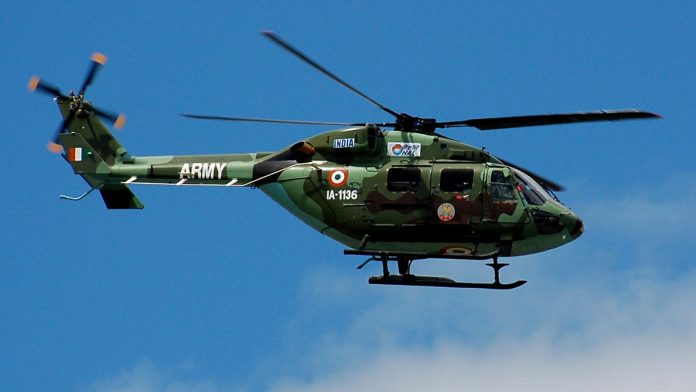
The Advanced Light Helicopter 'Dhruv' was inducted in the Indian Army in 2001

New Delhi: The Army is working on a 10-year modernisation plan for its Aviation Corps and aims to induct at least 350 helicopters, including the indigenous Light Combat Helicopter and the battle-proven Apache.

The long-pending plan includes increasing the surveillance features of the choppers already in the Aviation Corps’ inventory, with the induction of the Remotely Piloted Aircraft System (RPAS).


Also read: This is how more Army jawans can become officers under new Bipin Rawat plan


What does Army plan to buy?

The Army plans to induct two kinds of utility choppers and three combat helicopters. This will include squadrons of Rudra (the armed version of the Advanced Light Helicopter ‘Dhruv’), which will have 20mm guns and 70mm cannons and are to be inducted within one year.

The LCH squadrons are to be inducted within seven to 10 years, while 200 Kamov Ka-226s, which are for reconnaissance and observation, are expected to be procured within 10 years through an inter-government agreement.

By 2021, the Army also expects to procure six Apache choppers and an additional squadron of ALH Dhruv, to add to what is already functional. Dhruv can fly over all terrains in India, including high altitudes.


Also read: Bipin Rawat’s plan to train jawans for officer role is Army admitting staff shortage, quality


What will the new choppers replace?

The Aviation Corps currently operates Chetak and Cheetah choppers, the ALH Dhruv since 2001, and its armed variant Rudra since 2013.

Each squadron of the Aviation Corps is supposed to have three ‘flights’ and each ‘flight’ is supposed to feature five aircraft each. However, in the current scenario, all squadrons have only two ‘flights’ of five aircraft each.

The inductions will replace the Army’s ageing Chetak and Cheetah helicopter fleet at a time when a Cheetah crash recently killed the Indian Army’s Lt Col. Rajneesh Parmar and Captain Kalzang Wangdi of the Royal Bhutan Army, raising questions about the choppers’ flight-worthiness and bringing the focus back on their long-pending replacement with the Light Utility Helicopter.

Also read: Indian Army tanks now have sharper night vision equipment developed by DRDO


Probable advantages

Army sources said the plans would be a game-changer in future conflicts, and expressed confidence that they would be put into action in a time-bound manner.

“More emphasis is being put on prioritisation, rationalisation and economy of expenditure. Greater value for money is being achieved by encouraging procurements from indigenous sources in support of the government’s Make in India initiative,” an Army source said.

Army officers further said that the transfer of the RPAS to the Aviation Corps would ensure a comprehensive surveillance picture, utilising both manned and unmanned platforms, while sharing support infrastructure.

“The operation of these assets under the common umbrella of Army Aviation Corps and a common aviation adviser to the ground forces commander will help achieve battlefield transparency,” the source added.


lso read: Army says two-front war a real risk, need funds to counter China & Pak modernisation


Why Do So Many NDA Cadets Leave Training? The Reality Will Shock You

A disturbing 16-20 per cent drop rate per course!

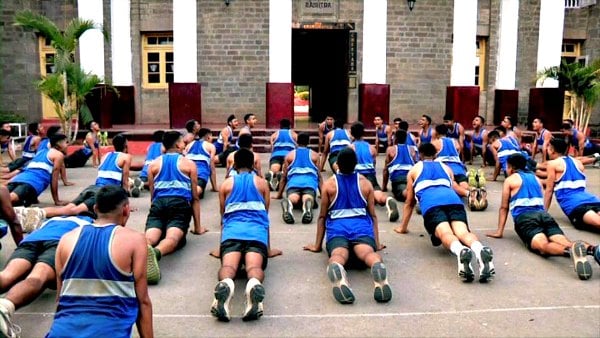
As of 2018, over 1,200 cadets of the premier tri-services college, the National defence academy have quit, in the middle of their three-year training curriculum in the past ten years. The average washout rate of cadets is at an alarming 16 to 20 per cent of the overall course intake. Both former cadets and several alumni of the elite military institution have cited ragda (a concept which some of those interviewed for this article have constituted to ragging), corporal punishment and unsanctioned training practices. Other key reasons for such a staggering drop out rate have been a lack of physical fitness on the part of cadets, being boarded out on medical grounds, indiscipline, homesickness and, on certain instances realising that the reality of serving in the forces is not the same as they had envisioned.

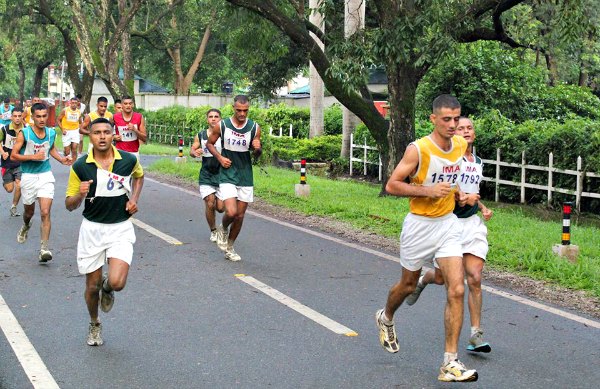
Cadets running cross country
Ragda, being a key factor for the staggeringly high dropout rate, has been hotly debated amongst Ex-NDA’s
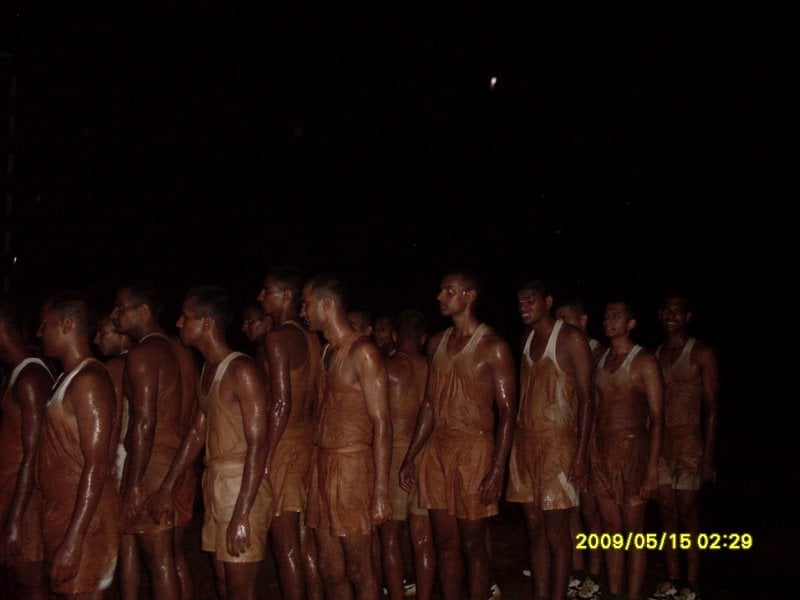
NDA cadets after a ragda session in the middle of the night

The verdict on whether such use of punishment is justified has been hotly debated within military circles and among ex-NDA’s themselves.
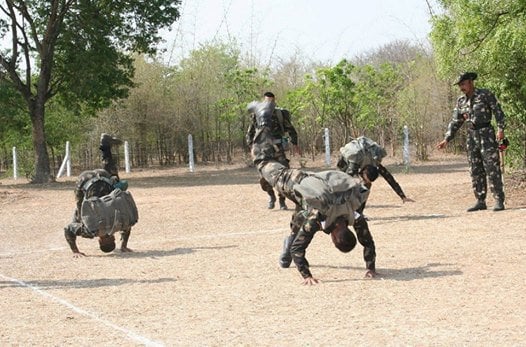
In a report by outlook magazine, retired Colonel PK Royal Mehrishi, an NDA alumnus, told the Asia Times that the fifth and sixth term cadets ordered the first and second term cadets to roll down the staircase of three-story buildings, vault over wooden horses, do backflips, handsprings among a host of other activities without the supervision of a qualified instructor. The report quoted the retired Colonel saying that “Senior cadets believe they’re toughening them for war or better performance in the hard-fought inter squadron competitions.”

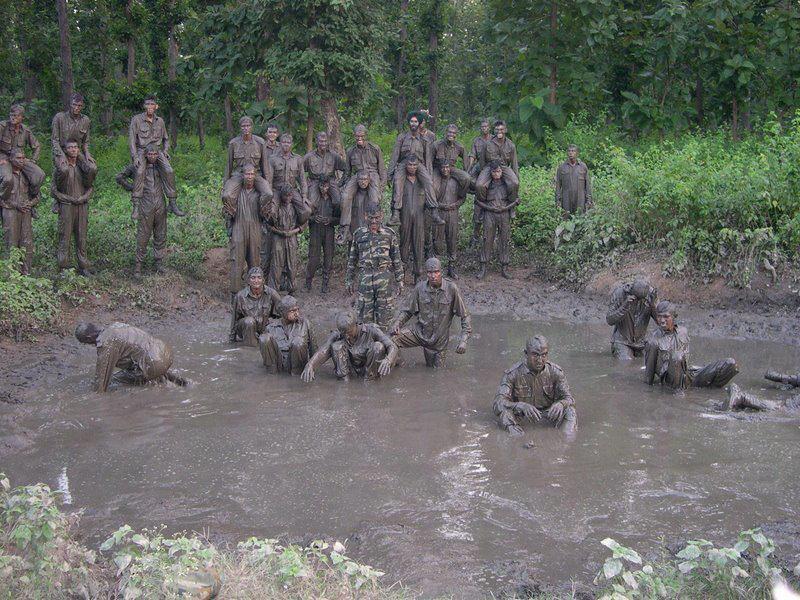
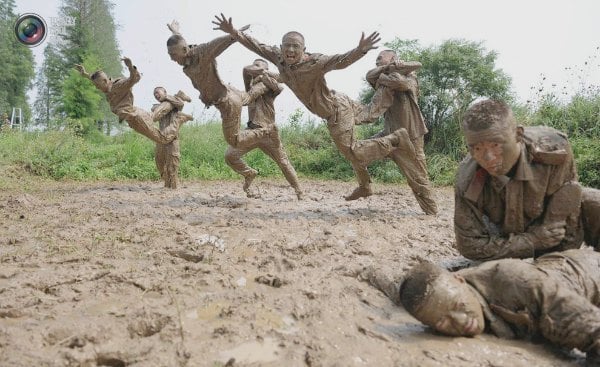
GC’s rolling in the muck

This belief has been echoed by several service personnel who have reached great heights in their military careers. Distinguished officers with exceptional operational records have sworn by these methods, despite being on the receiving end of ragda themselves. Defence services officers have over the years have provided compelling arguments justifying the military necessity of such informal punishments. According to a retired army officer who does not wish to be identified, “The Army wants to make you tough, more mentally than physically. Ragda is there to make you know your physical and mental limits and then cross the same.” The operative phrase in training is “Jitna ragda utna tagda!” meaning “the harder the punishment the tougher you get!”\

“Jitna ragda utna tagda” But what is ragda?

‘Ragda’ the according to a Quora post by Kiran Raul, who is a battle-hardened infantry officer, has described ragda with a pinch of crude humour, writing, “Ragda in a physical sense or practical sense means you are going to spend the next few hours, depending on the severity of your misdemeanour, or outrage felt by the executor of the ragda, is doing a lot of funny but painful or tiring actions, including but not limited to rolling with or without a shirt on your back, on surfaces ranging from a cement floor, gravel to hot tarmac.”

Pushups till fatigue

He goes on further describing ragda as “A lot of push-ups, carrying around your heaviest coursemate on your shoulders, running a lot under the hot sun, drinking a lot of water until you puke, if you don’t puke easily, a front roll and a back roll will help speed that up.”

front rolling is also known as Gulati in the academy

The retired infantry officer goes on to split the anatomy of the vaguely defined military training terminology, writing “crawling on gravel roads and any other hard surface that hurt, standing for a long time carrying weights, pouring buckets of water on your head on a cold winter night.” The aforementioned he explains is only the “tip of the iceberg,” Raul writes rather humorously.

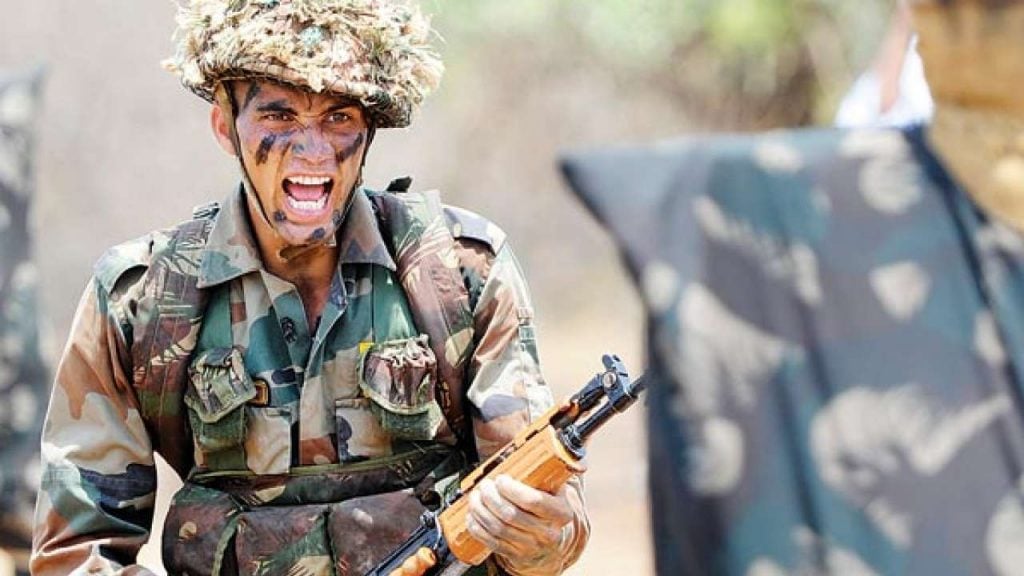
Cadet channelising his aggression on the training dummy

“The procedures are only limited by the imagination.” From green chillies being fed to cadets found sleeping in class to backbreaking exercise after which you will be unable to sleep, everything that is not a part of the formal training curriculum is included in ragda. Raul further writes in his post that “Some innovative, enterprising and sincere candidates have honed ragda into an art form!”

creative punishments are designed by the senior term cadets

Many Ex-Servicemen have stood by the effectiveness of ragda, in forging a cadet into a warrior

The officer in question and a dozen other officers who were interviewed for the background of this article have staunchly advocated the effectiveness of ragda, and now fondly recollect their own experiences. These officers maintain that soldiering is not an ordinary job and there is no civilian equivalent. Soldiers are required to operate in some of the most barbaric, amoral and geographically austere environments in the country. These deployments often involve serving in sub-zero temperatures or in the scorching hot deserts of Rajasthan.

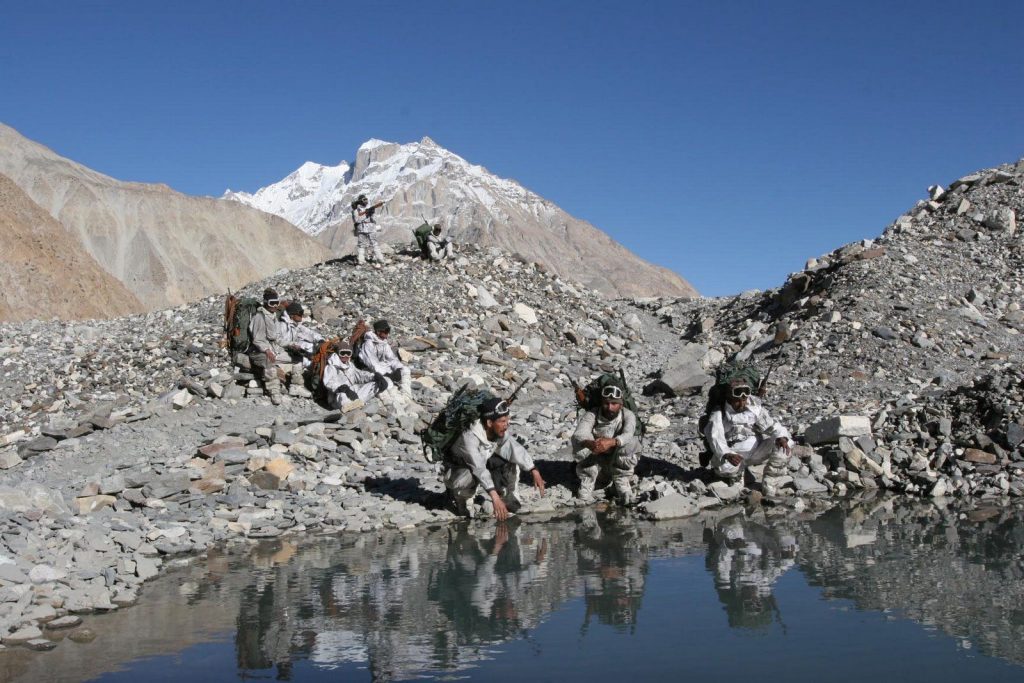
Soldiers serving in the freezing landscape of Siachen
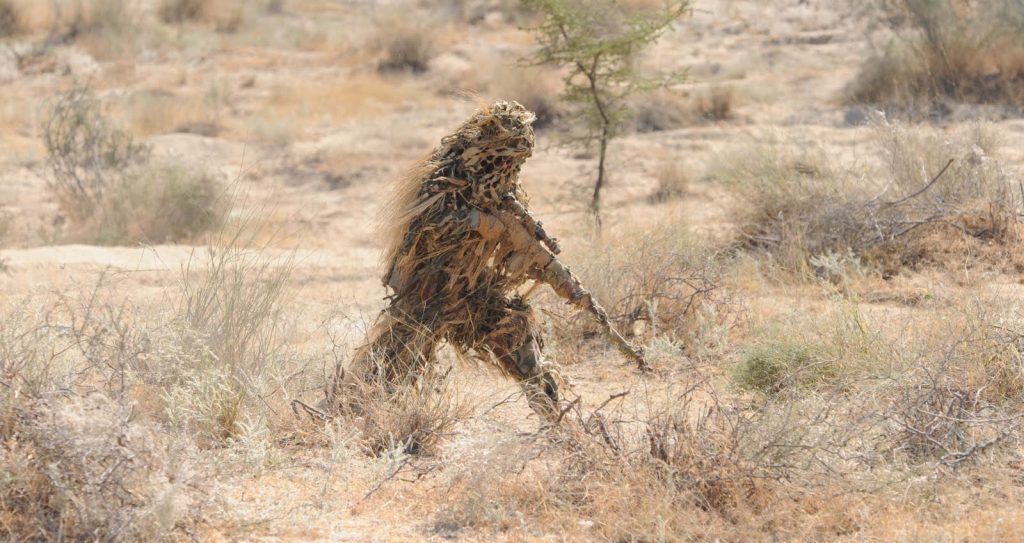
Indian army sniper taking part in a desert exercise

The punishing geography coupled with the thought of ones own mortality is enough to break the will of even the most resilient men and women. Ragda ensures that only the toughest make through the ranks. If they cannot hack it, they certainly will not survive combat. Even many cadets share the same belief, with one cadet who does not wish to be identified saying “Ragda gives you spontaneous pain, but the ustaads are preparing you for a bright future, where you can face the enemy


Here’s Why IAF Shouldn’t Underestimate The PAF JF-17 Thunder Fighter Jet

Here's Why IAF Shouldn’t Underestimate The PAF JF-17 Thunder Fighter Jet

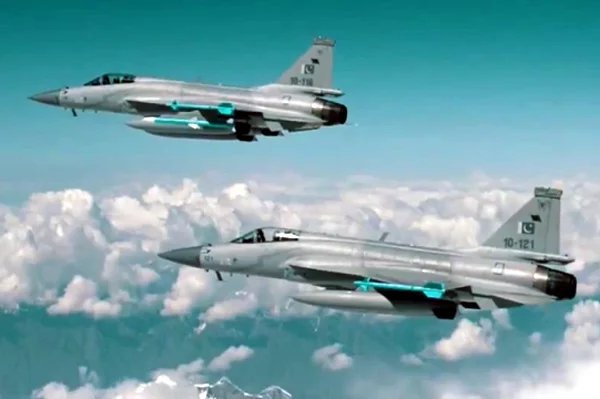
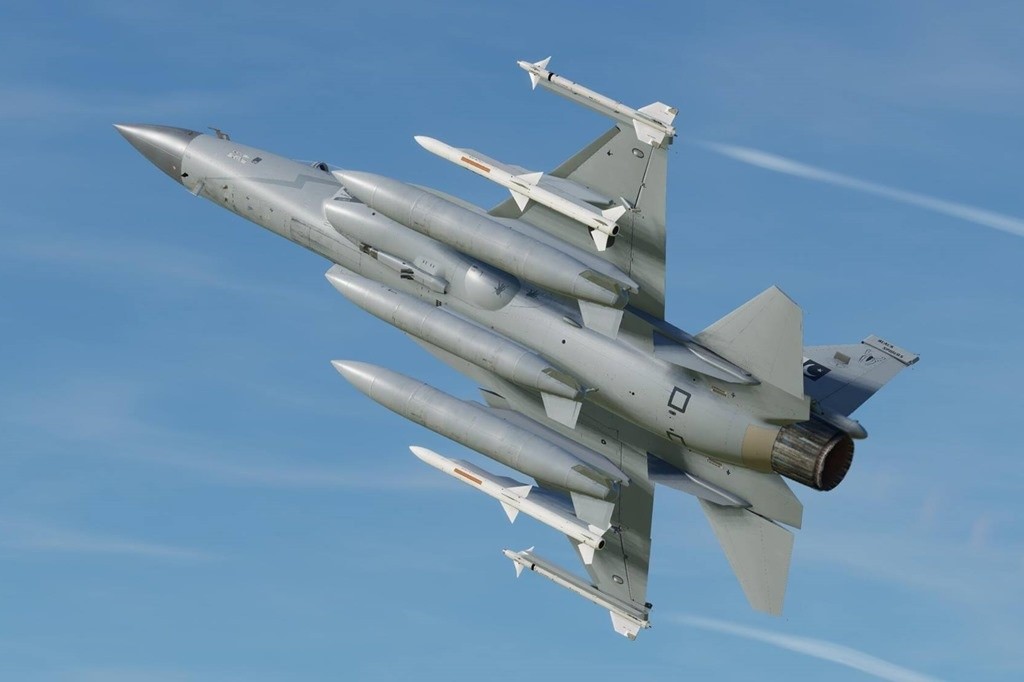
he PAC JF-17 Thunder, or CAC FC-1 Xiaolong, is a lightweight, single-engine, multi-role combat aircraft developed jointly by the Pakistan Aeronautical Complex (PAC) and the Chengdu Aircraft Corporation (CAC) of China.

The JF-17 can be used for aerial reconnaissance, ground attack, and aircraft interception. Its designation “JF-17” by Pakistan is short for “Joint Fighter-17”, while the designation and name “FC-1 Xiaolong” by China means “Fighter China-1 Fierce Dragon”.

The Pakistani Air Force’s JF-17 Thunder single-engine light fighter played a key role in clashes with the Indian Air Force in late February 2019.

Pakistan dispatched what it claimed to be twenty-five JF-17s to launch a lightning strike across the Line of Control on targets in Kashmir, in retaliation for an Indian air raid.

The PAF claimed its JF-17s had shot down two Indian fighters pursuing strike planes into Pakistani airspace. However, while the loss of one upgraded Indian MiG-21 Bison was confirmed and its pilot captured, India subsequently displayed fragments of American-made AIM-120 missiles only compatible with Pakistan’s F-16s, casting some doubt on whether the PAF’s Thunders were responsible for the kill.

Pakistan currently operate around 100 Thunders in five operational squadrons. The Pakistani Air Force currently deploys two major variants of the fighter, the Block I variant which entered service from 2007 and the Block II variant which entered production in 2013.

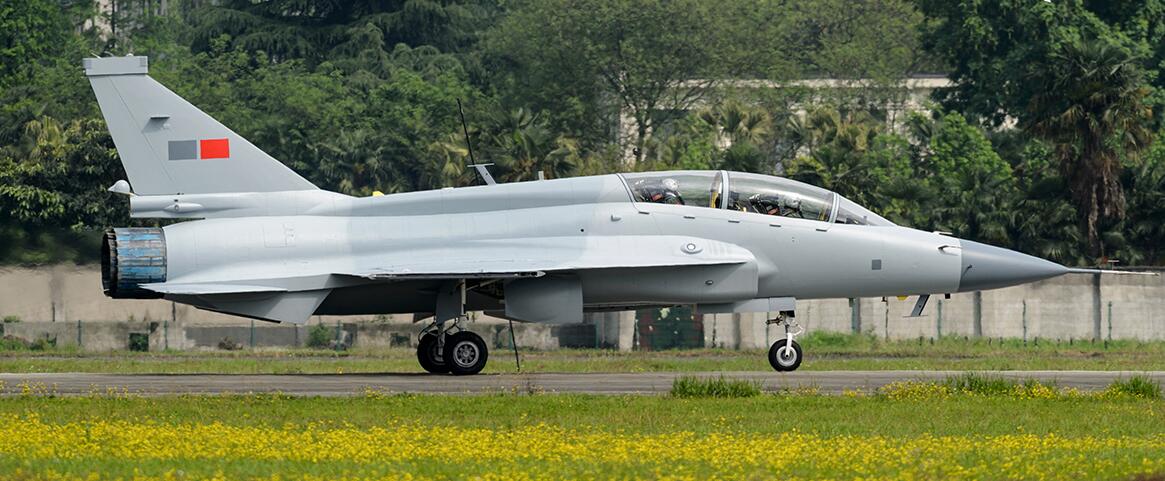
Approximately 25 Block II variants of the JF-17 are currently being manufactured in Pakistan annually, with plans to terminate production in favour of the upcoming JF-17 Block III in the early 2020s. A twin-seat variant of the Block II fighter, the JF-17B, entered service in December 2017. Single engine variants, however, compromise the vast majority of the fleet at present.

Here's Why IAF Shouldn’t Underestimate The PAF JF-17 Thunder Fighter Jet

The PAF now plans to procure fifty more JF-17s of an improved Block III standard by 2024—with airframes produced jointly by Pakistan and China in a 58/42 percent split—as well as procure 26 two-seat JF-17Bs with additional fuel stored in a dorsal fin and enhanced application to training and possibly strike missions. Extant JF-17s may also be upgraded to the Block III variant, which should make its first flight later in 2019.

Islamabad also confirmed in 2018 a $184 million deal to sell three JF-17s to the Nigerian Air Force in 2018 (which currently operates J-7s and Alpha Jets), and has delivered at least six out of an order of eighteen JF-17Ms to Myanmar.

Why IAF Shouldn’t Underestimate The PAF JF-17 Thunder Fighter Jet

Much like the Indian MIG-21 Bison, an upgraded variant of the venerated design which according to Indian reports was highly successful against a Pakistani F-16 – likely due to its high end avionics, electronic warfare, jamming and missile systems which are all of the fourth generation, the JF-17 has long been underestimated for a number of reasons. The airframe is loosely based on that of the MiG-21 – an evolution of the Chinese J-7 design – but is considerably more capable than that of any other variant or derivative.

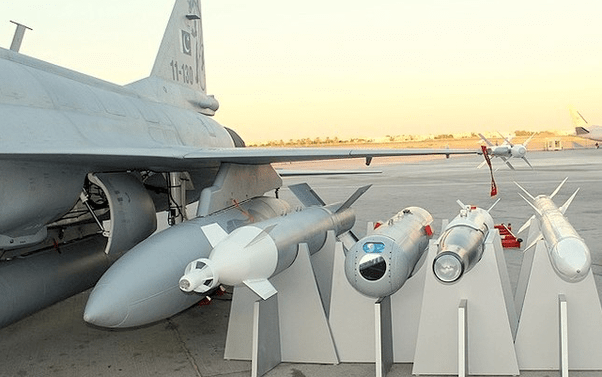
The fighter’s engines produce little over half the thrust of the Indian Air Force’s MiG-29 – one third that of the elite Su-30MKI – giving it an inferior thrust/weight ratio when fully armed. These are compensated for by a number of factors, including its access to state of the art sensors and munitions – including the Chinese PL-12 long-range air to air missile – an analogue to the American AIM-120C – and the YJ-12 anti-ship cruise missile. The latter makes the aircraft a potentially highly lethal ship hunter, in some ways comparable to India’s Brahmos cruise missile, and its deployment is an effective asymmetric asset against the large Indian surface fleet.

Here's Why IAF Shouldn’t Underestimate The PAF JF-17 Thunder Fighter Jet

The JF-17 is relatively simple both to operate and maintain, far more so that the F-16 or MiG-29, and the costs of doing so are also extremely low.

The while the aircraft is slower and less manoeuvrable than the F-16, it compensates with a higher altitude and arguably far superior options for its weapons loadout. Block II variants deploy data links and high-end electronic capabilities which early F-16 and MiG-29 variants both lacked, while their avionics are also considerably more sophisticated.

The fighters’ NRIET KLJ-7 X band fire control radars are also highly capable – variants of the Chengdu J-10’s formidable KLJ-10 – and are capable of tracking up to ten targets at ranges of over 105km.

Data links allow the aircraft to potentially make use of longer-ranged munitions, particularly when operating alongside AWACS platforms capable of guiding missiles beyond the range of the fighters’ onboard radars. As a key strength of the JF-17 is its compatibility with high-end Chinese munitions, it is highly possible that Block II variants could in future receive longer-range munitions which would benefit from such guidance – with more advanced variants of the PL-12 reportedly also planned for deployment by the upcoming JF-17 Block III.

Here's Why IAF Shouldn’t Underestimate The PAF JF-17 Thunder Fighter Jet

Ultimately the JF-17 remains a highly capable fourth-generation fighter – more than a match for India’s MiG-21 and Mirage 2000 single-engine light fighters and potentially capable of posing a threat to medium weight platforms such as the MiG-29 and Rafale – though likely still struggling against the Su-30MKI. The design is set to be enhanced considerably in the near future with the induction of the Block III variant, which will reportedly deploy a new radar, an infrared search and tracking system (IRST), helmet-mounted display, new electronic warfare and jamming systems, and potentially even PL-15 air to air missiles – which considerably outrange anything currently in the Indian arsenal.


In hallowed corridors, 50 years later by Maj Gen RS Mehta (retd)

In hallowed corridors, 50 years later


THE stately church spire of Christ Church School that dramatically rose out of the dense, surrounding foliage drew me to it inexorably. A closer look revealed low, buff-coloured school buildings edged with bright green lines nestling cosily alongside the grand Gothic architectural marvel of 1878.

It was the magical summer of 1964. I was a scalawag standard 10 student in pedigreed St Francis High School in Lucknow; a city known for its pehle aap refinement in language and deportment. My newly acquired friend Abbas Qezilbash and I had just returned from a state basketball tour on the Isle of Serendip, Ceylon (now Sri Lanka). We had a girls’ team with players from spiffy Loreto Convent/Isabella Thoburn College and a men’s team, where Abbas and I were the only boy players among grown-up men. He was from Sainik School/La Martiniere. On a whim, both of us jumped ship, joining Christ Church. With no scholastic achievements, I recall how surprised and delighted I felt when the stern, black-gowned principal, Rev Theodore Tiwari, announced in assembly that we had been selected to represent UP in the Bombay nationals.

I recall Reverend Tiwari’s no-nonsense English classes, and Headmistress A Vashishth’s heels as she tirelessly patrolled corridors, maintaining discipline and teaching standards. We feared and respected her, but could still catch her twinkling eyes. I recall the moving pre-Senior Cambridge exam church ceremony to wish us well, and also, the infectious joy when it was announced that the school had become a college.

After clearing ‘Intermediate’, I joined Lucknow University in BA (Arts) in 1967, leaving in 1968, after being selected for the Army. Call it providence, but Abbas followed me six months later, joining my company, with I, good-naturedly, ragging him on arrival as his senior. He later joined my Cavalry Regiment. We remained friends but later military destiny took over. Years later, I heard of his untimely demise. Life has its own cadence and we can’t claim we fully comprehend its ebb and flow…

Long after my retirement, in 2015, I got in touch with Mr RK Chattree, the college principal. My offer of a motivational talk at my alma mater was accepted, with a request that I be the chief guest at the college sports day.

It was homecoming of a moving kind. I walked down the same corridors I had once treaded with trepidation as a 16 year old; entered a classroom I had once feared. The children who heard me learned a bit about my recall of a great school and what lay ahead of them in seeking excellence.

The next day, I was transported on sepia memory; privileged to bless children whose names I proudly read out as Reverend Tiwari had once read out our names for sporting achievements 50 years ago.


J&K: FALLOUT OF THE MOMENTOUS DECISION by : Lt Gen Syed Ata Hasnain, PVSM, UYSM, AVSM, SM, VSM & BAR (Retd)

The abrogation of Articles 370 and 35 A is an epoch making decision. The article looks at the whys and wherefores and the impact of the step , which has altered the scenario at all levels, strategic, operational and tactical. Yet, it is still a work in progress

The SETTING

It was obvious that something momentous was about to take place in early Aug 2019 when the iconic annual pilgrimage, the Amarnath Yatra, was terminated prematurely and almost 30,000 armed policemen were rapidly transported to the Kashmir subdivision of Jammu & Kashmir (J&K). The top brass of the security forces (SF) appeared at a press brief a few days prior to inform the nation of the security situation and the threats anticipated to the pilgrimage which for the first time ever forced its premature termination. Rumours were already rife when Parliament convened on 5 Aug 2019. The moment was well chosen as timing of a path breaking decision is always significant.  Pakistan Prime Minister Imran Khan had met US President Donald Trump on 22 Jul 2019 and the latter had unwittingly spoken of his readiness to mediate between India and Pakistan over J&K. The apparent faux pas by the US President and the indiscreet way that the Pakistan PM perceived Trump’s offer did create the right conditions for the Indian government to set up its virtual coup in the handling of the long vexed J&K issue. Pakistan’s racing fillip in its international image because of assistance to the US to fully and finally withdraw from Afghanistan, gave rise to the perception that if the government wanted to take a major political initiative  further delay could see the emerging geopolitical situation overtake events.

With the above tide of events, on 5 Aug 2019 the Indian Government took the unprecedented step of abrogating not only Article 35A which was any way expected to go but also Article 370. It is the latter provision in the Indian Constitution which accorded the state of J&K a special status. Article 35A empowered the state to make its own laws and rules to determine who would be eligible to be a citizen of the state and thus related to property ownership rights too. Pertinent to mention here that while the decision may have been taken keeping various geopolitical considerations in mind the preparations for it had commenced fairly long ago, with all legal aspects well researched. The likely impact, however, could not easily be determined nor its international ramifications. There was talk of Kashmir virtually burning and even mainstream political leaders from the Valley had expressed dismay and threats. For the eventual decision on 5 Aug 2019 risk taking therefore was at a low level and the experience of 2008, 2010 and 2016 was drawn upon to take necessary precautions.

The Expectation

It helps in analysis to know what was expected from the government decision. Articles 370 and 35A were unnecessary because these helped Pakistan promote the idea of unfinished agenda of 1947 and existence of a so called ‘J&K Issue’. Acceptance of these special provisions at the instance of Sheikh Abdullah was done without resort to any strategic thought to the final outcome or how it would complicate the path towards resolution. The strategic victory India gained over Pakistan in 1971 could have been used to settle the J&K issue. Perhaps this understanding was an overkill of expectation because the times were different, and India may not have gained more than the optimum traction with the international community than it already had. The Shimla Agreement did end with Pakistan gaining more at conflict resolution stage than India, but the one thing India could well have done internally was to have removed the special status of J&K and placed it upon the path of full and final  integration without any special provisions constraining it.

When Pakistan unleashed proxy hybrid war in 1989-90 in J&K as a sequel to its adopted strategy of ‘thousand cuts’ to bleed India, it very well knew that the special status of J&K within the Indian Union could always be exploited to provide the Kashmir segment a sense of being a part of a disputed entity whose interests were not served while remaining a part of India. Assiduously it worked on this, but India continued to follow status quo with even some thoughts towards further enhanced autonomy as demanded by the National Conference.

In 1994, under severe pressure from various international quarters emanating from a well-coordinated Pakistani diplomatic plan India took another unprecedented step. It messaged the world about its intent on J&K. The 22 Feb 1994 Joint Parliamentary Resolution, involving all political parties, clearly stated that the entire territory of J&K including that portion not under India’s direct control, once held by the erstwhile ruler, belonged to India and that it would aspire and work for its return to Indian control. However, it could have been more than just the tactical step it became in projecting India’s stance to the international community when severe pressure was being felt under US initiative. An abrogation of the constitutional provisions for special status at that stage may have pegged India’s claims more handsomely but those were tentative times in terms of India’s strategic confidence. The four years of discussions through back channel diplomacy on Musharraf’s four point formula through 2004-07 diluted the 1994 Joint Parliamentary Resolution to some extent. From 2008 onwards a fresh strategy was adopted by the Separatists and Pakistan’s deep state. It harped upon the combination of terrorist activity, street turbulence, promotion of alienation, enhanced focus on violent extremism (including radical religious belief) and internationalization. The Indian state’s only strategy was counter violence and lip service to engagement with the population especially the youth. Several times the security situation on ground improved, elections were held even at the grass roots (panchayat and municipal level) but empowerment at the lower levels remained elusive. The political and security stabilization could not be taken to the next level of higher integration primarily due to the absence of any initiatives or major efforts at de-alienation and de-radicalization.
My personal take was that a certain degree of risk would have to be undertaken and that the best Indian solution lay in following the approach adopted in 1994; political consensus on removal of the special provisions would ensure the isolation of the Separatists. Pakistan’s efforts to resist this in the streets would be handled with some hiccups but the international domain would hold steady once all parties were on board.

In the absence of any political consensus and a much divided polity the government settled for unilateral action which could be approved democratically through Parliament. That met the need of international approval. However, perhaps what emboldened the government to take the risk was the action it had taken over two years in attempting to dismantle the eco-system set up in Kashmir by the Pakistan deep state and the Separatists – a system which remained outside the ambit of conventional anti-terror operations.

Targeting the Eco system

The Ministry of Home Affairs (MHA) had reported to Parliament that in first six months of 2019 the situation in the state of J&K has witnessed improvement with terror related incidents seeing a 28% decline, infiltration reduced by 43%, local recruitment declined by 40% and neutralization of terrorists increased by 22%. To a casual observer this should have been a time for celebration with deduction that the back of the resistance and the support from Pakistan had both been effectively neutralized. To an experienced practitioner it was time to analyze deeper to see what it would take to sustain the apparent stability achieved. The results were due to a combination of Operation All Out which commenced in 2017, and the focused targeting of parts of the eco-system. A terror based ‘Proxy War Ecosystem’ is the nexus of politics, media, and shady third sector organizations. It may include NGOs, lawyers, academics, intellectuals and bankers.

The eco-system is too complex to be taken apart all at once as there are  linkages within linkages. Its constituents are firstly the human resource elements; the terrorists or those who have picked up the gun or been paid to do so. Second is the financial networks and conduits without which no violent movement can sustain for long. Without deep pockets no terror related separatist and anti-national movement can survive, and finances come from clandestine sources through a plethora of means. Third is the network of over ground workers (OGWs) who are the visible face as against the invisible face of the terrorists who act covertly; businessmen, government servants, lawyers, academics, media personalities and even politicians. They provide the wherewithal to fuel the movement and in many cases are organized in a structured way dealing with propaganda, rabble rousing and helping muster crowds. The fourth aspect is ideology which fuels the mind, creates visions such as those of caliphate, increases alienation and helps create greater affinity with Pakistan. In the current case the ideological intent of Pakistan and the separatists has been to dilute the middle path of Sufi belief and promote the more radical philosophy of organizations such as Ahle Hadith.

This eco-system in Kashmir has had ways of sustaining and growing even when there is a break from violence. It’s the system one encounters everyday if you live in Kashmir. However, it’s not something which can easily be targeted and more importantly without convergence of interests between the centre and state. It’s also the system through which Pakistan calibrated the situation. It’s only about two years ago that finally the NIA was tasked to go after these networks. The NIA has no doubt done some excellent work, but the system is just too deep rooted and extremely well etched for it to be made ineffective so soon. The decision to go after the OGWs, target the financial and other networks and disallow the separatists the space to function by emasculating them has been the hallmark of the last one year. It cannot easily be statistically reported, especially when it is work in progress. However, its weakening has ensured that along with detention of the usual rabble rousers and deployment of armed police in larger numbers the scope for organization of street protests dwindled almost immediately. The area where more effort over an extended period of time needs to be placed is counter radicalization.

The impact of the decisions of 5 Aug 2019 may be felt in many domains but primary among them are internal security, the LoC, governance, political environment of J&K and international opinion.

Internal Security

In the field of internal security, it is yet early to predict although preceding the decision care was taken to tighten loose ends which could trigger disturbances instigated by separatists. A fear existed that the response of the mainstream polity could also be unpredictable. Although distasteful, detentions took place as precautionary on the basis of past experience when Kashmir had seen major turbulence in the streets in 2008-10, deliberately instigated by exploiting triggers. Again in 2016, post the killing of Burhan Wani the streets went on fire, the separatists were hugely emboldened and the public fear of the army and police vanished, with deliberate breaking of curfew and large scale deaths and grievous injuries in the streets. The use of pellet guns by the police led to several people being blinded drawing an international furore against alleged human rights violations; exactly what the separatists hoped for. This time with lessons well learnt Kashmir was evacuated of tourists and other non-Kashmiris well before to avoid any reprisals which could have led to an unstoppable spiral against Kashmiris around the country jeopardizing all the gains of the decision taken by the government. Of course, this entire exercise could have been done differently in a different context; by a government campaign over several years, to explain the benefits of full integration without awkward conditions, to the people. That became impossible due to the ongoing proxy war sponsored by Pakistan and the disinformation campaign it so astutely played out through the ISPR. The risk of efforts towards consensus appeared to be perceived as potentially compromising on secrecy.

Threats to internal security are all based upon public perception, politics and instigation from Pakistan. Thus far peace has prevailed with partial and progressively diluting population control measures in place and only partial withdrawal of communication services with no attempts at breaking of curfew. The protest industry of Kashmir sponsored by Pakistan, directed by the separatist leaders and led in the streets by increasingly younger men and some women needs a system to be in place; it is not on auto mode. This eco-system had taken several years to create and extended down to the tehsil and even block levels. It included the universities, faculties of schools and colleges, media owners and prominent journalists, bank officials and hundreds of non-descript, low profile people working as OGWs. The best example to understand this is the speed and alacrity with which the Baramula-Kupwara road can be closed to Army convoys running logistics to maintain the troops at the LoC. An accident, a small act of misdemeanour or even the killing of a high profile terrorist could be used to stall movement and commence stone throwing for a couple of days. Efforts by security forces and agencies to neutralize the OGWs always seemed to come to naught. Thoughtfully, from 2017 this system was targeted by the government from Delhi and later directly under Governor’s rule. It is too complex to be undone in a hurry and will need several years of professional effort to take it down.

It was not possible to achieve full neutralization in the time available but the separatists were isolated and their hold over the system weakened. The test of this will emerge once normalcy is gradually introduced in greater measure. However, indicators are already available. With clandestine financial networks dented money may not find its way into hands of instigators; preventive detentions have as it is reduced their nuisance potential on the streets. In the event of the government strategy not working, there are enough forces on ground to cater for contingencies; the outcome then will be unpredictable but the chances of that appear bleak.

Internally the other threat is mainly from IEDs because that is one domain where a determined terror module may sneak past all security and create havoc of very serious proportions; recalling Pulwama and the attack on the J&K Assembly in 2001.

Effect at LoC

The LoC will be active in spurts. It has not reached any anticipated level yet because Pakistan is on hold due to pending external factors. Among them it is hopeful of the FATF decision, US dependence on it for continued talks with Taliban and expected tranches of the IMF loan. Usually around the time when the Pakistan PM or other representative addresses the UN General Assembly activity at the LoC is ratcheted to higher levels to project chances of war between two nuclear armed states. It has made up for that through its high pitched rhetoric on possibility of nuclear war.

The LoC, however, may have been comparatively quiet in relation to exchanges of fire and ceasefire violations but infiltration attempts have gone up manifold. These are directly linked to the intent of increasing terrorist capability and numbers in Kashmir and to make up shortfalls in leadership. It is expected that some regular Pakistan Army cadres may also infiltrate to provide the elusive leadership particularly in North Kashmir which has been uncharacteristically quiet for some time.
Governance

With administrative reorganization leading to Union Territory (UT) status for J&K it is expected that development through better governance will become an important aspect for future narratives. More direct oversight on various projects will hopefully curb corrupt practices and ensure delivery of authorised funds to the right quarters. The large outlay of central assistance to J&K must continue and the impact of better governance through balanced allocations must be palpable across the UT. This by itself will make a major difference in perception and communicate India’s strong desire to see prosperity in J&K.

To really qualify for a landmark decision the constitutional and administrative changes must deliver quality governance and that too in a very short time. A couple of things will be needed early enough and I am not rooting for restoring of the electoral process in that time frame. The return of Kashmiri Pandits must be discussed with their leadership and ways of ensuring this in an environment of existing mistrust must be sought.

Political Activity

It is important to restore political activity in J&K to involve the people and overcome the trauma of the perceived lockdown. This will prove to be the most challenging task ahead as it is yet to be determined how mainstream political parties are going to emerge from the events of this period. There is a perception that Panchayati Raj will step in to take the place of mainstream political activity, with more direct empowerment of the people. This can only remain a hope because getting such activity off the ground is unlikely to take place in a hurry. A level of rapprochement with mainstream political parties or the creation of alternatives is a must but both have their constraints. A period bereft of political activity may emerge akin to 1990-96 but without Separatist politics being allowed to rule the roost. This is a domain where greater credibility will need to be garnered for better international endorsement. Electoral activity in the true sense appears some distance away. Therefore, an elected government taking charge anytime in the future seems unlikely.

International Implications

On the international plane the impact has been positive across the international community and even China although initially negatively disposed has chosen not to be excessively vociferous. India cannot take its undoubted diplomatic success for granted even after the session of the UN General Assembly where PM Narendra Modi will speak. The diplomatic pressure on Pakistan must be maintained relentlessly through not just diplomacy but by direct outreach to intellectual communities in other important countries, particularly in the Middle East, US, UK and ASEAN countries.  Chinese President Xi Jinping visits India in a few weeks. That opportunity must be used to drive home to China how stability in J&K contributes to its interests, especially when there is restiveness in Xinjiang.

What India needs to be mindful about is the fact that while its undoubted international status is at a high there is no permanence in international support. Pakistan’s diplomatic and information based efforts have for a change come cropper but it has managed to throw up the J&K issue internationally even if it has not gained traction in support of its cause.

PoK

There is much talk that the only pending issue of the J&K problem is the extension of India’s control over PoK. While it is a good psychological tool to brow beat Pakistan with, the reality of this happening anytime soon is not evident. PoK technically includes Gilgit-Baltistan, a region not most effectively in Pakistan’s control but of immense strategic importance to China due to the presence of the China Pakistan Economic Corridor (CPEC) and proximity to the Chinese territory of Xinjiang. For Pakistan all this extends into the domain of existential threats. It is far more sensible to focus on the full and final integration of the territories under India’s control even while the pressure on Pakistan is maintained in relation to PoK.

The Hearts and Minds Game

The one aspect which security managers in India need to be concerned about is the enhancing alienation and angst evident in the population in Kashmir. While many assume (and it is not entirely wrong) that there is a silent groundswell of support for India it is the element which is alienated which rules the roost. In this regard it may be advisable to extend the Indian Army’s military civic action (MCA) project, Operation Sadbhavana to a much higher level of engagement of the public at the strategic level. The MCA project is an essential part of any counter insurgency campaign and has achieved some impact. Involvement of the full government machinery in a typical counter hybrid proxy war campaign, with an ‘all of government’ approach may be the answer; the concept thereof will need much larger think through.

Overall, the momentous decisions of 5 Aug 2019 have altered the scenario at all levels, strategic, operational and tactical. Yet, this is still work in progress. Resting on laurels of a fine decision won’t deliver. There is many a mile to go before we sleep.