Sanjha Morcha

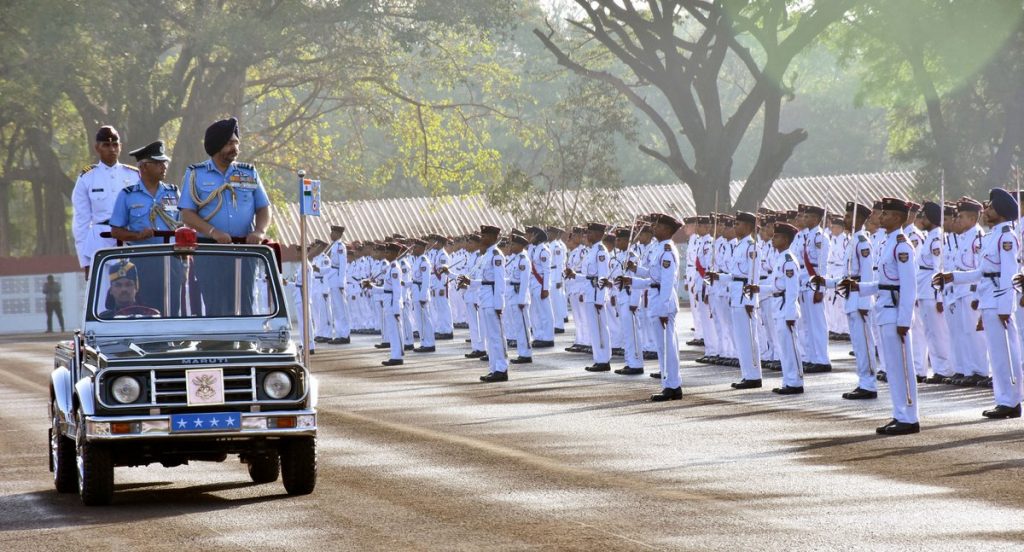
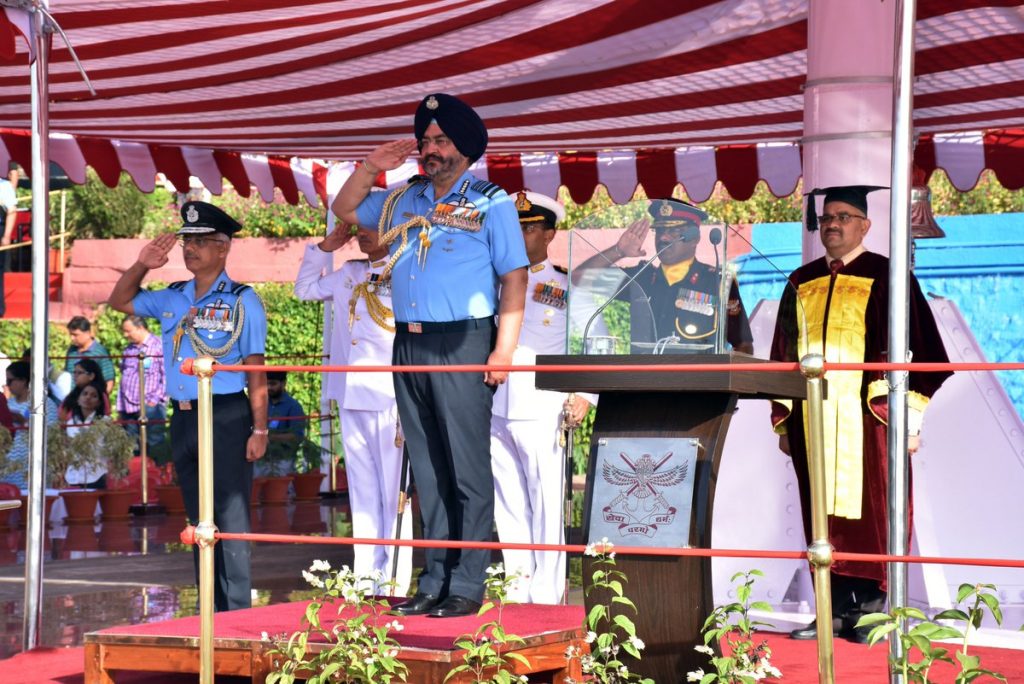
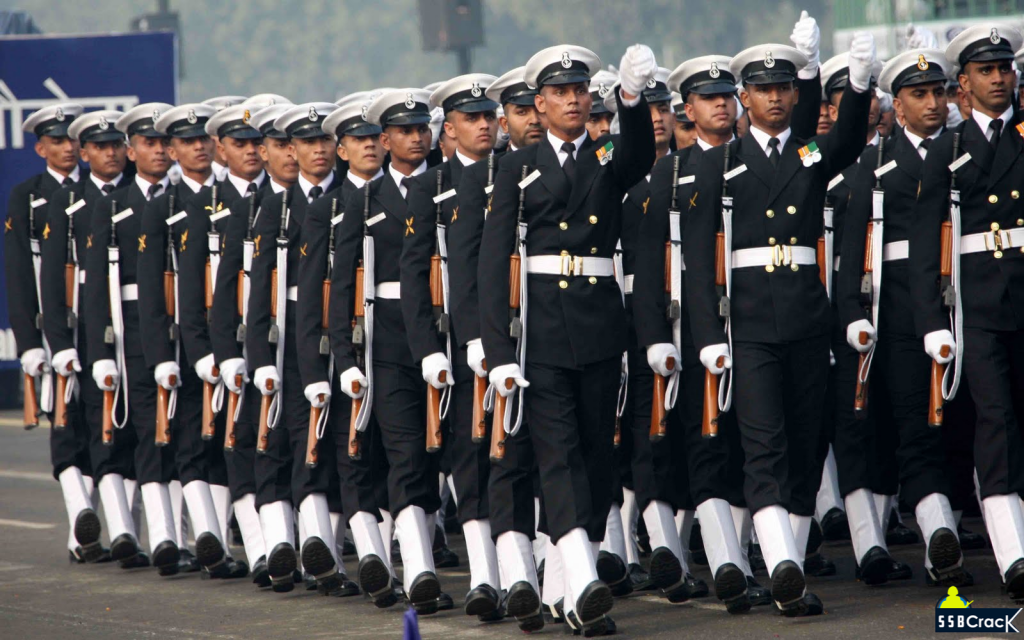
NDA Passing Out Parade 30 May 2019 National Defence Academy

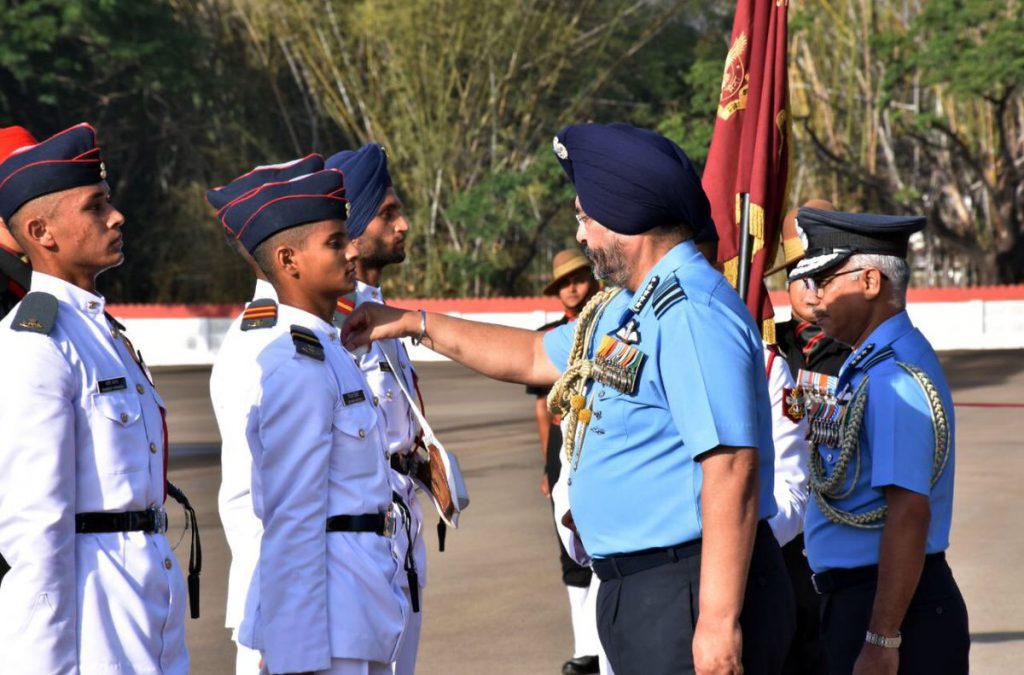
Air Chief Marshal BS Dhanoa PVSM AVSM YSM VM ADC, Chief of the Air Staff was the Reviewing Officer today for the Passing Out Parade of 136thCourse at the National Defence Academy, Khadakwasla. A total of 291 cadets graduated from the Academy as they passed through the portals of the prestigious Khetrapal Parade Ground. This included 218 Army cadets, 34 Navy cadets and 39 Air Force cadets. 15 cadets from the friendly foreign countries namely Afghanistan, Bhutan, Tajikistan, Maldives, Vietnam, Sri Lanka and Papua New Guinea also passed out from the academy.

Chief of Air the Staff reviewed the parade and addressed the Passing out Course cadets wherein he complimented the cadets for their exceptional drill movements and impeccable turn out. He congratulated the parents and cadets of the Passing out Course. He also mentioned the pride he felt in reviewing the Parade and made a special mention of the award winners.


Eastern Command chief lauds Myanmar for steps against NE rebels

Eastern Command chief lauds Myanmar for steps against NE rebels

Starting from January, Myanmarese troops have turned the heat on Indian rebel groups. File photo
Shubhadeep Choudhury
Tribune News Service 
Kolkata, June 4
Myanmar’s crack down on North East’s insurgents has earned the Indian Army’s appreciation.
Lauding Myanmar government, Eastern Army Commander Lt General MM Naravane said they (Myanmar authorities) were very much on India’s side with regard to taking action against insurgent outfits from North-East region who use Myanmar areas bordering the NE states as safe haven.
“We have been talking to them (Myanmar government) and in fact we have made a lot of progress. As we speak now, operations are already on inside Myanmar by the Myanmar Army and they are operating against the Indian insurgents who are sheltering in their country”, Naravane, chief of the Army’s Eastern Command,  said in the sideline of a function at the Eastern Command HQ at the historic Fort William here.
“They (Myanmar government) are very much on our side as far as not giving shelter to any terrorist and not allowing any terrorist action to take place or emanate from their side”, Naravane added.
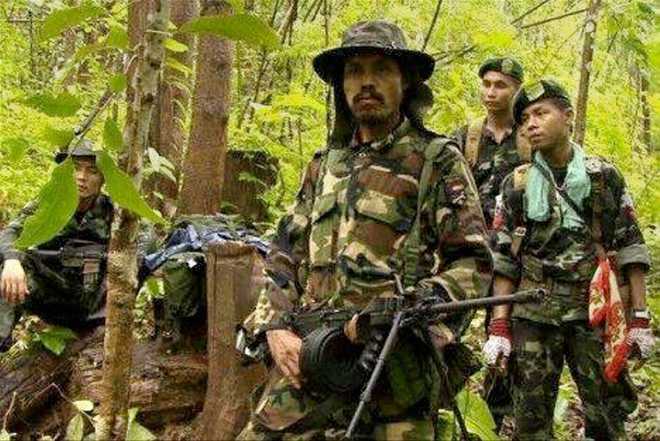
Starting from January, Myanmarese troops have turned the heat on Indian rebel groups. The headquarters of the NSCN (K) in Ta Ga village, located in the Sagaing region of Myanmar, has been captured.
Operation is underway against NSCN (K), United Liberation Front of Assam (Independent), National Democratic Front of Bodoland (S), Kamtapur Liberation Organisation (KLO), People’s Democratic Council of Karbi-Longri (PDCK) and Meitei insurgent groups such as KangleiYawolKannaLup (KYKL), People’s Revolutionary Party of Kangleipak (PREPAK), People’s Liberation Army (PLA) and United National Liberation Front (UNLF).
Regarding the security situation in NE region—where suspected NSCN (K) rebels recently killed two Assam Rifles jawans  at Mon district of Nagaland near the Indo-Myanmar border—Naravane said, “there is nothing very serious and everything is very much under control”.
The Indian Army commander said that though the Naga rebels were party to a ceasefire agreement, there were some “rogue elements” among them who were responsible for such acts.
“Ceasefire is there but there are rogue elements in these groups who do not abide by their own higher command or the chain of command unlike the Army who are very strict in implementing orders. The rogue elements are the ones who are doing these activities. It is upto the (rebel) groups to rein in their own rogue elements lest things spiral out of control,” Naravane stated.


Sam Manekshaw, the general who told Indira when Indian Army wasn’t ready for a war

On his 11th death anniversary, ThePrint takes a look at the military career of Sam Manekshaw and anecdotes and myths surrounding him.
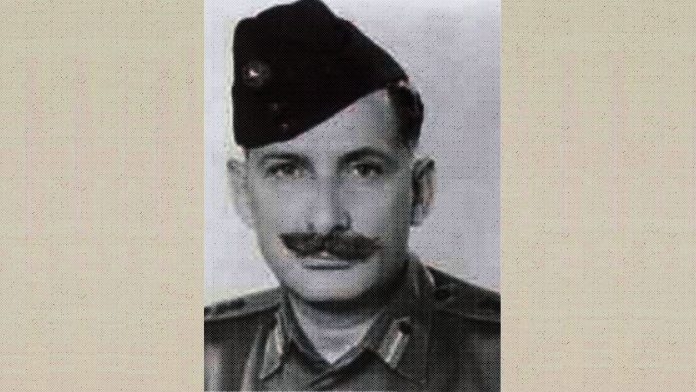
New Delhi: Perhaps no military general in the history of independent India has ever captured the national imagination in the way Field Marshal Sam Manekshaw did.

One of the chief architects of India’s 1971 victory against Pakistan, Manekshaw is most famously remembered for bluntly telling Prime Minister Indira Gandhi that the Indian Army wasn’t ready for war in April 1971.

Saying that his job was to fight to win, he asked for a few months’ time — a request which Gandhi, to her credit, accepted. True to his word, when the India-Pakistan war finally broke out in December 1971, Manekshaw delivered India one of its swiftest and most remarkable military victories.

As is true for any legendary figure, anecdotes of Manekshaw’s ingenuity, valour and wit abound. Most are largely true even if few details may have been added over time through errors of communication or to enhance the mythology around him.

Once, for instance, Manekshaw invited the members of the Pay Commission when he heard of a planned cut in the soldiers’ uniform allowance, it was reported. He then asked the members, “Now gentlemen, you tell me, who would obey my orders if I was dressed in a crumpled dhoti and kurta”. This settled the debate.

In his book Leadership in the Indian Army, former major general V.K. Singh recounts from a personal experience how Manekshaw was very affable in his interactions with the young officers.

When Behram Panthaki, who once served as Manekshaw’s aide-de-camp, threw a party at his home in Coonoor, the general, upon hearing the loud music, walked in and said, “You chaps are having a party, and did not invite me.” After finding out that it was a pound party where everyone brought their own food and drinks, he sent one of his men to bring his bottle of scotch.

Early and personal life

Manekshaw was born on 3 April 1914 in Amritsar to Hormusji Manekshaw, a doctor, and Heerabai. The fifth of six children, he acquired his school education at Sherwood College, Nainital. Thereafter, he returned to Amritsar for his studies at the Hindu Sabha College. In July 1932, he joined the Indian Military Academy as part of its first batch. It is believed that he did this as an act of rebellion against his father who refused to send the young boy to London to study medicine.

Manekshaw met his wife Silloo Bode in 1937. They married two years later on 22 April 1939 and had two daughters.

Military career

Manekshaw was commissioned into 4/12 Frontier Force Regiment on 22 December 1934. Initially, he was sent to Lahore for one year to serve an attachment period with a British unit. Thereafter, in February 1936, he rejoined his parent unit.

During his military career, he endured many tough moments. On one particular occasion, he escaped death by the skin of his teeth. Manekshaw, then just a young captain fighting in World War II, sustained multiple bullet injuries against the Japanese in a Burmese jungle on 22 February 1942. He was evacuated from the location by his orderly Sher Singh, and fortunately, survived.

In yet another case, his career almost got derailed. A court of inquiry was ordered against him in the early 1960s, when he was serving as Commandant of the Defence Services Staff College in Wellington. The precise reasons were never articulated as Manekshaw refused to speakabout it.

However, former lieutenant general J.F.R. Jacob writes in his book An Odyssey in War and Peace that “the principal movers in the campaign against him [Manekshaw] were (defence minister V.K.) Krishna Menon and his protégé Lt Gen. (B.M.) Kaul. Kaul considered Manekshaw to be a potential rival”.

But Jacob also adds that Manekshaw had a habit of being overly critical of the government, which irked the political brass.

In his book mentioned earlier, Singh says that in the inquiry that took place, three charges were formally levied against Manekshaw. First, that he was disloyal to the country because he had hung pictures of British viceroys and governor generals in his office, instead of Indian leaders.

Second, he had failed to take action against a military instructor who had made disparaging remarks against Indians. Even though Manekshaw had told the instructor to be more careful, it was argued that he should have taken a more serious approach.

And third, that Manekshaw had made certain derogatory remarks himself about fellow officers’ wives. The officer who had made the allegations, however, told the court of enquiry that he had neither heard Manekshaw make the remark nor could he recall who had told him about it.

The Indian debacle that followed in the 1962 war against China, however, saved Manekshaw, so to speak. Menon and Kaul had to resign, and Manekshaw was given command of 4 Corps.

From thereon, he had a relatively smooth sail and was appointed Army chief by PM Indira Gandhi in July 1969.

Rise to Field Marshal

In his role as the Army chief, Sam Manekshaw made history not only by guiding India to victory in the Bangladesh Liberation War, but also by resisting the political pressure to intervene at an inopportune time, going even to the extent of offering to resign.

Despite his differences with him, J.F.R. Jacob writes, “He did more than any other chief to maintain the dignity of the army”, and always stood up against the bureaucracy when necessary.

In January 1973, the month of his retirement, Manekshaw was appointed as Field Marshal — a largely ceremonial rank, but reflective of his stature in the Indian armed forces history.

He was the first Indian to be awarded this rank, and as of now, shares this laurel with one of his predecessors — General Kodandera Cariappa — who received it later in 1986.


Also readThe liberation of Bangladesh — the Indian armed forces’ finest hour


Not without flaws

As great as Manekshaw was, he often got into trouble with the authorities. As former civil servant P.R. Chari notes, Manekshaw once told a reporter that he had been asked to join the Pakistan Army in 1947, and if he had, the result of the 1971 war would have been different.

V.K. Singh notes that due to this incident, Manekshaw fell out of favour with the government. “Though the government could not take away his rank, it did take away everything else… [and] he was given a salary which was much lower than what he was entitled to”, he writes.

Chari mentions another incident. At a girls NCC cadet event, Manekshaw was the chief guest and kissed one of the prize winners on the stage, resulting in a big furore. To handle it, an enquiry was ordered. However, it was carried out at such a pace, writes Chari, that the issue receded from public memory.

But Manekshaw, ever the braveheart, was defiant even in his last moments. “I am OK” were the last words he ever spoke two days before he died on 27 June 2008.


Also readField Marshal KM Cariappa, so much more than just the first Indian Army chief



KARGIL The war through PVC awardee’s eyes

The war through PVC awardee’s eyes

Subedar Major Yoginder Singh Yadav

Amir Karim Tantray
Tribune News Service
Jammu, June 25

The never-say-die attitude and passion to serve the motherland made Param Vir Chakra (PVC) awardee Subedar Major Yoginder Singh Yadav set an example for generations to come.

The valour of Subedar Major Yadav (a sepoy during the Kargil war) was seen when in 1999 he, along with his six companions, launched an offensive on the Tiger Hill.

The only survivor of the attack, which killed more than 40 enemy soldiers and left six Indian soldier dead, Yadav strapped his broken arm and leg after he received 15 bullets and splinter injuries and rolled down to provide crucial information of an impending offensive from the enemy side.

“On a normal day, if a thorn pricks it hurts a lot. But even after receiving 15 bullets, I had no pain that day,” said Yadav. It was anything but normal on that cold, snowy mountaintop, when he saw six of his platoon die in close combat, felt 15 bullets slam into his right leg and left arm and the searing pain of shrapnel gouge his face.

Yet, Yadav’s information gave the Indian Army an upper hand and without losing any more lives, the most important Tiger Hill peak, which had seen multiple unsuccessful attempts from the Indian side till July 4, 1999, was recaptured.

Twenty years ago, Yadav was a shy, newly married teenager whose stint in the Indian Army was new but full of passion. Hailing from Uttar Pradesh’s Bulandshahr district, Yadav, who had rarely seen such barren hills, started climbing the Tiger Hill along with 24 others, led by the then Lieutenant Balwan Singh Panghal

“For two nights and a day, we climbed under fire. On July 4’s foggy evening, we neared Pakistani positions but the firing intensified. Only seven soldiers made it to the top and out of them only I survived after a solo battle,” he said.

Recapturing the moment, Yadav said “The happiest moment of my life was when I was apprised of the recapturing of the Tiger Hill immediately after my injury and I had thought to myself — even after losing so many lives we completed our mission.”

After being shifted to military hospital Srinagar in a critical condition from Kargil base camp, he was taken to Delhi base hospital on July 10, 1999, where he got the whole treatment done. It was on August 15, 1999, that the then Chief of Army Staff Gen VP Malik told Yadav that he had been awarded the country’s highest gallantry award Param Vir Chakra (PVC).

His heroism on the Tiger Hill, from where the enemy was keeping a close vigil on Srinagar-Leh National Highway, thus making the movement of Indian Army tough, earned him the PVC.

Twenty years after the war, Yadav believes memories are so fresh that it seems as if the incident happened yesterday. “I can never forget what happened during the war and it was because of that war that I am what I am today,” the Subedar Major said.

Till the time he was part of the 18 Grenadiers unit, his platoon was known as ‘PVC Platoon’. These days, he is imparting training to newly promoted junior commissioned officers at the Junior Leaders Academy (JLA), Bareilly, UP. “Soldiers get motivated by listening to the valour of Indian Army during the Kargil war and it is great to be part of an academy where I can share my experience with juniors,” Yadav added.


AN32 Crash Aftermath: Indian Air Force Looking to Acquire All Terrain Vehicles for Rescue Ops

IAF officers were recently given a demonstration of ATVs by Polaris, already in use by the Army and paramilitary forces of India.


Image result for 2017 polaris ranger 570

The Indian Air Force (IAF) is looking to shore up its rescue capabilities with All Terrain Vehicles (ATVs) following the aftermath of AN 32 transport aircraft crash in Arunachal Pradesh earlier this month, according to a media report.

“The air force is scouting for all-terrain vehicles (ATVs) after the tough search and retrieval operations for the missing AN 32 transport aircraft in Arunachal Pradesh saw rescue teams struggling for days to reach the crash site,” Economic Times reported

IAF officers were recently given a demonstration and “capability discussions are underway to understand the requirement for a likely procurement of an unspecified number of all-terrain vehicles.”

Army and paramilitary forces are already using ATVS. “We gave a demonstration of the capabilities of the vehicles to an air force team at our Faridabad facility. It is at the capability assessment stage,” the newspaper quoted Pankaj Dubey, country head of Polaris India, as saying.

Demonstrations carried out at a “very high level” included the capability to carry out rescue operations with ATVs that were equipped with stretchers and basic medical equipment. “The vehicles can be equipped with rescue equipment and can carry personnel. In the past we have demonstrated rescue missions,” Dubey said.

Polaris is the leading supplier of ATVs to security forces.

Dubey said the company expects that 40% of its Indian revenues will come from government sales. Rescue teams had struggled to reach the AN 32 crash site even after it was discovered during a heliborne search operation on June 11.


The Indian Navy – Senior Secondary Recruits (SSR) Feb 2020 Batch Notification, Eligibility, Selection Process, Exam Details, Salary, Promotions

Another notification from the Indian Navy. Navy has come up with more vacancies compared to Sailors for Artificer Apprentice (AA) this time. This is a very good opportunity for the defense aspirants, who have completed their 10+2 recently and willing to serve the nation by joining the Indian Navy as a Senior Secondary Recruits (SSR). Online applications are invited from unmarried male candidates (who fulfill eligibility conditions as laid down by the Government of India) for enrolment as Senior Secondary Recruits (SSR). Online applications are invited from unmarried male candidates (who fulfill eligibility conditions as laid down by the Government of India) for enrolment as  Senior Secondary Recruits (SSR) for 2200 vacancies (Approximately) respectively in the Feb 2020 batch.

SENIOR SECONDARY RECRUITS (SSR) VACANCIES: Candidates who are willing to join the Indian Navy this notification will be very helpful and provides an opportunity to live with pride and honor.


SENIOR SECONDARY RECRUITS (SSR) ELIGIBILITY CRITERIA: Compared to other notification released with this notification ie., for Sailors for Artificer Apprentice here SSR also have same eligibility criteria. This article about the SSR will help you to know the eligibility criteria intimated by the Indian Navy.

SENIOR SECONDARY RECRUITS (SSR) EDUCATIONAL QUALIFICATIONS: The candidates who completed their 10+2 examination with 60% or more marks in aggregate with Maths & Physics and at least one of these subjects: Chemistry/Biology/Computer Science from the Boards of School Education recognized by MHRD, Govt. of India.

SENIOR SECONDARY RECRUITS (SSR) AGE LIMIT: Candidates should be born between 01 Feb 2000 to 31 Jan 2003 (Both dates inclusive). The Indian Navy chooses young unmarried male candidates as sailors because they have a great learning attitude and they can excel in their role.

SENIOR SECONDARY RECRUITS (SSR) SELECTION PROCEDURE: As per the guidelines are given by the Indian Navy, everyone must follow the same. A systematic and transparent manner to recruit the candidates will be taken place. Before succumbing to the promises of any agent think twice!!! If you think that you can get the things done unlawfully, you are bound to lose! You are advised to conduct yourself as a law abiding citizen of the country and refrain from using unfair means.

SENIOR SECONDARY RECRUITS (SSR) SELECTION PROCEDURE: The Indian Navy follows a standard recruitment process to enroll the Senior Secondary Recruits (SSR). The phases are:

  • Computer Based Test (CBT)
  • Physical Fitness Test (PFT)
  • Medical Examination (ME)
  • Merit List

SENIOR SECONDARY RECRUITS (SSR) COMPUTER BASED EXAM DETAILS: Computer-based exam is followed by the Indian Navy to filter the candidates who attended the first phase of the recruitment process easily. CBE is the best option to evaluate the answers submitted With the help of technology, results will be declared very soon and the selection procedure is purely based on the merit of the candidate. The standard of the question paper will be that of 10+2 Syllabus & sample papers for the examination is available on the website www.joinindiannavy.gov.in.

Subject       Questions         Marks
English            25             25
Science            25             25
Mathematics            25             25
G.K            25             25
OTHER DETAILS:
  • The question paper will be bilingual (Hindi & English) and objective type (multiple-choice).
  • The duration of the examination will be for one hour.
  • The candidates are required to pass in all sections and in aggregate. The Navy reserves the right to determine the pass marks in each Section and in aggregate.
  • Candidates should note that there will be penalty (Negative Marking) for wrong answers marked by a candidate in the question paper.
  • There are four alternatives for the answer to every question. For each question for which a wrong answer has been given by the candidate, one fourth (0.25) of the marks assigned to that question will be deducted as penalty.

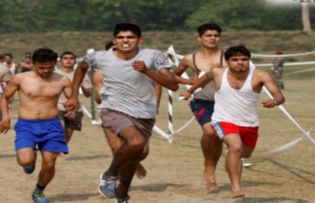
SENIOR SECONDARY RECRUITS (SSR) PFT DETAILS: To join in the Indian Navy, the candidate must qualify in CBE then he will be eligible to attend the second phase of recruitment i.e., Physical Fitness Test. In the Physical Fitness Test, there are some tests examined by the officials of the Indian Navy. They are:

  • 1.6 Km run to be completed in 7 minutes
  • 20 squat ups (Uthak Baithak)
  • 10 Push-ups
Candidates at 1.6 Km Running Test

NOTE: Candidates undergoing PFT will do so at their own risk. Make sure the candidates prepare well before attending the PFT tests. Approximately
10000 candidates will be called for PFT.

SENIOR SECONDARY RECRUITS (SSR) MEDICAL EXAMINATION: Candidates should note that the medical examination will be conducted by the authorized military doctors as per the medical standard prescribed in current regulations applicable to sailors on entry.

  • Minimum height 157 cms
  • Weight and Chest should be proportionate.
  • Minimum chest expansion of 5 cms
  • The candidate must be in good physical and mental health

NOTE: Medical Examination of all selected candidates will be held at INS Chilka. Candidates who are found medically unfit will be advised to appeal against its findings, if they so desire, at INHS Kalyani, Visakhapatnam within a maximum period of 21 days. Candidates are advised to get their ears cleaned for wax, and tartar removed from teeth prior to the medical examination.

SENIOR SECONDARY RECRUITS (SSR) IMPORTANT DATES: These are the important dates of SSR notification issued by The Indian Navy. Every candidate should note the important dates before applying and after applying. Check the respective email id’s if any change in the dates and events you will be notified through electronic media only. No posts will be sent to intimate information to the candidates. Candidates should make sure that the email id and mobile number should be kept in active status till the end of this recruitment process.


INS Vikramaditya to get indigenous landing aids

INS Vikramaditya to get indigenous landing aids

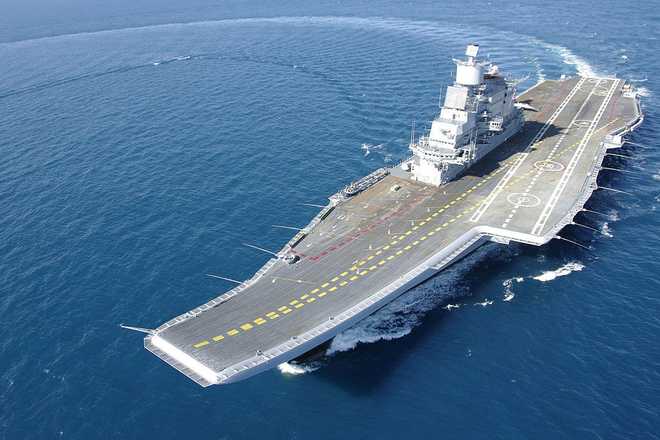
INS Vikramaditya, an extensively modified Soviet-era warship, was commissioned into the Navy in November 2013.

Vijay Mohan

Tribune News Service

Chandigarh, June 19

The flight deck of Navy’s sole aircraft carrier INS Vikramaditya will \Ibe equipped with indigenous landing aids after the force has expressed dissatisfaction with the original Russian equipment.

Called the Optical Landing System (OLS), it has been developed by the Central Scientific Instruments Organisation (CSIO) here and is undergoing shore-based trials at a Naval airbase.

The OLS provides the glide slope information to the pilot through a system of lens and coloured lights so as to enable him to touchdown at the right spot on the carrier deck and snag the arrester cables that bring the aircraft to a halt. \IThe system is located at an angled position on the deck’s left side towards the rear.

According to scientists associated with the project, the Navy had wanted the landing aids to be visible from a longer distance than was possible with the Russian system and also to have a higher resolution for coloured light to ensure clarity.

INS Vikramaditya, an extensively modified Soviet-era warship, was commissioned into the Navy in November 2013 and formally entered service in June 2014 after arriving here from Russia. It has an aerial complement of MiG-29K fighters and helicopters.

The OLS is critical to the safe recovery of fighter aircraft due to the high landing speed and restricted runway space, which is just about 150 m. The system tells the pilot whether he is too high or too low when approaching the carrier from the rear for landing. An image of a “meatball” is created by the lights and lens, which turns red if the aircraft is too low. If it is too high, the ball will move above horizontally placed bars of green datum lights that act as a reference point for the pilot to judge his position.


Centre restores free ration for defence officers in peace areas that was withdrawn in 2017

The facility was withdrawn by the government in 2017 and it started paying a certain amount in instead of the ration to defence personnel.

ration for military,Military ration,Army ration

IThe decision to withdraw the provision of ‘ration in kind’ had met with criticism from several quarters within the three services of the armed forces. (AFP)

The government has restored the provision of ‘ration in kind’ to military officers in peace areas, a defence official said on Tuesday.

The facility was withdrawn by the government in 2017 and it started paying a certain amount in instead of the ration to defence personnel.

“The Government of India has approved the proposal of the Ministry of Defence for restoration of the ‘ration in kind’ to the defence officers posted in peace areas,” a defence official said.

The decision to withdraw the provision of ‘ration in kind’ had met with criticism from several quarters within the three services of the armed forces.


IAF’s Sukhoi Su-30 MKIs to take on French Air Force’s Rafale jets during Garuda VI air exercise

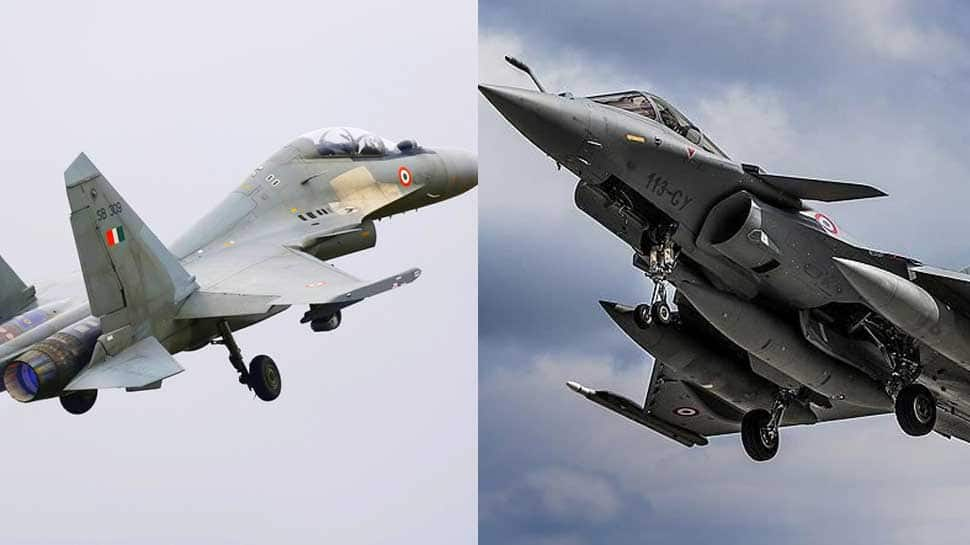
The Garuda VI air exercise in July 2019 will see IAF’s frontline fighter Sukhoi Su-30 MKI taking on the Rafale multirole jets of the Armée de l’Air (French Air Force).

IAF's Sukhoi Su-30 MKIs to take on French Air Force's Rafale jets during Garuda VI air exercise

NEW DELHI: Indian Air Force (IAF) and its French counterpart will take part in the bilateral air exercise Garuda VI in July 2019 which will see the most potent fighter aircraft of the two countries going head-to-head. The air exercise between the two premier air forces in the world will witness IAF’s frontline fighter Sukhoi Su-30 MKI taking on the Rafale multirole jets of the Armée de l’Air (French Air Force).

Both the air forces will use the Garuda VI air exercise, scheduled to held at an air base in France, to validate the latest defence strategies and fine-tune their war-waging capabilities. Garuda VI air exercise will also give the IAF a chance to pit the Su-30 MKI against Rafale, a fighter which will join the force in a few months.

IAF will deploy 10 Su-30 MKIs,  Ilyushin IL-76 Airborne Warning and Control System (AWACS) plane and Il-78 aerial refuelling tanker during the two-week-long Garuda VI exercise. More than 150 IAF officers and airmen will also take part in the air exercise. The first edition of Garuda exercise took place in 2003 at the Gwalior Air Force Station.


India is buying 36 Rafale jets from France and the first fighter will join the IAF in September 2019. The 36 Rafales will be part of two IAF squadrons, the first of which is the ‘Golden Arrows’ 17 Squadron. Current IAF chief Air Chief Marshal Birender Singh Dhanoa had commanded the Golden Arrows, which has MiG-21 fighters, during the Kargil war in 1999. The squadron, at present number-plated, was based in Punjab’s Bhatinda but will be shifted to Ambala in Haryana once the Rafale is inducted.
IAF’s second squadron to be armed with Rafale will be under the Eastern Air Command in West Bengal’s Hashimara Air Force Station to tackle the threat from China. Rafale will give a major boost to the IAF’s offensive capabilities and also stem the decline in the squadron strength of the force.

Garuda exercises are conducted alternately in France and India since 2003:


-Garuda I: February 2003, Gwalior, India, in the presence of the French Chief of Staff. It was the first fighter-to-fighter exercise between the Indian Air Force and a foreign Air Force.

-Garuda II: June 2005, Istres Air Force Base, France. It was the first exercise of the Indian Air Force in Europe.

-Garuda III: February 2007, Kalaikunda Air Force Station, India.

-Garuda IV: June 2010, Istres Air Force Base, France. First cross-refuelling on each other’s tankers. First edition of the exercise in trilateral format, with Singapore.

-Garuda V: June 2014, Jodhpur Air Force Station, India.

India and France had in 1998 signed an agreement for joint military exercises between the armed forces of the two countries. Under the agreement, the Indian and French armies take part in Shakti exercise and the navies of the two countries have the Varuna exercise.


Navy joins search op for IAF’s AN-32

Navy joins search op for IAF’s AN-32

Itanagar/New Delhi, June 4

A long-range maritime reconnaissance aircraft of the Indian Navy was today deployed as part of a massive search operation to trace an AN-32 transport aircraft of the Indian Air Force, a day after it went missing around thickly forested Mechuka in Arunachal Pradesh, officials said.

Navy spokesperson Capt DK Sharma said the P8i aircraft took off from INS Rajali in Tamil Nadu’s Arakonam around 1 pm.

A fleet of fixed-wing aircraft and helicopter are already deployed to locate the missing aircraft in the mountainous terrain, officials said. The IAF has deployed C-130J and AN-32 aircraft, besides two Mi-17 helicopters, while the Indian Army has pressed into service advance light helicopters to locate the missing aircraft.

Ground troops have also been deployed to carry out a search operation. The P8i aircraft will carry out search operation with electro-optical and infrared sensors.

The P8i, manufactured by Boeing, is a long-range maritime reconnaissance aircraft, and at present, Navy has eight of them. “Reports were received on possible location of a crash site. Helicopters were routed, but no wreckage has been sighted,” the IAF said yesterday. — PTI