



Sanjha Morcha

Income Tax Return efiling: 6 tax changes you need to keep in mind while filing ITR for FY17-18

Before filing the income tax return for FY2017-18, we need to take cognizance of the latest changes in the tax rules to enable ourselves to file tax returns correctly.

income tax return, income tax efiling, ITR filing, itr for ay 2018 19, income tax slab for ay 2018-19, income tax calculator

he applicable slab rate with respect to an individual having taxable income between Rs 2.5 lakh and Rs 5 lakh has been reduced from 10% to 5%.

With the onset of the Financial Year 2018-19, we need to start preparing for the income tax return filing for FY2017-18, which is due by 31 July for salaried individuals. We, however, also need to take cognizance of the latest changes in the tax rules to enable ourselves to file tax returns correctly. Here is a glimpse of the few changes in the income tax rules one needs to be aware of:

1. Reduced Tax for lower slab: The applicable slab rate with respect to an individual having taxable income between Rs 2.5 lakh and Rs 5 lakh has been reduced from 10% to 5%. However, there has been no change in the tax rates for other slabs. The tax slabs for FY2017-18 or AY2018-19 are as under:

Income-tax rates

Taxable Income (INR)

Residents below 60 years age Residents 60 years and above but below 80 years

Nil

250,000 300,000

5%

250,001 – 500,000 300,001 – 500,000

20%

500,001 – 1,000,000 500,001 – 1,000,000

30%

1,000,001 & above 1,000,001 & above

2. Rebate under Section 87A reduced: Earlier, an individual with taxable income up to Rs 5 lakh was entitled to a tax rebate. Now, this limit has been reduced to Rs 3.5 lakh. Also the tax rebate has been reduced from Rs 5,000 to Rs 2,500.

3. Additional surcharge: A surcharge will be applicable at the rate of 10% for individuals with income in the range of Rs 50 lakh to Rs 1 crore. Surcharge at the rate of 15% continues in respect of individuals with income more than Rs 1 crore.

4. New limit for setting off of house property loss against Other Income in the same Financial Year: Till FY2016-17, the entire loss (arising on account of interest on loan) in respect of a let-out property or a deemed to be let-out property was allowed to be set off against other income (without any limit).

With effect from FY2017-18, the maximum amount of loss that can be set-off against other income in the same FY is restricted to Rs 2 lakh and the balance loss can be carried forward for set-off against house property income in future for the next eight years. We have given an example below to illustrate the same.

Particulars

FY 2016-17 (INR)

FY 2017-18 (INR)

Rental income

200,000

200,000

Less: Deduction @ 30%

(60,000)

(60,000)

Less: Interest on house property

(600,000)

(600,000)

Loss on house property

(460,000)

(460,000)

Loss to be set off against income under any other head in same year

460,000

Restricted to 200,000

Amount to be carried forward and set off only against “Income from House property” (up to next 8 years)

NIL

(260,000)

5. Holding period scaled down for considering Capital Gains as Long Term: Till FY2016-17, immovable property, being land and building or both, was considered as Long Term Capital asset if it was held for more than 36 months.

From FY2017-18, such property will be considered as long term if it is held for more than 24 months. Thus, indexation benefit will be available where the sale of immovable property takes place after 24 months.

There is a change in the base year for indexation purpose from April 1, 1981 to April 1, 2001. Accordingly, the government has notified new cost inflation indexes.

6. Fee for late filing of tax return: The due date of return filing for salaried individuals is 31 July from the end of the financial year. If the return is not filed within the due date, a fee would be levied as under:

(i) A fee of Rs 5,000 in case returns are filed after the due date but before December 31, 2018 or

(ii) Rs 10,000 in case it is filed after December 31, 2018.

However, as a relief to the taxpayers earning not more than Rs 5 lakh, the maximum fee will be Rs 1000.

(By Homi Mistry, Partner, Deloitte India)

Get live Stock Prices from BSE and NSE and latest NAV, portfolio of Mutual Funds, calculate your tax by Income Tax Calculator, know market’s Top GainersTop Losers & Best Equity Funds. Like us on Facebook and follow us on Twitter.

Ultras behead abducted youth Body found on outskirts of Hajin village; second such civilian killing in week

Ultras behead abducted youth

Azhar Qadri

Tribune News Service

Srinagar, April 6

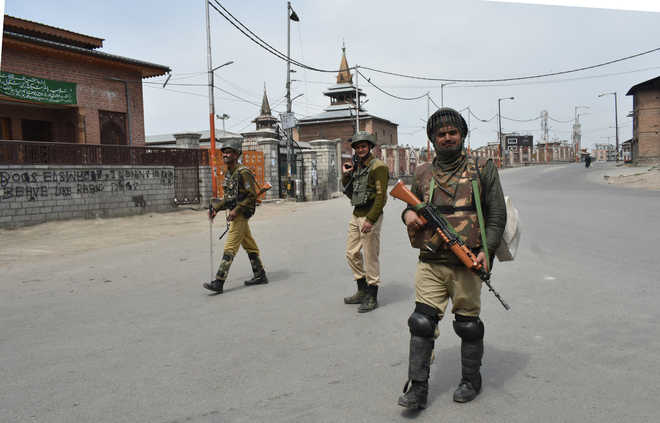
The police on Friday recovered the headless body of the youth who was abducted by militants from Hajin in Bandipora district of north Kashmir on Wednesday night.Manzoor Ahmad Bhat, 25, along with his father, Abdul Gaffar Bhat, was abducted on Wednesday night by militants and his body was recovered on Friday morning from the outskirts of the village, the police said. This is the second such civilian killing this week.“Terrorists have exhibited the highest level of bruteness as they have left the body of the innocent person headless,” said senior superintendent of police, Bandipora, Sheikh Zulfikar. Manzoor’s father, who was also abducted, had managed to escape but suffered injuries as a militant had fired at him. He is under treatment at a hospital.A police official said militants, believed to be affiliated with the Lashkar-e-Toiba, had abducted Abdul Bhat and Manzoor from their house on Wednesday night. “Two or three militants had barged into the house and abducted Bhat and his father, while two or three militants were outside,” the official said.It is rare, though not unprecedented, in Kashmir that a civilian is beheaded and most of the killings attributed to militants have been previously caused by gunshot wounds.The official said that the militants involved in the beheading included a local Lashkar-e-Toiba militant, Saleem Parray, whose name had also figured in a similar abduction and killing of another civilian, Naseer Ahmad Parray, who was shot dead earlier this week.Saleem, a resident of Hajin, had joined the Lashkar last year and is believed to be a part of a group that has five foreign militants. The five foreign militants, involved in Naseer’s killing, have been identified as Abu Muslim, Hubaib, Khalid, Abu Hamza and Haider.

Lashkar base in village

Hajin emerged on the militant landscape in recent years. The village had remained the headquarters of a counter-insurgency militia, which killed militants and their sympathisers. The village, however, became a stronghold of militants during the last two years as the Lashkar established a strong base in Hajin. Last year, six militants and a commando from the Air Force’s elite Garud unit were killed in a swift counter-insurgency operation in Hajin. Two Garud commandos were also killed in Hajin in a separate gunfight last year.A BSF soldier, who was on vacation at home in Hajin, was also killed by militants last year and a counter-insurgency militia commander, Rashid Billa, was also shot dead as militants strengthened their presence in Hajin.


Five Maoists killed in encounter with security forces in Jharkhand

Five Maoists killed in encounter with security forces in Jharkhand

Latehar, April 4

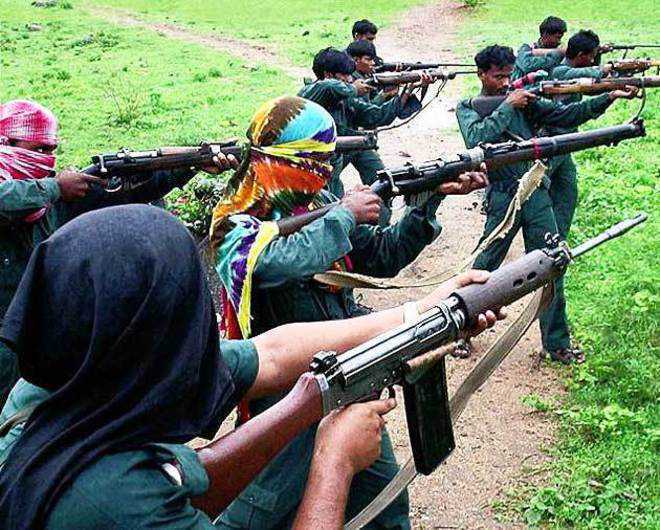
Five Maoists were killed in an encounter with security forces in Serendaag jungle of Jharkhand’s Latehar district on Wednesday, a police officer said.The encounter between the Maoists and a joint team of the district police and the CRPF is still on, Superintendent of Police Prasant Anand said.Bodies of the five ultras had been recovered from the spot along with three AK-47 rifles, he said. PTI


Air Vice-Marshal visits war museum

Air Vice-Marshal visits war museum

Tribune News Service

Dharamsala, April 2

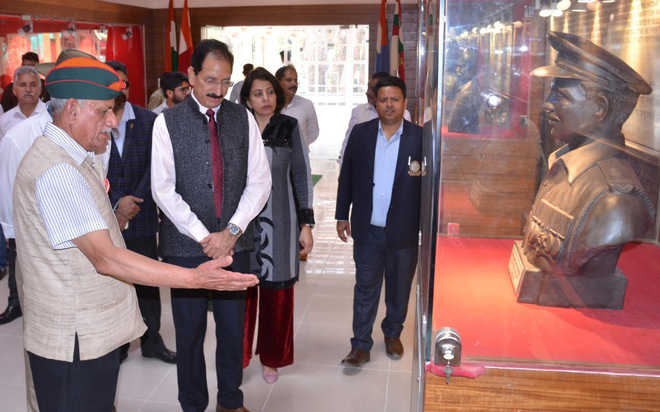
Air Vice-Marshal AK Nabh on Monday visited the incomplete war museum in Dharamsala. The Rs 10-crore museum was inaugurated by former Chief Minister Virbhadra Singh before the Assembly elections in November 2017.It was supposed to be inaugurated on Independence Day last year.The Air Vice-Marshal said the Indian Air Force would provide photographs for display. Officials of the district authorities also accompanied him. SDM Dharmesh Ramotra said the officer had assured them of all possible help.


Restructuring the armed forces by Col Mahesh Chadha (retd)

Switching over to the Theatre Command system is required. But for this, the bureaucracy and the defence services need to take care of its fallout — most importantly the likelihood of mass-scale reduction in higher ranks.

Restructuring the armed forces

Col Mahesh Chadha (retd)

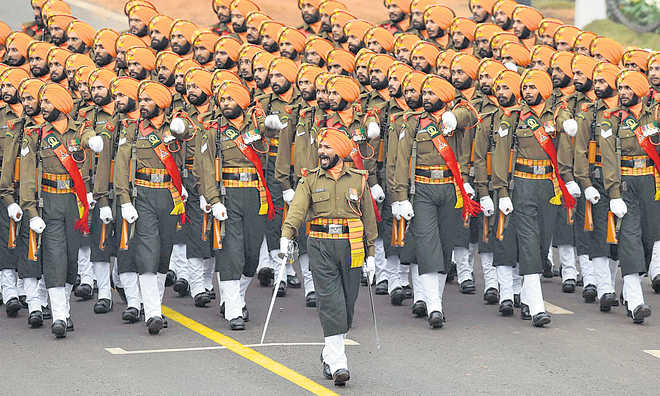
The recent announcement by the government to restructure the armed forces is a step in the right direction. Warfare today has become more complex with its three dimensions enlarged to encompass not only conventional and technology-driven but tools also nuclear, cyber and space ones. China has done it already. But Pakistan is not likely to venture into it as it does not have any commands and its corps are under the GHQ with political overtures. China has made it more inclusive by having Politico-Army Theatre Commands based on geographical parameters — each many times bigger than our operational commands. Chinese President Xi Jinping’s threat that China will not lose an inch of its ground at any cost is a warning for us to be prepared for any eventuality that may arise on our borders.

The background

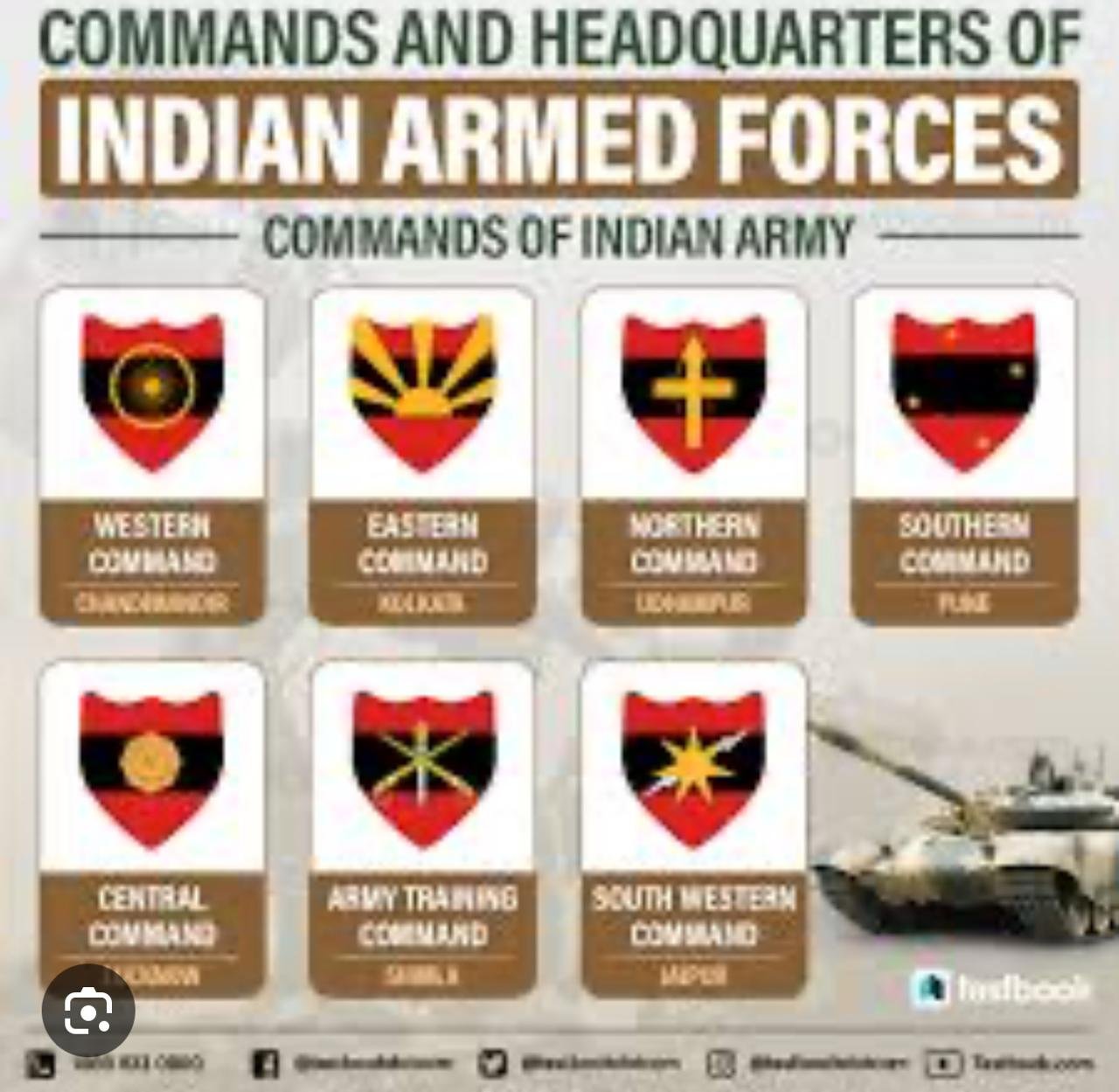
At the time of Independence, we had a loose armed forces structure: areas, divisions and corps in the Army and squadrons and divisions in the IAF and Navy. When in 1947 Pakistan attacked us in J&K, we raised a corps and a command HQ for the western borders, and later a command HQ for the eastern borders. After every war — of 1962, 1965, 1971 and 1999 with China and Pakistan — some more divisions, and corps HQ were raised. However, it was in the aftermath of the 1971 war with Pakistan that Northern and after the 1999 Kargil conflict South-Western and Training Commands were raised. Similarly, the IAF and Navy increased their commands and today, we have 17 commands — seven each of the Army and IAF and three of the Navy, including two training commands — ironically, as the latter are treated on a par with an operational command, and went on to produce a COAS. While these new raisings created more high ranking officers, they reduced the areas of responsibility and created boundaries to be criss-crossed with due coordination with each other — at times difficult to achieve. In these conflicts, the synergy of the three services remained an overriding lacuna, except in 1971 where the Chairman of the Joint Chiefs Committee was the redoubtable Sam Manekshaw; hence the birth of Bangladesh.As early as the eighties, General K Sundarji had propounded the theory of Theatre Commands. In his book The Blind Men of Hindoostan, he talks of the changing concepts of warfare where synergy of the three arms can only be achieved if there is a single command and control system as compared to the existing separate ones. That time, it was the beginning of the cyber space warfare. So, he dwelt upon the nuclear aspect and recommended to our leaders to take a wake-up call lest we were found wanting in safeguarding the territorial interests of our nation.  Since then, both China and Pakistan have allied and made strides in escalating threat to us by the day. The OBOR and CEPC are only a part of the grand strategy to strangle India in the Indian Ocean, South China Sea and along  Nepal, Myanmar, Bhutan and Sri Lanka. Thus, all the more the requirement of the integration of all forces under one head to take on the land, air and sea battles.

The present status

Justifying as operational needs, it is the successive pay commissions and cadre reviews  — one such is again in the pipeline which has resulted in the creation of higher ranks, truncated commands, eg Western Command that stretched from J&K to Rajasthan is divided into three — Western, Northern and South Western Commands. Similarly, at the corps level, in J&K alone there are three Corps as compared to one till 1971. It is this expansion that has caused the formations and units to live with deficiencies in arms, armour, engineer and artillery equipment — the most essential requirement to fight any war. We cannot afford to be a welfare Army, where comparison with the bureaucracy has become more of a one-upmanship than pragmatism. There is need to keep the armed forces lean and thin and not top heavy as it is today unwieldy. If a state government has so many chief secretaries, should the army too have so many generals, where there is a hierarchical command structure? Putting a lt-general under another seems ridiculous.

The way forward

Though there has been loud thinking on adopting the Theatre Command system, switching over to it will require the bureaucracy and the defence services to sit together to first define the concept and take care of its fallout — most importantly the likelihood of mass-scale reduction in higher ranks, which will definitely create heart-burning. The one suggestion to overcome such an eventuality is to have four-star generals as Theatre Commanders and a five-star general as the CDS. This would be in consonance with the concept as suggested by Sundarji and other expert committees, the recent being the Shekatkar committee. That since the 1980s such a three-service command exists in Andaman and Nicobar can act as a model. The Integrated Defence Staff HQ can be the restructured CDS. All the 17 commands could be merged so as to create only six or seven role-specific commands — Northern and Eastern under the Army; Western under the IAF and the Southern under the Navy. Theatre Commands North and East could be mostly composed of the Army and IAF, West and South of the Army, IAF and Navy. Cyber and Nuclear Commands could remain as such, a three-star general of any service and an expert component under the PMO. The Training and Maintenance Commands could be wound up. However, no change is visualised in the corps and below formations, except to revert to the old command structure at the area level etc. The schools of instructions and officers’ training academies would also need a review as most of them do not require a lt-general as the commandant to train them. An upcoming brigadier or a major-general would fit the bill. The logistics support units too should be reorganised to meet the requirements of each service. This will save considerable budget that can be utilised to fill the deficiencies in arms and equipment. Peace time vs war timeThe services will have to shed their individuality and adopt a unified philosophy so that the system works well,  as a homogeneous entity. However, in operations, it will require deft handling at the level of the CDS when the situation may require the placement of additional or reduced forces under one or another Theatre Command. In the process, the rehabilitation of many redundant high-ranking officers should not be considered as the largesse endowment of cadre review, but as a cache of great experience and talent. Therefore, it would be a progressive transformation. The government must ensure that the downsizing in the armed forces is not wasted or taken advantage of by the central paramilitary forces and civilian counterparts. If at all, as a last resort, a golden handshake may be considered.


Body at forest resort | Murder charge part of Punjab Police rivalry: WWICS Group

Rajiv Bajaj, director, WWICS Estates Private Limited, addressing the media in Chandigarh on Thursday.

The mystery around the death of a 28-year-old CTU employee deepened on Thursday with the WWICS Group, an immigration consultancy, linking the case with the suicide of former Chief Khalsa Diwan (CKD) head Charanjit Chadda’s son.

Lt Col Baljit Singh Sandhu (retd), chairman of WWICS Group, and owner of Forest Hill Resort in Nayagaon, is named in the FIR of the CTU worker’s murder. He remains untraceable.

Baljit’s son Davinder Sandhu is lodged in the Amritsar jail for allegedly abetting the suicide of Charanjit’s son Inderpreet Chadha. A Punjab Police special investigation team (SIT), led by Punjab ADGP Parbodh Kumar, is investigating the case.

Addressing a press conference here, Rajiv Bajaj, director of WWICS Estates Pvt Ltd, while speaking on behalf of Baljit and his son, claimed internal rivalry of Punjab Police’s officials was behind the murder case.

A local Kharar court on Thursday extended the remand of the three accused by two days.

Claiming that it was a deep-rooted conspiracy to bring down DGP (human resource development) S Chattopadhyaya, Bajaj demanded a CBI probe in the matter.

“While Davinder is already behind bars, some influential people are now trying to implicate his father Baljit in the case in which he has no role. While the body was recovered from Haryana, the Mohali Police have named our MD (Baljit) in the murder case in haste,” said Bajaj. He also denied that the victim was found dead on the premises of the resort.

The victim, Abhishek Guleria, a Burail resident and native of Himachal Pradesh, had gone missing on March 14. He was found dead on the Pinjore-Baddi road on March 25.

After getting leads, Mohali police named Baljit in the murder FIR on March 27. Besides, they had arrested three employees of the upscale Forest Hill Resort, located 5km from PGIMER, Chandigarh, for allegedly dumping the victim on the Pinjore-Baddi road on March 22.

While the trio is facing a case under Sections 302 (murder), 201 (destruction of evidence) and 120B (criminal conspiracy) of the Indian Penal Code, no charges have been pressed against Baljit.

The accused, liasoning officer Gurdeep Bains, his assistant Tarsem Singh and security in-charge Balwinder Singh, had claimed that they found Guleria’s body in the tank of resort’s sewage treatment plant, following which they informed Baljit, who asked them to dispose of the body to avoid controversy.

‘Davinder being forced to implicate HRD DGP’

Alleging that Davinder was being tortured in police custody, the WWICS management claimed that the former was being forced by IG (crime) LK Yadav, a member of the SIT probing the Chadda suicide case, to implicate Punjab DGP HRD S Chattopadhyaya by naming his association with Kuljeet Ghuman, a woman accused in the suicide case.

“Chattopadhyaya is being implicated only so that he is not considered for Punjab DGP’s post that is getting vacant in the next few months. Since he is also heading the SIT formed by Punjab and Haryana high court for investigating Bhola drug racket in which names of many influential people, including high-ranking officials of Punjab Police may also come up, Chattopadhaya is being framed in the Chadda suicide case. Chattopadhyaya has already informed the HC of being deliberately implicated in the case,” Bajaj claimed.

He went on to claim that just to overreach the HC-formed SIT headed by Chattopadhaya, the special task force (STF), dealing with investigation of drugs in Punjab, had recently been put under the charge of the DGP, while earlier, it was directly reporting to the Punjab chief minister.

Accused’s remand extended

A local Kharar court on Thursday extended the remand of the three accused by two days. Sources from the district police said more raids were carried out at the WWICS offices in Phase 6, Mohali, and in Chandigarh, to nab Baljeet. But he remained untraceable.


Fearing ‘hot summer’ along LAC, India ups patrolling in Arunachal

Fearing ‘hot summer’ along LAC, India ups patrolling in Arunachal

Ajay Banerjee

Tribune News Service

New Delhi, March 31

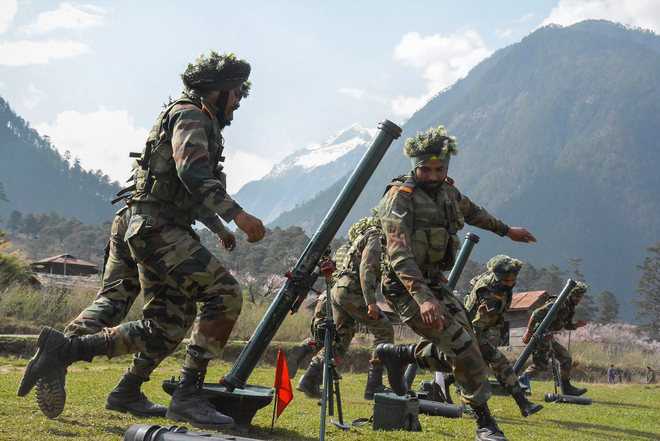
India, it seems, is militarily preparing for a “hot summer” along the Line of Actual Control (LAC) — the de facto 3,448-km boundary with China running all along the Himalayan ridge line.Post the 73-day (June 16 to August 28, 2017) Doklam stand-off, India has increased patrolling along the far-eastern part of Arunachal Pradesh. The remote mountainous terrain at Kibithu, Walong and the Lohit valley are in greater focus. Surveillance is not possible through UAVs due to dense tree foliage. Hence, patrolling has to be on foot in the valleys of Lohit, lower  Subhansiri, upper Subhansiri, Siang,  Dibang,  Delai and Dau.These are very narrow valleys in which the invader will have a military disadvantage, said a senior military officer.Walong, Kibithu and Lohit were the locations of pitched India-China battles in 1962, but things have changed. India has militarily tailored its response to stall any incursion.A rather candidly written ‘History of the conflict with China’ produced 30 years after the war by the Historical Division of the Ministry of Defence describes the battle of Walong: “A defensive battle against heavy odds, the troops fought bravely, but being out-numbered and out-weaponed in automatics and ammunition, suffered heavily.” But it was no walkover. “Indian troops offered stiff resistance, but they had to vacate their positions,” says the MoD’s book.After that, India has had a fully functional airstrip at Walong and a division (some 20,000 troops) located in the eastern-most corner of India. All key bases have road connectivity, a far cry from 1962 when a 14-day Tezu-Walong trek was the only option.India’s move has come after Beijing’s troops have taken to intensive patrolling in areas that are disputed all along the LAC and have been building military infrastructure. US confirms military build-up on both sides

  • On January 25,  US-based think tank Stratfor released a report ‘Preparing for a rematch at the top of the world’. It said India and China have continued with a build-up of military resources on either side
  • It released satellite images of airbases of both countries and said “the imagery confirms that both China and India are pursuing a wide-ranging strategic build-up that has only accelerated in the wake of the August agreement (to dis-engage)”

ECHS final authority to employ persons

Department of Ex-Servicemen Welfare has taken another step forward in optimising the manpower in ECHS polyclinics. Good HR for managing ECHS is the focus

Dear Niners brothers,

l had invited Maj Gen Ashok  Kumar MD ECHS to our Hq  at Chankyapuri  to address  our Governing  council members from  25 States. He clarified  all doubts including  new 64 kB card.  ESM fraternity shud  not worry n his org will take care of all problems  incl prep of new cards. He clarified each indl veteran’s  doubt n took three  hours.

My hats off to see the spirit  n dedication  of the General Officer.  I will  send his personal contact No.  nd  other details on our web sight asap.


Regards.

Brig  Kartar SIngh

President

IESL ,New Delhi

click to open link for news letter of Apr 2018

NEWS LETTER, CENTRAL ORGANISATION, ECHS, NEW DELHI,APR 2018


HEADLINES :::25 -04-2018

  1. MONTHLY MEETING OF ALL GOG ( GURDIANS OF GOVERANCE) OF DISTT PATHANKOT
  2. VIDEO OF TARAN TARAN ARMY MEN’S RANSACKED HOUSE GOES VIRAL ON SOCIAL MEDIA
  3. WON’T ALLOW INDISCIPLINE IN POLICE FORCE, CM WARNS AGAIN
  4. NEW MINISTERS TAKE CHARGE, WARD OFF ‘EVIL EYE’ ON BUNGALOWS, OFFICES
  5. 37 MAOISTS KILLED IN ENCOUNTERS OVER 2 DAYS IN GADCHIROLI
  6. 4 JAISH MILITANTS GUNNED DOWN IN J&K SEPOY AJAY KUMAR, CONSTABLE LATEEF AHMAD GOJRI KILLED IN PULWAMA GUN BATTLE
  7. BALL IN PAK COURT: INDIA SAYS 2018 SAARC SUMMIT UNLIKELY
  8. INDIAN AIR FORCE TESTS CAPABILITY TO HANDLE NUKE WARFARE DURING MEGA EXERCISE
  9. A FIRST: INDIA, PAK TO BE PART OF SCO MILITARY DRILL IN RUSSIA
  10. SECURITY FORCES ARREST MILITANT IN MANIPUR
  11. LAST SIKH QUEEN’S EARRINGS FETCH NEARLY 6 TIMES AUCTION ESTIMATE
  12. HELMET TO BE MUST FOR WOMEN IN UT DRAFT NOTIFICATION ISSUED, OBJECTIONS INVITED WITHIN 30 DAYS
  13. AFSPA AND AFTER HEARTENING NEWS FROM NORTH-EAST
  14. CAPT OPPOSES MHA MOVE TO MERGEUT CADRE DSPS

37 Maoists killed in encounters over 2 days in Gadchiroli

Troops of C­60, CRPF storm site of clandestine meeting; two top leaders among bodies identified

› A combing operation was again launched since Monday evening to search bodies in Indravarti river and 15 more bodies were recovered.
ANKUSH SHINDE, DIG of Gadchiroli range

NAGPUR: The police said they had gunned down 37 armed Maoists in 48 hours in two gunbattles in Maharashtra’s south Gadchiroli.

At least six Maoists were killed in a gunfight in Nainer jungle near Jimalgatta village on Monday evening and 15 more bodies were recovered from the site of Sunday’s shootout in which 16 rebels had died.

Police said that among the bodies recovered initially from the Rela-Kasnasur forest, two were senior members of the Communist Party of India (Maoist), identified as Srinu alias Srikant, who was in charge of the south Gadchrioli division of the extremist organisation, and Sainath, alias Dolesh Madhi Atram. Srinu and Sainath carried a reward of ₹20 lakh and ₹12 lakh on their heads.

Among the 37 dead militants who were killed in the two encounters, 19 were women, including 18-year-old Suman Kulyeti, a platoon member, who carried a ₹4 lakh reward on her head. Security forces have recovered 15 decomposing bodies of the ultra-leftists, including two women, floating in the Indravati river on Tuesday morning, said Abhinav Deshmukh, superintendent of police (SP) of Gadchiroli. “The combing operation in the area is still on. Some weapons were also recovered.”

The latest encounter between the Maoists and commandos of the elite C-60 force took place on Monday evening at a site that is 60 km from the scene of Sunday’s gunbattle. “Six Maoists were killed in the encounter and four of them were women,” Deshmukh said. C-60 commandos, along with district police and CRPF troopers, have been engaged in an intense search in south Gadchiroli since Saturday evening, resulting in the fresh encounter on Monday, he added.

One of the slain Maoists, Nandu Atram, was the Aheri dalam (squad) commander and carried a reward of ₹16 lakh on his head. The search operation was stopped on Sunday evening until Monday afternoon because of heavy rain in the area and lack of sufficient personnel. “A combing operation was again launched since Monday evening to search bodies in Indravarti river and 15 more bodies were recovered,” said deputy inspector general (Gadchiroli range) Ankush Shinde.

Maharashtra’s additional director general of police (special operations), D Kanakaratnam, who visited the spot on Tuesday afternoon said only 21 of the slain Maoists had been identified so far. The identified extremists carried a collective reward of ₹1.09 crore, he said.

“We had information about the movement of Perimili dalam (squad) of the CPI (Maoist) near Tadgaon. So, we launched an operation on Saturday evening. On Sunday, around 9.30am, an encounter ensued that continued for hours. This is the first time that two divisional committee members of the CPI (Maoist) were killed in a single operation,” said Shinde

RAIPUR: Maoist rebels are under pressure from security forces in Dandakaranya forests of eastcentral India, their traditional stronghold, and are trying to build a new bastion, according to interrogation reports of Maoist leaders and documents seized by police of Chhattisgarh and Maharashtra, a reason why they may be congregating in Gadchiroli.

Dandakarayana is spread between the borders of Andhra Pradesh, Chhattisgarh, Maharashtra and Odisha, and the Maoists call it a free zone. The Communist Party of India (Maoist) has divided Dandakaranya into nine divisions, each comprising three/five area committees; every area committee is composed of several local organisational squads ( LOS ) and local guerrilla squads ( LGS).

South Gadchiroli is one of the nine divisions of the Maoists in Dandakaranya where 37 Maoists have been killed by security forces in the last three days, including 31 in an encounter on April 22.

“The recent activities of Maoists in Rajnandgaon, Khawardha (both in Chhattisgarh), Balaghat and Mandala (both in Madhya Pradesh) proves that they are moving to new regions in the MMC, of which Gondia and a tip of Gadchiroli (both in Maharashtra) are part. As per details available with us, there are about 180 armed cadres who have shifted to this new MMC area,” said a senior intelligence officer posted in Chhattisgarh who did not want to be named, referring to the Madhya Pradesh, Maharashtra, Chattisgarh or MMC region.

According to security forces officers in Chhattisgarh, the attacks by security forces in Dandakaranya have led to disputes between Maoist leaders and the cadre.

On February 9, Gadchiroli police arrested Ramanna, also known as Srinivas Madru, and his wife Padma, both Maoist operatives. Ramanna was one of the founder members of the Peoples’ War Group (PWG) that merged with another rebel outfit, Maoist Communist Centre of India (MCCI), in 2004 to give birth to the unified CPI (Maoist).

Ramanna allegedly told the police the CPI (Maoist) is now concentrating on the tri-junction of Maharashtra, Madhya Pradesh, and Chhattisgarh.

“We have documents which suggest that owing to pressure of the security forces in Dandakaraya region, they are now shifting to MMC… They are armed with automatic weapons but steps to contain them are going on,” said DM Awasthi, special director general (anti-Maoist operations), Chhattisgarh police.

A letter recovered by the security forces in February 2017 from Bastar points to increasing pressure from security forces in the region forcing Maoists to shift to MMC.

The letter written to a Maoist rebel, identified as comrade Surendra, from comrade Somru said: “Oppression is rising. The enemy are opening camps. Villagers are fleeing from the area and we are working in difficult conditions.”