



Sanjha Morcha

GOODS SERVICE TAX AND ITS IMPACTS

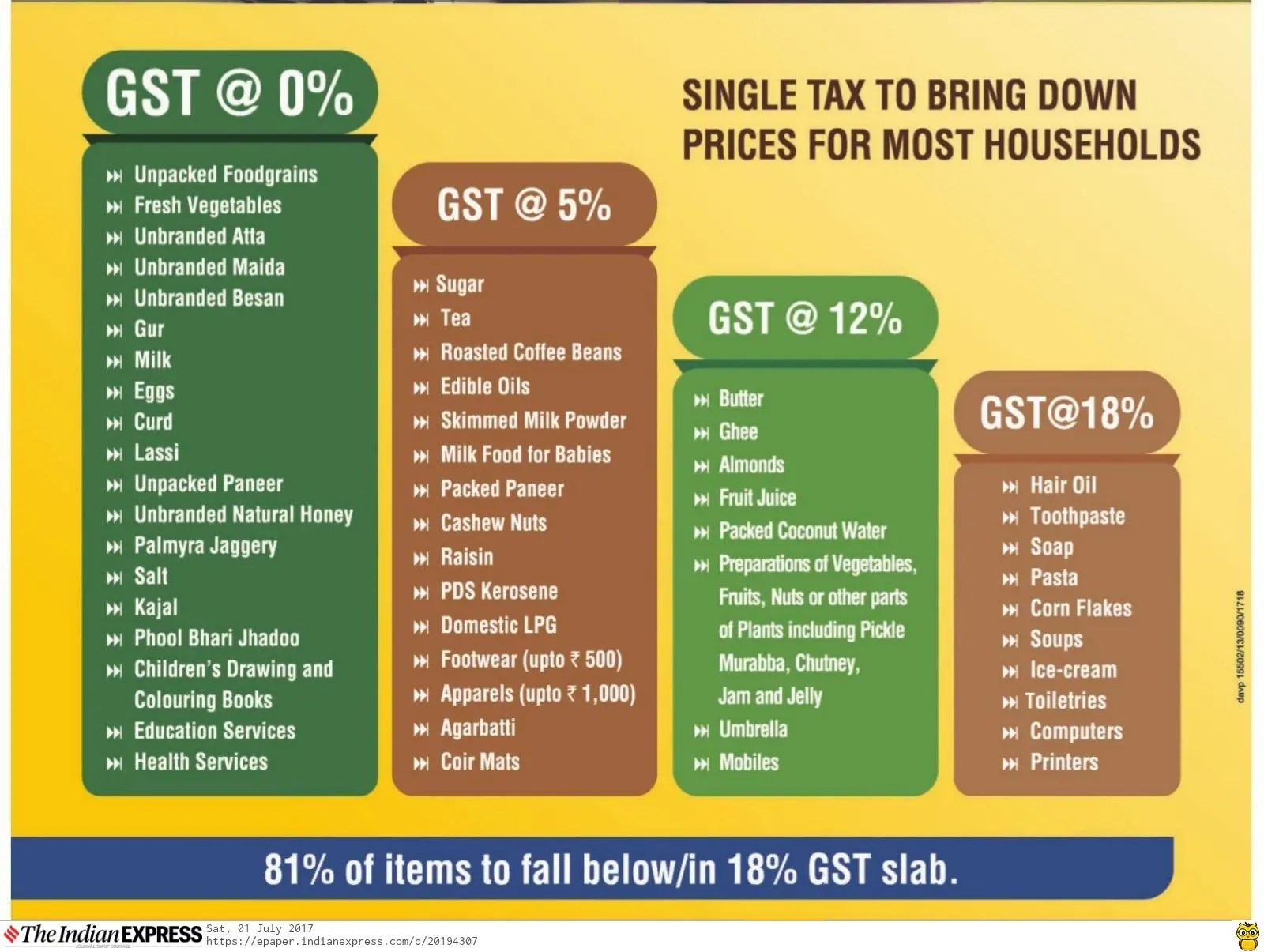
TH GST Rates   —click to open pdf file

‘One nation, one tax’ regime gets rolling

At midnight session, Prez calls GST ‘disruptive change’; PM says it’s collective achievement
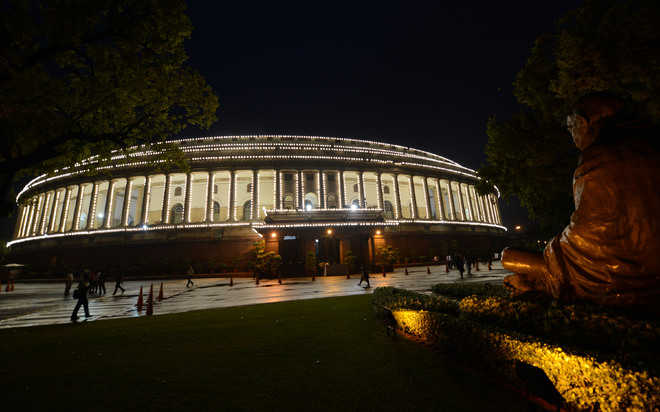
An illuminated Parliament House in New Delhi on Friday night during the midnight rollout of the Goods and Services Tax in the Central Hall. Photo: Mukesh Aggarwal

Sanjeev Sharma

Tribune News Service

New Delhi, June 30

India’s biggest tax reform since Independence Goods and Service Tax (GST) was launched at a special session in Parliament’s Central Hall at the stroke of midnight.The GST, countrywide single taxation system which has been in the making for 15 years, was launched by President Pranab Mukherjee and Prime Minister Narendra Modi by pressing a button in an hour-long special function in Parliament attended by MPs, state finance ministers, GST Council members and other dignitaries.Among those present on the dais along with the President and Prime Minister were Vice President Hamid Ansari, Lok Sabha Speaker Sumitra Mahajan, Finance Minister Arun Jaitley and former Prime Minister HD Deve Gowda. Former Prime Minister Manmohan Singh skipped the event as the Congress had decided not to attend the function.(Follow The Tribune on Facebook; and Twitter @thetribunechd)The GST seeks to create a national market for goods and services by subsuming multiple taxes at the national and state level, thereby creating a paradigm of “one nation, one tax, one market”.President Mukherjee said GST was a “disruptive change” and similar to the introduction of VAT when there was initial resistance. “When a change of this magnitude is undertaken, however positive it may be, there are bound to be some teething troubles and difficulties in the initial stages,” he said.Video courtesy: Facebook handle of PIB


Modi called the GST “Good and Simple Tax” which would replace 500 kinds of different taxes prevalent in the country. Showering praise and thanking political parties, Modi said the GST was the result of combined efforts of all political parties and did not belong to any one party or one government.Invoking the legacy of Sardar Patel, the Prime Minister said the GST would bring about economic integration of India similar to what was done by Patel at the time of Independence to integrate the states and the country.Referring to the vision of New India, Modi said the GST was the economic system of a New India and its scope was not limited to the financial system but now India would move in a new direction.The PM said under the new system due to an audit trail, the harassment of traders and small businesses will end while integrating India into one market with one tax rate.During the initial phase, he said that doubts and anxiety should not be spread and even small traders will adapt to the new system. He added that GST will end generation of black money and corruption, promote new governance culture and help to garner resources for the welfare of the poor.Talking about the teething troubles, the PM said even eyes had to adjust for some days when once wears new spectacles. In his address, Mukherjee said the central tax was a “tribute” to the maturity and wisdom of India’s democracy, as he recalled steps taken during his own tenure as Finance Minister on this key reform measure.“The new era in taxation is the result of a broad consensus arrived at between the Centre and states. This consensus took not only time but also effort to build. The effort came from persons across the political spectrum who set aside narrow partisan considerations and put the nation’s interests first. It is a tribute to the maturity and wisdom of India’s democracy,” Mukherjee said.He said the GST Council should continuously review the implementation and suggest improvements to the taxation regime. After the GST launch, the government imposed levy of 10 per cent basic customs duty on mobile phones, which make imported phones expensive, while inputs and raw materials for manufacture are exempt.Momentous event: PranabIt is a momentous event for the nation. This historic moment is the culmination of a 14-year-long journey which began in Dec 2002. It (GST) is a tribute to the maturity and wisdom of India’s democracy. It will make exports more competitive and provide a level playing field to domestic industry. —Pranab Mukherjee, PresidentGood and Simple Tax: MODIIt’s the best example of cooperative federalism and success of Indian democracy. GST is ‘Good and Simple Tax’ — good because there will be no tax on tax and simple because there will be only one form of tax. It will help eliminate black money and corruption. —Narendra Modi, Prime Minister

Highlights

GST is a tribute to the maturity and wisdom of India’s democracy: Pranab

This historic moment is the culmination of a fourteen-year long journey which began in December 2002: President

Introduction of GST is a momentous event for the nation: President Pranab Mukherjee

It is good and simple tax: PM Modi

Not just economic reform but also social reform

Working with vision of new India by 2022: PM Modi

Foreign investors will get a good opportunity in india

GST is not the legacy of one political party but the collective legacy of all political parties: Modi

GST is economic integration

One nation one tax to replace 500 kinds of taxes

Central Hall is the most appropriate venue for historic GST launch, says PM

Central Hall of Parliament witness to momentous occasions of Indian history

It is the contribution of every party and government

The path we have chosen doesn’t belong to one government or one party

GST process big example of cooperative federalism

125 crore Indians will be witness

India will move in a new direction

PM says at midnight we will steer country direction

Prime Minister Narendra modi starts addressing at GST function

Will boost revenues drive growth and single flow of goods and services

GST has removed multiplicity of taxes and cut tax interface: FM

Jaitley says India will write new destiny and GST being launched in time of global slowdown

GST process started 15 years ago, says FM

Thanks Mps political parties state Finance Ministers

New India will create one tax, one nation, one market, says Finance Minister Arun Jaitley

President Pranab Mukherjee, PM Narendra Modi, VP Hamid Ansari arrive in Central Hall of Parliament for the launch of GST.

Former Prime Minister H D Deve Gowda on dais with President, PM, Vice President and Lok Sabha.

Former PM Manmohan Singh skips GST launch event owing to Congress’ boycott of the ceremony. (With PTI inputs)

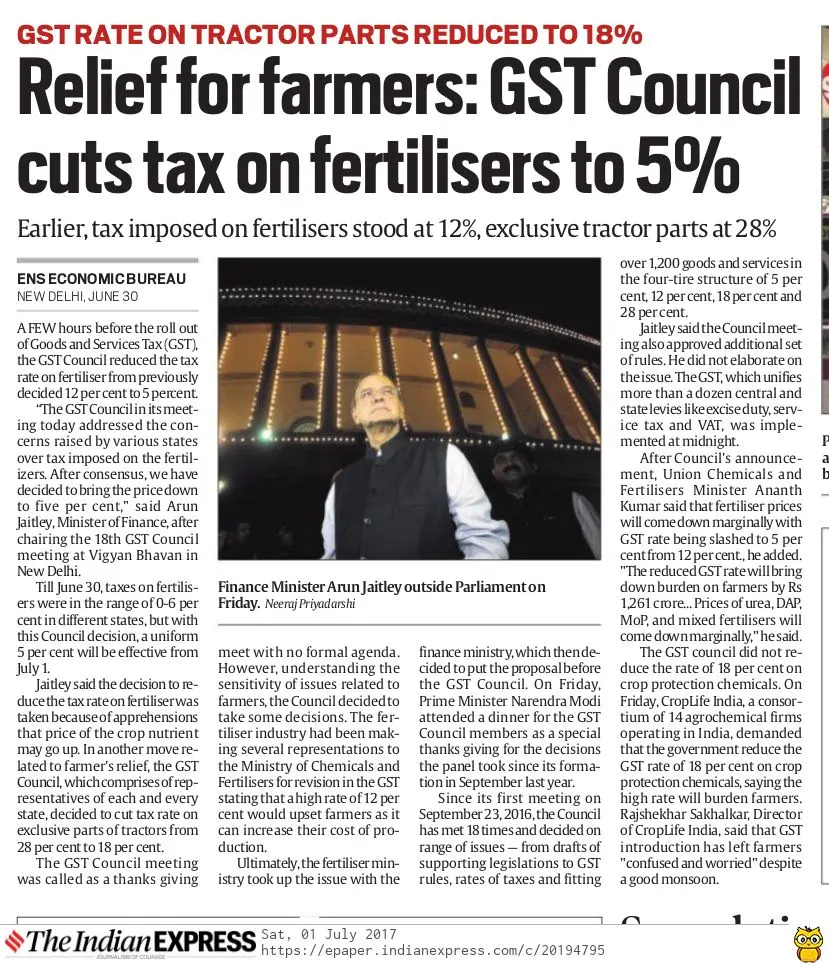
Fertiliser rate cut from 12% to 5%

In a farmer friendly move, the GST Council chaired by Finance Minister Arun Jaitley decided that the GST rate on fertilisers will be reduced from 12 per cent to 5 per cent and on exclusive parts of tractors from 28 per cent to 18 per cent. The reduction of tax on fertiliser will benefit farmers to the extent of Rs 1,261 crore. TNS

AT MIDNIGHT, MODI RINGS IN INDIA’S ‘GOOD & SIMPLE TAX’

Govt ushers in an ambitious taxation regime that promises to be a game­changer for the Indian economy

Pressing a button at the stroke of midnight on Friday, President Pranab Mukherjee and Prime Minister Narendra Modi launched India’s biggest tax reform from the historic central hall of Parliament, cheered on by some of the country’s top names in politics, business and law.

PTI PHOTOPresident Pranab Mukherjee and Prime Minister Narendra Modi press a button to launch the GST at a special midnight ceremony in the central hall of Parliament.

GST is not the legacy of one political party but the collective legacy of all political parties NARENDRA MODI, Prime Minister

It was a luxury welcome for the long-awaited Goods and Services Tax (GST), ending a 14-year struggle to enlist political support for a move that will replace some 20 federal and state levies and unify a country of 1.3 billion people into one of the world’s biggest common markets.

The event condensed years of anticipation, frustration and hope into a moment of celebration. A festive air permeated a brightly illuminated, flower-bedecked parliament building. A short film on the GST played out on television screens as soon as Modi and Mukherjee pressed a button.

About 1,000 people packed the hall when Modi began to speak from where India declared itself a free nation and first Prime Minister Jawaharlal Nehru made his famous “tryst with destiny” midnight speech almost 70 years ago.

Modi referred to the central hall’s illustrious history, saying there could be no place more pious to launch what will be a crucial cog in India’s gearwheel of growth.

“From Leh to Lakshadweep, India will now have one tax. GST is actually a Good and Simple Tax,” he said as the audience thumped their desk in approval.Both Modi and finance minister Arun Jaitley struck a note of political conciliation as they shared credit for the rollout of the GST with all political parties and past governments.

What’s up, what’s down: Decoding effect of GST on daily life

Business houses should pass on the benefits of GST to customers. If they do not do that, they will be hit by the anti­profiteering clause. AJAY JAGGA, advocate and member of CPC,Chandigarh

Goods and Services Tax (GST) coming into effect, HT decodes the effect of new regime on the rates of various items used in our day-to-day life. While most of the goods are getting cheaper, services and luxury products will become expensive.

Food grains will become cheap as the government has exempted these items from GST purview. But branded foodgrains and pulses come under 5% tax slab.

In the case of mobile phones, imported phones will become cheap, but locally manufactured ones will get costlier.

City-based lawyer, Ajay Jagga said, “On imported mobile phones, there was 21.85% tax, which included import duty (12.5%) and VAT (9.35%). The government has imposed 12% GST, which makes imported phones cheap.”

WHAT WILL BECOME CHEAPER AND WHAT WILL COST MORE?

There will be 18% tax on hair oil, soaps and toothpaste, making these items cheaper. Before GST, around 25% tax was imposed on these items.

However, one will have to shell extra money for buying shampoo, liquid soaps, shaving creams and other toileteries as these items will be taxed at 28%, costing around 3% more.

COFFEE LOVERS CAN REJOICE

Several food items such as edible oil, tea, coffee, sugar, spices have been kept at 5%, with exemption for fresh milk and foodgrains. Tax on coffee will come down from 12 % VAT to 5% GST.

Similarly, sugar will become cheap as tax will come down from 12.5% to 5%.

SHELL 3% EXTRA ON ELECTRONICS

With 28% tax under GST, electronic items such as televisions, refrigerators, air conditioners and washing machines may get costlier from July 1. Currently, these items are being taxed at 25%.

STAYING AT HOTELS, AC DINING TO COST LESS

Staying at hotels and AC dining will become cheap. Earlier, one used to pay over 18.5% tax on AC dining, but now it has come down to 0.5%.

TAXI RIDES, NON-AC RAILWAY, ECONOMY CLASS FLIGHT CHEAPER

From today onwards, taking taxi rides will become more affordable as tax will be reduced from 6% to 5%. There is a reason to cheer for people travelling in non-AC railways as there is no tax rate on it. Air-fare for economy class will become cheaper, as the tax will be reduced by 1%.

However, those travelling in AC coach will have to pay more than the double of the tax, as it will be increased from 5% to 12%. Similarly, airfare for business class would become expensive. The tax will be increased form 9% to 12%.

“Entertainment duty will be brought down from 30% to 28% under GST, hence watching movies in cinemas will become cheap,” said Jagga.

People will have to shell 1% extra tax for buying gold jewellery,” Jagga said.

“Business houses should pass on the benefits of GST to customers. If they do not do that, they will be hit by the anti-profiteering clause,” he said.

clip

clip

clip


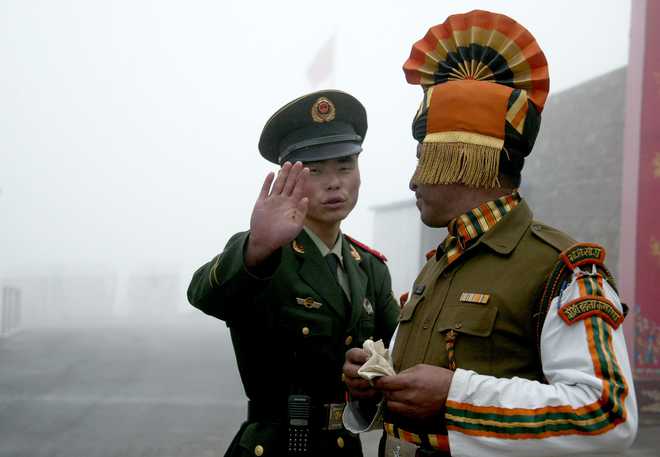
China-India standoff Diplomacy rolls back clouds of war

China-India standoff

INDIA’S National Security Adviser Ajit Doval does not appear to have brought back good tidings after a visit to Beijing. The standoff on the India-Bhutan-China trijunction is likely to persist and even stretch into months unless China has a change of heart. But the interaction at the top political level may have ebbed the threat of a clash that could spiral into something worse. India’s commendable restraint, in acute short supply when it comes to Pakistan, may have played a no mean role in reorienting the resolution of the military dispute towards talks. India did not react when the Chinese media stooped to name calling Foreign Minister Sushma Swaraj and Doval. Instead of joining battle with the Chinese media in cyberspace and losing control over the narrative, India has sought to steer the conversation back among diplomats by drawing attention to the established mechanisms for addressing the border issue. The fly in the ointment is that China may have tried to strengthen its infrastructure in a disputed area but it was doing so on its territory. So while India wants a simultaneous withdrawal of troops from both sides, China wants Indian soldiers to first walk back. Many compromise formulas have been aired such as a simultaneous withdrawal by Indian troops and the Chinese road building crew. But any withdrawal by Indian troops while the PLA stays put will mean India may lose face after having jumped in the fray on behalf of Bhutan. Can a compromise formula work in a dispute that has the imprints of a broader geostrategic competition? We will never get to know whether the differences were discussed during the closed-door meetings in Beijing. But from all indications, both sides are in for a long haul since trust and mutual understanding are at a discount. The smooth conduct of the BRICS NSAs’ meeting suggests that the border dispute may not cast a shadow on the forthcoming five-nation summit. That suggests the diplomats have succeeded in decoupling the border standoff from Sino-Indian cooperation in BRICS. In the current environment of unsettled global equations, that should be an achievement.  


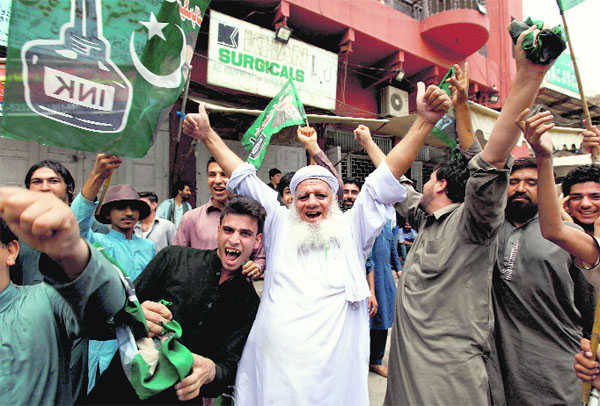
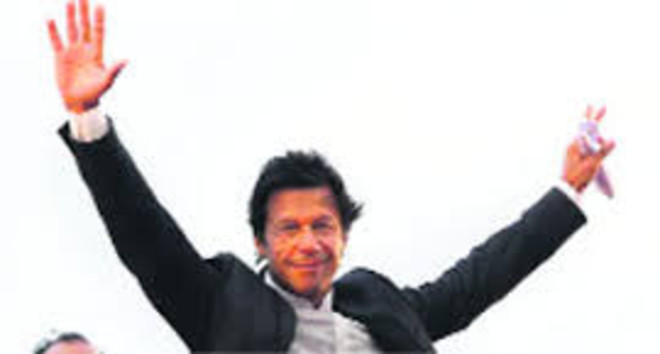
It’s beginning of new Pak: Imran

Islamabad, July 28

“It is just a beginning,” Imran Khan, Pakistan’s Opposition leader and a petitioner in the high-profile Panama case, today said as he hailed the Supreme Court’s decision to disqualify Prime Minister Nawaz Sharif.Addressing the media after the apex court’s verdict, 64-year-old Khan, one of the three petitioners in the case, thanked the judiciary of Pakistan. The chief of Pakistan Tehreek-e-Insaf party announced to hold a rally at Islamabad’s Parade Ground to celebrate “Youm-e-Tashakur” on Sunday.“What the Joint Investigation Team did in 60 days could not have been done even in the West,” the cricketer-turned- politician said. “With this investigation, it is quite clear that we have the capability to put a check on corruption.The Supreme Court has proven that today.” Khan observed that countries were not destroyed by earthquakes, wars or famines, but by their institutions of justice. “The Supreme Court’s decision has given hope to the people of Pakistan today,” proclaimed Khan. He said his struggle was for democracy and empowerment of the poor who suffered for petty wrongdoings while the rich went scot-free even after committing a crime. “I know Sharif’s family for the last 40 years and I do not have any personal enmity with them,” he said.Khan called the apex court’s decision “the beginning” for a new Pakistan.“Everyone will be held accountable now. This is just the beginning,” said Khan. He said now on all those responsible for plundering national wealth would be held accountable.The PTI chief lambasted Sharif’s former ministers for targeting Shaukat Khanum cancer hospital in Lahore, where 75 per cent poor patients were treated free. — PTI 


Tax evasion exposé that sealed Sharif’s fateApril 4, 2016: International Consortium of Investigative Journalism publishes the Panama Papers, exposing tax evasion by the world’s elite, including the Sharif family, through offshore accounts and shell companiesApril 5: Sharif sets up a judicial panel to probe allegations, denies chargesApril 26: Opposition rejects the judicial panel set up by the governmentNovember 1: The SC decides to pursue a case related to Nawaz SharifNovember 7: PML-N submits Qatari prince’s letter to the SC containing information about the London flatsApril 20, 2017: SC orders formation of a Joint Investigation Team (JIT) to probe graft charges against SharifMay 5: Apex court constitutes JITMay 22: JIT presents its first bi-weekly report to the SC in two volumesMay 24: JIT sends questionnaires to Sharif and his sons Hussain and HassanJune 13: JIT submits report to the SC blaming government institutions for ‘creating impediments in evidence collection’June 15: Sharif appears before the JIT for questioning, becoming the first sitting Pakistan Prime Minister to appear before any probe agencyJuly 10: JIT submits final report to SCJuly 21: The three-judge SC Bench hearing the case reserves decisionJuly 28: SC Bench unanimously disqualifies Sharif from holding office


Army doesn’t have any missing items: Centre

PATIALA: The Indian Army does not possess any manuscripts and other historical documents reportedly missing from the Golden Temple after Operation Bluestar in 1984, the defence ministry has said. It claims the manuscripts and other items were handed over to the state government and other agencies, but it mentions no dates.

In response to a plea by Patiala MP Dharamvira Gandhi on July 7, the ministry said about the manuscripts, purportedly found during the operation to flush out militants from the Sikh shrine in Amritsar, that these “were handed over to Mohan Singh, curator, museum, Punjab government”.

It added, “Other items were handed over to functionaries of the Shiromani Gurdwara Parbandhak Committee (SGPC); government treasurer, Amritsar; and the CBI.”

The SGPC says 15,000 rare books, 16,000 artefacts related to Sikh religion and history, edicts issued by the 10 gurus, and handwritten ‘birs’ (copies) of Guru Granth Sahib were among the items missing. Gandhi said he, for now, only wanted the ministry to bring the issue of missing documents on record, which he has achieved.

In the latest in his series of efforts, he had written to home minister Rajnath Singh for return of the material, but his plea was referred to the defence ministry on May 31.

“I will meet SGPC officials now to approach the Centre again to trace the documents, which are not only a treasure for the Sikh community but also for Hindus and Punjab as a whole,” said the MP. SGPC president Kirpal Singh Badungar said the central ministries have been “lying repeatedly over such sensitive issues”. “Where are the rare manuscripts and documents then, if the army claims to have not taken them away?” he asked.

The state government, besides the SGPC, have approached the Centre on multiple occasions over the years for “return” of the items held at the Sikh Reference Library in the Golden Temple complex till June 7, 1984, when the operation ended.

But the defence ministry had said all material seized was handed over to intelligence agencies.

The matter had come to light when a former sub-inspector associated with the CBI in 1984 had claimed that the material was shifted to an undisclosed location by the army and CBI officials.


Centre contradicts itself on right to privacy in SC Says WhatsApp personal data part of fundamental right

Satya Prakash

Tribune News Service

New Delhi, July 21

Having taken a stand before a nine-Judge Constitution Bench that right to privacy is not a fundamental right, the Centre today contradicted itself by telling another Constitution Bench hearing the WhatsApp privacy matter that personal data was an extension of one’s personality and hence a part of fundamental right to life.“Data of a user is connected to his personality and it is an integral part of Article 21 (Fundamental Right to Life and Liberty),” Additional Solicitor General PS Narasimha told a five-Judge Bench headed by Justice Dipak Misra, which is examining issues arising out of the 2016 privacy policy of WhatsApp.“If any contractual obligation impinges upon that, it will have ramifications. We will come out with regulations (on data protection),” Narasimha said.On the face of it, the Centre’s stand in the WhatsApp case appears to be contrary to its categorical statement before the nine-Judge Constitution Bench headed by Chief Justice of India JS Khehar that right to privacy was not a fundamental right.The Bench posted the matter for further hearing on September 6 after senior counsel Kapil Sibal, representing WhatsApp, pointed out that the verdict of the nine-Judge Bench on right to privacy would have a bearing on the matter and it should be heard only after the judgment was pronounced by the larger Bench.Petitioners Karmanya Singh Sareen and Shreya Sethi had alleged WhatsApp’s decision to share all its subscribers’ data with Facebook impinged on privacy of 160 million Indian users.The Delhi High Court had last year ruled that WhatsApp should delete all data in its possession till September 25, 2016, but said the company was free to share the data with Facebook post September 25, 2016, thus enabling subscribers to voluntarily withdraw from the service if they were not keen on sharing their data with Facebook.The high court had asked the Centre and TRAI to examine the feasibility of bringing the messaging services under a regulatory regime in India. The petitioners challenged the HC verdict in the top court where the issue got referred to a Constitution Bench.

WhatsApp, FB can’t share ‘intimate’ data: Govt to SC

PETITION IN COURT Centre’s stand contradicts its position in privacy and Aadhaar cases

From page 1 NEWDELHI: Social media platforms such as WhatsApp and Facebook cannot share subscriber data because these are too intimate, the government said in the Supreme Court on Friday.

The government declared its stand before a bench of five judges, which is hearing a petition challenging WhatsApp’s policy to share its user data with Facebook, the US-based social network that bought the popular instant messaging application in 2014.

According to petitioners Karmanya Singh Sareen and Shreya Sethi, both law students, the policy breached the privacy of 160 million users in India.

In response, additional solicitor general P Narasimha said data of users were “integral” to the right to life and personal liberty that the Constitution guarantees. “My personal data are intimate to me. If there is any contractual obligation between the individual and the service provider impinging on an individual’s right, the state will have to intervene and regulate sharing of such data as these are an integral part an individual’s personality,” he said.

The law officer assured the court that regulations would be ready soon to prevent private social media operators from sharing personal data of subscribers without their consent.

The court fixed September 6 for the next hearing, after noting that a nine-judge bench is in the process of determining whether privacy is a fundamental right guaranteed by the Constitution.

The government’s stand on social media contradicts its position in the privacy and Aadhaar cases. It said right to privacy is not constitutionally inherent.

According to petitions challenging the Aadhaar law, collection of biometric details to issue the 12-digit unique identification number invades people’s privacy.

The WhatsApp counsel, senior advocate Kapil Sibal, argued that the petition was not maintainable because it was filed by just two people. Besides, he said his client provides free telephony, messaging and data services.

His argument did not convince the bench. Justice Dipak Misra, who headed the bench, said: “When you are facilitating for X,Y or Z, you cannot impose arbitrary conditions. Data protection is a requirement, the nitty-gritty can’t be worked out by the court. Government can do this.”

Sibal also denied WhatsApp shared data with a third party and only Facebook can access the information. He said other platforms such as Google, Yahoo and Uber share subscriber data.

“But nobody criticises them,” said senior advocate Siddhartha Luthra, appearing for Facebook.

In response, justice Misra remarked: “Uber is a taxi operator. That really can’t be compared or equated with a service provider of the present nature (WhatsApp). You (Whatsapp) can’t impose conditions which are against my rights. You can’t control my choice.”

Representing the petitioners, senior advocate Harish Salve said data sharing is “gross transgression of a citizen’s right to privacy”.

“Merely because you (WhatsApp) are a service provider, you cannot say I will open your letter and read it,” he said.


Orbit verdict, as expected Erosion of justice system dangerous

Orbit verdict, as expected

The acquittal of all the accused in the Orbit bus case is unlikely to surprise anyone familiar with the cosy police-politician relationship in Punjab. Efforts were made right from the start to win over the victim’s family members and witnesses. None of the 34 witnesses the prosecution produced could be of any use in sending the accused to jail. It is a familiar, recurring story. In fact, a conviction would have come as a surprise. People in Punjab have over time got used to acquittals and clean chits in high-profile cases — prominent being those of the Badals (disproportionate assets case), Capt Amarinder Singh (Amritsar Improvement Trust case) and Bikramjit Singh Majithia (drug case). An obliging prosecution not only decides to lose the legal battle but also refuses to challenge an adverse verdict. Witnesses turning hostile are seldom proceeded against for perjury. To avoid the ignominy of an acquittal, the investigating and prosecuting agencies now choose to withdraw cases from courts. The Orbit case has raised issues which can have consequences for the justice system and public faith in it. A serious charge of murder and molestation of a minor girl was brought against the staff of a private bus. The Badals, then in power, used the money power to buy the witnesses’ silence and save their own transport company. If it was an accidental death since no one saw the girl being molested or pushed out of the bus, why was compensation as high as Rs 24 lakh awarded or is it the company policy to pay so much in every accident case? Is a government job offer made to the family of each accident victim or was it a special arrangement for cases involving Orbit buses?   Anyway, the private company owners and staff have got away lightly even though a girl travelling in their bus met with a tragic end. A law of torts in a more civilised society would have imposed a hefty penalty on the erring company. Here private culpability has been covered with a private arrangement. The present dispensation did once talk of conflict-of-interest legislation but that was perhaps during the initial euphoria over government formation. 


‘Want 100 Pak soldiers killed for my son’s death’

Families of two soldiers killed in cross­border ceasefire violation seek retribution for their loss

JAMMU: A pall of gloom descended on the suburban countryside of Jammu after the news of two soldier deaths on the Line of Control (LoC) in Kupwara’s Keran sector broke early on Thursday.

PTIThe family of slain 20­year­old soldier Satish Bhagat cry at their Jammu residence on Thursday. Bhagat and Lance Naik Ranjit Singh were killed in Pakistan’s sniper fire along the Line of Control in Kupwara on Wednesday.

At Kotbhalwal’s Burn village , Lance Naik Ranjit Singh’s wife Neha Devi sought nothing short of vengeance. “I am proud of my husband,” she cried. “He died for the country but I want justice… I want revenge for my his killing.”

His mother, Veena Devi, echoed a similar sentiment. “Mere iklaute bachche ki jagah unke 100 nikalne chahiye. Mujhe insaaf chahiye (I want 100 Pakistani soldiers killed for the death of my only son. I want justice),” she screamed. “I want nothing from this government, only a bullet for myself. My family has been ruined.”

However, their two children – Kajal and Kartik – harboured nothing beyond a burning aspiration to serve their nation when they grow up. “My father wanted me to become a good human being, probably a police officer. I will fulfil his dream and fight on the side of the law,” said the girl, who is still in Class 5.

Kartik, a Class 4 student, wants to follow in his father’s footsteps and join the Army.

The scene was no different at Gurasinghu village in Shamachak, which lost 20-year-old Satish Bhagat to the sniper fire.

“Three days ago, Satish called us up to say that he was heading to the LoC. He said mobile phones don’t work in that area, but asked us not worry. But we never thought something like this would happen,” said Rashpal, an uncle. He and another relative – Tara Chand – expressed regret over nobody from the government coming to visit Bhagat’s family in their time of grief.

A classmate of the martyred soldier said Bhagat always wanted to join the Army like his father. “But nothing can be done now. It’s time for revenge. India should teach Pakistan a lesson,” he added. The other villagers seemed to be in an equally retributive mood, shouting slogans like ‘Pakistan murdabad’, and ‘Bharat Mata ki jai’.


Pak shelling puts brakes on cross-LoC bus service

Amir Karim Tantray

Tribune News Service

Jammu, July 10

The weekly Poonch-Rawlakote cross Line of Control (LoC) bus service was today suspended, following firing and shelling from the Pakistan army in the Chakan Da Bagh area in Poonch district.“Due to shelling from Pakistan side, the bus service was suspended today for security reasons,” said Poonch SSP Rajiv Pandey.Every Monday, the bus carries passengers from this side to POK. Trade is carried out through this route from Tuesday to Friday.The suspension has cast a shadow on trade as well as the service may not resume tomorrow too.“We are prepared to go ahead with the trade. A day before we have to receive goods trucks at the trade centre so that their checking is done before allowing them to move to the other side, but today we decided not to put their lives at risk. If everything remains fine, we will be able to go for trade in the morning and checking will also be done at that moment,” claimed Tanvir Ahmed, Trade Felicitation Officer (TFO), Poonch.In the past two days, Pakistan targeted the trade centre which forced the authorities to stop the bus service.The cross-LoC trade has come under the scrutiny of the National Investigation Agency (NIA), which is probing its link with the Hawala money trail.

Army gives relief for damaging house

Tribune News Service

Jammu, July 10

The Army today paid compensation to a resident of Hiranagar whose house was damaged due to field firing in ranges.Giving details, the Defence PRO, Jammu, said the station commander of Basholi and Janglot Garrison handed over a cheque for Rs 17,600 to Ratno Devi, resident of Kadater village (Parangoli), of Hiranagar tehsil, as compensation for damaging the house.The sarpanch of the village and other eminent persons were also present. The locals were thankful to the Army for the gesture.Keeping in view the plight of the distressed family, Rising Star Corps resolved the case of compensation, the PRO added.


The Sikkim standoff is a war of words, not a war

Despite the ratcheting up of tensions by the Chinese ambassador to India, New Delhi should be patient

China’s Ambassador to India Luo Zhaohui expressed his belligerent stance that there can be “no compromise” and that the “ball is in India’s court” in resolving the nearly three-week-old standoff at the Sikkim-Tibet- Bhutan borders. In the light of the G20 summit meeting at Hamburg this week and where Prime Minister Narendra Modi and Xi Jinping are expected to meet, his comments appear to be part of a diplomatic hard-ball being played by China.

AFPA protest in Ahmedabad, May 3, 2013. The latest stand­off in Sikkim reflects China’s desire to break the age­old bonhomie between Bhutan and IndiaSince Chinese efforts to construct a road in the Bhutanese-claimed area closer to Sikkim began, the situation is snowballing into a war of words, if not a war in reality. Yet, despite ratcheting up by the Chinese side, we can only expect some flashes in the pan.

First, while a British Indian-Qing Dynasty Convention of March 1890 outlines a border treaty between Sikkim and Tibet along the watershed principle, no demarcation of territories was made subsequently. The areas of the current stand-off in Sikkim-Bhutan areas were never formalised. As the area is at the trijunction of three countries, Indian consent is necessary for finalising a border treaty.

The Chinese argument that Indian Army had “intruded” into its territory was contested by the Bhutanese government on June 20. The Bhutanese also countered that Beijing was violating the 1988 and 1998 understanding on status quo. China has also been selective by citing the 1890 treaty while terming the 1914 McMohan Line as “unequal”. Such selective arguments are bound to weaken Chinese positions in the short term.

Second, invoking the special relations between India and Bhutan, Indian troops stopped the Chinese from building a road in the contested territories of Bhutan and China. For India, the building of a Chinese road with military back-up in Chumbi valley has security consequences for the vulnerable Siliguri Corridor. Such brazen actions by China are matched by the Indian resolve to protect its interests. Still, it is only expected that the current stand-off then will fizzle out with stiff Indian resistance. The rhetoric on the Chinese side has taken a turn towards escalation. Their foreign ministry spokesperson’s comments on July 3 suggested Indian troops are “trespassing” into China’s territory!”

China’s recent statements on Singapore, Vietnam and Japan followed a similar pattern of psychological war and coercive diplomacy. In this backdrop, India needs to brace for more such rhetoric but to observe patience and perseverance. Not only does India need to further strengthen its ties with South Asian countries but also respond strategically, in the larger region of Asia at the diplomatic, economic and military levels.


Beijing plans cargo service to Pak via CPECBeijing plans cargo service to Pak via CPEC

Beijing plans cargo service to Pak  via  CPEC
Map showing proposed China-Pak Economic Corridor (CPEC)

Beijing, July 6

China is planning to launch a road and rail freight service to Pakistan through the multi-billion dollar China-Pakistan Economic Corridor, a move which could raise concerns in India.The new line will start from Lanzhou, capital of northwestern China’s Gansu Province, travelling through Kashgar in Xinjiang Uygur Autonomous Region to the Gwadar Port of Pakistan, Xu Chunhua, director of Lanzhou International Trade and Logistic Park, was quoted as saying by state-run Xinhua news agency.(Follow The Tribune on Facebook; and Twitter @thetribunechd)However, it has not been specified when the service will be launched. In May last year, a rail and road cargo service opened between Lanzhou and Kathmandu. Xu said the cargo service has been welcomed by south Asian countries. In 2016, the bilateral trade between China and Nepal was over 3 billion yuan (about $440 million), and the volume is forecast to hit 10 billion yuan this year.  India has objected to the $46 CPEC, which is part of the Silk Road.  — PTI Map showing proposed China-Pak Economic Corridor (CPEC) Beijing, July 6 China is planning to launch a road and rail freight service to Pakistan through the multi-billion dollar China-Pakistan Economic Corridor, a move which could raise concerns in India. The new line will start from Lanzhou, capital of northwestern China’s Gansu Province, travelling through Kashgar in Xinjiang Uygur Autonomous Region to the Gwadar Port of Pakistan, Xu Chunhua, director of Lanzhou International Trade and Logistic Park, was quoted as saying by state-run Xinhua news agency. (Follow The Tribune on Facebook; and Twitter @thetribunechd) However, it has not been specified when the service will be launched. In May last year, a rail and road cargo service opened between Lanzhou and Kathmandu. Xu said the cargo service has been welcomed by south Asian countries. In 2016, the bilateral trade between China and Nepal was over 3 billion yuan (about $440 million), and the volume is forecast to hit 10 billion yuan this year.  India has objected to the $46 CPEC, which is part of the Silk Road.  — PTI