



Sanjha Morcha

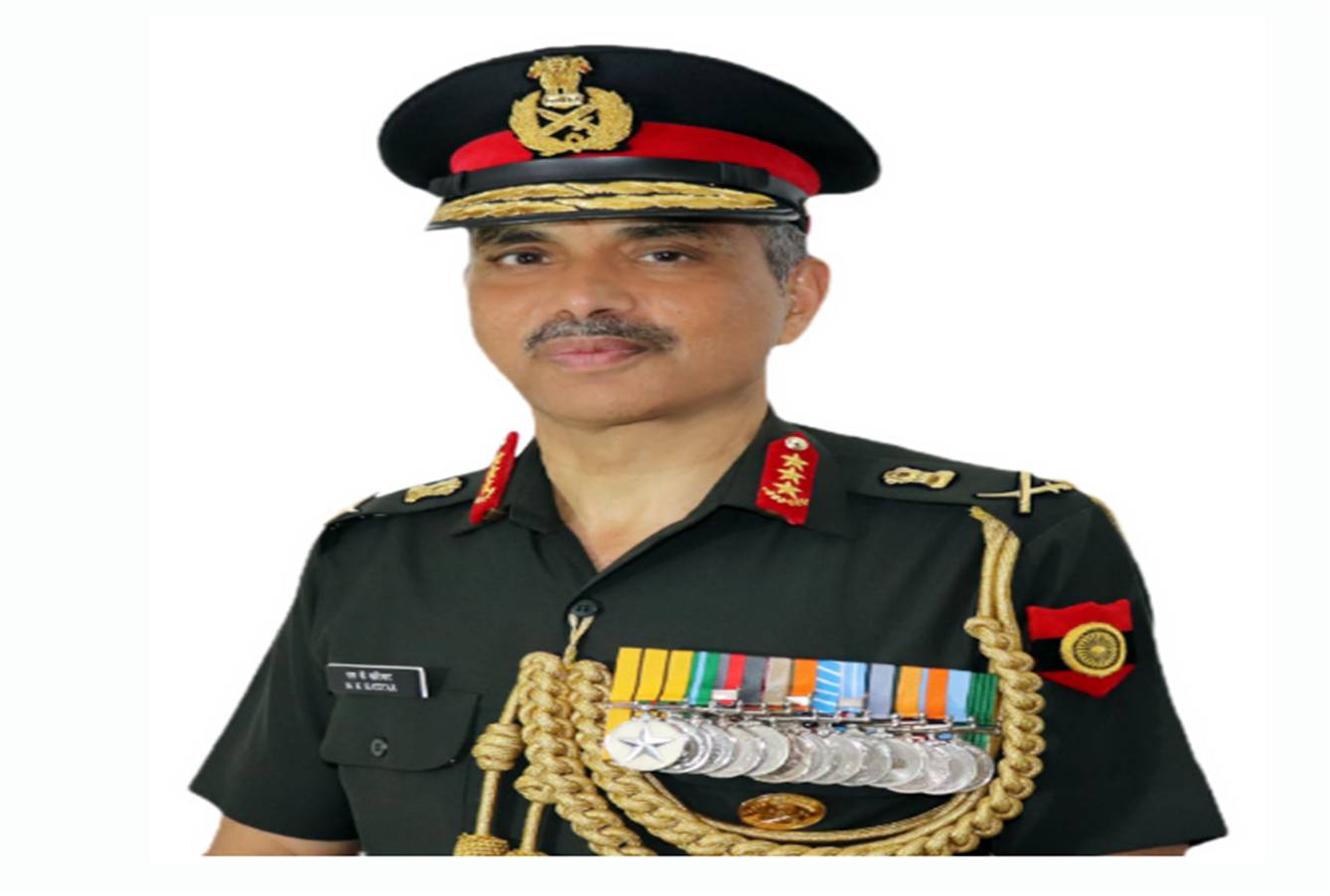
Kashmir voter turnout, then and now by Lt Gen Subrata Saha (retd)

We pride ourselves on having a political syetem that is far superior to any in the immediate, even extended, neighbourhoodFrom an impressive 65 per cent in the winter of 2014, the voter turnout plunged to 7 per cent and 2 per cent in the recently conducted Srinagar by-polls. The question that should be worrying us as a nation is: Why and how did the voter turnout crash?
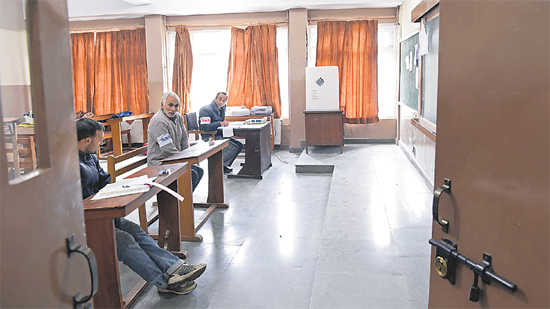
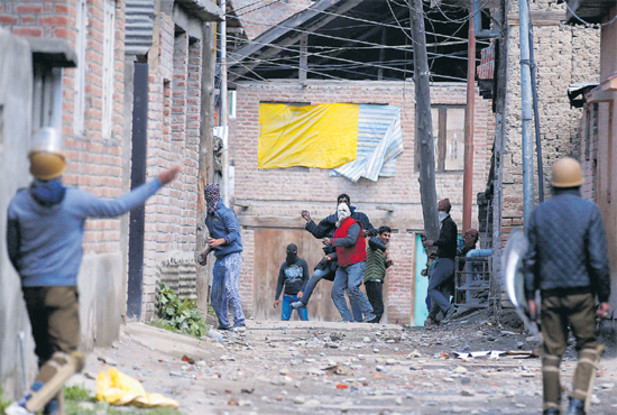
IN November-December 2014, the entire nation lauded, indeed celebrated the unprecedented voter turnout in the Jammu and Kashmir Assembly elections. The overall voter turnout of 65 per cent was in freezing temperatures, even as people were struggling to recover from the devastation caused by the terrible floods of September 2014. A little over two years later, the voter turnout in the recently concluded by-polls in Srinagar and Budgam constituencies dipped to 7 and 2 per cent, respectively. We pride ourselves on having a political system that is by far superior to any other in the immediate and extended neighbourhood.Instead of that unprecedented voter turnout, we are now witnessing unprecedented stone-pelting and violence with the rage shamefully engulfing school and college children. The victor and vanquished of the electoral process, and ironically the disruptors of democracy all seem to be together on the same page, as they level accusations and counter-accusations on the violence rather than answering the how and why of the violence.Talking about the Parliamentary elections in April-May 2014, one of the most erudite and experienced personalities of Kashmir had told me, “In Kashmir Farooq Abdullah losing is unthinkable”. He added, the Kashmiri voter had learnt to make choices and more importantly faith in the “Indian” electoral system had been revived.The more critical elections obviously were the Assembly elections, due after some months. He went on to add, “If you succeed in providing that sense of security without being obtrusive or intimidating, people will come out in large numbers.”Soon after our conversation came the unfortunate devastating floods in September 2014. Loss of property was huge, mercifully human loss, though sad was limited, particularly so given the scale of the disaster. Most political quarters made pleas to postpone the elections to the next year, but the people, administration and the security forces were ready to go ahead. The people were desperate to get their flood relief quickly through an effective administration. The Election Commission decided to go ahead in November-December, just before harsh winter sets in. For security forces this is the toughest period when temperatures have dipped but it has not snowed yet.It’s to the credit of all the security agencies the way they came together in true mission mode. They were instructed and convinced of the need to be visible everywhere but not obtrusive. The intensified deployment had to be sustained for nearly three months. An early start was essential for the people to see and gain confidence and equally for the candidates to be able to campaign freely. Joint meetings of all agencies of the core group at the Corps HQ was followed through for the first time with the apex leadership from Srinagar jointly chairing meetings at the district and sub-district level.Unprecedented resource mobilisation from within and outside the Valley was undertaken. For instance, the entire reserve of protected vehicles was inducted from the base depots. Some really innovative technology infusion was done to smarten procedures, particularly in surveillance and interagency communication. Any candidate travelling out would be known to anyone and everyone in the grid who needed to know. Any gathering of people was picked up aerially and monitored closely. The security grid was adapted to meet the changing requirements. There was proper networking and synergy achieved through repeated rehearsals, communication and joint monitoring by leadership of all agencies. Grenades were recovered sometimes just in time and just a whisker away from rally sites.As the election pitch picked up so did the separatists calls for boycott, but the people were in no mood to listen. They wanted a government of their choice that would deliver with urgency — getting the relief before winters was playing uppermost in most minds. The adversary too got panicky by seeing the mood of the people — undergirded by strong security. They made desperate attempts to disrupt by pushing in weapons, land mines and terrorists from across the line of control, all of them were foiled. Highly trained and equipped terrorist groups were eliminated not without loss of blood of the security forces.As the election dates arrived, more security forces came in and polling staff mustered from all over. Absorption and orientation of this added strength was done smoothly of course, with anecdotes of good humour in those stressful circumstances. The polling staff was delivered across remote cross-country terrain in mine-protected vehicles aptly called “Rakshak”.  On reaching the destination they would refuse to let go off the hand of the Company Commander. Of course, they understood when reminded that in a democracy the Army cannot be inside a polling booth. The polling staff rose to the occasion. It is to the credit of all the security agencies and the administration that the elections were conducted most professionally. All parties went on record hailing the fairness of the election unambiguously. Not one civilian life was lost in the entire electoral process of the Assembly elections 2014.This was the true victory of democracy, won over all attempts to boycott, disrupt and delay. In many ways, the success removed the very cause for which the militancy began in 1989, that is the alleged rigging of elections. Around the same time as the legislators got voted to power, it was time for the Durbar to move down to Jammu. A royal tradition followed most faithfully even till date where the government moves from Srinagar to Jammu for the entire winter. Incidentally, this winter was just after the floods. Imagine you are voted to power with the hope that you will provide succour and just when you are needed the most you are politicking in fairer weather. This was the beginning of the loss in hopes in leadership and democracy. Ironically, some separatist leaders who claim to be champions of the people’s cause too preferred escape to other areas in the country to avoid the winter cold.The awaam (people), of course, remained in Kashmir and so did the security forces. Avalanches came down,  roads got washed away, snow and land slides blocked access, but all these challenges were overcome as the two — awaam and jawan — weathered the harshness of the winter together,  waiting for the spring to come, bringing back the political leadership, the Durbar with ominous warnings of a hot summer. This is the story every year!Through the winter of 2014-2015, hectic political parleys led to an “agenda of alliance” — a bridge was supposedly laid between Jammu and Kashmir by Mufti Mohammad Sayeed. Whether it was the fragile health of the well-meaning architect, or was it the fragility of the bridge design or the piers?  It was too much for it to withstand the vengeful and vicious designs of the adversaries within and without. For the adversary across and their cahoots, the failed bridge provided ready fodder for vicious propaganda and killing whatever hopes, if any, for democracy.See how effective the vicious propaganda is. So much friction and heat amongst the two; awaam and jawan who weathered the cold winter together.While the victor and the vanquished seem to be obfuscating accountability for the key question, the disruptor of democracy is brazenly manipulating people. This will cost everyone dearly. We should not end up in a situation where democracy is abolished and people’s representation is demolished.The writer was the Corps Commander, Kashmir, in 2014-15.

On the digital front Written by Lt Gen Syed Ata Hasnain 

To restore stability in Kashmir, security forces must provide a counter-narrative to the psychological warfare on social media

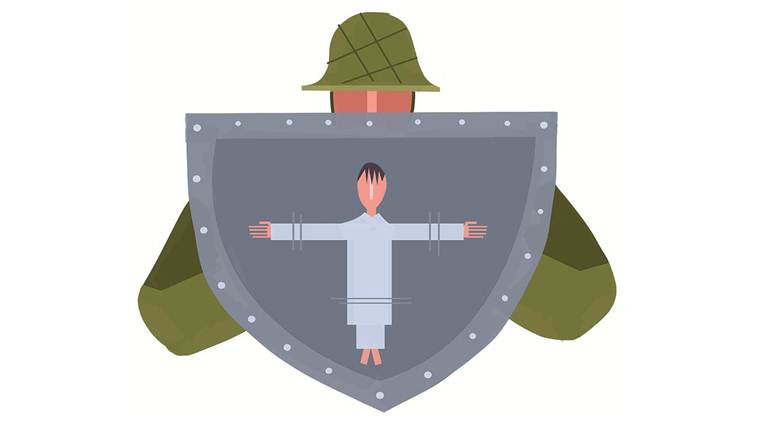
(Illustration by C R Sasikumar)

In today’s environment of omnipresent social media, itchy fingers create controversy. Natural patience is stretched in the quest to be the first to like, comment and, especially, take exception to another view. Short visuals sans narratives are the most dangerous, leaving half-baked perceptions to be expressed. Nothing exemplifies this better than the recent video of a Kashmiri, Farooq Dar, seen tied to the front of an army vehicle, ostensibly as a human shield against stone-throwing during the recent election in the Srinagar Lok Sabha constituency. Many were horrified and voices not in support of the action could be heard, even from the uniformed community.

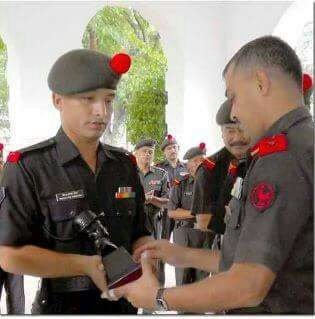
However, the revelation of the narrative surrounding the circumstances which led to the decision of a young company commander of 53 Rashtriya Rifles (RR) to resort to this action brought greater unity in the positive opinion outside Kashmir. Yet, this event does throw up the need for nimbleness in monitoring, assessing nuisance value and creating an immediate counter-narrative, in these days of psychological warfare through social media. On the ethical aspect of the decision of the company commander, opinion will continue to remain divided among those involved in or supporting the agitation on the streets of the Valley, common citizens in the rest of India and those who have worn the uniform and operated in conditions of hybrid war. An explanation of this event is needed for the public to understand why the government is backing the army on the defence of the officer, which has, unfortunately, once again spiralled into an “us versus them” affair in Kashmir’s sensitive political and security landscape.

Young army officers are trained and over time acquire an instinctive capability to respond to extraordinary contingencies. In the unpredictability of the battlefield, one can hardly hazard a guess about the circumstances surrounding the next situation. This is multiplied manifold in a hybrid conflict where the domains of threats are diverse and unfamiliar.

In soldiering, the entire notion of camaraderie and team spirit has a different meaning. Leaving behind the body of a fallen comrade is considered sacrilege; many a time, a military leader may risk losing more lives to retrieve the mortal remains of a teammate. The decision is entirely that of the officer-in-charge. It is seldom questioned.

Thi situation in this context was indeed challenging: An SOS message from a small ITBP and JK Police team at a polling booth facing a near-death situation with a bloodthirsty mob baying for their blood was responded to by Major Gogoi of 53 RR with a quick reaction team which was obstructed from reaching the site due to intense stone-throwing.

His decision was perhaps instinctive — grabbing hold of Farooq Dar, who happened to be at the wrong place at the wrong time, and trussing him to the vehicle while announcing threats to those obstructing the way. He got the policemen out safely, caused no injuries to anyone. He did bruise the egos of anti-national elements who were actually courting disaster if a more robust response from an army unit would have occurred. Such responses do well for a messaging effect and the efficiency image of the army. We are in the serious business of getting Kashmir back on the track to stability; anything which helps in damage control is sensible. That which contributes to more divisiveness plays into the adversary’s hands. Social media handling is, therefore, important.

Obviously, the situation in the Valley has deteriorated, even in the face of clichéd utterances of the need for outreach and engagement. These are terms which no one cares to define and are loosely bandied about. Who is to be engaged and reached out to is what the government is also at odds to decide. The Hurriyat is reportedly irrelevant. A diffused, invisible leadership is running the agitation. Its mentors in Pakistan appear to be exhorting it with a notion of reaching the proverbial “tipping point”.

There is a huge Pakistan-based propaganda effort which has continued through the winter months — the flash mobs at encounter sites have not come from nowhere. This has been found to be the best method of baiting the security forces into no-win situations, with young men throwing challenges to our troops. Pakistan’s efforts are based on its enhancing strategic confidence riding on the back of a few positives which have emerged in its foreign policy. It could treat the summer of 2017 as the make or break year. More contrived bait will be laid out to result in events which will cause more alienation.

This is the time to restore balance and stability. Among the main areas of focus for the security establishment must remain the elusive policy of counter-propaganda, which has to be the responsibility of a single agency. If Pakistan perceives that it can wrest the Valley or J&K away, with its own territory remaining unimpinged, it is a failure of our strategic messaging.

With the experience gained from the demonetisation exercise, it should not be difficult to trace a couple of thousand bank accounts in the Valley, which fuel the agitation. The control on social media — already underway as an emergent measure — will be resisted by rights groups.

The ideological narrative which is attempting to link the Valley with radical Islam has to be countered with the assistance of other Indian Muslims and a nationalist Muslim clergy. But the most important thing is to find consensus in the polity; politics and ideologies cannot be allowed to pull us apart. In the midst of all this, which is essentially a rebalancing of strategy, a pragmatic leadership would keep lines open to those who respect the Indian Constitution. It is well known that even as rabble rousers rule the streets, there is a silent majority which is still awaiting the proverbial engagement. Ensuring that we do not lose this segment in our act of rebalancing will be a major challenge.


Guard Army’s high reputation: Rawat

Tribune News Service

New Delhi, April 17

Army Chief General Bipin Rawat today told the top leadership of the Army that the force continued to hold a ‘strong image’ and asked it to ‘guard its high and professional reputation’.Stressing the importance of operational readiness at the Biannual Army Commander’s Conference in New Delhi today, he said effective conduct of operations was on the top of agenda.General Rawat’s words come around the time when certain segments are questioning the act of an Army officer of tying up a Kashmiri youth in front of a jeep to avoid stone throwers.The Army Chief emphasised that all systems were working well and complimented all those who are working on the ground. Notably, he raised the issue of non-functional upgrade (NFU), a kind of financial raise allowed to all civilian officers but the armed forces.Defence Minister Arun Jaitley addressed the Army Commanders and stressed the  modernisation of defence equipment was the topmost priority for the government.He complemented the military hierarchy saying ‘whenever the challenges multiply or their nature changes, the Indian Army has always outperformed itself’. The Army Commander’s Conference is an important event in the planning and execution process of the Army. To ensure due diligence, decisions are taken through a collegiate system.

Bishnu Shrestha, a brave Gurkha Soldier of the valiant  Indian Army ,
IMG-20170417-WA0047
defeated 40 trainrobbers while returning homeafter a voluntary
retirement .
The Indian Army , awarded Bishnu with Sourya chakra ,
Bravey award and Sarvottam
Jeevan Rakshak medals .
While on the train , Maurya
Express from Ranchi to
Gorkhapur , this 35 year-old Bishnu saved a girl about to be raped by the train robbers in front ofher helpless parents .
 Afterlooting the train , when the robbers started to strip a 18 years old girl in front of him.
He couldn’t contain his
calmness.he took out his
khukari and took on the a
group of 40 robbers ,ALONE.
In the fight , he killed three of
dacoits and Injured eight others.Remaining dacoits fled the scene to save their lives…after it the victim’s family offered him a large cash reward, but he refused it with the following comment: 
“Fighting the enemy in battle is my duty as a soldier. Taking on the thugs on the train was my duty as a human being.”
Share this brave and chivalrous Indian Army  man’s photo given below,  if u salute the bravery of this Gurkha soldier.
Watch “Indian CRPF soldiers, kicked, slapped, punched on head & made to say GO INDIA ..GO BACK by Kashmiris” on YouTube
http://

http://

Watch “Khabardaar: Assaulting CRPF Jawan, Tying Local Youth To Army Jeep” on YouTube
http://

http://


The PM is hanged by Shaikh Aziz

The PM is hanged
Zulfikar Ali Bhutto & (right) Zia-ul-Haq

IT was time. In the evening of April 3, a team of four officers entered Rawalpindi Jail to end a chapter in Pakistan’s history. Jail Superintendent Yar Mohammad, Magistrate Bashir Ahmad Khan, jail doctor Sagheer Hussain Shah, and Security Battalion Commander and Security Officer Lieutenant-Colonel Rafiuddin had all arrived to carry out court orders. As narrated by Col Rafiuddin in his book, Bhutto Kay Aakhri 323 Din (The last 323 days of Bhutto), the jail superintendent visited Bhutto at 6.30 pm in his cell, along with a witness. He found Bhutto lying on the floor. He first called Bhutto’s name to draw his attention, and then read out the execution order. “According to the March 18, 1978 order of the Lahore High Court, you, Mr Zulfikar Ali Bhutto, are to be hanged for the murder of Nawab Mohammad Ahmad Khan,” read the order. “Your appeal in the Supreme Court was rejected on February 6, 1979 and the review petition was turned down on March 24, 1979. The president of Pakistan has decided not to interfere in this matter. So it has been decided to hang you.”Col Rafiuddin was standing besides the jail superintendent. “I did not see any sign of panic on Mr Bhutto’s face while the jail superintendent was reading out the order. Instead, I could see that he was quite calm, relaxed, and had a smile on his face,” observed the colonel. After listening to the jail superintendent, Bhutto retorted that he should have been informed about the execution 24 hours before but that had not been done. On the contrary, he argued, when his daughter and wife met him at 11.30 am, they were not sure about the day or time either. Bhutto was told that the required order for execution was with the jailer. Without any hesitation, the jail superintendent then asked Bhutto whether he would like to write his will, since he was to be hanged in a few hours. Bhutto nodded and asked for some writing materials. He also asked the jailer to show him the black warrants, to which the jailer replied that as per the law, that could not be done. At 8 pm, Bhutto drank a cup of coffee. He also called for Abdur Rahman, his jail attendant, and asked Abdur Rahman to forgive him. Around 10 pm, he asked Rahman to bring some warm water so that he could shave. Bhutto then turned to Col Rafi. “Rafi, what is this drama that is being staged?” The question went unanswered. Bhutto then brushed his teeth. For some time, he sat on his bed and began writing something. He asked the warden about how much time was left till his execution. He was told the time. He then burned all pieces of papers he had tried to write on.  At 11.25 pm, Bhutto told his attendant that he would try to sleep for a while because he had not been able to sleep properly last night, but asked to be woken up at midnight. But soon, the assistant jail superintendent and other staff arrived at his cell. They wanted to wake Bhutto up from the outside. When they did not get any response, they were told to enter the cell and try to wake him up. The officials complied, only to find that Bhutto had opened his eyes. Again, Bhutto did not respond to the doctor’s call. On the insistence of Col Rafiuddin, Bhutto was medically checked for a third time; the doctor said that he was fine. Around 1.35 am, the officials’ team entered the cell and saw Bhutto resting on a mattress. The magistrate, Bashir Ahmad Khan, asked him whether he had written a will. Bhutto replied in a low voice that he had tried, but his thoughts were so disturbed that he could not do it and instead he burnt the paper. He was then asked whether he wanted to walk to the gallows or whether he would prefer to be carried, to which Bhutto remained silent. After a few seconds, the jail superintendent called his men, who lifted Bhutto by his limbs and put him on a stretcher. As Bhutto lay motionless on the stretcher, he was handcuffed. Once they reached the scaffold, two wardens helped him to the hanging board. His handcuffs were then readjusted; once his hands were taken behind his back, Bhutto was placed in chains again. All present there stood in silence. Tara Masih, the executioner, was already there and ready to perform his task. He put a mask over Bhutto’s face. When the clock struck four minutes past two in the morning, the executioner whispered something into Bhutto’s ear and pressed the lever. Bhutto’s body fell about five feet; it remained in that position for half an hour. A doctor then checked Bhutto and pronounced him dead. Tara Masih then brought Bhutto’s corpse down, and began massaging his hands and legs. It was said that the executioner wanted to straighten his limbs, which might have twisted owing to the impact of the hanging. Half an hour later, the doctor handed over the death certificate to the jail superintendent. His body was handed over to jail officials, who bathed his body. His body was placed in a coffin, and taken to Chaklala air base where a C-130 plane was ready to fly to Jacobabad. The plane took off, but after an hour’s flight, it returned since it had developed some fault. Another plane then took off with the body and the officials accompanying it. At a distance, Benazir Bhutto spent the night in insufferable grief and distress, lonely and confined. As she sunk in grief, someone in the wilderness hummed a 1968 French song titled Comment Te Dire Adieu? (How to say goodbye to you?) composed in the same year that Bhutto began his political struggle against Ayub Khan. But in the wee hours of April 4, 1979, it was time to bid farewell to the Prime Minister. Zulfikar Ali Bhutto was no more.By arrangement with the Dawn


Former intel agents, kin seek ‘dignified relief’

Former intel agents, kin seek ‘dignified relief’
Former spies and family members of those killed or languishing in Pakistan jails protest outside Jallianwala Bagh in Amritsar on Monday. Tribune photo: Vishal Kumar

GS Paul

Tribune News Service

Amritsar, April 10

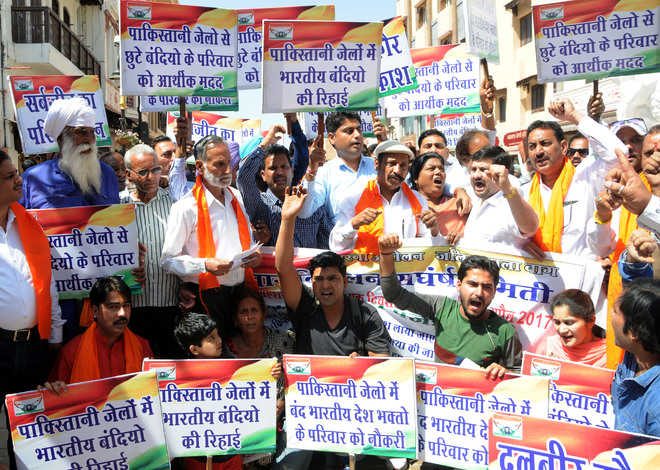
Several former secret agents and the families of those who either lost their lives or have been languishing in Pakistani jails assembled at Jallianwala Bagh here today to sensitise the Central and state governments about their cause. They demanded “dignified compensation”.They submitted a memorandum, addressed to Prime Minister Narendra Modi and President Pranab Mukherjee, through the DC office, urging them to introduce administrative reforms concerned with retirement and rehabilitation of Indian Intelligence agents and their families.Like the defence forces — be it the Army, Navy or Air Force — the Research and Analysis Wing (RAW) is serving the country for years. But when an agent is caught in a covert operation on a foreign soil, the country disowns him.The former agents resented that except for Bhikhiwind native Sarabjit Singh’s family, no recognition or compensation was given to any other family.Jammu-based former spy Vinod Sawhney (61), who had suffered third-degree torture in Pakistani jails for around 10 years, unfolded many stories of agents who were lucky enough to return, but have been fighting a protracted battle with the government for their rehabilitation.He produced several documents to prove that he worked as a spy for the Indian government between 1977 and 1988. With desperation writ large on his face, he said, “The government uses and throws its agents.” Sawhney heads the Jammu Ex-Sleuths’ Association. He is raising voice for the welfare of “unsung heroes”, who worked for the Indian intelligence agencies, and the families of those killed on the other side of the border.The story of Ferozepur’s Upender Nath Sharma (71) is no different. The Intelligence Bureau hired him in 1968. A later year later, he was caught spying in Pakistan. He was released in 1974 under the 1972 Simla Agreement. “Many like me, spent prime of their youth in Pakistani jails. After my release, I did petty jobs to sustain my family. Not only me, there are many who ran from pillar to post to get their due, but to no avail,” he said.Kathua-based Kamal Kumar has been fighting for the release of his father Om Parkash lodged in Rawalpindi’s Adiala jail. He was holding a letter of the High Commission of India to prove that his father was indeed lodged in the Pakistani jail. “My father was caught in 1998. I was two years old then. My family is living a miserable life and there’s no relief from the Centre. I want early release of my father,” he said.Gurdaspur’s Surinder Pal carried with him blood-stained Tricolour in which he received the body of his father Satpal Singh, an intelligence agent. The family vowed not to wash the blood stains till they got the dues from the government.“My father was nabbed in 1999 on the other side of border during the Kargil War. He was tortured in a Pakistani jail. He ultimately died. We received his body in 2000 at the Attari-Wagah border. Many government officials had been visiting our house, promising us a job and other monetary benefits, but the assurances have not materialised. To date, we haven’t got justice,” he added.


Move ICJ over Jadhav’s death penalty: Dalbir Chandigarh: Dalbir Kaur, the sister of Sarabjit Singh, who died in a Pakistan jail in 2013, said India should approach the International Court of Justice (ICJ) and ensure that the death sentence awarded to Kulbhushan Jadhav in Pakistan was not carried out. “Even if I assume that Jadhav was an agent, still he does not deserve death sentence. There are many Pakistani nationals lodged in our jails who are charged with serious crimes. Should they be hanged? The 2000 Red Fort attack case convict was a Pakistani, but he wasn’t hanged,” she said. PTI


Hinduism at risk from RSS BY Apoorvanand

Hinduism at risk from RSS
UNDONE: There was pride in the chaotic diversity that was Hinduism.

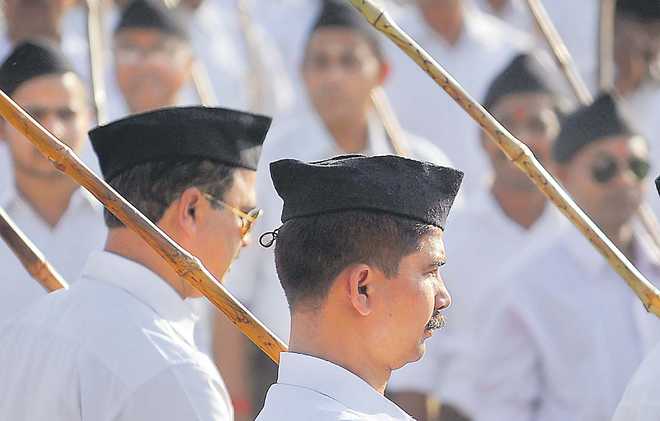
HINDUS need to worry. Not about Muslims being beaten up or killed on the pretext of cow smuggling or slaughter, or Christians being attacked on the pretext of conversion. Hindus need to stir out of slumber because Hinduism is in peril. It is not threatened by Muslims. For the last 150 years, Hindus have been led to believe that they would be drowned by the rapidly increasing numbers of Muslims. Not by Christians too, for they have not been able to convert all other Indians to a religion of foreign origin. Instead, there is a clear threat now of Hinduism being taken over by an organisation called the Rashtriya Swayamsevak Sangh. Hinduism, a religion that is a way of life, as its adherents like it to be known, is now in the hands of organisations and people who want to transform it into an ideology of dominance over populations, which are seen, feared and abhorred as ‘others’. Hindus better be warned. The pictures emerging from West Bengal should act as a wake-up call for them. This year, processions with swords and other lethal weapons were taken out in different parts of Bengal on the day of Ram Navami led by various affiliates of the RSS. Children, girls, women, men marched with these weapons chanting slogans in Hindi. The streets and lanes of Kolkata, Birbhum, Burdwan, Nadia, Malda, Midnapore and Darjeeling reverberated with the slogans of Jai Shri Ram and Har Har Mahadev. The state president of the BJP, who himself was seen flaunting a sword while leading an armed procession, claimed this as a mark of new Hindu upsurge in Bengal. He also said nobody could stop them from carrying the weapons that 33 crore Gods and Goddesses of Hinduism carry.Since when has Ram became a major figure and Ram Navami a major festival in Bengal? Hindi slogans in Bengal? So, has the proud Bengal finally given in to Hindi-Hindu nationalism? How did Bengal allow the slogan of Na Durga, na Kali, keval Ram aur Bajrangbali? I am not advocating an anti-Hindi plank, but it was shocking to see the land of Durga asking her to make way for Ram.A friend from Patna informed me that this year the Mahaviri Akharas carried saffron flags instead of the red ones typically associated with Hanuman. We saw Yashwant Sinha, a former Central minister and a BJP leader, going all the way to Hazaribagh and creating a law and order problem, just to force the administration to allow a Ram Navami procession to pass through a street populated by Muslims. There was no practice of Ram Navami processions taking that route for the last six decades. This time it was the BJP which decided on behalf of the Hindus of that area that procession would not proceed until the Muslim populated street was made available to them. So, is Ram Navami only a tool to dominate and subjugate Muslims, only this very worldly aim? Last year we saw kanwarias on the roads of Delhi with the Tricolour pinned to their saffron cloak. Trucks accompanying them were also draped with the Indian flag. It was not that the kanwarias, who claim to be devotees of Shiva, were suddenly overcome by the emotions of nationalism. It was a planned takeover of the nearly fortnight-long festival by the RSS using the national flag. Who would refuse adorning the national flag? So, a God who is known as trilokdhari was nationalised. It was not difficult to miss the symbolism of the Tricolour being as an add-on to saffron.For long, the RSS has also tried to depict Sikhism as an offshoot of Hinduism, only to retreat when snubbed by the Sikhs but has not given up. The RSS and the BJP tried it in Kerala, the land of Onam, to dislodge Bali and enthrone Vamana in his place. On the occasion of Onam, it asked people to celebrate Vamana Divas instead of paying homage to Bali. That it could not succeed this time should not make us ignore the fact that it felt emboldened enough to challenge an age-old religious tradition rooted in the soil, by proposing a new and more ‘Aryan’ symbol and get away with it.The media took note of the distinct change in the Gudi-Parva in Maharashtra this year. It reported that the traditional Maharashtrian new year bore a distinct nationalist flavour. Was it as spontaneous as it was portrayed?Saffron and the Tricolour go well together, is what the RSS is trying to convince Hindus. One can see the RSS stamp on all religious festivals and occasions. The RSS, in creative ways, is suggesting Hindus how to be a true Hindu, and is being accepted.A gradual Hinduisation of festivals of other communities who live alongside Hindus is taking place. One can see Sarhul, the Adivasi festival, being slowly given a saffron turn in Jharkhand. The RSS seeks to transform the folk imagination of the eastern part of UP by the overthrowing of Ghazi Mian, a cult figure among Hindus and Muslims both, by  persuading Hindus they cannot revere a Muslim and it is Suhel Dev they should celebrate who was defeated by Ghazi Mian. We used to take pride in the chaotic diversity that made Hinduism a riddle for many. It was not a monolith, it did not need a central book, was not chaired by only one God-figure. There did arise insecurities, and, from time to time, a need was felt to discipline and streamline its unruly multi-faceted and multi-directional character, but all attempts to homogenise it failed. Even Vivekananda, the most powerful modern Hindu monk and a Kali devotee, did not attempt to modernise it by erasing its diversity. Even Gandhi gave up his temptation of making the Gita the book for the Hindus. Krishna is not celebrated as a warrior, Ram never in his balroop (child-form). Shiva is destroyer but is always seen as a lover and giver, a carefree God. Now, all of them have started resembling each other. All of them now look as if they have been afflicted with a new-found nationalist aggression. If all Hindu festivals become one and get reduced to a particular variety of Indian nationalism, it would spell the end of Hinduism as we have known it for millennia. Moreover, now all of them would also have been deployed in an anti-Muslim and anti-outsider campaign. It was Savarkar, who despised this paganism, who coined the term Hindutva, which was not a description for a loose Hindu dharma but  denoted his kind of nationalism. It was usurped by the RSS. Later, the Supreme Court confused Hindutva with Hinduism. Hinduism was never ‘a’ way of life, it is many ways of life. The judgment of the Supreme Court, by turning many into one, did a huge disservice to it. Hindutva suffers from a majoritarian nationalist anxiety. We see that anxiety spreading to all Hindu traditions. It is urgent to cure it of this malady and restore it to its earlier playful state. It needs rescuers, urgently.The writer is a Professor of Hindi in Delhi University


HEADLINES —09-04-2017

breakl line

CAPT’S BOOK LAUNCH: WHEN HEROES OF SARAGARHI WERE BROUGHT TO LIFE :HEROES OF SARAGARHI

SYRIA STRIKES: MORE CLUTTER THAN CLARITY ACHIEVED BY LT GEN ATA HUSNAIN

SONS OF SARDAR: BATTLE OF SARAGARHI | RANDEEP HOODA’S FIRST LOOK OUT :VEDIOS

INDIA-PAKISTAN HOSTILITY: AMERICA’S GOOD INTENTIONS MAY NOT REFLECT GROUND REALITIES BY LT GEN ATA HUSNAIN

GUARDIANS OF GOVERNANCE EX-SERVICEMEN ENTHUSED TO BE PART OF CHIEF MINISTER’S TEAM

CAPT DEDICATES SARAGARHI BOOK TO UNKNOWN 22ND MAN

HARYANA BRACKETS PARAMILITARY WITH ARMY

PARTIES MUST BE HELD ACCOUNTABLE FOR POLL PROMISES: CJI

LOANS, CARD PAYMENTS ABOVE RS 2 L IN CASH TO BE SHOWN IN ITR FORM

INDIA, CHINA WARSHIPS THWART PIRATE ATTACK OFF ADEN COAST

6 DEAD AS STONE-PELTING MOB STORMS POLLING STATION IN BUDGAM

breakl line


Stuck in snow, soldiers’ boots to send distress signal

Stuck in snow, soldiers’ boots to send distress signal

Vijay Mohan

Tribune News Service

Chandigarh, April 7

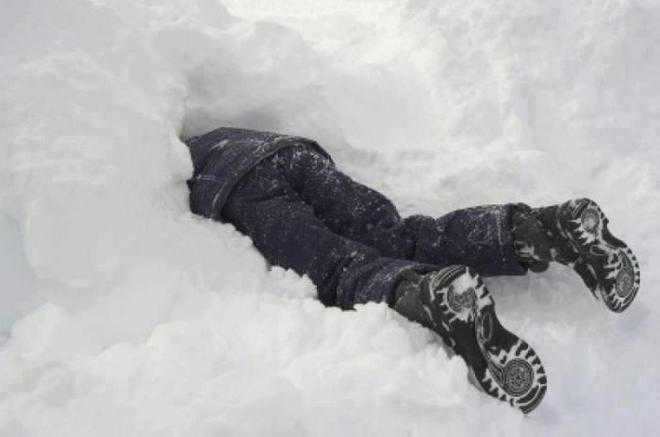
As soldiers battle the danger posed by increasing number of avalanches along the Himalayan frontier because of changing climatic pattern, a novel device integrated into their boots would enable them to send out distress signals at times when battery-powered gadgets become non-functional due to intense cold.The Defence Research and Development Organisation (DRDO) is developing a boot containing a miniature electronic signal emitter that can be charged from an electric current generated by moving or tapping the feet.“The technology to generate electric current capable to charge small devices like a transmitter or a mobile phone from the pressure applied on soles of shoes while walking has already been developed by DRDO. This would now be adapted to develop rescue devices,” a scientist said.The project would be taken up by the Defence Bio-engineering and Electro-medical Laboratory, which is associated with protective and life support equipment, biomedical devices and systems specific to service combatants.DRDO scientists said in extreme cold climate, conventional batteries go dead very quickly, leaving vital equipment without a power source. “By simply tapping his foot or using his hands, a trapped soldier can continue sending out distress signals to pinpoint his location in situations where battery would otherwise have discharged. The presence or absence of a signal can also provide a clue about the physical state of the individual,” the scientist said.Climatic changes and variation in precipitation and temperatures have also led the Army to take a relook at its static locations and operating procedures in snowbound areas. Many areas earlier considered safe are now prone to avalanches because late setting and shorter winters have led to temperature variations that do not allow snow to harden and stabilise.


Temperature variation

  • Areas earlier termed safe are now prone to avalanches
  • Shorter winters have led to temp variations, which don’t allow snow to harden. Data shows there’s been 20% rise in avalanches over past 5 years
  • Temperature variations have been as high as 13°C

Charge it by tapping feet 

  • The DRDO is developing a boot containing a miniature electronic signal emitter that can be charged with current generated by moving or tapping the feet
  • Scientists said in extreme cold climate, conventional batteries go dead quickly, leaving vital equipment without a power source


HEADLINES —07 APR 2017

breakl line

SANJHA MORCHA TEAM COORDINATES VIST OF LOCAL MLA TO MAHARAJA RANJIT SINGH INSTITUTE

5 SOLDIERS TRAPPED IN AVALANCHES IN LADAKH’S BATALIK SECTOR, 2 RESCUED

AVALANCHE KILLS 3 JAWANS, VALLEY REELS UNDER RAIN, SNOW

SHAURYA CHAKRA AWARDED TO HEROES OF SURGICAL STRIKE

RUSSIA NOD TO KAMOV JV COPTERS TO BE BUILT UNDER ‘MAKE IN INDIA’ INITIATIVE


DON’T SHADOW ME, MEET PEOPLE, CAPT TELLS OSDS

COLLECTOR RATES REDUCED IN MOHALI

CHINA SAYS IF INDIA PLAYS DIRTY, IT’LL ‘ANSWER BLOWS WITH BLOWS’

NO LESSONS LEARNT HISTORY SET TO REPEAT ITSELF IN PUNJAB

KASHMIR’S TRAVAILS: TOURISM VS TERRORISM BY HUGH & COLLEEN GANTZER

THE ROAD TO 2019 BY LT GEN BHOPINDER SINGH (RETD)

PUNJAB GOVERNMENT DECLARES HOLIDAY ON GURU NABHA DAS’S BIRTHDAY ON APRIL 8

breakl line


The road to 2019 by Lt Gen Bhopinder Singh (Retd)

The road to 2019
ON TEST: Which political philosophy will capture the popular imagination?

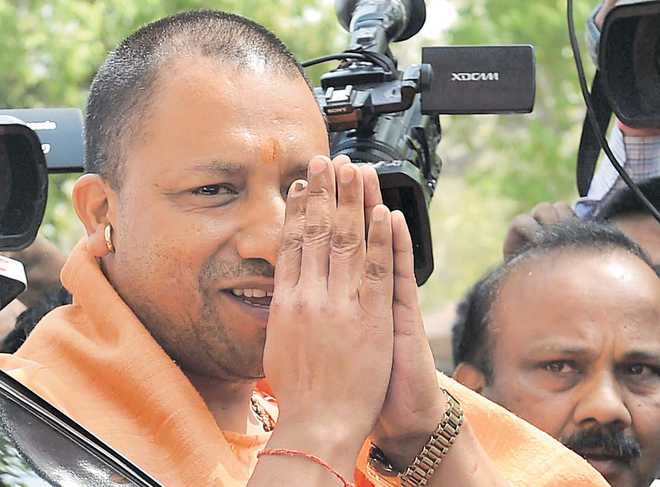
BY all surveys, anecdotal accounts and electoral results, PM Modi currently leads the popularity stakes, even as he nears the third anniversary of the 16th Lok Sabha. The recent state Assembly results, including the billing to the proverbial ‘semi-final’ to the general election in 2019, in the state of UP, has seen the incumbent Central government tide over the impact of demonetisation. Former CM of J&K, Omar Abdullah, went as far as to tweet, ‘In a nutshell, there is no leader today with a pan-India acceptability who can take on Modi & the BJP in 2019’. But, behind the ostensible success rate of anointing governments in four out of the five states that went to elections, lurks some pointers that posit an alternative enquiry — Is the approval rating for the ruling dispensation infallible or unsurmountable? Not necessarily. Besides the statistical reality of the Congress overcoming the incumbency factor by still retaining most number of seats in Manipur (after 15 years of continuous rule), snatching defeat from the jaws of victory in Goa with more lawmakers than the ultimately successful BJP in Panaji, and romping home in Punjab — the undisputable ‘tsunami’ in UP has to be contextualised with the flicker of contrarian statistics in three other states. True, the ‘Captain’s knock’ and the ‘Openers’ sheet-anchor role in Punjab offered credible faces in popular imagination, unlike in UP, where the Congress displayed a night watchman’s batting inelegance in offering a credible alternative. Ultimately, winning 419 out of the 690 seats at the electoral sweepstakes was the most decisive indicator of the prevailing Modi-BJP wave, three-fifth into their tenure. Gallup poll indicates that it typically takes over two years in the US to reach ‘majority disapproval’ — it took Bill Clinton 573 days, Ronald Reagan 727 days, Barack Obama 936 days, and surprisingly, George W Bush 1,205 days (presumably on account of his ‘fight back’ against terror, post 9/11). Incidentally, Donald Trump smashed the record by reaching ‘majority disapproval’ within eight days of assuming presidency! Constituents give the governments the initial benefit of the doubt and the more strident and ‘nationalistic’ the fervour (think George W Bush’s uber-Texan drawl invoking, ‘you are either with us or against us’), the more long-lasting the honeymoon. The second half of the governmental tenure normally sees a more nuanced assessment, factual debate and the onset of dispassionate conversations that are bereft of the initial hype. Hard numbers validating economic prudence and the upswing in most social indicators explained the emotional call for a ‘third term’ for both Clinton and Obama (despite the ‘disruptive’ narrative of personal misdemeanour in the case of the former, and the perennial angularity of minority race, for the latter). Invariably, the last leg gets more real and stripped of the seductive jingoism — George W Bush ultimately slid away from public memory as the hard reality and implications of his muscular approach sunk in.India, in 2019, will similarly do a more rigorous assessment of the various political alternatives for the next five years. The ability to window-dress figures and repeat fantastic promises are usually at their lowest towards the end of tenures — undeniably, other factors like individual personality ‘brands’ and perception of national leadership impact the voting preferences, yet the political agenda and philosophy of any ruling party gets thoroughly re-tested after a patient time frame of five years and a hard evaluation of delivery against promises. It is here, a clear governance test between UP and Punjab could emerge as an important lodestar for the national narrative. Both states have the scale and profile to postulate the two divergent and principal political alternatives (individually, or even collectively as UPA or NDA). Both have won a clear political mandate to posture as the ‘political pilots’ for the rest of the country — neither of the states is constrained with any coalition issues. From a raja to a yogi, the personality contest is also as colourful as it gets — in Punjab, the victor was ‘to the manor born’, but earned his literal stripes as ‘Captain’, whereas in UP , the ‘outsider’ was born a commoner, but earned his right to political divinity as ‘yogi’. Beyond these cheeky monikers, the acid test of displayed governance would have earned its two years of invaluable and uncontestable report card that ought to be the critical deciding factor between the two principal political alternatives, more than the initial flashy moves which are designed to please the core cadres. Both states are in dire straits of economic and social deprivation — if it is about the drugs menace in one, it is about social disintegration in the other. Opening moves from both state leaders was expectedly cavalier, yet the long road to 2019 will be peppered with the litmus test of managing the ‘palace intrigues’ in both Lucknow and Chandigarh, where a lot of enemies would be within their own ranks, as indeed from outside to disrupt  the ‘political pilots’. Leaders in both states are decisive and firm, and not necessarily known to kowtow to the ‘high commands’, but herein, could emerge the true test of political philosophies and their ultimate deliverables in a diverse country like India with its myriad socio-economic challenges.Interim state elections in 2018 (Gujarat, Nagaland, Karnataka,  Meghalaya, Tripura and Himachal) would be reflective of the topical sentiment then. However, the time assigned to these new state governments would be too short to make cases for political preferences in the 17th Lok Sabha elections in 2019. Political eyes are already fixated on UP and Punjab, as a truly vibrant and prosperous Punjab or the peaceful and progressive UP, as promised by the respective state leaders, would go longer than any chest-thumping, sloganeering and bravado that is typically deployed before and after each state win or defeat by all parties. The land of the five rivers, and the fertile Gangetic plains will narrate their own unaided and true narratives of political deliverables emanating from two opposite political philosophies that could hold the key to capture national imagination and decide the political choices for 2019.The writer is a former Lt Governor of Andaman & Nicobar Islands & Puducherry