Sanjha Morcha

AFT appointments in process, SC told

New Delhi: The government on Tuesday informed the Supreme Court that it was in the process of filling up the vacancies in the Armed Forces Tribunal (AFT). Of the 15 vacancies in the AFT that had a sanctioned strength of 34 members, three had been filled up while four appointments were in the final process. Five of the vacancies that had arisen recently were considered by the selection committee headed by Justice JS Khehar last month. Solicitor General Ranjit Singh assured a Bench headed by Chief Justice TS Thakur that the government was according priority to AFT appointments. The Bench asked the government to file another status report in a month. tns


7 Pak troops killed at LoC

Islamabad warns India of ‘strategic miscalculation’
7 Pak troops killed at LoC
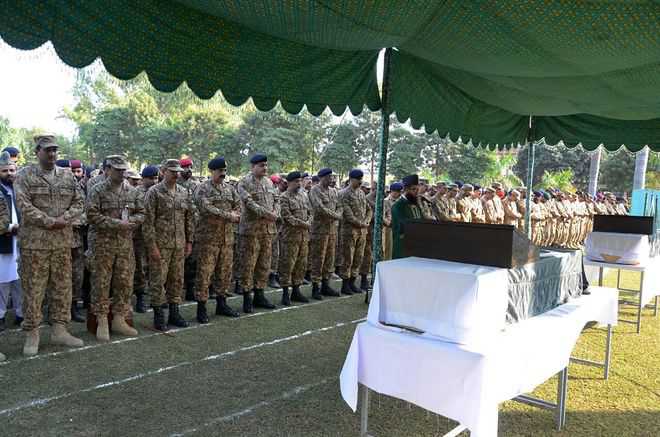
In this handout photograph released by Pakistan’s Inter Services Public Relations, Pakistani army chief Raheel Sharif and other military officials offer funeral prayers for soldiers on Monday.

Islamabad, November 14

In a rare admission, Pakistan today said seven of its soldiers were killed in “unprovoked” firing by Indian troops across the Line of Control, prompting it to summon the Indian envoy here to warn that India’s “belligerent” attitude may lead to a “strategic miscalculation”.Pakistani troops responded to “unprovoked” Indian firing and targeted Indian posts “effectively”, a statement by the Pakistan army said.Foreign Secretary Aizaz Chaudhry summoned Indian High Commissioner Gautam Bambawale this afternoon and condemned the “unprovoked ceasefire” violation.Chaudhry emphasised that the “belligerent attitude” of Indian forces was a “serious threat to the regional peace and security and may lead to a strategic miscalculation. It is for the second time in a week that Pakistan has summoned the Indian High Commissioner.On November 10, Bambawale was summoned to the Foreign Office to protest alleged ceasefire violations by Indian troops.Earlier in the day, Prime Minister Nawaz Sharif asserted that his country was “fully capable” of defending its territory against “any aggression”. He expressed grief over the loss of lives in the “latest violation of LoC by Indian forces” . He claimed the Indian forces resorted to escalating tension on the LoC only to “uselessly divert” world’s attention from the “grave human rights situation” in Kashmir. Army chief General Raheel Sharif ordered troops to “effectively” respond to firing by India. Pakistan’s Adviser to the PM  Sartaj Aziz also condemned the “unprovoked Indian firing”, the Foreign Office said. — PTI 

Terror funding down to zero in Valley: ParrikarS

ince the demonetisation of high currency notes, terror funding has come down to zero and there hasn’t been stone-pelting on security forces (in Kashmir). Earlier, there were rates: Rs 500 for stone pelting (on security forces) and Rs 1,000 for doing something else. PM has brought terror funding to zero. —Manohar Parrikar, Defence Minister  

Pak says 7 soldiers killed on LoC; warns India against attack
 

Pak says 7 soldiers killed on LoC; warns India against attack
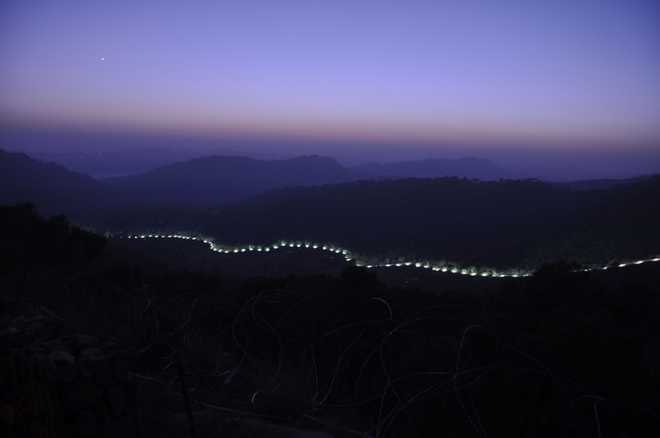
A general view of part of the electric fence along the LoC between India and Pakistan is seen in Noushera sector, some 150kms from Jammu. AFP photo

Islamabad, November 14

Pakistan on Monday said seven of its soldiers were killed in “unprovoked” firing by Indian troops across the LoC, prompting it to summon the Indian envoy here to warn that India’s “belligerent” attitude may lead to a “strategic miscalculation”.

(Follow The Tribune on Facebook; and Twitter @thetribunechd)

Seven Pakistani soldiers were killed at the LoC in the Bhimber sector in an alleged ceasefire violation by Indian troops late last night, according to a statement by the Army.

Pakistani troops responded to “unprovoked” Indian firing and targeted Indian posts “effectively”, it said.

Foreign Secretary Aizaz Chaudhry summoned Indian High Commissioner Gautam Bambawale this afternoon and condemned the “unprovoked ceasefire” violation by the Indian forces on the Line of Control (LoC).

The Foreign Secretary deplored the increasing Indian ceasefire violations at the LoC and the Working Boundary, especially in the last two months, a statement said.

He emphasised that this “belligerent attitude” of Indian forces was a “serious threat to the regional peace and security and may lead to a strategic miscalculation”, the statement added.

The Foreign Secretary asked the Indian High Commissioner to convey to his government that it must stop the provocative firing and observe the ceasefire.

Pakistan is pursuing a policy of restraint, which should not be construed as a sign of weakness, the statement quoted him as saying.

He underlined that the Armed Forces of Pakistan do not initiate fire, but will always respond in a befitting manner, if fired upon, the statement said.

It is for the second time in a week that Pakistan has summoned Indian High Commissioner.

Pakistan on November 10 summoned Bambawale to the Foreign Office to protest over alleged ceasefire violations and use of artillery by the Indian forces.

Earlier in the day, Prime Minister Nawaz Sharif asserted that his country is “fully capable” of defending its territory against “any aggression”.

Sharif expressed grief over the loss of lives in the “latest violation of Line of Control (LoC) by the Indian forces” and said “it is extremely unfortunate that Indian forces have continuously violated ceasefire agreement at the LoC in the recent days”, Press Information Department Pakistan said.

“We are fully capable of defending our soil against any aggression,” it quoted Sharif as saying.

The Prime Minister also claimed that the Indian forces have resorted to escalating tension on the LoC only to “uselessly divert” the world’s attention from the “grave human rights situation” in Kashmir.

Army chief General Raheel Sharif ordered troops to “effectively” respond to firing by India. —PTI


Support India on terror, ours not a friendship to hide: Israel Prez
Support India on terror, ours not a friendship to hide: Israel Prez
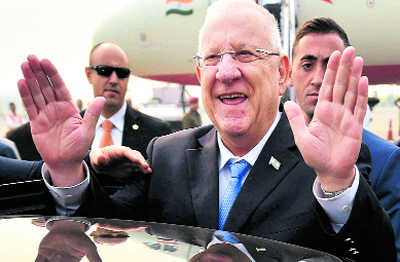
Reuven Rivlin, Israeli President

Mumbai/New Delhi, Nov 14

Friendship between India and Israel is at work “day in, day out” and is not a relationship “we should be hiding”, said Israeli President Reuven Rivlin as he pledged full support to India in fighting terrorism. Rivlin arrived today in Mumbai on an eight-day visit to India, the first by any Israeli President in nearly two decades.According to the Israeli mission in India, Rivlin is being accompanied by a large delegation of businessmen and academicians. Rivlin was welcomed at the Mumbai airport by Union Minister Harsh Vardhan and Israeli Ambassador Daniel Carmon.The Israeli President, who is in India on the invitation of President Pranab Mukherjee, later left for New Delhi where he is scheduled to meet Prime Minister Narendra Modi and other senior leaders. The last Israeli President to visit India was Ezer Weizman in January 1997.Officials said Rivlin is due to open an agro-tech conference in Chandigarh. He will also visit the sites of several Indo-Israeli projects.On his way back home, Rivlin is due to visit the Chabad House in Mumbai where six Israelis were killed during the November 26, 2008, terror attacks. He is also due to hold a meeting with representatives of the Jewish community in Mumbai.The delegation accompanying Rivlin is due to sign 15 separate agreements between Israeli and Indian educational institutions.The Israeli President acknowledged differences with India on the Palestinian issue but spoke warmly about the growing Indo-Israeli ties. — TNS/PTI



Khattar defends govt on OROP, does not visit ex-armyman’s family

KHATTAR, WHO WAS ADDRESSING RALLY IN BHIWANI, SAYS PM MODI HAS ALREADY DISTRIBUTED `5,600 CR UNDER THE SCHEME

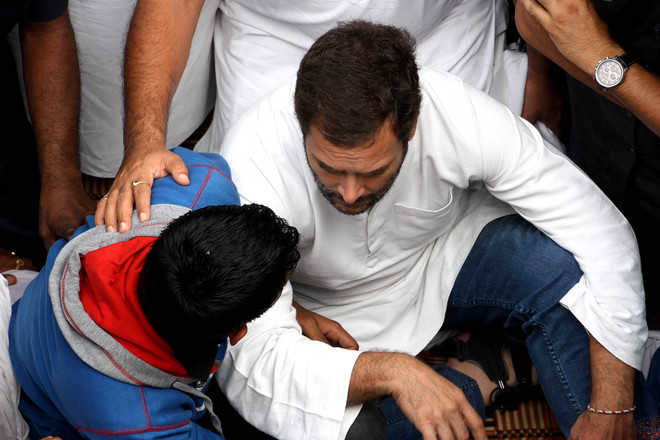
ROHTAK: Having maintained his stand on not giving martyr status to ex-soldier, Ram Kishan Grewal, who committed suicide over One Rank One Pension issue, Haryana chief minister Manohar Lal Khattar on Monday did not visit his family despite holding a rally in Bhiwani. Grewal’s house in Bamla village of the district has been buzzing with political leaders of all the major opposition parties, including Rahul Gandhi and Arvind Kejriwal, coming in to pay their condolences to the bereaved family.Khattar, who held a rally in Tosham in Bhiwani on Monday, defended Modi government on OROP. Addressing the rally, he said, “Prime Minister Narendra Modi has already distributed `5,600 crore under the scheme, while a budget of `9,000 crore has been allotted for its implementation. This is far more than what Congress Prime Minister Indira Gandhi and subsequent governments under the Congress allotted for this scheme.” Earlier, at Grewal’s funeral ceremony on Thursday, Congress national spokesperson Randeep Surjewala had attacked Khattar questioning his absence from the ceremony. “If Khattar had any sympathy with the bereaved family, he would have had come here to offer his condolences,” Surjewala had said.


2 jawans die in Pak shelling

Gursewak Singh of 22 Sikh, Rajinder of 22 Maratha LI martyred in Poonch

2 jawans die in Pak shelling
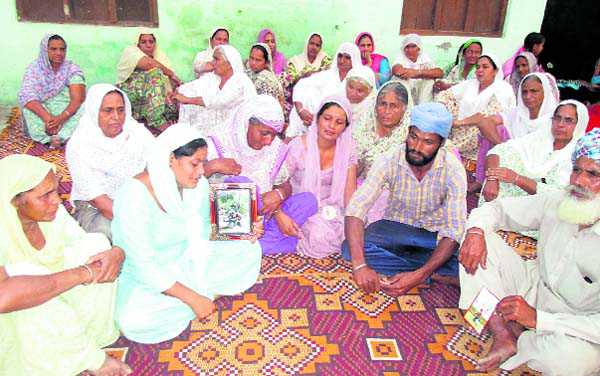
Grieving family members of martyr Gursewak Singh in Tarn Taran on Sunday. A Tribune photograph

Tribune News Service

Jammu, November 6

Sepoy Gursewak Singh (24) of 22 Sikh and Naik Rajinder Narayan Tukpare of 22 Maratha Light Infantry were killed as the Pakistani army resorted to heavy shelling and firing in Krishna Ghati and Saujiyan sectors in Poonch district this morning. Subedar Sanjay Solanki, Sepoy Yaqoob Beig, a civilian and a woman SPO were injured in the shelling.Indian troops retaliated, destroying the Kopra post across the border. The Army repulsed two infiltration attempts in KG sector during which Gursewak was seriously injured. He succumbed to his injuries later. Naik Tukpare was killed in Gali Maidan area. He belonged to Karve village in Kohlapur district of Maharashtra.(Follow The Tribune on Facebook; and Twitter @thetribunechd)Defence PRO Lieut-Col Manish Mehta said on the intervening night of November 5-6 in Krishna Ghati sector, “troops challenged infiltrators who opened fire while trying to sneak back into PoK. In the ensuing gunfight, Sepoy Gursewak Singh suffered a gunshot injury and succumbed while being evacuated.”A BSF spokesperson said SI Nitin Kumar, deployed in Poonch sector, had received a splinter injury. His condition was stable.


clip


OROP protester not a martyr: Khattar

OROP protester not a martyr: Khattar

Chandigarh, November 3

Chief Minister Manohar Lal Khattar today said ex-serviceman Ram Kishan Grewal, who committed suicide over the delay in implementation of the OROP scheme, cannot be placed in the category of martyrs.“Only those who lay down their lives while fighting enemies on the borders are called martyrs, not the ones who commit suicide,” Khattar said on the sidelines of the Swaran Jayanti Samaroh of the state Assembly held at the Indradhnush Auditorium at Panchkula today.The CM said while the exact cause of the suicide would be known after investigation, prime facie, Ram Kishan ended his life due to discrepancies in his bank account.Hitting out at the opposition parties for playing politics over Grewal’s suicide, Khattar said no one should politicise the unfortunate incident. — TNS


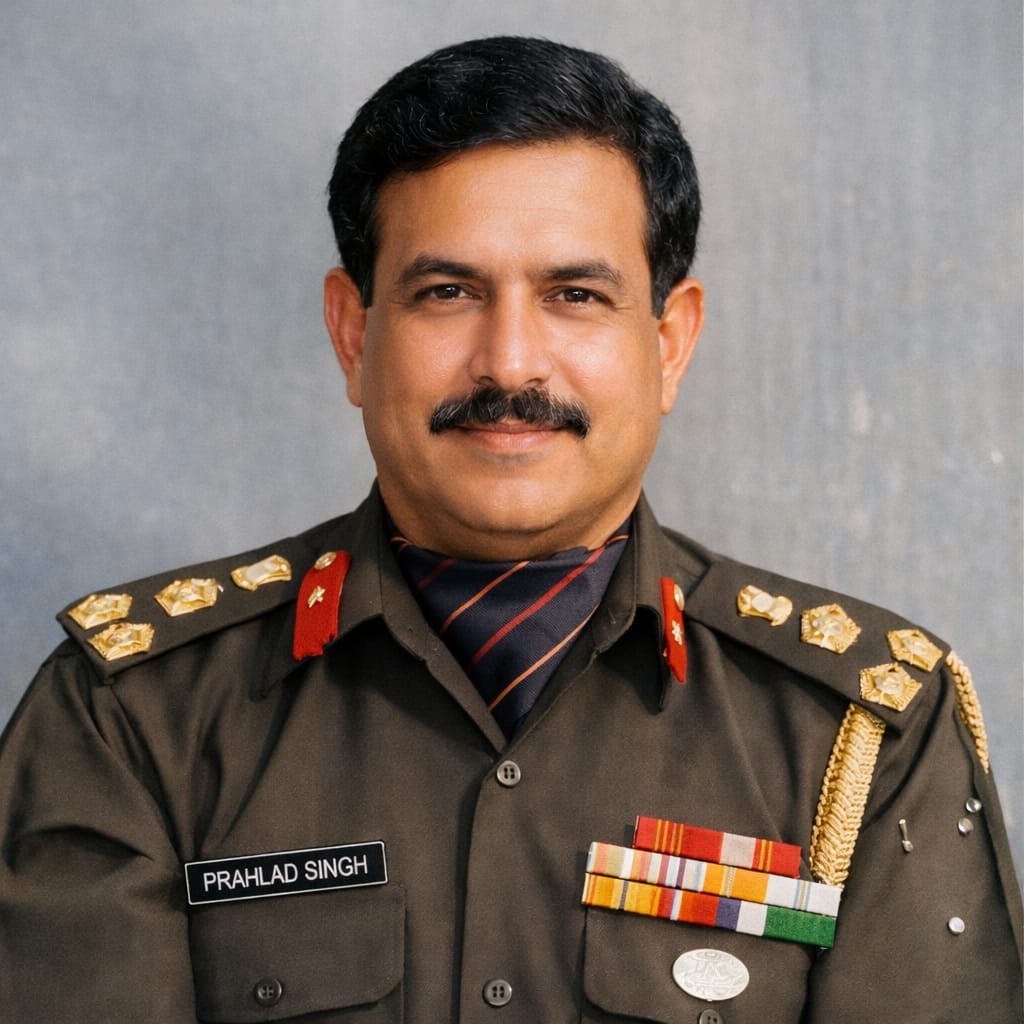
Top­ranking army generals are in race for PPSC chairman post

COVETED JOB The post fell vacant after Lt Gen TS Gill (retd) demitted office in September after a yearlong stint

LT GEN NPS HIRA, DEPUTY CHIEF OF THE ARMY STAFF, AND LT GEN KJ SINGH, WHO RETIRED IN JULY AND HELD LAST POSTING AS THE GENERAL OFFICER COMMANDING­IN­CHIEF OF THE WESTERN COMMAND, ARE FRONT RUNNERS

:The Parkash Singh Badal government appears set to appoint a Lieutenant Generalrank army officer as the chairman of the Punjab Public Service Commission (PPSC), it is learnt.

This coveted and constitutional post is lying vacant after Lt Gen TS Gill (retd), who was appointed as the PPSC chairman in 2015, demitted office in September after a yearlong stint.

The PPSC comprises a chairman and 10 members, who serve for a fixed term of six years or until they are 62.

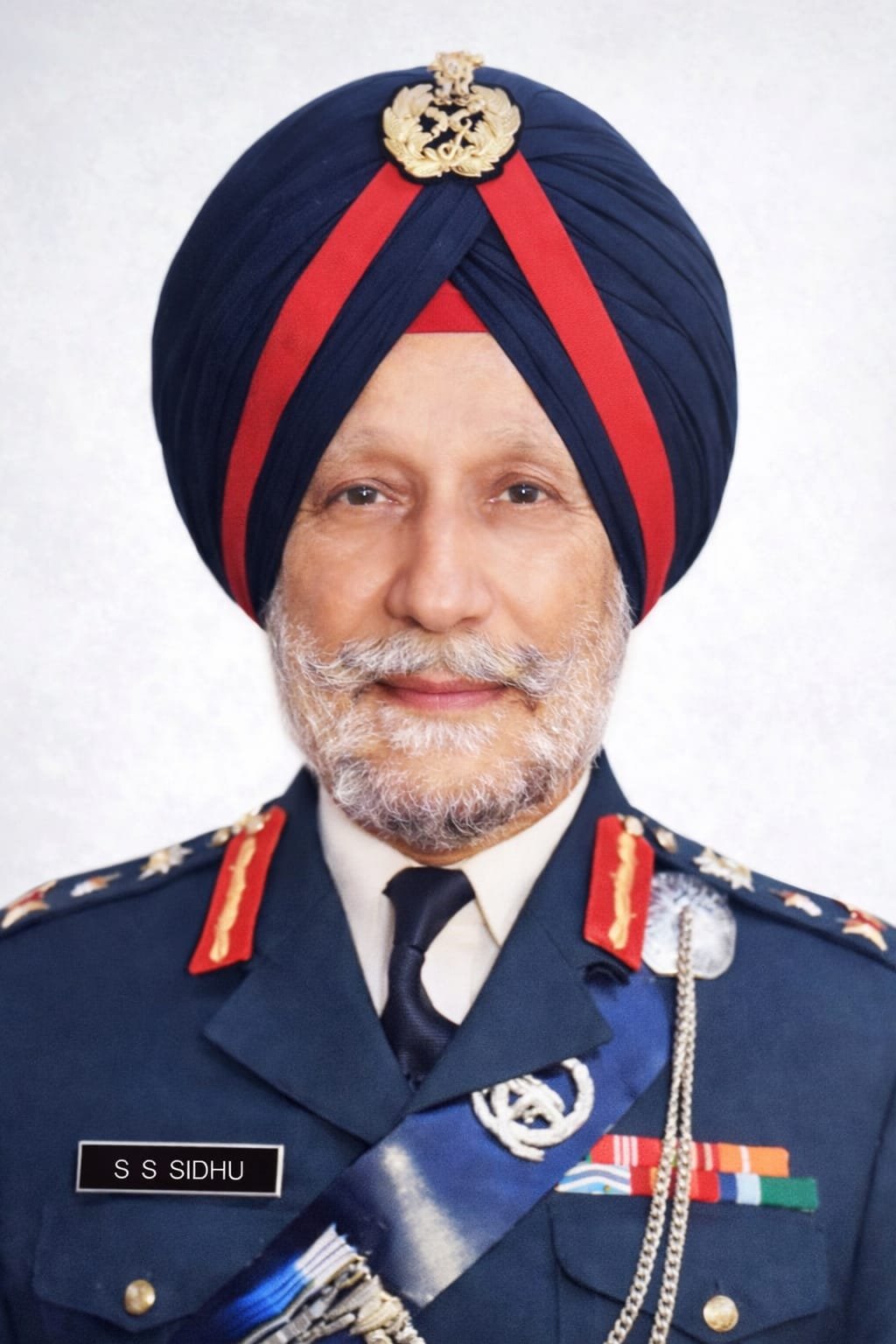
Sources say Lt Gen NPS Hira, deputy chief of the army staff, and Lt Gen KJ Singh, who retired in July and held last posting as the general officer commandingin-chief of the Western Command, are front runners among five decorated three-star generals who are vying for the PPSC chairman post.

Lt Gen Gurdip Singh, Lt Gen Gurmukh Singh, Lt Gen Iqbal Singh Sinha and Air Marshal KS Gill are other top-ranking army and air force officers who have applied for the chairman post.

Two posts of the members — official and non-official — are also vacant and the process is underway to park some influential people.

Three Indian Police Service (IPS) officers, including the 1981 batch Dr Ganesh Dutt Pandey -DGP-cum-commandant general, Punjab Home Guards — who will superannuate in August 2017, are also testing their luck.

Lok Nath Angra, currently holding the post of Amritsar commissioner of police and Paramjit Singh Grewal, IPS, are also angling for the post of PPSC member.

It is learnt that Punjab Civil Service (PCS) and Indian Administrative Services (IAS) officers, such as Gurdip Singh, PCS (retd); Gopal Krishan Singh, IAS; and Sukhjit Singh Bains, IAS, are also in the race.

The final decision about the next PPSC chairman is likely to be taken on December 5 by the high-powered committee comprising chief minister Parkash Singh Badal, Vidhan Sabha speaker Charanjit Singh Atwal and the leader of opposition.

As the leader of opposition and Congress Legislature Party (CLP) leader Charanjit Singh Channi along with other Congress MLAs had resigned from the Vidhan Sabha following the Supreme Court verdict on the emotive Sutlej-Yamuna Canal (SYL) issue, there is uncertainty if Channi will be attending the December 5 meeting even as the speaker is yet to accept resignations of the Congress legislators.

Sources say in the past two weeks, the high-powered committee meeting was postponed twice after CLP leader Channi in writing informed the government that he was unable to attend the scheduled meetings due to his busy schedule and wanted the government to postpone the meeting.

The government’s another move to appoint the chairman and member of the human rights commission has also hit a road block with the CLP leader not attending the meeting.

The government is exploring administrative and legal options to decide the next PPSC chairman in case Channi doesn’t attend the meeting for third consecutive time.

The Badal government began the practice of inviting applications for the post of PPSC chairman and members from “eminent persons of impeccable integrity and administrative experience from all walks of life” after the Punjab and Haryana high court in 2011 had set the guidelines, while setting aside Akali leader Harish Rai Dhanda’s appointment as the PPSC chairman.


2 officers, five soldiers killed

Amir Karim Tantray

Tribune News Service

Jammu, November 29

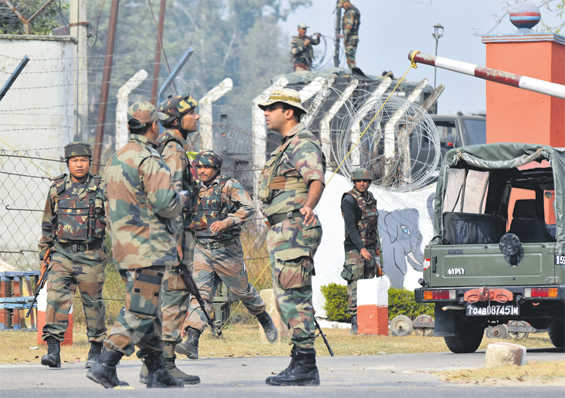
Terror returned to Jammu and Kashmir today when a group of heavily armed terrorists stormed into an Army unit at Nagrota and killed two Army officers and five soldiers.In another gunfight at the International Border (IB) in Ramgarh sub-sector of Samba, three infiltrators were killed and five BSF men, including a Deputy Inspector General, and a police Inspector were injured in a gunfight which lasted several hours. During the day-long gunfight at Nagrota, three terrorists were eliminated. Combing operations were suspended in the evening and will resume tomorrow.A defence spokesperson said these terrorists, disguised in police uniform, targeted the Army installation located at Kour Jagir near the Baloni nullah in Nagrota area of Jammu, 3 km  from the 16 Corps headquarters. “These terrorists forced their entry into the officers’ mess complex by throwing grenades and firing at the sentries. In the initial counter action, one officer and three soldiers were killed,” the defence spokesperson said.“The terrorists entered two buildings occupied by officers, families and men. This led to a hostage-like situation, which was quickly contained. In the entailing rescue efforts, one more officer and two soldiers lost their lives,” he added. The bodies of three terrorists were recovered. “The combing operations will resume tomorrow morning,” and the area will be sanitised,” the spokesperson added.  Till afternoon, there was heavy exchange of fire between terrorists and the Army. Later, the intensity became low. However, intermittent firing continued till late evening.  This is the first major terror strike after the September 18 Uri attack in which 20 soldiers were killed. The fidayeen attack has been carried out near 16 Corps (White Knight Corps) headquarters at a time when there has been change of guard in the Pakistan army. Reports of ceasefire violation were also received from Uri sector of north Kashmir. 

It was Hostage-like situation at camp

  • The terrorists entered two buildings which were occupied by officers, families and men. This led to a hostage-like situation. The situation was quickly contained and thereafter, in a deliberate operation all were successfully rescued, which included 12 soldiers, two women and two children. — Defence spokesperson

Killed in line of duty

  • Major Gosavi Kunal Mannadir (33) from Solapur, Maharashtra.Survived by his wife

  • Major Akshay Girish Kumar (31) from Bengaluru, Karnataka.Survived by his wife

  • Havildar Sukhraj Singh (32)from Batala, Punjab.Survived by his wife Harmeet Kaur

  • Lance Naik KS Yeshwantro (32) from Nanded, Maharashtra.Survived by his wife

  • Grenadier Raghvendra Singh (28) from Dholpur, Rajasthan.Survived by his wife

  • Rifleman Asim Rai (32)from Khotang, Nepal.Survived by his wife

clip

clip

clip

clip

clip


Will kill 3 Indian soldiers for each killing on our side: Pak Defence Minister

Will kill 3 Indian soldiers for each killing on our side: Pak Defence Minister
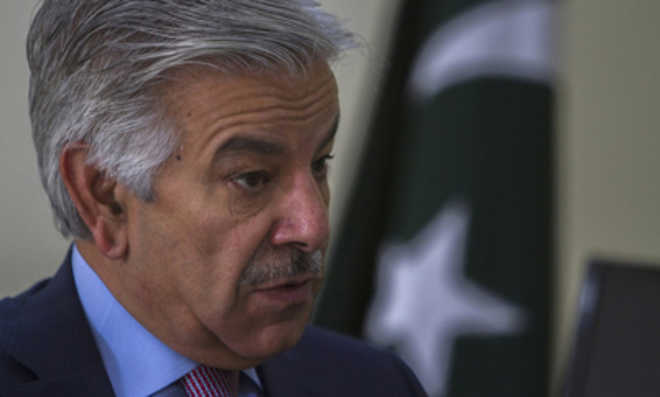
File photo of Khawaja Asif, Defence Minister

Islamabad, November 26

Assuring severe retribution, Pakistan Defense Minister Khawaja Asif has said that they will kill three Indian soldiers for every Pakistani soldier they neutralise.

Speaking in the National Assembly on Friday, Asif said, “Dire consequences would be faced by India, if it went to war against Pakistan.”

Asserting that the situation at the LoC was intentionally being intensified by the Indian government to win people’s support in the upcoming General Election, the Defense Minister alleged that “India was behind terrorism in Pakistan, and they have credible evidence against it”.

“We have sent dossiers and video films to the UN and other countries showing India’s involvement in terrorism in Pakistan,” Asif said.

(Follow The Tribune on Facebook; and Twitter @thetribunechd)

He also accused India of creating hurdles in the way of the China-Pakistan Economic Corridor (CPEC) as India was scared that the project would prove a game changer for Pakistan.

Acknowledging that Pakistan might be economically weaker than India, Asif said India knows that once the CPEC is complete, Islamabad will rise stronger.

However, he said that Pakistan would try to maintain a balance of power in the region and would not respond to India in any kind. —ANI


Jawan, two militants killed in Bandipora encounter

Jawan, two militants killed in Bandipora encounter
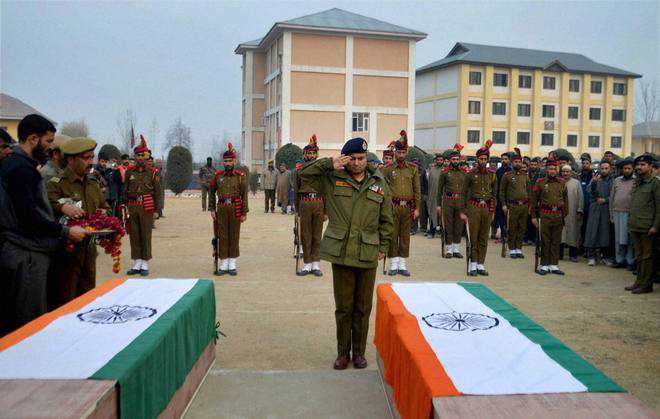
A senior police officer pays tributes to two policemen during a wreath-laying ceremony in Srinagar on Friday. PTI

Ehsan Fazili & Suhail Shah

Tribune Reporters

Srinagar/Anantnag, Nov 25

Two militants of the Lashkar-e-Toiba (LeT) and an Army jawan were killed in an encounter in Bandipora district of North Kashmir, while two policemen were killed in an attack by militants in Kulgam district of south Kashmir today.The police said search operations were launched at Manpora village of the Naidkhai area in Bandipora district of north Kashmir this morning on the receipt of information about the presence of militants. When the Army and elite SOG (Special Operations Group) of the police zeroed in, they were fired upon by the hiding militants, resulting in the death of an Army jawan.He has been identified as Naik Chandra Singh of 13 RR and a resident of Uttarakhand. The wreath-laying would be held here tomorrow, an Army spokesman said. The two militants were killed in the retaliatory fire. Their identity is yet to be ascertained.After the encounter was over, protest demonstrations were reported from the adjacent area where people demanded handing over of the bodies of militants to them.In another incident, suspected militants fired at a police station in the Handwara area of Kupwara district last night. Policemen opened retaliatory fire and the militants fled.A suspected militant of the Lashkar-e-Toiba, identified as Abdul Majeed Mir, was apprehended during a search operation in Sopore town of Baramulla district today.In another major incident today, two policemen were killed and another was critically wounded after militants opened fire on a party of the Jammu and Kashmir Police in south Kashmir’s Kulgam district, some 69 km south of the summer capital, Srinagar.The slain policemen have been identified as Head Constable Tanveer Ahmad and Constable Jalauddin Ahmad. The injured policeman, being treated in Srinagar, has been identified as Shamsuddin Ahmad.All three policemen belonged to 18 Batallion of the Indian Reserve Police (IRP).According to police reports, the attack was carried out by militants in main town Kulgam about 1:30 pm today.“The militants appeared in a car and opened indiscriminate fire at the policemen on duty near the local bus stand,” a senior police official said.The place of attack is less than a 100 ft from the Deputy Commissioner’s office in Kulgam.He said the firing left three policemen wounded, who were immediately admitted to the nearby District Hospital.“Two of them succumbed on the way to the hospital while the third has been shifted to SMHS Hospital in Srinagar for specialised treatment,” the official said. “His condition remained critical till the last reports were received from the hospital,” he said. The militants, however, escaped unhurt after the firing.Following the attack, the police and Army cordoned off the area and were on a hunt to trace and nab the attackers.Police sources said a vehicle suspected to be used by the militants for the attack had been recovered in the area.A wreath-laying ceremony was held for the slain policemen at the District Police lines in Kulgam. Deputy Inspector General (DIG), south Kashmir range, Niteish Kumar also attended the ceremony.


Idea good, execution poor by Sushma Ramachandran

Idea good, execution poor
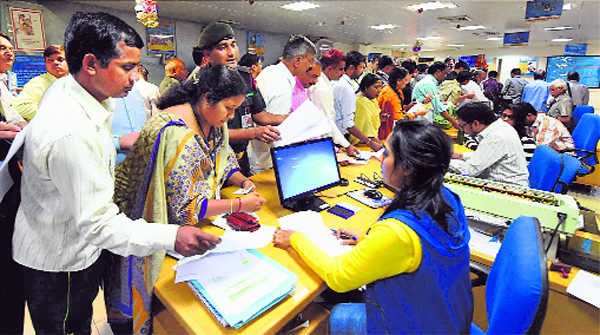
A run for money: Long queues and longer wait have added to the chaos.

THE demonetisation programme is a classic case of a good idea that is poorly executed. The long lines of people snaking in front of banks across  the country seeking to withdraw small amounts of money is testimony to the fact that the withdrawal of Rs 500 and Rs 1,000 notes has created tremendous hardship for the common man. Clearly, the government did not anticipate this level of demand for currency notes in the first few weeks of the scheme. While it is being stated that new currency notes were being printed over the past few months, it is evident that the logistical issues of transporting these notes to the banks and ATMs had not been worked out efficiently. The other technological issue of sensors needing to be changed in the ATMs also needed to have been considered while formulating plans for changeover to the new notes. Surely, in a country renowned as an IT superpower, it should have been possible to get the right advice to ensure that this technological roadblock was quickly overcome. The net result is that instead of discussing various aspects of the demonetisation policy, as was originally planned for this article, one has to comment on the mess created by poor implementation. Any policy that can conceivably lead to the loss of human life should be carried out with extreme care. In this case, persons who require medical assistance from private medical practitioners and institutions have no recourse. It is not enough to say that government hospitals will accept old notes as these institutions do not meet the entire health needs of the people. A special facility should have been created for those facing medical emergencies who have to go to private clinics and hospitals. Human lives need to be valued more highly in this country than has been done till now.One can only hope that the current state of chaos resolves earlier rather than later. And that the general public, especially those living in remote areas where banking facilities are non-existent, are able to recover from the economic setback speedily.As for demonetisation itself, there is no dearth of skeptics but the fact is that it is bound to make a dent in the parallel economy. Data shows that the share of Rs 500 and Rs 1,000 notes in total currency notes has been disproportionately high. The value of 500 notes had reached 47.8 per cent and Rs 1,000 notes had touched 38.6 per cent of the total currency value in circulation, as of March this year. In contrast, Rs 100 notes also comprised 9.6 per cent of the total currency. The rate of increase in the higher value notes has also been at over 30 per cent over the last decade while Rs 100 notes have remained at virtually the same level.It is being argued that the wealth in the parallel economy is being stashed away in other assets like gold or real estate, rather than in hard currency. The fact is that even the World Bank has estimated that one fourth of the Rs 14.6 trillion currency in circulation forms part of this parallel economy. It also forms a big part of the election process. Political parties who have been shying away from laws banning cash donations or ensuring transparency in cheque payments, have blatantly used money power in elections over the years. This is borne out by a recent comment by a former election commissioner who has lauded the demonetisation measure citing the huge movement of currency in states where elections are about to be held. No wonder then that many are accusing the government of trying to create problems for political parties gearing up to face elections in Uttar Pradesh. Social media messages abound, alleging that the BJP has taken care of its own currency needs before taking this decision. As far as the real estate sector is concerned, the stock market reeled after the announcement and share prices fell by 12.5 per cent, a clear indication that hard currency plays a significant role here. Much of the discourse over real estate implies that unaccounted funds are parked in land and buildings so hard cash is not really the issue. On the contrary, any real estate transaction involves from 20 to 50 per cent hard currency. It is extremely difficult to buy or sell property in this country without getting sucked into the parallel economy. Real estate agents often tell prospective clients that prices will be substantially lower if they opt for an ‘all white’ deal. Similarly, currency plays a huge role in jewellery transactions. Customers with bundles of  cash  are a common sight in jewellery showrooms.No doubt efforts have been made after demonetisation to convert hoarded cash troves into other assets like gold and real estate. Besides, a black market has also sprung up for Rs 500 and Rs 1,000 notes, creating yet another facet of the illegal economy. So it will not be correct to say that demonetisation has flushed all the illegal money out of the system. Even so, a large chunk of the black currency in circulation will still be redirected to the banking system or else be rendered useless. The increased funds will improve government revenues substantially.Reducing the element of counterfeit currency has been another reason for this step. But it may not be the major cause as this can be dealt with by introducing more security measures in notes.The question now is, will demonetisation yield the desired results. The parallel economy will not be wiped out overnight by this measure. But some headway will have been made. What is more important is that measures are taken to ensure that currency no longer becomes easy to use as part of the black economy in future. The blame is being put on lax policies in the past which led to the gradual growth of this gigantic parallel economy. Taxation polices need to be structured to incentivise greater compliance. The new GST is likely to be a major element in any such change as it aims at making tax paying easier for citizens. Other measures are said to be in the offing. One can only wait for these to be unveiled and also hope that after all the hardships faced by the common man, demonetisation leads to a cleansing of the entire financial system in the long run.

Feel the aam aadmi’s pain…or pay for it

Surendra Kumar
To call the harassment of the aam aadmi , as a result of demonetisation, just a minor inconvenience betrays callousness. The Finance Ministry underestimated the disruption to lives of ordinary people. The capability of banks, manpower and ATMs to address the citizens’ needs was overestimated.

Feel the aam aadmi’s pain...or pay for it
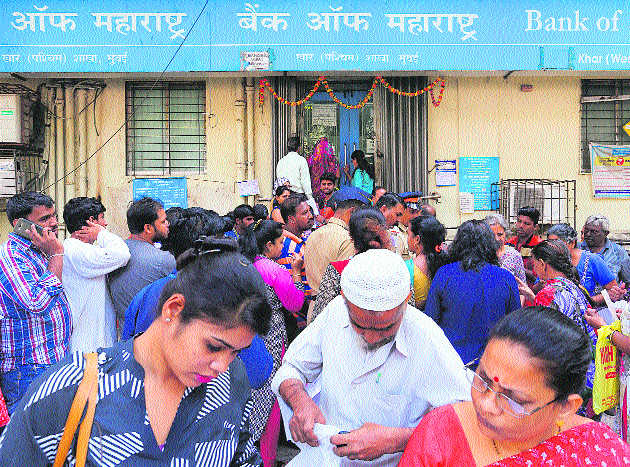
YOU CANNOT BANK ON THEM: As people queue up to exchange old RS 500 and Rs 1000 notes, their patience wears thin. A lot of time of the bank employees is spent in addressing bureaucratic requirements for the measly sum of money they can dispense. PTI

PRIME MINISTER Narendra Modi’s announcement on November 8 that the currency notes of Rs 500 and Rs 1000 will cease to be legal tender from midnight was a bold and imaginative masterstroke. It will deal a crushing blow to the generation and circulation of the black money, funding of terror by induction of fake currency notes and the way political parties fund their activities, especially election campaigns. In the long run, it should impede the ill-effects of the parallel economy and bring large amounts of black money into circulation in the form of white money and facilitate numerous development plans. The government agencies involved also deserve kudos for maintaining absolute secrecy, like the nuclear tests in May 1998, and taking hoarders of black money by surprise. It’s a welcome step which ought to be applauded and supported by all conscientious citizens. Look at it from the perspective of ordinary citizens — who are neither generators of black money nor hoarders — who go about their uneventful daily lives with paltry sums of money in their hands to buy basic necessities. These necessities are requirements for children’s school, cooking oil, rice, wheat flour, sugar, bread, milk, eggs, pulses, vegetables and medicines etc. Then there are small farmers in need of seeds, fertilisers and daily-wage earners who somehow eke out a living. The execution of the brilliant idea has been a  disaster. The simple, unexciting lives of these people have been turned upside down; their work and daily chores have been completely disrupted. This has filled them up with anger, bitterness and frustration, even though they support the Prime Minister’s decision in principle.Leaders and officers who are claiming that the implementation has caused only a minor inconvenience are telling blatant lies. They are living in their ivory towers, cut off from the distress at the grass-roots level. None of the ministers or secretaries or leaders has stood in a queue for eight hours to exchange just Rs 4000. None of them has gone back without getting the new notes and returned to join the queue the following day in hope of better luck! Calling citizens’ harrowing experiences a small inconvenience betrays insensitivity and callousness towards the common man’s plight; it is an insult. Those who are painting a rosy picture and are dismissive of hardships being endured by millions of people all over India are misinforming the Prime Minister about the public’s true feelings. The Finance Minister’s remarks that it will take two to three weeks more to calibrate all the ATMs to disburse new currency notes is bad news; it might further test the aam aadmi’s patience.In the late 1970s, none could disagree that population control was in India’s national interest and deserved to be undertaken nationwide on priority as, in terms of population, we were adding one Australia every year. In medical terms, nasbandi was an inexpensive and effective family planning option. However, the overzealous and insensitive implementation of a sensible initiative antagonised millions of ordinary people who handed to Indira Gandhi and her son Sanjay the most humiliating defeat and voted the Congress Party out of power. Given, the demonetisation decision and nasbandi operations can’t be compared and we are living in totally different times. But, one factor is common;  people surrounding Indira Gandhi, both from the party and the government, insulated  her from the negative reaction and disenchantment; they were simply singing praises about the success of family planning operations. Surprisingly, the same is happening today; the government and the party are insulating Modi from adverse and critical reports. Apparently, the Finance Ministry grossly underestimated the inconveniences and disruption to normal lives of ordinary people and highly overestimated the capability of infrastructure: banks, manpower and ATMs to address the needs of millions of harassed citizens. If the situation continues for two to three weeks more, it might produce unexpected consequences for the ruling party. Millions of the unhappy and frustrated Indians might do a Brexit for the ruling party in the coming state elections.One of the Parkins’ Laws says: “Work expands according to the time available.” A lot time of the banks is being spent in addressing bureaucratic requirements for the disbursement of a measly sum of Rs 4000. One has to fill in a form which requires information about one’s name, address, ID proof, number of currency notes being surrendered and the contact phone number. This makes one feel as if one is buying foreign exchange at the airport. Why not raise the limit to Rs 10,000 and give the new notes on production of an ID card? The man/woman standing in the queue for eight hours isn’t a terrorist or a dealer in fake currency.In big cities like Delhi, millions of menial wage earners work on roads, streets, construction sites and other unorganised sectors and possess no ID proof. They too are human beings. They should be given new currency notes to survive on the basis of a one-line certificate from their employer/hirer of their services. Rs 4,000 is too small an amount for a serious medical treatment; this ceiling should be raised up to Rs 20,000 and both the government and private hospitals must accept this payment in old currency notes till the end of December 2016. As Arvind Kejriwal, the Delhi Chief Minister, is prone to making wild allegations, there are very few takers for  his new allegation about the BJP supporters having been tipped off in advance about the impending demonetisation. But one does wonder why the BJP functionaries sound so nonchalant and tension free about the after-effects of this “surgical strike. “After all, like their rivals, they too have been using black money for their candidates. In the forthcoming Asembly elections in Punjab and Uttar Pradesh, are they going to pay their candidates/workers through credit cards and cheques? Likely? Amen!The writer is a former Indian Ambassador to Libya.