









Sanjha Morcha

What’s the Real Story in Turkey? by Lt General S A Hasnain, PVSM, UYSM, AVSM, SM (Bar), VSM (Bar)

I was in Ahmedabad when the attempted or rather failed ‘coup de tat’ took place in Turkey. I was to speak at a corporate function about India’s national security. However, my hosts requested me to first specifically speak for a few minutes on Turkey because ostensibly most of the audience could not join the dots about what exactly was happening in that country. I readily obliged because that’s a country you can’t fail to know if you have any pretensions like me of being a strategic commentator. Yet, one has to be acutely conscious that Turkey is one of the most complex conflict zones, albeit not classical conflict, and people find it difficult comprehending the events there.

The elite love visiting Istanbul the city divided into the Asian and European segments by the sliver of the Bosphorus. Tourists love to dine by the Bosphorus, step into the Blue Mosque and shop endlessly at the Grand Bazar, one of the largest market places in the world. Ankara, the capital city is sited inside a bowl with hills all around. The terrain is like Ooty, the picturesque hill station in the Nilgiris in India. All over the hilltops massive Turkish flags flutter in the wind symbolizing the nationalism and spirit infused into a defeated nation by none other Kemal Ataturk, also known as Kemal Pasha (Mustafa Kemal) one of the iconic personalities of the 20th Century.

I visited Ankara, Istanbul and the beautiful city of Izmir on the Adriatic coast in 2006 on a study tour with access to the higher levels of government and other institutions. What I learnt in my preparations for the tour and during the visit is good enough for a layman understanding of the happenings in Turkey today. In a nutshell it is once again all about Islamism and it did not start a few years ago but goes back in history almost a 100 years or more.

The Ottoman Empire, founded in 1299 lasted almost seven centuries. It was a trans-continental empire based upon the Anatolian region as the core center. With Constantinople (Istanbul) under its wings, the Ottoman Empire was also a multinational, multilingual empire controlling much of Southeast Europe, Western Asia, the Caucasus, North Africa, and the Horn of Africa. That it was Islamic made for its ambitious assumption of the mantel of the longest lasting Caliphate of Islam. It also remained the center of trans-continental dialogue and movement for many centuries. It was both Asia and European and aligned itself with Germany in the First World War with a mistaken intent and was finally militarily defeated by the Allies in 1918.

From 1918 to 1924 the Ottoman Empire underwent the classic suffering of a defeated power until through the Turkish War of Independence Kemal Pasha emerged. It is sufficient to note that Kemal Pasha was the one who brought order to disorder and created the modern state of Turkey. The fact that Turkey straddles both continents Asia and Europe and was hugely influenced by Persian culture did not escape Kemal Pasha.

His perception for the emergence of Turkey as a truly powerful nation was based upon the belief that it had to acquire a contextual approach to modernism and acquire a European attitude and character to make progress. To remain steeped in mediaeval thinking as was the practice of the Middle East, the Arab and the Persian culture, would spell doom for Turkey; never permitting it to move away from the shackles of the Middle Ages. Kemal Pasha was probably a man beyond his times and the manner in which he is adulated in Turkey says it all. The sprawling mausoleum housing the memorial and the nearby museum symbolizes the awe with which he is held in Turkish society; has that awe been diluted? A positive response to that question would reflect the tragedy of Turkey and its inability to convert to the modernism it so aspired for.

In 1923 Kemal Pasha took some hard decisions to break the symbolic linkages with Turkey’s past, convinced as he was that the future lay in Europe and western thinking. Perhaps the modernism initiated by the industrial revolution in Europe was considered the vehicle of change. He decided to ban those symbols of Turkish existence which saw it being perceived as a part of the Persian civilization. Persian was banned overnight and the state language became Latin. Even for road signs and mainstream media only Latin was used. The headscarf, veil and fez (long Turkish cap) were banned to prove the liberal nature of the new Turkish society orientated towards European taste, values and way of life. The making of modern Turkey was based upon a divorce from Asia and a remarriage with Europe.

To safeguard the change he had instituted Kemal Pasha trusted only the Turkish Army; he was a warrior too and an accomplished scholar at that. The Army became the guarantor of the ideology of Kemal Pasha and secular democratic principles enshrined in the Turkish Constitution.

The long march of Turkey from Kemal Pasha’s enlightened principles to the Islamism associated with Recep Tayyip Erdogan, the current President and his Justice and Development Party (AKP) is a history of coups. Opting to stay out of politics but watching over political actions and their effect on the people the Army implemented the mandate of the Founding Father, stepped in with a military coup when needed – but quickly handed power back to the politicians. However, what is not appreciated is the relationship of Turkey with rest of Europe and how that has contributed towards Erdogan’s rise and dilution of the principles of Kemal Pasha.

With its large Army Turkey was a welcome inclusion into NATO and the virtual vanguard against a potential invasion of Europe, surrounded as it was by the powerful Warsaw Pact nations during the Cold War. However when it came to the inclusion of Turkey in the European Union (EU), Europe dithered, its racist bent coming full circle. Europe just did not wish for Turkey to be a part of the Union and placed every obstacle in the way. During my visit to Ankara I met the officials at the EU office set up for the purpose of negotiating Turkey’s entry. Just one of the clauses laid down for this was the need for Turkey to clean up its environment to come up to supposed Euro standards; the cost of it was an unaffordable 30 billion US dollars. The rise of Islamism in the Arab world and elsewhere along with the dent to Turkish self-esteem at being denied entry to the EU was a heady mix of emotion which helped in the decline of the Kemal Pasha legacy and the rise of what is now popularly termed Erdoganism.

This article is not about the coup per se. It is about the background which eludes most common people. Given the rise of modern day Islamism, Turkey as one of the populous nations comprising Muslims made every effort to prevent Islamism embedding itself. Erdoganism was the counter revolution which has been emerging in Turkey over time. The coup itself, about which more will be eventually written, was just a symptom of the struggle. It is not possible that with strong ideological counter currents Turkey could remain afloat with its aspirations outlined by Kemal Pasha.

Interestingly, in the fight against ISIS (Daesh), Turkey did not display the kind of energy that may have been expected from a nation which is a member of NATO. It was more concerned about the potential empowerment of the separatist Kurdish PKK in its South and East should the Kurds emerge the victors with the assistance of the Allies. It was also suspected of keeping supply lines open to Daesh and even purchasing some of the oil from the Mosul refinery. It is only after the surge of migration that it truly went in for sealing its border.

Lastly, the temptation to compare the situation in Turkey with that in Egypt is too strong. In Egypt, the Army has similarly been the virtual guarantor of secular values against the radical Islamist philosophy of the Muslim Brotherhood. Gamal Abdel Nasser had, in fact, hung to death one of the most radical Islamist thinkers – Syed Qutb.

Mohommad Morsi’s rise to power on the back of the Arab Spring and his attempts to introduce an Islamist character in Egypt in 2012-13 was strongly resisted by Sisi and the Egyptian Army leading to the counter revolution which sees Egypt under Army rule today. Awkwardly, it was the US which was against the rise of the Army in Egypt and it supported the Muslim Brotherhood. This was anathema to Saudi Arabia which has always opposed the Brotherhood. It is natural that the struggle between radical and moderate Islam will see many more such events at revolution and counter-revolution. This is the proverbial churning which has to take place before reformation of Islam becomes inevitable; that is a scholarly belief, not a belief of the clergy or many who implicitly follow the faith.
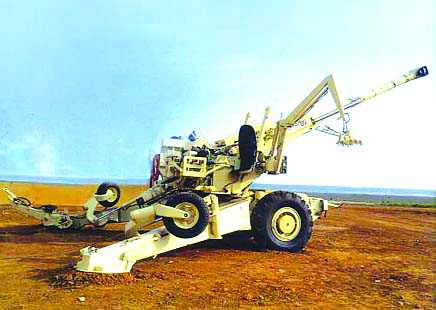

Army gets its Dhanush

Army gets its Dhanush

Three indigenously developed 155 mm ‘Dhanush’ artillery guns have been handed over for trial to the Army by the Jabalpur-based Gun Carriage Factory. Another three guns will be delivered to the Army shortly The gun has been developed by Ordnance Factory Board, Kolkata, following transfer of technology as part of the Bofors gun deal with Sweden in the late 80s. It is comparable to most current generation weapon systems which are in use by different countriesAlong with electronic gun-laying and sighting systems and other features, the indigenous gun has an enhanced 11-km range as against the 27-km range of the imported Bofors38 km is strike range of Dhanush (aka ‘Desi Bofors’)

114 Dhanush guns in all is Army’s requirement Rs 14 crore is per piece cost of these towed howitzers 


BURHAN WANI’S KILLING AND ITS AFTERMATH :::Lt Gen Syed Ata Hasnain

Burhan Wani’s Killing And Its Aftermath 

Kokarnag in the southernmost part of South Kashmir, is a sleepy little township. It once was the bastion of militancy due to the presence of the lofty Pir Panjal range in whose shadow it lies and the forested tracts of the lower hills; the terrain was tailor made for militancy. Through the first ten years of the millennium one of the Indian Army’s famous units, 36 Rashtriya Rifles (RR) (Garhwal Rifles), cleaned the area out leaving few signs of militancy behind. It earned as many four COAS Unit Citations and many more awards  for this feat.

On 8 Jul 2016, at approximately 6 PM gun fire reverberated in Kokarnag  again. I received my first call within minutes which indicated this was not an ordinary encounter. The caller told me that ninety percent it was Burhan Wani who was inside the small cordon. For those who may be unaware Wani is the most wanted terrorist in the Kashmir Valley, credited with having created a wave of what is called New Militancy in South Kashmir. It would not be long before inspiration from him would travel to the badlands of North Kashmir. His Robin Hood image managed an inspiration which saw a new phenomenon; the attempted protection of terrorists by local mobs at encounter sites and large scale eulogizing of even neutralized Pakistani terrorists at their funerals. Burhan Wanimanaged in five years, to create a band of 60-70 young locally recruited terrorists. Many were well educated and technically proficient to exploit social media for their cause. Their photographs in combat fatigues with weapons went viral on Facebook andWhatsapp. Many of the flash mobs they instigated to concentrate at encounter sites were mobilized using social media. Burhan’sentry into terrorism was triggered by ill treatment at the hands of a couple of errant policemen in Tral, a small township in the middle of a broad sub valley on the east of the National Highway, near Avantipura. Tral is notorious for its alienation and use of violence over the last 26 years. The Wagad ridge to its West and the Dachigam Forest to the North afford excellent hideouts. Despite presence of a full RR unit here along with CRPF the area has only been passingly under control. Burhan belonged to Tral and last year in April his brother was killed in an encounter when he was mistakenly taken to be Burhan even as he had gone to the forest to meet his renegade brother.

At 7.30 PM on 8 Jul 2016 the caller rang again to confirm that it was indeed Burhan Wani. He had been killed at the hands of one of Army’s extremely quiet but efficient units, 19 RR (Sikh LI). It is learnt that to his credit Burhan, once cornered, came out in an attempt to break the cordon and was gunned down. This prevented the ignominy of being burnt to death once the house he was holed up in, caught fire due to the effect of rockets and other munitions.

As I tweeted the information I had a deluge of calls coming in on my mobile. No doubt Burhan’s neutralization was making big news. My top of the head assessment which I shared immediately was first that the authorities had to be careful in handling the post encounter effects. In light of the fact that the Hurriyat would attempt to make much of the event and use it to motivate the youth; passionate crowds should be expected at the funeral. We had occasion to witness 30,000 at a funeral of a Pakistani terrorist late last year. It will need to be a fine decision for the political and security authorities whether to allow a public funeral or give a quiet burial by the Police with the family attending. In the past the authorities have mostly given the freedom to conduct public funerals and have faced the consequences rather well. Only in the case of Afzal Guru the body was not handed over to the family and a quiet burial was conducted at Delhi. However, that had different connotations and comparisons need not be drawn. It is not as if bigger names than Burhan Wani have not been neutralized in counter terror operations in the past. In the very same area we had ShabirBaduri who operated for almost nine years leading the Hizbul Mujahideen’s activities in Anantnag. Abdullah Uni (LeT) was killed atSopore in 2011. I do not recall how the mortal remains were handled in these cases but the major difference today even from the situation five years ago is the widespread use of social media to iconize neutralized terrorist leaders and collect flash mobs.  The authorities know best how to handle the situation and politically this is a challenge for the coalition government.

The Amarnath Yatra is entering its second week. The vulnerability of the Yatra is always a problem for the authorities and especially after the recent spate of ambushes on the National Highway it is causing even more concern. A reprisal strike against theYatris will be perilous although I do feel this is unlikely but the security forces securing the Yatra and its various facilities will remain the targets. Kokernag, incidentally is very close to the National Highway near Qazigund.  The Lidder Valley from Anantnag toPahalgam has been quiet for some years despite the presence of New Militancy but it has shown recent signs of revival of turbulence. My earlier article in Swarajya on the revival of terror around Anantnag brings out the challenges quite clearly.

My second thought immediately after the information came in was related to the need to undertake such a campaign as to deny the creation of another iconic youth leader. No doubt, the replacement can never be as charismatic as the original. It is not as if the Army and the Police did not make attempts to appeal to Burhan Wani to surrender honorably.   It is the ‘honorably’ part which needs to be projected adequately. Militants cannot easily be convinced about this. A campaign on social media and also through outreach contact can help in engaging the youth. What has to be guarded against is the buildup of a fervor which will pitch more youth into militancy on the power of the image created in the eyes of the population. It is the imagination and the might of the information power of the State against that of a few locals and the Separatists. It hasn’t exactly been a strong point with the State and needs to be thought through quickly and efficiently. The Center must extend every bit of assistance on this as a test case. Unfortunately no institution or body exists to undertake this responsibility.  The media must be guarded in its reportage because over projection of the events and the situation will surely play to the advantage of the anti-India elements.  An announcement about the leadership of the New Militancy should be expected any time and many of the splinter groups not in sync with each other may use the moment to forge unity. That is why the information side has to be handled carefully and pro-actively.

Internet has been switched off in the Valley since last night as has much of the mobile connectivity. This is fine for a short duration to prevent the initiative going into terrorist hands making use of the trigger available. Thereafter it will all have to come back and that’s the time when the information battle will commence.

For the moment the challenge is to withstand the emotions of the moment and ensure no ‘martyr effect’. The Separatists have no qualms about a few young men dying and a repeat of 2010 is possible. The agencies dealing with security need to be on the same page and leave aside the unnecessary rancor of the immediate past. I would consider this an opportunity to go well beyond and achieve something positive but equally the wily Separatists will also wish to keep the initiative. The maturity of the leadership (both political and the security related) will decide which way the cookie crumbles.

ata_hasnain_20160718_630_630

Never easy to write in a moving train but thats exactly what I did last night in an overnight train to Delhi; using an Ipad.  The event was big – the killing of Burhan Wani. In fact I wrote two pieces on intense pressure from media houses. 

It was written in a relative information void. However, I was getting a feed from sources and friends in the Valley. The killing was as important as the handling of the situation in its aftermath and that is what this piece concentrates on. My recommendation that unless we get our our Information Warfare act together nothing positive will emerge. We are constantly beaten as the Information game. 

Why ad hoc GOC-in-C posting: Amarinder

2016_7$largeimg29_Friday_2016_220710756


Chandigarh: Hitting out at Defence Minister Manohar Parrikar, Punjab Congress chief Capt Amarinder Singh on Friday said it was a matter of deep concern that posting of officers at vital operational position were being done on ad hoc basis in the Army, adding that it appeared that the PMO was taking the decision on top-level appointments. Referring to the posting of the General Officer Commanding-in-Chief of Western Command in officiating capacity, he said it had never happened earlier. He said that the posting of the officers on vital positions should be announced well in advance. TNS


Lt Gen Cheema made interim commander of Western Army

CHANDIGARH: Lieutenant general Jagbir Singh Cheema, general officer commanding, Vajra Corps, has been nominated as officiating general officer commanding-in-chief of Western Command with effect from August 1. But it’s an interim arrangement, says the army headquarters.

Current GOC-in-C lieutenant general KJ Singh will superannuate after almost four decades on July 31. “With the interim arrangement, there will be no vacuum in the functioning of the Western Command headquarters and the chain of command will be intact,” says a Western Command press statement issued here on Thursday.

It’s unprecedented to have no name cleared for the army commander’s post. Lieutenant general Cheema has been in command of the prestigious Vajra Corps since August 21, 2015. He fought insurgency in Jammu and Kashmir and the North East.

Outgoing Western Army commander lieutenant general KJ Singh presided over a video conference with the corps commanders and principal staff officers to finalise modalities and response strategy for high operational preparedness. He appreciated the high morale of the troops.


All leads on missing AN-32 have turned out to be bad: Parrikar

Being briefed. ANI

New Delhi, July 26

The search and rescue operation for the missing AN-32 aircraft entered its fifth day on Tuesday even as hopes of finding alive the 29 defence personnel on board receded as all leads till now have turned out to be bad.“A lot of resources are in place. All leads till now have turned out to be bad. We are trying to concentrate on some links or sound which has emitted from some area. Trying to find out, that needs to be ascertained but there were some false leads of similar type,” Defence Minister Manohar Parrikar said here.He said a state-of-the-art ice-class research vessel, Sagar Nidhi, of the National Institute of Ocean Technology has been called for from Mauritius.

(Follow The Tribune on Facebook; and Twitter @thetribunechd)

“That will reach but any deep vessel to operate, it will need specific area, because deep vessels which go inside cannot go and search per se unless you have some definite small area. So last time (Doriner crash), a submarine had identified the location and then we had sent it (deep sea vessel of Reliance). It is a secondary operation after initial identification,” Parrikar said.Sagar Nidhi comes with Dynamic Positioning System which keeps its position stable, which is required for oceanographic research. It has a huge deck area for deploying ROV/Manned submersibles/Tsunami monitoring system.Gondola arrangement is also made for precision acoustic measurements. Drop Keel facility is made to fit any underwater transducers without dry docking the vessel.One separate lab is designed and installed with integrated survey systems with modern scientific survey equipments like single- and multi-beam echo sounder for shallow and deep waters, sub-bottom profiler and acoustic current profiler.Parrikar also refuted claims of a senior Coast Guard official who said the Emergency Locator Transmitter (ELT) had not functioned during the Dornier crash also.“I think the submarine finally located the Dornier with the same beeps. Initially sound might not have come due to depth of water but when the submarine went in there, they identified the location. Can’t say whether it is operating or not now but we have not been able to hear it,” he said.Meanwhile, sources in the Air Force said the reason of the incident is too early to be ascertained but indicated that weather could have played a role.“The weather was bad but the pilot had taken the required steps,” a senior source said. PTI


Pakistan spreading terrorism in India: Rajnath

Pakistan spreading terrorism in India: Rajnath
Says govt seeking expert opinion on alternative to pellet guns in volatile situations.

Aditi Tandon

Tribune News Service

New Delhi, July 21

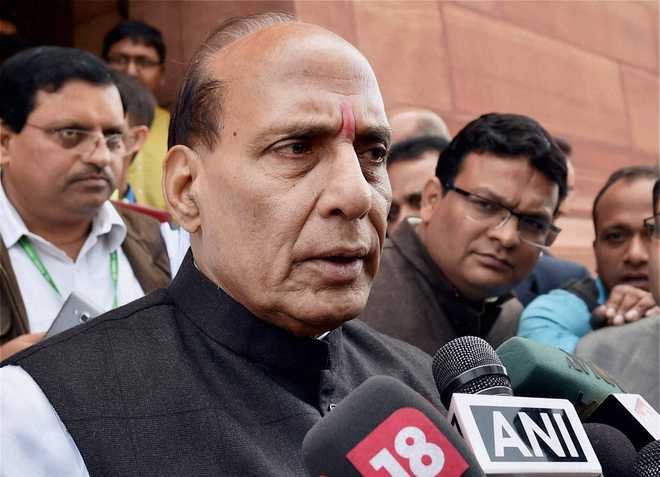
Attacking Pakistan for “spreading terrorism” in India and “fanning the ongoing violence” in Kashmir, Home Minister Rajnath Singh on Thursday said the government is in the process of seeking expert opinion on alternatives to the use of non-lethal weapons like pellet guns in volatile situations.Replying to a debate in Lok Sabha on Thursday, on the issue of Kashmir violence, Rajnath lay the blame of simmering tensions in the Valley on the doors of Pakistan saying dreaded terrorist Hafiz Saeed had now come out openly to claim that he had spoken to the slain Hijbul Mujahideen commander a few days prior to his killing.“Hizbul Mujahideen is an important part of United Jehad Council which works to destabilise India on the orders of Pakistan. Pakistan is constantly engaged in the pursuit to create troubles in India to deflect the attention of the world from its misgovernance and failures. There is no doubt that Pakistan has played a principal role in ruining the atmosphere in Kashmir and has then gone to the extent of observing Black Day on their soil in respect of what was an internal affair of India,” a firm Rajnath said, admonishing Pakistan not to bother about Indian Muslims, who are patriots.Listing the details of casualties in the Valley, Rajnath said 38 people had died and 2,180 were injured. “Of the injured, 2,055 have been discharged from hospitals. I must say here that 1,739 security personnel, too, were injured and despite such a vast scale of injury they adopted as much restraint in dealing with the violence in Kashmir as they could,” the minister said, adding that PM Narendra Modi and he himself had asked the forces to adopt maximum restraint in the Valley.On the concerns of MPs about the use of pellet guns which have caused several eye injuries in Kashmir, Rajnath said he had decided to form a committee of experts to suggest alternatives to the use of pellet guns.“Pellet guns were not used in Kashmir for the first time. These were used in 2010 also. At that time six people had died, 198 had suffered eye injuries and five had been blinded. This time we have had one death, 53 injuries and no blinding,” the minister noted, adding that the government is open to considering alternatives to pellet guns as a means for crowd management and control.On the issue of sending an all-party delegation to Kashmir, Rajnath said JK Chief Minister Mehbooba Mufti had asked him to let the situation become normal first. “Even I wanted to go to Kashmir but she advised me to wait. She has said she is coming to Delhi in three days to discuss the issue of a delegation,” Singh added.