



Sanjha Morcha

Foolproof coastal security remains elusive

Ajay Banerjee
Tribune News Service
New Delhi, November 26
Nation pays homage to 166 people, including 18 security personnel, killed in the terror act
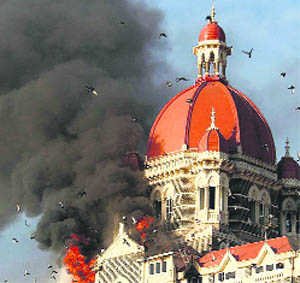
2015_11$largeimg27_Friday_2015_011650748
Seven years after the November 2008 Mumbai terror attacks, the often-blamed bureaucratic ‘red tape’ is in full play and holding back a crucial legislation, while all Indian fishing boats still do not carry any automatic identification system — literally a nightmare for security agencies.
Despite various meetings, the security infrastructure and the related network to enforce the rule of law at sea which was planned after the Mumbai attacks is still incomplete. Creditably, some aspects of surveillance at sea have been and are backed by high-end technology – the very latest. Ten-armed terrorist came by the sea route to simultaneously attack five different locations in Mumbai on the night of November 26, 2008, killing 166 persons.
Immediately after the attacks the UPA-I government (May 2004 to May 2009) headed by Manmohan Singh issued an executive order that made the Indian Navy as over all in charge of coastal security. To date, the Navy is not legally empowered to take action against suspicious vessels. A coastal security Bill is doing the usual rounds of discussions.
Two years ago in December 2013, a draft coastal security Bill was prepared which earmarked responsibilities and duties of 10 central and state agencies security involved in coastal security. The Bill was sent to the Union Home Ministry for piloting it to Parliament after consulting the coastal states. The Bill will address aspects related to jurisdictions, maritime zones and the role of agencies involved in coastal security. It lay down powers of all agencies with the Navy in the lead.
The other key issue pending is of installation of an automatic identification system (AIS) on all boats. For boats that are less than 20 metres in length, the proposal to have an AIS is still in the phase-I and is being implemented in Gujarat and Tamil Nadu at a cost of Rs 333 crore.
The AIS is basically a transponder fitted onto a boat. The transponder constantly emits a signal that is unique to the boat and the same is picked up by ground-based radars and AIS receivers. The signal identifies the boat. With this system, it means the Navy and the Coast Guard are grappling to deal with thousands of unidentified boats. Fishing boats bigger than 20 metres anyway have the AIS.
On the positive side, a chain of 46 coastal radars and 74 AIS receivers is in place. The National Command Control Communication and Intelligence Network with the Information Management Analysis Centre at Gurgaon is operational. A total of 51 nodes of the Navy and Coast Guard are integrated — all to provide a comprehensive maritime domain awareness. Biometrics have been collected from 67.5 lakh people in 3331 coastal villages. The second phase of an additional 46 coastal radars is on track.
Meanwhile, The Israeli Ambassador to India Daniel Carmon today said the 26/11 attacks remind us all the threat of extremist terror against democracies and the free world by those who are committed to the killing of people who do not share their fanatic mindset and views. The Chahbad house –prayer house of Jews— in South Mumbai was one of the targets on 26/11.
Crucial Bill caught in red-tape
Immediately after the 2008 Mumbai attacks, the UPA-I government made the Navy as over all in charge of coastal security. To date, the Navy is not legally empowered to take action against suspicious vessels
A draft coastal security Bill prepared to earmark responsibilities of 10 central and state agencies security involved in coastal security has been caught in red-tape since 2013
The other key issue pending is of installation of an automatic identification system (AIS) on all boats. For boats less than 20 metres in length, the proposal to have an AIS is still in phase-I

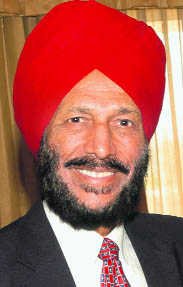
How will returning awards affect govt, asks Milkha

Chandigarh, November 24
2015_11$largeimg25_Wednesday_2015_014739827
Legendary athlete Milkha Singh today joined the debate over returning of awards, saying there are other ways to protest in a democratic country like India and giving back awards will not set a system right.
“What is the idea behind returning awards? What aim will one achieve by doing so?” he questioned.
“If today, I get up and say that I want to return my Padma Shri, then my son (ace golfer Jeev Milkha Singh) will also talk on similar lines, but how is it going to help things and set the system right, about which they (those who talk of intolerance) feel it is so?” Milkha asked.

“If you have to express your views on something, returning awards is definitely not the answer. The government has given you an award keeping in view your achievements, if you return it, how does it affect the government,” he said.
Several authors, artistes and historians have returned their awards recently to protest against what they call as “rising intolerance” in the country.
When asked about Bollywood superstar Aamir Khan also joining the chorus, the 85-year-old ‘Flying Sikh’ said, “I have read about his comments, I think these are a bit too much”.
Aamir had yesterday said that he has been “alarmed” by a number of incidents and his wife Kiran Rao even suggested that they should leave the country. — PTI


TODAY’S YOUTH LEADS THE CHANGE INDIA WANTS

GO-GETTER GENERATION In the final part of this year’s Youth Forum roll of honour, meet young achievers chosen to follow their passion to success, and how. The message is clear: Today’s youth dreams big and knows what it takes to live it.
An encouraging s

Lt Ramandeep Kaur 27, Bathinda, Army officer

getimage (3)

Be the change you want to see
Lieutenant Ramandeep Kaur was the only woman from Punjab to have been selected in the judge advocate general branch of the Indian Army through a tough competition. Six women and 10 men from across the country made it to the JAG department in August last year. Lt Ramandeep graduated in law from Panjab University and did her postgraduation from Jaipur in Rajasthan before attempting theJAG entrance exam.
What did it take to be an achiever?
A disciplined study schedule, but not an exhaustive one, and commitment towards the goal were the keys to my
success.
Who is your inspiration and why?
My mother, Paramjit Kaur, has been my inspiration. She is a housewife and taught me that whatever you do in life, do it with utmost dedication. My father, assistant sub inspector Bhupinder Singh, also encouraged me to work hard.
What’s your next goal?
My goal is to serve my country and establish myself well in my career by working hard. I want to keep upgrading my skills too.
Is it the best time to be young in India?
Today in India, one can pursue a profession with basic educational qualification and technical training. I don’t think a youth who wants to work will have to remain jobless as there is no dearth of opportunities.
How can the youth be a change-maker?
The youth in India can be a changemaker by leading the change. If the youth start implementing things they preach and expect others to follow, it will lead to a big change in our country.


‘Unlimited Liability’: Why Army Officers Don’t Think Twice Before Stepping Into Harm’s Way

col-santosh-mahadik_650x400_71447839708
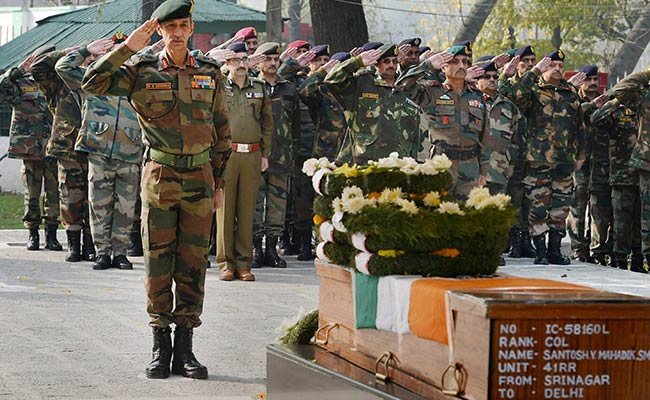
NEW DELHI: Did Colonel Santosh Mahadik, the 38-year-old Indian Army Officer who died in an encounter yesterday need to personally place himself in the line of fire in taking on terrorists in Kashmir?

Yes. Without doubt. That’s the message of the Army’s Northern Army Commander, Lieutenant General DS Hooda. In an interview to NDTV, Lt Gen Hooda was absolutely clear: “The ethos of the Indian Army, the culture of the Indian Army – these are things that are sometimes not very well understood. We have a concept of unlimited liability. A man goes into battle, a man faces terrorists and he faces them sometimes with certainty that he could lose his life.”
colonel-santosh-mahadik-firing-650_650x400_71447854804
Mahadik would not have regretted going down the way he did. Speaking to NDTV, Colonel SS Shekhawat, an Officer of the Army’s elite 21 Special Forces who once commanded Mahadik says, “It is a great loss. But he has gone in style. With a bullet in the chest and we draw inspiration from him. This is the way to go for a soldier. And this is the way to lead for a soldier. From the front.”
colonel-santosh-mahadik-650-tilak_650x400_51447855567
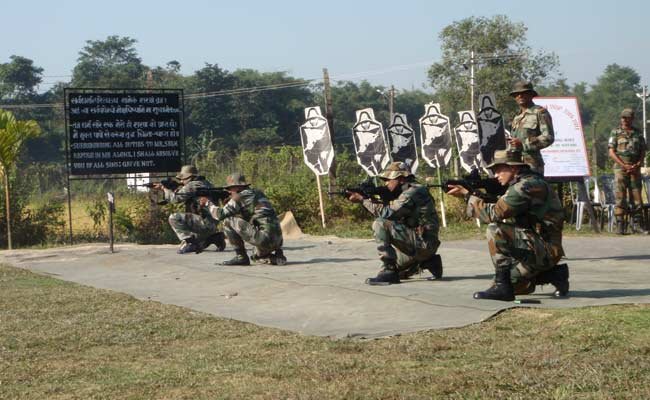
Colonel Santosh Mahadik was killed in a counter infiltration operation in the Manigah Forest of Kupwara. He was in the forefront of a search party which was pursuing terrorists in extremely inhospitable terrain when terrorists targeted him with heavy machine gunfire. Mahadik was distinctly unlucky. The bullet that killed him struck his neck, an area that was not protected by his bullet-proof jacket. The operations to neutralise the terrorists are still continuing.

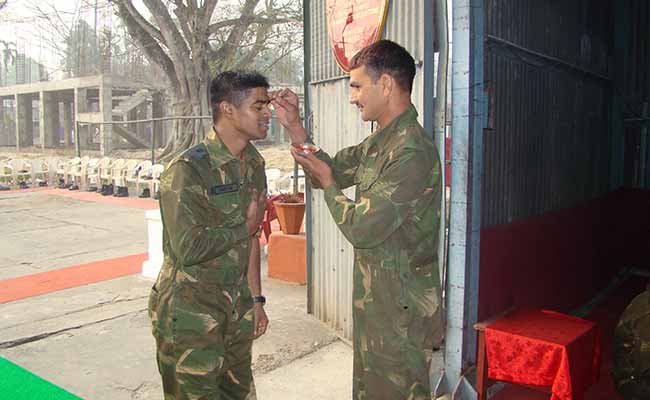
For those who were his course-mates, Mahadik was always there for them. According to Colonel Sumeet Dua, an old friend right from when the two were in the Indian Military Academy together, “He was the most prepared officer to come to the Academy. He was physically the fittest, the strongest with the most endurance. He had a penchant for helping not just his peers but also his subordinates.”
colonel-santosh-mahadik-650-elephant-safari_650x400_71447855025
Colonel Mahadik is the second Commanding Officer of the Indian Army to have been killed leading soldiers from the front. In January, Colonel Munindra Rai of the Gorkha Rifles died in Tral in Kashmir in a similar operation.

Colonel Santosh Mahadik, who was given a military farewell in Srinagar today is survived by his wife, an 11-year-old daughter and a five-year-old son.


Army restores ex-Risaldar’s pension after 50 years

Aman Sood
Tribune News Service
Patiala, November 18
A veteran Armyman has finally won a battle for pension after 50 years of struggle. The Ministry of Defence (MOD) has ordered restoration of service pension for 95-year-old Santa Singh Tatlay, currently settled in Canada.
Santa Singh represented 8 Cavalry during World War-II in Libya (North Africa). Colonel GS Sandhu (retired), who fought his case, wrote to every Army unit and branch to ensure that the veteran got what he deserved.
Santa Singh was enrolled in the Army on September 24, 1937 and transferred to the pension establishment on September 30, 1964 after 28 years of service. Since April 1, 1965 he had not received his pension.
In a letter dated October 9, to the Armoured Corps Records, the Director Adjutant General has ordered release of his pension. The letter reads: “…the undersigned is directed to refer to the PCDA (P), Allahabad letter… addressed to Army headquarters on the above subject and to convey the sanction of the competent authority for restoration of 100 % service pension in ex-Risaldar Santa Singh of Armoured Corps with effect from April 1, 1965 to 14 December 1976 and ex post facto sanction to stop service pension from 15 December 1976 to 28 July 1986 and restoration of 50 % service pension with effect from 29 July, 1986 (excluding period spent in jail)”.
“I am very happy for my friend Santa Singh. I had to write to Army chiefs, defence ministers and even the Prime Minister many times. The stock response was frustrating as we were directed to one or the other Army unit,” he said.


WRONG PERCEPTION ABOUT OROP

The much-awaited government letter on the sanction of one rank, one pension (OROP) for veterans was published before Diwali. The PM announced this as a special gift for the armed forces. It appears that he has not seen the letter or he would not have taken pride in saying what he said. A first reading of the OROP parameters brings out clearly that this is not as per the OROP approved by the two parliaments and the UPA and NDA governments. The very definition of OROP has been hit. No wonder the veterans’ agitation has picked up. The veterans treat this as their right and not a gift any more. The perception created by government spokespersons that the OROP has been granted in full and that a few greedy veterans are not satisfied is wrong.
BRIG JOGINDAR SINGH (RETD)


Behaviour of protesting ex-servicemen unlike that of soldier: Manohar Parrikar

VASCO DA GAMA: The behaviour of ex-servicemen protesting the notification on OROP scheme is “unlike that of a soldier” and they have been misguided, defence minister Manohar Parrikar said on Tuesday, a day after the war veterans decided to return their medals.
He termed one rank, one pension (OROP) decision as his biggest achievement in the last one year and said it was the BJP government that had finalised the measure.
“This is unlike a soldier. Whoever are still protesting despite the announcement are being misguided,” he said. Parrikar said that if there are any grievances, the ex-servicemen can present their case to the judicial commission that will be set up for this purpose.
He had on Monday said that everyone has a right to make a demand in democracy but not all demands can be fulfilled.


OROP Rollout a Deepavali Gift for Army Vets

NEW DELHI:In a Deepavali gift to 25 lakh retired defence personnel and nearly 6.5 lakh war widows, the BJP-led NDA government on Saturday fulfilled its commitment by issuing the much-awaited notification on implementation of the ‘One Rank One Pension’ scheme. The development came a day after the veterans threatened to return their medals in protest against the delay in implementing the scheme.

A statement by the Ministry of Defence late in the evening said that pension benefits of past pensioners would be re-fixed on the basis of pension of retirees of 2013 and the benefit will be applicable from July 1, 2014. Pension will be re-fixed as per average of minimum and maximum pension of personnel who retired in 2013 in the same rank and with the same length of service. Those who opt to get discharged, from now on, will not get benefits of OROP. It will be effective prospectively, the ministry added and made it clear that pension for those drawing above the average shall be protected.

The ministry also said the arrears will be paid in four equal half-yearly installments. However, all family pensioners, including those in receipt of Special/Liberalised family pension, and gallantry award winners shall be paid arrears in one installment. In future, the pension would be re-fixed every five years.

Major General (retd) Satbir Singh, chairman of the Indian Ex-servicemen Movement, said the OROP notification will not be acceptable to veterans in the present forma and their protest will continue. A statement issued by the United Front of Ex-servicemen Movement said, “The notification is not acceptable in its present form as it does not address the seven anomalies pointed out by UFESM. It will be studied, interpreted by our legal experts and then a response communicated on the subject.”

“Defence forces of India have a rich history and tradition of bravery and gallantry. Defence forces have not only defended our borders with exemplary courage and valour but have also performed with fearless attitude and empathy in natural calamities and other trying circumstances. Government of India recognizes and respects their contribution,” the Ministry of Defence said in its statement.

Moreover, the government has also decided to appoint a Judicial Committee to look into anomalies, if any, arising out of implementation of OROP. The Committee will submit its report in six months.

Detailed instructions along with tables indicating revised pension for each rank and category shall be issued separately for updation of pension and payment of arrears directly by Pension Disbursing Agencies, the Defence Ministry added.

Even after the government announced scheme, a section of the veterans continued their protest citing seven lacunae, including annual equalisation and 2013-14 as the base year.

The issue of One Rank One Pension was a long-standing demand. Defence forces had been demanding it for almost four decades but the issue could not be resolved.

However, Prime Minister Narendra Modi had made a commitment to implement it for the welfare of the ex-servicemen while campaigning for 2014 elections.

The government had, after negotiations that went on for months, announced on September 5 that it would implement OROP, which ensures that armed personnel of the same rank will draw the same pension regardless of when they retired.

But due to Bihar assembly polls and Model Code, the government could not issue a notification in this regard.

Though it will cause nearly Rs 10,000 crore annual financial expenditure to the exchequer, the previous UPA government had made a budget announcement to implement the OROP and made a provision of only Rs 500 crore.

Significantly, the Koshiyari Committee had accepted the estimate of Rs 235 crore as additional financial burden to implement the OROP.

The fine print

■ Initially, pension would be re-fixed on the basis of pension of retirees of 2013 and benefit will be effective with effect from July 1, 2014

■ Pension would be re-fixed every 5 years

■ Personnel who opt to get discharged on their request would henceforth not get OROP benefits

■ Arrears to be paid in four equal half-yearly installments

■ Judicial Committee to look into anomalies


700 attend Army’s medical camp

Srinagar, November 29
The Army organised a Medical cum Veterinary camp at Waterahel in Budgam District on Sunday.
A defence spokesman said the Army reached out to the people of remote areas where these medical facilities were not readily available.
“Doctors from Primary Health Centre, Khansahib, and medical / veterinary staff from the Army rendered services to locals from remote villages. The camp began with a lecture on health and hygiene,” he said.
He said over 700 patients including, men, women and children, were benefitted from this Army’s initiative which provided free medical check-ups, advice and medicines. Besides, over 800 livestock were also treated in the veterinary camp. “People expressed their appreciation towards the Army for reaching out to people residing in far-flung areas,” he said. — TNS


‘Commandogs’ make fighting terror easier

Shaurya Karanbir Gurung
Tribune News Service
New Delhi, November 26
Busting a terrorist hideout often causes casualties, but the security forces are minimising this loss with the help of canines who stealthily enter a hideout, sniff out Improvised Explosive Devices, grab weapons and quickly exit before the raid.
The Indo-Tibetan Border Police (ITBP), a paramilitary force, which are using these canines in counter-terrorism operations, call them “Smart Mopping Up Dogs” (SMUD) or Commandogs. These Malinois dogs have been trained to detect explosives, take part in infantry patrols and carry out attack pin and hold.
“Terrorists rig up a place with booby traps and IEDs. In the absence of SMUD, soldiers raid the hideout thinking it to be safe, but the first few who enter are killed. These events have happened several times with counter-insurgency forces in India,” a source said.
When commandogs are used, first the hideout is fired upon by rocket launchers and gunfire. An Unmanned Aerial Vehicle gives an aerial view of the hideout. While being given adequate protection, a commandog enters an unoccupied room in the hideout and sanitises the area by sniffing out the explosives. A camera mounted on the dog allows the command post to view explosives.