Sanjha Morcha

What’s New

Click the heading to open detailed news

Current Events :

web counter

Print Media Reproduced Defence Related News

Justice Deepak Gupta: Law of Sedition Needs to be Toned Down if Not Abolished

Justice Deepak Gupta: Law of Sedition Needs to be Toned Down if Not Abolished

On September 7, Justice Deepak Gupta of the Supreme Court delivered the valedictory address at a workshop organised by the Praleen Public Charitable Trust and Lecture Committee in Ahmedabad. The following are edited excerpts of his lecture.Today’s topic, ‘The Law of Sedition in India and Freedom of Expression’, is very important and relevant.  I would like to divide this topic in two portions. Since freedom of speech and expression is a fundamental right guaranteed under the Constitution of India, this must be given its due importance and weightage while interpreting any legal provisions including the law of sedition. Therefore, I will first deal with the constitutional right of freedom of speech and expression, then with the laws of sedition, and finally the interplay between the two.

Right of freedom of speech and expression

In the preamble to the constitution, ‘We the people of India’ have promised to secure for all citizens liberty of thought, expression, belief, faith and worship. This is an inherent human right and a part of the basic structure of the constitution. There cannot be any democratic polity where citizens do not have the right to think as they like, express their thoughts, have their own beliefs and faith, and worship in a manner which they feel like.

What is a general promise in the preamble later becomes an enshrined fundamental right.

Article 19(1)(a) guarantees the right of freedom of speech and expression.  This right is a well-recognised right which includes within its ambit the right of freedom of press, the right to know, right to privacy, etc.

Article 21 prescribes that no person shall be deprived of his life or personal liberty except according to the procedure prescribed by law. The word ‘life’ has been given an expansive meaning and has been now recognised to mean to live a life of decency and not a mere animal existence. I am not dilating on the various aspects of the right to life but even if there was no Article 19 (1) (a) we could include the right to freedom of belief, thought, expression, faith and worship in the right to life enshrined in Article 21.

Article 25 makes it clear that every person is entitled to freedom of conscience and the right to freely practice, profess and propagate his or her religion.

No doubt, the state has the power to impose reasonable restriction on the exercise of such rights in the interest of sovereignty and integrity of the country, the security of the State, friendly relations with foreign States, public order, decency or morality, etc.

Also read | Book Review: Chronicling the (Mis)use of Sedition Law in India

The right of freedom of opinion and the right of freedom of conscience by themselves include the extremely important   right to disagree. Every society has its own rules and over a period of time when people only stick to the age-old rules  and conventions, society degenerates. New thinkers are born when they disagree with well accepted norms of society.  If everybody follows the well-trodden path, no new paths will be created, no new explorations will be done and no new   vistas will be found. We are not dealing with vistas and explorations in the material field, but with higher issues. If a person does not ask questions and does not raise issues questioning age old systems, no new systems would develop and the horizons of the mind   will   not expand.

Whether it be Buddha, Mahavira, Jesus Christ, Prophet Mohammad, Guru Nanak Dev, Martin Luther, Kabir, Raja Ram Mohan Roy, Swami Dayanand Saraswati, Karl Marx or Mahatma Gandhi, new thoughts and religious practices would not have been established, if they had quietly submitted to the views of their forefathers and had not questioned the existing religious practices, beliefs and rituals.

It is said that when Guru Nanak Dev went to Mecca, he was very tired and lay down to take rest. His feet were facing the Kaaba which, for the followers of Islam, is the house of God.  The maulvi became angry on seeing Guru Nanak sleeping with his feet towards the house of God and shouted “You fool, don’t you know this is the house of God? Why are you lying with your feet towards the Kaaba?” Then Guru Nanak woke up and said, “O sir, I am sorry I didn’t know it. I was tired so I just lay down and fell asleep. Could you turn my legs to the side in which there is no God?” The maulvi had no real answer and Guru Nanak observed God does not live in one place. He lives everywhere.

Closer home, when Guru Nanak visited Haridwar and entered the holy Ganges to take a dip early in the morning, he saw that most of the pilgrims were taking water from the Ganges, raising it towards the sun and dropping it as an offering to their ancestors. Since he did not believe in such rituals and was a rationalist, Guru Nanak turned his back towards the sun, faced the West and started pouring water. This outraged some of the priests, who asked him what he was doing. He answered, my crops in the fields are dying because of lack of water. I am watering them. Everybody started laughing and making fun of him and asked him how this water would reach his fields hundreds of miles away. He answered that if the water that you pour can reach your ancestors in another world why can’t the water which I pour reach my fields.  Today, if somebody was to behave like Guru Nanak, most probably he would have to spend a couple of days in jail.

In   a   secular   country, every   belief   does   not   have   to   be religious. Even   atheists   enjoy   equal   rights   under   our   Constitution. Whether   one   is   a   believer, an   agnostic   or   an   atheist, one   enjoys complete   freedom   of   belief   and   conscience   under   our   constitution. There   can   be   no   impediments   on   the   aforesaid   rights   except   those permitted by the constitution.


Army brings uniformity in uniform for officers above Colonel rank

NEW DELHI: Calling it a move to bring in uniformity in uniforms, the Army has decided to do away with differences in the attires of officers above the rank of Colonel.

This means that all Brigadier-rank officers and above will sport the same beret, cap, shoulder badge, lanyard and belt.

Currently, depending on the regiment or arm that an officer belongs to, the colour of the beret, lanyard, badge, etc., differ. And the badge on the belt is also different.

“We have taken the decision to do away with differences in the uniform of officers from the rank of a Brigadier. The uniforms show your links with the regiment, arm or service that you belong to,” a senior Army officer said.

“But all of them are Indian Army officers, so there should be no difference. There should be no affiliation to the lanyard or the regiment,” the officer added.

To begin with, the dress that officers don in the evening while visiting the officer’s mess will be changed. The Army has already received three types of samples and a final decision on it will be taken soon.

The uniform is a matter of pride for every soldier. As soon as an officer gets commissioned, he is assigned a particular service that has distinct badges.

Currently, all rifle regiments such as the Rajputana Rifles and Gorkha Rifles have black-coloured badges on their shoulders and buttons.

The colour is silver for the Assam Regiment and brass for the J&K Light Infantry.

The colour of the beret also varies. It is navy blue for the engineers regiment, green for the Gorkha Rilfes and maroon for the parachute regiment. Similarly all regiments/corps have different lanyards.

The uniforms also change with the season, and are different in winter and summer.

The Army has a total of 42,913 officers, starting from the rank of a Lieutenant to the Chief of Army Staff with the rank of General.


My unit is not a ‘thana’, Colonel takes on IPS officer after being addressed as ‘in-charge’ in letters

Colonel Monash Bakshi, Commanding Officer of 4 Himachal Pradesh (Independent) Company NCC, has written to the SP, Arijit Sen Thakur, pointing out that correct protocol of letter writing was not being followed while addressing letters to him.

Colonel takes on IPS officer, chandigarh IPS officer, hamirpur NCC unit colonel, chandigarh city news, Colonel Monash Bakshi, SP Arijit Sen Thakur,

The letter then goes on to inform the SP about the rank structure of the Army and NCC units.

A Colonel, who is commanding an NCC unit in Hamirpur in Himachal Pradesh, has written a stinging letter to the Superintendent of Police (SP) of the district stating that his unit was not a ‘thana’ (police station), after taking exception to being incorrectly addressed in official communications, and adding that in future such correspondence will land in the dustbin in his office.

Colonel Monash Bakshi, Commanding Officer of 4 Himachal Pradesh (Independent) Company NCC, has written to the SP, Arijit Sen Thakur, an IPS officer, on August 9, pointing out that correct protocol as part of customary etiquette of letter writing was not being followed while addressing letters to him.

“The letters originating from your office to this unit addressing Commanding Officer, who is of the rank of a senior Colonel, looking after entire Hamirpur district and districts of Mandi, Bilaspur and Kangra, as ‘in-charge, NCC Company Commander’. Since it is not a ‘thana’ there is no-incharge here. I take it that it is perhaps due to lack of knowledge or ignorance about the rank structure of Indian Army on part of your clerical staff,” the letter states.

The letter then goes on to inform the SP about the rank structure of the Army and the NCC units. “The NCC units are not like other regular Army units where appointments like Company Commander are held. The NCC units have a nucleus comprising senior Army officer of the rank of Colonel/Lt Colonel and permanent instructor staff to enroll and train cadets from various education institutions/colleges. There are no Company Commanders in NCC units. The connotation of Commanding Officer/Officer Commanding all over Indian Army is same, only difference is the size of the unit,” it states.

The Colonel then goes to tell the SP that he should educate and instruct his ‘munshi’ (clerk) to follow correct customary protocol/order of precedence while communicating “failing which such letters will only find place in the dustbin of my office”.

“Am sure while undergoing training at LBSNAA, Mussoorie you had done attachment with the Army unit and are made aware of the rank structure of officers of the Indian Army. Looking forward for improved response,” Colonel Bakshi states in the end.

When contacted, SP Hamirpur, Arijit Sen Thakur, said that he had seen the letter which he had received on WhatsApp. “I haven’t received this letter official as yet…I cannot confirm its authenticity as yet,’ he said.

However, speaking to The Indian Express over the phone from Hamirpur, Colonel Monash Bakshi confirmed that he had written the letter. When told that the SP had said that he had not received it as yet, he said, “That you ask from the SP”. He also said that the office of the SP had not been using the correct nomenclature while addressing letters for the past some time. Colonel Bakshi refused to discuss the matter further saying that he did not know whom he was speaking to on the phone.


Pak goes on diplomatic offensive over Art 370

Downgrades ties, expels envoy, suspends trade, to approach UN

ISLAMABAD/NEWDELHI: Pakistan on Wednesday announced a slew of retaliatory actions in response to India’s decision to strip Jammu and Kashmir of its special status, including the expulsion of the Indian envoy, suspension of bilateral trade, and review of bilateral arrangements.

AP■ Security personnel prepare to install a barbed wire fence on a Srinagar road on Wednesday.

The development marked yet another downturn in bilateral ties following India’s move on August 5 to revoke Kashmir’s special status and to split the state into two Union Territories. The Imran Khan government had been under pressure to respond to India’s decision as Kashmir remains a key issue for all political parties.

The retaliatory actions were decided during a meeting of the National Security Committee (NSC) chaired by Prime Minister Khan and attended by foreign minister Shah Mahmood Qureshi, top military officials including army chief General Qamar Bajwa, and ISI chief Lt Gen Faiz Hameed.

A statement from the foreign office said the Indian government had been “told to withdraw its high commissioner to Pakistan” in line with the NSC’s decision to downgrade diplomatic relations. “The Indian government has also been informed that Pakistan will not be sending its high commissioner-designate to India,” the statement added.

There was no immediate response from the Indian government, and it wasn’t clear whether New Delhi would take retaliatory actions of its own.

After discussing the situation arising from India’s “unilateral and illegal actions” and the situation in Jammu and Kashmir, the NSC also decided to take the Kashmir issue to the UN, including the Security Council, said an official statement. It added that Pakistan’s Independence Day on August 14 would be observed as a day of solidarity with Kashmiris.

Kashmir in shock, life takes a hit

Thousands of security forces march through Srinagar even as people are forced to walk long distances for essential medical services; NSA takes stock of situation amid continued communications blockade

From page 01 SRINAGAR:On Wednesday evening, Aijaz Ahmad Mir’s three-yearold son suddenly fell ill, forcing him and his wife to put the boy in a car and drive to the nearest doctor.

REUTERS■ Security forces stand guard next to barbed wire laid across a road during restrictions after the Centre effectively scrapped special status for Jammu and Kashmir on Wednesday.Little did they know that just a few hundred metres away from their home in downtown Srinagar, clashes had broken out between security forces and locals angry at the government’s decision to effectively scrap Article 370 and bifurcate the state.

As stones rained down on the family, Mir abandoned the car and escaped with his family. They walked the rest of the way to the hospital, five kilometers away.

“In absence of any communication, we were stuck in the clashes. It was a night I never want to face again. There was chaos all around. It was a miracle that I could save my wife and son,” he said.

Mir’s home town of Srinagar has been under complete lockdown for the past four days. An eerie silence hangs over the city, punctuated by sporadic bursts of gunfire and the rumbling of armoured vehicles moving through near-empty streets. Thousands of police, army and paramilitary forces march through the city at regular intervals. People and media personnel have been barred from main thoroughfares and the administration has given passes to only select government officials. All forms of communication networks, including landlines and mobile phones, have been snapped.

Local authorities have not declared a curfew, but instead, clamped down on non-essential travel and gatherings of four or more, effectively keeping restive people in their homes.

The communications blackout was clamped hours before the government moved on Monday to effectively nullify Article 370, which accorded special status to the border state, and divide the state into two Union Territories – Jammu and Kashmir with a legislative assembly, and Ladakh without one.

Since then, the suspension of mainstream news distribution has stoked rumours and apprehension. This has hit hard people with medical conditions in the family, such as Mohsin Ahmad, a resident of north Kashmir’s Baramulla.

Forty-five-year-old Ahmad has been stuck in Srinagar for the past three days, and has no idea how his family members and kids are doing back in Baramulla. “My father is a heart patient who needs constant care. I don’t know whether they have managed to get his medicines or not,” he said.The city’s premier hospital –Shri Maharaja Hari Singh hospital (SMHS) – remains cut off. The administration had already discharged half of the patients and most of the wards wear a deserted look.

According to doctors, 10 people with different injuries were brought to hospital from various parts of the city. The hospital administration refused to speak to the press.

“It took me three hours to cover 10 kilometres distance from Nishat [on the eastern outskirts of Srinagar] to the hospital. I had to beg the police to leave us towards hospital as my wife was not feeling well,’’ said Shabir Ahmad.

“Even as my wife has been discharged, I can’t go home as there is neither ambulance nor any other means of transport. I am 55, I have never witnessed such a situation,’’ he added.

The government has insisted that the ground situation remains peaceful even as it has refused to clarify when the restrictions will be lifted. On Wednesday, National Security Adviser Ajit Doval chaired a high-level meeting in Srinagar and was briefed about the ongoing situation. Doval also met governor Satya Pal Malik, who reviewed the law and order scenario in the state and was informed by state officials that the overall situation was “satisfactory”. He also interacted with locals. “Everything will be alright. Your safety and security is our responsibility,” Doval told people in Shopian district.

But many Kashmiris say their lives have been upended.

Tanveer Ahmad, a resident of the old city of Srinagar, said he had never imagined that mainstream politicians and former chief ministers – National Conference leaders Farooq and Omar Abdullah and Peoples Democratic Party leader Mehbooba Mufti — will be detained some day. “They (mainstream leaders) were the voices of India in Kashmir; they too have been put behind bars. India has lost trust in the Valley.’’

More than 100 mainstream leaders have been detained or put under preventive arrest, said a government official on condition of anonymity. The family members of Mufti’s confidante and PDP leader Waheed ur Rehman Parra allege that he has been charged under the stringent Public Safety Act.

The communications blockade has led to an information vacuum. “Journalists are not able to file their stories, contact offices or their editors. The local administration has not issued any passes to journalists,’’ said Ishfaq Tantray, general secretary of the Press Club of Kashmir.

Hours before the clampdown on Sunday night, deputy commissioner of Srinagar, Shahid Choudhary, had said that passes would be distributed when restrictions are enforced. But now, he is not sure.

“We don’t know whether we can issue passes or not,” said Choudhary.

Within each neighbourhood, large coils of razor wire cut off areas and puncture the festive air of Eid next week. Soldiers man checkpoints about every 100 metres on main roads and only people in essential jobs are allowed to leave their homes. Within neighbourhoods, some residents walk along small lanes while young children ride on scooters to rid themselves of boredom.

Most shops are closed. Arshia Ahmad, a state government officer who lives in the downtown Srinagar area said, “My entire family and relatives are in shock. We don’t know what to do now. For us, it seems everything is over.”


Pak has no right to cry foul!

Pak has no right to cry foul!

The police, CRPF and other forces were deployed across Jammu on Monday. Tribune Photo: Inderjeet Singh

Arun Joshi
Tribune News Service
Jammu, August 5

Pakistan has no right to cry foul, it is not only in illegal occupation of one-third of the territory of Jammu and Kashmir, but had also made geographical changes at its whims, besides gifting a large chunk of the state land to China.

Kashmir is bleeding because of the terrorism sponsored by Pakistan, and one of the latest acts was the February 14 Pulwama terror attack in which 40 CRPF personnel were killed in Kashmir. Pakistan premier Imran Khan’s beseeching of the US President Donald Trump to intervene and mediate in Kashmir was a clear departure from the spirit of bilateralism that could have found a meeting ground between India and Pakistan to resolve the issue. Today, Pakistan’s Foreign Minister Shah Mehmood Khursheed while reflecting on the constitutional changes made by the Government of India (GoI) with regard to Jammu and Kashmir remarked, “No unilateral step by the GoI can change this disputed status as enshrined in the United Nations Security Council (UNSC) resolutions. Now will this ever be acceptable to the people of Jammu and Kashmir and Pakistan.”

As such, Pakistan has no locus standi to speak on the issue, for it occupied one-third of the state’s territory by aggression in 1947-48 despite the fact that Maharaja Hari Singh, the last king of the state, had acceded the whole of the state of J&K to India in his instrument of accession signed on October 26, 1947.

The territory under its illegal control included Gilgit-Baltistan, and it changed the status of the territory through its two orders in 2009 and 2018 integrating the whole of the territory, once known as Northern Areas, into the administrative set-up of Pakistan. It had removed it from the PoK, what it fondly calls, “Azad Jammu and Kashmir” and the ministry of Kashmir.

The provocations and terror attacks in Kashmir had tested the patience and resolve of India for long.At the same time, its repeated chant of the international intervention to satisfy its domestic constituency were also articulated through the firepower that it used to kill and maim people, including aged, women and children, with its artillery shelling at the LoC.

Had Modi government wanted to make the changes earlier, it could have done that. In its first five-year stint, it had full majority and it lasted for five years. It was an ally of the Kashmir-centric party PDP, though they did break up later, it did not make any move to change the special status of the state. Now, it has done so because it cannot withstand the irrational noises and terror coming from across the border for long.


Had tested India’s patience for long

The provocations and terror attacks in Kashmir had tested the patience and resolve of India for long. At the same time, its repeated chant of the international intervention to satisfy its domestic constituency were also articulated through the firepower that it used to kill and maim people, including aged, women and children, with its artillery shelling at the LoC


185 yrs after annexation, Delhi to rule Ladakh

Till now, Article 370 meant the Centre, for rolling out any scheme for the local population, had to go through the state govt, whose concurrence was needed. It slowed down matters such as laying of roads and power supply schemes

185 yrs after annexation, Delhi to rule Ladakh

Ajay Banerjee

Tribune News Service

New Delhi, August 5

More than 185 years after General Zorawar Singh entered into a battle to merge the Buddhist-dominated kingdom of Ladakh with Ranjit Singh’s Lahore headquartered Sikh empire, the strategically vital frontier will now, for the first time, be governed directly from New Delhi.

Zorawar Singh had entered Ladakh via Zojila Pass in 1834, a clash ensued following which the local king was made a vassal of the Sikh empire paying an annual tribute of Rs 20,000. Barring a brief period of the Mughal rule, Ladakh had not paid any tribute to Kashmir ever.

Home Minister Amit Shah today paved the way for Ladakh to become a Union Territory without legislature, making New Delhi, for the first time, directly control the eastern flank of the proposed bifurcated state of J&K.

Till now Article 370 in the state meant that the Centre, for rolling out any scheme, for the local population (some 30 lakh) had to go through the state government, whose concurrence was needed.

It slowed down matters like making roads or power supply schemes. In some cases even barren areas were converted into wildlife sanctuaries holding back road construction in sensitive areas like Chusul.

With politicians from the Valley dominating the discourse, Ladakh was more connected to Delhi than to Srinagar and during winter months, the Indian Air Force transport planes flying to Chandigarh were a lifeline for the region, which is cut-off during six months of winter.

Strategically, the new move means the writ of the Central government directly run along the 823-km frontier Ladakh shares with China. The new UT will also share a boundary with Pakistan as the Line of Control (LoC) east of Zojila running along Kargil, Drass and Batalik ending at Point NJ-9842 will form its northern boundary. All along the eastern flank of Siachen, the new UT will share a 109-km-long Actual Ground Position Line (AGPL) with Pakistan.

After the conquest of Zorawar Singh till 1846, things changed rapidly in Ladakh. Ranjit Singh died in 1839 and three years later Raja of Jammu Gulab Singh entered into a fresh agreement with Ladakh.

In 1842, a “Ladakhi letter of agreement” with Gulab Singh says the “relationship between Maharaja Gulab Singh of Kashmir and the Lama Guru of Lhasa (Dalai Lama) is now established”. In 1846, the British after defeating the Sikh Army signed the treaty of Amritsar and carved J&K that included Ladakh and handed over control to Gulab Singh designating him as “Maharaja”.


Slice of history 

  • In the beginning of the 19th century, the Mughal Empire had collapsed and Sikh rule had been established in Punjab and Kashmir
  • The Dogra region of Jammu remained under its Rajput rulers, the greatest of whom was Maharaja Gulab Singh whose General Zorawar Singh invaded Ladakh in 1834
  • King Tshespal Namgyal was dethroned and exiled to Stok. Ladakh came under Dogra rule and was incorporated into J&K in 1846
  • It still maintained considerable autonomy and relations with Tibet. During the Sino-Sikh War (1841–42), the Qing Empire invaded Ladakh, but the Sino-Tibetan army was defeated
  • Ladakh was claimed as part of Tibet by Phuntsok Wangyal, a Tibetan Communist leader
  • In 1947, Partition left Ladakh a part of the Indian state of Jammu and Kashmir, to be administered from Srinagar

Angry relatives of martyrs want Jallianwala Bagh Trust secy to go

Angry relatives of martyrs want Jallianwala Bagh Trust secy to go

Vishav Bharti

Tribune News Service

Chandigarh, August 4

Kin of Jallianwala Bagh martyrs feel led down by the government. They say those who “betrayed” freedom struggle now control the Jallianwala Trust and question the hold of the Mukherjee family over the management for the past 100 years.

Sunil Kapoor, great-grandson of martyr Wasoo Mal, who is also president of the Jallianwala Bagh Freedom Fighters’ Foundation, says: “Before the centenary events, the Bagh was under the control of the Union Government, but it did nothing. Now they have demolished the historic well too. When dubious politicians can make it to Trust, why not relative of a martyr? It must not be forgotten the memorial was raised with small collections from commoners.”

Satpal Sharma, bedridden grandson of martyr Amin Chand, wanted a wheelchair to attend the centenary function in April, but none paid heed. Critical of the Mukherjee family, he recalls: “Once Sukumar Mukherjee (Trust secretary) questioned my credentials. He asked if there was a photograph to prove my grandfather was part of the freedom struggle. My grandfather took bullets on his chest. History bears testimony to the fact.”

Agrees Mahesh Behal, the grandson of martyr Hari Ram Behal. “The Jallianwala Bagh must be freed from the clutches of politicians.”

SK Mukherjee, who is away to Kolkata, refused to comment on the matter.

About Jallianwala Bagh National Memorial Act, 1951

  • Following the Jallianwala Bagh massacre, fear gripped Punjab, people were scared to contribute to raising a memorial
  • But Mahatma Gandhi’s offer to sell Sabarmati Ashram proved to be a turning point and funds started pouring in
  • In 1920, Madan Mohan Malaviya was appointed Jallianwala Bagh Memorial Trust president
  • The memorial now is managed by the Jallianwala Bagh National Memorial Trust, which was set up under the Jallianwala Bagh National Memorial Act, 1951
  • Besides other things, the Jallianwala Bagh National Memorial (Amendment) Bill, 2019, passed in the LS on August 2 seeks to remove the Congress president from the list of trustees

The Mukherjees

Sukumar Mukherjee’s father Sashti Charan Mukherjee was founder-secretary of the Trust. His father Uttam Charan Mukherjee too was Trust secretary. He himself was made secretary in 1988. As per the rules, the secretary implements the decisions of the Trust.


New battle formations by October, says Army chief Bipin Rawat

In an exclusive interview, Army Chief Gen Bipin Rawat told India Today TV that he took the decision in the matter after an extensive deliberation with the Army commanders and junior officers.

The Army chief said that the formation of these IBGs will help the force to become lean and efficient in terms of war fighting. (File Photo)
Aiming to further strengthen its ability to carry out swift strikes during wars, the Indian Army is going to raise new lethal battle formations along the borders with Pakistan by October.

In an exclusive interview, Army Chief Gen Bipin Rawat told India Today TV that he took the decision in the matter after an extensive deliberation with the Army commanders and junior officers.

“After we received the reports from the Army commanders, we carried out field trials and exercises to validate the concepts of Integrated Battle Group (IBG). I’m happy to tell you that from now, top to bottom, our troops are really happy with the formation of the IBGs,” he said.

The Army chief said that the formation of these IBGs will help the force to become lean and efficient in terms of war fighting. As per the plan, the Indian Army is going to raise the first few Integrated Battle Groups along the Pakistan border and then it will simultaneously start raising them on the China border too.

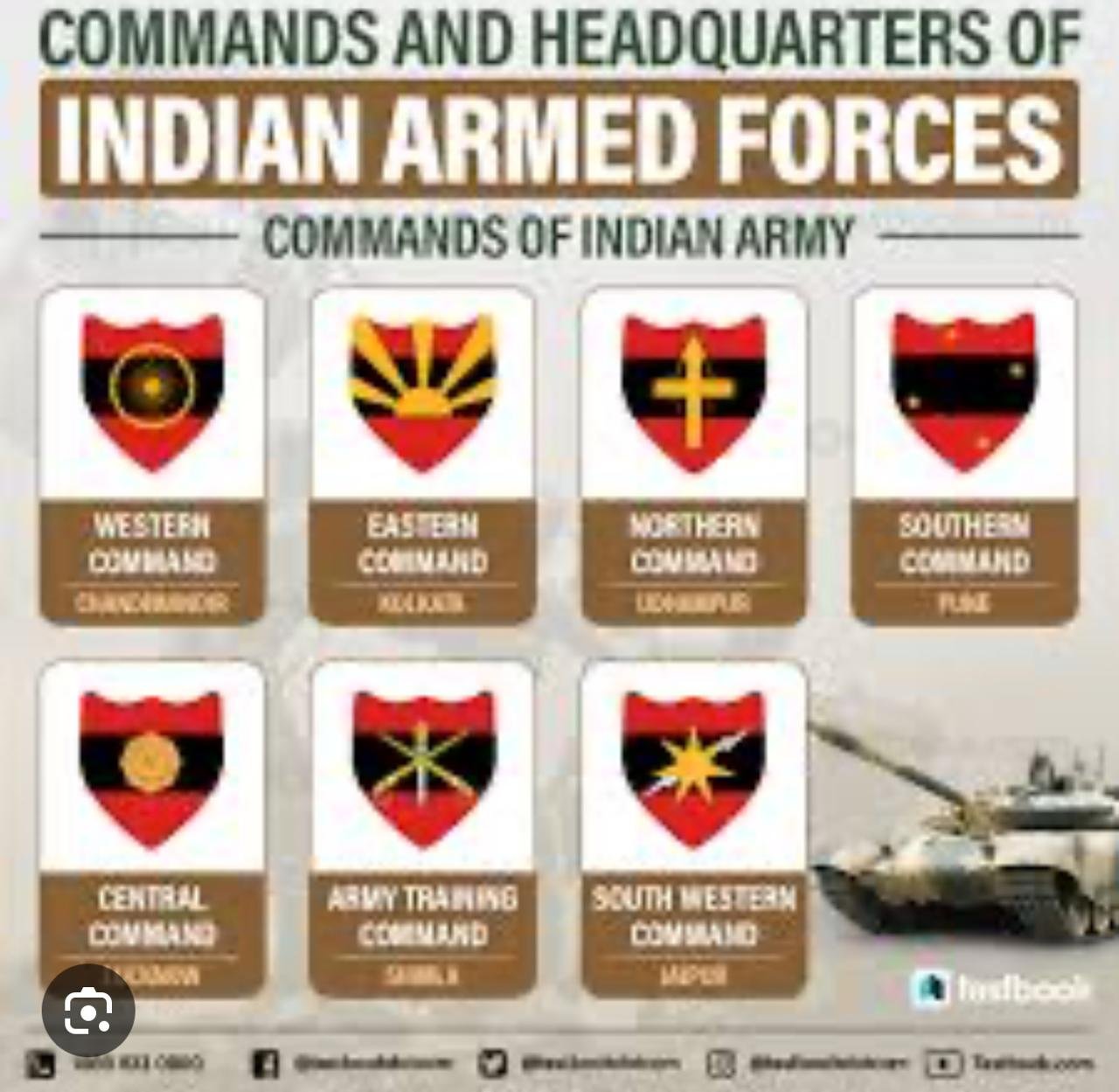
“We carried out an exercise to test the new Integrated Battle Group concept under the Western Command. The feedback from the formations and top commanders has been very positive and that is why we are going to start by raising two to three IBGs along the Pakistan border by October this year,” top sources in the Army said.

The sources also said that the discussion regarding the exercise and feedback was discussed in detail by seven commanders in the Army headquarters in their war room last week, and the commanders-in-chief have been given the powers to raise the IBGs in their respective areas of responsibilities. The first three IBGs to be raised will have elements from different formations of the Western Command.

ADVERTISEMENT

According to sources, the Army has tested two types of configurations of the IBG during the exercise, including one for offensive roles which during hostilities involves cross-border operations and the other for defensive postures to withstand an enemy onslaught. During the exercise, IBGs will be used instead of brigades.

https://www.indiatoday.in/india/video/army-better-prepared-to-tackle-26-11-like-attacks-says-general-bipin-rawat-1395653-2018-11-24?jwsource=cl

ALSO READ | Future wars would be more violent, unpredictable: Army chief Bipin Rawat
ALSO WATCH | Army better prepared to tackle 26/11-like attacks, says General Bipin Rawat


War of words erupts over sports varsity name

Chandigarh, August 2

A day after Punjab Chief Minister Capt Amarinder Singh appointed Lt Gen Jagbir Singh Cheema as the Vice-Chancellor of Maharaja Bhupinder Singh Punjab Sports University at Patiala, a war of words has started over the name of the institution.

“The Punjab Chief Minister wished not to name the university after his grandfather, but the ministers in Punjab Government seem to be more loyal to the erstwhile feudal king. They even went against the Indian Constitution, which has long ago abolished the feudal titles of kings, princes and their privy purses,” said Prof Chaman Lal, senator, Panjab University.

“Also, Bhupinder Singh is said to be a cricketer, but was he bigger than Sunil Gavaskar, Sachin Tendulkar or Virat Kohli? And has he contributed to Indian sports like hockey wizard Major Dhyan Chand?” Professor Lal asked.

Opinder Kaur Sekhon, a master athlete from Chandigarh, though said a person’s achievements and contributions should not be mixed with politics. “Any sportsperson who made a name in cricket, wrestling, athletics or some other sport was given a place in the state services by Bhupinder Singh,” she said.

“A number of athletes who have represented India in the Olympics enjoyed the patronage of the royal house. The National institute of Sports at Patiala houses one of the country’s best sports museums,” Opinder added.

She further said Bhupinder Singh started taking interest in the sports affairs after Patiala athlete Dalip Singh failed to make it to the Indian contingent for the 1924 Paris Olympics.

“Soon after taking the charge of the Indian Olympic Association, Bhupinder Singh faced the difficult task of sending the team to the 1928 Amsterdam Games. It was the result of his effort that India managed to send seven athletes and 15 hockey players to Amsterdam,” Opinder claimed.

“He was also instrumental in sending teams for the Eastern Games in Tokyo (1929), 1932 Olympic at Los Angeles and the 1936 Berlin Olympics,” she added. — TNS


First time after Partition, ‘Nagar Kirtan’ arrives from Pak to India

http://

Attari (Amritsar), August 1

For the first time after Independence, the ‘Nagar Kirtan’, which was taken out from Nankana Sahib district of Pakistan’s Punjab province, arrived here on Thursday to mark the 550th birth anniversary celebrations of the Sikhism founder, Guru Nanak Dev.

The ‘Nagar Kirtan’ (religious procession), carrying the holy Guru Granth Sahib, crossed over to India from Pakistan in the afternoon.

Around 500 Sikh devotees, who were part of the procession, reached here through the land transit route of the Attari border.

Several ministers of the Punjab government, along with senior officials of the Amritsar district administration, received the ‘Nagar Kirtan’ at the border. The top leadership of the opposition Shriomani Akali Dal was also present.

A large number of devotees from the Indian side stormed the roads when the ‘Nagar Kirtan’ arrived in a decorated palanquin.

An official of the Shiromani Gurdwara Parbandhak Committee (SGPC), an apex religious body of the Sikhs, said a large cavalcade followed the religious procession from Gurdwara Nankana Sahib to Wagah border amid a thick security cover. The SGPC was involved in organising the event with the support from both Indian and Pakistani authorities.


Gurdwara Nankana Sahib is the birthplace of Guru Nanak Dev, which falls in Pakistan.

The Pakistani authorities had provided a special permission to the Sikh community to take out ‘Nagar Kirtan’, which will culminate at Sultanpur Lodhi in Kapurthala district of Punjab after passing through various cities and towns.

The Nagar Kirtan will halt at Golden Temple, Amrisar, tonight before it begins its onward journey.

Prominent among those who were with the ‘Nagar Kirtan’ from Pakistan include Akal Takht Jathedar Harpreet Singh, SGPC president Gobind Singh Longowal and Delhi Gurdwra Management Committee president Manjinder Singh Sirsa.

SAD president Sukhbir Singh Badal, his wife and Union Minister Harsimrat Kaur Badal were present at the Attari border to receive the procession.

Punjab Cabinet ministers O P Soni, Sukhjinder Randhawa and local Congress MLAs were also present.

Around 500 kg of flowers were arranged by the SGPC to shower on the ‘Nagar Kirtan’ on the way from Attari to Golden Temple, besides a special ‘langar’ (community kitchen) arrangement has been made for the devotees who will move with the religious procession.

A special red carpet was also laid by the SGPC at Joint Check Post at the Attari border to accord a welcome to the ‘Nagar Kirtan’.

On July 30, nearly 500 Sikh devotees had crossed over to Pakistan to bring the ‘Nagar Kirtan’ to India. — PTI