



Sanjha Morcha

What’s New

Click the heading to open detailed news

Current Events :

web counter

Print Media Reproduced Defence Related News

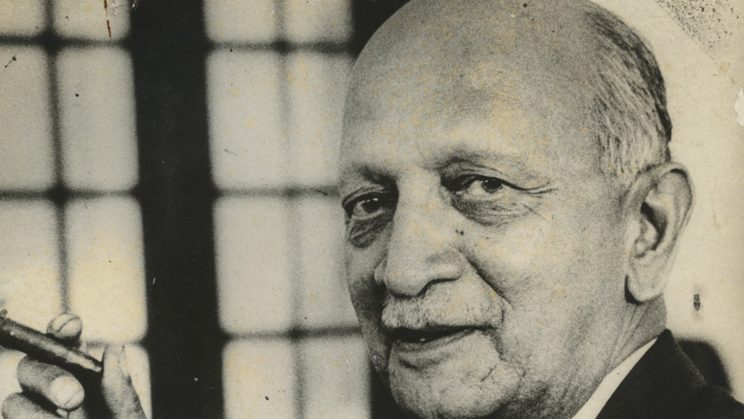
Field Marshal KM Cariappa, so much more than just the first Indian Army chief

Field Marshal K.M. Cariappa was instrumental in keeping the Indian Army away from politics and attempted to forge an all-inclusive army.

New Delhi: Popular discourse on Field Marshal Kodandera Madappa Cariappa is often limited to placing him as the first ‘Indian’ commander-in-chief of the Indian Army who took over from Roy Butcher on 15 January, 1949, and the second person to have been conferred the rank of Field Marshal in 1986 after former Army chief Sam Manekshaw.

There are, however, countless other factors that make him a towering figure in the history of Indian military, all of which is still relevant and important on his 120th birth anniversary, which falls today, 28 January.

Field Marshal Cariappa was not only instrumental in drawing a strong dividing line between the Indian Army and politics but he also helped shape the Army into a highly professional force in its formative stage.

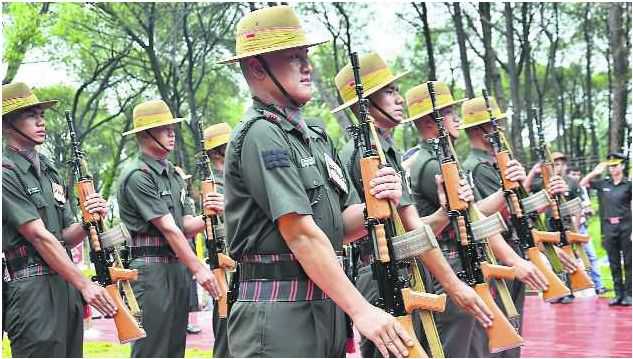
He attempted to do away with caste, creed and other barriers in the Indian Army by raising the Brigade of The Guards — a mechanised infantry regiment of the Indian Army — in 1949. Recruitment to it was open to all regions, castes, creeds and all sections of society.

Military historian and national security analyst Mandeep Singh Bajwa says that such was his stature, that Field Marshal Cariappa interacted directly with then Prime Minister Jawaharlal Nehru, not allowing anyone in the bureaucracy or others in the corridors of power to take liberties with him.

“But the crucial fact is that he kept the Indian Army away from any kind of political influence, in contrast to the political nature of the Pakistani Army,” Bajwa told ThePrint. “When Ayub Khan was appointed the commander in chief of the Pakistan Army in 1951, the Pakistan Army clearly had a role in shaping the foreign and domestic policies of the state.”

The military coup that followed in 1958 only testified to the political nature of the Pakistan Army.

“He wanted the Indian Army to be an apolitical entity and that’s the reason he decided against inducting former INA personnel into the Army as they had become political soldiers,” Bajwa adds.

A distinguished career and a run-in with a junior

Field Marshal Cariappa had a distinguished career as the Army chief but before that he led Indian forces on the Western Front during the India-Pakistan War of 1947.

He was instrumental in recapturing Zojila, Drass and Kargil and created a linkup with Leh before the then Indian government decided to abide by an UN-brokered ceasefire on 1 January, 1949.

An illustrative anecdote about his character relates to the 1965 Indo-Pak war. Field Marshal Ayub Khan had served under Cariappa in the British Indian Army. In 1965, Cariappa’s son, Flt. Lt. K.C. “Nanda” Cariappa, was taken prisoner of war by Pakistan after his aircraft was shot down. Khan had offered to release him, but Cariappa made it clear to Khan that his son was not to be given any special treatment.

Bajwa says that the interest of the nation was always first with Cariappa. “He accepted pay and ration cuts for the forces because he felt that it would help the cause of nation building,” he says.


Also readIndian Army chief should know that no one feigns disability


The officer from Coorg

Cariappa was born in Coorg and was educated at the Central High School at Madikeri and the Presidency College in the then Madras state.

He began his Army career under the British and was among those in the first batch of King’s Commissioned Indian Officers at the Daly Cadet College in Indore.

His remarkable career had several firsts.

He was the first Indian officer to undergo the course at the Staff College, Quetta, in 1933. He also saw action in Iraq, Syria, Iran and Burma and became the first Indian officer to be given command of a unit in 1942.

In 1947, Cariappa became the first Indian to be selected to undergo a training course at Imperial Defence College, Camberley, UK.

He also oversaw the division of the British Indian Army between India and Pakistan during Partition.

He was chosen over General S.M. Shrinagesh and Lt General Nathu Singh Rathore to head the Indian Army.

After retirement, he served as the Indian high commissioner to Australia and New Zealand.

He died in Bengaluru in 1993 at the age of 94.

The current army chief General Bipin Rawat has said that Field Marshal Cariappa deserves the Bharat Ratna, the country’s highest civilian award.


SITHARAMAN VISITS CHINA BORDER

Union minister for defence Nirmala Sitharaman on Friday visited the forward areas in Dibang Valley district of Arunachal Pradesh along the India-China Border and inaugurated a strategically important bridge in Lower Dibang Valley. The minister was also briefed on the operational situation and defence preparedness of the armed forces.


Militants carry out 2 grenade attacks on security forces in Kashmir

Militants carry out 2 grenade attacks on security forces in Kashmir

he grenade exploded on the roadside, he said, adding that no one was hurt in the attack. Tribune file

Srinagar, January 18

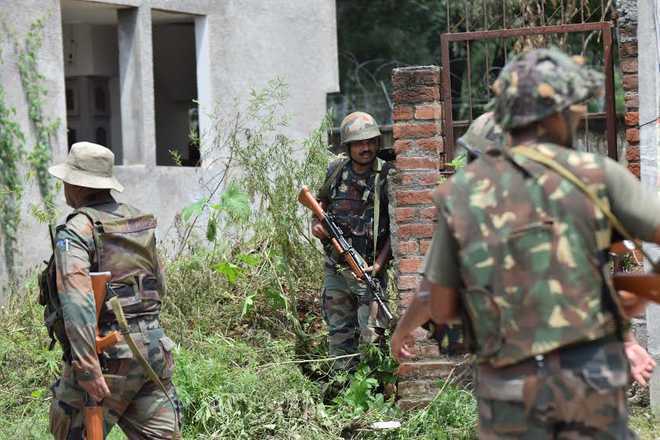
Militants carried out two grenade attacks on security forces in Kashmir, including one in the Lal Chowk area of the city, on Friday but there were no reports of any casualty, police said.

The ultras lobbed a grenade at a CRPF (Central Reserve Police Force) bunker at Ghanta Ghar (Clock Tower) in Lal Chowk this afternoon, a police official said.

The grenade exploded on the roadside, he said, adding that no one was hurt in the attack.

A private car parked on the roadside was partly damaged due to the explosion, the official said.

This is second attack on security forces in Srinagar in 24 hours.

Militants hurled a grenade on police personnel at Zero Bridge here on Thursday, resulting in injuries to three policemen.

In another incident, militants lobbed a grenade at security forces in Shopian district of south Kashmir, the police official said, adding that there was no injury to anyone and damage to properties due to the explosion.

The attacks come less than 10 days ahead of the Republic Day celebrations. PTI


Major shake-up in Army’s repair echelons this year

4 Army base workshops will be corporatised on the ‘government owned contractor operated’ model by April

Major shake-up in Army’s repair echelons this year

Photo for representational purpose only.

Vijay Mohan
Tribune News Service
Chandigarh, January 12

The Army’s repair and maintenance echelon will see a major shake-up this year with some establishments being shut down and others being handed over to private contractors.

Four Army base workshops (ABWs) will be corporatised on the government owned contractor operated (GOCO) model by April, according to information placed in Parliament by the Ministry of Defence recently. These are the 506 ABW at Jabalpur, 508 ABW at Allahabad, 510 ABW at Meerut and 512 ABW at Kirkee.

The remaining four workshops that include 505 ABW at Delhi, 507 ABW at Kankinari, 509 ABW at Agra and 515 ABW at Bengaluru would follow suit by December.

First established during the Second World War, seven ABWs are responsible for repairs and overhaul of weapons, vehicles and equipment, while the eight (515 ABW) is engaged in the indigenisation of spares and manufacture of simulators.

Under provisions of GOCO, mooted in 2017, the infrastructure and facilities of ABWs will remain under the ownership of the government while the contractors will be responsible for the day-to-day operations, plant maintenance and meeting targets. This is part of the government’s plan to rationalise Army manpower and reduce the “tail” as recommended by the Lt Gen DB Shekatkar committee.

Handing over ABWs to private contractors will result in a large number of technical officers up to the rank of Brigadier as well as other ranks as being moved out. Consequently, the control of these establishments is expected to move from Army Headquarters to the Ministry of Defence.

In addition, two Army Advance Base Workshops at Udhampur near Jammu and Narangi near Guwahati are to be closed down by March this year. The same month will also see the Static Workshop at Delhi being disbanded, according to the Ministry’s statement. Further, 29 out of the 31 station workshops are to be “optimised” by restructuring their administrative set up and redeploying manpower.


AF fighter jets to get superior shelters to protect them from Chinese bombs

The Modi government has allocated Rs 5,500 crore to build the Next Generation Hardened Aircraft Shelters (NGHAS) on India’s northern borders.

New Delhi: The air force has got a go-ahead to construct 108 modern shelters to house fighter aircraft in forward areas on India’s northern borders at a time when China has ramped up activity in the Tibet Autonomous Region, which overlooks Arunachal Pradesh, Himachal Pradesh, Uttarakhand, Sikkim and Ladakh.

The Union Cabinet had recently allocated about Rs 5,500 crore for the project to build the Next Generation Hardened Aircraft Shelters (NGHAS), said three senior officials aware of the development who asked not to be named because they are not authorised to speak to the media.

In the past few months, there were reports of increased activity by the People’s Liberation Army (air force), which has carried out several exercises, including moving troops at a rapid rate in the Tibet Autonomous Region.

The Indian Air Force (IAF) has now spread its fighters in disparate bases in the eastern sector. “While the fighters can be scrambled as when required from different bases, it will be difficult for the enemy to target every base,” a senior IAF officer said, explaining the decision.

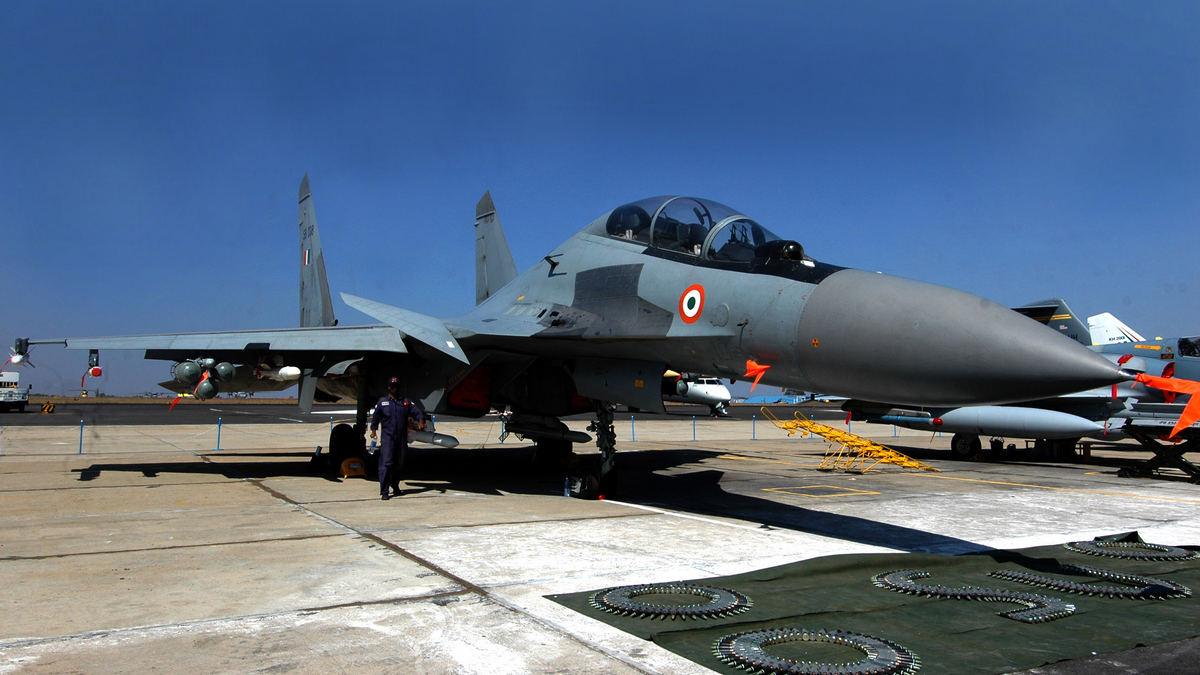
Majority of the hardened shelters will be designed to house the Russian made Su-30MKi jets – the mainstay of IAF’s fighters. In 2016, a parliamentary committee on defence pointed to the fact that IAF did not have protective shelters to keep the Su-30Mki. “Hardened shelters are not available for even the limited numbers of aircraft that is available with the Service,” the committee observed.


Also read: Despite Modi’s promise, one more year passes without IAF getting its fighter jets


Apart from the hardened shelters, IAF has also inducted new technology to repair damaged runways in a few hours.

“The combination of the hardened shelters and capability to repair damaged runways quickly gives us an operational edge,” said a senior defence ministry official.

NGHAS are specialised structures comprising layers of reinforced concrete, sand and steel. They can protect aircraft from direct hits by a 2,000-pound bomb.

IAF bases in the western sector have “blast pens” – tunnel-shaped concrete structures covered with a layer of earth and protective walls near their openings, which are supposed to protect aircraft from the effects of blasts in case of an attack.

“However, with the change in warfare technology the blastproof pens may not be enough to protect assets,” the officer quoted above said, explaining why IAF needs NGHAS.

To underline the importance of the hardened shelters, a second defence ministry official said IAF told the Union government that during the 1965 India-Pakistan war, nearly 60% of the air force’s loses were of fighters that were on the ground. After the 1965 war, India started building blast-proof pens. “The blastproof pens ensured that fighters on the ground were safe during the Bangladesh liberation war. No aircraft on the ground was lost during the 1971 Bangladesh Liberation war,” he said, adding that IAF told the government that the need of the hour now was to upgrade to NGHAS.


Also read: Crucial role IAF played in early days of 1947-48 Pakistan war


Indian Army to defend 3-caste President’s Bodyguard recruitment policy in court

President’s Bodyguard is the Indian Army’s oldest regiment, and invites members from only 3 castes — Jats, Rajputs & Jat Sikhs — to apply for recruitment.

New Delhi: The Indian Army is set to tell the Delhi High Court that the present recruitment policy for the President’s Bodyguard is legitimate after the court sought responses of the Centre and the Army chief on a petition alleging that candidates from only three castes were considered for recruitment to the prestigious regiment.

The petition was filed in November last year. The responses from the central government and the Army chief were sought during the latest hearing on 21 December, 2018.

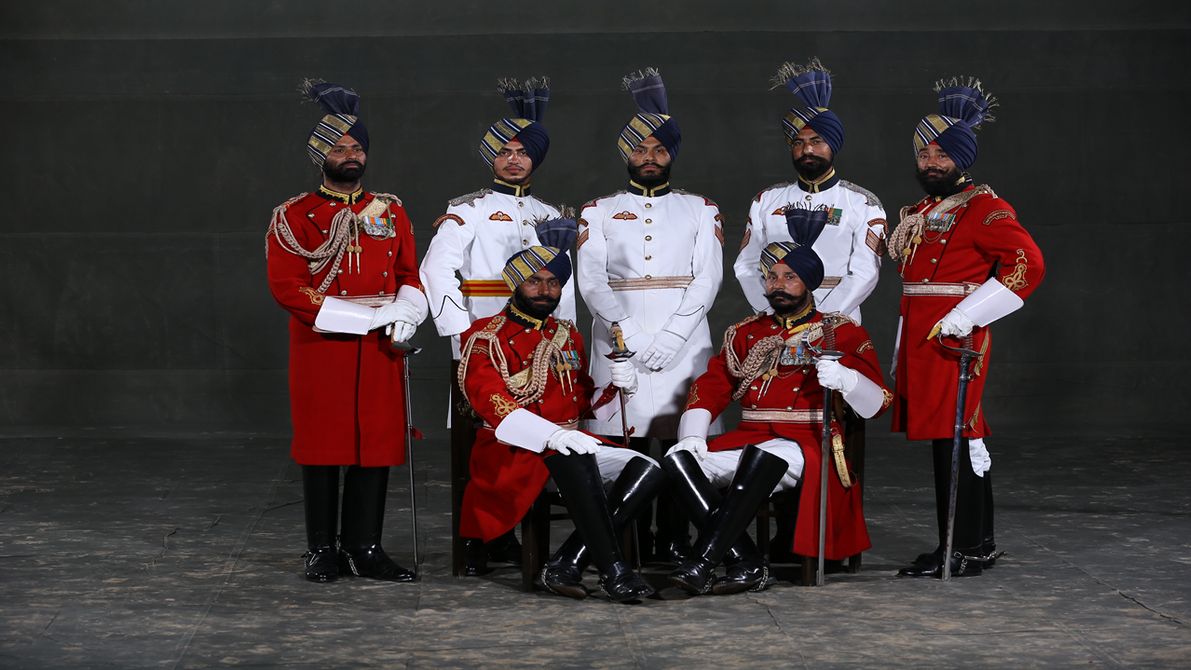
The President’s Bodyguard is a cavalry regiment of the Indian Army that invites members from only three castes — Jats, Rajputs and Jat Sikhs — to apply for recruitment.

“The Army will establish that the present system of recruitment, based on historical legacies and constitutional propriety, is legitimate,” a top Army source told ThePrint.

He added that the policy has been examined by four committees since 1947 and everything was found in order.

Army sources also said that the Supreme Court has already dismissed a PIL (in January) on the same issue.

Recruitment into the PBG, as it is known today, is much coveted and in many cases, hereditary. However, like several instances in the past, the recruitment policy has been challenged again this year.


Also read: Indian Army chief should know that no one feigns disability


The case

The latest petition filed by Haryana resident Gaurav Yadav has sought that the recruitment of the President’s Bodyguard held on 4 September, 2017, be set aside as only the three castes were invited to apply.

The petitioner said he belonged to the Ahir/Yadav caste and fulfilled all the eligibility criteria of recruitment except his caste, and sought that he be recruited for the post.

A bench of Justices S. Muralidhar and Sanjeev Narula issued notices to the Ministry of Defence, Chief of the Army Staff, Commandant of the President’s Bodyguard and Director of Army Recruitment, seeking replies within four weeks.

The matter has been listed for hearing on 8 May, 2019.

History of President’s Bodyguard

The PBG is the oldest regiment of the Indian Army and completed 245 years of service this year, say official records.

It is the senior-most unit of the Army, whose distinction is in its position as ‘Right of the Line’ on all official and ceremonial occasions. The PBG, thus, takes precedence over all other regiments and corps.

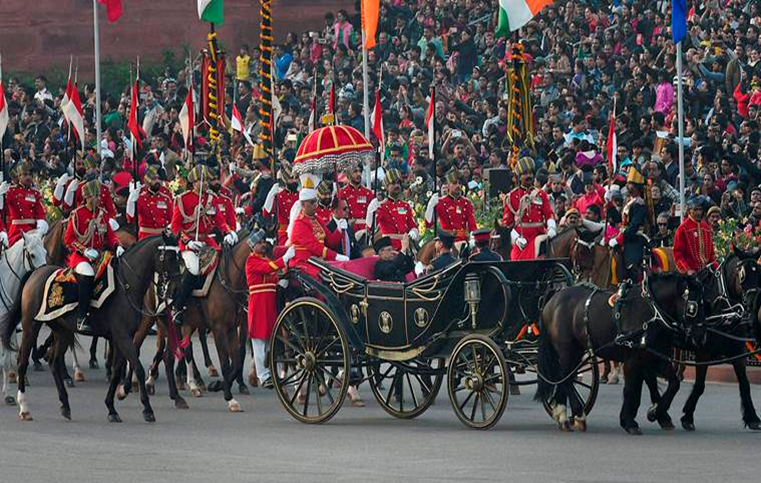
President’s bodyguard | Indian Army

The PBG was raised in 1773 at Benares (now Varanasi) by then Governor Warren Hastings, with a strength of 50 handpicked troopers. This nucleus of the Bodyguard was later augmented by another 50 horsemen, provided by Raja Cheyt Singh of Benares, thus bringing the overall strength of the regiment up to 100 horses and men by the end of that year, say records.

The establishment of the regiment varied through the years, being augmented in times of war and it attained its maximum strength of 1,929 all ranks, as per the Army List of 1845, just prior to the First Sikh War.

The PBG continued to be a select Cavalry Unit, primarily for the personal and battlefield security of the Governor and later Governor General, who often had to personally lead his forces into battle.

The Raising Charter clearly spelt out the role of the PBG, namely — “To act as Bodyguard to the Governor in peace and to accompany him as Commander-in-Chief in battle”.

This unique band of select troops, in over two centuries of service, has seen action in various roles — as mounted and dismounted cavalry; Artillery, with ‘Galloper Guns’ in the Egyptian Expedition of 1801-1802; Marines in 1809, protecting naval transports in the Bay of Bengal; and more recently as mechanised and airborne troops.


Also read: Indian Army must work on inducting women in combat roles or court may force its hand


Historical composition

Initially, recruitment was almost exclusively from among “Mussalmans” of the area of Eastern Uttar Pradesh. Towards the last decade of the 18th century, Brahmins from Bengal began to replace the earlier “Moghuls”, say records.

Later, during a review of the Madras Presidency parade, Marquess Wellesley (then the Earl of Mornington) was so impressed by the bearing, discipline and sword drill of the Madras Cavalry, that on return to Fort William, he ordered the troops of the Madras Cavalry to form the greater part of the corps.

Records do not show for how long recruitment to the Bodyguard from Madras continued. However, 70 years later, the composition of the corps had reverted to Brahmins, Rajputs and UP Mussalmans.

Recruitment from the Punjab commenced with Sikh troopers in 1883 and Punjabi Mussalmans in 1887, the latter eventually replacing the Brahmins and the Rajput elements. Thus, by 1947, the regiment comprised half Jat Sikh and half Punjabi Mussalman troopers.

With the birth of India and Pakistan as two sovereign independent states, the Muslim component of the Bodyguard was allotted to Pakistan and recruitment to the regiment in India was opened, in equal share, to Sikhs, Jats and Rajputs with officers and administrative staff from all over India, add records.

A yeoman service

Post-Independence, in keeping with its high traditions, the PBG, which many regard as a yeoman service, maintained law and order in the aftermath of Partition in and around the national capital.

In 1962, its armoured cars were deployed for the defence of Chushul at heights of over 10,000 feet.

The regiment saw action in 1965, when it participated in “Operation Ablaze” in the Western Theatre.

In 1988 and 1989, detachments of the regiment, served overseas with the Indian Peacekeeping Force in Sri Lanka. Troopers from the PBG have served with the Indian contingents forming part of the United Nations Forces in Somalia, Angola, Sierra Leone and Sudan. The regiment has also sent 20 detachments to the world’s highest battlefield, the Siachen Glacier.

President’s Bodyguard today

As of today, PBG is a small body of handpicked men, comprising four officers, 14 Junior Commissioned Officers (JCOs) and 161 troopers backed by administrative support personnel.

This establishment has not changed much since the 19th century. Its men are trained for operational duties, both, as tankmen and airborne troops in addition to their ceremonial role.

The physical standards for the PBG are very specific with six feet being the minimum height for a trooper. Men of the PBG are expert horsemen, adept at ceremonial punctilio, trained combat paratroopers, armoured vehicle crewmen and tradesmen. Honed in diverse combat skills, the PBG personnel have proven their worth in battle as well as in mounted tourneys and equestrian skills.

This report has been updated to correct the date of the latest hearing in the case, which was 21 December, 2018, not 26 December, 2018. The error is regretted.


Defence PSU orders down 33% amid push to pvt sector

Defence PSU orders down 33% amid push to pvt sector

Vijay Mohan

Tribune News Service

Chandigarh, December 25

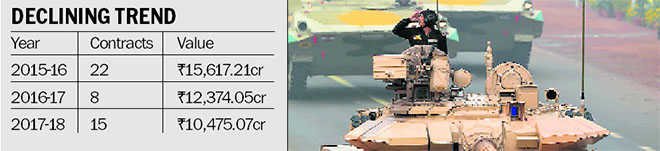
As the government gives an impetus to the private industry to manufacture equipment for the Armed Forces, the quantum of contracts awarded to Defence Public Sector Undertakings (DPSUs) has fallen by about 33 per cent over the past three years.

The value of capital contracts bagged by DPSUs in 2015-16 was Rs15,617 crore, which came down to Rs12,374 crore in 2016-17 and further fell to Rs10,475 crore in 2017-18, according to information placed by the Ministry of Defence (MoD) in Parliament this month.

On the other hand, the number of contracts awarded to DPSUs has flip-flopped from 22 in 2015-16 to eight in 2016-17 and 15 in 2017-18, the MoD data revealed.

There are nine DPSUs in the country that function under the Department of Defence Production in the MoD that manufacture weapons, ammunition, armoured vehicles, heavy vehicles, aircraft, helicopters, warships, submarines, missiles, electronic equipment, earth moving equipment and special alloys.

“The government is pursuing initiatives to achieve higher levels of indigenisation and self-reliance in the defence sector. This is sought to be achieved by harnessing the capabilities of both public and private sector industries in the country,” the ministry stated.

Towards this end, the number of items requiring an industrial licence has been reduced. A total of 394 licenses have been issued to 239 Indian companies for manufacture of defence items since 2001.

DPSUs and Ordnance Factories, which also function under the same department, have, as a policy, been outsourcing many of their requirements to medium and small-scale enterprises apart from large-scale industries.

However, based on Budget allocation to the Armed Forces for revenue expenditure, there has been a reduction in procurement of supplies by the services, which has resulted in proportionate reduction in procurement of input materials. Consequently, some supply orders placed in micro, small and medium enterprises have been cancelled or short-closed.


Capt hails Sajjan’s conviction in ’84 riots, says justice finally delivered

Rajmeet Singh
Tribune News Service
Chandigarh, December 17

Capt hails Sajjan’s conviction in '84 riots, says justice finally delivered

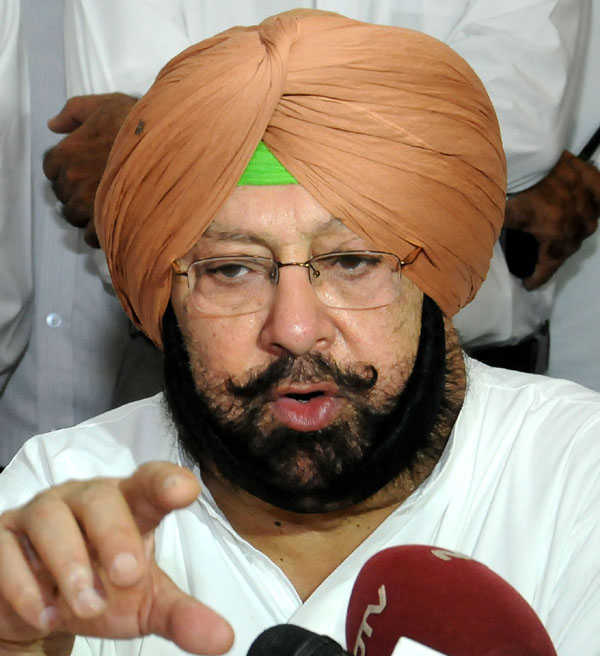
Punjab Chief Minister Captain Amarinder Singh on Monday welcomed the conviction of Sajjan Kumar in the 1984 riots, terming it a case of justice finally delivered to the victims of one of the worst instances of communal violence in independent India.

The reversal, by the High Court, of the earlier acquittal of Sajjan by a trial court had once again proved that the judiciary in India continued to stand tall as a pillar of the nation’s democratic system, said the Chief Minister.

Reacting to the Delhi High Court judgement awarding life term to the former Congress MP, Captain Amarinder said the conviction vindicated the stand he had been taking since those dark days of the violence perpetrated on thousands of innocent Sikhs in the wake of the assassination of former prime minister Indira Gandhi.

He had been naming Sajjan Kumar, along with a few other former Congress leaders, including Dharam Das Shastri, HKL Bhagat and Arjun Das, for the past 34 years, based on the information he had personally received from victims in refugee camps in Delhi during the riots, said Captain Amarinder, hailing the long-awaited verdict.

Incidentally, Sajjan Kumar was the only surviving former Congress leaders implicated in the riots, as the others had since passed away.

The name of Sajjan Kumar had repeatedly cropped up in his interactions with the victims in the refugee camps, said Captain Amarinder, who had last month also welcomed the first death sentence awarded in the 1984 riots case.

Captain Amarinder had, through the years, been calling for the strictest of punishment for the handful of individual Congress leaders who had been involved in instigating the riots. These leaders, who included Sajjan Kumar, did not have any official party sanction and deserved to be punished for their horrendous crime, the Chief Minister had maintained all along.

The Chief Minister, however, reiterated his stand that neither the Congress nor the Gandhi family had any role to play in the rioting and lashed out at the Badals for continuing to drag their names into the case at the behest of their political masters – the Bharatiya Janata Party, who were clearly shaken by the clear mandate given by the people to Rahul Gandhi’s leadership in the recent Assembly elections in three states, said Captain Amarinder.

There was no Congress conspiracy behind the violence and the names of the Gandhis did not come up even once during his visits to the refugee camps, said the Chief Minister, adding that it was vested political interests that had been trying to draw the Gandhi family into the controver.


‘Future wars will be won on information superiority’

Chandigarh, December 8

While information warfare has assumed a central space in the spectrum of conflict, involving military as well as civilian establishments, India remains dependent on foreign countries for its information warfare requirements.

Stating this while moderating a session on ‘Information Warfare — The New Face of War’ at the Military Literature Festival here today, former Vice Chief of the Army Staff Lt Gen Vijay Oberoi stressed the need for indigenous equipment to counter the danger of subversion through electronic means. Today every piece of equipment has an electronic component that can be targeted.

Stating that artificial intelligence and robotics will increasingly influence lives, Lt Gen Oberoi said information warfare was not just about gadgetry but also about what military people did in battle or what civilians did or didn’t do in their day to day lives. Just like air superiority was the dominating factor in war, electronic or information superiority will be the winnable factor in the next war, he added.

Lt Gen RS Panwar, former Commandant, Military College of Telecommunication Engineering, said we needed to come up with the requisite doctrines and structures to conduct information warfare. Besides skill development of personnel, we needed to develop capabilities in tune with what was happening in the world, he said.

Lt Gen SP Kochar, former Signal Officer-in-Chief, said information warfare should be embedded with other operations of war.