Sanjha Morcha

What’s New

Click the heading to open detailed news

Current Events :

web counter

Print Media Reproduced Defence Related News

akistan tip-off on terror by Vappala Balachandran

Pakistan tip-off on terror

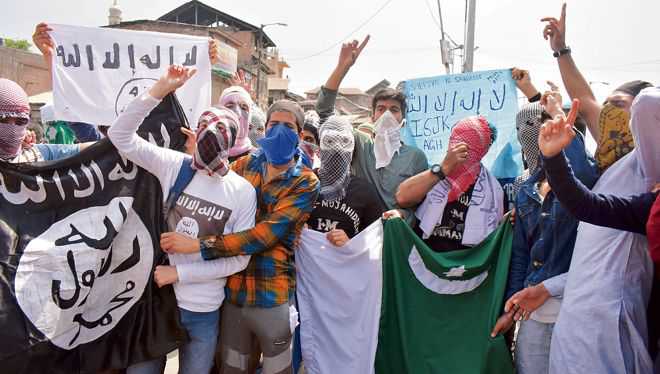
On guard: We need to be more alert in detecting ISJK’s attempts to fill in the vacuum in J&K due to the debilitation of the ISI-created conventional outfits.

Vappala Balachandran
Ex-special secretary, cabinet secretariat

Some sections of our security establishment were sceptical of a June 15 alert by Pakistan on the possibility of IED-vehicle attack(s) planned by an Al-Qaeda affiliate in J&K. An unnamed Indian security official was quoted saying that this could be interpreted as Pakistan’s attempts to absolve itself from blame if it happens. Although this had reportedly led to a high local alert, an IED attack did take place on June 17 on a security vehicle in Pulwama, injuring nine soldiers.

The notion that all militant groups on Pakistan soil are patronised by their government is erroneous. We should also remember that even hardened adversaries like Israel and PLO had cooperated in the past to face common enemies. In 1995, Yasser Arafat’s PLO secretly passed on to Mossad travel plans of Fathi Shkaki, leader of the pro-Iranian Palestinian Islamic Jihad.  This led to his killing in Valletta (Malta) in October 1995. Shkaki had met Hussein Shaikholeslam, Iranian deputy intelligence chief, in Libya to discuss plans of assassinating Arafat as punishment for signing the 1993 Oslo accords with Israel.

Another incident was between the US and Russia even when their ties had nosedived. In 2017, President Putin thanked US President Trump for a CIA alert which helped them foil a major IS attack on the holy Kazan Cathedral in Saint Petersburg. 

The reason for Pakistan’s worry is that the Al-Qaeda and IS are expanding their networks in Afghanistan and Pakistan due to the shifting loyalties within the Afghan Taliban consequent to their peace talks with Zalmay Khalilzad’s team. Their seventh round of talks is due at Doha this week. No progress could be made in May due to Taliban’s insistence that the US should announce a troop drawdown time table before a Taliban ceasefire. Marine Gen Frank McKenzie of US Central Command said last week that IS presence in eastern Afghanistan was worrying. The Taliban rejected this as justification of continued US military presence in Afghanistan. The US countered it saying that 300 airstrikes had to be done on IS strongholds since January 2017.

Gen McKenzie is supported by other experts like AP journalist Kathy Gannon and Bruce Hoffman of Georgetown University. Gannon said last week that the IS was a greater threat than the Taliban because of its sophisticated military capabilities. ‘Today it counts thousands of fighters, many from Central Asia but also from Arab countries, Chechnya, India and Bangladesh as well as ethnic Uighurs from China’. She said the recent wave of bombings in Kabul was ‘practice runs’ for bigger attacks in Europe and the US. The IS organised a suicide attack on May 30, 2019, at the entrance of Marshal Fahim National Defence University, killing six including cadets. Reports indicate that it is exporting talc, cromite and marble using smuggling routes to raise funds through its total control of Nangarhar. 

The Combating Terrorism Center (CTC) at West Point has flagged IS threats to this region through a well-researched report in December 2018. The paper disabuses a common impression among some of us that the IS is incapable of storming into South Asia with liveries and cockades, as they did in Faluja or Mosul. That is not how it is operating in this region. Apart from its successful online radicalisation, it is able to get several defections. Although Abu Muhammad al-Adnani had made an announcement on Islamic State Wilayat Khorasan (ISK) in January 2015, it was preceded by defections by nine former local leaders of the Al-Qaeda in Afghanistan and six Tehrik-i-Taliban Pakistan (TTP) who joined them early in 2014. In 2016, they announced Kashmir as part of Wilayat Khorasan.

The secret of ISK’s success is the ‘high end’ or ‘low end’ cooperation from its allies in AF-Pak region. ISK was responsible for 211 attacks, resulting in 1,511 deaths in Afghanistan between January 2014 and July 2018. During the same period, it organised 83 attacks in Pakistan with 706 deaths. In April 2018, 10 journalists were killed in two attacks in Afghanistan. ISK carried out the second-deadliest attack in Pakistan’s history by bombing an election rally in Balochistan, killing 149 in July 2018.

The paper identifies 11 associates for the entire AF-Pak region. ‘High end’ partners are TTP’s Bajaur, Jundullah and Oraknazai factions, Islamic Movement of Uzbekistan, Ansar ul Khilafat Wal Jihad, Lashkar-e-Islam and Lashkar-e-Jhangvi (Al-Alami). The ‘low end’ are Ansar al-Mujahideen, Sipah-e-Sahaba Pakistan/Ahl-e-Sunnat Wal Jamaat, Jamaat-ul-Ahrar and Balochistan National Army.

The CTC’s analysis reveals that ISK’s total lethality and mortality per attack increased every year in Pakistan and Afghanistan. The biggest danger to the South Asian region is the lateral migration of extremists from older outfits like the Hizbul or Taliban towards the Al-Qaeda and IS. We cannot determine the identity of such groups by merely examining conventional markers. That was also the reason why our political leadership was often wrong on the impact of the IS in India. Our former Home Minister had said on March 16, 2018, that it would have no impact on India.

Fortunately, our NIA has dealt with this menace professionally and unearthed an IS-inspired module named Harkat-ul-Harb-e-Islam in December 2018. In May this year, it chargesheeted four IS in Jammu & Kashmir (ISJK) activists in Jammu. The NIA has also been following up connections between Sri Lanka’s Easter carnage and its South Indian modules.

At the same time, it is a moot question whether we have done enough to detect IS modules in India right from 2014 in the background of the current allegations that our southern modules had inspired the Easter Sunday bombers. We also need to be more alert in detecting ISJK’s attempts in filling in the vacuum in J&K due to the debilitation of the ISI-created conventional outfits.


Army holds summer camp

Army holds summer camp

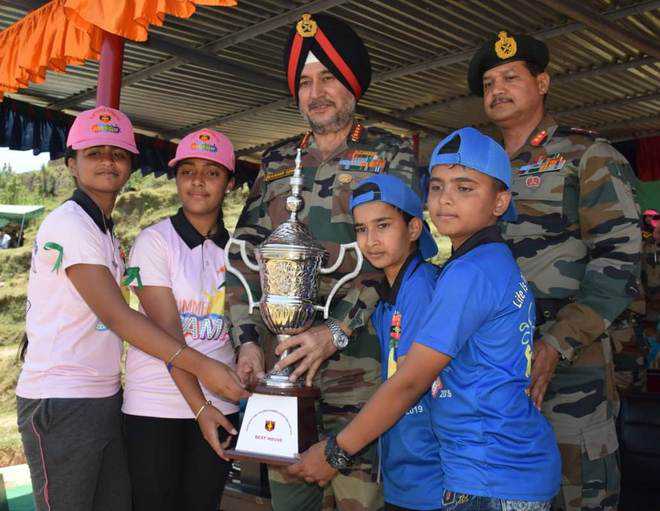
t Gen Ranbir Singh gives away a trophy to children during a summer adventure camp at Bakloh in Himachal Pradesh.

Jammu, June 8

Lt Gen Ranbir Singh, General Officer Commanding-in-Chief, Northern Command, along with Kalpana Singh Dhatt, regional president, Army Wives’ Welfare Association (AWWA), visited a children’s summer adventure camp held at Bakloh, Himachal Pradesh, on Saturday.

The camp held under the aegis of the Northern Command ended on Saturday. It was for children of service personnel and civil defence employees with an aim to impart progressive development of children’s personality with a tinge of fun to ensure effective utilisation of their summer vacation.

The camp witnessed a huge participation of children in the age group of 11-14 years. The children had joined the camp from Udhampur, Nagrota, Akhnoor, Rakhmuthi, Palampur and Dalhousie.

The closing ceremony witnessed various activities, including archery, paintball shooting and various other games. The Army commander urged children to strive for excellence and to put in sincere and persistent efforts in realising their potential in scholastic and non-scholastic pursuits. The AWWA regional president interacted with the children and gave away prizes to children . — TNS



Can’t allow Army insignia on Dhoni’s gloves, ICC tells BCCI

Can't allow Army insignia on Dhoni's gloves, ICC tells BCCI

Balidaan” is a distinct insignia of the special forces, which form part of the Parachute Regiment. PTI file

London/Mumbai, June 7

Taking a firm stand, the ICC on Friday denied Mahendra Singh Dhoni permission to wear the dagger insignia on his wicket-keeping gloves during the World Cup despite BCCI’s assertion that it was not a military symbol.

The Indian cricket board (BCCI) had sought permission for the star batsman from the world governing body, which eventually cited regulations in denying the permission.

“The ICC has responded to the BCCI to confirm the logo displayed by MS Dhoni in the previous match is not permitted to be worn on his wicket-keeping gloves at the ICC Men’s Cricket World Cup 2019,” an ICC statement said.

“The regulations for ICC events do not permit any individual message or logo to be displayed on any items of clothing or equipment. In addition to this, the logo also breaches the regulations in relation to what is permitted on wicketkeeper gloves.”

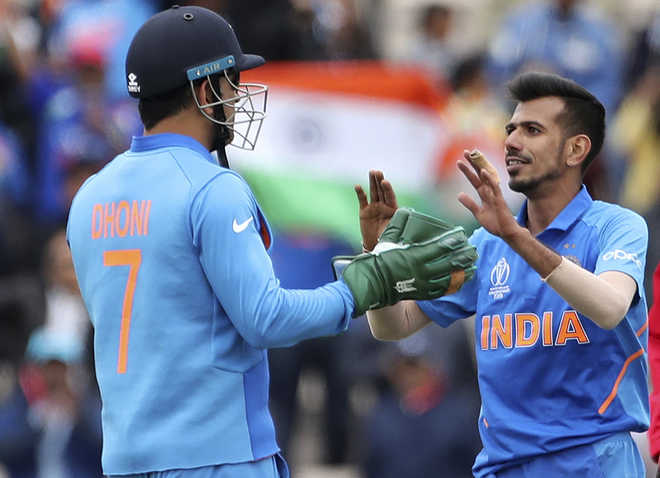
During India’s opening World Cup game against South Africa in Southampton, Dhoni’s green keeping gloves had a dagger logo embossed, which looked more like an Army insignia.

The rule book allows for only one sponsor’s logo on the wicket-keeping gloves. In Dhoni’s case, he already sports an SG logo on his gloves.
Dhoni is an Honorary Lieutenant Colonel in the Parachute Regiment of the Territorial Army and dagger is part of their emblem.

Committee of Administrator (CoA) chief Vinod Rai had argued that wearing the dagger insignia does not breach any rule.

“As per ICC regulations, players can’t sport any commercial, religious or military logo. There was nothing commercial or religious in this regard as we all know. And it is not the paramilitary regimental dagger that is embossed in his gloves. So, Dhoni is not in breach of ICC regulations,” Rai said.

Rai’s comment came after the ICC “requested the BCCI” to ask Dhoni to remove the sign from the gloves, citing rules which forbid display of messages “which relate to political, religious or racial activities or causes.”

The CoA’s defence was based on the fact that the para-regimental dagger logo has word ‘Balidan’ (sacrifice) inscribed on it, which is not the case with the logo sported by Dhoni.

Dhoni also got support from Sports Minister Kiren Rijiju, who had urged the BCCI to resolve the matter.

“… the issue is connected with the sentiments of the country, the interest of the nation has to be kept in mind. I urge the BCCI to? take a fair step in the Mahendra Singh Dhoni? case,” Rijiju wrote on his twitter handle.

Various sportspersons such as Suresh Raina and decorated wrestler Yogeshwar Dutt also backed the former captain. PTI


Kaun banega COSC or Chairman of the Chiefs of Staffs Committee?

pti12_3_2018_000060b_060319023550.jpg

Navy Chief Admiral Sunil Lanba retired on May 31, 2019, handing over the command of the Indian Navy to his successor, Admiral Karambir Singh Nijjer — who will be in office till November 2021.

Lanba is also the outgoing Chairman of the Chief of Staff Committee (COSC) and enjoyed two years and five months as Chairman of the Chiefs of Staffs Committee (COSC).

indian-defence-force_060319023844.jpeg

This was one of the longest such tenures for a post occupied by the senior-most service chief. The next two incumbents will hold the post only for four months and three months respectively.

pti12_3_2018_000060b_060319023550.jpg
Former Navy Chief Admiral Sunil Lanba enjoyed one of the longest tenures as Chairman of the Chief of Staff Committee (COSC). (Photo: PTI)

Air Chief Marshal BS Dhanoa, who took over as COSC from Admiral Lanba, retires on September 30. He will hand the baton over to Army Chief General Bipin Rawat.

Meanwhile, General Rawat retires on December 31, 2019. The buzz in South Block is that this revolving door could stop if the government decides to appoint a permanent COSC this year — in which case, either Air Chief Marshal Dhanoa or General Rawat could become the first permanent occupants of this post with a two-year tenure beyond their retirement.

indian-defence-force_060319023844.jpeg
Former Navy Chief Admiral Sunil Lanba flanked by Army Chief General Bipin Rawat and Air Chief Marshal BS Dhanoa. (Photo: PTI)

The next seniormost officer in either the Army or Air Force would then be appointed as service chief. The proposal for the permanent COSC, a four-star, single-point military adviser to the government, was forwarded in 2018 after the armed forces reached a rare consensus.

This post also meant to drive acquisitions and jointmanship among the services was first recommended by the Naresh Chandra Committee in 2012. It is being seen as a halfwayhouse to a five-star appointment like the Chief of Defence Staff recommended by a Group of Ministers in the Kargil Review Committee (2000).

But without a mandate and clearly defined executive powers, the permanent COSC may remain a ceremonial post of little consequence.

(Courtesy of Mail Today)

Also read: Making India More Secure: The challenge that faces Rajnath Singh, Defence Minister


ribunal puts promotions to rank of Lt General on hold Ministry of Defence told to consider case of 3 Maj Gens

Tribunal puts promotions to rank of  Lt General on hold

Photo for representational purpose only.

Vijay Mohan
Tribune News Service
Chandigarh, May 21

Restraining the Army from promoting officers to the rank of Lieutenant General till further orders, the Armed Forces Tribunal has directed the Ministry of Defence to hold a fresh promotion board to consider three Major Generals for elevation.

Three officers of the 1983 batch of the general cadre —  Maj Gen SC Mohanty, Maj Gen Sudhakar Jee and Maj Gen ML Mohan Babu — had moved the tribunal after they were not empanelled for promotion by the Special Selection Board in October 2017.

According to earlier court orders, they were subsequently given redress related to their Annual Confidential Reports and they had sought directions from the tribunal that they be considered for promotion as per the old promotion policy that prevailed during their consideration by the Board held in October 2017.

A new promotion policy for Generals had been introduced in December 2017.

The tribunal’s Bench, comprising Justice Virender Singh and Lt Gen Philip Campose, while imposing costs of Rs 50,000 on the government for misconduct and interference in the administration of justice in each of the three cases, today said in open court that the MoD may convene the review promotion board before June 21 and not to carry out any promotions to the rank of Lieutenant General till July 3, the next date of hearing.

Reference was also made to a similar case of Maj Gen VK Singh, wherein the AFT ruled in 2018 that he be considered for promotion as a review case as the policy in place during his initial consideration. This order had been upheld by the Supreme Court.


Pay heed, keep off by Maj Gen Ashok Mehta (retd)

Pay heed, keep off

Not my master: When the PM publicly claims that ‘Modi ne ghar mein ghuskar mara hai’, it robs the services of their exceptional feats of courage.

Maj Gen Ashok Mehta (retd)
Defence commentator

Maj Gen Ashok Mehta (retd)

By dredging up the INS Viraat issue, PM Modi scored a hat trick in the politicisation of the armed forces. He accused a former PM and victim of terrorism Rajiv Gandhi of using the aircraft carrier as a personal taxi for his vacation with his family and in-laws. This counter-factual assertion has sucked in the Navy which had escaped the Modi web of politicisation — his first and second targets being the Army after the surgical strikes and the IAF after the Balakot airstrikes. He made a similar gaffe in 2017 while campaigning for the Assembly elections in Coorg (Karnataka), when he lashed out at the Congress for having hounded one of Coorg’s military icons, Field Marshal KM Cariappa, when he meant Gen KS Thimayya, also from the same place. This caused embarrassment to the Field Marshal’s son, Air Marshal Nanda Cariappa, and the local veteran community.

Modi’s latest faux pas in advising the IAF to press on with the strikes despite bad weather as it would escape radar detection due to cloud cover takes the cake. When I referred this wisecrack to a serving Air Marshal, he chuckled: ‘The PM needs a military adviser.’ Unfortunately, that General is attached to the National Security Adviser’s (NSA) office. Clearly, Modi’s sixth sense put the IAF under pressure to execute the operation on February 26 and not in better weather as it would have wished to, so that Crystal Maze AGM 142 missiles that video-record the strikes could have been used for  ‘proof on a platter’.

In its April issue, a military magazine, Force, carried a smiling Modi in dark glasses wearing a parachute camouflage jacket bearing his name and surrounded by soldiers titled ‘Modi’s Military’. The Modi that later occupied the cover of Time was described ‘Divider in Chief’. In its editorial, Force has reviewed the five-year record of Modi in national security, noting that never before has ‘national security been so integral to pre-election discourse and yet will get limited attention after elections’. It also noted ‘the progressive politicisation of Indian military institutions… which is likely to have far-reaching consequences and would further weaken national security’. By making national security coterminous with terrorism in its manifesto, the BJP has compromised both. In his book, How India Manages its National Security, former Deputy NSA and currently director of BJP think tank, Vivekananda International Foundation, Arvind Gupta says: ‘In recent years, tendencies to politicise actions of the armed forces like the politicisation of the Army’s surgical strikes in Pakistan in 2016 was witnessed and political parties (read BJP) freely used Army’s name in their election campaign ahead of Assembly elections in UP’. This was the progressive politicisation of the military in defiance of the Election Commission’s code of conduct: ‘Political parties/candidate/campaigners must desist from indulging in propaganda involving the activities of defence forces’, a reference to military operations.

In Lucknow, in the run-up to the Assembly elections, I saw on BJP posters, pictures of DGMO Lt Gen Ranbir Singh, the key architect of the strikes, currently Northern Army Commander and contender for the next Army Chief — flanked by Modi and Amit Shah. The strikes were milked all the way to the General Election when Balakot was added.  The politicisation of the military, both serving and ex-servicemen, was done brazenly. On April 27, Defence Minister Nirmala Sitharaman inducted seven retired Generals and nearly 100 other personnel into the party’s fold. In his hugely publicised speech to veterans preceding the inauguration of the National War Memorial on the eve of the airstrikes, Modi broke all rules of military etiquette to attack the Congress for the neglect of national security.

The most worrying incident still to be investigated is the Leh poll officer’s letter to GOC 14 Corps Ladakh about complaints by candidates regarding commanding officers of units asking soldiers for their voting preferences rather than just giving them ballot paper. If the traditional apolitical ethos of military is infiltrated by religious and party propaganda, it could break the professional and non-political spine of the forces. Further, the decade-old involvement of two serving officers, Lt Col Purohit and Maj Upadhayay with a religious organisation, Abhinav Bharat, in terrorist cases and the latter reportedly a Lok Sabha candidate for the Hindu Mahasabha party in Ballia is frightening. Still more worrying is the appropriation by Modi of the Army and Air Force as his personal property. Reference to the Army as Modiji ki sena is unacceptable. The PM publicly claimed that ‘Modi ne ghar mein ghuskar mara hai’. It robs the services of their exceptional feats of courage. Former Army Chief and minister, Gen VK Singh (retd) angrily noted that anyone who calls the Army ‘Modiji ki sena’ is a traitor. But in its electoral enthusiasm, the Modi-led election sena has broken all red lines of the code of conduct.

Lt Gen DS Hooda (retd) and Praveen Bakshi of surgical strikes and Doklam fame have expressed concern over military operations being drawn into political discourse and used to win political arguments and elections. The father of Kargil hero Capt Vikram Batra has said: ‘Military operations in Pakistan were right, but politicians should not take credit for them.’ While the three service chiefs have strangely stayed aloof, 500 retired officers petitioned President Kovind over such politicisation.

Winning polls riding piggyback on the military, and at the cost of its politicisation, will have dangerous consequences. If Modi continues as PM, one hopes he will leave the military alone.


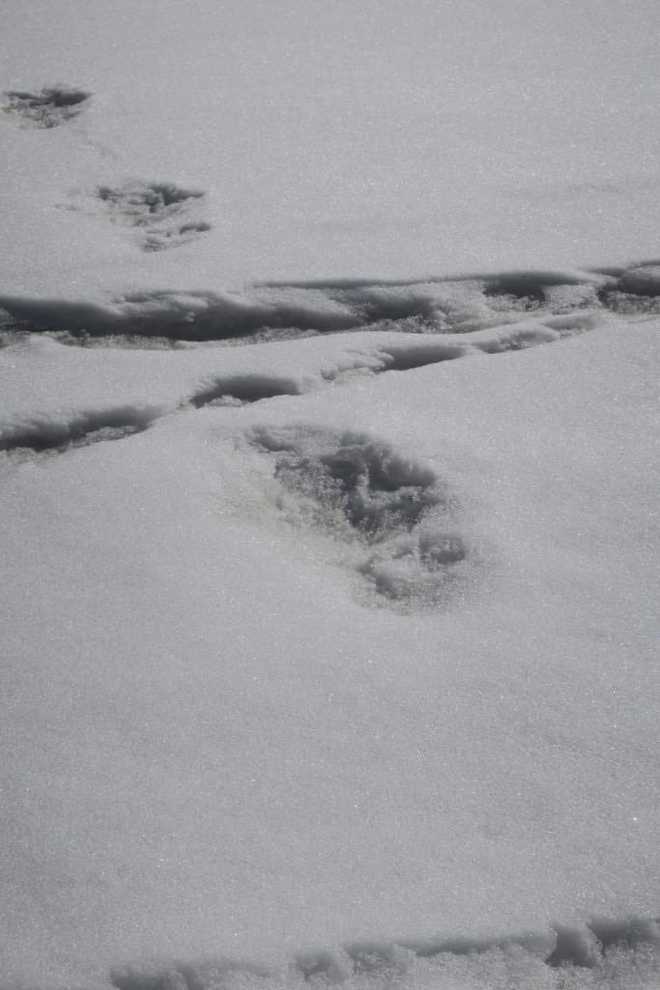
Indian Army’s mountaineering expedition team spots ‘Yeti’ footprints in Himalayas

Indian Army's mountaineering expedition team spots ‘Yeti’ footprints in Himalayas

t said the footprints measured 32×15 inches and were found close to Makalu Base Camp on April 9.

Tribune News Service
New Delhi, April 30

The Indian Army has released pictures of massive footprints in the snow, saying its mountaineering expedition team could have encountered the mythical and mysterious snowman, the Yeti.

“Moutaineering expedition team has sighted mysterious footprints of mythical beast ‘Yeti’,” the Indian Army official Twitter handle said on Monday night. The yeti is also known as the big foot and the Abominable Snowman.

It said the footprints measured 32×15 inches and were found close to Makalu Base Camp on April 9.  Makalu is in west-central Nepal.On Tuesday morning Army sources said the “Yeti sighting” tweet is based on physical proof of on-the-spot narration, photos and videos.

The Army said it held on to the photographic evidence for some 10 days before handing it over to experts.Makalu is the fifth highest mountain in the world (8,481 m), yet the trek to its base camp is a less-frequented route due to its relative inaccessibility.


Former IAF officer’s wife found dead at her house in Delhi’s Dwarka

Former IAF officer’s wife found dead at her house in Delhi's Dwarka

According to a senior police officer, the father of the deceased called her on Thursday night and asked about her health as she was not well. He wanted to visit her but she refused, he said.

New Delhi, April 27

The 52-year-old wife of a former IAF wing commander was found dead at her house in Dwarka, police said on Saturday.

The deceased had been identified as Neenu Jain, they said.

According to a senior police officer, the father of the deceased called her on Thursday night and asked about her health as she was not well. He wanted to visit her but she refused, he said.

On Friday morning, he again called her but she did not pick up the phone. Thereafter, her father and brother came to see her but noticed that the gate of the house was locked from outside, police said.

They entered the house from her neighbour’s side and saw Jain lying on floor unconscious, they said.

They called the police and rushed the woman to a nearby hospital where she was declared brought dead, police said, adding that the call was received at around 9 am.

A mobile phone, some cash and jewellery was found missing from the house, following which a case under Sections 302 (murder) and 392 (robbery) of the Indian Penal Code had been registered and investigation initiated, police said, adding that the cause of the death is yet to be ascertained.

Neenu’s husband is a retired Indian Air Force Wing Commander and currently working as a commercial pilot with IndiGo.

The couple has a son and a daughter. While the son, who works in an MNC in Noida, visits his parents on weekends, the daughter is a doctor in Goa, police said. PTI  


India, Pakistan trade heavy fire across LoC in Poonch district

India, Pakistan trade heavy fire across LoC in Poonch district

The Army retaliated “befittingly”, he added. File photo

Jammu, April 12

The Indian and Pakistani armies traded heavy fire on the Line of Control (LoC) on Friday in Jammu and Kashmir’s Poonch district, the Defence Ministry said.

“At about 8.30 am, Pakistan initiated unprovoked shelling using mortars and firing small arms along the LoC in Sawjian sector,” Ministry spokesman Lieutenant Colonel Devender Anand said.

The Army retaliated “befittingly”, he added.

Intermittent firing exchanges were still going on. IANS


Mother questions Army’s Shaurya Chakra process, says ‘unsung hero better than insulted one’

Meghna Girish wants to know why a recommendation for Shaurya Chakra for her son Major Girish, killed in 2016 in J&K, was changed to an official report mentioning a soldier’s gallant action.

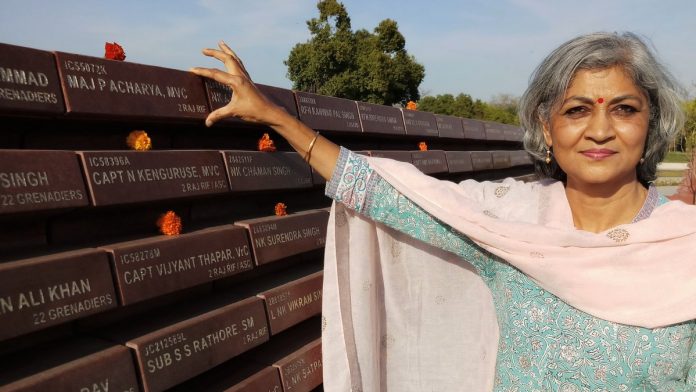
New Delhi: A soft-spoken social media-savvy mother is fighting for what she believes is the rightful “honour for her son”, and in the process, has turned the spotlight on the Army’s gallantry award procedure.

“An unsung hero is better than an insulted one,” said Meghna Girish, the mother of Major Akshay Girish, who was among seven soldiers killed in a terror attack on an Army camp in Nagrota, Jammu and Kashmir, in November 2016.

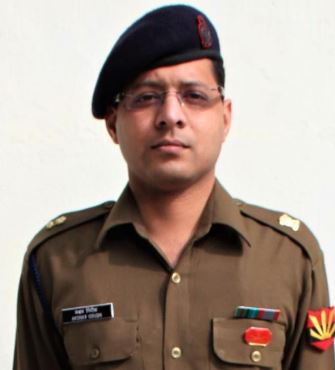
Major Akshay Girish | By special arrangement

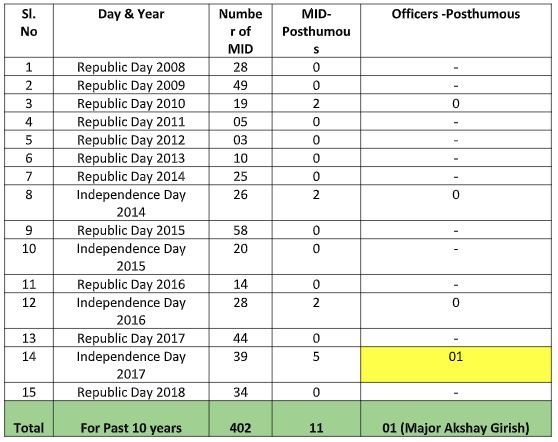
Stung by the Army naming her son under “Mention in Despatches (MID)” as opposed to awarding him the Shaurya Chakra — as recommended by his commanding officer for his “gallant action” — Meghna has been leading a campaign for Major Girish.

The Shaurya Chakra is the Army’s third highest peacetime decoration while an MID is just an official report mentioning a soldier’s gallant action in an attack. It is written by a senior officer and sent to the Army high command.

“I am not insisting on a gallantry award for Akshay,” Meghna told ThePrint. “What I am asking for is an explanation as to why my son did not get the Shaurya Chakra as recommended by his senior officers. I have not accepted the MID and it should be withdrawn because an unsung hero is better than an insulted hero.”

Her campaign has now received a major setback.

Army sources have told ThePrint that Major Girish’s family has been informed that a review committee, set up by Defence Minister Nirmala Sitharaman in January, has concluded that the MID award to the late Major cannot be upgraded or withdrawn.

Meghna had met Sitharaman, helped by BJP MP Rajeev Chandrasekhar, after which the minister had tweeted on 3 January, saying, “As assured by the Raksha Mantri, a Committee has been constituted with members, inter alia, as suggested by Meghna Girish to look into the supreme sacrifice made by her son Major Akshay Girish. Smt. Meghna Girish has been invited to depose before and assist the Committee”.

Meghna told ThePrint that on 25 March, she again wrote to Sitharaman reminding her of the committee.

“Elections are around the corner and while we hope to see our government back, you may or may not be our Raksha Mantri,” she wrote. “I appeal to you not to shatter the faith and trust reposed in you to resolve the long outstanding issue of due justice and honour to Major Akshay Girish. Please communicate your decision before 31st March 2019.”

The Major’s mother said on 30 March, an Army car stopped by her gate at 8 pm and some officers showed her a file. “The file just corroborates Akshay’s leadership, bravery and sacrifice to save lives. It neither referred to an award nor made a recommendation,” she said.

The Nagrota Attack

Just two months after the Army’s surgical strike in Pakistan-occupied Kashmir, Jaish-e-Mohammed terrorists, dressed in police uniforms, struck the Army’s 166 Field Regiment artillery unit in Nagrota on 29 November 2016. The unit comes under the 14 Corps.

On that day, Major Girish led a quick reaction team (QRT) at about 6.15 am to fight off three heavily-armed terrorists who had managed to sneak into the officer’s residential quarters by killing four soldiers at the entry gate. The families, which included children, were at risk.

According to the Major’s unit, 51 Engineers, he faced a hidden terrorist at close range. Despite being hit by multiple bullets, he returned fire for several minutes until a grenade, launched from a terrorist’s under-barrel grenade launcher, blew up his thighs.

His body was recovered only during combing operations late in the evening after the three terrorists had been killed.

Mother argues that CO recommended award

Meghna said the commanding officer of the 51 Engineers had initiated the note for the slain officer to be awarded the Shaurya Chakra.

“This was further endorsed by the GoC of the 14 Corps and by the Northern Army Commander,” she said. “But it got downgraded to the MID at the Army headquarters. Why?”

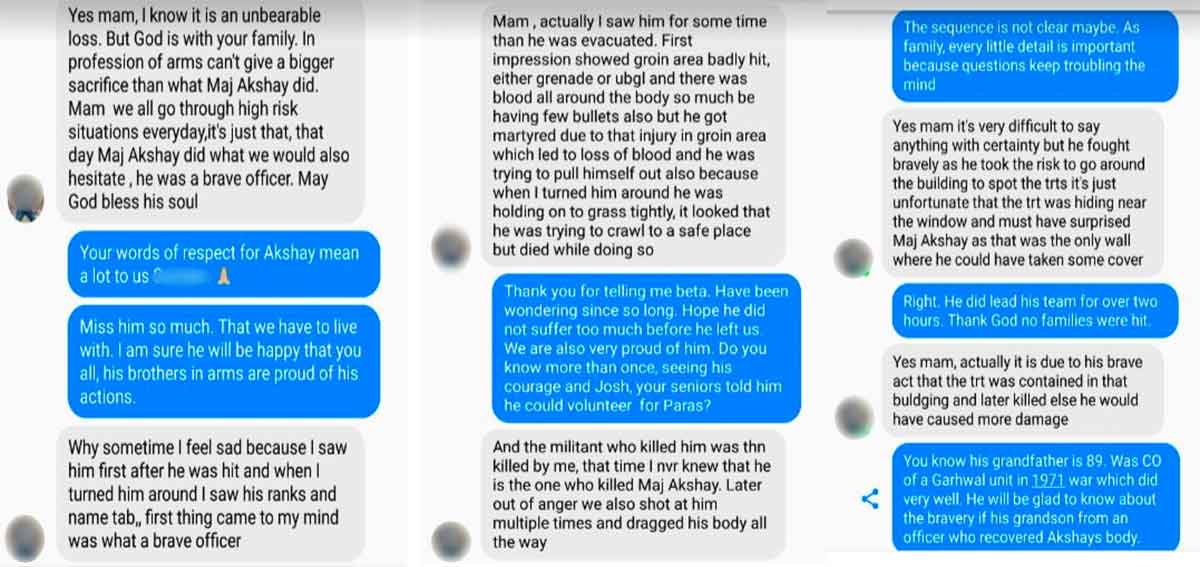
She has several messages from the Major’s peers, those of the special forces who led the operations and even senior officers, telling her how brave her son was.

Meghna further said that when she first met the Army chief, Gen. Bipin Rawat, in October 2017, he was very courteous and said he would look into the issue.

“When I met him again on 2 January 2018, he said that the citation written by the CO was not very strong. I agree that that the CO did not have battle experience and hence the citation could not have been very strong,” she said. “Even if the writing was not so strong, how come all of them, including the then Northern Commander, recommended him? What is the weight of all these officers then?”

Calling it a “systemic failure”, she now wants the procedure, for the grant of the gallantry awards, to be made more transparent so that the families of those killed “don’t have to go through this again”.

Army sources, however, told ThePrint that due diligence has been followed in the case. “From the first time he was awarded for the Nagrota operations to now, when the review committee looked into the whole issue, due diligence was followed,” a source said.

Asked about Meghna’s allegation that the Army was hesitant to award the Major with the Shaurya Chakra as the attack was an embarrassment for the force, the source added, “Major Kunal Gosavi was awarded Shaurya Chakra (posthumously) for the same operation. There is a proper mechanism in place for awards which has multiple checks and balances”.

The Army’s own Court of Inquiry into the terror attack is still on.


Also read: Not just Abhinandan’s story: Next time you cheer for soldiers, remember their families too


The process for gallantry awards

The Army follows a multi-tiered process in selecting personnel for a gallantry award.

The first note for a gallantry award is initiated by the commanding officer. This is then sent to the brigade headquarters, which then forwards it to the division headquarters with remarks.

From here, the file moves to the corps headquarters where it is processed by a board. The file eventually moves to the command headquarters where another board, consisting of four to five officers, reviews it.

“Only when the GoC-in-C of the command approves the board’s decision that the file is moved to the Army headquarters where another board consisting of the vice chief, the military secretary, the chief of military intelligence and others review it,” a source explained. “Their recommendation is sent to the Army chief who after his remarks sends it to the MoD for final approval.”

Asked if there is scope for improvement, former DGMO Lt Gen, Vinod Bhatia (retd) told ThePrint, “It is a proper system but there is no perfect system in the world.” He added that there are multiple checks and balances in place to ensure that the system works well.


Also read: PM Modi dedicates National War Memorial to India’s fallen soldiers after independence


Spike in gallantry awards

There has been a spike in gallantry awards over the recent years in comparison to earlier wars, such as the ones fought in 1965 and 1971.

The Army source, however, explained this by citing the duration of the wars.

“You will have to look at the duration of these wars,” the source said. “For example, the Kargil battle went on for three months and hence you will see a larger number of awards in comparison to earlier ones.”

“Also, the Indian Army is involved in day-to-day operations in a big way. And hence it would be completely wrong to compare today’s scenario with the earlier ones,” the source added.

Lt Gen Bhatia (retd) argued that awards are a motivation but underlined that laid down parameters have to be met.

“There is a certain yardstick that an act of gallantry has to fall within,” he said. “An award is a great motivation. A unit citation is also a great motivator. With Army involved in daily operations at the LoC and in Kashmir, the number of awards will naturally rise.”