Sanjha Morcha

What’s New

Click the heading to open detailed news

Current Events :

web counter

Print Media Reproduced Defence Related News

Exserviceman Rally and Medical Camp at Lebong Race Course on 25 March 2018

Exserviceman Rally and Medical Camp being conducted at Lebong Race Course under the aegis of Striking Lion Division on 25 Mar 2018. Max Veterans & Veer Naris requested to attend. @DefenceMinIn


Rs 50,000 reward for IMA, NDA entrants from Uttarakhand

Tribune News Service

Dehradun, March 16

Union Defence Minister Nirmala Sitharaman will be in Uttarakhand on March 25. She will be distributing cash awards to students of the state, who have been recently selected by the Indian Military Academy and the National Defence Academy. The award ceremony nomenclatured Shaurya Diwas was aimed to encourage young generation in the state to take up career in defence forces. Uttarakhand State Minister for Higher Education Dhan Singh Rawat presided over a high-level meeting to make the award ceremony a success.A cash award of Rs 50,000 will be given to the student, who has been selected in the IMA or the NDA recently. In case of absence of a student during the ceremony, his parents will be accepting the award. The award scheme is an initiative of the Uttarakhand Education Department.


Hostel opens for wards of defence personnel More facilities in U’khand, HP soon: Gen Rawat

Hostel opens for wards of defence personnel
Chief of the Army Staff Gen Bipin Rawat, Chief Minister Trivendra Singh Rawat and Pauri Garhwal MP Maj Gen BC Khanduri (retd) after inaugurating the Garhwal Rifles Regiment War Memorial Boys and Girls Hostel in Dehradun on Sunday. Tribune photo

Tribune News Service

Dehradun, March 18

Army Chief General Bipin Rawat today said they would soon open hostels for the wards of martyrs and serving and retired defence personnel in Himachal Pradesh, Arunachal Pradesh, Manipur, Nagaland and other difficult geographical terrains. He was addressing a gathering after inaugurating the Garhwal Rifles Regiment War Memorial Boys and Girls Hostel at Danda Lakhond here. He expressed gratitude to the Uttarakhand Government, regimental officers, jawans and others, who, he said,  had contributed generously towards the construction of the facility.Chief Minister Trivendra Rawat said children residing in far-flung areas could now avail the hostel facility and complete their higher education. He said another such hostel would come up in Haldwani. General Rawat said the state government had increased the grant provided to Sainik School, Gorakhal, from Rs 3 crore to Rs 5 crore. The Vice-Chief of the Army Staff, Lt Gen Sarath Chand, who is also Colonel of the Regiment Garhwal Rifles & Scouts, recalled how he conceptualised the hostel plan in Dehradun seven years ago.He said although he would be retiring shortly, he would continue to be connected to Uttarakhand through this hostel. He said an assistance of Rs 10 lakh was provided by the Garhwal Rifles Regimental Centre, Lansdowne, while each battalion of the Garhwal Rifles contributed Rs 3 lakh each. Maj Gen BC Khanduri  (retd), BJP MP from Pauri Garhwal, was also present during the inauguration ceremony. BJP MLA from Mussoorie Ganesh Joshi and a large number of ex-servicemen were present.


No lessons learnt: Vehicles on highways not checked

No lessons learnt: Vehicles on highways not checked
Security men patrol the Jammu-Srinagar highway. file photo

Tribune News Service

Jammu, March 8

The Jammu and Kashmir Police and other security agencies seem to have learnt no lesson even after several terror attacks in and outside Jammu district. There is no random checking of vehicles on the highways connecting the district.The police have established checkposts on the Jammu-Pathankot, Jammu-Srinagar and the Jammu-Poonch national highways, but policemen do not check any vehicle.There is no enhanced security on the Jammu-Pathankot national highway, where terrorists have carried out several attacks leading to killings of soldiers and civilians. The highway is sensitive as it is close to the International Border. On several occasions, militants, after infiltrating from Pakistan, have launched attacks on security installations along the highway.Similarly, the Jammu-Srinagar national highway has been used by militants from time to time to move and launch attacks. Intelligence agencies were of the opinion that three militants involved in the February 10 Sunjuwan terror attack had reached Jammu via this highway.The Jammu-Poonch national highway also assumes importance as it is the only road link through which supplies are carried to the Army and other security forces guarding the Line of Control. Major Army installations along the Poonch highway have time and again been the target of militants.Jammu IGP SDS Jamwal refused to comment, saying that he is busy and will talk about the issue later.NH used by ultras to launch attacks earlier   

  • The police have established checkposts on the Jammu-Pathankot, Jammu-Srinagar and the Jammu-Poonch national highways, but policemen do not check any vehicle
  • There is no enhanced security on the Jammu-Pathankot national highway, where terrorists have carried out several attacks leading to killings of soldiers and civilians
  • The Jammu-Srinagar national highway has been used by militants from time to time to move and launch attacks.


China hikes defence budget to $175 bn Over three times higher than that of India’s $46 bn

China hikes defence budget to $175 bn
Reuters file

Beijing, March 5

China today announced an 8.1 per cent hike in its defence budget in 2018 to a whopping $175 billion, over three times higher than that of India, as an increasingly assertive Beijing focused on the modernisation and reach of the country’s military, amidst simmering disputes with its neighbours.The announcement of China increasing its military spending comes as President Xi Jinping, the commander-in-chief of the country’s over 2-million-strong armed forces, focuses on cementing his status as the most powerful leader since Chairman Mao Zedong.(Follow The Tribune on Facebook; and Twitter @thetribunechd)The 8.1 per cent increase unveiled today is higher than last year’s budget allocation, when China upped military spending by 7 per cent over the previous year.According to a budget report to be submitted to the National People’s Congress (NPC), China’s parliament, the defence budget in 2018 will be 1.11 trillion yuan ($175 billion). China last year increased the defence budget to $150.5 billion. China is the second largest spender on defence after the US. The Pentagon has requested a budget of $686 billion in 2019, up $80 billion from 2017.The increase of China’s defence budget by 8.1 per cent this year is three times higher than India’s latest defence budget of about $46 billion.China will “advance all aspects of military training and war preparedness, and firmly and resolvedly safeguard national sovereignty, security, and development interests,” Premier Li Keqiang told the opening session of the NPC.“Faced with profound changes in the national security environment, the absolute leadership of the military by the ruling Communist Party must be observed, and the unity between the government and the military, and the people and the military must always be strong as stone, he said.The armed forces will firmly and resolutely safeguard national sovereignty, security and development interests, Li said. — PTI

Spent 1.3% of GDP on defence in 2017

  • The increased spending is seen as an indication of China’s strategic ambitions, as it continues to modernise its army — the world’s largest — and develop its infrastructure in contested areas like the East China Sea, South China Sea and its Himalayan border regions with India
  • China spent about 1.02 trillion yuan ($161.87 billion) in national defence in 2017, about 1.3% of its GDP

Disturbed’ India mulls options in Maldives

‘Disturbed’ India mulls options in Maldives
President Abdulla Yameen. Reuters file

Smita Sharma

Tribune News Service

New Delhi, February 6

India is mulling over possible options as it watches closely the sliding situation in the neighbouring Maldives. A day after issuing a travel advisory for citizens against “non-essential travel” to the Maldives, India, which said it was “disturbed” over the situation in the archipelago nation, reiterated its concern over the internal turmoil “following the refusal of the  government to abide by the unanimous ruling of the full Bench of the Supreme Court.” The SC Chief Justice and another senior judge were arrested today in dramatic developments after Emergency was declared by the government of President Abdulla Yameen. The SC had on February 1 ordered the release of political prisoners, including former President Nasheed, living in exile, as well as re-instatement of 12 disqualified MPs.(Follow The Tribune on Facebook; and Twitter @thetribunechd)“The government continues to carefully monitor the situation,” the Indian Government said. Sources dismissed media reports suggesting Indian aircraft and submarines had been put on standby after former President Nasheed’s sought India’s intervention. Nasheed tweeted: “On behalf of the Maldivian people we humbly request:1. India to send envoy, backed by its military, to release judges & political detainees including President Gayoom. We request a physical presence. 2. The US to stop all financial transactions of Maldives regime leaders going through US banks (sic).” Sources said the Defence Attache at Maldives Embassy in Delhi held conversations with officials in Directorate General of Military Intelligence and the latter denied such reports. India is looking at the option of restricting exports to Maldives under the 1981 trade agreement that offers Delhi certain privileges. But this could hurt the people on the ground the most. President Yameen remains defiant. In address to nation, he said: “There is no enforcement of a curfew and general movement, services and businesses are not affected. Nor is travel in and out of or within the country affected.”



Will deepen ties to fight Sino sea challenges: US Air Chief Expresses concern over China’s rising influence in Indo-Pacific region

Will deepen ties to fight Sino sea challenges: US Air Chief
Air Chief Marshal BS Dhanoa with US Air Force Chief Gen David L Goldfein in New Delhi. File photo

New Delhi, February 4

The Indian and the US air forces will significantly step up operational cooperation to complement the strategic interests of the two countries in the Indo-Pacific region, Chief of US Air Force General David L Goldfein has said, while expressing concern over China’s rising military influence over the area.Calling India a “central strategic partner” of the US in pursuing common interests in the region, he said two of the world’s largest air forces were going to jointly shift the focus on the Indo-Pacific region while asserting that the rules-based order must be preserved in the critical sea lanes.(Follow The Tribune on Facebook; and Twitter @thetribunechd)Goldfein, who held extensive talks with Air Chief Marshal BS Dhanoa and the top brass of the defence set-up during his three-day India visit that ended yesterday, said the “Quadrilateral” coalition among the US, India, Japan and Australia would provide for deeper cooperation between the Indian and American air forces.Asked if cooperation between the two forces would deepen in the wake of the four countries joining hands with an aim at containing China’s influence in the Indo-Pacific region, he replied, “I do (think so) and that is a big part of my visit and in my discussions here”.In June last year, two Lancer heavy strategic bombers of the US Air Force had conducted flights over the South China Sea, sending a clear message to China against its military build-up in the disputed area. Three US aircraft carriers — the USS Nimitz, USS Ronald Reagan and USS Theodore Roosevelt — have also been operating in the Indo-Pacific region.“We have common interests in preserving the rules-based order. So while we look for opportunities for partnerships, it is actually appropriate also for us to be critical for those who are trying to change that in ways that may not benefit the region,” he told PTI in an interview here.In November, India, the US, Australia and Japan gave shape to the long-pending “Quad” to develop a new strategy to keep the critical sea routes in the Indo-Pacific free of Chinese influence.Referring to “Quad” or “quadrilateral coalition”, the US Air Force Chief said there was a natural convergence among four countries to work towards preserving the rules-based order, adding cooperation between Indian and US air forces would increase at several levels. — PTI






Lt Gen Bhatt is 15 Corps GOC

Lt Gen Bhatt is 15 Corps GOC
Lt Gen AK Bhatt takes over as the Corps Commander of Chinar Corps from Lt Gen JS Sandhu. Tribune photo

Tribune News Service

Srinagar, February 1

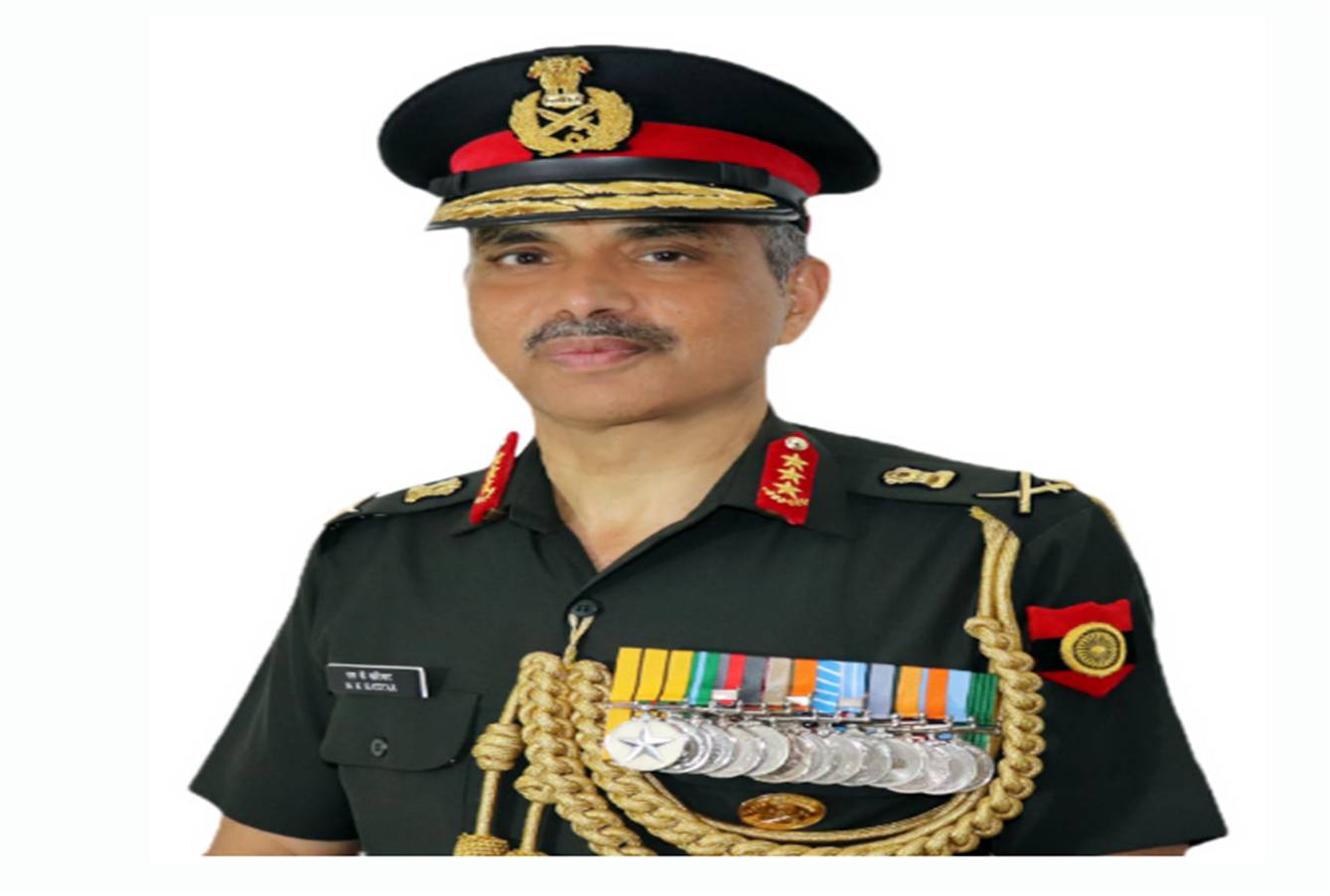
Lt Gen AK Bhatt has taken over as the 47th Corps Commander of the Army’s Srinagar-based sensitive and strategic 15 Corps, also called the Chinar Corps, an Army spokesman said.Today, Lt General Bhatt took over from Lt Gen JS Sandhu, who was given a befitting farewell at the Badami Bagh Cantonment here. Lt General Sandhu is proceeding to New Delhi to assume charge of the Military Secretary, the Srinagar-based Army spokesman said.Before taking over as the Chinar Corps chief, Lt General Bhatt was the Director General of Military Operations and was in charge of all Army operations, including on the Line of Control.The Army spokesman said that Lt Gen AK Bhatt was commissioned into the 9th Gorkha Rifles (Chindits) and has had an illustrious military career spanning 36 years during which he has held varied prestigious command, staff and instructional appointments.“The General Officer Commanding has an incisive understanding of J&K as he has served here thrice before,” the spokesman said.A graduate of Staff College, Camberley, UK, Lt General Bhatt has also held several appointments at the Army Headquarters and had an instructional appointment at Commando School, Belgaum. The General Officer Commanding of the 15 Corps has also represented the country as the Deputy Force Provost Marshal in Lebanon.On assuming charge, Lt General Bhatt conveyed his greetings to the ‘awaam’ of Kashmir and the entire Chinar Corps fraternity.Lt General Sandhu’s tenure will be defined by the successful execution of ‘Operation All-Out’ launched by the security forces in the Valley. During the operation, a large number of militants were eliminated in the Valley.


AF officer detained for ‘spying’

IAF officer detained for ‘spying’
Photo for representation only. Source: iStock

New Delhi, January 31

An Indian Air Force Group Captain, equal to Colonel in the Army, has been detained by the IAF’s counter-intelligence unit for possible espionage and exchange of classified documents,  routed through  a  woman.The officer, an  instructor but not in the flying  branch, struck friendship with the woman on Facebook and then took to WhatsApp over which he passed on certain classified  documents.(Follow The Tribune on Facebook; and Twitter @thetribunechd)Posted at the IAF headquarters in New Delhi, the officer had access to certain levels of plans and documents. Sources suspect he may have been ‘honey-trapped’ after his ties with his woman friend grew deeper. The identity of the woman is not clear. The IAF suspects more people may be involved in the ring.Armed forces officers can have a social media presence but are barred from posting their pictures in uniform, revealing  their place of posting or any official material, information on visits or plans regarding operations.Each letter or document in the armed forces is graded for security as confidential, secret, classified and top secret. — TNS


The LoC Ceasefire In The Context Of The Times by Syed Ata Hasnain

An Indian Army soldier patrols on the fence near the India-Pakistan LOC. (Gurinder Osan/Hindustan Times via Getty Images)An Indian Army soldier patrols on the fence near the India-Pakistan LOC. (Gurinder Osan/Hindustan Times via Getty Images)


Snapshot
  • Although the Army still ensures its best go to some of the core formations at the LoC, it needs to restore the LoC doctrine to its rightful place in the hierarchy of operations that it undertakes.

A total of 12 Indian citizens have lost their lives in January 2018 in the frequent violation of ceasefire, which has led to heavy exchanges of firing between Indian and Pakistani troops along the Line of Control (LoC) and the International Border (IB) of the Jammu sector. The public remains insufficiently informed about the circumstances and reasons for these exchanges and why it is difficult halting them.


There is actually no ceasefire agreement between India and Pakistan except the Simla Agreement of 1972, which is much larger than just something related to ceasefire. That entire agreement is characterised more by its flouting than adherence. The ceasefire brought into effect on 26 November 2003 was only a verbal reiteration drawn up on the basis of some behind the scenes parleys wrongly flagged as unilateral by Pakistan. Simplifying ceasefire violations by relating them to tactical ploys such as construction of bunkers or even just infiltration obfuscates the reality of today. That is why the entire gamut of exchange of fire across the LoC in such intensity as to cause serious casualties among civilians and service personnel and displace entire villages, needs to be seen in the context of the times.

Prior to November 2003, exchange of fire across the LoC was a common phenomenon but casualties were probably lower, although I do not have statistical data to back my claim. The protection of civilians who live in the danger zone was also mooted several times with proposals for construction of ‘community bunkers’. In 2003, this had reached a degree of finalisation for the Uri sector as a demonstration model. It was shelved as soon as the ceasefire came into place. As someone who was in and out of Kashmir quite frequently, I did perceive a waning of interest in our own ranks on the necessity of always being prepared for a full abrogation of the unwritten ceasefire accord.

The progressive hardening of defences at the LoC, the will to maintain bunkers with full overhead protection (OHP) with soft earth and creation of baffle walls to prevent the adversary even a peep into our defences are all pragmatic measures which units take to maintain a high degree of preparedness. The focus on counter infiltration took away much of this attention and the Army cannot be entirely blamed for this because irregular warfare does have a compromising effect on conventional preparedness. Currently, both the government and the Army have pulled out all stops and a high degree of freedom exists. The higher casualties at the hands of Pakistani snipers, is because of the slight compromises in training and infrastructure. Sniping must return almost as a trade and infrastructure needs continuous upgrade, for which funds are needed.

Why the ceasefire came into being in November 2003 has always remained a moot question. It gave India a distinct advantage of pursuing the construction of the LoC fence as close to the LoC as possible. At best, one can surmise that it suited the trend of the times which was to ease the situation towards negotiations and eventual settlement. It grinded into the dust progressively with the situation changing after the Lal Masjid incident in 2007 and the Mumbai terror attack in November 2008. It worsened after 2011, as Pakistan sought to return to earlier times using the LoC for more infiltration as its efforts within Kashmir came to be largely neutralised.

In 2016, it sensed an opportunity and activated all domains in the kinetic segment of the proxy war; this meant street turbulence, Fedayeen actions, BAT actions (actions by specially constituted joint teams of regulars and terrorists to target Indian patrols at the LoC), shallow infiltration strikes at HQ of units and formations in the vicinity of the LoC, infiltration and cross border firing. India’s robust response through surgical strikes, strong counter fire at the LoC, effective counter infiltration and fairly quick control over the hinterland situation through 2017 has created a piquant situation for Pakistan and the separatist elements. The LoC is the only location where its operations have scope to remain under its control, notwithstanding the strong Indian response. It could also be calibrated to an even higher level encompassing all domains, if India chooses to do so.

How should the above situation be viewed from a contextual angle of the political, diplomatic and military situation vis-a-vis India and Pakistan? Can there be a lasting halt to the exchanges with some form of ceasefire agreement, independent of the larger J&K situation? These are the questions that analysts need to examine.

Politically, both Pakistan and India have been through a rough ride in their relationship beginning from the Pathankot terrorist action in early , which effectively scuttled all peace efforts of the Narendra Modi government. Pakistan chose to up the ante through 2016 leaving India on the defensive by the end of the year. However, in a strong riposte in 2017, India’s security forces regained control of the internal situation. Some effective non-military measures also supported these efforts, the targeting of financial networks being the most significant. Midway through the year the political situation in Pakistan changed drastically with the fall of the Nawaz Sharif government and creation of a political vacuum into which all kinds of elements are attempting to rush and gain mainstream status. Prominent is Hafiz Sayeed and his newly formed Milli Muslim League.

The situation in Kashmir having come under greater control of the Indian establishment, Pakistan’s deep state finds its options of promoting turbulence under greater challenge. It has little option but to try and increase the temperature at one place where it has relatively more control on the situation and ability to take initiative; the LoC.

The LoC runs in three segments of J&K; the Ladakh region with Siachen and Kargil sectors (the Siachen part is also referred as the Actual Ground Position Line – AGPL), the Valley region and the Jammu region. In addition the fourth segment is the IB sector of the Jammu region. Each of these has its own dynamics with the Siachen and Kargil sectors generally quiet; no infiltration attempts have been made in Kargil either and the LoC has seen no attempts at any exchanges of fire or interference with the Srinagar – Leh highway as was prevalent prior to the Kargil operations in 1999. The Valley region has the LoC stretching from Gurez through Machil, Keran, Tangdhar, Lipa and Uri to Gulmarg. Infiltration attempts have been numerous and with low snow levels this year, have been continuing even into winter.

However, there isn’t enough evidence to link infiltration with the occasional firing that has taken place along the LoC in the Valley region. It is at the LoC in the Jammu region from Poonch to Mendhar, Rajouri, Naushahra and Akhnoor that all the ingredients of typical trans-LoC firing exchanges have occurred. Frequent exchanges have taken place at traditional spots with attempts at infiltration, a BAT action in the Pir Bhadeswar area and targeting of civilian populated areas. In Jammu’s IB sector the firing is intense and focused towards disrupting life of the civil population and possibly small terrorist team infiltration.

So what deductions can we draw from the above inputs?

First, that the Ladakh region does not really matter to Pakistan because extension of the LoC engagement zone will only force frittering of Pakistan’s resources which are as it is stretched.

Second, infiltration has no connect with Ladakh because no infiltrated elements can reach their destinations of choice in the Valley, so why waste ammunition and risk escalation in an area where Pakistan was roundly defeated in 1999.

Third, the Valley’s LoC areas are such that response from India will effectively make life impossible in areas such as Keran and Nilam Valley on the PoK side. Initiating fire assaults at one point may help in diversion of attention of the Indian Army to afford infiltration attempts at another. BAT actions have taken place in this part of the LoC in the past and will probably take place in the future too. Infiltration although an option, the strong Indian counter infiltration grid runs several layers deep and isn’t easy to penetrate.

Fourth, in the Jammu LoC segment the impact of firing and other actions helps Pakistan keep the LoC alive and presents an enlarged area supposedly in turbulence, for projection to the international community. The Jammu division of J&K is devoid of terror activity so activation of the hinterland is almost impossible.

Fifth, the IB sector appears the most lucrative from the point of view of impact and potential for exploitation. It has a largely Hindu population the targeting of which raises feasibility for creating divisions within J&K and within rest of India. Amidst the chaos of cross border firing, infiltrating an odd Fedayeen team to target the Samba-Kathua zone is always possible. It offers the shortest haul among all infiltration routes, from launch pad to target area through a comparatively much less dense Indian counter infiltration posture.

Thus around Army Day – Republic Day period, in particular, this keeps the Indian side concerned about threats to possible vulnerable areas and vulnerable points. Pakistan’s strategy also appears intensified when some major political or international event is in the offing in India, for instance, the ASEAN-India Commemorative on 25 January 2018.

If the rationale is understood, one can summarise just why Pakistan likes to keep the LoC active at different times and particularly at this time:

  • Helps withstanding US pressure; it’s Pakistan’s way of demonstrating independence of action, outside US control.
  • Assists in keeping J&K in the international limelight when there is insufficient powder for internal turbulence.
  • Into 2018 and beyond the LoC may be the area for pressurising India through collusive and simultaneous coercion in sync with China’s strategic requirement.
  • To allow the Punjab based friendly groups their glory under the sun through infiltration and attempted targeting of soft targets. When political stakes for these elements are also high in 2018 more of this is likely.
  • Provides scope for selective targeting of civilian population with its fallout on India’s fault lines.

The question then arises on how Pakistan can be made to pay dearly for its folly and thus raise the cost of its misdemeanour. The actions outlined need to be all taken simultaneously:

  • It is well known that Pakistan too has been suffering heavy casualties among civilians and its soldiers. While desisting from focusing on only civilian areas our strong pro-active stance must look at Pakistan’s LoC defences and if civilian areas incidentally come within the ambit let these be vacated by Pakistan. The quid pro quo has to work to effect.
  • We need to target specific areas of the Valley’s LoC segment where our domination is strategically complete. From Lipa to Keran there is enough scope for that, including putting an end to the usage of the Nilam Valley road for both military and civilian movement. The cost of this measure will be very high for Pakistan which has some tenuous infrastructure through bypasses to serve Athmuqam and areas beyond Keran.
  • Sniping must be undertaken in a bigger way and special teams of snipers should be trained for this purpose to restrict freedom of movement on the other side.
  • Our own movement along the LoC and IB must be minimised and logistics resorted to by night or by only covered routes.
  • Retribution for Pakistani action must be as swift as the one carried out at Rakh Chikri on 25 December after the Pakistani BAT action at Pir Bhadeswar. In fact, there should be multiple points for retribution, as in the case of the surgical strikes. There should be no limit to the depth in which such operations need to be carried out.
  • The IB sector needs selective reinforcement of the second tier which the Army has been doing in the past and is also probably currently following. The National Highway from Pathankot to Jammu needs to be treated as the virtual limit of infiltration.
  • The Army constructed the LoC Fence in record time of 15 months in 2003-2004, with almost six months of non-working time. It was done with additional engineer resources and a strong dose of financial support and management. There is a need to repeat this in terms of the LoC defensive infrastructure in order to harden defences and create multiple locations for direct firing weapons.
  • 1,400 community bunkers have been sanctioned by the government. Before the construction begins it would be prudent to have the designs vetted by Army engineers. The distribution of these must be done on as required basis with the Army and Border Security Force (for IB sector) certifying the quantum and locations in the various villages. A time limit must be laid down for completion with no allowance for slippages.

While the Army is adept at war gaming conventional warfare situations it now needs to look at war gaming the management of the LoC to thoroughly examine every nook and crevasse along the more than 750 km front. In the pre-2003 period LoC soldiering and leadership was considered a specialised job. Although the Army still gives credence to ensuring its best go to some of the core formations at the LoC it needs to undertake a mission to restore LoC doctrine to its rightful place in the hierarchy of operations that it undertakes.

It is also important that the public should know that it is not India’s intent to remain in a LoC standoff against Pakistan in perpetuity. It is not a game of military ego but of pragmatic politico-military diplomacy. As long as our aim and intent is achieved we need not take this engagement beyond. Which is why this strategy has to be played out in total sync between the ministries of Defence, Home and Foreign Affairs plus the National Security Agency Secretariat with the Cabinet Committee of Security being in the loop at all times.

Return to ceasefire is always possible once Pakistan is made to realise that burning its hands at the altar of India’s size, capability and resources is always going to be a messy affair which will not fetch it the strategic dividends it seeks.