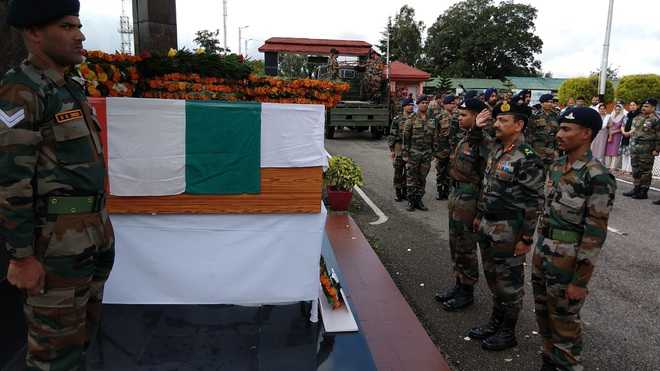
Army jawans salute the martyr at Holta Army Cantt. Photo: Ravinder Sood
Our Correspondent
Palampur, September 29
The mortal remains of Lt Col Rajneesh Parmar, who died in a chopper crash in Bhutan, were consigned to flames this evening with full state honours at Akshana temple, Nanao, in the presence of a large number of people, who had come from far-flung areas to pay tributes to the officer.
A pall of gloom descended on the village, 15 km from here, this afternoon when the body of 42-year-old martyr was brought to his native village. Rajneesh had lost his life when an Army chopper crashed near Yongphulla in Bhutan on Friday. Parmar was posted in the Northeast to train the officers of Bhutanese army.
Earlier in the morning, his body was airlifted to the Army helipad at Holta Cantonment, 3 km from here, in an Army helicopter where it was received by senior Army and civil officers.
During a brief halt at Holta Cantonment, Major General AK Samantra of the DAH Division of the 9th Core laid wreath on the body on behalf of the Army and paid condolences to his family. Later, his body was taken to his house at Maranda.
His body was received by local residents, family members, relatives and officials of the district and police administration.
Vipin Singh Parmar, state Health Minister, laid a wreath on behalf of Chief Minister Jai Ram Thakur. Earlier, he called on the family of the martyr at his residence.
Most personnel in the 3-lakh-strong CRPF — the country’s largest paramilitary force and its counter-insurgency spearhead — are paid a Rs 3,000 “ration allowance” along with their monthly salary. Officials said the troops spend the sum on their meals at their camps’ mess and canteen.Telegraph file picture
AddThis Sharing Buttons
Central Reserve Police Force personnel are set to be starved of their monthly “ration allowance” by the Narendra Modi dispensation that swears by national security, apparently because of a cash crunch triggered by the economic crisis that the government denies.
Most personnel in the 3-lakh-strong CRPF — the country’s largest paramilitary force and its counter-insurgency spearhead — are paid a Rs 3,000 “ration allowance” along with their monthly salary. Officials said the troops spend the sum on their meals at their camps’ mess and canteen.
An internal communication the CRPF has sent to its formations across the country says the allowance will not be paid with September’s salaries because the home ministry is yet to release a tranche of Rs 800 crore despite reminders in July, August and this month. The Telegraph has a copy of the communication, dated September 13.
“This is the first time the ration allowance has been stopped. We spoke to ministry officials last week about the pending money and they mentioned the faltering economy,” a senior CRPF officer at the Delhi headquarters said, adding that the ministry had not cited any official reason.
He said the allowance frees personnel from having to constantly watch their pockets while buying food. “It helps personnel to keep themselves fit for fighting militants and Maoists,” he added.
The CRPF officer said: “The decision to withdraw the allowance goes against the Prime Minister’s claims of strengthening the forces to keep them in fighting shape.”
The CRPF battles insurgency in Jammu and Kashmir, the Northeast and the Maoist belt.
The internal communication said the force had nudged the home ministry on July 22, August 8 and September 9 “for allotment of additional fund amounting Rs 800 crore so that continuous ration money allowance could be drawn with regular pay but allotment of additional budget is still expected from MHA”.
“As no reserve fund under COR (cash on reserve) is presently available, therefore it is not feasible to draw ration money allowance from the pay of September 2019. Hence, stop drawal of ration money allowance from the pay of Sept ’19 till further orders. Please inform all concerned personnel accordingly.”
Contacted, CRPF deputy inspector-general (intelligence) Moses Dhinakaran played the issue down, saying the ration allowance had been increased slightly this year and the fund got exhausted in July after arrears of Rs 22,194 were paid to personnel.
“It will be resumed once we get the additional funds from the home ministry,” he said.
He declined comment on the ministry’s failure to release the money despite repeated reminders.
All non-gazetted CRPF personnel — constables, head constables, assistant sub-inspectors, sub-inspectors and inspectors — receive the ration allowance.
Sources said the force headquarters was receiving frantic calls from personnel across the country, asking about the imminent stoppage of the allowance.
“Most personnel got panicky after learning about the stoppage. It’s very difficult to keep up the morale of troops posted in hostile conditions under these circumstances,” a senior CRPF officer said. “Like the army, a paramilitary force marches on its stomach.”
Armed forces personnel, unlike their paramilitary counterparts, receive free rations. So do the two paramilitary forces under the army’s operational control: Assam Rifles and the National Security Guard.
It could not be confirmed whether the ration allowance was being stopped also in the remaining central forces: the Border Security Force, Central Industrial Security Force, Indo-Tibetan Border Police and the Sashastra Seema Ba
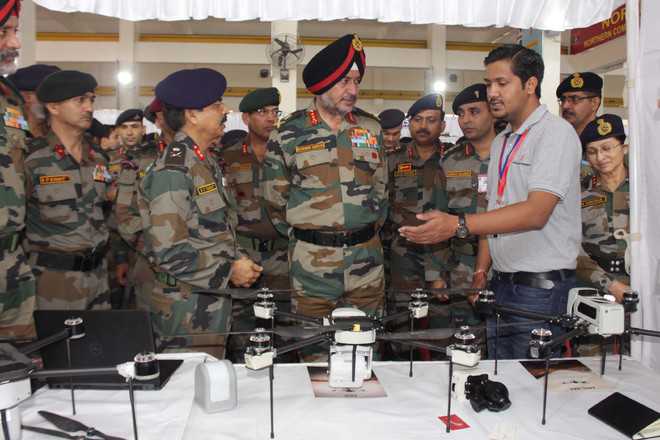
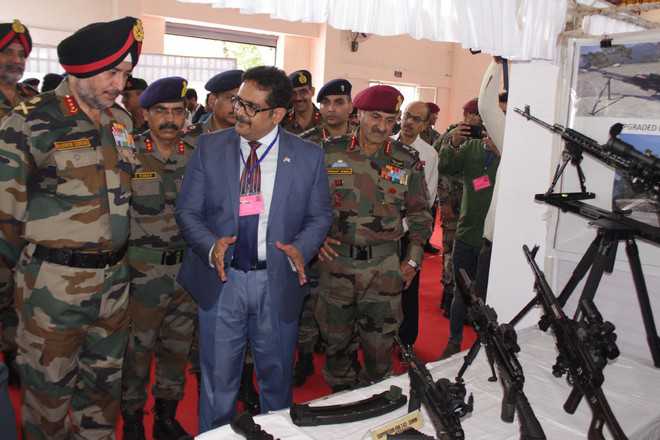
The North Tech Symposium-2019, an annual event organised under the aegis of the Northern Command Headquarters, was inaugurated by Lt Gen Ranbir Singh, GOC-in-C, Northern Command, on Friday.
The event based on the theme, “Empowering northern theatre with contemporary technologies to meet dynamic operational challenges” had active participation from nearly 100 defence companies, including MSMEs, DPSU and Simulator Development Division.
The symposium served to showcase cutting-edge technologies and innovative products providing solutions to complex challenges faced by the security forces in the Northern Command and also acted as an ideal platform for mutual exchange of ideas between the defence industry and the Army.
The technologies and products on display covered a wide canvas, prominent being surveillance and situational awareness, tactical mobility, firepower, soldier, force protection, communications, combat medical, robotics, simulators, training aids and many others.
The symposium achieved great success in building an Army and industry relationship with the common objective of developing customised and effective solutions for the Army and progress towards self-reliance in the defence industry to align with the government initiative of Make in India.
The base to be developed on 120 acres would help in swift counter-terror operations in Punjab, Jammu and Kashmir and Himachal Pradesh. Reuters file
Tribune News Service
Chandigarh, September 26
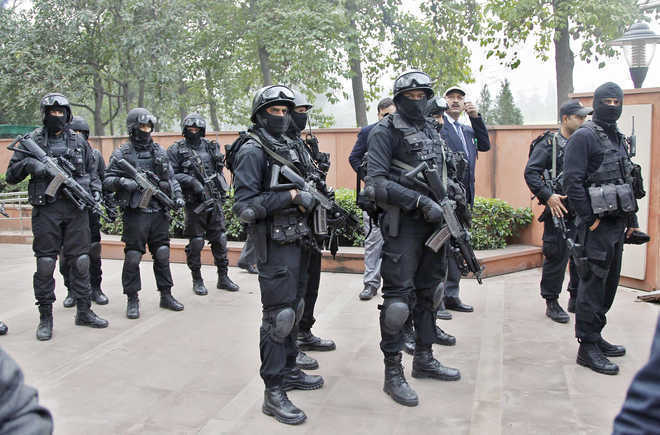
The Punjab Government has approved the Centre’s plan to set up a base of the National Security Guards in Amritsar. The base to be developed on 120 acres would help in swift counter-terror operations in Punjab, Jammu and Kashmir and Himachal Pradesh.
Chief Minister Capt Amarinder Singh had pushed for setting up of such a base in Pathankot in 2017 during a meeting with then Home Minister Rajnath Singh. The development hold significance in view of attempts to revive militancy in Punjab and fresh threats from across the border.
Home Secretary Satish Chandra told The Tribune that the government had started the process to identify land for setting up a base for the NSG. “We will acquire land for the NSG base. The setting up of such a base has become quite imperative in the state,” he said.
Already, the state Special Operations Group (SOG) is fully functional. The need for SOG arose after the attack on the Pathankot Air Force base in 2016. The NSG teams from New Delhi were called in to eliminate the terrorists hiding in the base.
Sources in the Police Department said the NSG base in Amritsar would be ideally located so that commando teams can be swiftly moved in the state besides Jammu and Kashmir.
Pak terror groups use Chinese drones to airdrop 80 kg weapons in Punjab for J&K
The entire consignment, using the Khalistan Zindabad Force (KZF) network, was supported by Pakistan’s spy agency Inter Services Intelligence and orchestrated through Germany and Lahore; the ultimate aim — to fuel terror attacks in Jammu & Kashmir.
At least eight drone sorties, carrying a total of 80 kg of weapons (arms and ammunition), were sent across the border into Punjab by Pakistan-based Khalistani terror groups between September 9 and 16, officials in security agencies and the Punjab Police have confirmed on condition of anonymity.
The entire consignment, using the Khalistan Zindabad Force (KZF) network, was supported by Pakistan’s spy agency Inter Services Intelligence and orchestrated through Germany and Lahore; the ultimate aim — to fuel terror attacks in Jammu & Kashmir.
Five people have so far been arrested by Punjab Police in connection with the drone drops, with one 22-year-old Subhdeep held on Tuesday. Investigators said he was from Amritsar district and was radicalised by the prime accused in the case, Mann Singh, and another accused, Akashdeep, in Amritsar jail. The other four people, suspected to belong to a terror module, were arrested from the outskirts of village Chohla Sahib in Tarn Taran on Sunday. They were using a white Maruti Swift with a Punjab registration number.
The investigation involved multiple agencies – the Punjab Police, central security agencies, the Border Security Force, the Indian Air Force – and prima facie found that multiple Chinese commercial drones with 10 kg payloads have been used in the weapons drop operations across the border. The drones, the investigation reveals, may have been launched from locations 2 km inside Pakistan and made to travel the distance of five kilometres at a height of 2,000 feet, and then dropped off the weapons after descending to 1200 ft. The payload was slung from the platform using Chinese mountaineering ropes.
Chinese batteries recovered from the drone that crashed in Tarn Taran, Punjab. ( Sourced )
With drone activity also being seen in Punjab’s Ferozepur district, the IAF and BSF have been asked by the Punjab police to intercept these unmanned aerial vehicles through low-level radars and destroy them. Officials fear that they could also be used to carry and drop off bombs.
The interrogation of those arrested has revealed that KZF’s Germany-based operative Gurmeet Singh Bagga in coordination with his Pakistan-based chief Ranjeet Singh aka Neeta have made deliveries of at least four weapons, grenades, electronics, and fake currency through drones. The deliveries were made on the intervening nights of September 6/7, 9/10 and the last one on 15/16. The last drone crashed at Rajoke Village, Khalra police station, in Tarn Taran, near a border drain which is 2km from the fencing on the international border with Pakistan. The entire operation came to light after the discovery of the burnt drone, whose eight Chinese batteries were stripped off by the accused on instructions from across the border. “ It has also been revealed that such deliveries took place on four different dates, mostly between 9.30 pm and 10.30 pm with the drone making two sorties within an hour,” said a senior Punjab Police official. As many as five AK-47 rifles, which weigh about four kilograms with magazine, four Chinese pistols , nine HE grenades, Rs 10 lakh fake currency, 1000 rounds of ammunition and two electronic receivers were recovered by the police from the accused.
The main concern of Indian security agencies is the revelation that entire consignment was meant for Islamist groups in Kashmir. “ We are not very clear as to how many other consignment has made their way into Kashmir using similar modus operandi and with the help of Pakistan based Sikh terrorists,” said a senior security official.
Jeep captured from Pak in 1971 stands as ‘war trophy’ in army camp near Leh
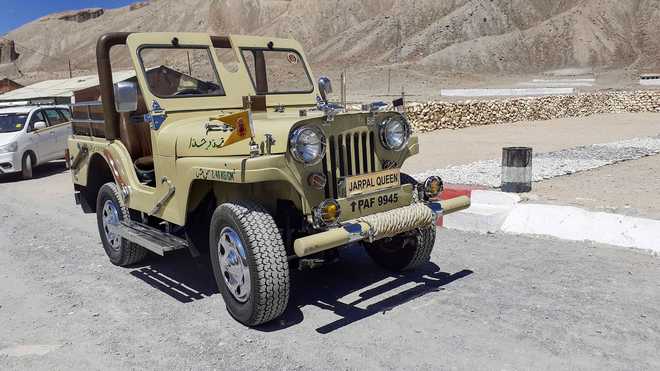
A Pakistani jeep captured by the 3 Grenadier Regiment in the 1971 war, stationed in the unit”s camp, 40 km from Leh. PTI
Leh, September 8
All of 48 years and maybe more, the ‘Jarpal Queen’, a symbol of India’s triumph against Pakistan, travels through the length and breadth of India as a ‘war trophy’ of the Indian Army.
The ‘Queen’, named after Jarpal in Pakistan, is actually royalty on four wheels, a Willys jeep, sleek, shiny and in shipshape condition, the object of lavish attention at the 3 Grenadier Regiment’s camp, 40 km from Leh.
The vehicle, with Urdu script on its sides, is a “war trophy” captured from Pakistan during the 1971 conflict.
Once fitted with a recoilless gun, this US-origin jeep now travels across India as a prized possession of the Regiment, which has ensured the almost 50-year-old vehicle moves like a well-oiled machine.
“We captured it during the Jarpal war and it was used by the Pakistani army as a part of their attack plan at Shakargarh border, in Jarpal area of Pakistan. So, it was named Jarpal Queen. From that war, India has two Param Vir Chakra medals,” said Colonel (retd) J S Dhillon.
The two Param Vir Chakra awardees were Colonel Hoshiar Singh from the Grenadier Regiment and Second Lieutenant Arun Khetrapal from the Armoured Regiment.
“It is a ‘war trophy’ and was shown to VIP guests and was also used during guard of honour for senior officers. It is in great condition and runs very smoothly,” said Dhillon, a Sena Medal recipient who was commissioned in the 3 Grenadier Regiment in 1982 and now heads the Indian Institute of Skiing and Mountaineering, Gulmarg, under the Ministry of Tourism.
He said the ‘Jarpal Queen’ had gone wherever the Regiment has been stationed. Jaipur, Kupwara, Shimla, Poonch, Meerut, Ferozepur… the list is long.
In 1988, when the Regiment was in Ferozpur in Punjab, the jeep was registered with the Punjab transport department for it to be driven on the road.
“We took a number, insured and registered it. As far as I can recall, except the regiment’s UN mission to Eithopia, the jeep has gone everywhere with them,” said Dhillon.
The jeep has also been witness to numerous border skirmishes with the neighbouring country, particularly during the regiment’s stints in Jammu and Kashmir.
A full-scale war broke out between India and Pakistan over East Pakistan in 1971. It ended with surrender of 90,000 Pakistani troops and led to the creation of Bangladesh. — PTI
J&K: Time for strategic review by Lt Gen Syed Ata Husnain
The general perception in the Indian public’s mind is that the abrogation of Articles 35A and 370 had led to a situation where the J&K issue is done and dusted. That is furthest from the truth although I believe it is currently advantage India, at least temporarily. While India has for the first time after 25 years aggressively opted to change the existing status quo, the triggers that it has caused have given rise to a series of fresh threats which it needs to take stock of. It was last on February 22, 1994, India messaged the world that all territories of J&K including those not under its direct control belonged to India and it would aspire to regain them. That was a unique case of political consensus when all parties came together in a Joint Parliamentary Resolution to stake India’s claims in the wake of aggressive diplomacy by US Assistant Secretary of State Robin Raphael against India. Pakistan took advantage of that situation to press allegations of human rights violations and attempted to internationally take India to the cleaners; something which never ceased since then.
In 25 years since 1994, India has attempted to change the strategy of dealing with J&K in any domain only twice. First was in 1996 with the return to democracy. The second was the secret backroom dialogue on the ‘four point formula’, from 2004 to 2007, with intent to territorially resolve J&K; it failed. Since 2008, there have been ups and downs but a policy resolve towards the adoption of fresh strategy has been elusive, until now. The decision to adopt proactive military response without a Pakistani military initiative was taken in 2002; it did then and has continued to keep Pakistan under pressure. Why the status quo ruled the roost was due to there being governments in New Delhi and Srinagar which remained happy at that as long as the security situation remained under control. The Separatist leadership led their lives with full government support. The government had the fond hope that it could one day do a ‘Mizoram’ with them; militants coming over ground, fighting elections and forming the government. To be frank, the one time both Article 370 and 35A could have been done away with and the people of J&K brought on board towards full integration was after the victory of 1971. Kashmir may have reacted with turbulence for some time but with Pakistan cut to size and 93,000 prisoners of war in India, there could have been nothing better.
The Government of India is hopefully aware of the fact that the major issue due to which an impasse has existed this long in J&K, has been the absence of strategic policy which has forced the security forces too to follow a policy of summer and winter strategies without ever looking at the larger picture and having a strategic aim. The recent statements by the Raksha Mantri, Shri Rajnath Singh, on PoK and No First Use in the nuclear domain may not be policy statements but do indicate a change in mindset towards a clearer strategy. However, for the short term, India has to cater to increased Pakistani efforts towards internationalisation and upping the ante through high-profile terror acts. The feasibility of street turbulence at high pitch appears comparatively low. The efforts to control the latter many times compromise the pace and effectiveness of counter-terrorist operations.
As the government readies itself for what could be a temporary phase of violence through enhanced attempted infiltration and street turbulence, it needs to continue to build a long-term strategy. This should aim at emasculating Pakistani capability of calibration and neutralise the efforts at internationalisation through high levels of diplomatic and intellectual engagement. Second, it must equally focus on PoK, Gilgit and Baltistan taking a cue from the Raksha Mantri; these cannot remain one-off personal utterances. Third, of which the first portents seem to be emerging, remains the necessity of getting the civil administration to have a self-belief that this proxy war is not just the business of the Army, JK Police and CAPFs; it’s a hybrid proxy war which needs to be addressed comprehensively. Seeing the J&K Chief Secretary and Principal Secretary Home giving media briefs appears to spell for me a change in tack. That is the way forward.
There are four other things which fall in the strategic domain. First is human rights (HR). Peaceful protest is very much a right but vicious stone-throwing does not fall in that category. There is going to be a manipulated assault on India in the domain of HR internationally. I sense it and can only recall the strategy of political consensus as the best response; who can forget the face of Atal Bihari Vajpayee leading the Indian delegation to the first ever UNHRC conference at Geneva in Jun 1994.
The second is the dire necessity to continue with even greater vigour the targeting of the ecosystem or nexus which has come to dictate terms in Kashmir. Especially finances, media, separatist rabble-rousers and radical members of the clergy require a separate campaign under the aegis of people who understand the nuances.
Third is intense information warfare with ‘fake news’ becomes the core of the Pakistan strategy. Countering this with existing machinery is a losing battle because Pakistan has developed its propaganda machinery rather well. Ours must not be an incremental approach towards developing the counter machinery; it cannot be ad hoc anymore and needs structures more than ever before.
Fourth and last is the need for a strategic ‘hearts and minds’ campaign but not the Operation Sadbhavana variety of the Indian Army, which incidentally delivered hugely where it needed to deliver, at the tactical level. Now is the time for involvement of the state in entirety, every department and every element of the administration has to join the effort towards engagement with the populace. Town hall types of meetings to resolve pending issues, youth engagement schemes, women empowerment, intra-state contacts with Jammu division, mutual adoption of towns of the Valley with those of Jammu, seminars and meetings between like-minded professionals. The scope is only limited by our imagination and inability to inspire commitment.
A broad strategy must be evolved and tweaked as we progress because without it crisis time may loom ahead and arrive faster than we can imagine.
Navy on high alert, strict vigil in TN after intel inputs about LeT
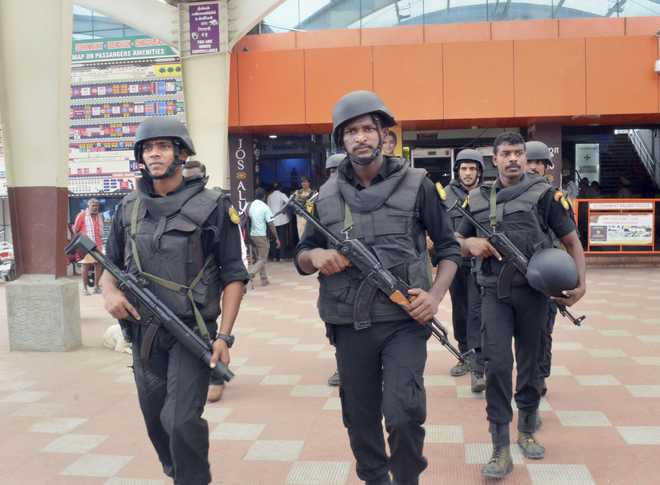
Commando force personnel conduct checking at a railway station in Coimbatore, Saturday, Aug. 24, 2019. PTI
Coimbatore/Kochi, August 24
The Indian Navy has sounded a high-alert at sea following intelligence inputs that six members of the Lashkar-e-Taiba have intruded into Tamil Nadu, as strict surveillance continued in various parts of the State for the second day on Saturday.
Following intelligence inputs, “the Indian Navy continues to maintain its high alert situation at seas and in coastal areas,” a defence spokesman told PTI at Kochi in Kerala.
Security was tightened in Tamil Nadu on Friday following reports that six members of the terror outfit LeT had infiltrated the state by sea from Sri Lanka and moved to different cities.
Coimbatore Police Commissioner Sumit Sharan had on Friday said the city was under a high alert following information that the terrorists were heading there.
Police said on Saturday that vehicle-checks were intensified on arterial roads and highways connecting Coimbatore city with neighbouring states, and baggage thoroughly checked by armed police personnel.
Similarly checks were on in railway stations, bus-stands and the airport, they said.
The Tamil Nadu commando force carried out a flag march at Mettupalayam, 35 km from Coimbatore, to instil confidence in people about security.
Armed forces were deployed at temples, mosques and churches, which were normally targeted by terrorists as was done in Sri Lanka recently, police sources said.
Kerala DGP Loknath Behera had on Friday also directed district police chiefs to keep utmost vigil across the state. — PTI
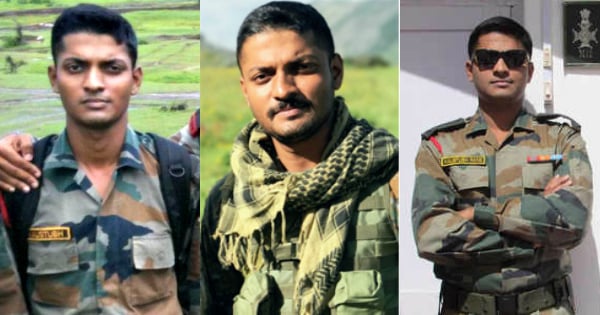
On this day last year, thousands of fellow countrymen had paid their last respects to Major Kaustubh Rane, a gallant army officer serving in the Indian Army’s 36 Rashtriya Rifles. Major Rane was a leader of men, a warrior who gave his all in service of the country, but more importantly, he was a son to two ageing parents, a loving husband to a young wife, a proud father to a two-year-old son and a friend to his brothers in arms.
Major Kaustubh Rane of The 36 RR was Posthumously awarded the Sena Medal
Growing up in the Sheetal Nagar area of Mira Road, he spent his days reading about war heroes, and soon joining the Army and serving in front line combat became his childhood dream! Given his undying passion for serving, It was only natural that he applied for the Army at the first opportunity he got.
A young Kaustubh had applied for the National Defence Academy Examination (NDA) fresh after his 12th but was unsuccessful in his attempt to join the Tri-Services institution. Undeterred and with a single-minded focus soon to be commissioned officer had trained rigorously, clearing the Combined Defence Services Examination (CDSE) after completing his graduation. He was recommended by the selection board and received the call letter to train at the prestigious Officers Training Academy in Chennai. For Maj. Rane, this was the first step towards seizing his destiny!
After 9 months of rigorous training, Kaustubh was commissioned as an infantry officer in the Garwhal Rifles, one of the Indian Army’s most decorated fighting units, He was Deployed to his first posting in Kupwara very soon transformed into a battle-hardened Infantryman! Maj. Rane was promoted to the rank of Captain in 2011 and was given a peace posting to Kolkata after serving in the insurgency prone valley.
Following his Kolkata posting Maj. Rane was deployed back to field areas and was eventually deputed to the Rashtriya Rifles, the Army’s premier counter-insurgency force, serving in 36 RR. It was during his stint in 36 RR that major Rane along with for of his men lost their lives in the line of duty in a bid to foil an infiltration attempt by terrorists trying to enter from the Gurez sector of North Kashmir.
Gurez Sector Operation:
During 2018, Maj Kaustubh Rane’s 36 RR battalion was deployed in the Gurez sector in J&K and was engaged in counter-insurgency operations. The Gurez sector is one of the remote parts of the valley located in Bandipora district around 125 km from Srinagar. The industry is heavily militarised, and soldiers are stationed on mountaintop posts to guard the Line of Control and prevent infiltration of militants. The Gurez sector is snow-covered even in summers and militants do not have long tracts of forest cover either to use as escape routes or to sneak inside LOC.
On 6 Aug, around 1 am about eight-odd heavily armed terrorists tried to infiltrate into the Indian territory near Govind Nullah in Bakhtor area taking advantage of darkness. The alert soldiers noticed the unusual movement and challenged the infiltrators moving from the Pakistan-occupied Kashmir (POK). Maj Kaustubh Rane along with his troops, swung into action and engaged the militants trying to infiltrate. A fierce gun battle ensued after that in which two militants were killed. However, during the heavy exchange of fire Maj Kaustubh Rane and three other soldiers Rifleman Mandeep Singh Rawat, Rifleman Hameer Singh and Gunner Vikram Jeet Singh got severely injured. They were shifted to the 92 Base Hospital in Srinagar but latter they succumbed to their injuries and were martyred.
Maj Kaustubh Rane had been given the gallantry award, “Sena Medal” on 26 Jan 2018 and was to be felicitated by Mira Bhayandar Municipal Corporation in the later part of 2018. Maj Kaustubh Rane was a gallant and committed soldier who led from the front like a true military leader and laid down his life in the service of the nation.
Fond Memories:
Maj. Rane has been described by his friend and family as, a kind and soft-spoken who had regularly kept in touch with his civilian friends, even when deployed. His Course mates remember him fondly as a true leader and friend, They talk about how he inspired and pushed them all so much that had he not been there, their josh runs would have been flat and unmemorable! They vividly remember how he would crack jokes, he would smile, laugh and push them all saying “Chal yaar! Chal yaar!” he makes sure the others around him thrived!
Maj Rane was an ordinary man who lived to do extraordinary things
Legacy:
A lot has happened since the martyrdom of the brave warrior, a lot that he would have been proud of, his parents received his Sena Medal from the President of India, The Gaurav Puruskar from the Maharastra Government, a letter from Jitendra Singh, a security guard from Surat, conveying his gratitude for their sons service! Pictures and cards from school students and the respect of the thousands who bid him a tearful goodbye.
His grieving widow, rose up from the ashes to become an inspiration, following his footsteps to join the very organisation he dedicated his life to and starting her journey at the same institution he began his own, His two-year-old son is now a year older, with new memories made and many more to make in the days to come!
The country can never repay Major. Kaustubh Rane for what he gave and people he left behind, however, the gallant hero will never be forgotten.
Pak partially closes airspace; India issues security alert at 19 airports
Sandeep Dikshit Tribune News Service New Delhi, August 7
India has shrugged off a series of measures announced by Pakistan on Wednesday, including being asked to withdraw its High Commissioner Ajay Bisaria, as a fallout of Parliament approving the reorganisation of Jammu & Kashmir into two Union Territories. Pakistan has also for now decided not to send its new High Commissioner to take up his India posting.
Late in the evening, Pakistan ordered some changes in Indian flights going through its airspace. India, on its part, issued security alert at 19 airports and deployed additional security personnel apart from regular deployment at airports.
Pakistan asked, after the second meeting in a week of the National Security Committee comprising top Cabinet Ministers and Pakistan Army officers, to withdraw Indian High Commissioner Ajay Bisaria, suspended all bilateral trade and step up diplomatic outreach, including approaching the UN and UN Security Council over the lockdown in Kashmir and disturbing the status quo in the composition of Jammu & Kashmir.
While the detailed response is still awaited, sources informally said Pakistan was off the mark in this respect and India will respond with retaliatory measures. Pakistan had no locus standi to interfere in what is entirely an internal matter. No other nation had the locus standi to interfere in the internal affairs of another country, they reiterated.
The sources said India was preparing a detailed riposte to each of the five points mentioned by Pakistan. Reacting to reports of UN-blacklisted terrorist Hafiz Saeed’s conviction, the sources said they were still trying to ascertain details. “We have to know if he was really convicted and on what charges. We also have to find out the appeals process and whether he will be let off during the pendency of the appeal. It is too early right now to be satisfied or dissatisfied,” they said.
Along with downgrading of diplomatic relations and suspending trade, Pakistan has also decided to review the bilateral arrangements and observe its Independence Day on August 14 in solidarity with the “brave Kashmiris and their just struggle for their right of self-determination”. India’s Independence Day on August 15 will be observed as a Black Day, resolved the Pakistan National Security Committee.
Pakistan PM Imran Khan has asked the armed forces to maintain vigilance on the Indo-Pak border and directed that all diplomatic channels should be activated to launch a broadside against India.
Meanwhile, the UN Human Rights Council has expressed apprehension of the latest restrictions in Jammu & Kashmir exacerbating the human rights situation in the region. “The fact that hardly any information at all is currently coming out is of great concern in itself,” said the UNHRC spokesperson based in Geneva.
The US National Security Council denied that the Indian Government had consulted or informed US National Security Advisor John Bolton or Secretary of State Mike Pompeo before moving to revoke J&K’s special status. The US called for calm and restraint on all sides, “noting the history of violence and conflict in the region”.
State Stalwarts
DEFENCES FORCES RANKS
ARMY, NAVY, AIRFORCE RANKS
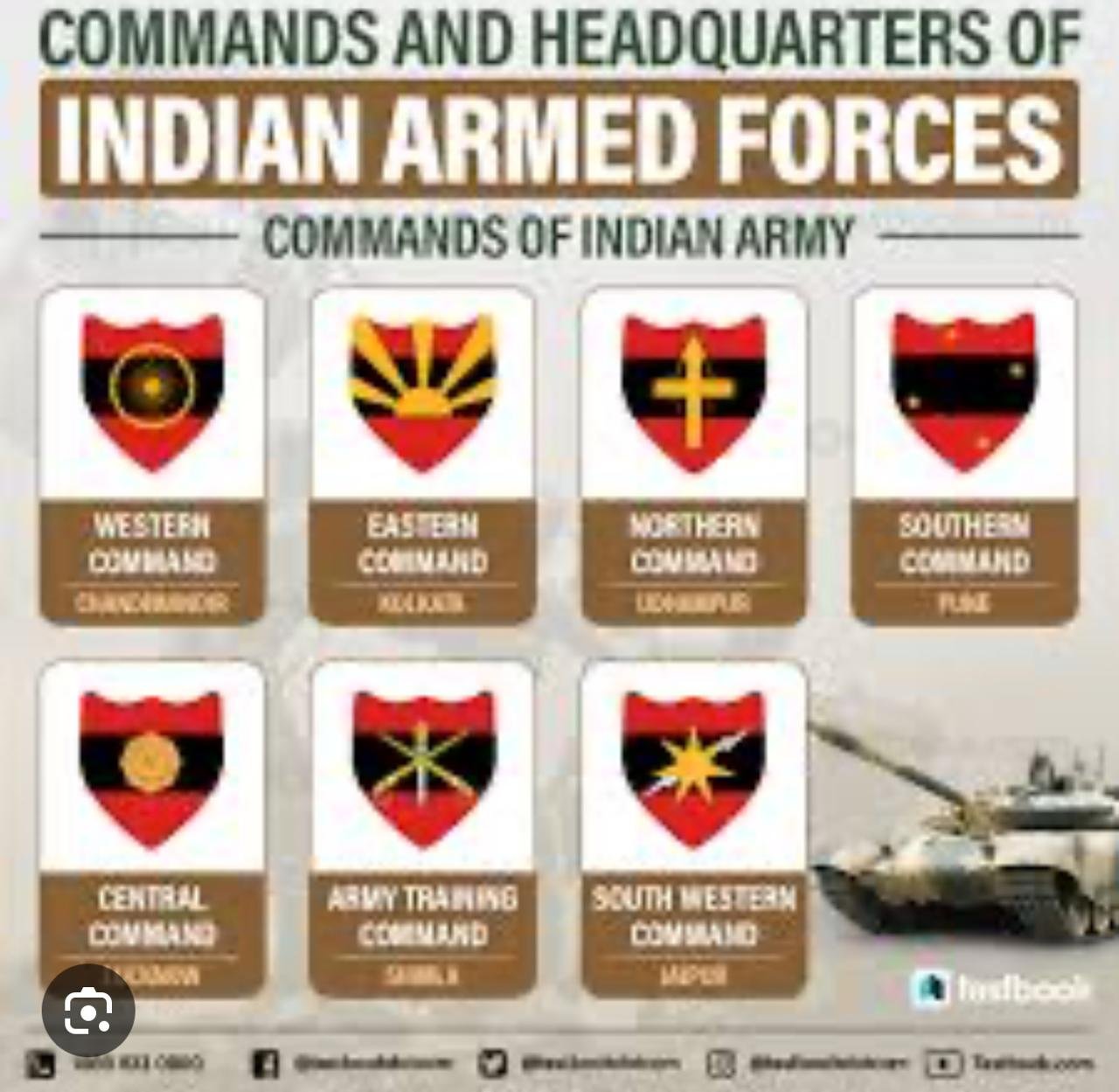
FORMATION SIGNS
FORMATION SIGNS
ALL HUMANS ARE ONE CREATED BY GOD
HINDUS,MUSLIMS,SIKHS.ISAI SAB HAI BHAI BHAI
CHIEF PATRON ALL INDIA SANJHA MORCHA
LT GEN JASBIR SINGH DHALIWAL, DOGRA
SENIOR PATRON ALL INDIA SANJHA MORCHA
MAJOR GEN HARVIJAY SINGH, SENA MEDAL ,corps of signals
.
.
PATRON ALL INDIA SANJHA MORCHA
MAJ GEN RAMINDER GORAYA , CORPS OF
sanjhamorcha303@gmail.com
PRESIDENT HARAYANA STATE CUM COORDINATOR ESM
BRIG DALJIT THUKRAL ,BENGAL SAPPERS
PRESIDENT TRICITY
COL B S BRAR (BHUPI BRAR)
PRESIDENT CHANDIGARH ZONE
COL SHANJIT SINGH BHULLAR
.
.
PRESIDENT PANCHKULA ZONE AND ZIRAKPUR
COL SWARAN SINGH
PRESIDENT SAS NAGAR (MOHALI)
COL BALBIR SINGH , ARTY
INDIAN DEFENCE FORCES
DEFENCE FORCES INTEGRATED LOGO
FORCES FLAGS
15 Th PRESIDENT OF INDIA SUPREME COMMANDER ARMED FORCES
Droupadi Murmu
DEFENCE MINISTER
Minister Rajnath Singh
CHIEF OF DEFENCE STAFF (2nd)
General Anil Chauhan PVSM UYSM AVSM SM VSM
INDIAN FORCES CHIEFS
CHIEF OF ARMY STAFF(29th)
General Upendra Dwivedi, PVSM, AVSM (30 Jun 2024 to Till Date)