










Sanjha Morcha

What’s New

Click the heading to open detailed news

Current Events :

web counter

Print Media Reproduced Defence Related News

1984 Massacres Could Have Been Avoided If Narasimha Rao Had Listened To IK Gujral: Manmohan Singh

IK Gujral had told the then Home Minister Narsimha Rao it was necessary for the government to call the army at the earliest.

1984 Massacres Could Have Been Avoided If Narasimha Rao Had Listened To IK Gujral: Manmohan Singh

Former Prime Minister Manmohan Singh on Wednesday said that the 1984 massacres in anti-Sikh riots could have been avoided had the then Home Minister Narsimha Rao acted upon Inder Kumar Gujral’s advice.

“When the sad event of 1984 took place, Gujral ji, that very evening, went to the then Home Minister Narsimha Rao and said to him that the situation is so grim that it is necessary for the government to call the army at the earliest. If that advice would have been heeded perhaps the massacre that took place in 1984 could have been avoided,” he said speaking at an event organised to mark the 100th birth anniversary of former Prime Minister IK Gujral.

Singh, a Sikh himself, spoke about his relationship with the former prime minister after the emergency period.

“He was the minister of Information and Broadcasting and he had problems with some aspects of the management of emergency and then he was removed to the planning commission as minister of state. I was then an economic advisor with the ministry of finance… Thereafter our relationship grew”, Singh added.

The 1984 Sikh massacre took place in the aftermath of the assassination of then Prime Minister Indira Gandhi at the hands of her four Sikh security personnel. More than 3,000 Sikhs were killed in the riots across the nation, as per official estimates.

Gujral was the 12th Prime Minister of India in the United Front government between April 1997 and March 1998. He resigned from the Congress and joined Janata Dal in 1988.

One of his most prominent stints included his role as the Minister of Information and Broadcasting in June 1975 when then Prime Minister of India Indira Gandhi imposed Emergency in the country.

(With inputs from ANI)


Creating a new framework of civil-military relations

The current model has hurt military effectiveness. The CDS announcement is a historic opportunity to reform it

Anit Mukherjee

Civil-military relations, as the name suggests, is an academic term to describe the relations between civilians and the military. It is a basic feature of a democracy which, by definition, is one where civilians control the military. This is not a matter to be taken lightly, as most post-colonial states have struggled with controlling their military. By this metric, India has much to be proud of, as the military has never threatened the political order, contested coup rumours notwithstanding.

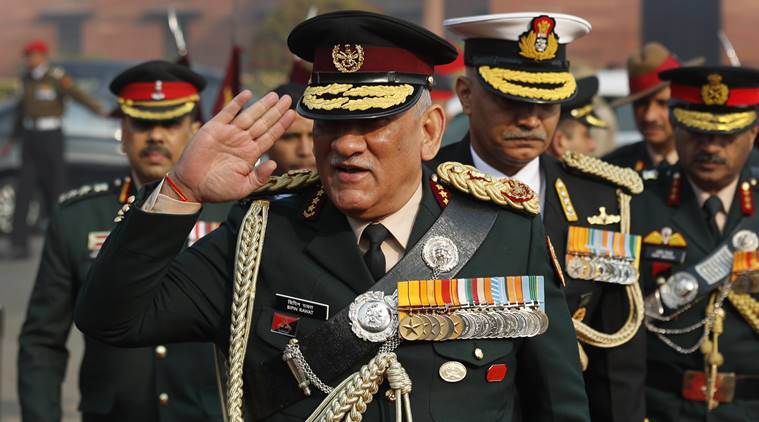
However, India’s model of civil-military relations has overly focused on procedural control, which has come at a cost. Simply put, this form of civilian control has had an adverse impact on its military effectiveness. Perhaps Prime Minister Narendra Modi had this in mind, when he recently announced the creation of the post of Chief of Defence Staff (CDS), which is rightly hailed as among the most notable reform of higher defence organisation.

However, such reform must be accompanied by significant institutional redesigning, including transforming the ministry of defence and the service headquarters. Without this, civil-military relations, as noted by members of the strategic community, will continue to be the primary fault line in India’s national security.

That India has a strange form of civilian control has been noted by almost all scholars who have studied it. In the mid-70s, the late Stephen Cohen noted the paradox of a “crushing civilian dominance over a very powerful and large military”. This aspect was also observed by later generations of scholars and practitioners, including K Subrahmanyam, Stephen Rosen, Admiral Arun Prakash, General VP Malik, Steven Wilkinson, Ashley Tellis, and many others.

In a recently published book, I show how this pattern has adversely shaped five processes most closely associated with military effectiveness — weapons procurement, jointness (defined as the ability of the army, air force and navy to operate together), professional military education, officer promotion policies and defence planning. To uncover these processes, I relied on a combination of archival research and over 200 interviews with politicians, bureaucrats and military officers.

Within the military community, civil-military relations is framed by the leitmotifthat they are under bureaucratic control, and not political control. This refrain captures some of the resentment that military officers feel about having to constantly engage with what they describe as an uninformed and obstructionist bureaucracy. Such a view, however, is overly simplistic as it ignores two essential points.

First, it is unreasonable to expect politicians to gain expertise on military affairs, as politics is a full-time vocation.

Second, democratic civilian control and administrative governance requires a civilian bureaucracy to assist the defence minister in carrying out their duties.

That is not to say that the military’s complaints are totally unjustified. There are enough instances of uninformed civilian officials exerting petty forms of bureaucratic and personal control.

These two different narratives reveal a deeper paradox — that of a suffocating civilian bureaucratic control in some matters, but also too little civilian intervention in others. For instance, in matters pertaining to jointness, officer education, doctrine formulation, and inter-services prioritisation, civilians are invisible in their participation. Author Verghese Koithara’s memorable term, a “depthless interaction” best describes civil-military relations in India.

These problems stem from two essential factors that characterise this interaction.

First is the problem of institutional design. In India’s case, the ministry of defence is almost exclusively manned by civilian officials and is bereft of military expertise. In turn, the service headquarters are almost exclusively manned by military officers and do not allow for adequately qualified civilians to assist them. This arrangement inevitably creates an “us and them” sentiment.

Way back in 1958, the architect of India’s higher defence organisation, Louis Mountbatten, had noticed this peculiarity. In a private letter to Krishna Menon, he had observed that the “Ministry of Defence is full of civil servants with practically no representation from Service Officers at all, whereas the three Service Headquarters appear to have a lot of officers with very little help from the professional civil servants.” Unfortunately, not much has changed over the last 70 years.

The second is the problem of expertise. India’s generalist system of administration does not allow for expertise in its civil servants. Domain expertise has been debated since the First Administrative Reforms Committee in 1967 and has been a frequent bugbear for those studying state (in)capacity in India.

More worrying, however, is how can one grow expertise in military affairs when there is no existing procedure for declassification in the military and defence ministry? Indeed, this seemingly simple bureaucratic procedure is responsible for stifling the growth of strategic studies in India and needs urgent remedy.

Despite much talk, little was done to redress higher defence reforms during the last National Democratic Alliance government between 2014 and 2019. To be sure, there was a definite improvement in the tone and tenor of civil-military relations from AK Anthony’s mishandling of the defence ministry, but structural problems remain.

With the imminent announcement of the CDS, there is perhaps a once-in-a-generation opportunity to address the principal fault line dividing civilians and the military. It remains to be seen, however, if this government can do so.

Anit Mukherjee is the author of

The Absent Dialogue: Politicians, Bureaucrats, and the Military in India (Oxford University Press, 2019)

The views expressed are personal


Rajnath cites perceptional differences behind incursions by Chinese troops

Rajnath cites perceptional differences behind incursions by Chinese troops
Defence Minister Rajnath Singh replies to Adhir Ranjan Chowdhury during the Lok Sabha’s winter session on Wednesday. PTI

Vibha Sharma

Tribune News Service

New Delhi, December 4

Defence Minister Rajnath Singh today told the Lok Sabha that “perceptional differences” between India and China regarding the Line of Actual Control (LAC) at times results in incidents like transgression, incursion and face-off at the border.

However, the Army is fully alert and the border is completely secure, he asserted in response to Congress’ Adhir Ranjan Chowdhury’s observation regarding India’s “soft” stance towards China as compared to “offensive” stand against Pakistan despite Chinese activities along border regions.

According to the Defence Minister, because of perceptional differences, sometimes situation of confrontation arises between the People’s Liberation Army (armed forces of China) and the Indian Army, which is also defused maturely with available mechainisms. “We have several mechanisms to resolve and settle disputes. Whenever such a situation develops, everyone must be aware how maturely the two armies deal with it, without allowing it to escalate. Face-off is not allowed to escalate, at least that is being ensured,” he said.

“Let me assure you that the government is fully alert about the country’s security. Infrastructure like roads, tunnels, railway lines and airfields are also being developed along the India-China border,” Singh said in response to Chowdhury’s criticism of India’s stance on China.

“We are surrounded by two hostile neighbors — China and Pakistan. We can change history but not geography. We raise our voice against Pakistan due to its terror activities and our government deals with their activities strongly. Terrorists are shielded by Pakistan which is further shielded by China,” Chowdhury said,

“If we are so strong in our responses to Pakistan, why the weakness in the way we respond to China. Are we scared of China?” the Congress leader questioned.


Retired officers observe Navy Day

Tribune News Service

Chandigarh, December 4

Navy Day was commemorated by members of the Navy Foundation’s Chandigarh chapter by organising a social get-together at Defence Services Officers Institute here today. The foundation is an association of retired naval officers.

Navy Day is observed on December 4 every year to commemorate Indian Navy’s daring and highly successful attack on Karachi harbor during the 1971 Indo-Pak war and pay homage to the martyrs.

A large number of retired officers from the tricity as well as the region, including former Chief of Naval Staff Admiral Sunil Lanba, attended the event. Admiral Lanba appraised the gathering about the modernisation plans of the Navy.

Navy Day

  • Navy Day is observed on December 4 every year to commemorate Indian Navy’s daring and highly successful attack on Karachi harbor during the 1971 Indo-Pak war and pay homage to the martyrs.

No proposal to put retirement age at 60: Govt

No proposal to put retirement age at 60: Govt
Jitendra Singh

New Delhi, December 5 There is no proposal to put retirement age at 60 or after completion of 33 years of service for central government employees, the Rajya Sabha was informed on Thursday.

“There is no proposal to reduce retirement age below 60 years,” Minister of State for Personnel Jitendra Singh said in a written reply.

The government was asked whether it was actively considering to retire government officials either at the age of 60 years or after completing 33 years of service, whichever is earlier. PTI


Statue of Sikh soldier unveiled in UK to honour World War heroes

Prasun Sonwalkar

letterschd@hindustantimes.com

LONDON : A statue to honour the role of thousands of Sikh soldiers who fought along with British forces in the two World Wars has been unveiled in the west Yorkshire town of Huddersfield, which has a sizeable Sikh community described as “vibrant”.

The monument in the Greenhead Park marks the culmination of a project of the Sikh Soldier Organisation (SSO), which coordinated donations and other activities of the six-foot bronze statue that cost £65,000 (around ₹60 lakh). Various local bodies supported the project.

SSO chairman Kalvinder S Bhullar described the artwork as “stunning”, and added: “We’ve accomplished our mission to get the statue put in place and the support we have had has been overwhelming.” “Huddersfield’s vibrant Sikh community is one of the reasons why the town has been chosen for the perfect location of the statue,” he said.

The SSO said that the closest estimates report that 83,005 Sikhs gave their lives on the battlefields in the two World Wars, with many more wounded. London mayor Sadiq Khan and others have lent support for a similar memorial to Sikh soldiers in London. A memorial to the Sikh soldiers was unveiled in the National Memorial Arboretum in Staffordshire in 2015.


3 soldiers killed in Kashmir avalanches, more trapped

3 soldiers killed in Kashmir avalanches, more trapped
Photo for representation only.

Srinagar, December 4

Three soldiers were on Wednesday killed in Tangdhar area of Jammu and Kashmir’s Kupwara, one in Gurez sector of Bandipora district after being hit by avalanche, said Army officials.

The snow avalanche hit an Army post in Tangdhar area of Kupwara district on Tuesday afternoon where at least two soldiers were said to be trapped.

Search and rescue operations were carried out till late Tuesday evening but had to be suspended due to inclement weather.

Rescue operations resumed on Wednesday morning.

In another incident, a foot patrol of the Army was hit by an avalanche in Dawar area of Gurez sector of Bandipora district, trapping two soldiers.

Efforts were on to rescue the jawans.PT


ITBP jawan shoots dead 5 colleagues in Chhattisgarh, kills self

ITBP jawan shoots dead 5 colleagues in Chhattisgarh, kills self
ITBP personnel at the hospital.

Raipur, December 4

An ITBP soldier allegedly opened fire at his colleagues in Chhattisgarh’s Narayanpur district on Wednesday, killing five personnel and injuring two before killing himself in a suspected case of fratricide, police said.

The incident took place around 8.30 am in a camp of the ITBP’s 45th battalion at Kadenar village, around 350 km from Raipur, Inspector General of Police (Bastar range) Sundarraj P told PTI.

“An ITBP constable, identified as Masudul Rahman, opened fire from his service weapon, killing four troopers at the spot and injuring three other jawans, after some dispute,” he said.

Rahman killed his colleagues and then shot himself dead. He was not shot by other troops, Indo-Tibetan Border Police (ITBP) spokesperson Vivek Kumar Pandey said in New Delhi.

One of the injured personnel succumbed to his injuries later, the Bastar range inspector general of police said.

The two injured soldiers were airlifted and admitted to a private hospital in Raipur, he added.

Those killed had been identified as head constables Mahendra Singh and Daljit Singh, and constables Surjit Sarkar, Biswaroop Mahto and Bijeesh, apart from Rahman, he said.

Besides, constables SB Ullas and Sitaram Doon were injured.

They all belonged to the ITBP’s 45th battalion, he added. PTI



Women Security & Safety in India – Do’s & Dont’s by Col. Rahul K. Bhonsle

Why Women Remain Vulnerable – Socio-Political Causes?

Public outrage after the brutal rape and murder of the 23 year old student, “Nirbhaya,” in Delhi on 16 December 2012 has focused greater attention on necessity for holistic measures for security and safety of women. Sadly despite a strong legislation there has been no reduction in incidents of assault and physical abuse of women underlining larger socio-political ills and environmental changes in Indian society today. The underlying trends may seem aberrations in male behavior but these have become so pronounced in recent times and their ill effects so damaging to society at large that these need blunt assertion.

Briefly stated these include rapidly transforming socio economic landscape, urbanization, and cross-cultural migration. Studies and surveys reveal that basic aggression in male behavior patterns has created a sense of insecurity in women. Biological proclivity of men to sexual aggressiveness has not been affected by the larger movement for gender equality.

Ironically as more women are entering the work space, their vulnerability seems to have increased. Despite financial and material security women continue to be victims at home and outside to male chauvinism which manifests in some cases in mental and physical violence sexual assault and rape being it’s most venal form.

A manifestation of rapid socio economic transition is social inequality leading to a class of under privileged whose depravation can lead to aggression directed against women of all socio-economic classes who are easy victims in vulnerable settings in which Nirbhaya found herself in December 2012. At the other end of the spectrum in the affluent world is the dominant male in a work setting where he can unashamedly exploit his position of power.

Cases of acid attacks on women could be seen as another vector of violence that exclusively targets females by rejected males who attack the face, symbol of feminine persona.

Sexual harassment at the workplace is common with a 2010 survey indicating that 88 percent of women who work in large numbers in the IT/ITES sector have faced some form of persecution. Though as the current public debate indicates all professions seem equally vulnerable. To those working in less privileged jobs exploitative maltreatment may be even more brutal.

These factors suggest amongst others that despite a perceived change of status of women, increased vigilance and stricter laws, violence against women is likely to be a worry for some time to come. More over the trend is not India centric but affects all countries in varied ways.

Preventives are the best form of safety for which a Do’s and Don’ts framework provides practical guidelines for women to preserve themselves under varied circumstances. Do’s and Don’ts for women safety and security in India are thus covered in four parts in succeeding paragraphs as follows:-

  1. Know Your Rights as a Woman
  2. Common Tips– Applicable at all Times
  3. Do’s
  4. Don’ts

Knowing Your Rights as a Woman

Women are empowered by society as well as legally, simply speaking some basic rights that are universal applied to both genders but specifically for women include the following:-

  • Rights as a woman for dignity and respect that implies no male of any age has the right to make advances at a woman tease or sexually harass her.
  • A privilege to respect under all circumstances. No one has the rights to make women uncomfortable, whether at work place, home or on the streets, whether in school, college or in a social gathering.
  • Rights to physical and mental security. No one has the rights to use physical force, torture physically or mentally, or coerce women in any way, no matter relationship with that person.
  • Privilege to complain. Women have all the rights to complain when violated even in the smallest way. Take advice and adopt the correct course under such circumstances, whatever is the status of the individual, be it boss, relative or a neighbourhood bully.
  • Rights as a women employee for security by the organization as per Visakha guidelines for prevention of sexual harassment at the workplace.
  • Violence physical or mental against women is not her fate as is made out to be in some cases. Dominant behavior is not anyone’s right and not a women’s destiny, thus complaining against the same is in perfect order.

Common Tips – Applicable at all Times

Whatever be the situation or circumstances, there are some constants that are applicable to women’s safety and security these are as follows:-

  • Women should be highly concerned about own security especially during vulnerable time as at night and at sensitive locations.
  • Mental strength may be more important than physical power, develop a strong will to resist male advances. As noted female activist, Malala Yousafzai said, “If 10 men stare at me in the market I just stare back at them (and they wilt away)”.
  • Develop an instinct for trouble and take evasive measures.
  • Inclement weather, night, darkness or odd hours are vulnerable times for any woman as much as but more so than others are.
  • Isolated places increase level of vulnerability. These can be secluded buildings, parking lots, staircases or even lifts.
  • Cyber space has created a new set of challenges for women, be fully cognizant of the threats in use of social media and internet fraud.
  • Getting away or escaping from a situation is more sensible than confronting it, remember a cat has nine lives because it skillfully escapes death the other eight times.
  • Take a self defence course if possible and at least some form of exercise that will help keep fit and active thereby evading force.
  • Nobody is immune to being violated there are examples of women violated in the most affluent homes.

Do’s for women

  • Do be aware and accept that women are more vulnerable and the phenomenon is not restricted to India.
  • Seek information and develop awareness of local security and safety situation for women in the city, town and the locality in which you live.
  • Do be culturally sensitive in your behavior or while dressing, based on the place you are visiting or time of day. This is plain common sense.
  • Do wear clothes and footwear that help in running or escaping quickly especially when going to an outdoor event or at night where you are likely to be vulnerable.
  • Do keep an eye for suspicious men or women lurking around, avoid taking lifts offered by stranger(s) and avoid traveling in near vacant public transport system.
  • Do alert the security or raise alarm in case you encounter a suspicious person or vulnerable situation.
  • Do save emergency numbers on your phone and ring these regularly to check that they actually work especially when you travel from one city to another.
  • Do download application that sends distress messages from your cell phones, test it a number of times including reaction of the people on the other side so that they are prepared to help you in an emergency.
  • Do inform your travel routine particularly at night and odd hours; ask for call back from relatives or friends at fixed times without having to call up.
  • Do inform office security staff and home in the case of a breakdown of an office cab or when you are the last passenger to be dropped.
  • Do keep your car or scooter in the best condition to avoid a breakdown particularly if you are likely to travel at night. In case of a doubt take alternate means of transport.
  • Do have a hammer or rod in the glove compartment to break open the window in case of a being locked in the car in the case of an emergency.
  • Do equip your car with emergencies when you are going long distance
  • Do ensure you lock your car from inside while traveling at night.
  • Do take the elevator instead of stairs unless the elevator is occupied by a suspicious person(s).
  • Do get off from the elevator in case a suspicious person gets in and you are alone.
  • Do lock and latch your house at all times and do not open the door to strangers. Install electronic alarms amongst other safety devices.
  • Do plan your outstation travel in such a way that you arrive at the destination even if it is your hometown during day light hours. In case you are arriving late call a relative or friend to pick you up, do not hesitate to cause them inconvenience.
  • Do hire cabs from standard travel companies who rent radio cabs with GPS. If staying in a hotel, hire a cab from the hotel renting service.
  • Do check the safety and security arrangements when staying in a hotel room. Prefer rooms with electronic keys and check who holds duplicates.
  • Do be cautious in making new friends while traveling particularly male friends.
  • Do have only relatives, well-known and reliable friends on Facebook, who are long time acquaintances, scrupulously avoid making, “friends,” with strangers on social media.
  • Do use social media as Facebook and Twitter for keeping your friends informed of your whereabouts.
  • Do travel in women only compartments or buses where these are provided. Avoid common facilities.
  • Do keep items as a whistle to raise an alarm, pepper spray and strong flash light in your purse. You can also use your purse as a weapon in an emergency. Practice using these.
  • Do keep your visiting card in your purse so that in case of an accident, your identity can be established.
  • Do know vulnerable points of the male anatomy in case you have to use force, these are mainly groin, throat, eyes and knees.
  • Do learn to use your elbow, knees and fingernails these are strong points of women and can hurt when it strikes the right spots.
  • Do keep a pet dog, if fond of pets and if you have to move out of the house take the pet where feasible especially at night.
  • Do educate your female children to reject physical contact by strangers and report the same immediately on occurrence.
  • Do ensure proper lighting of entrance to your house or flat. The exit side should be at least 60 percent more luminous than the entrance so that you are able to clearly see a person outside without exposing yourself.

Don’ts

  • Do not hesitate in strongly objecting to misbehavior the first time it happens, if you ignore it once it will only encourage the person towards more objectionable conduct later.
  • Do not visit a suspicious location alone and never at night or in the evening hours.
  • Do not travel alone at night as most Indian cities are unsafe, single travel at night in suburbs should be particularly avoided.
  • Do not travel in public transport alone, in case you find yourself alone it is better to get down at a safe place rather than continue the journey especially at night. Ring and seek help.
  • Do not join protests or crowds unless you are in a strong multi gender group, molestation is a common complaint at such events whatever be the cause as anti socials may take advantage.
  • Do not make unnecessary eye contact with strangers, but when doing so display confidence. Exchanging frequent glances with strangers can be misinterpreted.
  • Do not engage in conversation with a strange man; discourage small talk particularly if you are alone.
  • Do not show unnecessary sympathy for a stranger and beware of a ruse, sometimes women decoys are used by criminals to lure female victims.
  • Do not establish routine in terms of timings or route while going for work or for a walk, change your timings and routes frequently as far as possible.
  • Do not hesitate in reporting a suspicious person, activity or object or raising an alarm as loudly as possible and call for help to dissuade a potential attacker. It is better to end being sheepish then sorry. Shout ‘Bachao bachao’ or words to this effect
  • Do not give up if under threat or attack, look for the earliest opportunity to escape.
  • Do not show fear, assailants are encouraged by persons who panic.
  • Do not use ATMs to draw money at night or in early morning hours when alone.
  • Do not carry large number of credit cards at any one time, loss of purse may lead to compromise of your accounts.
  • Do not wear expensive jewelry especially chain or heavy gold bangles when alone or display it. If you have to wear jewelry remove it after the event rather than displaying it while traveling especially at night.
  • Do not carry jewelry while traveling, artificial trinkets can serve the same purpose.
  • Do not accept food or drinks from strangers especially while traveling.
  • Do not consume excessive alcohol or allow your male companions to do so at social events which can expose you or create vulnerability.
  • Do not drive after consuming alcohol or allow your male companions to do so.
  • Do not allow your social behavior to be mistaken as making advances by men.

Conclusion

The advisory essentially outlines basic precautions and emergency measures to be taken by women given the prevalent environment. Our society respects gender equity over the ages and only a small percentage of men can be regarded as predators however for a victim this is small solace. Thus the Do’s and Don’ts are charted to prevent exposure to the minority who may use their gender biases for aggression, mental or physical. The proverb, better be safe than sorry can be most appropriately applied to women. Erring on the positive side is therefore advisable.

Some simple Do’s and Don’ts have been outlined in the preceding paragraphs, making these a habit would create an instinct for an impending hostile situation and provide women with a safety shield deterring an adverse situation.

Written in public interest jointly with Col NN Bhatia (Retd), Industrial Security Consultant


Army asks ‘ousted’ ECHS officer to rejoin following court’s rap

ribune News Service

Chandigarh, December 2

The Army has asked the officer-in-charge (OIC) of the Ex-servicemen’s Contributory Health Scheme (ECHS) polyclinic in Chandigarh, whose contract was not being extended earlier, to rejoin his duties following a rap by the Punjab and Haryana High Court.

He is expected to join duty tomorrow after receiving a letter to this effect from the Station Headquarters, Chandimandir.

The officer, Col KVPS Hundal (retd), had filed a contempt petition before the high court after he was ‘forcibly’ removed from his office by Army authorities even though the high court had ordered a stay on the dispensing away of his services on the expiry of the contractual period.

Col Hundal had been engaged as the OIC of the polyclinic on a contractual basis for 12 months from November 8, 2018, to November 7, 2019. A letter issued by the Station Headquarters, Chandimandir, on November 7, 2019, stated that the extension of the tenure beyond November 7 had not been approved and his employment hence stood terminated.

On November 7, a single Bench of the high court, comprising Justice Arun Monga, had ordered that status quo shall be maintained qua services of Col Hundal as on date a day prior to the last date of expiry of the contract. He had also sent copies of the orders to the Station Headquarters a day before the expiry of the contract.

He had moved the high court on November 6, a day before the contract was to end. He has contended that the one-year term is extendable by another year and if there is nothing adverse against a person, a contractual employee cannot be replaced by another contractual employee. He also said he was not given any prior notice about the contract not being renewed, but issued the letter on the last day.