Sanjha Morcha

What’s New

Click the heading to open detailed news

Current Events :

web counter

Print Media Reproduced Defence Related News

Army major, 8 jawans injured in IED explosion in Pulwama district

Army major, 8 jawans injured in IED explosion in Pulwama district

f the seven soldiers, three with serious injuries were airlifted to an Army hospital in Srinagar.

Our Correspondent
Anantnag, October 19

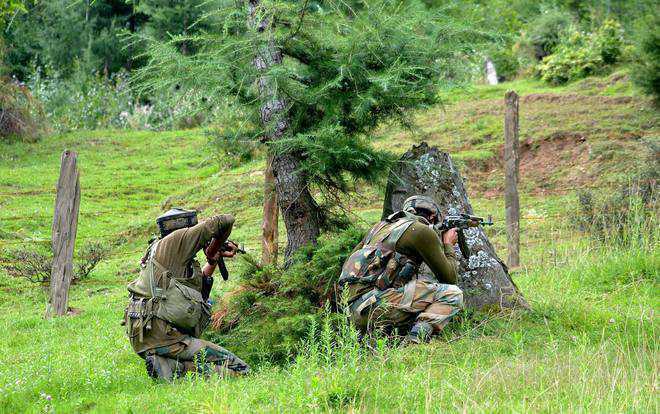
An army major and eight jawans were injured in an Improvised Explosive Device (IED) blast in south Kashmir’s Pulwama district late on Thursday, officials said.

An army Casper vehicle was targeted with an IED blast and was followed by firing by the militants at Trichal village at around 9.15 pm.

“The blast left nine soldiers injured,” a police officer said.

Soon after the attack, the area was cordoned off and searches were conducted by security forces to trace the militants.

The Casper vehicle which came under attack belonged to 55 RR of the Army and was targeted on the Lassipora-Pulwama road.


1st biofuel­blended IAF plane to take flight soon

If we do this well, we may never need to import crude oil for our armed forces.
DR ANJANY RAY, D irector of the CSIR-Indian Institute of Petroleum

NEWDELHI: On November 19, a Russian made AN-32 of the Indian Air Force’s transport fleet will take to the skies from a base in the Western Sector using a mix of Aviation Turbine Fuel and Bio-Fuel.

■ On an average, IAF flies over 100 transporter and over 500 helicopter sorties in a day.This is the first ever IAF aircraft to use the fuel blend.

After transporters, the helicopter fleet will fly using the Bio-Aviation combination. “It will be a gradual move, and ultimately fighters like the Su-30MKi, Mig-29 will also use it,” a senior IAF officer who didn’t want to named said.

On an average, IAF flies over 100 transporter and over 500 helicopter sorties in a day. “Using Bio-jet blended fuel is a commitment towards lowering the oil import bill and lower the carbon footprint and strengthen the farmbased economy,” Wing Commander Anupam Banerjee, the IAF spokesperson said.

Two years ago, the IAF sent Wing Commander Asheesh Srivastava to study the use of Bio Aviation Fuel at the Centre for Air Power Studies. Subsequently, the Indian Institute Petroleum and the Centre for Military Airworthiness & Certification and the Directorate General of Aeronautical Quality Assurance were roped in.

“If we do this well we may never need to import crude oil for our armed forces. This biojet product looks smells and performs exactly like Aviation Turbine Fuel. If we are able to work this out as we anticipate, our aircraft, vehicles and warship can all bank on domestic reserves of indigenously developed and produced renewable fuel,” Dr Anjany Ray Director of the CSIR -Indian Institute of Petroleum said.

Every year, the IAF spends about ~40,000 crore on ATF. With Bio-Aviation Fuel, it expects its fuel bill to drop by about 10 per cent. “Initially, the plan is to use a 90-10 mix (90 litres of AFT mixed with 10 litres of Bio-fuel), gradually, as the supply and production of Bio-Fuel increases the plan is to move to a 75 -25 mixture,” a senior official involved with the process who didn’t want to be named said.

To ensure that production of Bio-Fuel doesn’t affect the land available of food-grains, Bio-Fuel will be produced only from non-edible oils that grow well in arid lands. Gujarat, for instance, offered 10,000 acres arid land to produce non-edible oilseeds. Other states that are keen to produce non-edible oil seeds and put up plants to produce Bio- Fuel include Punjab, Haryana, Chattisgarh, Uttarakhand and Telangana.

If the test flight that starts from November mid-week goes as planned, IAF will showcase its capability during the Republic Day fly past on January 26, 2019, a senior IAF official said.


‘Indian Army does not like being committed to civilian operations, they’re our own people’

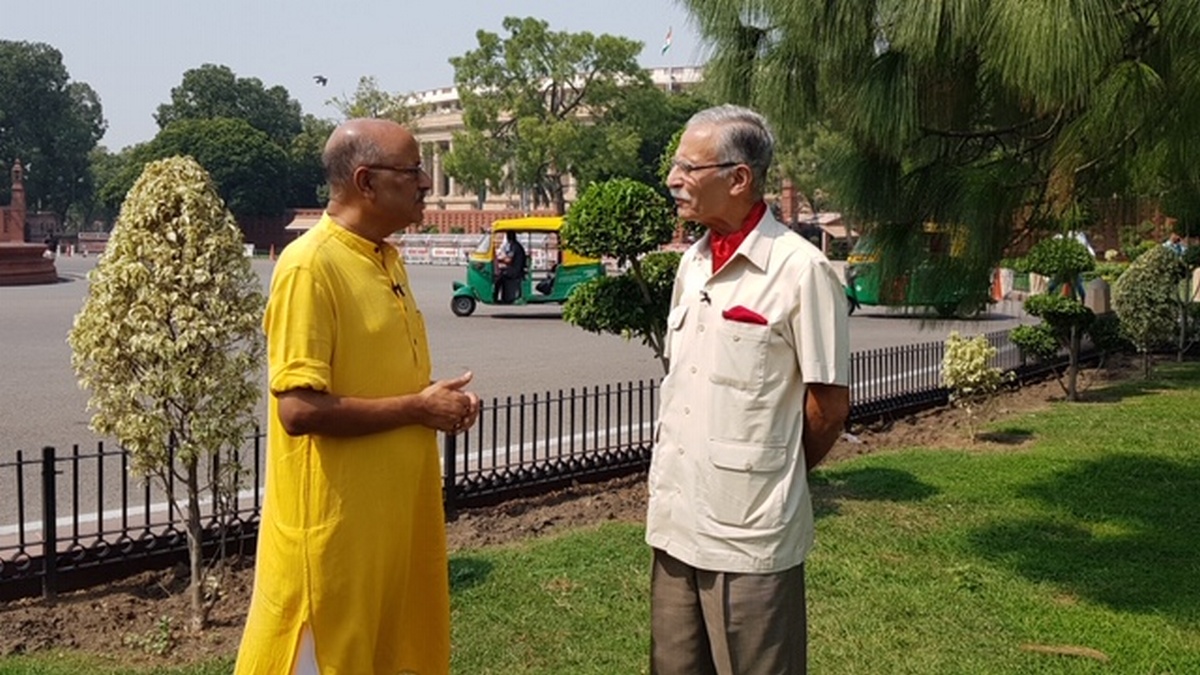
On this week’s Walk The Talk, Shekhar Gupta catches up with soldier, diplomat and academician Zameer Uddin Shah.

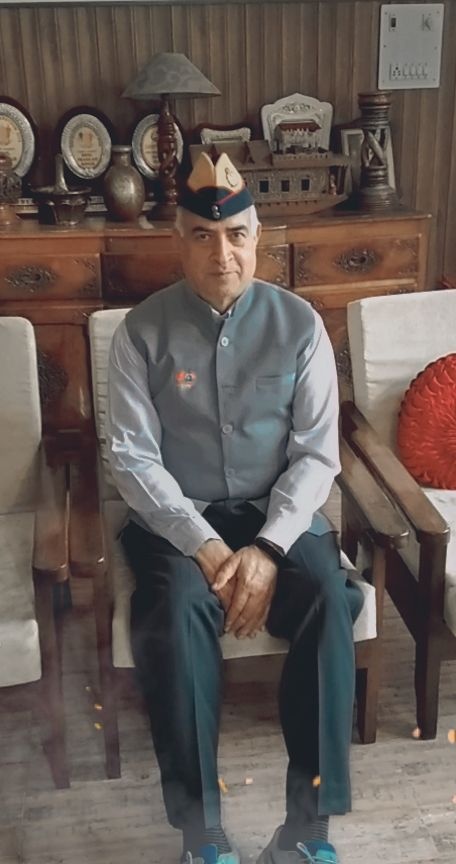
Shekhar Gupta (SG): Hello, and welcome to Walk The Talk. I am Shekhar Gupta and my guest today is General Zameer Uddin Shah, one of the most illustrious officers of the Indian Army. Better dressed than most people, better dressed than me, which is easy, but better dressed than most people.

Somebody who, in his memoirs, has called himself the ‘sarkari musalman’.

General Shah: Well, I am not a sarkari musalman. But I have named my memoirs The Sarkari Musalman because it is a sobriquet or a title given by the Muslim community to people who are generally government servants, when they don’t care about illegitimate demands of the community.

SG: Or stereotypes.

General Shah: Or stereotypes. That is one type. My father was called one (sarkari musalman) when he tried to implement reforms at the dargah in Ajmer. I had the fortune of meeting some young boys when I was a second lieutenant. And I tried to convince them to opt for the armed forces as a career.

SG: Muslim boys?

General Shah: Muslim boys from the Aligarh Muslim University riding club. They had come to the IMA (Indian Military Academy) to participate. And I told them the honour and glory of wearing the uniform. I also told them that we need horsemen.

Then, at the end of the talk, I asked them, how many of you want to opt for the Army. Not a single person opted. They said, “Janaab, aap to sarkari musalman hain.”

It meant that I was a government stooge trying to push the government’s agenda. So that stuck to me, and I said if I ever write a book, I’ll call it The Sarkari Musalman. But I am not one.

SG: But have times changed since then? Have young Muslims given up their suspicion of working for the government, or working for an institution like the Army, or does a lot of it still continue?

General Shah: No, I think there has been a quantum improvement. When I joined the NDA (National Defence Academy), I was the lone Muslim in my corps of 200 cadets. I am told that in one of the batches, there were 10 Muslim cadets which is a very positive sign.

Muslims, this is our country, and they too owe a responsibility for the defence of the country. So, I think it’s a healthy sign.

SG: Lt General Ata Hasnain has written for us, in fact, starting this debate that more and more Muslims should look at the Army as a career, specially officers.

General Shah: I agree.

SG: Did you feel a sense of discrimination, or did you feel like a trophy since you were the only Muslin in your batch?

General Shah: Nobody knew that I was a Muslim. At the National Defence Academy, you are given nicknames. Mine was carried by my schoolmates: Zoom Shah.

SG: Sounds like a very trendy one today.

‘No discrimination’

General Shah: You know, the nick name was not linked to any religion, caste, creed or anything like that. It was on some peculiar characteristic. For people who had protruding teeth, they are called ‘dentist’. You know, things like that. So, it was a name given to me.

And let me tell you that I faced no discrimination and I am not being a hypocrite.

SG: Which year was this, sir?

General Shah: I joined the National Defence Academy in 1964. I was 15 and a half years old. I tried to sprout a moustache to look older. And not only did I not face any discrimination, I faced affirmative action. One day, one of my coursemates, in jest, called me katua.

SG: Katua is a pejorative for Muslims.

General Shah: So, the rest of my coursemates got after him and said don’t ever say that again. So, that’s the sort of attitude that encouraged me and I was very enthused with this response.

SG: And you got it from top officers also?

General Shah: Absolutely.

SG: Was there ever any suspicion, “ki isko mat batao (Don’t tell him)”.

General Shah: Never. I was the operational officer in a division at Hussainiwala opposite Pakistan post 71. I was privy to everything. I was in the military secretary’s branch. I was the deputy chief. I mean I was privy to every national secret. There was never a time that I was told, General Shah, you go and play golf. While we are discussing, you go and… never anything like that.

SG: During the time of Operation Parakram, you were commanding a strike division that was poised to strike deep if need be. A key division.

General Shah: That’s right. And the very fact that my division was, since we were not committed on the ground, a strike division, I was tasked to lead the formation.

I was told later by General Padmanabhan, who was the chief (in my book, I have not given his name), that there were misgivings. I never felt anything. The Army, when asked, said, “We have not sent a Muslim General; we have sent the commander of the force that is committed”. And I thought that was a very good way of looking at it.

SG: So, you mean misgivings in the sense that people raised questions about the Army sending a Muslim General.

General Shah: Absolutely.

SG: But the fact is you just happened to be commanding a division that could be deployed there.

General Shah: Absolutely. The Army makes no distinction of religion, race, colour or creed. It is the commanding officer that is commanding the formation who commands.

SG: And you were in the reserve, whereas the division based in Ahmedabad was not available.

General Shah: I was in the reserve. They (division in Ahmedabad) were holding formation; they were deployed holding the border.

SG: So, what happened when you came to Ahmedabad?

General Shah: I was given the warning order by the chief personally on the evening of 28 February 2002. He just spoke to me for two minutes. He said, Zoom, get your formation in Gujarat and curb the riots. I told him, “Sir, it will take us two days”.

SG: Your formation was used to cavalry and mechanised forces.

General Shah: Well, it was a strike formation.

SG: If I do remember correctly, during General Sundarji’s time, it was earmarked to be an air assault formation. Helicopters never came.

General Shah: That’s correct. At various times, it was an amphibious division and other things. But it is a very potent division. I am very proud to have commanded it.

SG: And what happened once you were there?

General Shah: So I told him (the chief). He said, “Don’t worry. Get to Jodhpur air field. The Air Force will lay it on.” They did. Sixty flights. The complete resources of the Air Force were mobilised to move. I left immediately.

SG: So, 60 transport planes?

General Shah: Well, 60 flights. Maybe fewer planes. Sixty sorties. They were ferrying us the whole night. They were ferrying us from Jodhpur to Ahmedabad. When we flew in, I saw the whole city aflame. There were fires burning everywhere. The air field was deserted. It was dark. We landed and the deputy of the holding formation met me. He had been sent down to receive me. And I had been told that you will get all the resources you need. The resources we required was transport because we couldn’t carry them. Maps, magistrates.

SG: Because this was not AFSPA. You were in aid to civil power. So, you needed magistrates even to open fire.

General Shah: Yes, we needed that. Although a military officer, if he feels the situation (demands it), even if the magistrate is not there, he can fire. But then he needs to explain that. So, I asked Brigadier Mehra, where are the resources? He said the state government is providing it.

So, I asked for the chief secretary. He said he is abroad. So, I said, who is officiating? He gave me a number. I tried to call it, but there was no response. I decided that the only way to get things done was to go to the chief minister. I asked for a guide and I reached the chief minister’s office at 2 in the morning on 1 March 2002.

There, to my great relief, was defence minister George Fernandes. He was having a late dinner with the chief minister.

SG: Mr Narendra Modi.

General Shah: Yes. So, I had carried a tourist map because we didn’t have maps of Ahmedabad.

SG: And there were no Google maps, no Siri.

General Shah: On a tourist map of Gujarat, we plotted the trouble spots.

The assignment the Army hates

SG: I think the maps you had memorised were somewhere near the Multan sector.

General Shah: Quite right. That was working in our mind. You know, all these things I had completely forgotten. And let me tell you it’s a task that is abhorred by the Army. We don’t like to be committed to civil situations. Because they are our own nationals, they are our own citizens. And then one is to take action against them.

So, I was assured that they (the resources) would come. So I went back, received all the troops. They were large numbers, six battalions were flown in.

SG: That means, if I can take this question forward, maybe I am taking it too far. Did you get a sense that the central government had shown its keenness moving a strike division in that crucial time when Op Parakram was on, in giving you 60 sorties of the Air Force to move you there? But then you hit a wall with the state government?

General Shah: See, that would be a political statement. I think it was an administrate failure basically because of the chief secretary…

SG: I didn’t suggest, I am not going so far as to say it was deliberate.

General Shah: It was an administrative failure. The chief secretary should have been there, the officiating chief secretary should have ensured that the wherewithal for us to move into the city and all over Gujarat should have been positioned. But it wasn’t. On the morning of 2nd, Mr George Fernandes visited us at the air field.

SG: So, what happened when you reached the chief minister’s home at 2 am?

General Shah: Well, he welcomed me. He was very warm. Both showed great relief. So, I said,Saab, troops aane vaale hainmain first flight mein aaya hun (Sir, the troops are about to come. I took the first flight here).

Luckily, I had taken my vehicle and communications. So, we shared something to eat. I moved back with the assurance that things will be provided. They were ultimately provided on 2nd morning. Mr George Fernandes came to us at about at about 10 o’clock on 2nd morning.

SG: So, all of 1 March, you were just sitting.

General Shah: We were just sitting.

SG: And George Fernandes was in Ahmedabad?

General Shah: Did I say 2nd. No, he visited on the morning of 1 March.

SG: What did he say then?

General Shah: He said, you must ensure fair play; you must make sure that the message goes home that the Army has been deployed. And whatever is your requirement, we will make it up. He left after that. The transport started rolling in on the second. And we deployed.

SG: If you had been deployed on the first itself, would it have saved some lives?

General Shah: Of course, it would have saved one day of rioting.

‘A profound mistake’

SG: And did you ask people, did you reflect on it as to what happened, why did it happen? Was it deliberate, was it not deliberate?

General Shah: I did speak to a lot of people. There was a rift even in police. I was getting different versions of what actually happened. I didn’t take it. But I do know that, firstly, what made everybody angry was bringing the bodies of the karsevaks from Godhra to Ahmedabad. That inflamed passions. I think, again, it was an administrative failure, a decision that shouldn’t have been taken.

If that had not been done, probably the people wouldn’t have been so inflamed. I mean anybody would get inflamed.

SG: Was it a mistake, was it deliberate?

General Shah: I’ll not say that. I’ll not comment. I would say it’s a mistake. But you can draw your own inference from it.

SG: Would you presume it’s a mistake or would you say that the evidence of what you saw or heard suggests to you it was a mistake.

General Shah: I’ll not comment on that.

SG: You’d rather believe that it was a mistake.

General Shah: I would like to think that the leader of a state or the administrative machinery of a state did not do it deliberately. They did it as a mistake, a profound mistake.

SG: Did you find the state administration paralysed?

General Shah: Well, police was parochial, partial…

SG: Communal?

General Shah: Communal. Totally communal. The home guards, I won’t say anything. The bulk of the communards were members of Right-wing organisations.

SG: Home guards battalions?

General Shah: Home guards. They were actual participants in the rioting. I wrote that in my report. Police was non-committal. In fact, it was in the news that minority policemen who had homes in the police lines, they were burnt. So, you can imagine how much the communal violence had infected the police also.

SG: That’s what Mr KPS Gill (brought in as security adviser to the CM after the riots) also said later because he was called in and he said the problem was police.

General Shah: What really disturbed me is that, when we were deployed, I visited some areas that had sent an SOS to me. They were surrounded by mobs. The buildings had been made into fortresses. And police, instead of firing at the mobs, were firing into the windows of the buildings.

I said, what are you doing? They said, we are keeping the mobs apart. I said, then fire the other way. Why are you firing into the windows? That really shamed them. But let me tell you that whenever…

SG: They were firing into the windows of Muslim homes?

General Shah: Minority homes. And that was the excuse that we are keeping.

SG: Keeping the mobs happy.

General Shah: Well, I don’t know what they were doing.

SG: To calm them.

General Shah: Whatever it was.

SG: It’s jiu jitsu of riot control.

General Shah: Well, I won’t say that. I think it was parochial.

SG: Parochial, yes. I am also being sarcastic. These days you have to be careful.

General Shah: I am very proud that the Army, we had given strict orders that the firing has to be below the belt.

SG: And as soon as you came out, it calmed down.

General Shah: Yes, we shot down a couple of arsonists.

SG: Just two

General Shah: Two killed, 18 wounded below the belt. Large numbers were carried away and we don’t know the exact number of casualties. I think they were much larger.

SG: Casualties in terms of injured, not dead. Dead were two.

General Shah: Yes. That sent the message that the Army means business.

SG: That’s my experience covering other riots, including the anti-Sikh, you can’t call them riots, but anti-Sikh killings in Delhi. And you found that the Army came in, everybody just went home.

General Shah: That’s right.


Also Read: When Gita Gopinath batted for a GST with few slabs & talked of hope in an ‘unliberal’ world.


Uniform concerns

SG: I don’t think the Army fired at anybody or the Army arrested anybody. Once people know there is a uniformed force that means business, people are cowards, mobs are cowards.

General Shah: Yes, but I have a point here. Earlier, the olive green uniform used to be feared and respected. Now, everybody is wearing combat dress.

SG: Every security guard.

General Shah: Everyone. Even the bank guards. This is something that the Army headquarters needs to seriously take up. There is no need for camouflaged uniform for police. They need to revert to their khaki uniform. And camouflaged dress should only be the preserve of the armed forces so that it has a shock effect.

SG: Has it become a problem now?

General Shah: It has become a problem. The Army has to carry placards (that read) ‘Army’.

SG: In a flag march?

General Shah: In a flag march. We are Army. It’s disgraceful. I think action needs to be taken.

SG: I also find that every state police with ministers, they have these policemen all wearing the badge, ‘commando’. I think commando is the most diminished description in the country.

General Shah: I agree. We have stopped using it. We are using (the term) special forces in the Army.

SG: For this work in Gujarat. at that point, when did you start reflecting on writing this book?

General Shah: Well, I have been making my notes for a very long time, because I have not only been a soldier, I have been a diplomat for three years in Saudi Arabia. I have been a judge in the armed forces tribunal. And I have been an academician for five years at Aligarh Muslim University.

SG: A difficult university?

General Shah: Very difficult. I had a lot of anecdotes to write. But I never got the time. Now, people are accusing me of timing it (the book) with the elections. I mean I got hate mail saying you have political ambitions. I replied back, saying I have got none. Then, why did you write it now (the person asked). Well I said this is one year I got free, so I wrote it.

Siding with the British

SG: So, you have seen the Army change from camels to fully mechanised.

General Shah: Yes, I have seen it from the Lawrence of Arabia times to modernisation.

SG: Two eras. And your family. Your great grandparents joined the British army from Afghanistan.

General Shah: No, we migrated from Afghanistan in 1843. Basically, because of the succour given by my grandfather to 200 British women and children who were escaping. He gave them sanctuary.

SG: After the great massacre?

General Shah: After the 1843 war. Because of that, he was sentenced to death by the king, who was a nephew, incidentally, by marriage.

SG: Whose nephew? His nephew?

General Shah: His nephew. My great great grandfather by marriage. So he was sentenced to death and my great great grandfather escaped with his complete kabila and he came to India. And the Brits never forgot that. He was given a huge jagir. So, when 1857 took place, he sided with the British just like the Sikhs, all the martial races.

SG: All the races which were then called martial races by the British.

General Shah: The British-called martial races sided with the British. My children were very perturbed when I wrote this and they read it. I explained to them that, in 1857, there were no national loyalties. There was no nation.

It was tribal loyalty. My great great grandfather felt that the interests of the family would be best served by the winning side or the side that had always sheltered us. So he went to the British and we established the bridgehead over the Hindon.

SG: Oh, I see, next door?

General Shah: The Hindon, to enable the British columns to cross.

‘Army wives make incredible sacrifice’

SG: You talked about your children. You have an illustrious family.

I have you on my phone, your son Major Ali Shah on my phone. Most people will not identify him unless I say so. He plays the Army officer in the film Haider; Army officer in real life and Army officer in reel life. And he is the one who raids the house (in the film) and says the “life of my jawans, my troops is much more important than that of anybody else”.

And then you also have a brother and a sister-in-law whose numbers I have on my phone.

General Shah: I’ll tell you. Since we are following the family tradition, so my son joined the army. My son-in-law is a commodore in the Navy. He is a pilot and another son-in-law is a doctor. And, of course, the youngest, a little spoilt by my wife, he is …

SG: Always blame the wife. Let more women officers come…

General Shah: If you read (my book), the first page is devoted to my wife because I think I owe (her) a sense of gratitude. Army wives have to bear a lot. I mean they spend half their lives separate. And, in those days, there were no mobiles, you got the benefit of two letters a week. They do a tremendous job in running the household. They make a great sacrifice and it’s incredible.

SG: And your brother, more badnaam than you?

General Shah: OK, I have lived under his shadow for a very long time.

SG: Naseeruddin Shah

General Shah: I think he is the best actor of the country.

SG: So is Ratna (Pathak Shah).

General Shah: Yes, both are great actors and a wonderful team. And he has been self-effacing.

SG: You turned out to be a completely different character from your brother.

General Shah: Yes, my father gave us freedom of choice. And my elder brother cracked the IIT without any coaching. I went to the NDA. And Nasser ran away. But he still made it good. What I am trying to stress is that this talk of discrimination exists but you can surmount it by a good education.

SG: I think, on that note, that’s a very good note to conclude, but let me ask you one trick question. This feeling that you mentioned now, has it become better or worse over time?

General Shah: Feeling of?

SG: Discrimination

General Shah: Well, there was never any feeling of discrimination. But seeing what is happening in the country, I mean gau rakshaks are running amok.

SG: I believe you wrote to the Prime Minister about it.

A salad bowl country

General Shah: I did. I wrote an open letter where I was very perturbed. And I pointed out to him that it takes three generations for people to forget. If a gau rakshak murders somebody, it will take three generations for the family to forget. If a house is burnt in a riot, it will take three generations. These things are hurting the country, the unity. We are a salad bowl country, we are not a melting pot.

SG: Don’t make everybody one. Don’t give everybody the same belief system. Don’t even try to do it in the Army?

General Shah: No, we don’t try that. I mean we have got military mosques where the commanding officer comes and reads the namaz. Not that he is praying but he is…

SG: Even if he is not Muslim.

General Shah: The majority are. I mean I, being a Muslim, commanded Rajput troops. They never had any problems when I officiated in what we call the mandir parade.

SG: Similarly, you have masjid parade.

General Shah: Masjid parade, it’s a parade. So, we don’t classify on religion or anything like that. We respect the religious sentiments of our men. And when we are with the men, the Army is our religion, plain and simple.

SG: So, you would want the country to go back to that period of easy co-existence insured of becoming self-conscious about identity.

General Shah: No, we must leave it all behind. We are one nation and we should be one unified people.

SG: Spoken like a true soldier and a truly patriotic Indian. Thank you.


India eyeing T-14 Armata as Army Chief Gen Bipin Rawat visits Russia

India eyeing T-14 Armata as Army Chief Gen Bipin Rawat visits Russia

NEW DELHI: Indian Army is now planning to procure Russia’s multi-purpose future ready combat vehicles (FRCV) T-14 Armata to replace its ageing T-72 main battle tanks (MBTs).

According to Sputniknews.com, the Indian Army hopes to buy 1,770 multi-purpose T-14 Armata FRCVs from Russia which is likely to cost USD 4.5 billion.

With the Army Chief General Bipin Rawat arriving in Russia for a six-day visit to the country on Monday, the spotlight is back on the deal to purchase T-14 Armata FRCVs.

The deal to buy T-14 Armata FRCVs, if negotiated properly and finalised in the later stages, is likely to further cement the strategic bilateral partnership between the two countries.

Shedding more light on Army Chief’s 6-day visit, Col Aman Anand, PRO Indian Army, said, ”General Bipin Rawat is visiting Russia from October 1-6 an official bilateral visit. During the visit, the Chief of the Army Staff-led delegation is scheduled to meet Senior Military hierarchy of Russian Armed Forces and visit Key Military formations and establishments.”

”General Bipin Rawat shall be visiting Mikhailovskaya Artillery Academy, Headquarters of Western Military District at St Petersburg and General Staff Academy and Headquarters of a Motorised Rifle Division at Moscow,” the statement said.

Interestingly, the Gen Rawat’s visit also coincides with a bilateral annual summit being organised on October 5 in New Delhi during which defence deals worth over USD 10 billion are likely to be signed.

The T-14 Armata FRCVs are likely to figure in the discussions as the Indian military delegation led by General Rawat meets the top brass of the Russian Armed Forces and key military formations and establishments.

The procurement process for FRCVs was initiated by the Indian Army in November 2017 as part of a plan to induct hundreds of armoured vehicles similar to the Russian T-14 Armata, Ukrainian Oplot, and South Korean K2 Black Panther main battle tanks.

According to the proposed procurement plan, the FRCVs will be manufactured in India by a private company in collaboration with the overseas original equipment manufacturer.

General Rawat is also likely to discuss the maintenance and life-cycle support of Russian-made military platforms in India.

The Indian Army has expressed hope that Gen Rawat’s Russia visit will take forward the military to military cooperation to the next level.

“The visit is yet another milestone in giving impetus to the strategic partnership between India and Russia and taking forward the military to military cooperation to the next level,” it said.


Soldiers prove mettle in Manali skyrunning race

Soldiers prove mettle in Manali skyrunning race

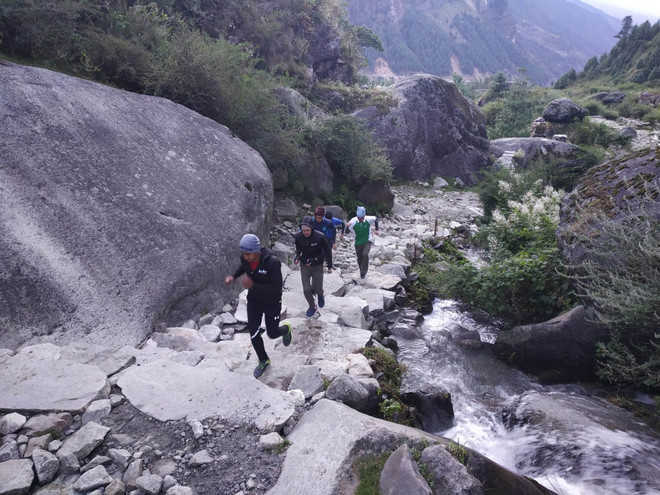
Participants take part in the skyrunning trail race on Tuesday.

Tribune News Service

Dharamsala, October 2

The soldiers of the Thanpir Brigade from the Dharamsala region have proved their mettle in the skyrunning trail race held on the slopes of the Solang Valley, Manali, on September 30.

In a press release issued here on Tuesday, an Army spokesperson said the race had attracted many seasoned runners from all over the world. It was organised by ‘The Hell Race’ group. It included river and stream crossings, single tracks, jungle shepherd trails, pebbles, gravels and navigating through boulders.

A total of 260 runners participated in three categories of 10 km, 30 km and 60 km. The highest altitude of the race was at 3,350 m.

Troops of the Manani Battalion, Thanpir Brigade, DAH Division, laced up once again for the gruelling testing race.

Riflemen Parvesh Magar and Rajendra Nepali secured the first two spots on the podium in the 10-km competition smashing the previous year records.

Rifleman Rajkumar Sherma lit up the 30 km skyrunning competition surging ahead to claim gold and ran uncontested until the finish. Rifleman Durga Bahadur closed the podium securing bronze medal.

The 60-km race saw a stacked field with almost 120 professional runners. Rifleman Suman won laurels in 60-km challenge charging through the finish line at the 5th spot and Rifleman Sandeep Sunar secured the 7th spot.

The Army spokesperson said the race tested the limits of human endurance and the soldiers put up a splendid performance.

“This is the second consecutive spectacular performance this season by the mountain lads and determination displayed is not only commendable but also awe inspiring,” he added.


Soldiers to get modular combat kits for lighter battle load

Soldiers to get modular combat kits for lighter battle load

Vijay Mohan

Tribune News Service

Chandigarh, October 3

Modular combat kits to be introduced by the Army would make a soldier’s battle load lighter and allow them faster access to ammunition and other equipment in operational conditions.

“The present Improved Combat Kit (ICK) is of old pattern, cumbersome and has restricted operational utility. There is a need for holistic review of ICK towards making it operationally useful and in keeping with the modernisation needs,” a request for information issued by the Army this week states.

The ICK consists of waist belt, ammunition pouches, plastic water bottle, backpack and a larger haversack. These are to be replaced by kits (see box what these must comprise) that would be similar to the Modular Light Weight Load Carrying Equipment system used by several NATO armies. The existing waist belt, backpack and haversack are also to be replaced with modular equipment designed to be convenient to use and comfortable to carry.

It was only in 1980s that the Army introduced camouflage pattern combat dress on the field instead of regular olive drab. Till about the turn of the century, webbing equipment, combat kits and boots were of the World War-II vintage. Even clothing material is regular fabric instead of being breathable, flame-resistant or water-repellant.

ICKs are manufactured by the state-run Ordnance Factory Board (OFB). Since such items are scheduled to become “non-core items” for the OFB from 2012-22 fiscal under government’s scheme, the new kits would be sourced from the private industry. The kits, to be made from Cordura, a kind of heavy-duty fabric with high durability, would be flame-retardant, dust-resistant, in addition to having a breathable mesh lining.

What kits consist of

  • Adjustable, comfortable ‘battle vest’ with integrated pouches, large-zippered pockets, pistol holster and two drop bags for additional equipment such as binoculars, medical pouch, etc
  • Bulletproof plates may be inserted in front and rear of battle vest, a 2-3 litre flexible hydration bladder may be attached, enabling soldiers to drink water through a tube while on the go

How Army Chief And Government Are Misusing Surgical Strikes’ Talk

As our government demands we celebrate “Surgical Strikes Day”, we should instead reflect. And feel disturbed – because not for decades has a government so blatantly politicised Indian defence and India’s military. The Bharatiya Janata Party has shown that it is willing to compromise on India’s security just to try to win a few elections.

Let’s recall for a moment exactly what we’re commemorating. Two years ago, the Indian military crossed over the Line of Control in the Kupwara and Poonch districts of Jammu and Kashmir to attack forward camps where it believed militants planning to sneak into India were briefed. The commandos, believably, say perhaps 40 militants and a couple of regular Pakistani soldiers were killed. In other words, the strikes were a tactical success.

But the action was a strategic failure: because it has signally failed to deter Pakistan. Far from changing our neighbour’s behaviour, in the two years since the strikes across the border – ceasefire violations have gone up four-fold. Security personnel are being killed on a regular basis; infiltrations do not just continue but in fact have intensified beginning in 2016. The Indian army carries out the orders of its political masters; tactics are the domain of the commanders on the ground. But it is clear that strategic thinking is absent in New Delhi. So should we not also on this day commemorate the strategic errors of the government? Should we call it “Strategic Failures Divas” instead?

This is just one more way in which the government has chosen to stoke the fires of Kashmir, irresponsibly and short-sightedly, in order to pump up its “nationalist” credentials in the Hindi belt. Back in 2014, discontent in the Valley was under control. There were barely 200 militants, probably less, left. Local recruitment was negligible. In the years since then, fuelled by the BJP’s irresponsible politics locally and by its divisive rhetoric nationally, the number of young Kashmiris turning to militancy has sky-rocketed. This should give any nationalist Indian pause. But apparently it means nothing to India’s “nationalist” party. It would seem that only election victories matter and since the surgical strikes helped them win the Uttar Pradesh assembly elections, their memory must be kept alive.

In the meantime, the Indian government’s approach to Pakistan where it matters has been embarrassingly schizophrenic. Most ridiculously, it cancelled a meeting between External Affairs Minister Sushma Swaraj and her Pakistani counterpart in New York barely 24 hours after it had been announced. This followed a negative reaction from some of its more jingoistic supporters online. Nobody can fault the government’s reaction time. But security policy and diplomacy cannot respond to Twitter trending topics. The silliness didn’t stop there: an absurdly worded statement from the foreign ministry – “the true face of Imran Khan has been revealed to the world” – needlessly personalised the issue and deliberately alienated the man who is now, for better or for worse, Pakistan’s prime minister for the next five years. All this did was put Khan’s back up, and cause him to tweet something equally silly about his Indian counterpart – “small men who occupy big offices”. India’s job should be to detach Khan from the military, and to widen civilian-military gaps in the new administration. That is where our security lies – and, of course, it would be good for Pakistan as well. But the Indian government is so scared of its own social media trolls that it would rather behave like them than in India’s interest.

If the government truly wished us to celebrate our military – the supposed reason for Surgical Strikes Day, and the subject of a circular sent out to schools and universities by the busybodies in New Delhi – then it could have picked any number of important dates in our history.

We already have Kargil Victory Day on July 26 – that could have been one occasion. Or November 1, the day in 1948 that General Thimayya and the tanks of the Seventh Light Cavalry took Zojila Pass and the crucial road to Ladakh. The truth is that there’s no shortage of such days. Picking the day of one particular set of cross-border strikes slights the Indian army’s history. It isn’t surprising that, according to most reports, veterans are noticeably unenthusiastic about the government’s plans for celebration.

Worst of all are the open claims that more such strikes are in the offing. One must assume that India’s Army chief acts on his own, and does not follow political orders. Yet General Rawat’s recent bellicose statements on television – “I believe there is a need for another surgical strike” – suggest at least that the civilians in government have not chosen to do their job and restrain him from making unfortunate statements to the media.

The whole point of undercover operations is that they are, well, undercover. It was bad enough when the government decided to publicise the 2016 strikes after they had happened; now we are publicising them before they take place?

What next – will we send BJP social media managers along so they can live-tweet where the army is going to strike?

Cross-border strikes are risky, and so should not be telegraphed in advance. What does risk mean in this context? What does danger mean? It means that soldiers might die. It means that such strikes carry a significant risk of failure. Not only should no Indian soldier’s life be sacrificed on the altar of political propaganda, but as Lieutenant General Vinod Bhatia has pointed out, the very fact that the government chooses to make cross-border strikes the subject of propaganda makes them a less effective weapon. It means it cannot afford to risk them going wrong. The propaganda, far from making India stronger, has deprived it of an instrument it has used often, but quietly.

(Mihir Swarup Sharma is a fellow at the Observer Research Foundation.)

75 COMMENTS

Disclaimer: The opinions expressed within this article are the personal opinions of the author. The facts and opinions appearing in the article do not reflect the views of NDTV and NDTV does not assume any responsibility or liability for the same.


IAF rescues people stranded on Himachal’s higher reaches

IAF rescues people stranded on Himachal’s higher reaches

Tribune News Service
Shimla, September 28

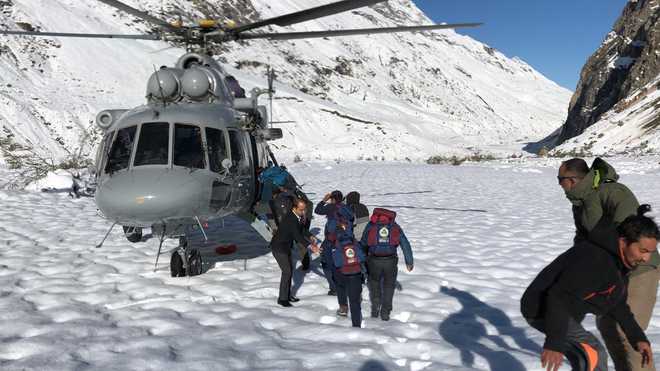
Six bikers along with 20 tourists who were stranded in Himachal Pradesh were rescued by a Mi-17 V5 helicopter of the IAF.

The stranded bikers and tourists were picked up from locations near Chhattru and Chhota Dara on the way from Rohtang Pass to Chandrataal near Bara Shigri glacier, who had got stuck there due to heavy snow in the region.

The rescued bikers included three women hailing from Delhi, Thiruvananthpuram and Rajkot. More people are reported to be holed up at a snowbound location near Chhattru. They will be rescued in subsequent sorties by IAF helicopters later in the day.


The BRO has opened the Manali-Sarchu road till Km 182. It means Patsio and Zing Zing Bar are connected. The BRO is providing transport to evacuate around 95 people from Patsio to Keylong.

The work to clear Rohtang Pass and Baralachala Pass from either side are in full swing. Work is also in progress to connect Gramphoo to Chattru.

On Thursday, 424 people were evacuated from Lahaul-Spiti and taken to Kullu, while 350 were evacuated via the Rohtang tunnel and 74 people airlifted.

As many as 74 people, including three German nationals, were airlifted from the Baralacha Pass, Sarchu, Satingri, Chhota Dara and Kunzum Pass.

Seven were rescued from the Rohtang Pass by BRO personnel. They were admitted to the Manali hospital.

Ten women and three children, spotted in a remote shelter near Chhota Dara, were airlifted. A few men were provided food packets, relief material and medicines. The rescued women and children were brought to Kullu.

36 students airlifted from Chamba

36 students airlifted from Chamba

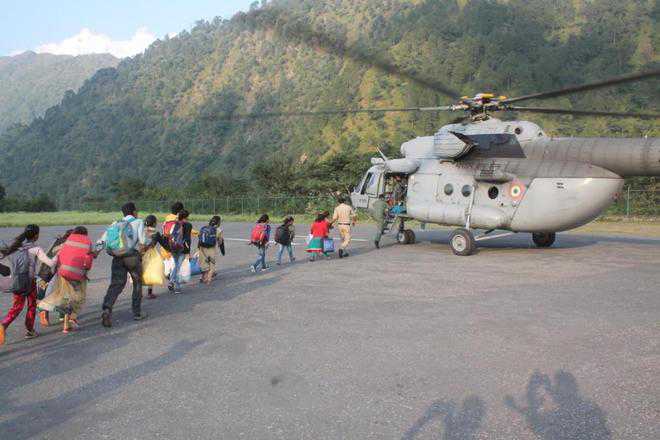
Students at the Chamba helipad on Thursday. Photo: Balkrishan Prashar


  • As many as 36 students of various primary schools and five staff members were airlifted from Chamba by IAF choppers and sent to Pangi on Thursday.   
  • The remaining staff will be sent to Killar (Pangi) on Friday. In an official communiqué, Chamba Deputy Commissioner Harikesh Meena said 365 students of other primary schools of the district had also been sent by 15 buses to Salooni, Sundla, Tissa, Kalhel, Banikhet, Chowari and Sihunta.
  • The students had gone to Holi, the tribal sub-tehsil, to participate in the district-level primary school tournament (U-12).
  • But they could not reach their destination due to inclement weather. OC


Why Army can’t lose moral edge by Lt Gen Syed Ata Hasnain (retd)

Why Army can’t lose moral edge

Headstart: Our Army was one of the first to have incorporated human rights training.

Lt Gen Syed Ata Hasnain (retd)
Chancellor, Central University Kashmir 

Both of us (writers of this article) were targets of messages laced with scorn on Twitter recently when we steadfastly opposed the circulation of an image of a civilian clicking a picture with the corpse of a terrorist in the backdrop, and also of what seemed like the dragging of bodies of the same terrorist just after an operation.

To put the record straight, the first picture was utterly detestable and the second was perhaps articulated out of context after the culmination of a military operation, subsequent to which the body of the terrorist had been tied by a rope and flipped to ensure the disposal of explosive which could put troops to risk. On opposition to the circulation of the pictures, we were, inter alia, informed by self-declared experts that the dragging of the body was a Standard Operating Procedure (SOP) in counterinsurgency operations and also that terrorists deserved no mercy. Of course, the commentators forgot in the bargain, that firstly, the picture was not that of the actual SOP being carried out, since the same is carried out by a rope at least 30 ft long, and secondly, a body ceases to be that of an enemy or a terrorist and is never mistreated, unless we are competing in barbarism with our neighbour. Needless to state, in this case too, the body may not have been mistreated, but the presence of civilians with cameras in such a zone is worrisome.

Why should such pictures not be circulated? If we dig deep into the issue, such actions can have deleterious repercussions. To begin with, they are bound to be used by inimical elements to spread misinformation about our forces, thereby depicting them in less than favourable light. Let us not forget that these are times of psychological operations, where messing with the minds of people and injecting hatred is a more potent tool than the gun. We just cannot afford to be an enabling device for the enemy in this dastardly environment. Such pictures, especially the one with a civilian with a corpse, can also lead to a vicious tit-for-tat cycle of violence with brutal photographs and videos being circulated, which has been seen elsewhere in the world, and is best avoided. 

On the dignity of bodies of terrorists, many have responded with the oft-repeated refrain that ‘terrorists have no human rights’. This is a dangerous proposition. ‘Human rights’ is not a dirty word. It regulates our existence and acts as a shield towards the misuse of power by any person in authority. What we have always clamoured for, however, is a balance and equal respect for the rights of the men and women in uniform. Had there been an absence of rule of law, the logic professed for terrorists could well be extended to any criminal or perceived criminal, thereby justifying mob mentality. In fact, the Indian Army was one of the first armies to have incorporated rights training and monitoring and it would also be in the fitness of things if the military, institutionally rising above any popular sentiment, corrects the perception on social media when it threatens our basic ethos.

The Army has always guarded against desecration of bodies. An apt example is of Kargil, wherein, in the middle of the battle, the bodies of the enemy were not only handed over to Pakistan, but also saluted by our troops. True, those were bodies of enemy combatants and a direct parallel with terrorists may not be apposite, however, let us not forget that this happened despite the most unsoldierly conduct on the body of the late Captain Saurabh Kalia. Some provided examples to us how other nations dealt with such situations. But it may come as a surprise to many that most democracies are very sensitive to this subject. Osama bin Laden’s body was buried at sea by the Americans and mistreatment of bodies is akin to a war crime for them. Contrary to popular perception, Israel absolutely forbids disrespect to bodies and professes very strict rules of engagement, including prohibition of the use of human shields and maltreatment of bodies, which were banned by its apex court and dutifully followed by the Israel defence forces. In Nigeria, Sierra Leone and South Africa, maltreatment of bodies is a war crime. Many other African states, which have faced gruesome ethnic violence, now provide for the protection of bodies. 

The battle zone is not mathematical. There would be a variety of situations that would require split-second decisions. Therefore, imposing a zero-error environment might result in inhibiting the initiative of troops. However, there are aspects where there is no compromise. The true mettle of a soldier only comes to the fore under stressful situations, where he or she must not stray from military values. While the Indian Army would be ruthless in its operations thwarting terrorism, it would also be the most correct in following the rule of law, the laid-down procedures, including respect to the dead.

The scrupulous adherence to these ingrained principles is why the Indian Army has retained its reputation. Unnecessary chest-thumping on social media by seemingly bloodthirsty warriors, who have not gone beyond video games in real life, militates against the ethos of our military, and would continue to be treated with the contempt it deserves.

Despite extreme provocations, we cannot be like the other side and that is the reason why our Army retains its moral edge, and continues to prevail.

Co-authored by Major Navdeep Singh (Retd.)
Founding President, Armed Forces Tribunal Bar Association


Beas in spate, IAF chopper rescues 19 stranded in Kullu Incessant rain, Chandigarh-Manali NH stretch flooded

http://

Abhinav Vashisht

Kullu, September 23

Nineteen persons, including two women, were stranded at Dobhi Bihal in Kullu district on Sunday after the water level in the Beas river rose abnormally, touching the Chandigarh-Manali National Highway 21, owing to incessant rains. The persons trapped in the river were airlifted to Bhuntar by an Indian Air Force chopper.

Kullu Deputy Commissioner Yunus Khan said most of the stranded persons were from Uttar Pradesh and Nepal. The rising water level in the Fozal Nullah having washed away the sidewalls of Dwara bridge,   traffic on the Kullu-Manali road had been halted. However, small vehicles were being allowed via the left bank.

Traffic near the Bhuntar bailey bridge too had come to a stop, the DC said.

Also, 30 persons stranded at Rohtang Pass because of heavy snowfall and some at a camping site in Raison were rescued. They were brought to Manali in a General Reserve Engineer Force (GREF) vehicle with the help of Col AK Awasthi and the Kullu DC.

Gushing Beas waters reportedly entered a truck union office at Bashing, 4 km from here, washing away two vehicles. The newly built helipad at Bahang near Manali was damaged too.

With various rivers and rivulets in the district in spate, the administration has issued an alert. All educational institutions in Kullu will remain closed on September 24. Flights from the Bhuntar airport have been cancelled.


Alert in several parts of Himachal

  • All schools in Kinnaur, Kangra and Solan districts have been closed in view of the rains
  • Several roads in Kinnaur and Chamba districts have been blocked by landslides
  • With water being released from Chamera dam, the SDM has warned people not to go near the Ravi and nullahs
  • In Kangra, Larji dam gates are being opened and if situation persists, shutters of Pandoh dam may be opened
  • Naina Devi in Bilaspur was the wettest with 178.2 mm of rain. Sarkaghat in Mandi recorded 137 mm, Mehre 132.6 mm, Manali 127.4, Dharamsala 125.2 and Kasauli 105 mm