Sanjha Morcha

What’s New

Click the heading to open detailed news

Current Events :

web counter

Print Media Reproduced Defence Related News

Indian Army will have to wait some more, fresh RfP to be issued for replacement of outdated Insas by close-quarter carbines

Despite efforts of the Indian Army to fast-track the procurement of small arms, the Ministry of Defence (MoD) is considering to issue a fresh request for proposal (RfP) for the procurement of 93,895 close-quarter-battle carbines (CQB), a deal worth $553.33 mn.

The procurement of 93,895 CQB for the Indian Army had run into rough weather.

Despite efforts of the Indian Army to fast track the procurement of small arms, the Ministry of Defence (MoD) is considering to issue a fresh request for proposal (RfP) for the procurement of 93,895 close-quarter-battle carbines (CQB), a deal worth $553.33 mn.

The Indian Army which has been trying for long time to replace age-old ‘INSAS’ rifles which has reliability issues, has so far failed in finding the right replacement either from foreign OEMs or from the Ordnance Factory Board (OFB).

After receiving a series of complaints against Caracal of the UAE which was shortlisted as the lowest bidders for the CQBs, from the other bidders including French Company Thales and S&T Motiv of South Korea, the MoD is mulling on cancelling the previous RfP.

Read | Procurement of 93,895 close-quarter-battle carbines for Indian Army, a deal worth $553.33 mn runs into rough weather

As has been reported earlier by FE, a nine-member committee headed by an Army brigadier has been receiving complaints regarding non compliance of Caracal of UAE.

The UAE Company has failed to submit its response as per the format of the commercial bid and the amount of Rs 70 crore was not reflected in the bid format which is used for determination of L1 vendor.

Concerns have also been expressed to the nine member committee about the ability of Caracal to supply 96,000 weapons within a period of 12 months as required under the RfP.

Officials confirmed that the UAE based company started its commercial production in 2014 and till date does not have a lot of orders to indicate that it has the capacity to produce 93,895 CQBs.

Adding, “This, in turn will also impact the life cycle of the weapon as the company has no previous data to establish the reliability of the CQB.”

As has been reported earlier, the procurement of 93,895 CQB for the Indian Army had run into rough weather, when after stiff evaluations two companies — Caracal of the UAE and S&T Motiv of South Korea —had been declared non-compliant by a nine-member committee headed by an Army brigadier.

This left Sig Sauer of the US, Kanpur-based MKU with French company Thales in the race.

Caracal of the UAE and Reliance Armaments with S&T Motiv of South Korea were competing for this deal. It may be recalled that the Embassy of South Korea in New Delhi had protested against being declared non compliant in spite of meeting all the requirements laid down in the request for proposal.

The nine member team had gone to facilities of the competing companies before being invited for the extensive trials in India for testing with the Indian ammunition and in different terrains and temperature.

Representatives of the S&T Motiv, producers of small arms for the last four decades were part of the delegation when South Korean President Moon Jae-in had visited India in July. The company had offered to transfer technology to produce the CQBs under Make in India initiative when the defence minister of that country had visited close on the heels of President Moon Jae-in.

Get live Stock Prices from BSE and NSE and latest NAV, portfolio of Mutual Funds, calculate your tax by Income Tax Calculator, know market’s Top GainersTop Losers & Best Equity Funds. Like us on Facebook and follow us on Twitter.

clip

clip


15 Corps GOC felicitates kickboxing medallists

Srinagar, November 16

General Officer Commanding (GOC) of 15 Corps Lt Gen AK Bhatt on Friday felicitated the players who won medals at the recently concluded World Kickboxing Championship in Argentina.

Hashim Ashraf and Aabid Hamid of Army Goodwill School, Hanzik; and Abrou Bashir and Irshad Ahmad Ganie of Army Goodwill School, Bandipora; achieved a tremendous feat by bagging top medals. Aabid bagged the gold medal by outperforming his opponents. In the closely contested finals, Hashim, Abrou and Irshad bagged silver medals after losing by slender margins.

During the felicitation ceremony at Badamibagh Cantonment, Lt General Bhatt interacted with the players and their parents, an Army statement said. “The Chinar Corps commander also assured them continued support from the Army to help them achieve greater laurels,” the statement added. — TNS

New tack in Afghan game as aid gets little traction by Maj Gen Ashok Mehta (Retd)

India has invested $2 billion in the development of Afghanistan and committed another $1 billion in aid. All it has got in return is the goodwill of Afghans. India does not exercise any influence in shaping policy like Pakistan does. It is true the road to peace in Afghanistan runs through Rawalpindi.

New tack in Afghan game as aid gets little traction

Playing safe: President Ghani was asking for lethal military hardware but India wants to stick to soft aid.

Maj Gen Ashok Mehta (Retd)
Former GOC, IPKF, Sri Lanka

There is never good news coming out of Afghanistan. The hype about Russia spearheading Afghanistan-Taliban reconciliation talks and India getting a US waiver on Chabahar Port is misplaced. Still, the third democratic election for the Afghan parliament last month, though at a horrendous cost — nearly 500 killed or wounded in the bloodiest resistance to elections by the Taliban — is a positive. The Americans are fighting their longest war abroad, having invested $1 trillion and losing 2,500 soldiers. Their reputation as the world’s most powerful nation, militarily and economically, is at stake following the British and Soviet retreat from Afghanistan.
According to Bob Woodward’s new book Fear: Trump in the White House, Prime Minister Modi told Trump at their first meeting in June 2017 at the White House that the US has got nothing out of Afghanistan. He told him: ‘Never has a country given so much away for so little in return’. Trump also noted: ‘Pakistan is not helping us. They’re not a real friend (sic) despite $1.3 billion annual aid the US gives them.’ Later he raged: ‘All we’ve got from Pakistan is lies and deceit’. The outburst against Pakistan could have been influenced by Modi’s remarks. Come to think of it, India has invested $2 billion in development and committed another $1 billion in aid. All India has got in return is the goodwill of Afghans and high ratings in popularity charts. India does not exercise any influence in shaping policy like Pakistan does. Not for nothing is it said that the road to peace in Afghanistan runs through Rawalpindi.

Trump teasing Modi?

Woodward also says in his book that Trump asked Modi why India did not put boots on the ground in Afghanistan. He does not indicate Modi’s response. According to the media, at a meeting on the sidelines of ASEAN and East Asia summit in Manila,Trump is supposed to have mimicked Modi, whom he had  called a ‘friend of mine’. Last month, Defence Minister Nirmala Sitharaman had informed her US counterpart Jim Mattis at an ASEAN plus defence ministers’ meeting that India could not provide troops in Afghanistan despite its vital security interests there. The reason for refusal was not mentioned in the news report. One can assume that India does not wish to antagonise the Taliban which considers New Delhi an important friend, good for Afghanistan’s development. This is a Taliban volte face: both on development and considering India a friend.

The second reason is simply geographical — without a contiguous border, maintenance of a light division of 20,000 troops is difficult. Further, Indian troops in Afghanistan for Pakistan will be like a red rag to a bull. Finally, the US will not want to complicate further the Afghan imbroglio. A Trump adviser said: ‘Trump is only teasing Modi’.Not many troops to spare

India at any time has some 8,000-9,000 troops on UN Peace Keeping operation missions. In addition it holds another 10,000 soldiers as strategic reserve. Given the inflamed situation in Kashmir and a stressed border with China, it can ill afford to commit more than a brigade — 5,000 soldiers — for out-of-area operations, which is anyway too little for effect.

In 2003, the US Defence Department had asked India for an infantry division for Iraq. Then Army Chief Gen Vij argued based on the Sierra Leone fiasco that a self-contained battle group was necessary to combat any unforeseen contingency. This required attaching an armoured brigade to the infantry division to give it more weight and fire power. In order to maintain one division and a brigade on an expeditionary mission, a minimum of two additional brigades would have to be earmarked as backup and relief. With nearly one brigade already deployed in Lebanon, Eritrea and Congo, it was unwise to despatch such a large fighting force in a region where India’s intrinsic national interests were not at stake. But it would serve to demonstrate a BJP-led government’s solidarity with Washington. Vij also mentioned in his written note to the government that the Army had  been deployed for a full 12 months in Operation Parakram which had created turbulence in peace tenures and training cycles.

The Chabahar carveout

Further, the situation in Kashmir was worsening. The question of command and control (Indian troops never served abroad except under the UN flag), cost and logistics were also raised. The lifeline for the task force from Mumbai to Basra would be long and tenuous. A unanimous resolution in Parliament rejected the idea of sending troops to Iraq and took the Army off the hook. The same would certainly happen in case of Afghanistan. For Afghanistan, a carve-out for Chabahar by US sanctions regime on Iran has come.

India has to be proactive. For too long and in too many hot spots, New Delhi has adopted its favourite wait-and-watch mode. Like Karzai earlier, President Ghani was asking in September for additional lethal military hardware in accordance with the Strategic Partnership Treaty of 2010. The list included four armed helicopters which are to come from Belarus and paid for by India. India wants to stick to soft aid which wins you friends but little influence. It is probably time to deploy a full-fledged training team in Tajikistan, backed by a field hospital. The air field at Ainey in Tajikistan that India shares with Russia and is serviced by the Indian Air Force is available for forward deployment.

The ultimate counterinsurgency and counter-terrorism baptism is to be had in Afghanistan. Kashmir is a cakewalk in comparison.


From M777 Howitzers to Rafale : Here are the big upgrades in India’s Military under Modi Govt.

  • In yet another milestone, on November 9 the army got a massive artillery boost as M777 Howitzers along with K9 Vajra were inducted into the army
  • In the past two years, India has made tremendous progress as far as the defense sector is concerned, making several acquisitions and striking multiple deals

In the past two years, India has made tremendous progress as far as the defense sector is concerned, making several acquisitions and striking multiple deals. In yet another milestone on November 9, the army got a massive artillery boost as M777 Howitzers along with K9 Vajra were inducted into the Army. Here’s how India’s defense forces are more equipped than ever before:

1. The Indian Army on Friday inducted the M777 lightweight howitzers and the K9 Vajra artillery guns into its fold. This is the first induction of artillery guns since the Bofors in 1987, thus breaking the three decades old Bofors jinx.

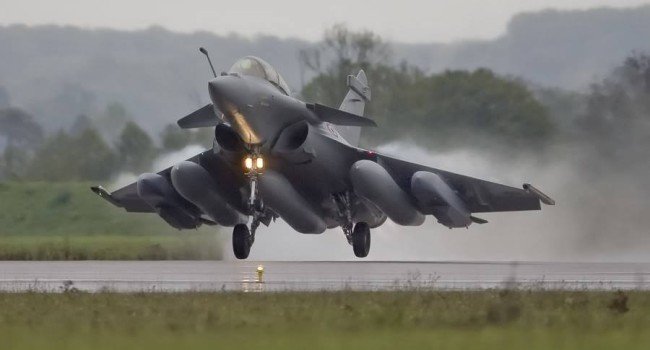
2. Over the last few years, the Indian military has gone ahead and either contracted or inducted some state of the art weapons systems into its fold. The biggest of them are the Rafale fighter jets which are 4.5 generation fighter jets and change the dynamics in the region.

3. The Indian Air Force has also gone in for the S400 Air defense system which is again a game changer as far as Pakistan and China are concerned.

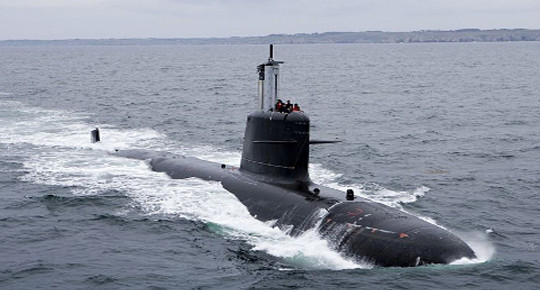
4. The Indian Navy has got a major firing boost with the induction of INS Arihant, the indigenous nuclear attack submarine, which was inducted in 2016. It was only earlier this month that it completed it’s first deterrent petrol, thus completing the nuclear triad for India.

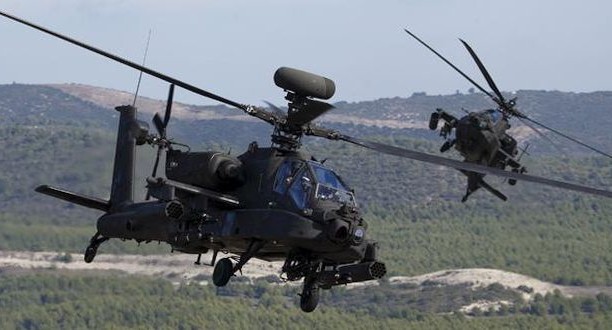
5. The Air Force has also contracted for Apache attack helicopters, considered to be one of the most lethal attack helicopters in the world.

6. Besides this, the Indian Air Force is also going in for the Chinook heavy lift helicopters which will be used to airlift the M777 to be deployed in forward areas along the Northern borders


After Asia Bibi’s acquittal Imran’s defence of the judiciary should echo in India too

After Asia Bibi’s acquittal

IMRAN Ahmed Khan Niazi got a second chance to redeem himself as Prime Minister with the Asia Bibi judgment. This is an opportunity he grabbed with a state-of-the-nation address where he put the mullahs opposing the judgment on notice. In September, the newbie PM had muffed up the first opportunity by giving in to demands of the mullahs to exclude a noted economist but an Ahmadi from his economic advisory council. In the Asia Bibi case, the mullahs might have left their flanks open by calling for the murder of Supreme Court judges and urging all ‘Muslims’ in the Pakistan army to revolt against the apex court’s judgment. With the army apparently by his side, Imran Khan, on the other hand, had secured his flanks.

If the desultory action by the zealots in the bazars of Pakistan is an indication, Imran might have the upper hand so far. His stern and unyielding address with smart juxtaposition of Islamic ideals may have struck the right note with the masses. In one stroke, Khan endeared himself to the West, but also assuaged Beijing’s concerns about the overflow of radical Islam from Pakistan into Xinxiang province after the operationalising of the China-Pakistan Economic Corridor.

Khan’s backing for the legislature has important lessons here in India where the Supreme Court’s handling of Sabarimala and Ram temple cases is being questioned on the streets. In both cases, the protagonists are hamare log. But Khan has drawn a clear line between dissent and hooliganism by observing that ‘the thugs cannot hijack this country in the name of Islam and they will be treated accordingly if they mess with the state’. Since the mullahs are the Pakistan army’s strategic assets much like gau rakshaks are indispensible for the Hindutva forces here, it remains to be seen if Imran’s divorce from them is irrevocable. But the stirrings of a ‘Naya Pakistan’ are in the air. If Imran stays the course , not only Pakistan, but also the region will benefit.


NIA raids Srinagar houses of trader, family in terror funding case

NIA raids Srinagar houses of trader, family in terror funding case

Mir, 48, is accused of funding Hurriyat leaders and believed to have fled the country after jumping bail, they said, adding that the raids were carried out nearly 10 months after the case was re-registered by the NIA. ANI photo

Srinagar, October 30

The National Investigation Agency on Tuesday carried out raids at three residences of absconding businessman and Hizbul Mujahideen militant Nasir Safi Mir and his family at Lal Bazaar area here in connection with a terror funding case, officials said.

Mir, 48, is accused of funding Hurriyat leaders and believed to have fled the country after jumping bail, they said, adding that the raids were carried out nearly 10 months after the case was re-registered by the NIA.

Details of the raids were not immediately available as the NIA teams assisted by Jammu and Kashmir Police and para-military forces were in the process of collecting documents from the three places where the raids were conducted, they said.

The NIA probe is likely to ascertain how Mir alias Babul managed to secure a passport from a southern state which he allegedly used in Nepal to leave for Europe in October 2008.

A resident of north Kashmir, Mir allegedly used carpet trade and later a money exchange business in Dubai for sending hawala money to separatist leaders in Kashmir. He was arrested from Lajpat Nagar by the elite Special Cell of Delhi Police on February 3, 2006. The police had seized Rs 55 lakh in cash and explosives from him.

During his trial, Mir managed to secure bail on a plea that his mother was ill.

Mir, who the investigators believe was based in Dubai and owns a carpet showroom and money exchange firms in the gulf, regularly reported to the nearest police station while on bail till early October 2008.

But after that, he failed to turn up at police stations or in court for hearings.

According to intelligence inputs, Mir reached Dubai in 2011, making a detour through countries in Europe and Libya.

Mir, against whom a non-bailable warrant was issued in 2009, travelled to Nepal from India, and then used the forged passport to fly out, the officials said.

A resident of Lal Bazaar on the outskirts of Srinagar city, Mir dropped out of school in 1983 to get into the carpet business. He continued with the trade till 1990 after which he shifted to the national capital and started living in the Lajpat Nagar area of south Delhi.

In the late 1990s, he went to Dubai after his father was arrested for alleged links with militants.

Mir had also told investigators that in Delhi he first opened a firm, Kashmir Master Computers, after which he set up a company, Failala, but closed it in 1998.

In 1999, he started a firm called Idekas and then opened an information technology company, he had said.

Police found that in 2002, Mir had opened two money exchange companies, Reems Exchange and Cash Express, in Dubai, which were allegedly used as a stopover for money being pushed in from Pakistan for terrorist funding in Jammu and Kashmir.

The Enforcement Directorate (ED) had in 2014 attached Rs 55 lakh that had been seized from Mir.

He was subjected to extensive interrogation by central security agencies during which he allegedly spoke about his links with separatists groups and banned terror outfit Hizbul Mujahideen.

According to the ED attachment order, the cash which was in the custody of the Special Cell was “proceeds of crime of terrorist funding and money laundering and hence stands attached”.

This is the first major action against terror funding in the country under the stringent provisions of money laundering laws where the onus is on the accused to prove that he or she is “not guilty”.

The attachment of cash or properties under the Prevention of Money Laundering Act (PMLA) is aimed at depriving the accused of the benefits of the assets earned unlawfully. PTI


Can’t fight next war like last one, says army chief Gen Bipin Rawat

Army chief General Bipin Rawat said a mammoth drill is being undertaken to change the complexion and direction of the 1.2 million- strong force and transform it into a deadlier fighting machine fully prepared for future.

Indian army,Indian army chief,General Bipin Rawat

“Let me be clear that we cannot fight the next war like we fought our last,” said General Bipin Rawat in an exclusive interview, explaining the significance of the biggest exercise in independent India’s history to restructure the army and why it tops his priorities as army chief.

The mammoth drill, based on four comprehensive studies led by the army’s topmost generals, will change the complexion and direction of the 1.2 million- strong force and transform it into a deadlier fighting machine fully prepared for future wars, Rawat added.

So what’s on the menu?

The army chief said the implementation of the four studies in their totality would reduce troops (by about 100,000), allow the army to tap technological advances in warfare, create integrated brigades that can be mission-deployed swiftly, cut down the size of the army headquarters, improve the army’s tooth-to-tail ratio and enhance career prospects. “We have to change as the nature of warfare is changing. New structures have to be created incorporating modern technology. That’s the way forward. These changes, reforms, will not happen overnight, but they will happen,” said General Rawat, in his first public comments on the restructuring drive.

All four studies have reached the army chief’s desk in his South Block office and the first, Reorganisation of the Army Headquarters, will be sent to the defence ministry for approval soon and the restructuring could kick off early next year. The remaining three — Reorganisation and Rightsizing of the Indian Army, Cadre Review of Officers and Review of Terms of Engagement of Rank and File — will come up for government approval by the middle of 2019, Rawat said. The studies are being validated.

The army chief said he discussed the studies comprehensively with his seniormost commanders at the recently-concluded Army Commanders’ Conference and that everybody is on the same page.

He said a proposal in one of the studies to abolish the rank of brigadier to smoothen career progression did not find favour within the force; the one-star rank would stay, he added. “We are trying to figure out a formula that allows the brigadier’s rank to stay and still leaves room for improved career progression,” he said.

One of the proposals being considered is to promote colonels directly to the rank of major general and those approved for the two-star rank would first be assigned to command integrated brigades as brigadiers before they go on to command divisions as major generals.

“You can call these integrated brigades lighter divisions or heavier brigades,” he said.

The army could cut over one lakh troops over the next three to five years and some of them could be assigned new roles in domains such as cyber, information and psychological warfare, said Rawat.

“It will result in saving money that can be used for upgrading capabilities. A jawan costs the army Rs 6-8 lakh a year, compared to an officer who earns Rs 20-22 lakh annually. Simply put, cutting down four or five officers will help save a crore,” Rawat said.

“And if the army is saving that money, it should come back to it for taking up modernisation projects. We have limited resources. I will call it rightsizing the army to strengthen its capabilities,” Rawat said.

The troop reduction is likely to be achieved through restructuring different parts of the army, including directorates at the army HQs, logistics units, communications establishments, repair facilities and other administrative and support wings. The restructuring of the army seeks to streamline the procurement process too.

“That’s part of the army headquarters restructuring. And it is a very important facet of the restructuring that we are talking about. We are creating structures at the top levels that will help provide the right equipment to the right troops,” Rawat said.

“For example, if the army wants to buy rocket launchers (RL). It is basically an infantry weapon. That means the infantry should get top-of-the line RLs. But if an engineers’ unit wants RLs, that’s primarily for illumination and not for direct strike. So they can also be given a good RL but the infantry deserves the best because of the job it does. The same goes for assault rifles and other weapons,” he said.

Former army chief General Deepak Kapoor (retd) said several western armies had restructured their forces keeping emerging battlefield scenarios in mind and the Indian Army should also explore if such models could prove useful.

“Modern armies are doing away with large-sized formations as future wars will be fought differently. We are talking about space-age weapons, precision targeting, battlefield transparency and other critical dimensions of warfare. So we need to examine restructuring issues in detail,” said Kapoor, who was at the army’s helm during 2007-10.

Lieutenant General AB Shivane (retd), who was heading the army’s mechanised forces directorate until last December, said the restructuring exercise was a positive and relevant development but there are some caveats.

“There has to be absolute clarity about the outcomes, which have to be discernible and benchmarked with time. It must also relate to the overall national security strategy framework. And rightsizing must have a tri-service flavour,” said Shivane, who was involved in a study on rightsizing and rebalancing of the army in 2014-15.

The army’s restructuring was kicked off on a small scale last year.

In August 2017, the government announced that 57,000 soldiers would be redeployed in combat roles to sharpen the force’s fighting edge. This was done following the recommendations made by the Shekatkar committee on enhancing the army’s combat potential and trimming its revenue expenditure.

The committee also listed out measures to bring down the budget for meeting day-to-day expenses and making more money available for weapons and equipment.

The restructuring of the army headquarters will see the role of the Director General of Military Training being given to the Shimla-based Army Training Command and Director General of Rashtriya Rifles being moved to Jammu and Kashmir under the Udhampur-based Northern Command.


Military justice at last!

On October 13, the GCM pronounced its verdict and held seven persons guilty. Life imprisonment was awarded to Major-General AK Lal and six others

Military justice at last!

Ajay Banerjee in New Delhi

SOMETIME in the middle of July this year, the Army commenced General Court Martial (GCM) proceedings to try a major-general and six others for an alleged extra-judicial killing carried out in Tinsukia, Assam, in 1994. The case came to be known as the Dangari Fake Encounter.

Before the GCM was commenced, the Army sought permission to try these officers and men under the Army Act, 1950. This was allowed despite the CBI having already filed a chargesheet in the Guwahati High Court under an FIR (RC-4/S/2000-CAL) lodged by its Kolkata unit in 2000.

On October 13, within three months, the GCM pronounced its verdict and held seven persons guilty. Life imprisonment was awarded to Major-General AK Lal, Colonel Thomas Mathew and Colonel R S Sibiren and junior commissioned officers (JCOs) and non-commissioned officers (NCOs) Dilip Singh, Jagdeo Singh, Albindar Singh and Shivendar Singh.

Assam Chief Minister Sarbananda Sonowal, who had taken to the streets demanding justice almost quarter a century ago, welcomed the verdict saying, “It will give solace to the families of the victims…. The Army has worked in a fair manner and without any prejudice”.

The ‘limitation’ loophole

On the face of it, the verdict looks like speedy justice. Officers who have served in the Army’s Judge Advocate-General (JAG) branch are skeptical. They say the accused can use the ‘loophole’ created by the conduct of the GCM. They can easily cite ‘time limitation’ as applicable under Section 122 of the Army Act. A GCM cannot be conducted after three years of ‘the competent authority having acquired knowledge of occurrence of the event’. Since the CBI lodged the FIR in 2000 and filed a chargesheet, the facts would have been communicated to the Army.

Col NK Kohli (retd), who has served in the JAG branch, says: “Based on the facts that have come out in the media, the case pertains to 1994 while the CBI registered an FIR in 2000. The ‘time limitation’ — of three years — will start from the day the Army (the competent authority) acquired knowledge of the case. It’s beyond comprehension as how the Army had no knowledge of the case since 2000 when the CBI filed a charge sheet in the court”.

Another expert on legal matters of the Army, on condition of anonymity, cited the case of Colonel Rajvir Singh vs Ministry Of Defence. In his case, the Supreme Court said the Army Commander of Central Command knew of the case as on May 2007 and the GCM was convened in August 2010. The SC in 2012 said it was clearly beyond the period of three years, and hence barred in terms of Section 122.

“One feels sorry to see a trial on such serious charges being aborted on grounds of limitation but that is the mandate of the law,” the order said.

Insiders who understand the legal system say it would have been better to allow the Guwahati High Court to go ahead with the CBI charge sheet as it would not be barred by time-limitation.

The findings of the GCM will have to be confirmed by the Army’s higher authorities — the Eastern Command at Kolkata and the Army headquarters in Delhi. They can agree, partially agree, or even disagree on life imprisonment verdict. The accused can then file an appeal against the verdict in the Armed Forces Tribunal and follow that up with case in the Supreme Court.

What is the case?

Nine activists of the All-Assam Students’ Union (AASU) were picked up by 18 Punjab Regiment from different places in Doomdooma in Tinsukia from February 17 to 19, 1994. Five of the activists — Prabin Sonowal, Pradip Dutta, Debajit Biswas, Akhil Sonowal and Bhaben Moran — were allegedly gunned down near the Dangari river. The Guwahati High Court, which heard a habeas corpus plea, ordered the Army to produce the nine activists at the nearest police station. Statewide protests followed as five of the nine had died. At that time Sonowal, the now Assam Chief Minister, was president of the AASU. The matter was handed over to the CBI at the behest of the court.

Revisiting Army justice

A five-member committee of experts that had Lt-Gen Mukesh Sabharwal (retd), a former Adjutant General of the Army and Lt-Gen Richard Khare (retd), a former military secretary, suggested radical changes in a report in 2015. The committee was tasked by Defence Minister Manohar Parrikar to review “service and pension matters, including potential disputes, minimising litigation and strengthening institutional mechanisms related to redress of grievances.”

Citing the Army and Air Force Acts in 1950 and the Navy Act in 1957, the committee said, “These were enacted soon after Independence and reflected the mindset of a force of occupation. These were modelled on provisions of the Crown.”

“The independence of judiciary and separation of powers in the civilian set-up in letter and spirit, which, even as on date, remain a far call in the military”, it said adding, “We have ad hoc juries comprising non-judicial and non-legally trained members”. It was referring to how a GCM is conducted by a serving military officer, who may or may not have legal grounding.

The committee suggested provisions making military justice independent and totally insulated from influence of higher ups in the chain of command.


5 militants killed in north Kashmir Major among nine soldiers injured in IED blast in south Kashmir’s Pulwama district

5 militants killed in north Kashmir

Locals looks at the bridge which was damaged when an IED went off at Trichal village in Pulwama district. Tribune photo: Amin War

Majid Jahangir & Suhail A Shah
Tribune News Service
Srinagar/Anantnag, Oct 19

Security forces killed five militants in two operations in north Kashmir even as nine Army men, including a Major, were injured in an IED blast in south Kashmir.

Three unidentified militants were killed in a counter-infiltration operation along the Line of Control in Baramulla district. The operation began on Thursday morning when the Army noticed suspected movement close to the LoC near Tourna in the Boniyar sector, around 100 km from Srinagar.

“Challenged, the terrorists opened fire and the ensuing gunfight continued till late last evening. Three bodies were recovered from the dense forest area this morning,” a defence official said. “Four AK rifles, some haversacks and warlike stores have also been recovered.”

The combing operation was still underway in the area, he added.

The identity and affiliation of the slain militants could not be established immediately.

In a separate incident, two Pakistani militants affiliated with the Jaish-e-Mohammed were killed at Kralhar on the outskirts of Baramulla town.

Baramulla SSP Imtiyaz Husain said the militants, operating under code names Faizan and Wahab, were travelling in a Scorpio vehicle towards Baramulla when they were signalled to stop at a check-point. “Both terrorists were killed in a brief gunfight while a policeman suffered minor injuries,” Husain said. “The Scorpio driver has been arrested and the vehicle impounded.”

During searches, an AK rifle, an AK magazine, a UBGL, two Chinese pistols and some ammunition were seized.

Director General of Police (DGP) Dilbag Singh said when the security men asked for the card from one person, he took out a pistol and fired at police and CRPF men.

“He was killed in retaliatory action while the second one fled while firing. He was chased and killed later,” Dilbag said.

A news portal quoted Jaish-e-Mohammad spokesman as having said that the two militants killed in Baramulla shootout were on a “special mission”. He, however, did not reveal the mission details.

In another incident, nine Army men, including a Major, were injured in an improvised explosive device (IED) blast in south Kashmir’s Pulwama district. The massive blast occurred around 9.15 pm on Thursday at Trichal village on the outskirts of Pulwama town.

“A Casper vehicle of the 55 Rashtriya Rifles hit a landmine. The blast was followed by intense firing by militants,” a senior police officer said. A Major and eight soldiers sustained injuries in the blast. Militant group Jaish-e-Mohammed has claimed responsibility for the attack.

Villagers alleged Army personnel went berserk after the blast and thrashed locals, injuring 15 civilians, seven of them women. They alleged their houses were also vandalised.

The DGP said the police were yet to receive any formal complaint in that regard. “If there is any such complaint, we will look into it,” he said.

Defence spokesperson Rajesh Kalia said the facts were being ascertained regarding the incident.


Pregnant woman killed in militant attack

A pregnant woman was killed in south Kashmir’s Pulwama district after militants targeted an Army camp on Friday evening, officials said. Superintendent of Police Chandan Kohli said the militants fired two UBGL grenades and also opened fire at the camp at Shadimarg, Pulwama. “Firdousa, daughter of Khursheed Ahmed Sheikh of Qasbayar, Shadimarg, received a bullet injury in the exchange of fire. She was taken to Rajpora hospital, from there she was referred to District Hospital, Pulwama, where she succumbed,” he said. The doctors  said the slain woman was five months pregnant. TNS


Militants again steal cops’ weapons Police caught off guard; Jaish claims to have looted carbines; DIG says probe on

Militants again steal cops’ weapons

Paramilitary personnel patrol an area in Srinagar as security was put on alert after militants fled with rifles. Tribune file Photo

Majid Jahangir

Tribune News Service

Srinagar, October 15

For the second time in less than a month, the police have been caught off guard while militants stole rifles from under their nose.

On Sunday night, militants stole two carbines of the two personal security officers (PSOs) deployed at the residence of retired Senior Superintendent of Police Sheikh Ghulam Mohammad in central Kashmir’s Budgam district. The two PSOs were not present at the house and had kept the weapons in a locked box.

While the pictures of the two carbines surfaced on the social media, claiming that the Jaish-e-Mohammed had looted the weapons, the police said they were investigating which group was involved in the incident.

“So far, the claim is on the social media. We are looking into it (Jaish claim) and all other angles,” said Vidhi Kumar Birdhi, Deputy Inspector General (DIG) of Police, central Kashmir.

“We have found that the back door entry to the residence of the retired officer was open which has raised our suspicions. We will also be questioning the private employees working at the house,” the DIG said, adding that strict action would be taken against the policemen for “dereliction of duty”.

Apart from the two Personal Security Officers, there were four policemen to guard the residence of the Senior Superintendent of Police at Gopalpora, Chadoora. Of them, two were absent.

“As the militant barged into the house, they were looking for the weapons of the two police guards present there. When the policemen told the militants that they had no arms, they were thrashed. The militants found a locked box in which the two Personal Security Officers had kept their weapons and decamped with them,” a police officer said. “After the militants fled, they fired gunshots from a distance,” he said.

This is the second time that militants have managed to steal weapons in central Kashmir inless than a month.

On September 28, Special Police Officer Adil Bashir fled with seven rifles and a pistol from Peoples Democratic Party MLA Aijaz Mir’s government residence in Srinagar.

This year, militants have stolen 18 weapons in Srinagar and neighbouring Budgam district.


18 rifles stolen this year

  • On Sunday night, militants stole two carbines of the two personal security officers deployed at the residence of retired SSP Sheikh Ghulam Mohammad in central Kashmir’s Budgam district
  • On September 28, Special Police Officer Adil Bashir fled with seven rifles and a pistol from PDP MLA Aijaz Mir’s government residence in Srinagar
  • This year, militants have stolen 18 weapons in Srinagar and neighbouring Budgam district