Sanjha Morcha

What’s New

Click the heading to open detailed news

Current Events :

web counter

Print Media Reproduced Defence Related News

There is a design flaw with this military post:::::Creating a Chief of Defence Staff is problematic; it also erodes civilian supremacy over the defence establishment

The scale of the First World War underscored the command and control dilemmas of concurrent conflicts playing out simultaneously in multiple theatres of conflict.

War and the West

During the locust years of Great Britain, an issue that received consideration was the British higher command and control structures. With the declaration of the Second World War, the onus for the higher direction of war fell to the remit of the War Cabinet serviced by the Chiefs of Staff Committee. The British legislative system functioned through the Second World War. Winston Churchill, as Prime Minister, was given supreme powers but stayed accountable to Parliament through the War Cabinet. He assumed the portfolio of Minister for Defence, with the resultant duty of overseeing the British War effort. This allowed him, as Chairperson of Chiefs of Staff Committee, to exercise both tactical and strategic options.

After the United States entered the war, following the Pearl Harbor attack, an integrated command became the norm during the Second World War as diverse allies including the Soviet Union had to work in unison. A unified command required a single commander liable to the joint chiefs of staff supported by a joint staff and exerting command over all constituents of his allocated force irrespective of their service.

After the war ended and the world split into two ideological blocs, General Dwight D. Eisenhower became the First North Atlantic Treaty Organization (NATO) supreme commander while political power was vested in the NATO Council. The First Supreme Commander of the Warsaw Pact Forces was Marshal Ivan Konev, while de-facto political authority resided with the General Secretary of the Soviet Union in Moscow. The United States, vide the National Security Act 1947, established the Joint Chiefs of Staff. They were jointly tasked to be Military Advisers to the President and the Secretary of Defence. Despite the experience of the Second World War, they chose not to appoint a Chief of Defence Staff (CDS). The U.S. amended this structure vide the Goldwater–Nichols Act in 1986 by having a chairperson and vice-chairperson of the Joint Chiefs of Staff. The Joint Chiefs in unison are again the principal military advisers to the government. There is no CDS. The military chain of command runs directly from the theatre commanders through a civilian Defence Secretary to the President. However, Britain, conversely in 1959, created a Chief of the Defence Staff. Air Chief Marshal Sir William Dickson became the first CDS after serving as the rotational chairperson of the Chiefs of Staff Committee. Was it required or was it the hubris of a declining power — the jury is still out on that.

The outline for India

In India, ‘in 1947, Lord Ismay, the Chief of Staff to Lord Mountbatten, Governor General of India, recommended a three-tier higher defence management structure to Prime Minister Jawaharlal Nehru. Three committees were constituted: the defence committee of cabinet presided over by the Prime Minister; the Defence Minister’s Committee chaired by the Defence Minister, and the Chiefs of Staff Committee integrated into the military wing of the Cabinet Secretariat. The chair of the committee was rotational, with the Service Chief longest in the committee becoming the chairperson’.

This procedure operated into ‘the middle of the 1950s despite the Commander-in-Chief only being an invitee to the Defence Committee of Cabinet. The designation of the Commander in-Chief of the three services was consciously altered to Chiefs of Staff in 1955. After the 1962 Sino-Indian war, the Defence Committee of the Cabinet first morphed into the Emergency Committee of Cabinet and then later into the Cabinet Committee on Political Affairs’. It is now the Cabinet Committee on Security, or CCS. This system has served India well over the years.

On December 24, 2019, a Press Information Bureau release on the Cabinet clearing the appointment of a Chief of Defence Staff (CDS)said: “The following areas will be dealt by the Department of Military Affairs headed by CDS: The Armed Forces of the Union, namely, the Army, the Navy and the Air Force. Integrated Headquarters of the Ministry of Defence comprising Army Headquarters, Naval Headquarters, Air Headquarters and Defence Staff Headquarters. The Territorial Army. Works relating to the Army, the Navy and the Air Force. Procurement exclusive to the Services except capital acquisitions, as per prevalent rules and procedures.”

It added, “The Chief of Defence Staff, apart from being the head of the Department of Military Affairs, will also be the Permanent Chairman of the Chiefs of Staff Committee. He will act as the Principal Military Adviser to the Raksha Mantri [RM] on all tri-Services matters. The three Chiefs will continue to advise RM on matters exclusively concerning their respective Services. CDS will not exercise any military command, including over the three Service Chiefs, so as to be able to provide impartial advice to the political leadership.”

A subordination

Herein lies the contradiction and the design flaw. As Secretary in charge of the Department of Military Affairs (DMA) and having superintendence over the Indian Army, Indian Navy and Indian Air Force, there would be an implied subordination of the three service chiefs to the CDS notwithstanding any declaration to the contrary. As Secretary of the DMA, the CDS is tasked with facilitating the restructuring of military commands, bringing about jointness in operations including through the establishment of joint/theatre commands.

This will invariably encroach upon the domain of the service chiefs.

The CDS, as Permanent Chairperson of Joint Chiefs of Staff Committee, would outrank the three service chiefs even though theoretically all are four star. Moreover the advice of the CDS could override the advice of the respective Service Chiefs on critical tactical and perhaps even strategic issues.

With the creation of the DMA on most issues, the reporting structure of the three services to the Defence Minister would now be through the CDS; if not immediately it would become the norm over time. Even today while in theory the service chiefs report directly to the Defence Minister, in practice all files and decisions are routed through the Defence Secretary.

However most problematic is the erosion of civilian supremacy over the defence establishment in the Ministry of Defence itself. This impacts on the first principles of constitutionalism and has implications for our democratic polity also. Sophistry is being employed to suggest that the Secretary DMA would be in charge of military affairs and the Defence Secretary would look after the ‘defence of the realm’. The fact is that the defence of India is managed by the three services who would now report to the DMA.

Since the DMA would exercise control over the three services, it virtually makes the CDS the ‘Supreme Commander


Siachen Hero treks his last journey

Former army chief General Nirmal Chander Vij paying tributes to Lt Gen Prem Nath Hoon (retd) at the cremation ground in Sector 25, Chandigarh, on Tuesday. Keshav Singh/HT

chandigarh@hindustantimes.com

Chandigarh : Family, veterans and representatives of the armed forces on Tuesday bid farewell to Lieutenant General Prem Nath Hoon (retd), the hero of Operation Meghdoot of 1984, who was cremated at the electric crematorium in Sector 25 with full military honours.

Lt Gen Hoon died of a brain haemorrhage on Monday at the Command Hospital in Chandimandir. He was 90.

The last rites were performed by his son Roony Hoon. Mourners included politicians, former army chiefs, academics, officers of the Western Command, family and friends.

Prime Minister Narendra Modi, too, in a tweet condoled the passing away of the veteran: “Extremely saddened by the passing away of Lt Gen PN Hoon (retd). He served India with utmost dedication and contributed significantly towards making our nation stronger and more secure. My thoughts are with his family and friends in this sad hour. Om Shanti.(sic).”

In his message, defence minister Rajnath Singh said he was deeply pained by the demise of the General.

“He was an outstanding army officer who had a remarkable career as a military commander. His stellar contribution to India’s military history will always be remembered,” he said.

Brigadier Balbir Singh (retd), his long-time associate, said the moment was deeply painful for him.

“We were together in the military academy in the late 1940s and our association began from there. I met him three weeks back. I would have stayed with him longer had I known it was our last meeting,” Brig Balbir said.

Politicians, including Haryana assembly speaker and MLA Gian Chand Gupta, Chandigarh BJP president Sanjay Tandon, commander-in-chief of Western Command Lt Gen RP Singh, former army chiefs General NC Vij and General VP Malik visited the Hoon family to pay homage.

Lt Gen Hoon served in the Indian Army for four decades and retired as the chief of the Western Command in 1987.

As commander of the Srinagar-based 15 Corps, he led from the front during Operation Meghdoot launched in April 1984 to secure control of the Siachen Glacier.


Gen Naravane’s first CO terms him remarkable officer

Gen Naravane’s first CO terms him remarkable officer

Brig Madan Das (retd) with Chief of the Army Staff Gen MM Naravane. Tribune photo

Tribune News Service
Chandigarh, January 6

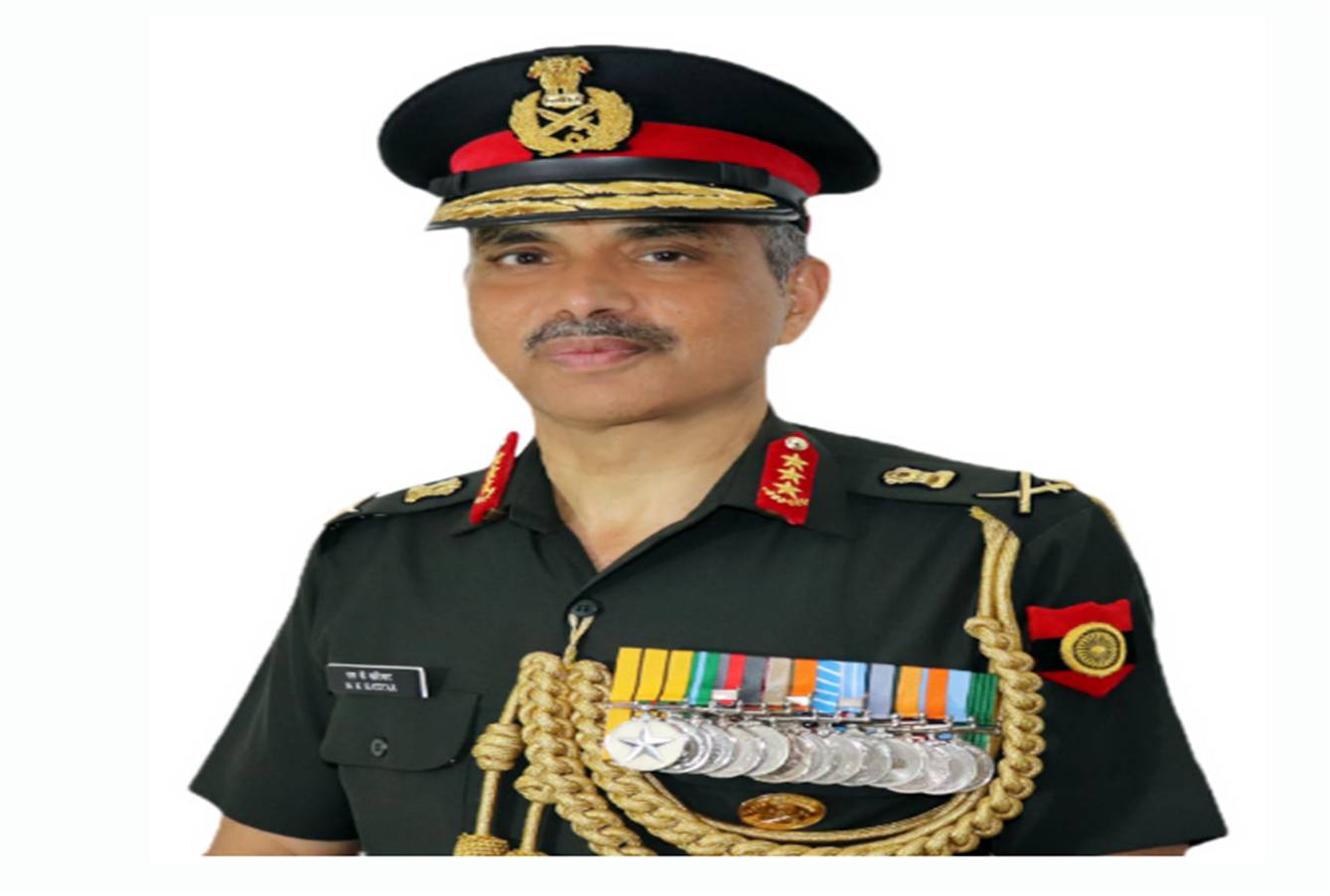
After attending the ceremony to mark Gen MM Naravane taking over as the Chief of the Army Staff in New Delhi last week, Brig Madan Das (retd), who was the Army Chief’s first commanding officer (CO), described him as a remarkable officer who has a very effective working style.

  • Chandigarh-based Brig Das, who was commanding 7 Sikh Light Infantry when Gen Naravane was commissioned as the Second Lieutenant in 1980, said he had judged that the young man was not among the run-of-the-mill guys, but was thorough in his approach and would see through the situation in its entirety before taking any decision.

Chandigarh-based Brig Das, who was commanding 7 Sikh Light Infantry when Gen Naravane was commissioned as the Second Lieutenant in 1980, said he had judged that the young man was not among the run-of-the-mill guys, but was thorough in his approach and would see through the situation in its entirety before taking any decision.

When Gen Naravane got commissioned as the Second Lieutenant in the 7th Battalion of the Sikh Light Infantry, he was then wearing a single star on his shoulder flaps and I felt immense happiness seeing his epaulettes embellished with a lot more shining brass at the inauguration.

Incidentally, Gen Naravane is the third officer from the Sikh Light Infantry, the maximum from one regiment, to be elevated to the top slot. The other two being Gen VP Malik and Gen Bikram Singh, who also are residing in the tricity after hanging up their boots. Of the 29 officers to have led the Indian Army so far, including those who have tenanted the erstwhile appointment of Commander-in-Chief, 18 have been from the Infantry, six from the Armoured Corps and five from the Artillery.

“From wearing a single star on his shoulders almost 40 years ago, his epaulettes are now embellished with a lot more brass, which also bring with them a huge responsibility,” the veteran Brigadier said.

“He was also fortunate to have very competent seniors and peers in 7 Sikh Light Infantry. The presence of such officers had created a healthy professional competition within the battalion and I am proud to say three of those earlier rose to become generals. Naravane is the fourth,” he said.


NA approves amendments to army chief tenure bill

Imtiaz Ahmad & Agencies

letters@hindustantimes.com

Islamabad : Pakistan’s lower house of parliament on Tuesday approved amendments to the Army Act 1952, Pakistan Air Force Act 1953 and Pakistan Navy Ordinance 1961 which will now give the prime minister the power to extend the tenure of any service chief and the president to give his final nod to the extension or reappointment.

The bills amendments were passed with the support of all major political parties, including the opposition PML-N and PPP.

Some opposition lawmakers, including MPs from the rightist Jamaat-e-Islami walked out in protest over the bills. They had earlier announced they would not be supporting the bill on principle.

After the National Assembly’s approval, the bills will now go to the Senate Standing Committee on Defence for approval before they are passed by the Senate. The bills would become acts of parliament once signed by the president.

In November 2019, the Supreme Court had asked the government to legislate on an extension in the COAS’s services within six months, allowing General Qamar Javed Bajwa to stay in office until then.

CRUCIAL BILL ON TERROR INFO PASSED

Islamabad : Pakistan has narrowly passed a bill that will allow the exchange of information and of criminals with countries, to meet a requirement of the Financial Action Task Force (FATF). There was stiff resistance from the Opposition, with its leader Khwaja Asif saying that approving the bill would be “surrendering the country’s sovereignty”.

“Please do not rush the bill to meet someone’s deadline. Let us debate the matter,” he said. PPP’s Abdul Qadir Patel claimed that there was a clause in the bill which allowed the government to hand over individuals to countries even without demand.

In a related development, a the director general of Financial Monitoring Unit (FMU), Mansoor Siddiqui has said Pakistan hopes to win a “largely compliant” rating from the FATF on implementing a 27-point action plan, which could help the government get more time from the watchdog for ensuring full compliance

Bomb kills 2 soldiers in Balochistan

quetta : A powerful roadside bomb exploded near a vehicle carrying Pakistani security forces, killing two soldiers in the southwestern city of Quetta, a police official said Tuesday.

The bombing wounded 12 people, including security forces, said local police chief Abdul Wali. He said some of the wounded were in critical condition at local hospitals. Hizbul Ahrar, an offshoot of the Pakistani Taliban, claimed responsibility for the attack.

air force jet crashes, 2 pilots killed

Multan : Pakistan’s air force said one if its aircraft crashed during training Tuesday in the eastern Punjab province, killing the two pilots. The FT-7 jet trainer went down in an open area, the air force statement said. It said an investigation had been opened to determine the cause of the crash, which took place near the district of Mianwali, 300km from the city of Lahore.


NCC training in govt schools of six dists from next academic session

₹24-CRORE PROPOSAL The scheme will cover 669 high schools and 556 senior secondary schools with an estimated enrolment of 1.36-lakh students in Classes 9 and 11 ; 1,200 ex-servicemen to be hired
The school education department plans to start training from April 1. HT photo

Navneet Sharma

navneetsharma@hindustantimes.com

Chandigarh : The Punjab government will start compulsory National Cadet Corps (NCC) training for students of classes 9 and 11 in government schools of six districts from the academic session 2020-21.

The NCC training, which was first announced by chief minister Capt Amarinder Singh as a pilot project last year, will be launched in Gurdaspur, Amritsar, Tarn Taran, Ferozepur, Sangrur and Patiala districts.

There are 669 high schools and 556 senior secondary schools in these districts with an estimated enrolment of 1.36-lakh students in classes 9 and 11 who will be provided training from the coming academic session as per the roadmap prepared by the school education department, according to two senior officials who did not want to be named.

Of these, around 74,000 students are expected to be from Class 9 and the remaining 62,000 from Class 11.

“These are estimated numbers. The actual enrolment will be known at the start of the academic session. The students of Classes 10 and 12 have not been included because they have to study for board exams,” they said. The annual cost of running the programme in six districts in the first year has been put at ₹24 crore in a proposal submitted to the finance department last month.

The department proposes to engage at least 1,200 ex-servicemen, including retired junior commissioned officers (JCOs), to implement and monitor the programme to begin with. While one ex-serviceman of havildar rank will be hired for each school to impart the NCC training, one JCO will be appointed in a supervisory position for every 10 schools.

The school education department plans to start training from April 1 and is now awaiting release of funds to get going. The department had finalised the roadmap for programme implementation in a meeting chaired by finance minister Manpreet Singh Badal who is being credited with the idea to impart NCC training to schoolchildren. The programme will be gradually extended to other districts as well. At present, 8% students of high and senior secondary classes opt for NCC training in the state-run schools.

Chief minister Capt Amarinder Singh had first announced his government’s plans to make NCC training mandatory in schools and colleges to inculcate a strong sense of discipline among the youth and to make them employable in the armed and paramilitary forces, making Punjab the only state in the country to introduce such a programme.

As per the initial plan, NCC training was to be first launched in Gurdaspur, Tarn Taran and Amritsar districts along the international border with Pakistan, but three more districts, including Patiala and Sangrur, home districts of the chief minister and school education minister Vijay Inder Singla, have been included.


General who secured Siachen for India is no more

 PHOTO-2020-01-06-12-07-35

HT Correspondent

chandigarh@hindustantimes.com

Chandigarh : Lt Gen Prem Nath Hoon, who served the army for four decades before hanging up his boots as chief of the Western Command in 1987, died in Panchkula on Monday evening. He was 90.

His son Ronny Hoon said the General died after suffering brain haemorrhage at 6:30pm. The last rites will be performed at the electric crematorium in Sector 25 at 3:30pm on Tuesday.

Commissioned into the Sikh regiment two years after the Partition, Lt Gen Hoon led the Operation Meghdoot — as the commander of Srinagar-based 15 Corps — to capture the Siachen glacier in 1984. As a frontline soldier, he defended the borders, during the Chinese Aggression and the 1965 war against Pakistan. He also served as the director general of military operations.

Lt Gen KJ Singh (retd), former chief of Western Command, said Hoon was a committed General, who till his unfortunate demise dedicated himself to the service of nation and community.

“He had anchored the Operation Meghdoot, wherein Indian Army pre-empted and prevented Pakistan’s attempts to annex the Siachen. In his loss, we have lost a veteran, who was a role model for the young generation,” he said.

Singh said Lt Gen Hoon was also mentoring NGO activities for national integration and veteran welfare.

Lt Gen JS Dhillon (retd), former commander of 15 Corps, termed Lt Gen Hoon “a good soldier”, who during the Siachen issue successfully led the operation despite shortage of troops, time and equipment. “He handled the things so well that we are still holding onto the Siachen. That has been the biggest achievement of his life,” he said.

Lt Gen Hoon (retd), was born in 1929 in Abbottabad, North West Frontier Province, and joined the Indian Military Academy, Dehradun, in 1947. “I was sure about what I wanted and went ahead to achieve it. I found this grit to be an asset throughout life, even under variable conditions of combat,” the General had told HT in an interview in June last year.


Army chief to visit Siachen on Thursday

HT Correspondent

letters@hindustantimes.com

NEW DELHI : Army chief General Manoj Mukund Naravane is expected to visit the Siachen glacier on January 9, a senior officer said on Monday.

This will be Naravane’s first outstation trip after taking over the top job.

Siachen is strategically important as it acts like a wedge between the Shaksgam valley under Chinese control and Baltistan, which is occupied by Pakistan.

As long as the region is in India’s control, the Pakistani army cannot link up with the Chinese to pose a threat to Ladakh.

Over a 1,000 soldiers have died guarding Siachen since the Indian Army took control of the inhospitable glacier in April 1984, almost twice the number of lives lost in the Kargil war.

While around 220 men have been killed in firing from the Pakistani side, the other casualties were caused by extreme weather and terrain.

A ceasefire between India and Pakistan was announced in November 2003.

Defence minister Rajnath Singh announced last October that the Siachen was now open to tourists as part of the government’s efforts to boost tourism in Ladakh and give people a first hand experience of the tough conditions in which army personnel operate.

Naravane took over as the Army chief on December 31. In his 39-year military career, Naravane has commanded a Rashtriya Rifles battalion, raised an infantry brigade, led a strike corps and headed the Army Training Command.

He was also part of the Indian Peace Keeping Force in Sri Lanka and served as India’s defence attache to Myanmar.


One regiment, two former Army Chiefs, both living in Tricity now

While General Malik lives in Panchkula, General Bikram Singh, who retired as the Army Chief in 2014, resides in Mohali.

General Bikram Singh, General V P Malik, Chandigarh, Chandigarh News, Indian Express

General Bikram Singh (Files)

“Soldiers of the Sikh Light Infantry regiment possess a fighting spirit and unconditional loyalty for their officers and fellow soldiers, which is why the regiment has always brought glory to the country and produced fine officers,” says General V P Malik, former Indian Army Chief from the regiment, who now resides in Panchkula.

The Sikh Light Infantry made history when General M M Naravane was appointed the Chief of Army Staff, making it the only regiment with three chiefs to its credit. Few people know that the two former Army Chiefs from the regiment live in the Tricity. While General Malik lives in Panchkula, General Bikram Singh, who retired as the Army Chief in 2014, resides in Mohali.

“The Tricity has always been a magnet for many retired military officers, even a former Navy Chief and an Air Force Chief live here,” says Malik. Panchkula, he said, is a hub of retired officers because of its proximity to Chandimandir Cantt. “There are at least 90 retired Lt Generals living in Panchkula alone, and many more in the rest of the Tricity,” Gen Malik says.

On the appointment of the new Army Chief from his regiment, Malik says he is proud of his accomplishment and is sure that Naravane is well- suited for the mammoth task ahead of him. “I have known him personally. He is an honest and straightforward man, replete with soldier-like qualities. Now I only wish him great success for the future and good luck, for it is not an easy task to be Chief,” Malik adds.

Gen Bikram Singh, the second officer from this regiment to have become the Army Chief, claims all regiments of the Indian Army share the same dutiful ethos, but the Sikh Light Infantry units are especially sought-after by senior commanders in both peace and war. “The regiment’s culture accords topmost priority to developing leaders and men who are creative, innovative, adaptive and also those who uphold values of loyalty, integrity, courage and honour,” Singh says. “Further, these leaders owe unflinching loyalty to the well-being of their soldiers and work diligently to create well-knit teams for whom failure is not an option.”

General Bikram Singh, General V P Malik, Chandigarh, Chandigarh News, Indian Express General V P Malik

Gen Malik believes this unflinching loyalty to the soldiers is rewarded doubly by the soldiers themselves, who are unconditionally loyal and supportive of their officers. In an anecdote, Malik highlights how when he was a young officer, he was shocked by the dedication of his soldiers to the welfare of their officers. “We were on an exercise and we were to cross a river. Everyone began taking off their shoes to cross the river, but as soon as I followed suit, a soldier asked me to keep my shoes on, stating in Punjabi that they don’t let their officers’ feet get wet, and that they will carry me across,” Ma

lik says. “Of course, I didn’t allow them to do that, but their readiness to do so left a mark on me.”

It is this generosity of spirit and commitment of its troops that has made the regiment quite popular amongst cadets in the Indian Military Academy as well. “Most of these aspiring officers wish to join Sikh Light Infantry because they have heard of the regiment and its glorious ethos as well as its achievements in many significant military operations,” Malik says. “We have a long and proud history of having achieved success in so many wars. Beyond that, we are committed to taking care of each other.”


India summons Pakistan chargé d’affaires to lodge ‘strong protest’

India on Monday summoned Pakistan’s Chargé d’affaires Syed Haider Shah “to lodge strong protest at the recent acts of vandalism and desecration of the holy Gurdwara Sri Janam Asthan at Nankana Sahib, Pakistan, and the targeted killing of a minority Sikh community member in Peshawar, Pakistan”.

sikh youth killed in peshawar, peshawar sikh killed, sikh youth killed in pakistan, Parvinder Singh murder peshawar, sikhs in pakistan, Gurudwara Nankana Sahib attack, Gurudwara Nankana Sahib vandalism, pakistan news

The MEA said India shared with Shah “strong concerns raised by members of civil society, parliamentarians and others at the continued persecution of religious and ethnic minorities in Pakistan, including the recent despicable and heinous acts”.

The war of words between India and Pakistan over the treatment of minorities in the two countries continued on Monday, with India summoning a senior diplomat over the “targeted killing” of a member of the Sikh community and the attack on the Nankana Sahib Gurudwara and Pakistan issuing a statement that accused India of not protecting minorities from “saffron terror”.

India on Monday summoned Pakistan’s Chargé d’affaires Syed Haider Shah “to lodge strong protest at the recent acts of vandalism and desecration of the holy Gurdwara Sri Janam Asthan at Nankana Sahib, Pakistan, and the targeted killing of a minority Sikh community member in Peshawar, Pakistan”.

The MEA said India shared with Shah “strong concerns raised by members of civil society, parliamentarians and others at the continued persecution of religious and ethnic minorities in Pakistan, including the recent despicable and heinous acts”. It said Pakistan’s government was “called upon to ensure safety, security, and welfare of the members of the minority communities in Pakistan, including their places of worship, and take immediate measures to expeditiously bring the perpetrators of such despicable and heinous acts to justice”.

sikh youth killed in peshawar, peshawar sikh killed, sikh youth killed in pakistan, Parvinder Singh murder peshawar, sikhs in pakistan, Gurudwara Nankana Sahib attack, Gurudwara Nankana Sahib vandalism, pakistan news The deceased has been identified as Ravinder Singh (pic), who is the brother of first Sikh news anchor in Pakistan, Harmeet Singh. (Source: ANI)

This is the third such statement issued by India within a week. Pakistan’s Ministry of Foreign Affairs issued a statement on Monday to reject the “Indian propaganda”. The statement said the “BJP government’s mischievous portrayal of isolated incidents in Peshawar and Nankana Sahib as alleged ‘persecution’ of minorities is part of its smear campaign” and that it is a “desperate attempt to divert attention from ongoing state terrorism” in Jammu and Kashmir and “systematic discrimination against minorities in India”.

It said it “completely rejects these fabrications, which will in no way shield the BJP government from opprobrium by the international community on “the adverse fallout of the discriminatory Citizenship Amendment Act and National Register of Citizens”.


CDS Rawat to attend key meet on Jan 13

HT Correspondent

letters@hindustantimes.com

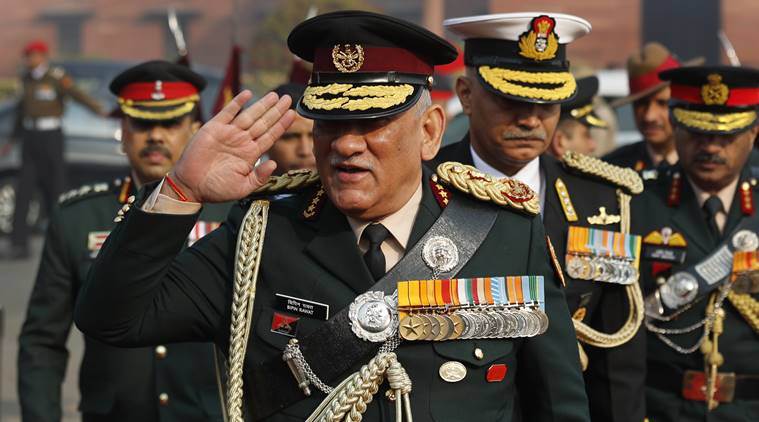
NEW DELHI : General Bipin Rawat will attend his first Defence Acquisition Council (DAC) meeting in his new role as the Chief of Defence Staff on January 17, a senior government officer said on Monday.

Rawat took over as India’s first CDS on December 31.

The DAC, headed by the defence minister, is India’s top defence procurement body that evaluates and green lights acquisition proposals made by the armed forces.

Other members of the council are the minister of state for defence, the three service chiefs, the defence secretary, secretary defence research and development, secretary defence production and director general, acquisition. As Chief of Defence Staff, Rawat holds the charge of permanent chairman, chiefs of staff committee — a panel consisting of the three service chiefs.

One of Rawat’s key responsibilities as CDS is to promote the use of indigenous equipment by the services at a time when the armed forces are heavily dependent on imported military hardware.

As CDS, he heads the department of military affairs and is also principal military adviser to the defence minister on all matters related to the tri-services.

He has taken over as Chief of Defence Staff at a time when the three services are facing a worrying fund shortage that could derail some of their modernisation efforts.