Sanjha Morcha

What’s New

Click the heading to open detailed news

Current Events :

web counter

Print Media Reproduced Defence Related News

IL-76 passengers to get forms at Kargil DC office

IL-76 passengers to get forms at Kargil DC office

Jammu, January 10

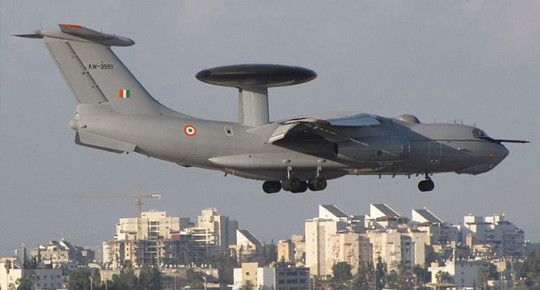
Days after the meeting of Chief Executive Councillor (CEC), Kargil, Feroz Ahmad Khan with Air Chief Marshal RKS Bhadauria in New Delhi, the Air Force has conceded the demand of Kargil district for providing forms of IL-76 aircraft to its passengers intending to travel from Leh to Chandigarh at the Deputy Commissioner’s office, Kargil.

During his meeting, Khan had requested the Air Chief Marshal for increasing the operation of Air Force flights to Kargil during winter season, besides ensuring regular service of AN-32 courier service between Kargil and Srinagar/Jammu. According to an official spokesperson, forms are now available at the Deputy Commissioner’s office, Kargil, and passengers can now apply for the service from Kargil itself.

The CEC has thanked the Air Chief Marshal and the AOC, Leh, for the prompt acceptance of the demand for availability of IL-76 forms at Kargil and expressed optimism that the IAF would continue its endeavours in facilitating the people of Kargil by ensuring the smooth operation of air services during the winter season. — TNS


Timely action by Army saves life of 2 pregnant women in Banihal

Timely action by Army saves life of 2 pregnant women in Banihal

Our Correspondent

Jammu, January 10

Timely action of the Army has saved lives of two pregnant women who were stuck due to heavy snowfall and poor road conditions in Jammu and Kashmir’s Banihal.

“Two women, residents of Ukhral, were moving to Banihal from Ramsu in a civil ambulance on Thursday due to labour pain. However, they were stuck at Nachlana Iron bridge owing to heavy snowfall and bad road conditions.” an Army spokesperson said.

Rise to occasion

  • Relatives of the patient approached the nearby Army camp wherein a prompt and swift action was carried out by the Army by providing instant medical assistance by the Medical Officer. Later, the Medical Officer along with his team led the patients in an Army ambulance from Nachlana to sub-district hospital, Banihal.

The relatives of the patient approached the nearby Army camp wherein a prompt and swift action was carried out by the Army by providing instant medical assistance by the Medical Officer. Later, the Medical Officer along with his team led the patients in an Army ambulance from Nachlana to sub-district hospital, Banihal.

The timely evacuation led to saving of lives of both the women and their newborns. The action by men in uniform was applauded by locals and would go a long way in further strengthening the bond between the Army and the people.


Headless body of Army porter found in Poonch

Headless body of Army porter found in Poonch

Rajouri, January 10

The bodies of two Army porters, including a headless one, were found in the Gulpur sector of Poonch today, the first handiwork of Pakistan’s Border Action Team this year.

Five porters, wearing Army dress, were on duty at forward area Kasaliyan. Taking them for Indian soldiers, Pakistan soldiers/BAT targeted them by triggering an IED, sources said. Mohd Aslam (28) and Altaf Hussain (23) died on the spot, while Mohd Saleem (24), Mohd Showkat (28) and Awaz Ahmed were severely injured. “After the blast, BAT personnel slit the throat of an injured porter,” sources said. — OC


Army Commander, Chinese general discuss defence ties Both sides agree to keep border peace

Army Commander, Chinese general discuss defence ties

Beijing, January 10

Northern Army Commander Lt Gen Ranbir Singh today concluded his four-day visit to China, including a rare trip to the volatile Xinjiang province bordering PoK, during which he discussed a host of issues including border area management, bilateral military ties and defence cooperation.

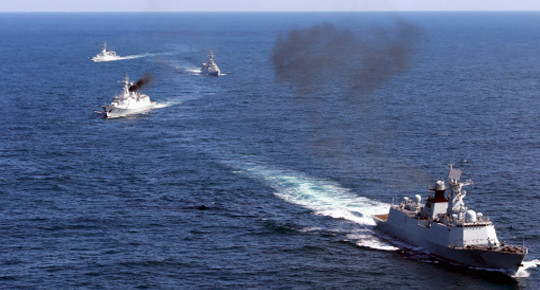
Warship deployed amid China-Pak drill

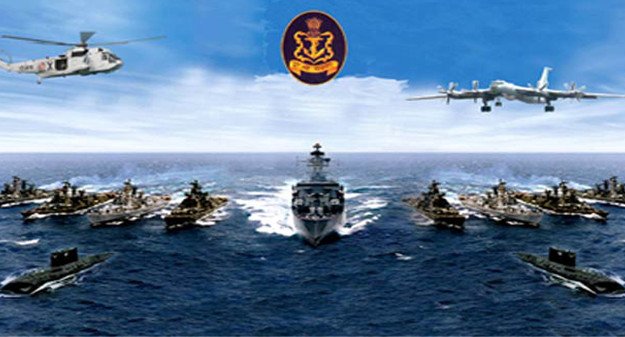
  • India has deployed its aircraft carrier INS Vikramaditya in the Arabian Sea as China and Pakistan hold a 9-day naval exercise, a move seen as New Delhi sending a signal to its two neighbours
  • Top officials of the Naval headquarters were on board the aircraft carrier when it was deployed in the strategic mission, military sources said

Lt Gen Singh, whose area of operations covered Jammu and Kashmir region including Ladakh and Aksai Chin over which China has claims, concluded his visit with a meeting at Xinjiang’s provincial capital Urumqi with Lt Gen Liu Wanlong, Commander of China’s Xinjiang Military Command which oversees China’s borders along PoK.

The Indian Embassy said in a statement that both sides agreed to carry forward the directions of the leaders and maintain peace and tranquillity at the border areas.

He also visited China’s 9th Engineer Regiment of the People’s Liberation Army (PLA) based there on Thursday. Lt Gen Singh, who arrived in China on January 7, met top Chinese military officials specially that of PLA’s Western Command which oversees the 3488-km long Line of Actual Control (LAC). China also claims Arunachal Pradesh as part of South Tibet.

On January 7, Gen Singh met the Commander of PLA Gen Han Weigao in Beijing. He was given a ceremonial welcome when he arrived at the PLA’s Western Command headquarters in Chengdu on January 8, where he held talks with Gen Zhao Zongqi, the Commander of Western Theatre Command.

Lt Gen Singh and his delegation also visited a Special Operations Brigade at Chengdu where they witnessed a counter-terrorism drill, according to the statement. It stated that it was a part of the celebrations of the 70th anniversary of the establishment of diplomatic ties between the two countries.

The visit of the delegation is the first high-level military to military engagement in 2020 between India and China. It was rare for an Indian Army officer to visit the region. Xinjiang is the starting point for the USD 60 billion China-Pakistan Economic Corridor (CPEC). — PTI

Light combat aircraft makes maiden landing on sea-borne aircraft carrier INS Vikramaditya

http://

Tribune News Service

New Delhi, January 11

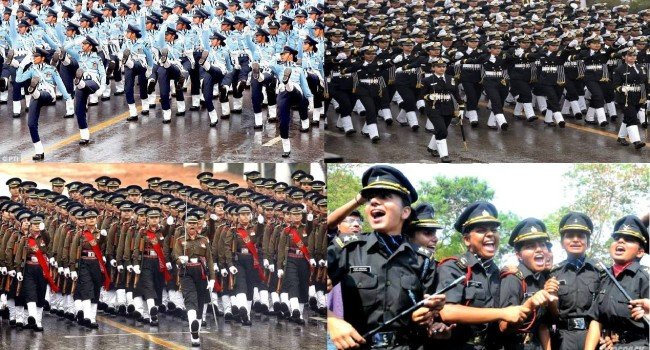
The naval variant of the Light Combat Aircraft, the Tejas, made a maiden successful landing on the deck of sea-borne aircraft carrier INS Vikramaditya on Saturday morning.

The landing on the deck paves the way for further development of the twin-engine deck-based fighter jet.

The Navy tweeted about the successful landing saying it occurred around 10 am on Saturday as the carrier was sailing in the Arabian Sea as part of the exercise.

Landing on the deck of a fighter jet is a complex procedure; the landing space is some 200 metres and the jet coming in to land has to be restrained using a set of three ‘arrestor wires’. In navy parlance it is called ‘arrested landing’.

The landing gear of a naval jet is different from the jets used by the IAF. The under-carriage has to be strong enough to be held back by the arrestor wires.

The plane being developed by Hindustan Aeronautics Limited (HAL) was tested for arrested landing at the navy shore-based test facility which is built to mimic the deck of an aircraft carrier.


IAF wing commander arrested for impersonating Amit Shah

IAF wing commander arrested for impersonating Amit Shah

Bhopal, January 11

The Special Task Force (STF) of Madhya Pradesh Police has arrested a serving Air Force Wing Commander for impersonating  as Union Home Minister Amit Shah over the phone and asking Madhya Pradesh Governor Lalji Tandon to appoint a friend as vice-chancellor of a university, Additional Director General of Police Ashok Awasthi said.

Wing Commander Kuldeep Vaghela who is reported to have worked in the Raj Bhawan earlier got his friend Chandresh Kumar Shukla, a known Dental Surgeon, to pose as Amit Shah’s personal assistant and called the governor over phone.

He asked the staff to connect the call to the Governor. Once the governor came on line Waghela took over the conversation as Amit Shah and asked him to consider Dr Shukla to be appointed as Vice-Chancellor of a medical sciences university.

Shukla, who runs a dental clinic in Bhopal and has ambitions of making it big in Bollywood, has also been arrested.

Both have been charged with cheating and impersonation under section 419 and 420 and have been remanded to police custody and will be produced before the court again on Monday.

According to sources in Madhya Pradesh police a notification for selection of vice-chancellor of Madhya Pradesh Medical Sciences University Jabalpur was issued by Raj Bhavan on July 29, 2019.

Chandresh Kumar Shukla had also staked claim for the post and was interviewed on January 3. Shukla had managed to have his name recommended through politicians. He then approached his old friend Wing Commander Kuldeep Vaghela, posted at New Delhi Air Force Headquarters, for recommendation. The police sought due permission for Waghela’s arrest.

The two then conspired to make the hoax call on behalf of Home Minister Amit Shah to the Governor. Shukla made a call to Raj Bhavan from his mobile phone number and he took Wing Commander Kuldeep Vaghela on conference.

Wing Commander Kuldeep posed as Amit Shah and recommended Chandresh Shukla to be made the Chancellor of Madhya Pradesh Medical University.

The Raj Bhawan staff,however, decided to cross-check the caller’s credentials and contacted the home minister’s staff through other phone.

Police released excerpts from the conversation over phone.

“Chandresh Shukla – I am speaking PA of Home Minister Amit ShahÂ… Is the Governor Lalji Tandon available?
“Raj Bhawan Staff – He is in the Raj Bhavan itself.

“Shukla – Home Minister wants to speak with the Governor.

“Raj Bhawan Staff – I am transferring the phone to the Governor, please…

“Vaghela – How are you? … Chandresh Kumar Shukla ji has applied for the vice-chancellor … he is a good person … qualified for the job…

“Governor -……..

After this conversation, the Governor got suspicious and contacted the Home Minister’s office through the staff and inquired about the phone. On learning that the call was not made from the Home Minister’s office, they asked the STF to act.

The STF investigated the case and nabbed Vaghela from Delhi and Shukla from Bhopal. ADG Awasthi said that the accused Wing Commander Kuldeep Vaghela was an ADC to former Governor Ram Naresh Yadav in Madhya Pradesh Raj Bhavan in 2014. He was fully familiar with the functioning of Raj Bhavan. — IANS


CDS and the path to jointmanship

His role is not just about tri-service cooperation, but also to ensure that acquisitions do not exceed capital allocations

The announcement on a Chief of Defence Staff (CDS) last year and the appointment of Gen. Bipin Rawat as the first CDS has been one of the key policy decisions made by the Narendra Modi government in its second term. In the aftermath of an emphatic election victory in May 2019, Mr. Modi pushed the needle on a long-pending reform for the establishment of a CDS, which was recommended by the Kargil Review Committee in 2001. The CDS will be “first among equals” in that he will consult and solicit the views of the services, but the final judgment will be the CDS’s alone and he will be the principal military adviser to the Defence Minister.

The role here will be confined to the acquisition matters exclusive to each service and won’t extend to the procurement of big-ticket items such as warships or fighter aircraft, which will remain under firm control of the Department of Defence (DoD). The CDS will be the single-point military adviser to the Defence Minister on matters involving all three services and the service chiefs will be obliged to confine their counsel to issues pertaining to their respective services. The CDS is also vested with the authority to provide directives to the three chiefs.

A chief as well as an adviser

Additionally, the CDS will lead the Department of Military Affairs (DoMA) dealing with the three services. Gen. Rawat will enjoy the rank of Secretary within the DoD and his powers will be confined to only the revenue budget. However, he is vested with the authority in prioritising inter-service procurement decisions as Permanent Chairman-Chiefs of Staff Committee. While the CDS does not enjoy any command authority, in his capacity as DoMA, he will wield control over issues governing promotions, travel, appointment to key posts, and overseas assignments. Consequently, the CDS will enjoy a substantial amount of influence. He will also perform an advisory role in the Nuclear Command Authority (NCA). Above all, his core function will be to foster greater operational synergy between the three service branches of the Indian military and keep inter-service frictions to a minimum. Fundamentally, the CDS will perform two roles, as the single point military advisor to the Defence Minister and as head of the DoMA.

With his inauguration as India’s first CDS last year, Gen. Rawat has hit the ground running with some important announcements. He has sought the establishment of an Air Defence Command (ADC) by directing the Integrated Defence Staff (IDS) to develop a proposal by June 30. An integrated ADC will enable nationwide coverage, prevent fratricide in the event of war and sustain jointmanship in air defence operations. In addition, Gen. Rawat has declared his intention to synergise logistics support, particularly in areas where two or more services are co-located.

Three main challenges

Gen. Rawat faces three main challenges. First, there are concerns over matters relating to service parochialism, though there have been no initial indications in this regard. If he privileges support for the Army, his parent service, he is likely to put himself on a collision course with the Naval and Air Force chiefs. A corollary is that as an infantry officer, he may become susceptible to bias in matters concerning procurement decisions or personnel issues focused on the infantry. The latter outcome could vitiate his capacity to address the needs of the armour and artillery corps. Any parochialism could potentially derail the primary objective of creating the CDS — promoting synergy and shaping acquisition priorities both within and between the services. Indeed, one of the tasks the CDS is to avoid wasteful expenditure and duplication of equipment in the inventories of the services.

But, the CDS’s role is not simply about tri-service cooperation, it is equally about fostering better cooperation between the MoD bureaucracy and the services and ensuring that projected and planned acquisitions of the services do not exceed capital allocations. A secondary challenge stems from the sheer levels of manpower in the Indian Army, which is the service that consumes the lion’s share of the defence budget. As it is a manpower-intensive fighting force, pruning the number of personnel in the Army will remain perhaps the most vexed challenge for possibly the entirety of Gen. Rawat’s tenure. This will demand innovation, given the fact that infantry-based operations geared for counterinsurgency warfare, which a large part of the Army is dedicated to undertaking, are manpower intensive.

There are no instant remedies, but one pointer is towards greater investment in Artificial Intelligence (AI) over the long term, a process that has already begun, but will require a dedicated push from the CDS over the course of his tenure. The application of AI technology is likely to lend itself to tanks and artillery systems, as is visibly evident from the vigorous pursuit of AI by China’s People’s Liberation Army.

The final challenge facing the CDS will be the extent to which he can encourage the services to support indigenisation. Cost saving is not simply about reducing manpower in the Army, it is equally about getting all the services, particularly the capital-intensive services, to rally behind a committed enterprise to support the native Research and Development for production and eventual deployment of weapons systems, which when procured from abroad drive a massive hole in the budget.

Harsh V. Pant is Director of Research at Observer Research Foundation, Delhi where Kartik Bommakanti is an Associate Fellow


Dept of Military Affairs works to deliver in 100 days

The instructions to the DMA, which is headed by Chief of Defence Staff (CDS) General Bipin Rawat, were passed on by Prime Minister Narendra Modi during sectoral briefings by selected secretaries earlier this week.

 <div class="o-story-paper-quite"> <span class="o-story-paper-quite__label">"Explained"</span><h2 class="o-story-paper-quite__headline">"What</h2><p>"The</p></div>

Newly appointed Chief of Defense Staff (CDS) General Bipin Rawat at a joint military guard of honor (File/AP)

The newly-created Department of Military Affairs (DMA) in the Defence Ministry has got cracking on delivering “tangible outcomes” within 100 days as per Prime Minister Narendra Modi’s directions, even before it has had time to be established and settled.

The instructions to the DMA, which is headed by Chief of Defence Staff (CDS) General Bipin Rawat, were passed on by Modi during sectoral briefings by selected secretaries earlier this week. The briefing for all ministries dealing with national and internal security was done by Defence Secretary Ajay Kumar.

“The DMA has got to hit the ground running after the PM expressed his desire to show tangible outcomes from this major reform he has undertaken, and he has given a deadline of 100 days. It has meant that they have had little time to settle down and establish themselves,” a senior government official told The Indian Express.

As per a government order, the CDS has been given a time-bound task to be done within three years — to bring about jointness in operations, logistics, transport, training, support services, communications, and repairs and maintenance of the three services. The head of DMA has to also facilitate the restructuring of military commands for optimal utilisation of resources by bringing about jointness in operations, including through establishment of joint/ theatre commands.

EXPLAINED

What falls under the DMA’s purview?

The charter of duties of the DMA was so far looked after by the Department of Defence, which is headed by the Defence Secretary, who is also the secretary in-charge of the Defence Ministry. Work exclusively pertaining to military matters will fall within the purview of the DMA, while the Department of Defence will deal with larger issues pertaining to defence of the country.

Meanwhile, the Department of Defence has decided to transfer its civilian officials to the DMA based on the quantum of work, sources said. As nearly 35 per cent of the work from the Department of Defence has been allocated to the DMA, it has decided to allocate two Joint Secretaries, 13 Deputy Secretaries and 25 Under Secretaries to the new department.

Sources said that the two joint secretaries who are likely to join DMA are both IAS officers. Their names have been identified and the officers have agreed to the move, but their role and appointment in DMA is still not clear.

In fact, in the interim, the DMA has already posted military officers of Major General and equivalent ranks as Joint Secretaries in-charge of the Army, Navy and Air Force. These posts in the erstwhile department of defence were tenanted by civilian officers from central services.

As per sources, there is still no clarity on the organisation structure, charter, role and staffing norms of DMA, which will need to be processed through the ministry. It will thereafter need the sanction of the Department of Personnel and Training (DoPT), before the new department is formalised.


Army Air Defence Corps celebrates 27th raising day

Chandigarh : The Army Air Defence Corps celebrated its 27th raising day at Chandimandir on Friday.

The occasion was marked by wreath-laying ceremony at Veer Smriti, where Major General RS Thakur of the Army Air Defence Corps,Western Command, along with serving officers, JCOs and jawans paid tributes.

Although it was first raised in 1939, the Army Air Defence became an autonomous corps only on January 10, 1994.

Lieutenant General RP Singh, general commanding officer -in-chief, Western Command, extended his greetings to all ranks, their families and veterans of the Corps. He commended the professionalism displayed by the Army Air Defence personnel in discharge of their duties and always living up to their motto of ‘Akashe Shatrun Jahi’ (Kill the enemy in sky). htc


SC opens the door in KashmirEven though belated, the order is laudable, and sets a precedent

In a much-awaited judgment, the Supreme Court (SC) has finally ruled on the constitutionality of the restrictions in place in Jammu and Kashmir since August. The court’s order is laudable in principle. It has made it clear that freedom of speech through the Internet and the freedom to practise any profession, which depends on the Internet, encompasses the freedom to access the Internet — and this makes it a fundamental right (by extension). This builds on a Kerala High Court judgment that declared the right to Internet a fundamental right. This is particularly important since India has now seen the longest Internet blackout in any democracy in the world. The court has also asked the Centre to produce orders — which it was unwilling to do — justifying the use of Section 144 and other restrictions, and said these are subject to judicial review. It has added that these restrictions on rights cannot be indefinite. It has called for the immediate resumption of essential services such as hospitals, government websites and banking. And it has asked the competent authority to review other restrictions within seven days.

This will elicit a sigh of relief from residents of the Valley as well as strengthen the fundamental architecture of civil liberties in India by laying out a strong precedence in jurisprudence about what the executive can do, and cannot do, even as it seeks to strengthen security. With its order, the apex court has opened the door for restoration of normalcy in Kashmir. At a larger level, the ruling sets precedents that make the Internet shutdown process more transparent, ensures that there can’t be indefinite shutdowns, and actually specifies a time-frame for a review (seven days).

But there are two concerns which merit attention. The first is timing. The apex court has taken over five months to lay out these principles. Civil liberties must be of the highest priority, and this reflects a certain degree of abdication of responsibility, for through this period, Indian citizens have had to live with curtailed rights. The SC’s judgment also does not provide immediate relief. It leaves the door open for the executive to argue that these orders are justified on security grounds, and for another, perhaps prolonged, legal process for the full resumption of rights. The SC should have built on its own principles to provide for immediate restoration of rights. But the good news is that by opening the door for liberty, it has strengthened democracy.