Sanjha Morcha

What’s New

Click the heading to open detailed news

Current Events :

web counter

Print Media Reproduced Defence Related News

Nawanshahr village quarantined for 14 days

Nawanshahr village quarantined for 14 days

Aparna Banerji

Tribune News Service

Jalandhar, March 19

Unprecedented containment measures have been put in place at a Nawanshahr village after its 70-year-old resident, with travel history to Germany and Italy, tested positive for Covid-19 and died yesterday.

While 17 persons — 12 from victim’s family, three hospital staff and a resident from nearby Chikka village who travelled abroad with the victim — were put in isolation last evening at Banga’s Pathlawa village, the Nawanshahr administration today quarantined the village with a population of 2,200. The victim’s family includes three sons, their wives and six to seven children, among others.

The measures have been put in place on a war footing to ensure containment of the virus. Police checkpoints had been set up at eight entry points, a doctor deputed and a vehicle pressed into service to ensure uninterrupted supply of essential commodities to the village. All residents have been directed to stay indoors for the next 14 days.

The victim along with two relatives and the Chikka resident had visited Germany in February and spent two-three days in Italy before returning to India on March 7. The villagers have set up a grocery shop and started two helpline numbers — one for health-related emergencies and the second for ration.

DC Vinay Bublani said: “Samples of those who have or are displaying symptoms are being taken.”

Sarpanch Harpal Singh said: “The doctor is gathering social contact history of all villagers.” Despite mandatory quarantine, the victim after arriving in India visited Anandpur Sahib, he said. He was taken to private hospitals in Jalandhar and Phagwara on Tuesday, before being referred to a civil hospital on Wednesday.


Drastic measures

  • Pathlawa has 2.2K population
  • 8 entry points barricaded
  • 24×7 doctor deputed
  • Vehicle stationed for ration
  • Village starts 2 helplines

Victim met scores at Dera

The district administration is in a tizzy as the Banga resident used to perform kirtan at a dera in Pathlawa village twice every day. Villagers said as many as 150 persons visited the dera daily. Almost all of them had met him after his return to India on March 7.


Week-long ban on international flights

Week-long ban on international flights

Aditi Tandon

Tribune News Service

New Delhi, March 19

Intensifying its response to Covid-19, India today expanded physical distancing measures for the community, asking states to ensure elders and children stay at home besides toughening travel restrictions by barring all international passengers in the country from March 22 to 29. No international commercial flight will be allowed to disembark its passengers, foreigners or Indians, on Indian soil after 1.30 am on March 23, aviation regulator DGCA said on Thursday.

The regulator’s circular came after the Centre issued a statement that no international flight would be allowed to land in India from March 22 onward for a period of one week. “No scheduled international commercial passenger aircraft shall take off from any foreign airport for any airport in India after 5.30 am on March 22. These instructions shall remain in force till 5.30 am of March 29,” the regulator noted.

The measures were announced on a day when the country saw the fourth death from coronavirus, that of an elderly man from Punjab. The Health Ministry said the Punjab patient had comorbid conditions, including heart problem, diabetes and hypertension.

As the Covid case load reached 173, the Group of Ministers reviewing the situation met ahead of PM Narendra Modi’s address to the nation to take measures to prevent community transmission. “Right now, India does not have any community transmission of the virus. All infections currently are localised but we are taking preventive steps to avoid transmission to the community,” Health Ministry Joint Secretary Lav Agarwal said, briefing reporters after the GoM meeting today.

The GoM decided that no scheduled international commercial passenger aircraft shall be allowed to land in India from March 22 for one week. It also asked states to ensure all citizens above 65 barring public representatives and government and medical professionals stay at home, so do children under 10 years of age.

“The idea is to protect high-risk populations. Children should be prevented from going to public parks and states should also ensure all recreational facilities and religious gatherings are restricted,” said Agarwal.

The GoM has also directed states to ensure reduction in the frequency of railway, metros, buses and airplanes. The Centre has asked states to enforce work for home for private sector employees. “To reduce crowding, all Group B and C Central govt employees will be asked to attend offices on alternate week,” the GoM said later. The Health Ministry has asked all hospitals to postpone non-urgent hospitalisation and surgeries to prevent infection.


No entry for tourists in Himachal

No entry for tourists in Himachal

Shimla, March 19

Himachal Pradesh on Thursday banned entry of all tourists, domestic as well as foreign, in view of the rising number of Covid-19 cases in the neighbouring state with immediate effect till further orders.

Additional Chief Secretary (Health) RD Dhiman said a need was being felt to stop the entry of tourists with one Covid case being reported from Chandigarh. He said the orders have been issued under Clause 3 of the Himachal Pradesh Epidemic Disease (COVID 19) Regulations, 2020, to enforce social distancing and prevent import of the virus into the state.

The locals had been demanding the need for banning the entry of tourists into the state as even after the closure of all educational institutions, both domestic and foreign tourists were still coming in large numbers. Perceiving them to be a major threat, it was decided to ban their entry till further orders. However, not even a single Covid positive case has been reported in Himachal so far. — TNS


India not to let flights land for a week starting Sunday

The Ministry of External Affairs also confirmed the death of an Indian patient in Iran. The government said on Wednesday that 255 Indians in Iran were infected.

The government on Thursday banned all commercial passenger flights from March 22 till March 29 midnight. (Express photo: Partha Paul)

http://

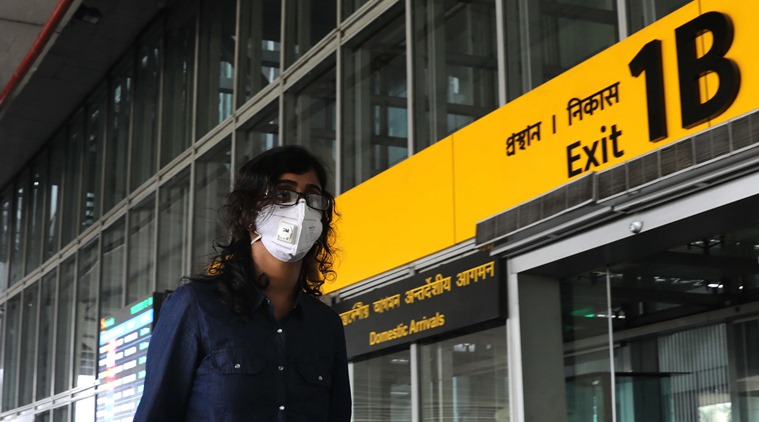
As India reported its fourth novel coronavirus (COVID-19) death and the total number of cases climbed to 173, the government Thursday tightened the lockdown further, banning the landing of all international commercial passenger flights for a week from March 22.

In Punjab, a 70-year-old man, who had returned from Germany via Italy on March 7 and died at a hospital in Nawanshahr district on Wednesday, tested positive. Lav Agarwal, Joint Secretary in the Ministry of Health and Family Welfare, said the man had a history of diabetes and heart disease.

The Ministry of External Affairs also confirmed the death of an Indian patient in Iran. The government said on Wednesday that 255 Indians in Iran were infected.

With senior citizens, with co-morbidites like diabetes, hypertension and asthma, accounting for all the four deaths in the country so far, the Health Ministry issued a fresh advisory, asking those above 65 years and children below 10 years to stay at home.

Read | Of 1,514 Indians in Iran, 298 tested positive for COVID-19: Govt

While 22 fresh cases were confirmed on Thursday, 20 of the total COVID-19 positive patients have recovered so far.

In Agra, Dr Mukesh Vats, CMO, said seven of eight patients who had tested positive earlier had recovered. “In the initial cluster, five people had tested positive. Then a factory owner and his wife tested positive. These initial seven cases have been cured and are being discharged. The last patient who tested positive a few days ago is also recovering, with almost negligible symptoms,” he said.

Extending the travel ban after barring the entry of passengers from the European Union, Turkey, UK, Afghanistan, Philippines and Malaysia earlier this week, the government on Thursday banned all commercial passenger flights from March 22 till March 29 midnight.

Explained: As world battles coronavirus pandemic, a few takeaways emerge

Most of the states and Union territories also imposed fresh restrictions on public transport and gatherings. In Delhi, Chief Minister Arvind Kejriwal announced the closure of restaurants till March 31, but takeaway outlets will remain open. He said gatherings of more than 20 people will not be permitted. He also said hands of people to be quarantined at home will be stamped.

States have been asked to reduce the frequency of buses and Metro trains to prevent crowding, and “to enforce work from home for private sector employees except those working in emergency/ essential services”.

The Railways has cancelled 155 pairs of trains so far, keeping in view low occupancy and coronavirus pandemic.

Government offices have been asked to stagger timings and allow 50% of Group C and D staff to work from home.

Agarwal, however, said this was not a lockdown. “Lockdown is a very inappropriate word. The government’s effort has been to prepare for an evolving global scenario. Our measures started from January 17. To err on the side of caution will help us,” he said.

Citing data from the ICMR’s random sampling exercise, he said there has been no instance of community transmission of the virus in India.

He refused to discuss the case of a man from Uttar Pradesh who took a train to Tamil Nadu and was found to be positive — a situation that has raised fears of community transmission.

Earlier, a 64-year-old man in Mumbai with travel history to Dubai, a 76-year-old man from Kalaburagi in Karnataka who had returned from Saudi Arabia, and a 68-year-old woman in Delhi died.

Meanwhile, on March 21, Air India will fly a dreamliner with a capacity to seat 236 passengers to Rome to evacuate Indians stranded there.


Coronavirus: China trial found no benefit in HIV drugs, says study

coronavirus, coronavirus in India, coronavirus treatment, coronavirus cure, Lopinavir/ Ritonavir combination, coronavirus cases in India, coronavirus HIV vaccine china, china coronavirus testing results ,

The overall documented mortality of COVID-2019, as given out by the World Health Organization (WHO) is 3.4 per cent. (File Photo)

The results of a 199-subject trial in China on the efficacy of HIV drugs Lopinavir and Ritonavir that India was looking at eagerly, has come out negative.

At 22.1 per cent, the mortality reported in the trial was substantially higher than the 11 per cent to 14.5 per cent mortality reported in initial studies of patients hospitalised with novel coronavirus (COVID-19), according to a study.

The overall documented mortality of COVID-2019, as given out by the World Health Organization (WHO) is 3.4 per cent.

“In hospitalised adult patients with severe COVID-19, no benefit was observed with lopinavir-ritonavir treatment beyond standard care. Future trials in patients with severe illness may help to confirm or exclude the possibility of a treatment benefit,” researchers from the National Clinical Research Center for Respiratory Diseases and several other Chinese institutes reported in the New England Journal of Medicine (NEJM).to recommend any specific treatment for suspected or confirmed patients with COVID-19. No specific anti-virals are recommended for treatment of COVID-19 due to lack of adequate evidence from literature. The use of Lopinavir/ Ritonavir in PEP regimens for HIV (4 weeks) is also associated with significant adverse events which many a times leads to discontinuation of therapy. In light of the above, Lopinavir/ Ritonavir should ONLY be used with proper informed expressed consent on a case to case basis for severe cases…along with supportive treatment as per need.”

PEP, or post-exposure prophylaxis, involves taking HIV medicines within 72 hours after a possible exposure to HIV to prevent becoming infected with HIV.

Asked whether India plans to report its experience with the use of the drug combination in the two patients (in Jaipur), ICMR’s head of epidemiology, Dr R R Gangakhedkar, had last week said, “This is too small a sample size. We will wait for the results of the 199 subject trial in China.”

In India, the drug combination is to be used in patients who have hypoxia, hypotension, new onset organ dysfunction (one or more) and also in “High Risk Groups” that includes people with Diabetes Mellitus, Renal Failure, Chronic Lung disease, Immuno — compromised persons or those above 60 years.

The Chinese researchers, though, have considered the possibility that the high mortality was because of a cohort that was very sick. “This randomized trial found that lopinavir-ritonavir treatment added to standard supportive care was not associated with clinical improvement or mortality in seriously ill patients with Covid-19 different from that associated with standard care alone. …Of note, the overall mortality in this trial (22.1%) was substantially higher than the 11% to 14.5% mortality reported in initial descriptive studies of hospitalized patients with COVID-19,1,2 which indicates that we enrolled a severely ill population,” they wrote.

The results of this trial notwithstanding, a combination of these two drugs, and this combination with interferons (proteins released by the body to combat some viruses), are one of the four drug options for which the WHO on Wednesday announced multi-country clinical trials. The other drugs to be tested are antiviral drug Remdesivir and antimalarial drug Chloroquine.


Coronavirus: Delhi govt shuts restaurants, outlaws gathering of more than 20 people For the time being, home delivery and takeaway facility will continue to be available in restaurants extending such facilities.

coronavirus, coronavirus india, coronavirus delhi, coronavirus shaheen bagh, delhi govt bans gatherings shaheen bagh, shaheen bagh protests coronavirus, delhi city news

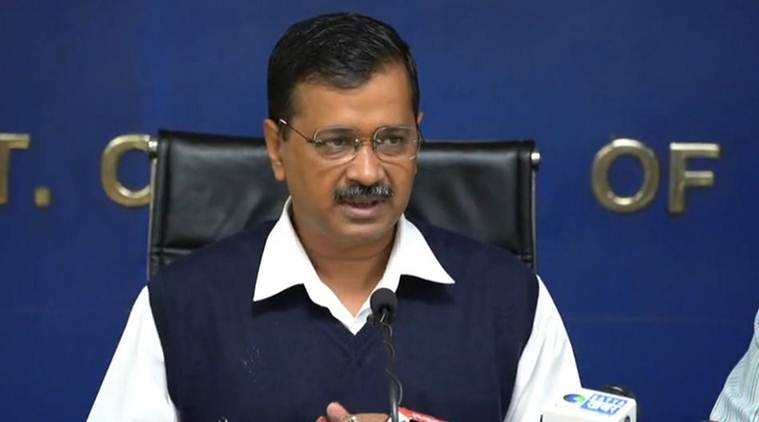
Restaurants in the national capital will remain closed at least till March 31, Delhi Chief Minister Arvind Kejriwal said Thursday, announcing a fresh set of restrictions, including outlawing gatherings of more than 20 people, to contain the spread of coronavirus.

For the time being, home delivery and takeaway facility will continue to be available in restaurants extending such facilities, Kejriwal told a press conference, following a review meeting with Lt Governor Anil Baijal and other Cabinet ministers and senior officials of the administration.

WATCH | PM Modi appeals for ‘janata curfew’

The government has also decided that home quarantine will be allowed only after stamping on hand, so that people at large are aware of the presence of any such individual in public spaces in violation of guidelines. In fact, Kejriwal said the government may have to register FIR and arrest such violators.

The official statement released by the L-G office also laid emphasis on the need to abide by home quarantine norms. “Neighbours of all home quarantine people be informed for active vigilance. RWA office bearers, neighbours may be informed about the persons under home quarantine in that residential complex/area. A workable mechanism to make the neighbours/people aware may be devised. FIR for violation of conditions by Home Quarantine person under section 188 of IPC as prescribed under Regulation 18 of the Delhi Epidemic Diseases, COVID-19Regulations, 2020 issued by Health & Family Department,” the statement said.

Appealing to people to stay indoors as much as possible, Kejriwal said: “A decision has been taken to shut all restaurants in the city. However, takeaway and home delivery facilities will be available. Also, all educational institutes will be shut. Both teaching and non-teaching staff will be working from home. These arrangements will be in place till March 31.”

On the Shaheen Bagh sit-in against CAA and NRC, which remains in place, Kejriwal reiterated the ban is applicable on all gatherings, be it religious, family, social, political or cultural. Specifically asked on why he is not reaching out to the protesters directly, he responded: “Mere haath mai toh kuch nahi hai.”

Meanwhile, the statement issued by Baijal’s office also said, “It was agreed that all activities of the Delhi government be segregated into essential/non-essential and all non-essential activities shall remain suspended.” Touching on this, Kejriwal said the list of such non-essential services will be announced on Friday.

Delhi has registered 10 corona positive cases so far, out of which, two were discharged. Those who remain under medical supervision are also stable, Kejriwal said. Out of the 768 beds designated for quarantine purposes, 57 are occupied while out of 550 beds for treating those showing symptoms 40 are occupied. In cases of Union government-run hospitals, 95 out of 67 beds for treatment purposes are occupied, Kejriwal informed.


Military diplomacy is also about building reliability

The Defence Minister can really make a change. Some are already visible, with defence attachés being called back recently for a conclave in Delhi and then going to DefExpo to see firsthand what Indian products they can push abroad. This was unheard of. But military diplomacy is not just about pushing indigenous industry. It’s also about building up a picture of reliability in military capability and coherence in the upper echelons of the civil-military combine.

Military diplomacy is also about building reliability

Coherence calling: South Block must look into the issue of the struggle that military officials going abroad on official business have to wage to get monetary entitlements.

Manmohan Bahadur

Addl Director General, Centre for Air Power Studies, New Delhi

A media report that the four Indian Gaganauts in Russia, for the country’s first manned space mission, Gaganyaan, have not been given their monetary entitlements and other allowances due to non-issuance of the government letter authorising these brought back memories of the not-too-happy kind. The ostensible reason for the current impasse is some ‘dispute’ between the finance and external affairs ministries about their ‘consular’ status; in the interim, ‘ISRO is making ad hoc payments for their sustenance,’ as the article puts it. The selected creme de la creme, meanwhile, sweat it out at the Yuri Gagarin Training Centre and live in a state of uncertainty while preparing for the space flight in the mere one year given to them!

My empathy for them stems from my own contrasting experiences of going abroad on official business: one, as an IAF officer proceeding on Air Force tasks, and the second as part of a Ministry of Defence delegation. The difference couldn’t have been more stark! In the former, the government authorisation typically came at 6 pm, with the flight departure due at 11 pm the same night! In the latter case, it was in one’s hand a full week before departure, leaving enough time for preparation.

For the IAF missions, one would have to struggle for getting entitlements endorsed on the authority letter as they were required for the task for which one was detailed. In the other, everything was on a platter. For example, for IAF aircraft that ferries abroad, the Captain is required to be in touch with the Air Headquarters for many issues, including for emergency situations like aircraft unserviceability. It was a herculean task getting the clause for cellphones included, for invariably, the argument was that embassy/hotel facilities could be used. What if the aircraft diverted? What if it was a Sunday when contact was to be done? Grudgingly, some amount would be allotted.

When the IAF team went to the US for training on the multi-million dollar C-130J Super Hercules, its authorisation letter did not specifically cover road movement within the airbase; they couldn’t hire a taxi! Despite having pointed out that the aircrew were walking, lugging their flying gear in a foreign base and that it was not good for India’s image, besides being tiring before flying, the finance was stuck on the point that the hosts should provide transport. All our entreaties and arguments fell on deaf ears.

However, in the MoD mission that I went along with five other joint secretary-level officers of the MoD and MEA, the authority letter stated, ‘Since officers are of the level of JS, each would be authorised a separate car and a cellphone for official use.’ On landing, this was indeed the case and one felt proud moving around in the environs of the United Nations as a representative of a country that looked after its officials. How one wished this was for every armed force’s officer representing India abroad!

The unfortunate fact is that funding for armed forces officers going on most courses of instruction to advanced (western) nations is accepted from the host country. Thus, when I left for my trip to the US for the staff course, the authorisation from the Indian government was zero. One had to subsist on what the US government gave. It was not a good feeling waiting for the cheque every first of the month along with officers from countries that were truly poor. One always wondered why the Indian government had such an attitude to people who were diplomats in their own right. At present, however, it is understood that some, though not the complete, financial authorisation is given; the major amount is still from the host country. Why?

Way back in the late 1980s, when I went to France for the test pilot’s course, there were two DRDO scientists from different labs with us. They were training to be test engineers for the LCA programme. As the senior of the Indian delegation, I was called one day by the commandant and requested to ‘ask the Indian government for tuition fees for the two that had been pending for long.’

Apparently, there was a tussle between the two parent labs and the Aeronautical Development Agency (that was developing the light combat aircraft) as to who would fund the trip, resulting in a payment default. In the office of the commandant, I did not know where to hide. India’s image had come down a notch due to inter-departmental wrangling back home.

Is this situation prevalent only for junior officers? Unfortunately, the answer is a big no. One knows of C-in-Cs returning from Delhi in disgust as their government letter was held up somewhere in South Block. The saga of the Sarang aerobatic team’s aborted attempt to showcase the Indian defence industry in the Singapore air show this year is still fresh in one’s mind — the air show authorities tweeted that, ‘we can no longer accommodate…Sarangs…as we have not received official confirmation of its participation.’

The reason was simply, that the file was stuck somewhere — India’s image was sacrificed at the altar of an incomplete grasp of the bigger stakes involved.

Will things change with the setting up of the Department of Military Affairs (DMA)? Well, one really hopes so as there would (should) be a better understanding of requirements military. However, the DMA can only recommend, as the final powers would still be with finance and the minister’s office.

The Defence Minister can really make a change. Some are already visible, with defence attachés being called back recently for a conclave in Delhi and then going to DefExpo to see firsthand what Indian products they can push abroad. This was unheard of in yesteryear. But military diplomacy is not just about pushing indigenous industry. It’s also about building up a picture of reliability in not only military capability but also coherence in the upper echelons of the civil-military combine.

Coherence is obviously a casualty in the Gaganaut story, and points to straitjacketing in the bureaucracy that does not see the bigger picture, despite the programme being pushed by the Prime Minister himself. If this is not internal sabotage, inadvertent it may well be, what else can one call it? The highlighting of the Gaganauts’ saga (and the Sarang’s too) should serve as an eyeopener for officials to see the bigger picture of national interests. It cannot be anyone’s case that rules should be bucked, but it is also time that a wannabe $5-trillion economy looks after its military diplomats, in a better way. In the final analysis, India would be the winner.

Views are personal


Blue water status for women Permanent commission to women in Navy welcome

Blue water status for women

Setting aside the ‘101 excuses’ proffered by the government as being gender discriminatory, the Supreme Court has levelled the playing field for women officers in the Navy, a month after it passed orders to this effect and put their counterparts in the Army on an equal footing with the men. The court verdict is a fair attempt at filling the unfair lacunae in the path of progression of the naval women’s careers. Now, all set for a permanent commission (PC) on a par with their male colleagues, Short Service Commission (SSC) women officers, including those inducted before 2008, are assured of the dignity of equal opportunity. The grant of pension benefits to retired women officers comes as a tangible recognition of the fact that the women officers are by no means any less dedicated or deserving.

In fact, this landmark judgment is steered largely by the achievements and accolades that the naval women have garnered ever since their induction into the armed forces began in 1992. Prominent among the naval heroines who have made the nation proud are Commander Ruby Singh, the first woman to lead a platoon in the contingent of the Navy on Republic Day in 1993. Then, in 2018 the all-women crew of the Indian Navy that successfully navigated the choppy seas in their voyage around the world in the vessel INSV Tarini put paid to all the naysaying about their sailing credentials. Those serving on board the INS Jyoti warship are carrying the flag high by knocking off gender stereotypes.

However, this struggle for equality has not been a breeze. Neither does it promise to be. The women officers of the forces had received an order for PC from the Delhi High Court as far back as 2010. But it was never implemented by the government, which, casting aspersions on their abilities and physiological strength, chose to challenge it in the SC. After the legal victory, the uphill challenge of breaking through rigid social mores and mindsets of their male superiors awaits the talented women as they vie for positions of command and power in the forces.


Day after Army man tests positive, leave restricted MHA tells CAPFs to get into battle mode to combat Covid threat

Day after Army man tests positive, leave restricted

Tribune News Service

New Delhi, March 18

A day after a soldier of the Indian Army tested positive after returning from leave, the Army has issued instructions to allow leave only under exceptional circumstances, to prevent all functions and modify morning physical training while maintaining social distance.

The Military Operations Directorate has issued directions saying leave will be granted only on essential and compassionate grounds till situation improves. All troops returning from leave, especially from Covid hotspots and have been likely contact with persons having international travel history, should be screened and quarantined on arrival.

A soldier has been isolated at a hospital in Leh in the UT of Ladakh. His father had tested positive earlier. His sister, wife and children have also been quarantined. The family hails from Chuchot village in Leh district of Ladakh.

He was on casual leave from February 25 to March 1. During his leave period, the soldier stayed with his family as his father, who returned from a pilgrimage in Iran, had been quarantined on February 29.

The father tested positive for Covid-19 on March 6 and he was isolated at Sonam Norbu Memorial Hospital, Leh.

The soldier was also quarantined on March 7 and detected to be positive on March 16. He has been isolated. Instructions from the Military Operations says training activities can be postponed or cancelled. All collective training activities scheduled at units and brigades may be postponed. Physical training and games may be carried out while keeping in mind the minimum distance of 1 metre between individuals.

All courses due to start from March 23 or afterwards are hereby postponed. Non-essential conferences and seminars involving moving personnel may be cancelled or postponed. Entry is to be regulated to essential stores and CSD.


Nod to Rs 38,000-cr plan for 83 more Tejas The MoD is aiming for annual production of 20 jets

Nod to Rs 38,000-cr plan for 83 more Tejas

43 improvements over the existing version

Tribune News Service

New Delhi, March 18

The Ministry of Defence has okayed the procurement of 83 Tejas Mark 1A fighter jets at a cost of Rs 38,000 crore.

The Mark 1-A will have 43 improvements over the existing version of the Tejas being presently flown.

The Defence Acquisition Council (DAC) headed by Defence Minister Rajnath Singh okayed the procurement of 83 of advanced Mark1A version of the Tejas aircraft from Hindustan Aeronautics Limited (HAL).

With this order, the total Tejas jets – in three variants — would be 123. The first 20 planes have already been supplied and are called the initial operational clearance (IOC) version. The next 20 are termed as the final operational clearance, the first such plane flew yesterday.



In the Mark 1A version, the IAF wants a AESA radar in place of the manually scanned Israeli Elta radar, besides a “self-protection jammer”. The FoC version already had air-to-air missiles and mid-air refuelling. The MoD wants the production to be 20 jets annually.

These will be replacement for the MiG-21 jets, the fleet is expected to phased out totally by 2025.