Sanjha Morcha

What’s New

Click the heading to open detailed news

Current Events :

web counter

Print Media Reproduced Defence Related News

LAC stalemate persists, US backs India China calls situation in border areas ‘stable’

LAC stalemate persists, US backs India

Tribune News Service

New Delhi, June 1

The military stalemate on the Line of Actual Control (LAC) continued even as the US backed India and the Chinese Foreign Office reiterated that the situation in the border areas was “stable and under control.”

Sources said the military-level talks at the two designated points in eastern Ladakh had not yielded results and postures had hardened with troops mandated to hold ground.

Both sides kept under wraps diplomatic negotiations to resolve the standoff that emerged after Chinese troops reacted to efforts to modernise military infrastructure on the Indian side of the LAC.

In Beijing, the Chinese Foreign Office said the two countries were capable of resolving border issues through dialogue and negotiations at the military and diplomatic levels. Both India and China have said they are committed to safeguarding national security along the LAC.

Sources said the Indian troops had been forward-deployed with food and sleeping bags to hold ground in the Galwan valley and the north of Pangong Tso. The Chinese have stopped the Indian troops 5 km short of the earlier accepted patrol point in the valley. At Pangong Tso, China is trying to push Indian troops back to ‘Finger 2’ from ‘Finger 4’, a distance of over 10 km.

Meanwhile, US Secretary of State Mike Pompeo cited the Sino-India border standoff to assert the Chinese military advances were for real. The US could be good partners with India, Australia, South Korea, Japan, Brazil and Europe, he said.


Modi-Morrison virtual meet to discuss defence

Modi-Morrison virtual meet to discuss defence

Australian Prime Minister Scott Morrison. File Photo

New Delhi, June 1

The first-ever India-Australia Leaders’ Virtual Summit featuring Prime Ministers Narendra Modi and Scott Morrison will break new ground in cooperation in defence and rare minerals, Australian High Commissioner to India Barry O’Farrell said here on Monday.

The willingness of both sides to sign a logistic sharing access agreement that will give easier access to each other’s military facilities is well known. Australia is also ready to open talks on the supply of seven critical minerals to India that will reduce its dependence on China. This step will also help Australia emerge from its over-dependency on exporting a few select commodities in huge quantities to China. — TNS


U-turn on banning non- ‘swadeshi’ items in CAPF canteens

U-turn on banning non- ‘swadeshi’ items in CAPF canteens

New Delhi, June 1

The government on Monday withdrew a list of over 1,000 non-‘swadeshi’ products to be banned from sale at Central Armed Police Force (CAPF) canteens barely a couple of hours after it was circulated as several items in it were made in India.

Stating that action is being initiated for the “lapse”, Union Home Ministry officials said there were discrepancies in the list issued by the Kendriya Police Kalyan Bhandar (central police welfare stores) and a new one would be issued after due diligence.

The Central Reserve Police Force (CRPF), which manages the board of the CAPF canteens, said the list was issued “erroneously”.

“This is clarified that the list issued by Kendriya Police Kalyan Bhandar on May 29 regarding de-listing of certain products has been erroneously issued at the level of CEO.” “The list has been withdrawn and action is being initiated for the lapse,” a statement issued in the name of the CRPF director general said.

The CRPF chief is the chairman of the welfare and rehabilitation board that looks after the network of canteens. —PTI


India renews dialogue offer to avert Nepal map revision

India renews dialogue offer to avert Nepal map revision

Tribune News Service
New Delhi, June 1

India is making a last-ditch effort to persuade Nepal not to push ahead with a Constitutional amendment that will formalise the inclusion of territory claimed by India in its political map.

Nepal has already issued a revised political map but a Constitutional amendment, if passed by its Parliament, will give finality to the process and allow the new contours of the border to be incorporated in its coat of arms.

Read also: Nepal’s map move

About the dispute

Nepal government has tabled a Bill to approve a new map which shows Lipulekh, Kalapani and Limpiyadhura-which also feature on India’s map-as part of its territory. India has rejected the map, calling the revision “unilateral” and “not based on historical facts and evidences”.

Sources said India has attempted to convey to Nepal that it is ready for talks with the tactical aim of delaying the parliamentary procedure. The new offer, conveyed through former security and diplomatic officials, is a revision of the old offer to hold Foreign Secretary-level talks after the Covid epidemic is over. The old offer of holding talks after the epidemic had riled the Nepalese political class and led to hardening of stance. Kathmandu had argued that talks could also be held during the pandemic if Defence Minister Rajnath Singh could inaugurate a road running through disputed areas while Covid was raging.

While the Indian side has not officially acknowledged the feelers sent out to Nepal, its Foreign Minister Pradeep Gyawali said Kathmandu is in constant touch with New Delhi. “The date and modality of informal talks are not fixed yet, but we are in constant touch with the Indian side… We want to resolve the issue through diplomatic means,’’ he was reported as having briefed Nepal’s parliamentary committee on foreign affairs.

The last-minute Indian attempt is the same tactics of 2015 when S Jaishankar, then the Foreign Secretary, had landed in Kathmandu to block major legislative changes that had upset Madhesis living in the plains bordering India. By the time Jaishankar landed, the die had been cast and Nepal did not heed the Foreign Secretary’s call, leading to an unacknowledged economic blockade.


Militant killed in encounter in J-K’s Pulwama The gunfight between security forces and militants still on

Militant killed in encounter in J-K's Pulwama

TRIBUNE NEWS SERVICE

SRINAGAR, JUNE 2

One militant has been killed in an ongoing operation in Pulwama district of south Kashmir early Tuesday morning.

Officials said a gun fight between security and militants has broken out in Sainmoh village. According to army, one militant has been killed in joint operation even as the gunfight was still on.

Militants were given a chance to surrender. Announcements were made for them to surrender but militants opened fire resulting in the gunfight. Recently, security forces had successfully managed to thwart a suicide attack in the district with the detection of an explosive-fitted car.


Top US lawmaker slams ‘Chinese aggression’ against India, urges Beijing to ‘respect norms’

Top US lawmaker slams 'Chinese aggression' against India, urges Beijing to 'respect norms'

Washington, June 2

Terming China a “bully”, a top American lawmaker has voiced concern over the “Chinese aggression” against India, urging Beijing to “respect norms” and use diplomacy and existing mechanisms to resolve its border standoff with New Delhi.

“I am extremely concerned by the ongoing Chinese aggression along the Line of Actual Control on the India-China border,” said Congressman Eliot Engel, Chairman of the House Committee on Foreign Affairs.

Also read: Chinese forces moved up to north of India along LAC, says Mike Pompeo

“China is demonstrating once again that it is willing to bully its neighbours rather than resolve conflicts according to international law,” he said.

Engel’s comments have come in the backdrop of the continuing standoff between the militaries of India and China at the Line of Actual Control (LAC).

“Countries must all abide by the same set of rules so that we don’t live in a world where ‘might makes right’. I strongly urge China to respect norms and use diplomacy and existing mechanisms to resolve its border questions with India,” Engel said in a statement.

The statement comes a day after China said that the overall situation at the border with India was “stable and controllable”, and both the countries have “unimpeded” communication channels to resolve the issues through dialogue and consultations.

“China has been implementing the consensus between the two countries’ leaders. We have been committed to upholding our national sovereignty, security as well as stability along the border”.

“Now the overall situation in our border areas is stable and controllable. We have unimpeded communication channels and we hope and believe through dialogue and consultations we can properly resolve the relevant issue,” Chinese Foreign Ministry spokesman Zhao Lijian told reporters in Beijing.

He was responding to a question on Defence Minister Rajnath Singh’s remarks that India will not let its “pride be hurt” in its latest border flare-up with China but is determined to settle the dispute through talks between the giant neighbours.

“I want to assure the country that we will not let India’s pride be hurt in any circumstances,” Singh said in an interview to a news channel on Sunday.

India on Wednesday said it was engaged with China to peacefully resolve the border row.

“We are engaged with the Chinese side to peacefully resolve it,” External Affairs Ministry Spokesperson Anurag Srivastava said, replying to questions at an online media briefing.

Both India and China have rejected US President Donald Trump’s offer to mediate to settle the current standoff between the militaries of the two countries.

“The two sides have established mechanisms both at military and diplomatic levels to resolve situations which may arise in border areas peacefully through dialogue and continue to remain engaged through these channels,” Srivastava said.

Troops of India and China were engaged in a major standoff for over three weeks in Pangong Tso, Galwan Valley, Demchok and Daulat Beg Oldie in eastern Ladakh, in what is turning out to be the biggest confrontation between the two countries after the Doklam episode in 2017.

The India-China border dispute covers the 3,488-km-long Line of Actual Control. China claims Arunachal Pradesh as part of southern Tibet while India contests it.

Both sides have been asserting that pending the final resolution of the boundary issue, it is necessary to maintain peace and tranquility in the border areas. PTI


Chinese forces moved up to north of India along LAC, says Mike Pompeo

Chinese forces moved up to north of India along LAC, says Mike Pompeo

Washington, June 2

China has moved up its forces along the Line of Actual Control (LAC) with India, US Secretary of State Mike Pompeo said on Monday, asserting that authoritarian regimes take these kinds of actions.

Several areas along the LAC in Ladakh and North Sikkim have witnessed major military build-up by both the Indian and Chinese armies recently, in a clear signal of escalating tension and hardening of respective positions by the two sides even two weeks after they were engaged in two separate face-offs.

Also read: Top US lawmaker slams ‘Chinese aggression’ against India, urges Beijing to ‘respect norms’

“We see even today increasing forces of China moved up to the north of India on the Line of Actual Control there on the Indian border,” Pompeo told Marc Thiessen and Danielle Pletka of AEI’s ‘What The Hell Is Going On’ Podcast.

The Communist Party of China (CPC) continues to hide and obfuscate and delay the global response to the coronavirus pandemic that began in Wuhan. It has taken actions destroying the amazing freedoms of the people of Hong Kong, he said.

“Those are just two pieces of the behaviour of this regime of the Chinese Communist Party. The nature and the activity that they’re undertaking, the continued efforts to steal intellectual property, to advance in the South China Sea,” he said.

Pompeo said that these are the kinds of actions that authoritarian regimes take, and they have a real impact not only on the Chinese people there in China and Hong Kongers in Hong Kong, but a real impact on people all around the world.

“The United States has a responsibility and the capability to push back against that, ensure that the American people are properly served by a foreign policy that recognises the threats that emanate from China today,” he said.

Responding to a question, Pompeo said that the recent Chinese actions be it on the India border, or Hong Kong or the South China Sea, have been part of the Chinese behaviour in the recent past.

“It’s not just over the past six months. We’ve seen over the past number of years continued Chinese build out of their military capabilities, and then continually more aggressive action. I mentioned India. You’ve mentioned the South China Sea.

“We see this same kind of things with them attempting to build ports around the world as part of their Belt and Road Initiative, places where they can move the People’s Liberation Army Navy. We’ve seen their continued efforts to expand militarily,” Pompeo said.

For the past 20 years, the US has not responded to these things in a real way, he said.

“We’ve viewed the 1.5 billion people in the Chinese market as so important to the American economy, and the risk that the Chinese would respond by closing us out for the favour of some other nation – I think people have just been too worried about that to actually take the responses that we take to every other country that behaves in the way that China has done,” Pompeo said.

President Donald Trump has not done that, he asserted.

“Trump’s made it very clear whether it’s the signature issue on trade… reciprocal trade… and now beginning to move to all the other elements of power that the Chinese Communist Party is trying to expand,” he added. PTI


Are Indian Army’s Special Forces losing their edge?

Are Indian Army’s Special Forces losing their edge?

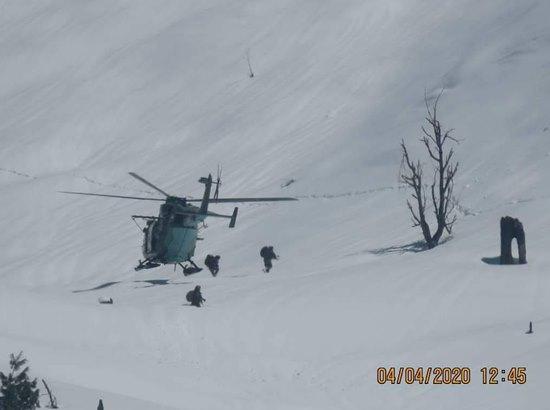
Commandos from 4 Para (SF) dropping from a helicopter to hunt for terrorists. This is the last photo of them alive

The Indian Army suffered a huge setback on April 5, when a five-man squad from the elite 4 Parachute (Special Forces) battalion, or 4 Para (SF) as it is more commonly known, were wiped out during an encounter in the mountains of Kupwara, north Kashmir, with terrorists who had crossed over from Pakistan Occupied Kashmir on April 1.

The terrorists, believed to be five in number, taking advantage of inclement weather and heavy snowfall, infiltrated into the mountainous area of Kupwara through the Line of Control (LoC). However, they were spotted by an infantry unit deployed close by and challenged. However, the terrorists managed to escape deeper into the mountains.

This necessitated the deployment of the army’s best-trained and most motivated soldiers, the commandos from special forces units, who are relied upon to do the most difficult and dangerous operations, which are beyond the scope of regular infantry.

Usually, the special forces do their homework meticulously before they carry out any operation. Proper reconnaissance of the target is carried out, capabilities of the opposing forces are assessed and then only they move in for the kill.

The 2016 surgical strike, which was carried out by 9 Para (SF) and 4 Para (SF), was a classic example of what specially trained soldiers with proper intelligence and meticulous planning can achieve.

In Kupwara, the two squads of commandos that were deployed didn’t have that luxury. The only input they had was that there were five terrorists who had infiltrated into Indian territory and they had to be captured/killed before they could make it to the Kashmir Valley and disappear among the local population, making it very difficult if not impossible to track them.

So, the commandos were not up only against terrorists, who were well-trained which became evident later, but also against the elements and time, as the local army commanders wanted quick results.

Such operations are dangerous even for tough-as-nails commandos. In a similar operation in Hafruda forest of Kupwara on March 21, 2009, 1 Para (SF) lost 8 soldiers, including Major Mohit Sharma, who was posthumously awarded Ashoka Chakra, nation’s highest peace time gallantry award, after they were heli-dropped on a search and destroy mission against militants hiding in the forest but they were caught in a well-planned ambush.

In the afternoon of April 4, the commandos got the go ahead to deploy. Two squads were flown into an area where the terrorists were believed to be hiding. The commandos got out of the helicopters and started their mission in chest-high snow.

Surely, the terrorists who were hiding nearby had heard the helicopter and they knew that when a helicopter is pressed into service it can mean only one thing: special forces have been deployed.


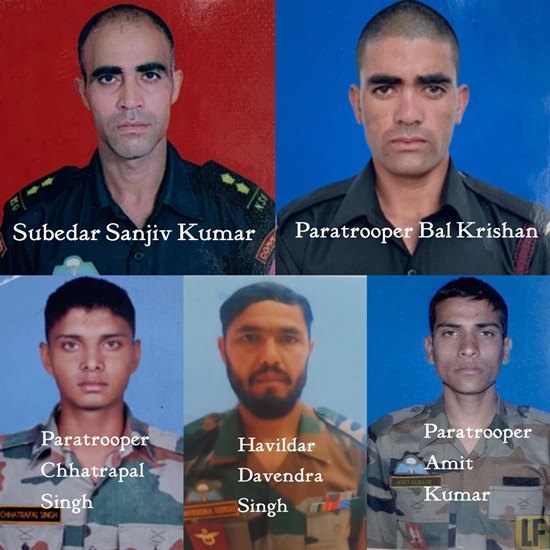
The five commandos who made the supreme sacrifice

Early on April 5, one squad of the commandos picked up footsteps in the snow and started following them. What happened after that is hazy. The army version is that the ice cornice on which the commandos were standing gave way and some of them fell into a stream near the spot where the militants were hiding, who opened fire immediately on the commandos.

The commandos who didn’t fall, also slithered down and joined in the close-quarter hand-to-hand battle which resulted in everyone including the four or five terrorists and the five commandos dying.

But there are other theories going around which say that the commandos were caught unawares and were in fact ambushed and eliminated and the terrorists were then killed by the second squad of the commandos who were nearby and had rushed to the spot after hearing gunfire.


It is very likely that the spin doctors in the army turned an embarrassing ambush into a heroic action by putting out the narrative that the five commandos eliminated the terrorists while perishing in the process.


And why will they not? Losing an entire squad of supposed elite soldiers, the cream of the army, to terrorists is a defeat and the army would never accept it. It would hit morale of the forces and point fingers at everything, including poor intelligence and selection and training standards of special forces.

The terrorists who died were no ordinary terrorists. They were highly trained and motivated. To take out a whole squad of commandos is no easy task and there is no doubt the terrorists were trained by Pakistan Army’s special forces, the Special Service Group (SSG). In the past too, SSG-trained terrorists have proven to be tough fighters who have given Indian Army a hard time.

Even a senior army officer, who asked to remain anonymous, has said that the commandos walked into an ambush and the army is trying to hide this fact.

This incident has several similarities to what the Indian Air Force did with the downing of the MiG-21 Bison in the aerial battle with Pakistan Air Force fighter planes over PoK on Februry 27, 2019. The MiGs were launched to counter enemy planes. Likewise, the commandos were heli-dropped to take down militants who infiltrated. In both actions, our forces came off worse, though in Kupwara an entire squad of supposed elite soldiers, the cream of the army, were wiped out while on February 27, the MiG was downed by a superior fighter plane.

In my opinion, Wing Commander Abhinandan Varthaman, the MiG-21 pilot, didn’t fire a missile seconds before he was hit and therefore no PAF plane went down.


This is all propaganda. I guess the BJP-led government at the Centre wants to hide embarrassing defeats and instead wants to put out a narrative which paints our armed forces as heroes in every action, even when they have been overwhelmed by the enemy.


On February 27, we were surprised by PAF’s daylight raid and this led to confusion which resulted in downing of an Mi-17 chopper and deaths of six IAF personnel onboard and the shooting down of the MiG. The Sukhois and Mirage 2000s were also not able to fire their missiles, which again highlights the inadequacies which have marred our armed forces.


In Kupwara, the army was unable to track and finish off infiltrating militants for three days hence there was pressure from local commanders to find and eliminate them fast.


I think this hurriedness caused the surprise element to be lost and when the commando squads were helicoptered in, the mililtants knew what they were up against and they were prepared.


By now the militants in Kashmir know the standing operating procedure of Special Forces teams. If they hear a helicopter, they know the SF teams are coming and about to be dropped and this gives them ample time to prepare an ambush.


If militants can take out a SF squad, what can they do to a group of regular soldiers? The army has to take a long, hard look at what happened in Kupwara and change its standing operating procedure so that it stays one step ahead of the opposing forces.

  • Ramandeep Singh Bajwa
  • Ramandeep Singh Bajwa, Senior Associate Editor

    bajwa.rs@gmail.com


Armed forces are the unsung heroes in the battle to overcome coronavirus

Armed forces are the unsung heroes in the battle to overcome coronavirus

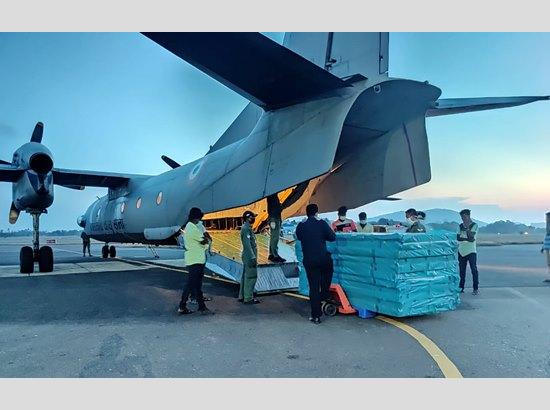
An AN-32 transport aircraft of Indian Air Force is being loaded with medical equipment which will be flown from Tambaram (Tamil Nadu) to Bhubaneshwar (Odisha) for the setting up of medical lab & facilities

As the number of coronavirus cases increase with each passing day in India, we are immensely grateful to doctors, nurses, para-medical staff, police, fire brigade, sanitary workers and others who are untiringly working day and night to keep us protected.

But aren’t we forgetting that a force of more than 14 lakh strong is also silently playing its part in battling the pandemic? Yes, the Indian armed forces which include the army, navy and the air force aren’t on everybody’s radar but they are fulfilling a vital duty of reaching out to the masses and delivering essential goods.

Like us, many in the armed forces are working from home but the rest are lending a hand ensuring that people in need around the country have enough stocks of essential supplies.

Working selflessly, soldiers, sailors and airmen are not only supplying essentials on the ground but are also transporting critically important things like personal protection equipment (PPE), medical equipment and medicines to parts of the country where they are in short supply.

They stay away from their family members, fearing their loved ones might get infected but they take this painful separation in their stride and carry on fulfilling their duty stoically.

As armed forces personnel are posted all across our vast country, they are best placed to feed workers, labourers and others who have been left jobless and away from their homes. In such places the armed forces are sharing the administration’s burden of looking after people who can’t look after themselves.

The armed forces are always training and preparing for war and this pandemic is nothing short of a full-blown war. They are not only collecting and distributing essentials but also setting up and managing quarantine facilities, which will help us in overcoming coronavirus.

So, as civilians it is our duty to help the men in uniform, who are sacrificing so much for us, by staying at home.

  • Sakshi Kanwar Jasrotia
  • Sakshi Kanwar Jasrotia,

    skj2022.sj@gmail.com


Naval helicopters will be Modi govt’s first challenge in its ‘atmanirbhar’ push in defence

With HAL pushing for its inclusion in the programme, the Navy, which is desperate for utility helicopters, fears the project will be delayed.

New Delhi: The nearly $3 billion deal for Naval Utility Helicopter (NUH) could become the first challenge for the Narendra Modi government under the new ‘atmanirbhar’ initiative in the defence sector.

This is because the state-run Hindustan Aeronautics Limited (HAL) is pushing for its inclusion in the programme. The initiative is being pursued under a strategic partnership model focused on the Indian private industry meeting manufacturing needs through tie-ups with foreign vendors.

The Indian Navy, though, is worried that the whole programme will be delayed if HAL is brought in, which the Bengaluru-based firm denies. The Navy has been desperate to replace its Chetak of 1960s vintage with NUH.

The NUHs are to be utilised for multiple roles, including search and rescue, casualty evacuation and low-intensity maritime operations, besides torpedo drops.

The Navy had received eight responses to the Expression of Interest (EOI) issued in February last year as part of its plan to purchase 111 helicopters for Rs 21,738 crore.

HAL had submitted two bids at the time, one by itself and another through its joint venture with Russian Helicopters to produce the Kamov chopper, a Russian utility chopper.

Apart from the Navy, other private players have also objected to HAL’s inclusion.

The Ministry of Defence is yet to clear the file for issuance of Request for Proposal (RFP) for selected vendors and may take a fresh look at the proposal to include HAL.

Defence sources said that the Defence Acquisition Council (DAC) had already considered the participation of HAL when it decided on pursuing the project through the strategic partnership (SP) model.

“Discussion in 2018 DAC for AoN (Acceptance of Necessity) regarding inclusion of HAL and then DAC directive to progress through SP model indicates that HAL is not to be included,” a source said.


Also read: HAL ties up with Larsen & Toubro, others as Modi govt taps private talent for Tejas Mark 1A


HAL says it has the tech but Navy needs to be clear

Speaking to ThePrint, Wing Commander Unni Pillai (Retd), executive director (CTP-RW) at HAL said, “The essence of SP Model is to bring in technology into the country that we don’t possess.”

He added that the transfer of technology (ToT) in the heavier weight lift class makes sense because HAL is still trying to design one.

“But getting something, which is in the same weight class as ALH (Advanced Light Helicopter), it does not make sense. Whatever they (Navy) are trying to get in is 1970 design,” he added.

He argued that the foreign chopper “the same configuration as the ALH” will be nearly Rs 10-15 crore more.

“And then what happens is that the actual expenditure comes in every 5-7 years when the aircraft requires upgrades, including when new systems have to be put. And that is when the foreigners start bleeding us … we will keep paying money to people,” he said.

The senior HAL official said “Atmanirbarta will never happen” if we depend on imports.

“If we have a design and needs to be done up to somebody’s requirement, the two parties need to sit together. The Navy has never engaged HAL in what exactly they want. Initially, in the 1990s, they wanted a replacement for Seaking (helicopter) which is a 10-tonne class. They wanted all the equipment to be fitted on an ALH, which is a 5-and-half-tonne class. This is not possible.

“So now, what they want is a smaller utility class helicopter which is a five tonne class. We have something in that class. Whatever adaptation needs to be done will be done,” he said.

Pillai underlined that the HAL’s chopper meets the Navy’s requirement. On the issue of folding blades, a requirement for Naval operations, he said HAL has segmented the blade.

“There are two bolts there. You remove one and it can be folded. It takes about six minutes to fold on the LUH (Light Utility Helicopter). On the ALH, we are planning to incorporate the same which we would be able to do at the same time,” he said.

Asked about fears that HAL will not be able to deliver on time even if it is able to meet all requirements, he points to its performance in the last five years to say the state-run firm has delivered ahead of time.

“In ALH for example, the Army had placed an order and we delivered one year in advance. We are capable of delivering in advance,” he said.


Also read: HAL needs new orders to prevent complete halt of production after 2021-22


Navy’s HAL problem

Defence sources told ThePrint that if HAL is included, it will erode the level playing field for private players since it already has government-funded infrastructure, which cross subsidises Transfer of Technology and indigenous content.

According to provisions in the Defence Procurement Procedure (DPP), HAL cannot be included at this stage since the process has already begun.

“If HAL has to be included, then DPP has to be modified and ratified by DAC followed by issuance of fresh Request for EOIs to OEMs (original equipment manufacturers) and SPs,” the source explained.

As of today, the private companies have got a miniscule percentage of the overall orders to Indian companies placed by the Navy.

According to official statistics, since 2014, almost 95 per cent of the orders to Indian companies have gone to Defence Public Sector Undertakings and Public Sector Undertakings. HAL has an order book of approximately Rs 1 lakh crore, including that of Light Combat Aircraft.

Navy sources said that HAL was provided naval requirements from as early as 1990 to make a helicopter, but till date, the helicopter cannot meet requirements of the Navy.

“HAL will take another two years to meet blade folding capability. If at this stage HAL is included, the process will come to a halt as the Empowered Project Committee cannot clear ALH as a platform since it does not meet the quality requirements,” another source explained.

The source added that a higher body like DAC will have to accord this dispensation.

“However, if this is accorded, then other helicopters will also be added in the fray. The whole process would need to be recommenced, delaying the project further while diluting the operational functionality of the NUH,” the source said.

Air Vice Marshal Manmohan Bahadur (Retd) said all platforms have to meet the Navy’s requirement for it to be considered. Automatic blade folding is an essential necessity which naval helicopters require since they operate from decks of ships.


“Also, HAL order books are loaded. The whole idea of strategic partnership is to allow Indian private industry to come forward and provide the services with an alternative R&D (research and development) and manufacturing line. This would help bring in real indigenisation that every government has been wanting to usher in,” he added.



Also read: INS Arihant, Chinook, P-8I — game-changing Indian military inductions in the last decade