Disturbing tidings flowing from Galwan Valley in Ladakh and the stoic hush here became a subject of debate on whether New Delhi allowed Beijing to set the narrative on social media space.
In an age when militaries around the world practice the art of information warfare, barring an official confirmation by the Indian Army confirming the loss of three lives in the face-off, not much clarity was offered.
Reports from China began circulating much earlier with the Global Times quoting the Chinese Foreign Minister stating that Indian troops “seriously violated the consensus of the two sides by illegally crossing the border twice and carrying out provocative attacks…” The Indian reaction came late evening through the Ministry of External Affairs Spokesperson asserting that “India is very clear that all its activities are always within the Indian side of the LAC.”
Acknowledging China too suffered, Global Times Editor-in-Chief Hu Xijn said the Chinese side didn’t release the number of PLA casualties to avoid stoking public mood. While the “strategic silence” could be explained as part of a calculated effort by New Delhi not to escalate the situation, the absence of authentic information saw several other claims of greater number of casualties on the Indian side being circulated till late evening.
China warns India on borders in Ladakh, says ‘fears no conflicts’ The tone of the hard-hitting editorial in Global Times in the wake of Galwan Valley is threatening
China has warned India of staying within its borders for any violation would invite repercussions saying New Delhi while dealing with China should get rid of what it called two misjudgements – working at the behest of the US and to think that the Indian Army is more powerful than the Chinese Army.
In a hard-hitting editorial in Global Times in the wake of Galwan Valley, it has stated it clearly and in an unveiled threatening tone, “The gap between China’s and India’s strength is clear,” implying that it has superior army, weaponry and fighting skills in fighting in all terrains in all-weather conditions.
Global Times is a mouthpiece of the Communist Party of China that rules the country. The Chinese government sells its intentions and propaganda mostly through this newspaper, more than the official channels. It is a well-established practice in China, because it helps in China to live in official denial on sensitive issues without losing the opportunity to say what it wants to through this newspaper.
The editorial read, “China does not want to turn border issues with India into a confrontation. This is goodwill and restraint from China. But China is confident in the situation at the border. It does not and will not create conflicts, but it fears no conflicts either.”
This was a warning of sorts that China wanted to deliver to India. It sought to serve a strategic goal for its own people that China has a robust policy and military that can change anything on the ground.
It is evidenced from these words in the edit, “This policy is supported by both morality and strength. We will not trade our bottom line with anyone.”
It, however, meddles with the Indian foreign policy as also raises questions about the Indian Army’s strength. It has asked India against the backdrop of Ladakh clashes not to serve the US interests and noted that the US resources to invest in India-China relationship are quite limited.
China has not revealed, nor will it ever, the casualties it suffered during the physical clashes in the Galwan Valley, for this approach sits pretty with its time-tested policy of erasing history that could cause it embarrassment, militarily or politically.
The newspaper’s line echoes the Chinese official line that the clashes took place because India undertook a “provocative” action of intruding into its territory. This charge has been rejected by India.
The Chinese newspaper, in short, has asked India not to exercise its right on the territory in Galwan Valley, which is part of India, and had witnessed no contesting claims from China until May this year.
China is tweaking the narrative to browbeat India through its propaganda machinery.
PLA men prevented rescue of injured Delhi weighs options as Beijing insists on claiming entire Galwan Valley
The Chinese troops prevented the rescue of the Indian soldiers.
Tribune News Service
New Delhi, June 16
Following last night’s bloody clash, a series of meetings have been conducted at the military level along the Line of Actual Control in Ladakh.
Another series of meetings were held in New Delhi with Defence Minister Rajnath Singh, Foreign Affairs Minister S Jaishankar and the military brass mulling over various options.
Prime Minister Narendra Modi too reviewed the situation late on Tuesday with Rajnath Singh, Chief of Defence Staff Gen Bipin Rawat and Army Chief Gen MM Naravane.
The task at the LAC was the toughest. The physical fight between the troops of both sides ended well into start of Tuesday. At dawn, some Indian troops were noticed on the south bank of Galwan. The Chinese troops, however, prevented the rescue of the Indian soldiers.
The Commander of the Indian Army’s 3 Division, Maj Gen Abhijit Bapat, flew in a helicopter to the spot and negotiated the issue.
The meeting to resolve the impasse and restore some stability was on till 8 pm today, with several back-and-forth issues. China reportedly insisted on claiming the entire Galwan valley.
In New Delhi, the Defence Minister and the Foreign Minister met Gen Rawat and the three service chiefs. Later in the evening, Gen Naravane again briefed Singh before the two headed to meet the PM
Ladakh clash: Family planned to get him married in next vacation, but destiny had other plans
Oldest of three siblings, Rajesh Orang, joined the Army in 2015 but the soldier died of injuries suffered in a hand-to-hand combat with the Chinese army at Galwan Valley in Ladakh region, his father Subhas was informed.
“My son served the country and gave his life for it,” was all Subhas could say on Wednesday morning as he grieved the death.
Rajesh’s mother Mamata was speechless. She was hoping to get him married when he came back on a holiday next.
Subhas said Rajesh, elder to two sisters, had joined the Army in 2015 after passing the higher secondary examination and belonged to the Bihar Regiment.
He said that he was informed by the Army authorities on Tuesday evening about the death of Rajesh, who was in his early 20s.
“From his childhood, my brother wanted to serve the country and was happy to be in the Army,” his youngest sister Shakuntala said.
“He came home on leave a few months back and talks were on for his marriage,” she said.
Subhas, a marginal farmer at Belgoria village in Mohammedbazar police station area in Birbhum district, raised his children amid poverty.
Rajesh was among the 20 Indian Army personnel killed in the fierce clash with Chinese troops in the Galwan Valley on Monday night, the biggest military confrontation in over five decades that has significantly escalated the already volatile border standoff in the region. PTI
The Galwan valley in eastern Ladakh has strategic significance because of its proximity to the vital road link to Daulat Beg Oldie (DBO), the world’s highest landing ground that lies close to the Line of Actual Control (LAC) and serves as an important aerial supply line. This DBO area is known in the Army as Sub-Sector North.
The Darbuk-Shyok-DBO link
India is building 255-km Darbuk-Shyok-DBO road along LAC
Will reduce travel time between Leh and DBO from 2 days to 6 hrs
Control of ridgeline along Galwan allows domination of road
Control of valley also gives access to Aksai Chin plateau, through which Xinjiang-Tibet highway passes
India is raising border infrastructure in this area, including the all-weather 255-km Darbuk-Shyok-DBO road. This road runs almost parallel and at places very close to the LAC and extends up to the base of the Karakoram pass, which when complete, will reduce the travel time from Leh to DBO from the present two days to just six hours. Road and bridge construction works have recently been speeded up with a large number of labourers being ferried in.
The valley connects with Shyok on the road under construction and lies between DBO and Chushul to the south near Pangon Tso, another hotspot, providing convenient access to Shyok and the areas beyond.
Control of the ridgeline along the valley also allows domination of the road. Looking eastwards, control of the Galwan valley gives access to the Aksai Chin plateau, through which part of the Xinjiang-Tibet highway passes. While the road is highly prone to Chinese interdiction or long-range artillery, it serves a vital peacetime role in maintaining forward posts and building up reserves. An alternative route to DBO is being developed from a different axis in Ladakh that has adequate depth from the LAC.
The Galwan river flows westwards from the disputed Aksai Chin region into Ladakh after originating in Samzungling area on the eastern side of the Karakoram range and joins the Shyok river, one of the tributaries of the Indus. The fast-flowing river runs for about 80 km.
The Galwan river is to the west of China’s 1956 claim line in Aksai Chin. However, in 1960 China advanced its claim line to the west of the river along the mountain ridge adjoining the Shyok river valley. India had established some military posts in this sector. During the 1962 Sino-Indian conflict, Indian posts in the Galwan Sector were attacked by the Chinese, resulting in casualties. After the war, this sector remained dormant till the recent face-offs.
Loss of soldiers in Galwan deeply disturbing and painful: Defence Minister Rajnath Singh The Defence minister takes to twitter to share his condolences
A day after India lost 20 of its Armymen in clashes with Chinese troops in Galwan valley of Ladakh, the Defence Minister Rajnath Singh has said that the loss of soldiers was deeply disturbing.
In a series of tweets the Defence minister said, “ The loss of soldiers in Galwan is deeply disturbing and painful. Our soldiers displayed exemplary courage and valour in the line of duty and sacrificed their lives in the highest traditions of the Indian Army, ’’ he said
While sharing his condolences with the families of armymen killed in the clashes, the Defence Minister said, “The Nation will never forget their bravery and sacrifice. My heart goes out to the families of the fallen soldiers. The nation stand shoulder to shoulder with them in this difficult hour. We are proud of the bravery and courage of India’s breavehearts.’’
Rajnath Singh
✔@rajnathsingh
The loss of soldiers in Galwan is deeply disturbing and painful. Our soldiers displayed exemplary courage and valour in the line of duty and sacrificed their lives in the highest traditions of the Indian Army.
India today said the clash in Galwan Valley occurred after the Chinese side departed from the consensus to respect the Line of Actual Control (LAC).
Anurag Srivastava, MEA Spokesperson
Always honoured LAC
India is very clear that all its activities are always within the Indian side of the LAC. We expect the same of the Chinese side.
Both sides suffered casualties that could have been avoided had the agreement at the higher level been scrupulously followed by the Chinese side, said the Ministry of External Affairs spokesperson Anurag Srivastava.
He pointed out that the clash happened as a result of an attempt by the Chinese side to unilaterally change the status quo there.
Giving a rundown of the events that led to the violence, MEA said both sides had been discussing through military and diplomatic channels the de-escalation of the situation in the border area in eastern Ladakh.
Senior commanders had a productive meeting on June 6 and agreed on a process for such de-escalation. Subsequently, ground commanders had a series of meetings to implement the consensus reached at a higher level. “While it was our expectation that this would unfold smoothly, Chinese intransigence led to the events taking a different turn,” said Srivastava. “We remain firmly convinced of the need for maintenance of peace and tranquillity in border areas,” he added.
Martyred colonel’s family arrives in Hyderabad ahead of cremation The army officer had laid down his life in Ladakh
Col Santosh Babu’s family arrived here from Delhi on Wednesday morning ahead of the cremation of the martyr, who laid down his life on the Indo-China border in Galwan Valley on the intervening night of June 15 and 16.
Cyberabad Commissioner of Police VC Sajjanar and Shamshabad DCP N Prakash Reddy and other police officers received the family at the Rajiv Gandhi International Airport.
The CP conveyed condolences to the family.
Meanwhile, Congress president Sonia Gandhi, in a letter to the family, has conveyed her grief at the turn of events. Sonia said Col Babu’s sacrifice, bravery and patriotism would never be forgotten.
State PCC president Uttam Kumar, a former Air Force pilot, said he and his wife were on their way to Suryapet to offer condolences to the family and hand over Gandhi’s letter to them.
The United States is closely monitoring the situation following a fierce clash between Indian and Chinese forces in eastern Ladakh and hopes that the differences will be resolved peacefully, officials said here.
Twenty Indian Army personnel, including a colonel, were killed in the clash with Chinese troops in the Galwan Valley in eastern Ladakh on Monday night, the biggest military confrontation in over five decades that has significantly escalated the already volatile border standoff in the region.
“We are closely monitoring the situation between Indian and Chinese forces along the Line of Actual Control,” a State Department spokesperson said.
“We note the Indian military has announced that 20 soldiers have died, and we offer our condolences to their families,” the official said.
Both India and China have expressed their desires to de-escalate and the US supports a peaceful resolution of the current situation, the spokesperson said.
“During their phone call on June 2, 2020, President Donald Trump and Prime Minister Narendra Modi had discussed the situation along the India-China border,” the official added. PTI
India’s escalation worked against Pakistan, time for similar response to China
File photo of PM Narendra Modi and Chinese President Xi Jinping | Graham Crouch/Bloomberg
Text Size:
India’s strategic managers face a difficult problem: both China and Pakistan use asymmetric means that are not easy to counter. Pakistan uses terrorism because it ties down India’s stronger conventional military forces. And China has mastered the art of salami-slicing territory that is equally difficult to thwart, not just for India, but for China’s other neighbours and even the US. With the surgical strike and the Balakot attack, India may have found an appropriate response to Pakistan’s asymmetric tactics. But China is a harder nut to crack. New Delhi needs to think of other ways to tackle it.
Asymmetric tactics are difficult to counter. India’s traditional counter has been defence, but this clearly did not work against either Pakistan or China. Of course, defence has to be part of the strategic mix, but by itself, it will not work.
In dealing with terrorism, defences can never work perfectly every time. If the terrorists fail once, they can try again and again. As is well-known, the terrorist can afford to fail many times but only needs to succeed once, while the defence has to be successful every time. India’s fight against terrorism is a standing testament to this: however much India tightened its defences, it could never stop the attacks.
Defences are also a poor solution to salami-slicing tactics, as we are witnessing along the Line of Actual Control. The problem is that each individual act is so small that it passes without challenge. It is always tempting to ignore such infractions and to excuse it as a reaction to a mistake that others made. After all, in the South China Sea, other countries had also occupied some portions of the islands and even built ramshackle huts on them. Now we know different, but it is of course too late. Salami-slicing tactics encourage second-guessing by the victims, which further undermine any response.
Another problem with countering such tactics is that it is difficult to defend everywhere, especially in inhospitable terrain or in the waters. But the end result is that China has now asserted control over much of the South China Sea and is repeating the same method in Ladakh. India should be familiar with this: the Chinese used the same method successfully in the run-up to the India-China war in 1962. In trying to defend ‘every inch of land’, India ended up in an unsustainable military position.
There are alternatives to a purely defensive response to asymmetric attacks. One can mimic such asymmetric strategies, paying China back in the same coin. There is an agreeable symmetry to this, but agreeableness is, of course, less important than effectiveness. Doing this requires capacity and political willingness.
For example, Prime Minister Narendra Modi signalled a change on India’s Balochistan policy early on, which was seen as a tit-for-tat response to Pakistan’s terror strategy. But little appears to have actually been done, either because India lacks the intelligence and covert action capability to actually implement such a policy or the government simply lost its nerve. There is also the moral equivalence problem: can democratic India support groups that engage in such actions? India has supported such groups before but does it become problematic when India puts so much stress on international diplomatic action against terrorism?
Capability and political risk-acceptance become even more important if India wants to embark on its own salami-slicing tactics to counter China. Such tactics could quickly escalate: India’s forward policy in the run-up to the 1962 war was attempted without sufficient military capability to deal with escalation and we paid for it. Indian capabilities are far better today but the risks cannot be dismissed.
India may have found at least a partial answer to Pakistan’s asymmetric strategy of using terrorism: escalation. Both the surgical strike and the Balakot attack demonstrated that India had the political will to use its superior military capabilities. The debate about whether Indian bombs hit the target is irrelevant: Pakistan now has to factor the probability of an Indian escalation next time it plans a terror strike, something it did not appear overly concerned with before.
The challenge is not over, of course. Pakistan Prime Minister Imran Khan’s recent claims about a ‘false-flag’ operation by India and the foiling of a Pulwama-type terror attack a few days later may suggest that Pakistan will continue to use such tactics, which means that India will need to be prepared to escalate and punish again if another such attack takes place.
It is doubtful that such military escalation tactics will work in China’s case. But there are other ways to escalate that could work. New Delhi can signal that continued pressure on the border can have repercussions, such as strengthening Indian strategic partnerships with the US and others. India could also become more vocal about issues such as China’s roadbuilding in Pakistan-occupied Kashmir, its role in the coronavirus pandemic, or its behaviour in Hong Kong. These have no intrinsic value to India, but to the extent that China values its narrative, they represent points of vulnerability that India can exploit.
Escalation is undesirable and would hurt both sides. China can surely respond in kind. But asymmetric tactics should not be tolerated either. The alternative to escalation is being repeatedly victimised, as India was for decades by Pakistan’s terrorism.
State Stalwarts
DEFENCES FORCES RANKS
ARMY, NAVY, AIRFORCE RANKS
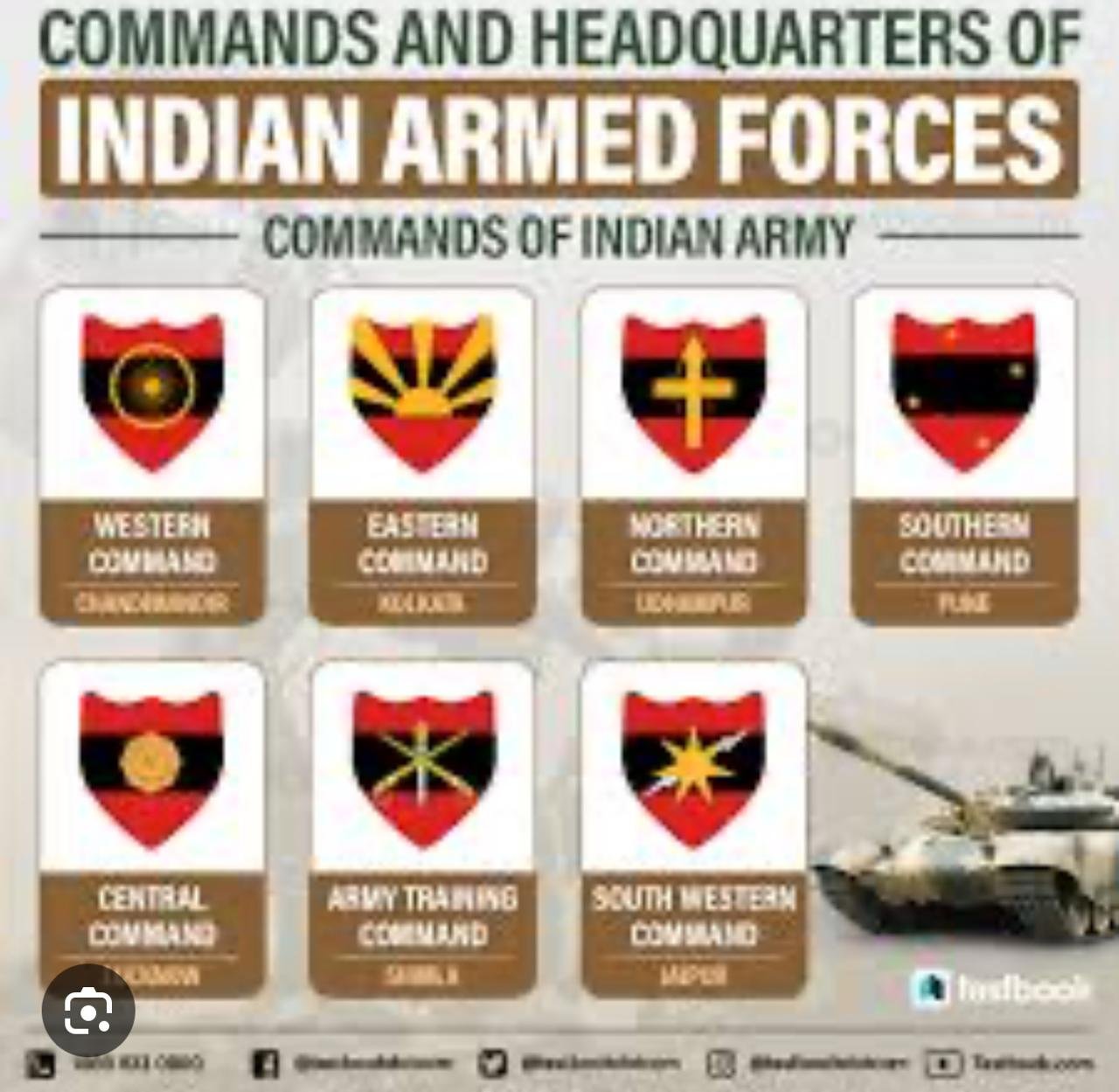
FORMATION SIGNS
FORMATION SIGNS
ALL HUMANS ARE ONE CREATED BY GOD
HINDUS,MUSLIMS,SIKHS.ISAI SAB HAI BHAI BHAI
CHIEF PATRON ALL INDIA SANJHA MORCHA
LT GEN JASBIR SINGH DHALIWAL, DOGRA
SENIOR PATRON ALL INDIA SANJHA MORCHA
MAJOR GEN HARVIJAY SINGH, SENA MEDAL ,corps of signals
.
.
PATRON ALL INDIA SANJHA MORCHA
MAJ GEN RAMINDER GORAYA , CORPS OF
sanjhamorcha303@gmail.com
PRESIDENT HARAYANA STATE CUM COORDINATOR ESM
BRIG DALJIT THUKRAL ,BENGAL SAPPERS
PRESIDENT TRICITY
COL B S BRAR (BHUPI BRAR)
PRESIDENT CHANDIGARH ZONE
COL SHANJIT SINGH BHULLAR
.
.
PRESIDENT PANCHKULA ZONE AND ZIRAKPUR
COL SWARAN SINGH
PRESIDENT SAS NAGAR (MOHALI)
COL BALBIR SINGH , ARTY
INDIAN DEFENCE FORCES
DEFENCE FORCES INTEGRATED LOGO
FORCES FLAGS
15 Th PRESIDENT OF INDIA SUPREME COMMANDER ARMED FORCES
Droupadi Murmu
DEFENCE MINISTER
Minister Rajnath Singh
CHIEF OF DEFENCE STAFF (2nd)
General Anil Chauhan PVSM UYSM AVSM SM VSM
INDIAN FORCES CHIEFS
CHIEF OF ARMY STAFF(29th)
General Upendra Dwivedi, PVSM, AVSM (30 Jun 2024 to Till Date)