






Sanjha Morcha

What’s New

Click the heading to open detailed news

Current Events :

web counter

Print Media Reproduced Defence Related News

A PAGE FROM GLORIOUS HISTORY OF BRAVERY OF INDIAN ARMY

*The Birth of the Para Commandos.*

_It’s a known fact in history, that in September of 1965 when Pakistan was on the verge of victory in Kashmir with the Chamb offensive, a three pronged attack on Jammu Akhnoor and Pathankot to cut off Kashmir from the rest of India; one man stood up…_ *Lt Gen Harbaksh Singh the Western Army Commander.*

*The towering Khalsa, took upon himself to break the defensive mindset, and went on the offensive… thus, for the second time in history after the Khalsa offensive by the legendary Sardar Hari Singh Nalwa against the Pathans in 19th century; the Indian Army went on the offensive… Lahore was attacked.*

_Since early days,_ *Harbaksh* _was destined to always save India out of trouble. 13 Years of combat experience with his_ *parent unit 5 SIKH,* _fighting the Japanese in WWII, Harbaksh had seen it all from capturing posts, to being ambushed, injured and taken as Prisoner of War. By 1947 Harbaksh a senior Military officer and brilliant battle hardened soldier had just completed Staff College at quetta and was ready to take on the higher echelons of the military._

*As a full Colonel, he was the Deputy Commander of the famous 161 Infantry Brigade in Uri in 1947. He had volunteered to command a unit in battle but was denied as he was a full Colonel (units were commanded by Lt Cols).*

_During the offensive by 1 SIKH the CO Lt Col Dewan Ranjit Rai got Killed in Action, Harbaksh Singh again volunteered and this time removed a star from his shoulders (for the first time in history an officer demoted himself to lead his men in battle)._

*The battered battalion regrouped and fought like lions under Harbaksh to reclaim Farkian Gali and drove out Pakistanis from the valley.*

_Harbaksh Singh was promoted as_ *Brigadier* _in 1948. As the Commander of 163 Infantry brigade Harbaksh again conducted daring operations in Tithwal and captured Tithwal. He at the rank of Brigadier, was awarded Veer Chakra, the third highest gallantry award of India._

*In September 1965, the Indian Army went on the offensive with Jalandhar based 11 Corps launched all of its infantry divisions (7th Inf Div, 15th Inf Div and 4th Inf Div) launched towards Lahore and Army HQ Reserve 1 Strike Corps with the elite 1 Armoured Division launched further North Towards Sialkot to not only thwart the Pakistani Juggernaut but also to crush Pakistan feeling of supremacy and regain the pride of the Indian Army licking its wounds from 62 China debacle. Bitter battles followed with both sides fighting even for an inch of land. The Indian Armoured Corps came into its own with destruction of Pakistani counterparts despite having inferior Sherman tanks as compared to the modren Patton Tanks of Pakistan.*

_Legends were created on the battle field with units like 17 Poona Horse, 4 Horse, 3 Cavalry writing history in blood and gold. The infantryman went beyond the call of duty and beyond imagination to fight with tanks, the likes of Abdul Hamid showed the true colour of the sons of the soil. India regained its pride as not only Pakistani offensives were crushed, but Indians were now ready to capture Lahore._

*Pakistan however launched another offensive this time towards south Punjab in Ferozpore sector. In Hussainiwala, Pakistan cracked up Indian defences and a crisis developed. The Army Chief Gen JN Choudhary ordered 11 Corps, which was in offensive to withdraw and take defensive positions. Lt Gen Harbaksh Singh Western Army Commander refused, defied the Army Chief and instead ordered GOC 11 Corps to attack, thereby saving Punjab and India from a certain defeat.*

_Meanwhile in Kashmir, during the progress of operations history was in the making. The Operation Gibralter combined with the Pakistani offensive in Jammu, initially had succeeded due to the surprise and speed. It was a precarious situation as Poonch was threatened._

*The only possible way to recapture territory and save poonch was to go behind the enemy lines and destroy his flanks. Pakistanis knew India would loose Kashmir if the old road to valley from Poonch was lost. Doom prevailed on the horizon of the future of an integrated India.*

_At this time a miracle happened. It is often said that the outlaws create history, same thing happened when_ *Maj Megh Singh Rathore of the 3RD BATTALION BRIGADE OF THE GUARDS,* _a superseded officer who had been denied promotion, volunteered to the_ *Western Army Commander* _to carry out_ *commando raids* _behind the enemy lines._

*A preposterous idea given the time and situation and with no resources at hand. India had no commando units. Nor were there any plans to raise any. Gen Harbaksh listened patiently, and asked Megh Singh Rathore* _”Son if you succeed in this, I will put that star on your shoulder with my own hands.”_

*And without the govt’s approval, Harbaksh gave a nod to raise this force. Maj Megh Singh Rathore organised a force of volunteer dare devils personally chosen by him, A few Good Men. This force, known as the* _’MEGHDOOT FORCE’_ *after Megh Singh Rathore, the forgotten men not even recognised by the govt of the day, formed the nucleus of the first special forces unit in India. Thus was born the elite* _9 PARA COMMANDO_ *or the* _9th BATTALION THE PARACHUTE REGIMENT SPECIAL FORCES._

_Maj Megh Singh Rathore his mettle and carried out not one but three of the most outstanding and daring raids and link ups ever in history of warfare. His raids took Pakistanis completely off the guard as nothing this spectacular was ever expected by them from the Indians. Today Poonch stands with India courtesy Megh Singh Rathore._

*Maj Megh Singh Rathore outlawed man facing court martial charges before the raids, came back home with a bullet in his thigh and was pipped Lt Col by Gen Harbaksh Singh himself and became the first CO of 9 PARA.*

_By the time ceasefire was declared on 23 Sep 65, the Indian army had not only recovered from the initial losses, but instead captured large chunks of vital Pakistani territory in_ *North Punjab.*

*War as a whole was a stalemate but the Indian army was able to thwart the Pakistani intentions of capturing Kashmir with force, their Operation Gibralter proved to be an utter failure.Truly Harbaksh was the saviour of Kashmir, Punjab and that of the honour of India.*

_For saving India,_ *Lt Gen Harbaksh Singh* _was awarded with_ *Padma Vibhushan* _and_ *Padma Bhushan* _both the second and the third highest honours in the country._

*For inconspicuous bravery in the face of the enemy and outstanding leadership under fire Lt Col Megh Singh Rathore was awarded with Veer Chakra.*

_Today the_ *Indian Parachute Regiment* _and_ *Special Forces* _are considered amongst the best in the world including the British SAS, US Special Forces, Navy SEALs and Israeli Sayeret Matkal and Flotila 13._

*Few outlaws, few good men started a tradition of valour and sacrifice. The saga continues till date with Parachute Regiment being the most decorated regiment in the world despite it being only raised in WWII and despite it competing amongst the best of the best who have been there for centuries. The Maroon Berets are truly a different breed, and it all started with one man who said,* _”Who dares wins”._

_This post is dedicated to_ *Lt Gen Harbaksh Singh Padma Vibhushan, VrC, Padma Bhushan GOC-in-C Western Command 1965 and Lt Col Megh Singh Rathore VrC CO 9 PARA CDO BN….. True legends.*


Good field reporting to counter studio hawks by Lt Gen GS Sihota (Retd)

The recent skirmish between Indian and Chinese troops was an opportunity for the government and the Indian Army to have war reporters on the spot after the hand-to-hand combat. It could have prevented TV anchors from becoming studio strategists, building imaginary scenarios and discussing them ad nauseam. These war journalists could have then presented a clear picture of the incident.

Good field reporting to counter studio hawks

Tectonic shift: During the 1999 Kargil War, the nation saw the grit and determination of the Indian soldier first-hand.

Lt Gen GS Sihota (Retd)

Former Director General, Military Operations

NICK Ut’s iconic photograph of a nine-year-old girl scorched by napalm bombing in Vietnam drew the attention of the world to the horrors of war. It also changed the public opinion in the United States leading to widespread protests. Seeing death and deprivation on a daily basis, the American public pressured the government to withdraw and accept defeat. Such is the relevance of war reporting.

A war correspondent is distinct from a regular journalist as he provides first-hand information from a conflict zone. It is considered the most dangerous form of journalism. The reporter goes into an affected area with adequate background knowledge and a determination to get a good story. Though unarmed, he/she is not short on courage and has the ability to take life-threatening risks. Despite strict restrictions, many are known to seek unauthorised entry, only to be intimidated, detained and even tortured. The beheading of Daniel Pearl by the Al Qaeda and James Foley by the ISIS is still fresh in our minds.

Marie Colvin was a fearless and gutsy woman, who lost one eye while covering the Sri Lankan civil war and later met her destiny along with her cameraman in Syria. Both times, these were unauthorised infiltrations. Then we know about Jeremy Bowen’s reports from Sarajevo which led to the exposure of war crimes and the trial of Bosnian General Ratko Mladic. Christina Lamb is another war reporter who has written many books on her experiences. She crossed the Hindukush into Afghanistan with the Mujahideen who were fighting the Russians. Later, she saw and wrote about the West which failed miserably because they could not understand the local dynamics of the country. Many journalists have lost lives in crossfire and to improvised explosive devices (IEDs) in Afghanistan. In Yemen, reporters have been known to be tortured and even used as human shields.

The story of Indian war correspondents’ role in various conflicts has been somewhat different. Information about the raiders in 1948 came only through the refugees. PN Sharma was the first reporter who saw action from the air, took pictures, but crashlanded on a tree and was captured but later repatriated. His accounts were known only after the war when he published his book. Indian war reporters did not get as many opportunities as their foreign counterparts. Not to say that there has not been any change since then. During the 1971 war, there was a major shift. Foreign correspondents were flown to the action sites. A foreign journalist from the New York Times appeared on the scene accompanying Lt Gen Sagat Singh, GOC, 4 Corps. He introduced himself as ‘Harmitt’. His real identity was discovered when he let out the choicest Punjabi abuse on confronting machine gun fire. We appreciated his real value only when he flew out after the surrender and we saw foreign magazines full of photos and articles lauding the Indian Army’s role in the liberation of Bangladesh.

Unfortunately, during my stint in the Kashmir valley from September 1994 to April 1996, I did not meet any journalist who was willing to move out of his comfort zone. Most were housed in hotels in Srinagar from where they wrote biased accounts of the high handedness of the armed forces under militant pressure. Keen to know the security arrangements being made for yatris, they requested a briefing. The GOC, Victor Force (RR), asked them to assemble at Anantnag. Sadly, they were not prepared to go there without protection or walk to the cave before the Amarnath yatra as they thought that it was too big a risk to their lives. This is not to take away from the fact that today, young men and women are at the forefront, capturing the situation on their cameras and reporting live from the scene of action.

Many young reporters risked life and limb to reach LTTE positions facing the Indian Peace-Keeping Force (IPKF). There was the intrepid Anita Pratap and her photographer Sham Tekwani whose reportage and photographs brought home to the Indian public the questionable decision for India to interfere in Sri Lankan affairs. Since the Indian government controlled all information, acts of bravery and sacrifice remained unrecognised.

The 1999 Kargil War saw a major change. Though Barkha Dutt’s reporting from a bunker may have been termed as jingoism, it made an impact. The nation saw the grit and determination of the Indian soldier first-hand.

Every nation must exercise control over access to the battlefield to prevent sensitive information from leaking out, particularly during the period of actual engagement. Free access can have negative results. This was the bitter lesson from the Vietnam War. The US changed its policy thereafter and was able to create better opinion during the Iraq war.

Though modern technology has made the conflict zone accessible and visible from a distance, frontline reporting has a greater influence on the minds of the public than listening to studio reports. It can also influence domestic and international policies. Today, TV channels produce talk shows to enhance their TRPs where they quote reliable sources, unnamed sources and senior government sources, all of whom are unidentifiable. Such reports become questionable in their authenticity. The public gets confused. Social media divides people into pro-and anti-establishment, nationalist and anti-nationalist sections. Any official version starts raising doubts. On the other hand, reports from the foreign media, which has better resources and access to information from the opponent, get more prominence. This is unhealthy as it leads to rumour-mongering. Viewers are left to ‘believe it or not’.

This haze can only be cleared by allowing limited access to war reporters into the conflict zone. When will it be possible for us to fly them into such areas and let them develop a ground understanding of the border?

The recent skirmish between the Indian and Chinese troops at the Line of Actual Control (LAC) was an opportunity for the government and the Indian Army to have war reporters on the site after the grim hand-to-hand combat. It could have prevented TV anchors from becoming studio strategists, building imaginary scenarios and discussing them ad nauseam. The war journalists could have then presented a clear picture of the incident and the lie of the land.

War reportage is a force multiplier which can boost the image and might of the military and help in raising the morale of the Indian public.


Wrong command, and reprimand Recalling the PT drill when a junior officer panicked and broke the ‘military protocol’

Wrong command, and reprimand

Lt Gen Raj Kadyan (retd)

In the military units, a CO (Commanding Officer) is known as the father and the 2IC (Second-in-Command) the metaphorical mother. During our raising period, there were four of us Subalterns.

Morning PT is sacrosanct in every battalion. Special stress is laid on attendance by those performing sedentary duties: clerks, storekeepers, cooks and their ilk. As per the standard drill, after all Companies are assembled, the parade is reported to the Adjutant by the Subedar Major. The Adjutant reports the parade to the 2IC, and the latter, after ordering the ‘officers on parade’, gives a report to the CO, listing the total number of officers, JCOs and Other Ranks present. This way the CO can monitor if there is any significant number of absentees.

The battalion was to go on an outdoor training exercise and all Company Commanders, including the Adjutant, had proceeded early morning on reconnaissance. Apart from the CO and 2IC, only we Subalterns were present for PT. Being an Intelligence Officer and his understudy, I was to deputise for the Adjutant.

After taking the report from the Subedar Major, I awaited the arrival of the 2IC. It just so happened that before the 2IC could reach, the CO came and stood behind at his designated spot. Not knowing what to do, I panicked and ordered ‘officers on parade’, turned around and reported the parade to the CO. It was then that I saw the 2IC walking in from the mess side, where as a bachelor he was quartered along with us.

Later in the day, I was formally marched up to the 2IC.

“Why did you report the parade to the CO 20 seconds ahead of time?”

I never wore a watch during PT and could have said so. But I knew the peril of making excuses. “Sir, the CO came and stood behind and I thought you might be committed elsewhere.”

“What nonsense? As Adjutant, you should know my commitments. Besides, you know I never miss PT.” We knew he didn’t. In fact, he was horse-fit and whichever Company he joined for road run, could not keep up with him. All Companies dreaded the prospect.

I remained silent.

“Mr Kadyan, I am counting your sins. Be on the watch next time.”

“Yes sir,” I felt relieved to detect the finality in his tone.

The Senior Subaltern was the next to be marched in.

“Lt Mehra, you are the Senior Subaltern?” I could overhear from outside.

“Yes sir.”

“And you are the Subalterns’ mentor?”

“Yes sir.”

“How did you allow Mr Kadyan, an officer junior to you, to order you on parade?”

I could detect a hesitant mumbling as Vijay responded, “Sir, he didn’t give me a chance. The CO had already arrived and he just gave the word of command ‘officers on parade’.”

“Nonsense! You should have countermanded, ‘As you were — Jaise they. Mr Kadyan, report the parade to me.’ How could you allow a junior officer to break the military protocol? Not acceptable.”

“I am sorry sir. It won’t happen again.”

“Of course it must not happen, ever. I cannot accept breach of drills and procedure.”

Vijay Mehra was silent.

“This time I am not putting you up to the CO, even though for an officer with over two years’ service, it is a grave omission on your part. I am only making you the weekly duty officer continuously for next three weeks.”

At lunch, the 2IC was the ‘mother’ again — soft and sweet. Since Vijay Mehra had already been punished, and being the cause of his problem, I ordered a round of drinks.

A useful lesson learnt.


Why Indian Army is cautious of China during Ladakh disengagement

An army convoy moving towards the Zojilla pass in Drass (representational image) | ANI

In 1962, China had used deception to mount a full-frontal attack on India. However, some feel China can no longer catch India off-guard since Army has beefed up presence along LAC.

An army convoy moving towards the Zojilla pass in Drass | Representational image | ANI

New Delhi: The Army is being cautious about the disengagement with China in Ladakh as it feels Beijing could drag the whole process through the winter and use the distraction to make mischief elsewhere, possibly in the Northeast, ThePrint has learnt.

This probable scenario is high on the mind of military and security planners in New Delhi as well as those of the Northern and the Eastern commands, sources said.

China, the sources added, appears to be “intentionally dragging” the disengagement dialogue.

“China has built up (troops) in large numbers. We, too, have brought in a large number of troops into the Ladakh sector. The talks are very protracted and it seems China is intentionally dragging them,” a source said.

A second source added that “the fear is that, while China will force us to stay engaged in Ladakh, it might do something in another sector, possibly along Arunachal Pradesh”. “This could be coupled with pressure along the Line of Control by Pakistan,” the second source said.

The 1962 war, the sources added, is the biggest lesson in this regard, as the Chinese had then used deception and smokescreen to mount a full-frontal attack on India at multiple locations. Even so, one section in the security establishment believes China can no longer catch India by surprise since it has strengthened its defences on the border.


Also Read: Rifles, missiles, ammunition, drones — armed forces on shopping spree amid LAC tensions

We are deeply grateful to our readers & viewers for their time, trust and subscriptions.

Quality journalism is expensive and needs readers to pay for it. Your support will define our work and ThePrint’s future.

SUBSCRIBE NOW 


‘They may come back later’

The Indian military has already beefed up its presence along the Line of Actual Control (LAC), in the northern (Ladakh), central (Uttarakhand, Himachal Pradesh) and eastern (Sikkim, Arunachal Pradesh) sectors.

The military’s apprehensions about the disengagement process, which seeks to resolve tensions triggered by Chinese incursions since May, were also brought to light by none other than Defence Minister Rajnath Singh during his visit to Ladakh last week.

He said the ongoing talks between the countries should resolve the situation, but he could not “guarantee” to what extent there would be a resolution.

The second source said even though the disengagement process is on, “nothing stops the Chinese from coming back later”. “One never knows what is running in someone’s mind. Hence, the policy for disengagement is trust but verify,” the source added.

However, a third source said China would not be able to catch India off-guard now since the Army has already taken steps all along the LAC to ensure that Beijing is not able to do come in like it did in Ladakh.

China no longer enjoys the surprise factor. They had the first-mover advantage in Ladakh initially but they have been countered there and everywhere now,” the source added.


Also Read: Here’s how Army is getting 30,000 additional troops winter-ready in Ladakh


The history factor

The 1962 experience lies at the heart of the apprehensions about Chinese intentions. In the war that took place that year, sources said, the Chinese had used deception.

They transgressed at multiple places in Ladakh much prior to the actual beginning of the war on 20 October and their foray into the erstwhile North East Frontier Agency (NEFA, now Arunachal Pradesh).

Even in NEFA, it was not a direct attack. “The Chinese had first lit the fuse on 8 September 1962 by intruding into the Thagla Ridge area but this was not treated as a prelude to a full-scale invasion. It was dismissed as yet another minor border incident which could be ‘localised and dealt with firmly’,” Late Brig J.P. Dalvi noted in his book Himalayan Blunder.

Asked if they feared a repetition by the Chinese, a source said measures have been taken along the entire LAC to counter any Chinese move.

The Army is already basing its preparations at the LAC on the estimate that the disengagement process will continue through Ladakh’s long, icy winter. It has consequently been on a massive drive to ensure adequate supply of the right gear and adequate rations for the 30,000 additional troops deployed in multiple places along the LAC.

The Army has also been on a shopping spree to ensure that they don’t face any shortage of firepower or surveillance capability, among other things, in case the situation takes a turn for the worse.


Also Read: Modi’s bid to sway China’s Xi with personal outreach was a big error. India’s paying for it


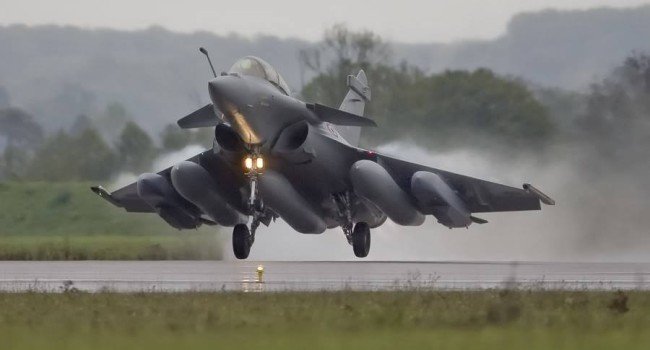
IAF to induct 5 Rafale fighters on 29 July in Ambala, their first mission could be in Ladakh

A Rafale fighter jet | Photo: Jasper Juinen | Bloomberg
New Delhi: The first five Rafale fighter jets would be inducted at the Air Force Station in Ambala on 29 July and their first mission could very well be in Ladakh where the Indian Air Force (IAF) is conducting Combat Air Patrol (CAP) to provide back up to the soldiers on ground engaged in a tense stand-off with China.

The IAF, in a statement, Monday said that after the arrival on 29 July, “efforts will focus on operationalisation of aircraft at the earliest”. A formal induction ceremony will be held in Ambala in the second half of August.

According to the contract signed in September 2016, 12 aircraft are supposed to be delivered every year.

French defence major Dassault Aviation, which is manufacturing the Rafale jets, had since October last year handed over to the IAF a total of nine aircraft. The 10th is undergoing acceptance trials by IAF pilots in France.

Four aircraft were to originally land in May, but got delayed because of the Covid-19 pandemic.

Once inducted, the Rafale with its cutting edge missiles will be the most modern and deadly fighter in this region.

“The target is to ensure that the Rafale is immediately operationalised. The IAF is already mission deployed in wake of the tensions at the Line of Actual Control. The aircraft is a big boost to the firepower capability and in a way a morale booster also,” a source in the defence establishment said.

We are deeply grateful to our readers & viewers for their time, trust and subscriptions.

Quality journalism is expensive and needs readers to pay for it. Your support will define our work and ThePrint’s future.

SUBSCRIBE NOW 

The IAF said that its aircrew and the ground crew have undergone comprehensive training on the aircraft, including its highly advanced weapons systems and are fully operational now.


Also read: All about Rafale fighters, the game-changing dream machines IAF will get tomorrow


Here’s how Army is getting 30,000 additional troops winter-ready in Ladakh

With thousands of tonnes of rations & special winter clothing, Army is busy making preparations for the additional soldiers moved to the LAC amid tensions with China.

An Indian Army truck on a Kashmir highway leading to Ladakh | Representational image | ANI

An Indian Army truck on a Kashmir highway leading to Ladakh | Representational image | ANI

New Delhi: The India-China disengagement along the Line of Actual Control (LAC) in Ladakh is proceeding at a slow pace and the Army is eyeing a long haul through the region’s bitter icy winter for the 30,000 additional troops moved there amid recent border tensions.

With the onset of winter in Ladakh just months away (October), the Army is busy making preparations to equip the additional soldiers with the right gear and adequate rations to deal with the tough conditions ushered in by the six-month cold season.

As many as 6,000 ALS trucks — the olive green vehicles that serve as one of the Army’s mainstays for transporting personnel and goods — are likely to be pressed into service to carry tonnes of rations and kerosene oil to Ladakh for winter stocking.

The estimates so far suggest that, apart from the usual supplies for soldiers permanently posted in the area, the Army may need to transport an additional 20,000 tonnes of ration and at least 15,000 kilolitres of kerosene oil, approximately, for the 30,000 soldiers, sources told ThePrint.

Furthermore, the sources said, the Army is looking to arrange additional sets of extreme cold conditional (ECC) clothing, and temporary shelters and tents.

A detailed plan for the movement of troops for various contingencies, including leave, is also being chalked out, keeping in mind the current Covid-19 protocol, the sources added.

The 14 corps, which usually serves at the LAC in Ladakh, has approximately 70,000 troops who also oversee the world’s highest battlefield at Siachen, among other areas.

We are deeply grateful to our readers & viewers for their time, trust and subscriptions.

Quality journalism is expensive and needs readers to pay for it. Your support will define our work and ThePrint’s future.

SUBSCRIBE NOW 

“This year, with the induction of additional troops, even their administrative requirements need to be catered for, which puts an extra load on the existing infrastructure,” a senior Army officer said.

The Army officer added that there is a large supply chain that underlies the transport of goods to the border. “This chain gets cut off during the winter due to heavy snowfall and extreme weather conditions, necessitating enhanced and advanced preparations during this period,” the officer said.


Also Read: Chinese threat is unlikely to go away. India needs big plans for LAC to save its land


Clothing and rations

Army sources said the harsh terrain and climatic conditions of Ladakh during the winter necessitate special clothing and shelters.

“Clothing similar to those issued to troops deployed at the Siachen glacier is being procured at a fast pace,” the officer quoted above said.

According to the officer, they were looking to procure around 15,000 sets of such clothing.

Asked how the estimates were arrived at, sources said not all soldiers are posted in forward areas, adding that they are also making other arrangements.

Around 2,000 sets of previously worn serviceable (PWS) clothing — usable clothing of troops who have been de-inducted from Siachen, usually given to soldiers at slightly lower altitudes — are likely to be readily available and more will be reconditioned for use, a second source said.

All reserves of clothing and tents, which are held in various depots specifically to cater to supply-chain disruptions, are also being released for use by the additional troops, the sources added.

Additional Arctic tents are being ordered, and “operational works stores” — stores used to create habitat, protective defences and bunkers and security fences, among other things — have been reprioritised and reappropriated from other locations within the command, the sources said.

Preparations have also been made for the transport of additional rations and fuel to the border.

Every soldier is authorised approximately 2.5 kg of rations per day. For 30,000 soldiers over 180 days or the six winter months, this could translate to approximately 13,500 tonnes, sources said. Additional special rations are authorised for troops in high-altitude terrain, which could add up to another 6,500 tonnes. The Army has also estimated an additional requirement of approximately 15,000 kilolitres of kerosene oil.

All the reserve vehicles in the command have been diverted to carry additional stocks to the border, and shortfalls are being made up by hiring civil transport, the sources said.

The sources added that both road axes in Ladakh — through Zojila and Rohtang — are being utilised for the supplies, both of which remain snowed in during the winter months.

Additionally, the second source said, all units moved in from peace locations have been asked to carry their reserve stocks with them.


Also Read: China Study Group, the elite Indian govt body that guides policy on ties with Beijing


Troop management

Amid the Covid-19 environment, sources said, managing leave and other movement of troops pose additional challenges. Accordingly, quarantine facilities at various transit camps have been established, they added.

“Increased convoys and additional civil vehicles are being planned. Additional sorties of transport aircraft and increased number of charter flights are being pressed into service. Talks to negotiate additional charter flights are in progress,” the first officer said, discussing some of the additional measures.

“Optimisation of Leh, Thoise and Kargil airfields is being carried out to speed up the turnover of troops,” the officer added.

Amid the tensions with China, the Army has already been equipped with additional sets of riot-control equipment, particularly because the current rules of engagement at the LAC do not allow firing.

A special session of the Defence Acquisition Council (DAC) Wednesday empowered the armed forces to go ahead with Rs 300 crore worth of capital acquisitions to meet emergent operational requirements, even as the military has been on a shopping spree over the past few weeks.

Among other things, the Army is planning to place orders for Heron surveillance drones and Spike anti-tank guided missiles from Israel.


Also Read: India now deals with China on ‘more equal terms’ politically, Jaishankar tells Rahul Gandhi


Indian warships conduct exercise with US Navy’s Nimitz, world’s largest aircraft carrierIndian warships conduct exercise with US Navy’s Nimitz, world’s largest aircraft carrier

The USS Nimitz | Photo: US Department of Navy

he USS Nimitz | Photo: US Department of Navy
New Delhi: Indian warships are conducting an exercise with the US Navy’s nuclear-powered USS Nimitz — the world’s largest warship — off the coast of Andaman & Nicobar Islands Monday and Tuesday, a development that comes amid tensions with China at the LAC in Eastern Ladakh.

The Navy’s exercise is on similar lines of another that it had carried out with the Japanese Navy last month.

The USS Nimitz, named after the US World War II Pacific fleet commander Chester W. Nimitz, is manned by around 6,000 naval personnel and carries nearly 90 aircraft, which include F/A-18F Super Hornets, F/A-18E Super Hornets and MH 60 helicopters.

The US aircraft carrier, along with its carrier battle groups, reached the Indian ocean through the Malacca Straits Saturday and is on its way to the Persian Gulf.

The Malacca Straits, a global choke point, is also a vital sea line of communication for China’s energy and trade resources, essential to keep its economy running.

Another US aircraft carrier, the USS Ronald Reagan, has also been present in the South China Sea. Reagan reportedly carried out exercises in the South China Sea earlier this month.


Also read: Chinese troops yet to return to pre-April positions, Army says LAC disengagement ‘intricate’

We are deeply grateful to our readers & viewers for their time, trust and subscriptions.

Quality journalism is expensive and needs readers to pay for it. Your support will define our work and ThePrint’s future.

SUBSCRIBE NOW 


The India-US exercise

The Navy’s Eastern Fleet, which had already been carrying out a five-day long exercise off the Andaman and Nicobar archipelago, has now sent some of its ships to collaborate with the USS Nimitz.

Both the forces will be working on Centrix (combined enterprise regional information exchange system), which is the common communication system fitted on all US naval ships to ensure secure and reliable communications and can’t be intercepted by any other forces.

The Indian Navy uses a separate communications system called the Composite Communication System (CCS).

The exercise will entail various coordinated exercises such as surface action, surveillance and anti-submarine drills to check the interoperability between the two navies and sharing of best practices.

Captain D.K. Sharma, a former Navy spokesperson, told ThePrint that the opportunities to operate with international navies are usually rare.

“The exercise is taking place at the right location and at the right time and this will send a strategic message to the adversaries,” Sharma said. “After the Eastern Fleet disengages, the Western Fleet should also conduct an exercise with the aircraft carrier as it crosses the Arabian Sea. Why not?”

India could also invite Australia for Malabar exercise

India is also considering inviting Australia for the Malabar exercise, which is scheduled to be held in August or September. However, a final decision on whether Australia will join India, US and Japan for the exercise is pending.

The Indian Navy also exercises with various foreign navies such as INDRA with Russia, KONKAN with the Royal Navy, VARUNA with French NAVY, AUSIndex with Australian Navy, Simbex with Singapore Navy, Slimex Sri Lankan Navy, in addition to Milan and CORPAT, which are multilateral exercises.


Also read: IAF gets night-flying capability at Leh for MiG-29s, force sees it as a ‘game-changer’


Mission 6G — time to lead Our possibilities rest in technology that provides 1,000 times more bandwidth than 5G

Mission 6G — time to lead

in www.arxiv.org

Lt Gen Shamsher Singh Mehta (retd)

The Prime Minister’s clarion call on Atmanirbharta has been interpreted in many ways. One obvious direction is 6G. It is time to step out of the followers’ and adopters’ mindset. 2G, 3G, 4G… 5G.

It is now time to lead: As with any strategic endeavour on a national scale, 6G will first have to find support among the political leadership and the technology champions in India. We have had space and nuclear programmes that have displayed our skill and resolve. Our next mission around 6G will have to move to a different level with full and enduring support. India cannot become Atmanirbhar by neglecting its intellectual capital. India has to invest in diverse fields. Telecom is the leading candidate. It is the super-charger for a digital and multi-trillion dollar economy.

The landscape for R&D in the telecom sector would demand incentivising locally developed technologies, nurturing innovation by start-ups, and developing and deploying technological capability in the digitisation of India. Enabling this will also require getting our youth to pursue education and research careers that will make the 6G mission successful. India’s fortunes to reap the possibilities to transform into a developed digitised economy may be resting on success in harnessing 6G. This is a strategic area with an all-encompassing impact on the economy, technology and national security. More devices (not just phones), in fact every machine, vehicle and human connected with 1,000 times more bandwidth than 5G and applications which were constrained by 4G and 5G will become capable of delivering services of every kind to consumer and business, big and small, thereby generating more wealth and wellbeing for all. Our track record of adopting, following, and catching up with the rest of the world and then scaling up to meet national coverage is passe.

The proposal here is to forge and lead the global research and development by providing anchorage in India. Time is right to build credible and sustaining partnerships with other leaders in telecommunications and computing technologies and join like-minded democracies to make 6G a reality.

Every disruption at the core has the seed of an audacious idea. We need to break free of scratching at the low end of the telecom value chain. The value will not be measured in terms of numbers of antennas, cellphone users, or data consumed and revenues generated but in the sheer magnificence of the applications, use cases and services that will drive the gig economy of tomorrow. Here are three representative examples.

Multi-function ubiquitous citizen devices: The 6G phone of the future will serve as a consumer-services node with sensors and artificial intelligence capabilities. Potentially, it will provide high-fidelity information on personal health indicators, micro-pollution and toxicity levels, quality of food, and at home, work and play an immersive interactive experience with devices, gadgets and systems. Potentially for India, this will see the emergence of simple, easy-to-wear-and-carry devices with a huge set of digital capabilities. This will help the paramedics, educators and agro-technicians to jumpstart the village ecosystems with little or limited need for on-site presence of doctors, professors and agro-experts.

Environmental resource mapping and pervasive collection of data: Research also shows that devices and phones will be able to help build a level of granular visibility into the land, water and underground resources of India like never before. Apart from providing services to the user of a phone, the device acts as a sensor and data collector and aggregator on a 24×7 basis, backhauling all the intelligence into the national environmental repository for generation of live and real-time information and intelligence for use by farmers, weathermen and field staff.

Optimising mass public transportation through micro-location and micro-scheduling: The 6G phones, devices and systems of the future will also provide precise position location accuracy and ranging that will let us know exactly where we are, down to the centimetre. For India, such an enabling set of technologies will bring manifold utilisation of scarce rail, air and road networks and make mass transportation far more efficient; artificial intelligence (AI) and massively parallel computing architectures will help solve transportation and scheduling operations research problems.

The three musts: One, this effort will have to be government-led to bootstrap new areas of R&D in AI, materials, radio frequency, biological sciences, computer science and telecommunications. As a modest start, this seeding of R&D is best balanced between the universities, government labs and the Indian private sector with a previous record of R&D success. Two, governance of this national mission will need to look at a model outside of the government; Mission 6G will have to remain unfettered by the traditional bureaucratic processes and systems and will have to be enabled by a legislation which frees up entrepreneurial energies, mission management capacities and resource mobilisation mechanisms from existing governmental controls and procurement practices. An outreach to the best minds around the world, with attractive remuneration models, to lead the R&D sub-missions will help. Three, innovation in funding and supporting this massive investment vehicle(s) will have to be worked out outside of the outlays — the expected spend just to arrive at the initial standards and architectural components of the concept will be in the range of a few billions of dollars.

Way to go

  • Indicate the intention for pursuit of 6G by announcing a long-term vision, a multi-year (multi-decade) plan, strong investments, and minimal bureaucracy. These new tech initiatives (6G/telecom, AI, quantum computing etc.) should come directly under the PMO (like the space and nuclear programmes).
  • Execute the new electronics manufacturing policy as stated in the India Trillion Dollar Digital Opportunity document (2019) of the Ministry of Electronics and IT.
  • Raise our ambition to not just providing leaderships for the Googles and Microsofts of the world, but creating them in our own Indian innovation eco system based on the strong foundation of ‘Talent, Technology and Trust’.

We need to replicate the space and nuclear technologies mission experience which achieved self-reliance and self-confidence or Atmanirbharta. Technology leadership for a better world should be our gift to the world and to ourselves. Leadership in 6G may be the best way to celebrate 2047, our centenary of Independence.

What Mission 6G does to the future of warfare, and by implication national security, is for another day.


China-Iran tango should worry India

The China-Iran tie-up underscores all that is wrong with India’s diplomacy. India looks increasingly like a beached whale, while an exciting, transformative geopolitical landscape is appearing in the Indian Ocean. China sees seamless possibilities in strategic partnership with Iran.

China-Iran tango should worry India

Crucial aid: Iran’s proposed $400-billion pact with China envisages hundreds of development projects.

MK Bhadrakumar

Former Ambassador

Iran makes a difficult partner for a dominating big power but is a natural ally in an equal relationship. What Iran cherished most about India was its strategic autonomy and independent foreign policy. When India changed, the relationship changed. Ironically, the best years of that relationship straddled the commencement of India’s ties with Israel and the turnaround in US-Indian ‘post-Soviet’ relationship. But Tehran never bore a grudge. The mutual trust remained intact so long as we took care not to trample upon Iran’s core interests or let predators come down into town to prey — which Tehran reciprocated. Those were halcyon days.

Therefore, India should try to understand the impending 25-year cooperation agreement dubbed Sino-Iranian Comprehensive Strategic Partnership. But there’s much more to it than meets the eye. Indian analysts are not even aware that Beijing is also negotiating comprehensive partnership agreements with Saudi Arabia and the UAE, Iran’s archetypal rivals.

Han Zheng, politburo standing committee member of the Chinese Communist Party and senior vice-premier is reportedly handling the partnership negotiations with Saudi Arabia while Yang Jiechi, politburo member who also holds the key position of director of the office of foreign affairs of the party’s central committee, is steering negotiations with the UAE. To be sure, Beijing attaches the highest importance to its partnerships with Riyadh and Abu Dhabi.

China has no ‘favourites’ in the region. Congruence of interests, rationally determined from long-term perspective, provides the bedrock of China’s regional policies. China pursues a balanced approach to the Persian Gulf region. Saudi Arabia was its chosen partner to build China’s strategic oil reserve. But the UAE is the frontline of China’s expanding influence in the region. The UAE fascinates Beijing not only as a transport and trade hub that links east and west, but also as aspirant to a brave new world.

The UAE state-run telecommunications companies have awarded 5G cellular network contracts to Huawei. The biggest Covid-19 testing facility outside China is located in Abu Dhabi, a joint venture between Chinese genomics company BGI and the UAE’s artificial intelligence group G42, which is linked to the Emirati royal family.

Turn to Iran, which is in economic distress today due to the US sanctions and the pandemic, and stands to gain if it integrates into the Belt and Road Initiative (BRI). The proposed $400-billion agreement with China envisages hundreds of development projects. It addresses Iran’s growing financial and infrastructure needs, and serves the Chinese companies and tech giants’ commercial interests. The capital injection that BRI provides will help fill Iran’s technological development gap as well as provide a new avenue of growth for its transportation system, oil, gas and petrochemical sectors, and ports and industrial zones.

China sees seamless possibilities in the strategic partnership with Iran. It locks in a cheap oil supply and vast natural resources, and an untapped market. In this geo-strategic balancing, both benefit. Succinctly put, China’s Iran policy is influenced by its growing footprint in the Persian Gulf, where Beijing is carefully building a presence based on diversified relationships with regional actors, and with an eye on its global confrontation with the US.

Even if only a fraction of what is envisaged under the proposed Sino-Iranian agreement comes to fruition, it poses a lethal challenge to the Trump administration’s ‘maximum pressure’ campaign towards Tehran. Make no mistake, Beijing is remarkably successful in leveraging economic influence in statecraft. And the UN embargo on transfer of military technology to Iran is expiring in October.

Iran’s induction into BRI connects it with CPEC. This will strengthen CPEC’s resilience and change the trajectory of Iran-Pakistan ties. Last week, China initiated a regional forum with the Central Asian region called ‘China+Central Asia’ (C+C5). The C+C5 ministers — Kazakhstan, Kyrgyzstan, Tajikistan, Turkmenistan and Uzbekistan — agreed at their videoconference on July 16 to ‘promote the alignment of BRI to build interconnected partnerships, deepen pragmatic cooperation in various fields, carry out effective investment cooperation, and jointly promote the recovery and development of economy.’

A BRI economic corridor connecting China with Iran across the steppes could significantly ease China’s ‘Malacca dilemma’. However, the most creative part of China-Iran strategic partnership will be the use of yuan in their planned commodity transaction payments. It brings the partnership out of the purview of Western banks and US sanctions.

When an energy superpower takes to yuan currency transactions with the world’s number one energy guzzler, it is most certainly big-time news. ‘Petrodollar’, pillar of Western banking system, may get shaky, which has implications for the US economy. Unsurprisingly, Washington is desperate to get Tehran to the negotiating table. A spate of bomb explosions in Iran recently hints at US covert operations to pile pressure.

The Sino-Iranian saga underscores what is wrong with India’s diplomacy. In 2016, PM Modi and President Xi Jinping visited Tehran to reset their countries’ ties in the wake of the 2015 Iran N-deal that lifted UN sanctions. Chinese diplomacy since raced ahead and India is a dot on its rearview mirror. This happened while India was transitioning as a quasi-ally of the US, and buying up the dream stuff — the Ratnagiri project, et al — that America’s regional allies were merchandising. India looks increasingly like a beached whale, while an exciting, transformative geopolitical landscape is appearing right in the Arabian Sea in the Indian Ocean. India should be extremely wary of taking yet another audacious leap into the dark — in the South China Sea.


China’s hierarchy of nations The ‘new model’ is about getting the US to accept China as an equal

China’s hierarchy of nations

Manoj Joshi

Distinguished fellow, observer research foundation, New Delhi

The talks on restoring status quo ante in eastern Ladakh have yet to yield significant results. There has reportedly been disengagement in the Galwan area, but the more serious Pangong Tso and Depsang incursions have yet to be terminated.

Meanwhile, India must grapple with the consequences of the collapse of the regime that largely maintained peace and tranquility along the Line of Actual Control (LAC) and possibly its larger relationship with its huge northern neighbour, China.

Given the asymmetry of the terrain and logistics, we need to ensure that there are no repetitions of the Chinese moves that have taken place in the recent months. Stopping them from intruding into Indian territory is infinitely more preferable, and doable, than trying to uproot them from the positions they have occupied. This has been the long lesson the country has learnt since 1951. Meanwhile, the bigger challenge is to figure out the new trajectory of our relations with China.

First, we should try to figure out why the Chinese have done what they did. It could simply be a bit of Covid-19 opportunism — after all, China, the first country to be infected, has also successfully pulled out of it and has got its economy going again. As in the case of the Global Financial Crisis (GFC) of 2008, its power relative to that of the others could grow in the coming period.

It could also be a consequence of the astounding abandonment of global leadership by the US generally, and more specifically during the Covid crisis. The chaos and confusion in the US is a perfect opportunity to be exploited. More so because the country is up for elections this year and the incumbent President is hitting out blindly as he senses he may lose to his Democratic challenger.

This could explain their simultaneous moves across their periphery — in the South China Sea, with Japan in the East Sea, raising the eastern Bhutan claim, the crackdown in Hong Kong and the actions in eastern Ladakh. This is a perfect moment for staking out their primacy in Asia. Kurt Campbell and Mira Rapp-Hooper argue that the foreign policy of restraint introduced by Deng Xiaoping is at an end. ‘China is done biding its time’ is the suggestive title to their recent article in Foreign Affairs.

The Chinese are driven by a sense of history, and they see their dominance as the natural order of things. Their view of the world is that harmony is a consequence of every country accepting its place in a system, which is hierarchical. This was perhaps best put in their White Paper on Asia Pacific Security Cooperation in 2017, which observed that ‘Major countries should treat the strategic intentions of others in an objective and rational manner… (while) small and medium-sized countries need not, and should not, take sides among big countries.’ In the document, China listed four ‘major’ countries in a hierarchical manner — the US, Russia, India and Japan. Indonesia, Vietnam, Pakistan, or Australia did not figure on the list.

The first thing that Xi Jinping did when he came to power was to talk of a ‘New Model of Great Power Relations’, a kind of code to get the US to accept a sort of a condominium or a ‘group of two’ (G2) arrangement. This proposal began to do the rounds in the US following the GFC, with people like Zbigniew Brzezinski and C Fred Bergsten advocating it.

But the Chinese misread the American mood and Obama was cold to the proposal when Xi brought it up at the Sunnylands summit in 2013. The New Model was all about getting the US to accept China as an equal which, in turn, would signal an acceptance of Chinese dominance in the western Pacific. Instead the US began to talk about the ‘pivot’, which later became the Indo-Pacific policy.

Though it spoke of a new model of major power relations, the Chinese were only thinking of the US, and most certainly not India. As a large and populous country, we are a bit of a conundrum for China. Where could we figure in the hierarchy? Besides, we have the economic and military potential to match up to, or even beat China.

So, Chinese policy has been concentrated on containing India’s rise however it can. Formally, Beijing professes friendship and cooperation with India, but in practical terms, all it has needed is a Pakistan to keep us off balance. Our own policy of relentless hostility towards Islamabad, of course, aids this mission. And our incompetence with neighbours like Nepal and Sri Lanka compounds our problem.

As of now, we are only a potential equal. China’s economy is nearly five times the size of India’s, and its military much more powerful. They could yet overreach and crash, but let’s not depend on that and work at some self-help.

The challenge for Indian policy is to be able to reduce these asymmetries. This is not something a friendly Uncle will help us do — we need to relentlessly grow our economy, enhance our diplomatic performance and be far more focused. This cannot happen overnight, or even in one prime ministerial term. It requires systematic short to medium-term planning and effort, beginning now. As our trendlines start arching upwards, we will get the payoffs in the form of better Chinese behaviour on our borders.