A Junior Commissioned Officer (JCO) was today killed in fresh shelling by Pakistan troops along the Line of Control (LoC) in the Nowshera sector of Rajouri district.
According to official sources, Pakistan resorted to unprovoked ceasefire violation using small arms at Khanger, Kalsian and Bhawani along the LoC.
“Our troops responded to the enemy fire. In the incident, a Naib Subedar was critically injured and later succumbed to his injuries,” said Lt Col Devender Anand, PRO (Defence), Jammu.
The deceased soldier was identified as Naib Subedar Rajwinder Singh, a resident of Goindwal Sahib village in Amritsar’s Khadoor Sahib tehsil. He is survived by his wife, a son and a daughter.
This is the eighth casualty due to shelling in Poonch and Rajouri over the past three months
A way forward could be to move beyond the concept of LAC as such in the areas of standoff and work on a concept of buffer zone in some areas that are without human population or obvious natural geomorphological features. This would mean going beyond the traditional ‘border line’ approach to a method of delimiting the disputed ‘border belt’.
Core Issue: How did the departure from the India-China agreements and understandings occur?
MK Bhadrakumar
Former Ambassador
The remarks by External Affairs Minister S Jaishankar in an interview to a news portal last week regarding the standoff with China bore the sweet scent of rain on parched earth. His emphasis that the government is looking for a solution through diplomacy comes in bleak circumstances.
For, the one area where the Indian and Chinese narratives seem to converge is that a stalemate has developed in the military standoff in eastern Ladakh that might continue into the winter. A race of attrition apparently lies ahead. Therefore, the EAM’s remarks are reassuring. A military option doesn’t really exist, given the state of the Indian economy, the raging pandemic and the great suffering in our country. The best are lacking conviction and the worst are full of passionate intensity.
The EAM pointed out that when it comes to finding a solution to the standoff, this must be ‘predicated on honouring all agreements and understandings. And not attempting to alter the status quo unilaterally.’ He could have framed it differently — that status quo ante must be restored, territorial sovereignty is non-negotiable and so on. But he chose not to. The EAM, instead, approached the paradigm from a creative angle.
This is important since, according to reports, he is likely to meet with his Chinese counterpart Wang Yi, within a fortnight in Moscow. And our Russian friends are reportedly setting up other high-level meetings at the political level in the period ahead, including possibly a summit.
The core issue here is: how did the departure from agreements and understandings occur? We tend to chalk up early May as the departure point when the ground beneath the feet began shifting. Per Chinese narratives, though, the departure occurred somewhat earlier and on multiple templates.
The Chinese side holds the view that the basic ‘consensus’ reached at the two informal summits between President Xi Jinping and Prime Minister Narendra Modi — that neither side regarded the other in adversarial terms — was side-stepped, the implication being that Indian diplomacy careened away in a direction with a pronounced anti-China orientation displaying antipathy or animus.
In this context, the EAM’s remarks are particularly relevant when he says that India takes a clinical view of its own interests and does not get entangled in the discords of others — while referring to the US tensions with China. The EAM also emphatically stated elsewhere in the interview, ‘India is and will always be an extremely independent polity. The manner in which it pursues its interests will reflect that basic character.’ This important statement should allay Chinese apprehensions.
Meanwhile, another template pertains to India’s unilateral moves in August last year when it annulled Article 370 of the Constitution, ending the autonomy of J&K and splitting J&K into two entities to bring them directly under the jurisdiction of the Central government.
Of course, we also drew up a new map showing areas of Aksai Chin (which is under China’s actual control and where British India never exercised its jurisdiction) as part of Ladakh. Beijing regards these unilateral Indian moves on the ground and on the map as a violation of the political consensus between the two countries.
Indeed, Beijing robustly protested that India has unilaterally changed the status quo, but Delhi disregarded it. In the Chinese narrative, India’s move to change the status quo in Ladakh obliged the PLA to take countermeasures, while taking into account the Indian Army’s infrastructure build-up near the LAC in eastern Ladakh. For sure, in the prevailing hyper-nationalism endemic to both countries, the border issues touch sensitive chords of national psyche and impact the trajectory of the bilateral relationship.

Clearly, there has to be sincerity of purpose and a need to approach the political settlement of the border issues with realism and a sense of urgency. Needless to say, an unemotional view of the northern border is needed. China never accepted the LAC under the 1993 agreement either on the map or on the ground in eastern Ladakh.
Equally, the Chinese claim line of 1959 — which is based on the McCartney-MacDonald Line that British India presented to the Chinese government in Peking in 1899 with a diplomatic note and which they never repudiated — is unlikely to be given up. That claim line safeguards the security of the Chinese Highway 219, vital for linking Xinjiang and Tibet, and for an effective control over Tibet.
The core issue when it comes to disengagement, which is an urgent necessity, is the Chinese contention that after the 1962 war, whereas the PLA withdrew from its claim line in Ladakh by 20 km with a view to creating a demilitarised zone, the Indian Army has since been incrementally occupying that territory, and, therefore, India needs to vacate that territory. We, of course, prefer to affirm by our 1993 perception of the LAC in eastern Ladakh (although China never accepted such a line on a map or on the ground).

Conceivably, a way forward could be to move beyond the concept of LAC as such in the areas of standoff and work on a concept of buffer zone in some areas that are without human population or obvious natural geomorphological features.
This would mean going beyond the traditional ‘border line’ approach to a method of delimiting the disputed ‘border belt’. This seems to be one realistic way the disengagement can be completed, and peace and tranquility ensured in eastern Ladakh on a sustainable basis.
Suffice to say, the subtle alchemy of the border standoff couldn’t have been captured more succinctly than in EAM’s exhortation that we need ‘honest conversations… among Indians and between India and China. That is why this relationship requires both a strategy and a vision.
Chamandeep, whose father was with the Indian Army, was born in Punjab and attended a military school in India for 12 years.
Kolkata: Featuring of a Sikh soldier on the homepage of the British Army website has gladdened Sikhs, many of whom are posting the link on their Facebook pages.
“The Sikhs, wherever they go, leave a mark by their good work. Chamandeep’s story also shows how versatile the community members are,” said Jagmohan Singh Gill, Punjabi Sahitya Sabha chief.
“Sikhs have been an integral part of the British Army. It is good to see the story of a Sikh soldier on the British Army homepage,” said Bhupinder Singh Bashar, a poet. — TNS
PM Modi lauds brave Army dogs Sophie, Vida Urges citizens to adopt dogs of Indian breed
Prime Minister Narendra Modi at his monthly radio address “Mann ki Baat” on Sunday lauded the country’s canine brigade and specifically mentioned about two dogs — “Sophie” and “Vida”. The two brave dogs were awarded the Chief of Army Staff’s Commendation Cards on August 15.
Sophie and Vida received this honour because they performed their duties diligently while protecting their country, the PM said.
Military sources said Vida, belonging to an Army dog unit under Udhampur-headquartered Northern Command, was instrumental in the timely detection of five mines and one grenade buried underground, preventing possible casualties and injuries to soldiers.
Sophie of the Special Frontier Force (bomb disposal squad) saved lives by sniffing out the presence of initiator/accelerant which could have been hastily used to fabricate an IED (improvised explosive device), they said.
“Such canines have played a very important role in thwarting numerous bomb blasts and terrorist conspiracies,” PM Modi said.
In the past one year, Army dogs have contributed to 53 successful missions for the Indian Army, including tracking of terrorists and recovering individuals from snow-bound areas. The PM also exhorted those planning to raise a pet dog to adopt one from the Indian breeds, saying they are “very good and capable”. — TNS
Army Air Defence changes Raising Day Will now match with the date the unit was raised by the British
Eighty years after the first unit of the Army Air Defence (AAD) was raised during the British rule in Mumbai, the Corps of the AAD has decided to change its Raising Day to match it with the date the unit was raised by the British.
The AAD will now observe its Raising Day on September 15, instead of January 10.
It was on January 10, 1989, that the Corps AAD was bifurcated from the Corps Artillery and was formed as a separate unit.
In July 1940, Sir Claude Auchinleck, commander-in-chief of the British Indian Armed Forces, took a decision to raise anti-aircraft units in India with Indian troops.
On 15 September, 1940, a group of British officers under Major RA Ronald raised the 1st Technical Training Battery. This group formed the nucleus of the 1st Indian anti-air regiment at Colaba, Mumbai. Immediately, a unit was dispatched to defend oilfields in Digboi, Assam. The remaining troops sailed to Malaya and Singapore to protect assets against the anticipated Japanese onslaught.
In the last days of the World War II (1939-45), the British army overran Burma in May 5, 1945. The Indian anti-aircraft regiments played role in keeping the air space clear and won gallantry awards. The heaviest concentration of the anti-aircraft guns in the British Army outside Britain was with the Indian command.
The AAD had played an active role during the 1965, 1971 and Kargil wars. — TNS
Former President Pranab Mukherjee dies at 84 Son announces death in a tweet
Former President Pranab Mukherjee has suffered a septic shock in the course of his lung infection treatment.
Tribune News Service New Delhi, August 31
Former President Pranab Mukherjee died at 84 on Monday, his son announced on Twitter.
“With a heavy Heart, this is to inform you that my father Shri Pranab Mukherjee has just passed away inspite of the best efforts of doctors of RR Hospital & prayers,duas & prarthanas from people throughout India ! I thank all of you. His son, Abhijeet Mukherjee, said.
Army Research and Referral Hospital said in a bulletin on earlier on Monday that the ex- President’s condition has declined since yesterday.
“There is a decline in the medical condition of Shri Pranab Mukherjee since yesterday. He is in septic shock due to his lung infection and is being managed by team of specialists. He continues to be in deep coma and on ventilator support,” said doctors.
Mukherjee was admitted to the Army’s Research and Referral Hospital in Delhi Cantonment on August 10 and was operated for removal of a clot in the brain the same day.
He had also tested positive for COVID-19.
He developed a lung infection later and is being treated at the hospital.
Pranab Mukherjee was the 13th President of India from 2012 to 2017.
China violates Ladakh truce, tries to change status quo near Pangong Tso lake; India pre-empts activity
Fresh tensions have erupted between India and China. This time at the South Bank of Pangong Tso, a 135 km glacial melt lake, along the Line of Actual Control (LAC) in Ladakh.
The incident occurred on the night intervening August 29 and August 30, the Ministry of Defence said on Monday morning.
“The Peoples Liberation Army carried out provocative military movements to change the status quo (at the LAC). Indian troops pre-empted this activity on the Southern Bank of Pangong Tso and undertook measures to strengthen our positions and thwart Chinese intentions to unilaterally change facts on ground,” read the MoD statement.
Brigade Commander-level Flag Meeting is in progress at Chushul along the LAC to resolve the issues.
The Army has so far not responded to questions on injuries or any casualties in the incident. Sources, however, said additional troops had been rushed to the spot and the surrounding areas.
This action by the PLA troops violated the previous consensus arrived at during military and diplomatic engagements following the standoff in Eastern Ladakh since May this year.

The Indian Army is committed to maintaining peace and tranquility through dialogue, but is also equally determined to protect its territorial integrity, said the MoD.
Since May, there had been clashes at Galwan Valley and North bank of Pangong Tso. The South Bank of the lake has multiple Indian Army posts. The one at Thakung is smack along the LAC. From Thakung a route leads to Chushul.
If India wants to tire China out on LAC, it must build fortresses at these pressure points
File image of Indian soldiers in Ladakh (representational image) | By special arrangement
Keeping in view the differential in technological military capabilities between the Indian Army and China’s People’s Liberation Army, and the positional terrain advantage secured by the latter through its preemptive manoeuvre, it is a prudent strategy for India to persist with military and diplomatic engagement through an indefinite face-off to achieve the political aim — restoration of status quo ante April 2020. Even a strategy to achieve a compromised political aim — status quo ante with buffer zones where no patrolling, deployment or development of infrastructure will be carried out — would be pragmatic.
The logic of this strategy is simple — tire the Chinese out because it is difficult to sustain an indefinite large-scale deployment in this difficult terrain with extreme weather in winter. However, the danger is that if the Chinese come to sense India’s strategy, they may raise the ante and attempt to seize Daulat Beg Oldi Sector and areas to the north-east and east of Pangong Tso.
This strategy can only succeed by maintaining coercive military pressure, and not without “exerting any military pressure” as spelt out by the de facto official spokesperson quoted in a recent report in The Indian Express. I am sure this relatively junior government/military official has let his imagination run wild. This is almost signalling defeat and accepting fait accompli. I sincerely hope that this is not the view of the Narendra Modi government and the military hierarchy.
As per The Indian Express report on the situation at LAC, a government official was quoted as saying, “New Delhi has decided to stick to its strategy of ‘incremental change despite slow progress’ while pressing for the end-goal, the restoration of status quo ante as of April. It has also ruled out application of any kind of military pressure against China as an option, so as to avoid any inadvertent escalation.”
It is unusual and disturbing that an anonymous “government official” is holding forth on national security strategy in a casual manner while the Prime Minister, Defence Minister, National Security Advisor, Chief of Defence Staff and the service chiefs remain silent. The only charitable explanation could be that these statements are part of strategic deception. But if that is the intent, such statements must be made formally at the Defence Minister/NSA/CDS level.
We are deeply grateful to our readers & viewers for their time, trust and subscriptions.
Quality journalism is expensive and needs readers to pay for it. Your support will define our work and ThePrint’s future.
At the Friday meeting of the Working Mechanism for Consultation & Coordination on India-China Border Affairs, both sides agreed to hold further talks at the level of Corps Commander. Status quo continues to prevail at Depsang and north of Pangong Tso with no progress on disengagement. At Hot Springs and Gogra, the disengagement is not as per the agreement reached during earlier talks. It is only in the Galwan Valley that the troops have disengaged and a buffer zone of 4 km has been created.
On Tuesday, Chinese Foreign Ministry spokesperson Wang Wenbin highlighted the four rounds of Corps Commander-level talks and three meetings under the Working Mechanism for Consultation and Coordination on China-India Border Affairs. Wenbin said, “As border troops have disengaged in most localities, the situation on the ground is deescalating and the temperature is coming down.” The statement indicates that China does not visualise any further disengagement.
Strategic and tactical significance of areas of intrusion
The terrain of Eastern Ladakh is unique. Up to Leh and 150 km to the east, the terrain is extremely rugged with narrow valleys and surrounding hill ranges, varying in height from 15,000 to 23,000 feet. This topography also prevails up to 130 km north of Pangong Tso along the Shyok River up to Depsang plains and east of this line for 60-80 km. Beyond these areas is the extension of the Tibetan plateau. The valleys become broader, the base height rises to 14,000-15,000 feet, and surrounding hill ranges are a mix of rugged and relatively gradual terrain. The latter terrain is only 2,000-3,000 feet higher than the valleys and after reconnaissance, it can be negotiated by tracked and high-mobility vehicles.
Since peace prevailed along the LAC, it was not defended like the Line of Control (LoC), but only policed by the Indo-Tibetan Border Police (ITBP). The main defences of 3 Infantry Division were based on the Ladakh Range and Pangong Range in the Indus Valley and Chushul bowl, respectively. The DBO Sector being a plateau, the defences are based on relatively higher features. The Galwan Valley was only policed by the ITBP.
The main defences are based on the sound principle of dominating heights and convergence of avenues of approach. This left a forward zone of 10-80 km to the east, which was policed by the ITBP and kept under surveillance.
In the event of a war, this area was to be dominated by selective defensive/delaying positions and mechanised forces. While the bases of the formations are well to the rear, sufficient force was maintained near main defences for preemptive tasks on and across the LAC, particularly in areas of differing perceptions. However, we failed to exercise this option.
The LAC was based on the positions held by the rival forces at the time of the 1993 agreement. China’s 7 November 1959 assertion (also known as 1960 claim line) north of Pangong Tso and in Depsang Plains was further west of the LAC by 10 and 20 km, respectively. The alignment of the 1959 claim line had been carefully planned by the Chinese. It is tactical in nature. It allows the PLA to cut off our forward deployment in all sectors and completely isolate all sectors from each other, particularly DBO Sector.

The preemptive intrusions and concentration of troops at Depsang, Galwan river, Hot Springs-Gogra-Kongka La and north of Pangong Tso places India at a disadvantage in a war. The DBO Sector is likely to be completely isolated by an offensive in Galwan River valley and the bottleneck area at Burtse. Hot Springs-Gogra-Kongka La area can be cut off at Phobrang by an offensive from Finger 4 and Ane La. This places us at the risk of losing our entire territory east and north-east of Pangong Tso along with the DBO Sector. Also, our major riposte options get restricted to Chushul Sector,Indus River Valley Sector and Chumar Sector.
The strategy should be to strive for status quo ante with or without buffer zones with an indefinite “face-off” while simultaneously remaining poised with “fortress defence” of the areas likely to be isolated and attacked, and by maintaining a potent counter-offensive capability.
In execution, it implies fortifying the DBO-Galwan Sector, Hot Springs-Gogra-Kongka La-Tsogtsalu Sector and Marsimik La-Ane La-Phobrang- Fingers 1-3 Sector with overwhelming resources that must have an inbuilt tactical counter-offensive capability. The defences and habitat should be of a permanent nature. These sectors should be prepared to fight even when isolated. Main defences on Ladakh and Pangong Ranges must continue to be manned. Our reserves must be arrayed for an operational-level counter-offensive in Chushul/Indus River Valley/Chumar Sectors.
India’s armed forces have the capability to execute the above strategy, which, apart from tiring the PLA out, caters to its escalation while maintaining a responsive or self-initiated capability for an operational-level offensive. It would be prudent to formally inform the nation about the essentials of our strategy rather than let unnamed officials run riot with their imagination.

Lt Gen H S Panag PVSM, AVSM (R) served in the Indian Army for 40 years. He was GOC in C Northern Command and Central Command. Post-retirement, he was Member of Armed Forces Tribunal. Views are personal.
Army units that make military videos public, even unknowingly, won’t get citations or awards
Representational image for the Indian Army | Photo: ANI
New Delhi: Units in the Army found guilty of letting military videos pass into the public domain — even unknowingly — without proper clearance will be debarred from being granted unit citations, while their troops will also not get any military awards, ThePrint has learnt.
The new rules have been issued by the Army to certain formations as part of its new policy on the use of social media platforms and mobile phones, to control the leakage of critical operational information.
The fresh advisory comes after the Army banned 89 social media applications, including Facebook and Instagram, for its personnel. It also issued strict guidelines for the use of social media and smartphones, which stated that they would be monitored by way of surprise checks, and that strict action would be taken against violators under the provisions of the Indian Penal Code, Official Secrets Act, Army Act and IT Act.
As first reported by ThePrint, the Army had said Facebook accounts of all personnel should be deleted, not just deactivated, by 1 June, and that people using Facebook or other banned sites after 15 July will be reported.
Army sources, however, said the communication regarding the new rules could be from a regional command for the formations under it.
According to the new advisory, a senior Army officer said, formations have also been asked to include this parameter when they vet unit citations and individual awards.
We are deeply grateful to our readers & viewers for their time, trust and subscriptions.
Quality journalism is expensive and needs readers to pay for it. Your support will define our work and ThePrint’s future.
The decision is said to have been taken due to earlier incidents when crucial operational information, even from forward bases, made its way to social media.
“Most such videos are unregulated and can give out critical and confidential operational information to enemy agencies. The strict guidelines have been promulgated to check this,” the Army officer said.
The new rules state that formations and units will select a person who will be responsible for all photos and videos for operational events, and will be maintaining a record of all such footage.
Multiple other sources confirmed that the new advisory states that photographs or videos will not be recorded on smartphones, and only designated cameras will be used.
The advisory also mandates that all such pictures or videos should not be shared on social media or transferred to one another via messaging services, and only footage that has been officially approved would be released in public.
“We have been told that in case any video footage or other crucial operational information gets leaked, even unknowingly, into the public domain, a Court of Inquiry would be ordered against those responsible and the defaulter would be subjected to stringent action,” the officer quoted above said.
ThePrint has reached Army spokesperson Colonel Aman Anand through a text message for an official comment. This report will be updated when he responds.
‘Troops will act to protect honour of the unit’
The move has got mixed responses from within the service.
Officers said it is a good step because a lot of critical information often gets leaked, which may be detrimental to the operational requirements.
“Everyone will be conscious of his responsibility to uphold the izzat (honour) of the unit,” the senior officer quoted above said.
A second officer ThePrint spoke to, however, said holding a unit responsible for the act of one individual who may not even be part of the unit but may be in the area needs a rethink.
Earlier moves
The Indian armed forces, particularly amid the stand-off with China at the Line of Actual Control in Ladakh, have been exercising stringent caution on allowing personnel to use social media.
The Army periodically conducts cyber security exercises to assess its operational preparedness in the cyber security domain, one of which started in April this year.
Earlier this year, the Navy, after a ‘spy ring’ was busted last year, banned and restricted 85 applications, including Facebook, Instagram, WeChat, Viber, Tumblr, Reddit and Truecaller.
The Indian Air Force has recently advised its personnel to withdraw themselves from WhatsApp groups by the end of July, leading IAF officers to leave those with their course-mates and others within the service.
The Army’s ban on social media was challenged by an officer in the Delhi High Court, which is still hearing the matter.
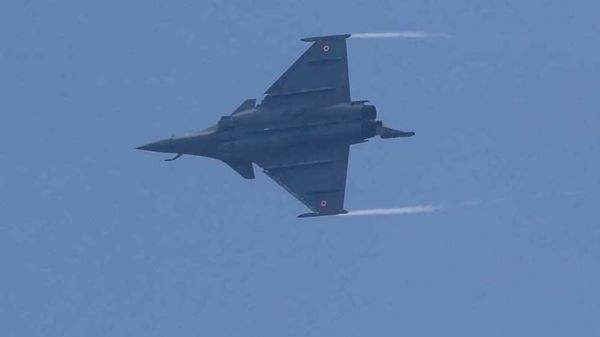
The IAF’s Rafales are finally home. In the middle of an unprecedented face-off against China, induction of a new fighter – the first in over twenty years – is good for Indian military capability as well as morale. A week before the jets’ scheduled arrival came news that the jets will be equipped with Sagem ‘Hammer’ standoff strike weapons in view of the border crisis and the fact that the Rafales might have to prepare for operations sooner than normal. This decision, although certainly rushed, makes sense.
The IAF seriously considered the Hammer as part of the Rafale weapons package, but eventually elected to go with the cheaper Israeli SPICE system to serve as the Rafale’s principal tactical standoff weapon, a decision driven entirely by cost. Time was not a factor when that choice was made, and the Air Force planned to integrate, test, and certify the Rafale-SPICE combination in-country, significantly cheaper than getting the French to do it.
Now faced with an emergent situation in the North, just as the new ‘silver bullet’ of the fighter fleet arrives in-country, the luxury of a leisurely integration programme cannot be afforded. The only system equivalent to the SPICE (better in some respects) already integrated and ready to use with the Rafale is the Hammer, forcing the IAF’s hand. Even so, a case can certainly be made that the SPICE and Hammer are sufficiently different in propulsion, guidance and effects that both could be used alongside each other moving forward. The biggest problem with the Hammer story is that it highlights the kind of penny pinching that constrains comprehensive capability accretion, even in mammoth multi-billion dollar deals. If not for the China situation, the Rafales would have arrived without a tactical standoff strike weapon.
But the Hammer is only the latest and most high profile case in a frenzy of ‘emergency procurements’ kicked off by the Ladakh crisis. This buying spree has once again laid bare the abysmal performance of India’s defence acquisition system. The word ‘system’ is itself a misnomer, because if the Defence Ministry’s byzantine procedures and processes are not systematic at all, they are a system designed to deny outcomes. Far from enabling the men and women in uniform to do their jobs, defence procurements keep them hanging, withholding everything from fighter jets to simple helmets.
Embarrassingly, these emergency acquisitions are being passed off as a virtue, spun as a way to get the armed forces what they need without red tape. They are not. Unshackling defence preparedness from a moribund process should be the norm, not celebrated as an exceptional achievement every time a military crisis exposes yawning gaps in readiness and capability.
Meanwhile, there is little incentive for the private sector to enter this space and deal with a Ministry that builds attack helicopters without missiles, commissions ships without towed sonars, fails to procure air-defence missiles for twenty years, and cannot execute a government-to-government deal with one of India’s oldest defence partners. Even without the structural issues in defence procurement, the simple fact is that Indian procurements, whether emergency buys or the routine perennially delayed kind, are generally not the high-value, multi-year contracts that can sustain and provide long term visibility to a fledgling private sector defence enterprise. Economies of scale can only be achieved through standardization and large orders, and here the military must also bear some responsibility for the menagerie of systems in service.
A ray of hope is the recently announced 74% FDI in defence manufacturing, but only if the government is proactive about energizing the sector and attracting investment. The government – and not armed forces or MoD, which cannot guarantee order volumes – should aggressively court suppliers of standardized munitions and consumables to set up shop in India to service global markets. Some NATO standard ammunition is used in such vast quantities, that western air forces have actually faced shortages during operations. From small arms, to tanks, artillery and fighter jets – if India can become a manufacturing and export hub for just a handful of munitions types, that will solve a lot of problems for the services’ access to cheap and effective ordnance. Obviously, this calculation gets significantly more complicated as one moves up the value chain to sub-systems and full-up platforms, but the underlying logic applies even there. If these low-hanging fruit cannot be plucked, it begs the question – why bother with relaxing FDI limits at all?
For the military, this is all academic. Crises and the inevitable emergency buys that follow are a godsend – the armed forces are able to solve longstanding shortages, address emergent capability gaps, and operationalise weapon systems after years of delay, all possible by short-circuiting the vaunted defence acquisition ‘system.’ The arbiters of this system, however, need to seriously introspect if they are ever to answer the question of why the system works best when it is bypassed.
Angad Singh is a Project Coordinator with ORF’s Strategic Studies Programme. Views are personal.
The article was first appeared on the Observer Research Foundation website.
State Stalwarts
DEFENCES FORCES RANKS
ARMY, NAVY, AIRFORCE RANKS
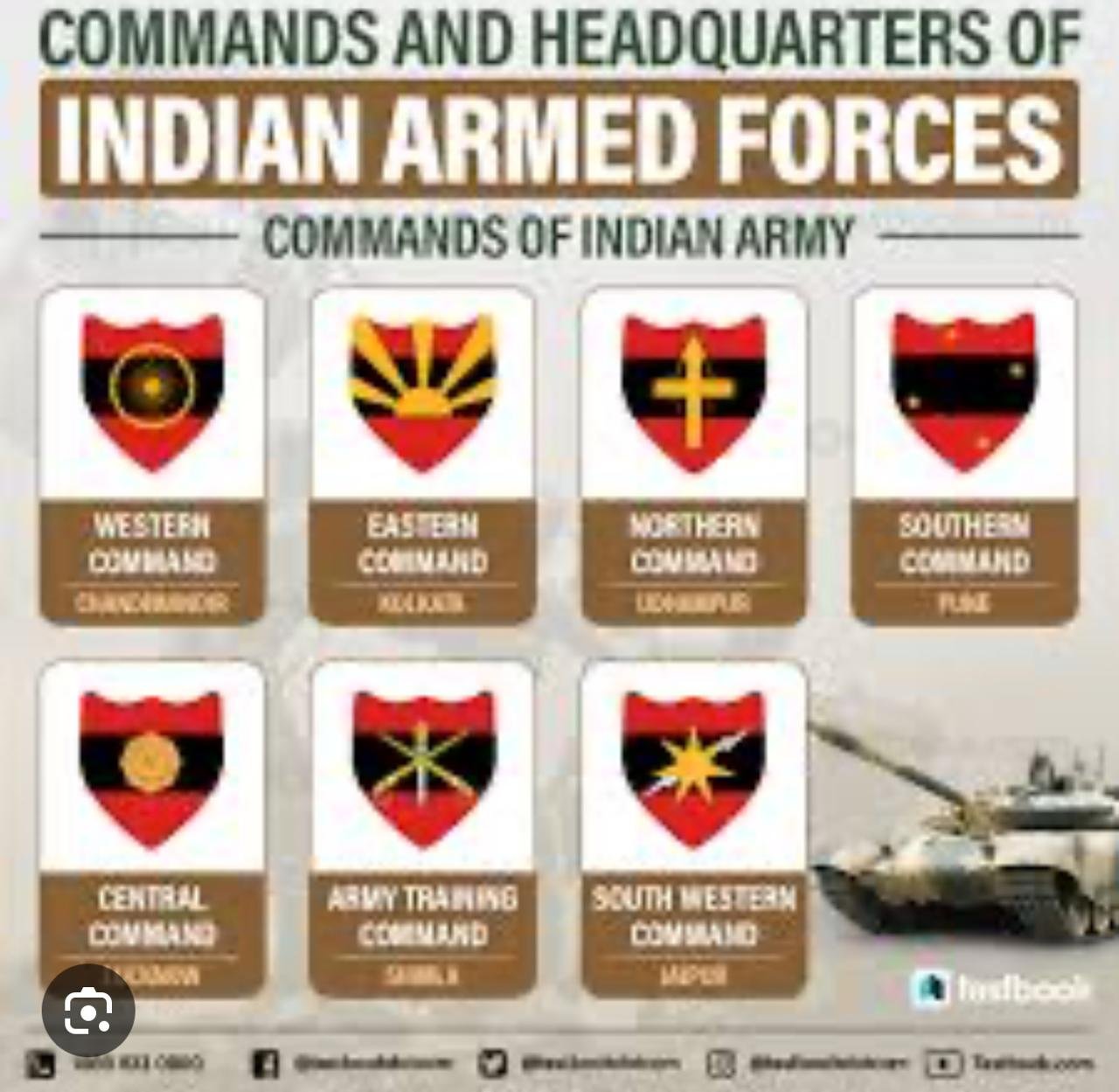
FORMATION SIGNS
FORMATION SIGNS
ALL HUMANS ARE ONE CREATED BY GOD
HINDUS,MUSLIMS,SIKHS.ISAI SAB HAI BHAI BHAI
CHIEF PATRON ALL INDIA SANJHA MORCHA
LT GEN JASBIR SINGH DHALIWAL, DOGRA
SENIOR PATRON ALL INDIA SANJHA MORCHA
MAJOR GEN HARVIJAY SINGH, SENA MEDAL ,corps of signals
.
.
PATRON ALL INDIA SANJHA MORCHA
MAJ GEN RAMINDER GORAYA , CORPS OF
sanjhamorcha303@gmail.com
PRESIDENT HARAYANA STATE CUM COORDINATOR ESM
BRIG DALJIT THUKRAL ,BENGAL SAPPERS
PRESIDENT TRICITY
COL B S BRAR (BHUPI BRAR)
PRESIDENT CHANDIGARH ZONE
COL SHANJIT SINGH BHULLAR
.
.
PRESIDENT PANCHKULA ZONE AND ZIRAKPUR

COL SWARAN SINGH
PRESIDENT SAS NAGAR (MOHALI)
COL BALBIR SINGH , ARTY
INDIAN DEFENCE FORCES
DEFENCE FORCES INTEGRATED LOGO
FORCES FLAGS
15 Th PRESIDENT OF INDIA SUPREME COMMANDER ARMED FORCES

Droupadi Murmu
DEFENCE MINISTER
Minister Rajnath Singh
CHIEF OF DEFENCE STAFF (2nd)
General Anil Chauhan PVSM UYSM AVSM SM VSM
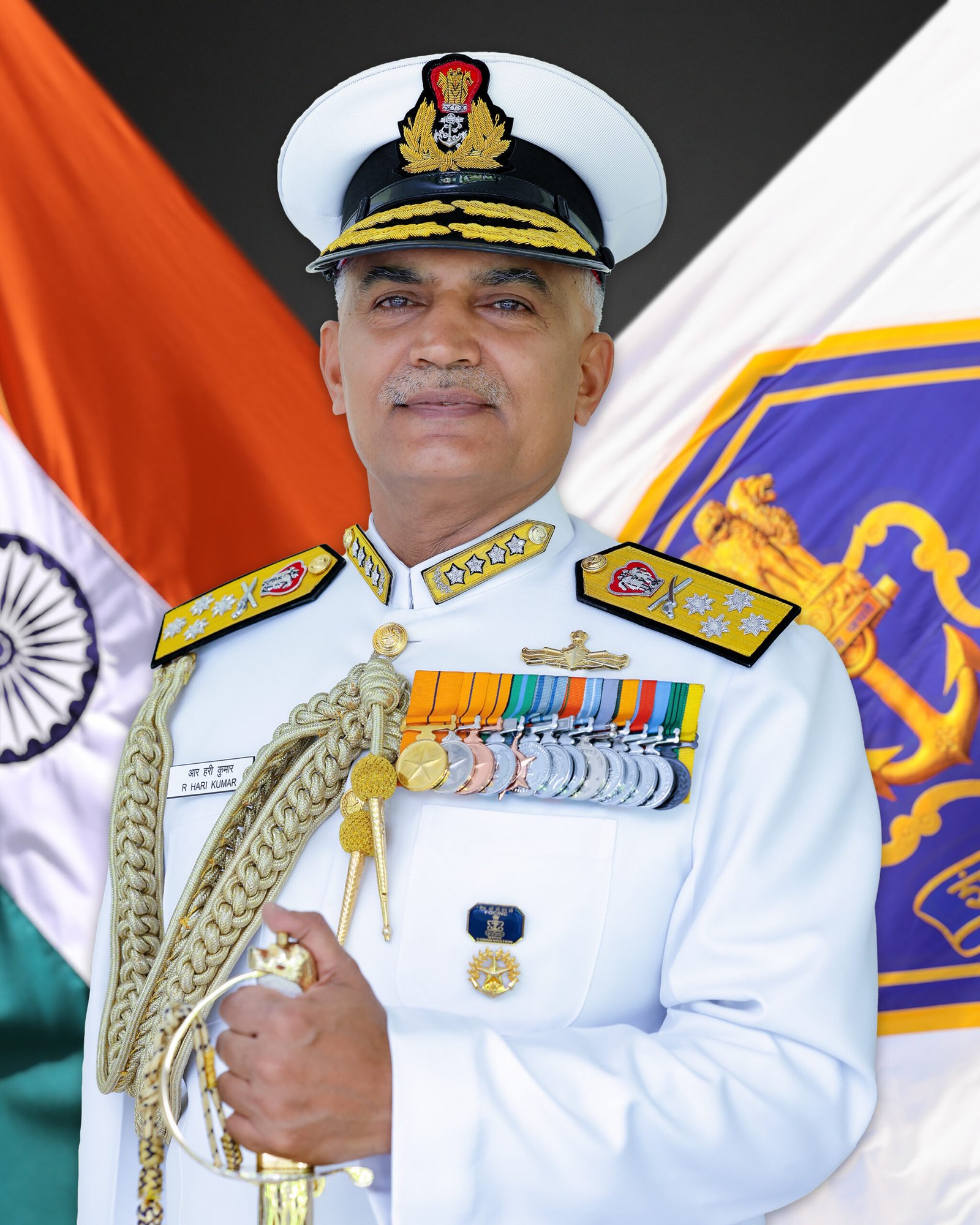
INDIAN FORCES CHIEFS
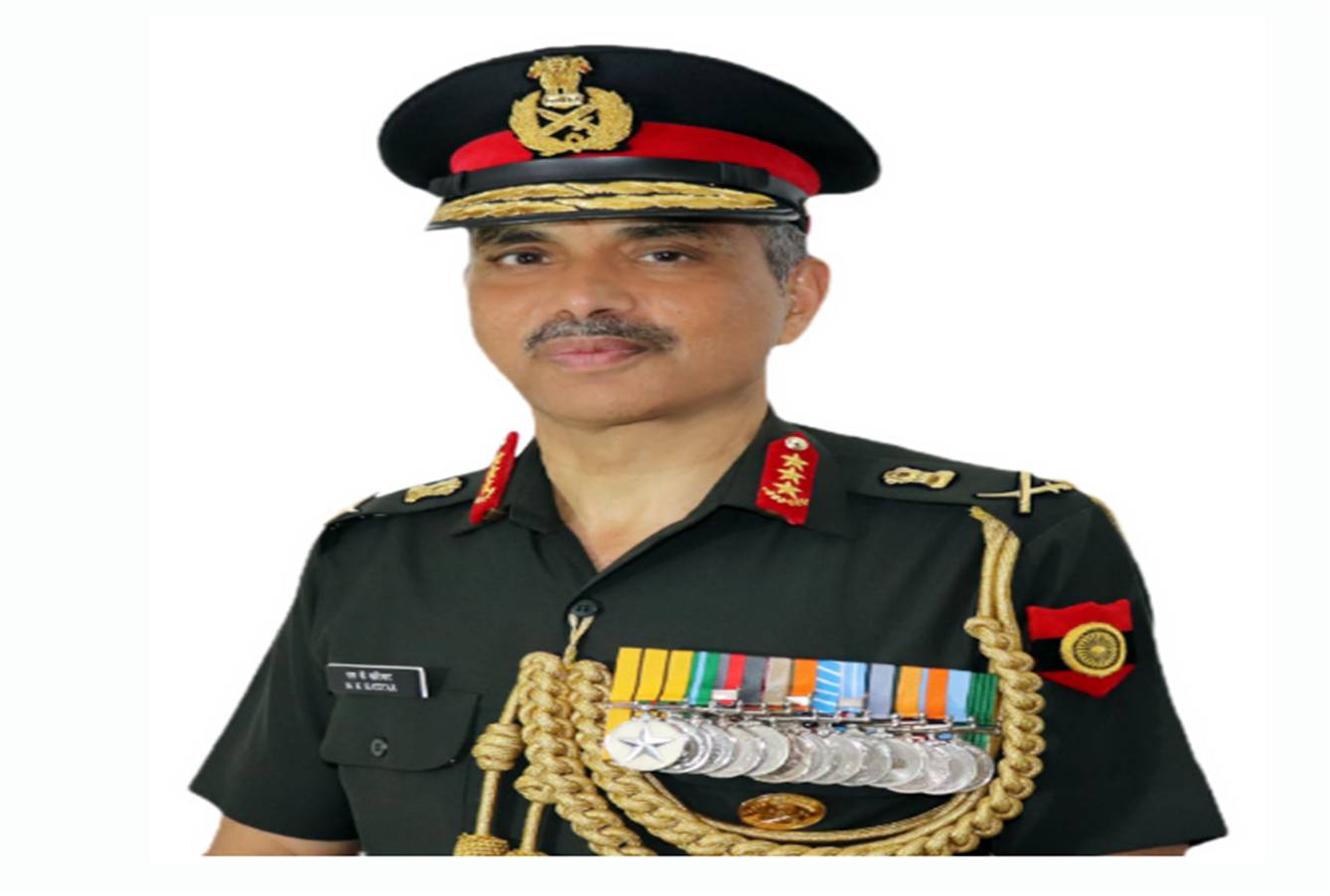
CHIEF OF ARMY STAFF(29th)
General Upendra Dwivedi, PVSM, AVSM (30 Jun 2024 to Till Date)