




Sanjha Morcha

What’s New

Click the heading to open detailed news

Current Events :

web counter

Print Media Reproduced Defence Related News

Indian soldiers at LAC have go-ahead to open fire in self-defence, India tells China

With no signs of disengagement on the ground in Ladakh, where India and China have been locked in a stand-off since April, both sides will stay dug in during the region’s bitter winter too.

File photo of Army Chief General M.M. Naravane at Leh to review security situation and operational preparedness along the Line of Actual Control in Eastern Ladakh | Photo: Twitter/@adgpi

ile photo of Army Chief General M.M. Naravane at Leh to review security situation and operational preparedness along the Line of Actual Control in Eastern Ladakh | Photo: Twitter/@adgpi
New Delhi: India has made it clear to China that its soldiers will open fire to defend themselves, and Chinese tactics of “using mass” — or seeking to outnumber Indian soldiers, like in the 15 June Galwan Valley clash — will not be tolerated, top government sources said.

With no signs of disengagement on the ground in Ladakh, where India and China have been locked in a stand-off since April, both sides will stay dug in during the region’s bitter winter too, the sources added. The Chinese, they added, have deployed around 50,000 soldiers and equipment, including missile systems, tanks and artillery, at the border.

The sources’ comments come as the ground situation in Ladakh remains the same despite the Chinese seemingly adopting a reconciliatory approach during different levels of dialogue. They suggest that India has changed its rules of engagement for the Line of Actual Control (LAC), where firing of shots was thus far barred under a bilateral agreement, since the 15 June Galwan Valley clash.

The clash had resulted in the death of 20 Indian soldiers, including a commanding officer, and many Chinese troops.

“We have told our soldiers that they can open fire if there is a fear of their own safety. They can fire for self-defence,” a source said, adding that China has been told the same.

According to the sources, there is no question of believing Chinese words of peace unless their deeds on the ground match up. The sources also said China has given them a number for the People’s Liberation Army (PLA) soldiers killed in the Galwan Valley clash — a number Beijing has yet to publicly acknowledge.

The Chinese, sources said, have told the Indian side that five of their soldiers, including a commanding officer, had died in the clash. “If the Chinese are saying five, we can easily double it if not triple it,” a top South Block officer said.

Chinese soldiers far outnumbered Indian troops during the Galwan Valley clash, which took place after a disengagement effort went awry.

 “The Chinese tactic was to come in large numbers with clubs and crude weapons and surround Indians, who followed the laid-down protocols and moved in a much lesser manner,” one of the sources quoted above said.

“According to the agreement, both sides are supposed to have a 15-20-member-strong patrol team. Over the last few years (since Doklam), the Chinese started increasing numbers,” the source added..

Sources said since the intervening night of 29-30 August, when Indian soldiers moved in to capture several heights near the southern bank of the Pangong Tso, there has been a number of occasions when shots were fired in the air.


Also Read: India, China say won’t send more troops to Ladakh frontlines, agree to avoid misunderstandings


‘Both sides preparing for winter deployment’

Both sides, sources said, are likely to stay deployed in the forward areas of Ladakh through the winter, with China insisting on disengaging from the southern bank of the Pangong Tso first while India has been clear that it has to happen in in all areas simultaneously.

“India is also of the opinion that since it was the Chinese who initiated the aggression, they should be the first one to start disengaging,” a source added.

The sources admitted that while India has been seeking complete disengagement and status quo ante (return to positions before the stand-off began, following Chinese incursions in April), the current positions will continue to be held for some time, as reported by ThePrint earlier this week.

“I can’t put a time-frame on when the disengagement will happen. The position stays as it is,” one of the above-mentioned sources said.


Also Read: 5 maps that tell you all you want to know about India vs China in Ladakh


‘Depsang issue predates current tensions’

Talking about Depsang Plains, one of the flashpoints in Ladakh, the sources said the issue there predates the current tensions between India and China. Without getting into a timeline, the sources said there are no Chinese soldiers camping at the Bottleneck, also known as Y-Junction.

“We go by foot beyond Bottleneck as vehicles cannot cross that area. The Chinese observe our movement and they have deployed two vehicles that come and block our path well before Patrol Point 10. But we have been reaching our patrolling points using other routes,” a source said.

“But since the tensions began, we have avoided pushing ahead so as not to create fresh escalation,” the source added, saying both sides have built up in depth areas.


Also Read: Xi’s motivations behind LAC standoff and why China has been hyperactive since 2017


India, China working on Ladakh peace formula — alternate week patrolling, after disengagement

Representational image | ANI

Representational image of Indian Army vehicles moving in Leh | ANI
New Delhi: India and China are working on a formula wherein their troops will patrol forward locations every alternate week, so as to avoid violent face-offs between soldiers on the ground.

Top government sources said this has been the established practice on the countries’ border in the Northeast, and has worked well barring the occasional face-off. However, the sources said that border infrastructure development along the LAC, as planned by India, will continue since the activities are well within territory it controls.

“In the Northeast, both sides patrol every week to their patrolling points. We know when the Chinese are coming and they know when we are coming. This ensures that the troops don’t come face-to-face. This is something that can be done in the forward areas of Ladakh too,” a source said.

The source added that local commanders in the Northeast speak to each other regularly — a practice that has continued even during the Ladakh stand-off, with the Chinese even saying that both sides must ensure that what happened in the northern sector should not be allowed to develop there.

“However, we are not leaving anything to chance. Our strict vigil continues all along the LAC. There has not been any kind of aggressive deployment by the Chinese in the Northeast,” the source said.

Advertise

However, the sources underlined that the formula being worked out will come into effect only when disengagement at the LAC is completed.

As reported by ThePrint on 22 September, India insists China needs to take steps for disengagement first, since it was the People’s Liberation Army (PLA) that moved in.

Also read: 5 maps that tell you all you want to know about India vs China in Ladakh


China’s aggressive patrolling started since Doklam

Sources said according to previous India-China agreements, each side is supposed to have a patrol strength of 15-20 troopers.

However, since the 2017 Doklam stand-off, when India stepped into Bhutanese territory and blocked China’s illegal road construction activity, the PLA started bring in bigger patrols along the LAC.

“From 15-20, the number increased to 30 and so on. It has been happening over a period of time. It came to such a point that they started coming en masse and surrounding our troops. This resulted in scuffles, and that led to stone throwing. Then, the Chinese started bringing in clubs and sharp weapons like machetes,” a source said.

The source added that this is what happened on 15 June in the Galwan Valley.

“It was a melee. We could not open fire because the bullets could have hit our own,” the source said.

India has made it clear to China that its soldiers will open fire to defend themselves, and Chinese tactics of “using mass” will not be tolerated.

China has more than doubled its air bases, air defence positions, and heliports near the LAC since the Doklam crisis.

“The 2017 Doklam crisis appears to have shifted China’s strategic objectives, with China more than doubling its total number of air bases, air defence positions, and heliports near the Indian border over the past three years,” a report by leading global geopolitical intelligence platform Stratfor had said.


Also read: India-China endgame in Ladakh looks costly unless both Modi and Xi get a face-saver deal


Amid Sino-India stand-off 131 young soldiers join Ladakh Scouts Regiment

Riflemen were awarded medals for their outstanding performance during training.

Riflemen were awarded medals for their outstanding performance during training.(HT Photo)

Amid the protracted Sino-India stand-off in eastern Ladakh, 131 young soldiers joined the prestigious Ladakh Scouts regiment in Leh on Saturday.

A defence spokesperson said, “An attestation parade was held on Saturday at the Ladakh Scouts Regimental Centre, Leh, to mark the entry of 131 well trained recruits into the Ladakh Scouts Regiment. Due to the ongoing pandemic, the ceremony was conducted without the presence of the recruits’ parents and in accordance all norms and advisories. Leh sub-area deputy general officer commanding Brig Arun CG reviewed the attestation parade,” the defence spokesperson said.

The soldiers, hailing from all regions of Ladakh, took an oath to serve the nation.

Congratulating the soldiers, Brig Arun CG said, ““He exhorted young soldiers to continue to strive hard in pursuit of excellence in all spheres of profession and take a solemn vow to uphold the sovereignty of the nation against all odds in the true spirit, signified by the ethos of the Indian Army,” said the spokesperson.

The young riflemen were awarded medals for their outstanding performance during training. On June 15, at least 20 Indian soldiers had laid down their life in the line of duty while combating Chinese troops at Galwan valley.


De-escalation or deception India should remain wary of unreliable China not just in Ladakh

De-escalation or deception

Less than a fortnight after External Affairs Minister S Jaishankar and his Chinese counterpart Wang Yi came up with a five-point roadmap to resolve the Ladakh standoff, the corps commander-level talks between the two countries seem to have made some headway. In a joint statement, Indian and Chinese armies have agreed to stop sending more troops to the frontline, desist from unilaterally changing the situation on the ground and avoid actions that may complicate matters. All that sounds good, but it’s the implementation that will count. China’s blatant disregard for previous agreements has led to renewed hostilities of late.

Disengagement of troops from the friction points on the Line of Actual Control (LAC) is a prerequisite for de-escalation of tensions. Over the past four months or so, eastern Ladakh has seen it all — bloody skirmishes, firing of shots, incursions by Chinese troops and pre-emptive action by Indian soldiers. Several rounds of talks at the military level didn’t bear fruit as the Chinese army persisted with its brazen misadventures. On the diplomatic front, Defence Minister Rajnath Singh recently conveyed India’s firm stand to his Chinese counterpart in Moscow, followed by the Jaishankar-Yi talks.

Adopting an unusually conciliatory tone, Chinese President Xi Jinping said in his pre-recorded address to the UN General Assembly that his country would ‘continue to narrow differences and resolve disputes with others through dialogue and negotiation.’ This should be music to India’s ears, but past experience has shown that China can be taken at face value only at one’s peril. India can’t afford to let its guard down along the entire 3,488-km-long LAC. With the Ladakh region bracing itself for a typically harsh winter beginning next month, the Indian troops would have to step up vigil to ensure that the Chinese army doesn’t try to capitalise on the bad weather to make mischief. India shouldn’t expect a quick end to the border standoff, which has remained under the glare of the international community. With the US and its allies calling China’s military actions unprovoked and provocative, India needs to cash in on this support to make the neighbour mend its ways.


Far from self-reliant ‘Make in India’ needs transfer of technology by foreign firms

Far from self-reliant

Photo for representation only.

The much-touted Atmanirbharta in the defence sector is a bridge too far, going by the Comptroller and Auditor General’s (CAG) report on Management of Defence Offsets, tabled in Parliament on Wednesday. The national auditor has taken to task French aerospace major Dassault Aviation and European missile-maker MBDA for not fulfilling their offset obligations of offering high technology to India under the Rs 59,000-crore Rafale aircraft deal. The two firms are yet to provide technological assistance sought by the Defence Research and Development Organisation for indigenous development of an engine for the Light Combat Aircraft Tejas. The CAG has also observed that defence ranks an abysmal 62nd out of 63 sectors receiving FDI (foreign direct investment), while pointing out lacunae in the country’s offset policy. Foreign defence entities are mandated to spend at least 30 per cent of the total contract value in India through procurement of components or setting up of research and development facilities, but there is no effective mechanism to penalise them if they don’t do the needful.

Transfer of technology, facilitation of FDI, reduction in imports and liberal funding of R&D projects are the imperatives for giving a fillip to ‘Make in India’ on the defence front. Last month, the government had announced a phased embargo on the import of 101 weapon systems in an initiative to encourage the domestic industry. Many more such steps are needed to come anywhere near self-sufficiency. For the record, India is the third largest military spender in the world (after the US and China) and the second biggest arms importer (after Saudi Arabia).

The strategic partnership model, which provides for a long-term tie-up of Indian entities with global Original Equipment Manufacturers to set up domestic manufacturing infrastructure and supply chains, needs to offer attractive incentives to woo the world’s best vendors. In October last year, French engine manufacturer Safran had told Defence Minister Rajnath Singh that India’s tax ‘terrorism’ was holding up the company’s plans to make big investments. Let there be an enabling environment for foreign investors, but hold them accountable if they renege on their promises.


We need to have trust in our armed forces’ ability to secure our interests: Jaishankar

We need to have trust in our armed forces’ ability to secure our interests: Jaishankar

External Affairs Minister S Jaishankar virtually addresses the ministerial meeting of the Alliance for Multilateralism in New Delhi. (PTI Photo)

New Delhi, September 26

Amid the border standoff with China in eastern Ladakh, External Affairs Minister S Jaishankar on Saturday said it was an ongoing issue and “we need to have trust in our armed forces and their ability to secure our interests”.

Jaishankar said there was also a need to have trust in the ability of the system — both military commanders and the diplomatic channels — in negotiating with the Chinese.

Asked about the situation at the border in eastern Ladakh, Jaishankar told Times Now in an interview: “You know this is going to play out. There will be things which China has done. There will be responses that India has made…There are actually negotiations on the way.”

“I understand the compulsions on media to know everything yesterday, unfortunately, real life is a little bit different. So, this is about national security. This is a very complicated ground situation out there,” he said.

“We need to have trust in our armed forces and their ability to secure our interests, and frankly in the ability of the system, I mean both military commanders and the diplomatic channels, in negotiating with the Chinese,” he said.

“Don’t call out a match… before it is halfway through,” the external affairs minister added.

During the interview, Jaishankar also extensively discussed his recently released book ‘The India Way’.

The situation in eastern Ladakh escalated manifold after 20 Indian soldiers were killed in clashes in the Galwan Valley on June 15. The Chinese side acknowledged suffering casualties, but it is yet to divulge details.

The situation further deteriorated following at least three attempts by soldiers of the People’s Liberation Army (PLA) to “intimidate” Indian troops along the northern and southern banks of the Pangong lake area in the last three weeks where even shots were fired in the air for the first time at the Line of Actual Control (LAC) in 45 years.

As the tensions escalated further, Jaishankar and his Chinese counterpart Wang Yi held talks on the sidelines of a Shanghai Cooperation Organisation meet in Moscow on September 10 where they reached a five-point agreement to defuse the situation in eastern Ladakh.

The agreement was the basis for the sixth round of Corps commander-level talks on Monday which was also attended for the first time by a joint secretary from the Ministry of External Affairs.

The agreement that aimed at ending the tense standoff included measures like quick disengagement of troops, avoiding action that could escalate tensions, adherence to all agreements and protocols on border management and steps to restore peace along the LAC. PTI


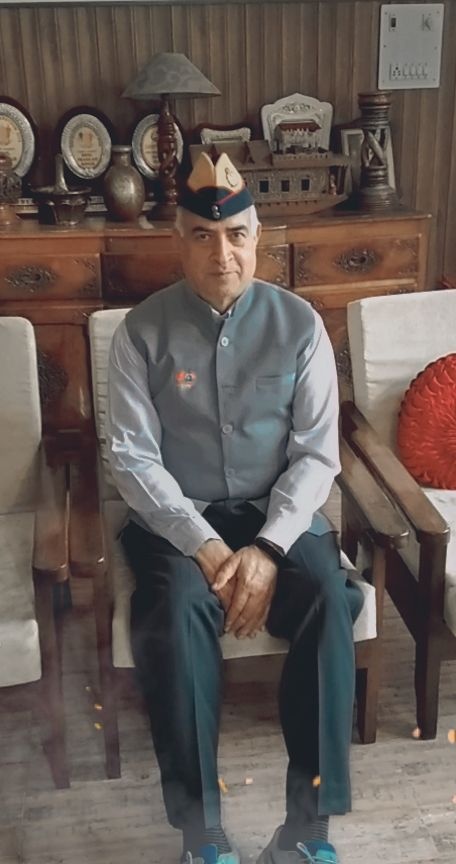
BRIG HPS BEDI,VSM, JOINS SANJHA MORCHA AS PRESIDENT HARYANA STATE

Brig HPS Bedi


COMMISIONED  APR 1973, FROM OTS

  1. NOW A senior Army Veteran with 36 years of experience in the Army and 10 years in the corporate world
  2. An illustrious career in the Army. Rare honour of commanding two Infantry Battalions (One during the Kargil War). Had the honour to-command the “SIACHEN BRIGADE” popularly known as the Highest Battlefield in the World.
  3. Re-attired into the corporate world as the head of BD, Industrial displays Samtel Group of Companies and COO of International Center of Robotic Surgery, an American MNC till Dec 2013.5.Advisor Defense & homeland security, Sports and youth affairs at PHD Chamber of Commerce, Delhi for four years and director at the Regional Office at Chandigarh looking after three states.

An avid golfer, Keen Cyclist, and theatre person I actively take part in Theatre for Social Causes. I have acted in a couple of YouTube Movies on the topical and contemporary issues of Punjab.

WELCOME BY SANJHA MORCHA

Sanjha Morcha welcome Brig  HPS Bedi VSM to the folds of its family and hope he will enjoy working with the tireless team


Now, women officers seeking permanent commission can witness selection board proceedings

Now, women officers seeking permanent commission can witness selection board proceedings

Photo for representation

Vijay Mohan

Tribune News Service

Chandigarh, September 19

Women officers who seek permanent commission in the Army have been permitted to witness the proceedings of the selection board as observers in order to add transparency to the process.

The Special No. 5 Selection Board, constituted to screen women army officers for grant of permanent commission commenced its proceedings at Army Headquarters on September 14, 2020.

The board is headed by a senior general and includes a woman officer of the rank of Brigadier as a member, according to an official statement issued today. The rank signifies that the woman member is from the medical stream. Grant of permanent commission is to the aspirants meeting the minimum acceptable medical standards.

In February this year, the Supreme Court had ruled that women officers, who had joined the Army through the Short Service Commission (SSC) entry, were entitled to a permanent commission just as their male counterparts were.

A number of SSC women officers had sought judicial intervention to their claim for grant of permanent commission. While initially women officers were not entitled for permanent commission and could serve for a maximum of 14 years, a few years ago, permanent commission was allowed in the Judge Advocate General’s Department and the Army Educational Corps.

In July, the Ministry of Defence issued a formal sanction letter in this regard. It allowed permanent commission to women officers in 10 more arms and services that include Army Air Defence, Signals, Engineers, Army Aviation, Electronics and Mechanical Engineers, Military Intelligence, Army Service Corps and Army Ordnance Corps.

There are close to 1,700 women officers in the Army and about 600 are eligible to opt for permanent commission. The Supreme Court had also directed the Army to consider women officers for command roles in specified branches.

In May the Army had made the Battle Physical Efficiency Test mandatory for all women officers, including those commissioned before 2009 and now over the age of 35 who were earlier exempt. The junior command course at Army War College, Mhow, is now also mandatory for women officers.


Strength of women fighter pilots goes up to 10 IAF launched a scheme for induction of women short service commission officers into the fighter stream of the Flying Branch in 2016

Strength of women fighter pilots goes up to 10

Vijay Mohan
Tribune News Service
Chandigarh, September 19

Four years after the Ministry of Defence approved induction of women as fighter pilots into the Indian Air Force, their strength has gone up to 10, the Ministry of Defence told Parliament on Saturday.

“The strength of women officers serving the IAF as on September 1, 2020, is 1,875.  Of these, 10 women officers are fighter pilots and 18 women officers are navigators,” Minister of State for Defence Shripad Naik said in a written reply to Dr Vikas Mahatme in the Rajya Sabha.

After approval from the ministry, IAF launched a scheme for induction of women short service commission officers into the fighter stream of the Flying Branch in 2016, under which 10 women fighter pilots have been commissioned till date.

Women fighter pilots are inducted and deployed in IAF as per strategic needs and operational requirements within the laid down policy, which is reviewed from time to time, Naik added.

Earlier this month, in a statement made before the Delhi High Court while rebutting the depiction of its work culture in the Netflix movie Gunjan Saxena: The Kargil Girl, the IAF had mentioned that in addition to the fighter pilots, it had 51 transport pilots and 50 helicopter pilots.

The first batch of IAF women fighter pilots comprised Bhawana Kanth, Mohana Singh and Avani Chaturvedi. Besides the Flying Branch, IAF women officers serve in several other branches including air traffic and fighter control, engineering, administration, logistics and legal. Till the IAF opened its doors to women officers in 1991, women had been serving only in the medical branch.


On China, India is making a mistake | Opinion Beijing is using talks to consolidate its territorial gains, force India to live with the new status quo

China seems intent on continuing, below the threshold of armed conflict, coercive military pressure along the entire frontier

China seems intent on continuing, below the threshold of armed conflict, coercive military pressure along the entire frontier(AFP)

Successive governments have put more faith in diplomacy than the armed forces in achieving security objectives. Diplomacy can accomplish little in the absence of strategic vision and resolve or adequate leverage. The diplomatic blunders of 1948 (Kashmir dispute’s internationalisation), 1954 (Panchsheel Agreement’s acceptance of the “Tibet region of China”), 1960 (Indus Waters Treaty), 1966 (Taskhent) and 1972 (Simla) have imposed enduring costs.

Worse still, India has learnt little from its past. Today, with China’s multi-thrust aggression, history is repeating itself, underscored by a common Indian refrain that Beijing has betrayed India’s friendship. China’s latest “stab in the back” raises key questions, not about Beijing (which consistently employs deception, concealment and surprise in peacetime), but about India. What explains India’s “hug, then repent” proclivity over the decades? Why has India repeatedly cried betrayal, not by friends, but by adversaries in whom it reposed trust? Why has Indian diplomacy rushed to believe what it wanted to believe? What makes India keep repeating the cycle of bending over backward to court a foe and then failing to see aggression coming (as in Kargil, Pathankot or Doklam)? Why does India stay at the receiving end of its foes’ machinations? Why has it never repaid China with its own “salami slicing”?

Also Watch l ‘There’s a difference in what China says & does’: Rajnath Singh in Rajya Sabha

https://www.hindustantimes.com/columns/on-china-india-is-making-a-mistake/story-QPxd0o3RJKhgzghOm7mX1I.html?jwsource=cl

One reason history repeats itself is that virtually every prime minister, although unschooled in national security at the time of assuming office, has sought to reinvent the foreign-policy wheel, rather than learn from past blunders. Another reason is that intellectuals and journalists shrink from closely scrutinising foreign policy moves. Overselling outcomes of summit meetings with China from 1988 to 2019 for leadership glorification has led to India’s worst China crisis after the 1962 war. For example, five separate border-management agreements were signed at summits between 1993 and 2013, with each accord hailed in India (but not China) as a major or historic “breakthrough”.

Now, India admits China has trashed all those agreements with its aggression. Yet India still plays into China’s hands by clinging to the accords, and by agreeing recently in Moscow to build on them through new confidence-building measures (CBMs).

China is showing it is a master in protracting negotiations to buy time to consolidate its territorial gains, while exploring the limits of its adversary’s flexibility and testing its patience. For Beijing, any agreement is designed to bind not China but the other side to its terms. It is seeking fresh CBMs to make India respect the new, Chinese-created territorial status quo and to restrict India from upgrading its border infrastructure. China’s foreign minister claims the “consensus” reached at Moscow is to “meet each other halfway”. Meeting China halfway will validate its “10 miles forward, 5 miles back” strategy, with China gaining half but India losing half. This illustrates Beijing’s definition of “give and take” — the other side gives and China takes.

Yet, India has placed its faith in diplomacy ever since it discovered China’s intrusions in early May. It reined in its armed forces from taking counter-actions until recently. Had it permitted proactive counter-measures earlier, once sufficient acclimatised troops and weapons capability were in place, China’s territorial gains would have been more limited.

China used the talks to make additional encroachments, especially on the critical Depsang Y-Junction, which controls access to several areas. Of all the land grabs China has made, the largest is in Depsang, the sector of utmost importance to Indian defences. Yet, this has received little attention.

In fact, some Indians are drawing a false equivalence between the Chinese and Indian military actions. While China has seized several areas that traditionally were under Indian patrolling jurisdiction, India has occupied its own unmanned mountain heights in one area in order to pre-empt another Chinese land grab. The defence minister’s statement in Parliament, however, shows the government remains loath to admit that China has encroached on Indian areas. Shielding the government’s image, alas, comes first. This explains why India hasn’t labelled China the aggressor, leaving the field open for China to repeatedly call India the aggressor.

Having redrawn the Line of Actual Control (LAC) in several Ladakh sectors, China is now seeking to replace the term LAC with the looser expression “border areas”. It had its way in the Moscow agreement, which repeatedly mentions “border areas,” not LAC. All the boundary-related bilateral accords and protocols are LAC-centred. But China is treating LAC as a line to actually control by changing facts on the ground. The Moscow agreement’s use of the vague term “border areas” helps obscure China’s encroachments and creates space for more Chinese salami-slicing.

Diplomacy is unlikely to deliver the status quo ante India seeks. In fact, China seems intent on continuing, below the threshold of armed conflict, coercive military pressure along the entire frontier until India acquiesces to its demands, including reconciling to the new status quo.

Will China’s win-without-fighting warfare campaign help create a new India steeped in realism and determined to break the cycle of history repeating itself? At a minimum, it promises to shake up India’s business-as-usual approach to national security.

Brahma Chellaney is a geostrategist
The views expressed are personal