














Sanjha Morcha

What’s New

Click the heading to open detailed news

Current Events :

web counter

Print Media Reproduced Defence Related News

Army restores India-Pakistan war hero Brigadier Usman’s grave that was ‘vandalised’ in Delhi

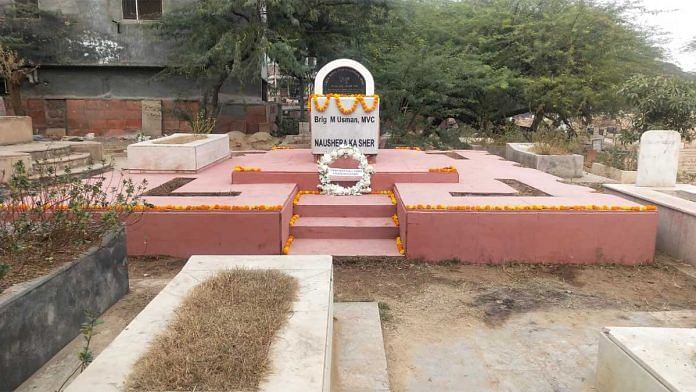
The restored grave of India-Pakistan war hero Brigadier Usman | By special arrangement

he restored grave of India-Pakistan war hero Brigadier Usman | By special arrangement

New Delhi: Days after the grave of 1947-48 War hero Brigadier Mohammad Usman was vandalised by unknown miscreants, the Army has finished restoration work.

While the Army is yet to give a formal confirmation, sources said the restoration work on the grave, which began yesterday, has been completed.

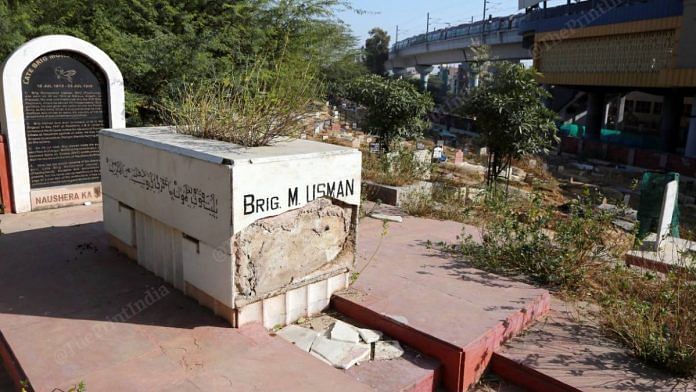
Brigadier Usman was the highest ranking officer to die in action during the first India-Pakistan war in 1947-48. On 26 December, his grave, located in south Delhi’s Batla House Qabristan near Jamia Millia Islamia, was found damaged.

The Army has now repaired the marble work around the grave and Brigadier Usman’s name, which was damaged, has also been written again. The grave was also decorated with flowers and a wreath was laid on it.

It is still not known when the act of vandalism took place and who was responsible for it.
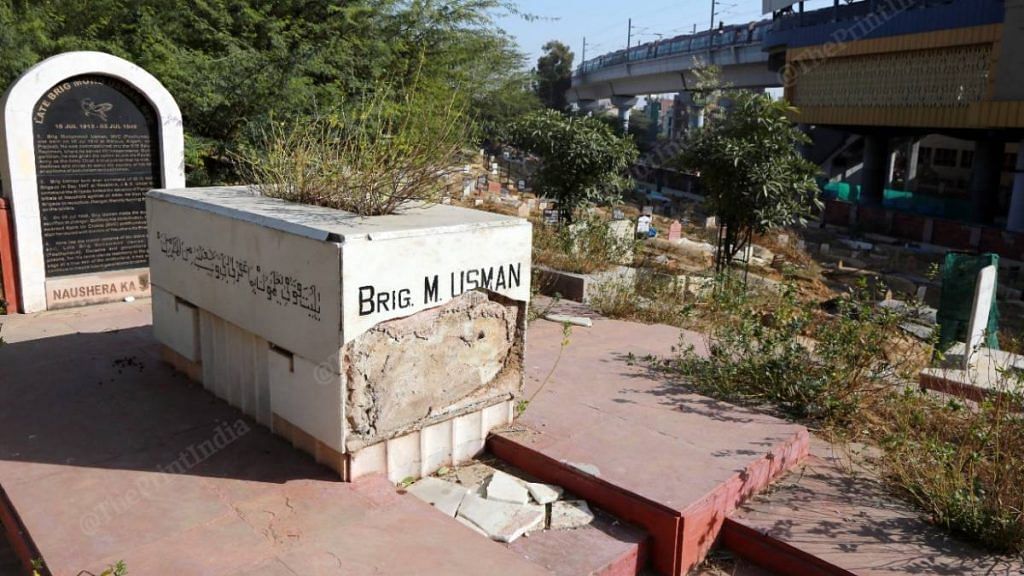
The damaged grave of Brigadier Mohammad Usman near Jamia Millia Islamia Metro Station in Delhi, on 28 December 2020 | Manisha Mondal | ThePrint

Speaking to ThePrint, Professor Iqtidar Khan of the Department of Islamic Studies, who also oversees the maintenance of the graveyard, confirmed that some people from Brigadier Usman’s regiment came on 29 December to seek permission from the registrar to restore the grave.

He also said the university was not responsible for maintaining the graves but only the graveyard, which also contains the graves of many other prominent personalities including author Mujeeb Rizvi and Qurratulain Hyder.


Also read: It took Pakistan three defeats to understand the flaw in its war strategy against India

 ‘Protocol and emotional issue’ for Army

After the alleged vandalism was reported, the Army had written to Jamia Millia Islamia on 29 December seeking permission to carry out repairs on the grave.

“The university wanted a letter from the Army for the record and it has been sent. We will carry out the repairs,” a senior officer had told ThePrint.

Army sources had also said the matter, which is a “protocol and emotional issue” for the force, was being looked into at the highest level.

Brigadier Usman, who is remembered as ‘Naushera Ka Sher’, took over command of the 50 (Independent) Parachute Brigade at Naushera in December 1947, which halted the advance of Pakistani tribals in the area and recaptured it from Pakistan.

He died when an enemy army shell exploded near him in Naushera on 3 July 1948.


Also read: 49 years later, lessons that remain to be learnt from 1971 India-Pakistan War


How the ice was broken during sixth round of talks between govt and farmer

How the ice was broken during sixth round of talks between govt and farmers

Women farmers during their protest against the new farm laws, at Tikri border in New Delhi. — PTI

New Delhi, December 31

The lunch diplomacy of Agriculture Minister Narendra Singh Tomar and Railway Minister Piyush Goyal has played an instrumental role in shaping up a positive development following the sixth round of talks between the government and the representatives of farmers’ organisations.

Unlike the previous five meetings that ended on an inconclusive note, the sixth round of talks held here at Vigyan Bhawan on Wednesday saw the government and farmers coming on the same page on two key issues out of four.

Farmers at Ghazipur border during their ongoing protest against Center’s new farm laws, in New Delhi on Thursday. Tribune Photo: Manas Ranjan Bhui

The way the Wednesday meeting between the farmers and the government happened, the possibilities of solving the farmers’ movement have increased.

Farmer leaders are also hopeful that the way the government on Wednesday agreed to the demands like keeping farmers out of the purview of stubble burning and continuation of electricity subsidy, in the same way, the meeting on January 4 will also be positive.

Farmers at Ghazipur border during their ongoing protest against Center’s new farm laws, in New Delhi on Thursday. Tribune Photo: Manas Ranjan Bhui

The agenda for the January 4 meeting has been set.

This meeting is to be held on two issues like the three agricultural laws and the guarantee of MSP.


Also read: CM Pinarayi Vijayan moves resolution against central farm laws in Kerala Assembly

Several Delhi border points remain closed due to farmers’ protest

Undeterred by bitter cold, more farmers leave for Delhi


During the lunch break at Vigyan Bhawan on Wednesday at 2.30 pm, two hours after the sixth round meeting, Agriculture Minister Narendra Singh Tomar, Railway Minister Piyush Goyal and Union Minister of State Som Prakash reached out to the farm leaders when they were getting ready to eat the ‘langar’ meal.


Upset over farm laws, saffron party workers join Cong

Upset over farm laws, saffron party workers join Cong

Many BJP activists today quit the party to join Congress in a village near Abohar. Tribune Photo

Abohar, December 31

Led by former sarpanch Lal Chand, who had actively supported the BJP-SAD alliance in the 2017 Vidhan Sabha election, a group of BJP workers in Daulatpura village today announced to join the Congress.

Speaking on behalf of the group, Bhup Ram Godara said they had quit the BJP over the farm laws. “Some BJP activists requested us not to quit the party. But we said as the party had betrayed farmers, there was no point in staying with it,” said Jatinder Singh, a farmer.

Another farmer, Krishan Singh, said residents of the tail-end villages had been crying for canal renovation for many years, the demand was fulfilled by the Congress government. — OC


Sportsman spirit at Singhu, many join from abroad

Sportsman spirit at Singhu, many join from abroad

Sportspersons have been camping at Singhu in solidarity with farmers. Tribune Photo

Aparna Banerji

Tribune News Service

Jalandhar, December 31

International kabaddi players, wrestlers, footballers and basketball players, some of whom returned from abroad, havebeen taking turns to serve the farmers from day one at the Singhu border.

An accommodation to house 1,500 people, a langar feeding people three times a day along with snacks all through the day include the facilities the state’s sportspersons have been offering.

From November 27 when the initial ‘jathas’ of farmers were just heading to Singhu, three sportspersons from Punjab were busy setting up langar and a place to stay for the congregation at the border. While Tony Sandhu, former footballer; Mangi Bagga, former Captain of Indian kabaddi team; and Manjinder Singh, international kabaddi player, were the first to set things up, a bustling stream of international and Indian sports luminaries from the US, UK, Seechewal, Ludhiana and Tarn Taran also lined up to offer sewa. They wash clothes and cook food for the ‘sangat’.

Sandeep Singh from Nangal Ambian, an international kabaddi player, returned from England to come to Singhu. Satnam Singh Bhamra, NBA player, postponed his trip to the US to serve the farmers. Other players who have offered sewa at the langar as well as laundry and accommodation include former Indian kabaddi team members Sukha Bhandal and Nanni Gopalpur, international kabaddi players Khushi Duggal, Manjot Machiwara, Sultan and Jagga Chitti, international wrestler Jassa Patti, Asian silver medallist Amandeep Hothi, Nek Mullapur, among others.

Earning respect among farmers, Tony was even a part of farmers’ deliberations at Singhu on the future course of the agitation. For the New Year, a langar and an evening of music from singer Jazzy B is what the players have in store.


Siachen explorer Col ‘Bull’ Kumar passes away

Siachen explorer Col ‘Bull’ Kumar passes away

Col (retd) Narendra Kumar

Ajay Banerjee
Tribune News Service
New Delhi, December 31

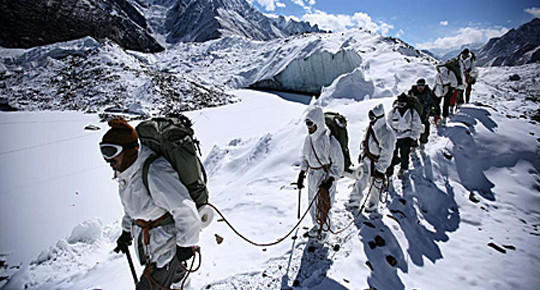
Indian Army’s explorer and surveyor of the Siachen Glacier, Col Narendra “Bull” Kumar (retd), died following a brief illness in New Delhi on Thursday. He was 87 years of age and one of the most respected mountaineers, who was awarded the Kirti Chakra, the second highest peace time gallantry award.

It was in 1981 that Col Kumar surveyed each mountain pass atop the glacier and hoisted Indian flags. Three years after his report, the Indian Army captured the strategic icy frontier. It was he who, following a secret expedition, had made a report on strategic importance of Siachen which had prompted then Prime Minister Indira Gandhi to okay operation Meghdoot on April 13, 1984. The glacier was captured as Indian troops raced to hold the ridgeline beating Pakistan Army to the top.

The 109-km actual ground position line (AGPL) that separates India and Pakistan on the glacier is the result of Col Kumar’s mountaineering expedition.

Born in Rawalpindi, now in Pakistan, Col Kumar was commissioned into the Kumoan regiment. The Army had named the launch base of the expedition as “Kumar base”, a rare honour for serving officer. The base is still called “Kumar”.


Farmers break barricades at Rajasthan-Haryana border Cops use tear gas; protesters stopped at Rewari village

Farmers break barricades at Rajasthan-Haryana border

hoto for representation only.

Ravinder Saini
Tribune News Service
Rewari, December 31

A group of protesting farmers camping at the Delhi-Jaipur highway for the past 18 days today removed the two-layer barricading at Shahjahanpur (Rajasthan)-Khera (Rewari) border to move to the Capital. The police initially used tear gas shells to stop them but later allowed them to go.

Vendors from across country join stir

To express solidarity with the protesting farmers, vegetable and fruit vendors from across the country reached the Singhu dharna site on Thursday. Sheikh Salman of the National Hawker Federation said 600-700 vendors, including women, had come to the Singhu border.

Tension prevailed as the farmers were thereafter stopped by the Rewari police near Bhudla village, 12 km from the border. Hundreds of farmers however stayed back on the Rajasthan side of the Shahjahanpur-Rewari border. The police had to divert traffic on the highway to avoid a jam following the sudden movement of farmers. There were long queues of vehicles on the highway as well as alternative routes, causing inconvenience to the commuters.

Kerala resolution against farm laws

Expressing solidarity with the agitating farmers, the Kerala Assembly on Thursday unanimously passed a resolution demanding withdrawal of the contentious central laws. The lone BJP member, O Rajagopal, also backed the resolution, saying “it is the democratic spirit.”

“Around 2 pm, nearly 130 farmers from Punjab, Haryana and Rajasthan in 20 tractor-trailers suddenly started removing boulders and barricades on the highway. The police lobbed teargas shells but the farmers did not stop and broke the barricades with their tractors,” Ashok Arya of the All India Kisan Sabha said.

Arya added that farmer leaders present at the Shahjahanpur-Rewari protest site had appealed to the group not to move ahead to the Capital without receiving directions from the Sanyukt Kisan Morcha. Rewari SP Abhishek Jorwal said the police would not allow the farmers to go ahead.


Maj Gen Gautam Chauhan becomes first to head Army’s human rights cell Post of Additional Directorate General Human rights was created under reforms approved by Defence Minister last year

Maj Gen Gautam Chauhan becomes first to head Army’s human rights cell

For the first time, the Indian Army has appointed a major general rank officer to look into the human rights issue and suggest means to better the track record of the force.

Major General Gautam Chauhan took charge as Additional Director General Human Rights on Thursday and will function under the Indian Army Vice Chief Lieutenant General SK Saini.

Before taking charge of the force’s first special human rights cell at the Army Headquarters, which will be the nodal body to look into any rights violations, Major General Chauhan was serving as Brigadier Operations Logistics at Headquarters of the Integrated Defence Staff (HQ IDS).  He was the nodal man for Covid 19 related issues for tri-services.The infantry officer from Gorkha Rifles, Major General Chauhan has also headed brigades in the North East region. He has also served in Directorate of the Military Operations (MO).

The appointment is seen as Indian Army’s commitment toward human rights. The post of Additional Directorate General Human rights was created under reforms approved by Defence Minister Rajnath Singh as part of the re-organisation of Army Headquarters last year.

The human rights unit was created with a motive to ensure the Army’s compliance with human rights conventions and values. It will be the nodal point to examine any human rights violation reports.

“To enhance transparency and ensure the best of investigative expertise is available to the section, a police officer of SSP/SP rank will be taken on deputation,” the defence ministry had stated.

 The human right cell will also have an Indian Police Service officer who will facilitate necessary coordination with other organisations and the home ministry on the human rights issues at hand.

The decision to have an Indian Police Service officer on board caused heartburn in a few sections of the Army and is being seen as inviting unnecessary interference by an outsider. Army headquarters stated that had having a police officer on board is critical when it comes to coordinating with different ministries and civil agencies, especially the police.

For last several years, the force has often been charged with human right violations in Jammu and Kashmir and in the North East. But the Indian army has maintained that its human rights record is above board.  — IANS


Kerala party unit ‘shocked’ over BJP MLA supporting resolution against farm laws ‘There are no two opinions on the farm Acts among Kerala BJP leaders’

Kerala party unit 'shocked' over BJP MLA supporting resolution against farm laws

Farmers protesting at Delhi borders. Reuters photo.

Thiruvananthapuram, December 31

Even as the BJP’s Kerala leadership on Thursday maintained they will talk to lone party MLA O Rajagopal over his support to a state government resolution passed by the Assembly against the three farm laws, sources said the party was “shocked” by the development.

BJP state chief K Surendran told the media: “I have not seen Rajagopal’s press conference, nor do I know what he has said. I will speak to him and let you know.”

Also read: Kerala Assembly unanimously passes resolution against central farm laws

Asked of two opinions within the BJP existed over the farm laws, he retorted: “What are you saying? There are no two opinions on the farm Acts among Kerala BJP leaders.”

BJP State General Secretary MT Ramesh told the media in Alappuzha: “Rajagopal is a senior leader and I did not think that he will support the resolution. He had earlier come out against the state government for bringing in a resolution against the farm Acts. I don’t know what happened. Let me check and revert back.”

While both senior leaders were guarded in their response, highly placed party sources told IANS that the party is “totally surprised”.

A senior leader said: “The party is literally in a shock. We don’t know what to do in this situation. The BJP will take a decision on this development.”

Rajagopal was Minister of State in Railways, Defence and Parliamentary Affairs in the Vajpayee government at the Centre. He is the first BJP leader to enter the Kerala Assembly.

Rajagopal had earlier courted controversy during the voting of Speaker’s post by supporting Left nominee Sreeramakrishnan. He had then said that he had supported the Speaker because his name had Lord Rama and Lord Sreekrishna in it.

 RSS Sarsanghchalak Mohan Bhagwat is currently in Thiruvananthapuram to attend a Sangh meeting. The position taken by the veteran BJP leader in the Assembly will be deliberated upon in the highest echelons of the BJP and the RSS, the sources said.

–IANS


Rajasthan-Haryana border: Cops use water cannon, tear gas as farmers break through barricades

http://

Ravinder Saini

Tribune News Service

Rewari, December 31

A group of protesting farmers camping at the Delhi-Jaipur highway (NH-48) for the past 18 days, on Thursday, removed two-layer barricading at Shahjahanpur-Khera border in Rajasthan to move towards the national capital.

The police initially used tear gas shells to stop them but later let them go while sensing the gravity of the situation.

The farmers were, thereafter, stopped by the Rewari police near Bhudla village, about 12 km away from the border, whereas other thousands of farmers were, as usual, staying at the border till filing of the news report.


Army to restore India-Pakistan war hero Brigadier Usman’s ‘vandalised’ grave in Delhi

The damaged grave of Brigadier Mohammad Usman near Jamia Millia Islamia Metro Station in Delhi, on 28 December 2020 | Manisha Mondal | ThePrint

The damaged grave of Brigadier Mohammad Usman near Jamia Millia Islamia Metro Station in Delhi, on 28 December 2020 | Manisha Mondal | ThePrint

New Delhi: The India Army is set to restore the grave of Brigadier Mohammad Usman, the highest ranking officer to die in action during the first India-Pakistan war in 1947-48, ThePrint has learnt.

The grave was allegedly damaged by miscreants in the area.

The white marble grave is located in south Delhi’s Batla House Qabristan, near Jamia Millia Islamia, in the cemetery’s ‘VIP section’ that also houses the graves of other eminent figures such as writer Qurratulain Hyder and scholar Mujeeb Rizvi.

The Army wrote to Jamia Millia Islamia Tuesday seeking permission to carry out repairs on the grave. “The university wanted a letter from the Army for the record and it has been sent. We will carry out the repairs,” a senior officer told ThePrint.

The officer said a wreath is laid by the regiment concerned on Brigadier Usman’s grave on his death anniversary every year.

“This year the wreath laying did not happen due to the coronavirus pandemic. Otherwise, it is done every year and the troops also clean up the area around the grave.”

Army sources had told ThePrint Monday the matter, which is a “protocol and emotional issue” for the force, was being looked into at the highest level.

Also read: 49 years later, lessons that remain to be learnt from 1971 India-Pakistan War


‘Officers visited late war hero’s regiment after three years’


Army sources also told ThePrint that an officer visited the university and met the authorities to discuss the matter. Though the university owns the graveyard property and is responsible for its maintenance, restoration or repair of graves is done by families of the deceased.

A professor from the university, who is associated with graveyard maintenance, said officers from the late war hero’s regiment had come to investigate the grave Tuesday.

Mir Ferozuddin, the grandnephew of Brigadier Usman, who is based in Saudi Arabia, told ThePrint it was “inspiring and positive” to see how the grave’s vandalism was highlighted and swift action taken for its repairs.

The life story of the war hero, who died on 3 July 1948, is set to be adapted into a biopic by director Sanjay Khan, starring his son Zayed Khan in the titular role.


Also read: Crashed PIA plane’s pilot ignored 3 warnings from ATC to lower altitude