


































Sanjha Morcha

What’s New

Click the heading to open detailed news

Current Events :

web counter

Print Media Reproduced Defence Related News

Paramilitary forces to use khadi rugs

Chandigarh, January 6

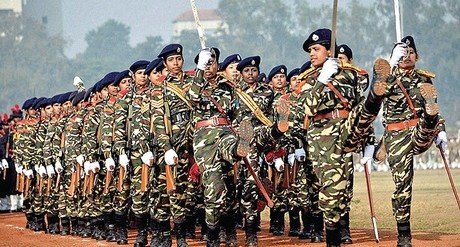
Giving an impetus to the use of indigenous items, the Central Armed Police Forces (CAPFs) will be using ‘khadi durries’ (rugs) manufactured by the cottage industry.

The Indo-Tibetan Border Police Force (ITBP) will be procuring 1,71,520 cotton ‘khadi durries’ for use by the CAPF that functions under the Ministry of Home Affairs. The value of the order is Rs 8.5 crore.

A memorandum of understanding (MoU) in this regard has been signed with the Khadi and Village Industries Commission (KVIC) by the ITBP.


Western Command tests offensive concepts amid Ladakh standoff

Various units of Ambala-based Kharga Corps carry out field drills as part of winter training

Western Command tests offensive concepts amid Ladakh standoff

Tribune News Service

Chandigarh, January 6

Amidst a volatile security atmosphere in the subcontinent, the Army’s Western Command conducted an integrated training exercise involving all arms to fine tune its battle drills in line with its operational role along the western front.

Various units of the Ambala-based Kharga Corps, the Army’s most potent strike formation, carried out the field drill over the past few days as part of its winter training cycle. The exercise took place even as a large number of troops, including armoured, artillery and engineer elements, continue to maintain eyeball to eyeball confrontation with the Chinese along the Line of Actual Control in the northern sector in a stand-off that has been continuing for the past about nine months. Some units from the western theatre were also moved up to eastern Ladakh.

The exercise is aimed at validating evolving military concepts and offensive manoeuvres meant to inflict a swift punitive blow to the adversary while operating in a networked and informationalised domain. Tactical air support, heli-borne operations and sub-conventional warfare also feature in such exercise.


Are protesting farmers taking precautionary measures against Covid, SC asks Centre Ensure COVID-19 guidelines are followed, says concerned CJI

Are protesting farmers taking precautionary measures against Covid, SC asks Centre

Farmers at the Singhu border. Tribune file

Satya Prakash
Tribune News Service
New Delhi, January 7

As hundreds of farmers continue with their protest against the three farm laws in the national capital, the Supreme Court on Thursday expressed concern over the possible spread of COVID-19 and asked the Centre if they were taking precautionary measures against the pandemic.

“You must tell us what is happening? I don’t know if farmers are protected from COVID-19. Same problem may arise in the farmers’ protest too,” a Bench headed by Chief Justice of India SA Bobde said during a hearing of a PIL seeking a CBI probe into Tablighi Jamaat congregation at Nizamuddin Markaz in March last year in violation of restrictions imposed due to COVID19.

The petitioners alleged the congregation led to faster spread of COVID-19 due to “inaction” on the part of the Centre and the Delhi government, putting others’ lives at risk.

As Solicitor General Tushar Mehta replied in the negative and said he will find out the status and file a report in two weeks, the Bench said it could give rise to a situation like Tablighi Jamaat event at Nizamuddin.

“We are trying to ensure that COVID-19 doesn’t spread. Ensure guidelines issued are followed,” the CJI said.

The top court was hearing petitions challenging the validity of the three farm laws passed by Parliament last year.

One of the advocates said Tablighi Jamaat leader Maulana Saad was not traceable and his whereabouts were not known.

Granting time to the petitioners to file a rejoinder, the Bench said the matter will be taken up on Monday along with other petitions on the issue.

Noting that there was no improvement in talks between agitating farmers and the government, the top court had on Wednesday said it would take up petitions against farm laws and those against farmers’ protests on January 11.

“There is absolutely no improvement in the situation,” CJI Bobde had said during the hearing of a PIL by advocate ML Sharma on the issue.

Attorney General KK Venugopal had told the Bench, “There is a good chance that the parties may come to some conclusion in near future.”

The CJI – who had on December 17 indicated constituting a committee of independent and impartial persons, including agriculture experts, to end the stalemate between protesting farmers and the Centre – had said, “We understand the situation. We want to encourage the talks. We will keep the matter on Monday and will adjourn if you say so.”

Solicitor General Tushar Mehta had pointed out that since healthy talks were going on between farmers and the Centre, it would not be advisable to take up the matter immediately.


What to expect from eighth round of talks between Centre and farmers Small and marginal farmers comprise close to 85 per cent in the country

What to expect from eighth round of talks between Centre and farmers

As farmers, braving adverse weather conditions, draw elaborate plans for the month for Lohri, January 23—Netaji Subhas Chander Bose’s birth anniversary—and Janaury 26, it seems the government, too, is prepared for a long haul. PTI/file

Vibha Sharma

Tribune News Service

New Delhi, January 6

While unions/ ‘jathebandis’ and government are working hard to keep alive the communication channels, after the January 4 meeting it is more or less clear the government has ceded all it intends to persuade farmers to end the agitation.

As farmers, braving adverse weather conditions, draw elaborate plans for the month for Lohri, January 23—Netaji Subhas Chander Bose’s birth anniversary—and Janaury 26, it seems the government, too, is prepared for a long haul.

Ahead of the January 8 talks with farmers (eighth if the meeting with Home Minister Amit Shah is discounted), top sources say the government has already relented on the proposed Power Act, the Ordinance on stubble pollution and offered amendments to the three Acts and this is about as far it is willing to go on the issue.

“Otherwise, they (farmers) should tell us something new, we are ready to discuss the three Acts threadbare, clause by clause,” they say.

Given the kind of support/traction the agitation has received from common people, the matter has moved out of the hands of union’ leaders for any resolution on a middle path now, this too farmer and government negotiators know well.

“It is now a people’s movement,” says a union leader.

Besides, as Agriculture Minister Narendra Singh Tomar has pointed on many occasions, it is the matter of the entire country and not just Punjab and Haryana.

“Politically it is the question of 23 seats in the 545-member Lok Sabha (of Punjab and Haryana),” they say.

The small and marginal farmers comprise close to 85 per cent in the country. Moreover, if the government relents any further, it will only end up opening prospects of more such protests.

The government, “which has visibly toned down/softened on agitators and the agitation”, seems to have offered a “joint committee on MSP”, which unions rejected, sticking to their demand for a legal framework to ensure minimum support price.

It is not just the three laws, farmers have also junked Prime Minister Narendra Modi’s claim of implementing recommendations of the Swaminathan Commission and are demanding a guaranteed MSP on 23 crops so that they can “diversify” from paddy and wheat.


Kisan-Farmers Movement-Agri Acts Dec 2020 Tractor march held by farmers around the Delhi borders makes history

Tractor march held by farmers around the Delhi borders makes history 

Delhi, January 07, 2021: A massive tractor march was held by the farmers, protesting at the Delhi borders, today in a bid to oppose the three controversial agriculture ordinances. The march witnessed several thousand tractors to and from Tikri border and Singhu border. Notably, the march was conducted by the farmers a day before the meeting of farmers’ leaders with the central government.

The march kickstarted around 11am from both the major borders and ended around 4 pm at a central point between both the borders. A large number of farmers across  the states including Punjab, Haryana and Rajasthan took part in the tractor march with great enthusiasm.

As per the farmers’ unions, this march was conducted to perform a rehearsal as the leaders have already announced to conduct a massive tractor march into Delhi on the occasion of republic day. The farmers’ unions  said that the march was successfully conducted today as a large number of farmers took part in it excitedly and they are hoping to see see more number of farmers in the coming tractor march.

It is to be noted that the farmers unions will conduct a meeting on Friday with the central government at the Vigyan Bhawan to discuss on the controversial three agricultural ordinances. Although the farmers have not been satisfied yet after attending the meetings with the central government.


Kisan-Farmers Movement-Agri Acts Dec 2020 After 1947 and 1984 events, I seen the 2020 protest as third big incident of my life: 85-year-old farmers Said the ordinances will make us homeless

After 1947 and 1984 events, I seen the 2020 protest as third big incident of my life: 85-year-old farmers Said the ordinances will make us homeless

BY- Harshabab Sidhu
Singhu Border (Delhi), January 07, 2021: A 85-year-old man sitting at the Singhu Border here to protest against the three laws, said that he is seeing the agitation as the third big incident of his life after the partition in 1947 and emergency in 1984. Balbir Singh, a resident of Sarala Kalan village in Patiala also said the BJP government was planning to make the farmers homeless through these ordinances. Balbir Singh joined the protest on December 26 and staying with his village residents in a trolley.

“I was 10-year-old when the partition took place in 1947. I still remember the bloodshed in the border villages. After that, I spent one year in jail during the time of emergency in Punjab following 1984 riots. Now, I becomes the part of this historical agitation too. I owns just 4.75 acres of land and there are 15 members in my family. I have gone through the tough times in my life,” said Balbir Singh while adding that “I am seeing the future of my grandchildren in dark in this situation. The Modi government has made us helpless.”

Talking about the agriculture ordinances, Balbir Singh added that the new laws will finish the existing structure of farming. He said the commission agents (arhtiyas) are the backbone of small farmers. After their removal, we cannot survive as we have to approach the banks or private players for financial help. He said that the farmers were already at the receiving end as the governments of the country have not provided the fair price of their crops. With the implementation of these laws, farmers will unable to earn for their families.


The Chinese threat is not just along the LAC

The Chinese threat is not just along the LAC

Ominous: The growing footprint of Chinese companies poses a security challenge. Reuters

Maroof Raza

Strategic Affairs Analyst

THE just-released year-end review for 2020 by the Ministry of Defence (MoD) states that even though Indian troops countered every Chinese move along the LAC in Ladakh, maintaining “all protocols and agreements between the countries”, the PLA “escalated the situation by utilisation of unorthodox weapons” to further their ‘expansionist designs’. This is in keeping with the strategy outlined by the Chinese authors of Unrestricted Warfare, who have suggested that all means, armed and unarmed, with lethality, should be used to compel an enemy to submit to your interests. No wonder the Chinese troops of the PLA had used nail-studded clubs and other means to get the better of the Indian soldiers, though unsuccessfully so. But the challenges that China could pose may go well beyond the Himalayan frontiers, since the Indian army, with the IAF’s assistance, has “mobilised troops, including accretionary forces”, as per the MoD report. It leaves China little room for intrusions now.

Thus, the Chinese could well be preparing to use electronic warfare means instead of focusing on just the use of conventional military platforms, despite the Chinese having deployed their air assets to the optimum, as the IAF Chief had recently indicated, and India’s navy keeping a close watch on Chinese ships and submarines in the high seas. The recent conflict between Armenia and Azerbaijan gives us one major takeaway: the nation that has more advanced electronic warfare capabilities will win battles in future. The use of drones, sensors and micro chips could be more lethal than the armada of air and naval power that had until now dominated military planning. The jamming of radars could make military users blind, and many of your systems could be rendered useless. The Chinese are working to get to the top of it, based on their 10-year Made in China plan for 2025, announced in 2015. Thus, Chinese companies, as part of a deep civil-military engagement, provide the Chinese armed forces technologies — stolen or reverse-engineered — to enhance the PLA’s space and cyber capabilities as also in artificial intelligence.

Here is an example of what the Chinese have been capable of. In November 2016, the US navy’s extremely high-tech guided missile destroyer, the USS Zumwalt — that was commissioned at a cost of $4.4 billion and billed as a force multiplier — suffered a propulsion failure on the Panama Canal. This had shocked the US defence establishment. A thorough investigation led the US to identify ‘Chinese Chips’ — microchips that were manufactured by the PLA — which the Americans had to buy in tens of thousands to cut manufacturing costs. Two days after the embarrassing failure of the US navy’s destroyer, a British hi-tech naval destroyer, HMS Duncan, suffered a similar propulsion failure. This apparently also had Chinese Chips in it! Therefore, electronic warfare is the next big challenge for militaries worldwide and China is focusing on that more than conventional military platforms. India should therefore create ‘geek brigades’ for our armed forces.

Furthermore, as articulated in Unrestricted Warfare — even though its focus is on how China could get the better of the US — it has a military and economic message that India would be foolish to ignore. While the US strategic community continues to focus on retaining its military edge with newer technologies, the Chinese have for some years quietly built up their reach within the American elites and have by now long-standing financial links even within Democrats and Joe Biden’s party members. If this requires money, so be it. And thus the Chinese plan to buy out politicians, stifle the media, steal resources and even technology, seems predictably par for the course. It is a pattern that is steadily emerging even in India, which offers both opportunities and challenges for China.

Beyond the newsmakers, China also targets the local population. Thus, it has flooded the Indian market with products and apps, since India offered one of the largest markets — with reportedly 560 million cellphone and their e-application users — with investments from Alibaba and Tencent reportedly in the likes of Paytm, MxPlayer and Gaana. These pose a big security challenge, which hasn’t been explained to Indian users. With Indians known to give out information more easily than most other people, your data can easily take away our data, especially that is privileged information of companies, allowing for their use to even reverse-engineer products. Also, the information on the Internet is controlled by two camps; the ‘open’ or the traditional camp dominated by Western companies like Google, Facebook and Amazon and the ‘closed’ one of the companies controlled by China such as Alibaba and Baidu. It’s anybody’s guess where the greater dangers lie.

It is well known that cyber and biological threats are hard to counter. Despite around 50 organisations of the US government having been recently hacked — and this includes the US Treasury, State and Homeland Security departments — their cyber security experts are clueless of the thefts for nearly nine months! And as India has ranked poorly on the cyber power index computed internationally, it wouldn’t be an exaggeration to say that while our critical national assets are reasonably secure against the repeated cyber attacks they face, the security of our banking and business entities needs to be further enhanced. And if the pandemic has alerted us to one thing, it is the crippling effect that a biological attack may have on any society. And though most major countries are signatories to international conventions against the use of biological weapons, (while still maintaining their stocks of germs) and if and when they do decide to use it, this could have a devastating impact — for which we aren’t quite prepared.


TRYSTS AND TURNS Farmers staying the course The agitation will continue till one of the parties blinks

Farmers staying the course

Another story: The farmers can’t be treated like anti-CAA protesters. Tribune photo

Julio Ribeiro

The Punjab, Haryana and western UP farmers, who are spearheading the protest against the new farm laws, appear to be as determined as they were on the day they began their march to Delhi. They have braved the cold, the rain, the hardships that living in tents bring, the tear-gas shells of the Haryana Police and the water cannons. Nothing seems to deter them.

They have been called Khalistanis, pro-Pakistan, anti-national, friends of Maoists and more, but the epithets have not moved them. The allegation that opposition parties have set them up for political mileage has induced a prompt reply from the agitation’s leaders that it is not the Opposition that has led them, but it jumped aboard the farmers’ bandwagon when it sensed that the government had been put on the backfoot.

The Opposition taking advantage of the government’s discomfiture is to be expected in any democracy. The BJP would have followed the same course if it was in the Opposition. The Congress had advocated the same reforms when it was in the electoral fray, but has now gone back on its stand when the BJP initiated the reforms. This, too, can be expected in a democracy. The GST was initially proposed by the Congress, but when the BJP introduced the reform, the Congress had much to say! The people take such developments as par for the course.


There is one threat that the agitating farmers have voiced which I feel may hurt them — the threat to disrupt the Republic Day celebrations at Janpath. There are certain sacred days that every patriotic Indian must not denigrate at any cost. The Independence and Republic Days are the most sacred, along with the Mahatma’s birthday. The farmers will be making a humongous mistake if they breach that compact. The sympathy of the general public will diminish if they carry out any form of protests on that sacred day.


The farmers are a highly valued segment of society. The government knows it cannot deal with farmers like it dealt with anti-CAA protesters, even though the Shaheen Bagh crowd was mostly Muslim women, including JNU and Jamia Millia students. In Adityanath’s UP, the police confiscated the blankets brought by the protesters. This type of police action against farmers cannot even be considered, let alone tried!

The government insists that the three laws will benefit the farmers and it may well be so. Many economists and agri-experts have said so, but they are mostly intellectuals immersed in thought in the comfort of their study rooms. The farmers are the ones with hands-on experience. They do not agree with the government and the experts. It is difficult for citizens to judge. The government says the farmer is free to sell anywhere in the country, and not necessarily to the next-door mandi. That is theoretically true but there are practical difficulties in transporting the produce over long distances without incurring added costs. Added to that is the fact that the farmer is always in need of ready cash for the next sowing or for his household expenses. Only the wearer knows where the shoe pinches.

The government suspects that the middlemen, who it has set out to eliminate, are behind the farmers. The middlemen have the most to lose. They will naturally try to protect their turf. Very cleverly, they have sown doubts in the farmers’ mind that the government is out to fatten the rich and powerful business houses. This propaganda has been lapped up with the consequent attacks on Jio’s transmission towers in Punjab.

The government has been hoist with some of its own petards. Demonetisation was introduced overnight to surprise those with black money stored under mattresses. Black money operators were far too clever, it appears. No notable success came the government’s way. The farmers obviously do not want to become guinea pigs in another possible experiment which the government says will double their income. It may very well do so, as many experts have opined, but it is, at present, in the realm of theory only. The farmers of Punjab and Haryana are already better off than their compatriots in other states.

The government should reconsider its stated policy of foisting its ideas and calculations on cost-benefit ratios on people or segments of people without due notice. In some matters like demonetisation and last year’s action in J&K, there would be a need for secrecy but in trying to uplift farmers or favouring Bangladeshi Hindus for instant citizenship, there was no need for any surprise or hurry in ramming legislation through Parliament without adequate debate.

Secrecy could be justified in the demonetisation announcement and in the overnight detention of J&K leaders, but even then, the fact that the government is adept in secret manoeuvres resonates in the less sophisticated human minds at such times. When the government says that it is introducing laws for the good of the people or segments of the public, such promises are taken with large pinches of salt.

The government’s credibility comes into focus at such times. I, for one, do not doubt that the government’s intention was to benefit the farmers. But in the light of its low credibility index, it should have been more circumspect by taking the intended beneficiaries into confidence and convincing them that it had only their good in mind and not that of the party’s funders.

The agitation will continue till one of the parties blinks. The government cannot afford to repeal the three laws. Such a move will be disastrous for it from every angle, chiefly its impact on the image of Modiji himself. It may not trouble the poor who have crossed over to his side because of the direct transfers of government munificence to their bank accounts and the houses and toilets, electricity and roads they say he has provided. But to his traditional vote banks among the middle classes it will certainly matter!


Will step up agitation, warn farmers

Will step up agitation, warn farmers

Unity is strength: Thousands of farmers take out a tractor rally against the three farm laws near Jhajjar’s Badli village on Thursday. tribune photo: S Chandan

Tribune News Service

Jhajjar, January 7

“It is just a trailer and the picture will be shown on January 26 if the Centre does not repeal the farm laws. Delhi will see a tractor parade this Republic Day.” This was stated by Harmanpreet Singh, a protester from Punjab, who was enthused by the presence of a large number of farmers in the tractor march today.

Elderly farmers during the tractor march at Tikri. Sumit Tharan

Sitting beside him on the tractor, Panthjeet Singh quipped, “Like the armed forces, we are taking out the flag march as a rehearsal of the proposed Delhi march on January 26 to make the Centre realise what farmers can do to ensure that their demands met.” Jaspal Singh of Fazilka said the march had infused a new zeal among the protesters, which would work towards making the proposed Delhi march on January 26 a success.

These reactions summed up the mood of protesting farmers during the tractor march taken out from Tikri to Singhu on the call of the Sankyukt Kisan Morcha.

There was great enthusiasm among the protesters, with many participating bare-chested to protest against the farm laws. “I am participating bare-chested to make the Prime Minister realise that neither the severe cold nor rain can stop us. We have taken the pledge of not going back alive if the farm laws are not repealed,” said Simranjeet Singh, another farmer.

A considerable number of farmers from Jhajjar, Rohtak, Jind, Bhiwani, Hisar and Fatehabad took part in the march to express solidarity with Punjab farmers. “It is a do-or-die battle and we are prepared to make any sacrifice to force the Centre to accept our demands. If the stir fails, no individual or group will dare to fight against governments in future, but we will not let it happen,” said Manjit, a young protester from Jind.

Show of unity on KMP expressway

Show of unity on KMP expressway


Farmers hit road on tractors against laws Drum up support for R-Day ‘Tiranga March’

Farmers hit road on tractors against laws

Farmers on their way to the Tikri border on Thursday. PTI

Our Correspondent

Fatehgarh Sahib, January 7

To express solidarity with the protesters at Delhi borders, farmers belonging to various unions carried out a massive tractor march in the district. A large number of farmers riding hundreds of tractors passed through various villages and reached Fatehgarh Sahib.

Surinder Singh Lohari, general secretary, BKU (Sidhupur), said the tractor march had been carried out to create awareness among the farming community as well as the people against the farm laws and to urge them to participate in the ‘Tiranga March’ in Delhi on Republic Day. He said they were getting a good response from every section of society and thousands of tractors would reach Delhi on Republic Day. He said the farmers would not return till the farm laws were repealed.















































