Sanjha Morcha

What’s New

Click the heading to open detailed news

Current Events :

web counter

Print Media Reproduced Defence Related News

38 cases, more than 80 arrests so far over tractor parade violence: Officials R-Day tractor march by farmers against the three recent agriculture laws had turned violent

38 cases, more than 80 arrests so far over tractor parade violence: Officials

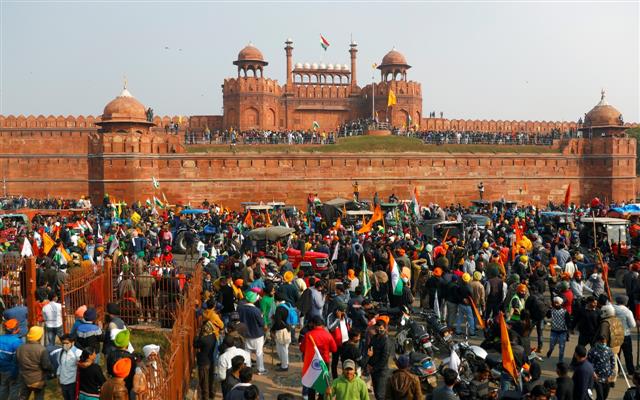
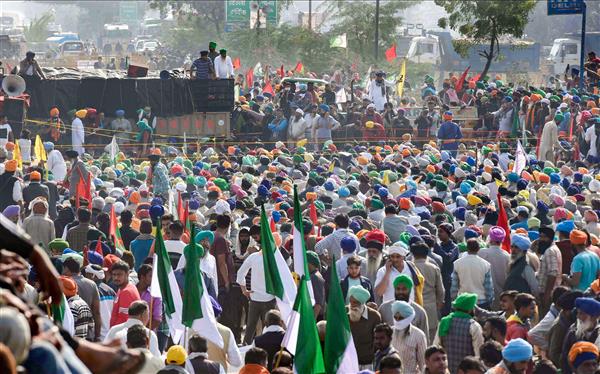
Farmers gather in front of the historic Red Fort during a protest against farm laws introduced by the government, in Delhi, India, on January 26, 2021. Reuters file photo

New Delhi, January 30

The Delhi Police has so far registered 38 cases and arrested 84 people in connection with the violence during a tractor parade by farmers here on Republic Day, officials said on Saturday.

The tractor march by farmers protesting against the three recent agriculture laws had turned violent, leading to chaotic scenes on the streets of the national capital on Republic Day.

Thousands of protesting farmers had clashed with the police during the parade. Many of them, driving tractors, reached the Red Fort and entered the monument.

They also hoisted flags on the domes and placed a flagstaff at the ramparts of the national monument, where the national flag is unfurled by the prime minister on Independence Day.

Police had asked nine farmer leaders to join the investigation in the case on Friday, but no one turned up. — PTI


How BJP’s miscalculation strengthened farmer agitation, Jat bonding in UP, Haryana The story of ‘roti-beti ka rishta’ and ‘jat pride’ and the second major miscalculation in the agitation

How BJP's miscalculation strengthened farmer agitation, Jat bonding in UP, Haryana

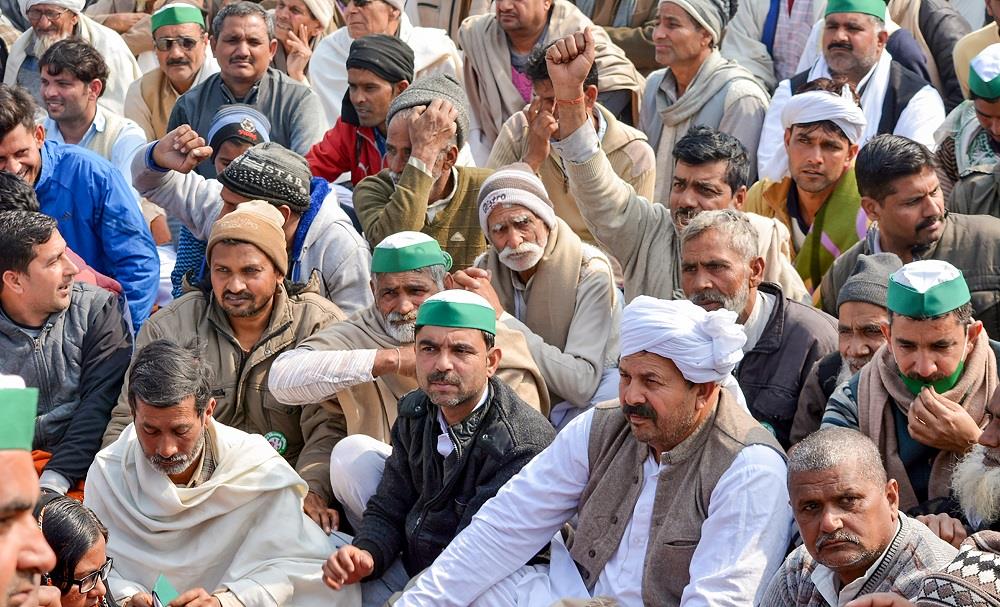
BKU president Naresh Tikait, along with other leaders, during a ‘mahapanchayat’ organised to mobilise support for the farmers’ agitation at Delhi borders against Centre’s farm reform laws, in Muzaffarnagar on Friday. PTI photo

Vibha Sharma

Tribune News Service

New Delhi, January 30

Baghpat, Sonepat and Rohtak—they may be in different states (Uttar Pradesh and Haryana) but members of the ‘Jat’ community of the region share strong socio-cultural ties/bonding called “roti-beti ka rishta”.

What the events of the past few days in the ongoing farmers’ agitation, especially those revolving around BKU leader Rakesh Tikait, have done is strengthened those bonds.

Perhaps, this is the second time the BJP leadership miscalculated the agitation, the first being underestimating farmers and their agitation.

A day after the highly-successful ‘mahapanchayat’at Muzzaffarnagar, which decided that the Ghazipur agitation would continue, a similar event is now being planned at Baghpat, the bastion of ‘Jat’ leaders Ajit Singh and son Jayant Chowdhury.

Baghpat may be in Uttar Pradesh, and is an hour’s drive from Sonepat, but the implications of another ‘mahapanchayat’ are expected to be felt not just in Yogi Adityanath’s Uttar Pradesh but also in Manohar Lal Khattar’s Haryana—incidentally both non-Jat chief ministers.

BKU spokesperson Rakesh Tikait’s tears have not impacted only Ghazipur but also Singhu in Haryana.

A day after Muzaffarnagar ‘mahapanchayat’, BKU president Naresh Tikat has said that a similar event had been planned in Baghpat on January 31.

Naresh Tikait on Friday said it was “their mistake” to support the BJP candidate, Union Minister Sanjiv Balyan, against RLD chief Ajit Singh in the last Lok Sabha elections.

After the death of BKU founder Mahendra Singh Tikait, the organisation lost much of its support base, say observers.

In fact, Rakesh Tikait lost when he contested the elections.

But the visuals of Rakesh Tikait, a Jat, becoming sentimental and breaking down, were enough to stir emotions among his community who “collectively felt humiliated”. Perhaps the BJP has inadvertently increased his relevance, bringing together the community, and giving purpose and strength to Tikait brothers and their organisations.

“Jats stand by each other in ‘dukh’. It is a typical characteristic of the community which the BJP misunderstood and turned what could have been a possible resolution into a prestige issue for them. The basic feeling now is that ‘BJP ne dukhi kar diya kyoki wo ‘Jat’ hai’ (BJP created problems for him because Rakesh Tikait is a ‘Jat’)”, explains Prof Sudhir Panwar.

After Naresh Tikait calling off the agitation two days back, there were visible signs of  thinning of protests at the Ghazipur protest site.

Sources say even though an “agreement” was reached with the Tikait brothers that the protest site would be vacated, the increase in security forces and presence of Loni MLA Nand Kishore Gujjar and his supporters “vitiated the atmosphere”.

Asserting that he would not surrender and would also call more people to join the protest if needed, Rakesh Tikait broke down saying “he would rather commit suicide than leave and end the protest against the farm laws”.

Following that, Naresh Tikait quickly called an emergency meeting and appealed to supporters to reach Ghazipur and scheduled the Muzzafarnagar ‘mahapanchayat’.

Coming to the first miscalculation, many observers say the Narendra Modi government not just “underestimated” the agitation but also the determination and resolve of the Punjab farmers who managed to reach and hold on at the Delhi borders despite so many hurdles.

 Had it taken care of the situation in Punjab, it would not have escalated to this level, they say.

Quite clearly, Punjab BJP leaders did not give the correct feedback of the situation in the state to the Centre. Whether a similar situation is now being repeated in Uttar Pradesh remains to be seen.



Govt made a mistake by pushing farm laws, shouldn’t make another by implicating farm leaders: Azad to Modi Leader of Opposition in Rajya Sabha demands discussion on farmers issues after the budget session recess, also seeks restoration of J&K statehood

Govt made a mistake by pushing farm laws, shouldn’t make another by implicating farm leaders: Azad to Modi

Ghulam Nabi Azad. PTI file

Aditi Tandon

Tribune News Service

New Delhi, January 30

The Congress on Saturday warned the government against wrongfully implicating the agitating farmer leaders, saying the government had made one mistake of pushing the farm laws through Parliament but should avoid the second mistake of targeting genuine protesting leaders.

Speaking at the all-party meeting chaired by Prime Minister Narendra Modi today, Leader of Opposition in the Rajya Sabha and Congress veteran Ghulam Nabi Azad demanded a discussion on farmer issues on priority when the Budget Session resumes after recess.

He said: “The government can stand on prestige with anyone but should not stand on prestige with our farmers, who produce food for the nation.”

Azad said the Opposition had warned the Centre against pushing the laws without sending them to a standing or a select committee of Parliament.

Condemning the Republic Day violence, Azad said the incidents involved lumpen elements who should be punished.

“We condemn the Republic Day incidents. Never have we seen such a thing on January 26 or August 15. This would have never happened had the government needed the Opposition and allowed Parliamentary scrutiny of farm laws. That way, the government could have ensured that the concerns of farmers are addressed,” said Azad, warning the government of the agitation swelling up if the government continued to implicate farmer leaders.

“When I was a chief minister, I saw that no one objected if a terrorist was killed but if an innocent person was killed in the name of terrorism, there was always a furore,” said Azad, asking the government to pause and rethink the rules of engagement with the farmers.

Azad also demanded a discussion on economy and the the declining GDP and jobs noting, “Given the hike in petrol and diesel prices, I can say it is easier to buy a car these days but difficult to top it up with fuel.”

Azad also asked the Centre to bring a bill urgently to grant full statehood to Jammu and Kashmir, saying a sensitive border state could not be left to officers and bureaucrats.

“Now, the district development council and panchayat elections have been concluded in Jammu and Kashmir. Now there’s no excuse to not restore JK’s statehood,” said the former JK chief minister.


Tikait strikes a chord, numbers swell at Singhu

Tikait strikes a chord, numbers swell at Singhu

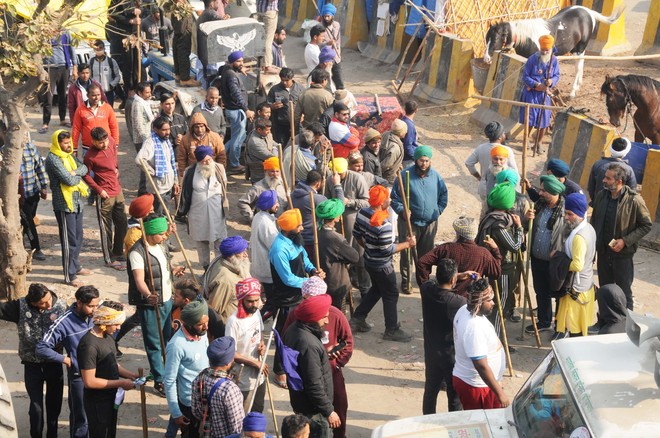
Farmers guard their camp at the Singhu border. Sayeed Ahmed

Parveen Arora

Tribune News Service

Sonepat, January 29

After an emotional appeal by BKU leader Rakesh Tikait from the Ghazipur border, a large of farmers were on their way to join the protest at the Singhu border on Friday.

Farmers from various districts of Haryana and Punjab arrived in large numbers to strengthen the stir. They boosted the morale of protesters by chanting ‘Bharat Mata ki jai’, ‘Kisan mazdoor ekta zindabad’ and ‘Haryana Punjab bhaichara zindabad’.

Anmol Rana of Sonepat said the stir got renewed energy after the Ghazipur incident. He criticised snapping of electricity and water supply at Ghazipur and said these acts would not stop farmers.

Kulbhushan of Sonepat said the farmers’ protest would reach new heights in the days to come. “The Red Fort incident was unfortunate, but the stir would continue,” he said.

Farmers from Punjab were hopeful that the numbers would increase in the days to come. “We are happy that black sheep have been exposed. More people will join the stir as a large number of Punjab farmers are on the way,” said Karnail Singh of Fatehgarh Sahib.

Ranjeet Singh Bajwa of Hoshiarpur said scores of farmers who had left after taking part in the tractor parade were coming back. “Tikait’s appeal has given new energy to the protest,” he said.

Meanwhile, volunteers have raised vigil at the dharna site after the Friday’s clash.


These women have served the nation, says SC; asks Centre to sort out their issues

These women have served the nation, says SC; asks Centre to sort out their issues

Tribune file photo

Tribune News Service
New Delhi, January 29

Almost a year after the Supreme Court granted permanent commission to woman Army officers, many of them are still litigating to get their due.

On Friday, a Bench headed by Justice DY Chandrachud asked the Additional Solicitor General Sanjay Jain to sort out the issue with the authorities concerned and posted the matter for further hearing after two weeks.

“They are your own officers. They have served the Navy and the Army. Please try to sort it out with the authorities. Why push them into the litigation cycle again? There in their years of retirement now…These women (officers) have served the nation. Why should they be made to go to the AFT (Armed Forces tribunal) again? Sit down with them and sort it out,” a Bench headed by Justice DY Chandrachud told Additional Solicitor General Sanjay Jain.


Maintaining that the 2020 judgements have to be implemented in letter and spirit, Jain assured the Bench those genuine issues that were resolvable within the framework of the rules and will be resolved.

In two verdicts in 2020, the top court had held that serving women Short Service Commission Officers in Indian Navy and Army were entitled to Permanent Commission on a  par with their male counterparts.

There are issues of arrears of salary, gratuity and pension that needed to be resolved.

Earlier this month, 11 women army officers had moved the Supreme Court seeking compliance of its directions to the Centre for grant of permanent commission, promotions and consequential benefits to them “in an inclusive, fair, just and reasonable manner”.

Lieutenant Colonel Ashu Yadav and 10 other women Army officers alleged that the directions were not being complied with in “letter and spirit”.

The procedures for grant of permanent commission were “vitiated with arbitrariness, unfairness and unreasonableness”, they alleged in the petition.


Over 100 Punjab farmers ‘missing’ since R-Day rally

Over 100 Punjab farmers ‘missing’ since R-Day rally

Photo for representational purpose only

GS Paul

Tribune News Service

Amritsar, January 29

More than 100 Punjab farmers who went to Delhi to take part in the Republic Day rally are ‘missing’, as per the Punjab Human Rights Organisation. In collaboration with Khalra Mission, the PHRO today announced free legal aid to the farmers booked by the Delhi Police for the Red Fort incident.

“It appears the police deliberately led the farmers to the Red Fort. A ruckus was created when the Nishan Sahib was hoisted there. This cannot be an offence. The Tricolour was not touched. Most protesters were illegally deta-ined on the spot. Since then, their whereabouts are not known,” activist Sarabjit Singh Verka said.

Hakam Singh, a lawyer with the Punjab and Haryana High Court, said at least between 80-90 youths from Punjab had not returned to their camps at Singhu and Tikri. “A group of lawyers is trying to trace them. We are in touch with the police, farm unions and hospitals,” he said.

Lawyers under the banner of Panthic Talmel Sangathan too offered legal aid to the farmers. “We are scrutinising the FIRs. Most farmers were booked under the Damage to Public Property Act, Epidemic Diseases Act and Ancient Monuments and Archaeological Sites and Remains Act,” an advocate said.

Akal Takht officiating Jathedar Giani Harpreet Singh said: “Nishan Sahib is the symbol of the Sikh identity. Hoisting the flag does not constitute an offence.”

A report from Moga said 12 farmers of Tatarie Wala village in Moga district were among those missing. The village panchayat identified them as: Amritpal Singh, Gurpreet Singh, Daljinder Singh, Jagdeep Singh, Jagdish Singh, Navdeep Singh, Balvir Singh, Bhag Singh, Harjinder Singh, Ranjit Singh, Ramandeep Singh and Jaswant Singh. The panchayat appealed to the Punjab CM to secure their release.


Doubt locals attacked farmers at Singhu: CM Punjab

Doubt locals attacked farmers at Singhu: CM Punjab

Tribune News Service
Chandigarh, January 29

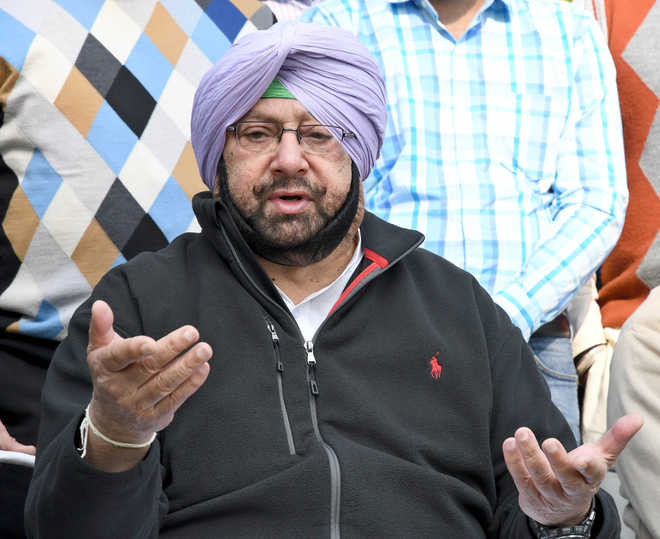
Condemning today’s violence by some miscreants at the Singhu border, Chief Minister Capt Amarinder Singh urged the Centre to conduct a thorough probe to identify the so-called locals who had purportedly broken through tight security cordons to attack farmers and their property.

“Were they really locals?” asked the Chief Minister, seeking a proper investigation to identify the trouble-makers and ascertain where they came from. “I can’t believe that local people could have turned against the farmers like this. Miscreants might have been brought from other places by vested interests to foment trouble,” he said, adding that locals calling the farmers traitors was not something he could believe to be true.

Govt scanning FIRs on union leaders

Sources in the government said the Congress government was examining the FIR slapped on the farm leaders. Meanwhile, Punjab Pradesh Congress Committee has offered legal aid to farmer leaders who have been named in FIRs registered by the Delhi Police, provided the leaders agree to the offer.

Calling for an immediate end to the vilification campaign launched against farmers in the wake of the Red Fort violence, the Chief Minister warned that maligning the farmers in this manner could lower the morale of the armed forces, 20 per cent comprised

Punjabis. Spreading false information against the farmers could create divisions, which could cause problems for Punjab, he warned, urging the media to handle the situation properly and sensitively.

AAP, Cong complicit, alleges Chugh

BJP national general secretary Tarun Chugh has condemned CM Capt Amarinder Singh for demanding action against the Delhi Police. Condemning the Republic Day violence, Chugh said the AAP, Congress and other parties also stood exposed by their direct and indirect support to the farmer unions.

“What is happening and what happened at Singhu today is what Pakistan wants,” said Capt Amarinder, pointing out that he had been warning for a long time that Pakistan would try to exploit the unrest over the farm laws to disturb Punjab’s peace.

Asserting that his sympathies, and those of his government and party, were with the farmers, the Chief Minister said every farmer in the country has his/her heart at Delhi’s borders at present.


Central agencies keep Punjab Police out of loop

Central agencies keep Punjab Police out of loop

upinderjit Singh
Tribune News Service
Chandigarh, January 29

The Delhi Police and central security/investigation agencies are not taking the Punjab Police along during operations in the state in connection with the Republic Day violence.

The CBI during today’s raids at several places in the state chose to take men from the Central Reserve Police Force (CRPF) instead of the local police.

Lack of trust following stir

  • Under rules, a visiting police team has to inform local police station and take their personnel along
  • However, lack of trust seems to have developed over the past few days following the farmer protest
  • Also, Punjab is ruled by a Cong government, while the Delhi Police come under BJP-led Union Home Ministry

Reports suggested teams of Delhi Police or other security agencies also raided some villages in pursuit of persons accused of indulging in violence. Senior Punjab Police officials said there was no official communication from the central agencies about the raids. Under the rules, a raiding or visiting police team has to inform the local police station of the area concerned and take their personnel along.

However, a lack of trust seemed to have developed over the past few days following the farmer protest. Also, Punjab is ruled by a Congress government, while the Delhi Police come under the BJP-led Union Home Ministry.

BJP leaders had been accusing the Punjab Police of looking the other way at the start of farmer protests and subsequently not providing security to party leaders during their events in the state.

The situation had escalated to a point where Governor VP Singh Badnore had to summon the Chief Secretary and DGP over alleged attacks on state BJP leaders and workers.

In the past, the Punjab Government had locked horns with the CBI over sacrilege cases and banned the agency from registering cases against state government officials without prior permission. The CBI had closed the investigation in the cases last year but the government withdrew the blanket permission to the CBI only during the farmer protests.

Before the protests, the Punjab Police had worked in tandem with the National Investigation Agency, Delhi Police, Haryana Police and other security agencies in nabbing a number of drugs smugglers, arms dealers and some alleged terrorists.


China may trigger fresh crisis along LAC

Even as soldiers battle the winter conditions, the greater challenge for the Indian Army lies in anticipating events and preparing for contingencies in the coming summer months. The PLA military strategy appears to be focused on two objectives — strengthening control over the disputed areas along the LAC and overcoming their war-fighting weaknesses in Tibet.

China may trigger fresh crisis along LAC

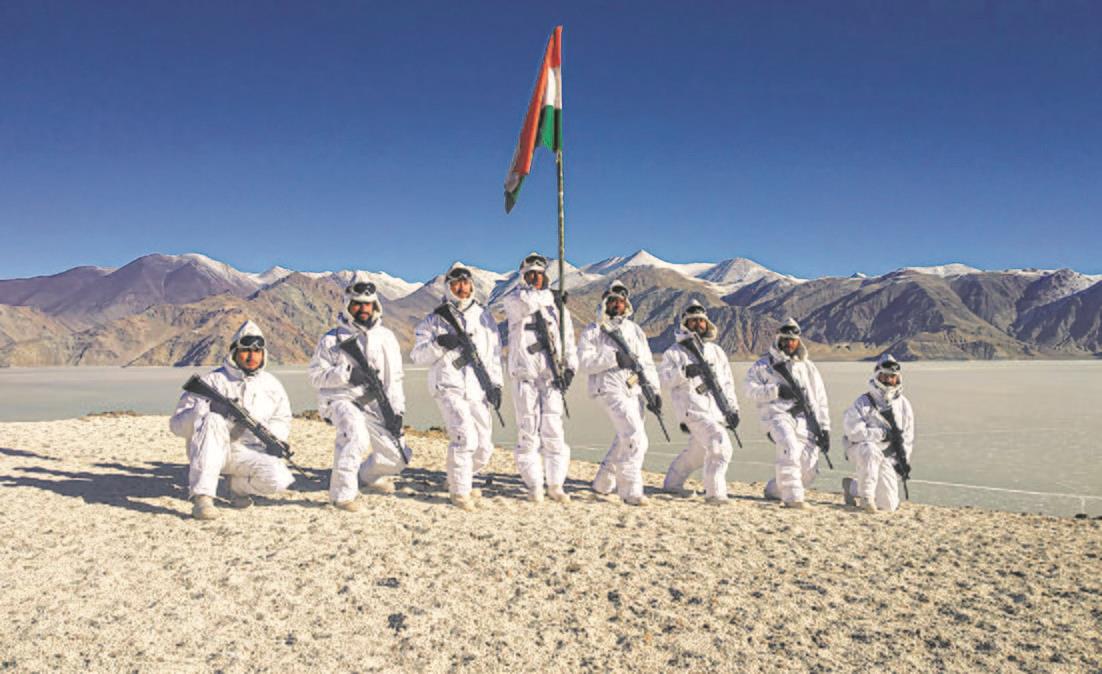
ETERRENCE NEEDED: India must secure the disputed areas before the snow melts and PLA movements become easier across the LAC. PTI

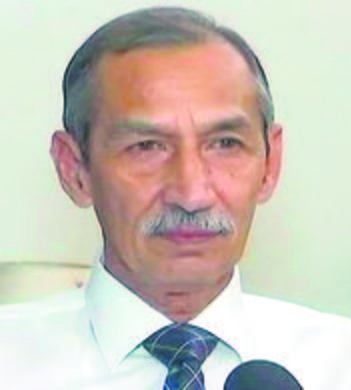
Lt Gen DS Hooda (retd)

Former Northern Army Commander

The standoff at the Line of Actual Control (LAC) in Ladakh is set to continue through the winter. There is minimal possibility of any significant military moves during the winter months, and it has been reported that the People’s Liberation Army (PLA) has already moved 10,000 soldiers from depth areas back to their permanent garrisons in Xinjiang and Tibet military regions. The Indian Army, even if it wishes to, will find it more difficult to pull out soldiers. With the roads to Ladakh closed, both the moving out of troops and their re-induction in an emergency, is extremely difficult.

Even as soldiers battle the winter conditions, the greater challenge for the Indian Army lies in anticipating events and preparing for contingencies in the coming summer months. The overall political intent of the Chinese leadership in precipitating the crisis along the border is still open to differing interpretations, but eight months into the standoff, there is greater clarity to their military aims. The PLA military strategy appears to be focused on two objectives — strengthening control over the disputed areas along the LAC and overcoming their war-fighting weaknesses in Tibet.

It is becoming increasingly evident that the primary element of the PLA’s military strategy is to change the nature of disputed areas to give permanence to their claims. In Ladakh, this is being attempted by physically occupying the disputed areas on the north bank of Pangong Tso or physically preventing the Indian patrols from going up to their claim lines at Depsang. Despite nine rounds of military-level talks, there has been no movement forward on disengagement from these two areas.

The construction of a village in the disputed Longju sector of Arunachal Pradesh is another ploy to firm up China’s claims. While this area has been under Chinese control since 1959, the fact that India also has a claim to this area is well known to both sides. It had been an accepted norm that both countries should avoid any provocative move in the disputed areas. In 2014 and 2016, the PLA had objected to the construction of small irrigation projects at Demchok, claiming this was a disputed area. However, all protocols and norms have now lost their sanctity.

In 2005, both countries signed an agreement on the ‘Political Parameters and Guiding Principles for the Settlement of the India-China Boundary Question’. Article VII of the agreement states, “In reaching a boundary settlement, the two sides shall safeguard due interests of their settled populations in the border areas.” By building villages and settling civilians in disputed areas, India could be presented with a fait accompli during the border negotiations.

The second element of the PLA’s strategy is to overcome its war-fighting weaknesses in Tibet, and many of the steps undertaken by the PLA in this regard precede the Ladakh standoff. The most obvious disadvantage is faced by the PLA Air Force due to the rudimentary support facilities at the airfields and the problems in operating from high-altitude facilities, which limit the fuel and weapon payloads that can be carried by an aircraft. Some of these weaknesses are now being attempted to be overcome through the development of new military facilities. A September 2020 Stratfor report by Sim Tack pointed out that after the Dokalam incident of 2017, China “started constructing at least 13 entirely new military positions near its borders with India.”

The new constructions include three air bases, five permanent air defence positions, and five heliports. Four air defence positions are coming up within the existing airbases, along with other facilities such as additional runways and blast pens. The report states that the recent Chinese infrastructure developments are aimed at “strengthening its ability to project air power along the entire Indian border.”

Another area where the PLA has a deficiency is its training standards and the ability to fight a high-altitude war. Here again, some attempts to improve standards are visible. In the last few years, the Chinese Army has attempted to introduce realism in training by setting up “blue forces” in the combined-arms training centres that act as an enemy to PLA units.

Coming specifically to Tibet, the PLA Army and Air Force training exercises have steadily increased over the years. These details have been comprehensively covered in an Observer Research Foundation paper, “PLA joint exercises in Tibet: Implications for India.” What is noteworthy is that in 2018, 2019 and 2020, major PLA exercises were held in January and February, the coldest months of the year. However, for now, the Indian Army still retains its superiority in high-altitude warfare.

The 2020 Ladakh incursion by the PLA was an operation that was preceded by many months of preparation and military infrastructure development in Ladakh. It also shows that China is now moving aggressively to establish its claims over the disputed areas and has discarded all the agreements that had kept the peace along the LAC.

What does this mean for the coming summer months? It would be strategically prudent for the Indian Army to prepare for a contingency in which the PLA attempts to move into more disputed areas along the LAC, particularly in Arunachal Pradesh. To counter this, we must aggressively secure these areas now before the snows melt and the PLA movements become easier across the Himalayan watershed defining the LAC.

An argument is often made that the existing stalemate resulting from our firm stance is a victory for us because we are not acquiescing to Chinese demands. There is certainly some merit in this argument because a stalemate is generally considered a setback for the superior power. However, remaining entirely on the defensive could also mean that we have passed on the initiative to the Chinese and will continue to react to their actions. With talks not making any headway, the summer months could see military jockeying in the disputed areas. Strong and visible military preparation in these areas would serve as deterrence to any PLA action and strengthen our hand in future negotiations.