















Sanjha Morcha

What’s New

Click the heading to open detailed news

Current Events :

web counter

Print Media Reproduced Defence Related News

Don’t stand on prestige’: Oppn clamours for farm law repeal Farmer stir dominates Prez Address debate in Rajya Sabha | Lok Sabha adjourns repeatedly

‘Don’t stand on prestige’: Oppn clamours for farm law repeal

Home Minister Amit Shah on Wednesday briefed Prime Minister Narendra Modi on the ongoing agitation and the law and order situation.

Tribune News Service
New Delhi, February 3

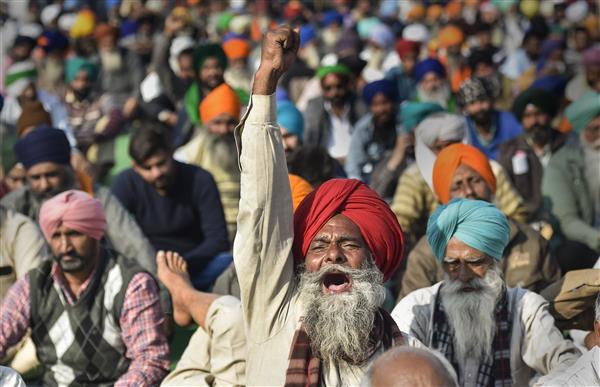
Farmers’ stir dominated discussions on the President’s Address in the Rajya Sabha on Wednesday with the BJP and Opposition clashing over the future of the new agriculture laws.

Also read:

After the BJP’s lead speaker Bhubaneswar Kalita from Assam defended the legislations while cautioning the Opposition against turning the farmers’ agitation into another Shaheen Bagh, the Congress and Samajwadi Party urged the government to rescind the laws rather than stand on prestige.

Amit Shah briefs Prime Minister

Home Minister Amit Shah on Wednesday briefed Prime Minister Narendra Modi on the ongoing agitation and the law and order situation. Later, Shah tweeted, “No propaganda can deter India’s unity! No propaganda can stop India from attaining new heights!” Ministers Piyush Goyal and Smriti Irani and celebrities Karan Johar, Ajay Devgan and Akshay Kumar also tweeted with hashtags “Indiatogether and “India against propaganda”.

The Motion of Thanks on President’s Address, which Kalita moved, saw 118 amendments by opposition MPs, including DMK’s Tiruchi Siva and Congress’ Digvijay Singh, Deepender Singh Hooda and KC Venugopal. The RS allocated 15 hours for the debate after the Opposition and the government agreed to extend it beyond the scheduled 10 hours to include time for discussion on farmers’ issues.

Kalita, former Congress chief whip in the RS, said the new laws would give new rights to farmers and doors were open for them to amicably resolve the issue. The BJP’s Vijaypal Singh Tomar, who seconded the motion, listed 12 expert committees that deliberated upon the farm reforms for two decades. Speaking in the presence of Prime Minister Narendra Modi, Tomar slammed the Opposition for “spreading misinformation” and said the new laws would empower small farmers and help their children become job providers.

Opening the debate from the other side, Leader of Opposition Ghulam Nabi Azad insisted on repeal of laws saying that the “government should not make it a prestige issue”.

“There can be nothing better than the PM himself announcing the decision to withdraw the laws,” said Azad, asking the Centre to form a committee to locate “people who had gone missing after the Republic Day violence”.

“We condemn what happened on January 26, particularly at the Red Fort but please ensure innocent farmer leaders are not implicated or the agitation will swell,” he warned.

Demanding farm law repeal, SP’s Ram Gopal Yadav cautioned the government against corporate monopoly over farm produce.

The Lok Sabha proceedings, meanwhile, were adjourned repeatedly on Wednesday as the protesting opposition members demanded a separate discussion on farm laws.

The House reassembled thrice, only to again adjourn till 5 pm, then 7 pm and later till 9 pm as the Opposition continued its protest despite repeated assurances by the Speaker that the members would get adequate opportunity to put forward their views.
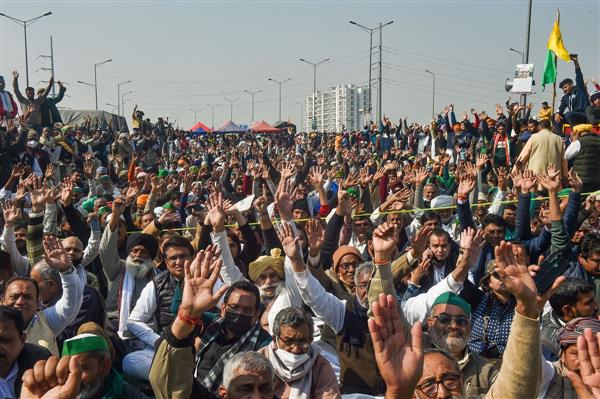
Around 15 MPs from 10 opposition parties reach Ghazipur border to meet farmers

Around 15 MPs from 10 opposition parties reach Ghazipur border to meet farmers

Farmers at the Ghazipur border. PTI file

New Delhi, February 4

Around 15 MPs from 10 opposition parties on Thursday reached the Ghazipur border to meet farmers protesting against new farm laws.

Farmers have been protesting at the Singhu, Tikri and Ghazipur borders of Delgi for the past more than two months against the three new farm laws.

They say the new laws will leave them at the mercy of corporates whereas the government says they are for the benefit of farmers.Many rounds of talks between the Centre and farmers have not led to anything.

Opposition parties have been supporting the farmers’ cause. PTI


US for fair play, human rights while backing farm law trajectory

US for fair play, human rights while backing farm law trajectory

Photo for representation purposes. PTI file

Sandeep Dikshit

Tribune News Service

New Delhi, February 4

A day after several celebrities in the West spoke out against the stalemate between farmers and the Indian Government, the US State Department has weighed in by calling for observing human rights and rules of fair play while supporting the general trajectory of the three farm laws.

“We recognise that unhindered access to information, including the Internet, is fundamental to the freedom of expression and a hallmark of a thriving democracy,” said the US State Department in response to a question on the ongoing farmers’ protests in India while calling for differences to be resolved through dialogue.

“In general, the United States welcomes steps that would improve the efficiency of India’s markets and attract greater private sector investment,” added Ned Price, the State Department spokesperson.

“We recognise that peaceful protests are a hallmark of any thriving democracy and note that the Indian Supreme Court has stated the same,” he emphasised.

The State Department has come into play after several politicians, including a member of the House Foreign Affairs Committee, backed demand by celebrities led by pop singer Rihanna for a resolution of the farmers’ agitation.

The tweets by some celebrities in the West, led to the Ministry of External Affairs (MEA) issuing a statement that advised them to fully understand the intent of the farm laws before rushing to comment. However, with farm law oppositionists dominating the social media, the response went up a notch higher with several Indian celebrities, mainly cricketers, taking to the social media with common hashtags and near identical messages to preserve the country’s unity.

New Delhi says the three farm laws will give greater flexibility and freedom to sell farm produce but the protesting farmers claim they are heavily weighed in favour of the corporates.

The State Department as well as the celebrities have emphasised shutting the Internet services and police intimidation after a small group of farmers went off course during the January 26 Tractor March into Delhi and indulged in vandalism at the Red Fort. The Haryana government has since restored Internet services in parts of the state but not at the protest sites of Singhu and Tikri, on the border with Delhi.


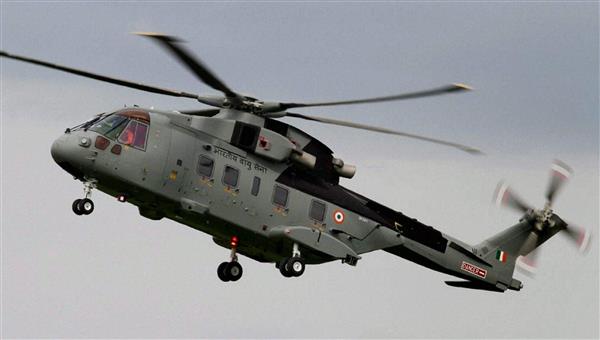
ED arrests businessman in VVIP choppers money laundering case

ED arrests businessman in VVIP choppers money laundering case

PTI file photo

New Delhi, January 30 

The Enforcement Directorate (ED) has arrested businessman Anoop Kumar Gupta in connection with a money-laundering probe into the over Rs 3,600-crore VVIP choppers purchase scam case, official sources said on Saturday.

They said Gupta, the joint managing director of KRBL Limited that sells India Gate basmati rice, has been sent to five-day custody of the central probe agency after he was produced before a special court for cases under the Prevention of Money Laundering Act (PMLA) here.

ED sources said Gupta was arrested in the AgustaWestland VVIP choppers deal case and alleged he was not cooperating in the ongoing probe.

His custodial interrogation was necessary in the light of some fresh evidence gathered by the Enforcement Directorate that pertains to “proceeds of crime” or alleged kickbacks of the deal being paid to a firm “controlled” by Gupta, they said.

Gupta’s lawyers told the court that his arrest was “not justified” and pleaded that he should not be sent to ED custody owing to his medical condition as he suffers from diabetes and other ailments.

The agency, in its remand application, said two streams were used for channelling about Euro 70 million worth “proceeds of crime” or bribe money to various political persons, bureaucrats and Indian Air Force officials in return of swinging the 12 helicopters deal in favour of AgustaWestland.

“It is submitted that IDS Information Technology and Engineering Sarl,  Tunisia has received proceeds of crime to the tune of Euro 24.37 million from AgustaWestland and out of this about Euro 12.4 million were further transferred to Interstellar Technologies Limited, Mauritius.” “The proceeds of crime were further transferred to various companies including Rawasi Al Khaleej General Trading (RAKGT) LLC Dubai which was incorporated in 2007 by KRBL DMCC, Dubai and accused Anoop Gupta was one of the director of this company,” the ED alleged.  This company (KRBL DMCC) was a subsidiary of KRBL Limited (India), it said.

The ED said that “in 2009, the entire stake (49 per cent shareholding) of KRBL DMCC held in RAKGT was transferred in the name of one Anurag Potdar but in fact, even after this, RAKGT is under the control of KRBL Limited through Gupta and part of the proceeds of crime received in RAKGT were transferred to KRBL Limited.” It claimed that it obtained some documents in December last year pertaining to these purported links and they show that Gupta was “controlling” the financial transactions of this (RAKGT) company.  Gupta has been named by the ED in another alleged defence deal scam involving aircraft manufacturer Embraer.

The businessman was named in a charge sheet by the agency in December in that case that pertains to payment of alleged commission by Embraer to clinch the USD 208-million deal with India, in which it is suspected and alleged that kickbacks were paid.

The ED slapped money laundering charges to probe allegations of irregularities in the now-cancelled deal to purchase of 12 VVIP choppers from Italy-based Finmeccanica’s British subsidiary AgustaWestland. The deal was scrapped by India in 2014. — PTI


Stark need for modernisation’ — why armed forces want a big jump in defence budget

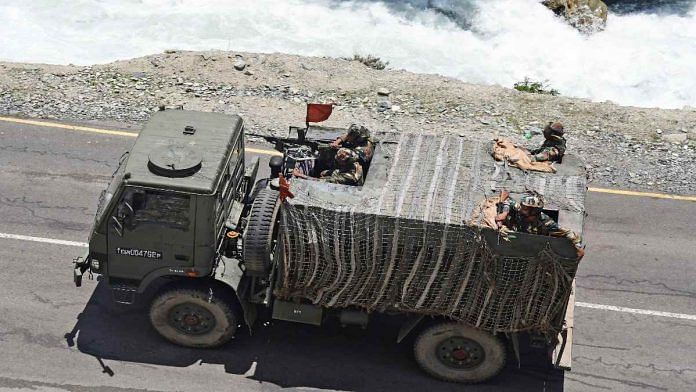
An Indian Army truck on a Kashmir highway leading to Ladakh | Representational image | ANI

An Indian Army truck on a Kashmir highway leading to Ladakh | Representational image | ANI

New Delhi: The armed forces are hoping for a miracle this Union Budget from Finance Minister Nirmala Sitharaman — a substantial rise in the defence allocation, which will enable them to bring on track the mega procurement plans that have either slowed or stalled.

Citing the ongoing border standoff with China, sources in the forces said there is a stark need for defence modernisation.

A number of mega deals are pending or have slowed due to budgetary constraints, including those for new transport and fighter aircraft, and helicopters for the Indian Air Force (IAF); artillery guns, assault rifles, snipers and specialised vehicles for the Army; and fighter aircraft, submarines, new warships and helicopters for the Navy.

Experts, however, say a large budgetary rise is not on the cards. Given that the pandemic has hit India’s economy and the government’s priority will be investment in infrastructure and health, a raise of Rs 10,000-15,000 crore in capital budget would be welcome, they say.

Government sources too indicated to ThePrint that the Ministry of Defence’s push for a rollover budget or a non-lapsable fund for itself is unlikely to be met on 1 February when FM Sitharaman will present the Union Budget 2021-22.


Also read: India, China troops in ‘minor face-off’ in Sikkim’s Naku La, Army says issue resolved locally


Last budget and modernisation bid

In 2020-21, the Narendra Modi government increased India’s defence budget by a mere 1.82 per cent to Rs 3.37 lakh crore, excluding expenditure on pension. ThePrint had then reported that the allocation isn’t enough for a military that has been forced to cut back on its procurement and modernisation plans due to lack of funds.

The capital budget for the military, which is used for new acquisition and modernisation, saw a meagre 3 per cent rise, or Rs 3,400 crore, over the revised 2019-20 estimates.

The IAF, which is in the middle of buying nearly 200 new fighter aircraft, saw its capital budget lowered from revised estimates of Rs 44,869.14 crore to Rs 43,281.91 crore.

According to a 2019 report, the Modi government has firmed up a mega plan to spend $130 billion to bolster combat capability of the armed forces in the next five to seven years. However, all three services have since spoken on record about the budgetary constraints, and impediments to modernisation.

 In a scathing January 2020 report, the Parliamentary Standing Committee on Defence had also criticised the Modi government for inadequate budgetary allocation for the Army.

Also read: Eye on China, India to host Indian Ocean Region defence ministers’ conclave next month

 What the forces say

According to sources in the armed services, the standoff with China in eastern Ladakh has brought out the desperate need for modernisation out in the open.

Since the standoff began in April-May, all three services have gone in for emergency procurement.

A source in the forces said, “The budget has to come up with an increased hike for the defence sector. China is going to be a constant challenge now. There is no other way than having a strong military to deal with China. A strong military means having the deterrence power to deal with a country which is not just bigger militarily but also economically.”

A second source said it’s not just the Army that needs modernisation to tackle China, but also the Navy and the Air Force.

“Chinese military is expanding, be it the Army, Navy or the Air Force. From being a manpower intensive military, they are in advanced stages of being a capital intensive force. To even offer the slightest credible deterrence power, the Indian armed forces need to modernise and for this money is important,” the second source said.

Earlier this month, former defence secretary G. Mohan Kumar noted the need to equip India’s forces, especially the Army and the Air Force on the eastern front through fast-track procurement on priority, which will necessitate heavy revenue and capital expenditure.

“This could effectively hobble long-term capability building and ‘Make in India’, unless the government increases defence-service allocations disregarding its resource crunch. Strategically, a strong naval presence in the Indian Ocean is vital for keeping China at bay,” he wrote.

Major General Yash Mor (Retd), former General Officer Commanding of the Leh Sub Area, said India spends one of the lowest per capita on defence compared to the largest six. “We need to spend more. Budget has to factor in the economic situation and also the threat perception,” he said.

Experts don’t see chances of big jump  

Laxman Behera, associate professor at Jawaharlal Nehru University’s Special Centre for National Security Studies, said there is no doubt India’s defence is in urgent need for substantial increase in allocation, but wasn’t hopeful of a big jump.

“Any increase would be welcome given the state of the economy. But I don’t think there will be a huge increase,” he said.

“The fact that the defence budget was kept away from the Covid curbs in 2020 is encouraging. Since DA was not given, no major raise in revenue budget for defence should be expected. However, a raise of Rs 10,000 to Rs 15,000 crore in capital allotment would be welcome,” Behera added.

Tara Kartha, former director, National Security Council Secretariat, said there is no way a drastic jump is possible. India will have to decide what kind of war it wants to fight and rationalise the mass spending on purchase of the next generation of the same equipment, she argued.


Also read: India to face higher security challenges with rising stature, influence — Gen Naravane


Excel in all fields, NCC cadets told

Excel in all fields, NCC cadets told

Tribune file photo for representation only.

Chandigarh, January 30

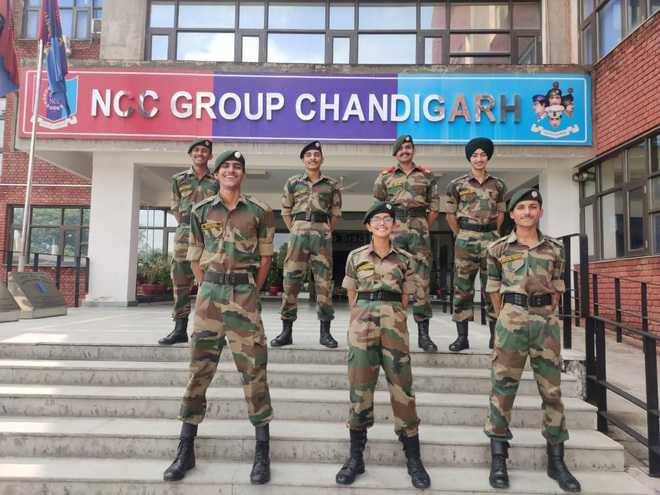
The combined annual training camp of the Chandigarh NCC Air Wing is being organised at the NCC Complex here, with a total of 35 cadets, including 21 girls, participating in the event.

During the camp, cadets were being exposed to intensive training regimen, which include both outdoor activities and classroom lectures, said camp commandant Group Captain MR Pandeya.

In addition to drill and weapon training, various topics being covered are history of the Indian Air Force (IAF), precautionary measures during flying, role of air traffic control, meteorology and navigation in aviation, first-aid procedures, fire-fighting and selection process in the IAF.

Inaugurating the camp, Col DK Sharma, Training Officer, Chandigarh NCC Group, an ex-NCC cadet himself, said the NCC imparts discipline and promotes fitness amongst the youth. He exhorted the cadets to excel in all fields, enjoy the training and develop camaraderie and friendship among themselves. — TNS


Why the farmers’ protests are a wake-up call for rest of us Farmers’ protests are a contemporary example of the power of a peaceful people’s struggle against marginalisation

Why the farmers’ protests are a wake-up call for rest of us

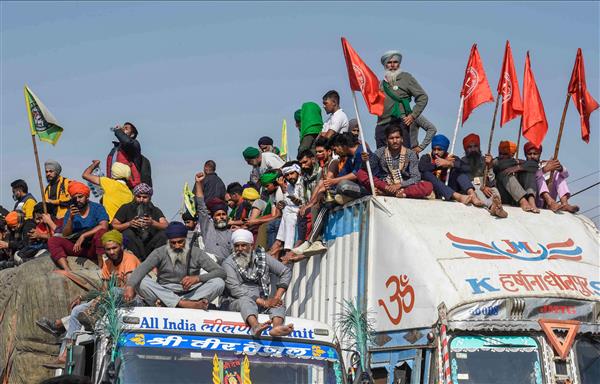
Representational image

Natasha Badhwar

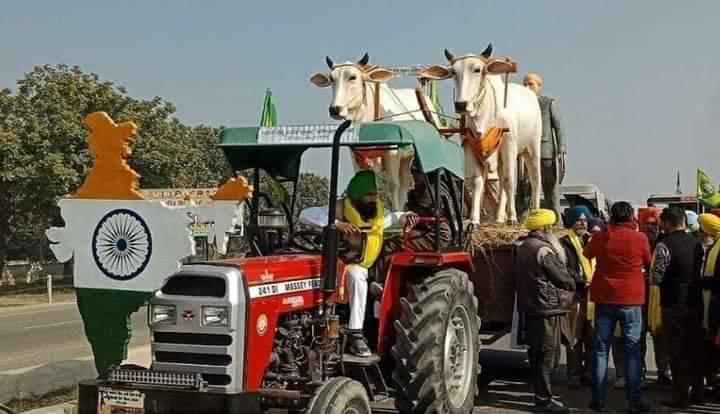
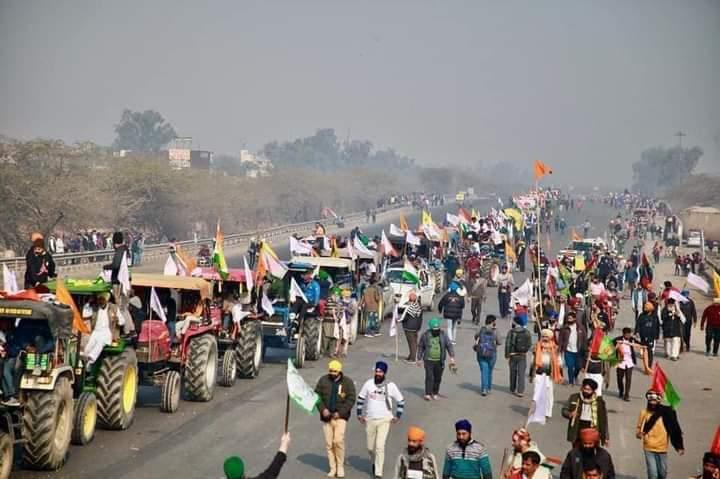
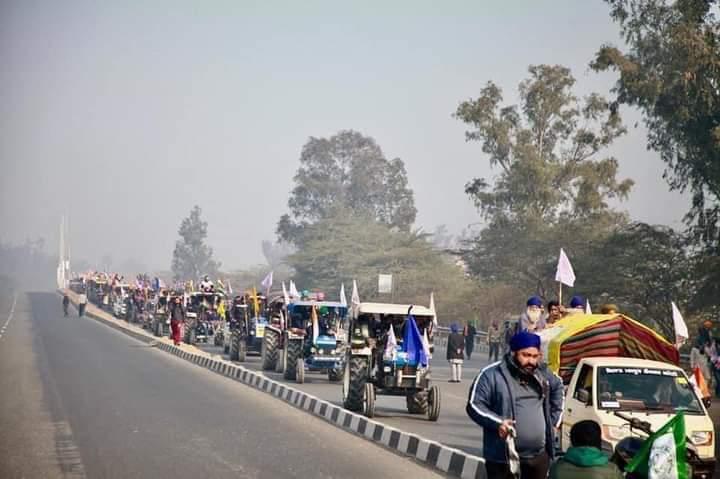
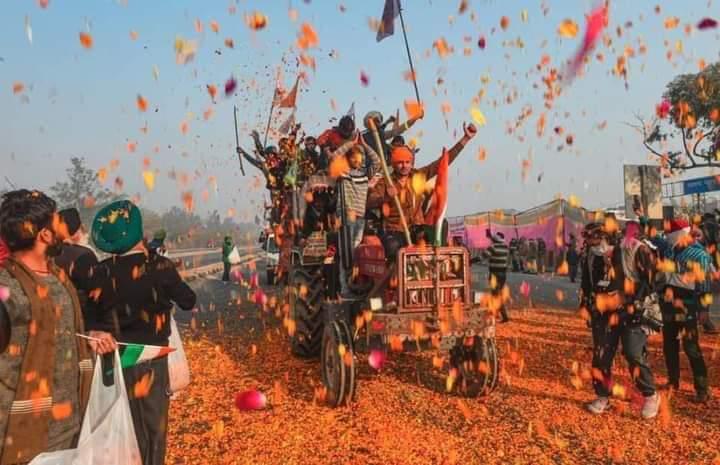
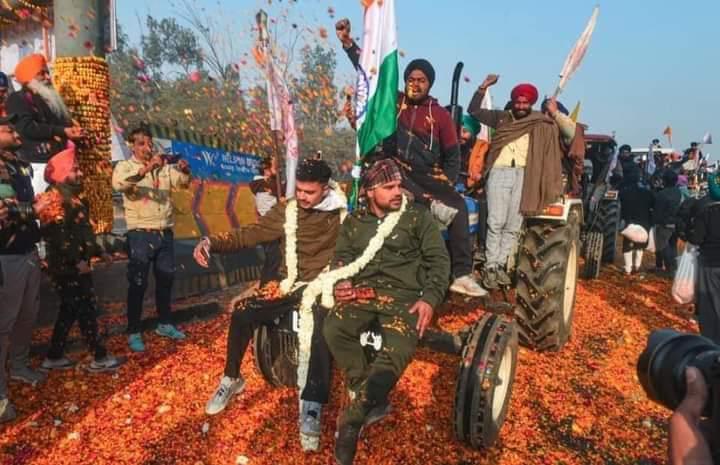
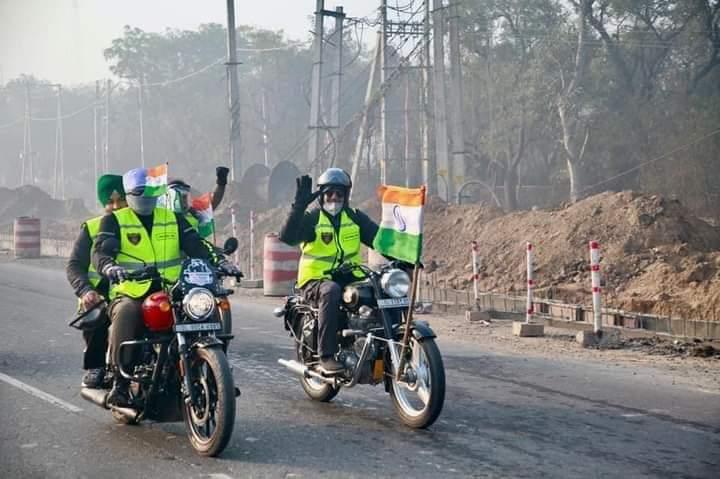
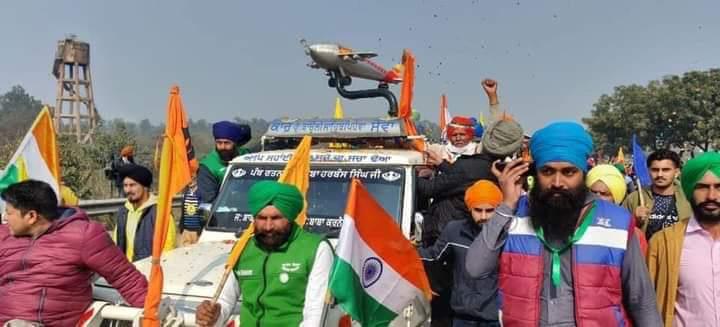
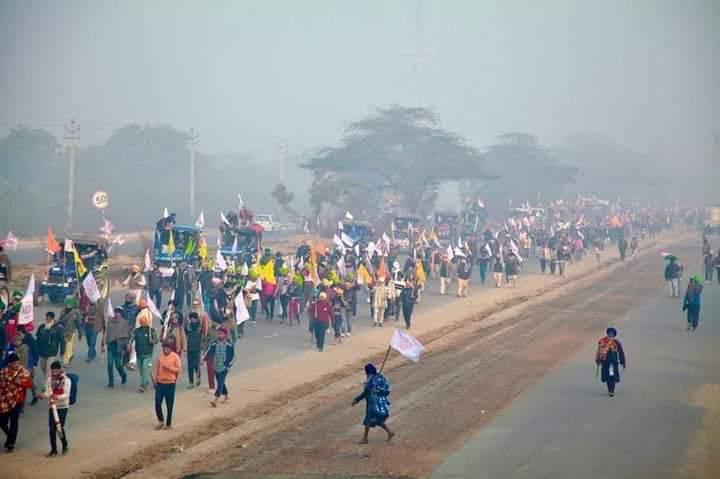
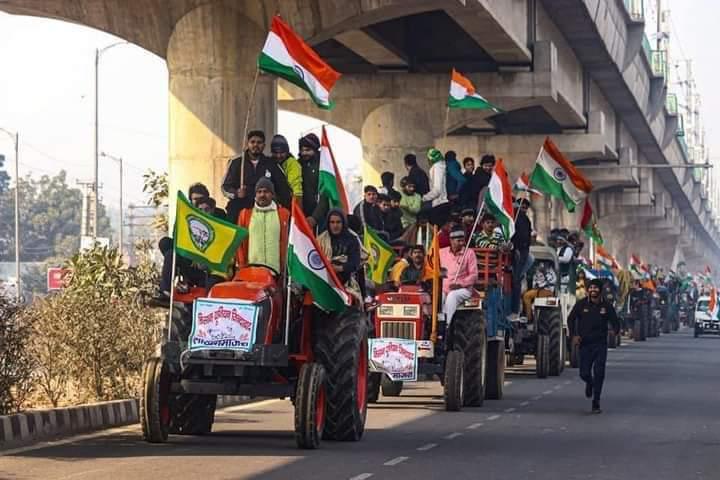
My family and I spent the last two weeks travelling through Punjab to Dharamkot in Himachal and back home to a Delhi suburb. As we drove away from the capital city, we were cheered by the sight of tractors and cars with banners and flags of farmers’ unions going towards Delhi. On our way back, we found ourselves joining the cavalcades arriving at the protest sites on Delhi’s borders for the Tractor Parade on Republic Day. On the night of January 25, the traffic on the highway had swelled so much that we were unable to find a way to enter the city. We had become one with the farmers.

We didn’t mind. A historic people’s movement led by farmers is taking place right now and it is impossible to be untouched by it. What hurts the farmer today will not leave the rest of India unscathed. Those who have risked their lives and livelihood to confront the powerful need to be protected from state repression and false accusations of anti-national activities and sedition. They need visibility. Their demands and point of view need to be amplified by those of us who have smartphones and social media on fingertips.

What do these farmers have to offer us in return? Are we doing them a favour by paying attention? Why should the farmers’ agitation matter to the rest of us?

At a time when the state and administration have abdicated from people-centric governance and the judiciary as well as large sections of mainstream media seem to have forfeited their role to provide the checks and balances that keep democratic processes in balance, the farmers’ protest is like a shot in the arm of Indian democracy. While it is the three farm laws that have finally catalysed lakhs of farmers to leave their homes and sit in protest in the bitter cold, their mode of protest as well as the capaciousness of their demands is a reminder of some of the basics of humanity — of the power of solidarity, fraternity and unity among people. Of the need for dignity, equality and agency of groups and individuals.

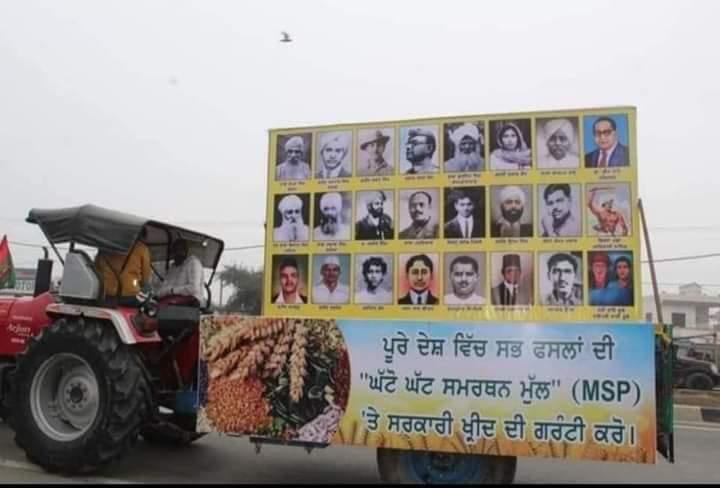
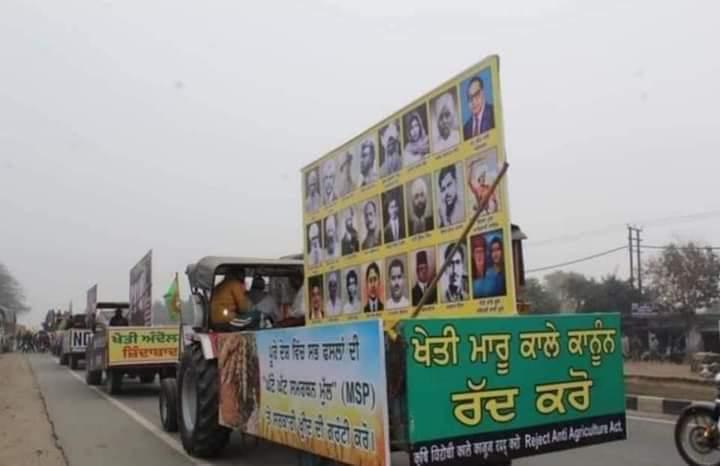
On International Human Rights Day, December 10, 2020, BKU (Ekta Ugrahan) — the largest farmers’ union at the protests — held an event in which protesters held up pictures of incarcerated intellectuals and human rights activists who have been booked under grave laws, such as the UAPA. Despite a backlash from sections of the media, farmers’ leaders defended this act of solidarity with eloquence and candour, reminding us that the need for stable livelihoods and that of dignity and autonomy cannot be separated into binaries.

“These people have been incarcerated in jails for speaking the truth. Through their writing and work, they have explained how the corporate sector adversely affects agriculture as well as the public sector. These intellectuals and activists have exposed the fascist mindset of the government. If we do not raise our voice for them, then who will?” a speaker asked rhetorically from the stage at Tikri border. Off stage, men and women held posters of each of the activists. “These people are freedom fighters, not anti-nationals,” a woman farmer said.

On January 18, Women Farmers’ Day was celebrated at the protest sites, just days after Chief Justice of India SA Bobde, while staying the implementation of the new farm laws, had also commented, “We don’t understand why old people and women are kept in the protests.”

In a rousing speech on the Singhu border, researcher Navsharan Singh challenged the patriarchal and condescending attitude represented by this statement. “Do not forget that this is the same government which maligned Muslim women who were protesting against the highly discriminatory Citizenship Amendment Act last December in Shaheen Bagh. It is the same government that has denied bail to four young women — Devangana Kalita, Gulfisha Fatema, Ishrat Jahan and Natasha Narwal,” she said.

“They want you to go back not because you are weak, but because they are threatened by your fearlessness and empowered presence. Their armies and weapons are not as strong as the determination and courage of unarmed women.”

As police violence and political backlash against the protesting farmers escalates, the settlements on the borders of Delhi have only continued to grow in response.

The ongoing farmers’ protests are a contemporary example of the power of a peaceful people’s struggle against marginalisation. It is a wake-up call. Will we stand up for those who are risking their all for the rest of us?

 The writer is an author & filmmaker natasha.badhwar@gmail.com

Tikait’s outburst unifies Jats

Tikait’s outburst unifies Jats

Geetanjali Gayatri

Tribune News Service

Chandigarh, January 30

After suffering a setback following violence during the tractor parade on the Republic Day, the farmers’ agitation is back on track though it has moved on from being a Punjab-driven protest to a Jat-propelled affair.

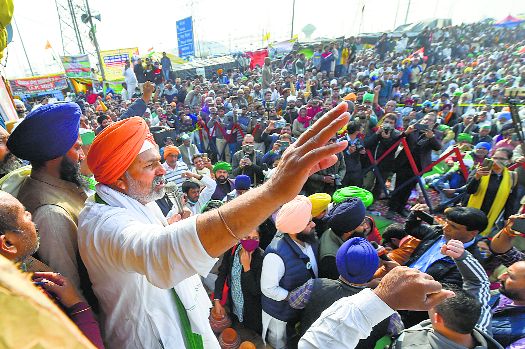
The second phase of mobilisation of farmers from Haryana following UP farmer leader Rakesh Tikait’s emotional outburst has turned the tables after the agitation started to lose steam, with voices of dissent against sit-ins beginning to grow.

Though Balbir Singh Rajewal apologised, his words on the role of Haryanvis in the Republic Day violence had led to Haryanvis pulling back. Tikait breathed new life into the agitation on Thursday evening.

In response, villagers in the Jat heartland organised panchayats and tractors and trolleys were on their way to Ghazipur. The renewed enthusiasm following Tikait’s appeal could spell greater trouble for the BJP-led government in the state and a bigger headache for its alliance partner, the JJP.

With khap panchayats putting their weight behind the agitation, the appeal has consolidated Jats in a state divided along caste lines, with non-Jats as the BJP’s vote bank. This stark division, in the backdrop of violence during the Jat quota agitation in 2016, is bound to make it a tightrope walk for the BJP.

The JJP and Deputy CM Dushyant Chautala are likely to feel the maximum heat. With Jats as his vote bank and mounting support to the agitation from the Jat belt, Dushyant can no longer afford to lie low.

Already under pressure from farmers to withdraw support to the BJP, the Jat spin to the protest is likely to add to his growing headache. All eyes are on Dushyant after his paternal uncle and INLD leader Abhay Chautala resigned from the Vidhan Sabha in support of farmers.

With the movement set to begin a new chapter, every passing day will make it more difficult for him to strike the balance of retaining his vote bank and occupying the position of Deputy Chief Minister.