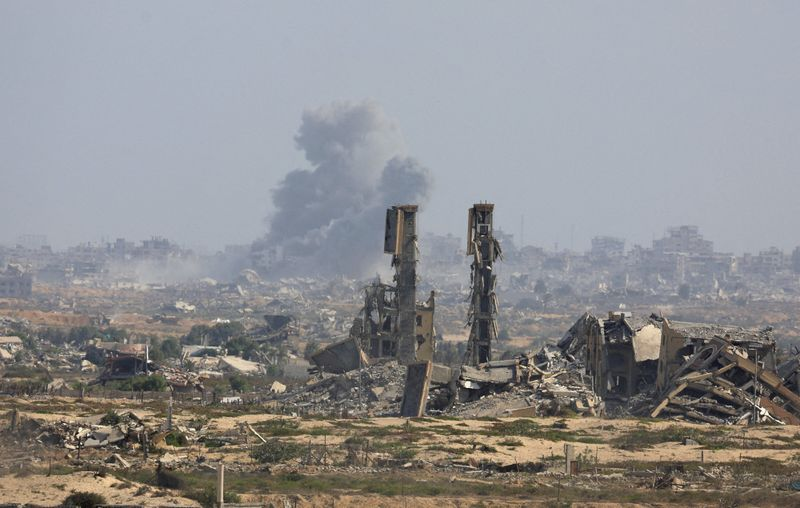
The Tribune Editorial: However, a contentious point — disarmament of Hamas and its exclusion from governance in Gaza — might impact the outcome of the talks.
HE start of US-brokered talks in the Egyptian resort of Sharm el-Sheikh has raised hopes worldwide that the two-year-old Gaza war will finally come to a halt. The war was triggered by the stunning attacks carried out by Hamas-led militants on Israeli soil on October 7, 2023. About 1,200 people, mostly Israeli civilians, were killed and around 250 taken hostage in what was described as the bloodiest day for Jews since the Holocaust. The no-holds-barred Israeli retaliation has snuffed out the lives of over 67,000 Palestinians, mainly civilians, even as the majority of the 2.2 million Gazans have been left homeless and hungry.
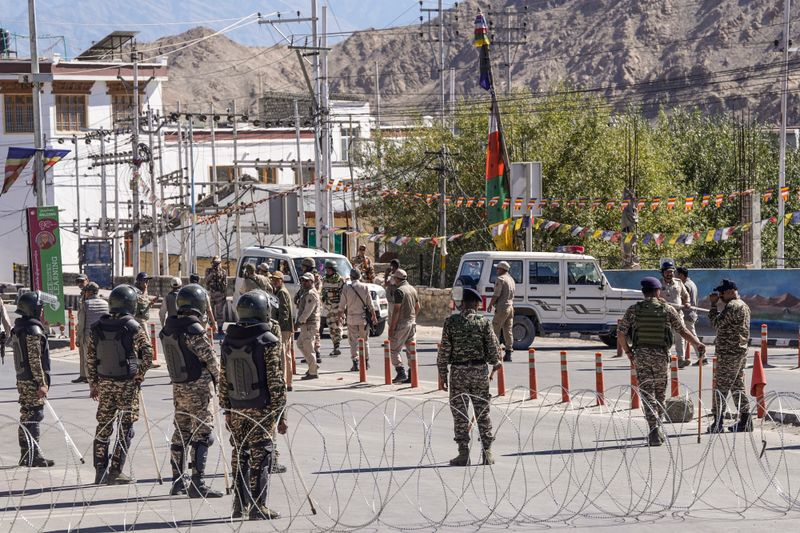
Even as local courts in Leh have granted bail to around 40 individuals arrested in connection with the September 24 violence, the Ladakh Police continue to make more arrests, according to lawyers familiar with the case.
Mohd Shafi Lassu, President of the Bar Association, Leh, said approximately 75 people have been arrested so far. “Around 40 have already been granted bail by the court, and more bail hearings are scheduled in the coming days,” Lassu said.
He, however, expressed concern over the continued arrests, calling them a “pressure tactic by the administration”.
The violence erupted during a hunger strike led by climate activist Sonam Wangchuk, who had been on a 35-day fast demanding constitutional safeguards for Ladakh. On September 24, security forces opened fire during protests, resulting in the deaths of four people and injuries to nearly 100 others. Wangchuk ended his hunger strike shortly after the incident.
On Monday, 14 more individuals were released, while 26 others had previously been granted interim bail. However, the number of fresh arrests continues to rise.
Police officials in Ladakh defended the ongoing arrests, stating they are part of a continuing investigation into the violence. “The investigation is underway. We are arresting only those whose involvement in the violence has been established,” a senior police official said on Monday.
Meanwhile, the Leh Apex Body (LAB), one of the two prominent groups leading the ongoing movement in Ladakh, disputed the administration’s claim that normalcy had returned to the region. The group has demanded the immediate lifting of restrictions, release of all detainees, and restoration of mobile internet services, which remain suspended.
“These steps are essential to restore public confidence,” said LAB co-chairman Chering Dorjay, who also accused the administration of harassing village heads (numberdars) for informing locals about the LAB-led hunger strike held from September 10 to 24.
Indian Navy commissions anti-submarine warfare vessel ‘Androth’Commissioned in Visakhapatnam,
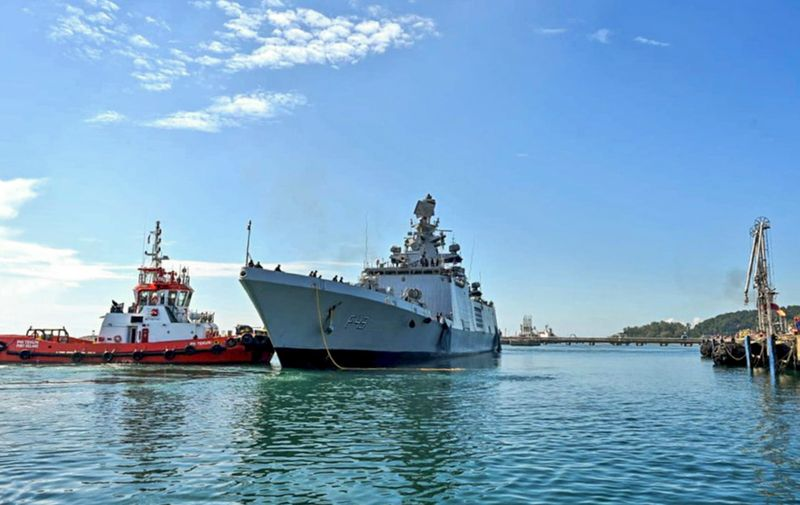
The Indian Navy on Monday commissioned INS Androth, the second of its next-generation Anti-Submarine Warfare Shallow Water Craft (ASW-SWC), designed to detect enemy submarines operating close to the coast.
The warship was commissioned at the Naval Dockyard in Visakhapatnam by Vice Admiral Rajesh Pendharkar, Flag Officer Commanding-in-Chief of the Eastern Naval Command.
The first ship of the class called INS Arnala was commissioned in June this year. INS Androth derives its name from an island in the Lakshadweep archipelago.
The ship is built by Garden Reach Shipbuilders and Engineers (GRSE), Kolkata, in collaboration with L&T’s Kattupalli shipyard in Tamil Nadu.
The Navy has contracted 16 such ships at an overall cost of nearly Rs 13,000 crore, with Cochin Shipyard Limited and GRSE manufacturing eight each.
The primary role of these ships is to detect, track and prosecute enemy submarines, particularly in coastal and shallow water regions. Equipped with advanced underwater sensors, such as the hull-mounted sonar Abhay, an underwater acoustic communication system and a low-frequency sonar, the vessel can carry out comprehensive underwater surveillance.
To neutralise underwater threats, the ships feature a state-of-the-art weapon suite, including lightweight torpedoes, rockets, anti-torpedo decoys and advanced mine-laying capabilities.
The 77.6-metre-long vessel has a displacement of 1,490 tonnes.
The Androth incorporates more than 80 per cent indigenous content. Major Indian defence firms such as Bharat Electronics Limited (BEL), L&T, Mahindra Defence and MEIL have supplied advanced systems for the ship. The project has also engaged over 55 Micro, Small and Medium Enterprises (MSMEs), promoting domestic industry and generating related economic activity.
Shimla shivers at 8.8°C, snowfall continues in higher reaches
MeT Department says that light rainfall will continue in isolated places of the state till October 9
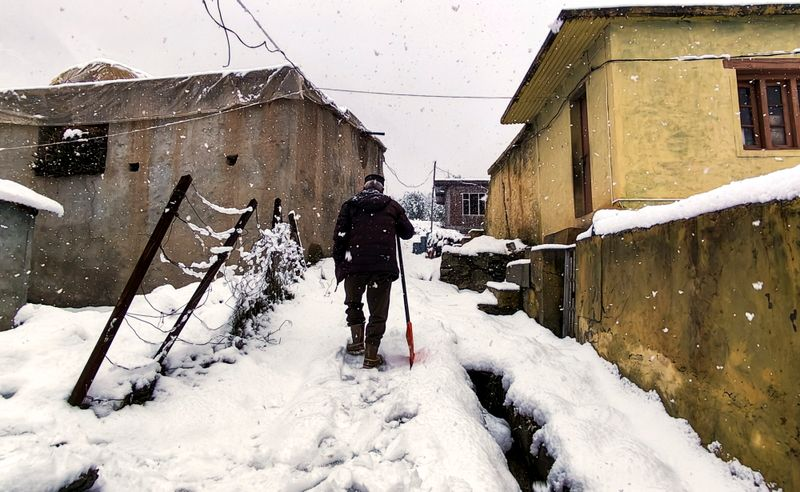
The state capital shivered at 8.8°C minimum temperature as snowfall continued in the higher reaches of Himachal. In Shimla, the minimum temperature dipped by 2.7°C, leading to cold weather conditions throughout the day along with rainfall.
As per the state’s Meteorological Department, the maximum temperatures across the state fell by 6°C to 14°C and were in the range of 1°C to 30°C while the minimum temperatures fell by 3°C to 7°C and were in the range of minus 1 to 22°C during the past 24 hours.
While snowfall continued in the higher reaches of Lahaul and Spiti, Kinnaur and Chamba districts, heavy rainfall was recorded in many parts of the state. Gondla village in Lahaul and Spiti recorded 26.4 cm of snowfall, Keylong (20 cm) and Kukumseri (5 cm).
Pachhad in Sirmaur district received the highest 60 mm of rain, Nahan (41.6 mm), Solan (34.2 mm), Manali (30 mm), Shimla (25 mm), Kalpa (22.2 mm), Dharamsala (18.8 mm), Kangra (18.4 mm), Bhuntar (16 mm), Mandi (15.2 mm), Sundernagar (14.2 mm) and Bilaspur (11.4 mm).
The MeT Department said that light rainfall would continue in isolated places of the state till October 9 after which the weather would remain dry for the rest of the week. The maximum temperatures are expected to rise by 6°C to 10°C while the minimum temperatures are expected to rise by 2°C to 4°C within the next three or four days.
The minimum temperature in Dharamsala was 14.8°C, Manali (6.1°C), Dalhousie (6°C), Kufri (6.7°C), Narkanda (4.9°C), Kalpa (3°C), Nahan (15.1°C), Solan (12.6°C), Bilaspur (16.1°C), Hamirpur (13.7°C) and Kangra (15.2°C).
Una recorded the highest maximum temperature of 26°C while Keylong in Lahaul and Spiti was the coldest at minus 0.5°C.
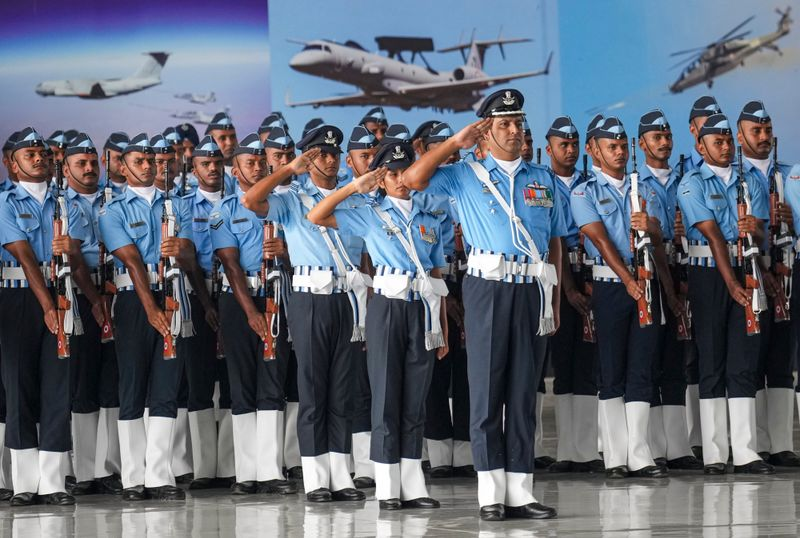
AS part of the 93rd Air Force Day celebrations, the Chief of the Air Staff, Air Chief Marshal Amar Preet Singh, addressed a press conference in Delhi on October 3. The event was significant, marking both the completion of his first year in office and his first major media interaction since Operation Sindoor. During the briefing, the Chief covered a wide range of topics, including the Indian Air Force’s role i
AI, algorithms to decide future wars, says Rajnath
Minister urges innovators to think beyond existing solutions and develop technologies that redefine warfare
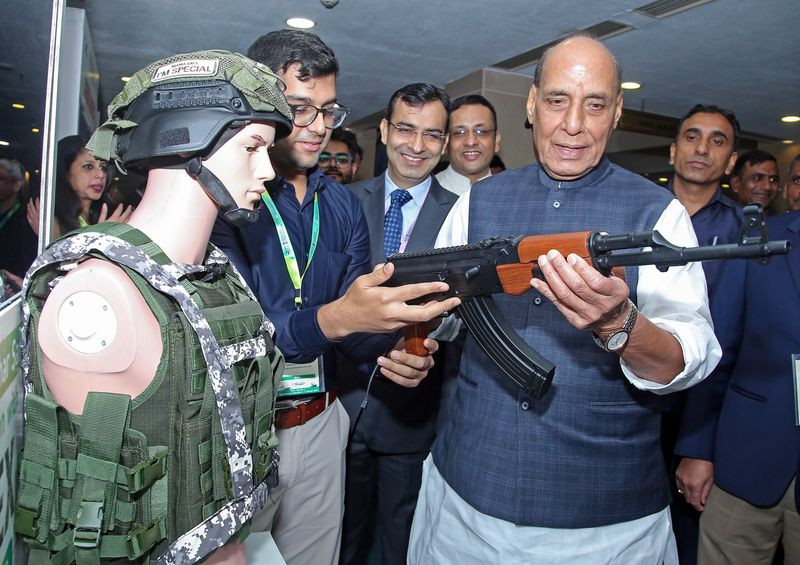
The battlefield has changed and wars of tomorrow will be fought with algorithms, autonomous systems and artificial intelligence, a demonstration of it was seen in Operation Sindoor, said Defence Minister Rajnath Singh.
Drones, anti-drone systems, quantum computing and directed-energy weapons will define the future, he said today while speaking at the ‘Raksha Navachar Samvaad’, an interaction between the Ministry of Defence and startups and innovators.
The minister urged innovators to think beyond existing solutions and develop technologies that redefine warfare. “We must not remain imitators or followers in technology we must become the creators and standard-setters for the world,” he added. Today, more than 650 innovators have emerged and prototypes are being sourced worth Rs 3,000 crore, he said.
Singh encouraged startups to set higher benchmarks, underlining that India has more than 100 unicorns today, but none in the defence sector, calling upon them to change that.
“Let the first defence unicorn of India emerge from among you. It will be a matter of pride not only for you but for the entire nation,” he added.
The minister lauded the collective effort of innovators for contributing to record-breaking achievements in defence production worth Rs 1.5 lakh crore and exports exceeding Rs 23,000 crore in the last financial year.
“You are the architects of a new India that believes in designing, developing and producing for itself. The energy and innovation you bring are key to realising the Prime Minister’s vision of a technologically self-reliant India,” he highlighted.
t
India slams Pak at UN over 1971 ‘genocidal mass rape’
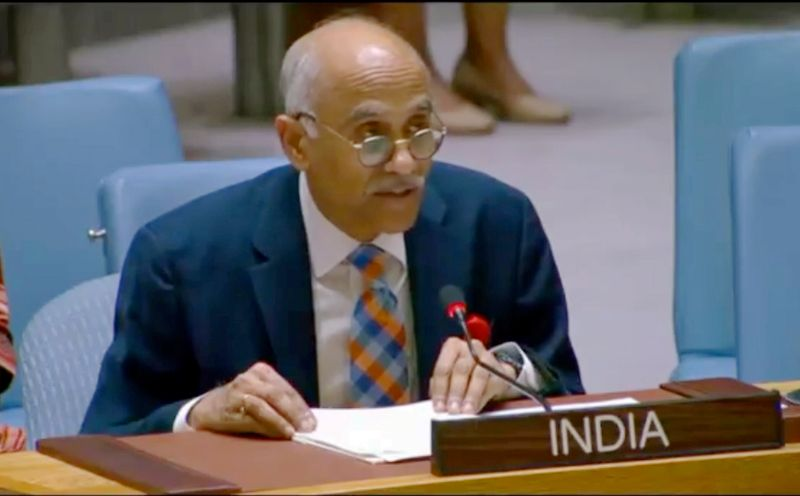
Permanent Representative of India to the United Nations Parvathaneni Harish at the UN Security Council open debate on women, peace and security in New York on Tuesday. PTI
Speaking at the UNSC Open Debate on Women, Peace and Security, Ambassador Parvathaneni Harish, India’s Permanent Representative to the UN, said Pakistan’s statements on Jammu and Kashmir were “an annual ritual of misdirection and hyperbole”.
“A country that bombs its own people and conducted a campaign of genocidal mass rape of 4,00,000 women citizens by its own army cannot lecture others on peace or human rights. The world sees through Pakistan’s propaganda,” he said.
Harish underscored that India’s record on women, peace and security stood in stark contrast — “unblemished and unscathed” — and reflected a long tradition of empowering women in peacekeeping, long before the adoption of the landmark UN Security Council Resolution 1325.
“India recognised long before the world did that women are indispensable agents of peace,” he said, recalling that Indian women medical officers were deployed to the Congo in the 1960s in one of the UN’s earliest peacekeeping missions.
That early leadership reached a milestone in 2007, when India deployed the world’s first all-female Formed Police Unit to Liberia — an initiative Harish described as “a game-changer” that helped rebuild communities, reduce crime and inspire Liberian women to join law enforcement.
The envoy also cited India’s trailblazers in global peacekeeping — Dr Kiran Bedi, the first woman to head the UN Police Division; and Major Suman Gawani and Major Radhika Sen, recipients of the UN Military Gender Advocate Awards in 2019 and 2024, respectively. “It is no longer a question of whether women can do peacekeeping. Rather, it is whether peacekeeping can do without women,” Harish said.
Highlighting India’s global capacity-building role, he noted that the Centre for United Nations Peacekeeping in New Delhi trains over 12,000 troops annually, including specialised programmes for women officers.
India also hosted the International Conference on Women Peacekeepers from the Global South in February 2025, drawing representatives from 35 nations, followed by a UN Women Military Officers Course in August with participants from 15 countries.
“As we look ahead. India remains unwavering in its commitment to the women, peace and security agenda and stands ready to share its expertise with partners, especially in the Global South,” he said.
Indian, UK naval aircraft carriers hold joint drills
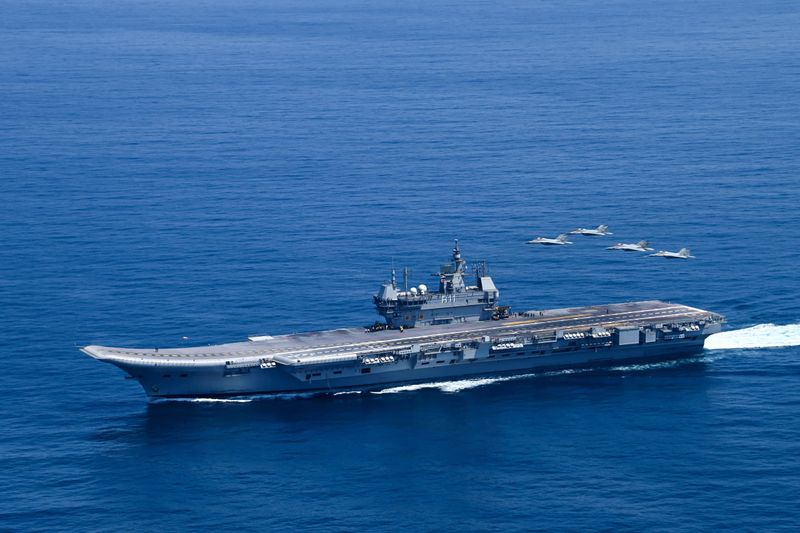
The Indian Navy and UK’s Royal Navy today kicked off a maritime exercise involving aircraft carriers.
Both navies would be fielding, what in Naval parlance is called the ‘carrier strike group’. This includes fighter jets and copters on deck of the aircraft carrier which is accompanied by other warships and submarines getting live situational feed from surveillance planes and satellites.
Called ‘exercise Konkan’, it will be conducted off the western sea board of India. The Indian Navy said the eight day (October 5-12) exercise will be conducted in two phases. The sea phase will encompass complex maritime operational drills focusing on anti-aircraft, anti-surface, and anti-submarine exercises, flying operations and other seamanship evolutions. Both participating nations will deploy frontline assets, including aircraft carriers, destroyers, frigates, submarines, and integral and shore based air assets.
The Indian side will be represented by the carrier battle group of the indigenous aircraft carrier INS Vikrant in company with other warships, submarines and aircraft. The UK Carrier Strike Group (UK CSG 25), is led by HMS Prince of Wales, including assets from Norway and Japan.
Over the past two decades, this exercise has grown significantly in scale and complexity, fostering enhanced interoperability and mutual understanding in maritime operations between the two navies, the Indian Navy said.
This exercise is a reaffirmation of the shared commitment to ensuring secure, open and free seas and will exemplify the comprehensive strategic partnership outlined in ‘India-UK Vision 2035’, the Navy said.
Exercise Konkan will serve as a platform to consolidate strategic ties, enhance interoperability and contribute to regional maritime stability.
The UK Navy’s fighter jets, on Oct 14, are to carry out a daylong exercise with the Indian Air Force off the western coast of India. The UK flotilla is on a eight-month deployment – started in April — across Asia and Indo-Pacific as part of ’Operation Highmast’.
Despite tariff tensions, maritime exercise ‘Malabar’ set for Nov
INS Sahyadri leaves for Guam, 2,500 east of the Philippines, to take part in drill hosted by US
Despite India facing punitive tariffs from the US, a multi-nation annual marquee maritime exercise is on as per schedule in November with Japan and Australia also joining in.
Sources confirmed that Indian Navy warship INS Sahyadri would join the maritime exercise ‘Malabar’ to be hosted by the US at Guam, one of its military bases in the western-part of the Pacific Ocean. Guam, an island, is some 2,500 east of the Philippines.
The Indian warship has already left Indian shores and would be part of maritime engagements with several countries enroute to Guam.
The four-nation exercise called ‘Malabar’ is often dubbed by Beijing as ‘anti-China’, largely due to the fact that the four partners in ‘Malabar’ are also partners in the Quad.
India-US ties have plunged after Trump imposed 50 per cent tariff on India, among the highest in the world. Half of this tariff is punitive in retaliation for buying Russian crude oil. The other half stems from the stalled trade negotiations.
Last year in October, India hosted the ‘Malabar’, beginning with the harbour phase in Visakhapatnam, followed by the sea phase. The Malabar-2024 was carried out as of the most comprehensive version of all editions so far, incorporating complex operational scenarios, the Ministry of Defence had said after the exercise.
The Malabar, which began in 1992 as a bilateral naval drill between the US and the Indian Navy, has evolved into a key multilateral event aimed at enhancing interoperability to address shared maritime challenges in the Indian Ocean and Indo-Pacific region.
The exercise gains importance as all four countries operate the same maritime surveillance planes, which are also capable of hunting submarines. These planes can generate a common ‘picture’ of the sea.
The four also have in their arsenal other common platforms, which can enable seamless communication with each other.
Last year, the Malabar had its focus on a broad range of activities designed to enhance cooperation and operational capabilities, this year the tempo is expected to be the same.
This could include discussions on special operations, surface, air and anti-submarine warfare. Complex maritime operations such as anti-submarine warfare, surface warfare, and air defence exercises could also be conducted at sea.
Ladakh violence: SC to take up today Sonam Wangchuk’s wife Angmo’s petition against his detention under NSA
Ladakh violence: SC to take up today Sonam Wangchuk’s wife Angmo’s petition against his detention under NSA
The Supreme Court will on Monday take up Ladakh climate activist Sonam Wangchuk’s wife Gitanjali Angmo’s petition seeking his immediate release from detention under the National Security Act (NSA).
Angmo’s petition is listed for hearing before a Bench of Justice Aravind Kumar and Justice NV Anjaria on October 6.
Detained on September 26 under Section 3(2) of the NSA two days after the September 24 violent clashes between protesters demanding statehood and Sixth Schedule status for Ladakh and the police, Wangchuk was lodged in Jodhpur jail in Rajasthan.
Four people had died and 90 others were injured in the clashes in the newly created Union territory of Ladakh.
Terming it “illegal, arbitrary, and unconstitutional”, Angmo has contended that the detention order violated her husband’s fundamental rights guaranteed under Articles 14 (right to equality), 19 (right to various freedoms), 21 (right to life and liberty) and 22 (Protection against arrest and detention in certain cases) of the Constitution.
Angimo questioned the Ladakh Administration’s decision to invoke the NSA against Wangchuk. Wangchuk’s wife alleged that she has not been given a copy of the detention order in violation of rules, and that she had had no contact so far with her husband.
The Ladakh Administration has rejected allegations of a “witch-hunt” or a “smokescreen” operation against Wangchuk.
In her habeas corpus petition, Angmo sought a direction to the Ladakh Union Territory Administration to “produce Sonam Wangchuk before this Hon’ble Court forthwith”.
Demanding immediate access to the detenue (Wangchuk), she urged the top court to quash the preventive detention order. She also sought urgent listing of her petition.
She has sought a direction to the authorities concerned to “allow immediate access of the petitioner to her husband, both telephonic and in person”.
Alleging that no grounds of detention have been furnished to date, either to Wangchuk or to his family, his wife contended that she had been kept under virtual house arrest in Leh, while students and staff of the Himalayan Institute of Alternatives, Ladakh (HIAL), founded by Wangchuk, were facing harassment, intimidation, and intrusive investigations.
“The arbitrary transfer of Wangchuk to Jodhpur, the harassment of students and staff of the Himalayan Institute of Alternatives, Ladakh (HIAL), the virtual house arrest of the petitioner herself, and the false propaganda linking Shri Wangchuk to foreign entities clearly demonstrate mala fide state action intended to suppress democratic dissent and peaceful environmental activism,” she submitted.
The arrest has inflicted severe mental pain and anguish on the people of Ladakh, who revered Wangchuk as their leader, the petition stated. “A recent tragic incident has been reported where a member of the Ladakh Buddhist Association committed suicide, allegedly depressed after his detention, underscoring the devastating psychological impact on the community,” the petition alleged.
Angmo sought a direction to the authorities to ensure that Wangchuk was provided with his medicines, clothes, food and other basic necessities forthwith. She also sought a direction to them to place before the top court “the order of detention along with grounds of detention and all records pertaining thereto” as also his medical report.
State Stalwarts
DEFENCES FORCES RANKS
ARMY, NAVY, AIRFORCE RANKS
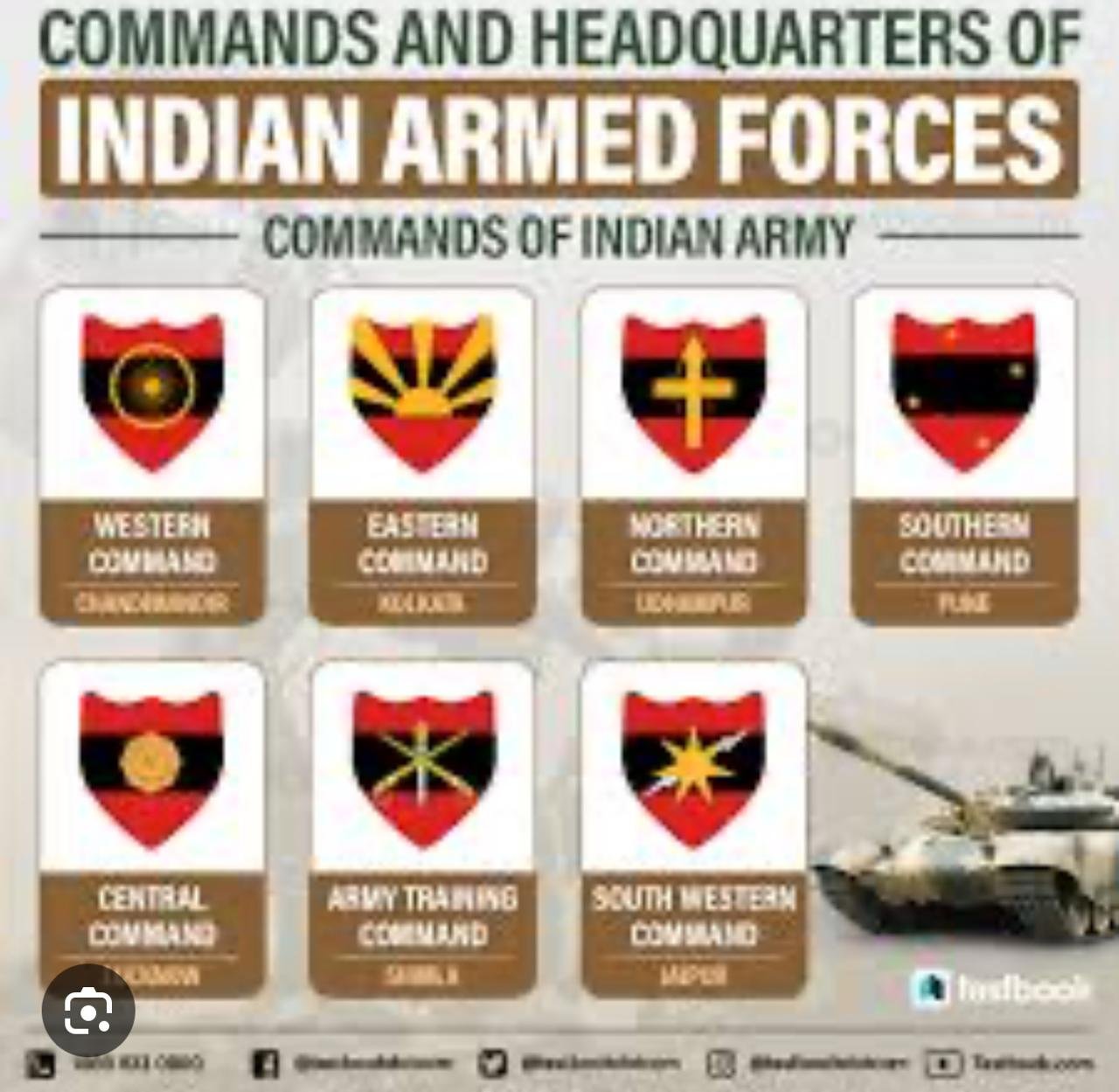
FORMATION SIGNS
FORMATION SIGNS
ALL HUMANS ARE ONE CREATED BY GOD
HINDUS,MUSLIMS,SIKHS.ISAI SAB HAI BHAI BHAI
CHIEF PATRON ALL INDIA SANJHA MORCHA
LT GEN JASBIR SINGH DHALIWAL, DOGRA
SENIOR PATRON ALL INDIA SANJHA MORCHA
MAJOR GEN HARVIJAY SINGH, SENA MEDAL ,corps of signals
.
.
PATRON ALL INDIA SANJHA MORCHA
MAJ GEN RAMINDER GORAYA , CORPS OF
sanjhamorcha303@gmail.com
PRESIDENT HARAYANA STATE CUM COORDINATOR ESM
BRIG DALJIT THUKRAL ,BENGAL SAPPERS
PRESIDENT TRICITY
COL B S BRAR (BHUPI BRAR)
PRESIDENT CHANDIGARH ZONE
COL SHANJIT SINGH BHULLAR
.
.
PRESIDENT PANCHKULA ZONE AND ZIRAKPUR
COL SWARAN SINGH
PRESIDENT SAS NAGAR (MOHALI)
COL BALBIR SINGH , ARTY
INDIAN DEFENCE FORCES
DEFENCE FORCES INTEGRATED LOGO
FORCES FLAGS
15 Th PRESIDENT OF INDIA SUPREME COMMANDER ARMED FORCES
Droupadi Murmu
DEFENCE MINISTER
Minister Rajnath Singh
CHIEF OF DEFENCE STAFF (2nd)
General Anil Chauhan PVSM UYSM AVSM SM VSM
INDIAN FORCES CHIEFS
CHIEF OF ARMY STAFF(29th)
General Upendra Dwivedi, PVSM, AVSM (30 Jun 2024 to Till Date)