Sanjha Morcha

What’s New

Click the heading to open detailed news

Current Events :

web counter

Print Media Reproduced Defence Related News

AAP to hold ‘Kisan Mahasammelan’ in Punjab’s Moga on March 21 Farmers from across Punjab will be invited to participate in the event, says party MP Bhagwant Mann

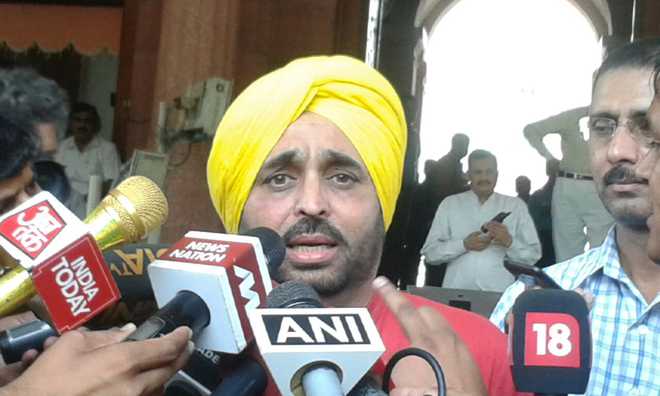
AAP to hold ‘Kisan Mahasammelan’ in Punjab’s Moga on March 21

AP MP Bhagwant Mann. Tribune file

Chandigarh, February 22

Punjab’s main opposition party AAP on Monday said it would organise a ‘Kisan Mahasammelan’ in Moga district on March 21 in support of the ongoing farmers’ agitation against the Centre’s contentious agri laws.

Party’s national convenor and Delhi Chief Minister Arvind Kejriwal will be invited to attend the event, it said.

Thousands of farmers, mostly from Punjab, Haryana and western Uttar Pradesh, have been camping at Delhi’s border points for nearly three months to press for the repeal of the three agri laws enacted in September last year and a legal guarantee on the minimum support price (MSP).

“The AAP has decided to hold a ‘Kisan Maha Sammelan’ at Bagha Purana in Moga on March 21 in order to further strengthen the ongoing farmers’ agitation,” party MP Bhagwant Mann said.

He said farmers from across Punjab will be invited to participate in the event.

“We want Delhi CM Arvind Kejriwal to take part in this ‘mahasammelan’,” he added.

The Aam Aadmi Party has been vocal about its support for the farmers’ agitation. Kejriwal is set to address a ‘Kisan Mahapanchayat’ in Uttar Pradesh’s Meerut on February 28 in support of the protest.

Mann, flanked by AAP’s Punjab unit in charge Jarnail Singh, co-incharge Raghav Chadha and MLA Harpal Singh Cheema, said the Centre should withdraw the three farm laws and provide a legal guarantee on MSP.

The government has said the new farm laws will benefit farmers by freeing them from the clutches of the middlemen and ushering in new technology in the sector.

However, farmers say these legislations will remove the safety net of MSP and leave them at the mercy of big corporates. PTI


Security beefed up at Singhu border The number of volunteers for security check at every entry and exit gates along the way from Singhu village to Kundli village has also been increased

Security beefed up at Singhu border

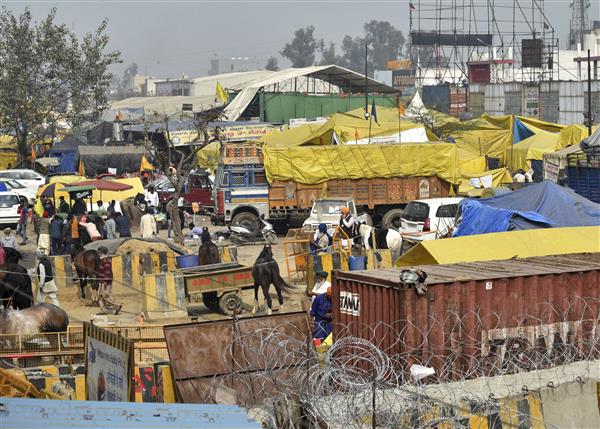
 view of the site of farmers’ agitation against new farm laws at Singhu border, in New Delhi. PTI

New Delhi, February 21

In order to avoid any untoward incident at the protest site where farmers are protesting against the three farm laws enacted by the Centre, the police have beefed up the security at Singhu border and adjoining areas.

Around 100 CCTV cameras at both the stages and many locations including the areas outside restrooms earmarked for women protesters have been installed along with heavy deployment of police personnel near the barricades close to the protest site. Two control rooms for monitoring of CCTV cameras have also been set up behind both the stages.

The number of volunteers for security check at every entry and exit gates along the way from Singhu village to Kundli village has also been increased.

“Activities of people moving around are being monitored and volunteers are keeping a close watch on people coming from outside and farmers staying on tractor trollies. Since there are many cuts for entry and exit towards the villages so the volunteers have been deployed at every possible spot. Volunteers are also patrolling on tractors especially after the sun set,” said Maninder Singh, a member of Krantikari Kisan Union in Punjab who is also part of security management at Singhu.

Height of concrete barricades that were setup earlier by Delhi Police close to the protest site (towards Delhi) have been increased by putting barbed wire on them. Whereas barricades put at four spots along the way from Singhu to Singhola village (Delhi-Chandigarh) highway were added with barbed wire after stone-pelting incidents.

Drone cameras are been used by the security forces to monitor the situation. However, Delhi Police personnel along with the paramilitary forces deployed at the protest site have been decreased while the entry of visitors and mediapersons from the main gate is still banned. —IANS


BJP resolution lauds agriculture reforms Massive farm rally in Barnala | It’s fight for livelihoods across India: Ugrahan

http://

Tribune News Service

Chandigarh/New delhi, Feb 21

On a day the BJP, at its first meeting of new office-bearers, passed a resolution thanking the PM for reforms in the agriculture sector, farm unions held a massive rally in Barnala on Sunday, a clear indication that the farm stir has not lost steam and that the protesters are prepared for a long haul.http://


At the ‘maha rally’, Sanyukt Kisan Morcha leaders gave a call to Punjabis to reach Delhi in large numbers on February 27 when the agitation completes three months.

They appealed to the women to celebrate International Women’s Day (March 8) at Singhu and Tikri.

http://

Seating arrangements for the rally were made on a 9 lakh sq ft area. Despite police arrangements for managing traffic, there were massive traffic jams. Joginder Singh Ugrahan called the January 26 incident a government plot. “A group was acting on the directions of the authorities. Its members had raised the Khalistan issue earlier. This stir is about saving livelihoods not only in Punjab but across India,” he stresssed. It was for the first time that Sanyukt Kisan Morcha leaders spoke from the BKU (Ugrahan) dais.


Army officer cremated

Army officer cremated

A 42-year-old Army officer who died of cardiac arrest in Ranchi was cremated with honours in hometown Jammu on Sunday

Jammu, February 21

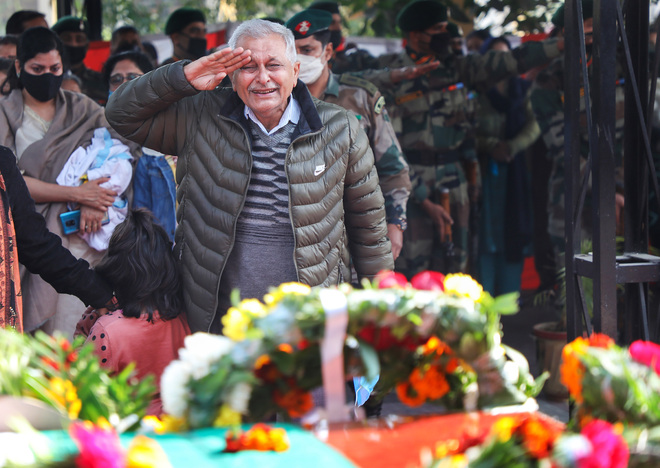
A 42-year-old Army officer, who died of a cardiac arrest in Ranchi last week, was cremated with full military honours at his hometown of Jammu on Sunday, a defence spokesman said.

Col Vikas Gautam, Commanding Officer, 23 Infantry Division Signal Regiment, died at his place of posting in Ranchi on February 18 and his mortal remains were brought to Jammu on Saturday.

Senior Army officers attended the wreath-laying ceremony before the body was consigned to flames at Shastri Nagar cremation ground on Sunday morning, the spokesman said. He said the officer is survived by his wife and two children. — PTI


Defence Colony road at ambala cantt caves in


Defence Colony road at ambala cantt caves in

Defence Colony roads, in different lanes, have caved in. It is not only causing inconvenience to commuters but may also lead to accidents. Today, the road right in front of our house, in Sector D, gave way when a loaded tractor trailer passed over a manhole. The road was blocked for hours. The reason for all this caving in is shoddy work of restoring the roads after laying the sewerage pipe lines. It is obvious that supervision is poor, and the authorities are not seeing the quality of work on ground. It is high time the authorities come on ground and ensure good quality restoration work.

Col RD Singh (retd), Ambala Cantt


BKU’s Ugrahan dares Delhi Police to enter Punjab to arrest accused Thousands attend ‘Kisan Mazdoor Sangh’ rally at Barnala

http://

Tribune News Service
Chandigarh, February 21

Bharatiya Kisan Union (Ekta-Ugrahan) president Joginder Singh Ugrahan on Sunday dared Delhi Police to enter Punjab for arresting the Red Fort violence accused.

At a massive show of strength by the farmers and farm labourers mainly from the Malwa region of Punjab at Barnala town, he said said the ongoing farmers’ protest was the first time that people of India had mounted a challenge to what he claims is a “fascist and communal government”.

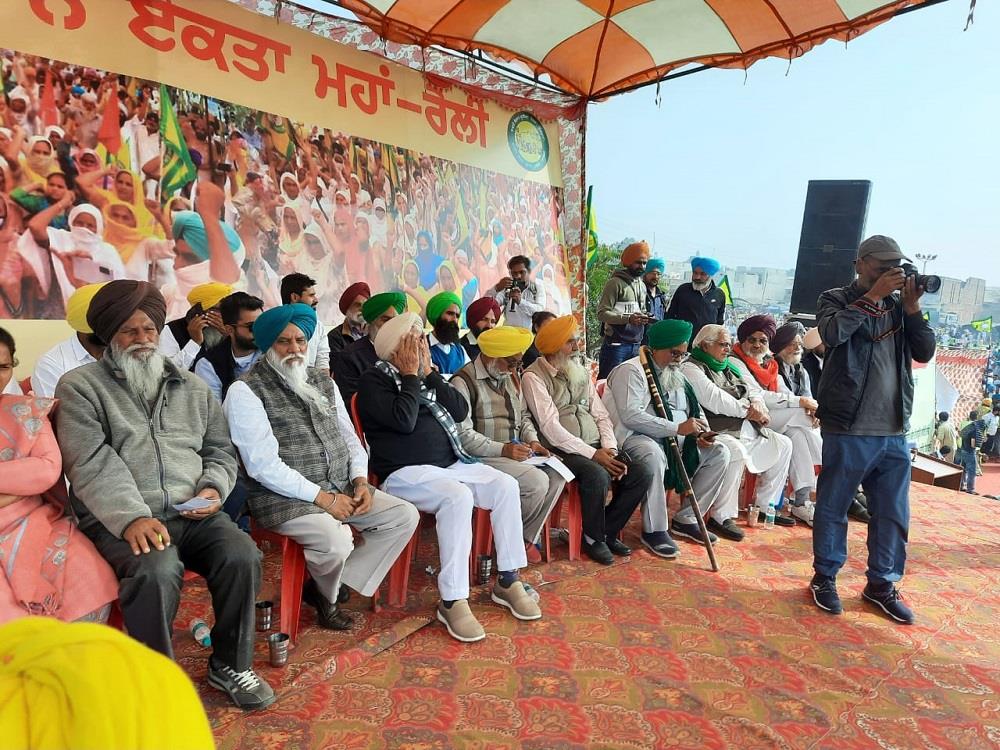
Ugrahan was addressing a ‘kisan mazdoor rally’, which saw thousands gather at Barnala’s grain market against the Centre’s three controversial farm laws on Sunday,

Organised by the BKU (Ugrahan) and the Punjab Khet Mazdoor Union, was one of the largest gatherings held in the state since the farmers’ protest moved out of the state to the borders of Delhi. The union had said it expected over two lakh farmers to attend the rally.

Also read: All set for mega rally against farm laws in Barnala today

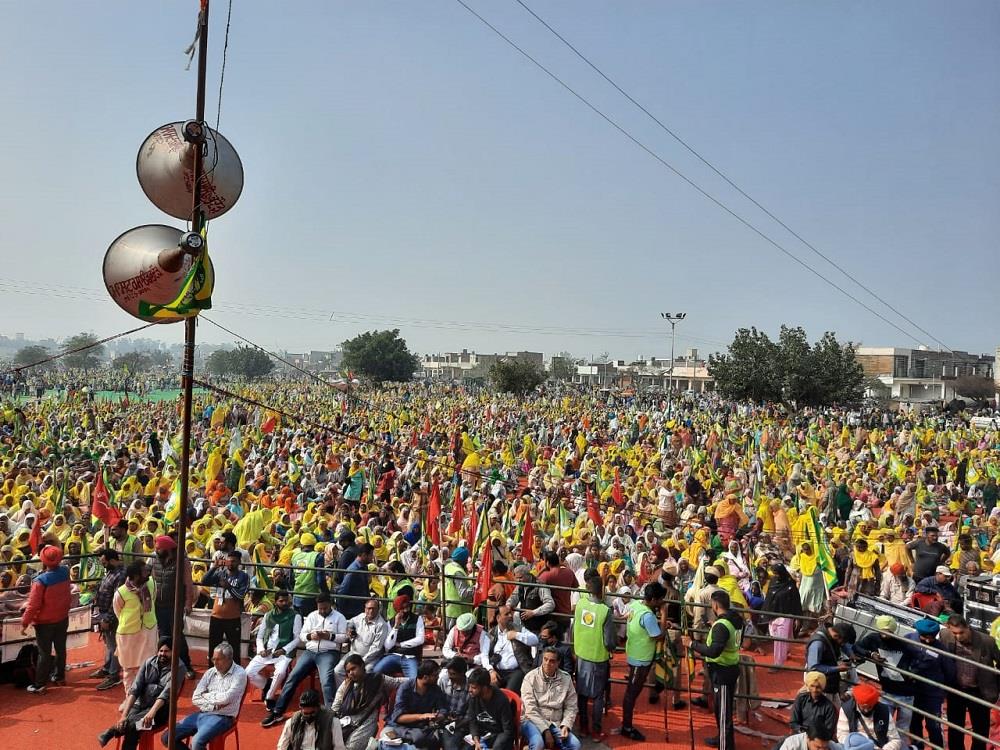
Farmers and their supporters gather at Barnala’s grain market to attend ‘mazdoor kisan rally’ to protest against the Centre’s three farm laws, in Barnala on Sunday. Tribune Photo

“One person needs at least four square feet, so we have laid mats on nine lakh square feet,” Sukhdev Singh Kokri, general secretary of the union, had said on Saturday.

Given the scale of their event, BKU said it had deputed around 300 volunteers for the smooth movement of vehicles and parking, and 400 more volunteers for securing the stage and serving water and tea to those attending the rally.

Farmers and their supporters gather at Barnala’s grain market to attend ‘mazdoor kisan rally’ to protest against the Centre’s three farm laws, in Barnala on Sunday. Tribune Photo

Donning yellow dupatta to signify solidarity, tens of thousands of women too participated.

Sufi singer Kanwar Garewal enthralled the gathering.

Organisers claimed that over two lakh farmers attended the rally.

Besides Ugrahan, leaders of the Samyukta Kisan Morcha comprising Balbir Singh Rajewal, Ruldu Singh Mansa and Sukhdev Singh too participated in the rally.

Expressing serious concern over the threat to the state’s agriculture as a result of the “disruption caused by the three new farm laws”, Punjab Chief Minister Amarinder Singh had on Saturday urged Prime Minister Narendra Modi to ensure urgent resolution of the ongoing farm unrest by the Centre “to the satisfaction of the protesting farmers by addressing their grievances”.

Calling for the fullest respect for the ‘annadaata’, the Chief Minister, through his speech for the virtual meeting of the Niti Aayog, reiterated his government’s stand that agriculture is a state subject and law-making on it should be left to the states in the true spirit of “cooperative federalism” enshrined in the Constitution.

In this context, he pointed to the state amendments already passed to the central legislations by the state Assembly in October 2020. — With IANS inputs


Devoid of Indian Sikh ‘sangat’, Saka Nankana Sahib commemorated at Sri Nankana Sahib Akal Takht Jathedar addresses Pakistan devotees through ‘zoom’

Devoid of Indian Sikh ‘sangat’, Saka Nankana Sahib commemorated at Sri Nankana Sahib


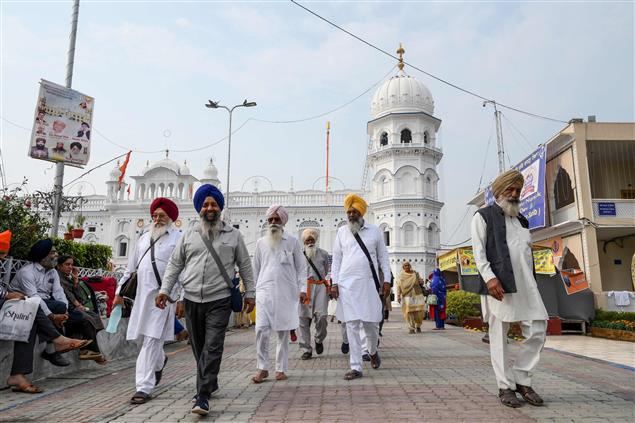
Sikh pilgrims visit Nankana Sahib gurdwara. AFP file photo

GS Paul
Tribune News Service

Amritsar, February 21

The BJP-led Central government was criticised on both the sides of India-Pakistan border for its denial to permit Indian ‘jatha’ to visit Pakistan to take part in the centenary of Nankana Sahib massacre, known as Saka Nankana Sahib, on Sunday.

Akal Takht officiating Jathedar Giani Harpreet Singh addressed the Pakistan devotees’ digitally through ‘zoom’ and appreciated the Pakistan authorities for organising the event to pay homage to the hundreds of Sikhs who laid down their lives for the sake of Sikh Panth and the shrine’s administration.

In Pakistan, around 2,000 Sikhs and Nanak Naam leva sangat attended the occasion.  Federal Minister Brig (Retd) Ejaz Shah was the chief guest.

Pakistan Sikh Gurdwara Parbandhak Committee (PSGPC) president Satwant Singh told that all the arrangements were made in collaboration with the Evacuee Trust Property Board.

“Pakistan had issued 720 visas to Indian devotees as special permission to attend the occasion but in vain,” he said.

The SGPC marked the occasion at Godharpur village in Gurdaspur district, where the kin of Bhai Lachhman Dass Singh Dharowali, who was killed during Nankana Sahib massacre, lived.

Launching an attack on the Central government, Giani Harpreet Singh said the BJP-led Central government has been playing politics of “polarisation”.

“Since 1947, the minorities like Muslims and Sikhs were being targeted politically, socially, economically and religiously only to grab powers through votes from the majority community. The Sikhs ought to be politically strong while burying internal conflicts,” he said.

On Centre’s move to restrict Indian Jatha to Nankana Sahib, he said it was a fallout of Sikhs’ active participation in protest against the newly enacted farm laws.

He said that even if the Centre attempted to intercept the Sikh jathas on Gurpurabs ahead, the Sikhs would never bow down before the Centre.

“I want to clarify to the Central government that its attempt to desist the Sikhs’ participation in farm protest could never be fructified. A century ago, the British government had stopped the Sikh jatha heading to Nankana Sahib, a day after the massacre, led by Jathedar Kartar Singh Jhabbar and today the BJP’s Central government did the same,” he said.

He said the Sikhs would commemorate Saka Nankana Sahib martyrs every year and the occasion would also memorise the Centre’s move to stop Sikh jatha to Nankana Sahib.

Addressing a gathering, SAD president Sukhbir Singh Badal also questioned the Centre for its denial to jatha and the CM for not taking up the issue.

“Even few days back few persons were granted permission to visit Pakistan at the insistence of Chief Minister Capt Amarinder Singh,” he said.

SGPC president Bibi Jagir Kaur urged Sikhs to unite under the banner of the SGPC and also announced to construct a Guru Ka Langar hall in remembrance of Bhai Lachhman Singh and a library in memory of the martyrs of Nankana Sahib in their native villages.


Explained: What is Saka Nankana Sahib, and why it matters in Sikh history

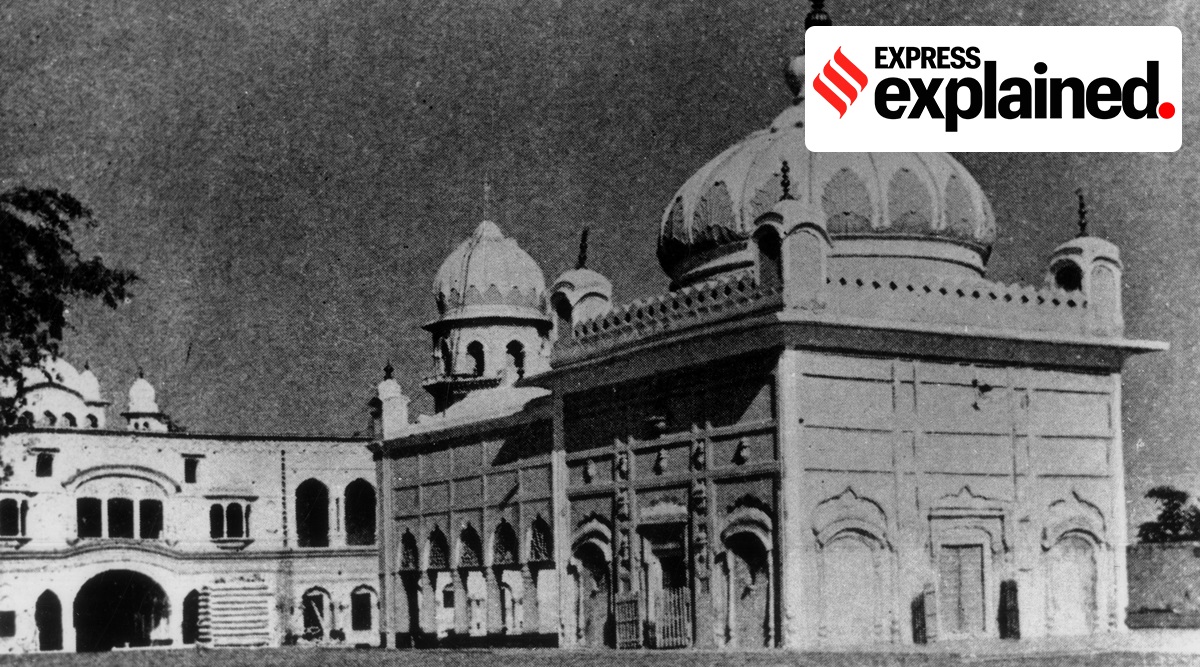
The Nankana Sahib Gurdwara in Pakistan. (Express Archive)

Nankana Sahib, the birth place of first Sikh guru, Guru Nanak Dev, was also the site of the first big agitation by the SGPC to take back control of gurdwaras from mahants backed by the British.

The centenary of Sri Nankana Sahib massacre, which is popularly known as Saka Nankana Sahib, is being marked in an event there on February 21 this year. The Indian Express looks back at the important event and its importance in Sikh as well as Indian history.

Efforts to free Nankana Sahib

The SGPC came to existence in November 1920, a month after Sikhs removed partial restrictions on Dalit rights inside Golden Temple in Amritsar.

It started gurdwara reform movement which was aimed at taking possession of historical Sikh Gurdwaras, which had turned personal property of the priests, who were called mahants. These mahants were also accused of running practices from gurdwaras which were not approved in Sikhism.

Mahant Narain Das was in control of Gurdwara Nankana Sahib. Newly formed SGPC asked him to improve the administration of gurdwaras in October 1920. However, the mahant took it as challenge to his authority and started equipping himself with arms and fortified the gurdwara.

SGPC leader Lachman Singh Dharowal was attacked by mahant’s men inside gurdwara on birth anniversary of Guru Nanak Dev Ji in presence of British officials in November 1920. But no action was taken against the mahant.

Sikh leaders made attempts to bring mahant to the negotiation table but their efforts failed.

The February massacre

Meanwhile, all the mahants and other groups, who were in control of Sikh gurdwaras, also organised themselves and started holding meetings against any move of the SGPC to take control away from them.

They called “Sikh Sanatan Conference” in Lahore on February 19, 20 & 21, 1921. Some motivated Sikh leaders took it as an opportunity to take control of the Gurdwara Nankaka Sahiba as Mahant Narain Das would be busy in Lahore.

Master Tara Singh and other Sikh leaders tried to stop the Sikh jatha on the way to Nankana Sahib but failed to convince the leaders leading the jatha.

Mahant Narain Das also came to know about jatha coming to Gurdwara Nankana Sahib as he was all set to leave for Lahore by train and returned back.

The unarmed Sikh jatha entered inside the gurdwara and with a plan to take possession of gurdwara in a non-violent manner. On the other side, the mahant was all prepared for an armed attack and he leashed his men equipped with fire arms, sticks and sharp-edged weapons on this jaths.

As the jatha entered the gurdwara, all the gates were closed. Around 60 Sikhs were killed in the main hall. 25 bodied were found in a single room. A 12-year-old survived the attack after he managed to hide under the palanquin on which Guru Granth Sahib was installed.

Many got bullet shots. Some injured Sikhs were even burnt alive in boiling water during the attack. Others were chased down to a railways track nearby and killed there. Total number of causalities stood between 150 to 200.

Taking control of the gurdwara

After the incident, Mahant Narain Das ran away, while the British police arrested 26 Pathans and sent them to Lahore in special train. The incident, however, created an impression among Sikhs that the British government had played a hidden part in this massacre.

All the prominent Sikh leaders reached Nankana Sahib on February 21, 1921. Kartar Singh Jhabbar reached with 2,200 Sikhs. Initially, police and Army tried to stop the jatha, but later Sikhs were allowed to take control of the gurdwara.

The then Punjab Governor and his council members also reached Nankana Sahib on February 22 and ordered handing over control of gurdwara to Sikhs.

Mahatma Gandhi reached Nankana Sahib on March 3, 1921. Gandhi said that the British government was part of this massacre. He also said that cruelty of this massacre was more than that of Jallianwala Bagh.

“I wish to see the bravery of Lachhman Singh and Dalip Singh in Mulshi Peta. Without raising a little finger, these two warriors stood undaunted against the attack of Mahant Narain Das of Nankana Sahib and let themselves be killed,” said Gandhi.

SGPC movement takes first political turn

The British government also arrested Mahant Narain Das. Meanwhile, SGPC formed its own probe team and asked Mahatma Gandhi to be part of it. Gandhi asked Sikh leaders to give support to the non-cooperation movement of the Congress party.

The SGPC called a meeting on March 6, 1921 and Prof Mota Singh passed a resolution and decided to support the non-cooperation movement being run by Mahatma Gandhi. The resolution said that Sikhs must give all the support to the non-cooperation movement.

However, the move was not welcomed by some of the SGPC leaders. Jathedar Kartar Singh Jhabbar, Harbans Singh and Bhai Jodh Singh had opposed this resolution as they feared that it would mix a religious movement with a political movement. However, a resolution was passed with a majority vote.

SGPC joining non-cooperation movement angered British

The Biritsh government was not amused with the decision of SGPC leadership to be part of a political movement. Sikh leaders Kartar Singh Jhabbar, Teja Singh Bhuchar, Tara Singh Thethar, Bhai Lakha singh and others were arrested from Nankana Sahib for allegedly taking illegal control of gurdwaras on March 15, 1921.

In May 1921, SGPC asked Sikhs to wear black clothes and turbans as protest against British government. At Nankana Sahib, two big utensils were kept which were used to colour the turbans black. Arrested Sikh leaders were released after five months.

The court found Mahant and his men guilty in just six months and main accused were sentenced to death. Later, death sentence was commuted to life term. Mahant was released from jail in 1930.

However, Nankana Sahib Gurdwara agitation was just a big leap in Gurdwara Reform movement followed by Guru Ka Bagh Morcha and other agitations till Sikh Gurdwara Act came into existence in 1925.



At Barnala, call for march to Delhi borders on Feb 27

http://

Tribune News Service

Chandigarh, February 21

A mammoth gathering of farmers and farm workers in Barnala today swept aside the fear of fizzling out of the movement and gave a clear message that the protesters are ready for a long struggle which can continue through the summer.

The ‘maha rally’ organised by the Punjab Khet Mazdoor Union and Bhartiya Kisan Union (Ugrahan) was also addressed by leaders of the Sanyukta Kisan Morcha.

They gave a call to the people of Punjab to reach Delhi borders in large numbers on February 27, when the stir is going to complete three months. They also appealed to women to celebrate International Women’s Day on March 8 at Singhu and Tikri.

Earlier, the organisers made the seating arrangement in 9 lakh sq ft area and the police also made elaborate arrangements for traffic management, but with lakhs of people participating in the rally, all plans seemed to go haywire as huge traffic jams were witnessed around the city. It was being termed as one of the biggest rallies organised by any farmer union in Punjab.

Speaking at the rally, farm leader Joginder Singh Ugrahan said the struggle had exposed the powers which were trying to rob the pockets of the masses.

Speaking on the January 26 incident, he said it was a government ploy. “A group was acting on the directions of the rulers. These were the same people who were vouching for Khalistan from day one. They were against the programmes of farmer organisations.” Ugrahan said the secular character and participation of other communities was necessary for strengthening the struggle. “This is not a struggle for religion or caste. This is a struggle for our livelihoods. This is not struggle of people of Punjab but of the people of India,” he said.

The rally is being seen as an important development as it was for the first time that leaders of the SKM spoke from the stage of BKU (Ugrahan). Ugrahan is not part of the front of 32 farmer organisations.

Farmer leader Datar Singh dies

Chandigarh: Datar Singh, a prominent farmer leader, died on Sunday after a cardiac arrest at Amritsar. He was the president of the Kirti Kisan Union, Punjab, and before joining the farmers’ movement, he was a known trade union leader. Samyukta Kisan Morcha’s Darshan Pal said Datar was a brave leader of the SKM. TNS

Don’t cooperate with Delhi cops: Rajewal

Farm leader Balbir Singh Rajewal on Sunday asked people to throw the notices sent by the Delhi Police “into the dustbin or send these to the morcha’s legal team”. “Don’t cooperate with the Delhi Police. There is no need to join the investigation. If they try to arrest you, oppose them unitedly,” he said.


Sino-India disengagement process in eastern Ladakh complete: Rajnath Singh Defence minister hits out at Congress for ‘doubting’ Indian soldiers’ bravery

Sino-India disengagement process in eastern Ladakh complete: Rajnath Singh

Defence Minister Rajnath Singh. PTI file

Salem (Tamil Nadu), February 21

The disengagement process by India and China in eastern Ladakh is ‘complete’ after nine rounds of diplomatic and military level talks between the two neighbours, Defence Minister Rajnath Singh said here on Sunday as he hit out at Congress for ‘doubting’ Indian soldiers’ bravery.

The country will not allow any “unilateral action” on its border and will pay any cost to thwart such attempts, he told the Bharatiya Janata Yuva Morcha’s state conference here.

“After nine rounds of military and diplomatic dialogue, the disengagement process is complete. But unfortunately the Congress is doubting Indian army’s bravery…. isn’t it insulting to the soldiers who do the supreme sacrifice,” he said.

Twenty Indian army personnel were killed in the Galwan clash with the Chinese troops last year during the face-off.

The government under the leadership of Prime Minister Narendra Modi “has never compromised with country’s unity, territorial integrity and sovereignty” and it shall never do so, he asserted. PTI