Essential Commodities Amendment Act is one of the three laws against which farmers have been protesting at Delhi’s borders
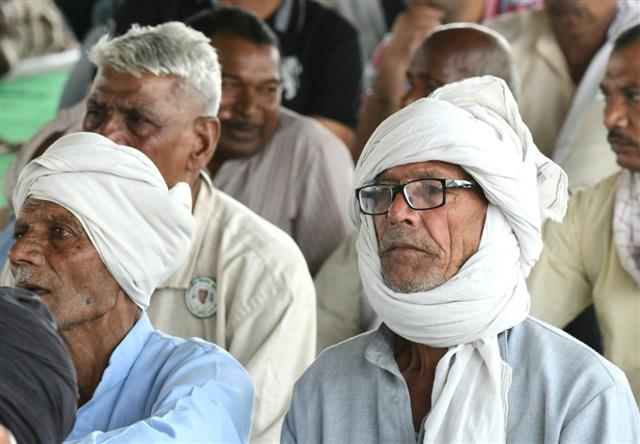
Farmers at Ghazipur border during their ongoing protest against farm laws in New Delhi. Tribune file photo
New Delhi, March 21
Farmer unions on Sunday condemned the demand for immediate implementation of the Essential Commodities Amendment Act (ECAA) by a parliamentary committee.
The ECAA is one of the three laws against which farmers have been protesting at Delhi’s borders.
The parliamentary panel, which also has members from opposition parties, including the Congress, TMC and the AAP, asked the government to implement in “letter and spirit” the ECAA.
These parties have been demanding repeal of all three farm laws enacted by the Centre recently.
“It is insensitive to the food security of poor people and the demand to increase the procurement of farmers’ crops,” the Samyukta Kisan Morcha, a joint front of the protesting farmer unions, said in a statement.
“We appeal to farmers, labourers and common citizens to intensify their struggle for the repeal of the three laws and legal right of minimum support price,” the SKM said.
The Morcha said it is clear from the overwhelming support from “Kisan Mahapanchayats” against the agricultural laws that the proposed “Bharat Bandh” on March 26 will be successful.
It said all services, other than emergency services, will remain suspended from 6 am to 6 pm on that day. PTI
65-year-old woman protester from Punjab dies at Tikri border
A 65-year-old woman protester from Punjab reportedly died of cardiac arrest at the Tikri border on Monday night.
Balbir Kaur, of Mandi Kalan village (Bhatinda), had been actively participating in the farmers’ agitation.
Dr Sanjay Dahiya, Civil Surgeon, Jhajjar, said she was brought dead to Civil Hospital in Bahadurgarh town late on Monday night. The exact cause of death would be ascertained after the postmortem, he added.
Balbir Kaur is the first woman protester to lose her life at Tikri during the agitation.
WALK THE TALK’, CAPT AMARINDER TELLS GEN BAJWA, SAYS PAK NEEDS TO BACK RHETORIC ON PEACE WITH ACTIONS
Chandigarh, March 19 Terming Islamabad-sponsored terrorism as the biggest hurdle to normalizing relations between the two nations, Punjab Chief Minister Captain Amarinder Singh on Friday said Pakistan Chief of Army Staff, General Qamar Javed Bajwa, should back his rhetoric on peace with India with solid action.
Bajwa should first control his ISI, and then talk about stability in Indo-Pak relations, said the Chief Minister, adding that India cannot afford to go soft with Pakistan till they walk the talk and prove their sincerity with concrete actions.
“Infiltration into India from across the border is still happening, Indian soldiers are being killed at the borders every day. They (Pakistan) are dropping arms and heroin into Punjab via drones every other day. Efforts to create trouble in my state continue to take place. All this should stop first, only then we can talk peace,” said Captain Amarinder.
For India to trust Pakistan, the latter will have to do much more than offer an olive branch, said the Chief Minister, citing his own experience of 1964 as ADC to GOC-in-C, Western Command. “We used to receive daily reports then of firing and trouble from the western border, as we continue to do now,” he said
It is important for not just Bajwa but the entire Pakistan military apparatus to be on board with the idea of burying the past and paving the way for peace with India, said Captain Amarinder, adding that it is not New Delhi but Islamabad which has obstructed the path of peace between the two countries.
“Are they all of the same view as shared by General Bajwa? Are they withdrawing all support to terror groups immediately? Have they asked ISI to back off and leave India alone?” These, said the Chief Ministers, are questions that need to be answered before India can start believing in, and responding to, Pakistan’s overtures of peace. “India is all for peace, all Indians stand for peace, but India cannot compromise on its security and integrity,” he stressed, adding that peace cannot be conditional.
Given the way the situation has evolved over the past few months, Pakistan’s increasing collusion with China, which has been causing a whole lot of trouble for India on the other border, is a matter of concern, the Chief Minister said. “If Islamabad seriously wants peace with New Delhi, they should send out the message to Beijing, loud and clear, that Pakistan is not with them in the dangerous escapades at the Line of Actual Control (LAC).
Back your rhetoric with solid action — Punjab CM on General Bajwa’s India-Pakistan remark
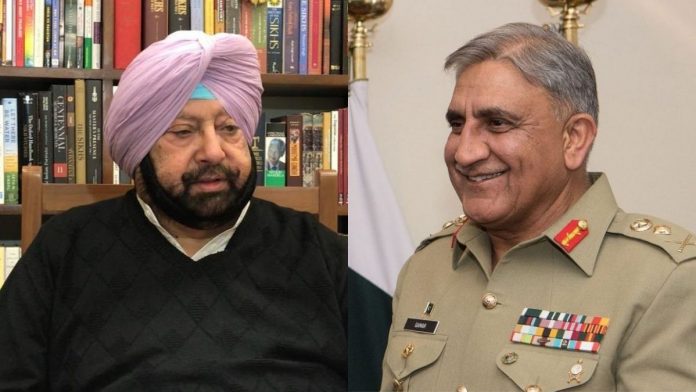
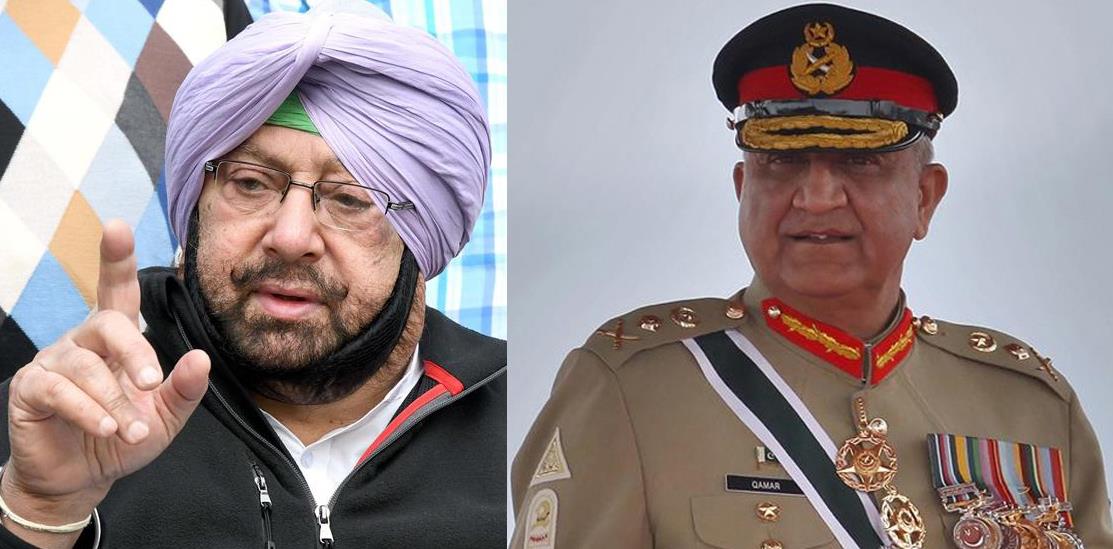
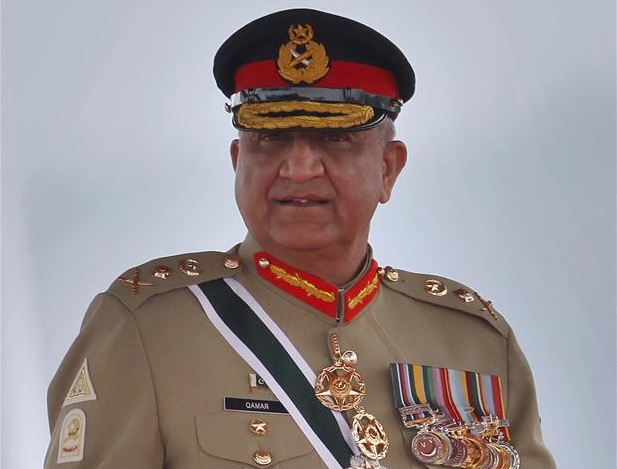
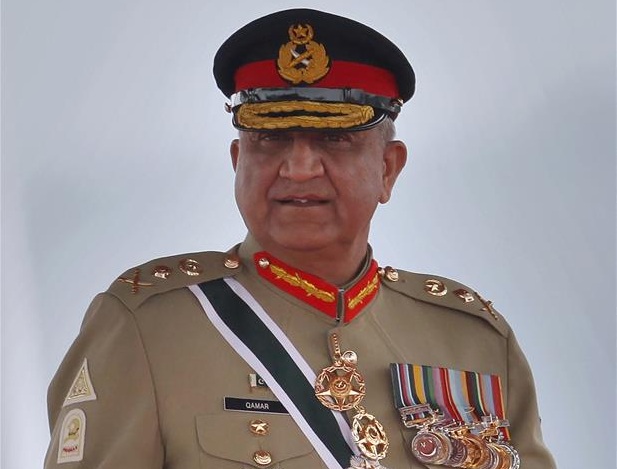
Punjab Chief Minister Amarinder Singh (left) and Pakistan Army chief General Qamar Javed Bajwa (right) | Twitter and FlickrText Size: A- A+
Chandigarh: Reacting to Pakistan Army chief Gen Qamar Javed Bajwa’s remarks that it was time for India and Pakistan to “bury the past and move forward”, Punjab Chief Minister Amarinder Singh on Friday said he should back his rhetoric on peace with solid action.
Bajwa’s statement had come on Thursday, a day after Pakistan Prime Minister Imran Khan made similar overtures following an unexpected ceasefire announcement by the militaries of the two countries weeks ago.
Addressing a session of the first-ever Islamabad Security Dialogue, General Bajwa had said the potential for regional peace and development always remained hostage to the issues between Pakistan and India–the two “nuclear-armed neighbours”.
Terming the Islamabad-sponsored terrorism as “the biggest hurdle to normalising relations between the two nations”, Amarinder Singh said Bajwa should first control his ISI and then talk about stability in the India-Pakistan relations.
General Bajwa should back his rhetoric on peace with solid action , the CM said in a statement, adding that India cannot afford to go soft with Pakistan till they walk the talk and prove their sincerity with concrete actions .
Infiltration into India from across the border is still happening, Indian soldiers are being killed at the borders every day. They (Pakistan) are dropping arms and heroin into Punjab via drones every other day.
Efforts to create trouble in my state continue to take place. All this should stop first, only then we can talk peace,” the Punjab CM said.
“For India to trust Pakistan, the latter will have to do much more than offer an olive branch,” said the chief minister, citing his own experience of 1964 as ADC to the General Officer Commanding-in-C, Western Command.
“We used to receive daily reports of firing and trouble from the western border as we continue to do now,” said Amarinder Singh.
It is important for not just Bajwa but the entire Pakistan military apparatus to be on board with the idea of burying the past and paving the way for peace with India, said Amarinder Singh on Friday, adding that it is not New Delhi but Islamabad which has obstructed the path of peace between the two countries.
Are they all of the same view as shared by General Bajwa? Are they withdrawing all support to terror groups immediately? Have they asked the ISI to back off and leave India alone, asked the chief minister.
India is all for peace, all Indians stand for peace, but India cannot compromise on its security and integrity, he stressed, adding that peace cannot be conditional.
Given the way the situation has evolved over the past few months, Pakistan’s increasing collusion with China, which has been causing a whole lot of trouble for India on the other border, is a matter of concern, the chief minister said.
If Islamabad seriously wants peace with New Delhi, they should send out the message to Beijing, loud and clear, that Pakistan is not with them in the dangerous escapades at the Line of Actual Control (LAC), he said.
Punjab CM says Bajwa should first control his ISI and then talk about stability in India-Pakistan relations
Punjab Chief Minister Capt Amarinder Singh and Pakistan Army Chief Gen Qamar Javed Bajwa.
Tribune News Service
Chandigarh, March 19
Reacting to Pakistan Army Chief Gen Qamar Javed Bajwa’s remarks that it was time for India and Pakistan to “bury the past and move forward”, Punjab Chief Minister Capt Amarinder Singh on Friday said he should back his rhetoric on peace with solid action.
Bajwa’s statement had come on Thursday, a day after Pakistan Prime Minister Imran Khan made similar overtures following an unexpected ceasefire announcement by the militaries of the two countries weeks ago.
Addressing a session of the first-ever Islamabad Security Dialogue, General Bajwa had said the potential for regional peace and development always remained hostage to the issues between Pakistan and India—the two “nuclear-armed neighbours”.
Terming the Islamabad-sponsored terrorism as “the biggest hurdle to normalising relations between the two nations”, Amarinder said Bajwa should first control his ISI and then talk about stability in the India-Pakistan relations.
General Bajwa “should back his rhetoric on peace with solid action”, the CM said in a statement, adding that India cannot afford to go soft with Pakistan “till they walk the talk and prove their sincerity with concrete actions”.
“Infiltration into India from across the border is still happening, Indian soldiers are being killed at the borders every day. They (Pakistan) are dropping arms and heroin into Punjab via drones every other day.
“Efforts to create trouble in my state continue to take place. All this should stop first, only then we can talk peace,” the Punjab CM said.
“For India to trust Pakistan, the latter will have to do much more than offer an olive branch,” said the Chief Minister, citing his own experience of 1964 as ADC to the General Officer Commanding-in-C, Western Command.
“We used to receive daily reports of firing and trouble from the western border as we continue to do now,” said Amarinder Singh.
It is important for not just Bajwa but the entire Pakistan military apparatus to be on board with the idea of burying the past and paving the way for peace with India, said Amarinder on Friday, adding that it is not New Delhi but Islamabad which has obstructed the path of peace between the two countries.
“Are they all of the same view as shared by General Bajwa? Are they withdrawing all support to terror groups immediately? Have they asked the ISI to back off and leave India alone,” asked the Chief Minister.
“India is all for peace, all Indians stand for peace, but India cannot compromise on its security and integrity,” he stressed, adding that peace cannot be conditional.
Given the way the situation has evolved over the past few months, Pakistan’s increasing collusion with China, which has been causing a whole lot of trouble for India on the other border, is a matter of concern, the Chief Minister said.
“If Islamabad seriously wants peace with New Delhi, they should send out the message to Beijing, loud and clear, that Pakistan is not with them in the dangerous escapades at the Line of Actual Control (LAC)”, he said.
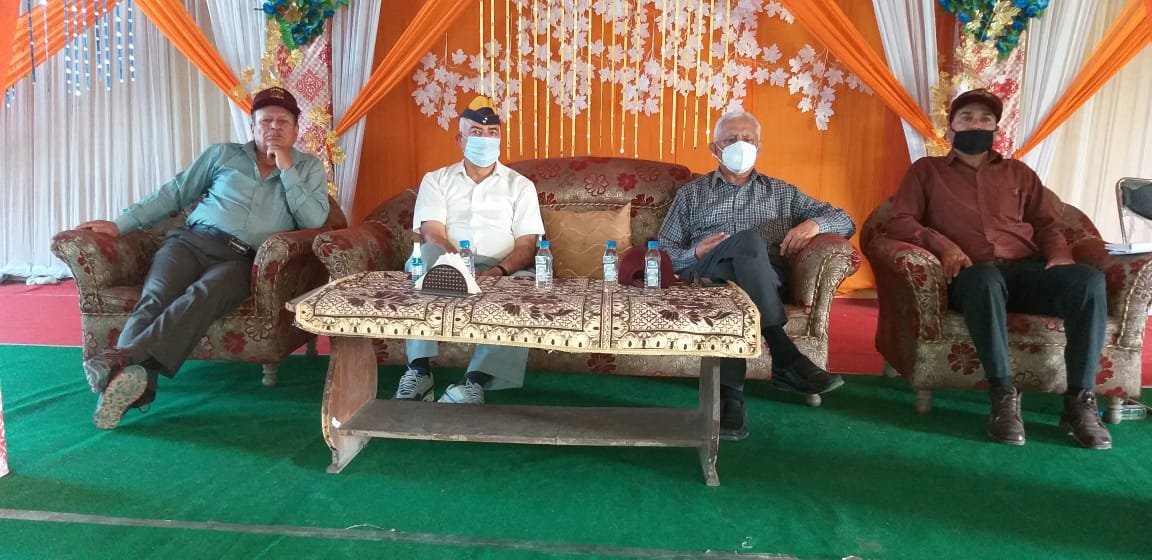
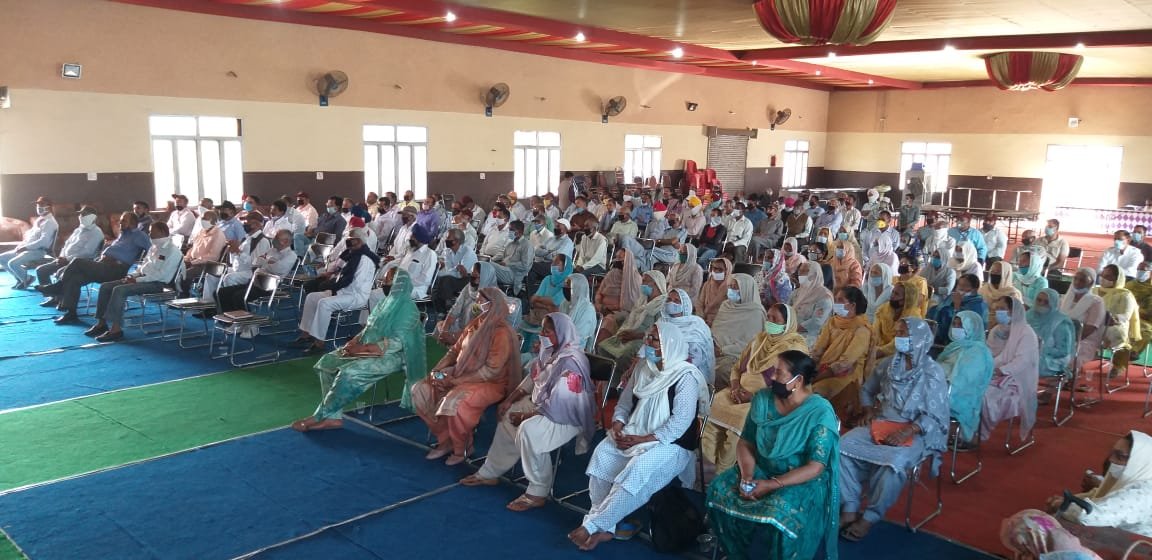
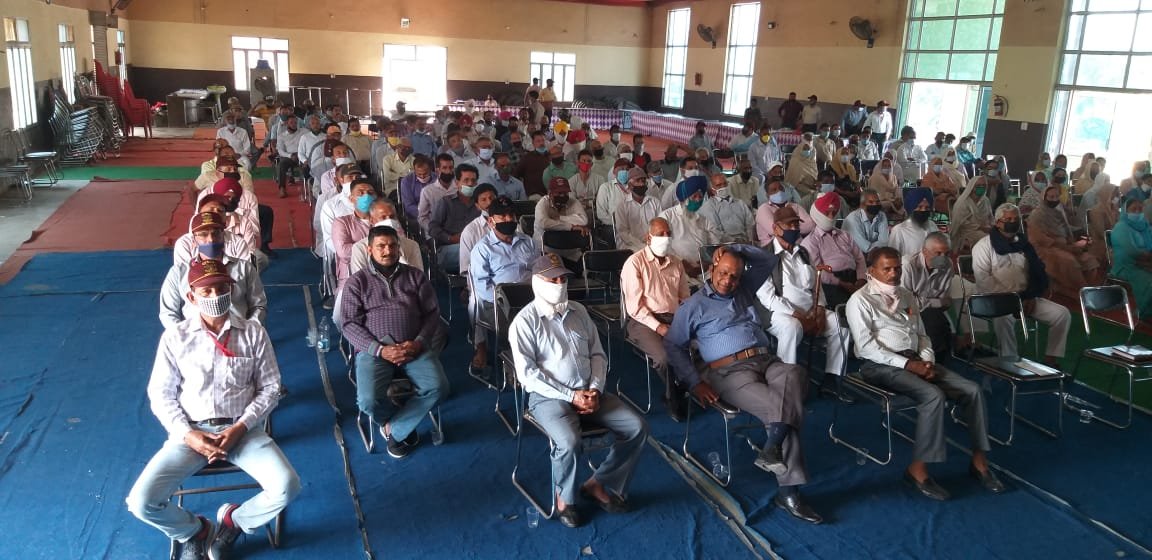
Brig Prahalad Singh ,Chairman Sanjha Morcha and GOG Distt Head Pathankot : coduct meeting of ESM and Veer Naris
Meeting was held at vill Taragarh on 19 Mar 21 with ESM and Veer Naree,s to listen and resolve their problems.Latest welfare measures initiated by Govt Departments were also shared.Brig Prahlad Singh ,Col SS Pathania,Col RK Salaria,Capt Sham,SM Kulwant, SM Ashok and GoG Team Taragarh
Armed Forces Tribunal has 19,000 pending cases, but here’s why this is least of its problems
With a sanction of 17 benches in 11 locations across India, the Armed Forces Tribunal (AFT) currently operates with just 4 benches in 3 locations.
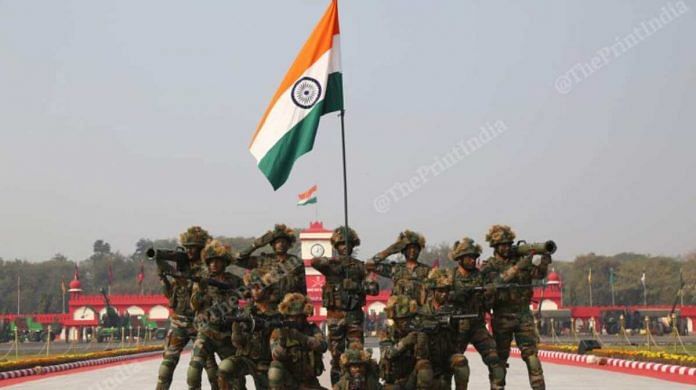
epresentational image | Army personnel during the Army Day parade | Photo: Suraj Singh Bisht | ThePrint File PhotoText Size: A- A+
New Delhi: The Armed Forces Tribunal (AFT) — a special judicial forum to address legal grievances of armed forces personnel — was set up in 2010. It was supposed to have 17 benches in 11 locations across India.
Cut to 2021, the tribunal is functioning with just four benches in three locations — two in Delhi, and one each in Chandigarh and Lucknow — with almost 19,000 cases awaiting final adjudication. Some of the undecided cases include petitions that were filed when the tribunal was set up 11 years ago.https://a0710a56e5d2817cb7f0dc0515229614.safeframe.googlesyndication.com/safeframe/1-0-37/html/container.html
The government too has admitted to a shortage of members in AFT benches. Against the sanctioned strength of 34 members, only 11 — four judicial members and seven expert members — are occupied, the Parliament was informed earlier this week.
The functioning of the AFT is governed by the Armed Forces Act. An AFT bench comprises one judicial and one administrative or expert member, and functions only when the quorum of two members is complete.
While a judicial member is either a retired Supreme Court or high court judge, an administrative member is either a retired defence personnel or civil servant.
Sources in the AFT told ThePrint that out of the four judicial members, two have been on extension since October 2019. They further said that vacancies are aplenty in AFT since 2016 and the Centre has made little effort to fill them up within a reasonable period of time, leading to a decrease in the strength.
In 2016, there were six serving judicial members and 11 administrative members. Five years later, however, this figure has come down to four and seven, respectively. Resultantly, 13 benches of AFT are non-functional where no hearing takes place.
Dispute over new service rules for tribunal members is the primary reason for delay in the appointments, according to experts and AFT officials.
In November 2020, the Supreme Court had given its verdict on the validity of service rules for members serving in various tribunals — brought in by the government that February — and directed the Centre to set up a body to oversee appointments to all tribunals.
Instead of complying with this directive, the government in January this year filed an application, seeking clarification on a few directions related to the service rules.
Experts, meanwhile, said the creation of AFT didn’t really help much in disposing of grievances of armed forces personnel, who are being treated as “second rate citizens”. They also said it is entirely up to the government whether it wants the tribunals to function effectively.
ThePrint reached the defence ministry spokesperson through email for a comment on the matter, but there was no response till the time of publishing this report.
Three of 7 administrative members without much work
Given that there are only four judicial members, three out of seven serving administrative members do not have much work to do. Unlike in other tribunals, a bench in AFT cannot hear cases with just one member, AFT sources said.
It was only during the Covid-19 pandemic that the present chairman of AFT began holding virtual hearings for the three benches, generating some work for the administrative members posted there.
“Although these hearings are occasional — once a week for each bench — at least there is some semblance of normalcy,” said an official from the AFT.
Govt yet to finalise recommendations sent in Oct 2020
The bar association of AFT’s principal bench in Delhi moved the Supreme Court in 2016, raising concern over high number of vacancies in the tribunal, following which six judicial members were appointed.
However, no fresh appointments took place when four out of the six retired, after their three-year term ended in 2019.
Two of them got extension in October 2019 on the directions of the top court, which was hearing a set of petitions against new rules that is seen as an attempt by the government to impede the independent functioning of the tribunals.
The modified rules make the post of members less attractive for retired judges as well as senior officers of the armed forces, according to petitions challenging the service rules, which have been accessed by ThePrint.
The last appointment in both the judicial and administrative side was made in December 2020 — one judicial and five administrative members.
Sources in the AFT said the selection committee — headed by a sitting Supreme Court judge — has already finalised some names for judicial members that were sent to the government in October 2020.
“This selection was made pursuant to an advertisement that was issued for eight vacancies in June 2020. However, the government is yet to take a final call on these recommendations,” sources added.
Rajiv Manglik, secretary of AFT Bar Association, told ThePrint that the inordinate delay by the government to make new appointments is the reason why the AFT benches continue to work without having a complete strength.
“The government must begin the process of appointment at least six months before a vacancy arises,” Manglik said.
‘Govt treating armed forces personnel as second rate citizens’
According to Manglik, the government has failed to make sure its armed forces get speedy justice.
When cases from high courts were transferred to AFT, the oldest pending case had been filed 13 years before. The situation hasn’t improved with AFT’s establishment where the oldest case pending dates back to 2010, Manglik said, adding that it takes five years for pension matters to get adjudicated.
“Government is treating armed forces personnel as second rate citizens. Members of the forces are not permitted to make unions and associations, therefore, for them AFT is the only platform to raise their voice. However, their right for redressal of grievances through the judiciary is also not being met,” he added.
A top military lawyer, who didn’t want to be named, told ThePrint, “Around the time AFTs were being set up, there were about 9,000 pending cases in civil courts and now there are about 19,000 pending cases after the creation of AFTs. Hence, the pendency has rather increased on creation of AFT.”
‘Up to govt if it wants tribunals to function effectively’
Major Navdeep Singh (retired), advocate, Punjab & Haryana High Court told ThePrint, “The shortage of members affects all tribunals, not only AFT.”
“The rules for tribunals promulgated by the government compromising their independence were declared unconstitutional by the SC and still certain applications for clarification are pending in the court, thereby leading to delay in appointments,” he said.
Lt. Gen. H.S. Panag (retired), who had been a member of AFT, Chandigarh bench, told ThePrint that it is entirely up to the government whether it wants the tribunals to function effectively.
“I have seen in the past too that even after the selection process, the final approval from the government was inordinately delayed. Moreover, after the initial years, the litigation started going up, not only because the bureaucracy sat on the implementation of AFT judgments, but challenged several of them in the Supreme Court,” he added.
General Bajwa says national security is not the preserve of armed forces alone. If that is not astonishing enough, there is the offer of regional connectivity. That’s not just about CPEC. In simple words, he is offering up Pakistan as a node for regional connectivity. This means Pakistan is ready for roads, railways & shipping to cross its territory into the rest of the world, including India. That’s turning South Asian politics on its head
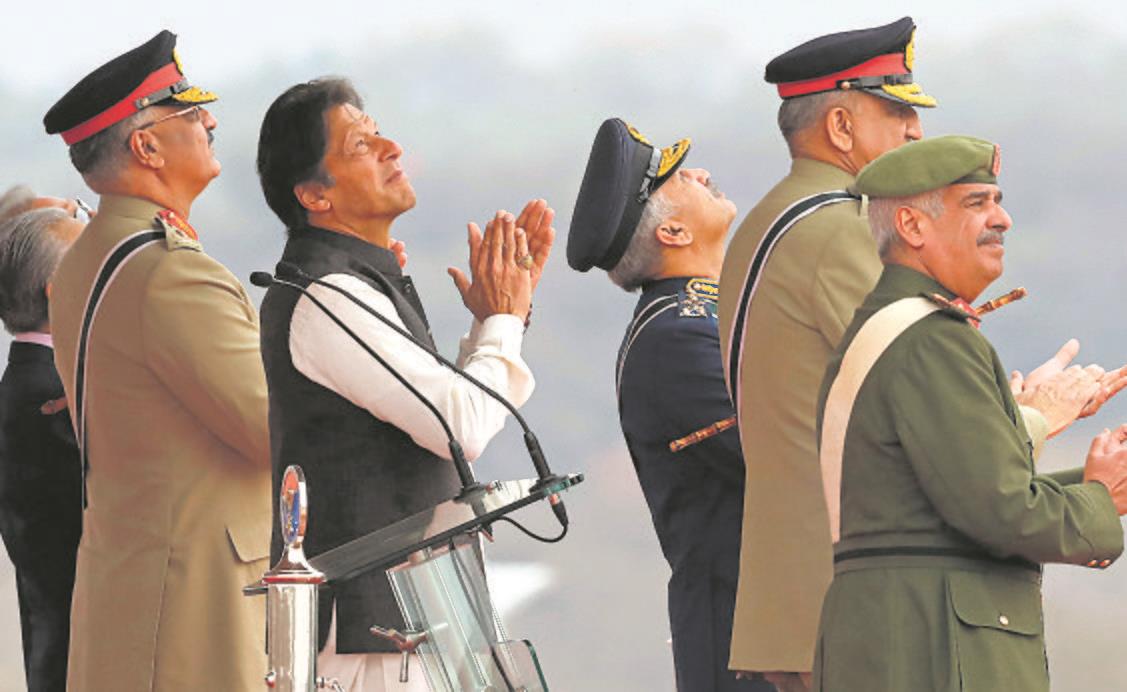
NEW PUSH: Pakistan PM Imran Khan and army chief General Bajwa appear to be keen on a strategic rethink. Reuters
Tara Kartha
Former Director, National Security Council Secretariat
These are stirring times in Islamabad, where the rich and the powerful gathered for the first-ever Islamabad Security Dialogue (ISD) on March 17-18. In Pakistan, the rich and the powerful are either politicians, businessmen or those in khaki, or even all three. And since it is they who run the country, what they say usually matters. The Dialogue was inaugurated by Prime Minister Imran Khan, while the keynote address was delivered by army chief General Qamar Javed Bajwa. Of the two, it’s obvious who one would listen to. And it was quite something.
The ISD was organised by the National Security Division, a body originally set up under Nawaz Sharif to serve as the secretariat of the Cabinet Committee on National Security which replaced the Defence Committee of the Cabinet. Later called the National Security Committee, it was notified as the ‘principal decision-making body on national security’ in a move quite unlike the advisory role such bodies have in most countries. That it included the service chiefs hardly needs to be said.
At present, the division is headed by a secretary-level officer. An added post in national security bureaucracy is in the form of a special adviser to the PM, Moeed Yusuf, an academic from the US, who has been in the news for possible backchannel talks with India.
It is this division which seems to have initiated the ISD, together with five leading think-tanks of the country, the Centre for Aerospace and Security Studies, Islamabad Policy Research Institute, Institute of Strategic Studies, Institute of Regional Studies and National Defence University’s Institute of Strategic Studies, Research and Analysis.
The idea is aimed at bringing think-tanks and policy-makers together, in a praiseworthy effort to benefit both. Bureaucracies the world over are not very different from each other, particularly in South Asia, where there is usually a solid brick wall between the two. The first move to break that wall is the first ever advisory portal, an integrated platform to exchange ideas with universities, think-tanks and the bureaucracies. The second was obviously to get the army chief to lay down the proposals.
For decades, Pakistan’s idea of national security was simply India, and anything at all to do with what Delhi did anywhere. This permeated from top to bottom in the bureaucracy, leading to a somewhat lazy and hazy thinking about what Pakistan’s actual security constituted, even while outside experts pointed to a seriously water-stressed country, disease, lack of access to health, apart from the obviously unstable politics of extremism and intolerance.
This now seems to be changing, just a little. It started at the beginning of this year. In February, there was talk of Pakistan prioritising geo-economics over other issues. That was echoed by Foreign Minister Qureshi soon after Khan’s visit to Colombo where he rather surprisingly talked about Sri Lanka being part of CPEC. Now at the ISD, PM Khan is talking of comprehensive security astonishingly, saying that security is not just about defence. Unsurprisingly, he praised China’s model, as he does at every forum available. Equally unsurprisingly, Kashmir and self-determination went together, which doesn’t say very much of his understanding of his country’s national security priorities.
But the speech that has been uploaded in full is that of the army chief. And General Bajwa has much to say. First, he says national security is not the preserve of the armed forces alone. Then he places national security within ‘South Asia’, as the least integrated of regions. Someone in the audience could ask, whose fault that is, and the chief would have been hard put to answer. On Kashmir, he simply says, “It is time to bury the past and move forward. But for the resumption of the peace process or meaningful dialogue, our neighbour will have to create a conducive environment, particularly in Indian-Occupied Kashmir.” Nothing on UN resolutions, self-determination or the standard phrases!
If that’s not astonishing enough, there is the offer of regional connectivity. That’s not just about China Pakistan Economic Corridor (CPEC), though that is offered up as an ‘inclusive, transparent’ project for global and regional participation, particularly Afghanistan. What follows is best quoted in full. The General says, “Let me also emphasise that while CPEC remains central to our vision, only seeing Pakistan through the CPEC prism is also misleading. Our immensely vital geostrategic location and a transformed vision make us a country of immense and diverse potential which can very positively contribute to regional development and prosperity.”
In simple words, he’s offering up Pakistan as a node for regional connectivity. That’s something for a country that has stonewalled the SAARC regional connectivity proposals for years, refusing even the Motor Vehicles Pact that would have allowed passenger and cargo movement across the region. This means that Pakistan is ready for roads, railways and shipping to cross its territory into the rest of the world, including India. That’s turning South Asian politics on its head.
New Delhi’s hardened security experts will pooh-pooh a proposal from an army chief who is on extension, and will probably retire finally in November 2023, three years after he actually ended his tenure. Others will say with more truth that Pakistan is in a jam, given its crumbling economy, CPEC delays and a political milieu that is challenging to say the least. But the army chief is still the ‘go-to’ person for all foreign officials, distinguished or otherwise. What he says matters since he sits on top of the political food chain. It is as simple as that. Delhi had better consider this connectivity push and its pros and cons rather than dither about Bajwa’s hostile antecedents. Here is an opportunity. Take it up. It might mean money, and a lot of it.
Pak army chief’s offer of non-interference demands close scrutiny
t was reverse swing perfected on a tampered ball that made Imran Khan almost unplayable; and now in his political avatar, he has thrown something akin to his famed deceptive in-swinger at India’s foreign ministry pundits, who are still shuffling at the crease without a response. The Pakistan Prime Minister made a peace overture on Wednesday while inaugurating the first edition of the Islamabad Security Dialogue, claiming that India and Pakistan can settle the Kashmir issue through dialogue and establish a relationship like civilised neighbours. After his failed rabble-rousing attempt at the UN General Assembly, it was only in September 2019 that Imran had called for a jihad against India.
From an all-out religious war to peaceful coexistence through dialogue is a reversal too sharp, and while the Indian officialdom is still reading Imran’s delivery, Pakistan army chief Qamar Javed Bajwa literally bowled India over on Thursday. Bajwa’s astonishing promise of ‘non-interference of any kind in the internal affairs of our neighbour’ is so staggering that nobody in India can afford to take it seriously. By promising to ‘recast Pakistan’s image as a peace-loving nation and a useful member of the international community’, Bajwa has even confessed to his country’s true characteristics. Pakistan’s spin doctors are explaining the statements of Imran and Bajwa from the perspective of national security in terms of economic priorities over military compulsions — the primacy of economic security.
Shorn of all jargon, it could simply mean the fear of the anti-terror Financial Action Task Force (FATF) keeping Pakistan on the grey list beyond June. The FATF sanctions have indeed cost Pakistan a GDP loss of $38 billion in exports and inward foreign direct investment in recent years; yet this startling U-turn seeking peace with India has more to it than financial distress. This could well be a realisation of the futility of getting on the wrong side of the US-China competition, particularly after the Quad summit and the publication of the joint op-ed by the leaders of the US, India, Japan and Australia. Or simply a reverse swing yorker meant to deceive and defeat.
Time for India and Pak to bury the past and move forward: Gen Bajwa
India has said the onus is on Pakistan to create an environment free of terror and hostility
Pakistan Army chief General Qamar Javed Bajwa. AP/PTI file
Islamabad, March 18
Pakistan Army chief General Qamar Javed Bajwa said on Thursday that it was time for India and Pakistan to “bury the past and move forward” as he asserted that the peace between the two neighbours would help to “unlock” the potential of South and Central Asia.
Addressing a session of the first-ever Islamabad Security Dialogue here, Gen Bajwa also said the potential for regional peace and development always remained hostage to the disputes and issues between Pakistan and India – the two “nuclear-armed neighbours”.
“We feel it is time to bury the past and move forward,” he said, adding that the responsibility for a meaningful dialogue rested with India.
India last month said it desires normal neighbourly relations with Pakistan in an environment free of terror, hostility and violence. India has said the onus is on Pakistan to create an environment free of terror and hostility.
India has also told Pakistan that “talks and terror” cannot go together and has asked Islamabad to take demonstrable steps against terror groups responsible for launching various attacks on India.
“Our neighbour will have to create a conducive environment, particularly” in Kashmir, Gen Bajwa said, adding that any effort to improve ties without addressing the core issue would be vulnerable to external political factors.
“The Kashmir issue is at the heart of this. It is important to understand that without the resolution of the Kashmir dispute through peaceful means, the process will always remain susceptible to derailment to politically motivated bellicosity,” he said.
The powerful army, which has ruled Pakistan for more than half of its 70 plus years of existence, has hitherto wielded considerable power in the matters of security and foreign policy.
Gen Bajwa’s remarks came a day after Prime Minister Imran Khan made a similar statement at the same venue.
Gen Bajwa also said peace between Pakistan and India would help to “unlock the potential of South and Central Asia” by ensuring connectivity between East and West Asia
Prime Minister Khan said on Wednesday said India will be benefitted economically by having peace with Pakistan as it will enable New Delhi to directly access the resource-rich Central Asia region through Pakistani territory.
“India will have to take the first step. Unless they do so, we cannot do much,” Khan said while delivering the inaugural address at the launch of the two-day Dialogue.
Khan said having a direct route to the Central Asian region will economically benefit India. Central Asia is rich in oil and gas.
Central Asia, in the modern context, generally includes five resource-rich countries—Kazakhstan, Kyrgyz Republic, Tajikistan, Turkmenistan and Uzbekistan.
Gen Bajwa also said peace between Pakistan and India would help to “unlock the potential of South and Central Asia” by ensuring connectivity between East and West Asia.
Though, both Prime Minister Khan and Gen Bajwa didn’t specify the minimum steps that India should take but many experts in Pakistan believe that some positive measures in Kashmir could ease pressure on the Pakistan government before entering into talks or restoring the normal diplomatic ties.
Gen Bajwa also talked about poverty which he said was linked with the regional tension that had hindered the regional connectivity and integration.
“Despite being impoverished, we end up spending a lot of our money on defence, which naturally comes at the expense of human development,” he said.
However, he added that Pakistan was resisting the temptation to become part of the arms race or increase defence budget despite rising security challenges.
“This has not been easy, especially when you live in a hostile and unstable neighbourhood. But having said that, let me say that we are ready to improve our environment by resolving all our outstanding issues with our neighbours through dialogue in a dignified and peaceful manner,” he said.
India and Pakistan had announced on February 25 that they have agreed to strictly observe all agreements on ceasefire along the Line of Control (LoC) in Jammu and Kashmir and other sectors.
Ties between India and Pakistan nose-dived after a terror attack on the Pathankot Air Force base in 2016 by terror groups based in the neighbouring country.
Subsequent attacks, including one on Indian Army camp in Uri, further deteriorated the relationship.
The relationship dipped further after India’s war planes pounded a Jaish-e-Mohammed terrorist training camp deep inside Pakistan on February 26, 2019 in response to the Pulwama terror attack in which 40 CRPF jawans were killed.
The relations deteriorated after India announced withdrawing special powers of Jammu and Kashmir and bifurcation of the state into two union territories in August, 2019.
Talking about the concept of national security, Gen Bajwa said that it was not just about protecting countries from an external and internal threat.
“Today, the leading drivers of change in the world are demography, economy and technology…However, one issue that remains central to this concept is economic security and cooperation,” he said.
He said that since national security involved ensuring human security, national progress and development, it was not solely the function of the armed forces and required a national effort to safeguard a nation. PTI
State Stalwarts
DEFENCES FORCES RANKS
ARMY, NAVY, AIRFORCE RANKS
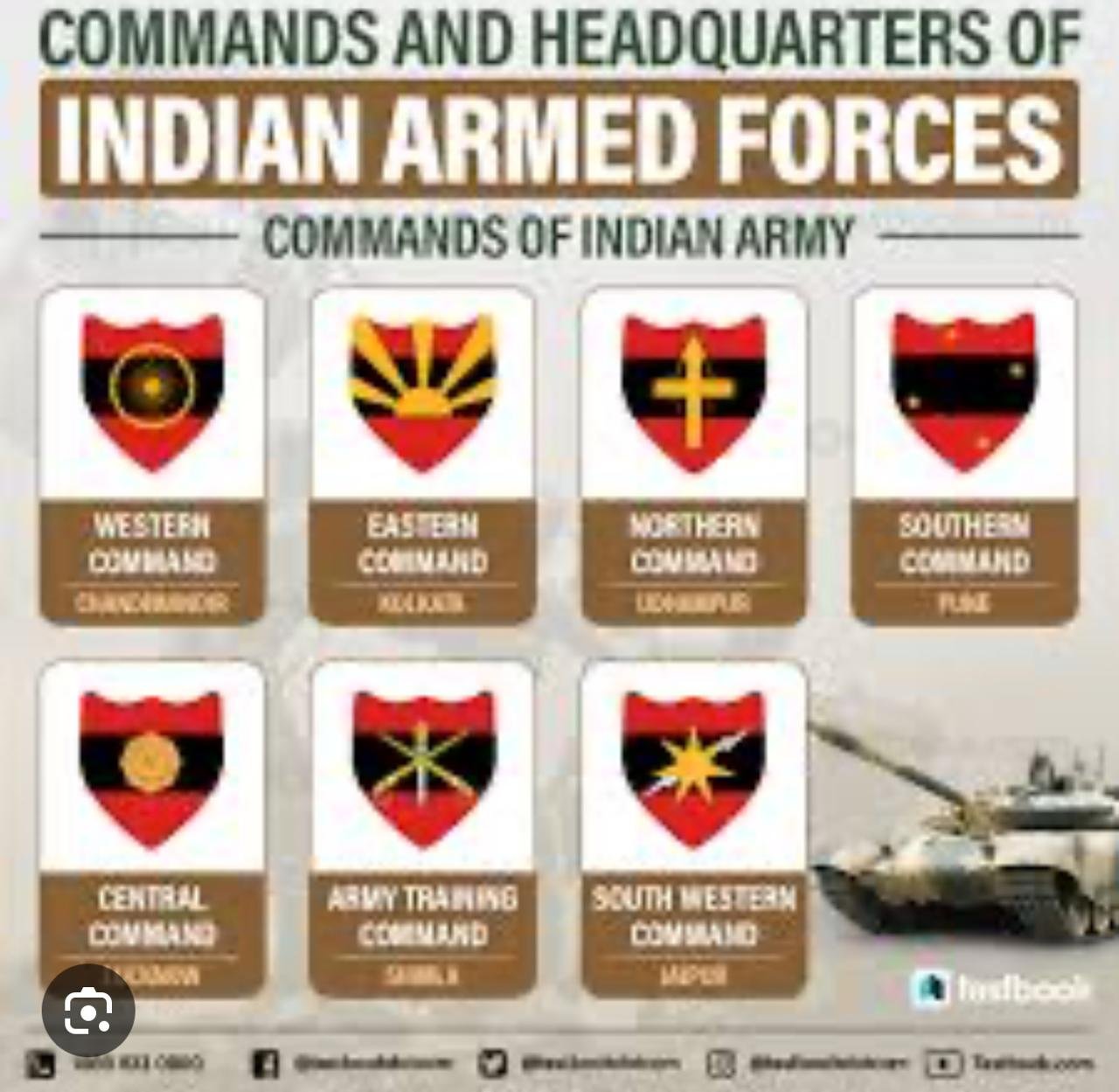
FORMATION SIGNS
FORMATION SIGNS
ALL HUMANS ARE ONE CREATED BY GOD
HINDUS,MUSLIMS,SIKHS.ISAI SAB HAI BHAI BHAI
CHIEF PATRON ALL INDIA SANJHA MORCHA
LT GEN JASBIR SINGH DHALIWAL, DOGRA
SENIOR PATRON ALL INDIA SANJHA MORCHA
MAJOR GEN HARVIJAY SINGH, SENA MEDAL ,corps of signals
.
.
PATRON ALL INDIA SANJHA MORCHA
MAJ GEN RAMINDER GORAYA , CORPS OF
sanjhamorcha303@gmail.com
PRESIDENT HARAYANA STATE CUM COORDINATOR ESM
BRIG DALJIT THUKRAL ,BENGAL SAPPERS
PRESIDENT TRICITY
COL B S BRAR (BHUPI BRAR)
PRESIDENT CHANDIGARH ZONE
COL SHANJIT SINGH BHULLAR
.
.
PRESIDENT PANCHKULA ZONE AND ZIRAKPUR
COL SWARAN SINGH
PRESIDENT SAS NAGAR (MOHALI)
COL BALBIR SINGH , ARTY
INDIAN DEFENCE FORCES
DEFENCE FORCES INTEGRATED LOGO
FORCES FLAGS
15 Th PRESIDENT OF INDIA SUPREME COMMANDER ARMED FORCES
Droupadi Murmu
DEFENCE MINISTER
Minister Rajnath Singh
CHIEF OF DEFENCE STAFF (2nd)
General Anil Chauhan PVSM UYSM AVSM SM VSM
INDIAN FORCES CHIEFS
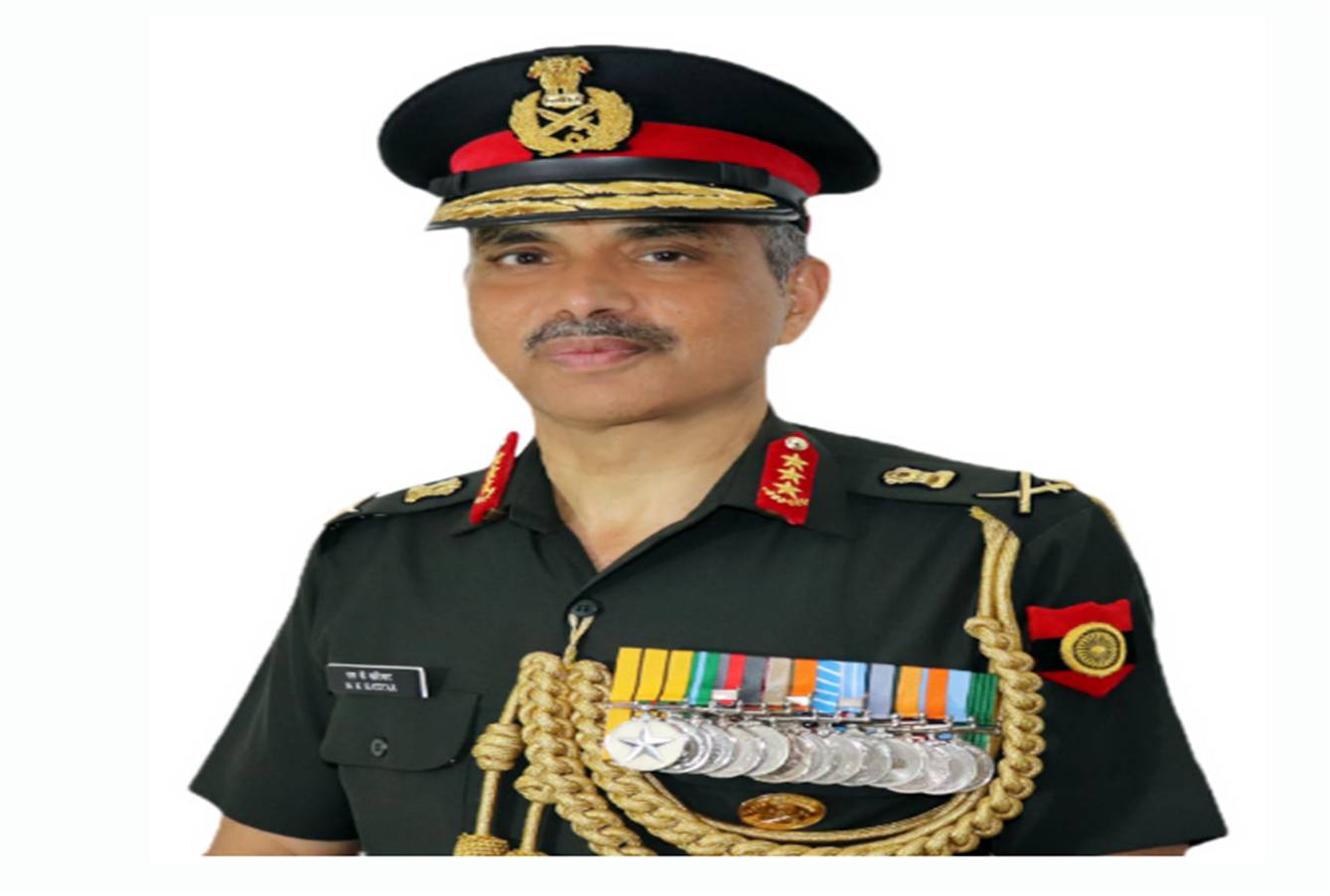
CHIEF OF ARMY STAFF(29th)
General Upendra Dwivedi, PVSM, AVSM (30 Jun 2024 to Till Date)