Beijing admonishes Indian media for violating ‘One China principle’ in news reports
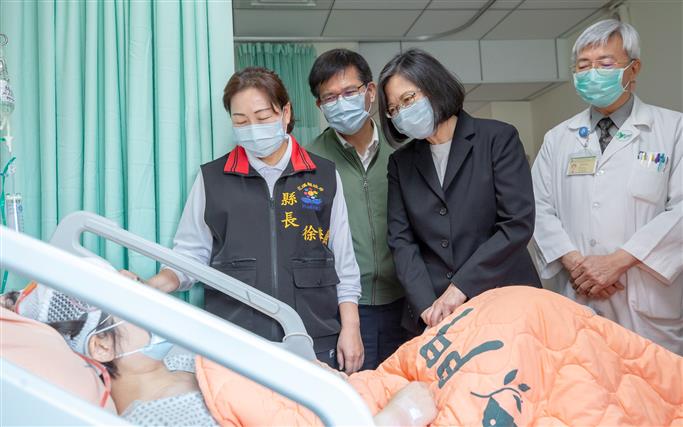
aiwan President Tsai Ing-wen visits a victim of the deadly train derailment at a hospital in Hualien, Taiwan. Reuters
Tribune News Service
New Delhi, April 5
India and Taiwan engaged in a rather unusual exchange of condolences following untimely deaths in both countries but China has taken umbrage to the media commentary here around these exchanges.
India had first sent its condolences to the victims of a train crash in Taiwan which was acknowledged by its Ministry of Foreign Affairs. A couple of days later, Taiwan’s Foreign Office expressed its condolences on the loss of life and injuries in the Chhattisgarh ambush.
In a statement, the Chinese embassy took umbrage to an editorial, which “seriously violated One-China principle and provoked China’s bottom line disregarding long-standing position of the Indian government”.
Chinese Embassy spokesperson said all countries that have diplomatic relations with China should firmly honour their commitments to One-China policy, which is also Indian government’s official standing.
“The Taiwan question concerns China’s core interests. We firmly oppose any separatist activities to create the so-called “Taiwan independence,” “two Chinas” or “one China, one Taiwan”.
“China firmly opposes any country having diplomatic ties with China making any form of official contact and exchanges with Taiwan. China’s red line on the Taiwan question cannot be challenged. On issues of right and wrong, there is no room for compromise,” said the spokesperson.
The embassy urged the relevant Indian media to take a correct stance on issues of core interests concerning China’s sovereignty and territorial integrity, adhere to the One-China principle, and “avoid sending wrong messages to the public”.
How this Indian Army officer rescued Sheikh Hasina & family from Pakistan Army captors in 1971
Colonel Ashok Tara (Retd), then a 29-year-old Major, was tasked with rescuing Bangabandhu Sheikh Mujibur Rahman’s family from Pakistan Army at the end of 1971 war.
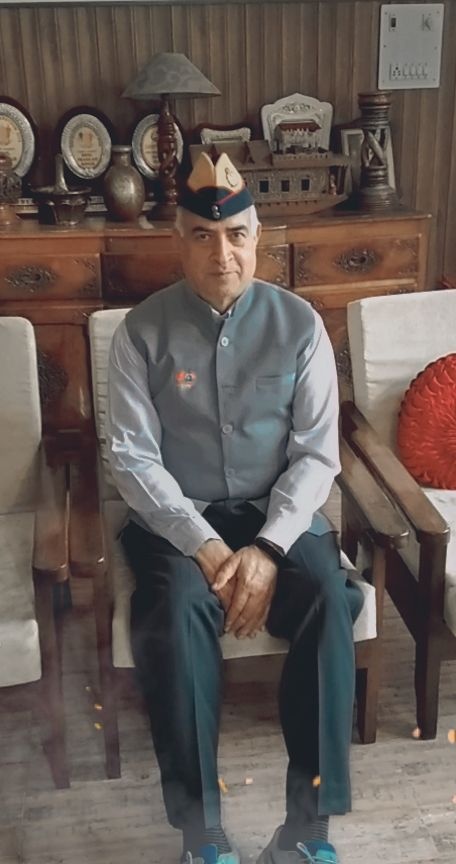
olonel Ashok Tara (Retd) at his residence in Noida | Suraj Singh Bisht | ThePrintText Size: A- A+
New Delhi: It was a day after the 13-day-long Bangladesh Liberation War had ended, but a group of Pakistani soldiers posted near the Dhaka airport hadn’t got wind of their army’s surrender to the Indian forces.
The soldiers — numbering around a dozen — were holding the family of Bangladesh liberation leader Sheikh Mujibur Rahman hostage at their residence in Dhanmondi. Those held hostage included Rahman’s daughter, Sheikh Hasina, the current Prime Minister, and her son. https://3415fc66ecdb1c847bbf4b64da79e336.safeframe.googlesyndication.com/safeframe/1-0-38/html/container.html
The soldiers reportedly had orders to wipe the family out. But those orders were never carried through.
A brave young officer of the Indian Army deployed to save the family had walked right up to the Pakistani soldiers, unarmed, and tackled the situation. With a gun pointed at him throughout, he thought on his feet. He told the soldiers the war was over, and reasoned with them.
It worked, and the family was released. The Pakistani soldiers, meanwhile, were carted off with the promise of safe return to the homeland.
Looking back at the episode 50 years later, Colonel Ashok Tara (Retd), then a Major aged 29, said he knew psychological warfare could help defeat an enemy.
Walking into that situation, another thing that helped him was a message his mother had instilled in him. “My mother had taught me that fear is a state of mind,” he said.
Tara’s role in rescuing Rahman’s family remains one of the most celebrated feats of the Bangladesh Liberation War. In the ensuing days, Rahman, who went on to lead the nation as President, requested a personal meeting with him, while his younger daughter, Sheikh Rehana, wrote letters to Tara.
In 2012, he was awarded the ‘Friend of Bangladesh’ honour by Sheikh Hasina. Five years later, he shared the stage with Hasina and PM Narendra Modi as part of a ceremony to honour 1971 war martyrs.
As India marks 50 years of the Bangladesh Liberation War, Tara, who was awarded the Vir Chakra for his role in the Battle of Gangasagar that took place in the initial days of the war, spoke to ThePrint about the events of that day.
When the 1971 war began, Tara was in his eighth year in the Army, having been commissioned into the 14 Guards in 1963. He had been honoured with the Vir Chakra days before the Dhanmondi incident.
When he was assigned the mission of rescuing the Rahman family, he reached the neighbourhood with two jawans. Around 100 metres from the house, he said, a large crowd warned him of the risk he faced.
“I was told that anyone going ahead would be killed by the Pakistani Army,” he told ThePrint. But he carried on.
“I handed over my weapon to the two jawans and asked them not to follow me. I started moving towards the building without a weapon,” he said.
On reaching the house, he added, he was warned by the Pakistani soldiers not to move any further or he would be fired upon. He informed them then that the Pakistan Army had surrendered a day before, but they didn’t believe him initially, Tara said.
“I told them that if you fire at me, you will all be killed. I also told them that the Pakistan Army, which has surrendered, will not be able to save them and asked them to imagine what would happen to their bodies and their families waiting in Pakistan,” he added.
The Pakistani soldiers kept telling Tara that they wanted to meet their leaders. Tara said he told them to surrender and promised them that, if they did, he would ensure they are eventually able to return to their families.
The negotiations, he added, continued for nearly 30 minutes. Throughout the entire time, a rifle was aimed at Tara. At one point, one of the Pakistani soldiers also opened a round of fire to scare the Indian Army officer, he said.
However, the negotiations yielded results. The Pakistani men saw reason and surrendered, he added.
When he subsequently opened the door to the house, the first person he met was Rahman’s wife Sheikh Fazilatunnesa Mujib.
“She embraced me and told me that I am a godsend and like her son,” Tara said, adding that she told him to replace the Pakistani flag in the building with the new Bangladeshi one. “She shouted ‘Joy Bangla (Victory for Bengal)’ when it was done,” he said.
The Pakistani soldiers were taken to Tara’s car, where they changed into civil clothes so they would not be recognised by the Mukti Bahini — the resistance movement leading the fight for independence — and could be safely transported, “so as to keep my promise of ensuring they go back to Pakistan unharmed”.
Tara stayed on in Bangladesh for nearly a month, even as his unit moved to Mizoram, because Rahman wanted to meet him.
“When I met him on 12 January, I felt the pain in his talk. He spoke about how to heal the wounds of the people of Bangladesh, who went through atrocities at the hands of the Pakistan Army, and to regain their glory, dignity, language and economy,” he said.
After Tara left Dhaka later that month, he received two letters from Rehana. “I also wrote back to her but they never received my letters. I don’t know for what reasons,” he said.
There was no contact between him and the family for years afterwards. In the interim, almost the entire family — including Rahman and his wife, and Hasina’s brothers — was assassinated in their house during a coup in 1975. Hasina and Rehana survived because they were in Germany at the time.
When Hasina visited India years later, she tried to contact Tara. “But I missed meeting her again as I was out of station at the time,” he said.
They, however, managed to meet when Tara was honoured by Bangladesh.
‘Like brothers’
Tara retired from the Army in 1994.
Talking about the India-Bangladesh relationship, Tara said they were good during Rahman’s time. After his assassination, the newborn country was faced with political turmoil, he noted, but added that the relationship got better again under Hasina.
“India and Bangladesh are like two brothers. We have to look after each other’s interests,” he said. “If needed, India should compromise at times to maintain mutual trust and regard (with Bangladesh).”
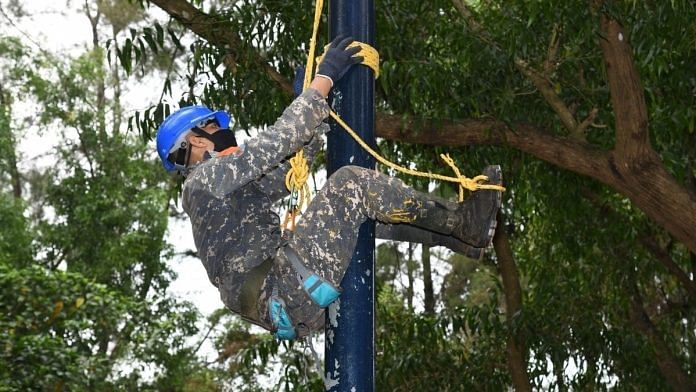
epresentational image. | File photo of a training camp at the Indian Naval Academy. |
New Delhi: Warnings, ineligibility for promotions and awards, and ‘suitable’ administrative actions — the Indian Navy has set strict new penalties for its personnel, both male and female, if they fail to maintain a high level of fitness standards, top defence sources told ThePrint.
A 300-metre shuttle run in under 65 seconds, dive into swimming pool from a 5-metre-high platform, 1.5-km run within 13 minutes are some of the physical efficiency test (PET) parameters the Navy has set in its new and stringent guidelines.
PETs are conducted for naval officers and sailors routinely. However, under the new guidelines those who fail to clear PETs in specific time-frames will face strict action, the sources said.
Issued in February, the guidelines are set to come into effect from this month, according to the sources. The PET parameters are separate for male and female naval personnel.
ThePrint reached the Navy spokesperson via a text message for a comment on the move. This report will be updated when a response is received.
A senior Navy officer said the force had always been strict about the fitness standards maintained by its personnel, and they are connected to promotions. Guidelines to this effect are promulgated by the service from time to time, the officer said.
According to the guidelines, in case a naval officer or a sailor fails to qualify the PETs, they will be counselled by the commanding officer (CO) and the head of department, respectively. After this, they will undergo a mandatory retest.
If they fail to qualify the retest after 90 days, they will be issued a formal warning by the CO, a copy of which will be attached to their annual confidential report — which plays a key role in deciding on promotions.
In case they fail to pass the test even after 180 days, they would not be eligible for recommendation for awards, deputation, courses or even extension of service or re-employment, according to the guidelines.
They will also secure a negative weightage for sea-time selection (sea tenures) and their time-scale promotions will be withheld until they clear the test.
The personnel also won’t be eligible for accelerated promotion, or be recommended for awards. Moreover, they will be marked as non-eligible for volunteer courses and grant of re-engagement by units.
In case officers fail to qualify PETs even after 270 days, they will be issued show cause notices, three months after which “suitable administrative action” will be taken against them. Sailors will be penalised in a similar fashion.
Another senior Navy officer said a “suitable administrative action” in this context could also mean removal from service.
“Earlier, the physical fitness standards were maintained more at an individual’s level, but now they have been made more unit-oriented. For instance, the warning to be issued by COs after a certain time period… They have linked fixed durations of failure in PET to specific administrative actions,” the second officer said.
While warnings used to be issued earlier too, there were no specific time-frames with listed punitive actions against them.
The officer also said while fitness is maintained largely by most naval personnel, the move is aimed at a small percentage of personnel who were possibly not taking the PETs seriously.
The new guidelines say the PETs for both sailors and officers would be conducted every six months at command and fleet headquarters.
The existing PET standards have been revised in the new guidelines, making them more stringent with a reduced grade spectrum. The parameters are specific for age groups, and for men and women naval personnel.
For instance, a 300-metre shuttle run has been reintroduced as a new parameter for the PETs, which male personnel have to complete within 65 seconds, and women personnel below 30 years of age within 90 seconds.
Similarly, dives into swimming pools — from a height of 5m as against the earlier norm of 3m — have been made compulsory for all male personnel except those aged above 50. For female personnel, a 5-metre dive is compulsory for those below 45 years.
For females in the age group 45-50, a 1-km run has to be completed within 10 and a half minutes. For men in the same age group, a 1.5-km run has to be completed within 13 minutes.
Additionally, the Navy would also keep a tab on obese naval personnel. The guidelines also ask commands to conduct surprise tests of units under them to check the physical fitness of personnel.
All three military services have mandatory physical proficiency tests, which personnel have to qualify once a year.
Special Forces vets to attempt world records on land, air, water with people with disabilities
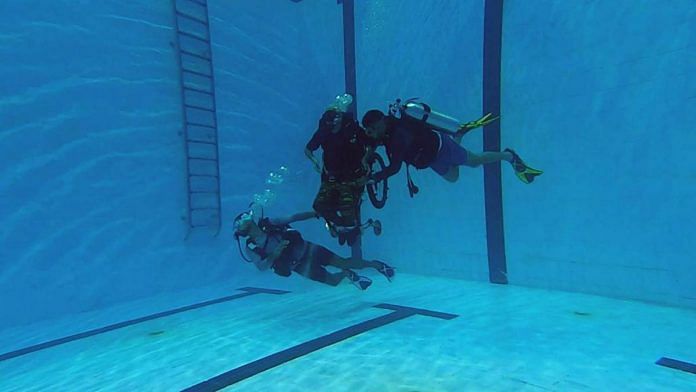
Man in wheelchair (centre) trains for scuba diving with CLAW | Photo by special arrangementText Size: A- A+
New Delhi: A group of veterans from India’s special forces’ have come together in an attempt to create three world records — on land, air and underwater — with people with disabilities.
The first attempt will be made in May this year on land when the team, led by former 9 Para officer Major Vivek Jacob, will climb the world’s highest battlefield, Siachen Glacier, with the largest team of people with disabilities (PWDs). The team, expected to be around 20 members strong, will include not just ex-servicemen but also serving soldiers and civilians
Following this, they plan to set a record for the largest team of PWDs doing accelerated free fall, in Dubai, and will later head to the Maldives where they will attempt scuba diving in the open sea.
“Special Forces is an instinct, a mindset. You don’t become special just because you have worn a particular uniform and carry a rifle. It is all about state of mind,” Major Jacob told ThePrint as he launched the participant campaign to select people with disabilities for the Siachen trek Saturday.
About the range of disabilities the group can take on, the Major said for the Siachen trek, the group won’t choose those with spinal cord injuries.
“There will be those who are blind or have lost their limbs. For scuba diving, we train even those with spinal cord injuries,” he said, showing a video of a man in a wheelchair doing scuba diving.
For the underwater activity, CLAW aims to create a team of 50 while for the accelerated free fall attempt, it wants a team of around 10 members.
Major Jacob set up the organisation of special forces’ veterans, called Conquer Land Air Water (CLAW).
“There are close to 12 crore people with one or the other kind of disabilities. But we don’t see them often because they live within the challenges of our society. The idea is to give every disabled person [the opportunity] to do something that they want to do,” Major Arun Ambathy, former 5 Para, told ThePrint.
Major Ambathy, CLAW co-founder, said a chance meeting with an IAF officer, paralysed from his waist down, that inspired them to set up CLAW.
“Major Jacob’s parachute malfunctioned during a combat skydive in 2015 and [he] suffered a spinal cord injury. In hospital, he met with IAF officer Fl Lt Bhaduria who was permanently paralysed after a freak accident and was on wheelchair for four years. The IAF officer asked Major Jacob once if he can ever scuba dive. The Major promised him that he can and it eventually led to the forming of CLAW,” he said.
The group has now started a scuba training centre for PWDs in Pondicherry. “It has given tremendous hope and healing power to many who have come. The idea is to spread it across,” Major Jacob said, adding that the organisation, which was launched in 2019, has trained more than 100 people with disabilities in four cities.
CLAW is also in the process of formally tying up with the Paraplegic Rehabilitation Centre (PRC) of the Army in Pune and Chandigarh for insititutionalised training.
“We have had serving soldiers with disabilities and veterans coming to us for training. But this was in their personal capacity. We are in the process of instutionalising this,” Major Jacob said, as he added that the idea is to see ability in disability.
Wing Commander Swaroop Krishna ‘Suppi’ Kaul, MVC: Leading Black Panthers into battle
Arjun Subramaniam & Harish Masand
Soon after he took over command of No. 37 Squadron (Black Panthers) at Hasimara (an airbase in North Bengal) in April 1971, Wing Commander Swaroop Krishna ‘Suppi’ Kaul (later the Chief of Air Staff) was asked by the Senior Air Staff Officer in Eastern Air Command, Air Vice Marshal Devasher, to explore the possibility of modifying the Hunter Mk 56s to carry photo-recce pods. This was considered a key operational requirement to create a mosaic of ground deployments of the Pakistan army in East Pakistan. Soon after, the Black Panthers were chosen for this additional role since Suppi had a lot of experience in Fighter Reconnaissance (FR) with cameras on Vampires.
Accordingly, from May-June 1971, around six fighter aircraft and a trainer of the squadron were modified with Vinten cameras, two side-looking F-95 cameras and a forward-looking one, the F-135, in the nose. As soon as the trainer was ready, Suppi trained a few pilots in this role. Harish Masand, a young Flying Officer, was among these pilots and emerged as Suppi’s near-permanent wingman from then on till the end of the war, collecting a Vir Chakra for his own individual exploit of shooting down a Sabre on the first day of the war on December 4 in a chaotic dogfight and melee over Dacca.
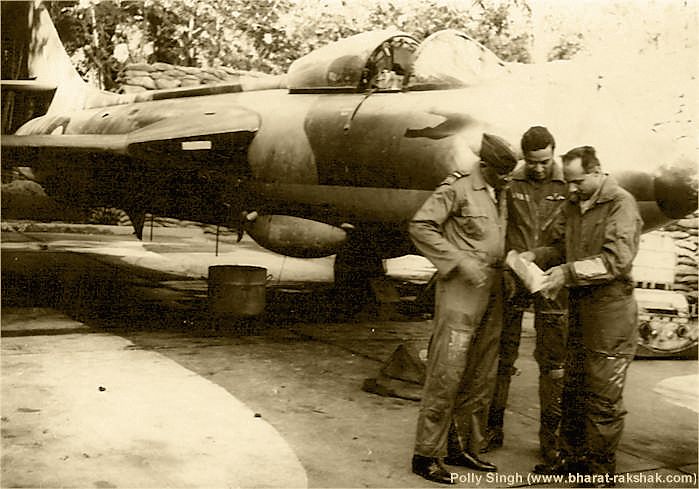
Wing Commander SK Kaul (R) with Flying Officer Harish Masand (C) explaining a recce route to Air Marshal Dewan, the C-in-C of EasternAir Command
By October 1971, Suppi and Harish were doing FR missions inside East Pakistan photographing areas/targets of interest. That is when Harish gathered how good Suppi was in low-level navigation. As his wingman, Harish’s job was to keep abreast of him around 2,000 yards and keep the tail of the formation clear while they navigated to the target, and then let the cameras roll from both aircraft when he called. Almost from the first such mission over hostile territory, Harish realised that he didn’t ever have to look at the map: if a check point was to be crossed at 7 minutes and 50 seconds, he just had to glance at the ground at that time and the check point would be right there where it was supposed to be. Due to Suppi’s accurate navigation and gentle corrections in course/speed in total radio silence, Harish could devote a major portion of his attention to scanning the skies around and behind for any enemy threat. That is how he spotted two Sabres well in time on the very first mission on December 4, 1971, and that is a story that Harish has narrated earlier.
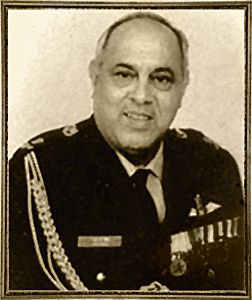
Wing Commander (later Chief of Air Staff) SK Kaul
Suppi and Harish did some nine FR missions before the war, the last one being as late as December 2 over Comilla and Lalmai Hills for 4 Corps. Taking off from Gauhati, they landed in Kumbhigram around noon because they did not have the gas to get back. The photo section in Kumbhigram developed the films, 6,000 frames between the two of them, after which Suppi and Harish stayed up till two in the morning, looking at the photos and marking out gun positions, troop concentration and the defensive works on each frame with a Chinagraph pencil, since there was no photo interpreter available there and the intelligence was required urgently by the Army. The films were sent off to the 4 Corps headquarters in Teliamura the following morning (December 3) before they flew back to Hasimara to get into the war the very next day.
Suppi flew several strike missions during the war, including the mission that struck the Governor’s House in Dacca on December 14, but his risk-taking and leadership qualities emerged on Day One itself. Harish recounts that mission with clarity. “We were to launch the first raid of four Hunters on Tezgaon airfield on December 4, call sign Mission 501, Time Over Target of 0705 IST/0735 East Pakistan Time. The formation comprised Suppi in the lead, Billoo Sengar as his wingman, Mascarenhas as number 3 and me as number 4. Suppi’s aircraft did not start so he jumped into the standby aircraft. Mascy’s aircraft went unserviceable so we took off as three aircraft. After take-off, my landing gear refused to go up and I started trailing the lead section of Suppi and Billoo for quite some time till I finally decided to use the emergency override switch and get the gear up and catch up. While I was having this problem, Suppi could have easily aborted the mission since two of the four aircraft had fallen out, but he continued, displaying his courage and dedication to the task given to him. Fortunately, we finally went in as three aircraft since we were bounced by two F-86 Sabres about two minutes short of target and had to engage them in combat.”
Harish continued, “Throughout the war and the many missions we did together, Suppi was cool and did not ever flinch from facing the heavy anti-aircraft fire over Dacca or the threat of enemy Sabres during the initial days of the conflict. He was also open to suggestions from youngsters like me on the planning of missions and attacks, which resulted in great team effort for more effective attacks with minimum losses. Due to adaptation of different attack patterns through such open discussions between us, we survived the war without a scratch at least when we were together, even in the attacks on Governor’s House in Dacca on December 14 and the university area on the 15th wherein the anti-aircraft fire was dense.
“Suppi was also a compassionate human being during the war and cared about his subordinates, officers or men. I personally experienced how he handled the loss of my younger brother, a paratrooper, during the war when the unfortunate news came to him on December 10. Slowly, and very gently, he broke the bad news to me and told me to get drunk that night and take the next day off, an offer that I firmly declined.
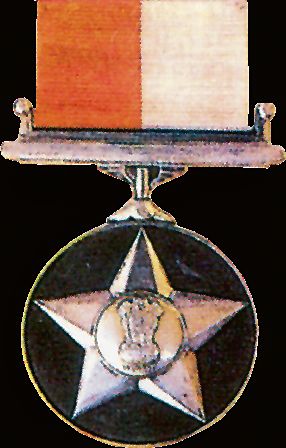
Wing Commander Kaul was awarded the Maha Vir Chakra for leading his squadron into battle and as per the citation, “His reconnaissance flights over Tezgaon and Kurmitola airfields, in the face of the most sustained and heavy enemy ground fire, stand out as acts of heroism, extreme gallantry and devotion to duty.”
Modest and gracious as ever, Air Chief Marshal Swaroop Krishna Kaul attributes the performance of the squadron to exemplary teamwork and esprit-de-corps.
Arjun Subramaniam is a retired Air Vice Marshal and a military historian. Harish Masand is a retired Air Marshal and Vir Chakra awardee
Curtains might have been drawn on Military Farms, but not before their having played a crucial role for the Army and country
Photo for representational purpose only
Maj Gen Partap Narwal (Retd)
The news was disconcerting: “Curtains drawn on Military Farms”; alongside was a photograph of an officer presenting a properly folded green flag of his Corps in a military drill. The recipient of the flag was a senior officer, presumably the Colonel Commandant of his Corps. The ceremony was held at Delhi Cantonment. I posted the news item on the social chat group of veterans from my Remount Veterinary Corps. One of the senior veterans promptly responded: “Very sad day.” It was indeed.Advertisementhttps://imasdk.googleapis.com/js/core/bridge3.448.1_en.html#goog_1628588824Buy NowPowered By The Tribune x eReleGo
My thoughts went back to 1987-89 when I was posted as a veterinary officer at Military Farm, Deolali. I recalled how triumphant we had felt when the higher fertility at our farm had led to the number of gravid heifers being far more than needed locally, and so those heifers were shifted to Port Blair to open a new farm there. That was the period when new farms were being inaugurated near the frontiers. And now, it is all over!
The Corps of Military Farms came into being on February 1, 1889, with the opening of the first such facility at Allahabad. This was the time when the country had neither adequate milk supply, nor was there any technology to increase the shelf life of milk. The organisation soon expanded to meet the requirements of fresh, hygienic milk and butter for the British army. They pioneered the artificial cattle breeding programme in 1925 in the country. And, with the pivotal support from Army veterinarians, the Corps spread out into large-scale, organised cattle farms, introducing precious and precarious exotic breeds to the inhospitable climate of the hinterland. It wasn’t an easy task, but a daunting duty requiring meticulous and rigorous care and management of the stock. This challenge was met through a mix of modern practices and innovative protocols, which not just made the exotic stock thrive but also scaled up the milk production to unprecedented levels. At the time of Partition, there were 130 farms, each holding a large number of cattle heads.
The demonstration of successful management and upkeep of the so-called “difficult breeds” gave confidence to the civil side, resulting in the gradual expansion of the cross-breeding programme. The Military Farms catalysed the growth of organised cattle farms and dairy development in the country. Subsequently, the Corps collaborated with the Indian Council of Agricultural Research in 1991 to develop a high-yielding cross-bred cattle breed in an ambitious project called ‘Frieswal’. It is among the largest contemporary cross-bred cattle breeding programmes.
In the meantime, India became the world’s highest milk producer thanks to ‘Operation Flood’ and related programmes. The soldiers’ accessibility to fresh milk, even in remote corners and difficult borders of the country, became easier than before. The necessity, thus, of having a separate setup just to meet the dairy needs of the Army gradually became redundant. Among other reasons, the dire needs of rebalancing defence expenditure and enhancing combat capability stirred the impending decision of Military Farm closure in 2017.
The flag ceremony for disbanding a Corps certainly is a sad moment, not only for its personnel but also those associated with it. Analysing it, however, with the head and not the heart and recalling the tenets of strategic management taught at the College of Defence Management that “organisations exist in an environment as per needs, which are dynamic, ever-changing” makes one sombre. The curtains might have been drawn on Military Farms, but not before their having played a crucial role for the Army and the country.
Western Command chief in Jalandhar, visits military station
Lt Gen RP Singh, Army Commander, Western Command visits Jalandhar Military Station on Wednesday. Tribune photo
Tribune News Service
Jalandhar, March 31
Lieut-Gen RP Singh, Commander, Western Command, visited Jalandhar Military Station on Wednesday. He was briefed on operational matters at Vajra Corps Headquarters by Lieut-Gen C Bansi Ponnappa, GOC Vajra Corps, and also witnessed display of innovations and equipment aimed towards enhancing operational efficiency of the formation.
The Army Commander also visited the Covid-19 vaccination centre, assisted reproductive technologies (ART) centre and ECHS polyclinic at Military Hospital Jalandhar. He complimented all ranks of the Military Hospital for their dedication in providing healthcare facilities to serving personnel, families and veterans during the pandemic. He briefly interacted with the Western Command and Army Red Hockey teams at the newly-constructed astro turf hockey node and motivated them to excel.
Alka Singh, regional president AWWA, Western Command, accompanied the Army Commander during the visit and interacted with the families of soldiers in the station and also Veer Naris. She appreciated the various welfare measures being instituted and station facilities upgraded.
The Army Commander expressed his satisfaction on high level operational preparedness and excellent training standards of the formation. He commended all ranks of Vajra Corps for their high morale and exhorted them to continue working with same zeal and enthusiasm for the safety and security of the nation.
The city police have booked 13 accused, including the owner and manager of a finance company for conning ex-serviceman of Rs40 lakh on pretext of doubling the money in six years. Photo for representation only
Hoshiarpur, March 31
The city police have booked 13 accused, including the owner and manager of a finance company for conning ex-serviceman of Rs40 lakh on pretext of doubling the money in six years. The FIR was lodged on orders of the SSP on the direction of the High Court in the writ filed by the complainant.
According to the information, Gurpal Singh, a resident of Lodhi Chak village under police station Tanda, had filed a petition in the High Court. He had complained that the Kim Infrastructures and Nector Commercial Assets Company’s owner Ravinder Singh, MD Sanjeev Sikander, the directors of the company – Jagmohan Singh, Palvinder Singh, Gagandeep Singh, Mukhtiar Singh, Khajan Singh, Gurdeep Singh, resident Amritsar, Umeshwar Singh, Lekhraj, Arun Kumar, residents of New Delhi and The KJS Bal, hoaxed him that amount will be doubled and returned to him in six years and got his Rs40 lakh invested in their company. The accused did not return his money after the maturity. — OC
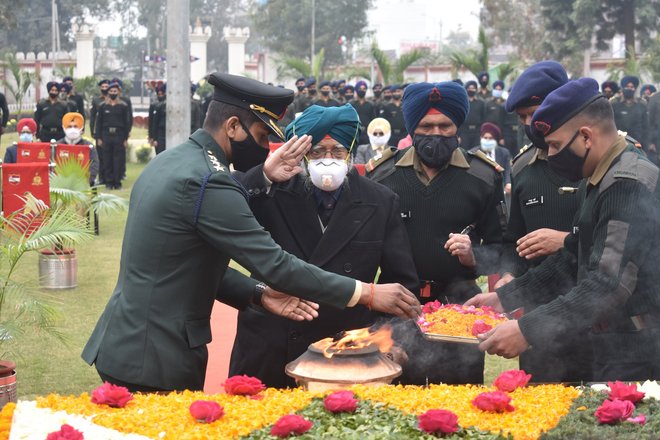
The ‘Swarnim Vijay Varsh’ ‘mashaal’, as part of the 50th anniversary celebrations of India’s victory over Pakistan in the 1971 war, reached Basoli military station near Lakhanpur — the gateway to Jammu and Kashmir — on Saturday, a defence spokesman said.
The ‘mashaal’ was received by Brigadier Manoj Kharkwal in the presence of other dignitaries at Basoli, where major decisive battles were fought and won by India during the 1971 operations, the spokesman said.
Last year, PM Narendra Modi lit the ‘Swarnim Vijay Varsh Mashaal’ (golden victory year torch) from the eternal flame of the national war memorial in Delhi on December 16 — the day India celebrates as Vijay Diwas to commemorate its victory over Pakistan during the 1971 war that led to the creation of Bangladesh.
The spokesman said the ‘mashaal’ would remain in the folds of the Arsenals Brigade till Apr 7 during which a number of events would be held at various venues to mark the occasion.
He said some of these include felicitation of war heroes and ‘veer naries’, cultural programmes by students of KV Lakhanpur and APS Janglot, various school- level competitions and participation by NCC cadets. — PTI
Army soldier Naik Velu P is all set to make his 30th birthday memorable as he left for a mission to enter his name in the Guinness Book of World Records by running from Kashmir to Kanyakumari, a distance of about 4,300 km, under 50 days.
Last year in June, Velu P became the first Indian ultra-runner to complete 1,600 km in just 17 days, a feat which is in the process of being entered as an Asian record.
“Naik Velu, serving as a Nursing Assistant in the 60 Para Field Hospital, is an ultra marathoner who is attempting a Guinness world record by running from Kashmir to Kanyakumari for a distance of about 4,300 km under 50 days,” Udhampur-based Army Public Relations Officer (PRO) Lt Col Abhinav Navneet said.
To start this epic feat, he said Naik Velu, who is celebrating his 30th birthday on April 21, was flagged off from 92 base hospital at Srinagar on Friday with a heartwarming gathering of enthusiasts who accompanied him in his solo run for the initial five km carrying the national flag and boosting his morale.
“To cover this mammoth distance from Kashmir to Kanyakumari in 50 days, Velu would be running 70-100 km per day, crossing major towns, cities and states,” Lt Col Navneet said. The PRO said Naik Velu has already won many ultra-marathons, Tuffman runs and Stadium runs across India. After covering 200 km distance from his starting point, Naik left Udhampur headquarters at 7 am Saturday and is on way to Jammu, running 10 km per hour, he said.
Born on April 21, 1991 at Krishnagiri (Tamil Nadu) and having represented his state in athletics at the age of 13, Naik Velu joined the Army in December 2011 and his first achievement in the Army was a gold medal in cross-country 12.5 km in 2012.
He represents the India team of Athletic Federation of India since 2016 and in coming September he would be representing India for Stadium run at the world championship at Romania, for which he had won a trial run of 24 hour stadium running held at Bengaluru, Lt Col Navneet said. — PTI
Sprinting to glory in 50 days
Last year in June, Naik Velu P became the first Indian ultra-runner to complete 1,600 km in just 17 days. He has now set for a run from Kashmir to Kanyakumari, a distance of about 4,300 km, and aims to finish it in 50 days.
State Stalwarts
DEFENCES FORCES RANKS
ARMY, NAVY, AIRFORCE RANKS
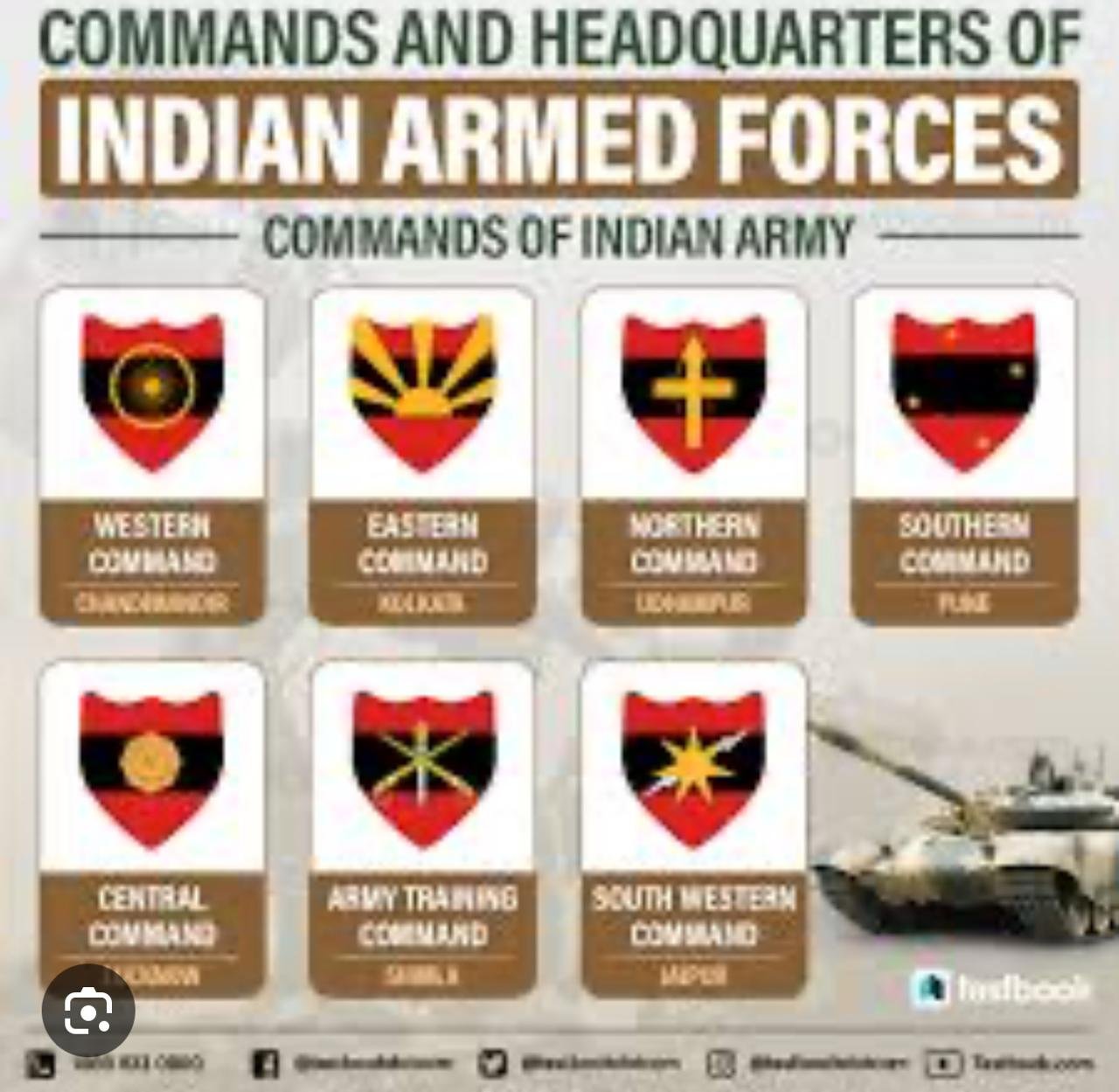
FORMATION SIGNS
FORMATION SIGNS
ALL HUMANS ARE ONE CREATED BY GOD
HINDUS,MUSLIMS,SIKHS.ISAI SAB HAI BHAI BHAI
CHIEF PATRON ALL INDIA SANJHA MORCHA
LT GEN JASBIR SINGH DHALIWAL, DOGRA
SENIOR PATRON ALL INDIA SANJHA MORCHA
MAJOR GEN HARVIJAY SINGH, SENA MEDAL ,corps of signals
.
.
PATRON ALL INDIA SANJHA MORCHA
MAJ GEN RAMINDER GORAYA , CORPS OF
sanjhamorcha303@gmail.com
PRESIDENT HARAYANA STATE CUM COORDINATOR ESM
BRIG DALJIT THUKRAL ,BENGAL SAPPERS
PRESIDENT TRICITY
COL B S BRAR (BHUPI BRAR)
PRESIDENT CHANDIGARH ZONE
COL SHANJIT SINGH BHULLAR
.
.
PRESIDENT PANCHKULA ZONE AND ZIRAKPUR
COL SWARAN SINGH
PRESIDENT SAS NAGAR (MOHALI)
COL BALBIR SINGH , ARTY
INDIAN DEFENCE FORCES
DEFENCE FORCES INTEGRATED LOGO
FORCES FLAGS
15 Th PRESIDENT OF INDIA SUPREME COMMANDER ARMED FORCES
Droupadi Murmu
DEFENCE MINISTER
Minister Rajnath Singh
CHIEF OF DEFENCE STAFF (2nd)
General Anil Chauhan PVSM UYSM AVSM SM VSM
INDIAN FORCES CHIEFS
CHIEF OF ARMY STAFF(29th)
General Upendra Dwivedi, PVSM, AVSM (30 Jun 2024 to Till Date)